
Literary Vibes - Edition CLXVII (31-July-2026) - POEMS & BOOK REVIEWS
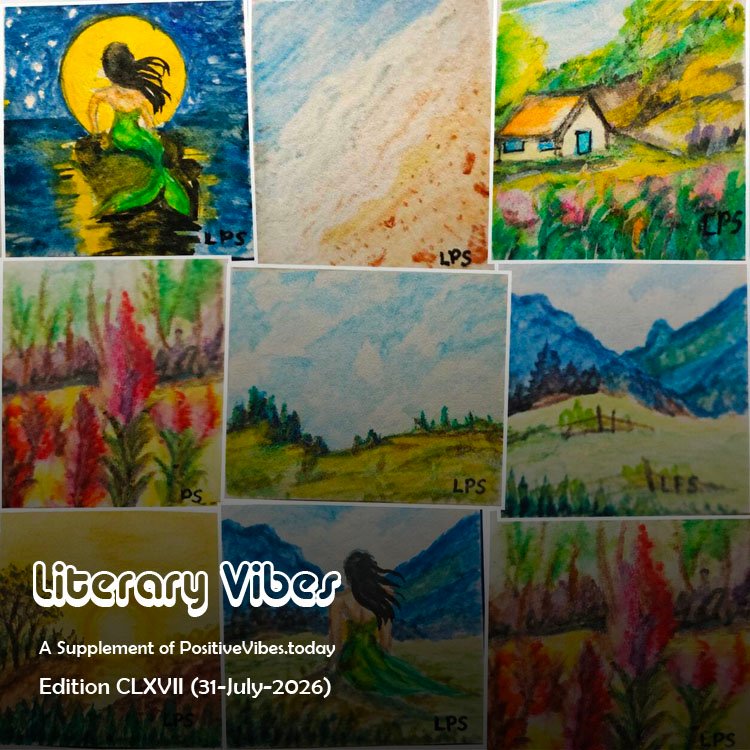
Title : A Collage (Miniature 5 cms ×5cms water colour pencil Painting by Lathaprem Sakhya)
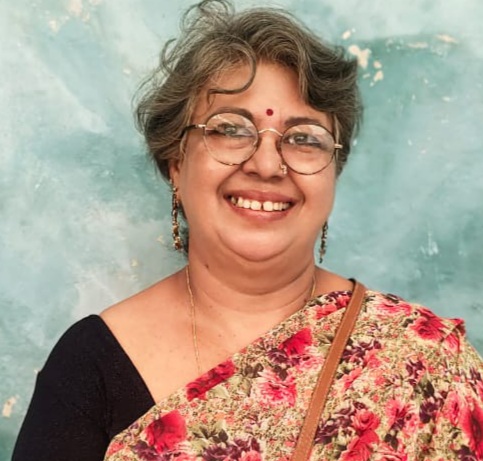
An acclaimed Painter, a published poet, a self-styled green woman passionately planting fruit trees, a published translator, and a former Professor, Lathaprem Sakhya, was born to Tamil parents settled in Kerala. Widely anthologized, she is a regular contributor of poems, short stories and paintings to several e-magazines and print books. Recently published anthologies in which her stories have come out are Ether Ore, Cocoon Stories, and He She It: The Grammar of Marriage. She is a member of the executive board of Aksharasthree the Literary Woman and editor of the e - magazines - Aksharasthree and Science Shore. She is also a vibrant participant in 5 Poetry groups. Aksharasthree - The Literary Woman, Literary Vibes, India Poetry Circle and New Voices and Poetry Chain. Her poetry books are Memory Rain, 2008, Nature At My Doorstep, 2011 and Vernal Strokes, 2015. She has done two translations of novels from Malayalam to English, Kunjathol 2022, (A translation of Shanthini Tom's Kunjathol) and Rabboni 2023 ( a Translation of Rosy Thampy's Malayalam novel Rabboni) and currently she is busy with two more projects.
Dear Readers,
I am happy to present to you the 167th edition of LiteraryVibes. I am sure the July rains will feel more beautiful with the lovely poems and enchanting short stories of the current edition.
As I sit to write this editorial today, Wednesday, the 29th July, I am still coming out of a rare pleasure of spending a splendid afternoon with seven friends from my college days with our respective spouses. We have been friends for around fifty eight years, seen life from close quarters, and experienced its vicissitudes with stoic endurance. There have been mostly good times and occasionally bad times. Today when we meet we recall our old days, talk of friends, family and life in general. We realize nothing much has changed in all these years, the issues that trouble our country remain the same for the past six decades, and despite all the high-rise buildings, the sleek highways and a three trillion dollar economy, there is still a feeling that we could have achieved much more if our collective DNA was not soiled with dishonesty in thought and action.
But meeting old friends once in a month or couple of months has a rejuvenating effect on life. It rekindles hope and reinforces the confidence that there will be always someone who can lend you a shoulder when needed. By coincidence I came across a couple of stories in the internet last week which echoed exactly the same sentiments. The authorship of these two stories is unknown, but authors who have written them deserve our grateful acknowledgment for these lovely creations.
Let me reproduce them here:
FIRST STORY
One late night I received a phone call from a close friend. When he asked me, "How are you doing?", I somehow answered,
"Honestly, I'm feeling really lonely."
After a short pause, he said,
"Do you want to talk? Should I come over now?"
His words made me feel relieved, and I replied, "I'd love for you to come."
Within just 15 minutes, he was knocking on my door.
That night, I told him everything I had been holding inside: my work worries, my family issues, my anxieties and doubts. He listened attentively without interrupting, as if he were accepting my pain as it was.
Having him there was incredibly reassuring. The hours we spent talking felt like a heavy burden was slowly being lifted from my heart. Before I knew it, it was completely light outside the window.
"I should be going now. I have to get to work."
"Sorry for keeping you up all night," I apologized, feeling very sorry.
He replied with a gentle smile,
"Don't worry about it. That's what friends are for, right?"
I saw him off at the front door. As I watched him walk towards his car, I suddenly remembered and called out to him,
"By the way, why did you call me so late last night?"
He stopped, turned around for a moment, and slowly walked towards me, saying in a low voice,
"Actually... I went to the doctor. They said I have cancer."
At that moment, I was speechless. Not knowing how to react, all I could do was stare at his face. Then, with his usual gentle smile, he said,
"Let's talk properly another time. Don't worry about me. What matters more is that you're healthy."
After saying that, he quietly got into his car and drove away.
I stood there frozen, unable to move for a while. I wondered why he had listened to me the whole time, and how he could behave so kindly despite his own pain.
Since that day, I've started to re-evaluate my way of life. I stopped overthinking my problems and made an effort to pay more attention to the people who matter to me.
And now, words I had seen somewhere before have resonated deeply within me.
"Those who cannot live for others have no reason to live."
Life is like a long staircase. If you keep looking up, you'll always feel like you're at the bottom. But if you look down a little, you'll realize there are many people who aspire to be where you are.
SECOND STORY
The wife said to her husband, “How long will you keep reading the newspaper? Come here and feed your dear daughter.”
The husband put the newspaper aside and turned his attention to his daughter. Tears were in her eyes, and a plate of food was in front of her. She was a good girl and more understanding than children her age.
The husband picked up the plate and said, “Dear, why aren’t you eating? Come, I’ll feed you.”
The daughter, who didn’t like the food, began to sob and said, “I will eat all the food, but you will have to make me a promise.”
“A promise?” the father replied gently, “You shouldn’t insist on buying something expensive like this.”
“No, Papa, I’m not asking for anything expensive.”
Then, while slowly eating, she said, “I want to get all my hair cut off.”
Both the husband and wife were shocked. They tried to explain to her that it doesn’t look good for girls to shave their heads. But the daughter replied, “Papa, I ate the food you asked me to, even though I didn’t like it. Now it’s your turn to fulfill your promise.”
In the end, the parents had to agree to her request.
The next day, the father took his daughter to school. She looked very unusual with her shaved head. At school, a woman approached the father and said,
“Your daughter has done something truly remarkable. My son is suffering from cancer, and due to treatment, he has lost all his hair. He didn’t want to come to school because other children made fun of him. But your daughter said she would come to school with a shaved head too—and she did. Because of her, my son came to school today.”
Hearing this, the father’s eyes filled with tears. He thought to himself that his daughter had taught him what love truly means.
On this earth, truly happy people are not those who live only on their own terms, but those who change themselves for the people they love.
...........................
Hope you loved the stories as much as I did. Please share the LV167 with all your friends and contacts through the following links:
https://positivevibes.today/article/newsview/643 (Poems and Book Reviews)
https://positivevibes.today/article/newsview/642 (Short Stories, Anecdotes and Travelogues)
https://positivevibes.today/article/newsview/641 (Young Magic)
Take care, enjoy the lilting music of rains, see the earth soaking with water, lawns getting greener and flowers blooming with wider smiles. We will meet amidst the August rains on 28th of next month with the 168th edition of LiteraryVibes.
With warm regards,
Mrutyunjay Sarangi
Editor, LiteraryVibes
Bhubaneswar, the 31st July, 2026.
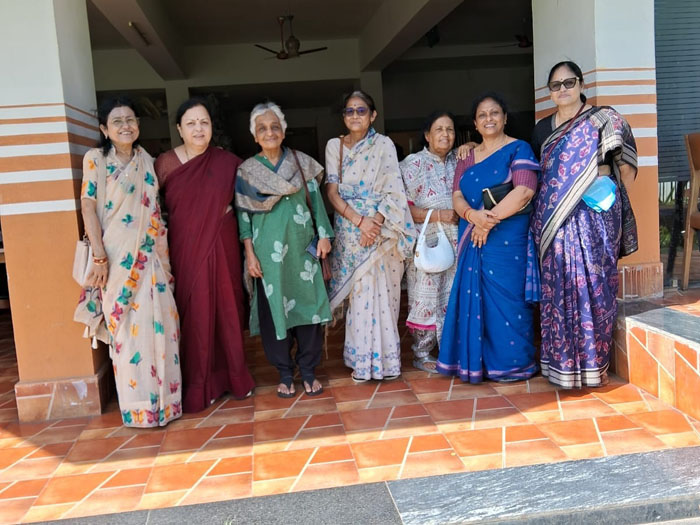
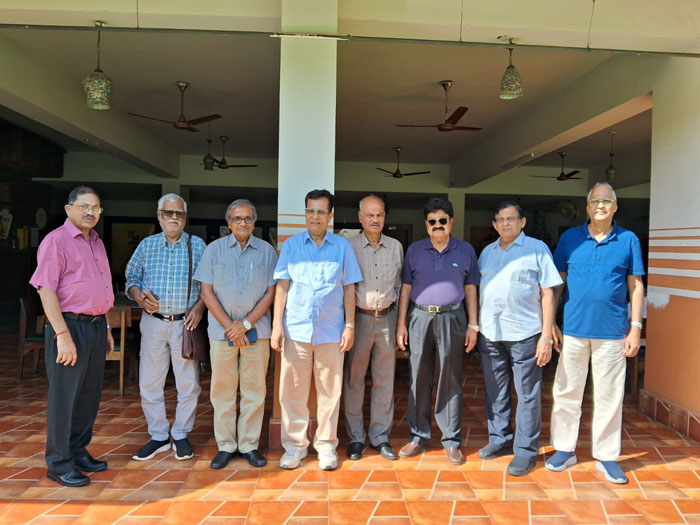
Meeting for Lunch with old friends
Table of Contents :: Poems
01) Prabhanjan K. Mishra
LORD JAGANNATH
SAVITRI: THE THIRD MILLENNIUM, FIRST CENTURY AD
02) Dilip Mohapatra
03) Abani Udgata
04) Avantika Vijay Singh
05) Pradeep Kumar Biswal
06) Madhumathi. H
07) Dr Nanda Kishore Biswal
08) Baldev Samantaray
09) Sujata Dash
10) Kunal Roy
11) Bipin Patsani
12) Sathya Venkatesh
A FAIRY TALE – DIFFERENT STAGES
13) Lata Krishnan
14) Dr. Rekha Mohanty
15) Sarita Prusty
16) Mrs. Setaluri Padmavathi
17) Satish Pashine
PAUSE FOR A WHILE, LOOK WITHIN
18) S. Sundar Rajan
19) Shubhra Singh
SHAPE OF MY DREAMS
ANATOMY OF LOVE
20) Darsana Kalarickal
21) Matralina Pati
22) Anindita Sen
23) Nandini Mitra
24) Susan Kurien
25) Dr R. S.Tewari
LIFE`S DAILY CALENDAR
THE BOAT OF LIFE
CLIMB UP THE SUMMIT
GENERATIONS` PARAGON
THE PLINTH AND PILLAR
26) Dr. Rajamouly Katta
FLIGHT FOR HER DELIGHT
OCEAN IN DREAMS
27) Pankhuri Sinha
ARE YOU HERE?—NORTH PORTUGAL--BETWEEN TWO TORNADOES
28) Harisankar Sreedharan
29) Dr. Niranjan Barik
30) Dr. Mrutyunjay Sarangi
Table of Contents :: Book Review
01) Pradeep Trikha
NOTES ON THE ROCK OF JOB CHARNOCK
02) Dr. Ajay Narayanan
A MUST-READ STORY OF "A JIVE DOWN MEMORY LANE", AN EAGLE`S VIEW
LORD JAGANNATH
Prabhanjan K. Mishra
A mystery and a bouquet of mystique,
sculpted from legends, fleshed with myths,
my Lord, you sit unmoved, wearing
a deadpan face, goggle-eyes;
neither basking in worship, nor sulking
over the neglect, or angry at insolent defilers -
Shouldn’t you, Lord, go on world tours,
have moods, pretences, a voice,
a bit of pride, even some caprice;
wouldn’t you like the myths to be rewritten
or you be moulded anew, differently
from POP, wax, plastic, or metal?
Won’t it be a novelty to see you
furtively peeking from your window,
curious about the world you created,
walking about in bazars hand in hand
with goddess Laxmi, getting chided by
big brother, teased by little Subhadra?
Allow us to pamper you, spoil you, Lord,
clothe and jewel you like a dark Adonis,
make you a slave of bed, breakfast,
even an addict of medicines or inebriants;
allow us to ask, "What sort of movie would you
like to watch – action, humour, or romance?"
Or, would you remain in love with yourself;
a neo-Narcissus, proud of your wooden stance
and impassiveness, happy with
your blind believers, the bleating lambs,
crediting you for the good harvests they reap,
blaming destiny for the evils that befall them?
SAVITRI: THE THIRD MILLENNIUM, FIRST CENTURY AD
Prabhanjan K. Mishra
She is estranged again,
separated but not yet divorced -
insouciance, incompatibility.
She is at your temple, my blue Lord,
joining the mass puja, wishing wellness
for her partner. The one in hand,
or the one in the bush?
For the one, she stands at his door
for checking out, or the other,
she has not yet checked in with?
The man she often dreams of -
kind, untired of her little antics,
taking her peccadillos in his stride,
a little mysterious, some caprice thrown in?
With a dash of mischief,
a bite of toast after being
dunked in a burning curry?
In tandem with her moods, flashing
now and then for a second
and she saying 'No', meaning ‘yes’,
also, a man with a wee bit impatience?
Her coveted partner,
doesn’t he appear as
rare a specimen, as Dodo?
Not even the Yama would do
who was outwitted by the other Savitri
to confer a foot-in-mouth blessing -
“Be the mother of a hundred children”?
I suspect, O blue Lord, in her
window-shopping for a perfect husband,
none less than you would do.
(END)
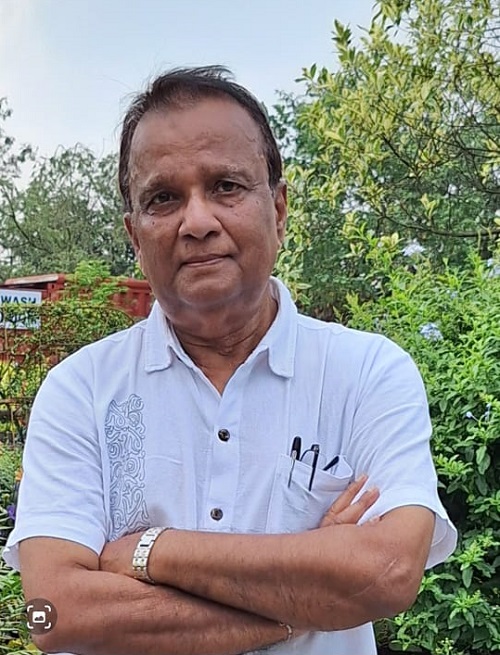
Prabhanjan K. Mishra is an award-winning Indian poet from India, besides being a story writer, translator, editor, and critic; a former president of Poetry Circle, Bombay (Mumbai), an association of Indo-English poets. He edited POIESIS, the literary magazine of this poets’ association for eight years. His poems have been widely published, his own works and translation from the works of other poets. He has published three books of his poems and his poems have appeared in twenty anthologies in India and abroad.

The lion continues to run
in its predatory pursuits
faster than the weakest prey
in the herd
else it goes hungry
and the gazelle tries to outrun
its pursuer
else it is devoured—
Whether predator or prey
you got to be running
for your survival.
Yet we are also told
that life is not a race
with a finishing line to reach
outpacing the others on the track—
it’s more like a journey
that is just to be embraced
with one step at a time
savouring every moment
relishing every bit of experience.
Between the need to run
and ‘keep running’
and the need to slow down
to ‘stand and stare’
one is left perplexed
uncertain which call to heed
but then perhaps
everyone can lay their own
paths
set their own timing
and their own journey
to embark upon
for what really matters
is not the speed but
that one moves forward
on one’s chosen way—
and only that
one keeps moving.

The eyes which once welled up
at the slightest provocation
inviting my father’s admonition
telling me not to be a sissy
have dried up
and they no longer smile either
the lashes don’t flutter anymore
and they are either shut with no pulse
or if open become a deuce—
a pair of snake’s eyes
a serpentine gaze.
The skin has lost its lustre and glow
and no longer shines
nor does it go pink as I blush
or pale when I am scared
the crinkles and wrinkles
the furrows on the forehead
and the diverging crow’s feet
from the corners of the eyes
weave a story of dilapidation
and decay.
Yet the heart with a few grafts
still beats strong as ever
the gall bladder gone
slashed by the surgeon’s scalpel
yet the spirits still
soaring high
like the eagle scanning the skies
and the resilient soul
steadfast and resolute
challenges the strokes of the clock
and cares just two hoots.

Dilip Mohapatra writes poems that dwell at the threshold where the tangible yields to the ineffable. Rather than describing the world, they uncover the hidden correspondences that bind its disparate realms. Quietly meditative yet intellectually alert, his poetry invites the reader to move beyond appearances into a space where the finite touches the infinite and every ending gestures towards a larger wholeness.
A globally published author, he has to his credit eleven poetry collections, two short story collections and two professional books.Winner of multiple International Awards and recognitions he writes from Pune and is a regular contributor to Literary Vibes. His email id is dilipmohapatra@gmail.com
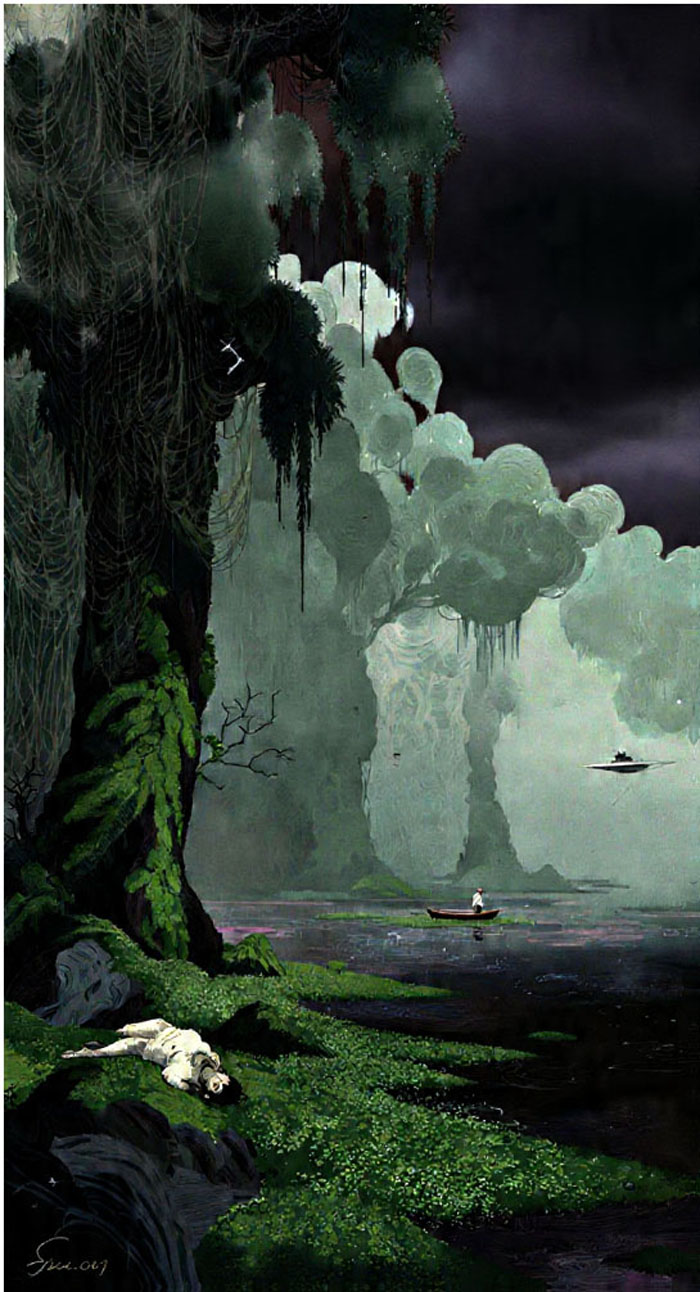
This forest in July
burns the remains
Of my days.
The mosquitoes in
the pool of water
ferocious question marks.
I crawl back to old spaces
lying below the trees
on the succulent greens
as the spider-webs
of droplets on branches
give up their breaths.
The colour of the sky
ashen , non-committal
ages faster than people.
It is like the boat
on a lake covered
by the monsoon greyness
as it searches for faith,
trust amidst the ruins.
Till the one on the boat
goes off to sleep in
a ceramic tent but
the lake will go on
spinning like the cosmic
debris .
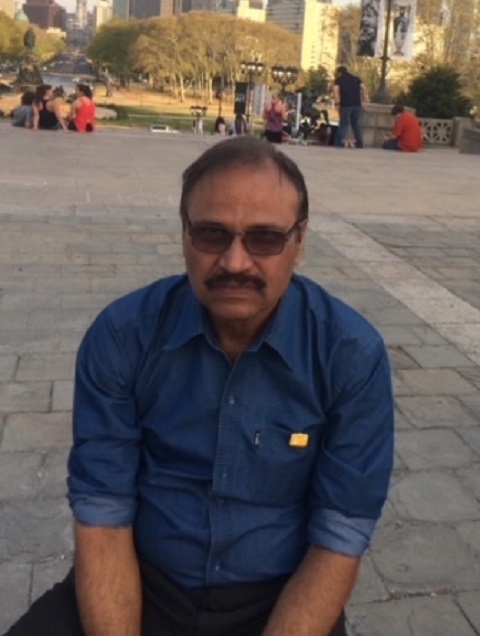
Abani Udgata lives in Bhubaneswar. Writes poems both in English and Odia. Udgata has been awarded in all-India poetry competitions and published in anthologies. He has been a regular contributor to LV. Email: abaniudgata@gmail.com
THE HUMILITY OF THE SEMAL
Avantika Vijay Singh
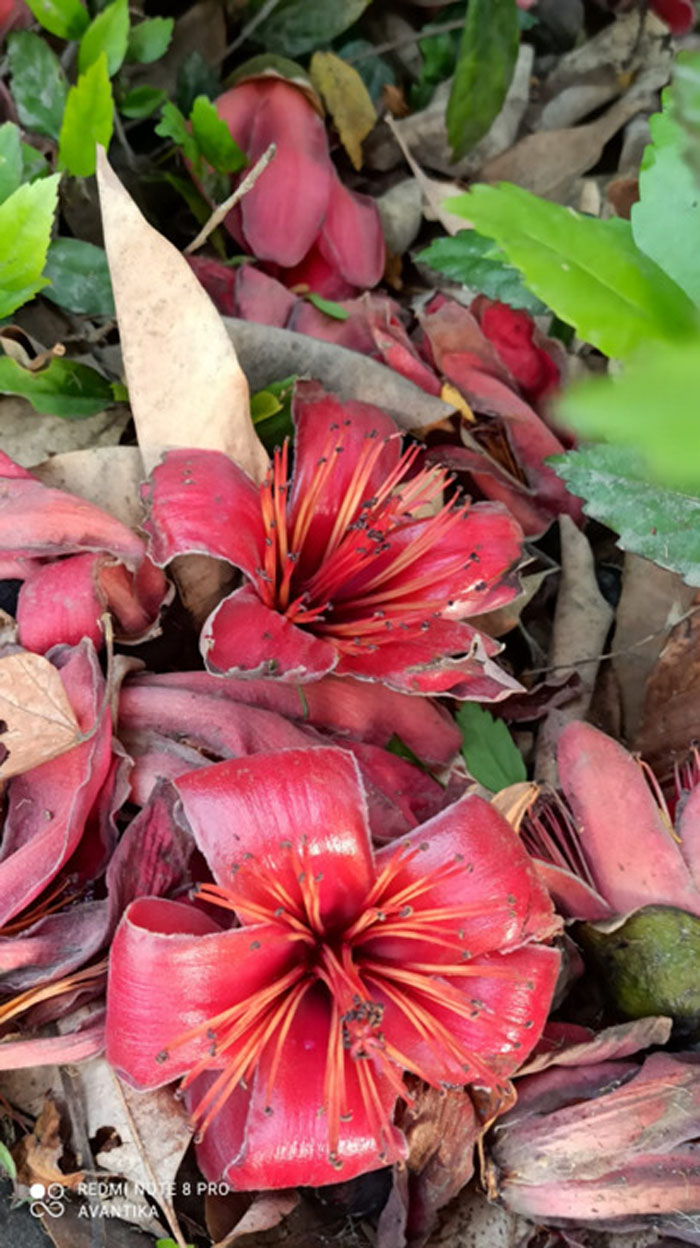
Salmali…
the ancient cotton silk tree—
rested Brahma below its shade
after the world He created,
but the tree in its hubris
grew as strong as could be,
proclaiming to be stronger than Vayu,
and that cannot go unnoticed,
realising its mistake,
the tree shed its leaves and flowers
standing before Vayu in all humility—
so goes the story narrated by Bhishma
to Yudhishthira in the Mahabharata…
to teach him not to challenge a more powerful person,
the lesson futile as we all know,
what struck me most was
to shed one’s arrogance
and stand in all humility
before the Lord
I see the big, beautiful blooms
fallen to the ground
strong, exotic, waxy flowers,
and am reminded…
all must fall one day,
so, what remains of life?
the flowers served the bees, birds, butterflies,
who flourished on its nectar
and thus, the flower served the world
may my life, too, serve the world.

Avantika Vijay Singh is a communications professional, wearing the hats of a writer, editor, poet, researcher, and photographer. She has authored two solo anthologies, edited three anthologies, and has been published in national and international journals. She received the Nissim International Award Runner Up 2023, WE Gifted Poet 2024, and WE Illumination Award 2024.
A POEM ON UMBRELLA
Pradeep Kumar Biswal
A Poem on Umbrella
I have enmity with an umbrella
since childhood till today
Now even the simple act
of carrying an umbrella feels heavy
Sometimes even umbrellas abscond,
and I search for them, ending up tired
There was an umbrella once
that only deepened my trouble in rain
I would be soaked to the bone,
while it remained completely unconcerned
Once, a beautiful woman
passed by my house
a colourful umbrella in her hand
veiling her delicate face
And then I knew—
even an umbrella can be heartless
I truly long for a vast umbrella
on my roof
made with colourful Pipili applique
On a moonlit night,
I sitting beneath it,
I would sip tea with the stars
and breathe music from a mouth organ,
to attract my childhood beloved
And yes, her heaviness would restrain Manorama
Alright, let that colourful umbrella come
And then, I shall release my dreams
into the open sky
like a kaleidoscope of butterflies.

Pradeep Biswal is a distinguished bilingual poet, translator and editor. He has nine poetry collections in Odia and three in English. His poems have been translated into Hindi, Telugu, Punjabi, Assamese and Malay languages and got published in separate volumes. He’s the curator of Toshali Literature Festival and editor of monthly web magazine kabitalive.com. A retired IAS officer, he’s staying with his family in Bhubaneswar.

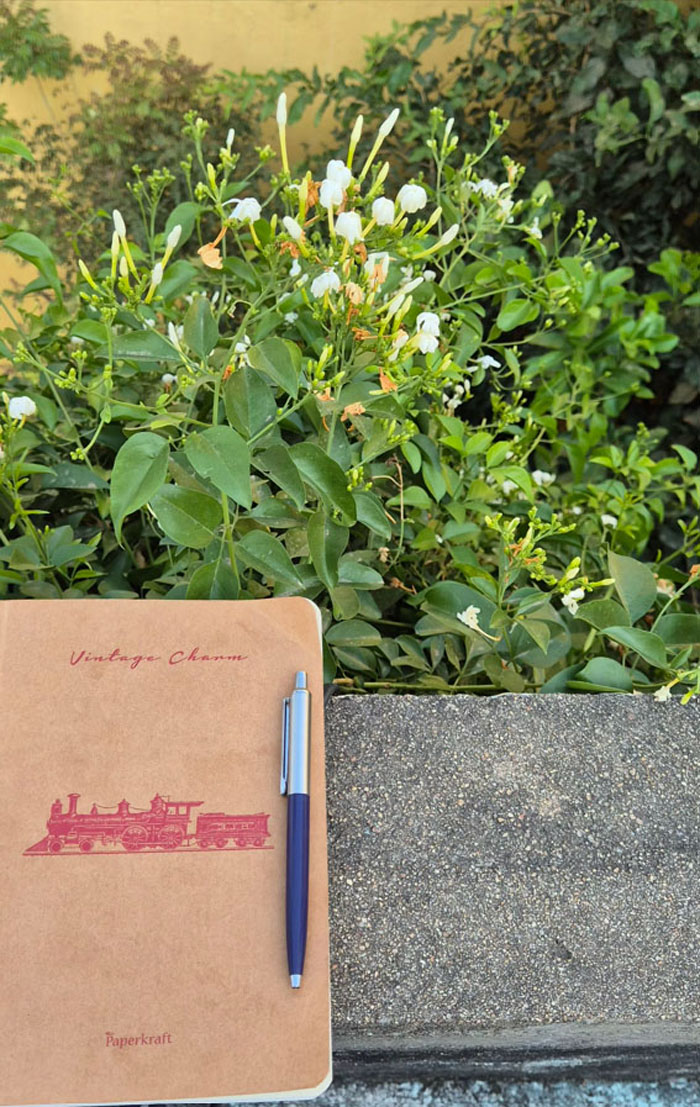
Some poems carry
The climate of the mind
The weather of emotions
Savouring moments
From life lived
Lives observed
And moments, and lives
Imagined
Soaked in "what ifs"...
Some become a song
We replay in our hearts
Some flood the eyes
Unscheduled are tears...
Symptoms never felt
When someone plants words
A thousand lotus blooms
In our vacant soul...
At the birth of some poems
Sweet scents fill every pore...
Yet
Some
Leave a deep silence...
Hold them close
Listen
The words might carry
The whimperings
Of unheard souls
Who often voice the world...

A bilingual poet-writer(Tamil, English), Madhumathi. H is an ardent lover of Nature, Poetry,
Photography, Music.
Her poems are published in Anthologies of The Poetry Society(India), CPC- Chennai Poetry
Circle's EFFLORESCENCE, IPC's(India Poetry Circle) Madras Hues Myriad Views, Confluence, Spring Showers,
Amaravati Poetic Prism, and in e-zines UGC approved Muse India, Storizen, OPA – Our
Poetry Archives, IWJ - International Writers Journal, Positive Vibes, Science Shore.
e-Anthologies Monsoon moods - Muse India, Green Awakenings - On Environment, by
Kavya-Adisakrit.
Madhumathi's poems are part of YPF's(Yercaud Poetry Festival) Ignite Poetry, Breathe Poetry, Dream Poetry, Winterful Whispers, Auburn Ambrosia,
Of Soul Scribers' Soul shores that have 10 of her poems
published, Soul Serenade, Soul songs, Soul Dance, Shades of Love-AIFEST - Special Jury Mention, and
secured 'A Grade’ in the International Poetry Writing Competition(published Anthology)
conducted by All India Forum for English Students, Scholars, and Trainers (AIFEST) in March-
April 2023 in connection with International Women’s Day celebrations, Arising from the
dust, Painting Dreams, Shards of unsung Poesies, are some of the Anthologies her poems,
and write ups are part of.
Besides Poetry, Madhumathi writes on Mental health, takes part in related activities to create awareness, break the stigma, believing in the therapeutic, transformational power of words.
INDIAN SUMMER
Dr Nanda Kishore Biswal
Long years of work consumed my youth.
Distress hit, and seeking relief –
I ached for a single sweet word to lift a heavy day.
Your quiet charm, I knew,
could absorb my sadness like a summer rain.
But no more of that.
I am in my Indian Summer now,
with leisure enough to look back and think of you,
more often than not.
How sweet! You have become my favourite place to return to,
the absolute best part of my life.
Sitting in the umbral calm of afternoon,
here in life’s garden,
where the bright light has softened,
and shadows stretch long.
The Sun bridles his temper,
painting the horizon with soft light
to bring the diurnal round to a close.
Lost in a flurry of thoughts of you,
I am led to an Elysium
where worries vanish forever.
Nature’s cruel toll is powerless here –
the Winter that breaks everyone and wilts innocent flowers.
For the fading glow of your complexion has returned,
radiant as the start.
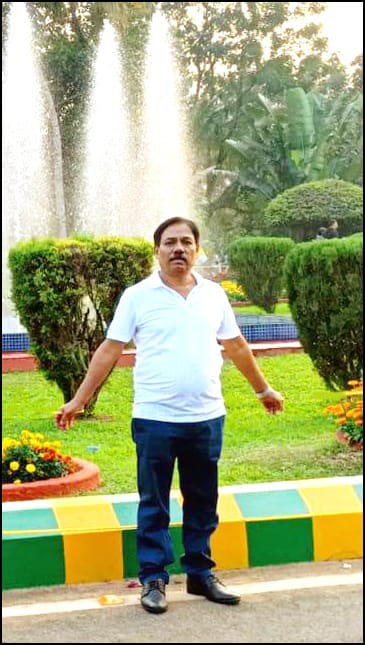
Dr Nanda Kishore Biswal, after teaching English language and literature for more than thirty five years in different colleges of Odisha, retired as an Associate professor. Passionate in reading poetry, intermittently, he has been writing poetry since his college days.1996 to1999 was his most fertile period when his Odia poems were published in almost all Odia dailies as well as in most of the Odia magazines. Also he writes English poems. He has authored The Fictional Transfiguration of History in the Novels of Salman Rushdie, Amitav Ghosh and Rohinton Mistry. Besides, he has edited Prananath Patnaik:A purveyor of Egalitarianism Currently, he is engaged in writing reviews of the poetry collections of the new poets who write in English.
MOUNTAIN OF LOVE
Baldev Samantaray
The time
I climbed off her
I never had the guilt
There were no arduous ways
There were no devious ways
There were no punch in the hoofs
There was no map
There was no summit
on which to regale and flaunt
on which to rest
for the next.
The freshness and warmth
of the cold sun rays
as bright as the snow
hung there for eternity .
Every moment had an air of finality
complete in itself
where I could have dwelt forever.
There was no guilt
There was no crushed moss
on the slippery mountain rock.
I kissed them with my toes
and the tender care of a doting mother.
I had removed
the fangs of my climbing shoes
unmindful of the fall
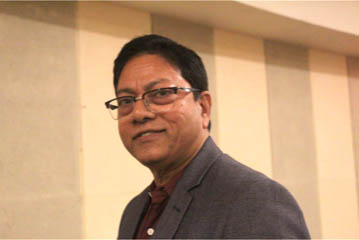
Baldev Samantaray is a retired banker who lives in Bhubaneswar. He did his post graduation in English literature from Ravenshaw College (76-78).He started writing from his Ravenshaw days. Many of his poems appear in various journals and anthologies.
Weaving a tapestry of meaning
Into the vacant gaze of the sun And emptiness of the surrounding
My unhurried steps match my lifestyle
As I reminisce the vibrant days
Full of flutters and happening
I realise for sure it will never be
The way it used to be
Yet, lilting cadences of yesteryears
Caress my today's symphony
A carefree bird I was
Cared a fig about daunting heights and remote seclusion
But can no more remain away from unease
My frail limbs emit creaking sound
As I gather shards to make an effort to rise
Strange but true ...
The tiny alleyways of life
Are still abuzz with the echoes of
ecstasy
Touch my soul with a little shiver of delight
Hope whispers from a distant horizon
" Everything will turn the way it was before"
I giggle and burst into a fit of laughter
Lament no more for what is lost
I sum up like this-
Curating Inner peace
Carving solace out of traumatized memory
Was not easy
Yet small wisps of faith and belief Helped me locate the niche inside.
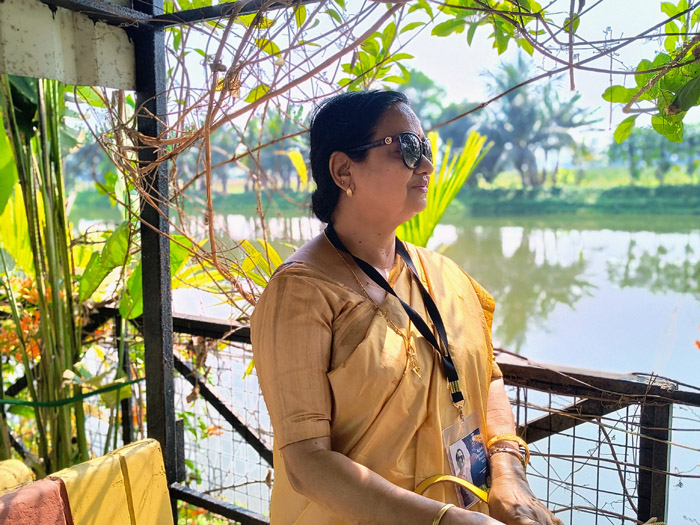
Sujata Dash is a poet from Bhubaneswar, Odisha. She is a retired banker.She has four published poetry anthologies(More than Mere-a bunch of poems, Riot of hues and Eternal Rhythm and Humming Serenades -all by Authorspress, New Delhi) to her credit.She is a singer,avid lover of nature. She regularly contributes to anthologies worldwide.

Clad in white,
Snowy and Glistening,
Majestic and Proud,
Elegant and Awesome!
Decades You watched,
Witnessed the world,
Punctuated with insolence and arrogance,
Yet You are tacit!
Kissed the hanging blue emptiness,
Draped in the radiance of sun,
Close to the haven of God.
Scenic,
Sombre,
Soothing!!
Kunal Roy has always been an ardent lover of literature. He has received various awards for his literary contributions. He is a poet and a critic of poetry. His works have been published both here and abroad. Currently working as an Assistant Professor of English Language and Communication in George Group of Colleges, Kolkata.
THE ENIGMA OF INSTALLATION
Bipin Patsani
(Part IV and V, an excerpt from
the long poem, YATRA, in five parts.)
Raw in form though, you were worshiped in the wild
by a tribal chief, some say, and that
you were stolen in a deceitful way to be brought here to Puri.
Some say, you are Sakya Muni,
you are Sangham, you are Santham,
all Trinity put together, Light, Darkness and Dawn,
the light of knowledge,
the all absorbing creative darkness of the womb
and the spiritual dawn of enlightenment and wisdom.
Even tantric cult is linked to you, some others say.
As for the Vaishnavites you are KRISHNA,
the son of the soil, a native origin of wonders
in its wild abundance, playful, brave, valiant,
adept in music, something like the Roman God Silvanus
who too was said to be looking after woods and husbandry.
O Master of all arts, the passionate lover,
sophisticated and diplomatic even in your smile,
wiser ever like a supreme sage,
the black God of the black to be installed thus
for wider acceptance with intense longing and devotion.
Krishna is the wine of love divine.
Some see their lovers as Krishna,
Some see Krishna as their lover
and they love to be lost in his love,
choosing their emotional involvements
and their own inevitable ends.
As love and bonding beyond boundaries gets recognition,
such intense passion of perennial source
becomes our binding force
from the poetry of which myths and marvels emerge.
OOO
Whatsoever the truth, all things put together
make you unique and universal,
Oh dear Black God of rare wood!
Oh God of the wild woods!
How imploringly we look at you and feel secure
like cows feeling comfortable with their master.
The sublime sense of your presence everywhere
makes everything look beautiful, sacred and sweet.
The Grand Road, the smell and the banner
that flutters on the Blue Disk above the temple,
everything seems to be Lord Jagannath.
The wonders of the hemispheres of your eyes
and their ever widening horizon so enticing
like the ocean, so serene that all those who come to you
find in your eyes themselves and their rhythm,
while flowers offered to the Gods slip out to sales
to be sold and offered again and again.
_______________________________
Note: This is an excerpt from the long poem, YATRA,
in five parts written on the Car Festival at Puri
during the covid time lockdown.
Bipin Patsani (b. 1951) has published poems in many prestigious journals and poetry anthologies including Indian Literature, Chandrabhaga, Journal of Indian Writing in English, Indian Scholar, Kavya Bharati, Poetcrit, International Poetry and Prophetic Voices etc. He has been translated to Spanish and Portuguese. He has three poetry collections to his credit (VOICE OF THE VALLEY, ANOTHER VOYAGE and HOMECOMING). He is a recipient of Michael Madhusudan Academy Award/ 1996 and Rock Pebbles National Award in 2018. He did his Post Graduation in English at Ravenshaw College, Cuttack in 1975 and served as a teacher in Arunachal Pradesh for 34 years till his superannuation in 2012. He also received Arunachal Pradesh State Government’s Award in 2002 for his dedicated service as a teacher. He lives with his family at Barunei Colony, Badatota in Khordha District of Odisha, India.
A FAIRY TALE – DIFFERENT STAGES
Sathya Venkatesh
Infancy --
Everyone adores us
Everything is taken care of
Life is a fairy tale
Adolescence ---
That crush on someone
He/she reciprocates our feelings
Life seems a fairy tale
Middle age ----
Happily and unhappily married
With conflicts and cheer sprinkled in
Life goes on
Fairly sane/ albeit a fairy tale
Old age -----
Accepting each other
Giving space, growing together
Patting ourselves
For having crafted our own
Beautiful fairy tale!
Hailing from Coimbatore and with a background in Economics, Sathya Venkatesh has always been passionate about English literature and poetry. After fifteen years as a freelance content writer, she transitioned to teaching English to government school students. She finds joy in poetry, travel, painting and Indian Philosophy which she feels deepens an understanding of self and fuels her creativity. She has published haiku poems on reputed journals such as haikuKatha, Haikuniverse and Autumn Moon Journal. She firmly believes in a higher purpose guiding her path.
Even to the child, they blamed the floor
When it toddled and fell on its four
They beat the wall, they beat the door
All because it failed in its goal
Now, on my morning walks
I hear my old friend’s blaming talks
The Government, the police,
House associations and the office.
Everything around is criticized and blamed
In their opinion all should be tamed.
But it’s we who vote and choose the goats
Its folks among us who go to the force
It’s we who form the groups to govern
We applied and worry over the job to earn
waited and prayed for some opening to turn
It’s we who are ready to bribe the clerk
For the files to move on the officer’s desk
We, who cajole for plan approval
Hide truth to other mere mortal
We can’t wait, we can’t sweat,
We can’t bear the loss of a bet
All we forget when we settle in style
Sit and comment all the while
The world is ours to make as we dream
Carefully consider all that seems
To make the best start from our own house
To right the wrong from our source
We can make the start
Instead of being tart
The blame game is easy
Pointing faults and being preachy
Somewhere inside us it all begins
We sometimes are not responsible beings
Well! It’s nice to hear” I have always been clear”
Perfect as one can ever be seen
Person so spotlessly clean
But deep inside we have always known
That somewhere the seed is sown
We are also to blamed for other’s deeds
Sometime perhaps we have crossed limits
Lied so little to save our skins
Burying conscience in a corner within
No, we need not take blame for all gruesome violence
Let us be a crusader instead of physical silence
Let the blame game stop
And serious clean up start
Changes, we can bring
Around us, let’s start at full swing
Nothing is perfect
But let us make the best bet.
Lata Krishnan is a writer presently based in Coimbatore, India. Having spent her growing up years in Kolkata, she became enamoured with poetries and litrature and started penning a few lines now and then. After finishing her education in Kolkata where she spent almost 32 years, she shifted to Chennai and many others cities due to demands of her office work as a Bank Manager. After her retirement from the banking industry, she decided to indulge in her love for writing. Her experiences with life reflects in her work. She explores themes of nature, life, love, and self- reflection. She is the author of the poetry collection "Strewn Petals of the Heart" which she published in 2023.
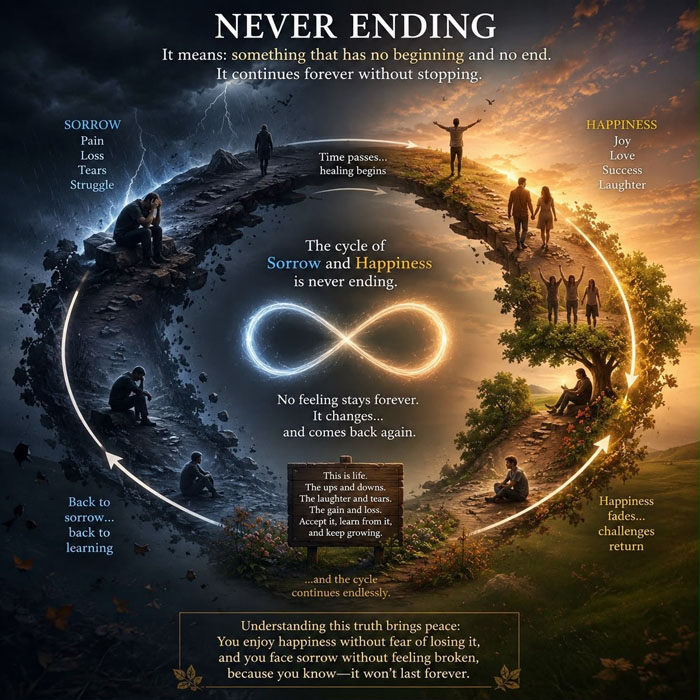
NEVER ENDING
Dr. Rekha Mohanty
Sweltering Summer,
Chilly winter,
Rains with thunder,
Though confined
to time of seasons,
Most of times welcome
Some times not,
At one point of time
when suffering dominates,
It seems never ending…
The difficult times do come
To teach,
To tolerate,
To have patience and bear pain,
To be strong and tough,
To move ahead,
And then forget
anticipating for better
and happier days,
Happy ending does come
if one is able to gaze beyond…
After all life is a bundle of happiness and pain,
End is not the span,
End is what one performs
till the last breath,
Until the game is over,
Pressure of the task
Endless responsibilities,
That’s the true struggle
engulfed by layers of hope, Imperfectly perfect.
There is actually no end,
Sadness altering with happiness Cycle is never ending …
Col( Dr) Rekha Mohanty is an alumni of SCB Medical College, Cuttack, Odisha and she has spent most of her professional life in military hospitals in peace and field locations and on high altitude areas.She has participated in Operation Vijay (Kargil war)in 1999 and was selected for UN missions in Africa for her sincere involvement in crisis management of natural calamities in side the country and abroad where India is asked to do so in capacity of head QRT in Delhi for emergency medical supplies.She had also participated in military desert operation ’ Op Parakram’ in Rajasthan border area.After relinquishing Army Medical Corps in 2009,she worked in Ex Servicemen Polyclinic in Delhi NCR and presently is working in a private multi-speciality hospital there to keep herself engaged.
Her hobby is writing poetry in English and Odia.She was writing for college journals and local magazines as a student in school.
Being a frequent traveler around the world,she writes travelogues.The writing habit was influenced by her father who was a Police Officer and used to write daily diary in English language he had mastered from school days in old time.Her mother was writing crisp devotional poems in Odia language and was an avid reader of Odia and Bengali books.Later her children and husband also encouraged.
Dr Rekha keeps herself occupied in free times for activities like painting, baking and playing card games the contract bridge.
She is a genuine pet lover and offers her services to animal welfare organisations and involves in rescue of injured stray dogs.Being always with pets at home since early childhood ,she gives treatment to other dogs in society when asked for in absence of a vet.She delivers talks on child and women health issues to educate the ladies in army and civil.
After sad demise of her husband Dr( Brig)B B Mohanty in February 2023,she devoted more time to writing and published her first poetry book’Resilient Leaf’in August 2023.Since then there is no stopping and she is going to publish her second book of poetry soon.
She enjoys reading E magazine LV , newspaper current affairs ,writing poetry and watching selected movies whenever she gets time.She keeps travelling places of interest in between for a change which is a passion as a girl since days roaming with parents and siblings .Her motto is to be happy by giving the best to self and to the society.She is lucky to have a supportive family.
NOT EVERY MOON IS FULL..
Sarita Prusty
Ends a weary day
when moon beams
slip through the window,
the day's battle
surrenders to a sleepy night
He switched off the light
wrapped me in his arms
yet beneath that warmth,
I could feel the rough edges
of untold worries
I whispered
"what burdens your silence"
Not every moonlit night
owns a full moon
Not every embrace
is woven with passion
some hugs hide
trembling hearts,
some smiles cover
sleepless wars
His struggles had no voice
only tired breaths
breaking the stillness.
For Love
is not always a celebration
of joy;
sometimes it is simply
holding a broken soul
until dawn teaches
it to breathe again.

Based in Bhubaneswar Sarita Prusty is a former lecturer in English and is now engaged in creative writing , translation and criticism.
RAIN IN THE GARDEN
Mrs. Setaluri Padmavathi
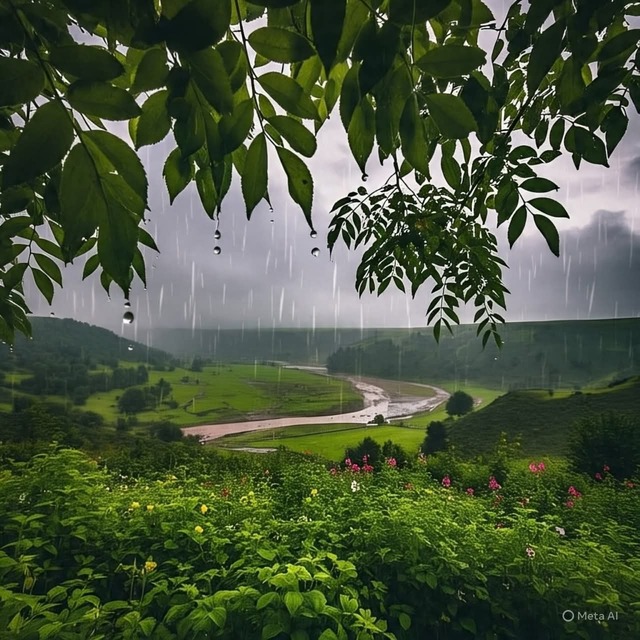
I entered the same garden again
Same plants, same flowers
and the same trees with swaying branches
I could feel something new today
The tender leaves trembled
The mighty trees shook
and the wind whispered,
I could hear the sound of song
My curious eyes after a long wait
Eagerly stared at the azure Sky,
The sky that covered with black clouds
Twinkling lights that flash fast
Alarmed me about the heavy rain
Pitter patter rain drops fell fast
I could feel the smell of the mud
Ah! Petrichor! There I stood
Astonishingly, gladly and with an awe!
The parched ground
Quenched its thirst
The colourful flowers bloomed
The children jumped with joy
and played with paper boats!
I entered the same garden again
I saw something different today
Garden gently hummed a song
That is melodious, convincing
and the earth is keenly listening!!
Mrs. Setaluri Padmavathi, a postgraduate in English Literature with a B.Ed., has been in the field of education for more than three decades. Writing has always been her passion that translates itself into poems of different genres, short stories and articles on a variety of themes and topics. She is a bilingual poet and writes poems in Telugu and English. Her poems were published in many international anthologies and can be read on her blogsetaluripadma.wordpress.com. Padmavathi’s poems and other writings regularly appear on Muse India.com. Boloji.com, Science Shore, Setu, InnerChild Press Anthologies and Poemhunter.com
PAUSE FOR A WHILE, LOOK WITHIN
Satish Pashine
On Devashayani Ekadashi,
Lord Vishnu
is believed to enter
Yoga Nidra—
the divine cosmic slumber
that sustains,
rather than suspends,
the universe.
Yoga Nidra
is not idleness.
It is the deepest state
of awakened stillness
where words fall silent,
and the soul
begins a conversation
with itself.
These four sacred months
are nature’s gentle pause,
a reminder that
not every season
is meant for achievement.
Some seasons
are meant
for becoming.
A seed, too,
rests in darkness
before it rises
to embrace the sky.
Rivers discover
their true strength
during the rains.
And we discover ours
in moments of solitude.
When Lord Vishnu
awakens
on Prabodhini Ekadashi,
it is not merely
the end of His
divine repose.
It is an invitation
for each of us
to awaken
to greater compassion,
restraint,
wisdom,
and integrity.
If these months
have transformed us
even a little,
then the Vishnu within us
awakens too.
For sometimes,
the greatest journey
is simply to pause.
And the greatest awakening
is the one
that happens within.
(Inspired by Devashayani Ashadhi Ekadashi, it reflects on Lord Vishnu’s Yoga Nidra as a metaphor for the seasons of stillness in our own lives—when growth happens quietly, beneath the surface.)
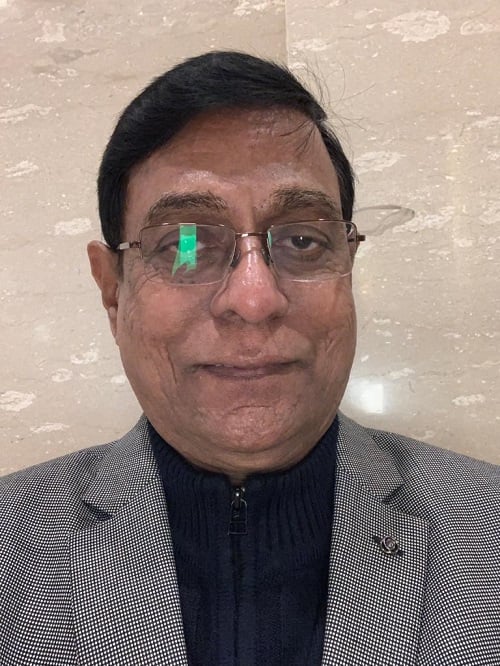
Shri Satish Pashine is a Metallurgical Engineer. Founder and Principal Consultant, Q-Tech Consultancy, he lives in Bhubaneswar and loves to dabble in literature.
THE SPRIGHTLY SPRING
S. Sundar Rajan
Sprightly Spring. Spell out, will you, HOW you spring,
To bring warmth and cheerfulness in the ring?
I integrate the strings, with Seasons, four,
Through weary winter, steaming summer, core.
Sprightly Spring. Spell out, will you, WHERE you spring,
To bring warmth and cheerfulness in the ring?
I first traverse the North Hemisphere,
The South Hemisphere, I then cover.
Sprightly Spring. Spell out, will you, WHEN you spring,
To bring warmth and cheerfulness in the ring?
I symbolise the temperate season,
With greening landscapes and blooming nature.
Sprightly Spring. Spell out, will you, WHAT you spring,
To bring warmth and cheerfulness in the ring?
Animals are out of hibernation,
While, to nest, migratory birds, return.
Sprightly Spring. Spell out, will you, WHY you spring,
To bring warmth and cheerfulness in the ring?
I arise cos of the inclination
Of the Earth's axis and its rotation.
Sprightly Spring. You rev al in Nature's way
To harmonize the environmental play.
Clime, flora, fauna set in ambiance,
Enriching, though only in transcience.

S. Sundar Rajan is a Chartered Accountant with his independent consultancy. He is a published poet and writer. His collection of short stories in English has been translated into Tamil,Hindi, Malayalam, Telugu, Kannada and Gujarati. His stories translated in Tamil have been broadcast in community radios in Chennai
and Canada. He was on the editorial team of three anthologies, Madras Hues, Myriad Views, Green Awakenings, and Literary Vibes 100. He has published a unique e anthology, wherein his poem in English "Full Moon Night" has been translated into fifteen foreign languages and thirteen Indian regional languages.
An avid photographer and Nature lover, he is involved in tree planting initiatives in his neighbourhood. He lives his life true to his motto - Boundless Boundaries Beckon.
SHAPE OF MY DREAMS
Shubhra Singh
Amorphous thoughts
Maverick chants
Renegade skin
Migrated wings
Found home,
Too often became ephemeral
In the crowd of fanatics,
Metallic dreams
Too superstitious
And apologetic
Every harshness was softened
With my mendacity.
your tears !
how gracefully halted at your
untamed lashes,
became tiny crystals on silky black strings,
your sadness !
turned into dust of gold ,
covered your oval and umbrose eyelids,
like Autumn's offsprings,
your bones !
blushed to their densest matrix,
when sorrow praised your fortitude
on your passionate flings,
your darkness !
out of sheathe and blinding
uncoffined your love
with a spark of fugitive memories and their stings,
your pain !
manifested by settled fangs
on your sleepless nights,
you camouflage with illusive smiles on unhappy things,
your coldness !
benumbed knees bask,
in the hearth of warm and deep shadow of thoughts
and bohemian myths it brings,
your heart !
a sanctum that sings lullaby
to undead and untold feelings,
shaken often on remindful swings,
your loneliness !
unbridled mustang
in territory of heart , often misled
your mindful efforts chase them with poetic slings,
your love !
savage torrent unseen beneath the rocks,
harnessed with tranquil surface
and it grows clandestine wings,
your silence !
hardest script to interpret,
even in written , clings to metaphors
tales of ecstasy and storm without endings.

Shubhra Singh has a PGD in mass communication and journalism. ( Born in 1979) Currently a homemaker , she is passionate about reading , writing and painting. A few of her poems/articles have been appeared on local newspapers and little magazines , North east Colors , Dainik Sambad , Antakaran , North East INTERFACE and a poetry collection book ( with their poets ) from Niharika Publishers called Kirat . She writes in four languages and translates her own poems .
As the first breath
of winter folded in upon me,
I was sitting with my grandchildren,
gazing at the stars.
Just moments before that,
three kings
had come to me
asking for directions.
They were on their way
to celebrate
the birth of the Saviour.
In their hands
were frankincense
and wrapped gifts.
But my eyes
were fixed on the pieces of bread
bulging from their robe pockets.
Had I received
just one or two of those pieces,
my grandchildren's hunger
might have been eased.
"Grandmother of Gaza,"
one of them addressed me.
"So many grandchildren?"
he asked in surprise.
"And your children?"
"They died in the wars."
The pity on his face
was unbearable to me.
In an instant,
he concealed it with a gentle smile
and hurried away
to join his companions,
eager to celebrate
the holy birth.
I longed in vain
for a couple of pieces of bread
to leap out
from his pocket.
Meanwhile,
my grandchildren
searched for their friends
among the stars.
They found
three new stars.
But they could not find
their greedy little companion.
"He must have become
a black hole,"
one child said.
"When he is hungry,
He cannot even understand
bread from bombs."
"Shall we begin
our winter sleep?"
Another asked,
his voice heavy with drowsiness,
weary of searching.
I had taught them
that winter sleep
was the best way
to forget hunger.
They drifted into sleep.
"Grandma...
When will
a new Saviour
be born again?"
The tired little voice,
slipping into sleep,
shook me awake.
Another Saviour?
my own hunger had died.
I looked at the stars.
They looked back at me.
By then,
the snow had begun to fall.
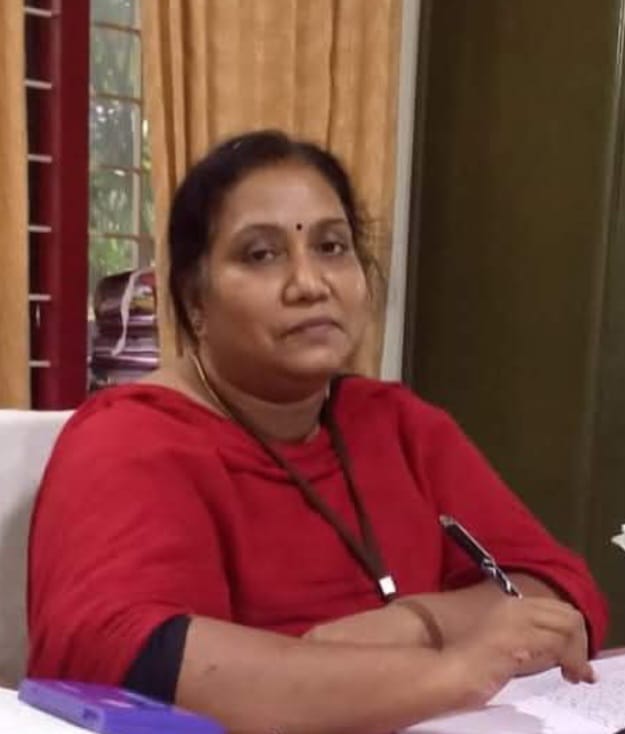
*Darsana K.R., residing in Venginissery, Thrissur district, is an employee at Venginissery Service Cooperative Bank and a passionate poet. Her published works include the poetry collections *Kavithaye Pranayichaval, Pranayathil Akappettathinte Ezhaam Naal, and Kuldharaayil Oru Pakal; the short story collection Thekkedathamma V/S Ramakavi (co-authored with Dr. Ajay Narayanan); the memoir Kunnirangunna Kothiyormakal; and the poetry study Kavithayude Veraazhangal. Her poems and articles have been featured in various periodicals and online platforms. phone : 9645748219, email darsanakr1973@gmail.com.

The cascade
Never looked back.
The rocks alone
Remembered
Its trails.
And the mountains
Afar
Never spoke
Of it
Again.

Matralina Pati, is a PhD research scholar working on marginal Indian bhasha literature (UGC Junior Research Fellow), a bilingual poet and a translator from Bankura, West Bengal. Her critical and creative writings have been published on national and international platforms. She has authored a book of translations titled Monsoon Seems Promising This Year (selected poems of postmodern poet Rudra Pati translated from Bengali into English).
JUST ONE LIFE IS LAID TO REST
Anindita Sen
Cheap kohl beneath the neon glare,
Colorless cosmetics worn.
Running from one end to the other,
A life completely roofless, torn.
A starved evening, lusterless eyes,
The rain-drenched highway gleams.
Washing away in the cleansing of sins,
Daily fade the promised dreams.
Dignity melts through the fingers' gap,
Burning like a raging flame.
The sprout of innocent love survives,
Crowded beneath an 'illicit' name.
The longing remains, the rain pours still,
August storms thrash the chest.
In the fluttering wings of trembling light,
Just one life is laid to rest!

Anindita Sen is a bilingual published author and Translator.She has published seven collection of poetry and four novels in her credit. She is a well known translator, a regular contributors to various literary journals in English as well as in Bengali. She was awarded a few literary awards. As a profession, she was a Biology teacher associated with Hem Sheela Model School based at Durgapur, West Bengal.She lives in Asansol, West Bengal.
THE EDGE OF TIME
Nandini Mitra
Like pearls that pour from heaven to the sand,
Two breathing hearts defy the closing space.
Though darkness terrifies a lonely land,
They find their comfort in a close embrace.
The whispering night may threaten with despair,
And heavy storms may make the going tough,
Yet sweetest dreams are confessed in the air,
When moonlit smiles assure them it's enough.
For love will choose to lose instead of win,
It does not falter when the odds are high.
A quiet satisfaction wakes within,
Beneath the vastness of a changing sky.
True love remains a bright, enduring sign,
A distant rainbow on the edge of time.

Nandini Mitra is a poet based in Kolkata. A post- graduate in English Literature from Jadavpur University. She is in the profession of teaching for last twenty -five years. She has published her first book of poetry,The Road To Tranquility, recently. Has worked as a freelance journalist for a prestigious Bengali magazine published from Kolkata. She is passionate about Music and is a trained classical singer. However, writing poetry has become an integral part of Nandini’s journey of life since 2011. She believes in the religion of humanity, compassion and love. She has a rich sense of metaphors and imageries and enthusiastic about weaving poetry relating to the realities of lives and the diversities of nature. Her poems have featured in various national and international anthologies.
BUBBLES IN THE RAIN
Susan Kurien

Like bubbles in the rain
We rise
Catching hues of earth and sky
Swishing by rocks and thorns,
So close
Yet so far away
In separate cocoons we lie.
Until a soul-mate bubble we meet
Unite and burst in joy
And spread into sweet nothingness.
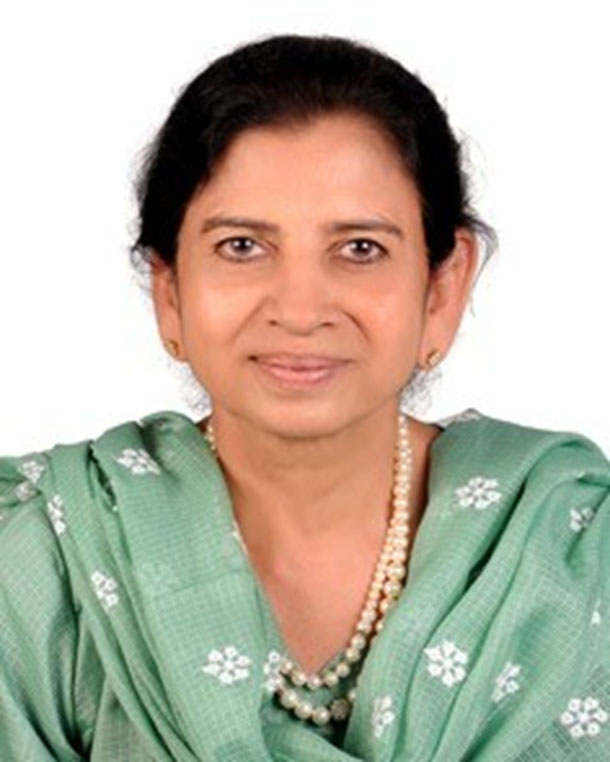
Susan Kurien is former Deputy General Manager of Reserve Bank of India. She holds Post-Graduate degrees in English Language and Literature and Economics, along with an MBA in Banking. She has co-authored two educational books, ‘English for Everyday Life’ and ‘English made easy for Competitive Exams’. She recently brought out an anthology of stories from around the world titled “FABULA”. She is currently working on a sequel to this, on stories from the Indian sub-continent. Some of her poems have been published in the anthology of poems ‘What Else is Rain’. She paints and doodles during her free time.
LIFE`S DAILY CALENDAR
Dr R. S.Tewari
Truly does experience enrich us every day and night ,
Makes one bolder and wisdomful,eliminating one's fright.
No matter how good or bad experience one undergoes ,
Lies in it a lesson whether one faces failure or ever grows.
Takes one this lesson as a torch bearer, serving in disguised form ,
One's faith, strategy with in-built positivity opens the doors of reform.
When someone's cheat selfish ends and lusty ventures collude together,
The strategy to fight out the situation emerges from life's daily calendar.
THE BOAT OF LIFE
Dr R. S.Tewari
Cry not over the past gone and left for you a lesson
To learn for both present and future, far from perversion.
Live in the present with open eyes and mind ,be not guided only by heart,
So that the path you move on is free from pebbles,assured not to thwart.
The future is always in the womb of both aspirations and uncertainties ,
Be optimistic and do your best ,yet be ever ready to embrace adversities.
The boat of life is to be sailed in the ocean of love,urges and unknown storms,
Better celebrate even petty pleasures and welcome all kinds of needed reforms.
CLIMB UP THE SUMMIT
Dr R. S.Tewari
Despite all odds and obstacles in the journey, be firm to get the goal ,
No matter,how high or moderate position you possess as your role.
It is the will ,self- designed destination and thirst insatiable
That multiplies zeal and vigour to build the empire truly incredible.
There may be ups and downs ,ifs and buts ,but none can block your way ,
Unless or until you yourself are weak and broken,retreat and run away .
Keep your morale high and aspirations unshaken, despite even downfall,
Almighty is with you to hold your hand, climb up the summit, high and tall.
GENERATIONS` PARAGON
Dr R. S.Tewari
Kindness ,compassion and considerateness with justice make one sublime,
And more than all is the one who on the right path makes the best use of one's prime.
Consistency on the committed path not only strengthens one but also refines one's art
Of facing ,fighting and advancing towards the destination, riding on one's own cart .
Better be simple, sober and silent without self- praise and acclamation,
While striving and sustaining on the path,be patient and attain sublimation.
Ever remember! Doing will do, visualise not an easy path once moved on ,
Leave your foot-prints of precision and perseverance to be generations' Paragon.
THE PLINTH AND PILLAR
Dr R. S.Tewari
The plinth and the pillar of a palace hold the existence of all walls and roof ,
The stature of a person is held by its character and conduct, need no other proof.
Neither money nor power or position, nor any kind of mundane or ethereal miracle
Can make one shine in the golden pages of history ,devoid of ethical rectangle.
Humanity shaded in humbled modesty with truth and trust in each relation
Be never unmindful of the sighs and shrieks of the shrivelled generation.
Let us strengthen the roots of love ,lore and beauty of life in its complicated journey,
To bridge up the gulf between man and man, wipe out their tears, and solace monotony.
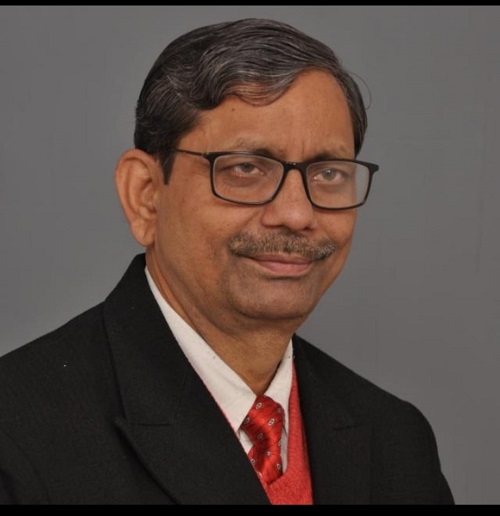
Dr R. S.Tewari 'Shikhresh' is a retired Assistant Director(O.L.)from Govt of India ,awarded by Honourable President of India,Honourable Governor of Uttarakhand and U.P.,Honourable State Home Minister (Govt of India) for commendable work in Official Language of the country is an M.A.( English Literature ,Hindi Lit. Philosophy ),PG Dip.(Translation and Journalism )and Ph.D.in Philosophy of Religion ,
Dr Tewari to his credit has 23 books of English verses,Hindi verses,books on Official Language and English Grammar.He has delivered more than five hundred lectures in various workshops on various topics.He has written more than a dozen of reviews of books in Hindi and English. Having started his career as an English teacher ,Dr Tewari worked as a Translation Officer, Hindi Pradhyapak and Assistant Director (Official Language) in Income -tax Dept.He has also served as a Consultant, Officilal Language and Communication in a training Centre of the ministry of MSME.
He has also worked in the Departments of Philosophy and Journalism in Agra University as a visiting faculty for a short span. Presently, he is a Visiting Faculty in the distance cell of D E I Deemed University, Dayalbagh ,Agra (UP),India.
FLIGHT FOR HER DELIGHT
Dr. Rajamouly Katta
In her jolly flight in the welkin,
Solitary and single,
Loitering and wandering,
In youthful exuberance
She has fancied dreams,
Cherishing, ever flourishing,
For the tender touch of monsoons,
That blows from the south-west,
For their dreamed communion,
For their lovely parley
In the love-couch for union comely
To turn in flight for her delight
From milk-white to dark blue
Amidst lightnings,
Spectacular dark in light, light in dark
As the bright spark,
She conceives in their union
For a shower in her to grow
Like a flower in her to glow,
Leaping from highs to lows
To flow a living river
Irrigating fields ever,
Quenching thirsts,
Satiating hungers,
All to turn lush-green
To shine in the sheen
Merges with her mother
In her eternal traverse
She is none but the cloud
In her flight for delight.
OCEAN IN DREAMS
Dr. Rajamouly Katta
The ocean is life with tides in motion,
So vast its boundaries are so wide
Its shores know no bounds
Time is its measure in pride
It shelters innumerable creatures,
Mighty and tiny, huge and small,
All are bound to become its slaves,
Admitting its majestic powers
Tides know indefatigable rides
With hoary roars ear-rending.
Eternity in enormity its stature,
The most lovable gift of nature,
So wide its mouth to gulp more
It can carve marks on the shore
Time can read its mysteries
So rich are its treasures in quantity
But salty in taste, its quality
The pearls spread its bottom
Immaculate shine in sheen
When rays kiss them in love.
It has dreams in streams
To render service for pleasures
In the auspices of scorching rays
It evaporates to form clouds,
In times of monsoons,
As mothers to bear showers of rain
For babes of seeds to germinate
To quench the thirsts of dry throats
And fulfil the deep hungers,
Offering life in selfless service all hours.
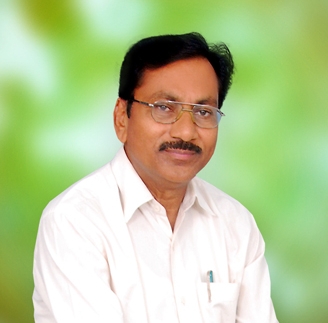
Dr. Rajamouly Katta, M.A., M. Phil., Ph. D., Professor of English by profession and poet, short story writer, novelist, writer, critic and translator by predilection, has to his credit 64 books of all genres and 344 poems, short stories, articles and translations published in journals and anthologies of high repute. He has so far written 3456 poems collected in 18 anthologies, 200 short stories in 9 anthologies, nine novels 18 skits. Creative Craft of Dr. Rajamouly Katta: Sensibilities and Realities is a collection of articles on his works. As a poet, he has won THIRD Place FIVE times in Poetry Contest in India conducted by Metverse Muse rajamoulykatta@gmail.com
ARE YOU HERE?—NORTH PORTUGAL--BETWEEN TWO TORNADOES
Pankhuri Sinha
Are you here?
Are you here?
I kept asking myself
Shaking myself violently
Grabbing my own shoulders
Like I was someone else
Standing infront of me
Sure, I am here! Red Roofs
Ascend and descend on the
Hill Slopes around me! Treks all around!
But I don't feel am here
Still tied up, pulled away
In a million other directions
Multiple kinds of politics
Not just knocking at my door
But tying me up and tearing
Me apart, like two separate
Tornadoes fiercely flying towards me
Ready to blow me away
And I resist fiercely
Clinging to the ground
'Gravity, gravity ! I call upon Newton!
Remind myself again
Of all thoughts of humans
Walking in storms, but this is a
Tornado! 'I am here, I am here '
I say it out loud! I repeat as an answer
Not a Question, I repeat till the village
Takes over me, with its beautiful medieval stone charm!
Or I let it take over me
But its not happening, the merger, the moment of dissolving, like earlier
Beauty, and that rustic Village charm
The Grapevine Green Shade
Continues to elude
When I used to loose myself
In the village, forget myself
Rather, and 'all my worries!'
As the cliche goes! Or all those
Worrying, about other things
Trying to get to me
Politicking , am sure , its not
Just newness that does it
The dissolution of frivolous
Bickering nagging around!
Its an art to push it away
And blend! Blend, blend!
But wait a minute
What is it? This tornado?
Can’t be local?! Though all national
Parks are political places!
And national means from all
Home-lands I have or had
Lost or found!?
Sure, from ‘back home’
Means from my country of birth
Doesn’t change, not even with
The Passport!!
Oh! but why isn't it happening?
Was organic! Even as I stood
Apart ?! Just in the scene
Part of it, with multiple differences, here, there
The charm of the new
Comes with a twist!
Lovely new place, mesmerizing , but I am
New to it, the other half
Of the Circle , so lots I
Don't know about, find out late
Its never been easy!
Its the comprehension of
The politics of information!
May be, its not just me
May be its not just you
Yes, I know am not the
Only one! Blend! Blend!
For God's sake blend
And don't be afraid to
Stand apart ! To walk that
Extra mile, or sometimes
Not walk that extra mile!
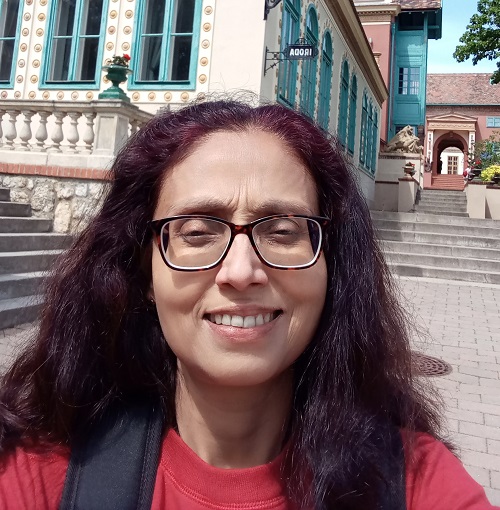
Pankhuri Sinha is a bilingual poet, story writer and translator from India. Two poetry collections published in English, two story collections published in Hindi, six poetry collections published in Hindi, and many more are lined up. Has been published in many journals, anthologies, home and abroad. Has won many prestigious, national-international awards, like the Girija Kumar Mathur Award, Chitra Kumar Shailesh Matiyani Award, Seemapuri Times Rajeev Gandhi Excellence Award, First prize for poetry by Rajasthan Patrika, awards in Chekhov festival in Yalta and in Premio Besio Poetry competition in Italy, Sahitto award in Bangladesh, and Premio Galateo in Italy for poetry in mother tongue. Has been translated in over twenty seven languages.
She has studied in Delhi University, Symbiosis Pune, SUNY Buffalo, and the University of Calgary, Canada. She has worked in various positions as a journalist, lecturer and a content editor. Has done writing residencies in Hungary and Bulgaria, and attended the Tranas Literature Festival in Sweden.
WEATHER, OR NOT?
Harisankar Sreedharan
Dying, the grass
blades rustled.
Drying, the tree replied.
What's the difference?
they asked. Waiting,
the tree whispered.
A breeze spread the word;
the brown leaves crackled,
We're parched.
That makes the wait
worth the while,
a low-hanging branch
reassured.
You're still green,
what do you know?
The withering undergrowth
suppressed a sigh.
Don't know much;
green and brown are
pigments in harmony;
what we let pass
only falls upon you.
The breeze returned
in hushed excitement.
Clouds are gathering afar,
some deserted droplets
said furtively before rushing.
Weathering, an everyday name
seasons - just a surname,
the branches swayed
in a memorial arch.
Like a mythical foreteller,
the cold lingered awhile,
reminding: tomorrow,
or its tomorrow, or the day after,
it's waiting that makes
all the difference;
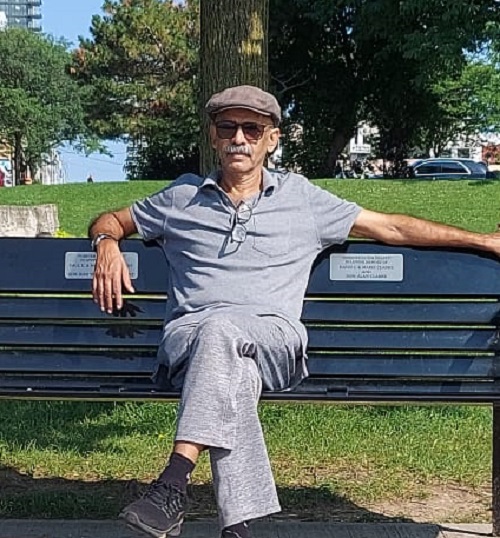
Harisankar Sreedharan is a banker by profession. Retired from service in 2020. Still active in the profession. Pursuing interests in literature - poetry and drama. Associated with the theatre movement. Own creations are in Malayalam. Occasionally write English poems too.
A Traveller... fascinated by the time unframed in places - seemingly enjoying the whiff of smoke from cooking pots and tea kettles, smothered by the conversion among the local people .... to stand, watch and let the world pass by ..
Passionate driver, bike rider and trainer.
THE SUN UNSEEN
Dr. Niranjan Barik
The road ahead now looks so clear,
The fog upon my windowpane
Has quietly vanished into the air.
The lenses on my spectacles
Mirror morning without a stain.
My eyes behold the world anew
The shapes that once shivered my spine
Now radiate with Budha’s smile
Those I feared as wild and strange
Now Walk beside me, perfectly human and humane!
Friends may turn into foes with time,
And foes may become friends in time;
Now all appear as friends indeed for eternity,
As souls connected by a symphony.
What miracle has changed the scene?
Did the Sun in the Sky perform this art?
Did its golden rays erase the mist
And heal the vision of my heart?
No, not the Sun that wanders in the Sky,
But the Sun that burns in the hidden chamber
The quiet flame of hidden treasure
That cleared the darkness in and out.
It swept away the dust and debris,
The shadows that clouded my view;
The world now looks so quiet and serene,
The tempest and tremor ,all gone.
The unusual happened
As the World outside was going at its usual!
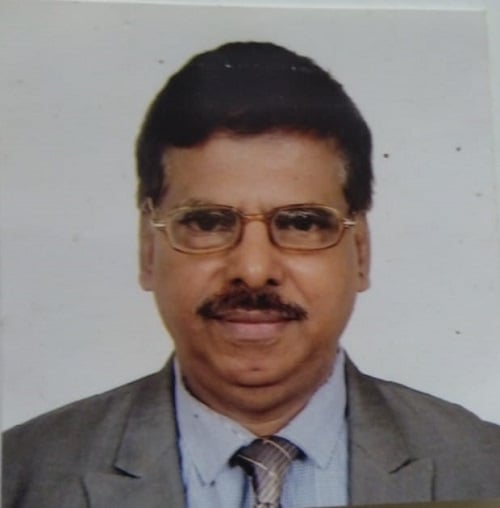
Professor Niranjan Barik ,formerly Professor and Head, Department of Political Science at Ravenshaw University also served as a Professor of Pol.Sc and Principal , Khallikote Autonomous College, Berhampur, Odisha. A Fulbright Scholar-in-Residence at Miles College, Birmingham, AL, USA in 2007-08 , Prof Barik evinces interest in reading and writing short stories and poems in Odia and English. His poetry book , “Freedom from Bondage: An Ode to Nature” published in 2023 was released in Bhubaneswar in December 2023.
EVERYTHING IN BETWEEN
Dr. Mrutyunjay Sarangi
I will still ride the horse
like the wind, and go miles
looking for you,
till the mountains will echo
the deafening hoofs.
The stars will burst into dazzles
and rain on the moonlit desert.
My memories will dig deep
to find your signature
on the parched papers.
The urn will wait for dead hopes,
the ashes will pour in
and fill it to the brim.
The echoes will fade over time.
the horse will look for a new saddle,
the shadow will leave the rider and move on
The leaves will fall
the sad skies will shed tears
to quench the flames
and save the forest from burning down.
I will walk on, horseless,
saddleless, looking for you,
my unfulfilled goal, my receding dream.
Ruminating on how life cheated me,
showing a path, but cutting the ground under.
I know deep within my heart,
the end is but a ghost of the beginning
and everything in between a sad chimera.
Dr. Mrutyunjay Sarangi is a retired civil servant and a former Judge in a Tribunal. Currently his time is divided between writing poems, short stories and editing the eMagazine LiteraryVibes . Four collections of his short stories in English have been published under the title The Jasmine Girl at Haji Ali, A Train to Kolkata, Anjie, Pat and India's Poor, The Fourth Monkey. He has also to his credit nine books of short stories in Odiya. He has won a couple of awards, notably the Fakir Mohan Senapati Award for Short Stories from the Utkal Sahitya Samaj. He lives in Bhubaneswar.
NOTES ON THE ROCK OF JOB CHARNOCK
Pradeep Trikha
by Jaydeep Sarangi, Dublin, Bhubaneshwar: Black Eagle Books, 2026, Pages: 87, ISBN: 978-1-64560-855-4 (Paperback)
The landscape of contemporary Indian English poetry is both vast and varied, yet it occasionally welcomes a collection so distinct in its resonance that it commands immediate critical attention. Jaydeep Sarangi’s Notes on the Rock of Job Charnock, published by Black Eagle Books in 2026, is precisely such a volume. Spanning a compact yet emotionally dense 87 pages, this collection serves as a luminous addition to the modern poetic canon. It is far more than a simple compilation of verses; rather, it offers a deeply meditative, riverine exploration of Kolkata—a city defined as much by its fluid waterlines as by its heavy, layered histories. Sarangi approaches his subject matter not as a detached observer, but as an intimate interlocutor, diving beneath the surface of the metropolis to uncover its mythic undercurrents, personal intimacies, and profound philosophical silences.
Sarangi himself occupies a unique position within the contemporary literary ecosystem. He is a trilingual or bilingual poet, a seasoned academic, and an insightful literary critic whose roots are deeply embedded in the soil of Jhargram and the urban fabric of Kolkata. Professionally serving as the principal of New Alipore College, his daily immersion in academic leadership and community life informs the intellectual rigour of his creative work. In this collection, Sarangi masterfully weaves tenderness with unrest, capturing the delicate friction between personal memory and public history. The early critical reception of the volume, highlighted by evocative jacket blurbs from acclaimed scholars and poets like Paul Sharrad and Kashiana Singh, rightly underscores its deeply soulful tone. These commentators draw attention to the image of the "lonely poet under the moon"—a recurring creative consciousness in Sarangi's work who yearns for a transcendent connection with the physical world, finding voices in stones, trees, rivers, and the deliberate blurring of the personal with the historical.
The title of the collection, Notes on the Rock of Job Charnock, is simultaneously grounded in historical reality and charged with poetic provocation. To understand the weight of this title, one must revisit the colonial genesis of Kolkata. Job Charnock (d. 1693), an administrator for the British East India Company, has traditionally been credited in imperial history books as the singular founder of Calcutta in the year 1690. This foundation myth rests on his establishment of a fortified trading post at Sutanuti, which was one of three historic villages—Sutanuti, Kalikata, and Gobindapur—stretching along the banks of the Hooghly River. Charnock chose this specific site due to its strategically defensible position and its favourable deep-water anchorage for European merchant vessels.
However, history is rarely a static or uncontested narrative. In a landmark 2003 ruling, the Calcutta High Court formally declared that Job Charnock should no longer be legally or historically regarded as the sole founder of the city, explicitly acknowledging the extensive, pre-existing indigenous settlements that thrived long before the East India Company's arrival. Sarangi enters this contested historical territory not to craft a colonial hagiography, nor to indulge in bitter historical revisionism simply. Instead, he transforms the "rock" of Charnock into a profound metaphor—a symbolic anchor meant to withstand the shifting tides of historical flux and cultural amnesia.
In one of the collection’s centrepiece poems, "On His Rock," the poetic persona boldly reimagines Job Charnock stripped of his rigid, imperial finery. The poet envisions the historical figure dressed instead in a traditional Indian dhoti, an image that is both startling and deeply subversive:
You rode and rode the horse to our ancestors, piercing their land, mud houses and cattle. You imposed a name on their land, not in their tongue, unless you realised how your dhoti got maps of nations, tattered
You would chuckle, What’s in a name? ... Who gave you the land? Not known. Leaves fall as their green fades.
This stanza serves as a brilliant poetic justification for the collection’s title. The "rock" ceases to be a passive monument to an empire; instead, it becomes an active site of intense interrogation. It is a space where institutionalised colonial foundation myths collide head-on with indigenous memory, local mud, and the inevitable laws of impermanence. Sarangi does not merely attempt to debunk history through aggressive polemics. Instead, he layers it with artistic nuance. He forces the reader to confront Charnock’s historic persistence alongside the eternal, uncaring flow of the Ganges, the heavy cremation smoke rising from Nimtala Ghat, and the complex, ongoing "afterlives" of the city itself.
By choosing the word "Notes" for his title, Sarangi signals to the reader that his approach to this vast historical landscape is intentionally fragmentary. These poems function as deeply personal jottings inscribed upon the grand narrative of the city—much like marginalia scribbled by an inquisitive reader on the borders of a massive, ancient monument. This stylistic choice allows the poet to balance two seemingly opposing scales of time: the longue durée of world history and the immediate, gritty reality of the present moment. While the verses evoke the sweeping, epochal movements of civilisations, they remain stubbornly, beautifully rooted in the immediate sensory details of the local environment—specifically, the thick "mud of a Kolkata riverbank."
Sarangi truly excels when it comes to evoking nature not as a scenic backdrop, but as a dynamic matrix of metaphors and symbols. He infuses Kolkata’s harsh urban grit with primal, elemental forces. Throughout the pages of this volume, rivers dominate the poetic landscape. They do not flow merely to provide local colour; rather, they act as living carriers of human memory, deep-seated desire, forced or voluntary migration, and eventual spiritual transcendence.
This thematic preoccupation is beautifully realised in the poem "Time Ferrying Rhythms," where the poet skillfully traces what can be described as a personal-global hydrology. The lines move with a rhythmic, aquatic grace:
I’ve known rivers going home with ancient hand holders, faithfully
Here, water becomes the ultimate archive of human experience, binding the individual soul to the collective history of generations past.
A central current running through Notes on the Rock of Job Charnock is the dual experience of displacement and belonging. Because Sarangi’s own life map connects the rural, forested terrains of Jhargram with the overwhelming urban density of Kolkata, his poetry naturally reflects the tensions of occupying multiple worlds at once. The poems explore what it means to belong to a place that has been continuously renamed, reshaped, and rebuilt by successive waves of rulers, migrants, and refugees.
The collection constantly reminds us that beneath the modern asphalt of Kolkata lies an older, wounded geography. The imposition of colonial names and administrative boundaries is contrasted with the organic, vernacular memory of the people who originally built their mud houses and tended their cattle on the riverbanks. By questioning the colonial attire and the unilateral naming of spaces, Sarangi recovers the voices of those marginalised by historical archives. Yet, his tone remains remarkably free of cynicism. There is a persistent tenderness in how he views the city's current inhabitants—those who navigate its broken streets, breathe its polluted air, and still find moments of quiet spiritual clarity by the edge of the river.
Structurally, Sarangi’s poetry in this collection favours an organic, fluid form that mirrors the movement of the rivers he writes about. He avoids rigid, artificial meters in favour of a conversational yet highly elevated free verse. His vocabulary balances a sharp, intellectual diction with deeply grounded, earth-bound imagery. Words like "mud," "smoke," "leaves," and "stones" are placed in direct conversation with abstract concepts like "transcendence," "hagiography," and "history."
This juxtaposition creates a unique texture that sets his work apart from contemporary urban poetry. He does not shy away from the ugly or painful aspects of the city—the "tattered" maps and the violence of colonial expansion are laid bare. However, his use of silence and ellipsis (as seen in the structural breaks in "On His Rock") invites the reader to pause and reflect on what is left unsaid. The space between the lines becomes just as important as the words themselves, representing the gaps in historical records where indigenous memories reside.
Ultimately, Notes on the Rock of Job Charnock stands out as a profound meditation on the passage of time and the resilience of human memory. Jaydeep Sarangi has achieved something rare in this volume: he has taken a heavily historicized, politically charged urban space and transformed it into a canvas for deep spiritual and philosophical exploration. The collection challenges us to rethink our relationship with the past, reminding us that the monuments we build and the names we impose are ultimately subject to the greater, elemental rhythms of nature.
For readers of Indian English poetry, historians of the postcolonial landscape, and anyone who has ever felt the strange, magnetic pull of Kolkata, this book is an indispensable guide. It leaves us with the unforgettable image of a poet standing beneath the moon, listening intently to the quiet confessions of the stones and the rivers, and recording them with absolute fidelity for generations to come
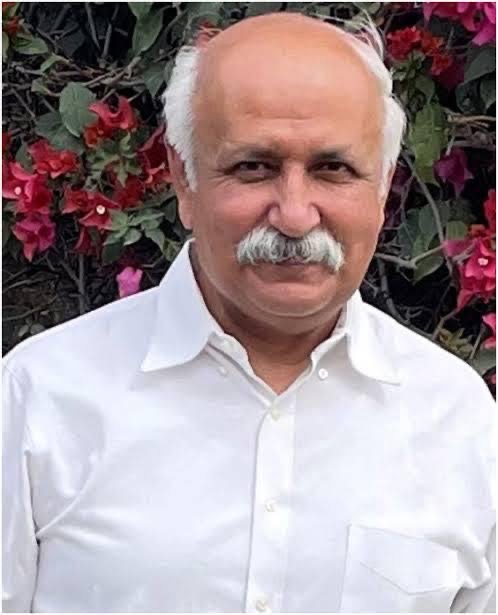
Works Cited
Barnes, Julian. The Sense of an Ending. Vintage, 2011.
Bennet, Catherine. The Asian Australian Migrant Experience in Australian Literature: 1965–1995. https://api.research-repository.uwa.edu.au/ws/portalfiles/portal/40722918/Bennett_Catherine_P_1995_compressed.pdf.
Brewster, Ann. “Precarity, Violence and the Intersection of Race, Class and Gender in Roanna Gonsalves’ The Permanent Resident.” Australian Humanities Review, 27 May 2019, https://australianhumanitiesreview.org/2019/05/27/precarity-violence-and-the-intersection-of-race-class-and-gender-in-roanna-gonsalves-the-permanent-resident/.
Datar, Manik. “My Sister’s Mother.” Of Sadhus and Spinners: Australian Encounters with India, edited by Bruce Bennett et al., HarperCollins, 2009, pp. 185–89.
Gonsalves, Roanna. The Permanent Resident. UWA Publishing, 2016.
Gunew, Sneja. Post-Multicultural Writers as Neo-Cosmopolitan Mediators. Anthem Press, 2017.
Helff, Sissy. “Shifting Perspectives: The Transcultural Novel.” Transcultural English Studies: Theories, Fictions, Realities, edited by Frank Schulze-Engler and Sissy Helff, Rodopi, 2008, pp. 75–89.
---. “Locating Indo-Australian Fiction in Multicultural Australia.” Australian Made: A Multicultural Reader, edited by Sonia Mycak and Amit Sarwal, Sydney UP, 2007, pp. 139–59.
Huggan, Graham. Australian Literature: Postcolonialism, Racism, Transnationalism. Oxford UP, 2007.
Khan, Adib. “Trends in Australian Fiction.” Kosmopolis, no. 2, 2002, Centre de Cultura Contemporània de Barcelona. www.cccb.org/rcs_multimedia/Adib_Khan-eng.pdf. Accessed 10 Jan. 2008.
Mycak, Sonia. “Transculturality in Australian Literature: Multicultural Writing Practices and Communities.” Journal of Australasian Studies, vol. 1, 2004, pp. 59–66.
Patel, Rashmi. “ Mercy” in An Anthology of Stories by Australian Writers of Indian Origin. Eds. Paul Sharrad & Meeta Chatterjee Padmanabhan, New Delhi: Orient Blackswan, 201, p.28-31
https://rashmipatel.wordpress.com/2018/09/17/short-story-in-anthology-of-stories-by-australian-writers-of-indian-origin.
Patel, Rashmi. “Mercy.” Of Indian Origin: Writings from Australia, edited by Paul Sharrad and Meeta Chatterjee Padmanabhan, Orient Black Swan, 2018.
Gonsalves, Roanna. The Permanent Resident. UWA Publishing, 2016.
Sarwal, Amit. “Narratives of ‘Marginal’ Men: Selected Short Stories of South Asian Diaspora in Australia.” Culture, Society and Masculinities, vol.?5, no.?1, 2013, pp.?59–74. www.researchgate.net/publication/275991291_Narratives_of_Marginal_Men_Selected_Short_Stories_of_South_Asian_Diaspora_in_Australia.
Singh, Supriya. Money, Migration and Family: India to Australia. Palgrave Macmillan, 2016.
Stratton, Jon. “‘(Dis)placing the Jews: Historicizing the Idea of Diaspora.’” Diaspora, vol. 6, no. 3, 1997, pp. 301–29.
Turner, Graeme. National Fictions: Literature, Film and the Construction of Australian Narrative. 2nd ed., Routledge, 2000.
White, Patrick. “Epigraph.” Happy Valley. Text Classics, 1939, p. 6.
A MUST-READ STORY OF "A JIVE DOWN MEMORY LANE", AN EAGLE`S VIEW
Dr. Ajay Narayanan
"A Jive Down Memory Lane", written by Ailey Denis, captures the reader’s attention in many ways.
As I read it, I found myself immersed in layers of romantic moments and the profound depth of friendship. These two ‘emotional poles’ as the author indicates, unfold not only the characters’ feelings but also the organic growth of human nature. The story beautifully reveals the warmth of the bond shared between Jessy Kurian and Shane D' Mello, where friendship and romance intertwine with remarkable sensitivity. Jessy herself describes these experiences as her “wealth of thoughts”, a phrase that aptly reflects the emotional richness of their journey.
The narrative revolves around its central character and narrator, Jessy, as she revisits her childhood memories at Frances Hill. Her recollections are deeply intertwined with the neighbourhood, the D’Mello and Murray families, whose presence lends warmth and vitality to the story. Their Anglo -Indian lineage adds a rich layer to the story as it unfolds through the eyes of an ordinary non-Anglo- Indian girl.
The narrative organically unfolds as Jessy’s childhood crush on Shane gradually blossoms into love, though their relationship is marked by moments of tenderness as well as conflict. She never reveals her true feelings for Shane but on the contradictory, he does. The members of the D’Mello family are portrayed as affectionate, lively and full of joy, enriching the novel with their vibrant presence.
Surrounded by numerous children, Jessy’s childhood is presented as a delightful and inclusive experience, drawing the reader effortlessly into their close-knit circle. We soon become familiar with children like Erica, Martin, and Liam, whose presence makes the world of Frances Hill feel authentic and welcoming. In one sense, this is a coming-of-age story for teenagers; in another, it serves as a nostalgic memoir for adults, inviting them to revisit the innocence, friendships and emotional landscapes of childhood.
One of the most engaging aspects of the novel is the manner in which Ailey Denis anchors the narrative within a distinct historical timeline. These subtle references help readers situate the story in a familiar social and cultural context. For instance, the year 1994 is recalled as the year when Sushmita Sen and Aishwarya Rai brought home the coveted titles of Miss Universe and Miss World. Likewise, the arrival of Fanta and other fizzy drinks in India is alluded to as taking place “by the end of the mid-90s.” References to Doordarshan further evoke an era when television began opening windows to the wider world, bringing distant cultures and events into the living room. Such details lend authenticity to the narrative and evoke a strong sense of nostalgia.
Equally noteworthy is the gentle humour that runs through the story. Incidents such as the amusing misreading of “I hate you” as “I mate you” add light-heartedness and charm. The novel also incorporates expressions rooted in Malayali culture, such as ganji water (rice gruel), along with snippets of familiar song lyrics. These cultural markers enrich the narrative, making it feel both natural and deeply rooted in everyday life. Together, the humour and cultural nuances infuse the story with warmth, vitality and authenticity.
The concluding chapters leave the reader with a profound sense of loss as Shane gradually disappears from the narrative. The delicate, often indecisive relationship between Shane and Jessy—where they rarely apologise to one another, yet care so deeply for each other—evolves naturally from childhood companionship into a tender love story before culminating in separation. It is this emotional progression that gives "A Jive Down Memory Lane" the qualities of a poignant romance.
One passage beautifully captures the innocence and subtlety of their growing affection:
“Jessy smiled as she caught his eye from a distance. She motioned for him to calm down and followed it up with a wink! Shane’s mood changed altogether in an instant!”
The effortless flow of the narrative vividly portrays the emotional bond developing between the two young hearts. Though they are portrayed as ‘polar opposites - much like a Libra and an Aries’ - they remain irresistibly drawn to each other. Set against the backdrop of the era when the blockbuster Dilwale Dulhania Le Jayenge captivated audiences, their story carries the charm and nostalgia of the 1990s.
A turning point arrives when Jessy leaves Margalo, bidding farewell to her childhood friends and to Shane, as she moves to Mattankara in Kerala. The move marks the beginning of a new phase in her life. As she matures, the narrative also offers a deeper understanding of her mother, Valsa, a resilient single parent whose strength quietly shapes Jessy’s life.
The story reaches its emotional and the unexpected climax which is shocking and heartbreaking, leaving not only Jessy but also the readers with a lingering sense of grief. It is this deeply felt emotional ending that makes "A Jive Down Memory Lane" a memorable and moving novel.
And there the narrative comes to an end. Yet, it is more than just a story—it possesses a distinctly poetic touch that lingers in the reader’s mind long after the final page.
The narrative style is simple, fluid and highly engaging, carrying the reader effortlessly through Jessy’s emotional journey. At times, it becomes intensely evocative, drawing us into the warmth, pain and nostalgia of her memories. There is little more to be said about Jessy’s life; the story itself speaks with sincerity and grace.
In my view, “A Jive Down Memory Lane” will be a good reading experience for anyone who appreciates stories of friendship, first love, family and the enduring power of memory.
The glossary at the end of the book was particularly useful, guiding the readers through the culture and tradition of the Anglo-Indian way of life and helping them appreciate its unique finer details.
The book is published by APK Publishers.
You may reach the author at aileymdenis@gmail.com or instagram.com/aileydenis
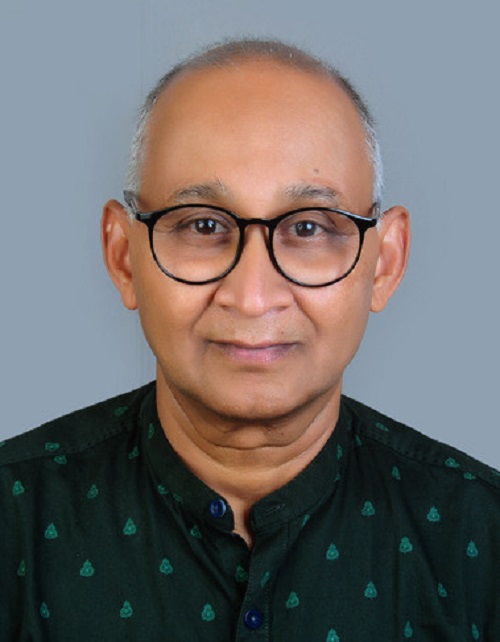
I am Ajay Narayanan, born and raised in Kalamassery, in Ernakulam district, Kerala. I come with about 35 years of teaching experience abroad. While pursuing my career, I was afforded an opportunity to engage in research in the field of education. After my retirement from work during the Covid era, I started exploring Malayalam literature. In a way, it was a journey of self-realization. So far, I have published three books in Malayalam, edited a couple of anthologies of poems and short stories including a book in English.
Published books - Parabola - Anthology of poems, in 2022. Avadhootham - Stories, in 2023. Thekkedathamma v/s Ramakavi - Stories, co authored by Darshana, in 2023.
I found my writing activities self revealing, fulfilling and empowering. I thoroughly enjoy these initiatives. The founding stones of my achievements were laid by my late parents Sree Narayanan and Sreemathi Sundaram. My wife, Umadevi and our only child Dr. Bhavana (Ireland) supported me in the process of becoming a writer. I believe that I am still learning.
Viewers Comments