
Literary Vibes - Edition CLXX (30-Oct-2026) - STORIES
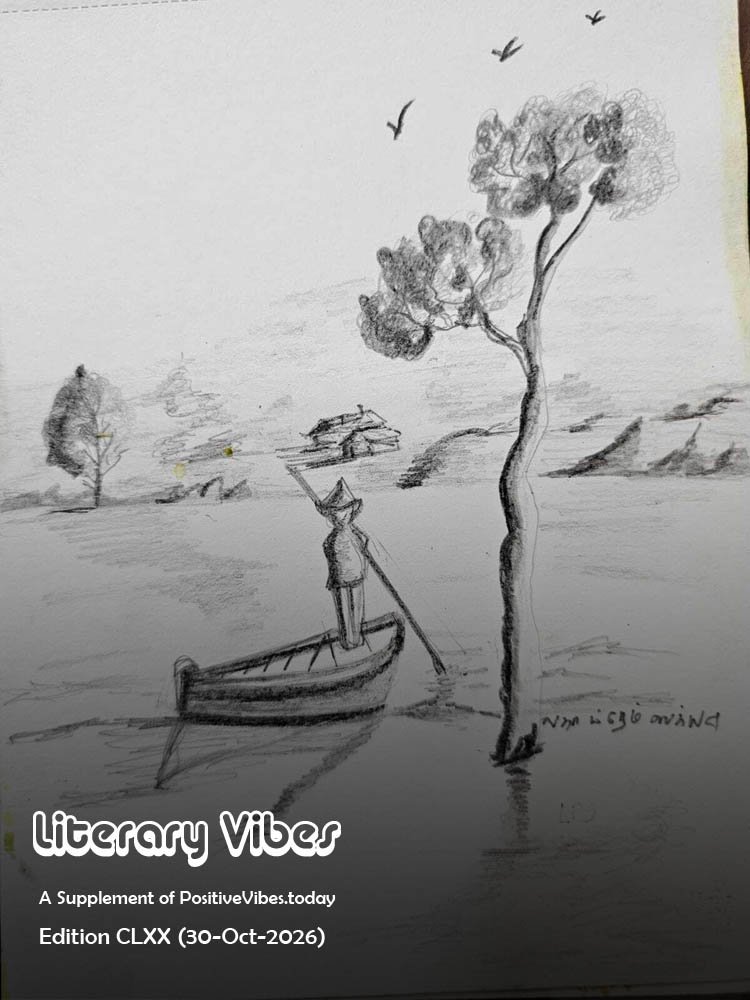
Title : Alone (Charcoal Pencil by Lathaprem Sakhya)
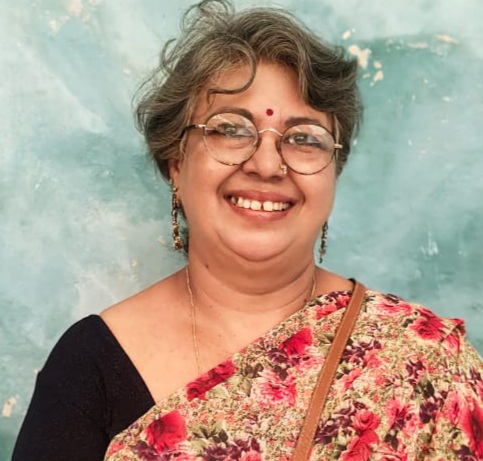
An acclaimed Painter, a published poet, a self-styled green woman passionately planting fruit trees, a published translator, and a former Professor, Lathaprem Sakhya, was born to Tamil parents settled in Kerala. Widely anthologized, she is a regular contributor of poems, short stories and paintings to several e-magazines and print books. Recently published anthologies in which her stories have come out are Ether Ore, Cocoon Stories, and He She It: The Grammar of Marriage. She is a member of the executive board of Aksharasthree the Literary Woman and editor of the e - magazines - Aksharasthree and Science Shore. She is also a vibrant participant in 5 Poetry groups. Aksharasthree - The Literary Woman, Literary Vibes, India Poetry Circle and New Voices and Poetry Chain. Her poetry books are Memory Rain, 2008, Nature At My Doorstep, 2011 and Vernal Strokes, 2015. She has done two translations of novels from Malayalam to English, Kunjathol 2022, (A translation of Shanthini Tom's Kunjathol) and Rabboni 2023 ( a Translation of Rosy Thampy's Malayalam novel Rabboni) and currently she is busy with two more projects.

Title : Scary pumpkin by Swatishree Parija

Swatishree Parija is from Jagatsinghpur district, Odisha. She is a Graduate with Honours in Geology and has recently earned a B.Ed. degree. She has also qualified in the Teachers' Eligibility Test (TET). She is currently preparing for competitive exams.
From her school days, she has had a keen interest in creative activities. Her hobbies include writing, painting, reading books of different genres and photography. She has been writing short stories and poems in Odia, English, and Hindi since for the past many years.
She has actively participated in various speech, painting, and essay-writing competitions and has received several awards and prizes at the school, district, and state levels.
Table of Contents :: Short Story
01) Prabhanjan K. Mishra
02) Sreekumar Ezhuththaani
RETURNS UNFILED
CAIN`S LEGACY
MADNESS
03) Rabi N. Dash
THE WHITE ROSES OF THE HAVELI
THE LANTERN ON THE OLD ROAD
THE RIVER KEPT ITS OWN COUNSEL
THE THINGS THE RIVER WOULD NOT CARRY
04) Usha Surya
05) Deepika Sahu
WE ARE INDIAN WOMEN, OF COURSE ….
06) Krupasagar Sahoo
07) Mary Josey Malayil
08) Anil K Upadhyay
09) Upali Aparajita
CONNECTED YET LONELY: ARE WE LOSING THE ART OF MEANINGFUL CONVERSATION?
10) Annapurna Pandey
I WAS A FIRST-GENERATION "BRAMAID"
11) Sumana Ghosh
12) Sujatha Krishnamurthy
13) Dr. Tangirala SreeLatha
14) Satish Pashine
THE THIRD CHAIR
STILL THIRTEEN
15) Shri Gokul Chandra Mishra
NIB KAROLI BABA N KAINCHI DHAM
16) Ashok Kumar Mishra
17) Triloki Nath Pandey
18) S. Sundar Rajan
19) Sathya Venkatesh
20) Dr. Viyatprajna Acharya
21) Dr. R. Unnikrishnan
22) T. V. Sreekumar
23) Bankim Chandra Tola
HUNTERS AND WOOD CUTTERS TURN FARMERS – A PHENOMENAL TRANSFORMATION. (A LEAF FROM MEMORY FILE)
24) T. V. Krishnakumar
SREE DHANWANTHARI TEMPLE NELLUVAI
25) Sreechandra Banerjee
26) Dr. Rajamouly Katta
27) Mr Nitish Nivedan Barik
LEAF FROM HISTORY: STORY OF A TRANSFORMATION OF A CITY, FROM SMOKE TO LIGHT
28) Dr. Mrutyunjay Sarangi
THE BOARDED-UP WINDOW
Prabhanjan K. Mishra
Aditya walked with his childhood school friend Arun along one of the main streets of Guwahati town. They entered a side lane. The buildings and trees looked strange to him. His friend explained, it was because new things had been added and many old ones removed in the last fifteen years when Aditya had been away from Guwahati. Aditya wondered, where did he spend those fifteen years. He could not recall that morning any of the events in those fifteen years as had been mentioned by his friend Arun. He suffered from, perhaps a temporary memory loss that morning. He decided to see a shrink soon.
He recalled his uncle, a doctor, once had been speaking to his father about such memory loss. In addition, Aditya felt, to his memory’s tricky behaviour, the new constructions and trees, and the removal of the old ones, besides the widening and modernization of roads, and flyovers, added to his confusion, giving Guwahati a new geographical face.
Now, they were turning left to enter an apparently magnificent portal, but presently crumbling and discolored, leading to an old double-storey mansion. Aditya could recognize the house from his past. The crumbling building belonged to Arun’s joint family, where Aditya had stayed a year in the past before his matriculation examination of standard ten. His room was on the upper floor.
Even during his school days, the building had looked the same - walls patchy with dead moss, ancient and musty, tufts of small ferns, grass, and dwarf Peepal twigs poking heads out of the cracks in the building’s external walls, as if to take a curious peek at what was going on around. It had not changed at all from outside, and Aditya guessed, it might be still the same inside, cozy, warm and homely. The big house stood resolute in its heritage grandeur of a ruined sprawl, a badly maintained granny-time building sitting like a sick old animal on its haunches.
They went in, Aditya could recognize Arun’s mother from the main entrance. She was dusting articles with a soft-broom like duster in her large drawing room. She had her back to them. Aditya recalled of having tea and snacks almost every morning in that very sitting room with the family members, the year he lived there after shifting from his hostel on an affectionate invitation of Arun’s family. That was the last year of his schooling.
Arun’s mother looked aged, having put on weight, but was still a pretty and spritely aunty, judged from her profile and agile movements. “Wait”, Aditya told to himself, “Why is she wearing a white sari, and no ornaments?” Aditya was going to question Arun but, his eyes moved to what his aunty was dusting, a big garlanded portrait of Arun’s father hanging on the wall. He found her changing the portrait’s withered garland of jasmines with a fresh one. Aditya knew the answer. Arun’s father was no more. Aditya avoided asking the embarrassing questions… when, how, etc.
His eyes welled up with tears. He had looked forward to meet this friendly benevolent uncle, Arun’s father. Aditya recalled he was generous and affectionate. He stood at the entrance of the drawing room with his friend, patiently till Arun’s mother turned to them. Finally, she turned to look in their direction and cringed as if to have seen a ghost. But her unease passed quickly away.
She broke into a broad smile, “Isn’t it Aditya, my boy, yes of course, it is you, Aditya?” She came closer with welcome in her happy voice, and gushed, “You have grown, my boy, into a handsome man like my son Arun during these fifteen years you have been away from us. Your absence has appeared like a millennium, though. But, ….” She stopped short abruptly, swallowed her words, and added like in a soliloquy to herself very softly, “Oh, my wild thoughts! It was a mistake for sure, might be the work of rumour-mongers!” But her soliloquy did not escape Aditya.
Aditya had seen her cringing when her eyes had fallen on him and now the soft soliloquy, made him curious to know what strange things had transpired during his absence, said to be fifteen years.
He bent down to touch Arun’s mother’s feet in traditional salutation of his Assamese community. But she stepped back cautioning, “Don’t touch a widow’s feet. That would bring bad omen to you.” Aditya hesitated a bit before asking, “What rumor were you mumbling about, auntie? Did they concern me?”
But Arun’s mother gave another frank smile and moved her hand in a sweeping gesture like removing certain cobwebs in between them, “Oh, it is nothing my son. Might just be a sensational story spread by the gossip-vine after the big disaster fifteen years ago. Do you remember Aditya, a mega cyclone in 1999 wiped out thousands of villages on the east coast of Odisha? You and your father were visiting the port town Paradip on the sea there for some work that fateful day. After the cyclone, you two remained untraced for a few days and there were all sorts of contradictory rumours.”
Aditya, in fact, couldn’t make head or tail of the disaster, Arun’s mother was referring to. He could not recall a thing about what all that had happened in 1999. But he didn’t want to show his temporary memory loss. He bobbed his head in agreement.
Arun’s mother, blessed him, “Live long my son. God bless you.” She then diverted the topic, “We will tie loose ends of the missing family details later, dear me Aditya. Let me fix a lunch for the two of you. Go with Arun, and sit at our little table in the kitchen. It is almost midday, and it’s too late to give you snacks or tea. While waiting for lunch I will give you a cup of lemon drink that you had always loved to sip before meals when you lived with us.”
Aditya hesitated, collected his wits, and said, “Sorry auntie, I will have lunch and tea with you some other day. I am to rush back now. I wanted to meet you very badly. But I have promised my cousins to have lunch with them, I mean, at my cousin’s house. They would be waiting for me at the lunch table and not eat until I join them.”
Aditya spontaneously had said that white lie to Arun’s mother even before he found a more plausible reason to avoid her offer of lemon drink or lunch. He had in fact no lunch invitation from his cousins. His cousins didn’t even know he was in the town. But he had been shaken by all the weird incidences that had been happening to him from that morning. He didn’t know if he was losing his mind. He didn’t want anything awkward to happen again at Arun’s place. He was sure that the temporary phase would pass quickly.
He was not sure of that evil spell, that had started surrounding him with a magical grip from that very morning. He had developed a phobic fear of eating or drinking in the presence of others from that morning because the functions involved lifting the food or drink to the mouth. He was starving besides badly missing a glass of water and a cup of tea. Still, he had to tell a lie and refuse the offers of Arun’s mother.
A shiver climbed up his spine to recall what all that had happened that morning. He remembered walking from the Kamakhya bus stop around six that morning, though he couldn’t remember from where he had boarded the public transport.
He was loitering about the streets of Guwahati desultorily, yet with a lighthearted pleasure, where he had done his schooling. Most areas had changed but a few yet retained their old identity that helped him to find his ways. He found the Suleiman Restaurant, one of his old haunts of school days. Its exterior and signboard looked newly done, larger, painted brighter and upmarket.
The town had started churning around him with the hubbub of people and vehicles. A busy day of Guwahati town had started early. He entered the restaurant, and found Suleiman chaachaa (uncle) sitting at his restaurant’s counter. He had aged, and gathered fat and a double chin.
Aditya on his way to the wash basin at the other end of the dining space to wash his hands and face, greeted Suleiman chaachaa, but found him looking the other way. He took it as the old man’s lack of attention. At the wash basin, no water poured out. He gave up the idea of washing.
He found the furniture new and better than earlier ones. The restaurant was filling up, and waiters were taking orders. He sat on a chair and waited for the waiter to order his habitual toast-butter with a cup of sweet red tea.
He felt thirsty. He lifted a glass of water from the water-filled four glasses kept at the middle of his table to soothe his dry throat. But nothing happened, the glass didn’t move, his hand repeatedly failed to bring the glass of water to his lips and his empty hand came to his lips. Aditya panicked. Was the place haunted? Aditya had heard about many practicing black magic near and around Devi Kamakhya. He ran out of the eatery like being chased by a swarm of angry bees.
Aditya walked along the road with hurried steps, to go as far away as possible from the haunted restaurant. He made out from the landmarks, it was Bhanga Garh area, and he was walking along the broad avenue that went finally to the giant bridge across the Brahmaputra River but before that, sending a road, forking away to the right to lead one to the Kamakhya Temple on a hillock.
What happened next was spookier and more unnerving than what had already happened. Aditya was walking carefully on the left edge of the busy road, keeping himself at a safe distance from the speeding vehicles. Many were walking, carrying bags with their purchases, and a few carrying officious looking briefcases or workman’s backpacks.
He noticed a young man of his age walking on the same side of the road in the same direction as his, but a few paces ahead of him. The young man was tastefully dressed with a pair of jeans and a T shirt, and his gait and shape from behind looked familiar. But Aditya could not place him. Suddenly a vehicle from the road swerved to the left as if to run over the young man looking familiar.
Aditya, by reflex, jumped ahead to pull the familiar looking young man out of the vehicle’s way. But his grip on the young man failed, as it had failed to lift the glass of water in the restaurant earlier. In the process, he lost his own balance and fell to the ground on the roadside. Luckily, the vehicle surging towards the young man veered away at the last second before running over Aditya or the young man.
The emergency had stalled on its own. Aditya staggard up to a standing position. The young man appeared to have understood Aditya’s noble intention of saving him from being run over. So, he came over uttering profuse thanks and said, extending a hand of friendship, “Arun here. May I know your name, my good friend?” At exactly that instant Aditya recalled in a flash that the familiar young man before him was none other than his school days’ close friend Arun.
He said so, and introduced himself, opened his arms to hug Arun, but then held himself back saying, “No Arun, I have not taken bath. I would not be comfortable to hug you.” Aditya was thinking, “Thank God, I recalled my morning experience in time. Who knows, it could have been an embarrassment for me before my school day friend. I must be careful to avoid eating, drinking, or touching any one before the spell passed. And until I am doubly sure of that.” He was conscious of Arun asking aloud, “O, Aditya! Where were you all these fifteen years?”
That was how Aditya and Arun had found each other after the hiatus of roughly fifteen years, as Arun fondly recalled. And it was sort of a wakeup call for Aditya from his fifteen-year’s amnesia. Both had grown into young men, each of around thirty years of age. They had left behind their childhood a decade and half behind as school-day chums.
Arun demanded, “Aditya, you are to tell me what all that has happened in your life in these fifteen years we have stayed apart from me.” Aditya felt a wave of chill. He couldn’t remember a thing, “Where had he been, what had he been doing?” There seemed a total memory loss for that period. He felt that the morning was behaving weird with him, but hoped that his memory would clear up soon and catch up with his past.”
Aditya resorted a trick, “My dear Arun, I am a guest to you now. So, my needs are superior to yours. You say your story and mine would follow your story.” Aditya also hoped to get some inkling from Arun’s narrative about those apparently lost fifteen years.
The two friends chatted away excitedly while walking slowly. Arun proposed to go to Suleiman chaachaa’s restaurant, their regular old haunt in school days, but Aditya shook his head, “No, it would be too crowded to talk undisturbed. Rather, we go to the Christian cemetery, that was a minute away. It might still have its quiet peaceful ambience with flowerbeds, benches under the shade of trees spread around the demarcated area dedicated to cemeteries.”
The two friends ambled towards the graveyard, sat on a bench, and spent hours, meandering in the memory lanes of their school days. All the while Aditya was racking his brain to recall what had happened after he completed his matriculation final examination, and all along look for a clue from Arun’s stories. When Arun finished describing his portion, and Aditya’s turn came, the latter looked at his watch and stood up. He said, “Chum, the rest can be enjoyed when we meet tomorrow. It is too late.”
Then he went dreamy, “Before coming here, I had a tremendous urge to visit your old bungalow and meet your parents. Your house is not far from here, if I am remembering correctly. Let’s go to your house first. Meet your parents and others.” Before Arun could say anything, he found Aditya already on his way quite a few paces ahead. So, he followed Aditya out of the graveyard.
Aditya would recall, he was from a village, a few kilometers from Guwahati town, across the river Brahmaputra. As his village had no good education facility, his father had put him into a good school in Guwahati town to study from class eight to ten, staying in the school hostel. His father’s younger cousin lived in Guwahati town and was appointed as Aditya’s local guardian. Aditya would at times spend weekends with his cousin uncle’s children of his age.
By and by, he developed closeness with Arun, one of his classmates, and spent some weekends at Arun’s house also on invitation by Arun’s affectionate parents. Arun’s house was a palatial but a bit ill-maintained and old rambling mansion, falling to pieces for its age and lack of repair.
Arun lived in a joint family with his parents and his father’s older brother, and the older brother’s wife. Arun was the only child of his parents. Arun’s father’s older brother whom he called uncle was childless. Arun’s uncle and auntie looked upon Arun, their only nephew, as their own child. Arun was family’s apple of the eye. When Aditya, started visiting them on weekends and holidays, he was accepted like a second child of the family. Everyone in Arun’s family loved Aditya.
Aditya liked the warm friendly members of Arun’s family, and became a regular visitor to their crumbling mansion. By the starting of his third year and standard ten at his school in Guwahati, Aditya was allotted a room at the corner of the large verandah on the upper floor of Arun’s old mansion, by the side of the room of Arun’s uncle and auntie were occupying. He was asked to move in with the family permanently to which Aditya’s father had no objection.
Also lived on the same floor in another adjacent room, the family’s permanent elderly house-help Shanti Maasi (auntie). Shanti Maasi was treated as a senior member of Arun’s family by the four elders, Arun’s parents and uncle-aunty. She was respected as the family’s unofficial head. Arun addressed her as dadi (paternal grandma), and Aditya had found a grandma in Shanti Maasi also.
Aditya loved his narrow quilted-bed in his room that was placed next to the window. The old window was falling apart and was boarded-up from the inside of the room, by fixing thin wooden planks with nails, to avoid its falling into pieces by disrepair. Most of the windows of the rooms upstairs were like that, boarded up from inside.
In many windows, the window-panes had fallen off leaving gaping holes. Those were the unoccupied rooms and none had bothered to board-up those windows. Aditya, while lying down on his bed, could see through the gaps of the nailed wooden boards splinters of the sky, a slice of moon and a star or two by night. During the day at times, shafts of sunlight entered through those gaps like bright daggers.
Aditya now stood up for leaving, promising to return the next day. He ambled out of the room towards the outer big portal-cum-gate of the walled compound that would lead him to a side lane emerging into the main avenue.
Aditya after refusing Arun’s mother’s offer of lemon sorbet, went out of the bungalow pretending to go to his cousin’s place for lunch. But Arun’s mother who was affectionately watching his receding figure from the drawing room’s entrance noticed his funny hesitant gait, as if his legs were unwilling to leave.
She noticed something terribly amiss. Aditya appeared to be walking in his sleep, as if floating away weightlessly. Hairs on her nape stood up with a funny sensation. She rubbed her eyes and looked again. Aditya was not there, he might have turned to the right towards the main road at the portal-gate, gone out of her line of vision. She smiled to herself, “One shouldn’t Watch too many Ghost Stories in TV serials!”
Arun’s mother recalled the reporting in TV and local newspapers after the mega cyclone of 1999. Nothing was reported specifically about Aditya and his father, who had gone to Paradip on some official work, except that they had been washed away into sea during the mega cyclone when the sea washed away as far as around 30 kilometers beyond its coastal line. But she had learnt after a few days later that two highly decomposed bodies were salvaged from a ditch and handed over to Aditya’s mother. But Aditya’s mother had rejected them outright as not belonging to her son or husband.
Arun’s mother had further learnt that Aditya’s mother had lost her mind. The villagers had accepted the two bodies from the police and had cremated them with full Hindu rites. Subsequently fifteen years had passed and she had no other news about Aditya’s family.
But, Aditya’s reappearance that morning with her son Arun had made her memory topsy-turvy. “Might be” she thought, “she had missed the news of Aditya returning home later. She made a mental note to check with Aditya about his father when he returned the next day.” She took her son inside to have his lunch in the kitchen with her ass it was their practice those days. The entrance door of the house was left unlatched as always except nights.
But Aditya had just stopped short of joining the main road after exiting from Arun’s house. He stopped, stood shifting his weight from one foot to the other, hesitating. He turned around and looked affectionately at the old mansion, looking mottled with its paint peeling off and patches of grey-white mildew and greenish lichen repainting the surface like a modern murals work. He looked at the boarded-up window of his own former room, its’s restful bed behind that window where he had laid his tired body in many occasions. He missed it.
There was immense fondness in Aditya’s eyes for the dilapidated mansion, especially when he identified the boarded-up window of the room that was his lair for a year. Now, like an awakening, it struck him, the purpose his visit of Guwahati was primarily for finding his old room in the dilapidated mansion and take his final nap in his own former bed. The rest, like meeting Arun and his family members were incidental. That revelation spurred him to reach his real goal, his room on the upper floor of the old mansion quickly, and he felt an impatience.
He suddenly felt very tired and wanted to rest his tired soul on his own familiar bed. But, he didn’t know what he would explain to Arun and his mother to justify his return to their house immediately after leaving it, and about keeping his cousins waiting at their lunch table. But his urge won over his hesitation, and before consciously knowing what he was doing, he found himself inside the sitting room. To his good luck, neither Arun, nor his mother was there in the sitting room.
To check the position and the state of his room, he had to reach the inner veranda and walk up to the staircase room and climb the flight of steps. He guessed from low sounding voices, Arun and his mother were having lunch in the kitchen next to the staircase room. Tiptoeing he entered the staircase room. Luckily, he did not meet anyone from Arun’s family, neither Arun’s uncle, nor auntie, or Shanti Maasi Grandma.
He reached the staircase that would take him upstairs. The staircase room and the flight of steps looked dusty, dirty, un-swept and unwashed for ages. The scum, grime and filth bore the testimony that the surfaces that apparently had not been touched by a living being over years. That filth increased Aditya’s fondness for his room upstairs.
He savored the smell of rat shit and the dank mouldy odor. He was surprised to notice that his taste had changed and he loved the grim and musty smells and choked air of those unventilated dark spaces. Aditya promised himself to repose in the mansion permanently and make it his final resting abode.
Before going upstairs, he heard voices from the kitchen that was just a few feet away from where he stood. He learnt -
‘Apparently, Aditya after finishing his class ten examination, had visited the Paradip port town of Odisha in 1999, in company of his father who had some official work there. On the day of their visit, Paradip and other areas along the sea shore of Odisha was struck by the super cyclone. The devastating wind pushed the sea into the land for miles and miles and washed away houses, people, and cattle. Small towns and villages in the coastal area vanished from existence. Aditya and his father were taken to be dead. But they were happy that Aditya had lived to tell his story.They decided to learn all from him in their next meeting.’
Aditya suddenly felt an extreme chill, his bones powdering under a pressure of thousand tons of time’s weight, and things darkening before his eyes. An overpowering lassitude was taking over him. He suddenly felt himself shriveling away, his body dying in bits and parts, second by second. His urge to lie down on his old quilted-bed and covering himself with his protective quilt increased manyfold.
Aditya dragged himself up the staircase, now hardly caring if anyone might notice his presence or ask him the reasons for being. He dragged himself up the staircase on collapsing feet to reach the upper floor. All the way and along the verandah upstairs were sweetly dirty and dank, inviting him to lie down anywhere he liked. Everything looked so restful, so peaceful. He felt the souls of the Arun’s ancestors were hovering around there like humming bees out of their hives.
He pushed open the doors of Arun’s uncle and auntie with shaking lifeless hands to have a peek inside. He found inside the room their garlanded portraits hanging on a wall withered, desiccated garlands of decaying flowers, apparently put on them years ago.
He expected the same luck for Shanti Maasi. She found her also in a garlanded portrait hanging on the wall of her bedroom that had appeared to be lying closed over years. Aditya, however didn’t feel any sorrow or tears welling up in his eyes, rather happy for their ends. He rather felt their presence closer, more intimate than the living ones like Arun or his mother.
In his room, Aditya felt a lethargy that was overwhelming. His bed was there alright, the quilt sweetly dusty and dank, but inviting. The room felt cold and damp like an underground tomb. He felt at home, a feeling he could not exactly understand. Without stirring a breath, he quietly climbed into his bed, and lay down on its dusty, damp motheaten quilt. He drew the other quilted cover over his body for warmth. He closed his eyes, and sighed with peace and repose.
Surprisingly, he felt crumbling into dust, rosing into space with the force of a whirlwind, and hurled through the boarded-up window of the room like by a powerful tornado.
Arun and his mother ran out hearing the noise of a crash. They found a boarded-up window of the first floor lying on the ground, broken into smithereens as if crushed under a great force. There was no trace of wind, cloud, and a storm that could break such a strongly boarded-up window.
They ran up and found in Aditya’s room his jeans and bush shirt lying in tatters, but Aditya missing. He seemed pulled out from them with a force of unearthly vehemence and thrown into space through the gaping window along with his bed, bedding and other furniture.
(End)
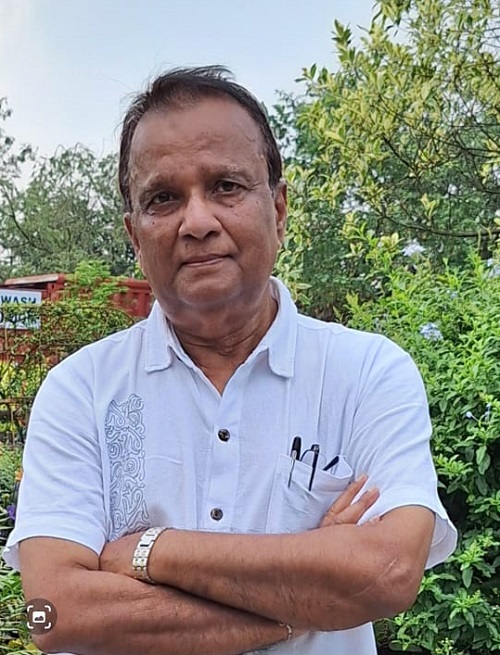
Prabhanjan K. Mishra is an award-winning Indian poet from India, besides being a story writer, translator, editor, and critic; a former president of Poetry Circle, Bombay (Mumbai), an association of Indo-English poets. He edited POIESIS, the literary magazine of this poets’ association for eight years. His poems have been widely published, his own works and translation from the works of other poets. He has published three books of his poems and his poems have appeared in twenty anthologies in India and abroad.
RETURNS UNFILED
Sreekumar Ezhuththaani
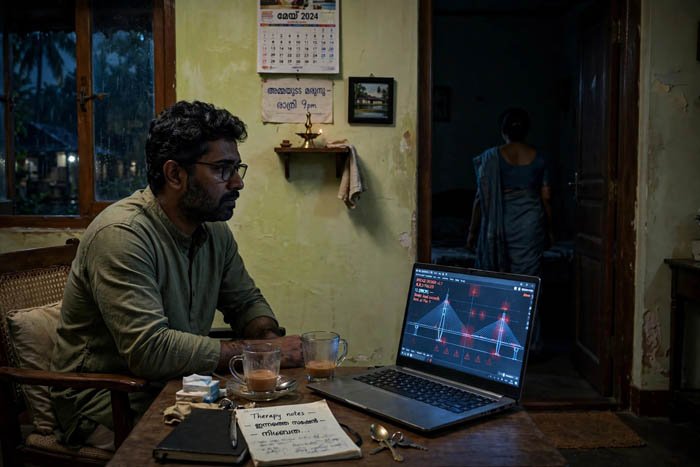
Reghuvaran and Savithri had been married for twenty-four years.
He was a psychologist. She was a civil engineer.
Their apartment was on the third floor of an old building that had recently been painted a pale cream. From the balcony, they could see the backs of three other buildings, a narrow road, and, beyond them, a line of coconut trees that looked black against the night sky.
It was nearly ten when he came out of his study with two glasses of hot tea.
His wife was still at the dining table, working on her laptop.
He placed one glass beside her.
“Tea.”
She looked at the glass and then at him.
“You made it?”
“Yes.”
“Sugar?”
“The usual.”
She took a sip.
“Too much.”
He smiled.
“You always say that.”
“And you always put the same amount.”
He pulled out the chair opposite her and sat down.
“I have a case to tell you.”
She continued looking at the screen.
“Now?”
“Yes.”
“Is it interesting?”
“Very.”
“Then tell me.”
He leaned back.
“There was a man. Fifty-two years old.”
She stopped typing.
“That's your idea of an interesting case?”
“Listen.”
She smiled faintly.
“Okay. Tell me.”
“He came to see me because he didn't like his wife.”
“After how many years of marriage?”
“Twenty-six.”
She teased him by counting it on her fingers. It looked like she was comparing it with theirs.
“Twenty-six years?”
“Yes.”
“And suddenly he didn't like her?”
“He said it wasn't sudden.”
“What did he say?”
She took another sip of tea.
“He said he had been feeling it for years. But recently it had become unbearable. He wanted to leave her.”
His wife looked at him now.
“What was wrong with the wife?”
“Nothing.”
“Nothing?”
“Nothing serious. No affair. No violence. No drinking. No financial problem. No abuse. Not much of social media. Nothing like that.”
“Then why did he want to leave?”
“He said he simply didn't like her anymore.”
His wife smiled.
“That's not a psychological diagnosis.”
“I know.”
“What did you tell him?”
“I told him not to leave.”
“Why?”
“Because they had lived together for so long. I told him to try. Talk to her. Find out what had changed.”
“What did he say?”
“He said, ‘I have already tried.’”
She picked up her tea again.
“And?”
“He came back after a week.”
The psychologist paused.
“This time he was more irritated.”
“Why?”
“He said, ‘Doctor, I don't even like the sound of her waking up in the morning.’”
His wife laughed softly.
“The sound?”
“Yes.”
“What does she do? Wake up with a drum?”
He smiled.
“No. He said he hated the sound of her slippers dragging across the floor. The sound of her brushing her teeth. The way she cleared her throat before speaking. Even the sound of her drinking tea.”
“That is very specific.”
“I told him everyone becomes irritated with small things in a long marriage.”
“Did he agree?”
“No.”
“What did he say?”
“He said, ‘Doctor, when she drinks tea, she makes a little sound at the end.’”
His wife looked amused.
“What sound?”
“I don't know. He imitated it.”
“How?”
The psychologist made a small exaggerated sipping sound. It sounded like a clumsy kiss.
His wife laughed.
“You psychologists are supposed to be serious.”
“I am serious.”
“Apparently.”
He continued.
“I told him, ‘Madhavan, if you start noticing every little sound, you will find reasons to dislike anybody.’”
“And?”
“He said, ‘I know. But I don't want to live with her anymore.’”
His wife became quiet.
“What happened?”
“He left.”
“Actually?”
“Actually.”
“Good.”
The psychologist looked at her.
“Good?”
“At least he did what he wanted.”
“He stayed in a lodge.”
“For how long?”
“Two days.”
“And then?”
“He came back.”
“Why?”
The psychologist smiled.
“That was the strange part.”
“What happened?”
“He said his wife called him.”
“Why?”
“The power had gone off.”
His wife stared at him.
“That's all?”
“She didn't know what had happened. She called him because he usually checked the fuse.”
“And he went?”
“Yes.”
“And?”
“He fixed the fuse.”
“Then?”
“He stayed.”
His wife laughed.
“That's ridiculous.”
“I thought so too.”
“Did you ask him why?”
“Of course.”
“What did he say?”
“He said, ‘I don't know. I fixed the fuse and then I had dinner.’”
“Whose decision was that?”
“I asked him the same thing.”
“What did he say?”
“He said, ‘Maybe hers.’”
“And he didn't leave?”
“No.”
His wife looked back at her laptop.
“So that was the second return.”
“Yes.”
“And how many departures?”
The psychologist smiled.
“You're already keeping count?”
“Continue.”
He took another sip.
“The third time, he came after three weeks.”
“What happened?”
“He said, ‘Doctor, this time I really left.’”
“Really?”
“He had packed his clothes.”
“Where did he go?”
“To his brother's house.”
“Why did he come back? Surely, he came back.”
“Yes. There was a wedding in his wife's family.”
His wife looked at him.
“You're joking.”
“No.”
“He went for the wedding?”
“He said he only went because his wife needed someone to take her.”
“And?”
“He stood for the wedding photograph.”
“Photograph?”
“She asked him to stand beside her for the family photograph.”
His wife shook her head.
“And then?”
“He stayed for dinner.”
“Of course.”
The psychologist laughed.
“That's what I thought.”
“What happened next?”
“The fourth time, his wife got a fever.”
“High fever?”
“Not particularly. But she was alone.”
“Children?”
“Two. Both abroad.”
“And Madhavan?”
“He went to the hospital with her.”
“Stayed?”
“Till she was discharged.”
His wife put her tea down.
“At the hospital. And then he went home with her.”
“Yes.”
“Why did he go in the first place?”
“He said he didn't know.”
She looked at him.
“Did you ask him whether he loved her?”
“Yes.”
“What did he say?”
“He said, ‘I don't know what love has got to do with this.’”
She smiled.
“That sounds like something a man would say.”
The psychologist laughed.
“Maybe.”
He continued.
“Then there was Onam.”
“What about Onam?”
“He left two days before Onam.”
“And came back?”
“His wife called and asked whether he was coming home for Onam.”
“What did he say?”
“He said no.”
“Then?”
“She asked, ‘Should I make payasam for only one then?’”
His wife smiled despite herself.
“What did he do?”
“He came back.”
‘Diabetic?”
“Yes, I asked.”
“I knew that.”
He smiled.
“Then their dog fell sick.”
“Dog?”
“Yes. They had an old Labrador.”
“Who took the dog to the vet?”
“Madhavan.”
“Obviously.”
“Then his wife's slipper broke.”
His wife stared at him.
“Don't tell me.”
“She didn't know which shop sold the same type.”
“And he went?”
“He bought her a pair.”
“What size?”
The psychologist laughed.
“I didn't ask.”
She leaned back in her chair.
“So how many times did he leave?”
“Eight.”
“And how many times did he come back?”
The psychologist thought.
“Eighte, perhaps.”
“That makes it nine, including their marriage when he walked into her life.”
“One of the times he didn't exactly leave. He had gone to his brother's place for three days.”
“That counts.”
“Anyways, OK, nine then..”
She was silent for a moment.
Then she said,
“Then maybe he doesn't want to leave.”
“That's what I told him.”
“What did he say?”
“He said, ‘I want to leave. But every time I leave, something happens.’”
“What did you tell him?”
“I asked him what he thought that meant.”
“What did he say?”
“He said, ‘Nothing. Things happen.’”
She smiled.
“That sounds reasonable.”
“Does it?”
“Yes.”
The psychologist looked at her.
“Do you think he should leave?”
She shrugged.
“I don't know the wife.”
“You don't need to know her.”
“I do. Otherwise I'm judging her without knowing her.”
He smiled.
“That's why I married an engineer.”
She gave him a look.
“Don't use me to prove your psychological theories.”
“I don't.”
“You do.”
He laughed.
For a while, there was only the sound of the ceiling fan and the faint traffic from the road below.
She turned the laptop slightly towards herself.
On the screen were several blue lines crossing one another.
“What are you designing?” he asked.
“A small bridge.”
“Where?”
“Over a canal.”
“Is it difficult?”
“The bridge isn't difficult.”
“What is?”
“Making it stand.”
He looked at the screen.
“There are so many lines.”
“Those are not all the same thing.”
“I can't understand any of it.”
“You're not supposed to.”
“Psychologists can understand people.”
“Can they?”
He smiled.
“Sometimes.”
She turned back to the screen.
“Tell me what happened to Madhavan.”
“He kept coming to me.”
“How many times?”
“I lost count. I got tired of hearing him.”
“Why?”
“Because every time he came, he had another reason for returning.”
“Maybe that's what marriage is.”
He looked at her.
“What?”
“Returning for reasons you don't consider important.”
He smiled.
“That's a very engineer-like definition.”
“No. It's not a definition.”
She moved the cursor across the screen.
“You said he went back because the fuse had gone.”
“Yes.”
“He went back because his wife had fever.”
“Yes.”
“Then because of the wedding.”
“Yes.”
“Then the dog, the slippers, the wedding photo…”
“Yes, yes, yes.”
She turned to him.
“So what is the problem?”
“The problem is that he doesn't see these as reasons to stay.”
She looked at him for a few seconds.
“And you?”
“What?”
“Do you see them as reasons?”
He hesitated.
“I see them as attachments.”
“What's the difference?”
“Attachment is not necessarily love.”
“Who told you?”
He smiled.
“Psychology. And Buddha too”
She nodded slowly.
“Of course.”
He noticed something in her tone.
“What?”
“Nothing.”
“You said something.”
“I didn't.”
“You did.”
She closed the laptop.
“Tell me one thing.”
“What?”
“If you left me, would you come back?”
The question was so direct that he didn't answer immediately.
He looked at her.
She was not smiling now.
He tried to make sense of the question as he would with a patient.
He thought about attachment.
Dependency.
Habit.
Shared history.
Fear of loneliness.
Emotional investment.
Twenty-four years of marriage.
Buddha.
He almost smiled at the absurdity of analysing his own marriage in the language he used with patients.
“There is a possibility,” he said finally.
“What possibility?”
“That I would come back.”
“Why?”
“I don't know.”
She waited.
“Maybe because of attachment.”
She nodded.
“Maybe.”
“And you?”
She didn't answer.
He waited.
“Would you come back?”
She stood up.
“I have some work.”
“It is nearly ten-thirty.”
“I know.”
She carried her glass into the kitchen.
He heard the tap running.
Then the small sound of glass being placed in the sink.
She came back, picked up her laptop, and shut i down.
The blue lines disappeared.
“Are you angry?” he asked.
“No.”
“You seem angry.”
“I said no.”
“Then why did you ask me that?”
She stood near the doorway.
“I wanted to know.”
“Know what?”
“Whether you would return.”
“I told you. There is a possibility.”
She looked at him for a moment.
Then she said quietly,
“Hello, a man who doesn't even understand himself, how will he understand me?”
She walked inside.
He remained seated.
The bedroom light came on.
For a moment, he thought she would return.
She didn't.
The door was not slammed shut.
It was simply left ajar.
A few seconds later, the light inside went off.
He sat alone in the half-darkness.
He thought about Madhavan.
Eight departures.
Nine returns.
He had told his wife the numbers as if they meant something.
Now, sitting there, he understood that numbers could only count movement.
They could not tell you what had been left behind each time someone walked away.
He looked at the open doorway.
She had not closed it.
But she was not coming back.
And suddenly he understood that this, too, was a kind of calculation.
Not in his way.
Hers.
In his calculation, eight departures and nine returns meant that the man had returned more often than he had left.
In hers, perhaps, one departure was enough.
After that, there was nothing left to return to.
Nothing.
CAIN`S LEGACY
Sreekumar Ezhuththaani
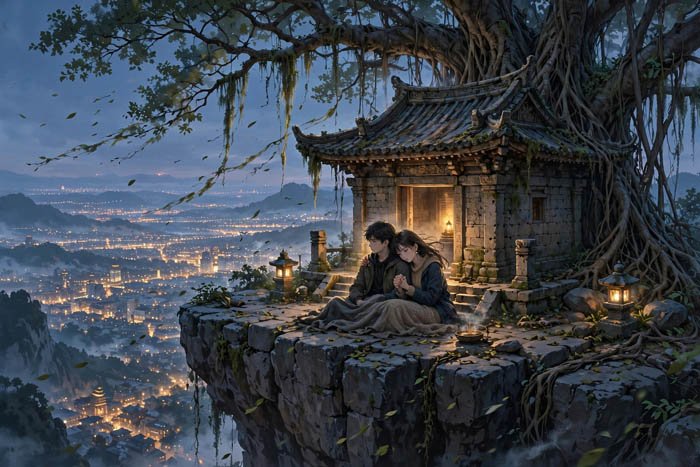
I hadn't seen Shahana for eight days.
Her seat in class had remained empty. That wasn't unusual. Every now and then she would skip classes and go home for three or four days and return as if nothing had happened.
If I called, she'd say, "I'm home. I'm bored."
This time she hadn't gone home. I called her mother. "She hasn't come here."
Stranger still, her Good Morning messages kept coming. Every morning. Exactly at seven.
On the seventh day I asked where she was.
_I'm a little busy. Travelling. I'll see you when I'm back._
The next day she returned. She didn't come to class. I received a voice note.
"I need to see you. Today."
"Where?"
"Our temple."
Our temple was fourteen kilometres outside the city, a small shrine built on a huge rock. From the top the whole city lay below you. In the evenings the wind came hard across the rock.
We used to go there on days when we had nothing to say.
When I reached the bottom of the steps, she was waiting. Thinner. Dark circles under her eyes. She didn't smile. She took my hand and began climbing.
We sat on the stone platform beneath the banyan tree. The bell rang for evening prayer.
She leaned against my shoulder and held my hand tightly.
"What happened?"
She didn't answer.
"Shahana?"
She began to cry.
After a while she said, "I have to tell you something. I don't know what you'll think of me after this."
"Tell me."
"Do you remember my old rented house?"
"Yes."
"There was another house behind our kitchen wall."
"That woman's house."
She nodded. "That wall was very thin. If a spoon fell there, I could hear it here. If they turned on a tap, I could hear it."
She looked towards the city. "Because I heard everything. At least, I thought I did."
"The woman frightened me. When her children were home, she was affectionate. Almost sweet. When they left, she would switch on a radio."
"What was on it?"
"Some strange programme. Always about children. How they were selfish. How they couldn't be trusted. How they needed to be taught a lesson."
She gave a small, uncomfortable laugh. "I used to play music loudly in my kitchen so I wouldn't have to listen. She fought with everyone. Even dogs. She used to throw stones at the street dogs."
She was silent.
"Then a boy started coming there for tuition. Ten, maybe eleven. Very bright. Wore glasses."
"What was he like?"
"Not easy," she smiled faintly. "He corrected her. Everything. She would say something, he'd listen quietly. The next day he'd come back with something he'd found online."
She imitated him: "'That's not true, Aunty.' Not angrily. That's what made it worse. He enjoyed it."
"How do you know?"
"I could hear them. He knew exactly what irritated her. He knew she couldn't do anything because he was a child. He knew that."
"After some time, I began to notice something. The boy knew her. Not just what she said. Her. He knew when she was angry before she spoke. Sometimes he would deliberately say something, then go quiet. Just to watch her."
"Watch what?"
"How angry she became. It was as if he wanted to prove she couldn't control him."
"And she couldn't."
A gust of wind moved through the banyan leaves.
"But she could hear him laughing."
"Then they started letting him play on the terrace. Alone. Three floors up. I could see him from my window. Running. Climbing on the parapet. Looking down. Sometimes he would stand there and look towards my window."
"Why?"
"I don't know." But from the way she said it, I wasn't sure she believed that.
"That evening I was making tea. Like usual. It was tuition time. But there was no sound from that house. Nothing. I could hear a tap in the next house, a pressure cooker down the street, a bike starting. Everything. But not that house."
She closed her eyes.
"Then I heard something fall. Just one sound." She struck her palm lightly with her fist. "Thud. I thought someone had dropped a coconut. I didn't pay attention. Then people started shouting. The boy had fallen from the terrace."
"The woman came running out, crying, beating her chest. Telling everyone she had been in the kitchen helping him with his homework."
Shahana looked at me. "That was a lie."
"You're sure?"
"You don't miss things through that wall. Not there."
"What did the police say?"
"Accident."
"And you?"
"I said nothing."
"Why?"
"I didn't know what I had heard. I still don't."
She was silent for a long time.
"Then why are you so frightened?"
"Because I know what she was like," she said. "And he knew too."
The temple bell stopped. The city below began to light up.
"Do you think she pushed him?"
"I don't know."
We sat there. The conch sounded from inside.
Shahana wiped her face. "I ran away after that. To a hostel. I told you I was travelling because I was afraid that if I said it aloud, it would become real."
I got up. "Let's go."
We began walking down the steps. The stones were slippery with moss. She held on tightly.
Neither of us spoke.
Her hand was still trembling in mine.
MADNESS
Sreekumar Ezhuththaani
For a long time I leased fields in Tamil Nadu to grow bananas. Back then, my friends teased me about my pen name, Nakulan. It can mean ‘no banana bunch’, they said. No wonder no one buys your crop. When I told them it didn't mean a missing bunch but a missing clan, they laughed harder. You don't have that either.
My family were stone sculptors who had migrated from Tamil Nadu generations ago. When I went back there to farm, I hired Thangavelu. His family had done the reverse journey - they were Tamils who had migrated from Kerala.
The banana farm failed. I shut it down and came home to Kerala. Thangavelu came with me. For a while we tried growing cocoa.
Around that time, he started living with another woman in the next village. His first wife tolerated it for a while, then it turned into constant fighting. In the end she left and went back to Tamil Nadu.
So his second household became his only household. He stopped coming to work regularly. He came only when he had to. Most days he was just at home with her.
Once, during the temple festival at Ayiravalli, he brought her to our house. You couldn't blame him for showing her off. She was a striking woman.
The moment I saw her with him, the neighbors made sure to tell me her history. That she had been with many men before.
I told them that was in the past. They said it wasn't much different even now, and that she had no real regard for Thangavelu.
Then he disappeared for a long time. When I asked, I was told he was in prison for murder. I didn't look into it. I had enough problems of my own.
Now he is here again, crouched on the edge of my veranda.
He has come looking for work.
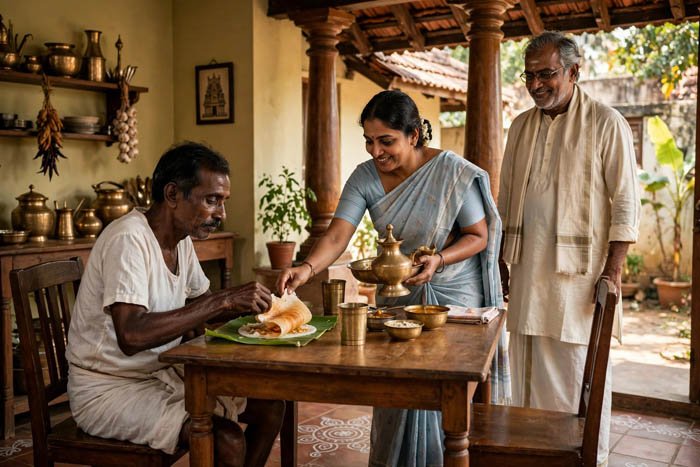
I found myself playing host like in a Tagore story, and he was the old peddler, Rahim from Kabul. My wife, whom I had also brought from Tamil Nadu - the only profit I ever made from the banana farm - played Mini. I asked him if he had eaten.
"I had tea," he said.
My wife said, "Come in, I'll make dosa."
I thought, my god, she's inviting a murderer inside to feed him.
Only as he ate did I understand why she was being so kind. She wanted his story. And he looked like he had been waiting a long time for someone willing to listen.
When she asked why he went to jail, his answer was flat.
"I killed a man."
She had expected that answer, but his matter-of-fact tone shocked her.
No court gives eight years of hard labor for nothing. So it must have happened. Even so, I couldn't connect that act to the man I knew.
In all our years farming, whether it was pests or stray animals, I had seen how gently he drove them away. Even when cutting a banana bunch, he seemed to feel sorry for the tree.
And yet this same man had cut down another man.
He tried to get up after eating, but my wife made him sit and served him two more dosas. She probably thought she might never get another chance to serve him. He, too, seemed to sense that I wasn't interested, so he was speaking mostly to her.
After finishing one more, he sat still for a long time, staring into the distance as if trying to remember.
Then he said, "I didn't kill anyone. My wife did."
That shocked me more than the first confession. My wife quietly refilled his tea and added more chutney to his plate.
He mashed half the dosa into the chutney, ate it slowly, placed both hands on the table, and with the calm of a man telling a riddle he has known all his life, told a completely different story.
He began by saying his wife's relationships with other men, past and present, had never been a problem for him. In fact, part of the household ran on the money she brought in that way. And when she got pregnant, he never doubted the child was his.
I couldn't believe that. However much a man is in love, would he tolerate that?
As if anticipating my question, he answered it himself.
"That was never an issue for me, sir. I did the same thing to my first wife."
I thought this was just something he was inventing to cover his shame. What he said next was the version I had already read in the newspaper.
According to that version, one night he came home early and found a man crouched near the hibiscus tree in his yard, beside a pile of stones. When he asked who it was, the man said nothing. His wife came out and said:
"I don't know him. He came asking for water. When I went inside to get it, he followed me. I pushed him out. I warned him my husband would kill him if he found him here, but he wouldn't leave. He's been squatting there abusing you. He's quiet now only. He must be drunk or high on something. Kick him. Kill the bastard."
Hearing that, Thangavelu ran over shouting and kicked the man hard. The man fell, his head struck the pile of stones, and he died there. Thangavelu had thought the man would get up and run, seeing him rush towards him. But he didn't move, and now he was dead. His wife started wailing. He told her to be quiet. The neighbors gathered. Someone called the police. They took him away that same night.
Since no one came to claim the body even after the autopsy, it was buried in the municipal ground.
That was the official story.
This is what Thangavelu claims actually happened:
A man had come to harass his wife. She picked up a heavy log and hit him. The man, who was drunk, lost his balance, fell onto the pile of stones, and died. She then propped his body up in a crouching position. When her husband arrived, she provoked him into kicking a corpse. What Thangavelu kicked was already dead.
The reason I don't believe this second version is simple - who could have seen it? Who would have told everyone in the village? It must be a rumour started by someone she had rejected, out of spite.
I asked him, "Who told you this while you were in jail?"
"My wife, sir. She came to see me. She told me everything. She gave it to me in writing, like a letter."
He reached into his pocket. I thought he would pull out a letter. Instead, he pulled out a photograph of his daughter. A beautiful girl, just like her mother.
"We've put her in third grade at the CBSE school, sir. She's the star of her class. She learns singing and dancing too."
"So you went back to her?" my wife asked.
"I went back. I live there now."
My god. He went back to the woman who cheated on him and made him spend eight years in prison? What kind of madness is that?
"What she did wasn't wrong," he said. "She was five months pregnant then. If she had gone to jail, my child would have been born in jail. Would have grown up in jail. That would have been terrible suffering, sir. She is very smart. She gave birth to the child. Raised her well. Gave her a good education."
As he said it, I saw my wife wipe her eyes. To me, it still sounded like a man trying to justify his own foolishness.
In any case, I decided not to give him work. We gave him some of my daughter's old clothes, two or three of my wife's silk sarees, and some money, and sent him away.
That night in bed, my wife and I talked about Thangavelu again.
I could see she was moved by what his wife had done and by his understanding of it.
I said, "That's not the point. The man is obsessed with her. For her he left his first wife. Because of her he spent eight years doing hard labour. He doesn't even care that she sleeps with other men.
It's madness. Pure madness."
"That kind of madness is good," she said.
And she turned over and lay facing the other side.
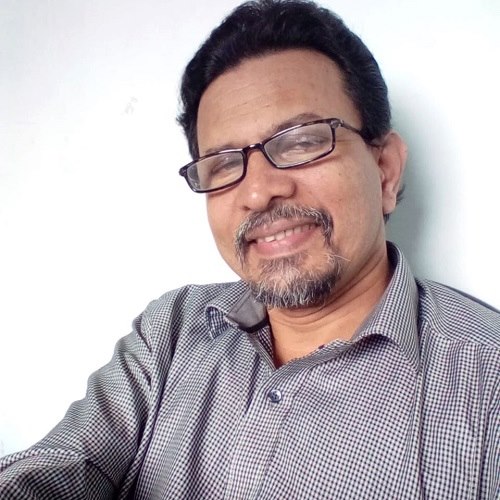
Sreekumar Ezhuththaani known more as SK, writes in English and Malayalam. He also translates into both languages and works as a facilitator at L' ecole Chempaka International, a school in Trivandrum, Kerala.
THE WHITE ROSES OF THE HAVELI
Rabi N. Dash
On the eastern bank of the Gomti, where the river moved with the languid patience of an old man who had seen too much of human ambition, stood a great Lucknow haveli whose weathered arches, high enclosing walls and carved wooden balconies still carried the memory of another age. It had belonged for generations to the family of Nawab Kader Khan, whose ancestors had entertained poets, courtiers and British officers beneath its chandeliers, but the grandeur of the old house had long since begun to decay. The marble fountains were dry, the plaster peeled from the walls, creepers covered the old stone pavilions, and the once-famous gardens had become a wilderness of grass, thorn and wild creepers.
Yet, at the far end of that neglected garden, beside a broken marble fountain, there grew a bush of roses that remained strangely untouched by the decay around it.
The roses were pure white.
No gardener tended them. No one remembered who had planted the bush or when. Through summer heat, winter fog and the long rains, it continued to flower, its white petals appearing almost luminous against the dark, untrimmed garden.
The old servants called it Begum Sahiba’s roses, though none could say which Begum they meant.
The younger members of the household scarcely noticed it.
Aaliya did.
She had grown up in the haveli, the only daughter of Kader Khan, and from her earliest childhood she had been drawn to that forgotten corner of the estate. While her brothers rode horses, practised shooting and followed their father into rooms where business was conducted behind closed doors, Aaliya would sit beneath the old pavilion with a book, listening to the river and watching the white flowers move in the breeze.
She was not sheltered from the world.
She was sheltered from nothing.
The world entered the haveli every night.
Men arrived in expensive cars and left through the rear gate. Landowners came trembling, contractors came smiling, politicians came with folded hands, businessmen came bearing gifts and policemen came without uniforms. There were whispered conversations about contracts, land, transport routes, money and elections. The four wings of the haveli had become a maze of private interests, and its courtyard had acquired a reputation far beyond Lucknow.
Kader Khan was no longer merely a Nawab by inheritance.
He had become a power in Purbanchal.
Ministers sought his approval before making decisions that officially had nothing to do with him; industrialists treated him as a godfather; police officers and administrators understood that a telephone call from him could alter the course of an investigation; men who had once been poor farmers suddenly possessed nothing because a piece of paper had declared their land to belong to someone else.
His brothers, sisters and grown children were all involved in different parts of the family enterprise, some openly and others through respectable businesses whose accounts concealed less respectable activities.
Kader Khan himself never used the word crime.
He called it business.
Aaliya understood the difference.
She understood it first through the eyes of people who came to the haveli.
She saw an old farmer standing outside her father’s office for three hours with a file pressed against his chest, refusing tea because his hands were trembling too much to hold the cup. She saw a widow being turned away after her house had been demolished to make way for a road that had never been sanctioned. She saw a young man brought into the courtyard one night with blood on his shirt, and she saw two of her cousins laughing about it the next morning over breakfast.
Nobody explained these things to her.
They did not need to.
Aaliya possessed the dangerous habit of noticing.
Her father had once told her, when she was still a child, that a person who wanted to live peacefully in this world should learn not to ask unnecessary questions.
Aaliya had smiled and asked, “Then how does one know which questions are necessary?”
He had laughed.
Years later, he no longer found the question amusing.
Aaliya’s purity was not the purity of someone who had never encountered evil; it was the more difficult purity of someone who had encountered it intimately and had refused to make peace with it.
She could have lived comfortably within her father’s power.
She did not.
She could have accepted the diamonds her brothers brought back from Dubai, the expensive car her father offered her after she graduated, and the apartment he wanted to buy for her in Delhi.
She returned the diamonds.
She sold the car and gave the money to a charitable hospital.
When her father asked why, she said, “I do not want anything whose price I am afraid to ask.”
He stared at her for a long time.
“Do you think everything in this house is stolen?”
“No, Abba.”
“Then?”
“I only know that I do not want to find out too late.”
Her father was angry, but he said nothing.
Her brothers were less restrained.
They called her foolish, sanctimonious and ungrateful. One of them told her that the world belonged to people who knew how to take what they wanted.
Aaliya replied quietly, “Then I would rather belong to the world that still knows how to give.”
The remark was repeated throughout the household, and for several days she became the subject of jokes at the dinner table.
She bore it without resentment.
That was another quality that distinguished her from the people around her. She did not mistake purity for superiority. She never thought herself better than her brothers, and she never preached to the servants, the poor or even to the criminals whose presence she despised. She knew that goodness could become another form of vanity if it constantly looked down upon those who had fallen.
What she could not tolerate was injustice disguised as necessity.
One winter morning, a farmer from a village near Sultanpur came to the haveli with his seventeen-year-old son. Their ancestral land had been acquired by a company controlled indirectly by one of Kader Khan’s associates. The farmer carried old revenue records, sale deeds and copies of court orders, all tied together with a piece of faded red cloth.
He waited until Aaliya came out of the inner courtyard.
“Begum Sahiba,” he said, touching the file to his forehead, “they told me you might listen.”
She sat down on the steps.
“Tell me.”
The farmer told her everything.
Aaliya read the papers carefully, then asked questions about dates, signatures and proceedings. She did not promise him that she could save his land. Instead, she told him that she would have the documents examined by an independent lawyer.
The farmer looked disappointed.
“Your father can do anything, Begum Sahiba.”
Aaliya looked at him.
“That is exactly why I cannot ask him to do this.”
The farmer did not understand.
She did.
She knew that if she used her father’s power to undo one injustice, she would only be using the same system that had created it.
That evening she went to her father.
“The Sultanpur land is being taken illegally.”
Kader Khan did not look up from his papers.
“That matter is settled.”
“The papers say otherwise.”
“The papers say whatever the people who write them want them to say.”
“Then let the court decide.”
He looked up.
“The court?”
“Yes.”
He smiled with disbelief.
“You are asking me to take a dispute to a court when I can settle it with one telephone call.”
“I am asking you not to use that telephone call.”
The room became silent.
“You are my daughter,” he said finally. “You should be asking what I can give you, not what I should refuse to give someone else.”
Aaliya’s eyes filled with tears, but her voice remained steady.
“That is why I am asking you.”
He turned away.
“Go to your room.”
She rose.
At the door she stopped.
“Abba, if power can protect only the powerful, then it is not protection. It is fear wearing respectable clothes.”
He did not answer.
The farmer’s land was eventually restored through a court order.
Aaliya had not intervened with her father’s influence.
That mattered to her more than the result.
She wanted to remain clean even when cleanliness cost her something.
Her greatest test came several years later.
One of her brothers was accused of arranging the murder of a journalist who had written about the family’s land dealings. The police investigation had gathered evidence, but the family knew that the case could be made to disappear.
Kader Khan called Aaliya to his study.
There were four people in the room: her father, two brothers and the family’s lawyer.
On the table lay a file.
“We need your help,” Kader Khan said.
Aaliya opened the file.
The evidence was devastating.
“You want me to say that he was with me that evening.”
“Exactly.”
“But he was not.”
Her brother leaned forward.
“You are his sister.”
“That is why I will not lie for him.”
The lawyer spoke gently.
“You understand what will happen if you refuse.”
Aaliya looked at him.
“Yes.”
Her brother stood up.
“You will destroy this family.”
Aaliya turned towards him.
“No. I will refuse to destroy another family to save ours.”
Her father struck the table with his hand.
“Enough!”
Aaliya did not move.
For the first time, she saw fear in her father’s eyes.
Not fear of the police.
Not fear of the court.
Fear of losing control over his daughter.
He dismissed everyone from the room.
When they were alone, Kader Khan said, “Do you hate me?”
Aaliya’s face changed.
“No.”
“Then why do you stand against me?”
“Because I love you.”
He looked at her with bewilderment.
“That is not love.”
“It is the only love I know.”
She sat opposite him.
“Abba, if I lie for you today, I will have to lie again tomorrow. Then I will have to lie to myself. One day I will wake up and discover that I have become someone I never intended to be.”
Her father looked down at his hands.
Aaliya reached across the table and touched them.
“I cannot save you from the consequences of what you have done. But I can pray that you will one day want to be saved.”
She left the room.
The case proceeded.
Her brother was convicted.
The family never forgave her.
Aaliya did not ask them to.
She continued to live in the haveli, though increasingly she spent her time outside it, working with women, legal-aid groups and families whose land or livelihoods had been taken from them. She never used the Khan name when seeking help for them. She never told them who her father was unless disclosure was unavoidable.
Her purity had acquired something deeper than innocence.
It had acquired sacrifice.
She had discovered that to remain morally clean inside a corrupt household, one had to surrender privileges that others considered natural, endure hatred from those one loved, and resist the temptation to use evil means even for good ends.
Years passed.
Kader Khan grew old.
The men who had once crowded his courtyard became fewer. Ministers stopped coming so frequently. Some of his associates went to prison, some died, some became respectable businessmen and others disappeared into the changing currents of politics and money.
The great haveli began to resemble the man who owned it.
Its walls still stood, but much of its old authority had crumbled.
One evening, Kader Khan walked into the garden.
He had not visited it for many years.
Aaliya found him standing beside the old fountain.
The white roses were in bloom.
He looked at them for a long time.
“Do you still come here?”
“Often.”
“Who looks after them?”
“No one.”
He bent towards one of the flowers but did not touch it.
“They have survived everything.”
Aaliya stood beside him.
“Not everything.”
He looked at her.
“They have survived the neglect.”
She smiled faintly.
“Yes.”
After a long silence, he said, “I used to think purity meant weakness.”
Aaliya did not answer.
“I was wrong.”
She looked at her father.
He seemed smaller than she had ever seen him.
“Abba, purity is not weakness.”
“What is it?”
She looked at the white roses.
“It is the strength to remain what you are when everything around you is trying to make you something else.”
Kader Khan lowered his eyes.
For several minutes they stood without speaking.
From a distant mosque came the evening call to prayer, mingling with the sound of the river.
That night Aaliya returned to her room and opened the old scripture she had kept since childhood.
Her eyes rested upon the words:
“O Allah, guard my tongue from words that displease You, keep my heart steadfast upon what is right, and do not let me become a companion to wrongdoing or partake of what is forbidden.”
She read the passage slowly.
The prayer had never seemed more difficult to her than it did now.
For purity was not merely keeping one’s lips from speaking evil, she understood; it was guarding the heart from becoming accustomed to evil, guarding the conscience from bargains made in the name of family, loyalty, ambition or love, and refusing to partake of the delicacies of those whose power depended upon the suffering of others.
Outside her window, the garden lay beneath the moonlight.
The haveli was still there, enormous and wounded, carrying within its walls the accumulated weight of generations.
But at the far end of the garden, where no one had bothered to cultivate the earth, the white roses continued to bloom.
They had grown in the same soil as the thorns.
They had endured the same neglect.
They had known the same storms.
Yet they had not borrowed their colour from the darkness around them.
And Aaliya, who had spent her life among men who believed that power consisted in making others afraid, had learned a different kind of power: the quiet, costly power of keeping one’s soul one’s own.
THE LANTERN ON THE OLD ROAD
Rabi N. Dash
There was once a narrow road that ran through a dense forest and joined two distant villages.
It was an old road, older than anyone could remember. The new highway had made it almost unnecessary, yet an elderly schoolmaster named Elias continued to walk it every evening on his way home.
People often wondered why.
“The highway is wider, safer and much quicker,” they told him.
Elias would smile.
“Yes. But I know this straight road for 35 years.”
One winter evening, a young trader named Daniel happened to walk with him. Daniel had sold his goods at the market and was carrying the day’s earnings in a leather pouch.
The forest was unusually quiet.
After they had gone some distance, Daniel noticed three men standing beside the road.
They stepped into their path.
“Give us the pouch,” one of them said.
Daniel froze.
Elias raised his lantern.
He did not threaten them. He did not plead. He simply stood there, calm and silent.
For a few moments, nobody moved.
Then, somewhere beyond the trees, came the sound of a branch breaking.
The three men looked toward the forest.
A second sound followed, then another—voices, perhaps, or merely the movement of people approaching.
Whatever they heard, they suddenly turned and vanished among the trees.
Daniel waited until the forest was quiet again.
“Who was coming?” he asked.
Elias shook his head.
“I don’t know.”
“Then why weren’t you afraid?”
The old man looked at the small circle of light cast by his lantern.
“I was.”
Daniel looked surprised.
“Then why did you stay?”
Elias smiled.
“Because fear does not always tell us to run. Sometimes it tells us to stand where we are.”
They continued along the road.
At the edge of the village, Elias handed Daniel the lantern.
“You may need it more than I do tonight.”
Daniel protested, but the old man had already turned away.
Years passed.
Daniel prospered. He built a large business and became a man of influence. He remembered the old road, but he seldom thought of Elias.
Then, one year, everything changed.
A dishonest partner betrayed him. His business collapsed. Those who had once crowded around him disappeared almost overnight. Friends stopped answering his calls; creditors arrived at his door; and men who had praised his success began speaking of him with contempt.
For the first time in his life, Daniel understood how quickly a man’s fortunes could change.
One evening, unable to sleep, he found himself standing before the old brass lantern Elias had given him.
He had kept it all those years.
He lit it.
The flame was small, but steady.
The next morning Daniel began again.
He paid what he could, admitted what he had done wrong, refused opportunities that demanded dishonesty, and rebuilt his life slowly. It took years. He became neither rich nor powerful again, but he became something he had never been before—at peace with himself.
Many years later, an ambitious young man came to him after suffering a humiliating defeat.
“I have lost everything,” the young man said. “I don’t know what to do now.”
Daniel listened quietly.
Then he took the old brass lantern from a shelf and placed it in the young man’s hands.
“Keep walking,” he said.
“Where?”
“Along the road you can still respect yourself for taking.”
The young man looked at him uncertainly.
“And if I cannot see where it leads?”
Daniel smiled.
“You were never promised that you would see the whole road.”
He lit the lantern.
“Only enough of it to take the next step.”
The young man left.
Daniel stood at the doorway and watched the small light disappear into the evening.
He thought of Elias, the forest and the night when three men had stepped out of the darkness.
Only then did he understand what the old schoolmaster had known all along:
A good life is not a life without darkness. It is a life in which, even in the darkness, one does not lose the road.
And sometimes, when the road becomes most difficult, we discover that the light guarding our steps was there long before we knew we needed it.
THE RIVER KEPT ITS OWN COUNSEL
Rabi N. Dash
The Narmada had a way of making men believe they understood her.
In summer, she flowed between her ancient banks like a ribbon of burnished silver. Her shallows invited children to play, her ghats welcomed pilgrims, and her broad, unhurried surface offered an illusion of permanence. Only the boatmen, fishermen and oldest residents of Maheshwar knew how deceptive that tranquillity could be.
Among them lived Harinarayan Vyas, in an old house overlooking the river. He owned a modest mango orchard, a few acres of fertile land and a house of weathered teak that had sheltered three generations of his family. He dressed simply, kept meticulous accounts and seemed to have escaped the anxieties that consumed men with considerably greater wealth.
His only son, Devendra, had returned from Indore with a good education, an ambitious mind and little patience for habits he considered relics of another age.
He loved his father, but sometimes wondered how a man so intelligent could remain so stubbornly attached to old-fashioned ways.
Harinarayan never borrowed against an uncertain future. He never signed a document without reading it carefully. He never made an important decision in anger. Most irritatingly, he had a habit of asking what might happen after everything had gone according to plan.
When Devendra proposed building an exclusive riverside retreat on the family property, his father listened attentively.
“The location is perfect,” Devendra explained. “People from Mumbai, Ahmedabad and Indore will pay handsomely for privacy, good food and a view of the Narmada. We can begin with six cottages and expand later.”
“And the drainage?”
“Designed by an engineer.”
“The access road during the monsoon?”
“We shall improve it.”
“And the river?”
Devendra laughed.
“Father, we cannot negotiate with a river.”
“No,” Harinarayan replied. “That is precisely why we must understand her.”
The project went ahead.
Devendra hired an architect, borrowed against the property and employed young people from neighbouring villages. Within a year, the retreat was welcoming guests. Its wooden balconies overlooked the water, its gardens were immaculate, and its dining room served delicacies once reserved for family celebrations.
Business flourished beyond expectation.
Devendra bought a new car and began discussing a second property. Those who had questioned his plans now praised his foresight; those who had warned him about risks seemed to have vanished from his memory.
His father said little.
One evening, as they watched the sun descend behind the opposite bank, Devendra remarked, “You must admit, Father, things have worked out rather well.”
“They have,” Harinarayan agreed.
“You thought I was moving too quickly.”
“I thought you were moving quickly.”
“That is not the same thing.”
“No,” said his father. “It isn't.”
Devendra smiled, satisfied that he had won the argument. He did not notice that his father had left the conversation unfinished.
The year the water came early
The following year, the monsoon arrived with unusual ferocity.
For several days, rain battered the upper reaches of the Narmada basin. The river rose steadily, carrying branches, uprooted vegetation and occasional pieces of timber. District authorities issued advisories, and Devendra's manager began receiving calls from anxious guests.
The retreat's consultant studied the forecasts and assured him that the cottages stood above the projected water level.
Then Keshav arrived.
An elderly boatman who had ferried pilgrims across the river for nearly fifty years, Keshav possessed an intimate familiarity with its moods. He knew where the current concealed submerged rocks and where apparently harmless eddies could become dangerous within minutes.
“Move the guests tonight,” he told Devendra.
Devendra glanced at the water.
“The official forecast doesn't require that.”
Keshav pointed towards a clump of reeds swirling near the bank.
“The current has changed.”
“That is hardly sufficient reason to evacuate an entire establishment.”
Keshav shrugged.
“I have told you what I have seen.”
After he left, Devendra examined the forecast again. Evacuation meant refunds, cancelled bookings and the possible loss of a corporate group that had reserved the entire property for the weekend.
He telephoned his father.
Harinarayan listened and asked just two questions: Was there an alternative route to the village above the floodplain? Could the staff move the guests without delay?
Devendra had checked neither.
For several minutes, he sat at his desk, listening to the rain against the windows. Then he instructed his manager to arrange transport, moved the guests to higher ground and asked the workers to secure the equipment.
Some visitors complained. One accused him of being alarmist. Devendra apologised but did not reverse his decision.
The river continued rising through the night.
Shortly after midnight, water entered the gardens. By dawn, the lower cottages were inundated, the parking area had disappeared beneath a muddy expanse, and a section of the access road had collapsed.
Every guest was safe. Every worker was accounted for.
The business, however, had suffered substantial damage.
Devendra spent the next three months repairing the property, negotiating with creditors and calculating what remained of his investment. He sold his new car and abandoned his plans for expansion.
For the first time since returning to Maheshwar, he found himself without an immediate project.
One evening, he sat beside the river, watching the water withdraw from the steps it had occupied.
Harinarayan joined him.
“Do you remember the mango tree behind the eastern wall?” the old man asked.
Devendra nodded. It had been planted by his grandfather.
“When I was a boy, I thought it was the strongest tree in the orchard. Tall, straight and impressive. During a violent storm, it fell. The smaller trees survived.”
“Because they were more flexible?”
“Perhaps. Or perhaps their roots had grown differently. One cannot know everything merely by looking at the trunk.”
Devendra watched a branch turn slowly in the current.
“I nearly lost everything.”
“But you didn't.”
“Because I listened to you?”
Harinarayan considered the question.
“Because, at a certain point, you stopped trying to prove that you were right.”
Devendra lowered his eyes. His father offered no further explanation.
For once, none was needed.
What the river returned
The retreat reopened the following year.
The cottages stood farther from the vulnerable bank. Electrical installations were raised, drainage redesigned, and evacuation arrangements put in place. Devendra consulted engineers and local authorities, but he also began spending mornings with Keshav, learning the local names for currents, submerged rocks and places where the river behaved differently after heavy rain.
The changes were expensive. They also made the establishment safer and more reliable.
Gradually, business returned.
Guests recommended the retreat to friends. Employees stayed because they trusted the management. Local farmers supplied vegetables, and village artisans found a dependable market for their work.
Within five years, the enterprise was more profitable than it had been before the flood.
Yet the most important change could not be found in the accounts.
Devendra no longer measured every decision by how quickly it might increase his wealth. He became more patient with his children, less eager to win arguments and more willing to admit uncertainty. He continued pursuing ambitious projects, but he had lost the need to turn every ambition into a test of his own intelligence.
His father grew old.
Harinarayan's eyesight weakened, his steps shortened, and his once-excellent memory began betraying him over small things. Devendra arranged for a young man from the village to help with the orchard and insisted that his father rest during the afternoons.
One morning, Harinarayan asked to be taken to the river.
They sat on the lowest dry step, watching pilgrims fill their brass vessels.
“Do you remember the year the water entered the cottages?” Devendra asked.
“I remember that you were very worried about the furniture.”
Devendra laughed.
“And you were worried about the people.”
“Furniture can be replaced.”
“So can money.”
“Sometimes,” Harinarayan replied, smiling.
They sat quietly for a while.
Then Devendra asked, “Father, if you could begin your life again, would you do anything differently?”
The old man looked across the river.
“I would worry less about things that were never mine to control.”
“And the things that were?”
“I would take greater care of them.”
Devendra waited for him to elaborate, but Harinarayan closed his eyes. The conversation was over.
A few months later, he died peacefully in his sleep.
The inheritance no one had counted
After the funeral, Devendra discovered a small wooden box in his father's cupboard. Inside lay a gold ring, a few old letters, the title deed to the orchard and a notebook filled with household accounts.
There was nothing remarkable about the notebook. It recorded purchases, harvests, payments to workers, repairs to the house and occasional loans to neighbours.
At the back, however, Devendra found a list of names: people whose debts had been quietly forgiven, families whose children had received money for their education, and acquaintances whose medical expenses his father had paid without telling anyone.
There were no grand declarations of generosity. Some entries consisted of nothing more than a name and an amount, followed by a small tick.
Devendra sat with the notebook for a long time.
He had known his father as a careful man, a cautious investor and someone who disliked unnecessary expenditure. He had never realised how much of what appeared to be thrift had been quietly set aside for other people.
The property his father left him was valuable. The business they had built was more valuable still.
But the notebook revealed a different kind of wealth, accumulated without attracting attention.
Years passed.
Devendra's children grew up. His business expanded, though never at the expense of the orchard or the riverbank. Younger entrepreneurs began seeking his advice, not because he claimed to know everything, but because he had learned to recognise the cost of what he did not know.
He grew older, too, and began to understand why his father had never seemed particularly impressed by success.
Success was a good servant but a demanding master. It could fill a house with possessions while leaving its owner perpetually anxious about losing them. It could enlarge a man's reputation while shrinking his patience. It could persuade him that every obstacle was an insult and every disagreement a challenge to his authority.
The passing years had given Devendra enough experience to recognise these dangers in himself.
One winter morning, he took his youngest grandson down to the Narmada.
The boy was fascinated by the current, which carried dry leaves around a rock before drawing them into deeper water.
“Where do they go?” he asked.
“Some travel a long way,” Devendra replied. “Some get caught along the bank. Some sink. We cannot tell from here.”
The boy picked up a pebble and threw it into the river.
“Can we make the water go where we want?”
Devendra smiled.
“No. But we can learn where it is going.”
They walked back towards the house, the boy skipping ahead.
Devendra paused to look at the river. The water was calm, the morning bright, and the old stone steps were warm beneath his feet.
He thought of his father—not as a man who had always been right, but as someone who had rarely allowed pride to prevent him from seeing what stood before him.
Then he followed his grandson home.
The Narmada continued along her ancient course, reflecting palaces, temples, humble houses and generations of people who had stood on her banks believing, for a moment, that they understood the world.
Some left behind fortunes. Others left nothing that could be entered in an account book.
The river made no distinction between them.
The old house above the bank, weathered by time but still standing, remained full of the quiet things that had made it a home.
And Devendra, who had once believed that prosperity meant building something larger than his father had possessed, gradually discovered that a good life was measured differently.
It lay in the business that could withstand a difficult season, the family that could disagree without breaking apart, the employees who did not fear an uncertain tomorrow, the friends who remained when there was nothing to gain, and the ability to sleep peacefully after an imperfect day.
His father's greatest legacy had never been the orchard, the house or the money in the bank.
It was the life that had quietly grown around them.
And whenever Devendra passed the old mango trees, he remembered that the tallest had not always been the strongest.
The Narmada flowed on, indifferent to his reflections.
She had witnessed his father's life, his own ambitions and the mistakes that had reshaped them both. She would witness his grandchildren making their own discoveries, certain, as the young always are, that the world had only just begun.
Devendra no longer felt the need to correct that certainty.
He knew that some things could be understood only when their time arrived.
He also knew that the years ahead would bring their own storms, their own losses and their own unexpected blessings.
For now, the river was calm.
And there was enough.
THE THINGS THE RIVER WOULD NOT CARRY
Rabi N. Dash
A story of love, ambition, loss, and the difficult grace of becoming wiser.
I. The Reunion
They met at a railway station on a November evening, forty-one years after they had last seen each other.
The station had changed beyond recognition. The old booking office had become a coffee shop; electronic signboards had replaced the painted timetable; and the platform where they had once waited for the last train to Delhi had acquired a roof that leaked in precisely the same place as before.
Only the rain seemed unchanged.
“Arjun?”
He turned.
Meera stood beneath the departure board, holding a black umbrella. Her hair was silver at the temples, her face narrower than he remembered, but her eyes retained the peculiar stillness that had once infuriated him.
“Good God!” he exclaimed. “You?”
She smiled. “I had begun to suspect you were dead.”
“I nearly was. Twice. Once in a helicopter over the Arabian Sea and once in a boardroom in Mumbai. The boardroom was more dangerous.”
She laughed, and for a moment the decades folded upon themselves. They were twenty-three again, standing outside the college library, arguing about a poem neither had properly understood.
They had loved each other then, though neither had possessed the courage to name the feeling. Arjun had wanted to conquer the world; Meera had wanted to understand it. They had mistaken these different ambitions for incompatibility and parted without a quarrel—the kind of ending that leaves no wound visible enough to heal.
Now he was a celebrated architect whose buildings adorned the skylines of several cities. She had devoted her career to restoring neglected heritage structures, often declining lucrative assignments when the price of success was the destruction of something irreplaceable.
“You look remarkably well,” he said.
“You look remarkably successful.”
“Is that a compliment?”
“That depends on what you think success means.”
He studied her face.
“You haven’t changed.”
“That’s the first lie of the evening.”
They found a table in the coffee shop. Outside, rainwater ran along the platform in silver threads, gathering discarded tickets, cigarette packets and the red petals of a garland someone had dropped.
Arjun watched the water.
“Do you remember the river behind our college?”
“The one you tried to dam with sandbags?”
He groaned. “I was nineteen.”
“You were twenty. And you calculated the water pressure incorrectly.”
“My calculations were sound. The sandbags were defective.”
“They were perfectly good sandbags.”
“You always took the side of inanimate objects.”
“No,” she said. “I took the side of things that could not defend themselves.”
He laughed, but the laughter soon faded.
“Tell me something, Meera. Did life reward you for being right?”
She stirred her coffee.
“And did it reward you for being wrong?”
For the first time that evening, neither smiled.
Their trains were delayed by an hour. They ordered another coffee, and the past, which had waited patiently for forty-one years, drew up a chair.
II. The Boy Who Could Not Wait
Arjun had grown up in a small railway town where his father taught mathematics in a government school and his mother kept accounts for a cooperative society.
His father possessed three suits, two pairs of shoes and an unshakable conviction that a man’s reputation was a form of wealth: it could be inherited, but once squandered, it was difficult to restore.
Arjun regarded this as a charming superstition.
He was clever, impatient and extraordinarily persuasive. At school, he could talk a teacher into postponing an examination; at college, he could persuade a professor to reconsider a poor grade. He possessed the rare gift of seeing the weakness in every rule and the opportunity in every exception.
He also possessed a generous heart, though he preferred not to let generosity interfere with efficiency.
When a friend needed money, he lent it without asking when it would be returned. When a junior student was humiliated by a professor, he confronted the professor publicly. He despised cruelty, especially when committed by people who invoked principles to excuse it.
What he could not tolerate was being told to wait.
At twenty-one, he joined a construction firm building low-cost housing on the outskirts of the capital. Within months, he discovered that the company operated according to a curious sequence of events: concrete was poured before inspections, inspection reports arrived before inspectors, and land belonging to villagers acquired new owners through documents signed by people who had never heard of the land.
Arjun was disgusted.
For three weeks.
Then the managing director summoned him.
“You are a talented young man,” he said. “But you are confusing the world as it ought to be with the world as it is.”
“I am confusing fraud with business.”
“An admirable distinction. It will be of little use if you have no business.”
The director offered him a promotion, a substantial increase in salary and responsibility for a major new project.
There was one condition. Arjun had to certify that a parcel of land had been legally acquired, although he knew the compensation claims remained unsettled.
He refused.
For a month, he congratulated himself on his moral courage. Then his father suffered a stroke, the hospital bills accumulated, and his younger sister’s marriage negotiations stalled because the family could not afford the arrangements.
The managing director called again.
“Your father needs treatment, Arjun. Your sister needs a future. You needn’t become a criminal to understand how the world works.”
Arjun stared at the hospital corridor ceiling for a long time.
The next morning, he signed.
He told himself he had not sold his integrity. He had merely borrowed against it, intending to repay the debt when circumstances improved.
The compensation was eventually paid, but the villagers received less than they were owed. One elderly farmer died before the dispute was resolved.
Arjun never forgot the man’s name.
He simply learned not to say it.
Years later, he would defend his decision with an impressive collection of arguments. The project had housed four thousand families. Refusing to sign would not have saved the farmer’s land; someone else would have signed anyway. The compromise had been temporary, the benefits substantial.
All these arguments contained elements of truth.
That was what made them dangerous.
A false excuse can be discarded. A half-truth can furnish a house in which guilt lives comfortably for decades.
III. The Girl Who Stayed
Meera’s father had been a civil engineer who built bridges in districts where maps were often inaccurate and rivers had little respect for administrative boundaries.
He taught her that measurements were essential, but every measurement rested upon assumptions.
“The bridge,” he would say, “is designed for a certain load. The engineer who forgets that limit is not courageous. He is dangerous.”
Meera admired him, though she did not always agree with him.
At college, she was drawn to Arjun’s impatience with hypocrisy. He possessed the courage to challenge what others accepted. She, who often saw the complexity of a problem before she could identify its solution, found his decisiveness intoxicating.
He called her cautious.
She called him reckless.
They were both right often enough to remain unconvinced by the other.
After graduating, Meera joined an architectural practice specialising in the restoration of old public buildings. Her first major assignment was the renovation of a nineteenth-century hospital whose walls had begun to crack.
The owner wanted the work completed in four months. Meera’s inspection revealed that the foundations needed reinforcement, which would take at least nine.
“If we wait for perfection, the hospital will close,” the owner protested.
“If we open it prematurely, it may collapse.”
“Young people always want to prove they are more principled than practical.”
“And older people,” she replied, “sometimes mistake experience for immunity from consequences.”
He dismissed her from the project.
She lost her salary. Her father was retired, and her mother required regular medical treatment. For several months, Meera survived on small assignments and borrowed money.
Arjun, then working in another city, offered to help.
“Take the money,” he told her over the telephone. “Return it whenever you can.”
“I know.”
“Then what is the difficulty?”
“I don’t want you to confuse rescuing me with understanding me.”
He fell silent.
“That,” he said finally, “is an unnecessarily cruel distinction.”
“Maybe. But it is still a distinction.”
They did not speak for several weeks.
Meera eventually found work with a public trust that restored neglected buildings. The salary was modest; the projects were difficult. There were days when she wondered whether she had mistaken stubbornness for character.
She watched colleagues sign reports they had not properly examined. She saw dishonest contractors prosper and conscientious ones struggle. Sometimes she resented her father’s lessons, especially when they seemed to have equipped her admirably for losing.
One winter, the roof of a small school she had helped restore began leaking. She had approved the contractor’s work after an inspection that, she later discovered, had been incomplete. The damage was limited, but the children had to move into another building for three weeks.
She was devastated.
Her first instinct was to resign. Her second was to blame the contractor.
Instead, she returned to the site, examined the drainage system and discovered that her own design had failed to account for changing rainfall patterns.
She could have concealed her error. The contractor’s work had been poor, and the paperwork was ambiguous enough to provide cover.
She submitted a report acknowledging her mistake.
The trust’s chairman was furious.
“You have handed your critics a weapon.”
“Then they won’t have to invent one.”
She lost her position as project director. For nearly a year, she was given little more than clerical work.
During that year, she learnt a distinction no successful project had taught her: the difference between humiliation and correction.
Humiliation told her she was inadequate.
Correction showed her precisely where she had been inadequate and what she needed to do differently.
The first made her want to hide. The second, once she had the courage to accept it, made her better.
She never forgot the distinction, though remembering it when her pride was wounded remained another matter.
IV. The First Warning
Arjun’s career rose rapidly.
He founded his own firm, attracted investors and designed buildings that seemed to announce their existence to the skyline. His structures were bold, his presentations dazzling, his powers of persuasion extraordinary.
He grew increasingly impatient with anyone who suggested that a project required more time.
When a senior engineer warned him that a proposed tower’s foundation calculations relied on soil samples collected during an unusually dry season, Arjun listened carefully.
Then he asked how much a fresh survey would cost.
The engineer told him.
“And how long?”
“Six weeks.”
“The investors have given us three.”
“Then we should tell them three weeks is insufficient.”
Arjun smiled.
“You are a good engineer. You are not a good businessman.”
The engineer resigned.
Another took his place. The survey was abbreviated, and the foundation design was approved.
The tower was completed on schedule and received an architectural award.
Two years later, a neighbouring excavation altered the water table. Hairline cracks appeared in the underground parking structure. Engineers recommended immediate repairs and temporary restrictions on occupancy.
Arjun was abroad when the report reached his office.
His managing partner called.
“The cracks are not necessarily dangerous. The consultants are being excessively cautious.”
“Have they recommended evacuation?”
“Not yet.”
“Then repair the structure. Quietly. I don’t want the newspapers turning this into a scandal.”
The repairs were completed. Nobody was injured. The building continued to stand.
Arjun treated the episode as confirmation that his instincts had been right.
Yet something had changed. Engineers began documenting every instruction he gave. Meetings became formal. People stopped disagreeing with him in person and started communicating through lawyers.
He interpreted their caution as disloyalty.
One evening, his father visited his office. Older and slower after his stroke, he nevertheless retained his mathematical precision.
He examined the framed architectural award on Arjun’s wall.
“Is this the building with the cracks?”
Arjun stiffened.
“The cracks have been repaired.”
“That wasn’t my question.”
“Father, you know nothing about modern construction.”
“No,” his father replied. “But I know something about the pleasure of being right.”
Arjun looked away.
His father replaced the award on the shelf.
“When you were a boy, you broke the neighbour’s window playing cricket. You told me the ball had been defective.”
“It was an old ball.”
“You were very persuasive. For a while, even I believed you.”
“Why are you bringing this up?”
“Because I am old enough now to recognise that I have been listening to your explanations for a long time.”
His father left without raising his voice.
Arjun was furious for the rest of the evening. He told himself that old men grew sentimental, that his father had never understood ambition, and that the world required decisions which could not be made by people who feared being wrong.
Yet that night, he dreamed of the tower—not as it appeared in photographs, but as a cutaway drawing, its foundations exposed, every calculation visible.
He awoke before dawn.
By breakfast, he had buried the dream beneath the day’s appointments.
He had become skilled at that.
V. The Years of Reckoning
Meera and Arjun lost touch after she married Dev, a schoolteacher who collected maps and believed that the best conversations happened while washing dishes.
Arjun heard of the marriage from a mutual friend. He sent congratulations, then deleted a longer message he had written in the middle of the night.
His own life had become too crowded for regret.
He married Kavita, whose intelligence matched his own and whose tolerance for his ambition initially seemed inexhaustible. They had a daughter, Tara, who inherited his impatience and her mother’s ability to recognise when someone was lying.
For fifteen years, Arjun’s success continued.
Then a financial crisis struck.
A consortium of investors withdrew from a development in which Arjun had committed borrowed funds against anticipated payments. Two other projects were delayed by regulatory disputes. A foreign partner invoked a contractual clause Arjun had dismissed as irrelevant.
Within six months, his firm could no longer meet its obligations.
He sold his holiday home, then his shares in the company. Banks began calling. Newspapers that had once celebrated his genius published photographs of unfinished towers.
At first, he fought.
He hired lawyers, blamed regulators and accused former partners of betrayal. Some accusations were justified; others were not. He became expert at distinguishing losses caused by his own decisions from those caused by everybody else’s, a distinction in which everybody else’s losses invariably predominated.
Kavita remained beside him for a year.
Then she said something he had never heard her say before.
“I don’t mind losing the money, Arjun. I mind that I can no longer believe your version of events.”
He stared at her.
“After everything I’ve done for this family?”
She did not raise her voice.
“You keep a ledger of your sacrifices, but not of the promises you broke.”
She moved out three months later.
Their daughter, seventeen and unwilling to take sides, visited him on Sundays. Sometimes she brought groceries; sometimes she simply sat in silence.
One Sunday, she found him surrounded by papers.
“Papa, why don’t you admit that you made mistakes?”
“I have admitted mistakes.”
“You have admitted that mistakes happened.”
He looked at her.
She was too young, he thought, to understand the difference between a mistake and a decision made under pressure.
Then he remembered his father.
He nearly asked her to leave.
Instead, he pushed the papers aside.
“Tell me what you think I did wrong.”
For two hours, she spoke. She told him about the years when his phone interrupted every dinner, the school events he had promised to attend and then cancelled, the way he treated disagreement as disloyalty. She confessed that she had learnt to hide her own failures because his disappointment frightened her more than the failures themselves.
He listened.
Not gracefully. Not without interruption. Twice he began to defend himself and stopped.
When she left, he sat alone until midnight.
He had spent decades believing his greatest gift was the ability to persuade people. For the first time, he wondered whether he had ever learnt to listen.
The collapse of his company had cost him his fortune, his marriage and much of his reputation. But it was his daughter’s words that set him upon the slow, unglamorous work of examining himself.
He repaid what he could. He apologised to former employees whose salaries had been delayed. He withdrew a legal claim against a junior engineer he had blamed for an error that was partly his own.
None of these acts restored his former life.
There was no triumphant music, no sudden absolution. Some people accepted his apologies; others did not. One creditor refused to negotiate. A former partner continued to regard him as dishonest.
Arjun discovered that remorse did not oblige the world to forgive him.
It obliged him to stop making his own forgiveness the condition for doing what was right.
For several years, he worked as an independent consultant, taking smaller assignments. He found the work humbling and, unexpectedly, satisfying.
He also began to sleep.
Not every night.
But more often.
VI. The House the River Took
Meera’s life had taken a different course.
Her husband Dev died of a heart attack when they were in their early fifties. His death was sudden, without warning or explanation. On the morning he died, they had been arguing cheerfully over the best route for a holiday they had planned.
For months, Meera could not understand how an ordinary life could disappear between breakfast and noon.
She had never been particularly religious. She attended festivals with her family, visited temples on occasion and kept a small brass lamp that had belonged to her mother. After Dev’s death, she began lighting it every evening.
Not because she believed the flame could change what had happened.
Because there were evenings when she did not know what else to do with her hands.
She returned to work.
One of her most ambitious projects involved restoring an old riverside house that had served as a school, a dispensary and, briefly, a shelter during a flood. Its roof had collapsed in two places, and the local authorities wanted it demolished.
Meera believed it could be saved.
She spent three years raising funds, consulting historians and supervising repairs. The work consumed her savings and strained her health. When a donor withdrew at the last moment, she mortgaged her apartment to meet the contractor’s payments.
Her friends were appalled.
“You are risking everything for a building,” one told her.
“No,” she replied. “I am risking everything for what the building contains.”
The project was nearly complete when an unusually violent flood undermined the riverbank. Part of the rear wall collapsed, destroying the oldest section of the house.
No one was injured. But the loss was considerable, and the restoration could no longer be completed as planned.
Meera sat on the broken steps the following morning, staring at fragments of carved wood scattered across the mud.
For the first time in years, she was angry with the world in a way she could not dignify with philosophy.
She had done the calculations. She had consulted experts. She had worked honestly, patiently and at great personal cost.
Why had it not been enough?
She wanted someone to tell her that the loss had a purpose, that something better awaited her, that the flood was a test whose meaning would eventually become clear.
Nobody offered such assurances.
An old mason named Salim sat beside her.
“I worked on this house when I was a boy,” he said.
Meera did not answer.
“My father worked on it before me. We knew the river would take something one day.”
“Then why did you help me rebuild it?”
He considered the question.
“Because the river had not taken it yet.”
She looked at him.
“That is not a very satisfactory answer.”
“No, madam.”
He brushed a fragment of plaster from his trousers.
“But if we only built what the river could never take, we would build nothing.”
Meera laughed once, bitterly.
Then she began to cry.
She cried for the house, for Dev, for the money she might never recover, and for the years she had spent believing that careful work could protect her from grief.
Salim waited without trying to comfort her.
In the months that followed, Meera redesigned the project. The surviving rooms became a small museum and learning centre. The damaged section was left partly open, its foundations visible beneath a protective roof. Visitors could see the layers of earlier construction, the marks of repairs, the places where the river had entered.
Some called it a compromise.
Meera came to regard it as an honest building.
She had not saved everything.
She had learnt to stop confusing preservation with the prevention of all change.
VII. What They Told Each Other
The coffee shop at the railway station had nearly emptied when Arjun finished recounting the years after his firm’s collapse.
Meera listened without interruption.
At the end, he looked embarrassed.
“You must think I was a fool.”
“No,” she said. “I think you were very good at what you did.”
“That’s a generous interpretation.”
“Your talent was real, Arjun. So was your ambition. Neither was the problem.”
“Then what was?”
“You began to believe that because you could solve difficult problems, you were entitled to decide which rules applied to you.”
He considered this.
“And you? Did you discover that doing the right thing always works?”
She laughed.
“Certainly not. I discovered that doing the right thing does not guarantee the outcome you want.”
“That sounds like an expensive discovery.”
“It was.”
She told him about Dev, the house and the flood. She spoke of the evenings when she had wondered whether she had wasted her life preserving things that time would eventually destroy.
Arjun was quiet.
“Did you ever wish you had been less principled?”
“Of course.”
He looked surprised.
“I wished I had taken the easier job. I wished I had spent more money on holidays with Dev. I wished I had not mortgaged the apartment. I wished I had understood that sometimes a smaller, less ambitious project is the wiser one.”
“Then we weren’t so different.”
“Not as different as we imagined.”
She looked directly at him.
“But there was a difference in what we did when we discovered we were wrong.”
Arjun lowered his eyes.
“Yes. There was.”
For a while, they listened to the rain.
“Do you believe everything that happened to us was meant to happen?” he asked.
Meera took her time answering.
“No. I don’t know why Dev died. I don’t know why the river destroyed the house. I refuse to believe that every tragedy is arranged for our benefit. That would turn the suffering of innocent people into an educational programme.”
Arjun smiled faintly.
“That sounds like you.”
“I used to think suffering made people better. It doesn’t. It can make them bitter, frightened or cruel. But when we find the courage to examine ourselves, even a painful experience can reveal what comfort allowed us to ignore.”
Arjun looked at his hands.
“My father tried to tell me.”
“Was he judging you?”
“Probably. But not in the way I imagined.”
He smiled sadly.
“He wanted me to succeed. He was proud of me. That made his disappointment difficult to bear.”
Meera nodded.
“Sometimes the person who tells us the truth is the person who most wants us to become better than we are.”
“And sometimes,” Arjun said, “we spend half our lives punishing them for it.”
Neither spoke for a long time.
Then Meera asked, “Do you still have the drawing of the river?”
He stared at her.
“You remember that?”
“Of course.”
They had been twenty when Arjun drew an elaborate plan to divert the river behind their college, preventing it from flooding the fields. He presented it to a professor, who pointed out that the diversion would inundate a village downstream.
Arjun argued that the villagers could be relocated.
Meera asked who would decide which homes were expendable.
He accused her of sentimentality.
The argument lasted three days and, in a sense, had never ended.
“I kept the drawing,” he said. “It’s in a box somewhere.”
“Why?”
He considered the question.
“Because I never finished thinking about it.”
She smiled.
“Then it’s time you did.”
VIII. The Drawing
Two weeks after their reunion, Arjun invited Meera to visit his new studio.
It occupied two rooms above a bookshop, with a narrow balcony overlooking an old neighbourhood. There were no awards on the walls, no photographs of famous clients, no elaborate models of towers that would never be built.
Instead, the shelves contained books on soil mechanics, traditional materials, water systems and the history of cities.
Meera noticed the difference immediately.
“You seem to have become a very serious man.”
“I have become a man who can no longer afford to be impressive.”
He opened a cupboard and took out a cardboard box.
Inside were old letters, photographs, a broken fountain pen and several sheets of yellowing paper.
He found the drawing.
The river curved across the page in blue pencil. Arjun had drawn embankments, channels and a new reservoir. In the lower corner, in his youthful handwriting, he had written:
The shortest route is the most efficient route.
Meera examined the plan.
“You forgot the village.”
“I didn’t forget it. I considered it a secondary constraint.”
“Of course you did.”
He pointed to a line of small houses near the proposed diversion.
“I thought we could move them.”
“And if the people refused?”
“I assumed they would be compensated.”
“With whose money?”
He sighed.
“Must we do this again?”
“No. But I think you should look at it.”
He studied the drawing.
For years, he had remembered their argument as an example of Meera’s excessive caution. Now he saw something he had missed: the people living along the river existed only as marks on a map, obstacles to a design.
“I really didn’t see them,” he said.
“You saw them,” Meera replied gently. “You believed the problem would become simpler if you treated them as numbers.”
He sat down.
“I have spent forty years designing buildings for people. I think I spent most of that time designing for the people I imagined, rather than the people who actually existed.”
Meera folded the drawing carefully.
“That is why we need other people. They show us where our maps end.”
He looked at her.
“Even when we don’t want to hear it?”
“Especially then.”
He laughed. Then he grew serious.
“Meera, I am sorry.”
“For what?”
“For the things I said to you. For treating your caution as weakness. For making you feel that your principles were an inconvenience to my ambitions.”
She looked at him for a long moment.
“Thank you.”
“That’s all?”
“What else would you like me to do? Produce a certificate of absolution?”
He smiled.
“I was hoping for something more ceremonial.”
“I could arrange a plaque.”
They laughed, and the tension that had survived forty-one years finally loosened.
But Meera did not declare that everything was forgiven. Some wounds had become part of the landscape. They no longer hurt every day, but neither could they simply be removed.
Instead, she said, “I think we understand each other better now.”
Arjun nodded.
For once, he did not try to improve upon her answer.
IX. The River in Winter
The following morning, they walked to the river behind their old college.
The embankment had been strengthened, the banks lined with stone, and a small footbridge crossed the water where they had once attempted their disastrous experiment with sandbags.
The river was low. Children were playing cricket on a patch of dry ground, and an old man was washing a bicycle near the steps.
Arjun stood looking at the water.
“I used to think that if you understood a river well enough, you could control it.”
“And now?”
“Understanding a river means knowing what you must never ask of it.”
Meera picked up a pebble and threw it into the water.
“That’s almost wise.”
“Almost?”
“Don’t become unbearable.”
He laughed.
They walked along the bank until they reached a bend where the current slowed and gathered fallen leaves.
Arjun remembered his father standing beside a hospital bed, speaking about the pleasure of being right. He remembered his daughter telling him that he had admitted mistakes, not that mistakes had happened. He remembered the engineer who had resigned, the farmer whose name he had avoided saying, and the building whose cracks had been repaired but whose memory had remained.
He had spent years interpreting every obstacle as an insult, every warning as an attempt to diminish him, every failure as evidence that someone had failed to appreciate his abilities.
Now he understood how much of his life might have been different had he recognised that a warning could be an act of loyalty.
Not every critic had loved him. Not every consequence had been fair. Some people had used his mistakes to harm him, and some of his misfortunes had nothing to do with his character.
But his father had not wanted to humiliate him.
His daughter had not wanted to defeat him.
The engineer had not wanted to obstruct him.
They had wanted him to see what he could not see for himself.
Arjun bent down and picked up a flat stone. He threw it. It skipped twice and sank.
“Do you ever wonder what would have happened if we had married?”
Meera smiled.
“Frequently.”
“And?”
“I think we would have argued about the river.”
“We did that anyway.”
“Yes. But we might eventually have learnt to listen.”
He looked at her, then away.
“Do you regret it?”
She considered the question.
“I regret some things. I don’t regret everything that followed. I loved Dev. I built things I am proud of. I made mistakes that taught me more than my successes did. And the life I might have had with you would not necessarily have been kinder to either of us.”
“That’s an extraordinarily diplomatic answer.”
“I’m an architect. We learn to work within constraints.”
He laughed, but there was tenderness in it now.
They reached the footbridge and stopped.
Below them, the river flowed around a cluster of stones, dividing briefly before joining itself again downstream.
“Do you think we ever really change?” Arjun asked.
Meera rested her hands on the railing.
“We change when we stop treating every correction as an accusation.”
He was silent.
“And when we understand that being loved does not mean being left as we are.”
A train sounded in the distance.
Arjun turned towards the station, then back to the river.
For the first time in many years, he felt no urgency to arrive anywhere.
He had work to do. Debts to repay. Apologies that might never be accepted. A daughter with whom he was slowly learning to speak honestly. There were still people who remembered him unkindly, and he could not demand that they forget.
His life had not been restored.
It had become his own again, no longer concealed behind the elaborate architecture of excuses.
Meera touched his arm.
“Come along. We’ll miss the train.”
He followed her across the bridge.
Behind them, the river continued its ancient work, carrying leaves, silt, broken branches and the reflections of things that would never travel with it.
It did not distinguish between the worthy and the unworthy.
It did not explain itself.
It simply flowed.
And the two of them, who had spent their youth believing that wisdom meant knowing where the river should go, walked towards the station understanding something they had not known when they first met:
Not every barrier is an enemy.
Not every loss is a verdict.
And sometimes the most loving thing life can do is refuse to let us remain the people we have mistaken ourselves for.
X. The Letter
Three months later, Arjun received a letter from his daughter. She had moved abroad for postgraduate studies, and their conversations remained tentative, sometimes awkward.
She wrote about her new apartment, a professor she admired and the difficulty of learning to cook for one.
At the end, she had added a sentence:
Papa, I think we are getting better at talking to each other. I hope we keep trying.
Arjun read it twice.
Then he placed it beside a photograph of his father, taken many years earlier in the garden of their railway-town home.
He had never spoken to his father about the things that mattered most. He had assumed there would always be another opportunity, another visit, another evening when he could explain himself properly.
There had not been.
For years, he had remembered his father’s last admonition as an expression of disappointment.
Now he remembered the old man’s hand resting on the architectural award, his voice quiet, almost affectionate.
I know something about the pleasure of being right.
Arjun took out a sheet of paper and began writing to his daughter.
He did not explain his intentions. He did not defend his past. He did not ask her to understand how difficult things had been.
He simply thanked her for telling him the truth.
Then he switched off the light.
Outside, rain had begun to fall.
For once, he did not lie awake calculating how much damage it might cause.
He listened to it for a while, and slept.
?
Coda
Perhaps the most profound expression of love is not the hand that prevents us from falling, but the hand that helps us rise without pretending that we never fell.
It is the voice that tells us the truth when our pride would rather hear a comforting lie; the patience that allows us to learn at our own pace; and the grace that leaves the door open when we have finally found the courage to change.
Life does not promise that goodness will always be rewarded, that suffering will always make us wiser, or that every loss will reveal its meaning. Some wounds remain unexplained. Some apologies go unanswered. Some rivers carry away what no human effort can restore.
Yet we retain a choice: to become bitter or become more understanding, to defend our mistakes or learn from them, to regard every correction as an attack or recognise the love that sometimes lies behind an unwelcome truth.
Arjun had spent half a lifetime believing that strength meant overcoming every obstacle.
Meera had spent years discovering that integrity did not guarantee the outcome she desired.
In the end, both learnt that wisdom begins when we cease demanding that life confirm our ideas of ourselves.
The deepest correction is not the one that makes us suffer. It is the one that teaches us to see.
And the quietest mercy is the discovery that, even after a lifetime of getting things wrong, the possibility of becoming better has not been taken from us.
Some doors open not because we have proved ourselves worthy, but because we have finally learnt to walk through them differently.
Rabi Dash is a recent entrant to the world of creative writing. After a lifetime of varied experiences and observations, he now writes primarily for the joy of storytelling and reflection. His interests include spirituality, history, human nature, and the small moments that reveal deeper truths. Writing, for him, is less a pursuit of publication and more a way of sharing thoughts, memories, and wonder with fellow readers.
He is a retired officer from the Indian Revenue Service (IRS) who served as the Director General of International Taxation and subsequently acted as a Member in the Tribunal for Prevention of Money Laundering.
The huge wrought iron gate was open. The taxi went right inside. Ragini asked the driver to stop the vehicle in a shade. She saw Sanjay the watchman rushing towards her, a grin appearing on his face displaying two rows of perfect pan-stained teeth and happiness.
Sanjay asked her , “How are you amma? How is Saab? The children? When did you come?”
What a volley of questions, she thought.
“ Everyone is fine Sanjay. Hope all of you are doing good. We came back last week. Here...I brought this for you. Please take it.” Se extended a sweatshirt with a hood .
“You can wear this when it is cold. You will feel warm and comfortable. With the hood on, even your ears can be covered.”
He took it from her and his eyes became moist.
“Each time she goes to London, she brings us all something .” he thought.
Ragini told the driver
“It will take me a couple of hours to come. You can sleep if you wish to” and wenr in.
The Nepali cook Aarav hearing voices had opened the door. He was all smiles when he saw her. He was happy as she spoke to him in fluent Hindi.
“How are you Aarav? How is everyone back home in Nepal?” she asked him.
“With your blessings everybody is okay Memsab. Saab told me that you are coming here today,” he smiled at her.
She extended a silk shirt to him.
“You can wear this when you are going to the theatres to watch Aamir Khan movies”, she said teasingly and he laughed.
“My rich cousin comes from Singapore every year and even he does not bring me anything! I am fortunate memsab that you think of me. I’ll go up and tell Saab that you have come.”
As Ragini walked towards the sitting room, the maid Kokila came in, wiping her hands in her saree.
“Amma ! So good to see you. Are you and appa okay? How are the children there?” She asked with genuine affection.
“Everyone is fine Kokila. Here, this is for you . I know you love bright colours. I have brought this orange colour saree especially for you.” Ragini extended a synthetic saree with huge floral prints.
Kokila was very happy.
“Hello Ragini...so good to see you .”
Hearing Bhaskar’s voice. She turned and saw him .
She beamed at him, walked into the sitting room and sat on a sofa.
Bhaskar sat on a chair next to her.
The evening sun streamed through the window and fell on her. He looked at her.
‘ Still glowing and beautiful,’ he thought.
Was it Shakespeare who wrote about Cleopatra? .”Age cannot wither her nor custom stale her...” ? He wondered.
“So? Where is Sumi?” she asked him.
“”The family is having a get-together and her brother and family have come from Delhi. Her sister Bhuma has come down from Calcutta and the youngesr brother from U K. They had planned for a meet after two days but since her youngest brother has to rush back, they are having a “spend a day with all” today itself,” he stated .
“But she told me yesterday that she will be here!” Ragini said.
“True. But there was a sudden change in the programme. She tried to contact you last evening but your phone just kept ringing.”
“Yes...I had put it on charger in my bedroom and was busy sending off Ganesh and his friends. They had planned Girivalam at Thiruvannamalai today as it is Full Moon and he will be coning back only tomorrow. You know, he does not miss any Full Moon parikrama!!” She sounded rather proud of her husband- Ganesh.
“Sumi said she couldn’t reach you. ‘Anyway , you are here and spend time talking to her. We shall look them up next week,’ she said. So here I am waiting to entertain you,” he said and huffawed!
“That’s nice Bhaskar. It is ages since I saw you too. Each time that I come, you are travelling !”
“True Ragini.. how are you both? Enjoyed your three months with the kids?
When did you come back?” He asked her.
“We came back last week Bhaskar. Since Ganesh is away today, I thought I’ll spend some time with you. As for our stay there...ah...it was sort of good! But rather boring. The two kids are busy and so are their parents.The only time we get to chat are on the weekends but those also seem to be busy. The grandchildren are busy with their tennis and Kumaon classes and daughter in law goes to gym and son to play golf!! And we both sit there waiting to come back, hahaha homesick at this age !! Any way, Ganesh is so happy going to Thiruvannamalai and I am happy to be here! “Ragini said.
”Yes. We have a lot to catch up!!” he said.
She looked at him.
He had not changed much except for a couple of kilos he had put on.
The hair was still black with slight silver ones near the temple. The face as calm as before. He had always been on the tall side. But all the relatives on her mother’s side were tall. Her uncle – Bhaskar’s father - was tall and so were his sisters - her mother and the two sisters, her aunts. Her grandparents were tall. Height ran in their family.
“I had been to kerala,” he said.
“Yes, Sumi told me. I heard that you bought Thatha’s house.”
“Yes he had sold it to a couple and they had turned the adjoining Dispensary into a modern home. They were staying there. This huge mansion remained the same–thank God—they had not done any alteration. We bought it back from them and I had arranged with an architect there not to change much but add some additional bathrooms. The central open place, the huge kitchen, the rooms...have all remained the same. Now, it is a Heritage Home. Lots of foreighnors come every year. Do you remember Thatha’s house?” He asked her.
“ Of course. How can I forget it? We used to go there for every summer vacation” she looked dreamily at his face ...
She could visualise that big bungalow... that big mansion where this little girl fell in love with young Bjaskar. Or at least thought she fell in love. What does one know about love at that age ? Except for liking a person, sharing sweets with him; sitting on the window sill watching the heavy monsoon rain falling in huge drops on earth, the smell of water and earth...petrichor...as she learnt later...
“Hey~ Are you dreaming?” he asked her.
She was startled a bit but composed herself soon.
“Remember? Of course! How can I forget that lovely home?” Ragini asked.
“I went out in the pouring rain and picked up a big mango. The mangoes in that frontage tree are very sweet. You bit it into two with the petticoat inbetween and gave me half?” he was laughing.
“Yes. That was sort of ‘hygene’ those days!! These days – petticoats are worn as ‘dresses’ and those days they were undergarments !! “ she laughed .
Bhaskar said, “Yes! Lifestyle has changed!! Girls never dreamed or dared to go out in petticoats !! But now it is a fashionable ensemble!!”
“Remember we used to call the icecream vendor and buy ice sticks. Aw!! They tasted soooo good” she said.
“Yes. I remember too. He used to carry two huge flasks and take out those pink, green and yellow sticks. I think the flask was green in colour.”he said.
“How vivid your memory is. Yes they were green. And he was pretty neat...oily combed hair. Always smelling of coconut oil. And huge moustache!! He used to twirl the ends. I think he was called UNNithathaan!“ she said.
“And take out the icesticks – they were called icefruits I think - with the same hand!! Ha ha ha ! No gloves those days! And we did not fall sick.” and they both laughed.
She suddenly remembered and opened her tote bag.
She pulled out a silk purse from it which contained a pearl necklace.
“I bought this for Sumi. I know she loves costume jewellery,” and extended it to him.
”Very pretty,” he said. ”She loves to dress up and wear all these stuffs! And you are the same...wearing only a single thick glass bangle.” he looked at her.
“ You have not changed a bit! “
“Ah!! Different people have different tastes Bhaskar. And here, I bought a book for you and a bookmark. I know you collect book marks. You still read , don’t you?”
She asked.
“Thank you Ragini. ”
It was a beautiful bookmark with a rainbow painted on it and the words...
“Memories are timeless treasures of the heart”...
“ I love this Ragini...so true. We LIVE by memories.” He caressed it.
“Mmm... what did you ask? I still read? Reading is like breathing for me!! Come upstairs and see my room. I have a mini-library there . You haven’t come up for a long time. “
“Yes. I always chat downstairs with Sumi and go back. Ever since aunty passed away I come very rarely. You are always travelling and well, Sumi is busy with her Clubs and Kitty members etc. “
“Yeah! Sumi has her own interests She never reads. Nor is interested in music! None in her family reads nor listens to music. They are all the socialising type. Do you still read Ragini?”
“Of course - like you said, it is like ‘breathing’. And music...of course. I keep singing during my work at home.”
She remembered how Bhaskar and his mother loved her voise. She sung at least three songs on every visit... she visited a lot. Her uncle, Bhaskar’s father-would compel her to sing each time he was at home when she dropped in.
Ganesh had no interest in books. Nor did he listen to music. He had his group of fiends...they visit temples and call on people...he loved to be surrounded by people.
But why am I comparing? Ragini felt a little guilty.
She recalled her youth.
She had wanted to marry Bhaskar but had no guts to tell her parents. And Bhaskar did not display any emotions...it was always books, music or wild life!!
Did he ever think of her?
Gosh! Was she wrong...thinking of Bhaskar like this?
But then Meerabhai was totally enraptured with Krishna. She was a queen married ro Rana Prathap. But she was never accused of betrayal.
Ganesh was a lovely person...but still, once in a while she thought of Bhaskar...
She had tried so many times to put him totally out of her mind but had not succeeded. Can deep love be erased?
Bhaskar never thought of her, she surmised. He liked her...but it was not love! He never was upset when her wedding was fixed . He had gone off to pursue higher studies in London.
Unable to shed tears she had been crying deep inside.
Her HEART KNEW.
“Here he comes with something that you loved,” Bhaskar said interrupting her thoughts.
Aarav walked in with a plate heaped with her favourite bajjis made with that special Kerala bananas called “Nendram pazhams’!
”Come. Help yourself Ragini. Hope it is tasty,” Bhasker said extending a plate to her.
“Saab went to the market last evening and bought these He said you loved eating this stuff! “No besan Aarav. Use maida and just a pinch of salt. Nothing else” he said. Hope it has come out okay Memsaab. I have never made this before.” He went back to the kitchen.
Ragini looked at Bhaskar.
“Remember the railway station episode ?”He asked her helping himself.
“Mmmm...this is really tasty!!” said Ragini.
“Do you still eat these Ragini?’
“Ages since I ate this ! It tastes absoloutely heavenly” said Ragini.
She had got her composure by now and tried to sound natural.
“Ganesh is not too fond of them but whenever we go to Kerala we try and get some...for myself” she said. “You asked me whether I remember the ‘railway station incident’ ! Oh!! How can I forget it ?” she asked .
Her eyes were filled with with unshed tears. He musr have been twenty and she eighteen.
The age when dreams blossomed incessantly....
That year her uncle, aunt and cousins...Bhaskar , his two sisters and a brother had gone to Kerala and she had gone with them. Her brother had opted to go to her father’s parents’ home in Tanjore.
While returning Bhaskar had suddenly got off the train at the station after they had boarded, saying “I’ll come now”.
Minutes ticked by. The train was about to start. The station master had got in. The green flasg was about to be waved and this boy had not turned up.
Uncle was losing his patience and aunt was calling out all the possible Gods...and she- Ragini - was getting panicky! God! Where had he gone?
Just as the train started moving they saw him running towards the compartment carrying a paper parcel He jumped in and joined them.
Breathless! Sweating all over. His hair all dishshevelled...
“Where had you gone, you “Nakshathreya? ” Aunt had shouted at him.
“Nakshatreya “was her favourite ‘chiding term’ which she used profusely to scold young children!
His father smiled and her cousins started asking him “What did you buy? Were you mad or what?”
By now Bhaskar had regained his breath.
He extended her the oily newspaper parcel.
“Pazampori...(the kerala ripe banana bajjias). I know you love them!! I saw a guy selling them at that end and thought I’d get them for you!”
She could relive ecery second of that moment.
“Oh God! “ Ragini said. “I don’t think I had ever prayed so much as I did on that day. Thank God! You were in time Bhaskar. You didn’t miss the train.”
They relished eating the stuff.
“Aarav has made them so tasty! And it is the first time he says,” Ragini said and went to wash her hands.
He showed the photographs taken when he had gone on various Wild Life Tours. He was very fond of travelling and was in awe of animals.
”Great moments Ragini. One can feel the prescence of God in the wild forests! The smell of the air, the fragrance of unknown flowers, the sound of the small streams , the wind, the small noises made by the insect!! Ah!! Heavenly” he said.
“How come Sumi is not here in any snap? “ she asked.
“Oh!! She doesn’t like to go into forests Ragini. She doesn’t much care for birds and animals too. She would say, “You travel so much to see deers and tigers and owls when you can throw a few rupees and see them closeby in the zoos!” Well, each into his / her taste.”
“Ganesh too does not like visiting National Parks. He would rather spend that money on vacation to exotic locales and malls!! “
She was thinkimg again ... ’God!! I should not be comparing!”
She hunted in her handbag and took out something and showed him.
“Remember? You went to Rishikesh with your friends when you were in the college? You went rafting in the Ganges and on return gave me this small piece of stone?”
It was a flat piece of black rock. It had two parallel lines ...gold in colour ... on it.
“My God ! You are still keeping it?” he asked her taking it from her.
“Yes. It is my ‘talisman’ or ‘fetish’ whatever they call it!! It is in my bag always !! Say, a “comfort” factor!! “ She laughed.
Even in this piece of rock, the lines are parallel!! Parallel lines never ever meet at any point! How ominous!! She thought.
She got up abruptly.
“ I must go home Bhaskar. Ganesh’s sister is in town. She will be coming after seven and spend the night here and stay for three days. I have to go and make some dinner. It has been wonderful spending time with you...something I have not been able to, for a long time. Please come home with Sumi, now that we are here for good. You can lunch with us and spend the day. I shall make some sweet mango ‘pulissery’ for you!!” she said.
“Good God!! You remember. Great Ragini.” He said. “Yes, I love that stuff!”
How can I forget, she thought.
Aarav walked in with a carry bag.
“Memsab. Take this. There are eight bajjis in it. You can put them in the fridge and eat them tomorrow.”
He left them on the table.
She picked the bag.
She could visualise the young Bhaskar running towards the train and climbing into it. She could feel the bajjis wrapped in the newspaper.
“Bhaskar!! You could have told at that time. You didn’t ! May be you did not love me.” The words danced in her thoughts.
She could feel her eyes becoming moist.
She left, her heart heavy.
He stood near the gate and watched the taxi turning at the end of the road.
As he traced his steps back, he was thinking of the story – ‘Hare and the Tortoise’.
“I was like the hare...overconfident . And I lost the race . How I had wanted to marry you ! But had no guts to talk about this at home .”
His eyes brimmed.
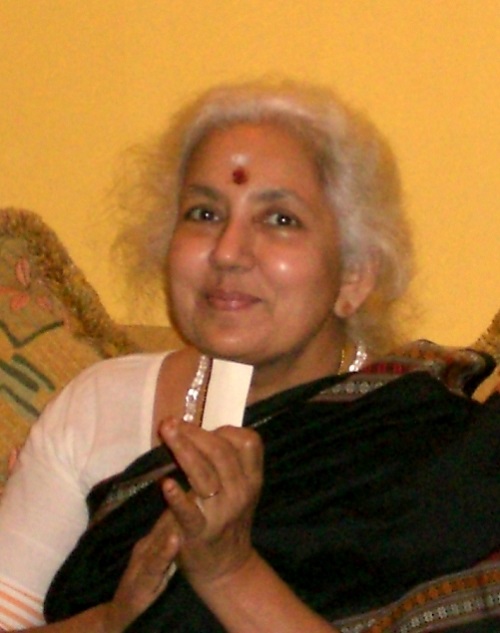
Usha Surya.- Have been writing for fifty years. Was a regular blogger at Sulekha.com and a few stories in Storymirror.com. Have published fifteen books in Amazon / Kindle ... a few short story collections, a book on a few Temples and Detective Novels and a Recipe book. A member of the International Photo Blogging site- Aminus3.com for the past thirteen years...being a photographer.
WE ARE INDIAN WOMEN, OF COURSE ….
Deepika Sahu
Every Wednesday, I remotely teach Communicative English to an age-agnostic class. We have students from different parts of India and most of them are young girls/women. One day, a young student asked me, “Maam, what has not changed in India since you started your career in journalism some 30 years ago?” Without batting an eyelid, I said, “Definitely women’s safety and security. In fact, it has become more violent now.” When it comes to women’s security and safety, it really makes me angry, frustrated and hugely disappointed. No amount of sloganeering will make women safe. I have been thinking of my journey with safety even as I negotiated life in cities like Delhi, Bengaluru, Ahmedabad, Bhubaneswar and travelled to many other cities. I have been just plain lucky– nothing more, nothing less. It’s not that I am smart or wise to negotiate my way to safety. I still can’t understand how can our women prosper and be their best versions if they live in perpetual fear and uncertainty. A friend’s teenage daughter has to stop cycling in her neighbourhood because she was harassed by the boys in that locality. What are we becoming as a nation?And the crime against women has nothing to do with age, looks, economic independence or hemline. On a desolate evening, I kept on thinking about the question my student asked and my answer to her question. I wish I had some other answer to offer to her. From that moment of anger and disappointment, I wrote this spoken poetry titled We are Indian Women
***************
We are Indian women,
Of course, fear is our middle name.
We are Indian women,
Of course, we can be killed even at birth because our families don’t want a girl child.
We are Indian women,
Of course, we can be raped and murdered at work, in our homes, on the streets & in buses.
We are Indian women,
Of course, anyone can come and abuse our bodies even as we are rushing to attend our school, college or office.
We are Indian women,
Of course, we are supposed to cook, clean and be care-givers to everyone around us and do all this in the name of sanskar
We are Indian women,
Of course, we are not supposed to laugh from our gut or have an opinion on anything.
We are Indian women,
Of course, everyone has an opinion on how we look, how we smile, how we dress and how we behave.
We are Indian women,
Of course, we don’t own our bodies.
We are Indian women,
Of course, we are always living in a world of tentativeness because nothing is ours.
We are Indian women,
Of course, eight out of 10 of us live in fear of sexual assault (as per data).
We are Indian women,
Of course, we should keep our heads low and remain silent because being argumentative is just so unfeminine.
We are Indian women,
Of course, we have been told by our well-wishers to avoid red-eye flights, night buses and trains. You know, nights are just not for women. And aah now no parks too after 6 pm. And that too in Delhi,
We are Indian women,
Of course, our successful female celebrities will be trolled and called “Gold Diggers” if they date rich men.
We are Indian women,
Of course, time is immaterial for us because we can be raped in broad daylight and ironically very close to a police station.
We are Indian women,
Of course, our knowledge, talent, career and interests just don’t matter.
We are Indian women,
Of course, we should not take any slogan celebrating us seriously.
We are Indian women,
Of course, we have almost no allies in politics because our leaders are always looking for opportunities but no intent to change anything.
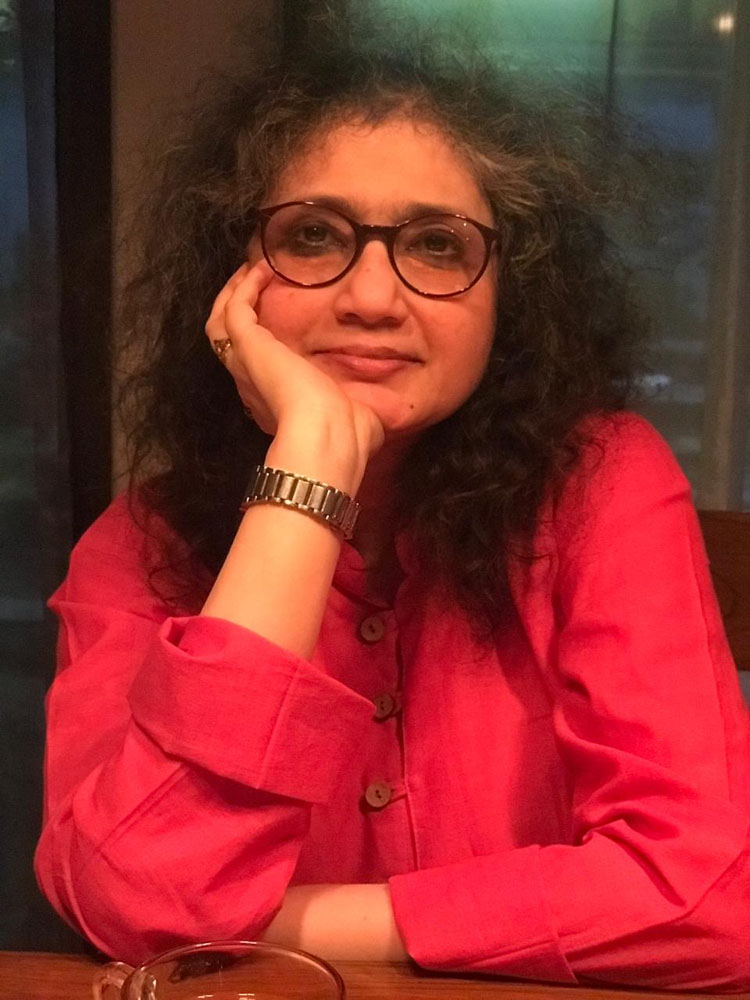
Deepika Sahu is an Ahmedabad-based senior journalist with a career spanning since 1995. During her career, she has worked with India's premier media organisations, including the Press Trust of India (PTI) in New Delhi, Deccan Herald in Bengaluru, and The Times of India in Ahmedabad. Currently, she is contributing India-centric features to Melbourne-based The Indian Sun, a cutting edge media platform. In addition to her journalism career, Deepika is involved in teaching English and Communication Skills to learners from different parts of India through Manzil, a Delhi-based NGO. Beyond her professional endeavors, Deepika is passionate about India's rich diversity, literature, blogging, quiet hours at a cafe and enjoying a cup of tea.
MISSION ZEENAT
Krupasagar Sahoo
We sat silently on the machan, as motionless as three stone idols in a museum. Above us, a thatched canopy of leaves and branches offered scant protection from the night air. Three sides of our makeshift shelter were enclosed, while the fourth remained open to the forest.
Some distance away, concealed beneath a camouflage of leaves and twigs, lay a trap. Inside it sat a goat, its eyes clouded with sorrow and its heart trembling with fear. It seemed to have resigned itself to a fate it could neither comprehend nor escape.
My companions were the Divisional Forest Officer (DFO), a few forest officials and their assistants. I held a notebook and pen; the DFO carried a camera and a gun, while the forester had a torch and a tranquilliser gun.
Our mission was simple in its objective:to capture the fugitive tigress Zeenat, by hook or by crook.But it’s execution was not as simple as it sounded.
I was a freelance writer. In an earlier chapter of my life, I had been a trained hunter. Though employed as a government servant, my passion had been to go on Shikar, which I pursued during my holidays. The years, however, had transformed me. I had exchanged the hunter’s instinct for the conservationist’s conscience. I now advocated the protection of wild animals through my newspaper columns and participated in television programmes as an authority on wildlife. In a sense, I had travelled from Chandashok to Dharmashok—from the Ashoka who waged war to the emperor who embraced the path of peace.
So, when the Conservator of Forests invited me to join the mission to capture Zeenat, I readily agreed.
For several days, we had been tracking her. Yet she seemed to vanish into thin air, slipping from one place to another like a phantom of the forest.
Zeenat had been brought from the Tadoba-Andhari Tiger Reserve to Similipal barely a month earlier. Tadoba had a healthy tiger population, while Similipal’s tiger numbers had dwindled alarmingly. The officials hoped that introducing a tigress from another population would strengthen the genetic diversity of Similipal’s tigers. It appeared to be a win-win situation.
But Zeenat had other ideas.
She had been released into an enclosure in the Chahala area of Similipal. Her sudden escape had become a nightmare for the forest department. She crossed into Jharkhand and eventually reached Purulia in West Bengal. Guided by the signals from her radio collar, we followed her trail and had now been camping in the area for nearly a week.
That evening, before nightfall, we climbed the machan with packets of dinner and flasks of Tea and water. The forest was preparing for its nocturnal life, but our presence had disturbed its peace. A junglefowl raised an alarm, apparently warning its companions that a dangerous animal—and a party of humans—had entered their domain. A langur responded with its familiar har-har cry, sending the news echoing through the trees.
The night deepened. Moonlight filtered through the foliage, its silver shafts falling upon the grass below. A cold wind slipped through the gaps in our shelter. In the trap, the goat waited for its destiny, perhaps praying to a God who seemed as distant as the moon.
There was no sign of Zeenat.
From experience, we knew that she was exceptionally clever. She had not been making regular kills, and the forest officials feared that, sooner or later, another goat, sheep or buffalo might become the victim of her wanderings. Nearly three hundred forest personnel had been engaged in the operation, and the elusive tigress had tested their patience and ingenuity at every turn.
Winter had settled over the forest. Silence reigned, broken only by the whisper of leaves and the persistent chirping of crickets. Birds slept in their nests, while the trees stood like ancient guardians, sheltering their young beneath their branches.
We waited.
Every faint rustle made us sit upright. The tea got over quickly ,the flask was now empty, and exhaustion was slowly overcoming our vigilance. Eventually, one by one, we drifted into an uneasy sleep.
As I was slowly falling asleep - a dream flashed by in my mind.. I saw that .. through the branches, the moon appeared to be smiling down upon us. And there, beneath our machan, stood Zeenat , a figure in the shadowy darkness , still but magestic.
She opened her mouth, not to attack us, but to speak.
“All of you have laid a net to catch me. I know that,” she said. “You got down from your jeep like thieves and climbed up this tree to hide yourselves. You are after me, i know …Why can’t you leave me alone? Whatever tricks you try, you will never catch me.”
I gathered my thoughts and answered her.
“Zeenat, Similipal is a beautiful place. It is a natural sanctuary, with dense forests, scenic destinations such as Meghasan and Ganapati,perennial rivers like Balanga, Khairi and Palpala, and magnificent waterfalls such as Barehipani, Joranda and Uski. Tourists travel long distances to experience its beauty. You were brought here with great care and given royal treatment. Did none of these attractions appeal to you?”
I paused, then added, “Do you know how vast Similipal is? Its landscape covers almost 5000 kilometres. You came from Tadoba, which is much smaller. How could you possibly dislike such an expansive forest?”
Zeenat looked at me with undisguised irritation.
“Similipal, my foot! Have you shown me a single simili tree here—the tree after which the place is named? A forest is not merely a collection of tall trees. Animals need variety: berry-bearing trees, bamboo thickets, grasslands and fruiting forests. They need an ecosystem that sustains them, not just a landscape that looks impressive to human eyes.
“And what do I find here? More hunters than animals! If the tiger’s habitat is unsafe, how do you expect its clan to flourish?”
Her words stung because they carried the uncomfortable weight of truth.
I had seen enough of the world to know that the presence of a sanctuary on a map did not necessarily guarantee safety for its inhabitants. Poaching, habitat disturbance and the loss of prey could undermine the best conservation plans. Some hunters were caught, but punishment did not always seem to bring lasting change. The larger problems remained, waiting patiently for someone to confront them.
Seeing that I had no immediate answer, Zeenat continued to praise her homeland.
“Tadoba may not have towering mountains, but it has its own charms. There are hills around Chimur and Kolara, and the forests are interspersed with rivers, lakes and clearings. The Andhari and Erai landscapes have their own beauty. I know those woods. I know their sounds, their scents and their silences. There, I feel at peace.”
I nodded.
“Yes, Zeenat, you may be right. But we have a mission to fulfil, and you are the one who can help us accomplish it.”
At the mention of the mission, her eyes flashed. She moved a little closer, and I instinctively braced myself.
“Before bringing me here, you brought Yamuna Tai—my sister. Where is she now? No one seems to know. Have you people taken it upon yourselves to cleanse Similipal’s tiger population of its genetic shortcomings, as though we were objects to be rearranged at will?”
I tried to soothe her.
“You should at least have given Similipal a chance. You could have stayed for a few days, and explore the forest . If you disliked it, you could then found a way to leave. But you ran away almost immediately.”
“Because your people made my life miserable!”
“How?” I asked.
“Every day, they sent a different tiger into my enclosure. What did they think they were doing? Arranging a royal swayamvar for me, as though I were a princess of Vidarbha?”
She seemed to enjoy the memory of her indignation.
“On the first day, they sent a young tiger. He was so dark that I could not decide whether I was looking at a tiger or a zebra painted the wrong way. The moment he came near me, I kicked him so hard ..he fled, howling “Maalo Bopalo…” as though the world had ended.
“The next day, a white tiger arrived. He looked like a rabbit’s grandfather! Perhaps the officials imagined that I would fall in love with him simply because he was white. But the poor fellow’s dignity did not survive our meeting. He ran away, crying at the top of his voice.
“Then came the last candidate—a real Bahubali, a tiger built like a wrestler. His eyes blazed red, like a crow-pheasant and his whiskers looked like brooms. He charged towards me so forcefully that I feared he intended to overpower me. I leapt onto his back and made my escape from the enclosure!”
Her account was so vivid that I burst out laughing. For a moment, the solemn business of wildlife management gave way to the comedy of an unwilling bride fleeing her own swayamvar.
But when my laughter subsided, I asked, “Do you know where you went after escaping?”
“No. I ran straight ahead, leaving the settlements of Similipal behind me. During the day, I hid. At dusk, I resumed my journey. One day, I came upon a muddy river. The people there dressed differently. Their clothes ended around their knees, and they carried strange implements. The forest was thinner, too. I feared I might be caught, so I pressed on.”
“The river must have been the Subarnarekha,” I explained. “You had reached Jharkhand, a region with extensive mining activity. And now you have crossed towards West Bengal.”
“Yes, I know. Perhaps I made a mistake by coming this way. I cannot find the familiar trees or the people of my homeland. Everything seems strange.”
“You have travelled a long way,” I said. “Tell me, have you killed anyone?”
“I have hunted small animals. I have been careful. If I kill larger prey near human settlements, I may be discovered. We tigers do not need to eat as frequently as humans. After a substantial meal, we can go for several days without eating. We do not sit down to four meals a day!
“And do you really think I am foolish enough to fall for all your tricks? Your people have recorded tiger calls and played them in the forest, hoping I would run towards the sound. But can a recording ever deceive an animal that knows the real voice of its own kind?”
I could not deny her intelligence. Zeenat had repeatedly outmanoeuvred a large team of experienced officials. She seemed to understand that survival depended not merely on strength, but also on patience, caution and the ability to read danger.
I decided to appeal to her compassion.
“Listen, Zeenat. Do you know what is happening in the villages around Machihadihi Rajabasa and Merbeda? People are living in fear. Schools have closed, farming has been disrupted, and the government has imposed restrictions. Families are facing untold miseries.”
She stared at me.
“Am I responsible for all their misery? I am not a man-eater, nor do I hunt domestic animals for pleasure. I have no beef with those villagers. My only request is that you allow me to live in peace.”
Her answer was firm, almost weary.
I tried another approach.
“Think of my position. I have built a reputation as a wildlife expert. If I fail in this mission, people may lose faith in me.”
Zeenat studied me for a moment.
“Your spectacles and that pen tell me you are a writer,” she said. “If you truly understand animals, tell the government to return me to my homeland.”
She paused before delivering the thought that seemed to lie at the heart of her resistance.
“We were born free. We should have some say in where we live, where we feed and with whom we share our lives. We are not cattle to be housed in wooden sheds and made to accept whatever arrangements humans consider convenient.”
Her words unsettled me. The conservationist in me had spent years defending wildlife, yet here I was, helping to capture an animal whose only apparent crime was refusing to remain in a place she did not recognise as home.
I looked at her and asked, more gently, “So you miss Tadoba?”
“Of course I miss Tadoba! I miss my mother, my family and, above all, Johan.”
“Who is Johan ?” I asked, unable to conceal my curiosity.
For the first time that night, Zeenat smiled.
“Johan was my playmate. We grew up in the foothills around Chimur. My sisters and I played along the banks of the Andhari, chasing one another through the tall Kash grass. I miss Pangadi and Kolara lakes, too. Their waters were like mirrors. We would gaze at our reflections and compete in swimming.
“My mother must be searching for me. I am three years old now, but to her I must still be a little cub. She must be wandering through the familiar corners of Tadoba, calling my name.
“‘Come, Zeenat, my darling. Come back!’”
Her voice softened. A pair of tears glistened in her eyes before slipping down her face.
For a moment, I forgot the trap, the sleeping officials and the mission that had brought us there. I saw not a fugitive animal, but a daughter separated from her mother, a creature longing for the familiar embrace of home.
And I felt ashamed of how little room we had made for that longing in our plans.
I spoke to her as one might speak to a grown child whose stubbornness is matched only by courage.
“You are no longer a cub, Zeenat. You are a grown tigress. But every step of your journey carries danger. You cannot fly over mountains and settlements like a bird. You still have a long distance to cover, and there are hunters in these forests. Who knows when someone might attack you from a tree or a mountain pass?”
She raised her head and answered calmly.
“I am not afraid of death. Everyone must die one day.”
“But will you find your way back?”
“Last time, I travelled east by mistake. This time, I shall go west. I know the trees of my homeland. I can distinguish the calls of the cuckoo, crow and junglefowl of my forest from those of birds elsewhere. The forest itself will guide me. And at night, the Pole Star and the constellations will show me the way.”
Her certainty was almost otherworldly.
I had one more piece of news to share.
“The local authorities here believe you are a Royal Bengal tiger and claim the right to keep you. They may send you to Alipore Zoo.”
Zeenat turned her face towards the sky. When she spoke, there was no anger in her voice—only an unshakable resolve.
“I am the tiger of Tadoba. Tadoba alone is my home. No one has the right to decide my life merely because I have crossed a boundary drawn by humans. If I live, I shall live in Tadoba. If I die, I shall die there.
“Tell everyone to leave me to fate.”
That was where my dream-conversation ended.
A rustle among the dry leaves was followed by a low, coughing sound. Somewhere in the darkness, an animal stirred. Other creatures responded with calls of alarm, and I awoke with a start.
The goat began bleating desperately from inside the trap. We all sprang to our feet.
The forester cried out, “Zeenat! She is lurking near the trap!”
Without wasting another second, he raised his tranquilliser gun and fired.
In that instant, the moon seemed like a silver discus falling towards the brick-red earth. Through the dim light, we saw an animal tumble in a sudden somersault before disappearing into the darkness of the forest.
The forester had missed his target.
The dart struck the goat instead, as tragically and unwittingly as King Dasharatha’s arrow had struck the young Shravan Kumar in the ancient tale. The goat collapsed, its final cry cutting through the night.
For a moment, nobody moved. The DFO and the forester stood speechless, their faces flushed with embarrassment.
And I laughed.
I laughed at the absurdity of the situation, at the elaborate preparations, at our confidence, and at the possibility that Zeenat had once again outwitted us. My laughter was not directed at the poor goat, whose death was a needless tragedy, but at the humiliating failure of a mission that had seemed so carefully planned.
We dismantled our camp and returned to Purulia town, carrying the dead goat with us.
On reaching the town, my mobile phone rang. It was my wife.
“What are you doing, wandering around after forest officials? Have you forgotten that you are supposed to go to Mumbai?”
I turned to the DFO and explained that I needed to return to Bhubaneswar. I had spent the better part of a week away from home, and at my age, my body no longer permitted such prolonged excursions without complaint.
He urged me to stay and join the team for a mutton party but I politely declined.
“Firstly, I have stopped eating red meat,” I said. “And secondly, I have to go to Mumbai for some work “
I travelled by passenger train to Kharagpur, where I boarded the Rajdhani Express. Settled in the comfort of my first-class air-conditioned coupe, I finally had time to reflect.
Had it really been Zeenat that I had seen beneath the machan? Or had some other animal wandered past the trap? If it had been Zeenat, why had she come there? Was she merely demonstrating that she was beyond our control? Or had she wanted to tell us, in her own mysterious way, that no cage, trap or human plan could extinguish her desire for freedom?
Perhaps the encounter had never taken place outside my mind.
Freud called dreams the royal road to the unconscious. Maybe my dream was the product of years of reading about animals, observing their behaviour and thinking about the relationship between humans and the natural world. Perhaps my imagination had given a voice to a creature whose thoughts we could never truly know.
Yet I could not dismiss the encounter entirely. Dreams may be born in the unconscious, but the truths they reveal can sometimes be difficult to ignore.
I wondered, what was passing through Zeenat’s mind?
She remained an abstract poem—beautiful, elusive and open to interpretation.
As I drifted into sleep in my first-class coupe, I saw her again.
This time, Zeenat had wings.
She rose above the forests and flew towards her homeland, singing as she crossed hills and rivers. Her song reminded me of those who live far from home: the migrant worker who longs for his village, the traveller who yearns for familiar streets, and the lover who dreams of returning to the place where the heart first learnt to belong.
My affection for Zeenat grew. In my dream, I tried to guide her, as though I could send a message across the miles separating her from Tadoba.
“Do not take the route through Chandaka,” I whispered. “travel through Saranda-Dandakaranya where the human population is relatively sparse. Find your way home.”
I knew, of course, that a journey across forests, roads, settlements and human-dominated landscapes could never be as simple as following a line on a map. Still, I wanted to believe that the forest might offer her a passage, and that she might somehow reach the home she longed for so dearly.
Before leaving for Mumbai, I submitted a report to the Conservator of Forests. I wrote:
The translocation of wild animals is not merely a matter of moving them from one geographical location to another. Animals are deeply attached to their habitats, and they may struggle to adjust to unfamiliar surroundings. Their well-being depends on more than food and shelter; it is also shaped by the ecological conditions, territories and natural behaviours with which they are familiar.
The attempt to establish Zeenat in Similipal has failed. Her persistent efforts to escape suggest that the relocation has not achieved its intended purpose. I therefore recommend that the authorities consider returning her to Tadoba, subject to scientific assessment, veterinary evaluation and the practical requirements of her safe transfer.
For Zeenat, Tadoba is Jannat—paradise—and every unfamiliar forest seems like Jahannam.
I also urged the department to address Similipal’s underlying conservation challenges. Improving the prey base, strengthening protection against poaching, restoring suitable habitat and managing human-wildlife conflict must receive sustained attention. Where voluntary relocation of human settlements is considered necessary for conservation, it must be approached lawfully, humanely and with due regard for the rights and livelihoods of the people concerned.
Simply introducing tigers from elsewhere would not, by itself, resolve the deeper problems facing the reserve.
I was not convinced that my recommendations would find favour with the authorities. Nevertheless, I said what I believed needed to be said.
By the time I reached Mumbai, I learnt that Zeenat had been captured and taken back to Chahala. I stayed with my son’s family for two months.
After returning, I called my friend, the Conservator of Forests. The moment he heard my voice, his excitement was unmistakable.
“Good news, Mohan Babu!” he exclaimed.
“What good news?
“Zeenat. We have won!”
He laughed with the triumphant delight of a king who had conquered a fort.
I was puzzled. “What exactly do you mean?”
“Zeenat is two months pregnant!”
“Oh! How did that happen?” I asked in surprise.
“Tomorrow, I am leaving for Similipal on tour. Come with me, and you can see for yourself.”
The following day, we travelled from Bhubaneswar to Baripada and continued towards Chahala through the Pithabata gate.
There, beneath a Kurum tree inside the enclosure, lay Zeenat. She seemed lost in thought, as though contemplating the uncertain future that awaited her. Yet there was a faint gleam in her eyes, a suggestion of contentment that I had not noticed before.
Beside her stood a young tiger, alert and watchful, like a sentry guarding a queen.
I turned to my friend and joked, “So, where has this successful suitor come from? Is he the one who won the swayamvar?”
The Conservator smiled.
“He is the Prince of Vidarbha—Johan.”
We burst into laughter. At the sound, birds rose from the trees and flew towards the distant forests around Barehipani.
Zeenat and Juhan turned their faces towards us. They seemed to regard our amusement with their own private thoughts.
I watched the pair and wondered whether the two lovers were already conspiring to escape from Similipal.
When we claim to protect the wild, do we sometimes forget to listen to it?
Zeenat remained in my memory as she had appeared in my dream: a tigress with wings, flying towards the rivers, hills and forests of her homeland.
And I, who had once taken pride in my skill as a hunter, found myself silently cheering her on.
Run, Zeenat, run.
May the forest remember your footsteps, may the rivers guide your journey, and may the call of home never cease to lead you onward.
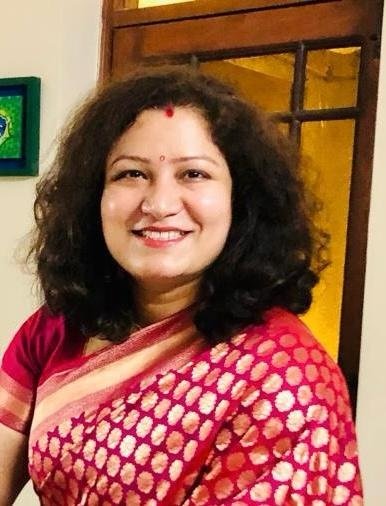
Kusumita Sahoo,a student of English Literature, and also an avid reader from an early age, has always found comfort and inspiration in books.Her enduring love for words and stories has now shaped her journey into writing.Having worked with multinational companies,she has gained diverse experiences that have enriched her perspective and narrative voice.
This story marks her second foray into the world of literature-a heartfelt expression of her passion for storytelling and her desire to share the magic of stories with young readers.
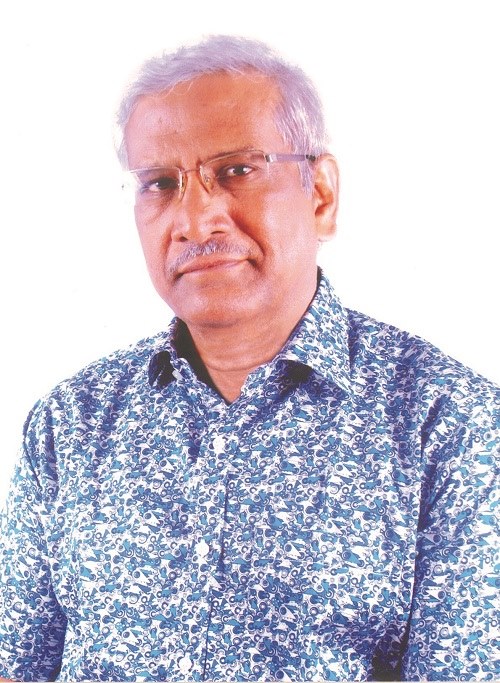
Krupasagar Sahoo, Sahitya Akademi award winner for his book ‘Shesh Sharat’ a touching tale about the deteriorating condition of the Chilka Lake with its migratory birds, is a well recognized name in the realm of Odiya fiction and poetry. The rich experiences gathered from his long years of service in the Indian Railways as a senior Officer reflect in most of his stories. A keen observer of human behavior, this prolific author liberally laces his stories with humor, humaneness, intrigue and sensitivity. ‘Didi from Dum Dum’ is one of many such stories that tug the heart strings with his simple storytelling.
An emergency meeting had been called at the community hall of Kaveri Flats, and representatives from every block were asked to attend. Within minutes, the residents had gathered.
The newly elected president was a young man—and, to everyone's satisfaction, a lawyer. The residents had decided that it was time for the older generation to step aside and allow the younger lot to take charge. They believed that young people would bring more energy and enthusiasm to the administration.
As part of this new approach, Abhilash Menon, a lawyer, had taken over as the secretary of the apartment association.
This was the first major problem to land on the desk of the new secretary. Naturally, everyone was watching to see how the lawyer would handle it.
The problem was rather strange.
At odd hours of the night, mysterious noises were being heard from the rooftop area of the apartment building. During the heavy monsoon showers, power cuts were common. No one had the courage to open the door and go outside in the darkness to find out whether a thief was lurking there.
And it wasn't just one resident who had complained. Several people had heard the same noises.
Everyone shared their experiences. But there was one puzzling fact—nothing had actually been stolen.
Could it be some local Romeo sneaking around?
The investigation began to take several different turns.
Even the cleaning staff came forward with a complaint. One day, the drum in which they had collected food waste was found knocked over.
Finally, the residents reached an agreement. If the strange noises were heard again, whoever noticed them first would immediately make a WhatsApp call to the others, wake everyone up, and together they would confront the intruder.
Satisfied with the plan, everyone went home.
For the next two days, nothing happened.
Had the thief—or the Romeo—somehow heard about the emergency meeting and decided to stay away?
The silence did not reassure anyone. If anything, it made them more suspicious.
Could the thief already be living among them?
As night fell, the situation became so tense that women and children began asking someone to accompany them whenever they had to walk from one room to another.
Whenever the residents saw the lawyer, the questions began.
“Sir, any news? Did you catch the thief?”
“This kind of thing never happened here before!”
“What a wonderful new administration!”
“Oh dear! Perhaps we should have kept the old people as secretary!”
Listening to the women of the apartment, one might have thought that the lawyer himself was the one running around on the rooftop at night.
His wife was no different.
“Listen,” she told him one evening, “you have twenty-four hours to catch this thief. Otherwise, I'll never hear the end of it. Tomorrow I'm supposed to go to the temple with Sreedevi and Lakshmi. If you haven't caught the thief by then, how am I supposed to face them?”
“Didn't I tell you not to take up this secretary business?” she continued. “You should have listened to me.”
Whoever said that women have the last word may well have been speaking from experience.
The lawyer had got himself into this situation simply because he had been too eager to take on a leadership position.
But what could he do now?
Abhilash thought about the matter from every possible angle. He had never found even a legal case this difficult to solve.
By now, it had become a matter of personal pride.
That night, he decided to stay awake and catch the thief himself.
Armed with a torch and a stick, the lawyer kept watch until well past midnight.
But there was not even a trace of the thief.
His suspicion then turned towards the teenage girls in the apartment.
Could some young man be sneaking in to meet one of them?
Or perhaps someone was coming to supply drugs such as MDMA or cannabis to someone in the building?
His imagination was now running faster than the investigation.
On the fourth day, the complaints started again.
Someone had heard the noises at four in the morning.
But the moment the lights were switched on and people began gathering, the noises stopped.
What kind of mystery was this?
Could it be a ghost?
While everyone else slept peacefully, tucked under their blankets as the rain poured outside, the secretary alone wandered restlessly around the apartment, straining his ears for the slightest sound.
By the fifth day, the lawyer was exhausted.
He decided to go to the club for a game of cards, but he wasn't really in the mood to play. Instead, he stopped at the small shop run by Ramettan, directly opposite the apartment building, and sat down for a chat.
During their conversation, Ramettan casually remarked,
“There was a thief hanging around here for the past three or four days. I caught him red-handed yesterday.”
The lawyer's eyes lit up.
It was exactly what he had been waiting to hear.
He told Ramettan that he had actually come to the shop because he was frustrated about the thief who had been moving in and out of the apartment building without being caught.
Ramettan couldn't help laughing.
“I caught the thief red-handed,” he said. “But I didn't hurt him. I secretly recorded the whole thing on my smartphone. Would you like to see the video?”
The lawyer's curiosity immediately doubled.
Around noon, when there were hardly any customers at the shop, Ramettan usually spread a small mat inside and took a nap.
By about three-thirty, children and other customers would begin arriving.
But for several days, three or four bananas had mysteriously disappeared from the bunch hanging outside the shop.
The banana peels were always found in the rubbish bin nearby.
“I have to catch this thief,” Ramettan decided.
So one afternoon, he pretended to be asleep on his mat, positioning himself where he had a clear view of the bananas.
Right on schedule, the thief arrived.
It reached out, plucked a banana from the bunch, peeled it, ate it, dropped the peel into the rubbish bin—and ran away.
Ramettan had secretly recorded the entire episode.
When he showed the video to the lawyer, Abhilash burst out laughing.
Who was the thief?
A monkey.
Peacocks, mongooses and pigeons were frequent visitors to the area. But this was the first time anyone had seen a monkey wandering around.
“You know,” Ramettan added, “I've seen this very monkey running around your apartment building too.”
The lawyer let out a long, relieved sigh.
At last, the mystery was solved.
He immediately took the video recorded by Ramettan and posted it in the apartment association's WhatsApp group with the caption:
“The Thief Has Been Caught!”
And just like that, the lawyer-secretary was finally able to escape the crisis.
When the residents discovered that the mysterious creature racing around their building was nothing more than a monkey, everyone was genuinely delighted.
After all, isn't a monkey visiting your home considered a sign of good fortune?
The very next day, the lawyer and his wife set off for a Hanuman temple to offer a vettila mala as a thanksgiving offering.
And that, quite simply, was the end of the story.

Mary Josey Malayil, a native of Thiruvananthapuram, Kerala, is a talented writer with a rich family legacy. As the second daughter of T. R. Johny, retired Chief Engineer of the Kerala State Electricity Board, and the late Rosily Chirayath, sister of the renowned actor C. I. Paul, Mary was born on June 22, 1964. Her primary education spanned various locations, including Pallam, Palakkad, Thrissur, and Thiruvananthapuram, before earning her B. Com degree from All Saints College, Thiruvananthapuram, in 1985. She then moved to Alappuzha, joining the esteemed Catholic family of Malayil Thomas, Senior Manager at SBT, as his daughter-in-law. Mary is married to Josey Thomas Malayil, a skilled cartoonist and medical illustrator, and they have a son, Thomas Josey Malayil, who works in corporate communications at Technopark, Thiruvananthapuram. During the lockdown, Mary discovered her passion for writing, driven by a desire to overcome boredom. Since then, she has contributed stories to numerous esteemed publications, including Karmabhumi, Arsha Bhoomi, Malayala Manorama Online, KSEB Pension Bulletin, Keralathanima, Malayalam Rachanakal Online, Koottaksharangal, Ima, and Malayil Varthapatrika. She gratefully acknowledges Raju Shankarathil, Chief Editor of Malayali Manassu in Philadelphia, for his mentorship and support, which led to her appointment as an editorial board member. Mary draws inspiration from her maternal uncles C. I. Paul (late) and C. I. Joy, brother T. J. Raphael (former General Manager of South Indian Bank), sister and fellow writer, Rita Manuel, and Mary’s online community, including Nirmala Ambatt, Chief Admin of the ‘Samskruthi Facebook Writing Group’ and ‘Arsha Bharati’. Surrounded by a rich storytelling heritage, Mary continues to contribute to the world of literature. She currently resides in Thiruvananthapuram with her family, where she weaves her own unique literature.
‘Afsana’, ‘Dastan’, ‘Kahani’ and ‘Fasana’ in songs
Old Bollywood was our nursery for Urdu. Where else could you get Tamaam gawaahon ke bayanat and memberaan-e-jury ki sifaarish ke maddenazar? There were always fasadaat, khayalaat in our films. In between there were some exceptions like Khayaalon mein kisi ke is tarah aaya nahin karte. But soon it was back to Ye meri khwahish ye khayalaat kise pesh karun.
Those days I got hooked to Urdu language. There was a local announcer who was known as Patna’s Ameen Sayani. With the difference that whereas Ameen Sayani started with Behno aur Bhaaiyo, our local Ameen Sayani’s trademark was Khawateen-o-hazraat, Main Diwali ke muqaddas mauke par aap sabka khair maqdam karta hun. Sometimes, he became more flowery: Aaj ki mehfil ke sadr Janab.., Hazreen-e-mehfil, tamaam khawateen-o-hazraat.
Then I started listening to news from AIR Urdu Service. Since I knew which country’s PM was visiting India, it was easy to understand the meaning of Donon mulkon ke wazeer-e-aazam ne mukhtalif muddon par tabaadala-khayal kiya. Then, mukhalfat karnewaali jammatein always did mazammat of intezamia. I hit a roadblock in learning Urdu/Arabic script. My Urdu remained limited to our old Bollywood. ‘Old’, because now our films have got rid of their fetish for ‘simplified language’ by switching to easy-to-understand words like geetkar rather than naghmanigar. Those were the days of Afsananigar in our films and it was easy to extrapolate the word to mean the person who had written the Afsana of the film.
Since SOY deals with legacy songs, very often we discuss songs like Afsana likh rahi hun dil-e-beqaraar ka. Or Aye bhi wo, gaye bhi wo, ek to fasana ban gaya. Sagai (1951) film had a song Dil ki kahani kahna to chaahe, haye ri kismet kah na sake, composed by C Ramchandra. I knew a friend’s wife was a creative writer. What was she doing now, my friend told me she was writing afsaane. Ater checking some sources I could make out that In Urdu literature, it was a genre like our kahani (as distinct from another genre, larger in size, novel). Urdu adab has simply retained the word novel to mean the same thing.
But I was still not satisfied about it. I asked different people who I thought could know. It appears there has to be some element of a folk romantic legend in afsana. In that sense it is similar to Dastan or Kissa whereas kahani (or short story) has a touch of modernity about it. Afsana is a word of Persian origin which has a very ancient culture going back to several millennia, whereas Hindi kahani originated in the early 20th century. In Europe it would have originated much earlier. A word’s synonym in another language may not mean the same thing, there may be difference in nuances. Afsana sounds sweet to me, and I would not use a bland substitute.
Dastangoi originated in 17th century. Later, it became extinct. The literal meaning is narrating a legend; it is a performing art on stage. It has been revived recently by some enthusiasts based in Lucknow. On YouTube, if you search Dastangoi, you would find many videos. I have seen it performed generally by a pair of men. My impression is, it is to catch breath, and it just creates greater impact when one Dastango tapers off, and the other takes off instantly. I should alert you, some videos are classic legends, on the lines of Vijaydan Detha’s folk tales; but some are about everyday characters we see around us. Thus, my search to understand the difference between afsana, dastan, kahani remains inconclusive.
Fasana has no such ambiguity. It retains a consistent meaning; in my mind it creates an image of scandal or unwelcome publicity of a romantic affair.
Let us some enjoy some songs which use these words and try to understand its nuances from the context.
1. Afsana likh rahin dil-e-beqarar ka by Uma Devi from Dard (1947), lyrics Shakeel Badayuni, music Naushad
Uma Devi had vowed that she would sing her first song only under the baton of Naushad. Naushad was blessed with some magic touch those days. Uma Devi’s vow was fulfilled and Naushad created an immortal song. The film had at least two more afsana songs: Hum dard ka afsana duniya ko suna denge; and Ye afsana nahin zalim mere dil ki haqeeqat hai. For Uma Devi this song must have remained a haseen afsana, because, after a couple of years, due to some hormonal problem she started gaining weight, and in our cruel Bollywood stereotype, she became a comedienne Tuntun.
https://www.youtube.com/watch?v=jfR5p0nefio&list=RDjfR5p0nefio&start_radio=1
2. Kahan tak jafa husnwalon ki sahte by Mukesh from Tohfa (1947), lyrics Saqib Lakhanvi, music Abdul Rauf
This is among the best songs of early Mukesh. My long-time favourite, there is a line in this song that says, Zamana bade shauq se sun raha tha, hameen so gaye dastan kahte kahte. This is beautiful poetry.
https://www.youtube.com/watch?v=3jg7pvRElfY&list=RD3jg7pvRElfY&start_radio=1
3. Aao bachcho aaj tumein main ek kahani sunata hun..Ek raaje ka beta lekar udanewala ghoda by KL Saigal from President (1937), lyrics Pt. Sudarshan, music KL Saigal
This song forces me to rethink the nuanced difference explained to me by experts. In this song the Saigal-character in the film narrates a ‘kahani’ to a group of children. This kahani has a king’s son, a princess from a fairyland, a flying horse which flies off on a kick and go across the world – in short it has all the elements of an afsana, or dastan. A beautiful song though. Depending on the context, kahani or afsana have identical meaning.
https://www.youtube.com/watch?v=KIoHKGcPJaI&list=RDKIoHKGcPJaI&start_radio=1
4. Aye bhi wo gaye bhi wo khatm fasana ho gaya by Parul Ghosh from Namaste (1943), lyrics DN Madhok, music Naushad
Talking of Naushad’s magic, this fasana song is a good example. Parul Ghosh’s best song which comes to top of my recall is not a composition by her brother Anil Biswas, but this Naushad composition. What a romantic backdrop? - He came and he went away, and that was the end of fasana.
https://www.youtube.com/watch?v=2LNwI7Slgq0&list=RD2LNwI7Slgq0&start_radio=1
Let us have another set of songs with these quadruplet words.
4. Chalo ek baar phir se ajnabi ban janye hum dono by Mahendra Kapoor from Gumrah (1963), lyrics Sahir Ludhiyanvi, music Ravi
Sahir wrote a mother of all nazms. Its last stanza is Wo afsana jise anjam tak lana na ho mumkin, use ek khoobsurat mod dekar chhodna achchha.
https://www.youtube.com/watch?v=nSC3SXmM0O4&list=RDnSC3SXmM0O4&start_radio=1
6. Pyar ki dastan tum suno to kahein by Lata Mangeshkar from Farar (1965), lyrics Kaifi Azmi, music Hemant Kumar
I think as the Urdu poetry matured, you would find more dastan songs in the 60s. Most of them were absolutely gorgeous, and you can reel off many from your memory – Wo bhooli dastan phir yaad aa gayi; Ajeeb dastan hai ye, kanhan shuru kahan khatam; Jo humne dastan apni sunayi aap kyun roye. Each better than the other. Among a long list of outstanding dastan songs, I am very fond of Pyar ki dastan tum suno to kahein. This beautiful song figured in an obscure film with unknown actors. This is picturised on a lady I do not recognize. Please notice the element of narration in dastan. But it is meant for one special person, she does not care if the entire world is listening to her dastan or not.
https://www.youtube.com/watch?v=pTbSH-MVUfo&list=RDpTbSH-MVUfo&start_radio=1
7. Dil ki kahani kahna to chaahe haye ri kismat kah na sake by Lata Mangeshkar from Sagai (1951), lyrics Rajendra Krishna, music C Ramchandra
C Ramchandra was not the first music director to use recital prelude in songs, but in many songs, it helped set the mood of the song. My early Lata Mangeshkar favourite, this helps us think about the difference between afsana-dastan-kahani.
https://www.youtube.com/watch?v=jvdtSTIwpsg&list=RDjvdtSTIwpsg&start_radio=1
8. Ae mohabbat unse milne ka bahana ban gaya/ tumne dekha, humne dekha ek fasana ban gaya by Rafi & Lata Mangeshkar from Baazar (1949), lyrics Qama Jalaabadi music Shyam Sundar
Among the quadruplet, I find fasana maintains a consistent meaning. I started with Aaye bhi wo, gaye bhi wo, and that was the end of the fasana. In this Rafi-Lata Mangeshkar too, you saw me, and I saw you, and that was enough to cause a fasana.
https://www.youtube.com/watch?v=YhDhIeGkJus&list=RDYhDhIeGkJus&start_radio=1
With a little effort one can go on and on, but let me end with this set of songs on these four words.
9. Parwanon se preet seekh lein, shama se seekhein jal jana, phir duniya ko yaad rahega ter mera afsana by Suraiya from Bilwamangal (1954), lyrics DN Madhok, music Bulo C Rani
Suraiya was blessed with sweetest of voices. Her personal unrequited love was the stuff of afsana, which the world discusses till today.
https://www.youtube.com/watch?v=A5Gvksd8Wpw&list=RDA5Gvksd8Wpw&start_radio=1
10. Bas ek chup si lagi hai, nahin udas nahin by Hemant Kumar from Sannata (1966), lyrics Gulzar, music Hemant Kumar
In the previous set you heard at #6 a Hemant Kumar composition in the voice of Lata Mangeshkar – Pyar ki dastan tum suno to kahein - from a small banner film Farar. Hemant Kumar was blessed with a divine voice. You might be wondering how a dastan song would sound in the voice of Hemant Kumar. There is indeed one, my long-time favourite. And it is my special favourite precisely because of dastan in the voice of Hemant Kumar, but you have to have patience till his last para (at 2.30) when he sings:
Wo dastan jo humne kahi bhi, humne likhi
Aaj wo khud se suni hai, nahin udas nahin.
In the process of creation, writing comes first, then the narration. But since narration is an important part of dastan, Hemant Kumar gives precedence to kahna. Many readers would be taken aback to see Soumitra Chatterjee on the screen, but the uploader clarifies that the visuals are from another film. I don’t think Soumitra acted in any remarkable Hindi film. This is a twin song, the other version is by Lata Mangeshkar. This song is a strong proof of my theory of Twin songs – the male version is a front-runner, the female version is a laggard, and generally off the radar. This is a combined link.
https://www.youtube.com/watch?v=5omcMCiaDBw&list=RD5omcMCiaDBw&start_radio=1
11. Meri kahani bhoolnewale tera jahan aabad rahe by Rafi from Deedar (1951), lyrics Shakeel Badayuni, music Naushad
The Golden Era of music had many gems on kahani – Nirbal se ladai bhagwan ki, ye kahani hai diye ki aur toofan ki; Suno chhoti si gudiya ki lambi kahani, Apni kahani bhool ja, kuchh to nishani bhool ja, mausam beeta jaye; Dil ki kahani rang layi hai. I choose Meri kahani bhoolnewale as it comes at an important moment in the story. Dilip Kumar was very convincing as a blind person with his open eyes. He must have observed such blind persons very intently. Nargis, his childhood friend, has forgotten everything about those days, whereas from the description he is able to make out that she is the same person. He blesses her that her world should flourish.
https://www.youtube.com/watch?v=gOMHgfrHq90&list=RDgOMHgfrHq90&start_radio=1
12. Jana tha humse door bahane bana liye by Lata Mangeshkar from Adalat (1958), lyrics Rajendra Krishna, music Madan Mohan
In our films, courtesans could love a patron, but the respect of wedding, and love was beyond her hope. In this poignant song, in the second stanza she sings
Rukhsat ke waqt tumne jo ansoo humein diye
Un ansounon se humne fasane bana liye
https://www.youtube.com/watch?v=C5E0lWNeNjk&list=RDC5E0lWNeNjk&start_radio=1
13. Unhein kissa-e-gham likhne ko baithe to dekhe kalam ki rawani mein ansoon by Rafi from Naya Kanoon (1965), lyrics Hasrat Jaipuri, music Madan Mohan
I have mentioned the word kissa too as a synonym for dastan or kahani. I have not tried to look for a kissa song in each set. But this recital kissa song makes up for all. Hasrat Jaipuri was not a regular lyricist for Madan Mohan. But here he writes absolutely gorgeous
Unhein kissa-e-gham jo likhne ko baithe
to dekhe kalam ki rawaani mein ansoo
ye anmol taare ye ulfat ke moti
unhein hum ne bheje nishani mein ansoo
Unhien hum kahani sunane na paye
unhen daag dil ke dikhane na paye
ye ansoo hamare bade kaam aye
zubaa’n ban gaye be-zubani mein ansoo
Na samjho ke ansoo hain gham ki kahani
ye ansoo hain ulfat ki pehli nishaani
muqaddar ke kaatib ka itna karam hai
ke likhhe hain meri kahani mein ansoo
unhen kissa-e-gham jo…
Zamane mein taqdeer sab ki juda hai
tujhe kuchh mila hai mujhe kuch mila hai
udhar hain teri zindagani mein khushiyan
idhar hain meri zindagani mein ansoo
unhen kissa-e-gham jo likhne ko baithe
to dekhe kalam ki rawaani mein ansoo
https://www.youtube.com/watch?v=tTIPAB0Wv64
(This article was earlier published on the author's blog www.songsofyore.com)
A retired IAS Officer of 1975 Batch (Bihar cadre) Anil Kumar Upadhyay retired as Secreatry, Ministry of Road Transport & Highways - cum - Chairman NHAI. Post retirement he was posted as Member (Administrative) Central Administrative Tribunal. A reputed aficianado of Hindi music he runs a blog "Songs of Yore" which attracts thousands of music lovers from India and abroad.
CONNECTED YET LONELY: ARE WE LOSING THE ART OF MEANINGFUL CONVERSATION?
Upali Aparajita
A few days back, I visited one of my very old friends for dinner. We had not seen each other for a few years, and it was great catching up. Since I last saw her, she now has 2 beautiful kids aged 7 and 11. We had a great time reminiscing the fun we had as kids, and before we realized, I had already spent more than 3 hours with her. However, the thing which stuck me most, was watching her kids spent the entire time on their mobile devices. I know now a days being disconnected is so difficult, however this made me wonder.
We live in an age where reaching someone takes only a second. A message can cross continents in the blink of an eye, a video call can bring distant faces into our living rooms, and social media allows us to remain updated about the lives of people we may not have met in years. Never before have human beings possessed so many ways to communicate. Yet, somewhere amid this abundance of connection, a quiet paradox has emerged: we are increasingly connected, but are we truly communicating?
The question is worth pausing over. When was the last time we had a conversation without glancing at our phones, mentally composing a reply while the other person was speaking, or feeling the urge to fill every silence? When did we last listen simply to understand, without judging, advising, correcting, or waiting for our turn to speak?
Perhaps we have become so accustomed to communicating that we are gradually forgetting how to converse.
The Illusion of Connection
Digital technology has undoubtedly transformed our lives for the better. It enables families separated by geography to remain close, helps friendships survive across borders, and creates communities around shared interests. A brief message can offer comfort at the right moment, and a video call can make a distant loved one feel almost within reach.
The problem, therefore, is not technology itself, but the way we sometimes allow it to replace the deeper experiences that human relationships require.
A birthday greeting sent with a single tap may be thoughtful, but it cannot always replace a conversation that asks, “How have you really been?” A photograph may capture a moment of happiness, but it cannot convey the uncertainty, disappointment, or quiet courage that preceded it. A collection of emojis may express affection, yet leave unspoken the words that someone desperately needs to hear.
We have become efficient at exchanging information, but meaningful communication demands something more: attention, empathy, patience, and a willingness to be emotionally present.
The number of contacts on our phones cannot measure the depth of our relationships. Nor can the number of likes on a photograph tell us whether someone feels understood.
Being reachable is not the same as being available. Being heard is not the same as being understood. And being surrounded by people is not necessarily the same as feeling connected.
When Listening Becomes a Lost Art
A meaningful conversation is not merely an exchange of words. It is an exchange of experiences, emotions, perspectives, and sometimes even silences.
Yet listening has become an underrated skill. We often listen with the intention of responding rather than understanding. Someone shares a difficulty, and we immediately offer a solution. Someone expresses sadness, and we rush to reassure them that everything will be fine. Someone presents an opinion different from ours, and we begin preparing our counterargument before they have finished speaking.
In our eagerness to respond, we may overlook what the other person is actually trying to communicate.
Sometimes, people do not need advice. They need a safe space in which they can express themselves without being interrupted or judged. They do not always expect us to solve their problems; they simply want to know that their feelings matter.
There is a quiet generosity in listening without interruption, in asking a question out of genuine curiosity, and in allowing another person to finish a thought even when we disagree with it.
Such moments remind us that communication is not measured by how much we say, but by how deeply we are willing to understand.
The Discomfort of Silence
Modern life has made silence strangely uncomfortable. We reach for our phones while waiting for a meal, sitting alone in a café, travelling on public transport, or even sharing a room with family members. Every unoccupied moment seems to demand a distraction.
But silence is not necessarily emptiness. It can create space for reflection, allow emotions to settle, and make room for thoughts that hurried conversation might suppress.
Some of our most meaningful moments with others do not require elaborate words. Sitting beside a friend who is grieving, sharing a quiet evening with a parent, or holding someone's hand during a difficult time can communicate more than a carefully constructed speech.
The ability to remain present without constantly seeking stimulation may be an important part of learning to connect again.
Perhaps we do not need to eliminate silence from our lives. We need to rediscover the difference between uncomfortable silence and comfortable companionship.
Have We Forgotten How to Disagree?
Another casualty of hurried communication may be our ability to disagree with grace.
In a world of instant reactions, opinions are often expressed before they are fully considered. Online exchanges can quickly turn into arguments, with people defending positions rather than attempting to understand one another. A difference of opinion becomes a personal conflict, and the desire to win replaces the opportunity to learn.
Yet meaningful conversation does not require agreement. It requires the willingness to recognise that another person's experience may be different from our own.
A thoughtful conversation can challenge our assumptions, introduce us to unfamiliar perspectives, and help us see the world through someone else's eyes. It can even strengthen relationships by creating space for honest differences without diminishing mutual respect.
The ability to say, “I see it differently, but I would like to understand your point of view,” is not a sign of weakness. It is a sign of emotional maturity.
If conversation becomes merely a contest to establish who is right, we lose one of its greatest possibilities: the chance to grow through one another.
Reclaiming the Art of Conversation
The good news is that meaningful conversation does not require a technological revolution or a dramatic change in our lives. It can begin with small, deliberate choices.
We can put our phones aside during meals and give our attention to the people sitting across from us. We can ask questions that invite more than a one-word answer. Instead of asking only, “What did you do today?”, we might ask, “What was the best part of your day?” or “Was there anything that stayed on your mind?”
We can resist the temptation to interrupt, offer advice too quickly, or turn every conversation towards our own experiences. We can learn to ask whether someone wants a suggestion or simply needs us to listen.
Most importantly, we can make room for conversations that have no immediate purpose. Not every discussion needs to produce a decision, solve a problem, or lead to a measurable outcome. Sometimes, talking about childhood memories, a book that moved us, a small disappointment, or an unexpected moment of happiness is enough to strengthen a bond.
Meaningful relationships are often sustained not by grand gestures, but by these ordinary exchanges repeated over time.
Rediscovering the Human Connection
Perhaps the real challenge of our times is not that we have lost the ability to communicate, but that we have become distracted from the deeper purpose of communication.
Words can inform, persuade, entertain, and even wound. But they can also comfort, heal, inspire, and bring people closer. The difference often lies not in the sophistication of our language, but in the sincerity of our intention.
We may not be able to control the pace of the world around us, but we can decide how we show up in our relationships. We can choose to look up from our screens, give someone our undivided attention, and listen without immediately reaching for a response.
We can also begin by being more honest ourselves. Meaningful connection requires the courage to move beyond rehearsed answers such as “I'm fine” and occasionally share what we genuinely feel. Vulnerability, offered in the right relationship and with appropriate trust, allows others to know us beyond the surface.
In the end, technology can carry our words across oceans, but it cannot decide how much care those words contain. A thousand messages may keep a conversation going, yet a single heartfelt exchange can leave us feeling understood in a way that countless notifications never will.
Perhaps the art of meaningful conversation has not disappeared. Perhaps it is waiting for us to give it the attention it deserves.
The next time someone speaks to us, we could begin with a simple experiment: put aside the distractions, listen a little longer, ask one more question, and resist the urge to rush towards an answer.
We might discover that the connection we have been searching for is not always found in reaching more people, but in being more present with the people already in our lives.
In a world that teaches us how to stay connected, perhaps the most important lesson is learning how to truly connect.

Upali Aparajita is a Singapore-based yoga teacher, traveller, and spiritual seeker, born and raised in Cuttack, Odisha, India. An engineer by training and an MBA graduate from James Cook University Singapore, she began her professional journey as a banker with Axis Bank in India before moving to Singapore, where she later worked in international marketing at James Cook University.
Choosing to step away from a rewarding corporate career, Upali embarked on a journey of self-discovery through yoga and spirituality, a path she continues to share through her teaching. Having travelled to more than 30 countries, she believes that journeys are not merely about destinations, but about gaining new perspectives, embracing discovery, and experiencing personal transformation.
Her interests span art and culture, travel, fitness, and spirituality, all of which inspire her curiosity about life, people, and the experiences that shape us.
I WAS A FIRST-GENERATION "BRAMAID"
Annapurna Pandey
On a scorching Sunday afternoon, I left my home to buy a bra in Cuttack, a middling town in eastern India. I was 12 years old.
I walked up to a dingy garment shop, the only one open, that displayed several brassieres, prominently hung from a wire outside. Rather provocatively, the bras were clipped to the wire where the nipple should be.
By any measure, in the 1970s, it was a bold move for a pre-teen girl in a small town in India to go shopping for a bra, all by herself. But I had no choice. I was becoming self-conscious of my rapidly growing bosom — made more conscious by brazen gazes of boys and men. I tried hiding my chest by wearing a double-layered chemise tightly held like a corset. It did not work. I needed a bra, the kind that girls in my class and my seniors wore.
The problem was I had no clue what the best choice would be. I grew up as the only girl, with four brothers, in a three-room, tiled-roof house. No one explained anything about this change happening to my body, let alone about the never-mentioned accoutrement. When I got my period recently, my mother simply asked me to wear a pad and nothing else. She did not make me self-conscious by broadcasting my period to the whole family and did not ostracize me during my period by not allowing me to go into the kitchen, as was the custom and as other girls were made to be during their periods. For me, it was a relief.
I couldn't even go to my mother for advice, as she was unavailable to me during those months. She was in deep grief at the recent loss of my seven-year-old brother, Tushar. She couldn't guide me on how to cope with the rapid bodily changes.
I had to fend for myself.
So, there I was on that fateful summer afternoon, sweaty and scared. I entered the shop, hesitant, not daring to meet the salesman's eyes. He wore a sleeveless undershirt, once white, now yellowed and drenched in sweat. He fanned himself frantically with a hand fan in one hand and picked at his betel-stained teeth with the other. I still remember his silly grin when I stood before him. I shivered from the inside even on this steamy afternoon as I pointed at a bra hanging on the wire. He stared straight at my chest, as if measuring it with creepy eyes, and asked, "What size?"
I had no idea.
My mother had never worn a bra. She grew up in a village where women just didn't. It wasn't part of the etiquette. Brassieres were something that educated women in towns and cities wore. My mother didn't have much schooling, even though she came from an upper-caste Brahmin family. At eleven, she got married, and after puberty at fourteen, she came into a house full of bra-less women — mothers-in-law, aunts, and sisters-in-law who did not even wear a blouse beneath their six-yard saris. The word "bra" was never used in our household, even after we moved to Cuttack, where middle-class professionals sent their children to study under my father, a celebrated schoolteacher. I remember that while I was growing up in Cuttack, my mother wore a blouse under her sari. Understandably, it didn’t occur to my mother that I needed a bra.
Still, I did not feel my upbringing was lacking. My parents raised me as though I were one of their sons. I had all the freedom my brothers had. I wasn't chaperoned like other girls when they went out. There was never a talk of marrying me off when I came of age, as it were. I was encouraged to pursue education, and I took full advantage of it. Perhaps that's why I had the gumption to steal some rupees from my mother's purse and go shopping to stay abreast of my classmates.
That's how I became a first-generation "Bramaid."

Annapurna Pandey is a cultural anthropologist at the University of California, Santa Cruz. Originally from Cuttack, Odisha, she moved to Santa Cruz, California in 1989. She is a travel enthusiast and loves to write travelogues highlighting her exotic experiences in different parts of the world.
DURGA PUJA IN MY GIRLHOOD
Sumana Ghosh
A family celebration to welcome Ma in the old world way.
When the wispy clouds sail by in the azure sky over a sea of softly undulating milky white ‘kaash’ and the faint fragrance of the shiuli wafts to you , you know they carry a sweet message of the season – ‘Durga Puja is here’ they whisper. And there is no Bengali on earth who is not moved by these sensory delights.
In most Bengali households, every major event is centred round this single point of reference. Whether it’s an outing, a family gathering, an old friends’ meet, an engagement ceremony, buying something special, everything has to happen either ‘just before the Pujo’, ‘during the Pujo’ or ‘after the Pujo’ or even carried over to the ‘by next Pujo’. So, being a true Bengali, how could I not be affected by the sights, sounds that Autumn rings in and the sweet memories of great Pujas spent in my girlhood?
When I look back on the canvas of my life, I find the colours a little faded over time but every stroke, every shade that made up those vibrant pictures of my Durga Puja spent in our grandfather’s home with my extended family, still remains vivid in my mind.
My grandfather happened to build his house in the quaint town of Hazaribag, which was supposed to be a health resort in those days. For the younger generation it now falls in Jharkhand but in our days it was very much a part of the undivided Bihar. Nestled in the foothills of the Chhotanagpur plateau, it has extreme climates – strong, dry summers and crispy frosty winters and the best of weathers during the Pujas. And that was the time we all looked forward to- to the huge gathering of the whole family. Our grandfather, an erstwhile WBCS officer, was mostly posted in Odisha and Bihar (then under the Bengal Presidency) in the pre Independence era. He happened to like the quiet atmosphere and the healthy climate of Hazaribag and decided to settle down there. And he settled down by building a huge ‘haveli’ style building where his big family of eight children, with their spouses and children could be housed comfortably. Later this family, like all families, gave out branches and grew in size. For many years that I remember, there were forty plus members during Durga Puja, if not more. Why only during that time, you may ask. That’s because our Grandfather wanted that wherever one may be working, all his family members, also his daughters with their husbands and children should spend the few days of the Puja together at Hazaribag. Although no Durga puja was performed in the house with an idol, but the puja fervour and excitement in the house was very high.
Every Puja starts with plenty of pre-puja activity in the Bengali households. Primarily, it is the new clothes that we must wear on each day starting from Saptami. And if one would be lucky to be gifted some dress materials by a relative, that meant you could have a new dress for Shashti too. In my house we never wore anything new in the middle of the year – everything was saved for the Pujas. I must say here that in those days in middle class Bengali homes, dresses were seldom purchased readymade from stores. One would look up the ‘English’ dress design books and get them stitched either by tailors or stitch them at home. One month prior to the Pujas the designs would be selected and then the sewing machine would be on full duty with either my mother or one of my elder sisters whirring away. Each finished product would be proudly displayed and then the next piece of material would be measured and cut for the next dress. While we were at school my mother would laboriously finish one dress after another for us sisters. The smell of new cloth and the bits of scraps and colourful thread pieces lying around were magical and indicators of the festive days ahead. In those days those who wore saris didn’t have to worry much about attaching ‘falls’ or getting the edges ‘pecoed’ - such paraphernalia arrived on the scene a little later. As I look back now, I feel how, as children, we never thought what new clothes my parents were going to wear. With our meagre means they were happy to see us happy. But Ma Durga (the Mother of all trouble-shooters) would definitely arrange something new for them to wear during the main days of the Puja. Once the new clothes for the domestic helps were purchased and given, the big day for the trip to Hazaribag from Patna would be awaited. Meanwhile, on Mahalaya there was the ‘Mahishasur Mardini’ recited by the legendary Birendra Krishna Bhadra to be heard at 4am on the radio. We had to wake up and listen to it drowsily. It set the mood for the upcoming festivities.
Once we arrived at our Grandfather’s home, six members packed in our small Fiat car, it was like entering a different world. Some uncles, aunts, cousins would already be there and more started arriving the same night or the next day by bus. Every arrival would be heralded with loud screams and squeals of delight and exclamations of ‘oh see, how tall he has grown’ or ‘how pretty she’s become’. Dadu and Dida, as we called our grandparents, would be quietly blessing each one as they first went and touched their feet to take their blessings, watched their house fill up with their progenies, satisfied that their big house was being utilised to the full.
Such huge gatherings in a single house is unimaginable in today’s times both for paucity of space and the lack of large heartedness. But I guess our grandfather was a seer and provided for all – not that each family had a room for itself but it was fun to have all the rooms being converted into multi utility rooms by day and multi -bedded dorms by night. And one of my paternal aunts would happily take on the duty of making sure that that every bed was provided with the required pillows and nets for the dragon sized mosquitoes. We had no worries – just crash in the designated bed after a fun filled evening of gossip and improvised entertainment.
During those four days mealtimes were nothing short of magic created by our ten-armed Ma-Durga-like mothers and aunts and one regular cook to assist. No fancy food ordered from the apps but everything home-cooked and delicious. How so many people were served and fed in proper time, with my grandfather being a stickler for his own mealtimes, is still a matter of wonder for us now.
Entertainment was not a problem at all in those days. The internet had not spread its tentacles in the country much less in that state. Youngsters had not yet been introduced to the world of mobile phones or video games so we spent much of our time outdoors. The older boys played tennis in our tennis court, our pond doubled up as a swimming pool and a place for fishing. There was of course Carrom, Ludo and lots of storytelling (the horror types for the no-electricity evenings).
Amidst all this, we never forgot to spend time with our grandparents who had been waiting the whole year for this occasion to take stock of their grandchildren and their activities.
Then there was the pandal hopping –even though there were only a couple or two pandals worth going to. No fancy theme puja; just stand before the deity and pour your heart out asking Her, among other things, great results in the coming exams. Our mothers and aunts had this special outing on the morning of Ashtami to offer their puja in our regular puja pandal. Our grandmother would hand each of her grandchildren a small sum (two rupees was a princely amount for us, actually) to buy whatever we felt like, from the puja mela.
At the end there was Bijoya Dashami – a day that signified many sad things – end of the Puja; relatives leaving for their own homes the next day and keep waiting for another year to meet each other. But there were other things to brighten up that day – the very special lunch or ‘Bada khana’ as my father liked to call it. Everyone would be served in long lines on the floor, in batches. The festive fervour was highest at this point. The evening brought out everyone in their best new attire for the special Bijoya greetings beginning with the touching of Dadu’s feet followed by Dida and then the elders in chronological order. After that there was a free-for- all of wishing and hugging (‘kolakuli’ in bangla). The day after we began writing letters to all other elders on the other side of the family or those who could not join us to convey our Bijoya pranams. This was an important ritual not to be missed.
I remember the last Bijoya when our Dida handed us the sweets with one hand and wiped her eyes with the other as we touched her feet, as if she had an apprehension, it would be her last.
As time flew by, my elder cousins and sisters got married, each had their own responsibilities, then our grandparents also passed on, leaving a big void in the house and the numbers during the Pujas dwindled. Our parents, uncles and Aunts now waited hopefully for some children to turn up. Until, some years later, the cosy nest itself became just a repository of memories.
Things are not the same as before. Pujas have a different meaning for the new generation. We have grown old. Times have changed. But our memories evoke the same feelings in us when Ma Durga is about to visit our homes.
Sumana Ghosh, an educationist, is a former Principal of a city based High School in Bhubaneswar with a long and successful career as an administrator, Teacher of English, a teacher Trainer and a translator. She has enjoyed translating a few short stories from Odia to English, and a novel “The Accidental Naxal” by Odisha Sahitya Akademi winner Shri Krupasagar Sahoo. Ms. Ghosh along with her varied hobbies, has also been a voice over artist and has done the live commentary of Shri Jagannath’s Rathyatra in Bangla, over Doordarshan Kolkata, for seven years. She lives in Bhubaneswar with her husband and spends her time with her hobbies and coaching children and volunteering for an NGO.
FACE TO FACE
Sujatha Krishnamurthy
A perfect spring Saturday in Indianapolis. While sipping my morning coffee seated in my all-season porch, I see trees sprouting with new leaves, daffodils and croci blooming, and a few robins chirping away in my backyard. After a quick brunch I decide to hit a painting exhibition at the IMA (Indianapolis Museum Of Arts) by Robin Sumesh Dutta, an Indo-American painter, whose works my friends are raving about.
After going around the block a couple of times, I manage to find a parking spot about five minutes away from the museum. Reaching the museum, I am surprised to see a long line in front of the ticket counter. I follow the beeline and purchase my ticket. Quickly browsing through the brochure, I spot Robin Dutta’s name and his paintings listed to be on the fourth floor.
The very first exhibit of a lady and a toddler in a village setting blows my mind away. I immerse myself in the breathtaking colors, textures, lines, depth, and shades. Feels like the characters in each painting are captivating storytellers with utmost details. I stand mesmerized by a masterpiece of the Taj Mahal glistening on a moonlit night.
I hear a male voice behind me. “ You seem to be enjoying the visual experience.” I turn back and see someone in his late forties or early fifties, with sharp features, smiling at me. He extends his hands and introduces himself. “ I am Robin. Are you into visual arts?” I extend my hand and say ,” I am Sonia, an art lover for sure.” After a short tour with him of some more of his paintings, I ask Robin, “ Is it ok to take a selfie with you in front of the Taj Mahal painting? My friends are huge fans of you and
your work. They recommended this exhibition to me.” He replies, “Wow! Great to hear that. My pleasure to strike a pose with a pretty lady with great taste.”
After a few minutes he says, “Sonia, you have to excuse me as I have an appointment to meet with my agent Janelle.” We say goodbye and I spend another hour going through a different wing of the museum. Feeling mentally charged with all the visual stimulation I drive back home to get ready for my next work travel to Singapore. Subsequent weeks whiz by in travel and research leaving no time for mind to wander.
One afternoon while cleaning my home office, I stumble upon the brochure from the museum. Out of curiosity, I search Robin Dutta on social media and jot down his phone number. Wikipedia, among all other details about him and his work, lists his religion as Catholic Christian. Hesitantly, I call his number and to my surprise he answers. He asks about my profession and listens keenly about my work at Bailey Corp as Global Director, my research interests, and the extensive travel it entails. He responds “I too travel a lot to participate in Art Exhibitions. If you are free tomorrow we can meet for coffee at Peet’s in downtown. How does 4 pm sound? ” I reply,” Sounds good to me.”
Initially our meetings are few and far in between, but we find them meaningful. During one such dates, I coyly admit, “ Up until my junior year in high school, my ambition was to become a painter. Although, I did take a gap year to spend in Paris and took a year of classes in Art History at the Art Institute.Oh boy, an eye-opener. When the time came to pick Arts or STEM in college, I chickened out and chose the latter, a right decision for me indeed. I totally admire your passion, your talent, your work, and your journey.” He adds,” Whatever I am today is all because of my parents, their unwavering support, and belief in me. I didn’t grow up with money but grew up as a true Christian. Can you believe that I attended Catholic school?” he adds and gives out a
hearty laugh. “My parents sacrificed a lot to buy expensive supplies and take me around to art exhibitions and competitions. I owe them everything.”
Over time our friendship turns into a serious relationship since that first coffee date at Peet’s. Our shared interests and hobbies brings us closer. We take trips together to visit museums and his exhibitions in and outside of town. We have a blast traveling together during my official trips to Barcelona and Montreal.
I visit his wonderful parents in Columbus, Ohio on Memorial Day and Christmas holidays. His dad teaches Computer Science at the Community College and mom teaches Arts at a local High School. Clearly Robin has inherited his mom’s genes. Compared to my ultra modern parents, they appear to be very religious and orthodox in their world views. Honestly, I didn’t give serious thoughts to it, at least at that time.
We visit my techie parents in Palo Alto, California for Thanksgiving and they are very impressed with the creative genius in Robin. One evening my mom and I are sitting near the swimming pool watching the sunset from our house on the hill top. Abruptly cutting our conversation short, she whispers to me as though the pool could hear us.” I know you and Robin love each other deeply. Have you told Robin yet? You have mentioned in passing that his parents are very religious and conservative. I will mom,” I answer.
Down the road, Robin broaches the subject on marriage and children. Seeing the two of us almost inseparable, both Robin’s and my parents start nudging us towards that direction. Moreover, my mom’s words keep ringing in my ears like a broken record over and over again.
Yet there is one delicate subject which I am unable to discuss face-to-face with Robin. Is it fear of losing him or does my
decision showcase me as a selfish woman? I decide, without further delay, I have to come out in the open and face Robin’s answer, whatever it may be.
One evening over a romantic candlelight dinner at a fancy restaurant, I tell hesitantly,” Rob. I love you dearly. There is something you need to know before we take our relationship to the next level .” With genuine worry he asks,” What is it Sonia?”. I gather all my courage and say,” A good twenty-five years ago, when I joined Bailey , I accepted their attractive package with high salary, big bonus, irresistible stock options, and an allowance to freeze my eggs. A couple of years later, driven by a lot of ambition and introspection, I decided to go ahead with the procedure. What is your take on IVF?” My voice trails off….
Hi
I am Sujatha Krishnamurthy writing from Kalamazoo, Michigan, USA. Born and raised as a true Kolkatan, studied at Andhra Association School and Shivnath Sastri College, and worked at Central Cottage Industries. Moved to Pasadena, CA, USA in ’84 and later to Kalamazoo, MI in ’91. Studied, worked, and retired after a stint of 20 years in different organizations, including family owned business , NPO(Non-Profit Org) , and MNC( Multi National Corp).
A habitual reader and writer since younger years, a habit cultivated in the banks of the Ganges, has continued to flow till date. Since 2023, my contributions have been published in my alma mater’s monthly e- magazine SPARKZ. I also contribute regularly to our Indo American Cultural Center and Temple’s monthly e-newsletter covering cultural activities in and around town.
As a full time volunteer, I dedicate many hours at our local Hindu temple (Indo American Cultural Center and Temple). Have served in the temple board of directors in many leadership positions, such as, Religious Committee Chairperson, President, and Chairperson. I am the Bal Vihar teacher of 25 years teaching Indian scriptures, teachings, and bhajans to the next generation.
As the Community Outreach Program Coordinator of our temple, I bridge our Indian community with the rest by taking our Indian culture and heritage to local schools and institutions of higher learning. My role facilitates in bringing several visiting Indian artists and American Indian talents to our temple and community. My efforts have been successful in drawing many local, city, and state officials, including Governor, Mayor, and City Counselors and Indian Consul from Indian Consulate, to our temple’s land mark events, such as 25th anniversary and others.
Since 2019, I have been recording audio books for the visually impaired for Samarthanam Trust For The Disabled, an organization based out of Bengaluru. I am currently working towards my goal of reaching the century mark for the Samarthanam Library. My other hobbies include globe trotting, music listening and singing, tasting and trying out new recipes, being an active influencer in social media, and above all, staying close to my families and friends.
YOUR LOVE IS MY SOLACE
Dr. Tangirala SreeLatha
Ananya always believed that a family was not held together by walls, money, or even shared blood, but by the invisible threads of affection that bound one heart to another. She treasured the little conversations that made ordinary days memorable.
Her husband, Vikram, was a man of action, not affection. He worked hard, provided generously whenever he could, and stood fearlessly for his family. Yet his words often carried the sharpness of a blade and his family needed protection from his temper, too.
Their son, Arjun, was in the eighth standard, and their daughter, Meera, was a lively little girl who adored her father.
One evening, Arjun returned home with a school circular announcing an inter-school science exhibition. He was selected to present his project and needed some money for the materials.
“Dad, I need three thousand rupees for my project. Can I have it by Friday?”
“Three thousand? Do you think money grows on trees? Every week, you come up with one or the other new demand!”
“But Dad, my teacher said—”
“Enough! If you cannot manage with what you have, learn to do without it.”
Arjun lowered his eyes and quietly walked away.
Ananya, who had been arranging dinner, felt the boy's disappointment and followed him into his room.
“Don't worry, Kanna. We'll find a way.”
“But Amma, I didn't ask for a new phone or a bicycle. I only wanted to do something useful to me as a student.”
His innocent words pierced her heart.
That night, she opened her small savings box. The money she had set aside for a new pair of spectacles would have to wait. She gave it to Arjun the next morning.
When Vikram learnt about it, he grew furious.
“Why did you give him the money without asking me? You are teaching the children to go behind my back!”
Ananya tried to explain, but he raised his voice.
“Don't interfere whenever I discipline them!”
She swallowed her reply.
Later, as she tucked Meera into bed, the little girl asked, “Amma, why does Dad shout at you when you are only trying to help us?”
Ananya froze. What answer could she give her?
She kissed her daughter's forehead and whispered, “Your father loves us very much, kannamma. He just doesn't know how to say it sometimes.”
But as she turned away, she wondered how long she could keep translating his harshness into love for their children.
*****
Diwali was approaching. Ananya wanted the house to glow with lamps, laughter, and the fragrance of sweets. She invited Vikram's parents and his sister’s family.
On the morning of the festival, Vikram discovered that she had purchased new clothes for the children and a silk saree for his mother.
“What's all this expenditure?” he demanded.
“The children have been waiting for Diwali. And Amma's old saree is worn out. I wanted to give her something special.”
“Wanted! Wanted! You always want something. Do you know how much I have to pay this month? The school fees, the loan instalment, household expenses; and now your generosity!”
“I used the money I had saved from the monthly household allowance,” she said softly. “I didn't ask you for anything extra.”
“That allowance is not meant for you to play the generous lady in front of my family!”
The words struck her harder than a slap.
His parents who had just arrived and stood at the entrance, heard the last sentence. His mother looked at Ananya's tear-filled eyes, but Ananya immediately turned towards the kitchen.
She did not want a family celebration to become a family confrontation.
Throughout the evening, she smiled, served food, lit the lamps, and ensured that everyone was comfortable. When the children fired crackers with their cousins, she stood at the doorway watching them, her face illuminated by the lamps but her heart shrouded in darkness.
Vikram noticed that she had barely eaten.
“Why are you sitting here? Go and bring the sweets,” he said.
His mother intervened. “Vikram, she has been working since morning. Let her sit for a while.”
“Amma, nobody asked her to do so much!”
Nobody had asked her to love them, either!
That night, after everyone had left, she removed her jewellery and sat before the mirror. Her eyes were swollen, her shoulders ached, and her head throbbed.
The house was full of gifts, sweets, and memories of celebration.
But she felt as though she had been absent from her own happiness.
*****
A few months later, Vikram's company announced a restructuring. His salary was delayed. But the home loan, children's fees, and monthly bills continued without mercy.
Vikram became increasingly irritable. He slept poorly and spent long hours calculating expenses.
Ananya understood his anxiety. She quietly reduced household expenses.
One evening, the school sent a reminder about Meera's annual fee. Ananya placed the notice beside Vikram's plate.
He looked at it and exploded.
“Can't you manage anything without bringing every problem to me? Don't you understand the situation we are in?”
“I know, Vikram. I have been managing the expenses carefully. I only wanted to tell you before the last date.”
“Then pay it from your savings! What have you been doing with the money I give you?”
Ananya stared at him.
The money he gave her was spent on groceries, electricity, medicines, transport, and the children's needs. She had stretched every rupee until it almost ceased to exist.
“I don't have any savings left,” she said.
“Impossible! You must be wasting it somewhere.”
For a moment, she could not breathe properly. The accusation hurt more than the financial difficulty itself.
She opened the small notebook in which she recorded every household expense and placed it before him.
“Read it, Vikram. Every rupee is here.”
He pushed the notebook away.
“I don't have time for these dramas!”
She went into the bedroom, shut the door, and sat on the edge of the bed. For years, she had tolerated with his anger and excused his outbursts. But that evening, something inside her seemed to give way.
*****
Ananya had been waking up with headaches and fatigue. Her appetite diminished, and sleep started restless negotiations with her thoughts. She remained awake replaying conversations, wondering whether she spoke too much, spent too much, expected too much; or simply felt too much.
She evaded family gatherings to avoid pretending happiness. Even the children's laughter, her greatest comfort, had become less effective.
One afternoon, while preparing lunch, she felt dizzy, her vision blurred, and fell unconscious. Meera, returning from school early, found her pale and trembling.
“Amma! What happened?”
“Nothing, dear. I just feel a little tired.”
But when she tried to stand, she wobbled.
Vikram was called home. He rushed her to the hospital; his face drained of colour. As he waited outside the examination room, he imagined all the things that could go wrong. He had faced professional crises, financial setbacks, and difficult decisions without fear. Yet the thought of losing Ananya trembled him.
The doctor explained that she needed proper medical assessment and follow-up. Stress and poor sleep were the main contributing factors. Vikram nodded, barely hearing the rest.
When he entered her room, Ananya was lying quietly, an intravenous line taped to her hand. She looked smaller than he remembered. He sat beside her.
“Why didn't you tell me you were feeling this bad?”
She opened her eyes and gave him a faint smile.
“I did tell you, Vikram. Not always with words, perhaps. But I told you when I stopped laughing, when I sat alone during festivals, when I stopped asking you to spend time with us. Also, I told you when I began saying ‘It's all right’ to things that were NOT ALL RIGHT.”
He lowered his head.
“You thought I was being sensitive,” she continued. “I thought you were under pressure. We both were making excuses for each other. But somewhere along the way, I stopped feeling safe enough to tell you how much I was being hurt.”
Her voice trembled.
“I don't need a luxurious life, Vikram. I can live through financial difficulties. They are the passing clouds that I can manage through. I can stand beside you through every storm. But I cannot keep feeling undervalued by the person I love most.”
For the first time, he understood that a person could remain physically present in a marriage while emotionally retreating from it.
*****
After Ananya returned home, Vikram began noticing things he had ignored for years.
He noticed her hesitation before sharing him a sudden expense, her watchful estimation of his mood before asking him to attend a teacher’s meet, her silent retreat when he raised his voice, even for no fault of hers.
One night, he awoke to find her sitting by the window.
“Can't you sleep?” he asked.
“Not yet.”
“Are you worried about the bills?”
She shook her head.
“Then what’s troubling you?”
She remained silent for a while.
“Do you remember our wedding anniversary last year?”
He tried to recollect it.
“You were busy with work,” she continued. “I prepared dinner. I bought you a small gift with the money I saved. You came home late, saw the gift, and said, ‘What is the point of spending money on unnecessary things?’ You didn't even open it.”
He remembered how he had been frustrated about a work deadline and spoke harshly.
“I kept that gift in the cupboard for months,” she said. “Not because it’s expensive; a simple pen though.”
She smiled sadly.
“I wanted to tell you that I still see the young man I fell in love with, beneath all your responsibilities. But you never gave me the chance.”
Vikram felt something tighten in his chest.
“I have given you everything I could,” he said, almost out of habit.
Ananya turned towards him.
“I know. But, Vikram, I wanted you, not merely everything you could provide.”
The sentence remained between them.
She did not accuse him. She did not raise her voice. She did not even cry.
And that was what frightened him most.
Her quietness felt like a door that had been closing for a very long time.
He reached for her hand, but she did not immediately respond.
“Have I hurt you that much?” he whispered.
She looked at him with tired, compassionate eyes.
“You have loved me all these years, Vikram. But many times, I have had to search for that love beneath your anger!”
He had no answer.
That night, he did not defend himself. He listened to feel her pain.
And in that silence, something within him began to change.
*****
Transformation did not happen immediately. It began with small, uncomfortable acts.
The next morning, when Vikram saw Ananya preparing breakfast, he stepped into the kitchen.
“Sit down. I'll make the coffee.”
She looked at him in surprise.
“Are you sure you know how?”
He was about to responded with his usual sarcasm, but stopped himself.
“I can learn.”
The coffee was too strong, and the milk over-boiled. For the first time in years, they laughed together over an ordinary domestic mishap.
It was a small moment, but it reminded Ananya of the man she once loved.
Later, Vikram sat with the kids and apologised for how he spoke about money and their needs.
“I may not always be able to give you everything you ask for,” he said, “but that doesn't mean you should be afraid to talk to me.”
Arjun looked at him with vigilant suspicion.
“Can I still tell you when something is important to me?”
“Always. We may discuss on such things, but you can always tell me.”
Meera climbed onto his lap and hugged him saying,
“Then please don't shout at Amma.”
Vikram's eyes filled with tears.
He expected his children to remember the sacrifices he made for them. He did not realise they also remembered the pain his words caused their mother.
“I'll try, sweetheart,” he whispered. “And when I make a mistake, I'll apologise.”
That evening, he opened the household expense notebook he once pushed away. He studied the entries, calculated the costs, and finally understood how carefully Ananya managed their limited resources.
He looked at her.
“You stretched this money much further than I ever realised.”
She smiled faintly. “I had to.”
“No,” he said quietly. “You shouldn't have had to do it alone.”
For the first time, they discussed their finances as partners rather than as opponents. They made a budget, prioritised the children's fees, postponed unnecessary purchases, and agreed to speak openly about money without accusations.
The financial difficulties remained, but the loneliness surrounding them began to melt.
*****
Months later, on Ananya's birthday, Vikram returned home early.
She was arranging dinner when he entered carrying a small box and a bunch of jasmine flowers.
“What's this?” she asked.
“Your birthday gift.”
“You remembered?”
He looked at her.
“I am ashamed that you even have to ask me that.”
Inside the box lay a simple silver pendant. It was not expensive, but it meant a lot to her.
Ananya's eyes filled with tears.
Vikram arranged a modest dinner. Children decorated the room, and his parents were waiting with a cake. No lavish party, no needless expenses; just the people around her showed love.
After dinner, Vikram asked everyone to give them a few minutes alone.
He led her to the balcony, where a small lamp glowed beside two flower vases.
“I have spent years thinking that being a good husband meant providing everything for you, protecting you, and solving your problems,” he began. “I never realised that sometimes I was becoming one of your problems.”
Ananya looked down, holding the pendant in her palm.
“I cannot undo the words I have spoken. I cannot ask you to forget them simply because I am sorry. But I want to change the way I love you.”
He took a breath.
“When money was short, I blamed you. When work was difficult, I brought my anger home. When you needed comfort, I offered explanations. I kept telling myself that you knew I loved you. But I never thought to ask whether you could feel it.”
He paused, struggling to keep his voice steady.
“I don't want our children to grow up believing that love means tolerating hurt. And I don't want you to spend the rest of your life making excuses for my behaviour.”
Ananya's tears fell freely now.
“I never wanted you to become a different man, Vikram. I wanted you to understand the woman who stood beside you.” He nodded.
“I am learning to understand.”
She placed her hand over his.
“Don't promise me a perfect marriage. Promise me that when we hurt each other, we will try to understand before we turn away.”
“I promise.”
She leaned against his shoulder.
For the first time in a long while, the silence between them did not feel like punishment. It felt like peace.
*****
He learnt to control when emotional, acknowledge the hurt, and apologise instead of justifying his words. He began attending the children's school events, sharing household responsibilities, and checking on Ananya's health. He understood that his apology was not a cure for her emotional and physical exhaustion; her recovery required time, care, and consistency.
Ananya, too, began expressing her needs, learnt that preserving family bonds did not mean erasing herself. She could love her husband, respect his struggles, and still expect to be treated with dignity.
One evening, Arjun came home with a news that he had won a prize for his science project. He rushed to show his certificate.
Vikram listened to every detail, asked questions, and hugged him.
Then he turned to Ananya.
“Do you remember the money he asked for that day?”
She nodded.
“I nearly crushed his enthusiasm because I was worried about expenses. You saw his dream when I saw only the cost.”
Ananya smiled. “We are both learning, Vikram.”
He looked at her affectionately.
“No, Ananya. You were teaching me all along. I was too busy speaking, instead of listening.”
The man beside her was still impatient. He would never become a poet of love, nor would she expect him to be one. But he was learning the language of gentleness: a softer answer, a listening ear, an apology without excuses, and a hand reaching for hers.
As the family gathered around the dinner table, laughter filled the room.
He whispered, “Are you happy now?” She smiled.
“I am happier, Vikram. Not because all our problems have disappeared, but because I no longer have to face them feeling alone.”
“Your love is my solace, Vikram.”
– End –
Dr. Tangirala SreeLatha, Professor & Head Department of English, has been an educator for 31 years in professional Language and Soft Skills training. She is a bilingual poet, critic, short story writer and translator. Her poems are anthologized in various National and International journals. Received awards for BEST SHORT STORY and BEST POEM. She published many research papers, an anthology “VOICED THOUGHTS” and edited “DIAMOND INDIA - UNHEARD SONGS OF OBSCURE HEROES” and translator of THE VALIANT KALINGA. She was awarded UTTAMA ADHYAPIKA and Visishta Seva Ratna, Ugadi Puraskaram.
Postal Address
# 33-25-33A
Bellapu Sobhanadri Street
Opposite ‘CHINNARI’ Hospital
Suryaraopet
Vijayawada – 520002
Andhra Pradesh
Contact Details
Mobile No - 9440488455
sree.tangirala@gmail.com
THE THIRD CHAIR
Satish Pashine
Not far from the border of Maharashtra and Madhya Pradesh, among the low hills of the Satpuras, lay a small town called Sonpur.
It was not a large place. There was an old market, a narrow road from the railway station, mornings filled with temple bells, and tea stalls where people gathered in the evenings. That was more or less the extent of its world.
Beyond the last houses flowed a river—the Niranjana.
On a map, it might have been no more than a thin blue line. But to the people of Sonpur, it was part of their lives.
In summer, it shrank into itself. Smooth stones appeared along its banks, and children crossed it barefoot. On winter mornings, mist floated above the water, hiding the opposite bank for hours.
But during the monsoon, the Niranjana changed.
Water came rushing down from the Satpura hills. The river rose towards the fields, covered the roots of the old banyan tree and carried away leaves, branches, and sometimes even pieces of someone's broken fence.
Mohan had known the river since childhood.
His father used to row a boat near the old ghat. From him, Mohan had learnt that a river was not something you merely looked at. You had to learn to read it.
Where the water ran deep.
Where the current changed without warning.
Where the stones became slippery after the rains.
Once, when Mohan was ten, his father had said to him,
“Never try to fight the river.”
“Why?”
“Because it has more patience than you.”
Mohan had laughed.
His father looked towards the Niranjana.
“It does not argue with the land. It simply finds its way.”
Mohan had not understood the words then.
Years later, he would remember them often.
The First Meeting
One evening, a young girl stood at the old ghat.
She carried a small cloth bag.
The last boat had already been pulled ashore.
Mohan saw her from a distance and walked towards her.
“You are late.”
The girl turned.
“For the boat?”
“Yes.”
“I have to cross the river.”
Mohan looked at the water. It had rained all day, and the Niranjana was running faster than usual.
“Not today.”
“My mother is waiting for me.”
“She will have to wait one more night.”
The girl looked at him.
“You don't know my mother.”
“No.”
“You don't know me either.”
“No.”
“Then why are you giving me advice?”
Mohan looked towards the river.
“Because I know this.”
“The river?”
“Yes.”
She was silent for a moment.
“Does the river speak to you?”
Mohan smiled.
“When people don't listen to it.”
A faint smile appeared on her face.
“Will the boat run tomorrow?”
“Yes.”
“How do you know?”
“It always does.”
“And if it doesn't?”
“Then I will be wrong.”
She studied him for a moment.
“Are you always so certain?”
“No.”
“Good.”
She picked up her bag.
“I'll come tomorrow.”
Mohan nodded.
“Tomorrow.”
She walked a few steps, then turned.
“Your name?”
“Mohan.”
“I am Meera.”
“I know.”
She stopped.
“How?”
“You just told me.”
She laughed.
The next day, she returned.
Mohan was waiting at the old ghat.
He saw her.
But he behaved as though he hadn't.
A House for Two
The following year, they married.
Their home stood a little outside Sonpur, in Nadipur, close to the Niranjana.
Two rooms.
A small kitchen.
A verandah.
And a roof that leaked in three places during the monsoon.
On their first evening, Meera sat on the floor among their belongings.
“Is this all?”
“For now,” Mohan said.
“For now?”
“More will come.”
“How much more?”
Mohan looked around.
“A big table.”
“There is already a table.”
“A proper table.”
“There are two chairs too.”
“There will be three.”
Meera laughed.
“Why three?”
“Someone will come.”
“Who?”
“A guest.”
“We won't have enough food for a guest.”
“Then give him a little less.”
Meera looked at him.
“You say such things so easily.”
“We'll manage.”
Outside, the Niranjana flowed in the darkness.
Meera listened for a while.
“It makes so much noise.”
“You'll get used to it.”
“Don't you ever get tired of it?”
“No.”
“Why?”
Mohan looked towards the river.
“Because its voice is never exactly the same.”
Meera looked at him.
“Neither are you.”
“I hope not.”
The Years of Shortage
Their life was not easy.
Mohan worked in a small government office in Devgarh. Every day he took a bus from Sonpur to Devgarh.
Sometimes his salary was delayed. Sometimes the rains damaged the crops. Sometimes the price of rice or dal rose without warning.
Meera knew how to run a household with very little.
Four rotis became five.
A little sabzi stretched across an entire meal.
Old clothes became curtains.
Nothing was wasted.
One evening Mohan came home late.
Meera was sitting near the lamp, stitching the children's school uniforms.
“You are late.”
“There was a problem at the office.”
“What happened?”
“The salary will be delayed by a month.”
Meera threaded the needle.
“How much rice is left?”
“Enough.”
“You said the same thing yesterday.”
“It was true yesterday.”
“And today?”
“Still true.”
She smiled.
“You are learning to lie.”
“From you.”
“I don't lie.”
“You said there was enough rice.”
“There is.”
“For how many days?”
“That depends on how hungry you are.”
Mohan laughed.
That was how they lived through those years—accepting their shortages, but never allowing them to become the masters of their lives.
A Small Act of Giving
One day Mohan saw his neighbour, Shyamlal, sitting outside his house looking troubled.
“What happened?”
“Nothing.”
“The way you are sitting, it looks as though you have lost something.”
Shyamlal lowered his head.
“Kavita may have to stop her studies.”
“Why?”
“There is no money for her examination fee.”
He told Mohan the amount.
That night, Mohan opened his small savings box.
Meera was watching.
“You are going to give him the money.”
“Yes.”
“We need it too.”
“I know.”
“We have to buy books for our daughter.”
“I know.”
“And what if something happens to us?”
Mohan closed the box.
“Something or the other always happens.”
“That is not an answer.”
“No.”
He looked out of the window.
“It is simply the truth.”
The next morning, he gave the money to Shyamlal.
“I will return it,” Shyamlal said.
“When you can.”
“I certainly will.”
“Even if you cannot.”
Shyamlal looked at him.
“What should I say?”
“Nothing.”
Many years later, Meera asked,
“Did he return the money?”
Mohan looked up.
“Which money?”
“The examination fee for Kavita.”
“I don't remember.”
“You don't even remember whether he returned it?”
“No.”
“But you remember giving it?”
Mohan thought for a moment.
“Someone had once done the same for me.”
“Who?”
“I don't remember.”
Meera looked at him.
“Perhaps that's why.”
The Third Chair
They had two children—a son and a daughter.
Both studied in Sonpur, then went to Devgarh, and eventually moved to bigger cities.
First the son left.
Then the daughter.
After every farewell, the house seemed a little larger.
The voices around the dining table became fewer. The sound of children's footsteps in the verandah was replaced by the sound of the wind.
One afternoon, Meera was cleaning the third chair.
Mohan watched her.
“Why are you cleaning it?”
“It has gathered dust.”
“Nobody sits on it.”
“Someone will.”
“Who?”
Meera turned towards him.
“You said we needed a third chair.”
“I was young then.”
“I was young too.”
Mohan smiled.
“Leave it.”
“Why?”
“Who knows?”
Meera shook her head.
“You and your third chair.”
“It has kept us company.”
“It has never given anyone a seat.”
“Not yet.”
The chair remained where it was.
The Years Pass
Age came to Mohan slowly.
First there was pain in his knees.
Then his eyesight weakened.
His evening walks to the river grew shorter.
One winter morning, he returned from the river and sat down in the verandah.
Meera brought him some water.
“You went too far.”
“Only to the river.”
“Even that has become far now.”
“I've been going there all my life.”
“Your knees don't know that.”
Mohan laughed.
They sat quietly for a while.
“Do you miss it?” Meera asked.
“What?”
“Going to the river.”
“Yes.”
After a pause, he asked,
“Do you remember the old ghat?”
“How can I forget?”
“You were going to cross the river.”
“Yes.”
“You would have drowned.”
“How do you know?”
“I knew the river.”
Meera smiled.
“You still speak as if the river belongs to you.”
“It never belonged to me.”
“Good.”
“Why?”
“Because I would have married the river instead of you.”
Mohan laughed.
“I always suspected that.”
The Rainy Night
A few years later, during a particularly heavy monsoon, a young couple appeared near the Niranjana.
It had been raining for three days.
The river was in spate.
The boats had stopped running.
From the verandah, Mohan saw them.
A young man.
A young woman.
One small suitcase.
“Meera.”
“What?”
“There is someone outside.”
“Who?”
“A couple.”
“In this rain?”
“Yes.”
“Call them in.”
“We don't even know them.”
Meera looked at him.
“You didn't know me either.”
Mohan smiled.
“All right.”
He went outside.
The young man initially refused.
“We are fine.”
Mohan looked at the suitcase.
“You don't look fine.”
“We will manage.”
“Perhaps.”
The girl was shivering.
Meera stepped forward.
“Come inside.”
“We don't want to trouble you.”
“You are already troubling me.”
The girl looked worried.
Meera smiled.
“I mean, you are standing in the rain. I have dry clothes. Come inside.”
That night they ate rice, dal and sabzi.
“You haven't eaten today?” Meera asked.
The girl lowered her head.
“Not since morning.”
Meera put some more rice on her plate.
After dinner, Mohan asked,
“What happened?”
The young man remained silent.
The girl said,
“Our families are not with us.”
“Why?”
“They don't approve of us.”
“How old are you?”
“Twenty-three.”
“And you?”
“Twenty-one.”
Mohan nodded.
“Old enough to make a mistake.”
The young man looked at him.
“And old enough to correct it,” Mohan added.
“How do we know which one is the mistake?”
Mohan smiled.
“If I knew that, I would charge you for the advice.”
The girl laughed.
After a while, the young man asked,
“Did you two never fight?”
“Many times,” Meera said.
“Then?”
“Sometimes we sorted it out.”
“And sometimes?”
“We slept angry.”
Mohan added,
“And hunger woke us up in the morning.”
They all laughed.
A Way Forward
They stayed for three days.
On the fourth day, the sky cleared.
Mohan handed the young man a piece of paper.
“Go to Devgarh. Go to this address.”
“Who lives there?”
“An old friend.”
“What should I tell him?”
“Tell him Mohan sent you.”
“What if he doesn't help?”
“He will.”
“How do you know?”
“He owes me.”
Mohan held out some money.
The young man stepped back.
“No.”
“Take it.”
“We will return it.”
“Don't.”
“Why?”
Mohan smiled.
“If you return it, I will have to remember you.”
The young man did not understand.
Meera did.
At the door, the girl asked,
“Why did you help us?”
Meera looked at the wet road.
“Because you were standing in the rain.”
“That's all?”
Meera smiled.
“For today.”
They left.
The river continued to flow.
A Farewell
Mohan's health continued to decline.
He no longer went to the river.
He sat beneath the neem tree and watched it from a distance.
One evening he said,
“Bring the third chair outside.”
“Why?”
“Sit.”
Meera placed the chair beside him.
They sat looking towards the river.
“Meera.”
“Yes?”
“If I go before you…”
“Don't say that.”
“Listen to me.”
She fell silent.
“Keep the house open.”
“For whom?”
“For whoever comes.”
“Why do you make it sound so easy?”
“It isn't.”
“Then?”
He looked towards the river.
“You know how to do it.”
Meera held his hand.
His fingers were cold.
After a while, Mohan asked,
“Do you remember where we first met?”
“At the old ghat.”
“You were going to cross the river.”
“Yes.”
“You would have drowned.”
“Perhaps not.”
“Definitely.”
“And if I had not returned the next day?”
Mohan smiled.
“I would have waited one more day.”
Meera rested her head on his shoulder.
“You never told me that.”
“You never asked.”
The next morning, Mohan did not wake up.
The Third Chair Fills Again
After the funeral, the children wanted Meera to come and live with them.
“Ma, come with us.”
“I will come.”
“Not just visit. Stay with us.”
“I cannot.”
“Why?”
Meera looked towards the Niranjana through the window.
“It has been too many years here.”
“You will be alone.”
Her eyes fell on the third chair.
“Perhaps.”
She stayed in Sonpur.
After some time, an old fisherman came.
“May I sit?”
“Yes.”
He sat on the third chair.
He spoke about his son, who no longer spoke to him.
The following week, he came again.
Then a widow came.
Then a boy who needed books.
Then a young woman looking for work in Devgarh.
Sometimes Meera gave money.
Sometimes food.
Sometimes an address.
And sometimes just tea.
Or a little time to listen.
One day a schoolboy asked,
“Why do you help everyone?”
Meera was sorting dal.
“Do I?”
“Yes.”
“Who told you?”
“My mother.”
“Your mother talks too much.”
He laughed.
“Can I get another book?”
“What happened to the last one?”
“I gave it to my brother.”
“You have a brother?”
“Yes.”
“How many does he need?”
“Two.”
“And you?”
“One.”
Meera continued sorting the dal.
“Come tomorrow.”
“Really?”
“No. I'm joking.”
The boy laughed.
“You too!”
“Now go.”
He ran away.
Meera watched him disappear.
Then she returned to sorting the dal.
The Return
Years passed.
Sonpur changed.
The old footpath became a proper road.
There were more buses to Devgarh.
The old ghat was no longer used.
Boats lay rotting along the bank.
The Niranjana remained, though new houses had appeared along its edges.
The neem tree had dried up.
Meera had grown very old.
Her hands trembled.
She forgot many names.
But she remembered faces.
One autumn afternoon, a woman came to her house with a little girl.
“Are you Meera?”
“Yes.”
The woman smiled.
“You may not remember me.”
Meera looked at her carefully.
For a few moments, nothing came back.
Then suddenly—
Rain.
A suitcase.
A frightened young girl.
A borrowed sari.
“You…”
The woman nodded.
“We have come back.”
Meera opened the door.
“Come inside.”
The little girl stayed close to her mother.
“Name?”
“Anaya.”
“How old?”
“Eight.”
Meera held out her hand.
“Come.”
The child slowly stepped forward and took it.
The woman looked around the room.
“The house is just the same.”
“No,” Meera said. “It has grown old.”
Her eyes fell on the third chair.
“It is still here.”
“Yes.”
“Mohan's?”
“No.”
Meera smiled.
“The third chair.”
The woman's eyes filled with tears.
She took an old photograph from her bag.
It showed Mohan and Meera standing by the river.
Young.
Smiling.
Almost like strangers.
Meera took the photograph near the window.
“He had so much hair then.”
The woman laughed.
“You may not know how much he did for us. Probably more than you ever realised.”
Meera touched Mohan's face in the photograph.
“He liked helping people.”
“So did you.”
“I only made tea.”
“You gave us much more than that.”
Meera remained silent.
After a while, the woman said,
“We have come to thank you.”
“For what?”
“For giving us a beginning.”
Meera shook her head.
“You made your own beginning.”
“But you showed us the way.”
“Perhaps.”
The woman looked at her.
“Did you never want to know what happened to the people you helped?”
Meera looked towards the river.
“Sometimes.”
“And?”
She placed the photograph on the table.
“Most of the time, I don't know.”
The Last Scene
Evening had begun to settle over Sonpur.
Meera walked towards the Niranjana, holding Anaya's hand.
Behind them, the first lights of the town came on, one by one. Far away, a bus to Devgarh moved along the road, its headlights briefly cutting through the dusk.
A thin mist hovered above the river.
Anaya stopped.
“What is the name of this river?”
“Niranjana.”
“Where does it go?”
“Far away.”
“Where?”
Meera smiled.
“I don't know.”
They stood quietly by the water.
A dry leaf came drifting past.
Anaya watched it.
“Where is the leaf going?”
“Wherever the river takes it.”
“Will it come back?”
Meera looked at the leaf.
“No.”
“Then how does it know where to go?”
Meera smiled.
“Perhaps it doesn't.”
The leaf moved slowly with the current, turning once, then again, until it disappeared around the bend.
Anaya picked up a small stone.
“Where will this go?”
“Nowhere.”
She dropped it into the river.
The stone disappeared beneath the surface.
A circle appeared.
Then another.
Then a third.
The circles widened, touching one another before becoming indistinguishable from the movement of the river itself.
Anaya held Meera's hand.
“Dadi, will the river remember us?”
Meera looked at the water for a long moment.
Then she squeezed the child's hand.
“Perhaps it doesn't have to.”
They turned towards home.
For a moment, Meera glanced back.
The river was carrying the last light of the evening towards the bend.
Beyond it lay places she would never see, people she would never know, and lives she would never hear about.
Yet somewhere, she knew, something had continued.
A kindness given.
A hand held.
A door left open.
A third chair kept ready.
She turned away.
The Niranjana flowed on.
And the house by the river waited quietly in the gathering dark.
Disclaimer
This is a work of fiction inspired by true events. The names, characters, conversations and circumstances have been changed or fictionalised for the purposes of the story.
At its heart, this is a story about friendship and the memories that remain within us long after time has moved on. There is prejudice and hurt in it, but also an attempt to forgive, to understand one another, and to hold on to relationships that have grown old along with us.
________________________________________
The hardest battle in a friendship is sometimes not with another person, but within ourselves.
When old friends hurt one another, when misunderstandings begin to take root, the real question is not always who is right and who is wrong. Sometimes it is whether we can step back, forgive, and leave enough room for a damaged friendship to find its way back.
Photographs never grow old.
The world around them does.
Arun had one such photograph.
It had been taken at school, probably sometime in the afternoon. A few boys had been called in from the playground and made to stand in front of the school building. They were thirteen.
Their faces carried the seriousness of that age when children believe their small world is the whole world.
They wanted to get back to the playground, but for a few minutes they stood together.
They had no idea that those few minutes would live for decades.
Monu stood in the centre. Two thin braids, a neat face and large, bright eyes. Someone seeing him for the first time might have mistaken him for a girl. Monu would not have cared.
Beside him was Mohan, wearing the mischievous smile that often got him into trouble. Shivendra looked solemn, as though some great responsibility already rested on his shoulders. Harpreet stood slightly behind them, with the confidence of someone who seemed destined to become captain of everything.
Arun was at the edge, partly hidden behind another boy.
It was an ordinary school photograph.
But Arun had kept it carefully.
Sometimes he would take it out and look at it for a long time.
Almost every time, the same question came to him:
Whatever happened to those boys?
He remembered fragments. One had left town for college. Another had moved to a different city for work. Someone had gone abroad.
Then came marriages, children, jobs, houses, loans and responsibilities.
Life slowly pushed them in different directions.
The boys who had once stood shoulder to shoulder in that photograph became strangers with only a shared past between them.
In those days, losing contact with someone really meant losing contact. There were no mobile phones, no social media, no easy way to find someone who had disappeared from your life. You might have a name, an old address, perhaps a photograph.
Then the world changed.
First came Facebook. Then LinkedIn.
Finding people from the past became almost a game.
One evening Arun typed:
Mohan.
Several names appeared. He added the school name and the city.
And then he saw him.
White hair. Glasses. Wrinkles around the eyes.
But the smile was the same.
Arun stared at the screen for a while before sending a message.
“Are you the same Mohan who studied at our school?”
The reply came the next day.
“Which Arun?”
Arun smiled.
“The one who used to get scolded because of your mischief.”
A little later came the reply:
“Arun! You’re still alive?”
Arun burst out laughing.
Perhaps this is how old friendships return. There is no need for a formal meeting or a long introduction. Sometimes an old joke is enough to cross forty years, and suddenly the distance disappears.
For that moment, the man sitting in front of the computer was not an old man.
Arun was talking to Mohan again.
Facebook brought Mohan back. LinkedIn helped him find two more friends. One friend led to another. An old photograph produced a face, the face brought back a memory, and the memory led to a phone number.
Slowly, the boys returned to Arun’s life.
Monu. Mohan. Shivendra. Ramesh. Vishal. Harpreet.
They were no longer boys.
Almost all were past seventy. Some had completely white hair. Some had very little hair left. Some spoke more slowly. Some took the stairs a little more carefully.
But when they heard one another’s voices again, something strange happened.
For a while, age stepped aside.
The boys in the photograph returned.
“Are you really the same person?”
“Yes.”
“You’re lying. The voice is exactly the same.”
“And what about your face?”
“What about my face? Don’t you look at yourself in the mirror?”
The laughter began.
Then the old stories returned. Old names. Old teachers. Old jokes.
And, slowly, old quarrels too.
Someone sent the school photograph. Mohan remembered a teacher everyone else had forgotten. Shivendra said he had written a poem as a child. Harpreet claimed he still remembered who had stolen mangoes from the headmaster’s garden.
“Liar!”
“Then who stole them?”
“Don’t remember.”
“Then keep quiet.”
The group filled with laughter.
For a while, it felt as though nothing had changed.
They were once again the boys standing in the corridor after the last school bell.
A few days later, Arun created a WhatsApp group.
He called it School Friends.
Within minutes, Mohan changed the name to Old Boys.
Shivendra wrote:
“Retirement Home would be more appropriate.”
The laughter began again.
Arun stared at the screen.
It felt as though life had returned something to him that he had never fully realised he had lost.
He did not yet know that finding old friends was easy.
Remaining friends with them was something else.
________________________________________
The old school photograph soon became the group’s favourite possession.
One evening Mohan sent it again.
“Look at Monu!” he wrote.
Then:
“Best-looking boy in our class.”
Monu immediately replied:
“Shut up.”
Mohan continued.
“Admit it now.”
Monu wrote:
“You talked too much as a child. You still talk too much.”
Shivendra replied:
“You two haven’t changed at all.”
The photograph brought back another memory.
They had been thirteen.
Shivendra and Monu had once had a heated argument about Netaji Subhas Chandra Bose and Bhagat Singh. They were so serious that anyone watching them might have thought the future of the country depended on the decision of two schoolboys.
Mohan was sitting nearby.
Suddenly he laughed.
Monu glared at him.
“What?”
“Nothing.”
“Why are you laughing?”
“Looking at the two of you.”
“You think our argument is funny?”
“No. But you’re fighting for no reason. Both of them were great patriots.”
Monu got up and walked away.
Mohan followed.
“Hey, wait.”
“No.”
“I wasn’t laughing at you.”
“Then why?”
Mohan thought for a moment.
“Come back.”
“Why?”
“Because if you don’t, I’ll have to sit alone with Shivendra, and he’ll tell me for the hundredth time about some great Bengali writer.”
Monu looked at him.
Then laughed.
The quarrel ended there.
That was the beauty of friendship at thirteen.
You did not keep accounts.
If you fought in the afternoon, you still played together in the evening. There was no ceremony for forgiveness. No one kept a record of who had said what.
They did not know then that adults were different.
Adults remembered words.
They stored them somewhere inside themselves, sometimes for years. A sentence could return long after both the speaker and the listener had forgotten why it had been said.
________________________________________
The others knew little about some parts of Monu’s life.
His family had lived through a difficult period of political violence. As a child, he had heard things he rarely spoke about later. There were names that were not mentioned at home. Some memories had no place in everyday conversation, but they had never really disappeared.
Arun noticed the change whenever certain subjects came up.
Monu would become quiet. The jokes would stop. Sometimes he would leave the conversation without saying anything.
Arun had known him since childhood.
Yet there were parts of his friend he had never known.
Over the years, some of the anger Monu carried from the past had become part of the way he saw certain people and communities. The others did not know exactly where it had begun. Perhaps Monu himself did not fully know.
Ramesh was an old school friend and considered himself second to none on a football field—except perhaps Pelé.
But Shivendra and Ramesh belonged to the community towards which Monu had developed a deep resentment.
So when Arun told him that he had found Shivendra and Ramesh and wanted to add them to the group, Monu became quiet.
“Don’t add them.”
Arun looked at him.
“Why?”
“Just don’t.”
“They’re our school friends.”
“Arun, I said no.”
Something in his face stopped Arun from asking more.
It was more than anger.
For a moment, Arun felt he was looking not at an old opinion, but at an old wound.
He did not understand it.
Perhaps he never would.
But when the others wanted them added, Arun did so.
For a while, everything went well.
Old photographs appeared. Teachers were remembered. School pranks were retold.
Everyone remembered things differently.
Yet for a few days it seemed as though forty or fifty years had disappeared.
Then politics entered the conversation.
A discussion about history led to a discussion about old leaders. Shivendra mentioned an event from the past that he believed had been remembered incorrectly. Ramesh began talking about the country’s future and expressed concern about the growing influence of a particular community.
Monu said very little.
But Arun could feel that he was no longer simply listening.
Mohan tried to move the conversation towards cricket.
“I was the best batsman among all of you,” Harpreet declared.
A few old jokes returned.
Arun, however, was uneasy.
Finally, he wrote:
“We cannot hold an entire community responsible for what one person has done.”
There was silence.
Arun was not troubled by disagreement. What disturbed him was the change in the way they were speaking to one another.
They were no longer the boys who had once sat together in the same classroom.
They were speaking from behind their identities.
And identities bring baggage—old memories, fears, loyalties and stories heard from others.
Sometimes you do not even have to remember the past.
Touch an old wound lightly, and it is enough.
The next day Arun wrote:
“Friends, let’s keep politics out of this group. We created it to remember our school days.”
Most agreed.
Monu did not.
“Why?”
“Because we are here to remember the old days.”
“Can’t friends share their views?”
“They can. But let’s not make it personal.”
“Who is making it personal?”
Arun did not reply.
More messages followed. Shivendra joined the discussion.
The tone became sharper.
Arun read everything but stayed silent.
He knew how such arguments progressed. One sentence invited another. Soon people began defending things they had never intended to say.
Then Monu crossed another line.
His messages were no longer about politics.
They were about Arun.
Arun had posted a video about Sikh service. He had not even watched it yet.
Monu wrote:
“Three people are not going to like this.”
Arun asked:
“Which three?”
Monu replied:
“See? You gave yourself away.”
Then came another message:
“Look at how much poison he has inside him.”
Arun stared at the screen.
He read the words again.
He had not misunderstood them.
This was no longer an argument about an idea.
Monu was talking about Arun himself—his intentions, his character, the person Monu believed he had become.
For a moment Arun wanted to reply.
He wanted to remind Monu how many years they had known each other. He wanted to ask whether half a century of friendship could really be pushed aside because of a political disagreement.
Then another thought came to him.
Was he expecting Monu to remember their friendship while refusing to accept that their friendship had changed?
Arun put the phone down.
Then picked it up again.
He typed a reply.
Deleted it.
He could defend himself. He could explain.
But he could not unsay what Monu had already written.
And if he replied in anger, he might write something that could never be taken back.
Arun had always believed that old friendships required patience.
That night, for the first time, he wondered whether patience also had a limit.
He was no longer thirteen.
He had learned that some things can be forgiven without being forgotten.
What hurt most was the certainty in Monu’s words. There seemed to be no room left in his mind for the Arun whom Arun himself knew.
He switched off the phone.
Then switched it on again.
He looked at the screen for a long time.
Finally, he made a decision he had never imagined he would have to make about an old friend.
He removed Monu from the group.
Before doing so, he sent one message:
“Please don’t add him back.”
________________________________________
It was ten at night.
Arun put the phone aside.
The room was quiet.
His mind was not.
He kept thinking about the group he had created. It had begun so simply: bring the old friends together, touch again the years when friendship needed no explanation.
What had happened to that little world?
Had all those years really brought them closer?
Or had they merely given old differences more time to grow?
He could not sleep.
The words on the screen kept returning.
Not because they were clever.
Because they were casually cruel.
The next morning, reactions began appearing.
Vishal was the first.
“Why did you remove Monu without asking anyone? Are you the owner of the group?”
Harpreet wrote:
“I agree. We should have discussed this. Either we stay together, or perhaps we should close the group.”
Vishal added:
“I hardly read most of the messages—long stories and poems especially. But why did you make the decision alone?”
Arun stared at the screen.
Something had changed overnight.
In anger, he had deleted Monu’s messages for everyone.
Now he regretted it.
The words that had hurt him were gone.
Some of the others might never even have read them.
All they could see was that Arun had removed Monu.
The question had changed.
It was no longer:
What had Monu written?
It was:
What had Arun done?
Arun finally wrote:
“When someone personally insults you, should you still take a vote before doing anything?”
Harpreet replied:
“You are the admin. Not the judge.”
Arun read the sentence several times.
At first, he was angry.
Then something beneath the anger surfaced.
Perhaps Harpreet was right.
Arun began typing:
“I found all of you. I created this group. But perhaps you are right. This is not my group.”
He paused.
Then added:
“Perhaps it does not need an admin either.”
He put the phone down.
A few minutes later it rang.
Mohan.
“Don’t leave the group.”
“I’m not leaving.”
“Are you angry?”
“Yes.”
“Why?”
Arun gave a tired laugh.
“The man who insulted me—nobody is talking about that. Everyone is asking how I dared to remove him.”
Mohan was silent for a moment.
Then he said:
“Can I tell you something?”
“Go ahead.”
“We are all still those boys.”
Arun said nothing.
“Only our wounds have become bigger,” Mohan continued. “And perhaps our egos have too.”
The words stayed with Arun.
The boys who had once fought about cricket, football, teachers and small things had never really disappeared.
They had simply grown older.
And now the things that hurt them were no longer small.
A careless sentence in childhood disappeared the next day. The same sentence, spoken decades later, could touch years of beliefs, memories and identity.
________________________________________
The next morning Vishal called.
For a while, neither spoke.
Then Vishal said:
“You were wrong.”
Arun remained silent.
After a while he asked:
“What would you have done if you were in my place?”
“I would have put the matter before the group.”
“And if everyone voted to bring him back?”
“I would have brought him back.”
After the call, Arun stood by the window.
For the first time, he saw something his anger had hidden from him.
Two things could be true at the same time.
Monu had been wrong.
And Arun had been wrong too.
Monu had crossed a line by making it personal.
Arun had crossed another by making a decision alone that should have been discussed with everyone.
He had created the group.
But he did not own it.
Being an admin was a responsibility, not a crown.
The realisation did not make his hurt disappear.
But it showed him a way forward.
That afternoon Arun opened WhatsApp and stared at the empty message box.
Then he wrote:
“Friends, I acted in haste. I should have brought the matter before everyone before removing Monu from the group. What he wrote about me was wrong. But the way I responded was also wrong. I am adding him back. If something like this happens again, we will decide together what to do.”
He read it once.
Then pressed Send.
And added Monu back.
Monu did not reply.
Arun kept looking at the screen.
He could have written:
“You were wrong. You hurt me. I forgive you.”
But every sentence seemed to invite the argument back.
Arun did not want to win.
He wanted to save whatever was left.
He wrote:
“Monu, I have forgiven you from the heart. For me, this matter ends here.”
He pressed Send.
For a while he looked at the message.
He was not saying that nothing had happened.
He was not declaring who was right and who was wrong.
He was simply giving the friendship another chance.
After a while, Harpreet sent a heart.
Then Vishal wrote:
“What forgiveness? What did he do wrong? Saying that you have forgiven him is itself an accusation.”
Arun read the message.
The old irritation returned.
But he did not want another argument.
He replied:
“Perhaps you had not read all his messages. That is why you feel that way. I want to move on. Why keep dragging it further?”
Perhaps this is what friendship means as we grow older.
Not that disagreements disappear.
Not that old wounds heal completely.
But that we learn when to speak, when to remain silent, and when to give a friendship another chance.
Something had changed, though.
Arun decided he would no longer be the group’s “ethics manager”.
He would speak less.
Comment less.
Let some things pass.
The friendship had survived.
But surviving was not the same as returning to what it had been.
Some things can be forgiven. Some are eventually forgotten. Some remain, quietly changing the shape of a friendship.
The group did not end.
But some of its innocence was gone.
When they were boys, friendship happened face to face. If two boys fought, they had to meet again the next day. They saw one another’s eyes. They saw the hurt on a face.
Sometimes a smile was enough.
A phone was different.
Hundreds of kilometres away, a person could type words in anger that he might never have spoken face to face.
A message could disappear from the screen.
Its effect could remain.
Several months later, another political message appeared in the group.
Before Arun could respond, Mohan wrote:
“Wrong group, my friend.”
Harpreet added:
“Let’s keep politics out.”
A few minutes later, the message disappeared.
Arun smiled.
Perhaps they were learning.
Or perhaps they had simply grown tired of fighting.
At their age, there was not much difference between the two.
Arun did not leave the group.
He did not delete it.
He simply archived it.
Now it lay beneath the new conversations, in a quiet corner of the digital world—a small room where their past remained safe.
It had taken them decades to find one another again.
It had taken very little time to discover how difficult it was to remain friends.
When they were boys, they had little except time. Their egos were small. Forgiveness came quickly.
Now they were old.
They had experience, their own truths, old wounds and several decades of accumulated pride.
Perhaps this is one of the strange ironies of growing old.
We spend our lives trying to become wiser, yet sometimes we become children again.
The difference is that now we have more words with which to hurt one another, and more memories in which to preserve that hurt.
Arun opened the drawer.
The old photograph was still there.
He took it out.
For a long time he looked at the boys.
Behind the white hair and wrinkles, he could see the same faces.
Monu’s two braids.
Mohan’s mischievous smile.
Shivendra’s serious eyes.
Harpreet’s confidence.
Ramesh and Vishal.
And himself, standing slightly hidden at the edge.
Thirteen-year-old boys.
They had no idea where life would take them.
They did not know how far apart they would drift, or that decades later they would find their way back to one another through a small screen.
They did not know that friendship would not always remain what it had been in childhood.
But perhaps that is where the strength of friendship lies.
It changes.
It gets hurt.
It grows weak.
Sometimes we walk away from it ourselves.
And yet, somewhere, a small door remains open.
Perhaps friendship does not mean that we will never hurt one another.
Perhaps it simply means that when everything seems to be over, somewhere inside us, a door remains open.
Because we never know—
who might return and knock on that door.
Arun looked once more at the photograph.
And there they were.
Still thirteen.
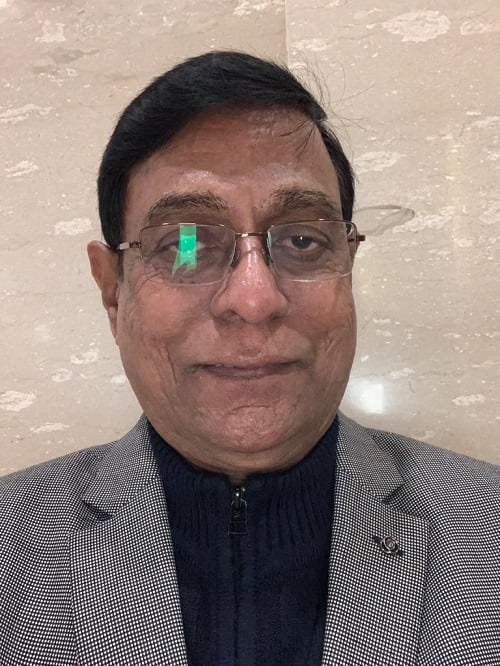
Shri Satish Pashine is a Metallurgical Engineer. Founder and Principal Consultant, Q-Tech Consultancy, he lives in Bhubaneswar and loves to dabble in literature.
NIB KAROLI BABA N KAINCHI DHAM
Shri Gokul Chandra Mishra

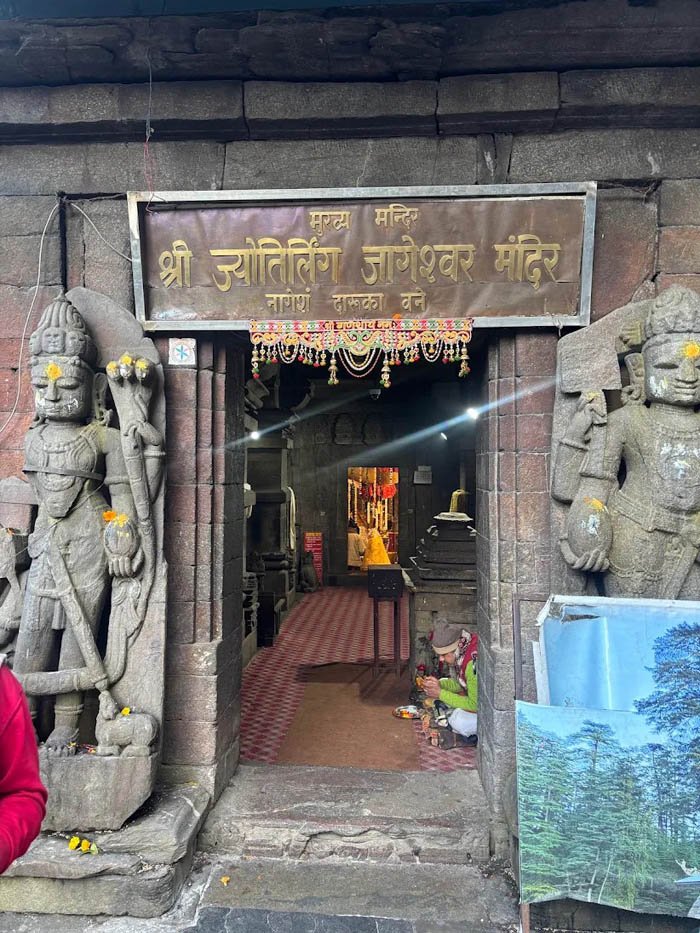
It was a clouded sober morning at Balarampur house, Nainital. The winter was knocking at the doors of the hill station. Trees had begun feeling the harshness of cold Himalayan fall and started dropping their leaves. How can the flowery landscape of the palatial house escape the onset of the season that threatens the foot fall of its dear visitors ? The flowering roses started shedding their petals. But the myriad of pine trees overlooking the sky in the vast campus, were anxiously waiting to embrace the season in order to capture the falling snow pearls through their tiny slim leaves.
We were having morning tea at the wood panelled spawling balcony of the Balarampur house, when my wife, Kalyani, raised a point of order. "You see, the winter is coming and it may be difficult for us to come again, why can't we visit Jageswar Dham and seek blessings of Baba Maha Mrutynjaya before returning to our place?"
Jageswar Dham is most scenic, surrounded by the high-rise mountains carrying tall deodar trees on all sides, located at a distance of about 36 kms from Almora , on Pithoragarh route. Ancient temples with Kedarnath type architecture, dedicated to Lord Shiva and Kuber exist there. Local history says that Adi Sankaracharya visited the shrine and offered puja there naming the Shiv Ling as "Maha Mrtutyunjay". The local people consider the place as a "Dham" and Maha Mrutyunjay as a "Jyotirlinga".
Once the name of Maha Mrutyunjay was uttered in mouth, how could any body defy the point of order and the calling of Baba?
I called the driver to find his state of mind to go to the Land of the Gods, "Devo Bhoomi". He was thrilled at the proposal as he hailed from Almora area and the place to be visited was one of his favourites.
We proceeded without wasting further time. The serpentine ghat road from the high mountain top of Nainital bade us farewell and we landed at Bhim Tal in the plane land scape. Bhimtal was equally ornamental with its vast lake surrounded by hills.
The road on the foothill of the Himalayan range stretched to Almora alongside a tiny river, called Sipra or Kshipra. Suddenly, our driver stopped the car and wanted us to get down. I asked him about the reason of the undeclared halt. He smiled and informed , "How can we proceed further without seeking the blessings of Kambalwala Baba"?
We heard the name of the Baba for the first time. We immediately got down from the car and walked over the bridge built by Baba's devotees on the river Shipra.
After crossing the bridge we reached the great Dham called "Kainchi Dham of Nib Karoli baba."
Inside, a big temple of Hanumanjee was standing to welcome the pilgrims and offer blessings. The complex also had several small temples of Maa Durga and the idol of Kambalwala Baba, Nib Karoli. There was a sprawling guest house for the devotees on the bank of river Shipra. The atmosphere was most sacred with a pin-drop silence. The teachings of Baba were displayed in stands. Once we were inside, the worldly affairs evaporated from mind. Later, we came to know more about importance of the Dham and the Baba. We were told about the visit and stay of great personalities like Steve Job, Mark Zuckerburg etc etc. Baba had more followers in Punjab, Haryana, UP and Uttarakhand compared to other states.
In fact, the place possessed vibrant power to transfer the mind to higher plane of spiritualism, that is what we realised.
Mesmerised by the serenity and sanctity of the Dham we bade farewell to it for proceeding further to Jageswar Dham, but not before getting the unique prasad of Baba Karori, the elegantly cooked black chana. Our mind hesitated to leave the intensely-felt spirit of the Ashram which was, in fact, "Hanuman Ans", a place dear to Hanumanjee.
But, the call of Baba Maha Mrutyunjay compelled us to cross the bridge over the river Shipra and reach our car. The moment the driver started moving the car towards Almora, an old Baba, weak, frail ,saffron robed, long bearded, holding a kamandalu in hand, was seen coming towards me asking for something. I asked the driver to stop the car and chatted with the baba trying to know what he wanted from us. Baba immediately told me that he needed a ride in my car to his Ashram which was on the way. I immediately opened the door and offered the front seat to him. We went for about 10 kms with baba who was sitting silently throughout. Suddenly he gave indication to the driver to stop the vehicle. Once the car stopped, he told that his Ashram was situated just on the opposite side of the river and got down. There was no bridge over the river nor any habitation on the otherside. He was seen climbing down towards the river bed but we could not trace him afterwards. He just vanished. When we asked our driver about whether any Ashram was situated nearby he expressed ignorance, although he belonged to that area and was well-conversant with it. The baba's disappeance looked like a miracle to our amazed minds.
We passed through the the ascending hill top road connecting Ramgarh and Ratnagiri and reached Almora in an hour. Then we took the Pithoragarh road and reached Jageswar Dham situated deep inside the pine and Deodar forest. After spending the night in a guest house, we went for the darshan of Baba Maha Mrutyunjay and Lord Kuber before dawn.
As we returned back on the same route, the company of the miracle baba and the sight of Kainchi dham reverberated in our minds.
The memory still hunts us even today. The usual belief that Kambal Baba, Nib Karoli was "Hanuman Ansh" can never be disputed or debated.
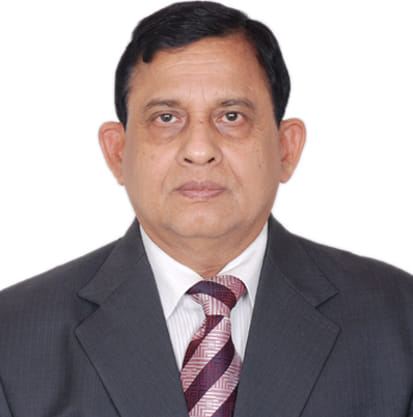
Shri Gokul Chandra Mishra is a retired General Manager of the Syndicate Bank. He is passionate about social service, reading and writing.
THE ADDRESS
Ashok Kumar Mishra
Renuka was worried –uneasiness gripping and heart palpitating faster with every minute passing. Srinivas, her husband had been following an identical routine since his retirement, almost one and half decades ago from his central government job. Like any other morning today he went up to the rooftop garden, watered his favorite Gerbera and Peony plants, placed seeds and water in pots to feed the birds, came down and took a cup of tea from Renuka, had a glance at the headlines of the newspaper, wore his blue tracksuit and white t-shirt, Nike sports shoes and went out for morning walk with a gulf cap covering his white hair.
‘Srinivas, usually returns home by 9 AM in the morning and joins her on dining table for breakfast, unless he takes occasional trip to his schoolmate Prashant’s house. But it is already noon and he has not yet returned.’ Exasperated Renuka thought probably he might have gone to the local Hanuman temple and delay may be due to heavy crowd in temple on Tuesdays. She first called Srinivas’s mobile and found it ringing on the bathroom basin. Renuka thought it worthwhile to telephone Prashant, to enquire about Srinivas. But Prashant did not pick up. It made her more nervous. She remembered he was blabbering and prattling for a moment while wearing his shoes and failing to tie his shoelace. It’s nothing unusual for an Alzheimer patient who was under control with regular medicines.
Srinivas used to repeat same sentences, narrate same incidents again and again, asked same questions repetitively, used to forget his mobile, keys and spectacle. But it’s quite common for people of his age.
Should she call her daughter Nandini, who may be in conference call in her office, more than hundred miles away from Renuka?
Will it be proper for her to inform her son Major Ashis who is posted at far-off Shillong frontier?
Should she take the help of police giving a missing complaint?
She decided against all options and waited further for return of Srinivas.
Then evening approached.
Then came darkness.
Anxiety began.
Renuka’s heart raced faster and she felt restless and informed her neighbours , daughter, police one after another. Renuka kept saying “he has never stayed out this late”.
Nandini came racing in the evening along with son-in-law Rajesh.
Police was alerted. Renuka and Nandini enquired at the tea stall -often frequented by Srinivas, the temple, Mukesh’s laundry, Benu provision store, Surendra hair-cutting salon and the bus stop, but Srinivas was untraceable. Daughter phoned relatives. They decided to inform Ashis next morning.
By next morning their face book page was full with sympathy messages. Major Ashis got sympathy of all. Everyone including his Commanding Officer made sympathy call “Do not worry, we are with you. Your father would come back home. Have patience and keep faith in God”, nobody actually knowing what to do.
Anticipating Ashis would request to proceed immediately on leave, the CO enquired if any brother or relative at home could be of any help, so that he could possibly postpone leave till the ongoing exercise was over. Ashis expressed helplessness and insisted. He left for his native town same day by evening flight and reached home.
Renuka could not control her tears and started wailing with tearful outbursts seeing her son. “Beta bring your father home, he has lost his way back home” she urged to her son.
Ashis could find out that Renuka had not touched food since father left home previous day morning and missed her regular BP medicines. He tried to reassure saying “Don’t worry mama, I have come; we will find father.” He, Nandini and Rajesh huddle around Renuka, themselves sobbing and trying to comfort Renuka at the same time.
They were getting frequent queries from friends and relatives. Rajesh was taking the calls. Everyone was hopeful and advised to have patience.
The family went to police and a missing- person report was filed. Photographs were circulated.
The police asked the obvious questions:
“What was he wearing?”
“Where was he last seen?”
“Does he know his address?”
“Does he have any identification mark?”
“Was there any household dispute or argument previous night?”
“Was he an alcoholic?”
“Were there any other previous incident of his leaving home?”
“Oh, Alzheimer! How long He is on medicine for Alzheimer?
The police warned them “he may not even be able to tell anyone where he lives?”
Then the family understood the magnitude of the problem.
The Inspector came and shook hands with Major Ashis. He tried to comfort the family saying police would do whatever is possible to trace Srinivasa. He would send message over walkie talkie to all the nearby police stations and search for him in public places.
Next day onwards the search began. Every morning family members divide the city into zones. They visit railway station, bus stands, hospitals, temples, markets, parks, roadside shelters, charitable institutions, old-age homes. Srinivas’s photograph appeared on WhatsApp groups. Posters Went up. Every moning Nandini and Ashis would go out and paste handbills with pictures of Srinivasa on walls, electricity posts and road dividers.
Someone suggested about checking CCTV footage. Police had already checked the same.
Someone else said “Perhaps he has gone back to his ancestral village.” They searched there too.
Nandini and Ashis tried to force some food and medicine to Renuka. Rajesh soon left to look after the kids. There were queries from Commanding Officer, Ashis’s battalion friends. His colleagues would tell him “Take care of you”. But what he wanted was not sympathy.
Ashis was worried. How long he could remain with her mother. Someday he would get a call from the Commanding Office to join. Even for Nandita it would be difficult to neglect her family and keep company with mother. They all would sit around the dining table and ponder over their helplessness. Grief overtook hunger and thirst. A fortnight passed but there were no news of Srinivas from anywhere. There were queries from many quarters. Every call began with”Any news?” followed by “Nothing yet.”
Ashis and Nandini were remembering Srinivas, their childhood hero. There was nothing impossible for him. He was their china wall of protection, pillar of strength and storehouse of unending love. Nothing bothered them when he was around. Now he does not know his way back home. What would happen to the family in his absence?
“Who would take care of mother when he goes back to work?”
“Should he take mother with him to Shillong cantonment area?”
“Should he keep mother in an old age home?”
Mother insisted she would not leave home and wait for her father to come back to his own house. Ashis made plan to get her wife and son come home from Shillong, to stay with the mother, after making necessary arrangements for son’s admission in the native town. Nandini agreed to stay with mother till then and work from home.
Months passed.
Major Ashis’s workplace arrangements became complicated. He sent his wife and son to stay with Renuka. Nandini too joined her family. But a daughter used to silently remember her father and almost every weekend she would return and enquire with police and nearby old-age homes for her father.
Rational search began giving way to desperation. A relative suggested Renuka to visit a soothsayer. After initial resistance family thought “What’s the harm in trying?”
The soothsayer asked for husband’s photograph, name and birth details. He made vague predictions.
“He is alive.”
Then “he is near water.”
Then “he is being looked after by someone.”
Another day Renuka visited an astrologer. He suggested a temple ritual. Another one recommended a special Puja. Renuka performed the rituals with family. But nothing happened. Her time spent in prayer room only lengthened further.
After months police began suggesting the unthinkable. With Ashis away and nobody to properly follow-up the police case becomes cold.
The Investing Officer gently said “You should prepare yourself for every possibility.”
Later someone suggested “If there is still no trace of Srinivas after six months perhaps you should consider the last rites.”
This sentence devastated the family. Renuka refused to accept this. Daughter-in-law, grandson, Nandini everyone cried. Renuka’s prayer became longer and she became weaker.
Ashis called from Shillong “No. Not until we know.”
How can the family perform the last rites accepting an eventuality which the family was not ready to accept without experiencing the same?
*******
Meanwhile on the day of his disappearance Srinivas took a bus from the bus stop and could not tell his destination, when asked by the conductor. After travelling a distance, he found a big school building and asked the conductor to stop as that was the destination he was travelling for. After the school was closed the principal on way back home found Srinivas loitering in one corner of the school building. When asked, Srinivas could not tell him his address.
“Where do you live?”
Srinivas answered “near the big tree.”
What tree he couldn’t say.
“What’s your son’s name?” asked Mr Mahapatra, the principal.
Srinivas gave a name- but perhaps it belonged to somebody else.
“Where does your son work?”
“Very far off where mountain touches the clouds” came the answer.
Sensing dementia Mahapatrababu took him home and showed him to a doctor. The doctor asked him to take care and instead of expecting direct answers suggested they should observe him and try to get clues from his blabbering. Instead of directly asking for house address, they should ask about the colour of the house, landmark near his house, his wife, son, and daughter. He may not be able to remember their names but may give important clues about their characteristic behaviour pattern. The doctor promised to visit them at regular intervals so that from his day to day mutterings, they might get some clues, which when reconstructed would help to get the address of the old man.
During a subsequent visit the doctor suggested Mr Mahapatra to relocate the old man to an old-age home instead of keeping him with them, where the old man would get company and where the doctor, psychologist and physiotherapist visit regularly. May be they would be able to get some clue to his home address. It was a difficult decision for Mr and Mrs Mahapatra, who had developed a bond of love and affection towards Srinivas and they were initially reluctant to leave the old man which they finally did.
The psychologist tried to comfort Srinivas and did not ask any questions initially. She observed Srinivasa’s movements and his interaction with other inmates for a week before talking to him personally. Her communication with Srinivas continued over months.
She asked about his family members instead.
“So your wife does not like coriander?”
“Your daughter sings in the bathroom while taking bath?”
“Your neighbor has a red scooter?”
“Is the colour of your house not white?”
“Does your house not stand near a Tamarind tree?”
With each question Srinivas’s face brightened further with joy and enthusiasm.
Although each statement appeared meaningless, yet she noted down all the observations. She found although Srinivas could not remember his address and names he could remember relationships. From his mutterings the address began to emerge indirectly.
Finally when asked “by what name your wife calls you?’ there was a streak of light and he uttered his nickname. The address was reconstructed from affection, irritation, habit and memory- not from geography.
The possible landmarks of his white/ off-white house beside a huge tamarind tree and a school with daughter, wife, son working far-off on Himalyan frontier was shared with distant police stations and old-age homes with description about Srinivas and his recent photographs.
Almost exactly one year after his disappearance when the family was preparing to accept that Srinivas is dead and during visit of Ashis to his mother perhaps to discuss about the last rites the phone rings. It was from a nearby Old-age home frequently visited by Nandini about a message received from a distant old-age home.
Someone said:
“We may have found your father.”
Ashis could not believe this. Father’s photograph with inmates of old-age home came in whatsApp and he showed it to Renuka and family. Nandini came rushing with hubby Rajesh and the entire family soon started their trip to the old-age home, which was srinivas’s address for the last one year since his disappearance.
The family brought him home.
Someone said “This is your home.”
He asked “How did you come to know?”
“Because we have been looking for you for one year” said Nandini.
“But why there is so grand flower decoration? Are you arranging some marriage function at home without informing me?”
“No, this is to welcome you home” answered his grandson.
Renuka was enjoying the conversation of grandpa and grandson with tears flowing down.
“Were you all worried?”
The son and daughter couldnot answer. They held their father’s hand.
Srinivas had lost his way home. But for the whole one year his family had carried the address of his absence inside them.
(The End)
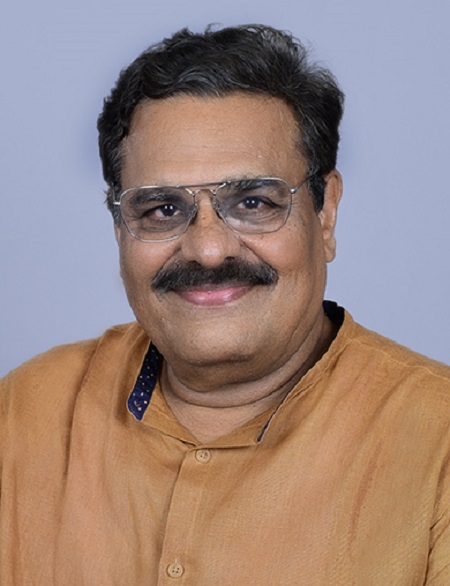
Completed his MA and M Phil in Political studies from JNU and served as Deputy General Manager in NABARD. He made pioneering contribution in building up Self Help Group movement in Odisha and popularized Amrapally mango plantation in the state. He has authored several books and written several articles on micro credit movement. Four tele films were made on his book titled “A Small Step forward”. He served as Director of a bank for over six Years.
An acclaimed Short story writer in Odia and English. His stories are rooted in the soil and have sublime human touch. Many of his short stories in Odia have been published in reputed magazines. His short story collection “Michha jharanara pani” was released recently.
(9491213015)(m)
ANDRé BéTEILLE IN THE WEST
Triloki Nath Pandey
Professor Emeritus of Anthropology
University of California, Santa Cruz, CA 95064
At the very outset I want to thank Professor Ananta Giri for inviting me to give this memorial lecture for André Béteille, who passed away not long ago. I remember hearing Professor Romila Thapar’s moving eulogy at a memorial service at the India International Center in New Delhi. Professor Béteille was a stalwart person in social sciences in India. He was globally respected as an outstanding public intellectual and leading anthropologist and sociologist of our time, or anytime.
I would like to preface my remarks with two observations. One is what the fourth century B.C. Greek philosopher, Plato, said. I am slightly paraphrasing him: there is nothing nobler for a human being than to study other human beings and the kind of life they should live.
Second, I often wonder what is history? Is it myth with dates, as Lévi-Strauss told philosopher Sartre long ago. I take history to be a conversation between the past and the present, between tradition and modern. How is it constituted? Based on documents and what else? Almost a century ago, A.L. Kroeber thought that the task of an anthropologist was to prepare documents for the people who didn't have them. Things changed by the time Béteille and I came to study and practice anthropology. In India, there was a vast literature of documents produced by a decennial census operations and commissioners reports what Bernard S. Cohn used to call “censuous reality.” Indologists and other scholars have also written a great deal about society and culture in India. What Srinivas began calling the “Book View” of India, much different from what field workers were reporting from the field, “the Field View.” Milton Singer in his study of cultural performances in Madras called it the textual and contextual views.
Those of us who were working in North America were doing our work under the weight of our own ancestors-predecessors. In my case, before I went to do my fieldwork in Zuni Pueblo in the Southwest in 1964, the village was visited by Frank Hamilton Cushing, John and Matilda (Tilly) Stevenson, Slyvester Baxter, Sir Edward Burnett Tylor in the 19th century and Franz Boas and his students - A.L. Kroeber, Ruth Benedict, Ruth Bunzel, Leslie Spier - Elsie Clews Parson, and a Chinese anthropologist, Li An-che, among many others in the 20th century. I wrote about some of them in my monograph, Anthropologists at Zuni (1972).
While I was drafting a paper on Zuni history for the Smithsonian Institution’s twenty volume Handbook of North American Indians, it dawned on me that what I was learning from archival research was contested by the living people who had witnessed some of the events, factional situations I called - this was long before Veena Das’s Critical Events appeared in 1995. As a result, when I testified as an
expert witness in the Zuni's land - claim case against the United States, I told the Federal court that until we combine textual and contextual - what we learn from the documents - with oral narratives of the living Elders, we are not going to have a comprehensive view of the Zuni past. Relying on some of these insights, now I want to make some comments on how André Béteille and his work was seen in the West.
In his autobiographical essay, “Ourselves and Others,” Béteille (2013) seems rueful that unlike his brilliant economist friends, he did not go abroad for his Ph.D. As luck would have it, he really did not suffer due to the lack of a foreign degree. Just a year after he had joined the Department of Sociology at the Delhi School of Economics, he met Max Gluckman in 1960. Gluckman had been a close friend and colleague of M.N. Srinivas at Oxford before moving to head a joint Department of Anthropology and Sociology at the University of Manchester. Srinivas assigned Béteille to look after his friend while he was in Delhi for a couple of weeks. He reports that he had long conversations with him and showed him some of the things he had written. One of them was a short piece he had written on the definition of tribe.
Gluckman told him that it was well written but he needed to do fieldwork, and advised him not to be in a great hurry to publish.
Béteille took Gluckman's advice to heart and began reading widely and planning to do fieldwork. He read Kare Marx and Max Weber, among others, and as Romila Thapar informed us in her eulogy, they used to have animated discussions about the relevance of their ideas to a better understanding of India's history, politics, and society. He settled on having some fieldwork experience and decided to visit a village he calls Sripuram, of some 1400 people in the Tanjore District in Tamil Nadu. He hardly said anything about how the fieldwork was conducted, but there was a creative use of Marx and Weber's ideas in interpreting what he had observed. Professor David Mandelbaum of the University of California, Berkeley was the “external examiner,” and he suggested that the dissertation should be published with some minor revisions. Professor Mandelbaum told me that he suggested the Cal press and that it was how "Castle, Class, and Power" was published in 1965. The book was widely appreciated in the West and scholars applauded the use of class model to interpret the changes taking place in the caste system.
Western scholars often complained about the lack of theory and poor quality of fieldwork in Indian social sciences scholarship. Béteille’s book stood out as an exception.
Max Gluckman decided to bring André Béteille to Manchester as a Simon Fellow. Thus, Béteille spent 1965 to 1966 in England. Since it was a post doctoral Fellowship without any teaching requirement, it gave him plenty of free time to visit other universities. He reports in his autobiographical essay mentioned earlier that he went to London and read papers at both the School of Oriental and African Studies (SOAS) and the London School of Economics (LSE). He didn't mention whom he met there but he also visited Cambridge University, where he already knew the sociologist, Edward Shils, a professor at the University of Chicago, who had had a five year fellowship at King's College. Shils once told me that
he was commuting between the two great universities. Béteille informs us that for the first time he met Sir Edmund Leach, the Provost of King's College. He had a lifelong appreciation of Leach, especially for his Political Systems of Highland Burma (1954). Oddly enough, he did not cite his book or his essays on caste in his book, Caste, Class, and Power (1965).
He also spent his year in Manchester to spend some time in Paris and Amsterdam. Louis Dumont had arranged for Béteille to spend six weeks in Paris. During his stay there he gave six seminars, based on his work in Tanjore. He informs us that Dumont was not only critical, but totally “dismissive of his whole approach to stratification.” During that period Dumont had been working on his book, Homo Hierarchicus: the Caste System and Its Implications, and for him it was hierarchy, not stratification, which was important. I talked with Dumont in person in 1983, when he was my guest in Santa Cruz, and I will return to this a bit later in my comments. From Paris he did not return to Manchester but went to the Netherlands and gave talks at the Universities of Amsterdam, Rotterdam, and Leiden. His talks were well received and he found that the Dutch scholars were not as overpowering as the British and the French he had met. During his visit he made friends with Jan Breman who was working in Gujarat, and Klass van der Veen, and Eno Hommes, among others. They were all in his age group and at the same stage in their careers, and became his lifelong friends. Béteille returned to the Netherlands many more times. He told me that he felt more comfortable there.
During the summer of 1966 he also came to the University of Chicago for six weeks to co-teach a course on Political Anthropology, jointly with Ralph Nicholas. Nicholas was close to him in age and he had done his fieldwork in West Bengal for his Ph.D. dissertation at Chicago. Béteille used to say that Nicholas was his best friend in the United States, and he was the first reader of the draft of everything he wrote. During that summer I was also teaching a course on Introduction to Cultural Anthropology for undergraduates in the College. Professor Sol Tax, the acting chairman of the department, was a member of my dissertation committee, and he encouraged me to have some teaching experience before I graduated.
I had taken F.G. Bailey’s course on Political Anthropology in the winter of 1964 and Paul Friedrich's course on Political Ethnography during the Spring of 1965. Béteille and Nicholas had planned to encourage post-fieldwork dissertation-writing graduate students to take this opportunity to present their work at their seminar for a general discussion. The term, Political Anthropology, was coined only in 1959 by a Canadian political theorist, David Easton, teaching at the University of Chicago. During the turbulent 1960s there was a great deal of interest in the politics of post-colonial new nations, new societies. In fact, Edward Shils from sociology and Lloyd Fallers from anthropology co-founded a new center to study how modernization was shaping new nations in Africa, Asia, the Middle East, and Latin America. Given this, I was quite surprised that there was not much student interest in the course. I took the course and presented
a paper on “Factionalism in a Southwestern Pueblo.” A mimeographed copy of the paper was distributed in the class. Now I do not remember how many students took the class, but Murray Leaf and Nicholas Hopkins, a year senior to me, were there. So was Professor McKim Marriott, who had supervised Nicholas's work in West Bengal and was also my advisor for the first two years of my graduate life in the department. Both Béteille and Nicholas had written on factionalism, and I deeply appreciated their comments on my paper. As Professor Marriott pointed out in the class, “Mr Béteille and you have some disagreement because he believes that conflict was inherent in the system, and you are saying that it was due to American politics and policy and the inability, the failure, of the Zuri's theocracy to manage it.”
I had met André Béteille in 1961, when my classmate and friend, Hira Singh, and I were going to Delhi for interviews for admission to the M.A. class in sociology, but I got to know him pretty well during his Chicago visit. He stayed in the International House, which I left in 1965, to move to an apartment nearby. I invited him to come to dinner quite often. I knew that Edward Shils likes Indian food so I invited him to join us on one occasion. Once I took André to dinner at a very expensive restaurant where we ate dishes prepared of asparagus, avocado, artichoke, and mushrooms. I encouraged him to order fish but he declined. He used to read me some letters he received from Srinivas. In one letter he had asked him to bring him some cotton half shirts and in blue color. He also told me that he had suggested to Srinivas that he should say something about studying one's own society in his Tagore lectures, which became his book, Social Change in Modern India (1966).
He shared with me his views of European scholars he had met. He told me that Max Gluckman said that Fred Eggan was the best Social Anthropologist in the English-speaking world. While he was at Oxford, Radcliffe-Brown was fond of saying that Eggan’s thesis was the best he supervised at the University of Chicago. As Eggan was away in the Philippines, André couldn't meet him but a year after he wrote me from Delhi that he was teaching me a course on Kinship and he would like to read Eggan's Social Organization of the Western Pueblos. I sent him by mail a signed copy of the book. Many years later I learned from Dr K. S. Mathur that André had visited Lucknow to give some lectures and he shared with him his appreciation of the time he had spent together in Chicago.
During subsequent years we visited each other at several universities in the West. I saw him in early November in 1978 at Cambridge University, where he had come on a Commonwealth visiting professorship. I had stopped there en route to India in order to read a paper at the department’s Friday afternoon seminar. These seminars are attended by every Cambridge anthropologist in residence. While I had spent 1970-1971 at St John's College, I shared my fond memories of my time there with André Béteille. By 1978, Meyer Fortes had retired and Jack Goody had succeeded him as the William Wyse Professor of Social Anthropology. Professor Fortes had retained his fellowship at King's College. Sir Edmud Leach had a few months left before his retirement. Béteille had rented Leach’s apartment in town.
He had brought his family along and when I went to have dinner, I was very happy to meet his wife, Bikku, and their very young daughters, Radha and Tara.
When I went to see Fortes and Leach, they both said they enjoyed having Béteille around. “After Tambi and you left, Loki, we miss your presence. It’s nice to have Béteille here,” said Edmund Leach.
Meyer Fortes mentioned that he liked the book on fieldwork - Encounter and Experience, Béteille had presented him. He mentioned, “Loki, what a wonderful idea to reflect on one’s encounters in the field? Malinowski’s diary gave us an idea about his deep anguish, anxiety, and personal feelings while he was among the Trobriand Islanders. He never told me anything about this; he wrote them in Polish in his diary. Good thing that Raymond Firth helped get it published.” I told him that the book has been well received in the United States. He had read a few positive reviews. I told him that Professor Cora Du Bois [of Harvard], who had some fieldwork experience in Odisha, singled out only two pieces out of eleven from the book, the introduction and my essay, “Indian Man among American Indians.” She said, “The first ten pages of introduction by the two editors, André Béteille and T.N. Madan, impressed [her] as by far the most intellectually rewarding… the most touching, charming, and frank was the difficult encounters of
T.N. Pandey with the Zuni of the U.S. Southwest.”
André had written me a long letter in his own handwriting, expressing his happiness after reading my article. Given all this, it came to me as a real surprise that he himself didn't enjoy doing fieldwork, as he said in his autobiographical essay as well as in his introduction to Society and Politics in India. He praised N.K. Bose and M.N. Srinivas as "superb fieldworkers.” He thought that his own “fieldwork was of great value to him,” but he admitted that “he did not enjoy his actual experience of it.” He took it as a “limitation but not a disability” in doing anthropology.
I had learned from D.N. Majumdar, my professor at Lucknow, from Meyer Fortes, and Edmund Leach that their great master, Malinowski, used to say that fieldwork was the basis of anthropology. Let me share two anecdotes to make this point. One weekend in spring of 1971, Isaac Schapera from London had come to visit with Meyer and Doris Fortes at their home in Grantchester Meadows in Cambridge.
Fortes had invited me to have dinner with them. When I arrived, he introduced me to Professor Schapera by saying, "Loki, meet Schap ( he was used to calling him captain). I think that in one hundred years from now, if anthropology is still around; Schap will get volumes. If Edmund [Leach] and I even get a line, that will be wonderful." Fortes considered him a great fieldworker. In the mid-1980s, Lévi-Strauss was visiting the University of California, Berkeley for ten days. He gave a lecture on Salish myths. I think some three thousand people were in the audience! After the lecture, Professor William Simmons, the chair of the anthropology department, hosted a reception at the faculty club. Someone there asked Lévi-Strauss, “Among all of the anthropologists you have met, who are the five great ones in your opinion?” Right away Lévi-Strauss responded, “Boas, Kroeber, and Lowie - your own - and Malinowski and
Evans-Pritchard from England.” We were all wondering what was common among them. Nothing but fieldwork was the consensus.
With Louis Dumont mentioned earlier. One morning Professor Dumont, his wife Suzanne, and I were having breakfast. I mentioned whether he had seen Béteille’s critique of his work. He responded by asking me, “Where did he publish that?” When I told him in a paper in Current Anthropology, he said, “how rude of him? He should have sent me a copy." He continued, "Bétellie and I had long conversations. I told him that I am looking at India in the light of my European experience. I have done fieldwork in Europe as well as in India. India has been in my mind for twenty-five years. When I talk about hierarchy, equality, status, and power, I know what I am saying. Béteille does not like my comparison. What more can I say?”
Béteille worshiped comparison and comparative methods. He had written papers and books on comparison, but he did not like Dumont’s comparison between traditional India and modern Europe.
Béteille was the only anthropologist whose works I used in my courses on “Comparison of Cultures,” “Cultures of India,” and “Political Anthropology” I have offered for more than 50 years of my teaching anthropology in the West.
When Adam Kuper took over the editorship of Current Anthropology he realized that there was no representation of the Global South on the editorial board. He asked me whether he should ask André Béteille. I told him, “please do. Despite his name, he is as Indian as anyone else in India.” I am glad that, based on his Indian experience, he published several papers in Current Anthropology.
During the 1980s, Béteille visited the United States several times. He came to the University of California, Berkeley to give two lectures sponsored by the Indian diaspora. I attended his lecture on Anthropology of Religion and invited him to visit the University of California, Santa Cruz and give a lecture there as well. He readily agreed and stayed with me and met some of my colleagues and students.
In 1989, he visited several universities as a Fulbright distinguished lecturer, including the University of California, Santa Barbara. I heard from several colleagues there that some of them got so excited that a few of them proposed to make him a distinguished professor. The chairman of the department asked me for a letter supporting his proposed appointment, but the administration was reluctant to bring a high power professor in anthropology department.
Before I conclude, I wish to bring to your attention one more example. When I had gone to read a paper at a two-day seminar in the Anthropology Department at the University of Manchester, I presented a version of what I had given at the course Béteille and Nicholas taught at Chicago. By the time I was in Manchester, Max Gluckman had retired but he came to attend the seminar. My host was Emrys Peters who had succeeded him. As usual, Gluckman made the first comment. I was discussing Kroeber’s idea that the latticework of various sodalities prevented factions from becoming corrosive in Zuni. He said it
was Durkheim’s idea, not Kroeber’s. I responded by saying that it was Kroeber who discussed it in his book, Zuni Kin and Clan (1917). That evening when Professor Peters and I went to his house for dinner he said, "Loki, you were standing on thin ice. Max wants everyone to accept his views and not to challenge him." He also told me that when Béteille was here, he read a paper, challenging Srinivas’s work on caste. Max went to his office and brought a copy of Caste in Modern India and Other Essays and began reading from it. He asked Béteille, “Tell me in what way you differ from what I just read?” That made Béteille frustrated and he did not respond. In his autobiographical essay, he mentioned Gluckman's “domineering and overbearing” personality. It helped me to understand why he began appreciating Peter Worsley's “relaxed and easy going nature” and spent more time with him and his colleagues in the sociology part of the joint department. By the time Béteille met Worsley he was teaching about “the end of anthropology” and had become a critic of the British Social Anthropology establishment, particularly of Meyer Fortes.
By way of conclusion, permit me to return to the two points I made in the beginning. Clearly, Béteille’s study of caste, class, power, equity, agrarian social structure, the idea of tribe as indigenous people, and of higher education has made policy makers in India understand the complexity of their task in a democratic setup. It has also helped foreign scholars of India to appreciate the role social scientists are playing in the reconstruction of Indian society and culture. A combination of textual and contextual sources to access André Béteille’s role should be clear by examples I have given from my personal knowledge of his vast production and performance. We are going to miss him for a very long time.

Triloki Nath Pandey is a well known anthropologist, educated at University of Lucknow (B.A., M.A.), University of Cambridge (M.A.) and the University of Chicago (Ph.D.). He has taught anthropology at various Western Universities—Chicago, Pittsburgh, N.Y.U., Columbia, and Cambridge, and since 1973, at the University of California, Santa Cruz. He often visits India for lectures, and on teaching and research assignments. He is a well respected scholar of indigeneity.
Triloki Nath Pandey
Professor Emeritus of Anthropology
University of California, Santa Cruz
California, 95064, USA
Over the years, I have taken a fancy for the moon, so much so, I have made it a habit to bond with the moon, especially without fail, on 'Moonram perai' (the third day after new moon - Ammavasai) and in the evening of the Full Moon, admiring the resplendent Eastern sky, spell bound by its changing colours from red to orange to silver as the timeless time progresses into the night.
The September Full Moon, christened the Harvest Full Moon, is bright for most part of the period because of its proximity to the Vernal equinox. This helps the farmers to harvest their crops even long after sunset. This time I was overawed by its brightness and as usual shared the photos I clicked with my select moon lovers in my group, referred to as Moonatics.
One of the members in this group, who is the co writer of this article, was holidaying in Sri Lanka and on my request, she shared pictures of the Full Moon from there and also shared her experience. It was exquisite and turned out to be in black and white, which was reminiscint of the decades back black and white film roll days.
QUOTE:
I was in Colombo, Sri Lanka, taking an evening stroll around the hotel when I felt a few raindrops on my hand and looked up. The full moon in the night sky made me stop in my tracks. I was completely transfixed.
The sky was deep and dramatic, almost charcoal-black, while the moon shone softly from behind drifting clouds, creating a luminous halo around it. Tall coconut palms rose on either side, their long fronds appearing as silhouettes against the moonlit sky. Warm lights from the surroundings gently 9touched the trunks and leaves, adding another layer of beauty to the scene. It felt as though the whole landscape had paused to admire the moon.
What made the moment even more special was knowing what the full moon represents in Sri Lanka. Each full moon day, known as Poya Day, is a public holiday and an important day of Buddhist observance. It is traditionally a day for prayer, meditation, practising generosity, visiting temples and reflecting on one’s life. It is also a dry day, when the sale of alcohol is prohibited, allowing the day to retain its quiet, devotional character.
Standing there beneath the vast sky, I could understand why the full moon holds such a special place in Sri Lankan life. It was not merely a beautiful moonlit night; it seemed to carry a sense of peace, reverence and stillness.
UNQUOTE:
The majority of the population in Sri Lanka follow Buddhism and the Full Moon has a phenomenal spiritual significance in Buddhism, as major events in the life of Gautama Buddha, like, his birth, enlightment under the Bodhi Tree and his final passing into Parinivarna, all occurred on Full Moon Day.
The September Full Moon in Sr Lanka is called Binara Full Moon Poya Day, which is the sixth month of the Sinhalese calendar and commemorates the historical establishment of the Bhikkhuni Sanga (the order of the nuns of Gautama Buddha)
The word Poya has its roots from the Sanskrit and Pali word Uposatha which means a "fast day".
There are twelve (sometimes thirteen) Poya days in a year and each has a specific name and marks a major milestone in Buddhism.
On each Poya day, devotional Buddhists, dressed in white , visit the local temples to meditate, pray, offer flowers and observe the Eight Precepts (Ata Sil), which are a set of temporary moral guidelines and renunciation practices observed by lay practioners on holy days, mass days, (Uposatha) or during retreat
The individuals, on these days refrain from:
- taking life
- taking what is not given
- any sexual activity
- incorrect speech
- intoxicants
- eating at wrong time
- entertainment
- personal adornment and luxurious beds.
My school mate, a native of Sri Lanka, provided some insights on the major events on Poja days.
He started off very enthusiastically, stating that the first thing we check when the government releases the next year calendar is when are the poya days and how many long weekends are there.
He then started with Vesak (May), which is the holiest day in the Buddhist calendar when the country is colourfully lit up with lanterns, colourful thoranams decorated with art, dipicting stories of the Buddah's life, lit up with incredibly intricate lighting are erected across the country, which signify Buddha's Enlightenment. Dhansals (Annadhanam stalls) spring up everywhere to feed the thousands who go from place to place soaking in the atmosphere, which is more like a carnival than a religious festival.
Poson (June) signifies the introduction of Buddhism to Sri Lanka and the main religious activities are centred around Mihintale near Anuradhapura. The celebrations are mainly religion centred with chanting of pirith (means "protection" or "safeguard" in Theravada Buddhism ) and sermons (bana). Pirith refers to the traditional Buddhist of chanting or reciting specific verses and discourses (suttas) spoken by the Buddha.
Esala (July) is highlighted by the world famous Esala Perehera (a ten day pagent), where elaborately caparisoned and lit up elephants parade the streets of Kandy. The hicghlight of this event is, the casket, carrying the replica of the Sacred Tooth Relic, housed at the Temple of the Sacred Tooth Relic (Sri Dalada Maligawa) in Kandy is taken in procession, atop the temple tusker. Over fifty elephants brought from all across the country join the procession.
To make my travel relevant and interesting, I have recently started on
"theme based tour" and Sri Lanka is now in my bucket list.
Sundar Rajan and Sathya Venkatesh
with inputs from Adrian and downloads from the net.
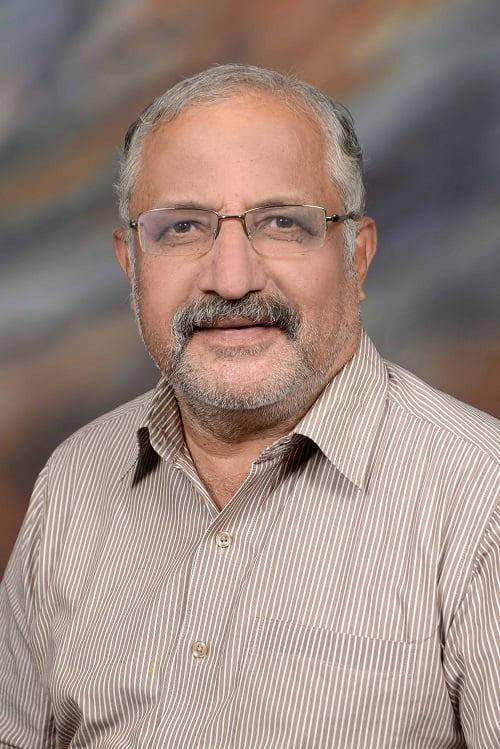
S. Sundar Rajan is a Chartered Accountant with his independent consultancy. He is a published poet and writer. His collection of short stories in English has been translated into Tamil,Hindi, Malayalam, Telugu, Kannada and Gujarati. His stories translated in Tamil have been broadcast in community radios in Chennai
and Canada. He was on the editorial team of three anthologies, Madras Hues, Myriad Views, Green Awakenings, and Literary Vibes 100. He has published a unique e anthology, wherein his poem in English "Full Moon Night" has been translated into fifteen foreign languages and thirteen Indian regional languages.
An avid photographer and Nature lover, he is involved in tree planting initiatives in his neighbourhood. He lives his life true to his motto - Boundless Boundaries Beckon.
THE PEACOCK`S GRACE
Sathya Venkatesh
After attending a family function, my husband and I were driving along the outskirts of Coimbatore. It was a beautiful, breezy day, and the wide roads were relatively quiet. We were driving at a comfortable pace, our seatbelts fastened, enjoying the calm scenery and the gentle wind outside. There was no hurry; we were simply savouring the peaceful journey.
Suddenly, a large peacock flew across the road. Its magnificent, lush feathers grazed past our front window, momentarily blocking my husband's view of the road ahead. Instinctively, he applied the brakes, and the car came to an abrupt stop.
We looked ahead and were startled to see a toddler walking along the roadside, completely unattended. Before we could fully take in what had happened, the child's mother came rushing after him. She scooped him into her arms and hugged him tightly, tears of joy streaming down her face. We gently told her to be more careful and not let the little one wander off unattended again. She folded her hands gratefully.
As the shock began to sink in, we realised how many things could have gone terribly wrong in those few seconds. Had the peacock not flown across our windshield, my husband might not have braked, and we could have crossed the toddler's path before even noticing him. And, had we hit the peacock instead, we would have been devastated at having harmed such a magnificent bird. Being our national bird, the peacock is protected under Indian wildlife laws; the thought of having to deal with the legal consequences would have been frightening too. In that moment, it felt as though we had been spared from not one, but two possible tragedies.
The incident had left us shaken, so we stopped at a nearby bakery and had a cup of tea, taking a little time to compose ourselves before setting off again. As we sat there quietly, replaying those few moments in our minds, we thought of something that had happened just three days earlier. We had offered our prayers at the Tiruchendur Murugan Temple.
The peacock, after all, is the vahana of Lord Muruga. Had it flown across our path at that precise moment for a reason? We could not say for certain, but in our hearts, it felt as though Lord Muruga had intervened and protected us from what could have been a terrible accident.
We continued our journey with grateful hearts and a renewed sense of faith. Perhaps it was instinct, perhaps coincidence, or perhaps divine grace. Whatever the explanation, the image of that magnificent peacock crossing our path has remained with us—a gentle reminder that sometimes grace arrives in the most unexpected forms.
Hailing from Coimbatore and with a background in Economics, Sathya Venkatesh has always been passionate about English literature and poetry. After fifteen years as a freelance content writer, she transitioned to teaching English to government school students. She finds joy in poetry, travel, painting and Indian Philosophy which she feels deepens an understanding of self and fuels her creativity. She has published haiku poems on reputed journals such as haikuKatha, Haikuniverse and Autumn Moon Journal. She firmly believes in a higher purpose guiding her path.
LEGACY NOT PASSED ON
Dr. Viyatprajna Acharya
Three generations of the family sat together in the living room.
The unbearable silence that follows a devastating storm seemed to have settled over the room. Not a word escaped anyone’s lips. It was so quiet that even the fall of a pin could have been heard clearly.
Suramani Devi, Sujata and Ragini—the grandmother, mother and daughter. Three generations. Seventy-five, fifty and twenty-two years old respectively.
Of Suramani’s five children, Sujata was the youngest and the only daughter.
Sujata was Suramani’s most beloved child—Dr. Sujata. Only recently, the news had arrived that she had been ranked among the top 2% of scientists in the world. After completing her postgraduate studies and a PhD in Chemistry, she had worked at prestigious institutions in several countries. Recently, she had started her own biotechnology company, which had already made quite a name for itself in a remarkably short time. Its annual turnover was looking impressive too.
By and large, if anyone could be credited for Sujata’s success, it was Suramani Devi.
Although Suramani herself had studied only up to the third standard, she had never allowed her thirst for knowledge to die down. Even if she came across nothing more than a scrap of newspaper, she would sit down and start reading it. She would bring charcoal from the kitchen hearth and practice writing letters on the wall.
Initially, Suramani could read only a little bit of Odia. But through sheer perseverance, she went on to learn not only Odia and English but also Hindi and Bengali, using multi-language learning books.
When did she find the time to study? Well, one may actually reframe the question-When did she ever not study?
Even after giving birth to five children one after another, her determination remained unshaken. The moment she found even a little free time; she would pick up a book and began reading.
She paid very little attention to adornment or dressing up.
Her mother had been a banjara (nomadic) artist who earned her livelihood by performing dances at different places.
But she married off her daughter Suramani into a zamindar family. Before Suramani knew anything about marital life, she married a man 13 years elder to her and became his second wife.
Her mother had desperately wanted Suramani to remain untouched by the stigma and hardships of her own life.
Suramani had been married at the tender age of nine. Gradually, she forgot her childhood home, her family and even her mother’s face.
In the beginning, her mother would occasionally come to meet her under the cover of evening darkness. She would always bring some books with her along with some sweetmeats.
Whenever Suramani dressed up too much, her mother would scold her severely.
Suramani gradually understood that adornment, dance and music were somehow forbidden for her. But there was one thing she was free to do—read as many books as she wanted and lose herself in to the world of dreams.
As she grew older, she gradually learned to manage the zamindari as well.
When her fifth child, Sujata, was three years old, Suramani lost her husband.
She made the books her companions in her lonely life.
As the years passed, she learnt about the world through newspapers. She understood politics, discussed economics and developed a remarkably sharp intellect. People began calling her Thakur Maa and would come to her whenever they needed advice or help in solving their problems.
With her foresight, she ensured that all five of her children received good education and were eventually married.
Among them, Sujata was exceptionally intelligent and academically gifted. She seemed almost like a reflection of Suramani herself—completely devoted to studies and work.
And that was why, at such a young age, Sujata had risen to the pinnacle of success in her professional life.
Sujata was extremely busy with her career. So, with her repeated requests, Suramani was often brought from the village to take care of her granddaughter, Ragini. Of course, it was not a compulsion but love for the child and her own share of perseverance for Sujata to make her successful.
But with time, neither Suramani nor Sujata could really control Ragini.
While Suramani and Sujata disliked dance, music and glamour and gave the highest priority to education, Ragini was exactly the opposite.
From childhood, her wardrobe was overflowing with clothes and cupboards were full with toys. As a child, she never liked reading books and rather played or watched cartoon movies on TV all day long. Once she grew older, every six months she would insist on buying the latest trending outfits. As soon as she became old enough to use cosmetics, her drawer replaced toys with cosmetic products.
She attended tuition classes and scored around 85% marks up to matriculation. But after that, she completely lost interest in science stream. She enrolled in the Arts stream for her intermediate studies, but even there, her interest remained minimal.
Then Sujata heard from her colleagues that Ragini sang extremely well and her reels of dance performances and music had gone viral. She now had millions of followers.
That day, when Sujata returned home, a huge argument broke out between mother and daughter.
When Sujata's husband tried to intervene and settle things, she ended up lashing out at him in anger as well. For Sujata, cultural activities were very lowly things and achievements attained through these are of no use in life and in fact they should not be considered as any achievement even.
And today, Sujata had called Suramani back from the village to discuss all these and something more. She was practically bursting with anger pacing up and down.
Suddenly, she collapsed onto the sofa and said, “Ma! Today she has crossed every limit. I don't know in which unfortunate moment this child was born! Today, the entire palace of my dreams is collapsing like a house of cards.”
Suramani said gently, “Calm down. What exactly she has done?”
Sujata replied angrily,
“What is there left for her to do? Myself…your daughter…now counted among the world's greatest scientists. And my daughter? A reel-maker, a dancer… Oh! I don't know how to process all these!”
Ragini retorted angrily:
“Mom! I’m a social media influencer. Do you even know who all are waiting to collaborate with me?”
Sujata snapped,
“Oh, just shut up! Now, Ma, listen to her latest achievement. The princess has fallen in love with an industrialist fifteen years older than her—and apparently, if she marries, she will marry only him!”
Ragini shot back:
“Mom! Am I not old enough to make decisions about my own life? Sameer is very sensible, and he loves me like anything.”
Sujata turned towards Suramani.
“Look, Ma. Look how grown-up your granddaughter has become! At twenty-two, instead of building a career, she wants to get married. I dreamt of making her the world's greatest economist… and she wants to get married!”
She glared at Ragini.
“What will you do? Get married, have children and blow your life in the kitchen forever!”
Before Ragini could explode with a reply, Suramani intervened and made both of them sit down.
She said,
“Do you really think we can solve anything by throwing words at each other in such high voices? Sit down first. Let us all observe one minute of silence.”
After that one minute, when the three of them opened their eyes, they were ready to begin the conversation all over again.
xxxxxxxxxxxxxxxxxxxxxxxxxxxxxxxxxxxxxxxxxxxxxxxx
Suramani:
“Ragini, my dear! You are such a lovely girl. Let us start from the beginning. You were such a good student till standard three. What happened after that? Why did your academic performance gradually decline? And why don't you even want to listen to your mother anymore? Tell me honestly.”
Ragini kept opening and closing the strap of her watch repeatedly. As Sujata was about to say something angrily, Suramani silenced her by sending message through her glance.
“Speak out, my child. Open your heart to us. Open that little box you have kept sealed all these years.”
By then, Sujata’s husband, Swadhin, had quietly joined them in the sitting room.
Suramani asked again, “My dear, what do you really want to do with your life? These are your formative years and your fate will be decided accordingly.”
Ragini finally opened her mouth.
“Grandma, I want to be like you.”
Before Suramani could say anything, Sujata exclaimed, “What do you mean? A housewife? You know, if Grandma hadn't been married at the age of nine, she could have become a doctor or a collector or anything.”
Ragini looked at her mother.
“So, in your eyes, Grandma is an unsuccessful woman? But in my eyes, she is as successful as you are—perhaps even more successful.”
“She is a successful mother. She is a leader. She is a generation builder.”
“Look at what she has done! She acquired knowledge according to her own desire and, despite having very little formal education herself, she raised all five of you and made you capable of standing on your own feet.”
“And you—you have only one child, yet you haven't been able to understand her.”
Sujata became angry and was about to respond, but Suramani stopped her. Smiling, she said,
“Ragini, my dear! Why, my queen, my little moon princess! What achievement do I have in front of your mother?”
Ragini shook her head.
“No, Grandma. You know very little about yourself.
“You were always there for your children. But who was there for me?
“At every PTM, my friends' parents would come and discuss their children in such detail…”
Sujata interrupted,
“Tell me, which of your PTMs did I miss? Whenever I couldn't go, I sent your father. I even took half-day leave from work.”
Ragini replied,
“You did come. But how many times did you actually fight for me?
“The teacher would point out my faults, and you would simply accept that I was at fault and bring me home. All the way back, you would keep explaining to me about what wrong I had done. Did you ever really listen my version ever?”
Sujata fell silent.
For the first time, she wondered whether Ragini was right. Perhaps she had always spoken to her daughter rather than listened to her. Perhaps she had simply fulfilled what she believed to be a mother's duty by constantly advising her.
Ragini continued,
“Mom… do you remember the day I got my first period? Who was there with me? You were doing a fellowship in America. Dad was away on some tour. Kanak Aunty, who worked in our house at that time, somehow managed to contact Grandma in the middle of the night and called her here.”
“I was so frightened, Mom…There was nobody with me.”
Tears streamed down Ragini's face.
Suramani immediately got up and embraced her.
Sujata and Swadhin sat there speechless.
After composing herself a little, Ragini continued,
“Perhaps what you did for your career was right. But I couldn't understand any of that at that age.
“I didn't even have a brother or sister of my own with whom I could share my feelings. And even when I wanted to spend time with my friends, you didn't like it.
“All that I ever heard was—‘Study! Study! Study!’
“As if there was nothing else in life.
“When I wanted to learn singing… No.
“When I wanted to learn dancing… No.
“Deep down I started hating studies. All that you did, seemed very futile to me for a living. For me there was no happiness in the path that you laid before me.”
“But because of the encouragement of my friends and Sameer, today I am one of the top YouTubers in the country. I show the path of happiness to the distressed youth. Help many like me through counselling through my videos and chats. Happiness comes before success for me.”
“Yet you have always judged me by your own standards. My success means nothing to you. But Sameer has valued my feelings and talent.”
Sujata suddenly snapped,
“Again Sameer! He is fifteen years older than you. Do you understand even what you are saying? He may not be old enough to be your father, but at least—”
Ragini cut her off.
“Mom, forget about yourself. Don’t you know the age difference between Grandma and Grandpa? Thirteen years, wasn't it? Did that stop them from building a family? Mom, let me live my life in my own way. You want to work in science and achieve success there. I, on the other hand, want to use my social-media content to show people how to live life fully and meaningfully. If name, fame and success mean something, then at present more people know me than you.”
This time Swadhin spoke.
“Let her be herself, Sujata.”
Sujata sat holding her head in her hands.
She simply couldn't understand how to make her daughter see reason. In her eyes, Ragini had completely lost her way. She couldn't figure out how to bring her back.
Ragini continued,
“I want to build a beautiful home, sit comfortably with my husband and sip our morning tea together. I want to decorate every corner of our home. When we have children, I want to spend my days and nights looking after them. I want to teach them, feed them with my own hands, help them put on their shoes and socks, prepare special dishes for them. I want to visit temples with my family. And on Sundays, I want to spend leisurely time with my family.”
Sujata stared at her.
“Oh my God! Such basic dreams!”
But Ragini continued,
“I want to be there for everyone. Whenever someone is in distress, I’ll lend my ear; I’ll lend my shoulder for someone to cry on.”
Sujata replied,
“And what happens when you are left alone? When there is nobody there for you? Your kids will soon fly out of the nest. How will you spend your time? Your grandmother's entire generation suffered an even worse fate as homemakers. That is precisely why they worked to empower our generation.”
“That is why women today are able to walk shoulder to shoulder with men in society. In fact, in many fields, women have gone far ahead of men. Have you ever thought about what your own situation might become one day? You may end up as an unpaid worker.”
Suramani Devi rose to her feet.
Calmly, she said, “Sujata and Ragini—you both are right, each in your own place. No matter how much you try to convince each other, neither of you can prove that the other is wrong.”
She continued, “Sujata, my child, there is something you must understand here:
‘Chakravata parivartante’—everything changes in cycles.
“Today, after three generations, our family cycle is about to complete itself.”
Swadhin looked surprised. “The cycle? How?”
Suramani smiled gently.
“My mother used to be a very good singer and dancer though I have a very faint memory of her. Had it been today’s time, she would have become a cine star or as per Ragini, a YouTuber artist and might have received laurels. But in those days artists and especially lady artists were not considered prestigious like current time.
I was never fortunate enough to receive a proper education. I was married off very young. But my irresistible desire to learn found its expression in Sujata. My mother deliberately kept me away from the world of art and veered my interest towards learning and books. And I saw the complete fulfilment of that desire in Sujata.”
“Sujata studied to her heart's content. She pursued research and has now reached the pinnacle of success. But as Ragini has pointed out, that success came at the cost of some of the small joys of family life. You cannot really disagree with that.
And Ragini, has chosen exactly the opposite path and has finally landed in a similar profession as that of my mother’s, though there might be little difference. Sujata heard the call of her left brain and Ragini has pampered her right brain. And to both of you scientists, I must not explain this.” She smiled.
“Sujata, you used to take leave from work during examinations to supervise Ragini's studies. But tell me honestly—how many times did the two of you ever go somewhere simply to enjoy yourselves? Whenever you travelled, it was for a conference, a meeting or to receive an award.
“And at times whenever both of you left, Ragini stayed behind with me. You have also been fortunate enough to have a wonderful husband like Swadhin, who has stood beside you at every step.”
She paused.
“Perhaps now you can understand why Ragini gradually lost interest in academics. But that doesn't mean she hasn't chosen a path towards success.”
Suramani continued,
“My mother kept me away from the arts out of fear. In those days, society looked down upon different artforms. It was considered as the source of entertainment only. But today we see people are respecting art forms and bagging success too through them.”
“Today, the wheel has taken a complete turn. That is why I said—‘Chakravata parivartante.’ Everything goes on cyclically.”
She looked at the three of them.
“We change our social norms with time. In my time, a thirteen-year age difference between husband and wife did not seem particularly unusual; in your time, a three-to-five-year difference came to be considered appropriate. The population dynamics, women safety at one point of time, education etc has been deciding factors for marriageable age from time to time.”
“And today, Ragini believes that a fifteen-year age difference is acceptable because Sameer understands her properly though it is not the trend.”
She added, “According to scientific understanding, an age difference of three to five years is often considered apt because girls generally attain physical and psychological maturity somewhat earlier than boys.”
Sujata looked at her mother. “Ma… then are you also—?”
Suramani smiled.
“Ragini has been telling me about Sameer from the very beginning. At first, I dismissed it as childish infatuation. But after listening to her now, I think there is no harm in all of us meeting Sameer once.”
Then she turned towards Ragini.
“But, Ragini, I have no objection to your becoming a generation builder. However, you must do something that at least allows you to meet your own personal expenses. You should not lose your identity in lieu of your familial duties.”
Ragini immediately replied,
“No way, Grandma!
“I already earn far more than what I need to cover my personal expenses. And I've decided to take two or three more courses as well in mass media.”
She quickly switched on the lights and camera and started a live broadcast on social media.
“Hey guys! A storm has just swept through our drawing room, and now everything has become peaceful. Oh! What kind of storm in winter?”
“No, no, no, guys—it was a storm between three generations… a storm of tradition, a storm of legacy…that was not passed on! But where Grandma is, everything gets sorted. She said that I have completed the cycle…
“What does that mean?
“Well, let me explain…”
Sujata immediately got up.
“My God! This girl is beyond my comprehension!
“Ma, you handle her.”
“Who shares so many details about their personal life with the whole world?
“I’m going to my lab. I have no desire to become famous on social media.”
“Bye-bye!”
She walked away muttering,
“This is Gen Z…They take photographs without even looking at the camera. They sit next to each other and text as if they are all muted. And they can even hurl an insult without the knowledge of the person standing before them. Every little thing becomes a mental-health issue. Then there's climate change, side hustles…
“They hardly would have started working and yet they worry about their sleeping hours, work-life balance at every turn…
“The wheel keeps turning, but will they really be capable of taking society forward?”
“It will take me some time to process all this, Ma…I think I'm even a little more conservative than you.”
Swadhin and Suramani smiled.
Meanwhile, Ragini continued vlogging and said,
“Love you, Mom, for understanding me.”
Suramani Devi smiled.
“Wait and see what comes next when the wheel begins turning again.
“Everything is His divine play. We are merely His instruments.”
Then she turned to Ragini.
“My dear Ragini! Why don't you get your friends together today and have a bhajan jam session?”
________________________________________
Epilogue
Today we speak of Gen Z, Gen Alpha, Gen Beta and so on.
But the conflict between the previous, present and succeeding generations is as old as humanity itself.
What has changed is the pace because of technology, generations are no longer changing every 20–25 years rather now generation gap is becoming visible within just five to seven years. Three generations are now struggling to understand one another. And as the present generation, our responsibility becomes a little greater.
Our responsibility is not merely to preserve tradition and culture, but also to understand the succeeding generation and guide them towards the right path.
The wheel keeps turning. We are the actors as well as spectators of this cosmic play. Let His desire be fulfilled.
=Shubhamastu (Let all be well)=
Dr. Viyatprajna Acharya is a Professor of Biochemistry at KIMS Medical College, who writes trilingually in Odia, English and Hindi. She is an art lover and her write-ups are basically bent towards social reforms.
THE GREY AREAS OF PERSONALITY
Dr. R. Unnikrishnan

The personality of any person is influenced by several factors. These factors can broadly be said to be “nurture and nature".
While nature or the gene pool has a role, perhaps as a seed; nurture, which is influenced from the outside, is the real force that determines any personality, like the seed turning into a plant.
Behaviour forms a critical component of any personality and is said to be influenced by both the past and the present.
Sigmund Freud advanced the theory that every behaviour has an aetiology from the past.
Alfred Adler, another psychologist, a contemporary of Freud, advanced the concept of teleology, as the reason behind every behaviour.
While Freud had the past as reasons, Alfred Adler had the future that influenced behaviour.
Teleology broadly refers to having a goal.
That said, any individual behaviour being as complicated as it is, one cannot have a rigid view and see the Freud and Adler theories as watertight compartments.
Both the theories no doubt overlap, influence each other, and also get influenced from the outside based on a given set of present realities, before getting reflected as a particular behaviour.
That said, this particular behaviour may not be constant in different environs.
Although personality and behaviour appear complicated, if I may make a reference of Detective Sherlock Holmes he would use to say to Watson while dealing with humans and detection of crimes, "It's elementary, my dear."
Rightly so, personality and by extension behaviour, appears simple and elementary at times, and in many other situations it can also be complex and complicated to unravel.
There is yet another facet to behaviour and, by extension, to personality, and that’s interpersonal relationships.
Whether influenced by Freudian aetiology of the past or Adler's teleology or goals, the behaviour and personality of any is neither white nor black but always grey.
To sum up, behaviour of any is always a sum total of Push from the past vs pull from the future.
Dr. R. Unnikrishnan, a Veterinary Surgeon from Ernakulam, Kerala, was associated with Sulekha for around 20 years and has published around 1000 blogs.
Educated in Karnataka, Hyderabad (then AP ) he was with the Animal Husbandry department, Govt of Kerala for around 25 years. Was also a consultant to a few NGO's (RRA Network) and also to MANAGE (National Institute of Extension Management, Hyderabad)
UNSEEN WORLD UNSEEN WORDS
T. V. Sreekumar

I write short stories but do not dare to call myself a writer. The writing is mainly for myself and a small circle of friends through an online platform. The writings are my own private world and all my joys and sorrows I pour into them. It gives unlimited satisfaction and it is communication with the world in a silent, solitary way. The pleasure from it cannot be described in words as it is to be experienced in its own way. Not to brag about the writing or the feelings that flow from pen to paper but this habit of mine led to a story which should be told loudly.
My infrequent writings were on and one day a mail appeared in my inbox. I was fascinated by the content and felt very proud and satisfied with my work. The letter was as follows,
Sir,
I happened to read one of your stories some time back and was very much impressed by the way it was told. It had a message and the high point of your writing is that it is short and crisp. From then I have been following your posts and this mail is to say that I love your stories and some characters still live in me.
To introduce myself, I am Chitra studying in seventh standard in a Government school in the picturesque district of Idukki in Keralam.
..........
I was very much impressed with this mail mainly because it came from a young girl almost my daughter’s age and also one studying in a Government school. This particular school had become popular for all the good work it has been doing which was reported in the press. Other than standing high in academics the children were encouraged in gardening and the vast spare land was effectively utilised. The flowers and vegetables brought in revenue which was used for students’ welfare. The school had ramps which helped children with disabilities and braille teaching was also undertaken. “Education for all” was the school motto. The school was honoured for its work at the National level also.
I replied to her stating my appreciation and wrote that I was so happy that a young school girl could relate to my stories. Promised that if by any chance I came to her place I would be very happy to meet her. Hailing from the same state, I was certain that an opportunity would come.
Her reply was prompt,
Sir,
I will be very happy to see you. Please do make it as I have some doubts regarding your characters. Also let me tell you that it is my sister who reads your stories to me. I like it that way. Her modulations and pauses make it so life-like that the characters appear right in front of me.
In my reply I told her to cut out the “Sir” part and address me as Uncle. I wondered about her sister reading the stories instead of she reading it. Maybe some people like it that way, I presumed.
From then the mails kept coming to a loving Uncle, making me happy and proud.
In between, after having the school details I collected her home address also.
Almost a year had gone by and I got regular reviews of my writings from my little girl Chitra. She proudly posted me her grades and also mentioned she stood first in her class. I happily sent her a gift for all her achievements.
Call it fate, I was invited to her school for a function through a friend and I kept the visit a secret to surprise my proud child.
At the meeting, after the initial formalities in my speech, I mentioned about my connection to the school through an unseen child with whom I interacted. She liked my writings and regularly communicated with me and understood my characters more than I did.
“Her name is Chitra from eighth standard and if she is among the audience I request her to come to the podium”.
There was a big applause which was unexpected. Was she so popular for the whole school to applaud her, a single girl among many others girls? I looked at the staff seated at the podium and then at the audience.
I saw one young sweet girl from behind being escorted, her hand held by another.
Why was her hand being held, I kept wondering. It was with utter shock and disbelief that I realized the hard truth.
The little girl Chitra was blind.
T. V. Sreekumar is a retired Engineer stationed at Pondicherry with a passion for writing. He was a blogger with Sulekha for over fifteen years and a regular contributor writing under the name SuchisreeSreekumar.
Some of his stories were published in Women's Era. “THE HINDU” had also published some of his writings on its Open Page..
HUNTERS AND WOOD CUTTERS TURN FARMERS – A PHENOMENAL TRANSFORMATION. (A LEAF FROM MEMORY FILE)
Bankim Chandra Tola

“Sir, I have called all the villagers of Kamarposh to assemble in a common place of that village tomorrow at 7 A. M. as per your order.” Jhari Munda, the Field Assistant posted at that village informed me.
I said, “Okay, ensure that all must be present.”
Joining Govt. service at the age of twenty-one, just after passing out of the college of Agriculture under Odisha University of Agriculture and Technology (OUAT) Bhubaneswar, I was thrilled and at the same time, excited to experience and enjoy the charm of service life that I came across as a student, while approaching Tahsil office for obtaining an Income Certificate and Education department in the Secretariat, Govt. of Odisha for sanction of my study loan that how the Government employees displayed their paramount authority to treat me and many others who too came for their work, like servants. I remember to have run after them for several times to get my work done as I had no money to grease their hands. My young mind at that time trembled to think of their unchallenged official power to harass public calling at them for any work. I thought, if ever I were one like them, I may also enjoy that power but not in the manner they used to harass students and innocent people approaching them for some work.
As a vibrant and vivacious young man, I had the energy and enthusiasm in doing anything new and produce something different from others of my cadre. With that spirit, I accepted my first posting in an anterior Adivasi belt of Sundergarh district, Odisha as challenge to translate the objectives of a project assigned to me by the department of Agriculture and Food Production, Govt. of Odisha, into action; nevertheless, I was disgruntled and disappointed with such posting in a far-off place from my home district and also from the state capital, contrary to the policy of posting followed by the department as per ranks furnished by the college based on which I was supposed to be posted either in Bhubaneswar or near my home town.
Third five-year plan of Govt. of India was on the run then. Though employment was not a problem for technical graduates from the streams of Medicine, Engineering, Agriculture and Veterinary Science, but the way of appointment offered to us as students of Agriculture College in that year was a paradigm shift - deviating from the normal procedure followed for appointment in Govt. service for any discipline. Surprisingly all my batchmates were handed over appointment letters when we were appearing in examination for final year degree course in Agriculture. In the said letter we were asked to submit our options for joining service within 15 days so that the placement orders could be issued by the department of Agriculture for joining just after completion of the final examination.
While my batchmates who had no plan for prosecuting higher studies opted for joining service within the stipulated period, I took it casually and ignored it for the pressure of ongoing examination both theory and practical that continued for about a month.
After completion of the exam. I left for village for rest and recuperation and waited for the publication of result without giving any importance to the appointment letter. Had I exercised my option for joining service within the period stipulated, I would have been given chance to choose my preferred place of posting, but for my carelessness, and sheer negligence, cherished positions were allotted to others who complied with the instruction. Despite my number one rank among all 126 out of178 of my batchmates opted for joining service, I had to compromise with hardship posting at Lahunipada of Sundergarh district, far away from my home district and also from the state capital. I bagged this scary impression to haunt me for a long time, in addition to the mental trauma from which I, a fatherless boy had been suffering for not being able to study in my preferred discipline in spite of my good academic record and compelled to join Agriculture Science as the last resort only for extreme poverty and helplessness.
The responsibility of implementation of potato scheme of the Govt. of Odisha assigned to me, seemed very simple and easy to implement with my well-equipped technical knowhow, but I was absolutely in dark about the ground realities. I was allotted five villages in Sundergarh district where canal irrigation was provided from a dam constructed by the PWD department Govt. of Odisha on Kuradhi river, a tributary to river Brahmani for growing Rabi crops – mainly potato and wheat. My initial survey revealed that inhabitants, who are mostly Adivasis did not solely hang on agriculture. In Kharif (rainy) season they used to plow their lands and throw paddy seeds and leave them to the mercy of nature. During harvest time whatever they could get, collect them for their food for some days or months. In other two seasons, viz, Rabi (Winter) and ziad (Summer) season, none go to field to till their lands for growing some crops like potato, wheat or vegetables, etc. by using canal irrigation but leave them fallow. The department of Agriculture, Govt. of Odisha posted me there to motivate and guide the Adivasis to grow potato crop in Rabi season by using canal irrigation not only to supplement their family income but also to lessen the deficit in supply of potato against consumption demand of the state.
My survey further revealed that four out of five villages are situated beside a motorable road close to Lahinupada Block and the inhabitants were a mix of Adivasis and other castes, more or less habituated with doing cultivation in their lands only in kharif season and most of them are literate. The fifth village named Kamarposh is situated at a distance of about 15 K.M.s away from Lahunipada just beside the forest and connected with a kacha undulating road. The inhabitants are all Adivasis who are illiterate except the head man of the village called Gauntia and a very few others. Out of sixty houses of the village only three to four householders including Gauntia who had more cultivable lands cultivate their lands in Khariff season only to grow paddy crop and others leave their lands fallow. These Adivasis mostly depend on forest either by hunting or collecting firewood and cutting wood for sale and some are labourers. I thought I must hit this Kamarposh village first. So, I decided to meet the villagers on that day being my first meeting with the Adivasis. Before that I conducted soil testing in all five villages while undertaking initial survey to find whether the texture and pH level of soil were suitable to provide a congenial seed bed for potato crop, a species of solanaceae family.
On that day, when I reached Kamarposh village early in the morning, I was glad to see that almost all villagers had gathered under the Sal trees (Shorea robusta); some with bows and arrows and some with axes in hand each as if they had come prepared for fighting a battle. After a brief introduction, I asked them why they have come with bows, arrows and axes, the headman, Gauntia who appeared to be a bit clever and experienced said- “Babu, soon after the meeting they will go to the jungle for hunting and cutting wood for their living. So, Babu, finish what you want to say soon, so that they can move out.”
Drawing their attention, I explained the importance of potato scheme and the benefits they would be getting out of it. All heard me attentively as obedient students in a classroom, but when I just cross checked what they understood none could say a word. I thought perhaps I couldn’t communicate properly; so, I wanted to repeat but Gauntia interrupted, “Babu, I shall explain to them what to do. Now you may leave them.”
I didn’t like to proceed further and said, “If you take the responsibility of convincing them to prepare their lands for sowing potato seed, I may leave it to you. But remember within a month potato seeds and fertilizer shall arrive here and at that time everyone should be ready to receive the inputs. Could you assure me that they would do as I have said?”
Giunta promptly replied, “Yes Babu. You may go now; I shall look after it.”
Relying on his assertion, I returned to my Headquarters leaving instructions with Jhari Munda, the Field Assistant to follow up with the farmers.
From the next day I remained busy with other four villages in explaining the tit bits of the scheme. Sowing season drew near. I requested my reporting officer to send inputs to all the five villages as per schedule of quantities drawn by me for each village.
One day when I was getting ready to go out for field duty, Jhari Munda came and reported, “Sir, except Gauntia and four others, nobody is going to till their lands as promised in spite of my repeated follow up. They do not listen to me and go out to the forest with axe, bow and arrow either for cutting wood or for hunting. What shall I do sir?”
As if sky fell on me; I was perturbed thinking of arrival of truckloads of potato seeds and fertilizers within a week. I rushed to Kamarposh along with Jhari.
Jhari moved fast to call all the villagers including Gauntia. When some of them gathered, I said, “Mr. Gauntia, on that day you promised me to convince every body of the village to prepare seedbed. Now it is sowing time. Seeds and fertilizer shall arrive at any time in this week; but no progress at all. What is the matter?”
Gauntia said, “Babu, my four neighbours and I have already made our lands ready but others did not come forward to do the field work on the plea of hunting and cutting wood for sale.”
Then I asked the defaulters - “Why all of you didn’t listen to your Gauntia?
Most of them said, “Babu, if we remain busy with working in our lands who will feed us unless we go to the woods to arrange something for our living?”
I said, “Yes, you are right. I understand your problem. I am not asking you to work for the whole day in the field but just work for two hours in the morning daily and then go to the forest for hunting or cutting wood. You will see, that two hours of your work shall fetch fortune for you and you need not have to wander about in the woods in quest of food.”
“How Babu? Is it possible?” many of them asked me in surprise at a time.
I said, “Everyday early in the morning you go to your field and plow it and work as per instruction of Jhari Babu who will be there with you to guide.”
All of them agreed to do so. I advised Jhari about the steps to be taken to guide them about seedbed preparation and came back.
After two days Jhari Munda reported blank and said “Sir, nobody cared to listen to me. Even some of them scolded me for my repeated follow up.”
I said, “Why? On that day all agreed to work for two hours in the field; why suddenly they changed their mind?”
Jhari said, “Sir I went to everyone’s cottage to remind early in the morning but they moved out to the forest with bow and arrow for hunting. They said, “If we go late, we may not find a prey to hunt. So, we have to go first to the woods otherwise we may go hungry for the day. The woodcutters too said, they have to carry the logs of wood after cutting to the market for sale; then only they could buy rice for their kitchen. Where is the time for plowing lands from where there is no certainty of getting our food immediately. So, leave us to do our job for our livelihood.”
I said, “Very sad. All my plans have fallen flat. Sowing time is approaching fast. Something has to be done instantly. You go back to the village and ask Gauntia and others who ever available to gather in a place and wait for my coming. I’ll be coming soon.”
After he left, I thought, “If I go again just to persuade them, my purpose may not be served. They might promise me again to do the job but delay and that way, time will run out - inputs will arrive. At that time, I’ll be in serious problem. So, I went straight to the residence of Sub- Divisional Officer of Bonai Sub Division, the Administrator for the area to seek his help. The SDO, Mr. K.K. Ghosh known as a terror to the people of that Sub-Division, who caused any infringement of law in any sphere, heard my problem patiently. Visualizing the gravity of situation, asked me to go to that village and call all the Adivasis to assemble in a place. He promised me to come there within an hour.
Soon I rushed to the village and arranged the gathering. SDO arrived at the village on time with a platoon of police force with guns. On seeing the armed police, the villagers were frightened and stood underneath the Sal trees silently.
Then SDO asked DCP, police to order police force to stand in a semi-circle facing the villagers with guns in hand. Then he thrashed them in a very harsh tone and said, “You people are not abiding by the instruction of my officers and for that the progress of Govt. project is held up. If you do not work as per my officer’s guidance, I shall order the police force here to shoot you down.”
After advising me the next step he left with the force.
Miraculous change came thereafter. Within three days all the defaulting Adivasis tilled and pulverized their lands making it ready for sowing under our strict guidance. Two days thereafter, a truck load of potato seeds came from Shimla and was unloaded under the shades of Sal trees as there was no other covered shed for storing them. I asked Jhari to distribute the seed bags to the farmers who have made their land ready as per the list in which I have drawn the requirement of seed potatoes for each farmer according to their land holding after taking their signature on bond papers given. Jhari was very sincere and got ready to complete the task given to him. Then I came back.
I thought my Field assistant would have performed his duties well and potato seed bags heaped under the trees might have been distributed; so, I moved to other villages to supervise the field work. For two days from the date of receipt of seed bags, I couldn’t go to Kamarposh village as I had to solve the problems faced by my Field Staff in other four villages. One day I was doing some paper work in my office when my reporting officer arrived all on a sudden. Coming in, he started vomiting all venoms on me, scolding me right and left without allowing me to speak. I was dumbfounded totally and with a sullen face I asked, “What is the problem sir? Anything wrong?”
As if his mercury soared high, he went on scolding me by uttering such raw languages in harsh tone that I never heard in my life.
After a pause he said, “If the potato seed-bags lying under the sun for days rot and go waste, you will be held responsible, mind it.”
Fuming with anger he left.
That day I felt so hurt, so sad that I lost all interest in doing any work further and thought of quitting this job in which there is no respect, no recognition of good work. I was broken totally. I thought, with what an enthusiasm in my youthful exuberance I accepted the job and employed my full effort in motivating and training the Adivasis of five villages forgetting my food and sleep. But in return, the officer without listening to me went on throwing garbage on me for no fault of mine. I said to myself – what for shall I stay here? I did not like to go anywhere on that day and sat at home without doing any work. At night also I couldn’t get good sleep. I thought, what kind of man was my reporting officer who has no sense of proportion and went on hurling abuses at me without giving me an opportunity to say something? Was he a mad man or a rogue? I thought it is not fair to work with this inhuman creature. Tomorrow I shall resign and go back to the college to join in any one of the three Post Graduate courses for which the professors of Economics, Chemistry and Entomology persuaded me personally to join in their respective disciplines for my brilliant record in the college before coming here to join service. I remembered one sloka – “Jasmin deshe na sammana na pritirnacha bandhavah, Na cha bidyagama kaschit na tatra dibasam baset.” That means, don’t stay even for a day in that state where there is no respect, no love, no friends even no chance of learning.” Thinking all this I slept.
Next day early in the morning I got up and after finishing morning duties I thought – it would be unwise and cowardice of me to lay down the weapon before going to the battle field. When I have come here after forsaking bright offers for my career building, why not take a trial; if I come out successful. With this positive attitude, I set off for Kamarposh village.
As I reached the village, Jhari Munda was exalted to see me and came running excitedly, heaving a deep sigh of relief, he narrated the whole story that had happened yesterday when the officer visited. He said, “Sir, the officer after banging me a lot for non-disbursement of potato seed bags asked whether you came here. Then he asked me to call all the farmers. When all farmers assembled, he asked the reason for not lifting the seed bags. Gauntia said that Babu the weight of each bag is less than the weight mentioned on the tag fixed with each bag. Then he asked me to weigh a few bags in presence of the villagers. It was seen that there was shortage of 10-12 Kgs in each bag. At this Gauntia said that they will take the bags when actual weight of the bag is written on the bond paper. Then they will sign and lift the bags. Then the officer tried his best to convince them about the shortage because of transit but they didn’t agree. Then he left.”
“Oh, I see.” I said. Instantly, it came to me that this was the reason why he fell upon me so heavily. I asked Jhari to call all the farmers immediately.
Order was carried out. Within half an hour all came and Gauntia excitedly narrated the shortage of potato in each bag and how the officer yesterday tried to cheat them.
I said, “Mr. Gauntia keep cool. Now let me check.”
Then I called one of them to put any one bag on the balance. The fellow did it enthusiastically. It was found that the weight of the bag was 64 Kg against 75 Kga. written on the tag. At this all including Gauntia exclaimed with joy as if a battle was won; “Do you see Babu the bag is 11kgs short against the weight of 75 Kgs. How can we sign the bond for receiving 75 Kg?”
I said, “You are right. Now open this bag.”
Gauntia asked one of them to cut the knot. Then I called all the farmers to stand in a ring around me and the bag. All came closer and became curious to see what I would be doing.
Then I took out one potato and explained – “Do you know how sowing of potato seed is done and where from the potato plant comes out?”
All answered no. I said, “Look carefully at this potato. There are 4 eyes on its surface. We do not sow the whole potato but the eyes only and for that matter we have to cut this potato into four pieces. Each eye shall sprout to give rise to a plant and that plant will bear potato. Therefore, we have no interest in the weight of potato but the eyes. When the potato bags were weighed and sealed fifteen days ago at Shimla, the weight was 75kg. Within the period of transit, the potatoes in the bag have shrunk and so there was the loss of weight but for that there was no loss of eyes on each potato. Had you taken the potato for sale or for consumption, then the weight should have been the main criteria. For sowing where is question of weight?”
Gauntia said, “Babu we are ignorant fools. How can we know all about this? The officer who came here yesterday also did not tell us anything about this. Now no problem in receiving the bags and signing the bond paper.”
Then he asked all farmers to lift their seed bags after signing the bond. Within fifteen minutes all the farmers put their thumb impressions and signature as per their convenience on the bond paper and lifted the bags.
After full distribution of bags, I left the village giving necessary instructions to Jhari to follow up. Jhari became so emotional that he cried and said, “Sir you are great. For last three days I stayed here in the open watching the stock day and night. I could not even sleep at night. You have saved me sir. You are my God.” I consoled him and left. I thought it would have been a wrong step had I left the job. I felt my confidence in pursuing my service career has been well anchored and I can do something in life.
On the way back I thought why my reporting officer who also passed out of the same college six years before me, couldn’t convince the farmers by explaining the simple science behind it? Why he didn’t tell me about his meeting with the farmers before scolding me? Perhaps he chided me to hide his weakness and failure. What did he learn then in the college of Agriculture? Disgusting. I am sure he must not have been a good student in the college and just became an officer by virtue of his seniority. Coming back to my office, I did not go to any other village and slept for the whole day.
Next day I thought, the officer might come again to take a stock of the situation as he too had some responsibility. So, I went out to supervise the progress of work in some other village as I didn’t like to see his cruel face any more.
In the evening when I came back, my neighbours informed me that an officer came in jeep and inquired about me. He came twice and then left. I could then visualize what I thought had come true. Next day morning I went to Kamarposh to know the reaction of the officer. Jhari Munda, my Field Assistant narrating everything said,
“Sir, the officer inquired about how this miracle had happened. When I informed him how you changed the situation altogether making the farmers obey like students, he was highly delighted and left after giving me instructions to follow up as per your instructions, sir.”
Then I thought, let him realize the worth of a person before demeaning him. After giving necessary guideline to Jhari Munda about how to guide every farmer about cutting of potato seeds and how to conduct prophylactic treatment of cut potatoes against attack of fungal diseases before sowing in rows in the field after applying due dose of fertilizer, I came back. Thereafter the officer one day called me for a lunch and then took me to a sanctuary just to appease me. I could understand well about the change in his dealings and watching the cognitive notes in his demeanour, I too reciprocated. Thereafter the gentleman became one of my best friends and did not hesitate to consult with me in other official matter.
Guiding Adivasi farmers of five villages who were quite novice in doing potato cultivation was a challenging task for me. At first, I conducted demonstration in the field with the Field Assistant and all the farmers of each village separately how to cut potatoes keeping eyes intact and treating them with fungicides, how to sow the cut pieces in soil and mulching them with soil to protect the sprouts from scorching rays of the sun, how to apply initial dose of manure and fertilizer in right proportion in the seed bed before sowing, how to regulate irrigation until full sprouting of plants from the eyes of potatoes and then at what stage of plant growth how to do the interculture operation with application of second dose of fertilizer in accurate proportion of NPK (Nitrogen, phosphorus and Potash), are to be done. The progress of work went on in full swing with able guidance of my five Field Assistants who guided all the farmers personally. But I always kept a hawk’s eye on the whole operation and helping them to sort out problems faced by them in the field. Particularly I had to devote more time to Kamarposh village where most of the people were doing farming for the first time diverting their attention from hunting and cutting wood in the forest.

(Gigantic growth of Potato crop in the field before harvest)
110 days passed well from the date of sowing and I, after making a field visit of all the villages asked the Field Assistants to stop irrigation as time for harvest drew near. The duration of the crop is around 120 days. Finally, the potato crop was ready for harvest and I advised all Field staff to monitor harvesting personally so that not a single potato is cut while digging the ridges with implements. I advised them to ask all farmers to deposit their full harvest near our collection camp in each village where the Govt. dues against their loan amount will be realized without interest first in the form of kinds as seeds for the next year and rest will be their property.

(Raw potatoes after harvest)
Accordingly, collection of loan dues of farmers was completed in every village and bagful of potatoes weighed, sealed were dispatched to the Govt. cold storage. As high yielding variety, Up to date of potato was procured from Shimla for sowing with application of required manures and fertilizers, the yield was unexpectedly high, even higher than per acre yield of potato in ideal conditions as I read in my collage. After realization of loan dues, the growers of five villages had huge surplus each as the quantity of potatoes for Govt. dues was about one fifth of their total yield. All the farmers of five villages were surprised and at the same time in a fix on seeing the heaps of potatoes left with them after clearing Govt. dues. I asked all my Field Assistants to advise the growers to take the surplus home and how to store them in a cool place for future consumption and sale if necessary. Then I came back to my Headquarters.
Next day Field Assistants of four villages except Kamarposh came to me and reported, “Sir, Guantias wanted to talk to you first before taking their surplus potato home even if we told them clearly to do so.”
I asked, “What is the matter?”
Field Assistant of Gopna village said, “Sir, Gauntia wanted to give a portion of the surplus to you first and then he would take the rest home. He has also asked all the farmers of his village not to touch a single potato before you talk to them.”
All other three Field Assistants also reported the same thing.
I said, “Okay then let us go together and we will talk to Gauntias of all the four villages one after the other.” Then we started together.
In the first village Gopna, I found all are standing beside the heaps of their potato, Gauntia came forward and said to me – “Babu we never thought such huge quantities of potato would grow in our land and I found, one potato has grown so large that we did not see anywhere in the market. When weighed, it came to 700 grams. Babu all this miracle has happened only because of you. So, you have the first right on the produce. Please take as much as you can, then we will take the rest home. Please oblige us.”
I said, “When Govt. dues are clear, we have no claim on your surplus produce. All of you should take the entire stock home either for consumption or for sale. This is my instruction and next year I shall not explain the procedure. You have to do everything by yourself.”
Gauntia said, “All the Sarkari Babus came to help us in any way in the past used to demand a big portion of our produce and take it as their own. So, we thought you may also take some of our produce. For the first time we could see a man like you who thinks of poor people like us. God bless you Babu.”
Then all the villagers merrily carried their stock home. Then I went to other three villages and settled the doubts and returned to headquarters.
Next day morning the Field Assistant of Kamarposh village came to me and requested me to come to the said village as all the villagers were staying beside the heaps of potatoes near our collection center watching the stock for the whole night. Gauntia has sent him to call me. “So, sir please come with me to the village and settle the matter.” Jhari Munda the Field Assistant told me.
As I reached the collection center, I was astonished to see that all the Adivasi farmers including their Gauntia were standing beside the heaps of potato of their own. I asked them why they didn’t take the surplus potato home. The Gauntia came forward and said,
“Babu, you take this stock, we have fully paid the Govt. loan. This surplus is yours only, we have never seen so much of potatoes growing in our field in our life. It is only for your guidance; so, the entire surplus is yours only. Babu. You may take it.”
I said, “Look, land is yours; labour is yours; you have repaid the loan. Now the surplus is yours only. You take the whole stock for sale and consumption. Nobody will touch a single potato you have grown.”
“But babu, in the past whenever Sarkari Babus came from Block office and gave us some paddy seeds to grow with some fertilizers in our land, after harvest they used to take away the whole produce saying that all the stock grown under their supervision are the property of Govt. on which we had no right to take home. So how can we take the surplus potato home as these are grown by your personal superintendence? So kindly take away the stock and free us from the bond.” Gauntia told me in clear terms.
What an innocence! What a loyalty! I was moved out and out. I called all the growers who were standing beside their surplus stock and told them as a school master, “We are all beings of God. There is no one big or small; no one is lord or servant. All are equal. Govt. is yours only and we the servants of Govt. are here to help you rise and live a happy life. Govt. provided seeds and fertilizer and asked us to help you how to grow potatoes in your field. You have done your work with utmost honesty and obedience. After harvest, we have recovered the Govt. dues in full. Now every bit of surplus is yours only. No body has any right to claim. Please take away the full surplus home and store them either for consumption or for sale. Remember what I told you in the beginning. Once you obey us to grow potato as per our instructions, you need not have to run for searching your food in the forest for months. Now the time has come for you to enjoy. Go happily.”
Then all them said in one voice, “We would, henceforward, work in the field as per your instruction Babu instead hunting or cutting wood in the forest wandering aimlessly for the whole day.”
All the villagers carried their surplus stock home happily. I was satisfied and came back with full contentment that these Adivasi villagers shall never be helpless in future and they can make a happy life being farmers forsaking their habit of wandering about in the woods for hunting and cutting wood. God is great to make these poor innocent Adivasis, His noble creations understand the way of living honestly. Bowing down to pay homage to God I came back to my Headquarters with conviction that finally the hunters and wood cutters are transformed to farmers.
At that time, there was no scope of any publicity as seen these days. Now, social media is so alert, so active that they can reach anywhere to pick information whether significant or trivial to make a sensational news to draw attention of public as well as the administration but for me it was then just an achievement that left a lasting impression on the Adivasi villagers and for me it was a placebo to remain content with the appreciation of my reporting officer only.
Later I thought, perhaps my decision to stick to job shunning the idea of quitting it for higher studies in an emotional impulse was not infructuous rather my services could foster welfare to neglected Adivasis. In true sense my first successful endeavour in Govt. service instilled in me deep sense of confidence and laid a solid foundation towards many more accomplishments that followed subsequently in my life as long as I was in Govt. service and then in Bank service.
One spectacular thing that I noticed in course of my life’s journey is - perhaps all my actions either good or bad did not go unheeded before the Omniscient as I could perceive palpable reactions and divine bliss coming upon me while solving critical problems in life.
NOTHING GOOD OR BAD GOES UNPAID IN THE REALM OF ALMIGHTY.
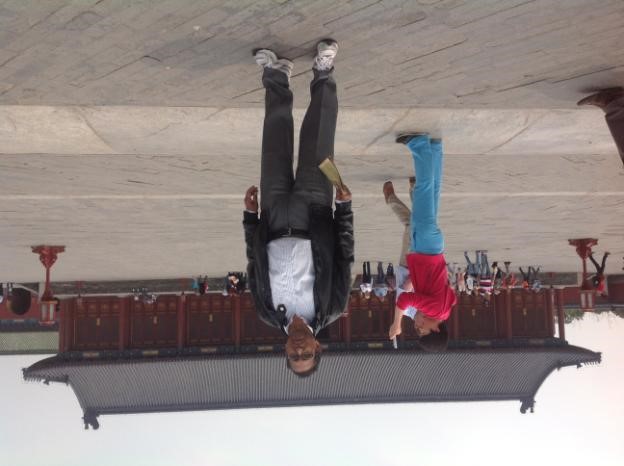
Bankim Chandra Tola, a retired Banker likes to pass time in travelling, gardening and writing small articles like the one posted here. He is not a writer or poet yet he hangs on with his pursuit of writing small miscellaneous articles for disseminating positive thoughts for better living and love for humanity. Best of luck.
SREE DHANWANTHARI TEMPLE NELLUVAI
T. V. Krishnakumar
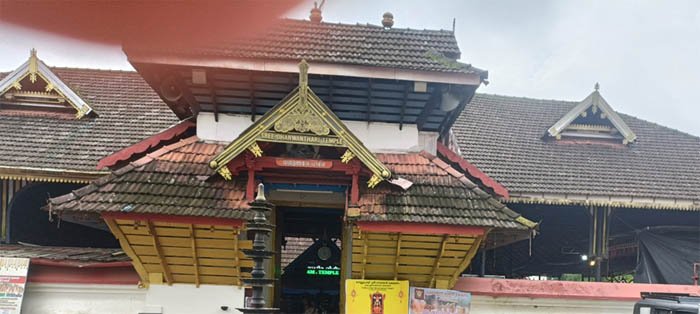
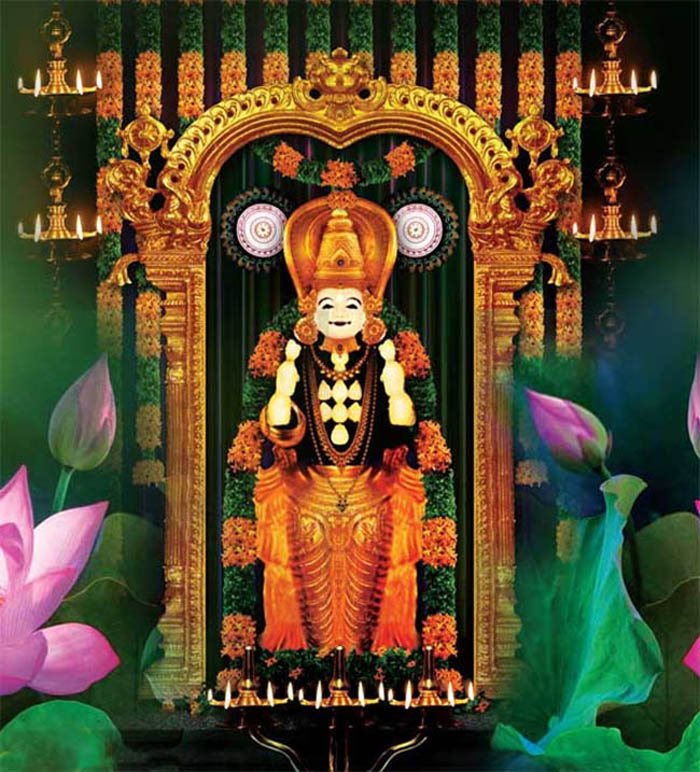

Nelluvai Sree Dhanwanthari Temple is a renowned Hindu Temple in Kerala, India, dedicated to Lord Dhanwanthari, the God of Ayurveda and healing. Located in the Nelluvai village of Thrissur district, about 25 kms from Thrissur town, the Temple is considered an ancient and sacred place for devotees seeking well-being and good health.
Sri. K.M. Shankara Iyer, in his book Nelluvai Shathakam has narrated this story in detail. Long back, as the existing idol in Nelluvai Temple got damaged, it was decided to make a new idol, and accordingly, the idol work was carried out from a suitable stone on a small hill at a place called Muringaththeri. After finishing the work of this idol, a procession was arranged involving all the devotees in the village with all the traditional Poojas. As they were proceeding to the temple where the idol was supposed to be fixed, Ashwini Devatas appeared in front of the procession and handed over an idol to which Pooja had been offered by Vasudevar (biological father of Lord Krishna). They informed the people that this idol should be fixed in the Temple, and disappeared from the site. Accordingly, the Sadhus fixed this idol in the Sanctum Sanctorum of Nelluvai Temple.
The Vaishnava idol which was carved out in the Muringaththeri Hill was fixed in a newly arranged small Temple in a nearby village called Cheruthevar Parambu. Later on, a small Temple was constructed in the Nelluvai Temple itself just beside the main Sanctum Sanctorum and this Vaishnava Idol known as Cheruthevar was re-fixed in this new place.
This Divine Temple has a history of more than 5,000 years. The Temple's deity is Lord Dhanwanthari, the Divine physician and God of healing. The Temple is famous for its Oushada Prasadham, a Prasadham with Ayurvedic medicinal values, offered to devotees. People from different parts of India visit this Temple seeking blessings for good health and relief from ailments.
The vast and ever-green paddy field on the western side of the Temple perfectly justifies the name “Nelluvai”. In the south-east corner within the compound wall is the Sanctum Sanctorum of Cheruthevar (Vishnu). A sacred well is located in the north-east corner. Despite the lack of sunlight, its water is pure and hygienic. Lord Dhanwanthari holds Amritha kalasam (the celestial nectar of immortality) in His left lower hand , Jaluka (leech) in His right lower hand, Shankha (conch) in His left upper hand and Chakra in His right upper hand. (see picture 3) In ancient times, leeches which suck blood were used widely for blood purification and therapy in Ayurveda. Shankha represents creation of sacred sound while Chakra symbolizes destruction of negative forces and diseases.
It is believed that the Nelluvai and Guruvayur temples are spiritually connected—known respectively as Vayupuram and Guruvayupuram. Both the Temples are dedicated to Lord Vishnu. Pooja at Guruvayur is believed to have been performed by Nandagopar, foster father of Lord Krishna, while at Nelluvai, it was done by Vasudevar, the biological father of Lord Krishna. Lord Guruvayurappa faces east, whereas Nelluvai Dhanwanthari faces west. Guruvayur is associated with relief from rheumatism, and Nelluvai with healing different types of ailments through deep devotion.
Additionally, there are idols of Lord Ayyappa, Ganapathi, and Shiva, all facing east. There is also another idol of Lord Vishnu and a sacred Salagrama- a sacred fossilised ammonite stone symbolising Lord Vishnu.
The daily Pooja at Nelluvai Temple has been conducted by the Annalloor Nampoothiri family for the past 60 years. Lord Dhanwanthari is also the Paradevatha (family deity) of all Ayurvedic physicians, especially the Ashtavaidyas. Before starting their medical practice, families like the Kuttancheri Moos perform year-long bhajans to the deity and offer Vazhipadu seeking divine blessings for healing. The most significant offering to Lord Dhanwanthari is Mukkudi, a medicinal preparation with Ayurvedic value. After it is offered as Nivedya during the morning Pooja, it is distributed as Prasadham. Consuming it with full devotion is believed to cure digestive and gastric disorders. There is also another Prasadham known as Attayum Kuzhambum meant for relief from blood disorders.
The temple's day begins with Abhishekam, followed by Ushapooja (early morning Pooja), Pantheeradi Pooja (12 feet) and Uchappooja (Pooja performed before closing the Temple in the forenoon). In ancient times, before modern clocks were invented, Temple priests determined the exact timing for rituals by measuring the length of a human shadow cast by the morning Sun. When a person's shadow measured exactly 12 steps long, it signalled that it was time to begin this specific Pooja, namely Pantheeradi Pooja. Evening rituals include Deeparadhana and Athazhapooja, which create a complete spiritual routine that fosters healing and divine connection. Swargavathil Ekadashi is special here. Panchavadyam and Dhanwanthari Sangeetolsavam are also famous events here. Large number of devotees gather here for these events. This happens during the Malayalam month of Dhanu (mid Dec - mid Jan). Vennachartal (applying butter on the idol- See picture 2) and Palpayasam Nevedyam are the main offerings here. The Temple opens at 5 am and closes by 10.30 am. After a mid-day break, again it opens at 5 pm and closes by 8 pm with Deeparadhana at 6 pm. Dress code for men is Dhothi with a shawl or towel to cover the chest and for women, it is saree or churidhar with dupatta.
I visit the Temple whenever I go to Guruvayur and my latest visit was in August 2026. Whenever I go to this Temple, I make it a point to get details of the names and birth stars of those near and dear to me and make offerings for their good health. When I leave the Temple, it gives me a great sense of satisfaction.
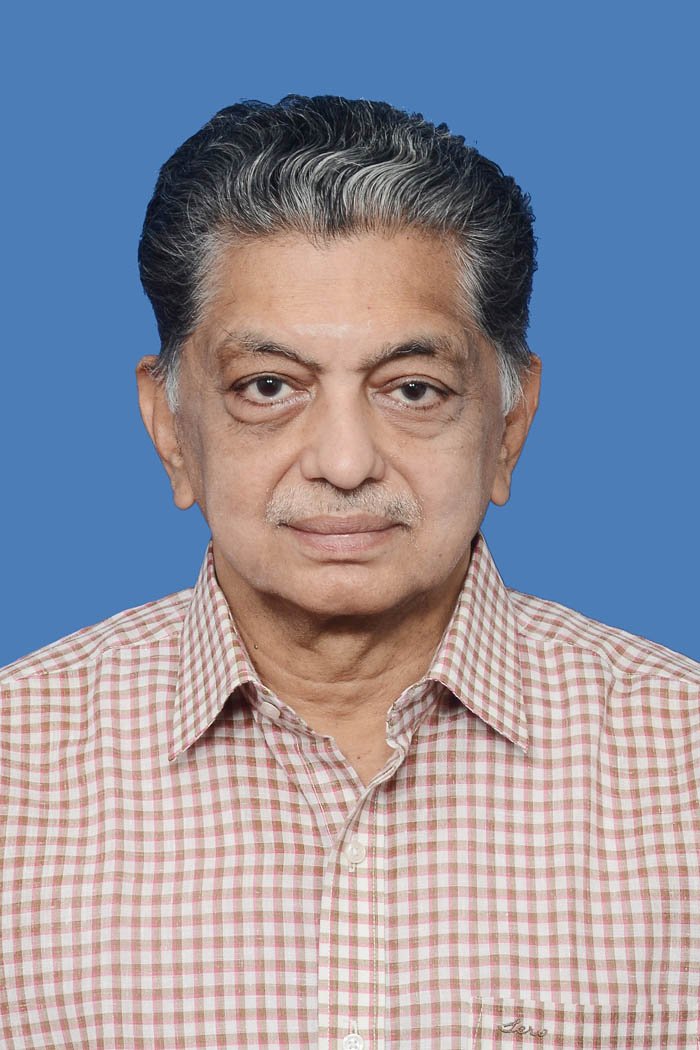
I am T.V.Krishnakumar, aged about 66 years. I am a C.A who was in employment in a U.S company in Chennai doing U.S accounting and U.S tax work for clients in the U.S.A. I was also employed in a logistics firm and later went for freelancing. I am now retired and post retirement I am in the Board of Nungambakkam Saswatha Dhanarakshaka Nidhi Ltd which is 144 years old and into the business of granting gold loans and mortgage loans to the lower strata of society.
THE DIWALI GIFT
Sreechandra Banerjee

I first met her at the NGO ‘Diptayan’ who cared for orphans.
Ever since I set up my own Chartered Accountancy firm in 2015, I had been doing the auditing for this NGO.
It was in that year, 2018, just after the Durga Pujas and before Diwali. Diptayan had requested me to go for auditing in September but as I was abroad I couldn’t. So, I rescheduled it after the Pujas at the end of October.
It was then that I met her.
She was teaching the children to make candles and clay lamps. Probably she was apprised that I would be coming for auditing as the moment she saw me, she got up,
“You are Mr. Debarpan Chatterjee?”
“Yes,” I said as she led me to the office inside.
“May I know your name please? Are you new here?” I asked her on the way to the office.
“Yes, am new here, I joined in June this year,” short and crisp was her reply.
And then we often met as I had to visit the NGO for some problems in the finances that were not tallying with the Balance Sheets.
Although she seemed to be friendly, I found her to be a bit reticent too.
She was a very amiable person and I started liking her. But…. But never could gauge what she felt about me!
But next year, just after the chariot festival, I was busy in a meeting and so couldn’t manage to go to their office on time to collect some papers.
“The office will close today at 5 pm, so if you can come down to my place, I will take the papers home and can handover to you then”.
It was a long meeting, and I could only reach her home at 9 pm.
I felt so ashamed to ring the bell. But her parents welcomed me with a warm smile.
“You are Debarpan? Yes, have heard about you,” and we started talking.
It was getting late and almost 9.30 pm. So, I thought of getting up.
“Why don’t you join us for dinner tonight,” it was her father!
I felt so embarrassed.
“Don’t worry, today I cooked mutton biryani and that too enough to feed an army, don’t you like biryani?” her mother asked.
Truly speaking, biryani was one of my favorite dishes and so…
Diya was standing there at a distance with a soft smile that conveyed “please do dine with us.”
What an enjoyable evening it was with the sumptuous dinner.
Days passed and after Pujas next year, she said that she had written a poem to greet us all on Dusshera. I was mesmerized as she read out. Never knew that she could compose poems as well.
“Triumphs the Godly Good over evil,
as Rama vanquishes Ravana, the devil!
Demon Ravana had taken Sita away.
To bring her back, Rama had to pray.
So untimely invocation of the Goddess,
To fight Ravana with blessed prowess!
King Surat invoked the Goddess in spring,
Rama’s untimely autumnal call to fight the Lankan king!
This autumnal invocation revered as Durga Puja,
When Goddess blesses us with Her “Dasho Bhuja”.
Rama had eyes like that of bright blue lotus,
Wanted to give for Puja, he was so focused!
Then before him the Great Goddess appeared,
Blessings bestowed and all obstacles cleared.
Thus, set out Rama and Hanuman troupes to fight,
To conquer demons in a battle of mighty might!
This story performed in Rama-Leela acts today,
Symbolize conquest by Goodness in a dramatic way!
Thus, Durga Puja blesses our lives every year,
With Dussehra comes to an end, a festival so dear.
Garba Dance, Dandiya Raas, Navaratri or Durga Puja,
The Devi has blessed us all with her ‘dasha bhuja’
As reverberates now the farewell beats of drum-dhak,
“Come again next year” we all harmoniously harp!
Hope She has bestowed her blessings on Earth,
to fill our lives with merriment, might and mirth.”
“So nicely you have written about the purpose of this autumnal invocation of The Goddess and how Good triumphs over evil,” I was really sort of fascinated.
“You know Diwali is celebrated as Rama returned to Ayodhya on that new moon day with Sita. Ayodhya was embellished with lighting of oil lamps. These oil lamps are called Diyas, you know. My name is Diya and my birthday is celebrated during Diwali,” she said.
“Conch shells or shankhas were blown, there was traditional Vedic chanting, folk songs were rendered when Rama returned amidst drumbeats to trumpet his return with Sita and Lakshman“, she continued.
“And see, Diwali or Festival of Lights is now a global festival, even celebrated in many countries like UK, USA, etc.,” I shared what I had recently read in a journal.
“Yes, and for Diwali, we must do good acts of Karma, which I emphasise as Karma-Kriya as Kriya also means acts,”
“Sure, this Diwali, am planning to distribute new clothes amongst the poor”.
“Well, my parents have invited you to our home on Diwali, as your parents don’t live here, you live alone in an apartment here. Why don’t you spend Diwali evening with us,” she said.
I felt so happy.
So, on Diwali evening I went to her home.
It was while we were dinning that her father said, “well, I have something to tell you, have told this to Diya also very recently.”
“What is it?” I was curious and couldn’t wait to hear.
“It was on Diwali day that we adopted Diya from this orphanage”, her mother continued.
I never could imagine that they were her foster parents!
“Really, my respects and pronams to you”, I was surprised.
“Yes, and now even after hearing this if you would accept her hand, we would be so happy,” her father seemed to be eager to hear what I have to say!
“Yes, sure, what a nice gift it would be for me. But don’t know whether you would accept something”, I chirped in.
“I had said that my parents don’t live here. I live here alone. Actually, am an orphan too. They lived in Jamshedpur. Both died in an accident. I was raised by my maternal uncle who was a chartered accountant,” I confessed.
“Yes, my dear son, we know everything. My sister lives in Jamshedpur, and I found that my cousin lived in the very house next to your maternal uncle’s house here in Kolkata,” said my would-be father-in-law or just father?
Oh, to get a home, and Diya’s hands, I couldn’t believe this.
Could there be a better Diwali Gift ?
“But wouldn’t you all hear the poem I wrote for Diwali?” Diya was eager to read out her poem and greetings.
She took out her book and started reading,
“Rama returns to Ayodhya
from Lanka,
On the New Moon Day,
Celebrated as ‘Deepavali’
in various ways.
So, Diwali greetings to you
That are now due!
May thousand lights
brighten your lives,
With joy everlasting
and ‘tamosh’ retreating.
Light up the ‘Diya’,
perform acts of ‘Karma-kriya’.
May the kindling joy of the twinkling light
embellish the new moon starry night,
and the light waves causing
the holy union of heaven and earth,
spatially many many light-years apart,
and the effect is rejuvenating.
Copyright Sreechandra Banerjee. All rights reserved. No part of this story including image can be copied and/or reproduced by anyone.
Sreechandra Banerjee is a Chemical Engineer who has worked for many years on prestigious projects. She is also a writer and musician and has published a book titled “Tapestry of Stories” (Publisher “Writers’ Workshop). Many of her short stories, articles, travelogues, poems, etc. have been published by various newspapers and journals like Northern India Patrika (Allahabad), Times of India, etc. Sulekha.com has published one of her short stories (one of the awardees for the month of November 2007 of Sulekha-Penguin Blogprint Alliance Award) in the book: ‘Unwind: A Whirlwind of Writings’.
There are also technical publications (national and international) to her credit, some of which have fetched awards and were included in collector’s editions.
FOR ME ALONE
Dr. Rajamouly Katta
Nature is full of wonders and mysteries. We find nature sometimes benevolent and sometimes malevolent. We do not know when nature displays its fury to cause a colossal loss to man by means of natural disasters and its joy to enable the soil to bloom into fragrance for the pleasure of man. The specialty of nature is to go against our predictions and establish its supremacy.
That morning, the wind blew so violently and furiously that many trees fell, and it rained so heavily and constantly that a large area of land was submerged, and some areas were inundated. All the people faced floods in all areas. In some places, communications were cut off.
The people in one area evacuated their houses on the instructions given by the authorities. They were asked to go to a safety place. They found flooded water all around. Nature appeared to be hostile to the people there. Winds were in serious blow, and floods were in fast flow. They knew no way to go for food to eat and no way to go for water to drink. There was a scope for threat and fret of spreading epidemics. There was an echo of wailing and crying in all corners.
The voice in the welkin might have broadcast some news to the authorities to react. The collector of the district took instantaneous measures to come to the rescue of the flood victims. A helicopter was on flight to reach the place and distribute food packets to the people to quench their hunger. All the flood victims were eager to see someone come to their rescue.
The flood victims had ardent hope on the part of the Government to get ready for rescue operations and immediate help to them. A helicopter flew to the place to drop a hundred packets on them. All the people rushed to the places where the packets were dropped from the helicopter as part of disaster management.
There were about a hundred flood victims, rushed to own packets despite their age. One thing to everybody’s dismay, five flood victims did not get packets despite their chasing efforts to keep pace with the helicopter’s flight. When they failed in their efforts, they launched a wide survey and thorough enquiry about the food packets distributed to them with an appeal to all flood victims.
In a series of enquiries John and four others accosted Nanda Gopal and narrated their experiences to him as flood victims,
“We’ve been searching for food packets dropped from the helicopter. We’re five to have lost a chance to get a packet each to quench our hunger.”
Kaleem who heard them from close quarters joined them to express his feelings,
“I got only one packet for me because of my best efforts. Others were in fast rush to get more packets. It’s our bounden responsibility to take one each to satisfy our hunger.”
“We’re in burning hunger. We rushed to get one packet each. Somebody snatched more packets and ran away with them leaving us helpless in satisfying our hunger,” said John.
“Here my neighbor, Khadar comes. Let’s enquire with him about the fellow who has taken more packets meant for others leaving them starving. Hello, Khadar, these are the five who’ve not got their food packets,” said Kaleem.
“Right, I saw Vishesh run with ten packets. He tried his best to catch more. He said that he’d give them to those who had not got even a single packet. He’s under a tree there. Let us go to him now,” said Khadar.
“We’ve been searching for you, Vishesh. You’ve been here fulfilling your hunger. Some fellow has snatched extra packets meant for others,” said John.
“You were holding ten packets in your hands. Where are they? These five members haven’t had food for two days. They’re too hungry now, struggling to live. They’ve not got even one packet each,” said Khadar.
“Who said so?” said Vishesh.
“With my own eyes, I saw you carrying ten packets. You promised to give them who had got even not a single packet, didn’t you?” said Khadar.
“I then ran faster in the speed of the helicopter and so I was able to get five more packets. If you’d run faster than I, you’d have got more than I.”
“It is not a running competition for you to participate in... This is a disaster...Whenever there’s any natural calamity, all should share whatever is supplied by the Government. You can’t own more than what you’re to get.”
“My friend, Parmaji will tell you if you have not understood me. He’ll narrate how I struggled to get those packets.”
“If Vishesh hadn’t tried, others would have snatched those food packets. Since he’s heroic, he got them. He gave me two more and so I ate them satisfactorily,” said Parmaji.
“Don’t tell cock and bull stories. I’m not ready to listen to you. The food packets supplied to you aren’t of your father’s property. It’s the Government’s property and responsibility to distribute food packets among us all flood victims equally to satisfy our hunger. Give the food packets to John and others soon,” said Khadar.
“I don’t give you. Why do I?” said Vishesh,
“Why don’t you?” Khadar.
“I struggled hard to get them and I preserve them for tomorrow and day after tomorrow,” said Vishesh.
“You’ve made the five of the flood-victims food victims also. Their hunger knows no limits. They’re flood victims to get food packets. You’d plenty of food when they didn’t eat what they were to get. When they’re hungry, how can you preserve them for tomorrow and the day after tomorrow? What nonsense is it? … Don’t worry about packets. You’ll get packets tomorrow,” Khadar.
“Yesterday we didn’t get; today we have got. What’ll happen tomorrow is uncertain… We aren’t sure about the future…,” said Vishesh.
“When our fellow beings are dying of hunger, why do you keep them for tomorrow and day after tomorrow?” said Khadar.
“I’m not going to give them those food packets. They’re for me alone,” said Vishash.
“The food in the packets is going to be spoilt,” said Khadar.
“Let it be spoilt,” said Vishesh.
“You don’t give the food packets to the five food victims. You’re selfish without any genuine wish for the welfare of your fellow beings. To meet her selfish desire to crown her son, a queen in Thretha Yuga wanted the eligible prince to the throne to go to exile and live on roots and leaves. A king in Dhwapara Yuga was not ready to give away at least five villages from his kingdom of kingdoms to the five kings who had every right to come to ruling. He was more like you, who are not ready now to give at least five food packets to the five hungry victims. He at the same time asked them to beg in the streets and wanted to fulfill his vested interests. You in Kali Yuga, at this age, let your fellow victims die for want of survival for tomorrow and day after tomorrow and your safety for ever. Your adamant nature reminds me of my scientist-friend’s conversation with an over selfish citizen like you.”
… … … … …
“Dear scientist, I’ve heard that a bomb is going to fall on earth. Is it real? ... Are you sure of its fall?” said the citizen.
“Yes, I’m sure of it. I’m cock-sure of its fall,” said the scientist.
“Are there any means to see that it doesn’t fall on earth?” said the citizen.
“Its fall is certain in any place, on anyone, at any time,” said the scientist.
“You’re a renowned scientist. You know where it falls...Where does it fall?” said the citizen.
“I’ve already told you; it falls on earth; it’s certain,” said the scientist.
“In which continent…?” said the citizen.
“In your continent only…,” said the scientist.
“Please see that it falls in the neighboring continent,” said the citizen.
“It’s not possible. It’s due to fall in your own country,” said the citizen.
“You tell me as if there were only my country. It’s a holy country. … In my country only it’s going to fall… Is it certain?” said the citizen.
“It’s certain. I reveal a bitter secret that it’s going to fall in your state only,” said the scientist.
“The bomb knows my state only, doesn’t it? It perhaps does know that the world is so wide for its fall. It falls in my state. If it’s so, in which district is it going to fall?” said the citizen.
“In your beloved district only,” said the scientist.
“The world is so wide. Why does it select my continent, my country, my state and my district? The bomb has parochial mission and narrow vision when the world has wide region? If it falls in my district, which region has it selected for its fall?” said the citizen.
“Only your mandal, your region….” said the scietist.
“I hope your study is not correct. You may be mistaken. Check and countercheck your study once again,” said the citizen.
“I’m sure of it … You don’t know what I ‘m and who I’m,” said the scientist.
“I know what and who you are. I’ve approached you for you’re a great scientist with abundant love and enormous affection towards me,” said the citizen.
“I love you in the heart of my heart. But my love does not avert the fall of the bomb,” said the scientist.
“My region is very wide. It is hills and vales; forests and rivers we find here. It can fall somewhere in them,” said the citizen.
“I know that it falls in your city, in your locality, in your lane…," said the scientist.
“The bomb is jealous of my happy living and cheerful existence. It’s no heart to be the embodiment of love and affection,” said the citizen.
“Poor fellow, you don’t know that the bomb has a soft corner towards you,” said the scientist.
“Then I shall be OK. I’m not worried about others’ safe living and well-being. Then where does it fall?” said the citizen.
“It’s helpless though it’s soft corner towards you. It falls in your lane,” said the scientist.
“It shouldn’t fall in our lane. You can create wonders and enjoy powers in averting it. Why don’t you exercise your powers for my sake?” said the citizen.
“It falls on your house. Why it falls on your house is a mystery but not trickery,” said the scientist.
“Then what is the role of a scientist when someone is in trouble and a friend of yours like me is in peril?” said the citizen.
“The scientist is meant for creation and invention of bombs on the instruction of the Government for the safety and security of their country. He doesn’t invent or create a bomb for his welfare or to vent his anger on someone who is his enemy or rival. To use a bomb or not, is not in the hands of the scientist. When it’s going to fall on your house, I’m helpless. Why it falls on your house is the mystery of mysteries,” said the scientist.
“No…no…It shouldn’t fall on my house. You’re more than a philosopher to know my pathetic plight. Sympathize with me and see that it falls on my neighbor’s house,” said the citizen.
“How selfish you’re! Whether it falls on your house or on your neighbor’s house is a false concept as it causes the same loss i.e. human loss.” said the scientist.
“I want to live longer and longer,” said the citizen.
“Does your neighbor not want so? Your vision is narrow to create barriers and frontiers,” said the scientist.
“The bomb is not a bomb. It was the sky lab which fell into the ocean. I’ve jocularly said to know your selfish and parochial nature,” said the citizen.
“You’ve threatened me all the time. However, I’ve got a big sigh of relief now. My heart heaved with threat and fret is quietly relaxing,” said the scientist.
… … … … …
Khadhar gave his wise message to Vishesh by means of the story of the scientist and the citizen:
“What the scientist said is correct. You should wish for the welfare of all humans at large. Vishesh! You look into the future for your welfare and well-being when others suffer today. You preserve food packets for tomorrow and the day after tomorrow when the five victims like John are in biting hunger today. The packets stolen by you can satisfy their burning hunger and bestow on their survival today. To survive today without fatality, loss, suffering, or danger is everybody’s urgency and to have such vision is also everybody’s urgency. Here your safety for a few days is fatal to somebody...
“Our country is known for its sacrifice in the form of timely help for human welfare. To offer timely help to others bestows them bliss. Ranthi Deva’s sacrifice is ever appreciable and remarkable, for he offered the food he had to eat and the water he had to drink. Lord Krishna, Shibi Chakravarthi and Harischandra are different, but many others are there to be referred to in this context. They didn’t mind their own safety, but they rendered their services for the safety of others to become role models. Days are gone when virtues are respected and revered. But all values have become topsy-turvy these days particularly during the post-Gandhian days. The people today swerve from the path of rectitude. Despite my advice to you to give food packets to the victims, you remain unruffled. I give you a couple of minutes’ time to decide yourself whether to give the food packets to the victims or not… Your callous attitude sparks my anger …,” said Khadar.
Suddenly all the flood victims heard the helicopter flying overhead as part of rescue operations. The rescue operators dropped enough food packets on them for the second time. All the flood victims, especially the five food victims: John, Shyam, Akbar, Pankaj and Henry; among them were extremely happy to receive their food packets. Khadar stood there to see that all get food packets. He was very specific to see that the five food victims get an abundant number of food packets to quench their hunger while Vishesh was bowing his head in utter shame.
Dr. Rajamouly Katta, M.A., M. Phil., Ph. D., Professor of English by profession and poet, short story writer, novelist, writer, critic and translator by predilection, has to his credit 64 books of all genres and 344 poems, short stories, articles and translations published in journals and anthologies of high repute. He has so far written 3456 poems collected in 18 anthologies, 200 short stories in 9 anthologies, nine novels 18 skits. Creative Craft of Dr. Rajamouly Katta: Sensibilities and Realities is a collection of articles on his works. As a poet, he has won THIRD Place FIVE times in Poetry Contest in India conducted by Metverse Muse rajamoulykatta@gmail.com
LEAF FROM HISTORY: STORY OF A TRANSFORMATION OF A CITY, FROM SMOKE TO LIGHT
Mr Nitish Nivedan Barik
This is the story of a city’s transformation from an industrial wasteland into a cultural heartland. There was a time when the heartbeat of Bilbao could be heard in the pounding of hammers, the roar of furnaces and the clang of steel against steel. Along the Nervión River, in Spain’s Basque region, ships were built, iron was forged, and industrial ambition shaped the lives of generations. The river was more than a waterway. It was the lifeline of a city whose prosperity rested on the strength of its factories, shipyards and steel mills.
Its old identity was forged in iron, its skyline shaped by industrial structures, and its working-class neighbourhoods nourished by the promise of employment. For decades, heavy industry brought wealth, migration and urban expansion. The surrounding Basque region possessed valuable iron ore, a strong industrial tradition and access to maritime trade. These advantages helped Bilbao become one of Spain’s important industrial centres.
With change of time and technology, industrial strength can become an economic burden. A city that builds its identity around an industry or industries, may not be able to sustain it at some unforeseen and unfortunate time. What becomes of its workers, its neighbourhoods and its confidence when the machines that once symbolised progress begin to fall silent?
Bilbao would spend much of the late twentieth century confronting these questions. Bilbao’s crisis that emerged during this period, was the consequence of structural changes that affected traditional industrial cities across Europe, particularly during the 1970s and 1980s.
True, it was a phase when the world economy was changing. Due to intense international competition, rising energy costs following the oil crises of the 1970s, older industrial plants faced growing pressure to modernise. Steelmaking and shipbuilding, once pillars of Bilbao’s economy, became increasingly difficult to sustain in their traditional forms.
New production technologies required different skills and fewer workers. Shipbuilding faced competition from countries with lower costs and expanding industrial capacity. Steel producers confronted overcapacity, changing demand and the expense of upgrading ageing facilities. Spain’s wider economic difficulties and industrial restructuring deepened the pressure.
Bilbao was especially exposed because so much of its economic life depended on these sectors. When industrial employment contracted, the consequences spread far beyond the factory gates. Workers lost jobs. Families faced uncertainty. Small businesses that supplied factories or served industrial employees lost customers. Vacant industrial sites and neglected waterfronts became visible reminders of an economic model that was no longer working as it once had. The crisis had also its social and psychological consequences. An industrial city does not merely lose employment when its factories close; it risks losing the sense of purpose around which generations have organised their lives.
The turning point began with a recognition that the city’s problems were interconnected. Economic decline could not be solved independently of environmental damage, neglected infrastructure, poor public spaces and a loss of confidence in the urban future. Bilbao’s industrial past had left it with contaminated sites, ageing infrastructure and a riverfront dominated by commercial and industrial uses. The Nervión, once central to its prosperity, had become in many places a symbol of urban decay and environmental neglect.
Regeneration therefore involved a broader programme of change. Public authorities worked to improve transport, sanitation, environmental quality and urban infrastructure. Former industrial areas were opened to new uses, while investment in public spaces and cultural facilities helped reshape the city’s image and everyday experience. A crucial element was the gradual cleaning and recovery of the river and its surroundings. Environmental improvement was not merely cosmetic. It helped create the conditions for housing, leisure, business and cultural activity to return to areas previously associated with heavy industry.
Transport projects, including the metro designed by Norman Foster, improved urban mobility. New public spaces and redevelopment along the river helped reconnect districts and make the waterfront part of city life again. Bilbao was not simply attempting to replace smokestacks with attractive buildings. It was trying to create a more diversified economy in which services, technology, business, culture and tourism could complement its remaining industrial strengths.
The Museum That Changed How the World Saw Bilbao
In 1997, the Guggenheim Museum Bilbao opened beside the Nervión River. Designed by architect Frank Gehry, the building stood out for its curved titanium surfaces and unusual shape. It looked very different from a traditional museum. The building itself became a work of art and attracted worldwide attention to Bilbao, a city that many travellers had not known much about. The museum was built in Abandoibarra, an area that had once been used for industries and port activities. As the area began to change, the museum became a symbol of a new future for the city.
People started visiting Bilbao to see both the museum’s art and its unique architecture. The growing number of visitors brought more business to hotels, restaurants, shops and other local businesses. Bilbao also became better known around the world, changing its image from an industrial city to a popular cultural destination. This change became known as the “Bilbao Effect.” It refers to the idea that a famous cultural building with a striking design can help improve a city’s image, attract visitors and support economic growth.
The Guggenheim Museum Bilbao is one of Spain’s most remarkable cultural attractions and an important destination for architecture and art enthusiasts. The museum stands out for its unusual combination of titanium, glass, and other materials. Its distinctive appearance has made it a landmark in Bilbao, a city that has gradually shifted from its industrial past towards a stronger focus on culture, tourism, and creativity. Beyond its role as an exhibition space, the museum is widely admired as an architectural marvel in its own right.
The museum houses an impressive range of modern and contemporary artworks, offering visitors an opportunity to explore different artistic movements and creative approaches. Its exhibitions feature works by internationally recognised artists, alongside temporary displays that introduce new perspectives and ideas. The building’s unconventional interior further enhances the experience, as its spacious halls and curved galleries provide distinctive settings for displaying art.
The Guggenheim Museum Bilbao is frequently discussed as an example of how architecture can contribute to the revitalisation of a city. The development of this striking cultural institution helped reshape the city’s public image and attract international attention. Its success demonstrated how investment in architecture, tourism, and cultural facilities could support wider urban renewal. Today, the museum is regarded as an important part of Bilbao’s transformation and a symbol of the city’s changing identity.
Frank Gehry’s architectural approach gives the Guggenheim Museum Bilbao its distinctive character. Its sweeping curves, irregular forms, and reflective surfaces create the impression of a large sculptural installation beside the Nervión River. The building’s appearance changes with the surrounding light and weather, producing different visual effects throughout the day. Depending on the conditions, the titanium exterior can appear silvery, golden, or muted, while the shifting shadows emphasise the structure’s complex geometry. Its location beside the river also establishes a visual connection with Bilbao’s maritime and industrial heritage.
The museum’s complex design was made possible through the use of advanced computer modelling technology, which helped translate Gehry’s unconventional ideas into a buildable structure. Digital design methods allowed architects and engineers to develop the building’s intricate curves and irregular surfaces with considerable precision. The completed structure challenges conventional architectural forms and presents a different appearance from various viewpoints. Its flowing exterior has often been compared to a ship or a series of overlapping metal waves, creating a visual link between contemporary architecture and Bilbao’s history as a port city.
Chowdwar: From Industrial Heritage to a Distinctive Tourism Destination — Odisha’s Own Bilbao Possibility
Chowdwar in Odisha has the potential to be transformed along the lines of Bilbao in Spain. Under the vision of Biju Patnaik, the towering personality Odisha had ,the town became associated with several industrial ventures, including Kalinga Tubes, Kalinga Industries, Kalinga Iron Works, Kalinga Airways and Kalinga Textile Mills. These enterprises, which closed down at different points of time due to different factors, reflect an important chapter in Odisha’s industrial history and Biju Babu’s spirit of enterprise and development.
This industrial heritage could form the foundation for developing Chowdwar into a world-class tourist destination. Industrial museums, heritage parks, landscaped public spaces and cultural centres could showcase the town’s industrial past and preserve the legacy of Biju Patnaik. With thoughtful planning and suitable infrastructure, Chowdwar could become a place where visitors learn about Odisha’s industrial development while enjoying a distinctive cultural experience.
Chowdwar’s proximity to Cuttack and its accessibility from the wider Kolkata–Puri travel corridor could further strengthen its tourism potential. Visitors travelling from Kolkata to Puri could be encouraged to include Chowdwar in their itinerary, subject to convenient transport connections and clear tourist routes. Access through Cuttack or Kendrapara Road could be explored as part of this plan.
A thoughtfully conceived heritage initiative could bring these strands together. Industrial structures and historic sites could be documented, conserved and adapted for appropriate new uses. Interpretive galleries could tell the story of Chowdwar’s industrial development, while exhibitions and cultural programmes could celebrate the contributions of Biju Patnaik as well as Odisha’s other greats like Netaji Subash Chandra Bose , Nabakrushna Choudhuri ,Harekrushna Mahatab etc and the people who helped shape the region. The nearby Mahanadi could become a focal point for environmentally responsible riverfront development, creating spaces for recreation, tourism and community life. Carefully designed heritage trails could connect Chowdwar’s industrial history with the wider historical and cultural attractions of Katak (formerly Cuttack).
(Mr Nitish Nivedan Barik hails from Cuttack,Odisha and is a young IT professional working as an Associate Manager with Accenture at Bangalore.)
YES BOSS
Dr. Mrutyunjay Sarangi
For a moment my head reeled and I caught hold of the long counter before me to keep myself steady. I had asked a simple, innocent question to the salesman and he reeled off a series of names probably to unsettle me right at the beginning of my encounter with him.
It had been a tiring day for me at the office, with endless meetings, phone calls, visitors and summons from the Minister asking me what happened to a recommendation for an appointment he had conveyed to me a week back. Before I could open my mouth to tell him that the gentleman recommended by him was a buffoon and a rascal, he had ticked me off as someone too upright for his comfort, someone who 'imagines things and sees ghosts where there are none', virtually telling me to go and see a psychiatrist if I knew what was good for me. With a parting shot that Joint Secretaries are a dime a dozen in Government of India and I should be careful of the precious chair I was occupying, he had uttered some expletives seemingly at one of his flunkeys, although I had no doubt in my mind they were meant for me. Such is life, and at the end of the day when I was leaving for home I suddenly remembered that Manjari, my wife had asked me to buy clothes for the driver, the peon at the office and the husband of the maid at home. Deepavali was a fortnight away and this task could not be delayed further.
So I had rushed to Sarojini Market in Delhi, although I was rushing against time. There was a deadline of eight o' clock to reach home and Manajari had drilled into my head in the morning that any delay beyond that could lead to unmitigated disaster.
Well, nobody in Delhi knew better than a Joint Secretary in a Ministry the importance of deadlines; we thrive on these wonderful objects, being fed with them every passing hour in the office. So when I left office I had calculated that I would just be able to make it, if I rushed like a startled cow being chased by a playful dog.
So here I was at the shop and had asked the salesman to show me some cloth for stitching pants. The shop was empty, due no doubt, to the unseasonal hailstorm that had visited Delhi two hours back like an unwelcome guest and left the streets slushy, full of broken down trees and mounds of leaves. The salesman was in high spirits, unmindful of the damp weather outside. He perked up like a drunkard after his third peg of the golden elixir, and with a smile that bordered on mischief, reeled off the names, "Yes Saab, Raymonds, Vimal, Dinesh Suiting, Piramal, Bombay Dyeing, DCM, Siyaram, Arvind, Grasim, Cotton, Terry cotton, sanfrised cotton, mixed cotton, terry wool...What do I give you sir?"
For a moment my head reeled, I once had a similar sensation when I had gone to the Coffee House at Connaught Place and asked the waiter what was on offer, he had almost made me fall off my chair with a nonstop reeling out of names in his thick accent, Vadai, Idly, Utthapam, Bonda, Masala Vadai, Idiyappam, Paniharam, Upma, Onion dosa, masala dosa, plain dosa, Rawa dosa, butter dosa, paneer dosa, Kal dosai, ghee dosa, Plain Utthapam, onion Utthapam, ghee Utthapam, vegetable bagoda, plain bagoda, Govi bagoda, aloo bagoda......I knew it was a long and winding highway that he had embarked on and would have run probably for another mile, but I had forgotten the first item by the time he reached the milestone of aloo bagoda. So I ordered that with Filter Kaafi though I hadn't the foggiest idea of what bagoda was. I found to my utter delight the mysterious dish was actually aloo pakoda, which is one of my favourite snacks.
I looked at my watch. Six fifty! I had roughly forty minutes to finish the purchase and hit the road to reach home before the eight o' clock deadline set by Manjari. Before I could react to the names of the brands, the salesman, with surprising alacrity, brought down about twenty stacks of cloth material and dropped them in a heap before me. His face almost disappeared behind the stacks and I could hear his sepulchral voice in an eerie sort of way, "Any preference of colour Sahab?"
I was intimidated by the names of the brands and was more worried about the price than the colour. I came to the point, "What is the price of these clothes?"
A hand came out from behind the stack, verified the price, and announced, "This Raymond cloth is 1800 rupees per meter, this Vimal piece is 2000 rupees per meter, the Graviera suiting is slightly higher, let me see, yes, 2150..."
It was obviously high for my budget, I smiled, "No Deepavali discount?"
The voice from behind the stacks replied, "For that you have to ask the owner" and the hand of the unseen man pointed towards the cash counter where a man was sitting, busy with his cell phone. A fat, bald man, he pretended not to have heard the conversation, but I had no doubt in my mind, he heard everything, I being the only customer in the shop. A slight irritation came over me, like an unwelcome rash - what is the man doing? Is he expecting me to beg for discounts? He continued to stare at his cell phone, I returned my attention to the salesman.
"I want something in a lower range. It is for my driver and peons."
The salesman appeared from behind the stack and gave me a dirty look, probably by way of saying, I should have told him before he pulled down all those stacks. With a snigger, he asked me what was my range? The tone was unmistakable, he was regarding me as a cheapo, not worth his attention. I felt a little small, gulped, and told him it was around eight hundred rupees a meter. He had taken out a tooth pick from his pocket, extracted some exotic food from the mouth and started chewing it. He shouted at another salesman two tables away, "Hey Chhotu, Sahab wants some cheap clothes, show him from your stock."
"OK, Gourang Bhai, please come Sahab, come to my counter".
Gourang dismissed me with a wave of visible contempt. I again looked at the owner. He was looking at his watch, perhaps wondering whether it is worth keeping the shop open for some paltry purchase by a cheapo. I slowly ambled towards Chhotu's table. He took out a dozen stacks and started showing them to me.
I am not one of those compulsive shoppers, but I am certainly quite fastidious when I buy things. I am very very conscious of my hard earned money. And add to that, I presume I have some kind of self acquired expertise in the matter of clothes, something similar to the ego of a self-taught homeopath. It came instinctively to me. I am also very finicky about cleanliness of clothes. At the age of twenty three I had started my career as a lecturer at Banaras Hindu University and was staying in a ground floor apartment, surrounded by similar apartments on three sides. Every Sunday, I would spend a couple of hours cleaning my clothes and drying them outside. The riot of colours from my assorted clothes in the open sun must have been a jarring sight. One day the young Bhabhi from the neighbouring house came out and asked me why I was taking all that trouble of washing the clothes. She advised, "We all give our clothes to the dhobi, why don't you do it also?"
Poor Bhabhi didn't know the depth of my knowledge in the subject, "Arey Bhabhi, you don't know how unhygienic is the place these Dhobis go to wash the clothes. If you see it once you will not give your clothes to the dhobi,"
"But everyone does it!"
"That's the problem Bhabhi, imagine all the dirt, sweat of so many people, all washed together, ugh, I can't stand it. And all the stains in the clothes!"
Bhabhi, experienced in worldly affairs, raised her eyebrows,
"Stains, what stains?"
I tried to enlighten her.
"O, all kinds of stains, there can be tomato ketch up, tamarind, masala stains on the shirts and sarees. So many kinds of stains, and imagine the towels, the bed sheets.."
Bhabhi suddenly remembered something, and said ok, ok, and hurried back to her apartment shutting the door with a loud bang.
So I kept picking at the clothes in the shop, trying to find fault with the texture, the colour. I was just warming up, when the owner shouted, "Hey Chhotu, hurry up and finish the sale. I have to leave early"
I turned to look at him, hid my irritation with a poor imitation of a smile and said, "I have to buy some clothes for shirting also."
The owner didn't smile back,
"Yes Sir, please do it a little faster, I have to close the shop early."
"But I thought in Sarojini market shops are kept open till nine"
"Yes, yes, I know that, but I have to close the shop today a little early"
I murmured, that's not my problem and turned to Chhotu, who along with the other two salesmen, was obviously enjoying the exchange between me and their owner and probably waiting for some fireworks.
My irritation was growing. I took a piece of the cloth and pointed out that the colour might fade after a few washes. And another one appeared to to be too soft, which may not hold the crease after pressing. Yet another one looked dusty even before the pant was stitched, so God knows what would happen once it is made into a pant. Chhotu looked at Gourang and gave a knowing smile. Their suspicion that I was a cheapo had got confirmed. No one made a such a detailed analysis for clothes for his driver and peon, obviously the purchase was for me.
But all the same, Chhotu asked for a glass of water to fortify himself, he had not met such an expert in his shop earlier. My eyes were drawn towards the mirror behind him. To my horror I found the owner looking at another salesman and gesturing with his hand that this customer was perhaps a crazy one, a couple of screws in his head loose. He also pointed at his watch and patted his forehead to indicate that it was his bad luck that such a crazy customer had come to his shop on a day when he had to leave early.
My irritation turned into anger at this insolence. I asked for more clothes to be shown, repeating that I would short list some pieces and after choosing the cloth for shirts, decide on the pieces that would match the colour of the shirts. Chhotu looked helplessly at the owner who shook his head and pointed to his watch. I took my time to short list some pieces of cloth. In my anger I had forgotten that I was getting dangerously close to the deadline of eight o clock.
Suddenly the owner lost his patience,
"Bhai Saab, can you please finalise on your selection? I am in a hurry, I should have closed the shop half an hour back. Just waiting for you to finish."
I whirled around, anger flashing from my eyes like destructive laser beams directed at a helpless target, "Is it my problem, if you are in a hurry? As a customer I am entitled to your service. Haven't you heard the first principle of Marketing, Customer is always the Boss?"
The man was at a flashpoint himself,
"Yes, I know that, I don't have to take a lesson in marketing from you. Just chose whatever you want to buy and let me close the shop."
"How dare you talk like that? If I want I can buy your whole shop! Do you hear me? Are you forgetting I as customer am your boss?"
The man threw a look of utter contempt at me and said, "I have seen many customers but none like you. Do you want to buy anything or should I close the shop?"
The look of contempt on his face was unmistakable, "You can come back tomorrow to buy my whole shop", he added just to rub salt into my wound.
I growled like a wounded tiger,
"What do you mean? Hey, Gouarang, cut three pant and shirt pieces from your costliest cloth and hand over to me. Quick, quick, I don't have much time."
Gourang jumped at the offer. I paid for the purchase and left. Before I had turned the corner I heard the shutters of the shop being drawn.
I sat in the car and looked at the watch. My God, it was five minutes past eight. Suddenly I was seized with a regret. I had wasted so much time just because the shop owner was such an insensitive, callous buffoon! And so much money! Fourteen thousand six hundred eighty to be exact, against a budget of five thousand rupees! What would Manjari say to this?
As if on cue, the phone rang, it was Manjari at the other end. She burst out like a machine gun, "Where are you? Why are you so late? Couldn't you come home early at least one day for a change? Is the entire country running on your hard work? Do you want to spoil everything? Your son is ready for the last half an hour and is sulking. He has asked me a dozen times when would Dad return! Why are you late? Where are you?"
In questioning me Manjari seemed to have traversed a full circle in her excitement, starting with 'where are you' and ending with the same!
I had started having a headache,
"Why did you ask me to buy the clothes for the driver and others today, of all the days? And why did your spoilt son choose this day to show loyalty to his would be in-laws? The nincompoop has already lowered our prestige. Have you ever heard of the bride's family first coming to visit the groom's home? Isn't it always the other way? And why is he sulking? Did he take my permission to fall in love with that girl Pooja? It is all your fault. If you had given him home-made lunch in a tiffin box like you give me, the spoilt brat would not have gone to his college canteen and flirted with girls, falling for a Punjabi lass. In stead he would have quietly had lunch in the corridors and gone to the library and studied a little harder."
Manjari, as usual defended her son,
"O my God! Our Rahul topped the Delhi University in Commerce, got a job with a thirty lakhs per year package, what more do you want from him? And lunch in a tiffin box from home for an University student? Are you crazy? Who does it now? And the Punjabi lass? You should see her, such a beautiful girl, like a pink rose in full bloom. Rahul has picked the best. And so cute! Last month when she came here to meet me the way she kept on hugging me and licked away my half eaten ice cream just melted my heart!"
I wanted to give some heart burn to Manjari, "O, Pooja is so pretty! Then I will have a smashing Samdhan, not a bad deal!"
"Yes, if you want to meet your smashing Samdhan, you better come and get ready. Take a shower and change into something smart. Discard your working clothes, they must be smelling of red tapes, politicians and scoundrels!"
With that Manjari kept down the phone.
I reached home in ten minutes. Rahul opened the door and I was stunned to look at him. Like a bride-to-be decking herself up for the impending visit of prospective in-laws, he had groomed himself with hair gel and a liberal dose of talcum powder. He had also sprinkled some perfume on himself. Manjari pushed me to the bathroom. I took a quick shower and I had barely changed into a decent kurta pyjama when the door bell rang. Rahul opened the door, Manjari went ahead to greet Dolly, Pooja's mother, there was a big commotion and from the girlish screams and the boyish howls it was clear that Pooja had arrived and life would change for us forever. Dolly greeted me with a Namaste, Pooja surprised me with a hug, bringing out my long forgotten blushes and from the corner of my eyes I found Rahul hugely enjoying my discomfiture. I asked where was Mehra Saab and Pooja blurted out, "Daddy is trying to find parking place. He will come in a minute. And uncle, you are looking so handsome, I know where my Rahul got his looks from!"
I looked at Pooja, the girl who looked like a full bloomed rose and my heart swelled with pride with her compliments.
The door bell rang again. Must be Mehra Saab. In a daze and still glowing from Pooja's admiration I went to the door and opened it. The next moment I recoiled as if I had seen a cobra with its hooded fangs at a striking distance. I shrieked, "You! You are Pooja's dad?"
The man who had been equally shocked as if he had unexpectedly seen the face of a Gorilla, when he was longing to see something decent, took a step back, "My God, where have I landed up? You are Rahul Beta's Papa?"
I had not forgotten the insult he had heaped on me an hour back at his shop in Sarojini Market. I almost wanted to tell him, no, I am the driver, Saab is waiting inside to welcome you, but Pooja and Rahul came out at that moment. My beta went and gave a big hug to his father's bête noire and dragged him in by his hand, completely ignoring me.
I came in. The room had filled up with a warmth of bon homie between the two mothers, their gossip ranging from Khan Chacha's kebabs to Kashmiri Rogan Josh, from Lucknow Chikan to Kanjeevaram silk. By some mysterious trick Rahul and Pooja had managed to squeeze into a single seater sofa and were sitting glued to each other like a sandwich. They were whispering things which were barely audible to others. Only Mehra Saab and I were sitting like two foreigners who didn't understand each other's language. He was busy with checking messages in his mobile, I was roving my burning glances around the room, trying to cause blisters everywhere, particularly in Mr. Mehra.
The two ladies left for the kitchen to get snacks. I found, sitting glued to each other Rahul and Pooja had started exchanging messages in their mobile. I imagined Pooja texting to Rahul, why is your Papa sitting glum like he is bothered by ants in his pants? And Rahul might be texting, your Daddy is also sitting like his rump has been bitten by a deranged monkey, ha ha, they need balms from each other. Should I open a bottle of Vodka for them? To rub on the affected areas!
Pooja suddenly started laughing loudly and they did an exchange of high fives. She slid a little closer to him, if at all that was possible within the narrow space.
Mehra Saab and I woke up from our reverie, exchanged a painful smile. My mind was in a turmoil and I suspect he must be sailing in a similar boat. To break the ice, he asked me, "Is this your own house or it belongs to government?"
I winced within, what an idiot! How can someone have an own house in a government colony!
"No, no, it is a government house; as a Joint Secretary I am entitled to a much bigger house, but we have been here for more than seven years, so we don't want to move to some other area. How about you, do you have your own house?"
"Yes, in Lajpat Nagar. My father had built the house in the eighties, there is no scope for any expansion."
"Why do you need a big house? Yours is a small family, you are Pooja's only father, isn't it"?
Mehra Saab perked up at the question and looked at me in a murderous way. I realised my mistake. Didn't I say, my mind was in a turmoil, "Sorry, very sorry, Pooja is your only child, isn't it?"
Mr. Mehra just nodded, I realised our attempt at breaking the ice had misfired, thanks to my turmoiled mind. We had broken the ice, but an iceberg had pushed its way into the room!
We were saved by the entry of the ladies with trays of snacks, most of which must have been bought from outside by our dutiful son, a potential future chamcha of his in-laws. But then I remembered the exquisitely beautiful Pooja. I looked at her and was shocked to see that when the mothers were busy making tea in the kitchen and the poor dads were trying to break the ice, the young birds had managed to get more cozy, Pooja had almost climbed on Rahul, half of her body was perched on Rahul and in the comfort of that intimacy they were cooing to each other. Within a moment, in an attempt to climb higher, she slipped and fell on the floor with a loud thud. Manjari was startled, she looked at Pooja on the floor and guessed what would have happened. She was pouring tea, suddenly she started laughing like a Hyena, some tea spilled unto the dress of the rolly poly Dolly, my Samdhan. She also saw what we saw and winked at her husband. In a moment all of us started roaring in laughter. By a magic, the room assumed the joviality of a circus, I got up and gave a high five to Mehra Saab, he grabbed me and took my hands in his huge hands and kept on shaking them under the mistaken impression that I was a mango tree and if he keeps shaking my hands mangoes would fall from me for his wife, the beautiful Dolly, to make pickles!
The iceberg was broken and the room was inundated with a flood of joy and mirth. The young couple who had been temporarily uncoupled by the fall, looked hungrily at the food. We all sat down to devour mounds of samosas, sandwiches, mutton kebabs, chicken tikkas and rasmalai. The Mehras were gushing like a soda fountain, full of praise for their cute Pooja and cuter Rahul Baba. Mehra Saab grandly announced that for his only daughter he would not leave any if his bank locker unopened, and will celebrate the wedding like a Maharaja's coronation.
I came to my form and tried to puncture his mirth, "But Mehra Saab, we have two demands. You know as Groom's parents we are entitled to make some demands."
There was a stunned silence in the room, as if the Circus had come to a standstill due to power failure. Rahul looked at me with a murderous grimace, I ignored him. Mehra Saab whose face had darkened, stuttered, "Yes, yes, of course, please tell me. Your wish is my command."
I smiled,
"You know, as per our custom, you have to give pant and shirt pieces for all our relatives. There will be about forty of them. I want to pick up the best pieces from your shop."
Mehra Saab's face brightened as if power had been restored at the circus and the show would resume now. He stood up, bowed from his ample waist, and said, "Yes Boss!"
I raised my hand, my second demand was still waiting, I wanted to rub it in, "My second demand is that myself and Manjari will come to your shop to choose the cloth one evening and you will keep the shop open till we are satisfied with the pieces, even if it would be midnight."
Mehra Saab sighed in relief, a great load had lifted from his mind. He bowed again, "Yes Boss".
With that the deal was sealed, the room flashed with an unseen light, it appeared as if loud music broke out somewhere. Pooja and Rahul were impatient to go back into their hugging and cooing. They stood up, gathered each other in a tight hug, like they wanted to merge into each other. Pooja whispered something in Rahul's ears, Rahul grinned and said, "Yes Boss". They tried to make their hug even tighter and in an absolute abandon, started rubbing each other's nose. I looked at them and winced from within, Issssssh.....does the young generation have no sense of shame! As if reading my thought, Pooja and Rahul kept clinging to each other and disappeared into the darkness outside.
Dr. Mrutyunjay Sarangi is a retired civil servant and a former Judge in a Tribunal. Currently his time is divided between writing poems, short stories and editing the eMagazine LiteraryVibes . Four collections of his short stories in English have been published under the title The Jasmine Girl at Haji Ali, A Train to Kolkata, Anjie, Pat and India's Poor, The Fourth Monkey. He has also to his credit ten books of short stories in Odiya. He has won a couple of awards, notably the Fakir Mohan Senapati Award for Short Stories from the Utkal Sahitya Samaj. He lives in Bhubaneswar.
Viewers Comments