
Literary Vibes - Edition CLXIX (25-Sep-2026) - POEMS & BOOK REVIEW
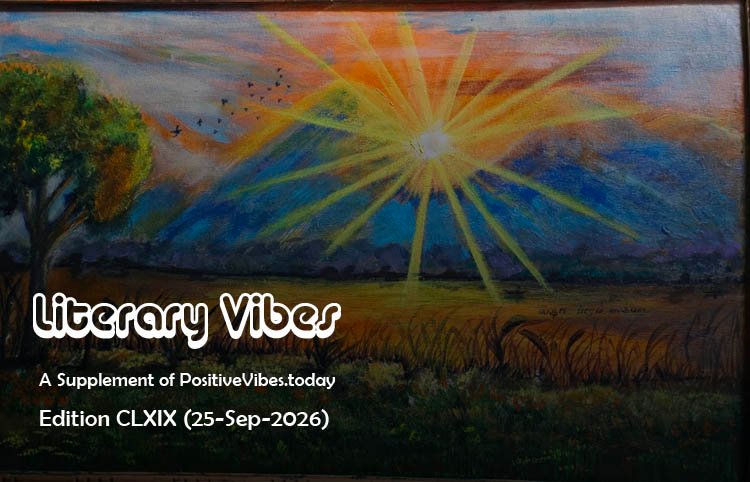
Title : Dawn (Acrylic on Canvas Board by Lathaprem Sakhya)
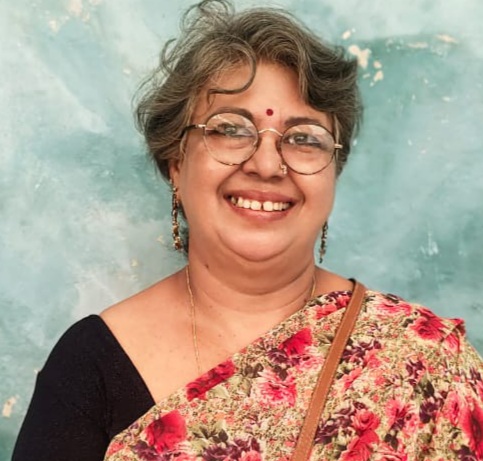
An acclaimed Painter, a published poet, a self-styled green woman passionately planting fruit trees, a published translator, and a former Professor, Lathaprem Sakhya, was born to Tamil parents settled in Kerala. Widely anthologized, she is a regular contributor of poems, short stories and paintings to several e-magazines and print books. Recently published anthologies in which her stories have come out are Ether Ore, Cocoon Stories, and He She It: The Grammar of Marriage. She is a member of the executive board of Aksharasthree the Literary Woman and editor of the e - magazines - Aksharasthree and Science Shore. She is also a vibrant participant in 5 Poetry groups. Aksharasthree - The Literary Woman, Literary Vibes, India Poetry Circle and New Voices and Poetry Chain. Her poetry books are Memory Rain, 2008, Nature At My Doorstep, 2011 and Vernal Strokes, 2015. She has done two translations of novels from Malayalam to English, Kunjathol 2022, (A translation of Shanthini Tom's Kunjathol) and Rabboni 2023 ( a Translation of Rosy Thampy's Malayalam novel Rabboni) and currently she is busy with two more projects.
Dear Readers,
It is a great pleasure to present to you the 169th edition of LiteraryVibes studded with beautiful poems and enchanting stories. Hope you will enjoy them in the midst of the approaching festival season.
Odisha is just coming out of the rumblings of a mini-cyclone which is crossing the coast near Gopalpur as I sit to write this editorial. More ravages, more misery and grief, haunting the affected areas like dark shadows with ominous stares. Nature shows its might and reminds us how humble, helpless we are before its threatening wrath. Our heart goes out to the people in the areas struck by cyclonic winds and incessant rain.
Bhubaneswar is witnessing intermittent rains, the only relief being the cooling down of temperature. But we had our moments of anxiety when the IMD predicted wind speed of around 100 kilometers and the possibility of cyclone Arnab moving towards Puri for a likely landfall. We now thank God for small mercies as the cyclone turned out to be little more than a big depression and stayed away from Puri.
September is the month that hosts Guru Divas. I had a wonderful experience a few days back when the Department of Political Science in my old alma mater Utkal University, invited me to address the Post-Graduate students as a part of their induction lecture. It was a great pleasure to see the young, bright students listening with rapt attention to some words of advice born out of my years of experience with life. I felt nostalgic, seeing the same lecture hall where I used to sit fifty-four years back listening to our wise professors.
I always make it a point to converse with the students instead of boring them with a long, monotonous lecture. So I asked them what was their idea of success in life. There were many answers, but one student surprised me with her definition of success as a regret-free life. I wished that God give her a regret-free life. I told the students that a successful life is where one is remembered by hundreds or thousands after death. I have often realized how work-related success is so ephemeral, how eaily people forget when one leaves a post and a time comes, many so-called admirers don't answer your phone calls, nor do they call back. So to achieve success one has to do work of permanent value.
I took the students through the definition of happiness, good values, sanskar, and fulfilment. I gave them four pieces of advice:
1. Make good friends who will stay through thick and thin over time.
2. Not to waste time in tik-tok and useless video clips, but to read, read and read - both text books and good literature.
3. Never to forget the sacrifices the parents make to provide education for them.
4. And help people who are in need, not to bargain for a few rupees with small vendors like vegetable-wallahs or old ladies selling things on pavements.
I told the students the importance of honesty in job, truthfulness, commitment to values and love for the country. My biggest advice was to choose a good spouse, which is critical to lasting happiness.
I narrated a few stories and some incidents from my own life to liiustrate how good values stand the test of time. Two stories from my own life were quite touching which I want to repeat here.
Many people have asked me at different some of my "achievements" in life. During my official career i have occupied many responsible positions and done some good work for the people to the best of my ability. But there are two incidents I can never forget:
1. On a winter morning in Delhi sometime around 2002 I was doing my morning walk near Akashvani. I saw an old lady sitting on the pavement near the bus stop with a big basket of vegetables, waiting for a bus. I waited, the bus came, but instead of stopping it just slowed down and started moving. I ran after it and beating on its body made it stop. I lifted the basket of vegetables and helped the old lady climb onto the bus. She gave me a beautiful smile and said "Iswar tera bhalaa karen beta". I heard that voice again and again for about a week every time I closed my eyes.
2. The second incident was in 2005 when I had joined in a post ìn Delhi. I was staying in HUDCO place near Ansal Plaza. On a late Sunday morning I went to buy milk from the booth and found a middle-aged lady, probably a maid-servant, with her two kids waiting to buy milk. The kids were aged about nine and six years. The young sister was pointing out the varities ice-cream from the wall picture claiming how mango cup was the best. The boy, her elder brother, kept correcting her saying how orange stick was better and so on, till the mother bought a packet of milk, probably for her boss, and turned to leave. The kids were disappointed, and asked her "Mummy, won't you buy ice cream for us? At least buy one, we will share." The lady was almost in tears and just shook her head. My heart shattered to pieces seeing this touching moment. So I asked her, "Beta, can I buy ice cream for your kids "? She replied, "No uncle, why should we trouble you?" I assured her it was no trouble, they were like my grandchildren and it will give me a lot of happiness if I could give them ice cream. She finally agreed and after knowing that she had an old fridge at home I gave four icecreams to her. The smile on the kids' face and the look of gratitude in her eyes are unforgettable treasures of my life.
The young students appreciated the talk and I felt happy having been a part of their induction lecture. I knew they had learnt something useful that day.
Hope you will like the offerings in LV169 and will share the following links with your friends and contacts:
https://positivevibes.today/article/newsview/742 (Poems)
https://positivevibes.today/article/newsview/741 (Short Stories 2)
https://positivevibes.today/article/newsview/740 (Short Stories 1)
https://positivevibes.today/article/newsview/739 (Young Magic)
Hope you remember that all the 169 editions of LiteraryVibes are available at https://positivevibes.today/literaryvibes
Stay cool, take care and God bless. We will meet again on the 29th October, last Friday of next month.
With warm regards
Mrutyunjay Sarangi
Editor, LiteraryVibes
Bhubaneswar, the 24th September, 2026 .
Table of Contents :: Poems
01) Prabhanjan K. Mishra
02) Dilip Mohapatra
IMMORTAL STARS
THE ART OF STEALING
03) Abani Udgata
04) Dr Malabika Mitra
A CONVERSATION BETWEEN TWO HALF-BURNT MATCHSTICKS
05) Shreya Suraj
06) Shubhra Singh
07) Sujata Dash
08) Pradeep Kumar Biswal
09) Dr. Saroj K. Padhi
10) Dr Nanda Kishore Biswal
11) Baldev Samantaray
12) Hema Ravi
13) Lopamudra Mishra
MY WISH
THE SECRET OF MUMMY’S SMILE
14) Sathya Venkatesh
15) Dr. S. Padmapriya
THE BRAHMAPUTRA*- A MINOR EPIC POEM
16) Kunal Roy
17) Satish Pashine
WHERE THE RIVER FORGETS ITS NAME
LIFE-MY STRANGE BELOVED
AT TWENTY
18) Matralina Pati
19) Dr. Rajamouly Katta
MY POETIC LIGHTNINGS
POETIC STREAM
THE RAINBOW
20) Sudipta Mishra
21) Bipin Patsani
22) Anindita Sen
23) Mrs. Setaluri Padmavathi
24) Dr. Niranjan Barik
25) Dr. Mrutyunjay Sarangi
Table of Contents :: Book Review
01) Dr. Atiqa Kelsy
IN THE LANDSCAPE OF MEMORY: READING QUEEN PADMINI OF MEWAR
YOURS TRULY
Prabhanjan K. Mishra
Because I was called Buddha once,
no, my head never swelled
rather, I tried on my clay feet,
and iron knees, to trudge ahead.
I burnt the midnight oil to learn the alphabet
as my collection of shells and mussels
were smeared with guttery grime,
not pristine to suit fastidious tastes.
So, when I was called a night owl, believe me,
neither did my chest swelled an inch more,
nor did my strides grow longer; nor did I
remove my camp from base to the peak.
Today, your brooks do not hum
into my backwaters but fall with hiccups
like a great vocalist clearing his throat,
keeping his metronome in a silent corner.
I open my reliquary and am disappointed,
your relics are missing like puffs of vapours
against monsoon draughts; the holy grail
stolen, rank breath, and stale sweat rankle.
I, a two-paise poet, not even worth a copper,
never measured much as I never learnt
to count syllables, nor learnt the syntax of life;
never, the art of saying “yes” to mean “no”.
Couldn't even be a poet of cicadas, bees,
and cuckoos, what of a poet of heavy-duty verses,
rather, I learnt a little yelping from pariahs,
Dervish-whirls from the dust devils.
PRIVATE HOURS
Prabhanjan K. Mishra
Who nudges me around?
Is it the July wind
laden with moisture?
Or the twigs of a neighbouring tree
creaking coyly at the wet breeze?
I approach your room, walking on air,
pause before your door,
reluctantly peer in, ‘Are you breathing
in peace, my little one?’ Your toys
are maturing into their adulthood!
My retreating steps, quiet
rain in the airless monsoon night,
the romance of restless dust devils
disappearing, startling my memory
minute by minute, like proverbial ghosts.
My steps fall like a silent metronome -
staccato absent, amorphous,
desultory. I collect the July wind
in my pockets to give you
at your closed door, a crack-ajar.
My room overflows with
jostling books authored by
the terrorists of spirit, liberals
of flesh, and mavericks of soul,
all seem sleepwalking like me.
Do I ever have a foothold in my lair?
A solitary corner to retreat into,
a reprieve from the freedom that
would arrest me in crowding thoughts,
a meditative hour for my agile mind?
I search within me for a pure moment –
a midnight with a low-hanging moon,
the quietly breathing wind, a solitary
bird cry, but now the croaking frogs’
mating rattles tear me like knives.
I hesitate before entering
my wife's soft snores,
private dreams. I feel like a lick away
from the transparent beads ready
for my lips on her mahogany neck.
I walk out and amble among
labyrinthine lanes, stunned by
the late-night mystique. The maverick
in my blood follows the nomad of my feet
searching for a no-man’s lot to pitch a tent.
(END)
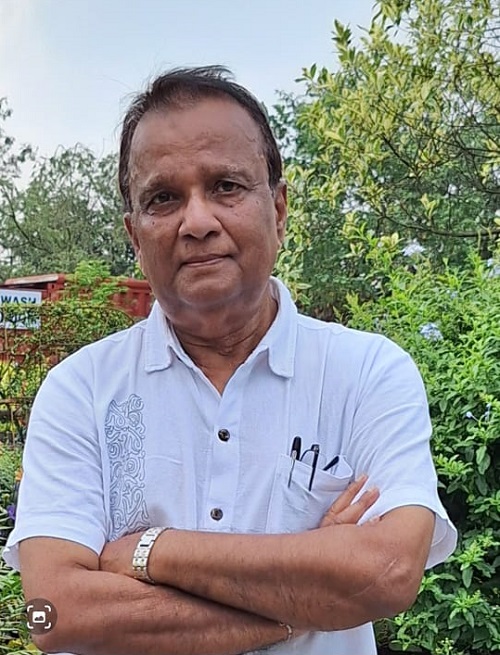
Prabhanjan K. Mishra is an award-winning Indian poet from India, besides being a story writer, translator, editor, and critic; a former president of Poetry Circle, Bombay (Mumbai), an association of Indo-English poets. He edited POIESIS, the literary magazine of this poets’ association for eight years. His poems have been widely published, his own works and translation from the works of other poets. He has published three books of his poems and his poems have appeared in twenty anthologies in India and abroad.
IMMORTAL STARS
Dilip Mohapatra

They seem so feeble and fragile
as they twinkle in the night sky
they hide in daylight
hoarding their fire
as though out-blazed and
cowed beneath the sun
but when that hidden lustre
bursts into flame
in your eyes
a wild incandescence floods the dark
that lights up my heart
and momentarily robs me
of my sight.
They streak across
the celestial canvas
like quick brush strokes
and then dissolve into the cosmos
as fast as they appear
making wishes come true
and sometimes turn the mica
into stardust on the sidewalks
or glitter in the dewdrops
on morning grass
and sometimes bobbing like corks
in sync with the undulating swell—
They live in the sparks
that ignite love
the sparks becoming supernova
in grief and loss
yet they kindle a quiet
stubborn fuse
against the deepest shadow
and within our depths
they blaze as constellations of
blood
bone
and stubborn ambition.
But strip away the bone
scoop out the grease and
unveil the sky
and what remains is the unblinking eye—
quiet sparks that know no dust
know no death
simply outliving time and space—
and Cygnus continues to fly
Cassiopeia still reclining in her chair
Andromeda in company
the Bears and the Canine still
claiming their domains
while the universe
gazes at its own face
in the eternal mirror.
THE ART OF STEALING
Dilip Mohapatra
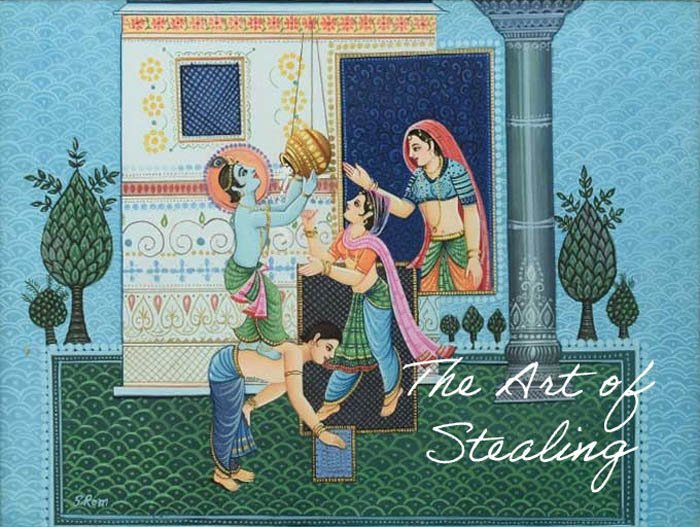
For some it starts rather early
when one clandestinely removes
a few coins from one’s father’s pocket
driven by the pangs of
one’s sweet tooth
and every adventure that
goes undetected makes one
bolder by the day.
Then the sphere of activity
expands to include
pinching of rare stamps from
friends’ albums
few Phantom and DC comics
from others’ collections
even matchboxes and marbles
find their way into
one’s treasure trove.
Sometimes these innocent
beginnings grow into
irresistible urges
and your fingers always itch
to prove their dexterity
and you surreptitiously lift
small objects from here and there
whether they are useful to you or not
and you hide behind
the veil of kleptomania.
Some become professionals
with intent of acquiring
anything they like
through forceful appropriations
heists and robberies—
some decide to channel
their impulses
into higher doings in the digital world
and don the hat of scamsters
and become cyber marauders
stealing data and
passwords to gain access
to your personal territories
and breaking into
your digital lockers.
Some graduate into subtler realms
and lift your words and lines
from your literary creations
and claim them as their own
infringing on copyrights
and some learn early to steal
glances and hearts
wear the mask of the apostle of love
enjoying stolen moments of bliss
and sometimes build expertise
to set honey traps
to tempt their victims—
some even steal the affection
of a friend’s wife.
Stealing perhaps
is an instinct that is
primordial and universal
even from the times
of the mischievous Krishna
who perfected the art
while stealing butter
behind Yashoda’s back
or while making off with the clothes
of the Gopis bathing in Yamuna—
and the act by itself is as good as
all other base ones
coexisting with philanthropy
and giving
perhaps buried deep within
each of us
and maybe
in all of God’s creations
and is a necessary evil
to keep things on an even keel.
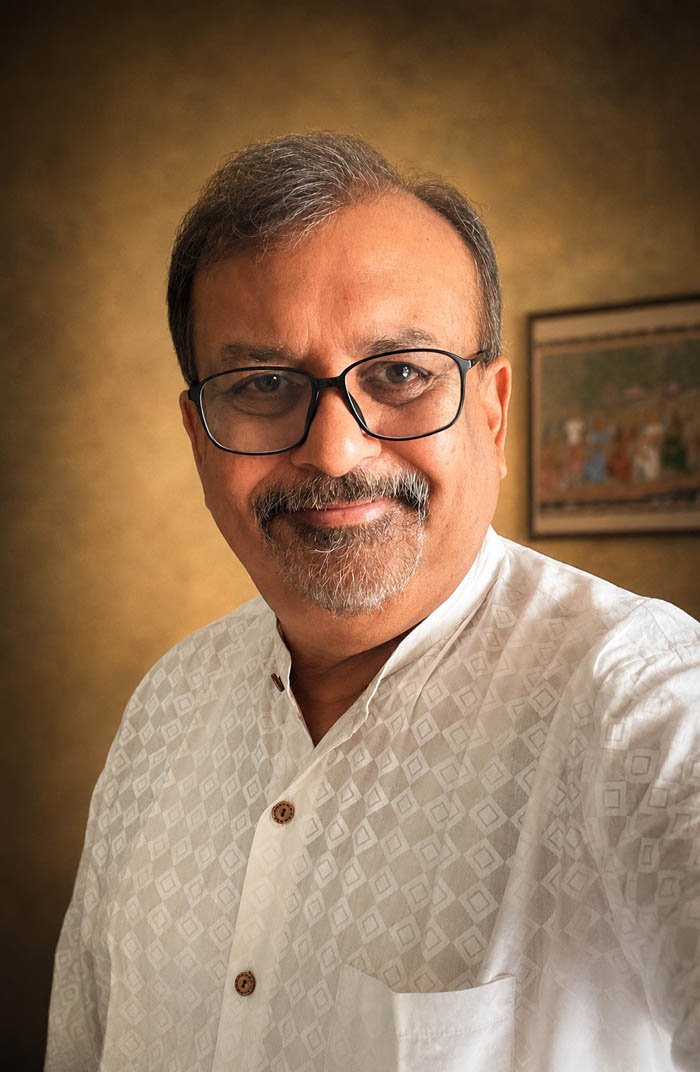
Dilip Mohapatra writes poems that dwell at the threshold where the tangible yields to the ineffable. Rather than describing the world, they uncover the hidden correspondences that bind its disparate realms. Quietly meditative yet intellectually alert, his poetry invites the reader to move beyond appearances into a space where the finite touches the infinite and every ending gestures towards a larger wholeness.
A globally published author, he has to his credit eleven poetry collections, two short story collections and two professional books.Winner of multiple International Awards and recognitions he writes from Pune and is a regular contributor to Literary Vibes. His email id is dilipmohapatra@gmail.com
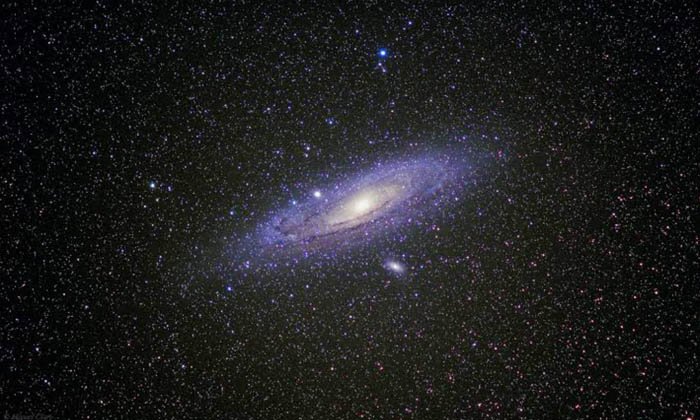
Yes ! “Andromeda”, Yes!
Always fascinated me
Andromeda.. Andromeda.
You roll it on your
Tastebuds and across
The island of your tongue
Flanked by walls of teeth.
Andromeda, what is it?
Where does Andromeda
Begin and goes where?
A billion skies, trillion suns
Andromeda talks in “~ illions”.
A smudge may be now
You flash a smile , the spark
Of the black widow inside
The hooded headgear of
The faceless, dark space-sky.
Andromeda, Andromeda
A few billion summers
Yours and ours stars and
Moons shall merge in
A spark that no one knows
much about.
And thereafter, Andromeda
What will happen to the sky
And the billions of hopes,
And trillions of dreams we spun?
And who will remember yours
And our breaths that travelled
Billion light-years only to explode?
Andromeda, what defines eternity ?
* ( N.B. : Andromeda our nearest super galaxy will collide with the Milky Way in a cosmic event , billions of years from now) *
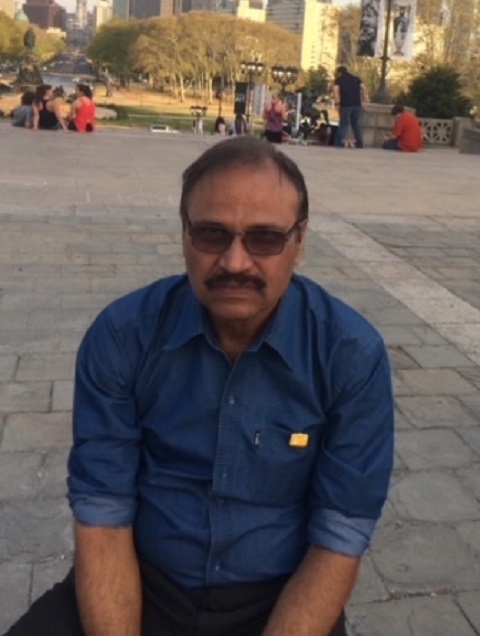
Abani Udgata lives in Bhubaneswar. Writes poems both in English and Odia. Udgata has been awarded in all-India poetry competitions and published in anthologies. He has been a regular contributor to LV. Email: abaniudgata@gmail.com
A CONVERSATION BETWEEN TWO HALF-BURNT MATCHSTICKS
Dr Malabika Mitra
i am burnt out | burnt just a tad bit
why do you seek me out | you tilt your head, turn away from me
what do you want | can you please stop pushing me away
what can i give | don’t be so harsh on yourself
a sad soul like me | you have capacity to give
you think you can love me | will you try, please
protect me | treasure you in rain or shine
why do you tease me | hold you close forever
play with my emotions so | tend your burnt parts
God! I want to trust you | just give me a chance
hold you, love you | how my love for you will always glow…
will she give him a chance,
will he protect her in rain or shine,
will he love, will she glow again
will we ever know?
*The two halves of the poem can be read separately followed by the conclusion, or as one, by just ignoring the dividing line.

Dr. Malabika Mitra, is a former newsreader with Doordarshan and went on to head corporate communications in Chennai. An alumna of National University of Singapore, she pursued a doctoral degree on a very feminist topic. She has co-authored two books on the Bodos of Assam and her other three books are in English literary criticism for graduate level.
Intertwined, an anthology, is her sixth book. Dr. Mitra has been widely anthologized.
Durga, Lakshmi, Saraswati
Graceful with power, beauty, and wisdom.
Epitomes of strength and light,
Perfectly divine,
Perfectly right for their consort.
We dream our daughters to be:
Wise and talented like Saraswati,
Radiant and beautiful like Lakshmi,
Fierce and brave like Durga.
In the West, she's called a Diva
A woman who shines, Commands respect , Inspires everybody around her
In India,
She is
Respectfully
Called
A Devi.
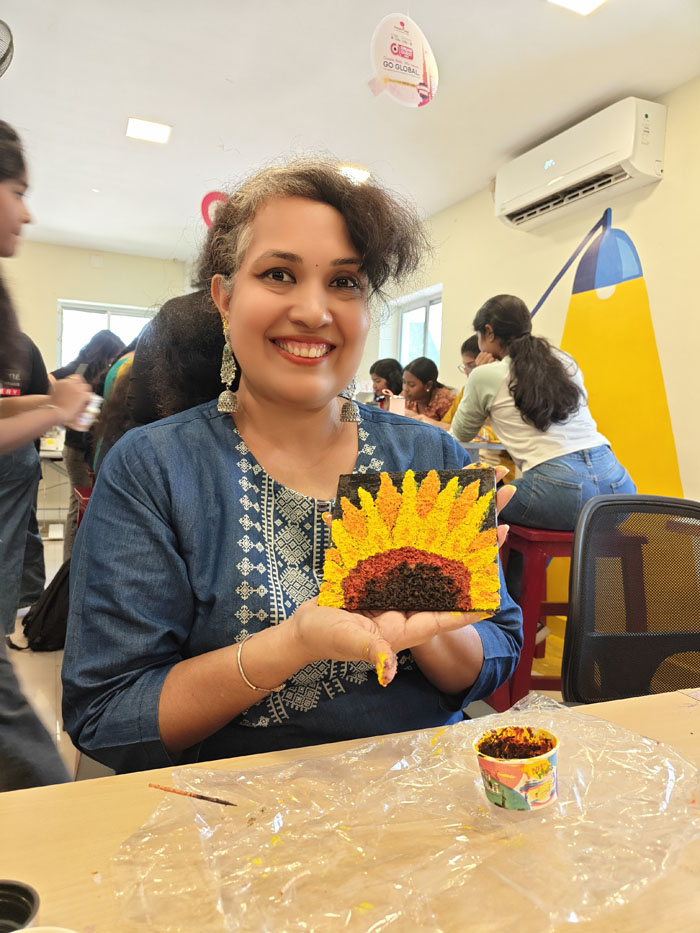
Shreya Suraj is a mathematician, artist, photographer, poet, and environmentalist. She is the founder of the global art group Anybody Can Draw on Facebook, which has grown to a community of over 30,000 members. She has conducted more than 300 art workshops worldwide and has actively participated in over 400 beach clean-up drives in Qatar. In addition, she volunteers in tree-planting initiatives and sustainability campaigns. Deeply passionate about creative expression and nature, she believes that we have one Earth and that it is our collective responsibility to protect it for future generations.
I emptied all my anxieties from the cupboard
smeared in cigarette-ashes
torn pages, from the 'Hundred years of solitude ' and set fire
all the tears exhaled
turned into smoke, decades ago
the feral child in me; ready to scratch the night again, for some metaphors
Picasso . Smiling on my wall .
Again .
I wish my ghost penetrates your sleep roams through your half-lit alcove.
barren and bleak.
trammels you with spears of fright against stonewall. against shadows.
I wish my ghost suffocates you
with sadistic flashes of past .torments you with thorns of heathen scars.
walks by the trail of blood in the snow
and reaches its grave. i wish my ghost wakens you up.

Shubhra Singh has a PGD in mass communication and journalism. ( Born in 1979) Currently a homemaker , she is passionate about reading , writing and painting. A few of her poems/articles have been appeared on local newspapers and little magazines , North east Colors , Dainik Sambad , Antakaran , North East INTERFACE and a poetry collection book ( with their poets ) from Niharika Publishers called Kirat . She writes in four languages and translates her own poems .
The dark sky sprawled farther
As twilight hunched low
The moon slowly rose
Like a princess from slumber
Sparkling dots above
Wowed with their winsome smile
My irate self and tired limbs
Found solace in sky grazing
.
A little later
I consolidated myself further
A corner table and a glass of iced tea
I chose to ease fuming demeanor
The mint leaves in the beverage
Spelt wonder
Prompted me to iron out
Fallouts of yore
It is past midnight
I better rest and ease
Ameliorate sore feelings
Stuff my core with resilience
To deal with tomorrow's grind
For, fretting over gone by
Does not yield result
They haunt like
Old trees and lonely roads
I better seal anguish and hurt
Like the mother earth does
Mend the broken strands of relationship
With subtleties of love.
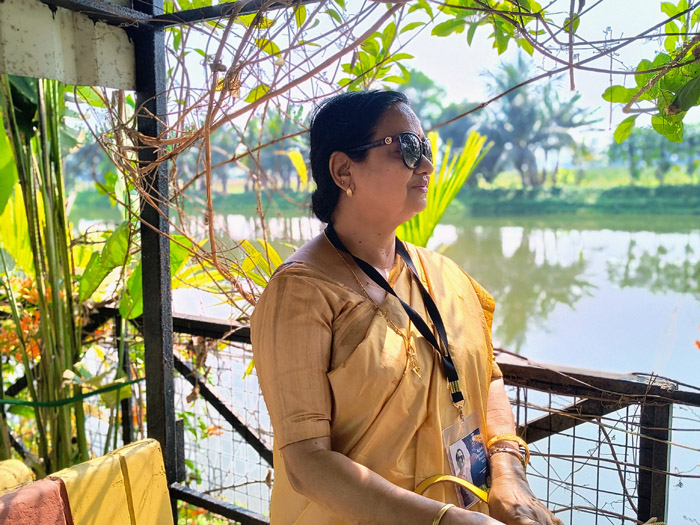
Sujata Dash is a poet from Bhubaneswar, Odisha. She is a retired banker.She has four published poetry anthologies(More than Mere-a bunch of poems, Riot of hues and Eternal Rhythm and Humming Serenades -all by Authorspress, New Delhi) to her credit.She is a singer,avid lover of nature. She regularly contributes to anthologies worldwide.
VIEWS FROM THE VALLEY
Pradeep Kumar Biswal
The ice clad Himalayas
Visible from a distance
The valley surrounded
By hovering clouds
A lovely scenic beauty
Memories of Mussoorie
Still alive in my heart
Years after years !
The sudden drizzle
On the zigzag streets
Drench you on the way
Rains and romance
Go together here
A mug of coffee
Keeps you warm
In the cold winter !
The nostalgia lingers
Like the perennial stream
Of the Kempty waterfalls
On the city’s outskirts !
I love you Mussoorie
Love you forever
Like a lost lover
Of a past love story !

Pradeep Biswal is a distinguished bilingual poet, translator and editor. He has nine poetry collections in Odia and three in English. His poems have been translated into Hindi, Telugu, Punjabi, Assamese and Malay languages and got published in separate volumes. He’s the curator of Toshali Literature Festival and editor of monthly web magazine kabitalive.com. A retired IAS officer, he’s staying with his family in Bhubaneswar.
Rise up from sleep,
play on your music dear birds
in nuances new,
with pauses now and then,
as you add on to your crew,
sing of night’s dreams
and morning’s hue,
now we’re denizens of a forest
away from noise of the world,
on a journey into a lush sanctum
veiled by misty rain
hanging over the boughs
soaked in dewy pain;
let my morning walk
not be distracted by mechanical music
or podcasts from earphone
as I enter familiar terrains of silence
in the thick of nature,
all by self
enjoying the drizzle, wind,
squirrels’ hectic run and fun
and an unseen balm from the sky
calming the neuron
fetching unlimited delight from the high
opening closed ears and eye;
let not the noise from phones
fog the mind with thoughts bizzaire
and the heart be racked by common desire
as I enjoy my forest bath
with tech fast in the wood path
in the company of light and air.
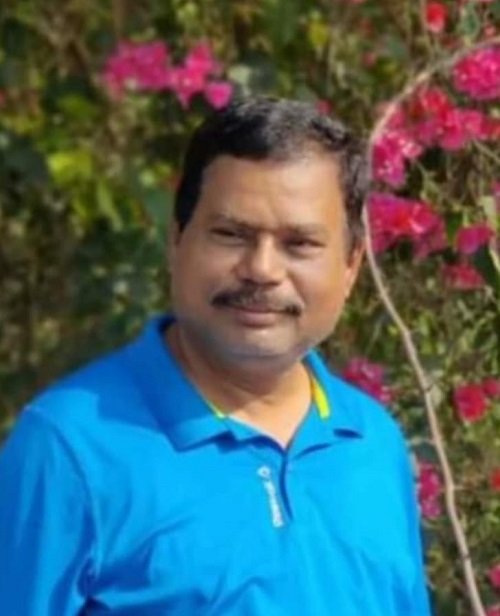
Dr. Saroj K. Padhi, an Associate Professor of English in the Govt. of Odisha is at present working at J K B K Govt. College, Cuttack . Born in 1962, he has been writing poems in English and Odia since his school days. He has published several reseach papers, two books of criticism: 1. JAYANTA MAHAPATRA’S RELATIONSHIP : A CRITICAL STUDY 2. ENGLISH ESSAYISTS : A CRITICAL STUDY and got 14 anthologies of poetry in English namely PEARLS OF DEW, SHATTERED I SING , RHYMING RIPPLES, PETALS IN PRAYER, SILENT SIGHT, MOON MOMENTS , A SLICE OF SILENCE , ELUSIVE SPRING, MONSOON MEMORIES and WHERE BUDS REFUSE TO BLOOM, THE ENDLESS FLUTTER ,STARS IN THE COVID SKY, IMPULSE FROM WOODS AND SELECTERD POEMS
He has received several awards including the national ROCK PEBBLES AWARD, 2017.
TREE: THE SILENT CHILD
Dr Nanda Kishore Biswal
Through silent roots,
the tree drinks mother earth’s milk,
contented as a babe
at the breast.
Tethered for life to the soil,
it remains a child—
whether a tender sapling,
or old, bald, and leafless.
The world cannot see beyond isolation.
But underneath,
roots tangle deep;
the sacred bond holds fast.
Earth will not let go,
even when life shrinks.
They mistake it for dead matter—
mere branches, no heartbeat.
They miss the quiet grace
it bears for humanity.
It stands through thick and thin,
unpitiable, untracked.
They call it deaf and dumb.
Yet it sways to the tune of rain,
and when the wind whistles
through leafy corridors,
the quiet leaves are stirred,
kissing indulgently,
speaking without words—
sharing stories
we will never know.
In the stillness,
small joys return.
As humans begin to recede
to their nests,
the tree watches
the day end warm.
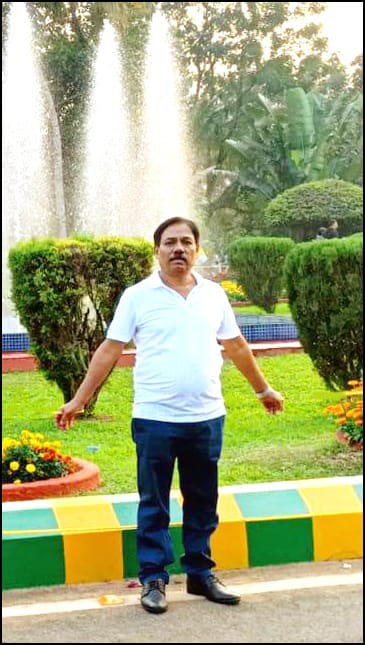
Dr Nanda Kishore Biswal, after teaching English language and literature for more than thirty five years in different colleges of Odisha, retired as an Associate professor. Passionate in reading poetry, intermittently, he has been writing poetry since his college days.1996 to1999 was his most fertile period when his Odia poems were published in almost all Odia dailies as well as in most of the Odia magazines. Also he writes English poems. He has authored The Fictional Transfiguration of History in the Novels of Salman Rushdie, Amitav Ghosh and Rohinton Mistry. Besides, he has edited Prananath Patnaik:A purveyor of Egalitarianism Currently, he is engaged in writing reviews of the poetry collections of the new poets who write in English.
SEASONS INTERRUPTED
Baldev Samantaray
There is beat in the cymbals
There is motif in the murals
That resounds
Through the leaves
Unto the wrinkles on the sand
A déjà vu
Of primordial scream
You see in the
Swings of the possessed
The witch
There is a story
Is it mine
Or my father’s.
The whiff of thin air
moves out of the frame
of the composition
the outstretched fingers of the
dancing murals
look at void behind them.
I fear the interstellar spaces
the fall
that will
bring an end
to the journey
the resounding echo of the cymbals
The sense of eternal
The longing to interrupt the season
The restless urge to be God
Flies on the wings of wax.
Baldev Samantaray is a retired banker who lives in Bhubaneswar. He did his post graduation in English literature from Ravenshaw College (76-78).He started writing from his Ravenshaw days. Many of his poems appear in various journals and anthologies.
THOSE WERE THE BEST DAYS...
Hema Ravi
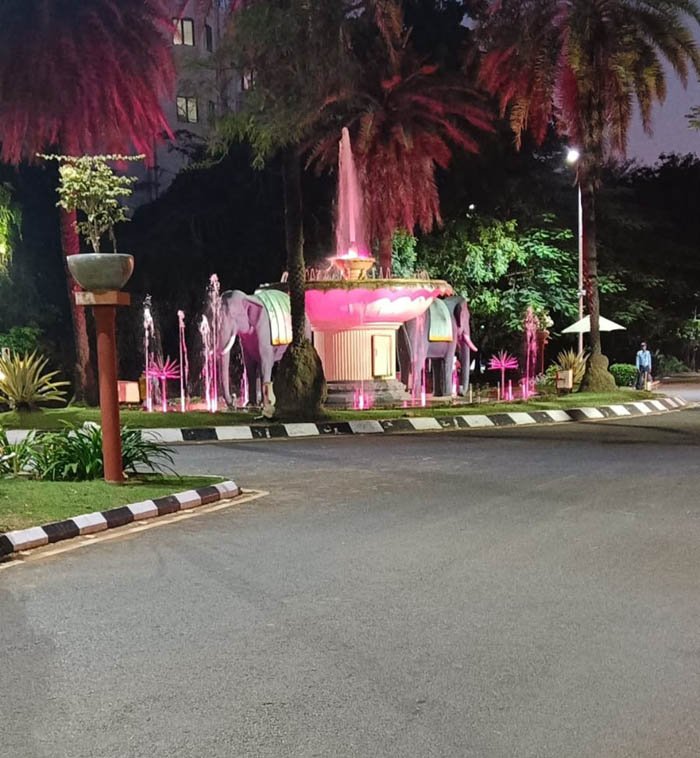
The iconic roundabout –
Gajendra Circle, aka GC, stands still.
The steadfast witness from the past, to the present, and the future.
The sepia-coloured frames: reminder of the good ol’ days.
School, black and white shoes, pinafores, strict rules –
‘dunce cap’ for indiscipline amongst the constant fears.
The campus has changed; buses named after mountains
are no longer around. In their place, bright blue and yellow
battery-operated buses – a gift from the Alumni.
Some hostels remain, others have been rebuilt,
the palmyra in front of Mandakini has stood for decades,
as the banyans, Gulmohars, and several evergreens...
Four women’s hostels adjoin Sarayu – empowering more women
Makeovers include high-rise buildings, automated vehicles,
and food joints… yet, IIT M will remain heaven on earth.
The formative years, the learnings, the joys can never be erased.
As our car exits the campus gate, I hum–
“Those were the best days of my life…”
Hema Ravi is a poet, author, reviewer, editor (Efflorescence), independent researcher and resource person for language development courses... Her writings have been featured in several online and international print journals, notable among them being Metverse Muse, Amaravati Poetic Prism, International Writers Journal (USA), Culture and Quest (ISISAR), Setu Bilingual, INNSAEI journal and Science Shore Magazine. Her write ups and poems have won prizes in competitions.
She is the recipient of the Distinguished Writer International Award for excellence in Literature for securing the ninth place in the 7th Bharat Award, conducted by www.poesisonline.com. In addition, she has been awarded a ‘Certificate of Appreciation’ for her literary contributions by the Gujarat Sahitya Academy and Motivational Strips on the occasion of the 74th Independence Day (2020) and again. conferred with the ‘Order of Shakespeare Medal’ for her writing merit conforming to global standards.(2021). She is the recipient of cash prizes from the Pratilipi group, having secured the fourth place in the Radio Romeo Contest (2021), the sixth place in the Retelling of Fairy Tales (2021), the first prize in the Word Cloud competition (2020) and in the Children’s Day Special Contest (2020). She scripted, edited, and presented radio lessons on the Kalpakkam Community Radio titled 'Everyday English with Hema,' (2020) a series of lessons for learners to hone their language skills. Science Shore Magazine has been featuring her visual audios titled ‘English Errors of Indian Students.’
A brief stint in the Central Government, then as a teacher of English and Hindi for over two decades, Hema Ravi is currently freelancer for IELTS and Communicative English. With students ranging from 4 to 70, Hema is at ease with any age group, pursues her career and passion with great ease and comfort. As the Secretary of the Chennai Poets’ Circle, Chennai, she empowers the young and the not so young to unleash their creative potential efficiently
Me and my wish in this city life
Somewhere is in the search of an objective
An aim to niche a special identity, I crave to build a castle of my entity
Keeps me going
Every morning , in the local train to my office
The hustle bustle inside the station yard
The stir inside the compartment and I
Carrying a heavy bag on my back
Move with the crowd, pushing and running to pick the train
Sometime I get a place to sit, at times I stand in one foot
Because of the rushed mass and the engine’s whistle blowing loud
I balance myself to keep safe
Cheerful and energetic to give my best at the office desk
After the office with a faint energy, I return back to
Same station to catch another local train with a different train number
The evening tussle outnumber the morning struggle
Tired passengers and their sunken faces
With hopes and wishes in their chest just as me
Flicker during the evening hours
Sets a reminder that day has passed, only a few hours left for the day to departure.
THE SECRET OF MUMMY’S SMILE
Lopamudra Mishra
I often ask myself—
Why can’t I let the old clothes go?
Why do my hands tremble
when I try to give them away,
while my heart quietly whispers,
“No… keep them.”
I open the old storage,
and there they lie—
neatly folded, carefully preserved,
the tiny dresses and little clothes
my daughters once wore.
I hold them close to my heart,
press them against my face,
and breathe in
the fragrance of their childhood.
For a fleeting moment,
I can see their tiny hands again—
wrapping themselves around me,
pulling at my sari,
calling for my attention,
their innocent voices
filling every corner of my world.
Oh, those little clothes—
they are no longer just clothes.
They are pieces of time
that refused to grow old.
And suddenly,
I travel backwards…
To my own childhood,
to my mother’s treasured trunk,
where she too had preserved
our little clothes
with such tender care.
I remember asking her,
almost impatiently,
“Mummy, why do you keep these?
They are so old now.”
She never explained.
She would simply smile—
a quiet, mysterious smile,
soft as a lullaby,
deep as an old memory.
I never understood that smile then.
But today,
standing at the very threshold
where she once stood,
I finally understand.
Her trunk was not filled
with old clothes.
It was filled with us.
With our laughter,
our mischief,
our tiny footsteps,
our innocent demands,
the warmth of little hands
that once held hers.
She had preserved
not the fabric,
but the moments woven into it.
And now I do the same.
I keep my daughters’ childhood
folded inside an old cupboard,
because sometimes
the heart needs a doorway
to walk back into yesterday.
I touch those little clothes
and time opens its arms.
I see their faces.
I hear their voices.
I feel their small fingers in mine.
And for a few precious moments,
I become young again—
a mother of little girls,
living inside a world
where every tomorrow
was still waiting to arrive.
These memories keep me alive.
These emotions give me strength.
They remind me that love
does not disappear with time—
it simply learns
how to live inside memories.
Now I know
what my mother’s smile meant.
It was not an answer to my question.
It was a secret
only motherhood could reveal.
She was smiling at yesterday.
And today, I am smiling at mine.
That is the secret
of Mummy’s smile.
Lopamudra Mishra, a contemporary poet, author, translator, editor, social activist, motivational speaker, orator and personality development coach, hails from Bhubaneswar, Odisha.
Her writings are intended to touch the inner chord softly by emphasizing on "Sense and
Sensibility" of attachment and bonding. She has six books till date on her name- “Rhyme of Rain”,
“First Rain”,” Tingling Parables”, “Rivulet of Emotions”, “Red Tulips” and “Hurricane Heart under the Honeyed Sky”. Her poems have been published in various magazines and anthologies. She has been Editor of Radical Rhythm-4 & Co-editor of Radical Rhythm Series and Durga.
She is a proud alumnus of Sailabala Women’s college and Ravenshaw University.
Acknowledging our ignorance
Let’s be humble
Opening ourselves to learning
Let’s not stumble
There’s so much to take in
From this vast, wide world
Let’s not brim with arrogance
And be proud of our words
Let’s broaden our minds
Accepting diverse perspectives
Like the sages and saints of yore
The truly realised souls
Walking gently, with eyes broad and clear,
They embraced the mystery, casting off fear
Half knowledge is indeed a dangerous thing
True wisdom lies in accepting that we really know nothing.
Hailing from Coimbatore and with a background in Economics, Sathya Venkatesh has always been passionate about English literature and poetry. After fifteen years as a freelance content writer, she transitioned to teaching English to government school students. She finds joy in poetry, travel, painting and Indian Philosophy which she feels deepens an understanding of self and fuels her creativity. She has published haiku poems on reputed journals such as haikuKatha, Haikuniverse and Autumn Moon Journal. She firmly believes in a higher purpose guiding her path.
THE BRAHMAPUTRA*- A MINOR EPIC POEM
Dr. S. Padmapriya
Life is Brahmaputra!
Wide, large, infinite;
Perilous beauty!
The Brahmaputra is YOU!
The Brahmaputra is an emporium,
Of the trials and triumphs of humanity,
Encased in timelessness,
Giving its gifts for free!
The Brahmaputra is the vivid imagination,
Of childhood years,
Its fructification,
In the maturing years!
Magnificent like persons of great eminence,
The Brahmaputra is a revelation.
The Brahmaputra - a permanent image,
In the annals of enamelled time,
A light,
A song.
The Brahmaputra is a million-limbed vision,
Of multitudinous magnificence,
Like the million-petalled Sun-God
A guidance to tranquillity!
The Brahmaputra is the penetrating heavens,
Moving in and out of the human experience,
The proof of the living conscience.
The Brahmaputra is beauty,
Dipped deep in divinity,
The Mother of emotions,
The Father of thought.
The Brahmaputra is the Frail Human-being,
With all her shortcomings,
Dance of fantasy and reality,
Drowned in the dainty dance of eternity.
The Brahmaputra is birth and death,
It is the beginning and the end,
The end of the beginning and
The beginning of the end.
The Brahmaputra is Lord Ganesha,
The highest wisdom of humanity.
The Brahmaputra is a waterfall of beauty,
The grand heights of human sublimity.
The Brahmaputra is the ocean of infinite joy,
Immeasurable, full of lasting love.
The Brahmaputra is Truth,
The highest Truth conceivable in human vision.
The Brahmaputra is the Light from the Heavens,
Descended on the earth,
To free the ailing and the suffering,
From their wretchedness.
The Brahmaputra is the distilled wisdom of the sages,
From the ages.
The Brahmaputra is the shadows shattered,
Brought into reality.
The Brahmaputra is the unfailing lamp,
Guiding us to our destinations,
Through the path of tribulations,
Leading to Final and Total Triumph.
The Brahmaputra is the creator of all human experiences,
The Brahmaputra is Brahman, Himself.
The Brahmaputra is the story of India,
The epic story of Ramayana,
It is the blend of antiquity,
And modernity.
The Brahmaputra is an aspiration,
A Bodhisattva,
The dance of Lord Shiva,
Dissolving dark dimensions.
The Brahmaputra is a happy child,
Playing in the lap of Mother Nature,
The Brahmaputra is our Mother,
Who gives us warmth, food and shelter.
The Brahmaputra is the song divine,
Dissolving space and time.
The Brahmaputra is the culmination of all human aspirations,
With power to grant us final deliverance after deliberations,
It is the Living Conscience
In the canvas of the mind.
The Brahmaputra is an epic story,
The atoms of our body,
It is creation itself,
Highest light.
The Brahmaputra is thought and emotion,
Word and deed,
Expression and gesture,
In divine mighty collaboration.
The Brahmaputra is Goodness,
The crown of every success,
The most blissful, blessed and beautiful.
The Brahmaputra is the shining armoured God,
In Rainbow colours,
Bathed in the essence,
Of the fragrance of myriad flowers.
The Brahmaputra is Highest Truth,
Highest Love,
Highest Beauty,
Highest bliss.
*The Brahmaputra is a trans –boundary big river, which flows through China, India and Bangladesh.
Dr.S.Padmapriya is a well-known poet and author from India. She began writing poems in English at the tender age of seven. Her poems, short stories, essays, book reviews, forewords, articles( general, critical, and research), and other literary works have been published far and wide.
She is the author of four poetry collections – ‘Great Heights’, ‘The Glittering Galaxy’, ‘Galaxy’ and ‘New Poems’, one novel, ‘The Fiery Women’ and two collections of short stories – ‘Fragments’ and ‘Surreal Stories’.
In addition, multiple non-fiction articles on diverse topics have also been published on various platforms, including in 'New18.com' and 'Organiser'.
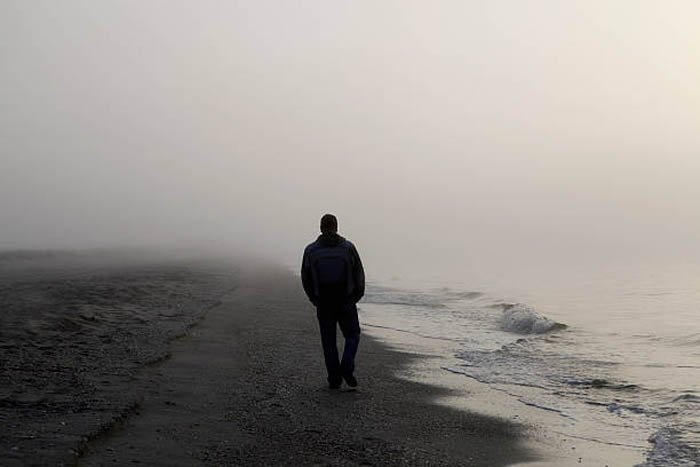
When I am alone,
The bird leaves the turret,
Flutters its wings ,
Disappears in the darkness!
When I am alone,
The candle burns silently,
The wax gathers at the base,
The flame flickers,
As the wind knocks at the door!
When I am alone,
The crickets buzz in the bushes,
The halogens dim on the street,
The dogs bark at the shadow,
The foot steps heard in silence and -
the dessicated boreen!
When I am alone,
Parents hover a smile,
Fuse an aura in me-
A silent gesture:
We are with you !
When I am alone,
The conch is blown,
The divinity awakens,
The incense burns
The fumes pervade
Before mingling with the air !
When I am alone,
I think of you,
The broken bench,
The hot cups,
The light rains,
And -
The shiver fetching the coziness!
When I am alone,
Tears well up,
Solitude chuckles,
Fall and dry at the mid!
When I am alone,
The whispers die,
The fan whistles,
The bulb blinks,
Stand still!
When I am alone,
Laziness creeps in,
Slumber touches the lids,
Breathe takes a pause
Only to begin again,
To see another day,
The lonely sun at the distance,
And the lonely soul caged in me!!
Kunal Roy has always been an ardent lover of literature. He has received various awards for his literary contributions. He is a poet and a critic of poetry. His works have been published both here and abroad. Currently working as an Assistant Professor of English Language and Communication in George Group of Colleges, Kolkata.
WHERE THE RIVER FORGETS ITS NAME
Satish Pashine
The river never
makes a speech
about where it is going.
It simply goes—
around stones,
under suspension bridges,
past terraced fields
clinging to the hillsides.
Then the monsoon comes.
Rain beats down
on the mountain roads.
The river turns brown,
swollen with mud and stones,
and carries pieces
of the mountain with it.
A bridge that held
for fifty years
can be gone by morning.
A road disappears
around the next bend.
A field becomes water.
For a while,
the river seems to remember
how little we own.
Then it falls back
into its channel,
and life begins again.
We are not so different.
We spend years
putting our names
on things—
a house,
a job,
a family,
an opinion
we refuse to surrender.
Then age begins
to erase the labels.
The hands are slower.
The mornings longer.
Some chairs at the table
are empty now.
And strangely,
the world does not stop.
The young keep arguing
about things
we once argued about.
They fall in love.
They make mistakes.
They believe
they have invented tomorrow.
Perhaps that is
what growing older means—
not becoming wiser,
but becoming less certain
that everything
needs to belong to us.
You begin to leave
some doors open.
You stop keeping score.
You let the next generation
take the road
you once thought was yours.
It is not surrender.
It is simply
making room.
The river reaches
the sea.
There is no announcement.
No one says,
“Here ends the river.”
Its name is gone.
The water spreads
until you can no longer tell
where the river ends
and the sea begins.
Perhaps that is
what happens to us.
Or perhaps
there is no “us”
left to happen to.
The river does not answer.
It keeps moving.
And somewhere
beyond the mountains,
the rain is already falling.
LIFE-MY STRANGE BELOVED
Satish Pashine
Life,
my strange beloved.
Sometimes you come close.
Sometimes you drift away.
Sometimes you hold me.
Sometimes you let me cry.
Sometimes you are morning,
giving me a reason
to open my eyes.
Sometimes you are evening,
quietly closing
another day.
Sometimes sunlight.
Sometimes shade.
Sometimes a clear road.
Sometimes a maze.
You make no promises.
Yet I trust you.
Who knows
what tomorrow brings?
Still, every morning,
I rise
and walk with you.
You taught me
to laugh.
You taught me
to cry.
You taught me
to hold on.
And to let go.
You gave me people.
Some stayed.
Some left.
Some became memories.
Some became lessons.
You placed dreams
in my empty hands.
Then watched
some of them break.
You lifted me.
You let me fall.
And after every fall,
you taught me
to rise again.
Your blows
were sometimes bitter.
But never meaningless.
Every pain
left something behind.
Every defeat
opened another road.
Sometimes
I called you cruel.
Sometimes
I called you beautiful.
Often,
you were both.
Then I understood—
you were never
good or bad.
You were simply
Life.
Moving forward.
Always.
It was I
who wanted answers.
I wanted certainty.
I wanted tomorrow
to look like today.
But you never promised that.
You simply
kept moving.
Seasons came.
Seasons went.
Mornings arrived.
Evenings followed.
Faces came
into my life.
Faces disappeared.
Some names
stayed in my heart.
Others faded
with time.
But you remained.
Sometimes beside me.
Sometimes
just ahead of me.
Sometimes unseen.
Now,
in this evening
of my life,
the days feel tired.
The future
looks smaller.
The room
grows quieter.
And I ask—
how much longer?
You say nothing.
You never answer
such questions.
You simply
keep moving.
Perhaps
that is your answer.
As long as there is breath,
there is a road.
As long as there is a heartbeat,
there is a story.
So I have
no more complaints.
Thank you
for what you gave me.
Thank you
for what you took away.
What left
taught me something.
What remains—
is my today.
And perhaps
today is enough.
Life,
my strange beloved,
I ask for little now.
When the final evening
comes,
stay beside me.
Say nothing.
Just stay.
And when my eyes
finally close,
let there be
no regret.
No explanations.
No grand ending.
Only the quiet truth—
I was here.
I walked with you.
I lost some things.
I loved some people.
I kept going.
And if one season
remains,
let it be
the one I lived with you—
quietly,
imperfectly,
beautifully,
until the end.
One day I was watching YouTube—
a few young men,
a few young women—
talking about being twenty
with the confidence
of people who had never yet
been properly disappointed.
“At twenty,” they said,
“you think you can do anything.
You think all your dreams
are going to come true.”
They had cars.
Expensive clothes.
Louis Vuitton bags.
They sang.
Made music.
Went to school.
They looked like life
had already agreed
to be kind to them.
I watched them
for a while.
When I was twenty,
I was in the final year
of engineering.
My twentieth year
was not like that.
There were people everywhere—
classrooms,
hostels,
mess halls,
streets full of noise—
and still
I was alone.
Not the romantic kind of alone.
The real kind.
The kind that sits beside you
even when someone is talking.
I was unhappy.
Confused.
There was a room inside me
and I had lost the key.
And I had no money.
My friends had no money either.
We were all broke,
which is another way of saying
we were all young
and pretending it was temporary.
None of us had enough
to save anybody else.
On Sunday evenings
I often went hungry.
Not for God.
The mess was closed.
And my pocket
had no interest
in feeding me outside.
Breakfast was
one samosa,
one jalebi,
and one cutting chai.
That was it.
Still,
it felt like a good morning.
That is the strange thing
about being poor—
a little food
can become an event.
At the end of the year
Maharaj showed me the bill.
I had no money.
I had a Raleigh bicycle.
That was all.
My transport.
My freedom.
The one thing
that carried me
to college
while I imagined
a future larger
than my life.
I gave it to him.
The bicycle went.
The bill disappeared.
That was how things were.
And whatever little money
I had managed to keep,
I gave to the Poor Boys Fund.
Maybe because poverty
was not an idea to me.
It was breakfast.
It was Sunday.
It was the sound
of a bicycle leaving
without me.
Those people on YouTube
were twenty too.
They had cars.
I had a bicycle.
They had expensive bags.
I had books.
They made music.
I carried a noise inside me
that nobody could hear.
They were talking
about the future.
I was trying
to get through the day
without falling apart
in public.
But their lives
did not make mine smaller.
I had a dream,
though I could not name it.
I had stubbornness,
though I mistook it
for exhaustion.
And I had a mind
that broke every few days
and still got up
the next morning.
Back then,
I thought life
was moving past me.
Everybody was going somewhere.
I was standing still,
watching them disappear.
Later I understood—
some people are given roads.
Some people are given
a bicycle,
an unpaid bill,
and enough hunger
to keep moving.
When I remember those days now,
I do not feel only sadness.
I remember
the samosa,
the jalebi,
the cutting chai,
the closed mess,
the empty pocket,
the Raleigh bicycle
that stopped being mine.
At the time,
these were not memories.
They were problems.
That is how life works.
It gives you the material
for your best stories
while you are busy
trying to survive them.
There was another education
besides engineering—
poverty,
loneliness,
waiting,
the quiet art
of growing older
without anybody noticing.
Sometimes I still wonder—
if I had been less alone,
less unhappy,
would my life
have turned out differently?
Maybe.
Maybe not.
There are questions
that do not want answers.
They only want
to sit with you
in the dark.
Twenty will not return.
Not the boy.
Not the room.
Not the Sunday hunger.
Not the cutting chai.
Not the bicycle.
That age left me
one lesson—
life does not give you
what you want.
It gives you
what it gives you.
Then it expects you
to keep going.
So if I could speak
to that twenty-year-old boy,
I would not give him advice.
I would sit beside him.
Maybe buy him
a samosa.
Maybe say—
You are not finished.
You are only broke,
lonely,
and too young
to know that these things
can become a life.
You will lose more.
You will gain some.
You will break
and call it the end.
Then you will wake up
and continue.
Being twenty
was not the age of dreams.
It was the age
of rain,
sunlight,
empty pockets,
and a lonely boy
walking roads
he believed were taking him nowhere.
Years later,
those roads became
the only ones
he wanted to remember.
Now twenty
is just a memory.
I can touch it
in the dark.
I can smell
the tea,
the dust,
the old bicycle seat.
But I cannot go back.
I cannot be that boy again.
And maybe that is mercy.
Because some lives
are meant to be remembered—
not repeated.
Shri Satish Pashine is a Metallurgical Engineer. Founder and Principal Consultant, Q-Tech Consultancy, he lives in Bhubaneswar and loves to dabble in literature.

A
Deceased volcano
And
His sarcophagal name
Still
All day
Ashes linger
In her lane.

Matralina Pati, is a PhD research scholar working on marginal Indian bhasha literature (UGC Junior Research Fellow), a bilingual poet and a translator from Bankura, West Bengal. Her critical and creative writings have been published on national and international platforms. She has authored a book of translations titled Monsoon Seems Promising This Year (selected poems of postmodern poet Rudra Pati translated from Bengali into English).
MY POETIC LIGHTNINGS
Dr. Rajamouly Katta
Wonderful are my musings
They rise in my mental domain
In a second, the minutest time
They appear and disappear
Like sparkling lightnings
Glittering in my inquisitive eyes.
They are like rare treasures,
Spectacular splendours
Kaleidoscopic to be majestic
To shine amid the dark blue clouds,
Creating an amazing scene
I love to snapshot it all the time
With the camera of my mind
But it is never possible.
They are my dear musings
Risen like lightnings
I call them in love
My poetic lightnings
I ever feel I must rise
To arrest them in my mind,
Very soon I think it is not worthwhile,
As I enjoy glimpsing them,
Vanishing in the minutest second
I have all most possible hopes,
They will rise in mental horizon,
Like bubbles in a stream
They start gushing
Into my poem of magnitude.
I thank them in profusion
As they offer me the vision.
POETIC STREAM
Dr. Rajamouly Katta
Rises poetry for its eternal flow,
To spread its radiance
Surely for its perennial glow
In the stream for its communion
To be treasures like pearls
At the bottom of the ocean.
Poetry is virtues and values
Ever in shine, ever in reign
Like the rays of the sun,
Like the beams of the moon,
Like the twinkles of stars,
Like the showers of clouds.
Poetry is spontaneous spurt
From poets’ Imagination
Like coos of throats,
Like blooms of flowers,
Like ripples and bubbles,
To echo in words of exhilaration.
Poetry knows no frontiers
No barriers on false grounds
Humanity is its religion
Human welfare is its vision
It is the Truth, all to echo,
Beauty for gaiety in glow.
Like a river to flow unstoppable
Like time to flow inexorable,
Poetry flows in brink, glows in ink
Ever in values and virtues,
For it is creation not fabrication
From the fountain of imagination.
THE RAINBOW
Dr. Rajamouly Katta
Rays in dazzles are in love
With drizzles and hug a little while
Their love results in refraction.
Between them, there is a bond,
All celestial for nuptial moments
For a wonder of wonders.
We witness its glorious treasure
In the west in the morning
In the east in the evening.
That’s the rainbow, their love-born
Lovely VIBGYOR, the hues seven,
For the dear green earth, as heaven.
Who deserves this creation
Dazzles or drizzles, or both in union
For a rendezvous communion.
I feel I ascend it to its heights
And revel its beauties in the welkin
For my gaieties sans bounds
It seems the most beautiful bridge
The sculptor builds its sculpture
To be divine in its stature.
The semi-circular spectacle
Pretty colours in choice and order
The painter to join the sculptor.
I go nearer but glimpse it farther
It’s beyond my reach and ascent,
Glittering in seven splendours.
The rainbow, seen high in the sky,
Offers all viewers seven-hued bliss
As the most supernal service.
Dr. Rajamouly Katta, M.A., M. Phil., Ph. D., Professor of English by profession and poet, short story writer, novelist, writer, critic and translator by predilection, has to his credit 64 books of all genres and 344 poems, short stories, articles and translations published in journals and anthologies of high repute. He has so far written 3456 poems collected in 18 anthologies, 200 short stories in 9 anthologies, nine novels 18 skits. Creative Craft of Dr. Rajamouly Katta: Sensibilities and Realities is a collection of articles on his works. As a poet, he has won THIRD Place FIVE times in Poetry Contest in India conducted by Metverse Muse rajamoulykatta@gmail.com
Slowly comes the fear with no words,
as the night covers the whole world.
Some creepy thoughts invade my peace.
With no way to move,
I go on crawling around the abyss.
In a half-dazed state, with dreams broken,
I never know the path to move on.
It seems the ringing of the last bell
reaches my ears
from a faraway land of unknown origin.
Whispers of nocturnal creatures from distant places
play all around.
Howling screeches of hyenas heighten
the sound.
Like a loop, the recurring voices return again.
I pass the entire night
amid the nightmares of a hunting lane.
I know not the fact:
from where does
the beetle cry come?
Why, from the womb
of the earth,
do such voices return,
where the cricket hides?
I only hear
the tapping on the door
by someone
whom I have never met.
In the silence
of the dreadening nights,
I wait, wondering
at the screams
that reach me, tearing
the veil of shadows
to awaken me.
All the eerie tales
of Grandma
keep coming
before my eyes,
for I know
my longing eyes
starve for a sleep
that belongs
to another life.
Sudipta Mishra is a multi-faceted artist and dancer excelling in various fields of art and culture. She has co-authored more than a hundred books. Her book, 'The Essence of Life', is credited with Amazon's bestseller. Her next creation, 'The Songs of My Heart' is scaling newer heights of glory. Her poems are a beautiful amalgamation of imagery and metaphors. She has garnered numerous accolades from international organizations like the famous Rabindranath Tagore Memorial, Mahadevi Verma Sahitya Siromani Award, an Honorary Doctorate, and so on. She regularly pens articles in newspapers as a strong female voice against gender discrimination, global warming, domestic violence against women, pandemics, and the ongoing war. She is pursuing a Ph.D. degree in English. Her fourth book, Everything I Never Told You is a collection of a hundred soulful poems. Currently, she is residing in Puri.
Patriotism these days
Has been reduced to bigotry.
Crime and communalism
With intellectual acceptance
And explanation are fighting now
For a new form and to get legal sanction
In the brand name of nationalism.
What stuns us is the immensity
Of contamination, the deadly virus
Of fanatic flu spreading everywhere,
Consuming the priceless trait
Of tolerance and cordial co-existence.
One unfortunate dark night
This Fanatic Flu came to commit
Its nocturnal mischief
Affecting the mindless
In an innocent neighbourhood
And caused the brutal burning
Of a compassionate missionary
Graham Staines and his two lovely sons,
All asleep in their station-wagon
At Manoharpur in Odisha, where
Graham had been nursing faceless lepers
To help them live like human beings
With dignity and labour.
Truth and honesty, embodied
In the most compassionate form
Of non-violence and presented
In simplicity, became Gandhi
To bring down the Bhagirathi of freedom.
No, it was not so simple as that.
When English grew in the Indian soil
And the revolutionary elite, divided,
Looked confused in their concern,
Gandhi was back-home, global;
Yet, more Indian than all others,
And people accepted him at the core
To be wonderfully one of them,
Half clad, half naked
And talking to them of the essence
Of living a life of honour with humility,
While fighting peacefully for the basic needs
One inherits from nature and nativity.
And this, the people swallowed
Like holy water from the bowl,
And as in the Pied-Piper’s spell,
They stepped on to the streets
Responding to the conch-nad of his call,
This time to drive away
The suppressive Sahib Raj from the soil.
Like Buddha he behaved.
He bled like Christ,
Forgiving still the unfeeling bullet
That struck his chest.
The August Sun that had dawned at midnight
Mourned the total eclipse that January end,
And the broken banshi, hung heavy in the air,
Whispered to the empty morning,
“Iswar, Allah tero naam,
Subko sanmati de Bhagaban.”
Bipin Patsani (b. 1951) has published poems in many prestigious journals and poetry anthologies including Indian Literature, Chandrabhaga, Journal of Indian Writing in English, Indian Scholar, Kavya Bharati, Poetcrit, International Poetry and Prophetic Voices etc. He has been translated to Spanish and Portuguese. He has three poetry collections to his credit (VOICE OF THE VALLEY, ANOTHER VOYAGE and HOMECOMING). He is a recipient of Michael Madhusudan Academy Award/ 1996 and Rock Pebbles National Award in 2018. He did his Post Graduation in English at Ravenshaw College, Cuttack in 1975 and served as a teacher in Arunachal Pradesh for 34 years till his superannuation in 2012. He also received Arunachal Pradesh State Government’s Award in 2002 for his dedicated service as a teacher. He lives with his family at Barunei Colony, Badatota in Khordha District of Odisha, India.
It's only the crimson eternity
Did not get the continents yet
Time bound curse is carried within
The disastrous river bed
Holding out the begging bowls,
Oh lord! The time has frittered away
Would you please, return us the sands of time?
The momentum and all our beloved!
Even now, an ocean of remorse
Batters the ultimate shore
Draped in the glowing sun
The day melts and bleeds into the night
In the swirl of our shared path
Frittering the time away!
As in the shadow of a solitary dark
It's nothing but a mortal venom
Oh lord! I am still here
I am here to confess!
Would you please, return us the sands of time?
The momentum and all our beloved?
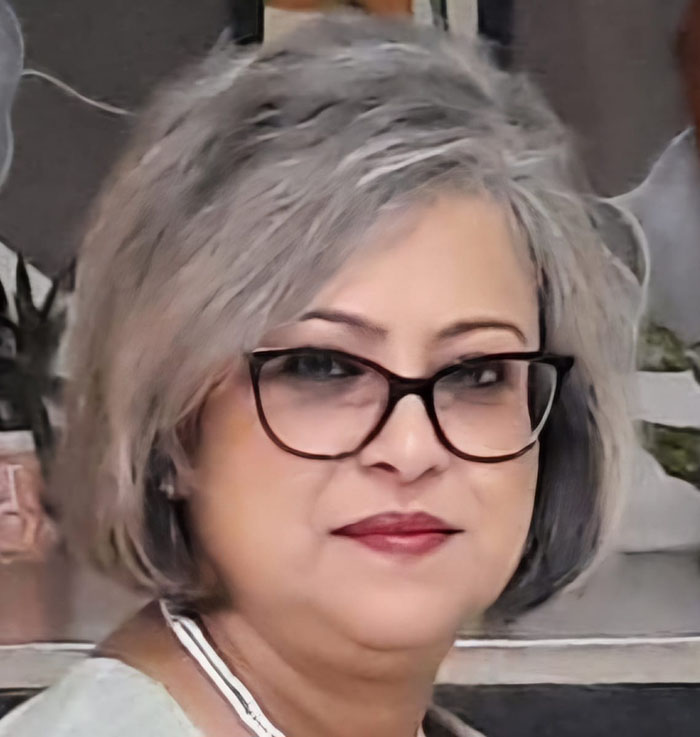
Anindita Sen is a bilingual published author and Translator.She has published seven collection of poetry and four novels in her credit. She is a well known translator, a regular contributors to various literary journals in English as well as in Bengali. She was awarded a few literary awards. As a profession, she was a Biology teacher associated with Hem Sheela Model School based at Durgapur, West Bengal.She lives in Asansol, West Bengal.
TRAIN JOURNEY
Mrs. Setaluri Padmavathi

Rusty compartment with packed passengers
Strangers some, strange mannered some;
Loving hearts ever show amicable gestures,
that fill our soul with bliss and contentment!
My heart is filled with several compartments
Which fill with valuable views about someone,
Political, general, scientific and personal talks
open avenues within me, for an introspection!
A temporary friendship lasts for a short time
which often brings sweet memories ahead;
Some unknown folks remain in heart ever
Courteous and loving talk truly lasts forever!
Readers lie one side, and speakers on the other
Vendors do befriend with travellers, for a cause
Every one openly vents out feelings in a coach,
Listeners, a few in number, speakers aplenty!
Train carries people from every nook and corner
Train journey is the best of all my travels
Neither richness nor sickness matters here,
It’s a blessing and bliss to every common man!
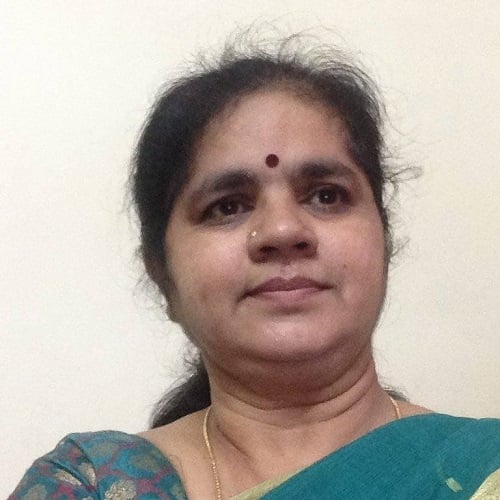
Mrs. Setaluri Padmavathi, a postgraduate in English Literature with a B.Ed., has been in the field of education for more than three decades. Writing has always been her passion that translates itself into poems of different genres, short stories and articles on a variety of themes and topics. She is a bilingual poet and writes poems in Telugu and English. Her poems were published in many international anthologies and can be read on her blogsetaluripadma.wordpress.com. Padmavathi’s poems and other writings regularly appear on Muse India.com. Boloji.com, Science Shore, Setu, InnerChild Press Anthologies and Poemhunter.com
THE LANTERN
Dr. Niranjan Barik
He walked with a lantern
under the blazing sun—
a strange companion, perhaps,
searching in broad daylight
for something others could not see.
He was no thug
making a spectacle of courage.
Yet in those days,
it took courage to say
that day and night made little difference
when people lived in darkness.
They needed a lantern
to show the path.
But the lantern had its enemies.
And for the lantern,
the answer was Hemlock.
“Do not show us the lantern
in the daytime,”
said a seemingly resolute one,
who behaved himself
the guardian of a fort.
His words comforted the people.
He assured them all was well—
the fort was secure,
and he with the one above him could stand firm
against the sweeping might of titans.
So the lanterns were put away.
Then—
the fort gave way,
and the commander disappeared.
The boy had travelled far
to study in a school away from home.
But the village lad rose, and rose again—
from the heart of a distant lagoon
to the capitals of the nation,
and then to the capitals of the world.
From Buckingham Palace
to the White House,
he carried his country's credentials
with dignity and majesty.
Yet he never forgot the lantern.
He remembered the days
when light had not reached
the homes and villages.
The lantern had shown him the path;
it had dispelled the darkness.
And somewhere on his journey to greatness,
the lantern found a place in his house too—
a quiet witness to the making
of a great diplomat,
a proud son of the land.
And in another city,
another village boy arrived
in search of bread and butter.
The city gave him a corner on a floor
among broken radios and unfinished dreams;
the mechanic made that little space his world.
He struggled,
and struggled again—
with little in his hands,
but dreams beyond the horizon.
Until one day
Lakshmi smiled.
Then the man rose
and touched the sky.
He did not erase his past.
He remembered the broken radios,
the lonely floor,
the long road from the village.
And the lantern—
he kept it still.
It hangs upon his wall,
not merely as an object from another age,
but as a reminder—
of darkness overcome,
of a path once uncertain,
of courage in difficult times,
and of the light
that never allowed him
to forget
where he came from.
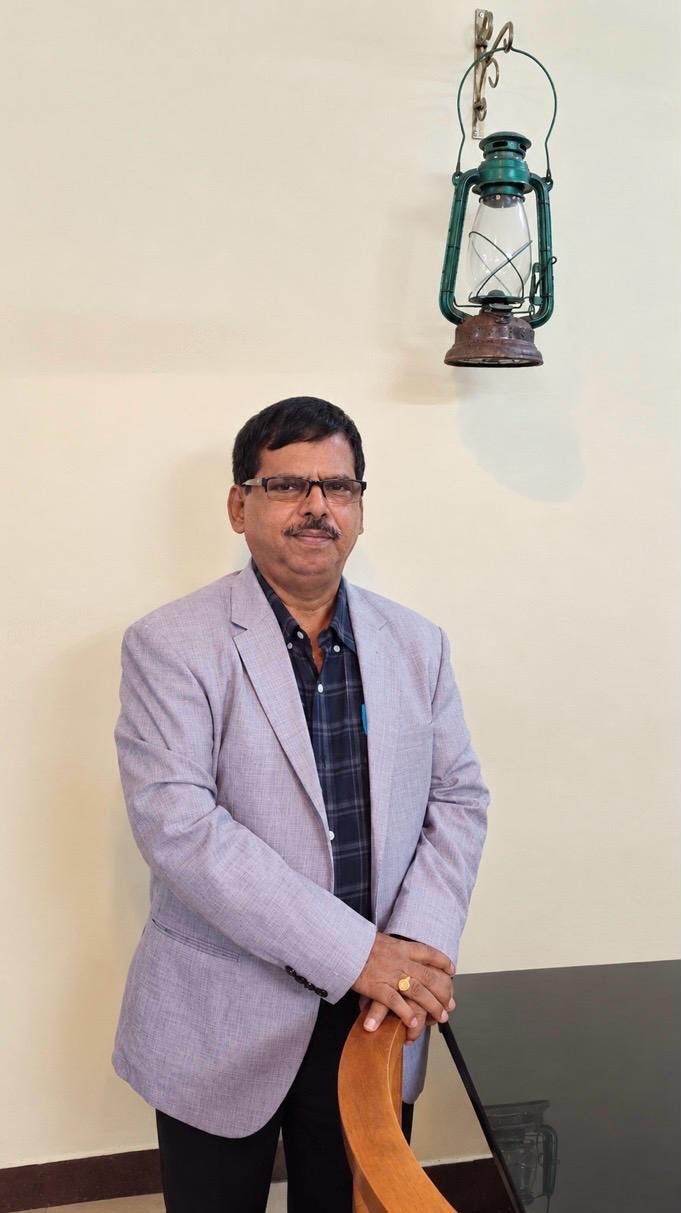
Professor Niranjan Barik ,formerly Professor and Head, Department of Political Science at Ravenshaw University also served as a Professor of Pol.Sc and Principal , Khallikote Autonomous College, Berhampur, Odisha. A Fulbright Scholar-in-Residence at Miles College, Birmingham, AL, USA in 2007-08 , Prof Barik evinces interest in reading and writing short stories and poems in Odia and English. His poetry book , “Freedom from Bondage: An Ode to Nature” published in 2023 was released in Bhubaneswar in December 2023.
LOST IN TIME
Dr. Mrutyunjay Sarangi
When I last visited this town
Many decades ago,
The roads were mere lanes
The trees were a canopy,
The flowers bloomed
And the roads wore multiple colours
From the strewn petals.
The people smiled at each other
Many greeted you with folded hands,
The chai wallah offered tea in a big glass
The fruit seller gave a couple of mangoes free
When you bought a dozen of them,
The beggars were happy
The rickshaw wallahs even happier.
And then times changed
The builders and the sharks took over the town,
The roads became streets
Colours of the trees changed to grey
Layers of dust covered them all the time.
Flowers rarely bloomed and when they did
Their colour was gone.
People had wads of notes in their pocket
But no change for the beggars
The rickshaw wallah had disappeared
The big tea glasses were replaced by tiny plastic cups,
Cars splashed water on you during monsoons,
Streets were lined with clinics and hospitals.
People were always sick, their mind even sicker.
Today I went looking for my old lane
And the trees, the flowers,
From the pages of memory
I tried to locate my old house,
But I saw only high rise apartments
Which had trampled my humble abode
And my innocent childhood.
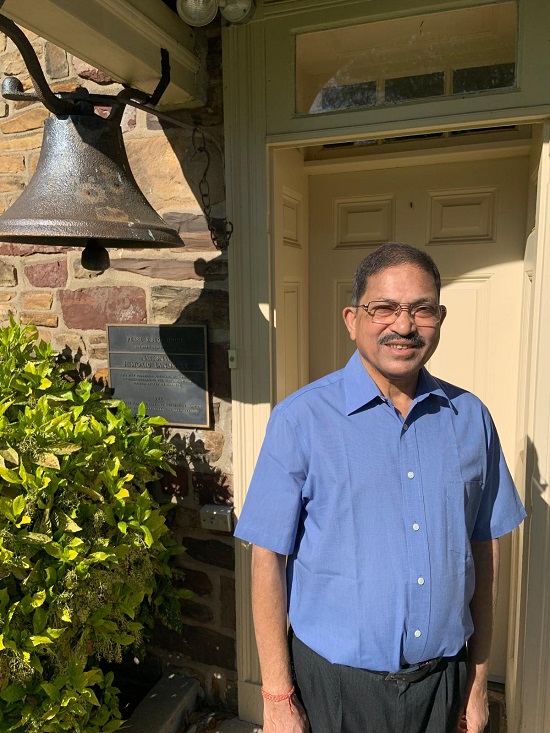
Dr. Mrutyunjay Sarangi is a retired civil servant and a former Judge in a Tribunal. Currently his time is divided between writing poems, short stories and editing the eMagazine LiteraryVibes . Four collections of his short stories in English have been published under the title The Jasmine Girl at Haji Ali, A Train to Kolkata, Anjie, Pat and India's Poor, The Fourth Monkey. He has also to his credit ten books of short stories in Odiya. He has won a couple of awards, notably the Fakir Mohan Senapati Award for Short Stories from the Utkal Sahitya Samaj. He lives in Bhubaneswar.
IN THE LANDSCAPE OF MEMORY: READING QUEEN PADMINI OF MEWAR
Dr. Atiqa Kelsy
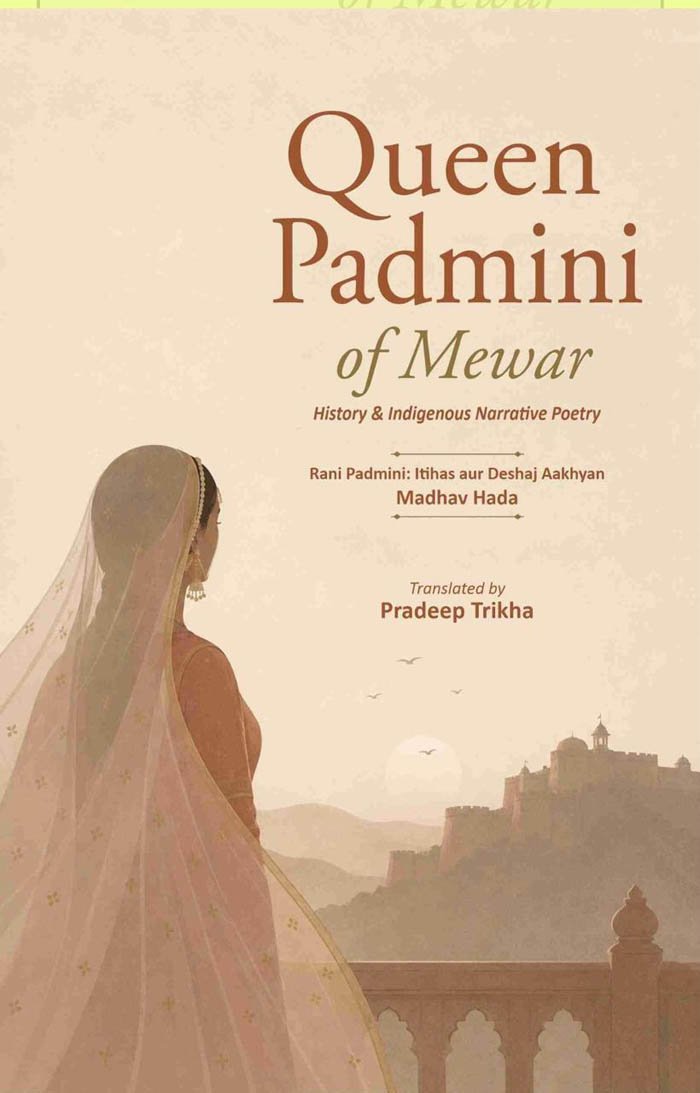
There are some historical figures whom we know not as people, but as stories. We know their names long before we know anything about them. We meet them in folktales, songs, legends, paintings, and conversations. We hear of their beauty, their courage, their suffering, their devotion and their sacrifice. Their stories are so powerfully long-entwined that sometimes it becomes almost impossible to separate the person from the many meanings that have been attached to them. Queen Padmini of Mewar is one such historical figure. Perhaps that is why reading the translation, Queen Padmini of Mewar: History & Indigenous Narrative Poetry by Prof. Pradeep Trikha, felt like entering a landscape of memory through an unfamiliar doorway. I have read Prof. Trikha’s previous translation, Meera Vs Meera, which was a memorable work on Meera, another historical figure whose association with Chittor has allowed history, poetry, devotion and memory to meet in fascinating ways. But Queen Padmini is a very different kind of presence. Meera’s voice seems to have survived through her own poetry, but Padmini reaches us largely through the voices of those who remembered, narrated, imagined and recreated her.
Translated into English from Prof. Hada's Hindi Rani Padmini: Itihas aur Deshaj Aakhyan, the book is a deeply researched exploration of the historicity of Padmini and the indigenous narrative poetry surrounding the Padmini-Ratansen episode. Yet, as one reads through the pages, one realises that the book is much more than merely establishing whether Padmini existed exactly as later narratives remember her. The book is a scholarly enquiry into how history is written, memory is preserved, and cultural narratives acquire a life of their own.
The book begins by discussing Indian traditions of historiography and the otherwise existent rigid separation between history and literature, fact and imagination, document and narrative in the popular modern tradition. The discussion makes an important case for taking indigenous historical narrative-poetry seriously as a cultural record. Such narratives may not conform to the empirical conventions of modern historiography, but they preserve how communities perceived, remembered and transmitted their past.
This becomes particularly fascinating in the discussion of the many indigenous narratives of Padmini and Ratansen. Works such as Gora-Badal Kavit, Hemratan's Gora-Badal Padmini Chaupai, Hemratan’s Padminisamiyo, Gora-Badal Katha, Padmini Charitra Chaupai, Rana Raso, Khumman Raso and Chittor-Udaipur Patnama reveal not one fixed Padmini narrative but a tradition that has continually remembered and reshaped her. A microscopic examination of these texts, alongside the historical sources, makes the book an important contribution to the study of the relationship between history, literature and collective memory.
Personally, what I found as one of the most engaging aspects of the book is its treatment of myth because Prof. Hada does not simply place myth at the opposite end of a scale from historical truth. Instead, he examines the conventions through which historical fiction and narrative poetry create meaning. The recurring motifs of love at first sight, the talking parrot, journeys, supernatural intervention, separation and reunion remind us that these narratives belong to literary traditions with their own modes of expression. A poem, after all, is not a failed archive. It is a different kind of cultural testimony.
The discussion of historical sources is equally significant. The absence of Padmini from contemporary Persian accounts, particularly Amir Khusrau's Khazain-ul-Futuh, has often been treated as sufficient reason to question her historicity. This does not mean that the importance of documentary evidence is diminished; rather, he places it alongside indigenous sources and asks us to recognise the limitations and contexts of every historical record. The book's discussion of Ratansen, inscriptions, Mewar's political and social structures, and the values of swami-dharma and kshatriya honour further demonstrates that the Padmini narratives preserve much more than a romantic or heroic legend.
What stayed with me most strongly, however, was the way Padmini emerges as a figure shaped by successive acts of remembering. She has been remembered as a beautiful queen, a woman of honour, a symbol of sacrifice and an embodiment of Rajput ideals. Yet somewhere beneath these layers lies the historical woman who has become increasingly difficult to see. Padmini has become almost a palimpsest, with each age writing its own anxieties, ideals and aspirations over the woman remembered by the age before it. The book does not just recover a historical character; it makes us conscious of the processes through which historical characters are created and recreated. The Padmini of Jayasi's Padmavat, the Padmini of Rajasthani narrative poetry and the Padmini of later cultural memory are not identical, and the Padmini of this book is a careful comparative reading that allows these distinctions to emerge without diminishing the extraordinary cultural power of the story.
I also found myself consciously pausing often over Prof. Pradeep Trikha's translation. Having read his translation of Prof. Hada's Meera Vs Meera, I came to this book with an appreciation of the remarkable balancing act that translation demands and Prof. Trikha so adroitly executes. To carry Prof. Hada's scholarship, with its deep roots in Hindi literary criticism, Rajasthani traditions and indigenous narrative forms, into English is not merely to translate words. It is to carry across a cultural sensibility. Prof. Trikha in the Translator's Note, with its description of translation as a process of listening, discovery and “transcreation,” made me particularly conscious of this invisible labour. He confesses, “we live different lives in different languages. Hada’s book tended to excite readers and critics alike, and I do hope the translation will do the same. One feels compelled to see it as an adventure with language, which is creative and self-challenging.”
I am sure this challenge has made Prof. Trikha go back to the text innumerable times, leading to infinite discussion with Prof. Hada over single words, phrases, sentences and finding themselves eternally lost in the labyrinth of sense over meaning, metaphorical over literal and being in the process of “a continual self-sacrifice, a continual extinction of personality” as T. S. Eliot had said. That is exactly what this nuanced translation does. It effortlessly conveys sense and meaning, both literal and metaphorical – “to enliven the flavours of sounds and explore sensitive nuances of every word”. To a reader who hasn’t read the original, this translation acts as an important doorway to inhale and bask in the scent of the times as conveyed in the original.
Prof. Trikha succeeds remarkably because the reading flows like a river, uninhibited, and the reader rolls along with it like a pebble that only smoothens and shines after completely giving in to the waters. The translation flows with an ease that almost conceals the difficulty of the task. The careful handling of regional and culturally rooted expressions reveals the translator's effort to preserve the flavour of the original without allowing the translator's own voice to overshadow that of the author. There is something especially satisfying in seeing these two scholars meet again, allowing Hada's scholarship on Mewar and its literary traditions to reach a wider readership through its English translation.
The book reminds us that history does not live only in archives. Sometimes it lives in poetry, in oral traditions, in the memories of communities and even in the stories that generations refuse to let disappear. This is what makes the book such a rewarding journey. I entered it through what seemed like a familiar doorway, expecting to encounter the Padmini I had known through history and popular memory. I emerged with a landscape far more layered and expansive — one in which history, poetry, myth and memory do not stand apart, but continually meet and reshape one another.
I think what I finally took away from Queen Padmini of Mewar is not a definitive answer about Padmini, but a deeper respect for the many ways in which a culture remembers, and memory survives, and a deeper appreciation of the landscape in which her memory has lived and grown. Padmini's historicity may remain debated, but the life of her story is undeniable. For centuries, poets have remembered her, storytellers have reshaped her, communities have given her meaning, and scholars have continued to revisit her. Through Hada's scholarship and Trikha's sensitive translation, that long journey of memory reaches yet another reader.
Some stories endure not because they remain unchanged, but because every generation finds a new way of remembering them. Some figures survive history not because history has managed to preserve them, but because memory has refused to let them die. And somewhere in that ever-changing landscape of memory, Padmini continues to live. And that, for me, is the enduring strength of the collaborative efforts of Prof. Madhav Hada and Prof. Pradeep Trikha’s Queen Padmini of Mewar.

Dr. Atiqa Kelsy
Assistant Coordinator IQAC
Asst Prof
Dept of English
St Xavier's College - Jaipur
Nevta-Mahapura Road
Near Nevta Dam
Tehsil Sanganer
Jaipur-302029
atiqakelsy@sxcjpr.edu.in
+91 9772753357
Viewers Comments