
Literary Vibes - Edition CLX (26-Dec-2025) - POEMS & BOOK REVIEW

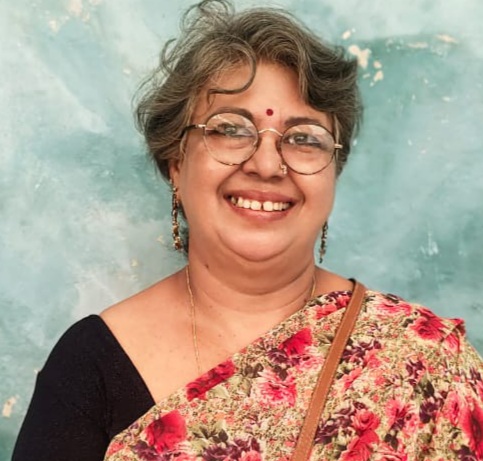
An acclaimed Painter, a published poet, a self-styled green woman passionately planting fruit trees, a published translator, and a former Professor, Lathaprem Sakhya, was born to Tamil parents settled in Kerala. Widely anthologized, she is a regular contributor of poems, short stories and paintings to several e-magazines and print books. Recently published anthologies in which her stories have come out are Ether Ore, Cocoon Stories, and He She It: The Grammar of Marriage. She is a member of the executive board of Aksharasthree the Literary Woman and editor of the e - magazines - Aksharasthree and Science Shore. She is also a vibrant participant in 5 Poetry groups. Aksharasthree - The Literary Woman, Literary Vibes, India Poetry Circle and New Voices and Poetry Chain. Her poetry books are Memory Rain, 2008, Nature At My Doorstep, 2011 and Vernal Strokes, 2015. She has done two translations of novels from Malayalam to English, Kunjathol 2022, (A translation of Shanthini Tom's Kunjathol) and Rabboni 2023 ( a Translation of Rosy Thampy's Malayalam novel Rabboni) and currently she is busy with two more projects.
.

Title : Miniature Painting by Swatishree Parija

Swatishree Parija is a second year B.Ed..student from Jajpur, Odisha. She is passionate about literature, painting and photography from her school days. She writes excellent poetry. Her paintings and photographic creations are equally outstanding. She has won many awards in essay writing, painting, and debate at the block, district, and state level.
Dear Readers,
The year 2025 is about to slip into history and a new year, A Happy New Year, is around the corner, waiting with open arms and a lovely smile to welcome us to a new chapter of life. Let me share the joy of the moment with you and hope that the coming year will bring us lots of happiness and bliss. To celebrate the coming of the new year I am happy to present to you the 160th edition of LiteraryVibes, loaded with some beautiful poems and enchanting stories. Hope you will enjoy them and they will brighten your new year with a lasting glow.
It is fashionable to start the New Year with some good resolutions, meant to enrich and enliven our lives. Most of us are at an age which reminds us that we have seen a lot and it is time to live in peace with ourselves. Yet, the cravings never die, expectations never cease, hopes never fade, plunging us into despair and disappointments. Recently I came across a piece of writing in the social media, meant to put ourselves in the right perspective. I liked the piece so much that I am tempted to reproduce it here. Hope it will help some people to rewrite their new year resolutions.
MY LIFE, YOUR LIFE!
I relaxed in my favorite bed, looked back at my life, and whispered to myself,
“So…..this is the beginning of the final stretch.”
And slowly, the truth I had avoided all my life began to surface.
Kids? They’re busy writing their own story.
Health? Slips away faster than sand through open fingers.
The government? Just headlines, promises, and numbers that never change your daily reality.
Aging doesn’t hurt your body first — it hurts your illusions.
So I sat down with myself and carved out a handful of bitter but necessary truth.
Kids don’t save you from loneliness
We were raised with comforting lies:
“Raise good children and your old age will be peaceful.”
But children grow, life pulls them in every direction, and you become a memory they visit when time allows.
You wait for a call like it’s a festival.
The phone stays silent.
Then suddenly a short message appears:
“Hey Mom, all good.”
You smile…..and yet something inside you remains strangely hollow.
Kids bring joy — but they are not a shield against loneliness.
Can't blame them but for the situations they are facing.
Health is not forever :
One day, the outings you once jumped into with enthusiasm feel like a marathon.
You realize health was never a background character —
it was the main pillar holding your life steady.
Retirement and money
Retirement is not a reward — it’s a reality check.
Depending on the system is like standing on thin ice.
Bills grow, needs grow, prices grow… but support doesn’t.
You quickly learn:
anything beyond basic survival is your responsibility.
So I rebuilt my life on new rules — honest, sharp, practical rules for living with dignity.
Rule 1: Money is more reliable than children
Love your kids, cherish them —
but don’t make them your retirement plan.
Save for yourself.
Even small savings create big freedom.
Financial independence is dignity.
Rule 2: Your health is your real job
Nothing else matters if your body refuses to cooperate.
Move. Walk. Stretch.
Guard your sleep like treasure.
Eat cleaner. Reduce the poison disguised as sugar and salt.
Illness doesn’t discriminate,
but it respects those who take responsibility for themselves.
Rule 3: Create your own joy
Waiting for others to make you happy is the fastest way to heartbreak.
So you learn to enjoy the small things —
a peaceful breakfast, a good book, music that warms the soul.
When you know how to make yourself happy, loneliness loses its power.
Rule 4: Aging is not an excuse to become helpless
Some people turn aging into a performance of complaints.
And slowly, even those who love them start stepping away.
Strength is attractive.
Resilience is magnetic.
People respect the ones who stay capable, not the ones who surrender.
Rule 5: Let go of the past
The good old days were beautiful — yes.
But they’re gone, and there is no return ticket.
Clinging to the past steals the present.
Life today may look different, but it still holds moments worth living.
Rule 6: Protect your peace like it’s your property
Not every argument needs your voice.
Not every insult needs your response.
Not every relative deserves access to your emotions.
Peace is expensive.
Protect it from drama, negativity, and draining people —
even if they share your blood.
Rule 7: Keep learning something — anything
The day you stop learning is the day you start aging.
A new recipe, a new word, a new app, a new hobby —
your brain needs movement just like your body does.
Learning keeps you young.
Stagnation makes you old.
Strength and freedom still belong to you
Aging is an exam no one can take for you.
You can adapt, rebuild, and rise stronger…
or sit back, complain, and wait for someone to rescue you.
Spoiler:
No one is coming.
But you still can.
And that single truth is enough to transform the rest of your life.
...............
Dear Readers, it is also in the fitness of things that the new year should start with a positive, cheerful message. Here is another story (probably fictional) collected from the internet which will warm up the heart in this cold winter:
A woman walked into a restaurant for lunch....and as soon as the boy put the plate in front of her, she noticed a father and daughter looking at her plate from outside the restaurant through a window.
She motioned for them to come in and they sat down next to her.
She asked them to choose what they would like to eat...
The girl looked shyly at the plate of the lady, who then ordered two dishes for the father and his daughter. She then watched them eating with joy, eyes filled with gratitude...
After finishing, they got up and went out, after praising the generous lady and thanking her from the botrom of their heart.
After the woman finished her meal, she got up to pay her bill.
She was very surprised that the invoice was empty, and there was a note written by the restaurant owner:
"We do not have a calculator capable of calculating the price of HUMANITY"
A very beautiful LIFE lesson.
Hope you enjoyed reading the above two pieces as much as I did.
We are lucky to have with us six new poets and writers with us. Ms. Phalguni Sahoo from Bhubaneswar is a wonderful writer who writes from the depth of her heart. She has many blogs which she has promised to share with us. Ms. Lopamudra Singh, a poet from Bhubaneswar translates strong sentiments into powerful poetry. Ms. P. S. Sowmya is another poet and painter who hails from Chennai. She is both prolific as well as impressive. Three young kids, Shreyansh Subudhi (8 years), Kavyashree Sahoo (7 years) and Neelesh Sahoo (10 years) from Bhubaneswar, are talented prodigies with a lot of promise for the future. Let us welcome the six new members to the LV family and wish them tremendous success in their literary journey.
I have also a special pleasure to host a fabulous crusader Dr. Sanjay Kumar Panda, an IAS officer who retired as Secretary to Government of India in the Ministry of Textiles in 2016. Post retirement he has devoted his entire time on the upliftment of the handlooms sector in Odisha qith a rare zeal. He is the Founder President of Shraddha, an NGO, dedicated to the welfare of handloom weavers of Odisha, through skill development and marketing initiative. His writeup in today's LV is an eye-opener on the excellent work being done by Shraddha, the NGO.
Hope you will like the offerings in LV160 and share them with all your friends and contacts through the following links:
https://positivevibes.today/article/newsview/621 (Poems and Book Reviews)
https://positivevibes.today/article/newsview/620 (Short Stories and Anecdotes)
https://positivevibes.today/article/newsview/619 (Young Magic)
There is also a medical related article by the famous Gynaecologist Dr. Gangadhar Sahoo at
https://positivevibes.today/article/newsview/618
The brilliant writeup by the retired civil servant Dr. Sanjay Kumar Panda, on Shraddha, an NGO dedicated to the upliftment of the handloom sector in Odisha is at
https://positivevibes.today/article/newsview/617
Hope you remember that all the 160 editions of LiteraryVibes are available at https://positivevibes.today/literaryvibes
Relax, enjoy the winter with a cup of hot rasam (my favorite drink) in one hand and LiteraryVibes in the other. Let us meet again on the 30th January, last Friday of the next month with yet another edition of LV.
Till then bye, Merry Christmas and Happy New Year again.
Mrutyunjay Sarangi
Editor, LiteraryVibes
Bhubaneswar, the 26th December, 2025
Table of Contents :: Poems
01) Prabhanjan K. Mishra
SALEHA
02) Dilip Mohapatra
CIRCULARITY
DEATH IN MANY COLOURS
03) Madhumathi. H
MY LIST OF FAVOURITES ARE ABOUT MOMENTS, LITTLE THINGS...
COMPLIMENTS...
04) Abani Udgata
THE ABSENT ONE
05) Snehaprava Das
RIVER
06) Sujata Dash
A BOTTLE OF BITTER TRUTH
07) Dr. Saroj K. Padhi
SUCCESS MYTH
08) Pradeep Kumar Biswal
A SUNSET BEYOND THE WINDOW
09) Sathya Venkatesh
BEAUTIFUL OCEAN
10) P. S. Sowmya
SPIDER FRIEND
THE GREAT INDIAN HORNBILL
11) Lopamudra Singh
SUMMER`S SLOW SIP
THE CITY`S AMNESIA
#THE_UNKNOWING_VOID
12) Matralina Pati
BREATH AND ITS ARCHIVE
13) Kunal Roy
PRELUDE
THE WINTER EVENING
14) Dr Nanda Kishore Biswal
THE MOUNTAINS OF PANCHGANI
15) Leena Thampi
I WANT TO BE MAGIC
16) Sudipta Mishra
THE LAST EVENING OF A YEAR
17) Sailabala Mohapatra
FOR THE ETERNAL `HE`
18) Dr Bichitra Kumar Behura
DISAPPEARANCE OF DESTINATION
WHEN THE WORLD BECAME YOU
IN THE SLEEPING HILLS
19) Baldev Samantaray
URBAN MUSE METROPOLIS
20) Mrs. Setaluri Padmavathi
THOUGHTS UNCOUNTABLE
21) Arpita Priyadarsini
ONCE
22) Anindita Ray
LET’S BEGIN AGAIN
23) Bipin Patsani
MOODS
ON IMPROVING HUMAN CONDITIONS
24) Tophan Khilar
MY LIFE, MY LOVE
25) Dr. S. Padmapriya
THE PYRAMID PUZZLE
26) Namita Rani Panda
THE STORY OF TREES
27) Dr. Rajamouly Katta
LETTERS IN POWERS
28) S. J. Sangeetha
THE CONVICT
29) Bijayalaxmi Rath
OH! LITTLE BIRDIE
30) Gouranga Charan Roul
BEACHY SOLITUDE
31) Sukanya Kunju
SEVEN MONTHS OF UNITY AND LOVE
32) Sreedharan Parokode
MESSENGER
33) Darsana Kalarickal
DECEMBER
34) Dr. Niranjan Barik
NOT A NUMBER: DECEMBER’S COUNTING
35) Dr. Mrutyunjay Sarangi
THE COMING WINTER
Table of Contents :: Book Review
01) Jaydeep Sarangi
IN STORIES IT HOLDS
02) Aparna Ajith
TRANSIENT HOMES AND ENDURING BONDS: MOBILITY, MOTHERHOOD, AND MEMORY IN DR. APARNA AJITH’S SUITCASES, SANDCASTLES, AND LITTLE ANVIK
Prabhanjan K. Mishra
On the sands of the Sabarmati, little Saleha
searches for her toddler footprints
of her visit to Bapu’s Ashram with her mother,
blown away like the fallen leaves of autumn.
But the spots that her little feet had touched,
blaze, scream, hang in air like death rattle.
Eleven marauders killed her, banging
her tiny head on walls, like cracking a coconut.
They raped her mother bloated with a baby,
cheerily soiling her womanhood.
Her wounded spirit screams and blazes,
and tolls like Saleha’s death rattle.
Saleha’s moans toll in the courts’ atriums
shaming the blindfolded Lady of Justice,
the keeper of the courts’ conscience.
Saleha’s blazing footprints shame the visitors
sauntering in and out of Bapu’s Ashram,
abode of the apostle of peace and freedom.
The balance has not yet tipped for justice
in the hands of the blindfolded Lady,
rather sways like a tired leaf in the autumn wind.
The ‘scream’ slashes the peace of tourists,
blazing footprints look for solace in Sabari*,
the Sabarmati, who led Ram to Ravan.
The screams rise to a crescendo,
giving nightmares to those
who would not sleep tonight,
penetrating the thick skulls
of judges, tipping the balancing pin
of the blindfolded lady in favour of Saleha.
Footnote -- Saleha* was the three-year old daughter of Bilkis Bano. Saleha was killed and her mother, in her fifth month of pregnancy, was gangraped by eleven cruel men during the Gujarat Riots, 2002. Pregnant Bilkis Bano gave birth to a daughter and named her Saleha in memoriam.
Sabari* is the legendary devotee of Lord Ram, who fed him berries, after biting into them to taste the berries' sweetness, and guided Ram on Ravan's trail to reach abducted Sita. On occasions, neo-researchers equate Sabri, the female devotee of Lord Ram, to the river Sabarmati.
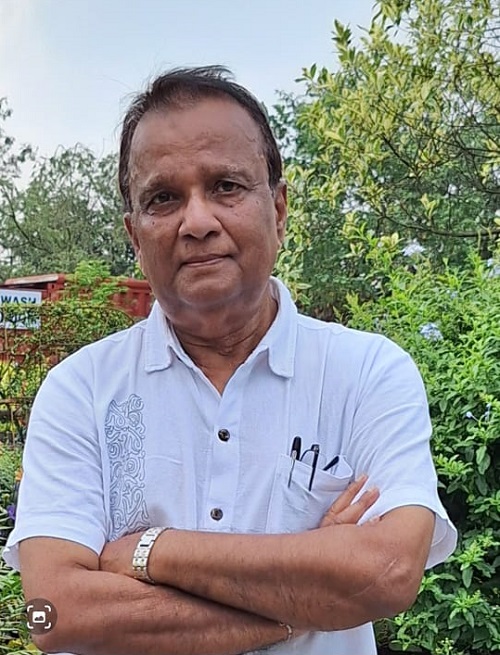
Prabhanjan K. Mishra is an award-winning Indian poet from India, besides being a story writer, translator, editor, and critic; a former president of Poetry Circle, Bombay (Mumbai), an association of Indo-English poets. He edited POIESIS, the literary magazine of this poets’ association for eight years. His poems have been widely published, his own works and translation from the works of other poets. He has published three books of his poems and his poems have appeared in twenty anthologies in India and abroad.
Dilip Mohapatra

The butcher wields his
chopper and cleavers
and his dexterous hands
give birth to
briskets
chucks
shanks and flanks
filet mignon and tenderloins
and he gloats with
his works of art—
but how is the butcher born?
The assassin chooses from
an elaborate menu
to silence the lives of
his victims—
Asphyxiation by throttling
or by strangling
poison or shooting through
the head—
decapitation
or backstabbing
and sells his versatility—
but what defines the assassin?
The musician picks up the notes
and strings them like pearls into
necklaces of many designs
and comes up with
Classical
Pop
Jazz
Rhythm & Blues
Reggae and Hip-Hop and the like…
and enjoys audience shouting
encore
encore—
but what makes the musician?
The poets and wordsmiths
wield their pen
and come up with
their gentle offerings
of ballads
elegies
sonnets
haikus
and free verses…
and regale the readers—
but how does the poet come to being?
Man creates God
sometimes a concept
shapeless
formless
undefinable yet palpable
and sometimes
in his many avatars
in the likeness of man—
but the believers insist
that God is the source of
everything
and is the artist
whose brush strokes
on the canvas of the universe
created man
and all that we see and don’t.
But the eternal question
still remains
unanswered:
who creates whom?
whether the artist creates the art
or the art defines the artist?
Dilip Mohapatra

We know that life is more colourful
than a rainbow
and so is death—
not dressed in the grey cloak
of the Grim Reaper
but in a royal regalia
of many colours—
When you die and pass away
you kick the bucket
you push up the daisies
you are no more
your breath snuffed off
you cease to be
and you are deceased
the dear departed
gone to meet your maker
shuffled off your mortal coil
and run down the curtain—
you bite the dust
cash in your chips
six feet under
and take your final bow!
Death is seen as termination
the end of
the continuum
that we call life
but it’s just an enigma
a mirage of
the presumed end—
To most it’s fearsome
faceless and diabolical
with piercing eyes
peering from the cowl
and with skeletal claws threatening
to clasp your throat
sending chills up your spine
but nothing perhaps is truer
and nothing is purer—
It bears none of life’s contaminations
nor is it inconsistent
it perhaps is the best leveller
it doesn’t discriminate
it doesn’t delineate
it doesn’t divide…
it distils your life
it atones your sins
and absorbs your virtues
it liberates
it detaches
it delivers
and opens the cage for you—
it’s just a finishing line
from where the newer tracks
start afresh—
a line where life ends
to begin anew.
————
Note: Inspired by Monty Python's “Dead Parrot”.
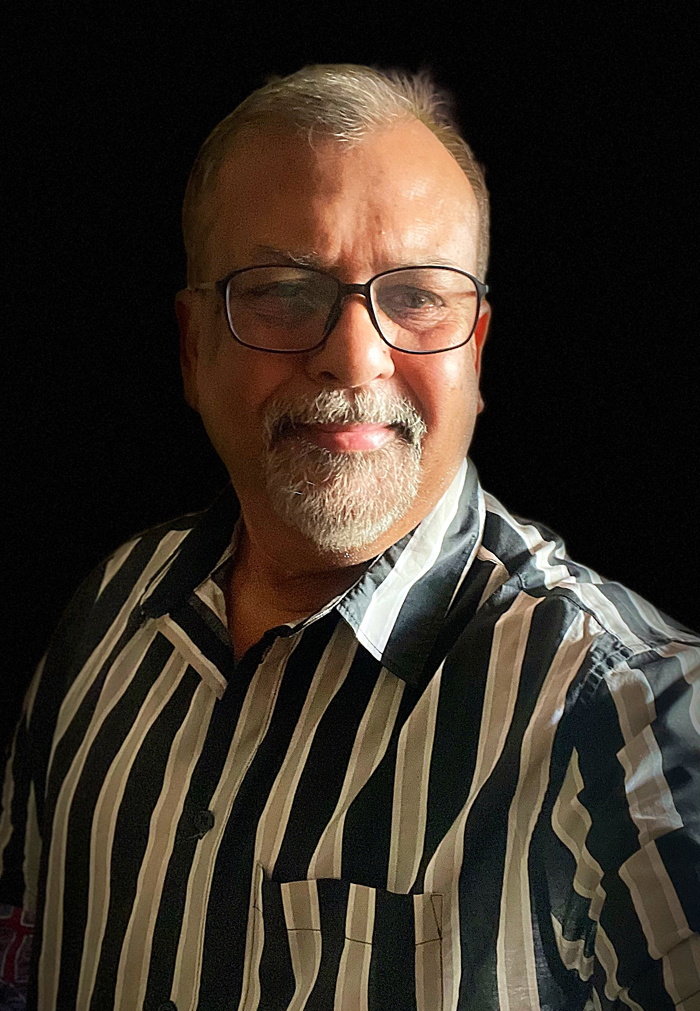
Dilip Mohapatra, a decorated Navy Veteran is a well acclaimed poet in contemporary English and his poems appear in many literary journals of repute and anthologies worldwide. He has nine poetry collections, two short story collections and two professional books to his credit. He is a regular contributor to Literary Vibes. He the recipient of multiple awards for his literary activities, which include the prestigious Honour Award for complete work under Naji Naaman Literary Awards for 2020. He holds the honorary title of ‘Member of Maison Naaman pour la Culture’. He lives in Pune and his email id is dilipmohapatra@gmail.com
MY LIST OF FAVOURITES ARE ABOUT MOMENTS, LITTLE THINGS...
Madhumathi. H

I love how the rain kisses memories
How a song tastes like my favourite vanilla flavour
How the shells carry the art of my dearest Sea
I love the sweetness of blushing in a cup of rose milk
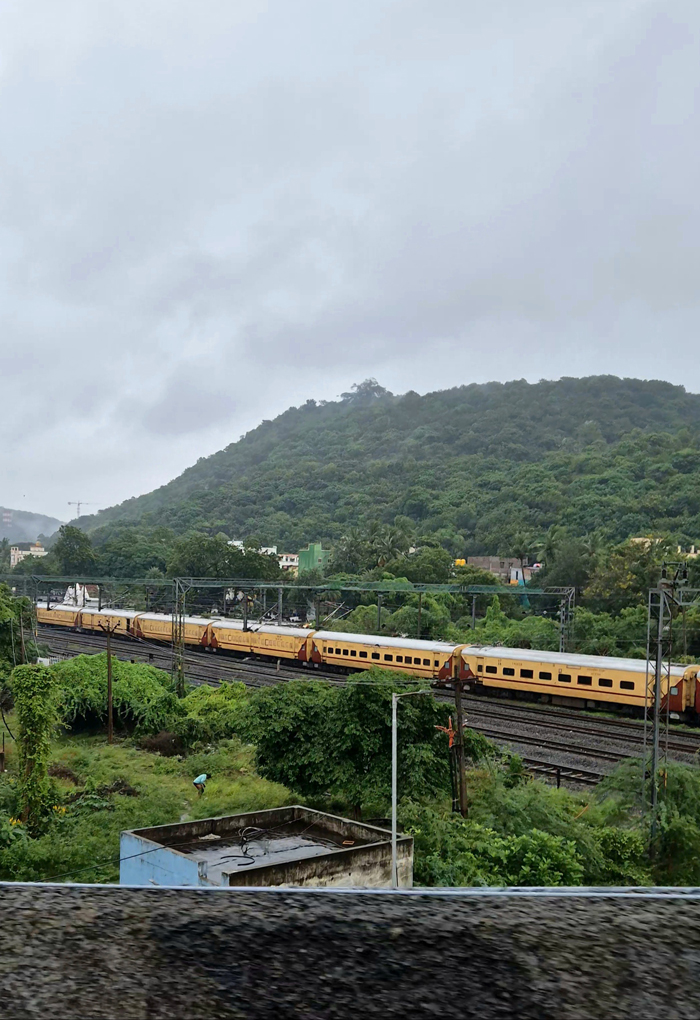
I love window seats, trains my forever favourite mode of transport
Blue, my favourite, besides a palette of eloquent colors
I love poetry, sarees, to drape around my soul
Handwritten letters, bicycle, old buildings, trinkets
I love all things vintage, grandma/grandpa tales, perfumes that kindle nostalgia
I love pencils, pens that glide, black ink...
Gulmohar, Bougainvillea my favourite flowers
Favourites in people, are like fingerprints, unique
Favourite spot, stargazing at the moonlit terrace
A list poem of my favourites, a challenge
Kaleidoscope of favourites, uncountable...
Healing, peace, soul-nourishing love are favourites, craving, longing, too
To write a list poem of the unspoken.
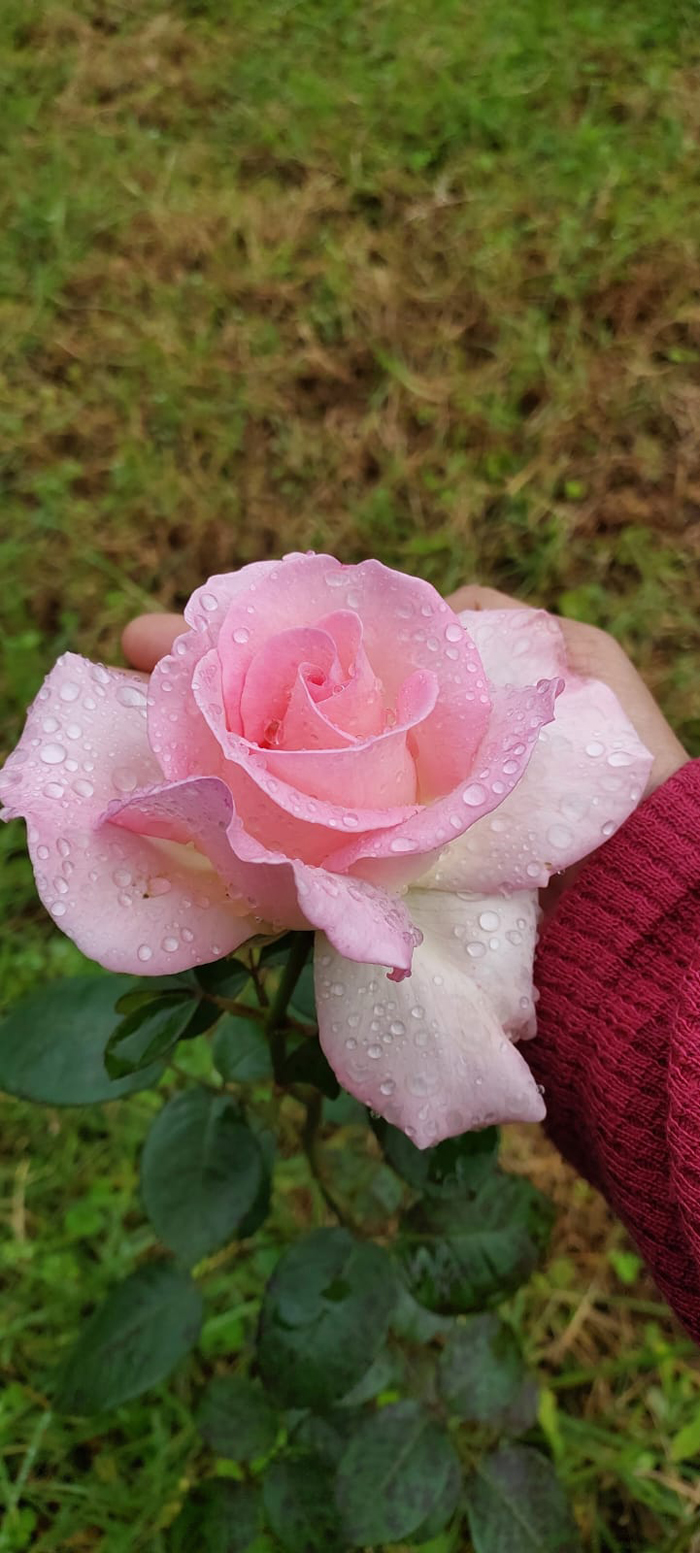
Madhumathi. H
Blushing, is an art we make others create
Through our eyes…
That shy smile, sudden pink-tinted face
Twinkle in the eyes
Just a tiny heartfelt compliment, can make someone's day
Seemingly little things, carry a world of joy
In noticing, in details are hidden, the magic seeds of compliments…
Someone's disarming smile, eloquent eyes, pretty earrings, or that classy shirt
Handwriting, voice, coffee/tea, lip-smacking dish
Painting, song, therapeutic flute, mind-blowing dance, sport, and more
COMPLIMENT just any of them!
Beyond the visible, how beautiful are some souls
Their kindness, love, empathy, their passion, curiosity
Intelligence, skills, effort, honesty, and more
COMPLIMENT just all of them!
A simple compliment can make a forest bloom
In the hearts that lost its spring
A kind word of appreciation, is the rain
A desert dweller longs for...
Compliments doesn't have a price rag
Adjectives soaked in love, are priceless
What else can make us happy, than making others happy?
Uncertain, unpredictable life
Meaningless, are the accolades, adoration, posthumous
NOW, is the moment to make someone smile
While they are alive, in front of you
NOW, is the moment to see her/him/them blush
A genuine compliment can nourish a tired soul
NOW, is the moment to hug someone through words
To make tears evaporate, and rain as smiles, laughter...
NOW
Compliment the most important person
You see in the mirror, too.
Hey you! The one reading this
You ARE a beautiful poem waiting to be written.

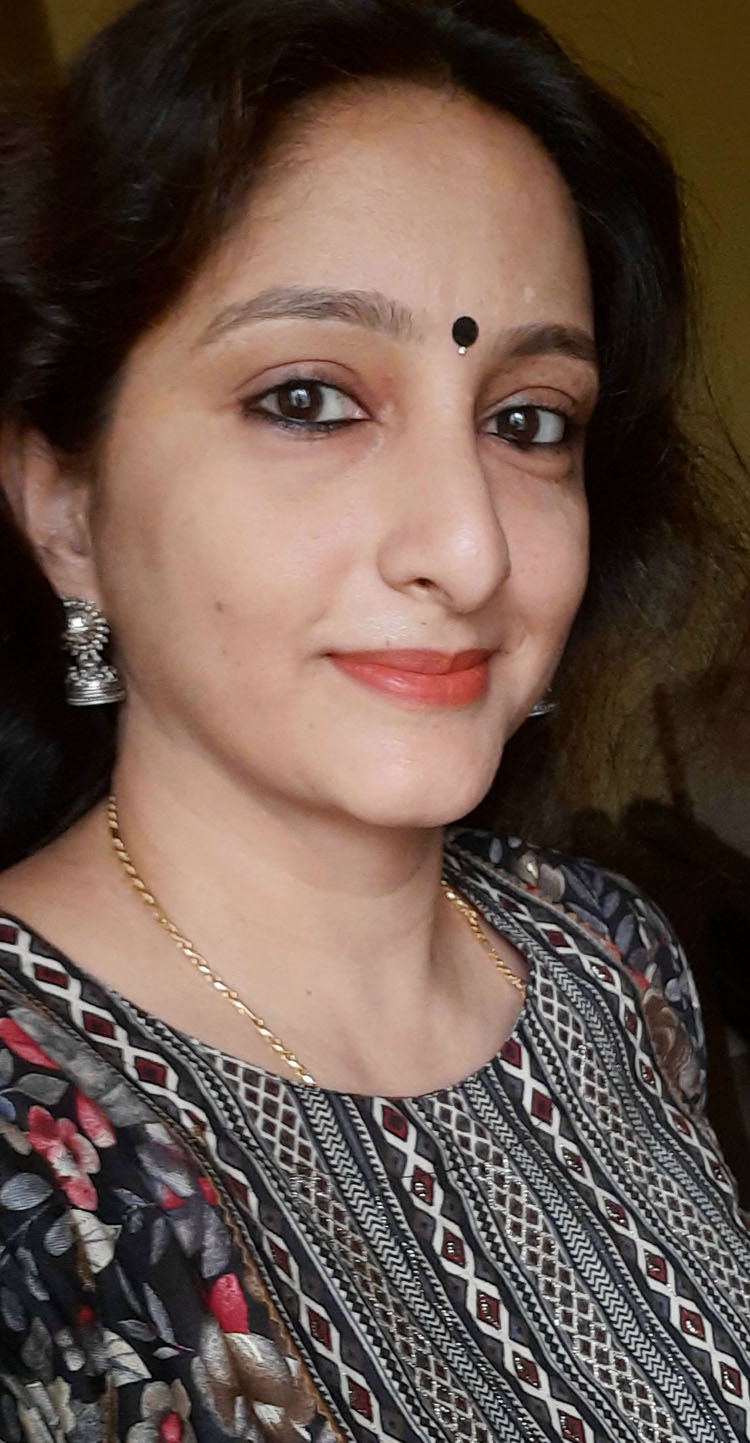
A bilingual poet-writer(Tamil, English), Madhumathi. H is an ardent lover of Nature, Poetry,
Photography, Music.
Her poems are published in Anthologies of The Poetry Society(India), CPC- Chennai Poetry
Circle's EFFLORESCENCE, IPC's(India Poetry Circle) Madras Hues Myriad Views, Confluence, Spring Showers,
Amaravati Poetic Prism, and in e-zines UGC approved Muse India, Storizen, OPA – Our
Poetry Archives, IWJ - International Writers Journal, Positive Vibes, Science Shore.
e-Anthologies Monsoon moods - Muse India, Green Awakenings - On Environment, by
Kavya-Adisakrit.
Madhumathi's poems are part of YPF's(Yercaud Poetry Festival) Ignite Poetry, Breathe Poetry, Dream Poetry, Winterful Whispers, Auburn Ambrosia,
Of Soul Scribers' Soul shores that have 10 of her poems
published, Soul Serenade, Soul songs, Soul Dance, Shades of Love-AIFEST - Special Jury Mention, and
secured 'A Grade’ in the International Poetry Writing Competition(published Anthology)
conducted by All India Forum for English Students, Scholars, and Trainers (AIFEST) in March-
April 2023 in connection with International Women’s Day celebrations, Arising from the
dust, Painting Dreams, Shards of unsung Poesies, are some of the Anthologies her poems,
and write ups are part of.
Besides Poetry, Madhumathi writes on Mental health, takes part in related activities to create awareness, break the stigma, believing in the therapeutic, transformational power of words.
Abani Udgata

Just let him go! Honey, who calls a yogi her own?
- Mira bai
He goes in his own way.
He never belongs.
Our smiles, nervous laughs
betray , the stoop looms
in our ram-rod stance.
The swell of the waves
plateau and crash sending
the bubbles sparkling in
light morning air.
The soft tap of the footfalls
of the traveller ends at
your door in the deep night
to wake you up .
And to think about
the ways of him
the absent one.
He waits outside
the crease of your smile,
away from the arc drawn
beyond the skin of the night.
As we
garner the harvest ,
the grains of labour
season after seasons,
we let out the pigeons
through the window
of our souls to touch
that moon that hides
beneath the cloud of
endless deaths .
The meaning that lies
outside the objects.
He does not belong.
He does not live here.
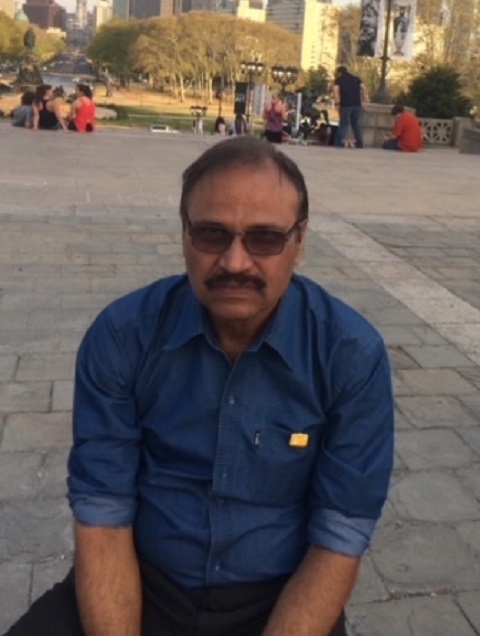
Abani Udgata lives in Bhubaneswar. Writes poems both in English and Odia. Udgata has been awarded in all-India poetry competitions and published in anthologies. He has been a regular contributor to LV. Email: abaniudgata@gmail.com
Snehaprava Das
Like music it flows
Gushing down from an anonymous mountain
Or a somnolent cavern
The symphony travelling from
A beginning to an end,
Carrying a crowd of poems
Never written, never recited,
A long uninterrupted journey,
A struggle to
join one eternity to another
Trifle moments of joy adrift
In the sparkling dusts of a broken rainbow
That melt away even before taking a shape,
The dismal patches woe
In the ever lengthening shadows
of storm clouds
Etched on its flowy canvas,
Carrying hope in
The diamond pins of starlight
On the picture of a no moon sky,
And dreams on the floating
Sequins of silvery nights,
It flows in its quest of
A timeless sea,
But if it could not find one
to lose itself
In infinity
It can always drag its thin strip
With the unsaid, unwritten poetry
Adrift in its shrinking currents
To a desert of blistering pain
It cam always become an oasis to
The quench the coercing, perpetual thirst...
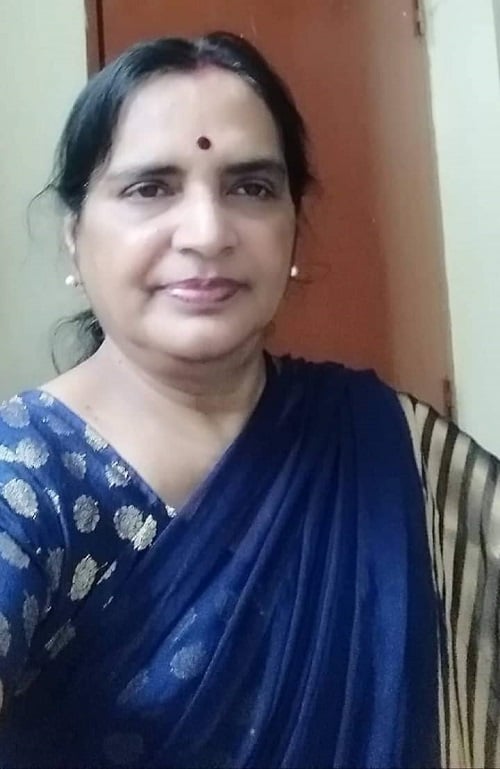
Dr.Snehaprava Das, former Associate Professor of English, is an acclaimed translator of Odisha. She has translated a number of Odia texts, both classic and contemporary into English. Among the early writings she had rendered in English, worth mentioning are FakirMohan Senapati's novel Prayaschitta (The Penance) and his long poem Utkala Bhramanam, which is believed to be a.poetic journey through Odisha's cultural space(A Tour through Odisha). As a translator Dr.Das is inclined to explore the different possibilities the act of translating involves, while rendering texts of Odia in to English.Besides being a translator Dr.Das is also a poet and a story teller and has five anthologies of English poems to her credit. Her recently published title Night of the Snake (a collection of English stories) where she has shifted her focus from the broader spectrum of social realities to the inner conscious of the protagonist, has been well received by the readers. Her poems display her effort to transport the individual suffering to a heightened plane of the universal.
Dr. Snehaprava Das has received the Prabashi Bhasha Sahitya Sammana award The Intellect (New Delhi), The Jivanananda Das Translation award (The Antonym, Kolkata), and The FakirMohan Sahitya parishad award(Odisha) for her translation.
Sujata Dash
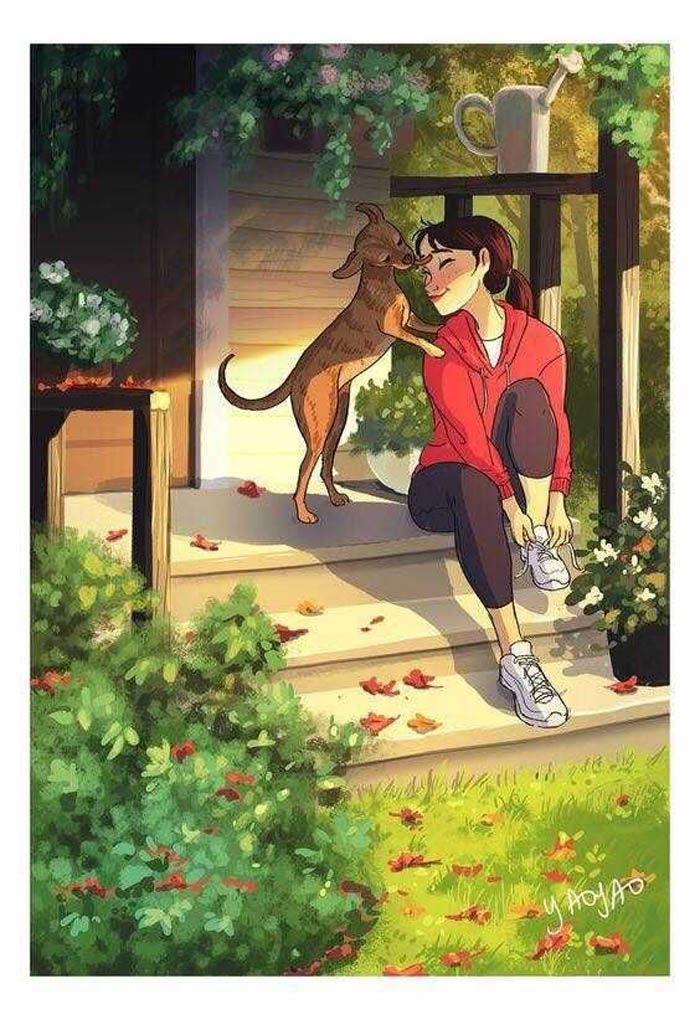
He said-
"You will get nothing much beyond happiness"
I said - "I need that much, so definitely yes"
He said ..
"It will drain you of money , energy and time
I said ..
"I shall not regret nor whine"
He said -
"You may hurt your frail body in the process"
I said "I am confident of my mental prowess"
He said- "Your patience and perseverance will be put to test"
I said "I am prepared to slog like a camel, rote like a parrot"
"And continue non-stop like the proverbial tortoise"
"Ok then"...was his final words
And the verdict was granted in my favor
I grabbed it like a hungry crow
That chances upon swallowing
a long craved ripe mango
She cloaked herself in extreme reluctance
So also her foster father
As the battle between snow and thaw Continued for sometime in mid air
The bill was paid, deal was done
I came home with my choicest possession
Many of my own and others in tow
Raised brows as to 'why' and 'how'?
I kept mum,
Deep faking emotions with a smile
For, the reason behind
I was not ready to reveal
'Ruhani' my pet was blind in one eye
She limped having lost a paw's grip
A freak accident had caused this disability
Like me, she too was a victim
A butt of ridicule and criticism
Sans any failing
The kind hearted seller had ensured
That, his most adorable one
Gets proper attention
Should not feel dejected for
Deprivation of deference and love
"Pity not mam!
For pets, like us don't like to be treated like poor chaps
Rather shower your undiluted affection
That precisely should be your disposition "
"Worry not dealer!
Err...dear foster father
A bottle of bitter truth I carry along
I know how it feels like
To cut a sorry figure
Even when you intend to strive and soar
So, be assured.
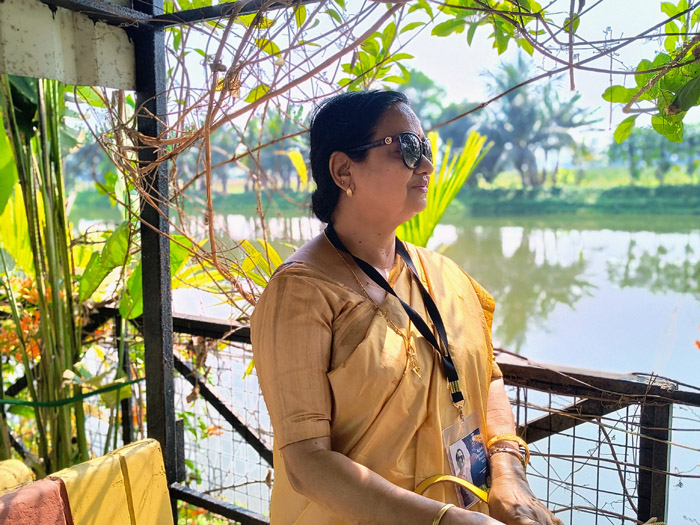
Sujata Dash is a poet from Bhubaneswar, Odisha. She is a retired banker.She has four published poetry anthologies(More than Mere-a bunch of poems, Riot of hues and Eternal Rhythm and Humming Serenades -all by Authorspress, New Delhi) to her credit.She is a singer,avid lover of nature. She regularly contributes to anthologies worldwide.
Dr. Saroj K. Padhi
Many have given in to success myth
with heads in clouds and stars beneath
as they have ridden the horses of hope
to fly above the ground with wild dope;
their stage was crowded, millions applauded
glory made gods of them at the hot apex,
but soon many slid down or fell to bite dust
when life spiralled out of control thro’ choices
leading to drug abuse, drink, stress and sex,
to court voluntary loneliness in big houses
where money rules, relationships matter less
finally to live in perpetual woe and distress.
Let me cling on to my so-called boring life
and be a turtle slow but with love, very rife .
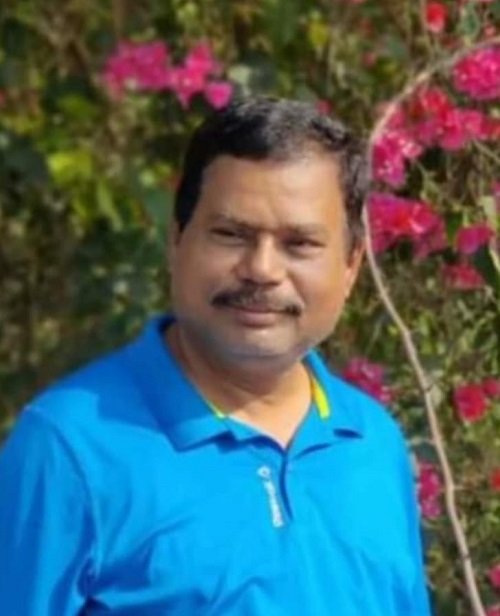
Dr. Saroj K. Padhi, an Associate Professor of English in the Govt. of Odisha is at present working at J K B K Govt. College, Cuttack . Born in 1962, he has been writing poems in English and Odia since his school days. He has published several reseach papers, two books of criticism: 1. JAYANTA MAHAPATRA’S RELATIONSHIP : A CRITICAL STUDY 2. ENGLISH ESSAYISTS : A CRITICAL STUDY and got 14 anthologies of poetry in English namely PEARLS OF DEW, SHATTERED I SING , RHYMING RIPPLES, PETALS IN PRAYER, SILENT SIGHT, MOON MOMENTS , A SLICE OF SILENCE , ELUSIVE SPRING, MONSOON MEMORIES and WHERE BUDS REFUSE TO BLOOM, THE ENDLESS FLUTTER ,STARS IN THE COVID SKY, IMPULSE FROM WOODS AND SELECTERD POEMS
He has received several awards including the national ROCK PEBBLES AWARD, 2017.
Pradeep Kumar Biswal
In the distant horizon
A crimson fire begins to pour
Where gold and amber glow
Painting the glass pane
With hues of light
And shadows stretch
Into the night
In silent steps.
The sun slowly melts
Into the edges of the clouds
The world outside grows dim
Leaving streaks of lavender in the air.
Crowds gather
On the seashore
In dazzling colours
Enjoying the orange evening.
It’s the day’s retreat
A peaceful breeze
Enthrals the soul
A day passes into the past.

Pradeep Biswal is a distinguished bilingual poet, translator and editor. He has nine poetry collections in Odia and three in English. His poems have been translated into Hindi, Telugu, Punjabi, Assamese and Malay languages and got published in separate volumes. He’s the curator of Toshali Literature Festival and editor of monthly web magazine kabitalive.com. A retired IAS officer, he’s staying with his family in Bhubaneswar.
Sathya Venkatesh
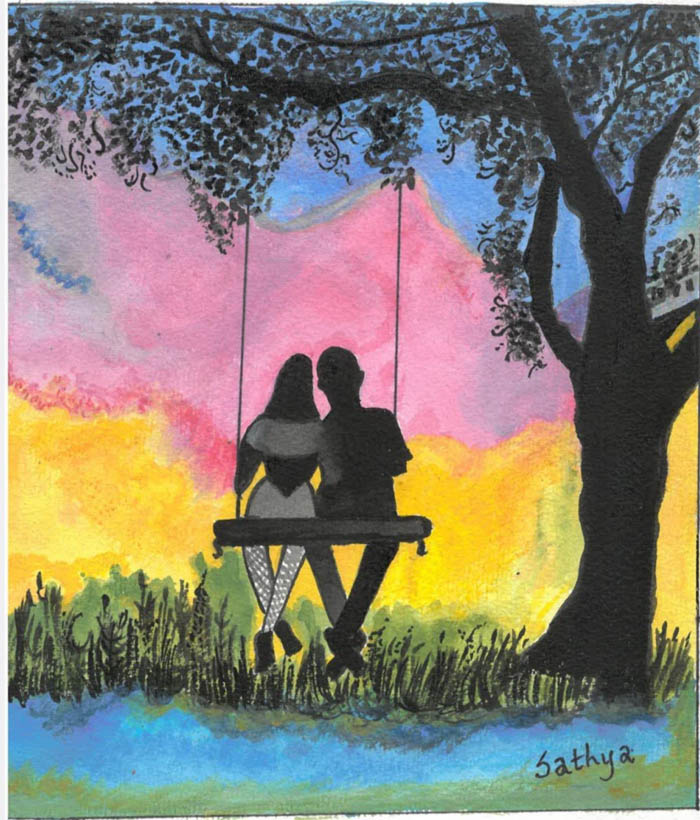
The beautiful ocean
So serene and blue
Attracts us forever
With a scene anew
Seagulls glide across the sky
Sunlight leaves ripples by and by
The waves emerge to kiss our feet
Before receding slowly to merge with the sea
The surfers enjoy the waves and play
The ocean keeps them in its sway
The boats in between are far and few
Which tourists ride to take in the views
The ocean is just the place to go
To let go of worries, to take it slow
In its surroundings, we forget ourselves
In its rhythm and flow, we find our true self
Truly a fantastic creation of God
The ocean is definitely a masterpiece
A warm and peaceful place so free
That only He can offer so selflessly.
Hailing from Coimbatore and with a background in Economics, Sathya Venkatesh has always been passionate about English literature and poetry. After fifteen years as a freelance content writer, she transitioned to teaching English to government school students. She finds joy in poetry, travel, painting and Indian Philosophy which she feels deepens an understanding of self and fuels her creativity. She has published haiku poems on reputed journals such as haikuKatha, Haikuniverse and Autumn Moon Journal. She firmly believes in a higher purpose guiding her path.
P. S. Sowmya
After having a good chai
I came to my typewriter
To pour out my thoughts
Onto the paper.
As I started to type,
Out came my buddy,
My eight-legged bestie
Resident of my typewriter.
He jumped out in a huff
Gave me an angry stare
And went towards the window sill.
He checked his work spot
That had been swiped clean
Turned back to give me an angry glare
And started to do his work
On the window grill.
Both of us are stubborn
Unwilling to change our work spots
As he started to weave his web,
The silvery string shone
In the bright sunlight.
I couldn't help admiring
His persistence and hard work
Inspired by his artwork,
I started to weave mine...
P. S. Sowmya

My dear Magnificent Bird,
With beautiful plumes of black, white and yellow,
You have a wonderful lifestyle
That is worthy of setting an example
To the rest of the world at large.
No wonder, you are named as “Great”.
You are a great teacher to the techno-ridden humankind.
That is neither humane nor kind.
We call ourselves proudly as Homo Sapiens Sapiens,
But have lost our love in overthinking and overambition.
You teach us through your lifestyle
That the mere word “Love” without Trust
Is no Love at all.
Wow!!! How you guys are bonded for life!!!
Our Heroine with complete trust on her man sheds her feathers
To make room for her chicks in her little hollow of a home.
And our Hero hunts and provides for his whole family
Facing the dangers and hardships of the forest all alone,
During the nesting period.
Because of the love and trust they have for each other,
Together they make great parents as well.
Is that why Mother Nature has blessed you guys
With the Golden Crown on your head?
P.S.Sowmya has completed her B.A. English literature in Meenakshi College for Women, M.A. in J. B. A. S College for Women and MPhil. in University of Madras. She has worked as a Lecturer (for a brief period), Language Editor and an Instructional Designer. She is a member of Chennai Poet’s Circle (CPC) and her poems are regularly published in the annual anthology of CPC “Efflorescence". A couple of her articles are published in a famous website ( paramparaa.in) and in an e-magazine "Tatvamasi" circulated among a close network of interested people. She is interested in reading, writing, gardening, painting and listening to music. She is a lover of Nature.
Lopamudra Singh
The April's cruel memory is gone
As daisies bloom upon the lawn
Though memory and desire still stir
The spring's dullness starts to blur.
The summer sun gives bronze tan
And sleeping earth reclaims its plan
Tubers hard within the soil
Now rise to greet the season's toil.
With gentle showers here and there
And sunlight insistent, brilliant glare,
We slow our pace and seek the nearest
Cool shade for a moment's rest.
We sip sangria loaded with tangerine
As we rest under the tree evergreen
And talk for hours in the shade
Until the world outside fades.
We recall Bougainvillaea with thorns
Whose fallen flowers gently mourn
And lay upon the ground as a soft chenille carpet
Purchased from an exotic market.
Broken images like scattered puzzle
Reform as vivid memories we guzzle
And friends around laugh and quip
We savour the moments, sip by sip.
Upon the petal carpet we lie, hand in hand
Our toes buried in cool, soft sand
Looking together at the stars afar,
They shine like tiny fortune cookies in a jar.
Lopamudra Singh
The roads unpaved
And narrowly wide,
Took me to the small town.
I reached the town,
All weary of my own,
Sinking in my dream.
The small town sun
Now spreads its thin, golden dust,
Like tiny, shimmering specks of lost hope.
The young girl inside me
Stirs, straining to loose free,
To rise up and catch that golden sparkle.
And when the sun gives way,
The streetlights there flicker like old, spent candles,
Casting shadows, looking stark and gothic.
The dark, winding pathway only adds
To a beauty few eyes can truly hold,
A secret solace I alone can relate to.
I drowned in the dust
Of vivid memories once,
Not so sweet,
Yet sticky-sweet, coated with sugar
A bittersweet film on the tongue.
The small shops there
Looked like tiny tumbled Legos
That I played with once.
These shops though,
Held all those things
That no polished mall in big cities
Could hold.
And the little park there
Remembers all the secret promises
Whispered and sworn to be fulfilled,
But broken for another.
The lone, ancient tree in the park
Still waits for them,
A silent sentinel in an unfinished tale.
The small streets up there,
A tangle of intimacy,
Intimidate ladder and snake,
Jumbled up my thoughts
All together,
Like a dropped box of secrets.
But now, the road is newly paved,
Wide and starkly thick,
It only rushed me away from the small town.
I reached the enormous city,
No place to find myself,
I feel utterly demantiated;
My mind cannot hold the small town
That I loved—or thought I loved—once.
Lopamudra Singh
Their bodies bejewelled with multiple bones,
A design even the Swarvoski cannot form.
They slither like mercilessly killed worms,
As the babus around them hopelessly squirm.
Their lips are as parched as their ancestral fields;
Their eyes sunk in the hollow of the unknowing void.
Their deep sunken cheeks and chiselled jaws
Is a testament to the million pangs of hunger.
They look at the sky with a long, lost hope,
Cursing their gods for the arrogance they show.
With not a hint of grey or black in the sky,
They crawl their way as the dry wind blows.
Their brain holds no ounce of common sanity;
Their heart knows no fare emotions to wield.
Everyone around looks like a twinning clone,
Ready to eat every food that in their way comes.
They cannot recognize their own beloved,
For every person has the same alien form.
They sit feasting around the decaying corpses,
Devouring fingers, toes, cheeks, and wrists.
Without lamenting their choices or their losses,
And those with hunger still, to eat insist,
That the vulture of injustice to their bodies claws,
And the hunger that for days will linger.
In the haat nearby, they sell cattle and daughters,
Asking the buyer for a little pound of grain.
For carnal desire the buyer rapes and slaughters,
As she pleads, cries, and fights, all in vain.
The baby holds the mother with a tight clench;
The ruthless mother, though not holding him anymore,
Diffuses a perfume with such a foul stench,
Attracting the wolves and crows to feast on her boy.
They look from far, cursing the mother,
For leaving her son to these demonic ferals.
Accusing her of being unfit with many a slander,
Little do they know that she is ready for her own burial.
They drink water from that little wild bog;
The water there has no sweet, sublime taste,
For human flesh and blood there clog,
As if the stomach of a hellish demon unchaste.
The rich Seth sits on a large pile of stacked grains,
Feeding his big, fat son a hot bowl of cooked rice.
But outside his house, tears of humanity rain,
Which no kind words or action could suffice.
The Latsaheb and Babus see everything in horror,
Scribing those scenes in the lost pages of a notebook.
With their tongues dry and their minds soured,
They say, “Hooligans, uncivilized, uneducated crooks!”
* This harrowing narrative finds its source in the deep anguish of Kanhu Charan's "Ha Anna" (Oh Food), a testament to the devastating condition of humanity during the horrific "Na Anka Durbhikya." May the stark realities within these verses stir a profound empathy, urging us all to envision and strive for a brighter world.*
#famines #humanity #cannibalism #hunger #corpses
Lopamudra Singh is a literary enthusiast who actively engages with books through reading and reviewing. Professionally, she blends her analytical background as an Electrical Engineering graduate with her experience as an officer in the Commercial Tax and GST wing, Department of Finance, Government of Odisha. Her aspiration is to leverage her expertise in renewable energy to contribute meaningfully to the field of economics and sustainable development.
Matralina Pati

Silence taught me its grammar:
How frail frames are edited
Are edited into absence.
Hunger here waits in silence
By the empty pots of rice.
I write what history abrades:
The wrecked spine of the marginal,
The woman’s swallowed voice,
And the field made barren by design.
I translate to keep wounds legible.
Each word a crossing,
the And a refusal to vanish.
If poetry burns,
It is because
Survival does.

Matralina Pati, is a PhD research scholar working on marginal Indian bhasha literature (UGC Junior Research Fellow), a bilingual poet and a translator from Bankura, West Bengal. Her critical and creative writings have been published on national and international platforms. She has authored a book of translations titled Monsoon Seems Promising This Year (selected poems of postmodern poet Rudra Pati translated from Bengali into English).
Kunal Roy

The trees stand bare,
brood over the green jewellery
that adorns
to beautify the nature!
The ground veiled with
the dried leaves
resembles the molten sun
slithering down the sky
like an egg yolk!
The mist entrails far and wide,
the invigoratingly fresh breeze -
an inviting summon
to the sombre winter!
Mystery creeps into me,
the soul dries up -
refuses to paint the landscape!
I sit by the casement,
alone -
the eyes never blink,
stare at the horizon.
The evenings fall early,
befooling the inclined sun rays-
birds return -
the screech melts into vastness!
The sky falls asleep,
The stars shimmer,
The crickets buzz
And I -
await the following dawn!!
Kunal Roy
Silence drops on the earth,
frozen hills at a distance,
the cry of cicada shatters -
the peace!
A lantern is lit,
warms up the soul,
but in vain!
You and I ,
in the cottage of love,
wrapped up in flakes,
blanketed we are,
amorous conversation,
beverage -
steam curls up,
shares the thoughts,
penned
between the two souls!
Lips quiver,
arms embrace,
so bracing!
The tender touch,
the sea of burning passion,
inspires -
to move beyond,
to break norms,
to break constraints!
The night flies away,
we are in love,
not to leave,
strengthen the bond,
like scripted once
in The Arabian Nights.
The dawn breaks,
birds of feather twitter,
the snow glistens.
We part,
yet promise
to be again
in such a winter evening!!
Kunal Roy has always been an ardent lover of literature. He has received various awards for his literary contributions. He is a poet and a critic of poetry. His works have been published both here and abroad. Currently working as an Assistant Professor of English Language and Communication in George Group of Colleges, Kolkata.
Dr Nanda Kishore Biswal
High over the mountains of Panchgani
clouds drift across the skyline
like lazy sheep –
Pulchritudinous is the view
and awesome to one with an aesthetic eye.
With effulgent sunrise
the forests are lit
making even their umbral gloom visible.
Yet, with the night coming
and dark deepening,
ineffable becomes the beauty
of the star-studded sky.
Angels drop in there,
invisible to the human eye.
With smiles seraphic, one feels
their greetings –
their warm words to heal wounds,
willing hands to wipe tears
and ease worries of the restless minds.
“You’re capable of more than you think
you carry more strength and potential
than you think.
So don’t give up just before you succeed”,
the ethereal voices, while consoling, say.
A paradox is life’s yearning:
the more one longs for someone,
the more one feels the absence.
No one loses what they never had, needless to say;
yet one loses: a riddle that lay.
Holding onto ashes in a burning house
and calling them memories?
How much of her; she left
And how much of you, she took her with –
thickens only the plot,
that is something to be left to one’s guess.
Dr Nanda Kishore Biswal, after teaching English language and literature for more than thirty five years in different colleges of Odisha, retired as an Associate professor. Passionate in reading poetry, intermittently, he has been writing poetry since his college days.1996 to1999 was his most fertile period when his Odia poems were published in almost all Odia dailies as well as in most of the Odia magazines. Also he writes English poems. He has authored The Fictional Transfiguration of History in the Novels of Salman Rushdie, Amitav Ghosh and Rohinton Mistry. Besides, he has edited Prananath Patnaik:A purveyor of Egalitarianism Currently, he is engaged in writing reviews of the poetry collections of the new poets who write in English.
Leena Thampi
Would you break me ,
if I stand tall with the bones I have constructed myself?
Search naked words to expose rather than skin,
A pile of stones I carry on my back
Without bleeding sin.
I am a phenomenal woman duty bound,
And not here to spin a man like a top.
Anything that's fleeting scares me off,
Not being played is a blessing,lay off,
Like those chairs moved out in the musical chair game,
Life is a competition don't blame.
Lock up your libraries if you like ,
But I can always walk freely into mine.
Where the walls are decorated with truths,
There's nothing more intimate in this world than being understood,
Consider me as a fairy tale read,
Enduring and interesting breed.
I want to fly like a milkweed fluff
Spreading happiness sans bluff.
Here comes the moment when clouds separate,
To let me step into the sunlit promenade.
Some stories are better incomplete ,
That's why I want to be magic.

Born in Jammu and brought up in Delhi ,Leena Thampi is an articulate writer who's lost in her own little epiphanies and she gives them life with her quill. She's an author extraordinaire with four books to her credit -"Rhythms of a Heart", "Autumn Blaze" , An Allusion To Time' and Embers to Flames.
She has many articles published in India and abroad. She has received many elite accolades from different literary platforms worldwide.She has been awarded by Gujarat Sahitya Academy and Motivational Strips twice for her best contribution towards literature in the year 2021 and 2022.She was also the recipient of Rabindranath Tagore Memorial literary honours 2022 by Motivational Strips.
Her work mixes luminous writing, magical realism, myths, and the hard truths of everyday life.
Besides her flair for writing and deep-rooted love for music, she is an Entrepreneur,Relationship and life coach,specialised in child psychology.She is also a dancer and actor. She is currently working on her fifth book which is a collection of short stories.
Leena Thampi is a celebrated author and entrepreneur known for her captivating writing style that transcends the ordinary. With five published books and numerous internationally featured articles, her work has garnered widespread recognition and accolades. Recent accolades include four awards from" The Book Channel" for her four books across different categories, She's also the winner of the 'Women Face of the Year 2024' award by Fox Story India, and the City Excellence Awards by Bharat Times.
Her literary prowess has been recognized with Rabindranath Tagore Memorial literary honors and Gujarat Sahitya Academy honors. Leena's unique narrative voice blends luminous prose, magical realism, myths, and raw life realities, inviting readers into a world of wonder and introspection.
A multifaceted talent, Leena is a certified child psychologist, relationship coach, and TEFL trainer. She is the Co-founder and COO of HAVL Hi-Tech Pvt Ltd.
Her published works include "Rhythms of a Heart", "Autumn Blaze", "An Allusion To Time", "Embers to Flames", and "Celestial Melodies".
With over a hundred accolades from literary platforms worldwide, Leena continues to inspire with her writing. She is currently working on her sixth book, a collection of short stories. Her articles, poems, anthologies, interviews, and features have been published in national and international magazines and newspapers.
Sudipta Mishra
Like the pale, frail
wings of a dying bird
She waited for her final end
on the unruly sheets
of snow
of this cruel winter.
She took her last breath
while leaning
on the cold wall
of a marketplace
that never slept.
She never knew the days
When someone hugged her tightly.
She never felt
the same warmth
of her deceased
granny
that she once received.
Then a miracle happened.
She lighted a matchstick
lying beside her
A ray of hope reached her-
She saw the radiant
rugged face of her old
grandmother.
She took a nap
in the warm bed of
her withered dress
caressed by memories
instead of arms.
Suddenly she woke up.
A harsh sound tore the air,
with the blow of the watchman's whistle.
Everything turned numb
In the dusk of an unknown alley
She closed her eyelids.
In between the ash and flame
her body lay sprawled
like a wood log
in a wild wilderness,
while the city moved ahead
counting years
not lives.
Sudipta Mishra is a multi-faceted artist and dancer excelling in various fields of art and culture. She has co-authored more than a hundred books. Her book, 'The Essence of Life', is credited with Amazon's bestseller. Her next creation, 'The Songs of My Heart' is scaling newer heights of glory. Her poems are a beautiful amalgamation of imagery and metaphors. She has garnered numerous accolades from international organizations like the famous Rabindranath Tagore Memorial, Mahadevi Verma Sahitya Siromani Award, an Honorary Doctorate, and so on. She regularly pens articles in newspapers as a strong female voice against gender discrimination, global warming, domestic violence against women, pandemics, and the ongoing war. She is pursuing a Ph.D. degree in English. Her fourth book, Everything I Never Told You is a collection of a hundred soulful poems. Currently, she is residing in Puri.
Sailabala Mohapatra
I don't belong to myself,for
I am yours- only yours !
On the shore of
ocean of your love
I'm an overwhelming flow
You painted the sky of dreams
while stretching the hues of life
Amidst it all, I stand alone
on this earth
searching for you
in every corner
deeply distraught in your memory
Come once
my love
embrace me closer
let me dissolve in the warmth of your breath
I have been waiting for you, my love
For this spring of love
at the endless shore of ocean of your love
I'm an overwhelmed flow
I am the sweet song of the
Deep wilderness !
---------------------------------------------
Translated by Sudipta Mishra from the original Odia poem 'Pralaya Purusha'.

Born in the coastal town of Puri, Mrs. Sailabala Mohapatra has been writing for over half a century. She is one of the leading contemporary Indian women poets. She has published seven anthologies of poetry in Odia and two in Hindi, translated by leading translators. An educator by profession, she has also authored six books for children in Odia, Hindi, and English. Her body of work includes two collections of essays and over 50 translations.
Dr Bichitra Kumar Behura
When I stand before you,
eyes lowered,
breath gathered in silence,
do not ask
how far I have wandered
along the path
destiny whispered to me.
From a distance,
the barren hill glows softly,
wrapped in a hush of mystery.
Maybe it belongs
to the far side of the river,
or to some realm
we can sense but never name.
For destinations, too,
carry their own illusions.
Yet, when I turn back,
a quiet gratitude rises—
for every step I walked,
smooth or topsy-turvy,
held me gently
in the palm of the unseen.
And whether the goal
was found or forgotten,
the journey itself
became the sacred secret.
Dr Bichitra Kumar Behura
The breeze slows,
the hills fall silent.
The river pauses,
clinging to its bank.
Sandy slopes cradle the water;
trees lift their gaze
toward drifting birds.
I hold my breath,
my soul steeped in silence.
The golden sun descends
into the laps of sleeping hills,
gathering scattered clouds
in its fading light.
You arrive from behind,
whispering love
into the tired evening.
I turn and see all of nature
gathered into one form—
your hair, a flowing river,
your eyes, flute-notes of longing.
The first star smiles,
and my heart surrenders.
I turn again in quiet awe—
is this the world I sought so long?
Like the setting sun,
I fade into your embrace,
between silent hills
and a resting river.
Dr Bichitra Kumar Behura
The sleeping hills
woke me gently,
drifting into my dream.
I hadn’t noticed
I had slipped into another world
until I opened my eyes.
Stars gathered around me,
peering through thinning clouds,
while the sky rested
on an endless sweep of hills—
a quiet canopy
of celestial beings.
The whistling wind
brushed past my ears,
singing a tender melody.
Giggling streams
kept a rhythmic beat,
their laughter weaving
through the hushed valleys.
My heart began to dance,
alive with anticipation—
as though something divine
was drawing near,
filling the moment
with a gentle light.
I closed my eyes
and stepped into another realm—
neither dream
nor the reality
I had long inhabited,
but a space that leaned
close to my soul,
like sleeping hills
touching the azure sky…
a realm that felt like home.

Dr. Bichitra Kumar Behura, is an Engineer from BITS, Pilani and has done his MBA and PhD in Marketing. He writes both in Odia and English. He has published three books on collection of English poems titled “The Mystic in the Land of Love” , “The Mystic is in Love” and “The Mystic’s Mysterious World of Love” and a non-fiction “Walking with Baba, the Mystic”. He has also published three books on collection of Odia Poems titled “ Ananta Sparsa”, “Lagna Deha” and “Nirab Pathika”. Dr Behura welcomes feedback @ bkbehura@gmail.com. One can visit him at bichitrabehura.org
Baldev Samantaray
The tightly closed glass panes
of air conditioned apartment
overlooking the busy highway
lets in a smoggy opening sky
with the indistinct light
lurking behind the heavy curtain.
A distant hum.
The painful groan
of the cold asphalt
at the relentless scorching
over the two way thoroughfare
The passage of dying sound
is followed by a renewed vigour
of deafening grind
from the crossing vehicle.
The monotony of
pelvic squirm,
scratching and screeching
of hot tyres
against the trampled road
goes on without a pause.
The rhythm of the roar
of up and down movement
never reaches crescendo though.
There is no consummation
There is no aftermath of silence.
It’s a death defying trajectory
of a blinded meteorite
without any orbit
without a path
to come back again,
it is an aimless travel
in the interstellar space
of limitless sky.
There is no hope
There is no death
There is no rebirth
Baldev Samantaray is a retired banker who lives in Bhubaneswar. He did his post graduation in English literature from Ravenshaw College (76-78).He started writing from his Ravenshaw days. Many of his poems appear in various journals and anthologies.
Mrs. Setaluri Padmavathi

Like the morning breeze kisses my face
Like the golden sun rays peep through window sill
The way the birds sing and flowers bloom
And the way sunlight wakes me up,
You step into my thoughts slowly, and steadily
In the thick woods where I gladly creep
Amidst the sound of rusty leaves,
The way the perching birds fly
And the way the sun enters the clouds,
You step into my thoughts slowly, and steadily
Like a soothing song of the soulful soil
Like the clinking sound of the sickle
The way your voice echoes in the hills
And the way I sat and heard your voice,
You step into my thoughts slowly, and steadily
In the silent street,
in the violent void
In the torturing turmoil,
And in the lonely planet,
You step into my thoughts slowly, and steadily.
Mrs. Setaluri Padmavathi, a postgraduate in English Literature with a B.Ed., has been in the field of education for more than three decades. Writing has always been her passion that translates itself into poems of different genres, short stories and articles on a variety of themes and topics. She is a bilingual poet and writes poems in Telugu and English. Her poems were published in many international anthologies and can be read on her blogsetaluripadma.wordpress.com. Padmavathi’s poems and other writings regularly appear on Muse India.com. Boloji.com, Science Shore, Setu, InnerChild Press Anthologies and Poemhunter.com
Arpita Priyadarsini
For once
I want to write about love
For once
I want to know how it feels to be held
With a promise of not being left ever again
I want to write about happiness
And how it aligns with love
And about souls
That decide to entwine with eachother
You ask me about my dreams
But never actually sit down
To listen and write them down
Exactly the way they're
So I get afraid
When you ask me
My idea of love
My idea of love
Lies in moments
Moments where not once
Not twice
But you decide to fall for one
A million times and more
I seek for that
And I ask them even
Where did they find that love
And the answer always remains the same
It'll come when the time is right
So I ask
I ask the time
If it has never been right for me
Or I have just over looked it's righteousness
I've lost hopes
Yet kept it alive
to write of love
One day or the other
You can never not see me
Being a hopeless romantic
In a world full of hues of lies and sins
Sins that they identify as love
And label them with pretty names
I'd still look around
And wait for it
For once I know it'll be mine
And only mine to hold

Arpita Priyadarsini, I`m currently working under Home department, Government of Odisha, has keen interest in literature. She loves reading fiction and poetry. She started writing poems few years back and has been published by an international publication house twice. Her Instagram handle is @elly__.writes, which is solely dedicated to her love for poetry.
Anindita Ray
Obstacles filled a tough year;
every hope rebounded as failure.
A year gone in a jiffy,
rugged springboards clogging emotions,
anchoring a troubled year left behind.
Breezy, woody fragrances drifted
through highs and lows—
a cursed whirlwind of deadly tragedies:
from tourism horror to stadium stampede,
shocking wedding murder to a crashing plane,
almost the heart of the nation bombed.
Voices of the world shared a thousand opinions,
collective visions echoing, thoughtfully curated—
a melting pot of diverse narratives.
Life’s platform, a place for celebration,
to indulge in a world still full of hope.
Learning to let go, promising a new beginning.
Words inked—life’s reflections captured,
hues blending, impressions coming alive.
Let the palette interpret me,
dusting off foggy times,
deliberately picking memories clad in happiness.
Living life to its fullest, every day.
Lavender, purple, pink brushstrokes
streaked across the sky of the year flashing by.
My quaint thoughts, the air heavy
with vanilla coffee flavours wafting—
my fingers embracing the warmth of the mug,
alongside all the unconditional love
I am gifted in life.
Let life rejoice. Let’s begin again.
Command yourself to gear up,
to draft new plans—
silent promises to re-affirm
that time is about to change.
While gazing at the amber eastern evening sky,
just a few hours left to go—
the curtain draws upon this year.
A new year opens a fresh gateway,
welcoming dawn—
an orangish-pink sunrise
carrying purpose,
inviting us to start anew.

Anindita Ray is an India-based poet, short story writer, artist, and human resource professional. She graduated in Sociology and Psychology and later completed her Master’s in Social Work from the Tata Institute of Social Sciences, which continues to influence her ideologies and creative expression. She has hosted a solo art exhibition and primarily works with charcoal, oil, and acrylics. Writing poetry, short stories, and socially relevant articles allows her to articulate perceptions of life, emotions, nature, and women’s voices. Her work has been published in Indian and international platforms since 2017.
Bipin Patsani
(Don’t forget that nothing wonderful
is going to happen through poetry.)
To think of good things,
To admire all that is admirable
And express love or frustration
Are all well at their own places.
What at all is achievement
If not the final redemption
From where there is no retreat
But transformation of toil into totality?
Even a mass revolution is most often
One dimensional and thus blind,
For the stigma inherent
Is misinterpretation according to need.
It is only a possibility that keeps us alive,
The hope of getting on well makes us live
Through all upcoming escapes and ordeals.
The wonder is that despite our own selves,
We remain skeptics or simpletons
Doubting or relying on the unknown.
Can’t we rise above the din of anticipations?
Bipin Patsani
How can one help improve human conditions here
When there are many who don’t want to change,
Don’t want to grow, but to remain what they are:
Easygoing, dependant and fatalist,
Unwilling to believe in the dignity of labour,
As they hang on to the mustache of some big brother?
How can we improve human conditions here
When a man of business is mocked at, whereas
Superficial courtesy call and idle gossiping is all?
Improvement doesn’t mean getting a ride
At the cost of some other’s life and labour.
Should we not change our attitude,
Obsolete lifestyle, false prestige and behavior?
A bull’s ball is not an apple that when ripe,
It would fall to the pleasure of fools, drawn
By the force of gravity of their indolent appetite.
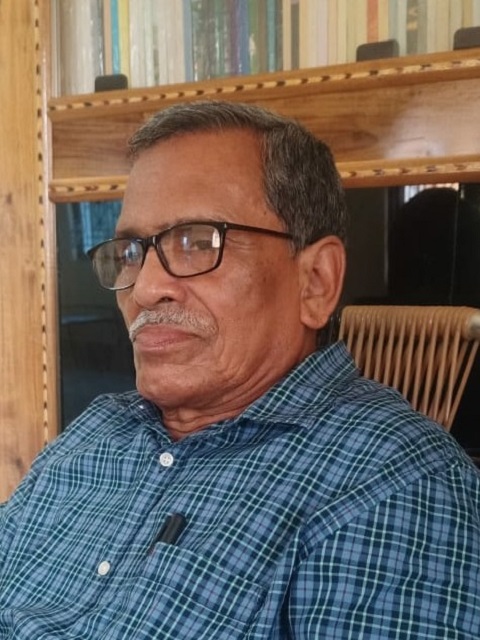
Bipin Patsani (b. 1951) has published poems in many prestigious journals and poetry anthologies including Indian Literature, Chandrabhaga, Journal of Indian Writing in English, Indian Scholar, Kavya Bharati, Poetcrit, International Poetry and Prophetic Voices etc. He has been translated to Spanish and Portuguese. He has three poetry collections to his credit (VOICE OF THE VALLEY, ANOTHER VOYAGE and HOMECOMING). He is a recipient of Michael Madhusudan Academy Award/ 1996 and Rock Pebbles National Award in 2018. He did his Post Graduation in English at Ravenshaw College, Cuttack in 1975 and served as a teacher in Arunachal Pradesh for 34 years till his superannuation in 2012. He also received Arunachal Pradesh State Government’s Award in 2002 for his dedicated service as a teacher. He lives with his family at Barunei Colony, Badatota in Khordha District of Odisha, India.
Tophan Khilar
There is no pretending
To live a life without her,
She is the only pretending
To whom I like to live
My life fully.
The cause is she.
If she is not the cause
There's no cause.
So what?
If she's not with me
She is within me.
So what?
If she doesn't talk to me
She is in my every talking.
The deep connection betwixt
She and me will not be withered;
Even she also can't be escapist
From me far to speak of the world.
My love is love only
Nothing else, not more, not less than love.

Tophan khilar, a pupil teacher doing his B.Ed at Radhanath institute of advanced studies in Cuttack,has keen interest at writing poems. He loves reading fiction and poetry. He started writing poetry when he was doing his graduation. With over 60 poems written,he aims to evoke emotions and provoke thought through his writing.He is a young poet with a passion for exploring themes of nature, identity, love, etc.
Dr. S. Padmapriya
Like a tourist,
I go sightseeing inside a pyramid,
Guided by My Guide,
I tag along with others,
I look at everything around me,
Myriad people, things, situations,
Difficult, simple, complicated,
Looking like rare paintings,
On the walls of life,
Under Ra’s zealous watch,
As I walk inside dingy labyrinths,
Whose tongues are deep and silent,
I didn’t come alone –I know,
But where did the others go?
With dull and dazed eyes,
I notice the conundrum of the pyramid,
I feel like I am lost,
In this pyramid of life,
Unable to see the end or entrance,
I go deeper and deeper,
There appears some light...finally?!
But maybe it is true,
Or maybe it is not!
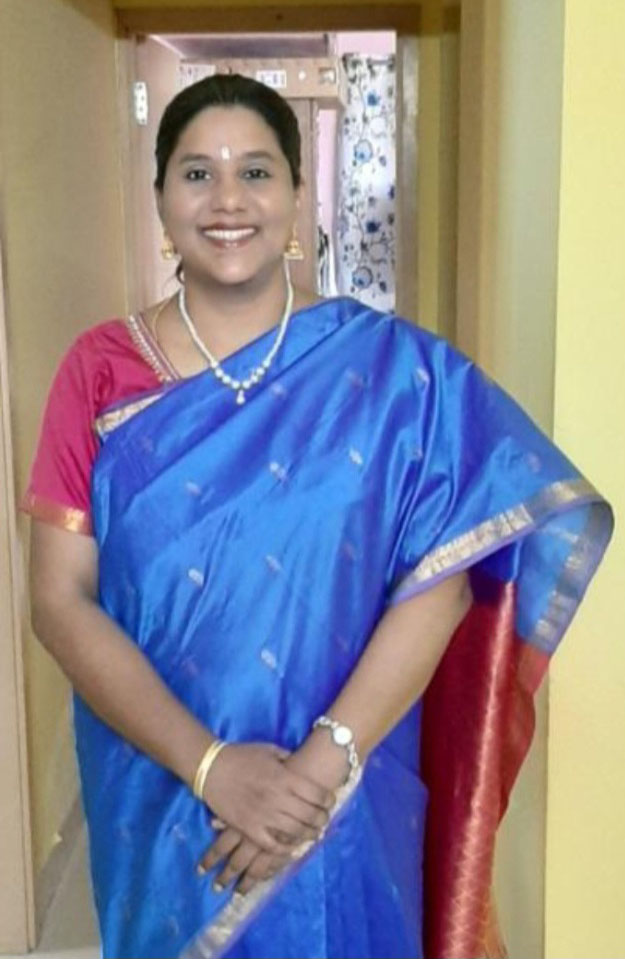
Dr.S.Padmapriya is a well-known poet and author from India. She began writing poems in English at the tender age of seven. Her poems, short stories, essays, book reviews, forewords, articles( general, critical, and research), and other literary works have been published far and wide.
She is the author of four poetry collections – ‘Great Heights’, ‘The Glittering Galaxy’, ‘Galaxy’ and ‘New Poems’, one novel, ‘The Fiery Women’ and two collections of short stories – ‘Fragments’ and ‘Surreal Stories’.
In addition, multiple non-fiction articles on diverse topics have also been published on various platforms, including in 'New18.com' and 'Organiser'.
Namita Rani Panda
In the deepest heart of a dappled forest
Where breeze hums lullabies to rest
A thousand trees fall both small and tall
In the scented air melts their silent fall
Unnoticed and uncared they decay to manure
To support seeds to sprout and prosper
Tall trees fall on silvery snow too
Where mountains stare standing in a row
Like the civilians to enemy's blow
The soil runs red like the chinars’ glow
In the heart of the forest dense and deep
Where whispers of wind lull to sleep
Birds twitter from the trees' leafy crown
Till one day poachers cut them down
The echo of their groan is hardly heard
Ruthlessly trunks are dragged forward
To turn them to coins for greedy gain
Leaving on earth’s chest an indelible stain
The slender branches are the woodcutter’s share
The only means for his family’s welfare
In the hearts of cities many more slain
To widen roads and ease men's pain
Once known as a secure shelter
Ever-ready to welcome with a cool bower
Offering juicy fruits and scented flowers
Is slayed and silenced with the passing hours
Cars pass by, no one stops to see
The sliced limbs of those murdered trees
A few ironically turned to the ultimate bed
For those greedy and the utterly crooked
From a green tree to ember's glow
They live happily and let life flow
Turned to ashes but never complain or weep
Every role they discharge with devotion deep
A few roots that intricately twist and curve
For tourists’ attraction, cared to preserve
In parks, picnic spots just for fashion
A unique way to justify men’s cruel action
Somewhere in a sacred place
Where ceaselessly ecstatic ocean laps
A lucky tree is felled for people's worship
From its heart the creator takes shape
The sacred Lord with large, round and lidless eyes
For eternal watchfulness, a timeless grace
A source of perpetual peace and divine bliss
As it falls for a divine birth
Its death brings light to earth
Each tree falls with dignity and grace
In forest wild or in crowded place
If you listen to a soft whisper in the air
A voice full of pure love and care
It’s the tree for sure that softly whispers,
"I'm still standing here only for you dear.”

Namita Rani Panda is a multilingual poet, story writer, editor and translator from Sambalpur, Odisha. She has five anthologies of poems to her credit: Blue Butterflies, Rippling Feelings, A Slice of Sky and A Song for Myself and Colours of Love. She is co-translator of Rivulets of Reflections, a book of translated stories from Odia to English. She has co-authored Radical Rhythm Volume I to IV with the credit of editorship of Radical Rhythm II. She is co-editor of two anthologies of poems Resplendent Rainbow and Durga the Invincible. She is a retired Principal of NVS. She can be contacted at namitaranipanda506@gmail.com
Dr. Rajamouly Katta
letters of the alphabet,
learnt sitting before teachers,
as children to frame words,
structures of sentences
to express statements,
positive and negative.
true letters are life-letters
for us to learn wisdom
to overcome the barriers
to cross the frontiers
like birds that know no borders,
no know of letters in their kingdom.
true letters lead us from fetters
of slavery in bravery
to freedom of thoughts
to live like a master
not like a slave for a life in cage
as a man of letters.
true letters guide us to learning
for a lifelong journey
from illiteracy to literacy
from darkness to light
from ignorance to civilization
in the powers of letters.
true letters are for glitters
like flowers of garlands
the sign of high honours,
for the life of values and virtues
for the head to keep high
to enrich the image of the soil.

Dr. Rajamouly Katta, M.A., M. Phil., Ph. D., Professor of English by profession and poet, short story writer, novelist, writer, critic and translator by predilection, has to his credit 64 books of all genres and 344 poems, short stories, articles and translations published in journals and anthologies of high repute. He has so far written 3456 poems collected in 18 anthologies, 200 short stories in 9 anthologies, nine novels 18 skits. Creative Craft of Dr. Rajamouly Katta: Sensibilities and Realities is a collection of articles on his works. As a poet, he has won THIRD Place FIVE times in Poetry Contest in India conducted by Metverse Muse rajamoulykatta@gmail.com
S. J. Sangeetha
The convict lay twirled in a grey corner of the dark cell
Final day on earth
A flash of the sentence "day" pierced his mind again
He confessed but was never penitent
He had to be so; after all, a sacrament
His heart mellowed, tear ducts so dry
Day of induced salvation, “Welcome death”
Officers came for preparing the well-prepared man
Out of the cell, handcuffed, he strolled
Reached the platform covering the deep
Asked to make his last wish, nodded head
Before his vision made blind forever
A globe descends from the eyes of the hangman.

The Intersection of Life and Literature -S.J. Sangeetha, a Civil Engineer living a life dedicated to literature in her regional language Malayalam and in English. Has secured accolades including National level, State level and Regional-level awards and prizes. She is a flourishing author. Her key areas of writing include Poetry and Short story
Bijayalaxmi Rath
Silent affectionate winter sun,
dancing to your chirping tone.
Reach my blanket from distant
green grove.
You are the tiny voice of
graceful nature.
Singing the symphony of new sun
You Pamper.
I open my eyes to your syllables
of wonder.
To your cute magic world taps it's
feet in a rhythmic pattern.
Slowly fades sweet voice of yours.
But earth awakes with a smile to
travel forth.
Oh! little birdie dear you teach us
with your melodious love that
Every sunrise is a grace of God.
We all should commit and celebrate life
without a pause.
Merging, mingling to one and all
sharing with our truest love.
Let's enjoy Earth's epiphany of
dusk and dawn.
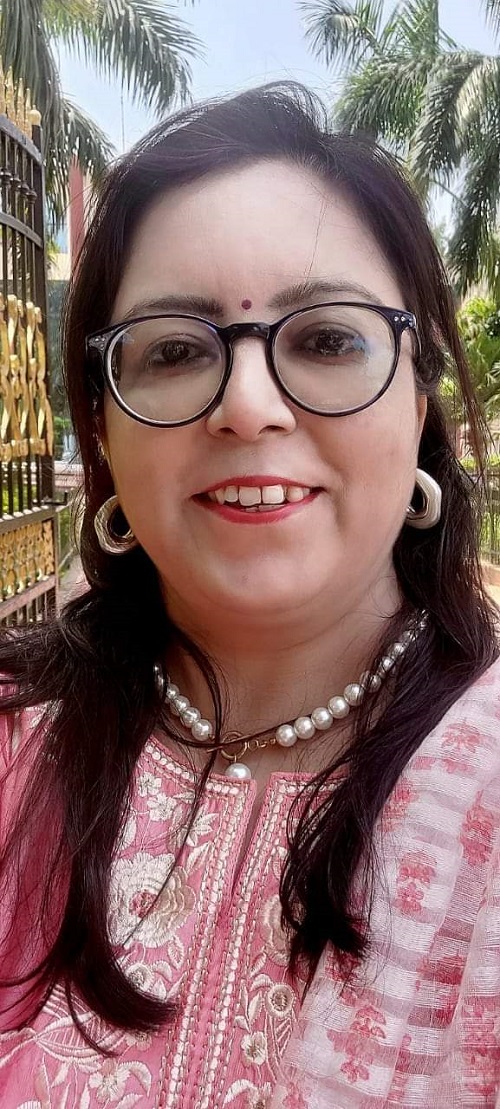
Bijayalaxmi Rath done masters in English from Utkal University Odisha. Works as PGT English St Xavier International school Bhubaneswar.
Multilingual poetess writes in English Hindi and Odia. Published in different anthologies like Durga, Rainbow of Eastern Sky',Toshali etc. Bagged Gujarat Sahitya Academy award, Rabindra Nath Tagore award etc .
Gouranga Charan Roul

Sun dips in hazy skies,
Golden glow on waves that sigh.
A lone runner on the shore,
Dancing shadows, waves galore.
Wet sand mirrors sun’s soft beam,
Ocean whispers a peaceful dream.
In this calm, the world slows down,
Nature’s song in twilight’s sound.
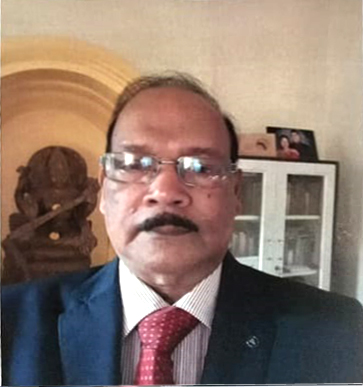
Gouranga Charan Roul (gcroul.roul@gmail.com)
The author, after completing post graduate studies in political science from Utkal University, Odisha in 1975, worked as a senior intelligence sleuth in the department of Customs, Central Excise & Service Tax and retired as senior superintendent. As a staunch association activist, he used to hold chief executive posts either as General Secretary or President of All India Central Excise Gazetted Executive Officer's Association, Odisha for 20 years. Presently in the capacity of President of Retired Central Excise Gazetted Executive Officer's Association, Odisha, coordinating the social welfare schemes of the Association. Being a voracious reader, taking keen interest in the history of India, Africa, Europe and America. In his globe tottering spree, widely travelled America and Africa. At times contributing articles to various magazines.
SEVEN MONTHS OF UNITY AND LOVE
Sukanya Kunju

A gift that graced us from above.
Hand in hand, we greet each day,
In tender words and smiles that stay.
We’ve shared our dreams and quiet nights,
Turned simple moments into light.
With every step, we’ve grown more strong—
In trust and care, where hearts belong.
May time keep writing chapters new—
Of me with you, and you with me too.
Seven months—and just the start
Of forever written heart to heart.
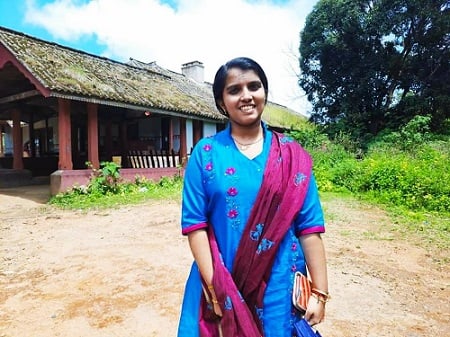
Sukanya V Kunju is a postgraduate in English language and literature from St.Michaels College, Alappuzha. Most of her poems have been published in Literary Vibes. She is an aspiring poet. She is the co-author of the book Dusk and Dawn.
Sreedharan Parokode
What is in it?
The messenger did not
answer.
Perhaps he does not know the
content
Or
Utterly helpless for an open
discussion
The inside wares may be familiar
to us
But the fear of atrocities is the
main reason behind the silence.
Fear developed from outside is far
better than the fear of one's own mind.
There is no medicine for the latter.
Any how the parcel speaks
something,
A day will come for the
opening.
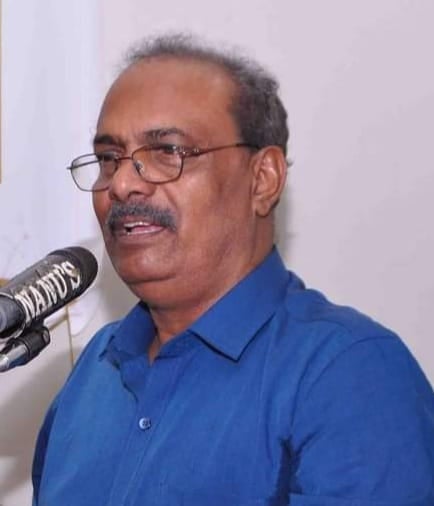
P.L.Sreedharan Parokode is a bi-lingual poet and lyricist from Malappuram district, Kerala. He has a Master's degree in English literature and Population Studies and a Post Graduate Diploma in Parental Education. Sreedharan has thirty books of poetry to his credit, including 'Weeping Womb', 'Slum Flowers,'Mahatma Gandhi' 'Nelson Mandela',Poems', 'Don't mum Please' etc. He has also written songs for professional dramas, for albums, songs for competitions, devotional songs etc. He has written songs for animation film also.
Sreedharan has attended various literary conferences in India and abroad. He presented his poems at World Congress of Poets, in Taiwan, 2015, China, 2018, and literary conference in Serbia, 2007.
He has received awards and honours from various organisations, such as, Sahitya shree Award, Sahitya Shiromani Award, Shan E Adab Award etc. He has also received an Hony.Doctorate from the World Academy of Art and Culture
Sreedharan is currently engaged in Doctoral Research in Population Studies from Annamalai University. Earlier he was working in the Administrative wing of the University of Calicut.
Darsana Kalarickal
December,
You make me tender with longing,
Your breath—frozen into wind—reluctant to part,
knocks and calls at my windows.
From somewhere in the darkness,
the music of mad souls rises.
Crossing open windows,
you come close to me, breathless.
On my parched lips
you place a moist kiss.
On my slowly closing eyelids ,
on my softly fluttering curls,
you caress gently,
Even when, hesitating,
you slowly move away,
your chill still surrounds me.
When I think of you, December,
a chilled shiver awakens in my big toe.
Somewhere, a soft flute-song begins.
Having forgotten to shut the windows,
I follow you—
to see moonlight falling
on frost-bloomed valleys,
to hear the whispered chants of crickets,
the music of moon-birds.
Forgetting everything,
I long to sit on cool green grass
and dream till dawn,
The golden cassia flowers
blooming out of season,
mocking me in the dark.
Far away, at a corner of the sky,
a single star guides my way.
Carol songs of those celebrating Christmas
brush past me and drift away.
And yet, my December,
for you I keep in my heart
a seed no one else may touch.
When harsh summer, monsoon, spring, and autumn,
the seasons pour and fade away,
I will take it out.
Inside it, a wave of coolness lies hidden.
As it begins to sprout,
I will hand it over to the wind,
thus its roots may spread
across the whole earth,
and may fall
as drops of compassion
into scorched realms of heat.
December,
thank you.
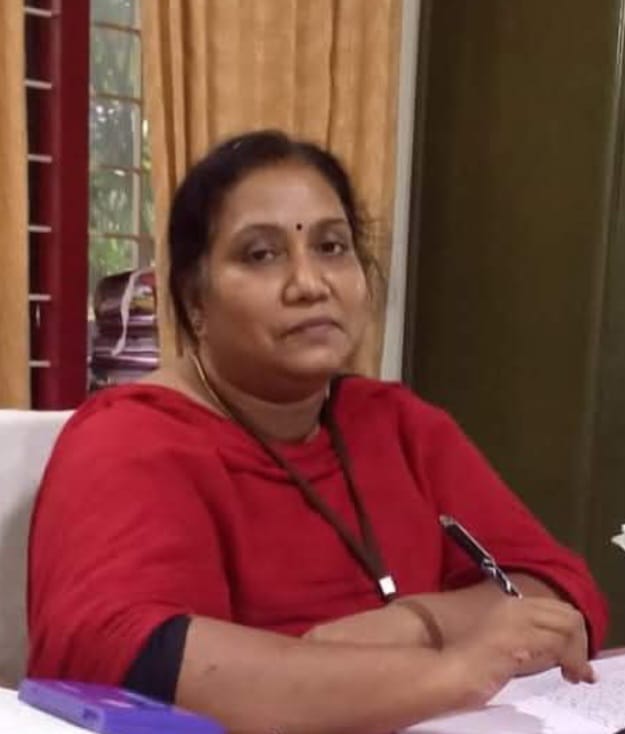
*Darsana K.R., residing in Venginissery, Thrissur district, is an employee at Venginissery Service Cooperative Bank and a passionate poet. Her published works include the poetry collections *Kavithaye Pranayichaval, Pranayathil Akappettathinte Ezhaam Naal, and Kuldharaayil Oru Pakal; the short story collection Thekkedathamma V/S Ramakavi (co-authored with Dr. Ajay Narayanan); the memoir Kunnirangunna Kothiyormakal; and the poetry study Kavithayude Veraazhangal. Her poems and articles have been featured in various periodicals and online platforms. phone : 9645748219, email darsanakr1973@gmail.com.
NOT A NUMBER: DECEMBER’S COUNTING
Dr. Niranjan Barik
What a solace it was when somebody whispered that age is only a number,
Yet we hear aloud December’s counting of years
Trees let go of what once felt sure,
Time lays frost upon the ground.
An old man listens for that voice
That once made numbers light,
But it falters in the thinning air
Lost among earlier nights.
Still a fall is not a failure,
Nor the year an ending bell.
What sheds is what made room
For roots to deepen where they fell.
Age is not the lie of youth renewed,
Nor denial dressed as cheer
It is knowing loss walks with us as a companion,
And choosing hope to stay near.
For spring is not naïve to winter;
It simply comes again, shrugging off the shelter of comfort,
And life is not a number kept,
But a meaning lived, then lived again.
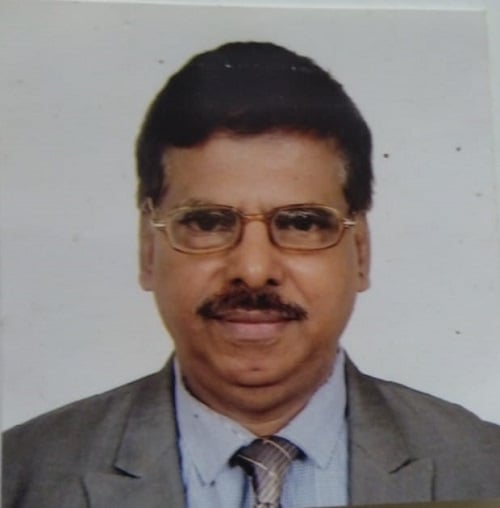
Professor Niranjan Barik ,formerly Professor and Head, Department of Political Science at Ravenshaw University also served as a Professor of Pol.Sc and Principal , Khallikote Autonomous College, Berhampur, Odisha. A Fulbright Scholar-in-Residence at Miles College, Birmingham, AL, USA in 2007-08 , Prof Barik evinces interest in reading and writing short stories and poems in Odia and English. His poetry book , “Freedom from Bondage: An Ode to Nature” published by Black Eagle was released in Bhubaneswar in December 2023.
Dr. Mrutyunjay Sarangi
Life sheds its many leaves
With the approach of winter.
Yet it wasn't always like that.
When the autumn had set in
There was a riot of colours.
That spoke of the ups and downs,
The wins and losses.
The red leaves stood out for unrequited love
And its many bloody scars, the pink ones for
Sweet whispers and the rolling laughters
The yellow leaves reminded me
Of the many moments of waiting.
The green ones made me think
Of all that remained young in heart
The saddest were the dry, wrinkled leaves
Remnants of an empty nest
When everyone left me forlorn
To look at an eerie nothingness,
Now I feel it in my bones
The coming winter will be
The coldest of my life.
Dr. Mrutyunjay Sarangi is a retired civil servant and a former Judge in a Tribunal. Currently his time is divided between writing poems, short stories and editing the eMagazine LiteraryVibes . Four collections of his short stories in English have been published under the title The Jasmine Girl at Haji Ali, A Train to Kolkata, Anjie, Pat and India's Poor, The Fourth Monkey. He has also to his credit nine books of short stories in Odiya. He has won a couple of awards, notably the Fakir Mohan Senapati Award for Short Stories from the Utkal Sahitya Samaj. He lives in Bhubaneswar.
Jaydeep Sarangi
Medusa, Nandini Sahu, Black Eagle Books, Dublin USA, Pp 122, Rs. 300/=, ISBN 978-1-64560-693-2
--Reviewed by JAYDEEP SARANGI
Poetry of the world written from different cultural spaces can never be a pre-planned or deliberate exercise. It outbreaks daylight even when there is no light in the society. Writing poetry is a social act tinged with subtle emotions which takes us beyond the mundane and the temporal. Today’s India is richly loud with candid, self-assertive and soul therapeutic poetry in English. With many generations of English studies as a help, poets choosing English as the medium are experimenting with their language, vigorously and tenderly. Odiya by gene and anchored in New Delhi, Nandini Sahu is one of them. Eleventh collection of a poet means how the poet has made her journey persistently over a period of time.
“I am Medusa, I merge with you.” The collection of poems, Medusa begins with a statement. Reading this collection feels like stepping through pages of mythology, both from the home and Greek/Roman.
Many of Nandini’s lines deliver what readers of poetry seek; connections with mindscapes of extraordinary beauty and joy:
“This life, being Medusa,
I dance with the oceanic waves, move with the sea.
The rhythm of water has set my soul free.
I get into my past….”
The Medusa myth offers a powerful lens for examining societal views on female power, sexuality, and victimhood. Initially portrayed as a monstrous figure who could turn men to stone, Medusa is now often reinterpreted as a symbol of female empowerment, agency, and resistance against patriarchal norms. Feminist readings highlight her as a victim of male violence and societal blame, transforming her from a terrifying monster into a figure of strength and reclamation. Nandini’s images are fully ripe and, as we all know, ripeness is all:
"I become two people there,
one says ‘yes’ and one, ‘no’ to history.
Apparently, my beauty has surrounded you, encircled you (.)"
By re-examining Medusa's story through many of the poems in this collection, the poet’s feminists challenge the traditional male-dominated interpretations that focus on Medusa’s monstrosity and fear. Here we see a version of fresh wisdom and order of truth. This dimension of fact asks viewers to see her as a complex figure with her own agency in history and to recognize the ways in which the male gaze can distort and objectify women:
Medusa is non-judgmental, audacious,
beautiful, flexible yet unyielding…
Eco-poetry roots us in our environment both physically but also in the way we tell stories to one another. We experience this heightened state as the magic of living. Topography, riversides, flora and fauna and people residing in the home of thought result in memory. Nandini believes in the principle: a flower is distinct from a mountain, both beautify earth. Nandini’s poems are ruminative sessions recollected in tranquility, a timely return to the mother earth.
Medusa's transformation into a powerful figure, even after being victimized, is seen as a symbol of resilience and the ability to reclaim one's power in the face of adversity:
“God knows when your mild woman went wild(.)”
Many of her poems are Odes to every woman. Nandini’s personal feelings merge with all women folk. Sublime beauty in her poems lies with the quintessential feeling of absences when someone leaves home behind:
“Her silence conquers you.
Her self is mirrored in the riddles told,
she spins her tales in sounds that loop and twist,
the echo mocks the fate that seeks her name.”
For Nandini, with sparkling cadence, illness of life becomes wellness of mind. Her choices of words and images coupling the incisive eye of an academic and with the emotive directness of a poet capture ‘mind time’ of appearances and disappearances of objects and sights. We loath how time flies. Human mind is deeper than a regular matter. The sense of inhabiting is a constant search which haunts the poet.
In a sense of gratitude she thinks of herself with Prakriti. A close follower of late Jayanta Mahapatra and late Niranjan Mohanty, two doyens of poetry , the poetic self rises, rises poignantly still as a tree whose roots drink deep of mystery’s crimson lines, whose branches scratch the edge of a delightful shore somewhere, as seasoning’s rain hails the coming of her reign. In the subline space of poetry, the bright stars, her mythical sisters, gather at her feet and their light, a delayed deference to her might and pride:
“I am not just a woman since that fateful night, but entire
womankind. Now I am a woman of full circle,
within me there is the
power to create, nurture and transform.”
Since time immemorial women have been placed in the Man's Box of Ideology. Nandini’s poetic canvas breaks the stereotypes. Quote from Emile Zola is very important to note here,
“We are like books. Most people only see our cover, the minority read only the introduction. Many people believe the critics. Few will know our content.”
The book of wisdom said, ‘as the going gets tough, the tough get going.’ The poet announces, ‘but I am brave!’ And it said, ‘how do you know?’ The soul maker in Nandini says, “Till today only delightful things happened to you, you are young.”
Retelling these stories offers a fresh glimpse into what these women may have experienced, from the perspective of women who would comprehend far more what they were feeling compared to the men who originally wrote their stories. They give those women, and the real women that existed during that time, the voice they had always longed for, and in doing so, retellings offer them a legacy, a rebirth. Poems blur borders and transcend boundaries. This collection would certainly add to the existing database and create new interest in this exciting body of literature, which is an immense pool of talent and a meeting point of literatures,
Culture and poetry intersect There is plenty of straight speaking in these poems and yet, the aesthetics of the craft remains untainted. A seasoned folklorist, Nandini works with sublimation of rage, hurt and thirsts into the universality and permanence of art. Even in these dynamics of integrated faith and order of things, the human mind can be king. Nandini’s beguilingly simple use of language reflects and constructs identity:
“She lives in beauty, her smile—an echo of the eternal.
Empathy in her eyes, like the stillness of dawn,
where wisdom does not bellow, but listens unwearyingly “
Nandini’s bold use of images make things dazzling. Intersectional subtlety of the poems in this collection arrests our undivided attention. These amazing poems in Medusa remind us how literature is a fresh mode of knowing the truths of the world and perhaps, it can give us an adequate apprehension of future experiences through a wide spectrum of images and symbols related to the biosphere, time’s daily acts and tickle, and its routine consequences. Reading Medusa , our gypsy heart longs for a break and recoil:
“Their love is a story to be told
through fire-lit nights, in voices intrepid.
Of love that bloomed in forest’s shade …”
She is a true follower of the poets of her land, a taste of Odia ethos, and cults of the land. She flows with the dappled mysteries of nature and the quiet flowering of a soul in full bloom.
Her in-group solidarity for sisterhood is reflected through some beautifully crafted poems:
“I fancy my sisters to appreciate, in spirit,”
Like Medusa in Greek mythology, a resilient spirit in her believes that together with other powerful female minds she can change spaces for gender roles in our society and soul spaces we all inhabit,
“I still believe that
it’s possible to change the world, this planet.”
The poet is a persistent explorer of the finer senses and sensibilities:
“Dear sisters, I am that imperfectly-perfect-woman,
take me as I am, maybe with a pinch of salt?”
The readers must note the confidence and intelligence of the poet, who is a vice chancellor now,
“I rediscover pieces of myself
through your unborn narrative,
in the resonance of my quirky confluence.”
In the poem, ‘Sucking Silences and Solitudes’ the poet in Nandini expresses deep seated philosophies and experiences she cultivated and nurtured for years.The poet is a persistent seeker, she seeks an empty room to sit still, to listen to silence. The poet hums inwardly and returns to something untouched , disparate, uncertain, faithfully yet powerfully.
To echo her words, ‘in her elegance, mesmerised we are!’ We live in her beauty, she paints warmth in the readers.
-- ------
Jaydeep Sarangi is Principal, New Alipore College,Block-L,New Alipore, Kolkata-53,WB
President, Guild of Indian English Writers Editors and Critics(GIEWEC)
Jaydeep Sarangi is an Indian poet with ten poetry collections in English latest being Memories of Words, poetry activist and scholar on postcolonial studies and Indian Writings with forty one books anchored in Kolkata/Jhargram,.. With Rob Harle he has edited six anthologies of poems from Australia and India which are a wealthy literary link between the nations. With Amelia Walker, he has guest edited a special issue for TEXT, Adelaide (Australia). His recent books include, Mapping the Mind , Minding The Map:Twenty Contemporary Indian English Poets , Sahitya Akademi, 2023 and A Life Uprooted: A Bengali Dalit Refugee Remembers, Sahitya Akademi, 2023. Mapping the Mind, Minding the Map ( 2023, Sahitya Akademi) is his latest book. Sarangi is currently the President of Guild of Indian English Writers, Editors and Critics (GIEWEC) and Vice President, EC, Intercultural Poetry and Performance Library, Kolkata. Living with poets and poetry, Sarangi is principal of New Alipore College, KolkataHe may be reached at: jaydeepsarangi1@gmail.com Website : https://jaydeepsarangi.in/
TRANSIENT HOMES AND ENDURING BONDS: MOBILITY, MOTHERHOOD, AND MEMORY IN DR. APARNA AJITH’S SUITCASES, SANDCASTLES, AND LITTLE ANVIK
Aparna Ajith
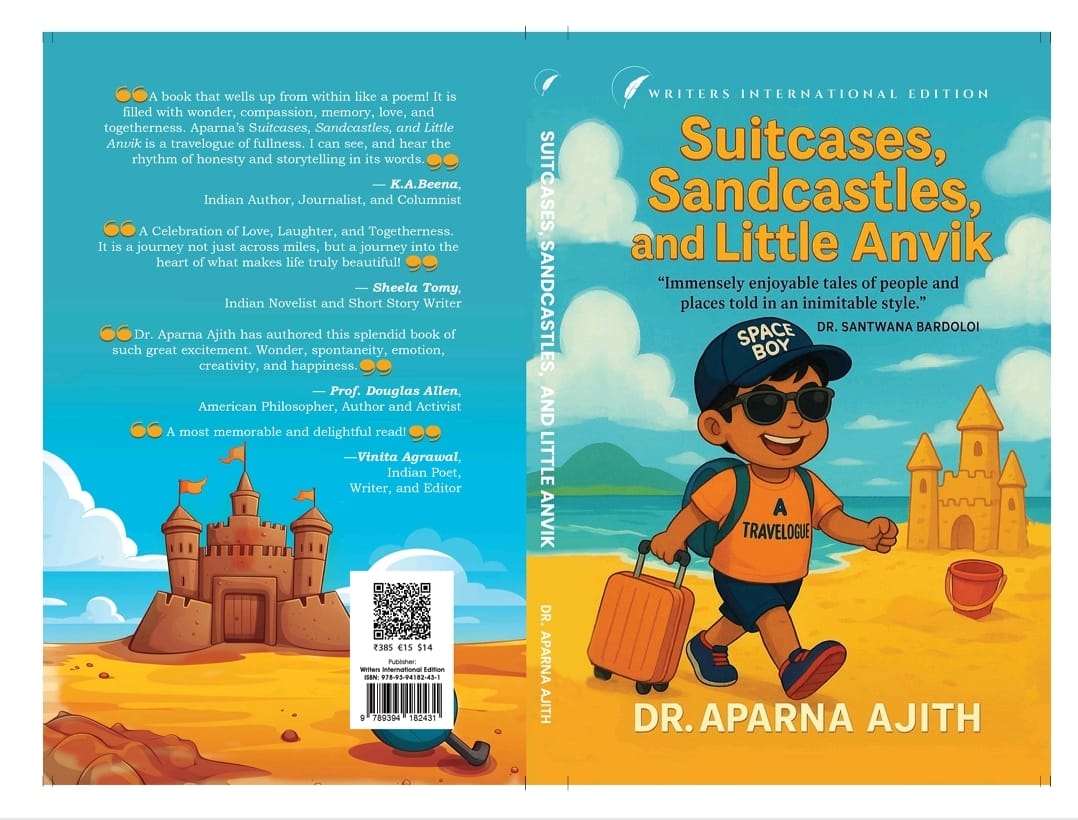
“Travel is fatal to prejudice, bigotry, and narrow-mindedness, and many of our people need it sorely on these accounts. Broad, wholesome, charitable views of men and things cannot be acquired by vegetating in one little corner of the earth all one’s lifetime.”
~ Mark Twain, The Innocents Abroad (1869)
In her debut travelogue, Suitcases, Sandcastles, and Little Anvik: A Travelogue (Writers International Edition, 2024), Dr. Aparna Ajith reinterprets the transformative potential of travel articulated by Twain, framing it within the intimate confines of a young naval family’s relocations across India. Comprising twenty-two chapters over 244 pages, the work chronicles the journeys of the author, her husband Sujeeth, a naval officer whose postings drive the family’s mobility, and their young son Anvik, endearingly referred to as Kunjapp. Through vivid depictions of diverse Indian locales, from the serene hills of Kodaikanal to the vibrant islands of Andaman and Nicobar, Ajith weaves a narrative that transcends conventional travel writing by integrating personal reflections on motherhood, familial resilience, and the preservation of memory amid transience.
The structural framework of the book enhances its thematic coherence. Preceded by endorsements from prominent figures in literature, film, and academia such as National Award-winning filmmaker Dr. Santwana Bardoloi and poet Johanna D.S. Chittranjan, the volume includes a foreword, biography, preface, and acknowledgements. These paratextual elements establish a scholarly and appreciative context, positioning the travelogue as a bridge between personal memoir and broader cultural discourse. Bardoloi commends Dr Aparna’s “inimitable style” and profound affection for places and people, while Chittranjan notes the author’s capacity to evoke unfamiliar territories through keen observation. Such accolades highlight the work’s interdisciplinary resonance, appealing to readers interested in pedagogy, cinema, and literary studies.
Dr Aparna’s narrative begins with “Flight at 0.8,” a chapter that ingeniously references the Mach speed of aircraft, symbolising both the family’s naval connections and the accelerated rhythm of their lives. This opening captures the challenges of traveling with an infant, emphasising sensory experiences in airports and the meticulous preparation involved in naval transfers. Recurring motifs, suitcases as repositories of memory, sandcastles as symbols of impermanence, and Anvik as a stabilising force, underscore the dialectic between mobility and rootedness inherent in military families. The family’s itinerary spans urban centres like Bengaluru and Kolkata, natural sanctuaries such as Thattekkad, and pilgrimage sites including Rameswaram and Palani, offering a panoramic view of India’s geographical and cultural diversity.
A central theme is the interplay of familial intimacy and expansive landscapes, particularly through the lens of motherhood. In “Kunjapp’s Maiden Birthday Journey,” set in Kodaikanal, Dr Aparna portrays Anvik’s first birthday amid misty pines and high-altitude chill. Eschewing overt sentimentality, she grounds the account in precise sensory details: the aroma of homemade plum cake, the tactile unevenness of terrain under toddler feet, and the quiet joy of familial milestones. This restrained lyricism, praised by Prof. (Emeritus) Dr. Annakutty Valiamangalam K. Findeis for its accessibility and poetic quality, renders the prose both evocative and relatable. Dr Aparna’s first-person perspective fosters immediacy, allowing readers to vicariously experience the joys and exigencies of parenting on the move.
The Andaman Islands section forms a compelling narrative arc, blending adventure, history, and ecology. Chapters like “Jab We Met @ Port Blair” employ playful allusions to popular culture while documenting family reunions against the backdrop of colonial history and the Cellular Jail. Explorations of Havelock, Neil Island, and Baratang feature mangrove ecosystems and limestone caves, where Dr Aparna metaphorically links natural resilience to familial adaptability. Anvik’s innocent encounters with marine life provide poignant counterpoints to adult contemplations of impermanence, enriching the text with layers of wonder and reflection.
Goa similarly emerges as a site of intergenerational connection. In “Anvik, Pariksheth, and Bhavishya: The Three Musketeers of Goan Childhood” and “In the Rhapsody of Nandanvan Spice Farm,” Dr Aparna depicts playful interactions among cousins amid spice plantations. Sensory immersion, aromas of cardamom and clove, transforms routine tourism into meditations on heritage and sustenance. Culinary farewells, such as those to Goan traditions in “Au Revoir, Our Queen’s Kitchen,” implicitly embed recipes within narrative, celebrating shared kinship and cultural continuity.
The travelogue adeptly negotiates absence and presence, particularly in light of disruptions like the COVID-19 pandemic. Though not exhaustively detailed, references in endorsements suggest Dr Aparna’s ability to transmute confinement into contemplative depth, as noted by Lt. Jesin Alex. Urban vignettes in “Our Humans of Bengaluru” offer solace through encounters with community, balancing depictions of parental fatigue and logistical challenges with authentic emotional honesty.
Stylistically, Dr Aparna’s prose is characterised by rhythmic sentences and fresh metaphors derived from quotidian observations, avoiding clichéd expressions. Comparisons to travel writers like Jan Morris or Pico Iyer are apt yet reveal Dr Aparna’s distinctive focus: an intimate, domestic gaze rooted in Malayali heritage and naval imperatives. This postcolonial orientation prioritises subcontinental multiplicity over Western exoticism, from the evocative ruins of Dhanushkodi to cross-cultural exchanges, such as Christmas with a “German Muthassi.”
While the episodic structure effectively mirrors military fragmentation, it occasionally prioritises breadth over depth, with briefer treatments of sites like Thenmala. The emphasis on familial anecdotes, though mitigated by inclusive rhetoric, may limit broader appeal. Nonetheless, these elements reinforce a communal ethos, evident in extensive acknowledgements.
Produced with professional finesse by Black Innovations and Manipal Technologies (ISBN: 978-93-94182-43-1), the volume affirms its literary merit under Writers International Edition’s transnational imprint. Dr. Aparna Ajith, an Assistant Professor of English with a Ph.D. in Comparative Literature and Translation Studies, draws from her extensive travels across India spanning 18 states and 2 union territories to craft this work. Her background in academia and freelance journalism informs a narrative that is both scholarly and accessible.
In conclusion, Suitcases, Sandcastles, and Little Anvik stands as a poignant exploration of ephemeral journeys yielding enduring memories. It contributes meaningfully to contemporary travel literature, particularly in discourses on gender, mobility, and domesticity within military contexts. By documenting the interplay of displacement and belonging, Dr Aparna illuminates the redemptive capacity of place and family, inviting readers to appreciate the profound in the transient. As Prof. Subhas Chandra Saha anticipates further volumes, this debut affirms travel’s role in expanding human empathy, one suitcase and sandcastle at a time.
Preeth Padmanabhan Nambiar
About the Author

Dr. Aparna Ajith is an academician as well as a bilingual writer who loves to dwell in the world of words. She was awarded PhD in English from Central University of Rajasthan. Her area of specialization is Comparative Literature and Translation Studies. Her interest lies in Creative writing, Gender, Diaspora, Film and Culture studies. She holds a Master degree in English Literature (UGC- NET qualified) from University of Hyderabad (2012) and Post Graduate Diploma degree in Communication and Journalism from Trivandrum Press Club (2014), Kerala. She has presented papers in national and international conferences. She has published articles in journals and edited anthologies of national and international repute. She serves as the honorary representative of Kerala state in the advisory council of Indian Youth Parliament, Jaipur Chapter since 2015.Being a freelance journalist, she has translated and written articles for the Information and Public Relations Department, Government of Kerala. Her creative pieces have found space in ezines and blogs. She is an avid reader and blogger who dabbles in the world of prose and verse. Having lived in three Indian cities and a hamlet, she soars high in the sky of artistic imagination wielding out of her realistic and diasporic impressions.
Viewers Comments