
PROMOTION OF HANDLOOM AND INCREASING EARNINGS OF THE WEAVERS ON A SUSTAINABLE BASIS – AN EXPERIMENT

PROMOTION OF HANDLOOM AND INCREASING EARNINGS OF THE WEAVERS ON A SUSTAINABLE BASIS – AN EXPERIMENT
Dr. Sanjay Kumar Panda
“Roti, Kapda and Makan” are the three basic needs of a human being. After food, clothing is critical for all. This need used to be met by the handloom weavers for ages. Along with fulfilling the need, hand operated looms were providing livelihood to lakhs of weaving households in the rural areas. After the industrial revolution, production of fabrics by power loom at a relatively lower cost affected viability of the handloom industry and the weavers adversely. Notwithstanding support from central and state governments under several programs, the number of active looms has been declining, and youths from the traditional weavers’ family have been opting for other occupations.
2. In this background, SHRADDHA civil society organisation (founded in 1994 by Dr Sanjay Kumar Panda IAS retired, former Secretary, Ministry of Textile) has been working for promotion of handloom with focus on increasing earnings of the weavers on a long-term and sustainable basis. The organisation was revamped in 2022 with active support of people sharing the common goal of giving back to the society including Shri Bijan Behari Pal (former Director, Weavers Service Centre) and Shri Surendra Kumar Patra (former Deputy Director, Weavers Service Centre), who have decades’ long practical experience and domain knowledge of handloom.
3. Based on field experience of working with the weavers and long ranging discussion with other stakeholders of handloom, SHRADDHA has evolved a strategy based on the following.
i. Handloom must be promoted as a niche (Khas - extraordinary) product based on its inherent strengths, and not as an alternative to power loom weaves.
ii. Consumers need to be made aware of the fascinating, high skill, and labour-intensive aspects of handlooms fabrics. Those, who have liking for handwoven products and disposable income need to be targeted as potential customers for handloom throughout the year beyond the normal family functions, festive seasons and rebate-based sale.
iii. The weavers need to be made aware of the changing market conditions and persuaded to make quality weaves, free of any defect, with new designs, new colour and new products (dress materials in place of saree) as per the taste of the customers as referred to above.
iv. The weavers should be guided with time & patience by handholding for using mobile phone to contact the customers, know their taste, weave and sell products directly to the customers (D 2 C basis), which would eliminate the middlemen and increase their earnings.
v. Simultaneously enterprising youths may be encouraged and supported for launching their
“Startups” for sourcing and marketing.
vi. The Weaver Service Centre, an excellent organization, may be strengthened with more technical staff (with degree/ diploma in handloom) and deployed in the handloom clusters to guide the weavers.
vii. Potential of handloom for generating a decent income in their existing houses along with other advantages should be exploited for empowering women with traditional handloom background under “Mission Shakti” and other ongoing programs.
viii. Supply of quality raw materials at a reasonable price, easy working capital, branding, and marketing in the metropolis may be supported adequately.
4. The aforesaid strategy for increasing the earnings of the weavers needs a paradigm shift in the existing approach. It has two key components, namely
i. Change in production for weaving fabrics (a) with quality, new and contemporary
design, new colour, and new fabrics like dress material in place of saree, and (b) for the customers, who have preference for handwoven fabrics and disposable income; and
ii. Change in marketing by connecting the producer weavers directly with the consumers using mobile phone and social media in a gradual manner, which will eliminate middlemen and reduce transaction cost drastically.
5. The above strategy was tested by SHRADDHA with a group of women weavers of the Maland village, Tirtol block, Jagatsinghpur district under a project sanctioned by the Haridaspur - Paradip Railway Company Limited (HPRCL) under its Corporate Social Responsibility (CSR) interventions during 2024-25. The project was taken up under the personal supervision and technical guidance of Dr Sanjay Kumar Panda, President and Shri Surendra Kumar Patra, Vice President. The training program aimed at sensitizing the weavers along with provision of market information, skill and assets for weaving fabrics with new design, colour and new fabrics (dress material in place of saree) as per the taste of elite customers, who have taste for hand woven fabrics and disposable income. The trainees were provided soft skill and taken on exposure visit to the Weavers Service Centre and Kalabhoomi and participate in an innovative marketing intervention in Bhubaneswar.
6. The 45-day long training program concluded on the 21st of March 25, within a few days of celebration of the International Women’s Day. Smt Taapoi Nandi and Smt Lovabati Sahu, two weavers trained under the project, narrated their experiences of the training. With confidence and pride, they mentioned that support received under the project enabled them to diversify production from saree with traditional designs and color meant for the rural consumers to dress materials and saree with lighter shades and smart designs for the new generation customers and that this led to increasing their earnings by about 50%.
7. On the second component of the strategy related to marketing, SHRADDHA organized a day long handloom sale exhibition in the Banquet Hall pf Royal Lagoon residential complex, Patia, Bhubaneswar, a gated society of over seven hundred high net worth families on the 9th of March 2025. Appreciating the noble purpose, the management volunteered and made their facilities available at a reduced rate. Necessary arrangements for publicity, display, lunch etc. for the participating weavers were made by SHRADDHA. Six weavers from Maniabandha, Gopalpur, Jagatsinghpur and Bargarh handloom clusters participated with a range of handloom products. Smt Snehaprava Dash, an elderly inmate of the complex eagerly came forward to put on a saree with contemporary design woven by the women weavers of Maland village and inaugurated the event. Her gesture and kind words of encouragement generated lots of enthusiasm among the weavers.
The weavers were encouraged to sell their fabrics with a marginal markup on the price; they sell in their villages. This position was explained to the visitors, who appreciated it as they found the price to be reasonable and lower than the rate at which it is available in the city shops. Over one hundred customers visited the stalls and fabrics worth Rs 2.30 lakhs were sold without any discount/ support from government. The participating weavers left for their villages happy, as they got the sale value instantly and about 30% more than what they would have got otherwise in their village.
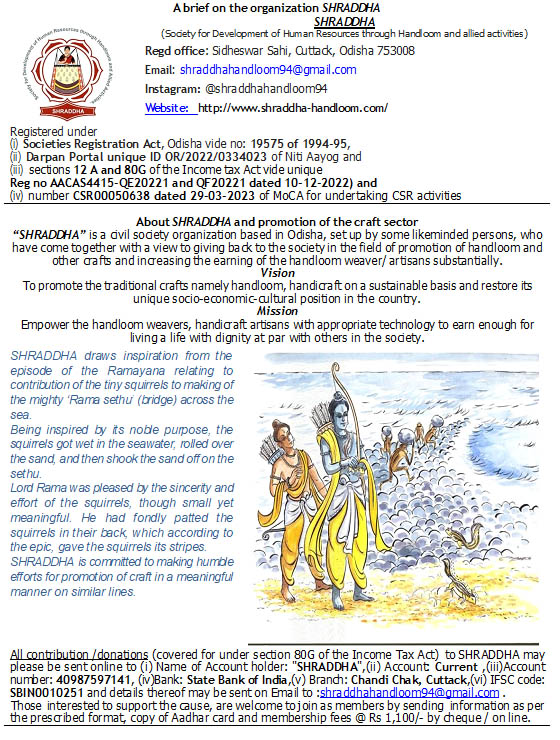
This small experiment of SHRADDHA (working on the spirit of the contribution of the squirrel to making of the Rama Sethu in the Ramayana) led to.
• Enhancing the confidence and earnings of the producer weaver and provided an opportunity to meet potential customers for handloom, know about their taste and liking as well as contact numbers. And
• Sensitising the potential customers to quality handloom fabrics for buying at a reasonable price, along with the pride of promoting tradition and culture and happiness of helping the less privileged. This experiment has established that earnings of the traditional weavers can be doubled by making them aware of the vast market for handloom, and the new customers with taste for handwoven fabrics, and disposable income. It would in due course enable the weavers to contact the customers using mobile phone, producing fabrics as per their taste and selling directly which will eliminate the
middlemen and give them market information on a continuous basis.
Few pictures are enclosed which are self-explanatory
• “Malapati” saree woven with deep colours (before the training)
• Saree woven with lighter shades (after the training)
• Dress material woven with pastel / lighter shades (after the training) & dress stitched out of it.
• Glimpses of low-cost marketing intervention organized in the Royal Lagoon on the 9th March 2025
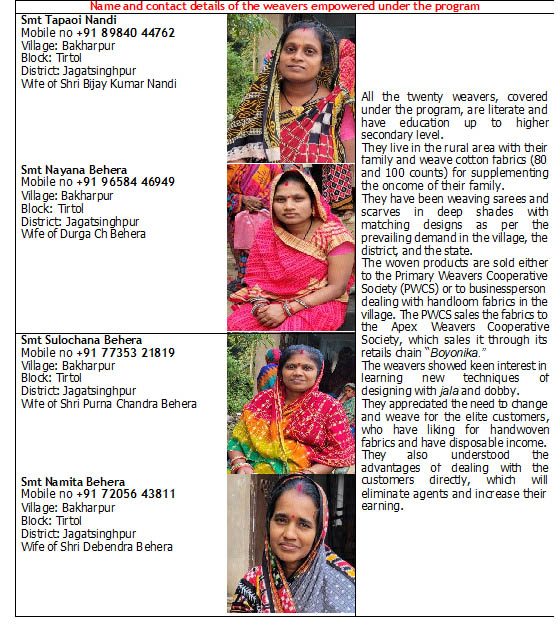
• Name and contact details of some the trained weavers and
• a brief about SHRADDHA, details are on website: http://www.shraddha-handloom.com/,
This island of excellence needs to be appreciated and supported for replicating it at other places for promotion of handloom.
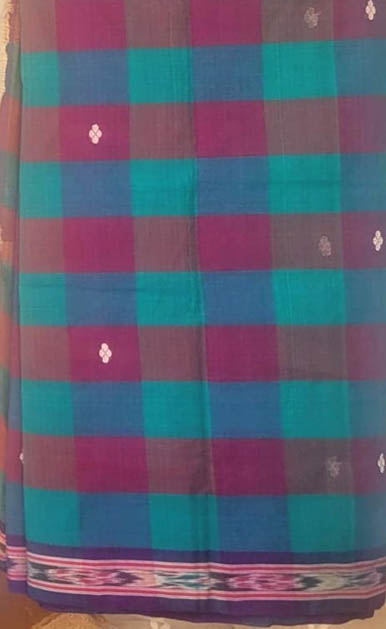
“Malapati” saree woven with deep colours and old designs (before the training)
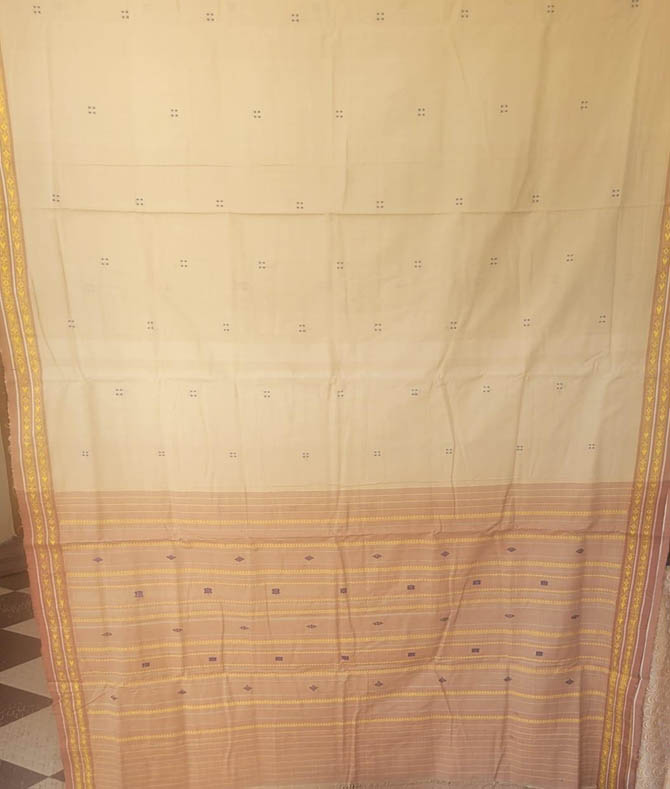
Saree woven with lighter shades (after the training)
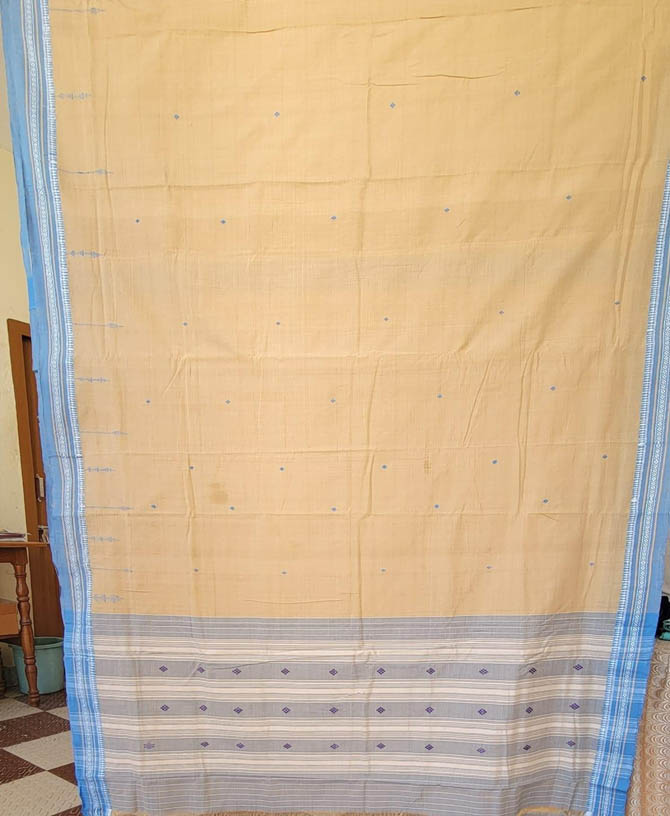
Saree woven with lighter shades (after the training)
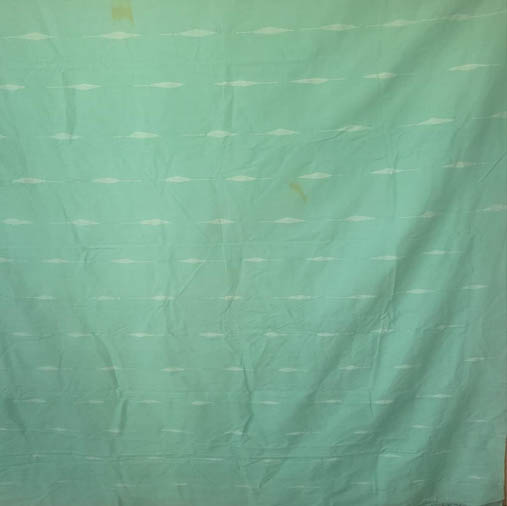
Dess material woven with pastel / lighter shades (after the training)
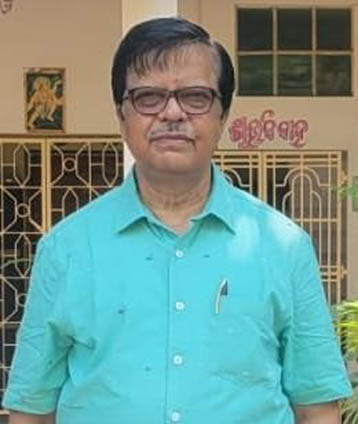
Shirt, stitched out of fabrics handwoven by SHRADDHA weavers
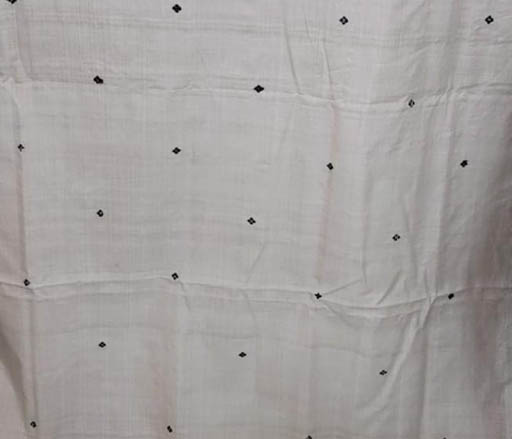
Dess material woven with pastel / lighter shades after the training
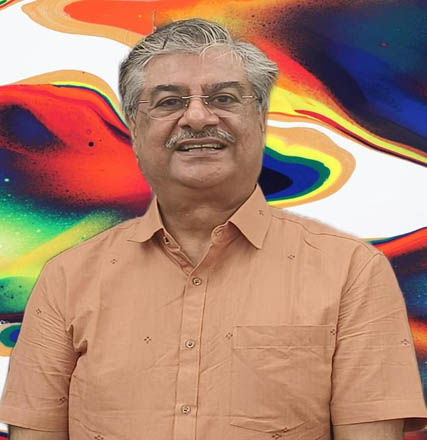
Shirt, stitched out of fabrics handwoven by SHRADDHA weavers
Glimpses of an innovative, low-cost intervention for marketing Handloom fabrics
Organized by SHRADDHA in the Royal Lagoon Residential complex on the 9th of March 2025
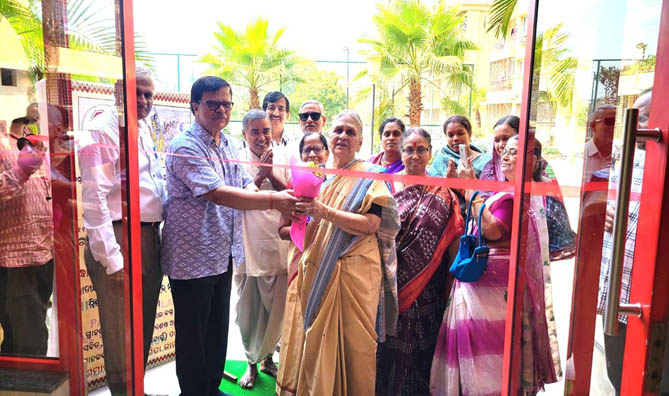
Smt Snehaprava Dash, an elderly inmate of the complex inaugurating the event
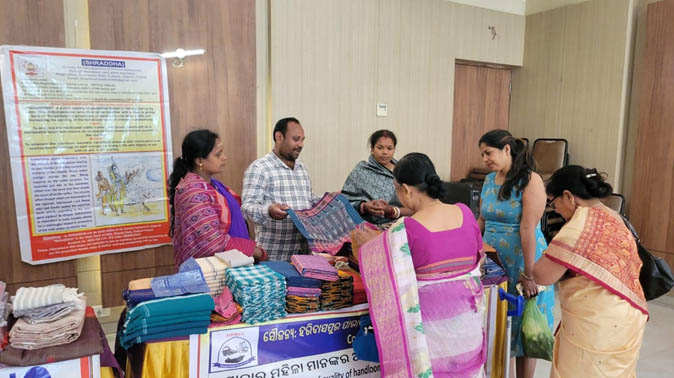
Enthusiastic response of the buyers to traditional handloom & encouraging the weavers
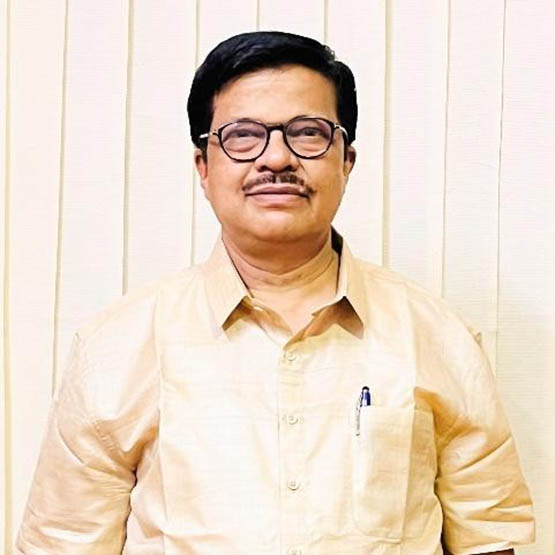
Dr. Sanjay Kumar Panda, a career civil servant, joined the Indian Administrative Service in 1980 and was allotted Tripura cadre. As a distinguished bureaucrat, he served the people in the states of Tripura, Odisha, and Government of India till his superannuation in December 2015. including as the Secretary to Government of India, Ministry of Textiles (2014-15) and the Chief Secretary, Tripura (2010-14). He had a brilliant academic career with university gold medal(s) as the Best Graduate and in master’s in science (Chemistry), silver medal in Public Administration from IIPA, Diploma in Forestry from AIFC, Dehradun, and Ph. D in Economics.
He was awarded the prestigious International Louis Pasteur award for outstanding contribution to sericulture and silk industry. His major publications include Corporate Social Responsibility (CSR) in India, Promotion of Sericulture in new areas empowering tribal women and Making One plus One Eleven (Making changes Transformational), which have been cited by various scholars. He is associated with the National Institute of Fashion Technology, Indian Institute of Corporate Affairs, National Institute of Science & Technology as adjunct professor/faculty.
Post retirement, Dr Panda has devoted himself for promotion of Handlooms with focus on increasing the earnings of the weavers to a respectable level. Based on his long association and field experience as Director of Textiles, Odisha (1989-1994), he has been pursuing the cause with indomitable zeal, passion, and dedication.
As the Founder-President of SHRADDHA2, Non-Government Organization, he has been spearheading the movement at the grassroot level for empowering the weavers, women in particular, with confidence, skill and market information for producing fabrics with quality, zero defect, new design & color combinations and new products for winning the trust and satisfaction of the customers. Its long-term vision envisages weavers contacting the customers directly online and taking up production and sale on Direct to Customer (“D” 2 “C”) basis. This will avoid the intermediaries and increase their earnings. One of the recent interventions of SHRADDHA based on a new strategy for promotion of handlooms with the cotton weavers of Jagatsinghpur District, Odisha, has increased the earnings of the semiskilled weavers by about fifty percent. It has ushered in an era of inclusive and sustainable development. (https://youtu.be/HD6vJiv7qGg)
Viewers Comments