
Literary Vibes - Edition CLXV (29-May-2026) - SHORT STORIES
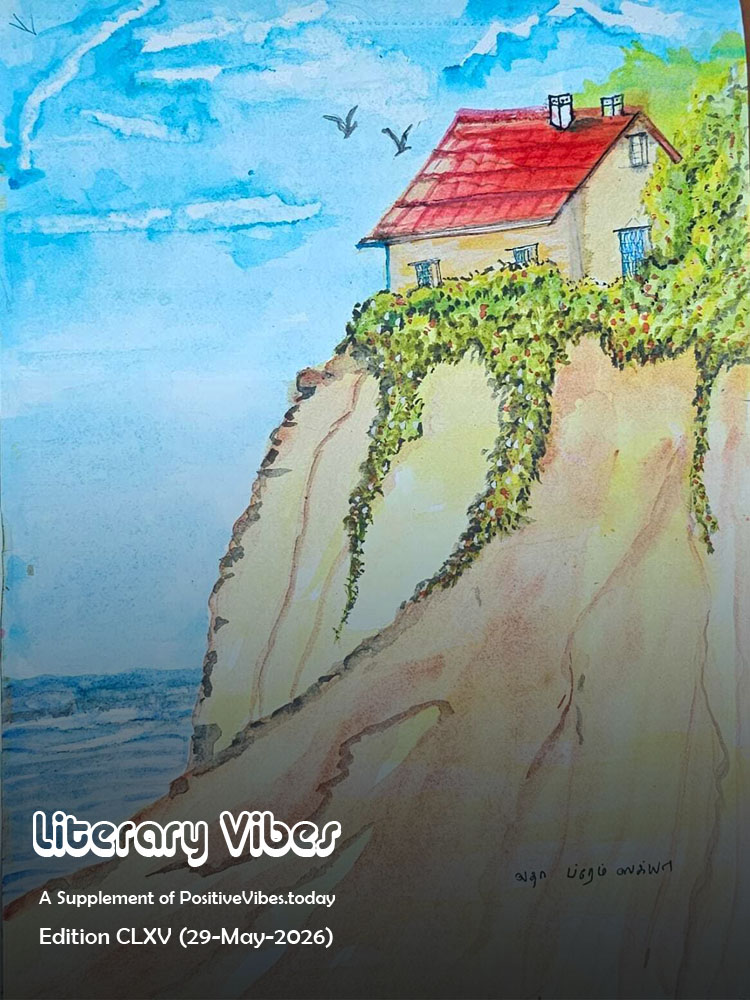
Title : Where the Sea Breathes Below (Water colour by Lathaprem Sakhya)
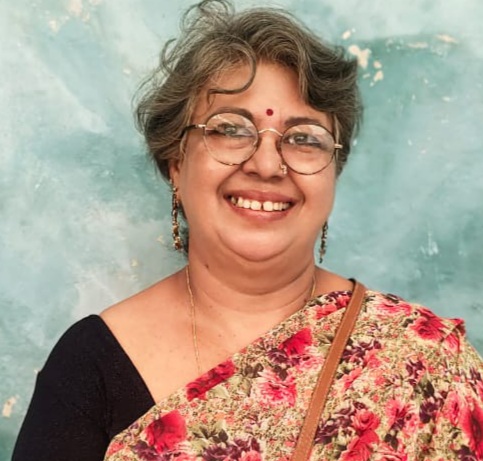
An acclaimed Painter, a published poet, a self-styled green woman passionately planting fruit trees, a published translator, and a former Professor, Lathaprem Sakhya, was born to Tamil parents settled in Kerala. Widely anthologized, she is a regular contributor of poems, short stories and paintings to several e-magazines and print books. Recently published anthologies in which her stories have come out are Ether Ore, Cocoon Stories, and He She It: The Grammar of Marriage. She is a member of the executive board of Aksharasthree the Literary Woman and editor of the e - magazines - Aksharasthree and Science Shore. She is also a vibrant participant in 5 Poetry groups. Aksharasthree - The Literary Woman, Literary Vibes, India Poetry Circle and New Voices and Poetry Chain. Her poetry books are Memory Rain, 2008, Nature At My Doorstep, 2011 and Vernal Strokes, 2015. She has done two translations of novels from Malayalam to English, Kunjathol 2022, (A translation of Shanthini Tom's Kunjathol) and Rabboni 2023 ( a Translation of Rosy Thampy's Malayalam novel Rabboni) and currently she is busy with two more projects.
Table of Contents :: Short Story
01) Prabhanjan K. Mishra
02) Sreekumar Ezhuththaani
THE PRICE OF FREEDOM
LIFE’S A CRYPTOGRAM
MORE THINGS IN HEAVEN AND EARTH
STATE SECRETS
03) Usha Surya
04) Darsana Kalarickal
05) Dr. Sukanti Mohapatra
REVISITING THE MAHABHARATA: RELEVANCE OF THE BHAGAVAD GITA IN THE PRESENT SCENARIO
06) Satish Pashine
07) Anindita Ray
08) Annapurna Pandey
THE LOST CHILDREN: INDIAN ADOPTEES CONFRONT IDENTITY, TRAUMA, AND THE COST OF ‘RESCUE’
09) Sujatha Krishnamurthy
REFLECTIONS
10) T. V. Sreekumar
11) Syamala Haridas
12) Rajashree Jagadeesan
13) Dr. Rekha Mohanty
MAURITIUS MANIA -DIARY:APRIL 2026
14) Bankim Chandra Tola
15) Dr. Rajamouly Katta
16) Ashok Kumar Mishra
17) Sukumaran C.V.
18) Sreechandra Banerjee
THE MASTER STROKES OF RABINDRANATH TAGORE
19) Mr Nitish Nivedan Barik
20) Dr. Molly Joseph
21) Dr. Mrutyunjay Sarangi
THE ARAVALLI SCROLLS
Prabhanjan K. Mishra
Recently, a bundle of papers with apparently recent recording in English was found from a hidden alcove in the recess of a cave in Aravali Hills by a few trekkers who were also acting as amateur explorers. The language of the text was modern but the subject appeared very ancient. So, keeping with practice, it was called ‘Aravali Scrolls’ by the historians and paleologists along the annals of similar documents like ‘The Red Sea Scrolls’. Near the scrolls, was found a fossilized human skeleton that by carbon dating was said to be of roughly three-thousand-year-old.
The text bore initials below the scroll as ‘LS’. From the facts on the scroll’s text, a few paleologists guessed that the initials could be of ‘Laxman Suryavanshi’, a junior prince of Harappa kingdom, who lived around that time, circa 1000 BC, that matched with the skeleton’s carbon dating, but many others held it as a prank.
The Aravalli Scrolls were accepted by serious scholars as authentic or as dubious as were the ‘Red Sea Scrolls’ or the ‘Shroud of Turin’. The unedited text of The Aravalli Scrolls is reproduced bellow for the erudite readers to draw their own conclusion - I write it recalling events from memory, of hoary posterity. I lived Circa BC 1150 or around that period, almost three millennia ago from now, what your present-day scholars are timing as the cusp of Bronze and Iron Ages in human civilizational rite of passage.
I have a humble submission. Don’t mind my using a modern, urban tongue for narrating my story, though I belong to another time almost prehistoric in your standard; but I acquired this language and style, well, at the feet of my guru ji, and using it by his advice for easy communication.
He told me, more than half of the humanity is easy with this tongue and style, much more than any other language spoken or written. In my prehistoric time, I lived an unenviable life of a junior prince in the house of Surya Vansha ruling the kingdom of Harappa. My older brother was a valorous warrior from his young days, protector of Dharma and vanquisher of the devils. But none took me seriously, and it hurt me a lot. I played the second fiddle to my charismatic older brother all along. That gave me some social standing.
I would not detail the selfish, malicious, and violent palace intrigues, that had vitiated almost every royal household in my time, a congenital disease replete with fratricidal skirmishes.
One such fratricidal conspiracy resulted in my illustrious older brother’s exile to forests for long years. He was accompanied by his wife, my Bhabhi Ma (my motherly older sister-in-law) into the forest. She loved me like her son that I reciprocated in equal measures, and I also accompanied them to forest as their body-guard and helping-hand, especially my delicate Bhabhi Ma.
The years, we spent in the jungle as exiles, were a period of bravery, strife, and love; also, also was rife with lust and deceit, bloodshed and violence. Enamored by my Bhabhi Ma’s beauty, the demon king from Dholavira kingdom abducted her by winning her trust by deceit. By donning the guise of a revered ascetic, he made her down her guard and played into his evil hands.
In the subsequent battle of Dholavira my Bhabhi Ma was rescued from the clutches of the evil king by my older brother and me, in which the epitome of evil, the Devil king, was defeated and killed by us. Rescue of Bhabhi Ma coincided with the end of exile and we returned to our royal palace at Harappa city, drunk with the wine of victory. My older brother was coronated as the King of Harappa kingdom and a year passed in a celebratory festivities and vibrant mood. I met my wife after our long separation of years in forest. We had remained separated because of our sense of duty and love for our older brother and Bhabhi Ma. The taste of union was sweeter than the normal ones for us, because of our long starvation for each other’s company was for a noble cause. It was so satisfying to see the older brother and Bhabhi Ma sleeping on their royal bed after spending long nights for years on reed mats spread on bare jungles-floors inside the makeshift huts as we had been moving from jungle to jungle for various reasons, political, military, strategic, and availability of food and water. Our food and drink sources used to be meat from hunting, fruits, and roots from the jungle, and water from hill-streams. Our threats used to be from a few violent jungle tribes, some of them even loved eating human meat.
It disturbed me to know that older brother, the king, was coming under the influence of the superstitious priests and soothsayers, and a few malicious courtiers. For the last-mentioned group, Bhabhi Ma was a thorn in their throat, as under her fair-deal influence, the king, her husband, was modernizing many tabooed practices and launching progressive schemes like to be in direct communication with his subjects to know how they were faring under his kingship.
I was disturbed to hear, the king had agreed for a purity-test of Bhabhi Ma by the fire as per Vedic Rites as advised by the malicious priests, because her soul might be soiled in impure company during her stay in the demon country of Dholavira.
The fire rite required the woman to sit amid raising flames for a prescribed length of time. I knew it was a fig leaf for the male ego-centric plot to put an intelligent, powerful, and noble-hearted woman out of man’s hair, leaving her dead or maimed. It would set an example for other women not to raise heads but to submit to male subjugation. The fire-test was a weapon. The death or maiming during a fire-test was attributed to fire god’s punishment for sins.
They gossiped that Bhabhi Ma herself was squarely guilty for her abduction. It was said I had drawn a magical line around her to protect her from evils when we two brothers were away on hunting or gathering food. She was so enamored by the demon-king’s personality that she crossed the magical line, called Laxman Rekha, to enable the abductor to do away with her. So, she had possibly sinned and soiled her chastity, necessitating the test.
It was a white lie. I never drew any protective magical line. The abductor cheated her by donning the garb of an ascetic. I tried to tell and convince all my older brother’s evil-influencers but to no avail. Even my older brother gave me deaf ears and stoic smiles, “If she is pure, fire won’t touch her.” I felt like tearing my hair to hear such bullshit. But lo and behold! Bhabhi Ma came out of the fire test unscathed surprising the conspirators as well as me. The malicious conspirators suspected a rat, a counter conspiracy, but had no evidence. The credulous and simple old guards applauded.
My Bhabhi Ma confided her secret to me, “My dear Chhote, (she and the king, both, called me Chhote or the junior), don’t be so dumb. Don’t also underestimate you brother, the king, who walks around with his innocent ‘butter-won’t-melt-in-mouth’ face. When I fearfully took my ritual bath with consecrated water before the fire-test, your innocent looking brother took me into confidence about his ‘Plan B’. He had secretly got the consecrated bath-water replaced with a fire-resistant plant-juice. The results are before you, Chhote.”
We had a good laugh on that ‘butter-won’t melt in mouth’ metaphor of Bhabhi Ma for her husband, the king. Her sharp observation and wit in that hoary past, I could co-relate to certain readings of mine in twenty- first century that said, “No man is hero to his valet – certainly not Edward VIII” as recorded by the said king’s valet-cum-page Mr. Crisp in the year 1938. Likewise, I understand now, ‘No king is ever a monarch to his wife’.
My happiness knew no bounds to see my big brother trick the malicious royal chaperons by paying them back with their own coin. With his ‘Plan B’, he had hit many birds with one stone: he bent the rules for his beloved wife like a present living football legend ‘…bend the ball like Beckham’; he did not soil his hands with the innocent blood of Bhabhi Ma; he convinced the blind-believer-public of his kingdom that Bhabhi Ma’s purity was unsoiled; besides he maintained the tradition of fire-test. Peace and joy returned to our capital city of Harappa after years of small skirmishes on borders. But like ‘unbearable lightness of being’ the palace felt unbelievably quiet, too quiet to be true. One day even Bhabhi Ma herself put a foreboding question, “Chhote, isn’t it feeling like the lull before a storm?” Those days, Bhabhi Ma exhibited a lovely bulge on her belly and felt sick frequently. Festivity broke through the kingdom of Harappa that the heir apparent to the throne was on the way. Her belly-bulge grew like the moon during its brighter half of a Lunar Month, but she grew pale and weak by the day. The time came for her Godh Bharai, that is the ‘Baby Shower’ ceremony’ of today’s social tradition.
During the Godh Bharai of an expectant mother, she would be lavished with her choicest food and other favorite desires. The delivery of a child was a question of life and death in those days, three millennia ago, for an expecting mother. That made the Godh Bharai significant, like fulfilling the last wishes of a person under the pall of death. My wife brought news that our Bhabhi Ma had wished only one thing, a long drive in her favorite horse-cart through the forests on the outskirts of our Harappa kingdom. I knew she had a weakness for jungles.
But my older brother, the king, was against Bhabhi Ma’s jungle tour, holding it too unsafe and risky in her state of advanced pregnancy. So, by a Royal Diktat she was denied her tour through jungles infested with dacoits, demons and wild beasts. That made me proud of my brother who considered Bhabhi Ma, his wife, too precious for even taking small risks. Those days, the king, my older brother, followed a tricky but progressive method to remain connected with his subjects to know their state of affair during his kingship. It was his wife’s idea. He would take me with him, and we two, in the guise of two poor peasants, would lurk in market places, lanes and by lanes of villages and towns, and eavesdrop on people’s conversations.
The subjects appeared happy in my older brother’s rule. If we found a grumbler or a subject in distress, the situation was addressed immediately. I liked this progressive practice of ‘Raj Dharma’. One warm evening, during our tour as poor peasants, we overheard some altercation between a village washerman and his wife. He was chiding his wife who had returned home after spending two nights outside her home without keeping her husband informed. Her angry husband was not buying her alibi that she had been attending to her ailing father. Her husband accused her of being with her paramour. He would not allow her in his house as she had become impure. When the wife piteously cried for forgiveness, the husband barked, “I am no wimp like the king who allowed his rescued abducted and impure wife into his household.” In the dim light, I saw my older brother, the king, flinched. But when I proceeded to behead the culprit for his words against the royalty, my brother, the king, restrained me.
After our return to palace, one day, Bhabhi Ma asked me, “Chhote, your brother is not himself these days. He is not easy or cozy with me like always. He is only polite with me. Has anything happened that I don’t know?” A real dumbo, I failed to connect my brother’s behavior with the washerman’s rebuke of the king, calling him a wimp.
Another day, my older brother, the king, took me into confidence and confided in me, “Chhote, I have a confidential job for you.” He lamented, “I made a mistake by refusing your Bhabhi Ma her Godh Bharai wish for a tour of the forest. But unfortunately, I have issued a mandatory order against her wish. I can’t go against my own ruling. It would ill behove me, a king of Surya Vansh. So, you take your Bhabhi Ma secretly for her jungle tour as if doing it on your own without my knowledge.” I thought, “How sweet!”
Two days later, I received a secret note from him – “Chhote, tomorrow before daybreak you and your Bhabhi Ma would leave the palace compound by its back gate. Get disguised as peasants. Talk to her and let her join you in time a peasant woman guise at the gate. The guards would be given instructions to allow two peasants to go out. At some distance, your Bhabhi Ma’s regular horse-cart with her favorite white horse tethered to it would be waiting.”
“Drive her to the jungle yourself as her charioteer. The cart would be stocked with mattresses, sheets, and pillows for your Bhabhi Ma’s comfort, and refreshment and water for both of you. Have a Tour de Joy” Another note arrived from Bade Bhaya, the king, “This note is strictly for you, not to be shared with anyone, not even with your Bhabhi Ma.
When she gets tired by afternoon, let her select a clearing in the jungle, and let her have the midday-meal with you. Make her a nice bed on soft foliage covered with mattresses, sheets, and pillows, and stand guard when she takes her afternoon nap.”
“When she is in deep sleep, simply drive back to the palace in the horse-cart alone quietly. The rest would be taken care of by me. Don’t worry. After reading this note, destroy it.”
It was a funny order, but I thought that my older brother was trying to be secretive as well as romantic. He was not revealing his full plan to me or to her. Surely, he himself would appear there, after I left, to give her a surprise treat, his ‘Plan B’ as during the fire-test.
I followed his instructions to the last dot, and drove back to the palace with the chariot to report to the King after leaving Bhabhi Ma in deep sleep in a clearing deep inside a forest. I wanted to give him the location, not very far from our capital Harappa where a horse could take him in an hour. But I couldn’t find him. The king was absent in the palace. I guessed he might have followed our cart at a safe distance staying out of sight, to find Bhabhi Ma after I left.
But Bade Bhaya, the king, returned on the fifth day looking devastated. He took me aside and rebuked, “I couldn’t find your Bhabhi Ma anywhere in the forest. Where did you dump her, Chhote?” When I proposed a search together in the forest, he shook a serious head, “But we cannot take the risk of divulging our secret about her jungle-tour. Malicious people would hold us guilty of breaking our own rules. The royal stink would choke all.” I was devastated to hear him. I blamed myself squarely for her disappearance. I started my private seach from that very moment.
From the next day, the king carried out his royal duties with that innocent looking face, Bhabhi Ma had attributed to him as ‘butter would not melt in mouth’. I, in my guilt, made repeated jungle tours to search out Bhabhi Ma, at the spot, its surrounding, and then far and wide, but to no avail.
A discreet inquiry at her parental abode revealed that she had not gone there too. My guilt was excruciatingly heavy, and the heavy cross too painfully weighed down my shoulders. My older brother became my prime suspect in Bhabhi Ma’s disappearance. I felt really bad that he had used me for his trickery and dirty job. I felt I had committed a mortal and abominable sin by my neglect, and the lack of judgement in not questioning the clarity of his intent.
I visited repeatedly the ground zero, patch of the forest-clearing where Bhabhi Ma was left, but never found any lead. Once my wife joined me in my search and her sharp female eyes detected a shining object lying in a bush, one of the gems-studded anklet-pair Bhabhi Ma had been wearing. How painfully she might have to run over the thorny jungle floors with her petal-soft feet when chased by wild beasts, and an anklet got dislodged! My heart felt split asunder.
But my wife had a different theory, “Bhabhi Ma might have left it deliberately for you, her signal for you that she was alive somewhere and should be found out.” It revived my withering hopes and I kept searching for her. I lived the life of a living ghost for about twelve guilty years that dragged feet like twelve centuries, until…. My older brother, the king, consolidated his kingdom and kingship on solid foundations, and as advised by his priests, he performed an Ashvamedha Yagna, the fire-sacrifice ceremony of a live-horse by Vedic rites.
But before the Ashvamedha or the horse’s sacrifice to fire god, the sanctified horse had to be unleashed to roam outside our kingdom’s territory, carrying a note on a sacred palm leaf tied to its saddle, reading, “The area that would come under the hooves of this sanctified horse would automatically merge to the Harappa kingdom of this horse’s owner. If one stops the horse, it would be an automatic declaration of war against the Harappan king.”
I was appointed to head a small troop of armed shoulders to protect the sacred roaming horse and allow its free movement, and annexing the areas under its feet to Harappan kingdom. But before much progress, two teenage, lookalike handsome boys, probably twins from a jungle settlement, took the Ashvamedha horse as captive by defeating me and my group of armed men in a skirmish.
Many warriors of Harappa followed suit to free the horse, but fell before the boys’ archery. Finally came the greatest of the great archers, the king, my older brother, himself, to free his horse. But he also was defeated and was taken prisoner by the boys. They took away the defeated king, his hands tied behind him, followed by me along with the king’s entire entourage and warriors.
We proceeded along jungle paths to a ramshackle hut in the middle of a lavish garden of fruits and flowers with peacocks, deer and rabbits freely and fearlessly roaming around. It was an abode of peace in the middle of the dense forest. I calculated the hermitage to be not far from where my wife had found Bhabhi Ma’s anklet. The small and quiet hermitage hidden in a heath had escaped my repeated searches.
The king was produced as a prisoner before a very dignified looking lady radiating the power of purity and austerity, the boys’ addressing her as mother. Behind her stood a very old and frail hermit with flowing, wispy white hair and beard, carrying a bamboo bow and a container of sharp-tipped arrows on his left shoulder like any worrier-saints of the time.
The woman was none other than my long-lost Bhabhi Ma. She had put on weight and wore her dignified middle-aged look with a few gray strands on head, but still a paragon of beauty. I assumed the boys to be hers and the king’s, the fruits of her pregnancy twelve years ago, when I ditched her undefended in a jungle like a cruel fool. Even after so many years of harsh life in a hermitage, my Bhabhi Ma had not lost her sense of humor. She made light of the somber occasion, by commanding her sons, “Untie the king, my dear kids. He is your father and deserves your worshipful salutations.” The boys untied my big brother, saying, “Tat (father), forgive us, and take our heartfelt salutation.” They touched the king’s feet in humility and took his blessings.
Then she looked at the defeated king, “So now, my great monarch, the king of kings, don’t stand gawking with that ‘butter wouldn’t melt in mouth’ expression of yours, but take a seat and face the trial.” Bhabhi Ma herself came forward and touched the king’s feet but she restrained him with dignity with a firm “No”, when her husband tried to collect her in his arms to press to his chest. My big brother shriveled like a dry fig, unlike staying his usual ‘cool as a cucumber’ self. He sat down on the indicated seat like a crumpled bean bag.
Bhabhi Ma boomed, “I am the judge, and the jury of this court, and will judge your indiscretions, you, the arrested king of Harappa. You unleashed the Ashvamedha horse to usurp the lands of weaker kings and vassals who trusted you and your ‘Raj Dharma’. You did it at the behest of your corrupt priests whom you wanted to keep in good humor like any weak king. You are guilty of many sins, small and big, like the present deceit with your small trusting neighboring kings.”
She paused ominously, and I feared her overthrowing the king and taking the reins of the kingdom into her own hands which was against her dignified grains, the ideal image I had so far worshipped in my mind. But she said, “I order, that you free the innocent horse to live its full life happily, return the lands you have usurped from the smaller kings with apology, and take an oath never to breach a trust, might that be of a brother’s, a mother’s, a wife’s, a subject’s, or of a vasal king, even of unborn babies in a mother’s womb.”
I smiled, “That’s like my Bhabhi Ma, the lady justice incarnate.” Even in her moment of victory, she had not forgotten the breach of trust against herself, a mother and wife, against me, a brother and her children who were not yet born.
I saw the king, who had lost his tongue, flinch. He nodded accepting his wife’s judgement lock, stock, and barrel. Like a great diplomat of unquestionable statesmanship, Bhabhi Ma came forward, and spoke like a wife, “My king, good bye to you and good riddance. And my husband, go back like a victorious king, as this defeat in the hands of your sons, is no defeat, rather a victory.”
Then she reasoned, “You are getting old, my king, and your reflexes are getting rusted. The boys being yours, carry in their blood the same strength, skill, valor, and the fire as you at their age, with which you had defeated demons singlehandedly. So, they defeated you, and your aging worriers.”
She continued, “Go in peace, rule your subjects with justice, be happy. Leave others alone and remember your oath of Raja Dharma. Good bye.”
The king finally rose to his full height, towering over all present by his personality, appeared to get his voice back. He took his wife in his arms to which she submitted with a few tears like a docile wife. He said, “All said and done, I have no words to beg your apology, my Site (a respectful term for Sita). Still, I beg you to forget all indiscretions I did to you, my wife, and if you can, forgive me. You have made me realize my frailty, and have transformed me. From now, I am no king to you, rather a page at your disposal. Come back, and put your cluttered household to order.”
Bhabhi Ma, looked at her fatherlike ascetic standing behind all in silent dignity. He nodded at her with an assertive permission, “I knew my child, it would come to this positive conclusion. I have my blessings for you and your husband. Go in peace and tie the loose ends of your household like a good wife and guide your king like a judicious queen- consort.”
Then surprising all like a clairvoyant the ascetic said, “I have already packed your personal belongings and your children’s.” Further, he added with a naughty twinkle in eyes, “Only don’t forget this old man of the jungle. Visit me sometimes, all four of you, at this jungle cottage of mine.”
We all returned in great spirit. A few days of joy, peace, and tranquil that followed my Bhabhi Ma’s return to the palace along with her twins. But it appeared too much for those courtiers who had conspired against her. Again, the power corridors of our capital city were abuzz with the question – “What of our queen’s purity that might have been compromised during her long stay out of Harappan palace?” Again, an Agni Pariksha, the dubious fire-rite of purity-test, lurked over Bhabhi Ma, slowly buzzing among the people of the palace and outside. But this time I felt no panic, because my brother, the king, would keep his ‘Plan B’ ready, I thought, as he had done during her first fire-rite after the Dolavira battle.
Bhabhi Ma, unobtrusively, planned a grand jungle-picnic and proceeded into the nearby hills with her royal entourage of lady attendants and guards. During the visit to a stiff Hill Point during her sight-seeing stints, her feet slipped and she fell down into a deep gorge, thousands feet-deep. She went untraceable in the inaccessible dark abyss as reported by all search-teams. Her last rites were performed with a look alike life-size bronze statue of hers.
After her last rites, that had reduced me to a sort of orphan, Bhabhi Ma’s former personal maid secretly handed me over a note from her written earlier to her accidental death. The maid said, “The queen told me to hand it over to you and only you and only after her death.” Bhabhi Ma had written, “Chhote, sorry, I cannot take this fire-test. I have no trust on your older brother or his ‘Plan B’ if he has one, after the deceit he played on you and me during my jungle tour. He breached the oath he took after his defeat following the Ashvamedha rites, by again aligning himself along the corrupt soothe sayers and was talking to me about an impending fire-test.”
She continued, “The fake fire test was sure to kill me, but also would kill my reputation as a wife of impeccable purity or Sati. By killing me, the fire would prove me impure. I would not be able to digest that double whammy ignominy. So, I am planning for a feast in hills, and to quietly slip into a deep gorge from the precipice and die. It would be a dignified accidental death.”
Bhabhi Ma’s letter made me disconsolate and deepened my gloom. My guilt was killing me alive. I held myself as the root cause of my Bhabhi Ma’s sufferings and death, that had its roots when I had abandoned her in a dense predator-infested jungle undefended without food, water, or a sword like a coward traitor.
I roamed the earth in search of penance. With my wife’s consent, I finally went into a cave of Aravali Hills to meditate, asking the Universal Lord for guidance to get absolved from my sins.
When I came out of my trance, and walked out of the cave, I moved into human settlements called villages, towns and cities. I found eons had passed and everything looked different and strange. It was twenty- first century, around three millennia ahead of my time. People lived in a Plastic Age, or an AI Age, where as I had lived in a bronze and iron age. None could see me, that meant, I had been long dead and was surviving as an unforgiven invisible spirit without salvation.
In my aimless meandering for moksha (salvation), I found an enlightened ascetic who could speak to spirits. He advised me, “First learn languages, especially the most understood tongues around here and overseas from me, and read history, science, and myth in libraries and return to me. I will then teach you how to get absolved from your sins and achieve moksha.”
I learnt Sanskrit, Hindi and English thoroughly at my guru’s feet; I read history, geography, philosophy, and literature, old and contemporary, available in libraries. I found that as a spirit I had the skill of learning at the lightening-speed, and a photographic memory, like one machine they called computer.
When I returned to guruji, he advised, “You speak out your story that you call your sins, my child, and let me scroll them into paper. Use modern day English, most easy to decipher, for most people of this earth. We are to hide it in the cave where lie your mortal remains, your skeleton. The day, it finds its way to discovery by humans, you will achieve your salvation.” (END)
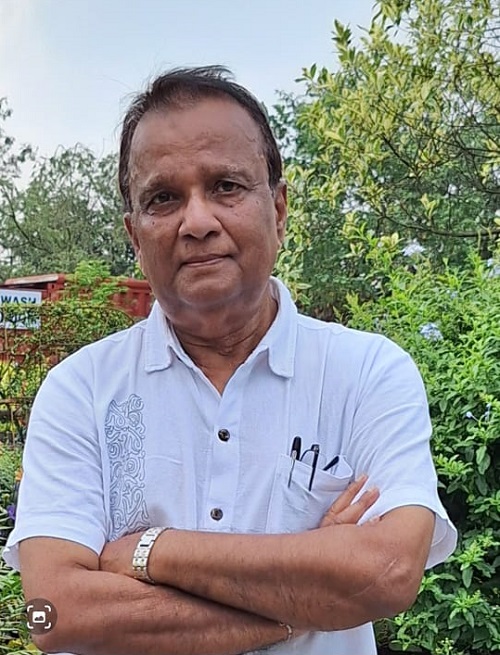
Prabhanjan K. Mishra is an award-winning Indian poet from India, besides being a story writer, translator, editor, and critic; a former president of Poetry Circle, Bombay (Mumbai), an association of Indo-English poets. He edited POIESIS, the literary magazine of this poets’ association for eight years. His poems have been widely published, his own works and translation from the works of other poets. He has published three books of his poems and his poems have appeared in twenty anthologies in India and abroad.
THE PRICE OF FREEDOM
Sreekumar Ezhuththaani

Padmanabhan Nair treated politics as a serious subject. He followed it closely, read newspapers every day, and listened to debates on the radio even when the reception was poor. Both of us identified with the political left, but in recent years I had found it difficult to agree with his detached responses to many developments in India.
We had often discussed the past as well. We both believed that the British had done some good in this country, even though their rule was largely marked by exploitation, violence, and control. At the same time, we agreed that independence was necessary and valuable.
I had known Nair for many years. Over time, his health declined. He lived on his pension and the interest from a lump sum he had received at the time of retirement. When I asked him about his wife and children, he would give uncertain answers. Sometimes he said he did not know where they were. At other times he said he could not remember whether he had left them or they had left him. He would say this without emotion.
After retirement, his main interests were politics and the study of the human mind. He read books on psychology and neuroscience, often marking pages and writing notes in the margins.
He corrected several beliefs I had held for a long time. One such belief was about innate tendencies. I had assumed that some people were born with criminal tendencies. He told me that scientific research had moved away from that idea after studying whether such inborn traits actually existed.
One afternoon, while we were sitting on the veranda of his small house, he asked me suddenly,
“Where is love located in the human body?”
I pointed to my chest and said, “In the heart.”
He smiled slightly.
“It is true that the heart has a few neurons,” he said, “but it is mainly a pump that circulates blood. Love, and many other things we associate with the heart, actually originate in the brain. When the brain sends signals, the heart rate increases. We feel that change and assume that emotions are located in the heart. Poets have encouraged this idea, but it is not accurate.”
“That makes sense,” I said. “The brain has to decide before anything happens.”
He nodded and continued,
“Look at it this way. Most human hearts are similar. There are small differences in strength and structure, but there is no real difference in quality. It is just a mechanism.”
“That is true,” I said. “And if something is wrong, we can change it with medicine.”
“Or with surgery,” he added.
“So the idea of the heart as something special is something created by poets?” I asked.
He agreed.
“Now consider something else,” he said. “The brain is not like the heart. There are significant differences between one brain and another. These differences cannot be easily corrected with medicine or any other method.”
“That is correct,” I said.
“Then think further,” he said. “If love is a function of the brain, and if the brain can change or be damaged, then that function can also be affected.”
“Yes,” I said.
“That means,” he continued, “some people may never be able to love, no matter how much they try. Others may have an unlimited capacity for it.”
“I have seen both kinds,” I said.
“I have not studied people who are capable of love very closely,” he said. “They do not demand attention. They are not dangerous. But I have observed those who cannot love. Their condition is like a fish that cannot climb a tree. There is no point in blaming them.”
The conversation ended there. I wondered why he showed the same level of interest in this subject as he did in politics. I also remembered that most of his personal stories involved some form of loss or pain.
Around that time, two major events took place in the country. One was the exposure of a large corruption case involving an amount of two lakh crore rupees, reported by a newspaper. The other was a series of protests by workers across several states, which led to violent clashes and police firing. Hundreds of people died.
Nair remained calm when discussing these events. He said he was aware of all the details, but he believed such incidents were part of the price paid for freedom.
I found it difficult to accept that explanation.
Some months later, he developed a serious liver condition and required long-term treatment. His savings were exhausted, and he had to depend on financial help from others. Whenever he spoke about this situation, he would smile and repeat, “This is the price we pay for freedom.”
I began to wonder whether his views on politics and his personal life had merged in some way. At times, his statements seemed disconnected. I considered whether this might be the early stage of a cognitive condition such as dementia or Alzheimer’s disease.
When he died, his wife and children came to see his body. They stood at a distance and did not participate in the rituals.
A few days later, a mutual friend told me about Nair’s last words. He had said them to a nurse who was attending to him.
“The price we pay for freedom is never too high.”
Those were his final words.
LIFE’S A CRYPTOGRAM
Sreekumar Ezhuththaani
The news of Madhurajan’s death came folded inside the indifferent columns of a local newspaper. A small square of ink, bordered by advertisements for gold loans and real estate, carried the end of a man who had once filled entire pages with his words.
I had often thought of visiting him while he was alive. The thought had come and gone, like a passing itch one never bothers to scratch. When the news arrived, it was too late, late in the way all unfinished things are late, carrying a faint accusation.
For my wife, Pushpa, the news did not remain just ink. It became something heavier, something that sat in her eyes and refused to dissolve.
“I want to go,” she said, not looking at me.
We were not people who went to funerals. I had always found them unbearable, the rehearsed grief, the murmured consolations, and the awkward silence around the body that could no longer respond. But something in me resisted refusing her.
“It’s far,” I said, trying to sound her out..
“We’ll take the car.”
She liked driving. I liked sleeping. It had always been a simple arrangement, she drove, I surrendered to the back seat and the vibe of the road. That day, as I slid into the back, she turned sharply.
“Come sit in front.”
“I can sleep?”
“No.”
There was firmness in her voice I did not argue with. I moved to the front seat, fastening the belt as if I was binding myself to something unbearable.
The road stretched out in long, sun-bleached lines. Coconut trees leaned lazily over compound walls, and the occasional tea stall flickered past like people rushing to another funeral.
“He was a good poet,” I said, partly to fill the silence.
She gave a small nod.
“He wrote songs too, didn’t he?” I asked.
“After we met,” she said.
I turned to look at her. “After you met?”
She kept her eyes on the road.
“We worked in the same newspaper. For a while.”
She had told me this before, but only in passing, like one mentions an old colleague. There had never been weight in it.
Now there was.
“We were close,” she said.
The word hung there, neither explained nor withdrawn.
“How close?” I asked, trying to sound casual and failing.
She exhaled slowly.
“Very.”
The car moved through a curve; the sunlight shifted across her face, making her look like she was smiling.
“And him?” I asked.
“He never said anything. That is what.”
The road seemed longer now.
“I waited,” she continued. “For a long time. Then I got tired of waiting. At home, they started insisting. I agreed.”
“And that’s how…” I began.
“That’s how I married you.”
She said it without hesitation, without apology.
Something inside me recoiled, not violently, but like a quiet tightening.
If someone had asked me who the best woman in the world was, I would have said Pushpa without a moment’s doubt. If they had asked who the luckiest husband was, I would have named myself just as quickly. She had given me three children, built a life around us with a steadiness I had never questioned.
“If he had said one word,” she added, almost absently, “I would have said yes.”
I let out a dry laugh. “Is it easier to say all this because he’s dead?”
She glanced at me briefly. “Why should truth be afraid of death?”
There was no accusation in her tone. That made it worse.
“In a way,” she went on, “it’s good he never proposed.”
“Oh?” I said. “Because then you wouldn’t have got me?”
“That’s true,” she said. “But not just that.”
“What else?”
For a while, she didn’t answer. The car moved past a stretch of forest, the shadows falling across the windshield like bars of a cage.
“I think it is more than a coincidence, the research you did..”
“You me the one that I left half way?” I said. “What about that?”
“There was a tribe named after a hill,” she said. “You remember?”
“I do.”
“There was an elder named Mavilan.”
“Yes.”
She tightened her grip on the steering wheel.
“Madhurajan was his grandson. Only that I never brought this up till now.”
I felt something shift again, this time deeper.
“I never told him that I knew of his background,” she said. “Iwasn’t bothered, but if my family had found out… they would never have allowed it. They would have buried me alive.”
The car hummed on.
“Maybe that’s why he never tried,” I said. “Maybe he knew.”
“Maybe,” she said. “But even then…”
She paused.
“I won’t forgive him.”
The house was already thinning when we arrived. The crowd had come and gone, leaving behind the residue of mourning, folded chairs, half-empty glasses, the stale smell of incense.
Only a handful of relatives remained, their faces bearing the vague resemblance of obligation.
I knew, vaguely, that his tribe had almost disappeared now, reduced to a handful of names in academic records and a few scattered descendants who no longer spoke of where they came from.
We walked in. The body was laid in a rather small living room. I found that ironical.
Pushpa stood there for some time.
Her eyes filled, then overflowed,not dramatically, but steadily, like a vessel that had been full for years and had finally been tipped.
I stood beside her, uncertain of where to look.
At him.
At her.
At the distance between the two.
On the drive back, she said nothing.
The silence was heavier than before, as if the words she had spoken earlier had exhausted something in her.
By the time we reached home, I found myself wishing we had never gone.
But rituals of habit resumed. She called our daughters, asked about their children, and reminded them of small things. She spoke to our son in Secunderabad, asked him about work, about food, about the same ordinary details that keep life from collapsing.
Slowly, her voice steadied.
She began humming old film songs under her breath, the kind she used to sing when the children were young.
It was as if grief had been folded and put away, like a garment too heavy to wear every day.
We were sitting with our evening tea when she suddenly stopped mid-sip.
“I forgot something,” she said.
“What?”
“He used to give me a gift every year.”
I looked up.
“Not on my birthday. Not on any special day. Just… a certain ordinary day, the same day every year.”
“What kind of gift?”
“The same one. For seven years.”
She got up abruptly and went inside.
I sat there, the teacup warm in my hands, a faint unease rising.
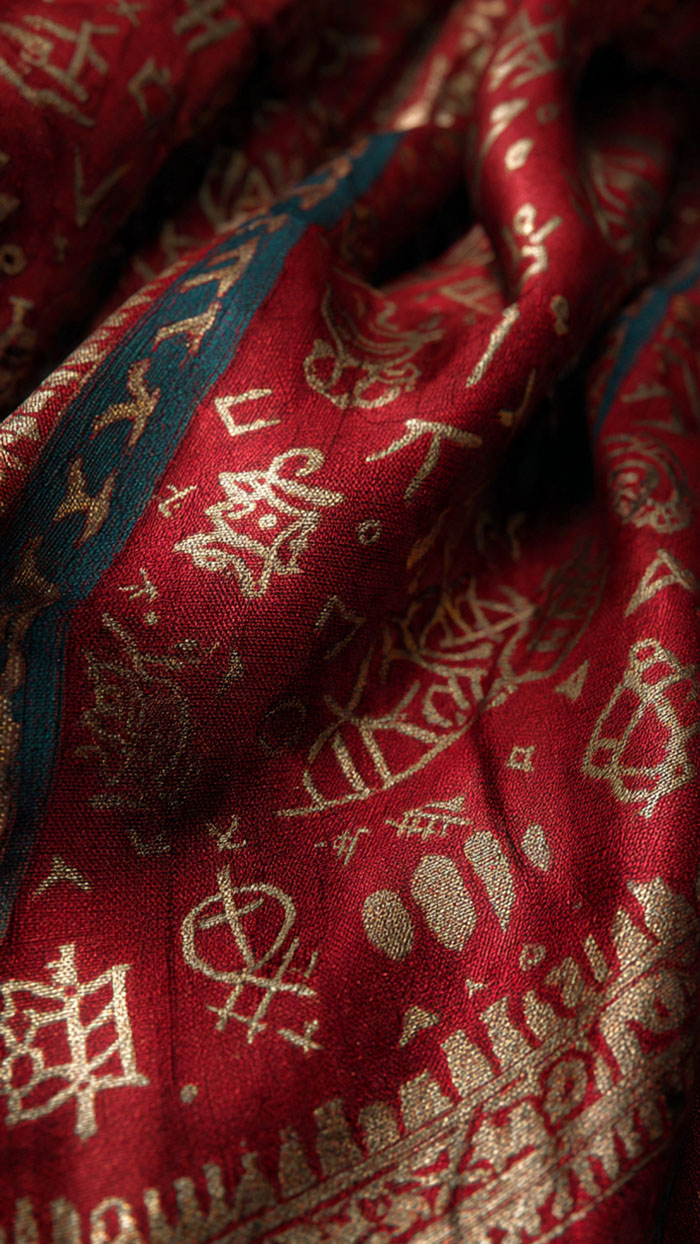
She returned with a saree.
“I never wore them,” she said. “I gave three each to our daughters. One is left, for our daughter-in-law when she comes.”
She unfolded it carefully, almost reverently.
“I’ve never seen this design in any shop,” she said. “Look.”
Her eyes were fixed on the saree, not on me.
That was fortunate.
Because my face had drained of colour.
The fabric was beautiful, deep, muted tones woven with patterns that seemed, at first glance, merely decorative. But I knew those patterns.
I had spent years studying that tribe. Their symbols. Their rituals.
How can I not know!
This was not just a saree. It was a statement. The motifs were unmistakable
I looked at Pushpa.
She was still gazing at the fabric, lost in its beauty, unaware of what it carried.
Or perhaps aware, in a way she had never allowed herself to name.
Like it had a name!
MORE THINGS IN HEAVEN AND EARTH
Sreekumar Ezhuththaani
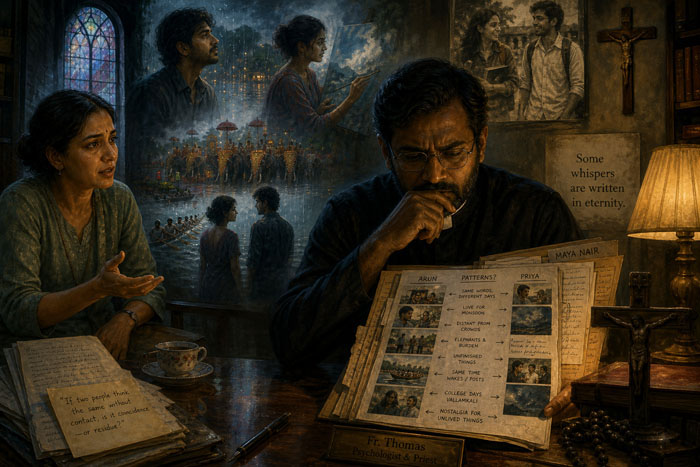
The rain had begun before she entered. Not a downpour, just that steady Trivandrum monsoon that does not announce itself, only seeps into walls, into breath, into memory.
Even the church smelled damp today. Wet wood. Old incense. Pages that had absorbed too many confessions.
I heard her footsteps before I saw her.
Hesitant. Then suddenly firm, as if she had argued with herself halfway up the steps and decided not to retreat.
Dr. Maya Nair. My friend’s wife.
I happen to be their mutual friend for over a decade now.
Of course.
Most patients always come when the mind begins to betray its own certainties. Not when pain begins—but when it starts arranging itself into patterns.
But this is no patient.
She did not sit at first. Just stood there, clutching that file as if it were something alive.
“Father…”
Her voice. Controlled. But stretched thin, like a veena string tuned too tight.
I gestured to the chair.
She sat. The rain tapped the stained glass behind her, soft, persistent. Like someone insisting on being let in.
And then she began.
Not linearly. Not as a story. It came in fragments, loops, returns, like a Kathakali performer circling a rasa before revealing it.
“They don’t even meet,” she said. “That’s the point. They don’t need to.”
The file opened.
Paper against paper, a dry sound in the wet air.
“Listen to this.”
Her fingers moved quickly, as if afraid the examples might escape if she paused.
“Last week. Dinner. I made puttu and kadala. Arun said, out of nowhere, ‘Food tastes different when it remembers the soil it came from.’”
She looked up at me.
“An hour later, Priya posts on WhatsApp: ‘Art should remember the soil it came from.’ Same phrasing, Father. Not similar. Same.”
She flipped a page.
“Two days before that, rain like this. Arun stands by the window and says, ‘Monsoon is not weather. It is a return.’ He doesn’t even realize he’s saying it. Just… comes out of him.”
Her breath shortened.
“Priya’s painting that evening, captioned: ‘The return of rain is the return of self.’”
Another page.
“Temple festival near Vellayambalam. We’re stuck in traffic. Elephant procession ahead. Arun murmurs, ‘Even the elephants look tired of carrying other people’s faith.’”
A pause.
“She texts me later that night, no context, ‘Some creatures are born to carry burdens they don’t believe in.’”
Her voice dropped now.
Lower.
More dangerous.
“Same metaphors. Same fatigue. Same… distance from everything around them.”
She leaned forward.
“There’s more.”
Of course there was more.
“There’s this strange habit. Arun folds the edge of newspapers when he’s thinking. Not neatly—just… bends it, absent-mindedly.”
A dry laugh escaped her.
“Priya does it with canvases. Leaves one corner unpainted. Says it helps her ‘leave room for doubt.’”
She swallowed.
“And they both, both of them, stop mid-sentence when they’re about to say something personal. They divert. Same point. Same silence.”
Silence.
Yes.
That is harder to fabricate than words.
I said nothing.
She mistook that for encouragement.
“Arun once told me about a girl from college,” she continued. “He said, ‘She used to paint storms as if they were breathing.’”
Her eyes locked onto mine.
“Priya paints storms like that. Not landscapes, breathing things. You can almost hear them inhale.”
The rain pressed harder now, as if trying to erase the space between her sentences.
“Vallamkali photographs,” she whispered. “Same year. Same race. They’re standing barely ten feet apart in one picture. Not looking at each other, but… it’s there. Something unfinished.”
She closed the file abruptly.
“They are not strangers, Father. They are… interrupted.”
Interrupted.
I let the word sit between us.
Heavy.
Tempting.
Dangerous.
Then I spoke.
*******
The argument unfolded as it had to.
Structure against spiral.
Inheritance against obsession.
Small contradictions against grand design.
Arun hates beetroot thoran.
Priya loves it.
Arun avoids crowds.
Priya seeks them.
Simple.
Manageable.
Containable.
And slowly, very slowly, her certainty frayed.
I watched it happen.
That quiet collapse.
Thread by thread.
Until only exhaustion remained.
“I was wrong,” she whispered.
No.
Just human.
“You’ve saved us, Father.”
Saved.
Again that word.
She left lighter.
Almost hurried.
As if clarity itself were fragile.
The door closed.
The rain remained.
Always.
*****
I did not move for a long time.
Then the file.
Again.
Unnecessary.
And yet, inevitable.
This time I did not look for inconsistencies.
I looked for… alignment.
And it was there.
More than I had allowed myself to register before.
A page marked Voice Patterns.
Arun, recorded during a casual conversation: ‘Sometimes I feel like I am remembering a life I never lived.’
Priya, from a voice note Maya had transcribed: ‘There are days I feel nostalgic for things that never happened.’
I paused.
Turned the page.
A photograph.
Onam.
Pookalam half-finished in Arun’s courtyard. His design, circular, restrained, almost mathematical.
Next to it, a screenshot from Priya’s social media.
Her pookalam, unfinished on one side. Intentionally broken symmetry.
Caption: ‘Perfection suffocates. Let it breathe.’
Another note.
Sleep habits.
Arun wakes at 3:17 a.m. frequently. No apparent reason.
Priya posts sketches online at 3:20 a.m., recurring time stamp. Dark, unfinished figures. No captions.
I felt something shift.
Unpleasant.
Like a thought refusing dismissal.
Another entry.
Language slips.
Arun occasionally uses a Kochi slang he supposedly never picked up.
Priya, raised in Kochi, uses a Trivandrum idiom incorrectly, but in the same flawed way Arun does.
Not mirror.
Not imitation.
Distortion.
As if something had once been shared and then… broken unevenly.
I closed the file halfway.
Opened it again.
One last page.
A question Maya had written to herself.
“If two people think the same without contact, is it coincidence—or residue?”
Residue.
The word lingered.
Lakshmi.
Uninvited.
Unavoidable.
“You’re afraid of living.”
Her voice, not memory now, but intrusion.
Had I done to Maya what I had done to myself?
Named something unreal simply because it threatened structure?
Or worse, dismissed something real because it demanded consequence?
The rain grew louder.
Or perhaps it had always been this loud.
I stood.
The collar pressed against my throat.
Tighter.
Or just more honest.
“If one life must endure…” I murmured again.
But the sentence did not finish this time.
Because now, there were too many lives entangled in it.
Maya.
Arun.
Priya.
Lakshmi.
Myself.
And somewhere beneath all of them, a pattern I had chosen not to see.
The bells began.
Relentless.
Calling me back into a role that required certainty.
I placed the file on the table.
Not closed.
Not open.
Suspended.
Like everything else.
The rain did not stop.
It never does.
It only changes the stories we are willing to believe about it.
And tonight, for the first time, I was no longer sure which story I had saved, and which one
I had quietly destroyed.
STATE SECRETS
Sreekumar Ezhuththaani
The first thing they did was stare.
Not smile. Not speak. Just stare.
The lobby of the Bauhunia Hotel smelled faintly of polished wood, coffee, and the cold breath of air-conditioning. Outside the glass doors, Pune traffic dragged itself through the wet evening like a tired animal. A wedding band somewhere nearby kept repeating the same trumpet phrase again and again.
Then Daliya laughed first.
Jasmine covered her mouth with her hand as if she had suddenly become a schoolgirl again.
And then both of them forgot the years and held each other tightly.
“You’ve become fat,” Daliya said into her shoulder.
“You’ve become old,” Jasmine replied.
“You look terrible.”
“You look worse.”
They laughed again, louder this time.
For years Daliya had wanted to meet Jasmine, the girl who had once lived in the neighboring house back in their village, the girl who disappeared into North India and NGO work and relief camps and trainings and distant cities. Jasmine said she had come to Pune for a professional workshop.
But that was only half true.
She had really come because she heard Daliya was here.
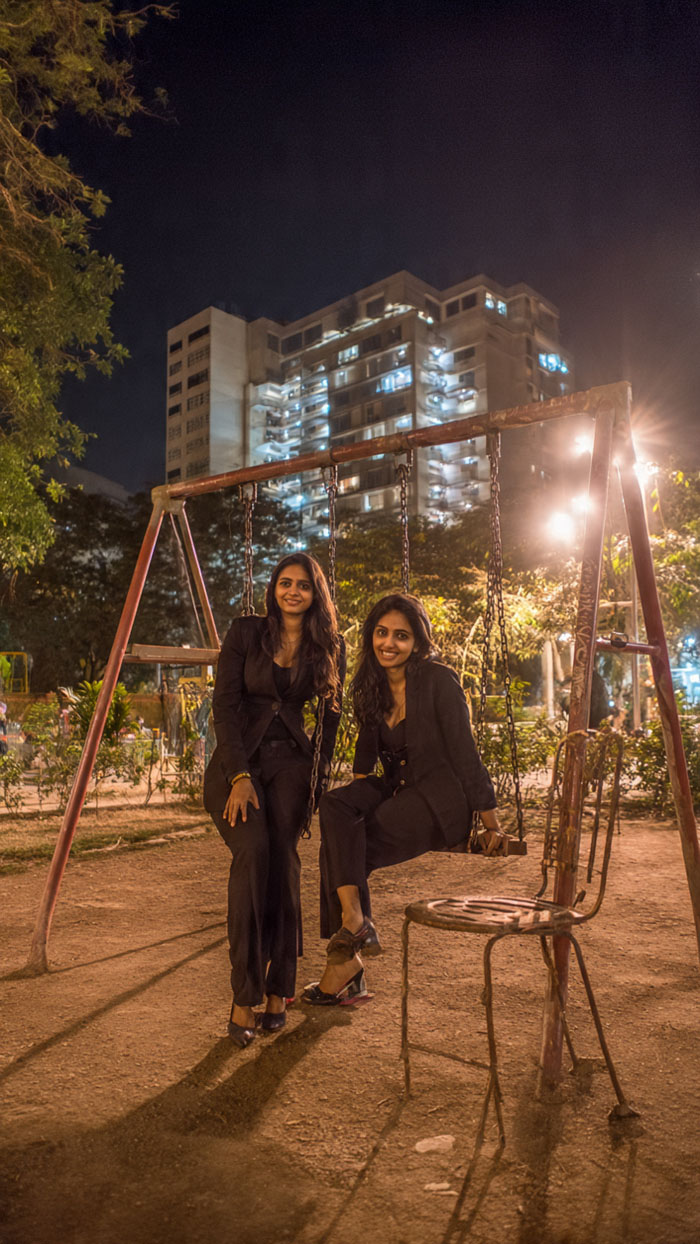
After dinner, they walked outside the hotel. Near the entrance was a tiny children’s swing painted in fading red and yellow. Jasmine sat on it awkwardly, her legs stretched out, her sandals scraping the ground lightly. Daliya lowered herself into an uncomfortable iron chair beside her.
The night carried a thin chill.
Somewhere behind the hotel compound wall, a dog barked without pause.
They spoke first about safe things.
School uniforms.
The old canal behind their houses.
A teacher who used to smell of snuff powder.
The mango thief everyone blamed on Jasmine.
A dead rooster Daliya once buried with full funeral rites.
But beneath all those memories sat another thing, swollen and breathless, waiting to emerge.
Both of them knew it.
Finally Daliya exhaled and leaned back.
“Before my father died,” she said quietly, “he confessed something to my mother. Before my mother died, she told me. She said only one person needed to know the secret at a time. I’m telling you now because… for some reason, I feel we are not two people.”
Jasmine looked at her carefully.
“If both of us know it,” Daliya continued, “it will still remain as safe as if only one person knew.”
Jasmine suddenly burst out laughing.
“What is this, some national defence secret? Was your family manufacturing bombs?”
“Shut up,” Daliya said. “I heard the bomb-making stories were about your family.”
“Oh, so you heard those too? Then there’s probably nobody left in Kerala who doesn’t know.”
The laughter faded.
Jasmine looked toward the parking lot lights.
“Did you know your family used to be Hindus long ago?” she asked.
“How would I know? Wasn’t that too a state secret?”
“Do you know why your family converted?”
“Yes,” Jasmine said mock-seriously. “Because your family and my family fought over a tree.”
“Correct,” Daliya replied softly. “But you don’t know why the fight really happened.”
“Oh, I know that too. A branch from the sapota tree in our yard grew into your property. Your father cut it without asking. The fight became a police case. My father lost. Then he converted religions just to irritate your family forever.”
“Almost correct,” Daliya said. “Actually, we changed too. My father used to say there was never much religion in our house anyway. When your family became Muslim, ours became more aggressively Hindu just to spite you more.”
Jasmine shook her head, smiling faintly.
“And then both families started competing like mad people. One week there would be a loud religious function in your house. mics, fireworks, crowds, drums. Next week ours would do something even louder. Nobody slept peacefully for years.”
“That part everybody knows,” Jasmine said. “Tell me something new.”
“There is something new,” Daliya replied. “Something nobody knows.”
The wind moved through the hotel garden shrubs with a dry whisper.
Jasmine’s expression changed slightly.
“My father,” Daliya said slowly, “didn’t cut that branch randomly.”
“What do you mean?”
“He did it deliberately. Someone advised him to.”
Jasmine sat upright now.
“Who?”
“A local godman.”
They looked at each other in silence.
Daliya continued.
“My parents fought constantly. Every single day. My father went to see a holyman to solve the problem. He asked my father how things were with the neighbors. My father said both families were very close. The prick told him something strange, that if harmony with the neighbors became hostility, the problems inside our house would disappear.”
Jasmine blinked.
“They discussed many ways to create conflict. Finally they settled on the harmless idea of cutting the branch.”
“My God,” Jasmine whispered.
“Which god?” Daliya asked bitterly. “If gods existed properly, none of this would have happened.”
The old bitterness in her voice surprised even herself.
“What began as a tiny quarrel became a war. Villagers added poison. Relatives added fuel. Suddenly my parents had a common enemy, your people. And after that they became inseparable. Almost like love birds, no love birds really, my mother used to say.”
Jasmine stared at the ground.
“Yes,” she murmured. “For nearly ten years our families hated each other. Then one day suddenly everything changed. My father used to say it was our mothers who made peace first. Not the men.”
“I heard the same,” Daliya said. “But I never understood why.”
Jasmine looked at her for a long time.
“This meeting isn’t accidental, Daliya,” she said finally. “I came here on purpose.”
Daliya immediately groaned dramatically.
“If you’re planning to murder me, at least tell me before killing me. The hotel bill money is inside my bag. You can also take the ring and bracelet.”
Both of them burst into helpless laughter again.
“Stop it,” Jasmine said, wiping tears from her eyes. “I also have a story.”
“Wonderful. A murder story?”
“A girl,” Jasmine began quietly, “was returning home from school alone.”
Something cold moved inside Daliya’s chest.
“There was a mullah she hated. He stood on the roadside holding out an ice candy to her. When she went near him, he grabbed her.”
Daliya froze.
The memory rose slowly inside her like shallow shapeless footprints appearing after a retreating wave.
“He dragged her toward a bush,” Jasmine continued. “Then suddenly a demon in black appeared from nowhere. It pushed him away and told the girl to run.”
Daliya’s lips parted.
“Jasmine…” she whispered. “That is my story.”
“Why did it become only your story?”
“They found the mullah dead that evening,” Daliya said faintly. “I was barely ten. I never told anyone. I thought the thing that saved me was some spirit from the temple grove. Or a goddess.”
“Rubbish,” Jasmine snorted softly. “If gods and demons started interfering in every village problem, this world would be less rotten.”
“In my case something did interfere.”
“Yes,” Jasmine said. “A goddess.”
Daliya stared at her.
“My mother told me everything before she died,” Jasmine said.
Her voice trembled now.
“The person who saved you… the person who killed him… was not a ghost. Not a demon. It was an angel.”
The hotel lights flickered briefly in the wind.
“It was my mother, clad in burkha, returning from her Quaran lessons..”
Daliya felt suddenly dizzy.
“Even though you belonged to the enemy family,” Jasmine continued, “and even though the man was an important religious figure from our own community, my mother smashed his head open with a black stone.”
The sounds around them seemed to disappear. The croton leaves stopped swaying and listened.
Only the faint creaking of the children’s swing remained.
“She carried that secret alone for months,” Jasmine said. “Then one day she went to your house and confessed everything to your mother. That was when both of them realized how absurd the hatred between the families had been.”
Daliya covered her mouth.
All these years she had believed religion healed their families.
Now it stood before her like smoke after a burned house.
“Our mothers stopped believing in gods after that,” Jasmine said quietly. “Stopped believing in religion too. But they still needed something to hold on to. That’s why they joined the Bahá?í Faith. Later our fathers followed them.”
Daliya began crying silently.
Not politely.
Not gracefully.
Her shoulders shook.
She clutched Jasmine tightly.
“Amma…” she kept whispering. “Amma…”
But neither of them knew whose mother she was mourning.
Perhaps both.
Perhaps all mothers.
Perhaps the frightened women who carry impossible things inside them until silence itself becomes a wound.
“Our names were changed later too,” Jasmine said after a while.
“I know,” Daliya replied weakly. “But only now do I understand why.”
It was very late by then.
The hotel corridors had gone quiet.
Only the humming of central air-conditioning remained.
“Shall we sleep?” Jasmine asked softly.
Daliya nodded.
“Can I sleep in your room?”
“Idiot,” Jasmine said. “I was about to ask you the same thing.”
That night they turned the AC unbearably cold and slept holding each other tightly beneath the heavy white blanket.
Like mother and daughter.
Neither of them cared who was who.
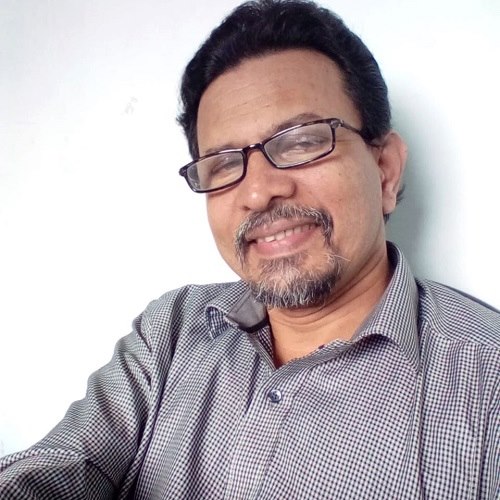
Sreekumar Ezhuththaani known more as SK, writes in English and Malayalam. He also translates into both languages and works as a facilitator at L' ecole Chempaka International, a school in Trivandrum, Kerala.
It was a very old house in a narrow street near the ancient Siva Temple.
There was a huge rangoli in front of the house on the brown earth coated slightly with cow dung. The earth here was smooth with a pleasant green hue.
The couple who stood in front of the rangoli stared at it in amazement. They had come from some foreign country obviously, as they were conversing in ‘accented English” with each other. Sometimes the little boy of six joined their conversation and he too spoke with an accent. Obviously born and brought up abroad.
The house had grill work in front showing a veranda inside with broad space on either side of the main door to the house. The floor was reddish brown in colour....red oxide cement, it was called those days. The house must have been more than eighty or ninety years old as the floor was gleaming.
“Well maintained.” told the man to his wife.
“Yes. looks much better than today’s marble flooring. I suppose, when we shift to India in four years, and build a house, we can have this red oxide flooring everywhere . Looks beautiful ! And see that door! How heavy it must be!! I am sure there are bolts inside on the door made of solid iron!! Safe and secure.” She must have been in her middle twenties and was wearing salwar kameez and hair cut short and a small artificial bindi in the centre of her forehead. The little boy was in T shirt and shorts.
The man pressed the calling bell.. Trrrrrrrrrrrrring...it yelled and a lady in her late thirties came out of the door.
“Can we meet the Astrologer Parameswaran Uncle ? We are coming from the U S.” the wife said.
The lady came forward and opened the door and asked them to come inside. She was beautiful. The long hair was tied into a small knot at the tip. The eyes were collyrium lined. There was a big kumkum bindi on the forehead. Above the bindi was a streak of sacred ash. She was wearing anklets that made a lovely tinkling sound when she walked . They followed her and she asked them to sit on the long sofa in the veranda. On the other side of the veranda there were four wooden chairs to accommodate visitors... heavy ones...pretty old...with a stiff back-rest and shining arm rests. They sat on the sofa. The little boy was looking at everything with awe. The ancient look of the house and the furniture was something new.
“Mom, I can see my face on the shiny floor!! See how beautiful it is !! “
“ Yes, Vasisht. When we build a home here, we will have the same flooring,“ said his mother hugging him.
By now, the astrologer walked into the veranda and accosted them fondly.
“My wife said that you have come to see me. Come inside and wash your feet.”
They followed him after removing their foot-wears. There was a small area in the centre of a large hall surrounded on all four sides with rooms. This had steps leading down from the floor, on three sides- three steps and a cemented area. There was a small shrine in the centre for a basil plant (thulasi) with rangoli drawn all around. The basil plant was green and healthy. Flowers had been offered to the plant and there was a slight pleasant fragrance there. The astrologer proceeded further outside the area and the three of them followed. The little boy was looking at the vast house with wonder. There was a courtyard outside and on the cemented floor was a gleaming brass bucket and a small brass vessel and they washed their feet.
The astrologer led them to his puja room.
The room smelt of the fragrance of incense and sandal paste.
He had spread a mat for them and they sat down. He took his seat on a wooden plank in front of them.
“Vasu Iyer had telephoned intimating me that you will be coming one of these days with your son and that you wanted me to read his horoscope,” he said smiling at them.
The young man said, “Yes. We had been to Vasu Uncle’s house in Tanjore. His son works with me and he told me that you can read horoscopes and that your predictions are very correct. Vasu Uncle also spoke highly of you. My parents are here in Nungambakkam and her parents are in Kolkota,” he said pointing to his wife.”We came here after seeing her parents and made a trip to Vasu Uncle’s home. He is my mother’s cousin. We thought we will have our child’s horoscope perused by you.”
The astrologer looked at the little boy.
“What is your name child?” he asked.
“ My name is Vasisht,” the boy replied in Tamil.
“Ah!! You speak Tamil? That is good. Do you know who “Vasisht “ was?” He drew closer to the boy and asked.
“Yes. He was a great Sage in King Dasaratha’s court and taught Sri Rama. He was called Brahma Rishi as he was brilliant and most intelligent! “
“Ha!! Not bad at all. You seem to know a lot,” said the astrologer looking pleased.
The father said, “We have been buying all the “Amarchitrakatha “ comics for him so that he is familiar with all the religious facts. He has a deep knowledge of Ramayana and Mahabharatha. His mother works on Sundays for the Chinmaya Mission. Stories from Puranas are taught and there are sloka classes . The senior students learn the Vishnu Sahasranamam.”
The astrologer’s wife was peeping from outside the Puja room door. She smiled and posed a question to herself – “Is the hair tied while lighting a lamp or is it left loose? “ She was recalling her niece who had cut her beautiful long hair shoulder length. The young girl’s argument was, “It is so difficult to maintain long hair aunty. I just use shampoo to wash it every week. No hassle of long oil baths! And all I have to do it , just brush .”
“Well, Don’t you spend hours on makeup and applying lipstick? Isn’t that a time - consuming ordeal every day? “ The niece had no answer to that question.
The astrologer looked at the boy and studied his face.
The father handed over the horoscope.
“Who drafted this?” he asked the father.
“A Priest who comes to the mission,” the father said. “In fact, he conducts all the ceremonies when the community requests . He is well versed in astrology.”
The astrologer studied the horoscope for a long time.
“This looks like a Computer Horoscope.” he said.
“Yes. Most of the horoscopes for kids who are born in U S are computerised ones. They are very good and look just like the ones drafted by the astrologers here. People have proved this by comparing them,” the young man said.
The astrologer turned towards the boy and said, “Show me your palm. Let me read it. Both the hands, one by one,” he said.
A seasoned astrologer sees the palms of both hands.
He studied the palms for a while.
He turned towards the parents.
“The boy is brilliant. He will get great academic honours. He will participate in big competitions hosted by famous Institutes. A real genius ! He will become a famous Chess player.
He will play less outdoor games. He is quiet. The periphery of communication seem small, limited. There will be no deep friendships. That is because he keeps mostly to himself and is a bookworm,” he halted for a while.
The father said, “You are absolutely right. He reads a lot. At times both of us wonder whether he is too precoscious! He prefers indoor games, especially Chess and many times, he plays alone. He is the topper in his class.”
There was a display of pride in his voice. “His memory is great!! He can recite Vishnu Sahasranamam fully fluently. He learns all the slokas that we teach in Bala Vihar run by the mission. His Ishta Deivam is Hanuman” the mother said proudly.
The astrologer took the horoscope in his hands.
“Was he born in the U S? What was the time?”
The man looked at his wife. They were silent for a while and then she spoke.
“ Actually the nurse had a watch on her and told us the time of birth. But another nurse told us that the kid was born minutes later. The two of them had an argument. The doctor asked, “Does it really matter? Must be sometime inbetween,” and smiled. “We did not pay too much attention on this as the delivery was safe.”
“Well. I asked the boy to show his palms to check on this. When the birth time is inaccurate, the Lagna, Planetary postions etc. can change. The horoscope reads different. You agreed with all that I said reading his palm isn’t it? This horoscope is totally wrong...I mean...it is not this child’s. It is better you don’t show this to any other astrologer. What he says might hurt you,” he paused.
The couple displayed shock in their eyes.
“Yes. Please do not show this to anyone else. Ah! Now I have not said anything about his health. He has slight wheezing. But that might go away soon in two or three years. Give him a lot of nourishing food. Well, I suppose I have covered as much as I can.
Again, about this horoscope, I would suggest that you do not seek a second opinion...”
The father did not let him complete the sentence.
“No no no. We have complete faith in your prophesy. Vasu uncle and his son - my friend - think the world of you. If you say something, it must be true. Both of us don’t doubt your words. We will not show this horoscope to anyone else. I don’t think we even need it back now. What is the use of preserving a wrong horoscope? A horoscope that belongs to someobe else!!”
The astrologer sighed...a sigh of relief.
They chatted for a while and left.
Before leaving, the boy turned towards the astrologer and spoke like a ‘ big shot’ – “It has been nice meeting you.” And all of them laughed.
The astrologer patted the little boy and asked him to wait for a while.
He went inside the Puja room and took the five inches tall bronze statue of Lord Anjaneya and removed the flower petals and basil leaves that had got stuck to Him. He handed over the Deity to the little boy and said, “This has been in my Puja for so many years. Keep them on your study table and treasure Him. Don’t part with Him at any cost. He is your strength.”
The boy took the divine statue from him with reverence. His eyes gleamed.
“Thank you, uncle. I will.”
The astrologer saw them leave and getting into the waiting taxi.
He came inside and took the boy’s horoscope in his hands. He placed it behind the huge framed picture of Kamakshi Devi.
He did obeisance and with tears murmured,
“Forgive me Mother for telling them a lie about the horoscope. How could I tell the young parents that their son will leave them and go away as an ascetic when he is twenty five years? It is so clear in his horoscope. Take care of him Mother, please,” he wiped his eyes which had become moist.
New calendars with the picture of Lord Murugan kept appearing on the kitchen wall every year and the astrologer’s wife was tearing the dates every day. More than twenty years had passed in this manner.
The couple looked slightly older but the glow in their faces remained. The astrologer’s disciple Ramanarayan was looking at the horoscopes mainly and the astrologer and his wife were busy visiting Temples all over India.
Ramanarayan was equally adept at the subject of prediction and horoscope “matching’ rituals as his senior and Guru Parameswaran. Fortunately for him his married life was wonderful. He had married a Priest’s daughter who was incidentally a music student of Parameswaran’s wife. A very pretty person with a lovely golden voice. She was being invited to give performances very often. Parameswaran was very happy that his disciple was becoming a popular person. He had no children and he was happy that there was someone to keep up the lineage in the proffession.
It was the October of the year 2005.
The year that had remained indelible in his memory.
He had woken up as usual before dawn broke. It was still dark as he applied the sacred ash and chanted. His wife had bathed and had given him a glass of milk. He took the milk and went into the puja room and started removing the old flowers, all the while chanting the Sivanandalahari. As he came in front of thr Goddess Kamakshi’s picture, he put his hand behind the picture and took out the horoscope he had hidden there nineteen years back.
With trembling fingers he opened the paper.
Yes, the boy Vasish’s star was Thiruvonam. He put the paper back there.
A few years flew by. Time does not wait for any man, it is said.
Vasisht must have renounced the world and left home. This must have happened sone time back. He must be in some cave in the Himalayas doing meditation.
What was it that he was searching for?
Certain prophesies lie hidden even from the astrologers’ eyes. They can predict to a certain extent. But God only knows what has been chartered for one.
He must find some time to drop in at Vasu Iyer’s house. It had been two years since he saw him. Maybe Vasu Iyer might know something about the Vasisht and his parents. His son might have given him some information!
He continued his work and adorned the pictures and small statuettes with flowers. He sat chanting.
He rose from the wooden plank at seven a m.
His wife came in smiling.
“Hot iddlies are ready. Come and have your breakfast. Have you forgotten? We have to leave for Tanjore by nine a m.”
He smiled.
“Yes I know. I have not forgotten. I know that there is this function at your brother’s place and you are eager to see all of them. We shall also go to Brahadeeswarar Temple. And I will make a quick jaunt to Vasu Iyer’s house too. Anyway we are staying there for four days,” he said.
Vasu Iyer and his wife were very happy to see Parameswaran.”Josyar Mama”- that is how Vasu Iyer’s wife referred to him.
“Josyar Mama, you can have lunch here today” she said.
The astrologer laughed.
“My brother in law will murder me and thus incur Brahma Haththi Dosha !! Okay, jokes apart, they are having a small function today. I have had breakfast and am expected to be in time for lunch!! I shall have lunch with you all some other time,” he said.
The bedroom door opened and Vasu Iyer’s son stepped in.
“ Oh Uncle ! A hunfdred years may you live. I was just thinking of you. I will be coming to Chennai next week and had decided to meet you,” he said amd pulled a chair o sit near them.
“Ah!! It is nice to meet you. Must be some six years that we met!! “ the astrologer said.
“Uncle, I have come to India for good. Our son is working there.The daughter and wife wanted to come back. We have bought a house nearby and I have opened a small business. My wife is helping me,” he said.
“Good!! How is Vasisht by the way? And his parents? I have been wanting to ask appa and have been forgetting to.”
“Oh! You don’t know uncle? His parents – uncle and aunt- have come to India for good. They have bought some lands here and are cultivating some fruits and vegetables It is some three years snce rhey came here. Vasisht...oh what can I say? “
The astrologer sat looking at him and waited for him to continue.
“Four years back he would have been twenty five years old. We had planned a big birthday party for him. He had then joined a very popular company. The Company had appointed him as he was making a name with his Chess tournaments. He was earning so well. But exactly seven days before the date of birth was his star birthday. Aunty had made his favourite milk pudding and he had a full glass and left for office. HE DID NOT RETURN. Enquiries at the office revealed that he left for the bank and did not come to office again. At the bank, it came to light that leaving just a few hundred dollars, he had withdrawn everything else and left.
Uncle and aunty were devastated. The next day, uncle aunty and a few of us got an e mail from him saying that he was going to India.
He had written not to contact him and that his E mail I D will not accept any mail or respond. He had been doing a lot of meditation and curtailing his time with his friends. He had bcome less talkative.
He had started doing puja and spent quite some time in the puja room. But uncle and aunty never expected that he would renounce everything!! He had taken his backpack with a few garments and a small statue of Hanuman, which, uncle said that YOU had given him some eighteen or nineteen years ago. Well...that is Vasisht’s story Uncle. Maybe you knew?”
The astrologer looked at him and Vasu Iyer. By now even Vasu Iyer’s wife had come there from the kitchen.
“ Yes. It was there in his palms...and his horoscope. I told the parents a lie that the horoscope was all wrong! Which mother or father can digest the fact that their only child would renounce the world? Tell me. The moment my glance fell on his horoscope, it was clear to me. “Sanyasa Yoga” or “Pravrajya yoga”...
Four or more powerful planets in the same ‘house; Moon is also there...ascending ‘lagna’...He will become a Mahaan! He will come in six years to Tanjore...this time not as Vasisht but as a Swamiji. .” Some predictions should be hidden, my son . Vasisht is going to become a Mahan!!”
He wiped his eyes.
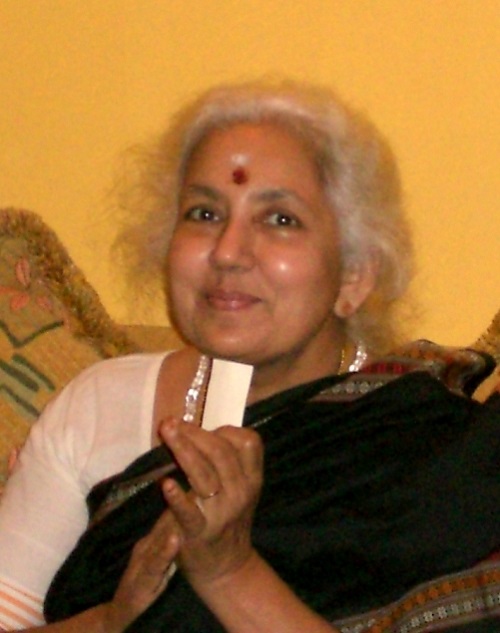
Usha Surya.- Have been writing for fifty years. Was a regular blogger at Sulekha.com and a few stories in Storymirror.com. Have published fifteen books in Amazon / Kindle ... a few short story collections, a book on a few Temples and Detective Novels and a Recipe book. A member of the International Photo Blogging site- Aminus3.com for the past thirteen years...being a photographer.
AFTER THE WAR
Darsana Kalarickal
He never liked children.The child’s tiny stubbornness, little sulks, quarrels, and cries only fueled his anger. When it became utterly unbearable, his wife uprooted her life, taking their child with her to another continent. He was exceptionally skilled in the making of weapons of war.
His missiles never missed their targets. Nor did he ever worry about the lives shattered where they landed. Because, in truth, he had never truly lived.
After the war, when soldiers marched through the devastated provinces, he would go along.
Sunken wheat fields,
forests reduced to charred remains, collapsed houses and buildings, offices, schools, hospitals—
Yet he pretended not to see the lives writhing and stilled among the ruins. He kept observing, calculating how to make the next strike even more destructive.
What a dedicated soldier! Don’t you think?
And so he went there.
But the end of his journey had already been destined there. In his final convulsions, his lips kept whispering: Water… water…
And before him appeared his own reflection. Remembering the water he had once splashed at the face of a thirsty, crying child, the one before him poured water into his mouth—which spill back out through his lips.
In his wide, frozen eyes, that face remained clearly reflected
*Darsana K.R., residing in Venginissery, Thrissur district, is an employee at Venginissery Service Cooperative Bank and a passionate poet. Her published works include the poetry collections *Kavithaye Pranayichaval, Pranayathil Akappettathinte Ezhaam Naal, and Kuldharaayil Oru Pakal; the short story collection Thekkedathamma V/S Ramakavi (co-authored with Dr. Ajay Narayanan); the memoir Kunnirangunna Kothiyormakal; and the poetry study Kavithayude Veraazhangal. Her poems and articles have been featured in various periodicals and online platforms. phone : 9645748219, email darsanakr1973@gmail.com.
REVISITING THE MAHABHARATA: RELEVANCE OF THE BHAGAVAD GITA IN THE PRESENT SCENARIO
Dr. Sukanti Mohapatra
Abstract
The Mahabharata, traditionally attributed to Vyasa, remains one of the most complex ethical narratives in world literature. Embedded within it, the Bhagavad Gita presents a philosophical dialogue between Krishna and Arjuna on the battlefield of Kurukshetra. This paper revisits the Gita not merely as scripture but as a critical-philosophical text addressing ethical anxiety, political responsibility, and existential crisis. Drawing upon ethical theory, postcolonial hermeneutics, and modern psychological discourse, this study argues that the Bhagavad Gita continues to provide a framework for moral action and spiritual resilience in the contemporary global scenario.
Introduction:
The Bhagavad Gita, situated at the very heart of the Mahabharata’s Bhishma Parva, transcends its immediate context of fratricidal war to address the eternal conflict within the human psyche. In the present scenario—characterized by 'VUCA' (Volatility, Uncertainty, Complexity, and Ambiguity)—Arjuna’s despondency (Vishada) is not an ancient relic but a mirror to our modern crises of burnout, ethical paralysis, and identity. Far from being a text solely for the ascetic, the Gita serves as a pragmatic manual for the 'Corporate Warrior' and the 'Social Being.' By shifting the focus from external validation to internal equilibrium, it offers a framework for Sthitaprajna (steady wisdom) that is indispensable for navigating the mental health epidemics and leadership vacuums of the 21st century. Thus, revisiting the Gita today is not an act of religious piety, but a necessary engagement with a timeless strategy for psychological resilience and decisive action.
The Gita should not be read as a religious text rather as a social and ethical study. Because it pre-dates any organised religion. This is an all-encompassing book of life. It has sustained its universality for two millennia not because it is a holy book but because its relevance is perennial. People return to it generation after generation to seek answers pertaining to existential problems. Gita’s magic lies in the fact that it doesn't limit itself just to the metaphysical but to the very physical, not just otherworldly but the very worldly, not just to afterlife but to the very life we live.
The Mahabharata describes itself as encompassing “whatever is found here may be found elsewhere; what is not found here will not be found anywhere.” This universality makes it a civilizational text rather than merely a mythic epic.
The Bhagavad Gita (700 verses) emerges at a moment of paralysis. Arjuna’s despair is articulated:

(“Seeing my own people arrayed for battle, my limbs fail, my mouth is parched.”)
This crisis is not cowardice but ethical bewilderment. Through a modern existential lens, Arjuna’s dilemma parallels what Kierkegaard terms “the dizziness of freedom.” The battlefield becomes a metaphor for moral decision-making in times of historical crisis. The entire Gita is a conversation between two friends- one is the great Pandava prince Arjuna and his friend, mentor and designated charioteer during the war- Krishna. During the entire conversation we see neither of them is ever offensive, needlessly aggressive or has lost patience and mutual respect for each other.
It is a difficult conversation as Arjuna is very depressed and no advice or argument can convince him to raise his bow against his dearest Pitaamah, revered Guru, elders, kith and kin. Krishna doesn't hesitate to show Arjuna his weaknesses, his failing of duty as a warrior and upholder of Dharma. He chides him, shows him the harsh realities of life but everything Krishna does is out of compassion and great understanding. In the end he respects his friend enough to leave the decision in his hands, to fight or not. We can treat it as best practices in friendship.
The Gita says picking the right action and doing the right thing becomes a good habit and in the long run the habit becomes our second nature. We know if good habits are formed during childhood they are hard to be broken. Therefore Gita can be a useful book for young students, the essential companion to growing up.
Unlike rigid moral codes, the Mahabharata presents dharma as contextual and interpretative. Bhishma’s loyalty, Karna’s allegiance, and Draupadi’s humiliation reveal moral complexity rather than binary ethics.
Krishna’s counsel introduces Karma Yoga, asserting:

(“You have a right to action alone, never to its fruits.”)
From a Kantian ethical perspective, this resonates with duty for duty’s sake; yet unlike Kant’s categorical imperative, the Gita integrates metaphysical awareness. Action becomes sacred when detached from ego. In neoliberal societies driven by productivity and performance metrics, identity becomes entangled with outcomes. The Gita disrupts this paradigm by privileging intention over result.
Krishna further states:

(“Established in yoga, perform actions abandoning attachment; be the same in success and failure.”)
This principle anticipates contemporary discussions of mindfulness and psychological detachment. From a Marxist critical standpoint, however, some scholars argue that such detachment could be misappropriated to justify passive acceptance of structural injustice. Yet the Gita resists passivity; it urges action aligned with dharma, not resignation.
In Jnana Yoga Krishna distinguishes between the perishable body and the eternal self:

(“The Self is never born, nor does it die.”)
This metaphysical assertion destabilizes materialist definitions of identity. In postmodern culture, where identity is fragmented and performative, the Gita proposes ontological continuity.
Philosophically, this aligns with non-dualist Vedantic thought later articulated by Adi Shankaracharya. However, modern interpreters such as Sri Aurobindo see the Gita not as world-denying but world-transforming.
The Gita’s climactic call to surrender reads:

(“Abandon all forms of dharma and take refuge in Me alone.”)
This verse has generated theological debate. From a postcolonial perspective, it must not be reduced to authoritarian submission. Mahatma Gandhi interpreted the Gita allegorically, viewing Kurukshetra as an inner moral struggle rather than literal warfare (Gandhi 45). For Gandhi, the Gita became a text of nonviolent resistance.
Thus, hermeneutics determines relevance. The text is dynamic, not dogmatic.
Arjuna’s Anxiety and Modern Psychology
Arjuna’s symptoms—trembling limbs, confusion, despair—mirror modern descriptions of anxiety disorders. Krishna does not dismiss emotion; he reframes perception.

(“You grieve for those who should not be grieved for.”)
This resembles cognitive reframing techniques in contemporary psychotherapy. The Gita thus anticipates psychological resilience grounded in philosophical insight.
Regarding Leadership, Responsibility, and Swadharma
Krishna asserts:

(“Better is death in one’s own duty; another’s duty is fraught with danger.”)
In today’s context of institutional corruption and ethical compromise, this teaching reinforces authentic responsibility. Leadership becomes a moral vocation, not a pursuit of power.
Modern critics caution against appropriating the Gita to legitimize violence or political absolutism. The Mahabharata itself mourns the catastrophic cost of war. Thus, the Gita must be read dialectically—balancing metaphysics with ethics. Scholars like Radhakrishnan interpret it as a synthesis of action, devotion, and knowledge (Radhakrishnan 19). Contemporary theory suggests that its universality lies not in prescriptive doctrine but in its dialogic method.
Conclusion:
The Eternal Dialogue
Revisiting the Mahabharata reveals that every era faces its Kurukshetra—whether ecological crisis, political unrest, or personal despair. The Bhagavad Gita endures because it addresses perennial human dilemmas: How should one act? What is duty? What is the self?
The text’s relevance today lies in its capacity to integrate action with contemplation, power with humility, and individuality with cosmic consciousness. It transforms crisis into clarity.
In the modern battlefield of moral ambiguity, the dialogue between Krishna and Arjuna continues—inviting humanity to act wisely, courageously, and selflessly.
Works Cited
The Bhagavad Gita. Translated by Eknath Easwaran, Nilgiri Press, 2007.
Gandhi, M. K. The Bhagavad Gita According to Gandhi. Edited by John Strohmeier, North Atlantic Books, 2009.
Radhakrishnan, Sarvepalli. The Bhagavadgita. HarperCollins, 1993.
Aurobindo, Sri. Essays on the Gita. Sri Aurobindo Ashram Press, 1997.
The Mahabharata of Vyasa. Translated by Kisari Mohan Ganguli, Munshiram Manoharlal Publishers, 2008.
Dr. Sukanti Mohapatra, a senior lecturer in English in the Higher Education Department, Govt. of Odisha is a bilingual writer writing both in Odia and English with equal flair. Her poems, stories and articles are published in many state, national and international magazines and journals. She has three published anthologies of poems to her credit. Besides, she has published many research articles in different research journals. She contributes regularly to Radio Bulbul.
FLOWERS IN THE MORNING
Satish Pashine
Disclaimer
This story is a work of reflective literary fiction inspired by conversations among old friends about aging, companionship, changing emotions, and friendship in later life. While certain emotional themes and conversational situations draw inspiration from real-life discussions, all characters, names, settings, incidents, and narrative details have been fictionalized, adapted, expanded, or imaginatively recreated for storytelling purposes.
Any resemblance to actual persons beyond broad inspiration is incidental and part of the creative adaptation process.
— Satish Pashine
?
The first message arrived every morning at exactly seven-thirty.
Sometimes it was a sunrise over snow-covered mountains. Sometimes pink roses with drops of artificial glitter. Sometimes a temple bell swinging against a golden sky with “GOOD MORNING” written in impossible cursive.
Nobody in the group really liked those pictures anymore. But nobody wanted them to stop either. At their age, routine itself had become a form of love.
The WhatsApp group was called The Old Boys Circle. Twenty-three retired men from an engineering college batch of 1972 remained there, though only eight or nine spoke regularly now. The others had faded into silence over the years, appearing occasionally during Diwali or when someone forwarded news of a classmate’s illness or passing away. Every few months another number became inactive. Sometimes permanently. The active members pretended not to notice this too much.
Among them was Devendra Mehta.
At seventy-four going on seventy- five, Devendra had developed the habit of waking before dawn. He blamed the birds at first, then the weak bladder, then the tea he drank after dinner. But secretly he knew the real reason. He went on walks with his wife and enjoyed talking and laughing with society friends.
Old age made sleep lighter because memory became heavier.
That Tuesday morning after a brisk walk he sat in the balcony of his Pune apartment with a cup of tea cooling beside him. Below, the city was slowly stretching awake. Milk vans rattled across uneven roads. Newspaper boys rode bicycles recklessly through narrow lanes. A stray dog slept peacefully beneath a parked Honda City as though the entire world belonged to him.
The gulmohar tree near the gate had begun flowering again.
Devendra looked at the brilliant orange blossoms for a long time before opening WhatsApp.
Thirty-eight unread messages.
Mostly rubbish.
A video claiming turmeric cured every disease known to mankind.
A patriotic speech from three years ago.
Two political jokes.
Five folded-hand emojis.
And three “Good Morning” flowers. One Osho Gyan and one crude joke .
He smiled faintly.
Once these men had discussed thermodynamics, machine design, politics, poetry, cricket, women, ambition, and revolution.
Now they mostly discussed blood sugar and short cuts to reducing belly fat.
Still, every morning he checked the group first thing after walking.
Perhaps everyone did.
Because each green notification was proof that someone from their old world was still alive.
Inside the apartment he could hear Meera moving about in the kitchen. Steel vessels clinked softly. The smell of ginger, curry leaves, and boiling tea drifted into the balcony.
After forty-eight years of marriage, they no longer spoke continuously the way young couples once did. Silence had settled comfortably between them over the years, like an old shawl used every winter.
Yet her presence inside the house comforted him in ways conversation never could.
Old age, Devendra had discovered, was less about romance and more about companionship.
Knowing someone else was there.
Breathing quietly in the next room.
The wall clock ticked steadily.
Somewhere the pressure cooker whistled once.
Meera called out from the kitchen,
“Your tea must have become cold - do you want another cup .”
Devendra smiled faintly and picked up the cup.
Without planning to, he suddenly began typing.
Slowly at first.
Then continuously.
“Do any of you feel we are becoming more emotional with age?”
He stopped and reread the sentence.
The question sounded strangely naked.
Still, he continued.
“Earlier misunderstandings did not disturb me much. Now even small things affect me for days. Perhaps expectations increase with age. We expect warmth, acknowledgment, affection… especially from people close to us.
Or maybe patience becomes less.
Do the rest of you feel this too?”
For a few seconds he stared at the message without sending it.
Then he pressed the arrow.
The message flew upward into the blue-grey silence of the group.
Immediately he regretted it.
Too sentimental, he thought.
Too early in the morning for philosophy.
His phone vibrated.
Rakesh Suri had replied.
Rakesh was the unofficial jester of the group. Even in college he had laughed too loudly, spoken too freely, and escaped responsibility with astonishing skill. He had failed in mathematics twice and still remained everybody’s favourite companion.
Now, at seventy-four, he had white hair, weak knees, and the same reckless sense of humour.
But his message that morning was unexpectedly serious.
“Anger, irritation, disappointment — these are signs that attachment still exists.
The dangerous stage is when nothing affects you anymore.”
Devendra read the lines twice.
Something about them felt true in a painful way.
If words still hurt, perhaps relationships still mattered.
More messages followed.
Suresh Iyer appeared online next.
Suresh had become spiritual after surviving a bypass surgery ten years earlier. Since then, he forwarded meditation videos with missionary sincerity and believed deep breathing could solve nearly everything except Parliament.
Yet unlike most spiritual men, Suresh possessed genuine calmness.
His message arrived in several parts.
“Life changes us slowly.”
“Family pressures, loneliness, health problems, changing values… all these affect the mind.”
“At this age perhaps silence, patience, prayer, and not forcing opinions become important.”
Within seconds Rakesh replied:
“Translation:
Stop arguing with children and daughters-in-law.”
Laughing emojis flooded the screen.
The heaviness dissolved slightly.
Soon the discussion wandered toward younger generations.
Someone complained children no longer listened.
Another complained grandchild spoke only English.
Ashok Dutta wrote:
“Today’s generation has no patience.”
Rakesh answered immediately:
“We also had no patience. We just had fewer gadgets.”
Devendra smiled.
The conversation had now become lively in the old familiar way — half serious, half ridiculous.
Yet beneath the humour he sensed something deeper moving quietly among them.
A shared loneliness.
Not dramatic loneliness.
Not tragic loneliness.
The ordinary loneliness of old age.
Retirement.
Children living elsewhere.
Bodies slowing down.
The shrinking usefulness of men who once mattered greatly to offices, factories, families, and systems.
Around nine o’clock Ashok wrote a longer message.
Ashok had retired from senior management and still sounded like a man conducting meetings.
“We are not becoming weaker.
Expectations are changing.
Earlier discomfort was normal. We traveled in crowded buses, tolerated rude bosses, worked long hours.
Now comfort becomes habit. So emotional disturbances feel larger.”
Practical.
Dry.
Accurate.
Exactly like Ashok.
Then, unexpectedly, Nalin Deshpande sent a photograph.
A single purple flower.
Fresh with morning dew.
No caption.
The group became quiet again.
Nalin had always been different from the others. In college, while everyone worried about careers, he wrote poems in laboratory notebooks and disappeared for long walks alone. After retirement he had devoted himself entirely to gardening.
A minute later another message came from him.
“I spend most of my time with plants now.
They neither judge nor argue.”
Devendra stared at the flower photograph for a long time.
He could almost smell damp soil.
Then Nalin added softly:
“The world creates storms when we speak,
and complains when we remain silent.”
For several minutes nobody replied.
Even Rakesh remained quiet.
Outside Devendra’s balcony the morning had fully arrived now. A vegetable vendor shouted below. Somewhere nearby pressure cookers whistled. Sunlight rested warmly on the gulmohar leaves.
Life looked ordinary.
Yet something inside the group had shifted.
At ten-thirty Rakesh finally broke the silence.
“Brothers, this group is the only place where I freely speak nonsense.
Don’t turn it into a philosophy conference.”
More laughter.
Then another message from him:
“Let the group remain happily useless.”
Devendra leaned back and laughed aloud.
But the sentence stayed with him.
Because perhaps useless things became important in old age.
Old songs.
Old photographs.
Old friends.
Old routines.
None of them were useful.
Yet life felt poorer without them.
Around noon Harjit Anand joined the discussion.
Harjit had become emotional after his own prolonged illness which surfaced years earlier. He now believed conversations could heal nearly everything.
He wrote:
“Relationships survive when people speak openly.
Silence creates distance.”
The sentence touched Devendra unexpectedly.
He realized he had indeed become quieter with age.
Not calmer.
Just quieter.
Earlier he expressed anger immediately. Now disappointments settled silently inside him for weeks like dust gathering on unused furniture.
By evening two members still had not responded.
Dilip Mehra and Prakash Menon.
This amused everyone because Dilip normally had advice on every topic imaginable — politics, spirituality, cholesterol, geopolitics, cricket selection, cooking oils.
Prakash, meanwhile, rarely spoke at all.
Finally, Devendra typed:
“Dilip, today your wisdom is missing.
And Prakash, are you even alive in this group?”
Laughing emojis appeared instantly.
Late at night Dilip finally replied.
His message was brief.
“Age does not make us emotional.
Age reminds us that time is limited.
Therefore, we stop tolerating emotional foolishness.”
Rakesh answered immediately:
“Professor Mehra has entered the chat.”
Everyone laughed again.
But secretly they agreed.
At nearly ten-thirty, Prakash finally spoke.
Only two lines.
“I read everything quietly.
Perhaps at this age we need listeners more than advisors.”
The group fell silent.
Outside, light rain had begun falling across Pune.
Devendra sat motionless beside the balcony door reading the sentence again and again.
Listeners more than advisors.
Yes.
That was exactly it.
Shri Satish Pashine is a Metallurgical Engineer. Founder and Principal Consultant, Q-Tech Consultancy, he lives in Bhubaneswar and loves to dabble in literature.
Megan turned the key, and the engine came alive. Somewhere deep within her, a quieter ignition followed. A long stretch of road lay ahead dark, narrow, and winding unfurling through the forest like a ribbon pulled tight by unseen hands.
The forest felt familiar, almost symbolic. Life, she had learned, often moved this way through bends you didn’t anticipate, through stretches that demanded endurance rather than speed. As the car cut through the silence, memories rose uninvited.
The coffee shop where it had all begun. Long conversations stitched together with careless laughter. Text messages sent the morning after hangovers, half jokes, half confessions. Joe’s hands steadying her as she struggled into high stilettoes before their first proper date. The night he had proposed under a dark sky brushed with a yellowing moon.
Her thoughts faltered.
The moon was there again tonight, unchanged, as if it had been waiting.
A tear slipped from the corner of her eye, unnoticed at first. It was strange how memory carried both happiness and pain with equal ease. Megan was a successful investment banker now respected, composed, efficient. And yet, in the quiet of the drive back from her mother’s house, she felt unguarded and alone.
Her mother’s words echoed sharply: Meg, don’t let him go. Hold on to him. Mothers, she thought, seemed to understand things long before they revealed themselves. Megan pushed the thought aside. There were no point dissecting memories. They were fragments snapshots of moments already lived and lost.
The road remained calm, almost eerily so. She glanced out the window. The woods stood dark and impenetrable, steeped in a mystic stillness.
A very Joe kind of thing.
The thought surprised a smile out of her.
People moved on; yet small things stayed behind, etched stubbornly in the mind. They had gone their separate ways a year ago. The wedding gown had nearly been chosen when the new assignment arrived unexpected, irresistible. Her career had demanded flight, and she had answered. Love, she had told herself, could wait.
She knew she had broken Joe’s heart.
For a fleeting moment, she imagined him beneath the same moon, looking at the same horizon. The urge to hear his voice tightened around her chest. She slowed the car, gave herself three seconds to reconsider and then reached for her phone.
She dialled.
The ring began almost immediately. Too late to stop now.
“Hello?”
The familiarity of his voice unsettled her more than she expected. Of course he still had her number. Of course he would be glad to hear from her. The possibility of conversation of reconnection unfolded rapidly in her mind.
“Hey… how are you?” she asked, her voice thinner than she intended.
There was a pause. “Meg? Is that you?”
Irritation flared briefly, then faded. She confirmed it was her, forcing warmth into the words. This would be simple, she told herself. Just a conversation. Nothing more.
Before she could say anything else, a sharp cry pierced the silence a baby’s wail, urgent and alive. The sound reached her car as if it had travelled a great distance just to find her.
Her foot slammed onto the brake. The car screeched to a halt.
Joe muttered an apology and set the phone down. Megan stared ahead, her grip tight on the steering wheel. The forest closed in. The air felt heavier, warmer. She pulled off her scarf, her thoughts spiralling.
When Joe returned, his voice had softened. He spoke gently, almost reverently, to the child in his arms.
“My daughter,” he said. “Lily. She’s six weeks old.”
He spoke of her pink, beautiful, perfect. He spoke of Ann, an architect he had met at a book café two months after Megan had left. Friendship had turned to love, love to commitment. Everything, he said, had fallen into place.
“Everything’s different now,” Joe added quietly. “Better.”
Then he asked, “How are you doing?”
Megan spoke of her promotion, of long hours, of success measured in numbers and titles. As the words left her mouth, she realized how little else she had to say.
She ended the call politely, wishing him well. She agreed too quickly to meet someday, to see Lily. Then she disconnected.
The silence returned.
Memories still tried to surface, but now she pushed them away with deliberate force. Megan had always been strong. She wiped her tears, steadied her breathing, and focused on the road ahead. It was late quite late in the night, late in thought, late in every way that mattered. She reminded herself that she needed to get home soon; there was an important meeting waiting for her in the morning.
She decided then that she would not allow any thought of Joe to return. Some chapters, she told herself, were never meant to be reopened. There was no point wasting time on what could no longer be altered. Life demanded attention elsewhere on solid, measurable things that responded to effort and discipline.
The car moved steadily forward, cutting through the darkness.
Megan kept driving on, leaving the forest behind, carrying with her the quiet weight of a choice made long ago one that no promotion, no meeting, and no success could ever quite erase.

Anindita Ray is an India-based poet, short story writer, artist, and human resource professional. She graduated in Sociology and Psychology and later completed her Master’s in Social Work from the Tata Institute of Social Sciences, which continues to influence her ideologies and creative expression. She has hosted a solo art exhibition and primarily works with charcoal, oil, and acrylics. Writing poetry, short stories, and socially relevant articles allows her to articulate perceptions of life, emotions, nature, and women’s voices. Her work has been published in Indian and international platforms since 2017.
THE LOST CHILDREN: INDIAN ADOPTEES CONFRONT IDENTITY, TRAUMA, AND THE COST OF ‘RESCUE’
Annapurna Pandey
Are we mother and daughter in every lifetime? I hope not. I hope in another life I am never born / And she is never burdened with being a mother. Her pain would not bleed into mine / And I won’t spend a lifetime / Trying to heal what she couldn’t.
— Inherited Hunger, a poem by an Indian adoptee
The poem captures what statistics cannot: the lifelong ache of a child who grew up without roots, without connection to the past, without answers to the most basic human questions—Who am I? Where do I come from?
According to the United States Department of State, intercountry adoptees are 3.6 times more likely to die by suicide than non-adopted peers. For transgender adoptees, that weight is more than fourteen times heavier. Since 1999, more than 6,800 Indian children have been adopted by American families. These are not just statistics. Almost no social science research exists on what becomes of them.
I conducted extended interviews with several Indian adoptees living in the United States and Europe—mostly women, with two men, between the ages of twenty-five and fifty-five. They are professionals, many raising families of their own. But each carries, beneath the surface of a functional life, a wound the rescue stories never accounted for.
They call themselves Indian in spite of being asked to shed it. The Indian identity is what they have spent their lives trying to reclaim.
“India Never Left My Body”
Rupa Ryan was two years old when she left India in 1985, adopted from the Green House orphanage in Patna and flown to Minneapolis. She traveled with a group of children from different parts of India—none familiar to her.
“I came to this country as Eileen Rupa Ryan,” she tells us. Her adoptive mother, a schoolteacher, wanted her name to reflect her new family. What disappeared quietly in that transition was everything else—language, lineage, memory.
The noisy, crowded orphanage was replaced by her mother’s quiet, contained apartment. “Even when my Aya—the founder of the orphanage—came to visit, my mother would say it was too much for me to be overstimulated,” Rupa recalls. Her world narrowed. Her mother’s introversion shaped her childhood: few outings, little exposure to the outside world, and almost no encouragement to explore what connected her to India.
“There’s a sadness that comes with adoption,” Rupa says. “I am totally at a loss about my lineage.”
Rupa grew up in a white household where India was rarely discussed. There were no Indian friends, no Indian food, no conversations about race. She remembers longing to see someone who looked like her.
As an adult, she began reclaiming pieces of what felt instinctively hers. She studied yoga and Kathak dance. She returned to India. “Even with 1.4 billion people,” she says, “India never left my body.”
“I Was Brainwashed Into Believing Indian People Were Evil”
Naomi Mackay, a 48-year-old adoptee now living in Glasgow, was adopted in 1979 by a farming couple in rural Sweden from the Christian Missionary Hospital in Ambala. They renamed her Anna. Only as an adult did she reclaim the name Naomi.
The rural landscape—isolated, silent, and overwhelmingly white—became the backdrop of a childhood marked by profound dislocation. Even her attempts to look at photographs from her early years were discouraged: “I recognized the people in the photos. They made me feel safe. But my parents put the album so high that I couldn’t reach it.”
Hindi was forbidden in her home. India was described as dirty and dangerous. “From a very young age,” she recalls, “I was brainwashed into believing Indian people were evil.”
By the age of five, she describes contemplating suicide. She remembers standing at train tracks trying to calculate the risk of survival. “What if I survived?” she asks. “That was the thing that stopped me.”
An uncle regularly told her to “go home to your own country,” remarks her parents dismissed as drunken jokes. “At school no one picked on me because I was so light-skinned,” she notes. “But at home, I felt unsafe.”
Naomi’s earliest memories of India are of being held, cuddled, full of laughter. “I remember being very poor,” she says, “but I was hugged a lot. I felt safe, cared for, and loved. After moving to Sweden, I don’t know if my adoptive parents ever hugged me.”
Her mother was inattentive to her physical well-being. Naomi recalls severe menstrual pain and bladder infections that were turned into jokes at family dinners. She was never taken to a doctor. Recently, she learned she has stage-four endometriosis, likely left untreated since adolescence. “I don’t know anything about my biological parents, but my adoption has stopped the family tree with me. That’s genocide.”
When asked why her parents adopted, Naomi situates her answer in political history. In the 1970s, Sweden was censured by the United Nations for racism. Adopting children from the Global South became “an easy way to combat that criticism.” India was accessible, inexpensive, and mediated through Christian organizations. “Brown babies were cheap,” Naomi says bluntly.
Her father told her after her mother’s death, “that he never wanted us. And he never wanted to adopt. And he certainly didn’t want children like us.”
Today, Naomi lives in Glasgow, writing a book and making a film about her adoption. She hopes “I want to tell the brutal truths about my adoption at the same time as people feel inspired.”
“Always the Racial Outlier”
Stephanie Fraser arrived on Long Island from Mother Teresa’s orphanage in Patna in 1977. She was three years old, and she had already been renamed twice before she boarded the plane. At the orphanage she had been called Goma. The nuns renamed her Sunita. Her first adoptive family renamed her Tiffany. When she was hit by one of their children and transferred to a second family, they renamed her again—this time Stephanie, after Princess Stéphanie of Monaco.
Her second adoptive family was celebrated in Newsday media as a model of transnational benevolence—they eventually adopted nine children, six internationally. Stephanie was the only Indian among five Korean siblings. Her mother brought her to modeling agencies, cultivating the image of an obedient, exotic daughter. Stephanie describes herself as a quiet, rule-following child—”seen but not heard.”
“My parents weren’t educated in anything Indian,” she says. “No Indian food, no Indian culture, no Indian friends. Nothing.” In adolescence, white classmates called her exotic and asked where she was really from. Among Indian peers, she felt equally out of place—too Americanized, unfamiliar with food, language, religion. At a Korean adoptee summer camp, she was the only Indian child among a hundred participants. “A dark-skinned person in the middle of this picture,” she says. “That image symbolizes my entire life—always the racial outlier.”
Then, when Stephanie was thirteen, her eldest brother—twelve years her senior—sexually abused her. When she told her parents, their response was four words: “Never talk about this again.” The family maintained contact with their son. Stephanie withdrew. “In my head I couldn’t understand how they chose their blood son over their adopted daughter,” she says. “I always feel alone in this world of eight billion people. I have no blood connections other than my kids.”
She has spent decades trying to find what was taken from her before she even had words for it. Since 2024, through DNA testing—the only tool available, since India bans genetic testing domestically—she traced several cousins in Kerala. It was one small thread back. “As an adoptee, I lost out on culture and language and music and food that I didn’t even know existed,” she says.
“I Just See a Person Who’s There”
Kris Rao was born in Pune in February 1985. For thirty-four years, he believed he was the biological child of his adoptive father—an Indian immigrant—and his white American mother.
As a child, he stood at the mirror and studied his face. Something didn’t fit. “I thought I was biracial, half white, half Indian,” he says. “I would look in the mirror a lot as a kid, because I couldn’t recognize myself.”
He was thirty-four when he learned the truth: both he and his older sister had been adopted from India. The disclosure came with a story his parents had never told. His adoptive mother had seen him at the orphanage when he was already assigned to a prospective family in Delhi. She refused to let go.
“My adoptive mother snatched me from this lady and said, ‘This one is mine. I’m taking this one,'” he recounts. “So the nurses said, ‘Okay, we’ll come up with a story to tell the family in Delhi. We’ll figure out the paperwork.'” He pauses. “I think about that every now and then. My life could have been so different if I were with a family in Delhi.”
Understanding does not give back what was withheld for three decades. “Even now, I don’t recognize myself,” he says. “It is a stranger I see in the mirror, because I don’t see a mother, a father, an uncle, an aunt, a sister, or a brother. I just see a person who’s there.”
“We Deal with This Grief on a Daily Basis”
Ungria Pandit’s paperwork says she was ten days old when she was adopted from the Shraddhanand Mahila Ashram in Bombay in 1982. At six months, she was flown to Buffalo, New York. She was the answer to years of failed attempts to conceive.
Then, not long after Ungria arrived, her mother gave birth to a daughter. The difference in how the two girls were treated was never hidden.
Ungria grew up hearing the refrains many adoptees describe: We chose you. We saved you. You came from nothing. Be grateful. She had learning disabilities—never diagnosed, never supported. She was threatened repeatedly with boarding school. Her biological sister was never scolded, never in trouble.
At nine years old, overwhelmed by yet another round of yelling about unfinished homework—while her sister, equally culpable, went unpunished—Ungria packed a book bag, took her bicycle, and began riding into town as rain started to fall. She left a note behind: I’m leaving, I think. She had no destination. She turned around. She came home soaked and shaking. Her mother did not ask what had happened.
An adoption counselor once explained to her the neurochemical disruption that occurs when an infant is separated from its mother at birth. “Adopted children are not just a puzzle piece you fit into a family and everything’s fine,” she says. “The disconnection with the biological mother permanently scars us. Even though the wound isn’t visible—just like mental health, depression, suicide—we still feel it. We deal with this grief on a daily basis.”
“My Biological Family Abandoned Me. Then My Adopted Family Did Too”
Rebekah Guntrum was born in Amendaram, India, and brought to South Carolina in December 1994. She was eventually raised in Illinois in a strict white evangelical household—her father a pastor. Rebekah was the youngest of three sisters, all adopted from India.
A Presbyterian Church of America leader held the infant Rebekah and proclaimed she had been “plucked from the fire.” India, she was told throughout her childhood, was spiritually depraved—a land of false gods destined for hell. She and her sisters were displayed at church services as living proof of Christian benevolence. “We would be shown off to other families in the church,” she recalls. “We often felt like objects.”
At seventeen, she began self-harming. She begged her parents for therapy. They responded with prayer, with secrecy, with silence. “My biological family abandoned me,” she says quietly, “and then I was abandoned a second time by my adopted family.”
Now thirty-one and living in Nebraska, Rebekah names something heard from nearly every adoptee: “We’re not fully Indian, but we’re also not fully American. We don’t look like the people around us in white communities. But when we go to India, we’re tourists in our own country.”
“It’s Like There’s This Huge Hole in My Heart”
Sanjay Pulver was born in Hyderabad in 1992. At thirteen months, he was brought to San Diego by white American Christian parents. In 1999, when Sanjay was seven, the orphanage was shut down and exposed as part of a child-trafficking scheme.
“We know from biology,” Sanjay says, “that removing an animal from its mother too early is the worst thing you can do.” The orphanage later revealed as fraudulent stole his roots. “It’s like there’s this huge hole in my heart.”
Racially, he inhabited a double exile. In white spaces, he was visibly marked as other. In Indian diasporic spaces—at a college Holi celebration where someone asked “Who’s your family?”—he had no answer that fit. “Too brown for white culture, too white for brown,” he says.
As he came into his transgender identity, amid escalating anti-trans legislation, what he waited for—and never received—was not a political statement. His parents never asked him “are you okay?”
Today, Sanjay supports transgender individuals recovering from surgery—offering the attunement he grew up without.
Building Community, Reclaiming Identity
For most of their childhoods, these adoptees were alone. Scattered across rural America and small-town Europe, often the only brown face in a school or neighborhood, they had no one who looked like them.
Something has shifted. Indian adoptees are finding each other—through organizations like the Indian Adoptee Network, through social media, through DNA testing. Stephanie, laid off in early 2024, began connecting with other adoptees through the Indian Adoptee Network that same year. What she found was not just community. It was recognition—people who did not need to be convinced that the loss was real, who did not ask her to be grateful before she was allowed to grieve.
Rupa found her way back through Kathak dance and yoga. She returned to India and stood among 1.4 billion people and felt, for the first time, that her body made sense. Naomi is writing a book and making a film. Rebekah is building community among Indian adoptees who grew up in evangelical households. Sanjay supports transgender individuals. Kris has written blogs and holds support groups.
What these adoptees are building together is something the adoption system never provided: a community of people who share a specific experience and who have decided to stop waiting for the dominant culture to understand it.
The structural barriers remain. India’s restrictions on genetic testing mean most adoptees receive only geographic tracing—not family matching. Records are incomplete, sealed, or destroyed.
These adoptees inhabit an uncomfortable space—aware of what adoption gave them, unwilling to pretend it cost nothing. They are not asking for the rescue narrative to be replaced with condemnation. They are asking for accountability. Guaranteed access to original birth records. Adoption-competent mental health care. Transparent oversight of agencies. Meaningful investment in family preservation, so that poverty alone does not function as a pipeline from Indian families to Western homes.
What they are asking for is not gratitude. It is recognition.
Recognition that adoption is not only a story of rescue, but also a story of separation. Recognition that identity cannot be erased and replaced without consequence.
When Rupa says, “India never left my body,” she is naming something deeper than nostalgia. She is asserting that origin matters—even when it has been silenced.

Annapurna Pandey is a cultural anthropologist at the University of California, Santa Cruz. Originally from Cuttack, Odisha, she moved to Santa Cruz, California in 1989. She is a travel enthusiast and loves to write travelogues highlighting her exotic experiences in different parts of the world.
REFLECTIONS
Sujatha Krishnamurthy
I have hardly blinked since the strike of 2 this morning while my wife Rani sleeps like a log next to me. That unusual awakening is caused by the excitement of the arrival of my daughter Pomi aka(also known as) Poornima, with her two years old daughter Joy aka Jogmoya from Austin, Texas. This is Joy’s first visit to Kolkata or rather her first trip to India. I have been counting days, if not months, since Pomi Face Timed to tell us about her trip with Joy in the month of December. Their ETA(estimated time of arrival) is at 10.30 am and they should be home by lunchtime.
I am Aditya Banerjee. Growing up as an only child, numbers and card tricks kept me company- both passions handed down from my maternal grandfather. I took along both my passions when I went to pursue my doctoral studies in statistics from the world renowned Carnegie Mellon University (CMU). After completion of my doctoral studies, I decided to return to India and start my career at ISI ( Indian Statistical Institute, Kolkata). My expertise in string theory and its varied applications in biology, data science, and mathematics kept me submerged in academic life.
As a mathematician, I am trained to see in two shades- white or black/ right or wrong. Pursuit of perfection has left me short tempered sometimes and stoic many times. Not something to be proud of , but those are some unfavorable traits tolerated by my friends and families . Knock on the door by my maid Sushila brings me back from my line of thoughts. She comes in and hands over a cup of tea. The tea looks watery and luke warm. I want my tea piping hot and with more milk and sugar. My displeasured tone makes it clear to Sushila to bring me another cup of tea.
In front of my laptop, I am an experimentalist, at the same, a total traditionalist around my dining table. Rani has trained Sushila to fix my favorite traditional dishes exactly to fit my liking. For decades Chotu, our helper, buys the perfect ruhi and tiger prawns, also potol and pui shak from very much the same sellers in Lake Market. At home my simple and sumptuous meals have been timely. My daily outfits are washed and ironed, shoes shined, hair what is left of is neatly groomed, can either categorize me as an OCD (obsessive compulsive disorder) or an immaculate dresser.
Bell rings from the main floor of the house. Rani is finishing up with her daily prayers. That means time for breakfast. Rani has given instructions to Sushila to make elaborate lunch for Pomi and Joy, their first meal at home after an 18 hours of plane travel. With so much of extra work, Sushila sets a table of oatmeal and fruits. Somehow I just can’t stand the taste and texture of the so-called power grains. Rani, realizing my disapproval, hurriedly goes into the kitchen to prepares poached eggs and toast to replace the insipid oatmeal.
Our drive to the airport is filled with anticipation. Imagine! Meeting and holding Joy for the first time. I manage to get a car seat for Joy from a friend who agrees to lend it for a month. Oh My God! There I see Pomi and Joy walking towards us pushing a cart of luggages, big and small. As Rani and I approach to give a hug to Pomi, Joy gives a shrill and starts crying. For her we are strangers and she was uncomfortable being held by strangers. She did not like her new baby car seat and refuses to wear the car seat belt. Finally, we reach home and are welcomed to the smell of fried fish and chicken biriyani, which almost instantly makes me hungry.
Pomi and Joy go upstairs to their well lit and ventilated room. We can hear Pomi trying to convince Joy to wear a red dress and Joy screaming at the top of her lungs that she wants to wear the blue shorts and tank tops. 30 minutes passes and they come down to the dining table, Joy dressed in her chosen outfit.
Rani has laid out a silver plate and bowls filled with biryani, fish fry, payos with nolon gur, cholar dal-A royal first meal for Joy. Another shriek from the child leaves us bewildered. Pomi whispers to her Ma,”Joy eats only American food”. Joy will not stop crying until a PBJ (peanut butter jelly) sandwich is placed in front of her. She eats her all time favorite sandwich and drinks apple juice, not payosh, and runs upstairs to her room to play with her Barbie dolls and legos. Over the course of their stay, Rani tries to feed Joy our traditional food to her disappointment. She had bought lehenga choli and small yellow saree for Joy, but the child is happy wearing her shorts, jeans, tank tops, and sweaters. When I try to show Joy some magic tricks with cards, she is more interested into playing her drum set and colorful blocks. Rani, gets frustrated, exhausted, and at times annoyed. 30 days passes by as 30 minutes and they are back home in Austin, Texas.
The quietness, without the cries and laughs of a toddler makes me sad. I want to remember every minute spent with Joy, but can only in strings. In final analysis, I surrender to the one and only truth: Joy is my own reflection 2.0.
Hi
I am Sujatha Krishnamurthy writing from Kalamazoo, Michigan, USA. Born and raised as a true Kolkatan, studied at Andhra Association School and Shivnath Sastri College, and worked at Central Cottage Industries. Moved to Pasadena, CA, USA in ’84 and later to Kalamazoo, MI in ’91. Studied, worked, and retired after a stint of 20 years in different organizations, including family owned business , NPO(Non-Profit Org) , and MNC( Multi National Corp).
A habitual reader and writer since younger years, a habit cultivated in the banks of the Ganges, has continued to flow till date. Since 2023, my contributions have been published in my alma mater’s monthly e- magazine SPARKZ. I also contribute regularly to our Indo American Cultural Center and Temple’s monthly e-newsletter covering cultural activities in and around town.
As a full time volunteer, I dedicate many hours at our local Hindu temple (Indo American Cultural Center and Temple). Have served in the temple board of directors in many leadership positions, such as, Religious Committee Chairperson, President, and Chairperson. I am the Bal Vihar teacher of 25 years teaching Indian scriptures, teachings, and bhajans to the next generation.
As the Community Outreach Program Coordinator of our temple, I bridge our Indian community with the rest by taking our Indian culture and heritage to local schools and institutions of higher learning. My role facilitates in bringing several visiting Indian artists and American Indian talents to our temple and community. My efforts have been successful in drawing many local, city, and state officials, including Governor, Mayor, and City Counselors and Indian Consul from Indian Consulate, to our temple’s land mark events, such as 25th anniversary and others.
Since 2019, I have been recording audio books for the visually impaired for Samarthanam Trust For The Disabled, an organization based out of Bengaluru. I am currently working towards my goal of reaching the century mark for the Samarthanam Library. My other hobbies include globe trotting, music listening and singing, tasting and trying out new recipes, being an active influencer in social media, and above all, staying close to my families and friends.

Being at home all alone was not by choice but fate-induced. One is pushed into a world of uncertain happenings which have to be faced with confusion and pain. Finally, it will dawn that this is the tough reality and has to be dealt with equal toughness. I never wanted my fate-given solitude to be intruded by anyone and strongly refused additional help at home even though insisted on by children. My lengthy freedom was not wasted but put to good use by my day starting with a walk for over an hour, then watering my small garden and preparing food followed by reading the newspaper, then music and reading books. This was my routine and there was not a moment of boredom. Food was also available on call from a home-made source and at times I did go out to a restaurant for a change. Laundry and ironing clothes by God’s grace my health permitted as I disliked entrusting it to another. Life went on with creative writings at times which I called “story” and a few in my circle were forced to bear the brunt of them.
My two children called me morning and evening without fail and I used to joke with them by replying in a loud voice that “I am alive”. They found it jokeless and I had to stop when my daughter said it was a senseless and rude comment.
Once children, along with their family, made a visit together. That was one of the happiest days in my life, as it was togetherness after a long gap. They missed their mother and I, my partner. That was a painful reality which had to be accepted but we had to move on.
It was at that time that my son gifted me this magic tool.
“Dad, hereafter you just need to ask without moving from your place for the music you want.”
“How’ s that?”
“Just tell Alexa.”
“Alexa”?
“Yes, and what you need will be played and will stop when you say “Stop, Alexa”.
“Isn’t Alexa a female name”?
“It is and it is a female voice”
He showed me how it worked and it was sheer magic and fun from then. I was slowly getting into the “Alexa” feel when parting time came.
Children left after a few days and grandchildren were sad leaving the village with ponds, lake and lots of greenery. The temples around and the natural habitat without pollution, the ordinary people who showered love on them unconditionally was going to be missed by them.
After they left my life had to be rewritten this way - “Days before and after Alexa”. It was never the same as earlier. After all my morning chores it was a pleasure lying on my arm chair and requesting Alexa to play my favourite Gazals of Mehdi Hassan and then going to Talat, Lata, Rafi, Mukesh, Yesudas and the list was endless. For a change and deep relaxation, I ask Alexa for Vaibhav Ramani’s violin or Karaikudi Arunachalam’s Nagaswara. I wonder how Alexa tolerated my endless demands and not even once she lost her patience. Believe me, at times I even missed my lunch, carried over to the music world with eyes closed giving the feeling of witnessing a live show. Nostalgic at times when some numbers gave me childhood memories and some sorrow where our common favourite numbers came up. It was joy, exhilaration, pathos all in a nutshell.
In the sunset years of my life Alexa was an ideal gift. It brought in the human presence without intruding into my space. It made my house musical with strings and voice. It gave me an ideal, obedient companion.
With “Alexa” at home it was never “Home alone”.
T. V. Sreekumar is a retired Engineer stationed at Pondicherry with a passion for writing. He was a blogger with Sulekha for over fifteen years and a regular contributor writing under the name SuchisreeSreekumar.
Some of his stories were published in Women's Era. “THE HINDU” had also published some of his writings on its Open Page..
BEFORE THE RAINBOW FADES
Syamala Haridas
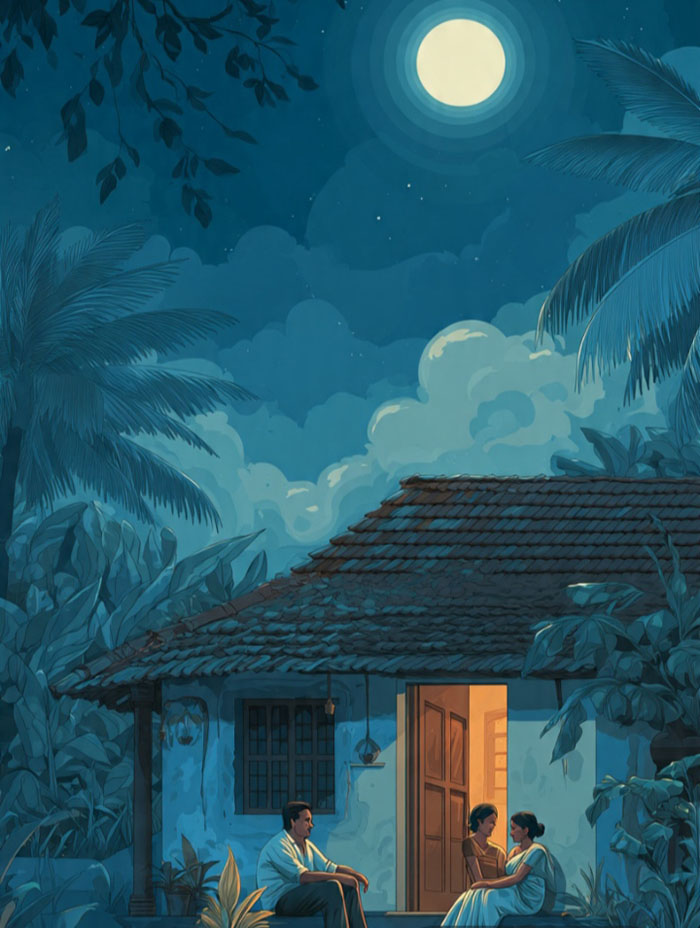
The evening they learned about Greeshma’s romance arrived like a small, decisive tide. The village lay quiet under a swollen sky; the usual sounds from the lane had softened. Vaishakh and Nayana sat together, stunned almost reverent, as their daughter spoke of a young teacher named Arjun—the boy she loved. That single confession rearranged the furniture of their long-shared life, pulling out a corner of memory that would not lie flat again.
When Vaishakh closed his eyes that night, his mind opened like an old chest. He remembered Mallu first—the name alone released the small private lights of another time. Childhood frolics, those shy teen smiles, the tremor in his chest the first time he saw her: everything came back as if unsealed. Mallu had been beautiful in the exact, impossible way of first loves; she was his chosen world once, the girl whose poems and stories he treasured and whose presence turned ordinary days luminous.
Those memories were not all gentle. One night, a drunken truck tore through their lives. The accident took Mallu and wrecked a future Vaishakh had barely dared to imagine. For a long time afterwards, he wandered like a sleepwalker—therapy and the steady patience of friends and kin brought him back to the waking world, but they could not lift the particular hollowness of having lost the one he loved.
Family pressure arranged his marriage to Nayana. On their wedding night Vaishakh told her everything: the ineffaceable wound, the voice of longing that never quite left him. Nayana listened with a love that was steady and without triumph; her gentleness and forbearance became the medicine that taught him to smile again. When their daughter was born he named her Greeshma, as if to gather up Mallu’s missing dreams and keep them warm inside the child.
Greeshma grew under the village skies, and in time she fell in love at school. Arjun was the headmaster; she, a math teacher—young, earnest, and quietly certain. Their affection had unfurled over the last four years like an unseen spring—sweet and deliberate, known to only a few. When Greeshma finally told her parents about Arjun, Vaishakh and Nayana felt the strange double beat of fear and acceptance. They worried for their daughter, but they also understood, perhaps more than they let on, how a young heart could claim what was left unresolved in an older one.
Later that night Nayana went to bed with the ordinary fatigue of married life. Vaishakh remained awake. He sat at his small bedside table, leafing through an old bundle of letters and poems—remnants of a love that had once been a map of his days. He found himself thinking of things he had never told Nayana: the exact cadence of Mallu’s laugh, the small promises he had made to himself and never kept, the private fantasies and the guilt that followed them. The house breathed around him; Nayana slept, but Vaishakh listened to a different, lonelier conversation—the one between a man and his irredeemable past.
He walked later, as he often did when memories pressed too close. The village lane, the school compound, the sunburned bench—they all returned shapes he knew intimately. Standing a little way off, he watched Arjun walk toward his home along the railway track that lay beyond their courtyard. Greeshma stood watching too, and for a moment Vaishakh saw, in the set of his daughter’s face, the echo of Mallu’s soft courage. It was a quiet, private confirmation that life, even when it had been bruised, could still find a tender thread forward.
The families arranged a meeting. Blessings were given in the low, certain tones of elders who have seen many unions come and go. The wedding date was set, and the village prepared itself in its old way—lamps to burn, palms to be cleaned, small rituals stitched into the bright fabric of a communal celebration. Vaishakh felt a knot loosening within him and, with it, a curious peace. He acknowledged what his daughter’s happiness meant: Mallu’s lost song would not return, but it had given shape, unexpectedly, to a new joy. In this way the old love found a kind of continuation—passed forward, not replaced.
On the night before the wedding the whole village glowed. Lamps flickered in courtyards; the air held the mixed smells of camphor and jasmine. The scene echoed the evening they had first heard Greeshma’s confession, yet it had changed. The earlier darkness—heavy with apprehension and the fear of loss—was now threaded with a softer light. That familiar sky seemed to hold a single pale star in the same place where Mallu’s memory always shone. Vaishakh looked up and imagined her presence like that star: not coming back to earth, but watching, blessing in its gentle, unmoving brightness.
When Greeshma and Arjun stood before relatives and neighbors, hands joined and vows ready in their young, certain mouths, Vaishakh felt both the tug of absence and the balm of completion. The private grief that had once lived at the center of his chest did not vanish; instead it settled differently, like ash that warms rather than burns. The old night—the one when they first learned of Greeshma’s love—returned in form, but its mood had shifted: what had been anxiety now became a gathering of hope around the little, persistent light of a family’s future.
Vaishakh and Nayana stood together then, clasping each other’s hands, watching their daughter step into a new life. The two of them faced the same sky where a single star shone—Mallu, in Vaishakh’s imagination, still bright, but now distant and kindly. The circle felt, in some tender way, complete: a love had been lost and kept; another had been found and entrusted to the care of those who loved it most. The village slept afterward, its pulse slower, its breath content. The night that had begun in revelation closed in blessing—and Vaishakh, who had once kept many things unsaid, found a small, quiet solace in that repetition with difference.
Syamala Haridas is an active presence on prominent online publishing platforms. She regularly writes poems, short stories, reviews, retellings of mythological tales, and articles for many online outlets including USA Malayali Manass, Manorama Online magazine, and an Australian online magazine. Her work has received several awards, including the Kerala Thanima Puraskaram, Sargga Kairali Puraskaram, Mayookham Sahitya Vedi Puraskaram, USA Malayali Manass Puraskaram, and the S. K. Publication Puraskaram. Her first novel, Manassinnullile Paruddeess (Heaven in the Mind), has already been published.
UNORDERED PIZZA
Rajashree Jagadeesan
The night it happened, I hadn't eaten anything since the afternoon. Work had been exhausting, and by the time I reached my apartment it was already close to midnight. The streets outside were unnaturally quiet, the kind of silence that makes every small sound feel too loud. Too tired to cook and too lazy to go outside again, I opened a food delivery app and ordered a large pepperoni pizza from a place a few blocks away. The estimated delivery time said forty minutes. While waiting, I sat on the couch scrolling through my phone, occasionally checking the order status like that would somehow make it arrive faster. About twenty minutes later, the doorbell rang. I frowned immediately because the app still showed the order as "Preparing." Curious, I walked to the door and checked through the peephole, but the hallway was empty.
When I opened the door, I found a pizza box sitting neatly on the floor outside. No delivery driver. No footsteps echoing in the corridor. Just the box. I picked it up slowly and noticed the cardboard felt strangely cold and damp, like it had been sitting somewhere cold for a long time. Assuming the delivery person had simply left early and the app hadn't updated yet, I brought the box inside and placed it on the table. Something about it still felt wrong though the logo printed on the lid looked faded and slightly distorted, like someone had tried to copy the design from memory. I checked the app again.
"Order Preparing."
A quiet uneasiness crept into my chest. If the pizza was still being prepared, who had left the box outside my door? My hunger pushed me to open it anyway. The moment I lifted the lid, the smell that escaped wasn't warm or cheesy. It was cold and metallic, like damp cardboard mixed with something rotten. Inside the box there was no pizza. Only a single folded piece of paper sitting in the center. My fingers felt stiff as I unfolded it and read the message written in shaky handwriting.
"Do not answer the door again tonight."
I stared at the sentence for several seconds, trying to understand if it was some strange prank. Before I could process it, my phone buzzed with another notification.
"Your pizza is now being prepared."
My stomach tightened. That meant the pizza hadn't even left the restaurant yet. Just then the doorbell rang again. This time it rang slowly... once... then again... then again. A cheerful voice spoke from the other side of the door.
"Pizza delivery!"
The voice sounded perfectly normal, friendly even. But my phone buzzed again and another notification appeared.
"Delivery driver assigned. Estimated arrival: 15 minutes."
My heartbeat began pounding in my ears. Someone knocked on the door, three slow knocks that echoed through the apartment. I stepped closer to the door and looked through the peephole again. The hallway outside was completely empty. No delivery driver. No person waiting.
Yet the knocking continued. That's when I realized the sound wasn't coming from the hallway anymore.
Slowly, I turned around.
The pizza box on the table was open again.
Something inside it was moving. My phone vibrated in my hand one last time.
"Your delivery driver has arrived."
Then the doorbell rang from the hallway outside.
And something crawled out of the pizza box behind me... whispering softly,
"Too late... your order was already delivered."
Name: Rajashree J Dept.: B.A English Year: 3 (Aided)
Rajashree Jagadeesan, an undergraduate pursuing a BA in English at Shrimathi Devkunvar Nanalal Bhatt Vaishnav College for Women, Chennai. I am deeply interested in gothic literature, especially plays and short stories that explore dark and psychological themes. In my free time, I write eerie and suspenseful narratives that revolve around fear, mystery, and the unknown. My work often reflects the haunting beauty of gothic imagination.
MAURITIUS MANIA -DIARY:APRIL 2026
Dr. Rekha Mohanty

From germination of an idea of an international trip starting in Dec 2025 to fruition was successfully carried out in April 2026. Planning and execution was responsibility of Professional organisers of Bhubaneswar, who were a trusted lot through their experience and expertise.
The travel was hassle free and easy going even when the ugly US Israel Iran war broke out on 28 Feb 26.Every thing moved smoothly in precision like rotation of earth, that exuded energy and enthusiasm amongst the cohesive group.
Ours is an amalgamation of people with whom one is closely associated with since student days in Medical College letting flow of joy natural and uninhibited.Just felt time passed in blink of an eye.
I am revisiting in my mind again and again the concluded trip to East African island country Mauritius in Indian Ocean east of Madagascar.The Ginormous family that we travelled were totally oblivious of happenings outside while staying there. The duty back at homes or work places had lost its relevance. All lived in present moments literally. The bon homie was overwhelming and infectious. The spontaneous laughter, the celebrations, jokes,songs,dance ,music, food , nice weather, comfortable stay in a lovely resort, all had crafted a charming environment that touched hearts.
We toured in different directions on different days from same resort which was convenient and a big advantage.First day we drove to South where the sacred Grand Bassin ( Ganga Talao),a lake and pilgrimage site for Hindus stands timeless.The high land invokes spirituality and peace.
Another full day was spent in southern part of island is Valle Adventure Park , a 450 acres area really good for adventure sports like zip lining, quad biking,Nepalese bridge, nature trail, mountain sledding and hiking ideal for younger people. Jeep safari tour was good for rest of us to go through beautiful scenic natural rain forest and waterfalls.There is excellent view of twenty three coloured earth, a patch of volcanic eruption that changes colour every season .
Next we visited other parts of island as day excursions.Cure Pipe or City of light is the coolest place in western high land Mauritius.Trou aux Cerfs is a big 100 meter deep volcanic crater one km out side this city from where a panoramic view of surrounding area can be seen. Colonial charm is still palpable here.
Driving on East coast to Trou d’ Eau Douce was wonderful. All kinds of water sports are available.From here by speed boats we reached a private island ‘Ile aux Cerfs’ which is only 7 km in diameter.The sea here is bluish green because of green sea weeds and clear water. Visualising under water coral reefs on glass bottom boat was fun.We had sea bath for a nice feel .Sitting or lying on white sandy beaches under thick tree shade was relaxing.
North island tour was exciting. The Citadelle Fortress in capital city of Port Louis built by British during 1840s reminds the past era.From roof top the view of mountain range on one side and sea on other side is breathtaking.The Moka Range is a dramatic volcanic mountain chain in Mauritius, forming scenic crescents around Port Louis. Formed roughly 10 million years ago, it includes iconic peaks often popular for hiking.
Caudan water front along with south water port of harbour in capital is a modern thriving centre,famous for it’s vibrant umbrella square with colourful umbrellas and art centre.It is a commercial hub with cinemas, casinos and restaurants buzzing with tourists buying local products and indulging in eating delicacies.
Apravasi Ghat in Port Louis is UNESCO world heritage site that tells about how the great experiment had begun there.This was the first large scale use of indentured labour in modern world.Between 1830 to 1910 more than 4,62000 people had arrived to start a new life as indentured labourers to work in sugar estate.Demography consists of 70% population being descendants of Caribbean, South American,South Pacific and and South East Asia.So it is a small island country of immigrants.
Casela Nature Park is at south east part of country at foot hills and habitat to a varieties of wild life in natural surroundings.A safari ride through the vast area witnessing beautiful giraffes, Impalas,Zebras, Rhinos, deers, Ostriches roaming free in open was a sight to enjoy.
The experience of tour was unique because of having food together with friends and families besides clicking pictures of special moments at different locations or simple natural gossip any where . Even we played cards in room. Had a very informal beach party near resort , fortunate to celebrate birthdays of a daughter and a mother on different days.Our bond of love and unity had truly become stronger during this period.
Mauritius weather was too good in the waning spring. The wavy fluttering lush green fields of sugarcane was mesmerising under clear blue sky and surrounding blue green sea. Nature showed up at its best in thick cool rain forest inviting wild indulgence and calmness.We were lucky not to have any major health issues. The youngsters were a great bunch of freshness with loving hearts.
Some memories fade away with dust cover of passing time. Some eclipses over horizon. Some gets wet and washed away by mundane routines. Still some gets imprinted boldly. This trip can never be blurred as it is a happy lifetime memory. I have treasured it forever on purkinje fibres of my heart till I am alive.It is mania of no stress, good vibes.
Col( Dr) Rekha Mohanty is an alumni of SCB Medical College, Cuttack, Odisha and she has spent most of her professional life in military hospitals in peace and field locations and on high altitude areas.She has participated in Operation Vijay (Kargil war)in 1999 and was selected for UN missions in Africa for her sincere involvement in crisis management of natural calamities in side the country and abroad where India is asked to do so in capacity of head QRT in Delhi for emergency medical supplies.She had also participated in military desert operation ’ Op Parakram’ in Rajasthan border area.After relinquishing Army Medical Corps in 2009,she worked in Ex Servicemen Polyclinic in Delhi NCR and presently is working in a private multi-speciality hospital there to keep herself engaged.
Her hobby is writing poetry in English and Odia.She was writing for college journals and local magazines as a student in school.
Being a frequent traveler around the world,she writes travelogues.The writing habit was influenced by her father who was a Police Officer and used to write daily diary in English language he had mastered from school days in old time.Her mother was writing crisp devotional poems in Odia language and was an avid reader of Odia and Bengali books.Later her children and husband also encouraged.
Dr Rekha keeps herself occupied in free times for activities like painting, baking and playing card games the contract bridge.
She is a genuine pet lover and offers her services to animal welfare organisations and involves in rescue of injured stray dogs.Being always with pets at home since early childhood ,she gives treatment to other dogs in society when asked for in absence of a vet.She delivers talks on child and women health issues to educate the ladies in army and civil.
After sad demise of her husband Dr( Brig)B B Mohanty in February 2023,she devoted more time to writing and published her first poetry book’Resilient Leaf’in August 2023.Since then there is no stopping and she is going to publish her second book of poetry soon.
She enjoys reading E magazine LV , newspaper current affairs ,writing poetry and watching selected movies whenever she gets time.She keeps travelling places of interest in between for a change which is a passion as a girl since days roaming with parents and siblings .Her motto is to be happy by giving the best to self and to the society.She is lucky to have a supportive family.
PROFOUND ANSWER OF A TEACHER
Bankim Chandra Tola
On the occasion of celebration of Annual day of the city High School (a pseudonym), the headmaster invited me as chief guest to inaugurate the function and speak on character-building to the students. The hall was packed; I thought if I am to speak on character-building, first I must try to kindle inquisitiveness in students to listen and imbibe what I would say; so that they carry the message for future application in their lives. From experience I knew school students are apt in assimilating and adopting things if they feel the subject matter is interesting. So, I decided to make the session interactive instead of making an oratory exuberance which would be boring and will distract their attention. I thought if ten out of hundreds of students assembled there took the message to heart, they would grow into valuable assets of a society and one day they would be pioneers to inspire many others to become responsible and ideal citizens.
To start with I asked a simple question to ten students at random. The question was – ‘what they want to become in life after being educated’? As expected, the answer was obvious - either a Doctor, Engineer, CA, Scientist, MBA, Administrative officer or a Police officer. One student however said he wanted to run his family business. As I could not get my desired answer, I asked a few more students. But the answer was almost identical. At that point I could surmise what the rest of the lot might be having in their mind; so, I did not embark on questioning further.
I thought, it is the prevailing trend in the current society; so, I must not discourage young minds and said, “I am impressed with your ambition and zeal to pursue your career in your desired disciplines but is it all that you want to become after being educated?”
Silence ruled the hall; no one came out with any answer. When I repeated the question looking sharp at the assemblage, one student got up to say, “Sir, these are the expectations of our parents that we come out successful in different entrance tests to qualify in our desired professional lines so that we can easily fetch lucrative jobs from the job market.”
I said, “Excellent! Fulfilling your parents’ expectations is indeed your foremost duty, and I admire your sentiment. Yet remember, you are not solitary beings destined to live in isolation, concerned only with earning and enjoying a comfortable life. You are vital parts of a large, intricate human society that depends on you to keep it strong, stable and cohesive.
You owe certain duties to society to complement common good and well-being of people. These qualities emerge through true education, which shapes you into good human beings. Ask yourselves: should you pursue your studies merely to secure employment, or to grow into worthy individuals while earning a livelihood?”
I said, “Schools and colleges are not factories designed to manufacture money-making machines; they are noble institutions meant to nurture humane and responsible citizens. Society needs human beings of character, especially at a time when humanity itself seems to be fading into the background.”
I continued – “Perhaps most of you might have thought that becoming good human being is an attribute of education which is acquired by default. Yes, education opens doors to all facets of knowledge, but it is your mind - how sharp, how attentive, how devoted it is to receive and store them for your use in practical field. Knowledge empowers wisdom to discriminate good from bad. That power of wisdom is called "Vivek", which means conscience with discrimination. But it doesn’t happen always. Had it been so, there would not have been so much unrest everywhere; so much corruption at all levels in public life; so much deterioration in moral value of people in society, so much hatred, violence, torture in society we live in. So, should it not be your aim to become a good human?”
After a pause I said, “Tell me, why none of you expressed any interest in becoming a teacher or a professor? Perhaps you have taken it as the last resort for survival when all your attempts fail to qualify for your cherished lines. Okay, it is your choice. But just imagine, supposing all of you, being brilliant students with extraordinary caliber, go for all these professional lines you have expressed, then what material will be left for becoming teachers or professors to build your future generation? Do you expect only the average students who couldn’t qualify for any prospective career sould be left for teaching your children and by that you expect your children to come out with extraordinary competence to face the competitive world?”
“In this context, I would like to narrate an interesting story as I heard from a distinguished teacher. Listen to it carefully and ponder over it for a while.
“Once a dinner party was hosted by the CEO of a large multinational company. The guests consisted, among others, of General Manager of a Bank, Chief Engineer of state Govt. and a lady School teacher. Opening the discussion the CEO talked about the problems with present education system. He argued, “What a kid is going to learn from someone who decided his best option in life was to become a teacher?”
The G.M. of Bank and the Chief Engineer speaking in similar lines said, “True, what the children are going to learn from the teachers who have sealed their career with teachership as the last resort, may be after being disqualified in entrance tests and interviews for several other promising professional lines? After all, caliber has some value that the present-day teachers lack.”
Encouraged by the affirmative statements of Banker and Engineer the CEO said, “Well, Mrs. Pro, you’re a teacher; trust you won’t mind this academic discussion. We in our respective professions dedicatedly contribute to different developmental programs envisaged by the Govt. Be honest to tell us being a teacher what do you make and what you contribute to the society and to the nation?”
Mrs Pro, a Bonafide teacher, had the reputation of brilliant track record, known for her frankness and straightforwardness. Slowly yet confidently she replied, “Do you want to know what I make and what I contribute?”
She paused for a second, then began, “Well to begin with, I make kids work harder than they ever thought they could do. I make kids sit through 40 minutes of class time when their parents can’t make them sit even for 5 minutes without an I Pod, Game Cube or movie rental; and you want to know what I make?”
She paused again and looking sharp at each person at the table said affirmatively, “I make kids wonder. I enthuse them to ask questions. I make them apologize for every fault they make and mean it. I make them show respect and take responsibility for their actions. I teach them to write and then I make them write. Keyboarding isn’t everything. I make them read, read and read. They use their God-given brain, not the man-made calculator to solve the sums. I make my classroom a place where all my students feel safe. Finally, I make them understand that if they use the gifts they are given, work hard, and follow their hearts then they can succeed in life.”
Mrs Pro paused for one last time and then said. “When people try to judge me by what I make, I consider money isn’t everything that one should try to make, I can hold my head high for I make humans and pay no attention to what others say, because they are ignorant. Still, you want to know what I make. I train young minds to imagine, to think, to be enthusiastic and be creative. You wanted to know what I contribute to the nation? I lay the foundation for a healthy nation by grooming young minds who build its superstructure in future and achieve all that is sublime.”
FINALLY, I MAKE A DIFFERENCE.
Now, tell me Mr. CEO, Mr Banker, Mr Engineer - what do you make other than working on a project complying with the set rules and guidelines that some other’s brain has framed?” The entire hall was lost in dead silence.
Concluding the story I said, – “Dear students! Should you remain satisfied with only securing a job after education or become a good human being? Remember, success follows a good human always.
All the best."
Bankim Chandra Tola, a retired Banker likes to pass time in travelling, gardening and writing small articles like the one posted here. He is not a writer or poet yet he hangs on with his pursuit of writing small miscellaneous articles for disseminating positive thoughts for better living and love for humanity. Best of luck.
NEW SUNRISE
Dr. Rajamouly Katta
Sarva Daksha was a leader of the people in a city called Gangadevinagar. Every time the people elected him their leader. He knew all the strategies for winning the election. He was unrivalled in the domain of politics. He, therefore, posed superior to other leaders.
During elctions, the people were offered notes for the pocket and drinks for their intoxication. They voted for Sarva Daksha without realizing their rights in democratic nation. They sloganeered tearing their throats,
“Sarva Daksha is our leader…our beloved leader…
“He is the God-sent leader in the welfare of all of us…
“He is the friend of not only the poor but also the rich…
“Every election season is a fest…a grand fest once in five years…
“He is the host, and we are his guests during the fest…
“He offers scintillating notes and mouth-watering food items with intoxicating drinks…Indeed, enjoyable amd memorable…
“All freebies for all of us…Who offers freebies andschemes? It is only the leaders like Sarva Daksha.”
The people of Gangadevinagar in course of time realized Sarva Daksha’s faults during the election every time. They never understood the vote bank politics then. He offered the people currency notes, filling their pockets and bottles for their dozing in intoxication to win the election. There were mass attraction schemes for temporary benefits. He and his like never thought of long-term goals like the establishing of industries, factories and projects as the people were happy with the short-term goals and freebies. He was ever a winner in the election. He underrated all other leaders, as their winning the election was not certain. His election every time created a hat-trick in the history of elections in the city.
Under the lifelong leadership of Sarva Daksha, the people blindly believed that he was a great leader. Time in its incessant flow taught them the bitter facts. When they realized that they did not reach their goals like employment to stand on their own feet. There were corruption and inflation beyond limits. They realised his faults as a leader. They did not learn the fact that they were facing many problems under his leadership.
The people from all the streets of Gangdevinagar assembled and resolved for the inevitable revolution on their part. They discussed it in many ways in quest of a new sunrise:
Sarva Daksha has made us fools all these years... We are blind to what he has been doing for many years... How long should we be fools...? How long should we become victims to him...?
Let’s be sworn in to be loyal to the soil.
So far, we ‘ve lived in darkness, let’s see light, a new sunrise in our lives
Let's wake up to the realities...the hard realities...the naked truths...
Let's realize our responsibilities towards duties as humans, frring us from provovocations and false imitations...
Let's not welcome his election the next time...when he is a leader of evils and crimes, scams, and violence...
What we need is that we should unite to fight against injustice...
When faults or pitfalls are there in the leader, it is the faults or pitfalls of the people... We as the people are responsible for all those defects...
In the democratic set up, our leader is as per our qualities... We aren't like the leaders... Leaders are like us as they are elected by us... 'yadha praja thadha raaja'. We elect our leader as per our principles and aims at the welfare of the people. It's against yadha raaja, thadha praja as we elect our leader in the democratic set-up... We should elect a good leader this time to see us in a better position. It's the responsibility on the shoulders of the people-elect leader. This time, let's elect a good leader as per our choice...
We should be against false temptations and provocations...
We should be against deception, corruption, and exploitation...
No bribery, offered in offices to get the work done...
We shouldn't allow any rigging in the election... For all these reforms, we should vote for a good candidate...
First, we shouldn't have faults... We shouldn't have differences among ourselves...We should examine ourselves... and correct our fauts.
All of us are one...We're one...We should have unity to fight against communal feelings and caste prejudices like the people in Gangadevipally village, the most ideal village in the nation...
Ours is Gangadevinagar that is very much bigger than Gangadevipally. We should be broader in our outlook. We should be human and humanistic in every step... We should be higher than its people are...
In fact, Gangadevipally must be our example...an inspiration...a model for us...It's a village with a big name... Ours is a big city with the same name...It should be a prestige question for all of us...
To elect the right leader in the right way is our birthright...
... ... ... ... ...
In the wake of their unanimous resolution, there was a sudden transformation in the people. The city was heading towards progress...It was very peaceful... It did not let any evil happen. All had unity to fight against all evils. The clashes that had been there earlier did not take place. The people were not ready for bribery in the offices. There was a change in them in all respects. There was a silent revolution in the minds of all the people of Gangadevinagar against the leader, Sarva Daksha.
The leader Sarva Daksha was not able to digest the revolutionary changes in the public. The unprecedented revolution left the leader restless. He fell into a series of thoughts. He evolved the new strategies, but he was doubtful about his success in the election.
The negative waves started to blow from all directions against the leader, Sarva Daksha and his false tactics of schemes... He felt nervous about the on-going silent revolution.
Sarva Daksha contacted his supporters in all the places. He did not get any correct information. He learnt that they did not for him. They decided to defeat him in the forthcoming election. They therefore did not care for the leader. The situation was stunning for him. When there was no alterbativre, he was serious in his thoughts and plans. He diffused powerful goons in every street to scare the people.
The goons met the people in every street to find out their secret plans. Sarva Daksha ordered them to foil the plans of the people of revolution.
'What’re you planning against Sarva Daksha...?' said the goons.
'We’re planning to defeat him this time...,' said the people.
'Do you know what will happen if you plan to defeat him?' said the goons.
'We’ll be successful, and he'll learn bitter lessons...,' said the people.
‘You’re going to face bad consequences…Your lives will be in desert sans oasis…,’ said the goons.
'We're ready to face any kind of situation...We're for the right cause... We've the support of all the people...We've unity... None can question our unity...' said the people collectively.
'Why do you reap bad consequence...?' said the goons.
'For the welfare of the people, we're ready to face any kind of consequences...' said the people confidently.
'You aren't all the people...All the people are not here...,' said the goons.
'We're the representatives of all the people from all the streets of the city, Gangadevinagar... We're the voice of the people...We’re the pulse of the people... We're the spirit of the people's revolution,' said the people.
'I see...Your bodies will float on the Bay of Bengal...,' said the goons.
'Let our bodies float on the Bay of Bengal...We're ready to die for the welfare of our city, Gangadevinagar,' said the people.
'You cry over split milk after the failure of your plans...,' said the goons.
'We're going to win the case...Sarva Daksha is not going to win,' said the people.
'We're going to offer ten lakhs for each vote…Offer drinks they can swning in toxication ... In your welfare, we advise to withdraw your plans,' said the goons in the high pitch to scare the people.
'We're for the revolution... for the right cause... We're for our revolution to change Sarva Daksha,' said the people.
All the people had unity for the goal of turning their city model. They had no second opinion about it. When they saw the unity of the people..., the goons ran away despite having bombs in their pockets.
The elections were fast approaching. The people were very careful about their principles in going against the evil practices of Sarva Daksha. When they saw a van coming with liquor bottles, they stopped it and burnt all the bottles. Even the drunkards were cooperating with them in the revolution.
The secret agents came there to circulate money, two thousand cureency notes to each of the voters. They came in a jeep with bundles of notes. The people burnt the notes in the presence of the secret agents. The plans of Sarva Daksha failed.
The election took place on the day of poll peacefully. The people were watching even the polling personnel. At every step, they saw the elections conducted smoothly.
The supporters of Sarva Daksha tried rigging but failed miserably, as their number was very less. The people became stronger to oppose the evil practices.
Sarva Daksha was defeated. He lost his deposit. He felt the defeat very much insulting. He went to Goa to hide himself from the public for a long time.
The people elected the leader, Janaprem who was ready to devote his time or sacrifice his life for the development of the city, Gangadevinagar.
It was the success of the people... It was the consensus of the people...It was the verdict of the people. Everything turned democratic to make the corrupt leaders feel ashamed of contesting the election and showing their faces to the people in the election everywhere.
The people wanted their city, Gangadevinagar to be on the lines of Gagadevipalli, the most model village in the nation. Here after, Gangadevinagar is also the most model city in the nation to set an example for other cities.
The people did not give any chance for rigging for Sarva Daksha. When they elected a new leader, there was no trivial trinity of corruption, deception, and exploitation. The people in the city were not ready for bribery.
There were no social evils and false practices like ragging in schools and colleges and ragging in colleges. There were no rapes and no incidents of violence as the people minded Ambedkar's theory of trinity: liberty, equality, and fraternity. They saw a new sunrise. To speak in brief, Gangadevinagar was peaceful on the lines of Gangadavipally. It was the most welcome chapter in the history of the city.
Dr. Rajamouly Katta, M.A., M. Phil., Ph. D., Professor of English by profession and poet, short story writer, novelist, writer, critic and translator by predilection, has to his credit 64 books of all genres and 344 poems, short stories, articles and translations published in journals and anthologies of high repute. He has so far written 3456 poems collected in 18 anthologies, 200 short stories in 9 anthologies, nine novels 18 skits. Creative Craft of Dr. Rajamouly Katta: Sensibilities and Realities is a collection of articles on his works. As a poet, he has won THIRD Place FIVE times in Poetry Contest in India conducted by Metverse Muse rajamoulykatta@gmail.com
FEAR OF MATH
Ashok Kumar Mishra
Saswat returned home from office when dubious silence greeted him. Unlike other days, wife Alaka and son Bachu were not visible anywhere near the door. He smelled something fishy and was trying to assess the temperature inside. When he left for office things were very normal. There were no forecast of any storm or heavy rain with lightning and thunder. Nor there were any prediction of occasional hail storm. He did not remember any sign of gloomy domestic bickering. Everything was peaceful and normal. Bachu as usual left for his school. The house maid came in time and finished her work. Alaka was in excellent mood and was humming an old film song. She prepared fish curry with mustard paste and dry mango powder for him, which was so tasty. Alaka handed over tiffin carrier, water bottle, handkerchief and mobile phone to the driver and wished him when he left for office. She also told Saswat to come back home early with a smile.
But suddenly what happened as if a dark cloud descended on his house from nowhere and transformed the very weather which he was finding difficult to gauge.
“Is this silence a sign of waging storm?” Saswat pondered for a moment. Our own meteorological department many times fails to predict the exact weather, unlike the exact forecast made by BBC or CNN, who almost with hundred percent accuracy predict the time and duration of rain that would stop play at Lords or MCC grounds.
Who can claim to predict accurately the changing mood of women and weather? It changes without notice very frequently. Better make no forecast.
Today Saswat’s Senior Officer came for office inspection to this small Phulbani* town. He was very happy with Saswat’s performance. Saswat had been working in this office since last three years. But before Saswat could make an appeal for his transfer elsewhere his Senior Officer started praising him and said for development of backward areas like Phulbani dedicated young officers like Saswat should get longer term. He announced that he would depute Saswat for a month long training to Mumbai as a reward for his good work. He promised to take him to Bhubaneswar on transfer after another two years, if he works like this.
Saswat was cursing his Senior Officer silently.”This idiot does not know whether he would remain in Head Quarter for another two months or not, but promising to take me after two years. Now he has to go on training to Mumbai, leaving behind family in this God-for shaken place for a month and he feels he has done a favour to me?” He did not know how he will break this news to Alaka and what would be her reaction. More so when the domestic weather is so uncertain.
Saswat felt all his calculations have gone wrong. The driver handed over the vehicle key to Saswat and he warned the driver to come in time next morning. All of a sudden the front door of the house opened and stormy wind heaped on him.
“You do not care for us. Since last three years you have left us to stay in this forest area and you are happy with your office work. There is no one around to talk. The market here is so small, which closes by dusk. There is frequent disruption in power supply. In the middle of watching a TV serial suddenly there would be power cut. The AC and fan would stop functioning. Have you kept an eye over the studies of Bachu? Do you know in which class he is studying? Have you ever gone to his school? Have you ever seen his mark-sheet? Have you seen him reading a book when you return from office? Every day by the time you reach home you would find him dosing. During day time he is busy playing video games on the mobile, otherwise you find him reading social studies book. There is no international school in this dingy town. Bengi nani telephoned like Bachu her son Om is studying in fifth class and secured hundred marks out of hundred in Mathematics. He is studying in an international school and coming first in the class. In math junior Olympiad he did well and got a certificate. Next year nani will admit him in coaching class for IIT. You are spoiling your son’s career. What will he do, who has so much fear in mind for mathematics? You and only you are responsible for weak foundation of Bachu.”
Saswat stood still as if he was drenched to bones with a sudden shower that surprised him. He was thinking how he will break the news of his deputation to Mumbai for training.
In a place like Phulbani where a good English Medium School is difficult to get where he will admit Bachu in an international school. There is not a single good private school here and he has admitted Bachu in Saraswati Vidya Mandir, which he thought would give a good foundation to Bachu. Now somehow he had to pacify the raging storm instantly, thought Saswat.
“Why don’t you tell your office that they transfer you to Bhubaneswar for your child’s education? You have already served for three years in this wretched place. You keep your mouth shut in your office. Your Senior Officer came to your office. Why didn’t you flatter a bit and request for your transfer? You don’t know how to butter and keep your seniors happy. Are you the only one being paid to develop this place? Why your other friends have not come to Phulbani?”
Saswat had to lie to escape this tirade of allegations. He said the visiting senior officer was very pleased and promised to transfer me to Bhubaneswar soon ( didn’t mention how soon). Alaka replied back “ do not bluff. If transfer and promotion is given on the basis of work, how did you get a transfer from Baripada (another backward area) to Phulbani?”
After failing to convince Alaka, he told “Bachu is going to tuition of the best teacher in the school; he will do well this time. I studied in Government school and how I could get admission to engineering college? Moreover, my father was a fine Mathematics teacher and needless to say that I too was securing cent percent marks in Mathematics in every examination. There is Mathematics in our gene, how Bachu will not do well in Mathematics?“
This was enough provocation for Alaka to react “Oh! You mean to say Mathematics is in your family gene and because Bachu has taken my gene he is failing in Mathematics? Do you know my father was a Chief Engineer. Who has built Hirakud dam, do you know?”
“Probably the missile misfired and hit the wrong place”, thought Saswat.
“You did not wish the tuition Sir on his birthday and didn’t visit his house. Didn’t I tell you to buy a parker pen as birthday gift for him?
“What is this you are telling Alaka? Bachu will not study and I have to bribe his teacher for that? You call Bachu. I will teach him Mathematics from today. You give me a cup of tea and let me see how his Mathematics will not improve.”
The storm calmed down for a while. After sipping a cup of tea he called Bachu.
After a while came the reply, “I am playing computer game. After that I will study science, tomorrow I have surprise exam.”
Saswat was furious and told Bachu to come to him instantly with mathematics book and Note book”
Bachu reported fast, standing still in front of him. His hairs were standing upward (Mushroom cut) with legs unwashed after play, scratches and small injuries here and there on his body, with red eyes focused on mobile, he came and stood motionless. Such a huge storm has blown over and as if it did not bother him a bit.
“Tell me how do you find Mathematics subject? Is your teacher explaining properly? You like the subject?” asked Saswat. Bachu only had one answer for all the questions- “Good” he murmured.
“Give me your Mathematics book and the notebook.”
“They are in the school. To reduce the weight of the schoolbag nowadays only half of the books are given back. Tomorrow after math class I will get the books and note book” said Bachu.
“Okay, tell me which chapters in mathematics have been already covered, I will clarify your doubts and ask to practise a few sums.”
“After covering percentage chapter we are now studying time and distance.”
“Let me ask you a simple mental math on percentage. A stationery shop merchant increased the price of this pen(showing his own pen) increased the price by ten percent and declared ten percent discount on the new price. Will he make profit or loss?”
Bachu repeated the question and tried to make some calculations. Saswat was excited to find Bachu thinking deeply and making calculations to give the correct answer. Then finally Bachu opened his mouth and said “it’s very simple. He neither made any profit nor loss.” Saswat was upset getting a wrong answer and tried to explain that discount is on the new price not on previous price. Bachu kept nodding his head as the explanation went over his head and tried to drive away the mosquito as if it was a distraction and cause of his wrong answer.
Visibly upset Saswat asked Bachu “ let me explain you Time and distance chapter. You might have seen trains coming from opposite directions or from same direction crossing each other. Bachu immediately replied Bengi aunti’s son Om was telling his teacher explained the chapter with two toy trains so well.
“What do you mean to suggest? You will not be able to understand without the toy trains. Bring two glasses and assume them to be two trains coming from two opposing sides. Bachu gave a blank look as if without the toy trains Saswat would not be able to explain time and distance chapter properly to him..
Saswat lost all his patience as Bachu started dosing. You are not clear on the chapters already covered and you are not interested about the new chapters being taught at present. You are half awake and only wasting my time. I used to answer mental maths in seconds. You stupid fool has no interest in learning math, which is so interesting. You deserve a slap to remain awake. Bachu replied I have to read science for surprise test tomorrow.
Sharp came the shout of Alaka from inside “You are explaining Mathematics to Bachu or causing fright for the subject in him? You do not have patience to teach. Both come for dinner to the dining table.
“Yes Mama, I am coming”, told Bachu and in next moment he was eating his dinner.
When Bachu retired to his bed Alaka suggested that let Bachu be sent to Bengi nani and he be admitted to a good school in Bhubaneswar as Saswat will not be able to teach him. “Here he is making bad company and is not concentratingin studies at all.” To this Saswat said “Bachu has developed fear for Mathematics and does not seem to have proper foundation and liking for Mathematics. If he is forcefully admitted to a good school what will be the result?” Finally both agreed to call father Bipracharan Patnaik, retied mathematics teacher home for a month to properly guide Bachu. Saswat would in the mean time complete his training in Mumbai.
Bipracharan gave a hearty laugh and told Saswat and Alaka not to worry unnecessarily and put pressure on the small boy. He agreed to come to Phulbani within next two days with his childhood friend Balabhadra, the retired police officer whose daughter and son-in-law were in Phulbani town.
Bachu was very happy to receive Bipracharan, his grandpa who arrived on schedule. They were never separated for a moment from each other. Bipracharan was teaching mathematics to Bachu and Bachu was teaching mobile phone usage to his Grandpa. Alaka was very happy seeing the progress. Balabhadra often used to visit their house to meet his friend.
One day Bipracharan gave some problems to solve to Bachu and went to the local market . In the mean time Balabhadra arrived and waited for his friend to return home. While chit -chatting with Bachhu the later informed him that he is solving math problems given by his Grandpa. When Balabhadra boasted about his math skill during his childhood, when he used to score full mark in mathematics Bachu thought it wise to take his guidance to solve a naughty problem taking his help.
When Balabhadra read the question for the first time he picked up the glass from the table and emptied the full glass. He read the question once again and cold sweat drenched him completely. So difficult a sum for a student of class five? Alaka brought him a cup of tea and placed on the table.
“A slippery pole standing in the middle of a pond fifteen feet visible above water, A monkey was trying to climb the pole. Every minute it is going up two feet and next minute coming down one foot. How long it would take the monkey to reach the top?” What a difficult question for a small boy it’s more like a riddle,” thought Balabhadra.
Bachu started asking so many questions “Who put oil on the pole and made it slippery?” “Did monkey swim to the pole?” “Who put the pole in the middle of the pond?” “There was no food at the top, why did the monkey try to climb the pole then?” and many others like this. On the one hand he was not able to solve the problem, added to this the tirade of questions from this boy. Balabhadra suddenly remembered some urgent work and left the Saswat’s house in a hurry.
In a short time Bipracharan returned from the market. “Why did’nt you ask Balabhadra to wait till my return? In Phubani what work he has that he could not wait for ten minutes?”
“He was waiting and talking to Bachu. All of a sudden he remembered some urgent work to be attended to and left immediately. Even he did not take tea.”
“Bachu, did you ask him to solve the problem? Balabhadra was very poor in mathematics and used to fail in every math exam. With lot of difficulty he could pass the matriculation examination taking my support.
Bipra, Bachu and Alaka all had a hearty laugh together.
(Translation of my story Anka Atanka- published)
(The End)
(*Phubani , a small backward town in Western part of Odisha.once considered as punishment posting. Presently things have improved.)
(9491213015)
Completed his MA and M Phil in Political studies from JNU and served as Deputy General Manager in NABARD. He made pioneering contribution in building up Self Help Group movement in Odisha and popularized Amrapally mango plantation in the state. He has authored several books and written several articles on micro credit movement. Four tele films were made on his book titled “A Small Step forward”. He served as Director of a bank for over six Years.
An acclaimed Short story writer in Odia and English. His stories are rooted in the soil and have sublime human touch. Many of his short stories in Odia have been published in reputed magazines. His short story collection “Michha jharanara pani” was released recently.
(9491213015)(m)
The dialogue "marriages are made in heaven and consummated on earth" occurs in the play Mother Bombie written by the sixteenth century English playwright John Lyly who is known as the father of English comedy. Whether marriage is made in heaven or earth, it is the most universal institution in the world. Many human customs or institutions of one age become obsolete in a later age and go extinct or become defunct. Marriage may be the only institution that stands with the humans world over from time immemorial.
Feminism interprets marriage as a patriarchal institution that curtails the freedom of women and confines her within the walls of the home. And the feminists argue to demolish the institution of marriage in order to have real freedom for women. What the feminists say about marriage may be true, but to have gender equality and women's freedom, the demolition of marriage is neither necessary nor possible, I presume.
Of all the relationships among the humans, the relationship formed through a marriage is the one that is the most intimate and self-effacing. Of course, there are marriages which are terribly toxic as far as the female is concerned. And the increasing number of cases in our family courts may cast aspersions on the saying "marriages are made in heaven". But I think that the burgeoning number of the failing marriages points to the fact that marriages are made not only in heaven, but also in hell too. The marriages made in hell are destined to be problematic. The hellish marriages in which love is not the driving force won't prosper, whereas the marriages made in heaven are those in which love is the driving force. True love doesn't allow the relationship to be toxic, true love doesn't allow the man to be the boss and the woman to be the slave.
The chapter in which Howard Zinn deals with the women’s rights in his wonderful book A People’s History of the United States is titled: ‘The Intimately Oppressed’. Zinn talks about many women's rights activists in this chapter. One of them is Lucy Stone. Zinn says: “When Lucy married Henry Blackwell, they joined hands at their wedding and read a statement: 'While we acknowledge our mutual affection by publicly assuming the relationship of husband and wife…we declare that this act on our part implies no sanction of, nor promise of voluntary obedience to such of the present laws of marriage as refuse to recognize the wife as an independent, rational being, while they confer upon the husband an injurious and unnatural superiority…'”
Marriages like that of Lucy Stone and Henry Blackwell are the marriages that are made in heaven. The marriages in which the women are denied the right to be independent and rational beings are the ones which are made in hell even if they are solemnized in temples or churches or mosques.
The author who hails from Palakkad district of Kerala has completed his post graduation from JNU (Jawaharlal Nehru University), New Delhi. His articles on gender, environmental and other socio-political issues are published in The Hindu, The New Indian Express, The Hans India and the current affairs weekly Mainstream etc. His writings focus on the serenity of Nature and he writes against the Environmental destruction the humans are perpetrating in the name of development that brings climate catastrophes and ecological disasters like the 2015 Chennai floods and the floods Kerala witnessed in 2018 August and 2019 August. A collection of his published articles titled Leaves torn out of life: Woman the real spine of the home and other articles was published in 2019. He is a person of great literary talent and esoteric taste. One of his articles (Where have all the birds gone?) published in The Hindu is included in the Class XII English textbook in Maharashtra by the Maharashtra State Board of Secondary and Higher Secondary Education.
THE MASTER STROKES OF RABINDRANATH TAGORE
Sreechandra Banerjee
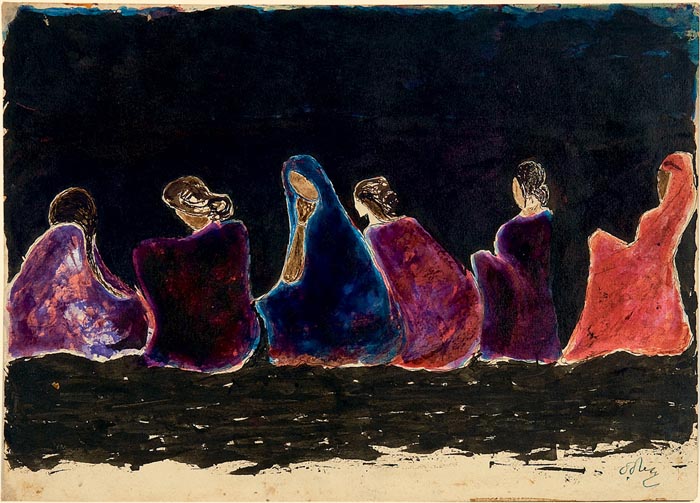
Now, the songs, poems, stories that the great maestro- Nobel Laureate Rabindranath Tagore created, no doubt reflect his master strokes in music and literature, but what about his master strokes in drawing and painting?
Well. Well, that is another arena, another rich canvas of the great master’s life.
On 8th of May, it was Rabindranath Tagore’s birthday. Many years back, I had written about Tagore’s Masterstrokes which were carried elsewhere. To celebrate this year’s Rabindra-Jayanti, I thought of writing again and posting here on the esteemed canvas of Literary Vibes.
Tagore had always wanted to paint and so he kept on trying to master this art-form too. In 1900, he wrote to the famous scientist Jagadish Chandra Bose, “You will be surprised to hear that I am sitting with a sketchbook drawing. Needless to say , the pictures are not intended for any salon in Paris, they cause me not the least suspicion that the national gallery of any country will suddenly decide to raise taxes to acquire them. But, just as a mother lavishes most affection on her ugliest son, so I feel secretly drawn to the very skill that comes to me least easily.”
At this time, he was approaching forty. Though disappointed with the results, he continued sketching aimlessly while he pondered on other things- may be yet another masterpiece of writing!
These aimless sketches were often ornamental motifs sketched out of words. Gradually these sketches took shape and during his tours in 1924 they became more expensive.
It was during one of these tours that the Argentine intellectual writer Victoria Ocampo was impressed. She wrote - “he played with erasers, following them from verse to verse with his pen, making lines that suddenly jumped into life out of this play: prehistoric monsters, birds, faces appeared”.
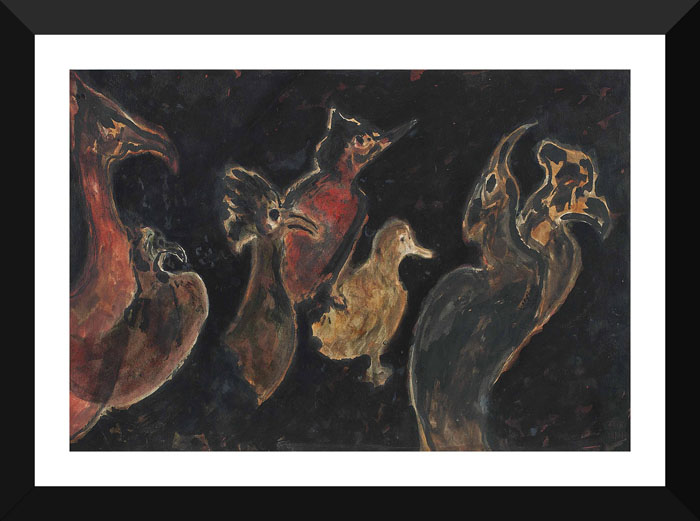
Realizing that his efforts have started taking shape, the master wrote: -“The only training that I had from my young days was the training in rhythm in thought, the rhythm in sound. I had come to know that rhythm gives reality to that which is desultory, which is insignificant in itself. And therefore, when the scratches in my manuscript cried, like sinners, for salvation, and assailed my eyes with the ugliness of their irrelevance, I often took more time in rescuing them into a merciful finality of rhythm than in carrying on what was my obvious task.”
Describing this as his “unconscious training in drawing”, he went on to elaborate his sketches:- “..when the vagaries of the ostracized mistakes had their conversion into rhythmic inter-relationship, giving birth to unique forms and characters. Some assumed the temperate exaggeration of a probable animal that had unaccountably missed its chance of existence…some lines showed anger, some placid benevolence, through some lines ran an essential laughter…These lines often expressed passions that were abstract, evolved characters that hung upon subtle suggestions.”
In 1928,Tagore started to do independent paintings. In 1930, Victoria Ocampo helped him to organize the first exhibition of Tagore’s paintings in Paris. Exhibitions across Europe, in Russia, in England and America followed.
Rabindranath Tagore was the first Indian artist to be exhibited widely in the West.
Seasoned artists and connoisseurs in the West were appreciative of his artworks. However, there were controversies too as they found his work as an extension of Western Art and not in relation to the totality of his work or in relation to India.
Tagore’s paintings bear reflections of his familiarity with the “primitive” and modern traditions of art. Says Wikipedia:- “But it is only in the context of post-forties Indian Art that Rabindranath’s paintings find their true place in the history of modernism and it is in this context they need to be looked at.”
From 1928, Tagore painted more than 2000 paintings over the last thirteen years of his life. His nephew, Abanindranath Tagore, the reputed artist and creator of “Indian Society of Oriental Art” called this a “volcanic eruption”.
Now, the question arises whether there is any central unifying theme.
Well, there is no simple answer to this, as modern-day artists say. Reputed art historian R Siva Kumar explains: - “A sense of drama is central to Rabindranath ‘s paintings. The darkness in many of his paintings is not the darkness of the night. His self-portraits reflect a deeper psychological need that of a creative person always in search of self. But it is his landscapes, more soothing than his grotesques or human or animal figures that remain his best admired works. Limited in space but unlimited in diversity this is Rabindranath Tagore’s painting.”
In “My Pictures”, Tagore himself has written about his paintings: - “But one thing which is common to all arts is the principle of rhythm which transforms inert materials into living creations. My instinct for it and my training in its use led me to know that lines and colours in art are no carriers of information; they seek their rhythmic incarnation in pictures. Their ultimate purpose is not to illustrate or to copy some other outer fact or inner vision, but to evolve a harmonious wholeness which finds its passage through our eyesight into imagination. It neither questions our mind for meaning nor burdens it with unmeaningness, for it is, above all, is meaning” (1930 statement).
In a book named “Ronger Rabindranath”, the authors Ketaki Kushari Dyson and Sushobhan Adhikary, in scientific collaboration with Adrian Hill and Robert Dyson, have studied the use of colour by Rabindranath Tagore in his works, i.e., in his writings and in his art.
In an article written about this book, Ketaki Kushari Dyson has presented some pictures, some of which are presented here:
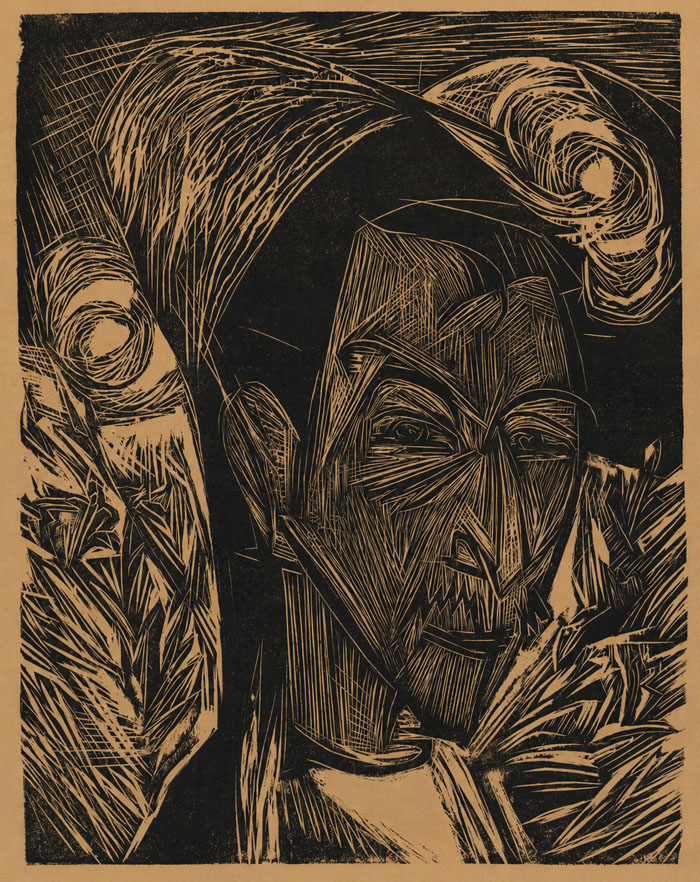
This is a woodcut (1919) image of ‘David Mueller’.
by Ernst Ludwig Kirchner.
This is waterproof ink-on-paper from
Rabindra Bhavna Collection, no.1915 (Has no date).
Comparing this with a German Expressionist woodcut like in figure above , it seems that Tagore tried to reproduce the texture of woodcut in
an ink-on-paper medium.

Salmon-Trout head Motif of Haida Art
from North-west coast of North America.

Rabindranath’s initials “Ra-Tha” in a seal designed by himself. Later his son Rathindranath made the wooden seal as per Rabindranath’s design. The similarity of this with the above Haida Art is apparent.
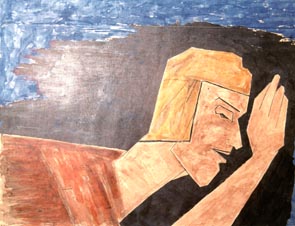
Rabindra Bhavana collection no. 1911.
This is waterproof ink and pen ink on paper.
Has no date when this was painted, was exhibited in Europe in 1930.
The style of a coloured woodcraft is
imparted
by a simple division into coloured planes.
This is a Malanggan Artefact, mask, boar’s head from
the north of New Ireland, north-west coast.
Pastel on paper. From the Rabindra Bhavna Collection , no 2155.
Has no date.
Again, the above two are comparable.
On the occasion of Tagore’s 150th birth anniversary , an exhibition titled “The Last Harvest”, commissioned by the Ministry of Culture, India , and organized with the National Gallery of Modern Art (NGMA) exhibited 208 paintings of Tagore, taken from the collection of Viswa Bharati and NGMA. Famous Art historian R. Siva Kumar was the curator.
Museum of Asian Art, Berlin; Asiatic Society , New York; National Museum of Korea, Seoul; Victoria and Albert Museum, London; The Art Institute of Chicago, Chicago; Petit Palais, Paris; Galleria Nazionale d’Arte Moderna, Rome; National Visual Arts Gallery, Malaysia- Kuala Lumpur; McMichael Canadian Art Collection, Ontario; National Gallery of Modern Art, New Delhi; National Gallery of Modern Art, Mumbai; all splashed with master’s strokes of Tagore when these 208 paintings were exhibited at these museums.
Later, Asia Art Archive classified the exhibition as a “world event”.
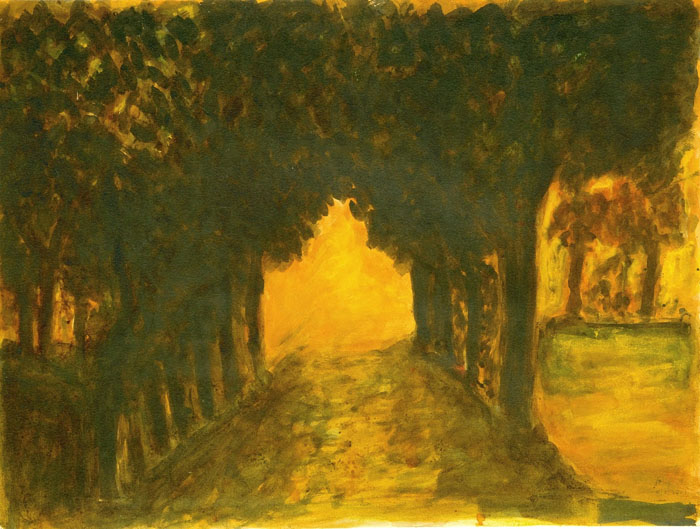
Source: Books and the internet.
All pictures are from the internet to which I have no right (Disclaimer).
All information and photos are from books and the internet to which I have no right. (Disclaimer).
Copyright Sreechandra Banerjee. All rights reserved except for the right to information and photos which are from books and the internet to which I have no right (Disclaimer). No part of this article can be reproduced by anyone.
Sreechandra Banerjee is a Chemical Engineer who has worked for many years on prestigious projects. She is also a writer and musician and has published a book titled “Tapestry of Stories” (Publisher “Writers’ Workshop). Many of her short stories, articles, travelogues, poems, etc. have been published by various newspapers and journals like Northern India Patrika (Allahabad), Times of India, etc. Sulekha.com has published one of her short stories (one of the awardees for the month of November 2007 of Sulekha-Penguin Blogprint Alliance Award) in the book: ‘Unwind: A Whirlwind of Writings’.
There are also technical publications (national and international) to her credit, some of which have fetched awards and were included in collector’s editions.
A LEAF FROM HISTORY: THE STORY OF A PIONEERING NATION BUILDER WHO MARVELLED AT ENGINEERING SKILLS WITH VISIONARY LEADERSHIP
Mr Nitish Nivedan Barik
When we speak of India’s greatest engineers and visionaries, the name of Mokshagundam Visvesvaraya stands out prominently. Popularly known as Sir M. Visvesvaraya, or simply MV, he was not only an outstanding civil engineer but also a far-sighted administrator and statesman. Through his intellect, discipline and tireless dedication, he made a lasting contribution to the development of modern Mysore as well as to the progress of India as a whole.
He served as the 19th Dewan of Mysore from 1912 to 1918. In that role, he functioned as the chief executive of the Mysore administration and introduced several reforms aimed at economic growth and public welfare. From pioneering engineering achievements such as the Krishna Raja Sagara Dam to encouraging industrial development and expanding educational opportunities, his work left a deep and enduring impact. Even today, his life and achievements remain a source of inspiration to millions.
In recognition of his immense contributions, M. Visvesvaraya’s birthday, 15 September, is observed every year as Engineers’ Day in India, Sri Lanka and Tanzania. Even today, he is regarded as one of the most respected and admired figures in Karnataka. For his distinguished service to the princely state of Mysore and to the nation, he was honoured with the Bharat Ratna, India’s highest civilian award, in 1955.
Mokshagundam Visvesvaraya was born on 15 September 1861 at Muddenahalli in the Kingdom of Mysore, now part of Karnataka. He belonged to a Telugu-speaking family. His father, Mokshagundam Srinivasa Shastry, was a scholar of Sanskrit and Ayurveda, while his mother was Venkatalakshmi. He received his early education in Bangalore and later completed a Bachelor of Science degree from the University of Madras.
He then pursued engineering studies at the College of Engineering, Pune, which at that time functioned as the College of Science under the University of Bombay. He completed his Diploma in Civil Engineering with distinction. During his years in Pune, he helped found the Deccan Club and served as its first secretary. The club brought him into contact with several prominent intellectuals and reformers of the period, including R. G. Bhandarkar, Gopal Krishna Gokhale and Mahadev Govind Ranade. Their ideas and discussions had a significant influence on the intellectual climate of that era.
Visvesvaraya began his professional career as a civil engineer under the Government of British India. He served in different parts of the Bombay Presidency and also worked on engineering assignments in other regions under British administration in the Middle East.
Later, M. Visvesvaraya served the Hyderabad State, where he earned recognition for his technical skill and administrative ability. After retiring from government engineering service, he moved into public administration in the Kingdom of Mysore, where he combined engineering expertise with visionary leadership.
Over the years, he became widely known for designing and carrying out several major engineering projects in different parts of India. Among his most celebrated achievements was the construction of the Krishna Raja Sagara (KRS) Dam in the Mandya district of present-day Karnataka.
The dam brought remarkable changes to the surrounding region. Large stretches of dry and unproductive land were converted into fertile agricultural fields through irrigation. It also provided a dependable supply of drinking water to nearby towns and cities. Today, the KRS Dam remains both an important public utility and a popular tourist attraction visited by thousands every year.
Beyond engineering, Sir M. Visvesvaraya made notable contributions to industrial growth and education. Through his foresight and administrative reforms, he played a key role in the modernisation of Mysore and laid the foundation for economic and social progress in the region.
In recognition of his extraordinary service to engineering and society, M. Visvesvaraya was appointed a Companion of the Order of the Indian Empire (CIE) during the British period. Later, in 1955, he was honoured with the Bharat Ratna, India’s highest civilian award. To commemorate his birth centenary, India Post released a special postage stamp in his honour on 15 September 1960.
The Visvesvaraya Industrial and Technological Museum, popularly known as VITM, is one of India’s leading science museums. Situated near Cubbon Park on Kasturba Road in Bengaluru, the museum is known for its engaging and interactive exhibits. Visitors can explore working models of machines, a large dinosaur display, the famous Wright Brothers’ Flyer, and the fascinating “Science on a Sphere” installation.
I had the opportunity to visit the museum on a weekend, and the experience was truly memorable. The museum remains open from 9.30 a.m. to 6.00 p.m. I visited on a Saturday and found the atmosphere lively and full of enthusiasm. The numerous interactive exhibits made the visit both enjoyable and educational. Exploring the displays rekindled a sense of curiosity and wonder, making science feel exciting and accessible.
Mokshagundam Visvesvaraya continues to be remembered as one of India’s greatest engineers and visionary nation-builders. His contributions to engineering, administration, education and industrial development left a deep and lasting impact, particularly in Karnataka and the former Kingdom of Mysore. Even today, his life and achievements inspire generations of engineers, students, administrators and public leaders across the country.
Mr Nitish Nivedan Barik hails from Cuttack,Odisha and is a young IT professional working as a Team Lead with Accenture at Bangalore.
MERGING TERRAINS..
Dr. Molly Joseph
Life stretches out on the immediate, the present, that straddles between memories of the past and the pulsations of the unpredictable future.. Your being is like a float swept away by forces beyond your control. Caught up in the flux conscience shreds out the layered contours
….. ….. ……… ,………..
In the confines of her little room, Ammachy lay on her faded bed and favourite cot, under the all seeing eyes of the framed Christ. Her eyes were firmly shut: She was adamant in her refusal not to see, not to open them out. Seeing is a kind of naming, ordering. She had given that up for years, or rather was forced to give that up.
That was a world, all fostered by her..the one acre land, the house, three sons, a daughter, the tall looking Tamarind tree , the very well numbered spoons,the faded wall hangings,the smoky kitchen crowded with utensils. There were days she reigned supreme shadowing her less worldly Gandhian husband. For securing anything she had to fight it out, against his passivity, his bland, blind faith that left everything to Providence.
…… ……….. ……..
It was the dim hour of the early dawn. Something kept Malu awake , a strange sense of something amiss.The phone was ringing in the hall. With trepidation she took it up. Cold came the message slicing off the morning waves of anxiety.
“ Ammachy gone at 3.30 p.m “
A voice that had gravitated into itself.
Suddenly the phone went dead.
Silence on both sides.
…… …….. ……
The train chucked in, out, passengers…people eager to get into, people anxious to get out
People, people, people…
There was a grave looking self absorbed middle aged man opposite the seat of the self indulgent couple giggling out frivolity and the philosopher like overgrown student in the adjacent berths, Confined to the corner of her berth Malu looked through the window. The evening darkening into the night, the glimmer of distant lights and lamps..households brightening up with human presence. People fatigued with a day’s work returning to rest, recuperation.
…….. ……….. ……… …….
Far out in the east in her allotted corner, under the dim light of the lamp, Ammachy was reciting her rosary. For her daughter, only daughter travelling alone.
The next morning would be the much awaited bright day. A glimpse of her daughter, her sweet voice calling out ‘Ammachy,’ …that would do.
Here where I am denied my place, treated as a nuisance, an old disgusting stuff..how rude were they, especially the one I lived with.
Malu was somebody to listen to her aching self..to care for, to understand..
Yes, clinging on to her
hand, tomorrow I would move around to my sons and daughters in law, to show how important and proud am I with my daughter who values me.
It is their insult and injury that shatters.. worst, their attempts to smother my communication with my daughter O ,Malu , come and take me away from here to somewhere else, so that we can talk and talk, sharing my sorrows.. Other wise, one day I will fall unconscious and dead , unwanted, uncared for.
Malu , I need you...
My heart pounds fast..I feel giddy… …. …….. ,,…….. ……..
A dry wind blew through the palm and banana leaves.It swept through the one acre land., the smoky kitchen and created ripples in the old looking wall hangings.It reached the coffin and whispered something into the ears of Ammachy who lay with closed eyes.
The crowd thronged the hall, verandha and the yard crushing the jasmine that was reaching out to the canopy to peep at Ammachy her profile, her broad forehead, neatly cut, long nose, and well curved lips that graced her visage.
Elbowing each other, her children stood with her grandchildren, uncles and aunts vying with each other in their blacks putting on a grieving look, fake or real! It matters much when the crowd is watching you.
Now that Ammachy needed no help there were a number of people to appropriate her, do things for her. .Standing in a corner next to the coffin, Malu wondered how much this person mattered to her, how much she mattered to that person.
Yes when you leave, you leave behind a sapling of your own stem cell, to imbibe what you were, what you felt.
In a flash Malu’s eyes were in search of Ammu, her little daughter. Where was she ? Too young to realize the gravity of the situation, she might be playing somewhere around,or getting lost in the crowd or holding on to her Dad. A biological urge to hug her close and press her cheeks to say,” Ammu, I need you.”
Holding Ammu’s hand, Malu inched along with the funeral procession. It went past the one acre land,the familiar rural walkways shaded by coconut trees reaching up to the road, and made its way into the church and cemetery. Ammachy returning to Mother Earth, the safe abode of peace and rest after her weary life’s journey
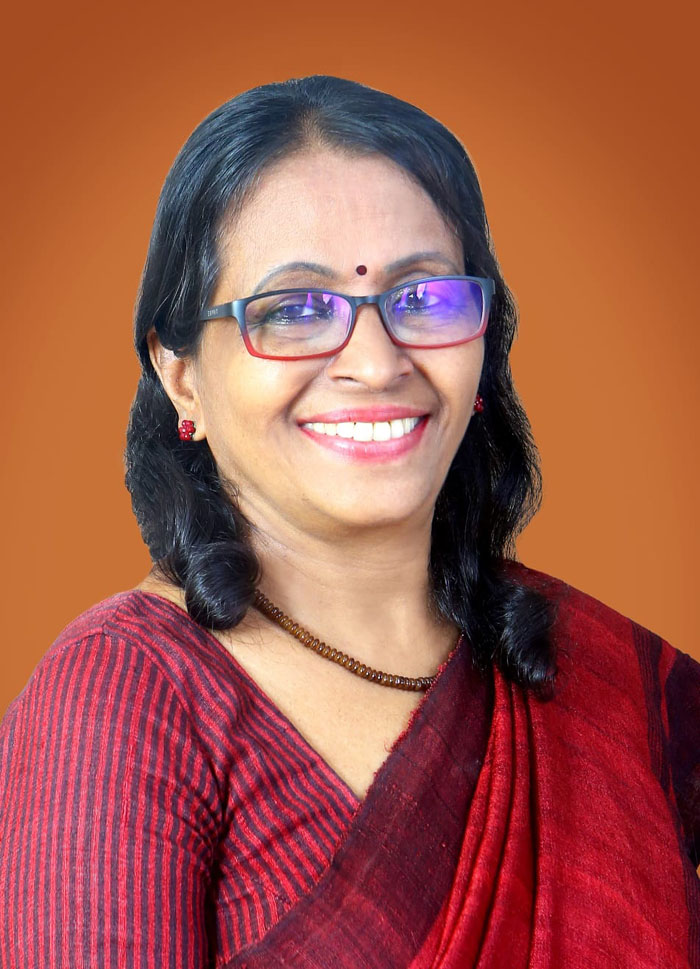
Dr. Molly Joseph is a Professor, Poet (Bilingual) from Kerala ) is a reviewer and translator, who writes Travelogues, Short stories and Story books for children. She has published twenty Eight books -22 Books of Poems, two Novels (translation) two Story books for Children, two edited Books and is widely anthologised. She has won several accolades,national, International. with her innovative craft of writing poetry, called Ribbon Poetry. She believes in the power of the word and writes boldly on matters that deal with the contemporary.
She can be reached at mynamolly@gmail.com: https://www.youtube.com/user/mynamolly
MANDAKINI
Dr. Mrutyunjay Sarangi
I looked up from my morning newspaper at the sound of the gate opening. The man staggering through the light mist looked familiar. And when he crossed the portico I found it was Gouranga, my classmate from college. What shocked me was his severely disheveled appearance, the stained shirt, the unruly hair and the drained out face. It was as if he had been molested by a rampaging bull. I almost laughed at the idea. Gouranga was the most handsome looking guy in our group, right from the college days, but one cannot imagine a bull taking a fancy to him, no matter how handsome.
Gouranga slumped onto the chair and looked at me with some kind of disquiet clouding his face. Before I could ask him what it was he blurted out,
"Subrat, give me something to drink, quick."
There was a glass of water on the small table. I extended it to him and got up,
"Take this, let me go and get you a cup of tea. It's already made, I just finished my first cup; I will be back in two minutes."
Gouranga broke into a shriek, like a man hit by a devil,
"You idiot, I am not asking for a cup of tea. Give me something strong, very strong."
I looked at him in disbelief, my mind failing to register what he was asking for. Something very strong? At six thirty in the morning?
I sat down,
"You dirty son of a skunk, just leave now, go back the same way you came. I am not going to give you something very strong at this hour of the day".
Gouranga looked as if he will break into a sob,
"Please Subrat, I am going to die if you don't give me something strong to drink. Please!"
I got up, my gaze fixed on him, wondering what kind of wringer the poor guy had gone through to be reduced such pathetic state. I went inside, poured a liberal doze of whiskey into a glass, and brought it with me. I thought he would add the water from the glass I had initially offered him. To my utter shock, he gulped down the whiskey in one go and banged the glass on the table. I was speechless! Does anyone drink whisky like that? Has he gone crazy?
Gouranga looked at me and folded his hands,
"One more and add some water this time. I can feel life returning to my soul with that strong dose. Now I will sip slowly and tell you my story."
I wanted to refuse him one more shot of the golden elixir, I mean, how crazy can one go to have two pegs of whisky when half the town was yet to get up from bed.
"Don't you have to go on your rounds today, on your motorbike? How will you do it when the whisky will be dancing in your tummy like a freaking musical fountain?."
Gouranga's face broke into multiple shades of agony,
"Please Subrat, no more questions. Get me the bloody drink, my throat is parched, it feels like a rough sand paper."
I went inside, poured a small peg and added water to it. By the time I returned, Gouranga had gone off to sleep, his chest gently heaving with rhythmic regularity. I went back to reading the newspaper, but nothing registered in my mind. I kept wondering what had made Gouranga ask for something strong so early in the day. He was no doubt agitated, but I couldn't imagine what degree of agitation could make a man ask for whisky at six thirty in the morning.
Gouranga, strictly speaking, is not an alcoholic, just a social drinker like me and many other friends in our group, sitting down to a session of drinking in some bar or in the house of someone who was lucky enough to be deserted by his wife and kids temporarily. Ask any married man what his favourite fantasy is, and without blinking an eye he would say, to be abandoned by the missus of the house for a couple of days so that he would invite his friends home and empty a few bottles of the golden liquid!
But being a typical Puriwalla, Gouranga is addicted to Bhang, the green ball of ecstasy, called "goli", which keeps him in a state of euphoria in the evenings. Anyone born and brought up in Puri cannot live without it because fathers put a bit of it in the feeding bottle as soon as a male child is a few months old and starts bottle feed. They claim it helps the child's orientation so that he can put his steps correctly when he stands up. From that small step the giant leap is never far away. However, there is an unwritten rule that one should shun Bhang when there would be an evening session of the golden liquid. Like East and West, bhang is bhang and daaru is daaru and never the twain should meet. If individually each would take you on a tour of the heaven, combined they would throw you into the space in a hurtling, whirlwind voyage.
Gouranga chose to be a medical representative after finishing his graduation at the SCS College in Puri. With his tall, handsome personality and a rare gift of the gab, combining sense and nonsense, he could talk a Bedouin into buying a raincoat or an Eskimo a two ton airconditioner. In no time he monopolised the supply of medicine and medical equipments in Puri town. All competitors submitted to his suzerainty and either folded up or became his employees.
Gouranga was usually the life of a party anywhere, with a distinct tilt towards colourful, fanciful tales. He will make you believe that he had spent the previous evening with Alia Bhatt and Disha Patani's invitation for an evening of fun and frolics was waiting in the wings. He had good contacts everywhere and was the go to man whenever any of us needed anything. To see him, disheveled and sprawled on a chair, snoring inelegantly was a rarity.
He suddenly woke up, shook his head and looked around. He squinted his eyes and brought me into focus and saw the glass of whisky on the tea table. His eyes brightened up and I asked him what he was doing at six thirty in the morning, barging into my house and demanding something strong.
Gouranga took a couple of sips from the glass and straightened,
"Can you imagine Subrat, I had the most incredible experience last evening. You know every evening I take a stroll after a bath, Pooja, and a dose of bhang. Yesterday I took a long stroll, since my wife has gone to her parent's place just for a day. I passed the Swargadara road, went beyond the hotels and restaurants and half a kilometre from there I took a right turn. You remember the lonely road with old bungalows on both sides? Huge bungalow, most of them locked, abandoned. The owners are probably somewhere in Bengal or Bihar, most of the properties are in legal dispute, the titles buried under thick files, lying malnourished in some clerk's cupboard in the Civil Court. Only when Vitamin M is given to the clerks, the files will come down from the stacks and put up to the Civil Judge. You know how our system works, don't you?"
I was getting impatient,
"Yes, yes I know all about Vitamin M, now tell me what happened to you last night, why it looks like a cat swallowed you last night and vomited you out in the morning. You look dirty and smell even dirtier."
Gouranga took a sip of the drink,
"Ok, ok, where was I? Yes, the bungalows. As you know only a few bungalows are inhabited, others are locked up. I walked briskly, most of the street lights were not working, probably not many people use the road after dark. Suddenly I stopped. On my left was an old bungalow which was lighted up from inside, the windows were open and music was coming out. I looked inside. There was definitely a party going on, I saw couples dancing, the music was soft and melodious. I could not hear clearly, but what made me curious was the dress of the dancing couples. Most of them looked very traditional, like old European dress, some were wearing hats, the ladies were in elegant gown. I was in two minds, whether to go closer and watch the dance. Then suddenly in a flash I saw Mandakini standing near the window. She was looking at me, I could feel her gaze on me as distinctly as I am seeing you now, there was no doubt about it.
I sat up. Mandakini? Who is Mandakini? I asked him,
"Who the hell is Mandakini?"
Gouranga looked puzzled,
"You don't remember Mandakini? I had told you in one of our evening sessions? Mandakini, my class mate in the school? The girl who was in everyone's dream, the one and only Mandakini?"
I suddenly remembered.
Yes, Gouranga had swooned with pleasure when he had talked about her, his eyes had become glassy, face flushed. There was no doubt he was besotted with her, as were a hundred others. She used to live in Haragoura Sahi and when she walked to school with her books clutched to the bosom, face glowing in the sun, the two braids of hair oscillating like two serpents playing with each other, young men used to swoon on the roadside, intoxicated with her beauty even before imbibing the green coloured goli of bhang. She probably knew the effect she had on the hapless men, but she had no mercy, every school day she would walk to and from the school and it was rumoured that her every step was like a flame bursting out, till the entire route was engulfed in a raging fire of raw passion and acute frustration. Gouranga and many others like him spent sleepless nights, thinking of her. The way he told it to us, his listeners, all married, mature men, we spent a few sleepless nights regretting that we didn't have a girl like Mandakini in our class to fill our nights with dreams and days with fantasy. We had asked Gouranga what had happened to Mandakini after she passed from the school. Gouranga had shrugged,
"She was obviously a big snob, never talked to anyone of us, her classmates. She went to the Women's college and we hardly met again. Later we came to know she got married to some government Engineer and left Puri after her Intermediate exam. I don't know where she is now."
Today when Gouranga mentioned her name I was curious,
"Mandakini? What was she doing there. Did you talk to her?"
He nodded,
"Wait, don't run away like a horse on an overdose of vodka. Let me unfold the scene to you slowly. The door to the bungalow was half open. I went in looking for Mandakini. Imagine my shock when I didn't find her at the window! But the scene inside the big hall took away my breath. There was a group of musicians plying soft music in a corner and around thirty couples were waltzing, hand in hand, the men wrapping their arm around the waist of the ladies. At one corner there were drinks, all kinds, hard drinks, soft drinks, fruit juice, you name it, they had it. And such a variety of mouth watering dishes! Before I could go near the food or the drinks, a tall, distinguished looking man in a cream coloured suit came along and shook my hand. 'Welcome Mr. Balabantray, be our guest for the night. Let this night be memorable for you.' I was shocked, how did he know me, as far as I remembered I had never seen him. A asked him, he smiled, 'We had a new member a year back and she told us about you. Come, let me offer you some drinks, what will you prefer? We have the best Scotch whisky, British brandy, Russian vodka, French wine and German beer. Take your pick. But do enjoy.'"
I felt jealous and asked Gouranga,
"What are you talking? So many drinks! All foreign liquor! You are lucky Gouranga, really lucky."
Gouranga smiled,
"I almost went crazy, seeing so many exotic bottles before me. I poured a stiff dose of whisky and straight gulped it down. One more peg went the same way. I felt a rare warmth run through my body like a slow fire on a winter night. With the third peg in my hand I picked up some prawn fry, chicken tikka and mutton kebab. With that rare treasure in my possession, when I turned around I saw a beautiful, fair lady, as fair as snow, behind me and smiling at me. She extended her hand, 'I am Julienne, call me Julie. All my Indian friends called me Julie, and you are the handsomest Indian I have ever met.' Subrat, imagine what would have happened to me! I almost swooned! Her perfume gave me a heady feeling and I said, Ah, French perfume, my favourite! Her face beamed with pleasure - 'Yes, it is Guerlain Shalimar! You are a smart young man, why are you wasting your breath on whisky? Taste this champagne, made in the best vineyards of Italy'. She gave her glass to me. My eyes were fixed on her, the langorous smile on the beautiful face and the contours of her exquisite body held me captivated. I drank the champagne, it was heavenly. She gently guided me to the drinks table and poured some more champagne in my glass and took a glass of her own. And then she pulled me to the centre of the hall and we started dancing. She was like a naagin, a serpent, the way she held me and entwined herself on my body. I was losing my mind and wanted to hold her more tightly and merge myself into her. Suddenly a tall, white man appeared from nowhere and snatched her away from me."
I felt sorry for Gouranga, the eternal Romeo,
"O my God, your heart must have broken!"
He grimaces,
"Yes, into a thousand pieces. I marched to the drink table, got more champagne, heaped more food on the plate and looked longingly at Julie who had started doing the naagin dance with the snatcher. Suddenly I sensed a presence by my side, a stocky, bald man was standing there. He pointed to the champagne, 'The best selection, you will never get tired of it. So, where do you live in Puri, the abode of the Lord of the Universe?' I replied, 'Baseli Sahi'. He recollected something, 'Oh, is that old, yellow coloured building still there at the corner near the big Banyan tree? Dr. Garabadu used to live there and had his clinic downstairs. Such a fine doctor! He would spend at least fifteen minutes with every patient, and his diagnosis was flawless.' I shook my head, 'Yes, the building is still there, it is of brick colour now, but I don't think Dr. Garabadu lives there any more, I haven't met a Dr. Garabadu ever. The gentleman patted me on the back, 'No, no, you are a young man, how could you meet Dr. Garabadu? Tell me, does Puri witness a lot of agitations, like there used to be?' I wondered what agitation he was referring to, 'Yes, sometimes students of the local college take out processions demanding more facilities or transfer of a strict lecturer, but the Collector and SP call the leaders, feed them some Biriyani and get their photographs published in the local newspaper. The agitation fizzles out.' He seemed to be surprised, 'Don't you have all those morning processions, people singing Raghupati Raghav Rajaram and marching on the streets? And the burning of foreign clothes, gherao of the court building?' I laughed out loud, many heads turned to look at me, 'What age are you living in Sir? You think people have time for anything other than WhatsApp and Twitter these days? All the time their eyes are glued on the mobile. Things have changed, look at the nice music playing here, so pleasant, so soothing. Do you know what songs our young generation dances to? Tutak tutak tutiya. Or Chhora Londonda Thumakda. And the worst of all? Dancelo G phaadke!' His eyes popped up, 'What phadke? What the hell is G?' I winced at the memory of the song, 'How do I know? Go and ask the lyricist! G! G, my foot!' I must have been quite loud when I said that. With a goli of bhang in the early evening, couple of pegs of whisky and four glasses of champagne later, one tends to get a bit expansive, you know. The host came over to me."
I felt concerned for Gouranga, my friend.
"Were you thrown out of that lovely party, from the drinks and the kebabs? That's why you are looking like the deformed foetus of a deranged gorilla?",
I asked in alarm.
Gouranga shook his head,
"No, no, nothing like that. The host told me, 'Good that you are enjoying. Won't you meet the person who had told us about you?' He led me to a small group talking among each other. He tapped on the shoulder of a lady and she turned. Subrat, you can't imagine how I felt, Mandakini was looking even more beautiful than ever. I just held my breath and kept looking at her. She smiled, 'You have not changed, the same hungry look, like I am a sweet-sour mango pickle and you want to lick it to the end. This look was famous among my friends, who teased me all the time, after all you were the most handsome boy in the school!' I stood transfixed for a few moments before blurting out, 'You knew I was virtually dying for you?' She nodded, 'Girls have a sixth sense, they know such things immediately.' 'And yet you never stopped even once to look at me? Not even a sideways glance?' 'Oh, I looked at you from the corners of my eyes, but every time I did that my heart started beating like a drum, imagining the kicks and slaps I would get from my mother. So I behaved like a nun and waited for a Prince Charming to be chosen by my parents.' 'Fancy meeting you after so many years! How are you here? What are you doing in the midst of all these funnily dressed ancient men and women? How did you land up here? You are not even a champagne drinker!' A sad smile crossed her face, like a dark cloud over a clear sky. 'I have been here for more than a year. My husband, who was an engineer with the government, got a transfer to Puri about three years back. And a year after that I had an attack of pneumonia. After a few months of my release from the hospital I was afflicted by strange symptoms and it was found that I had AIDS.'"
I was shocked, the angelic Mandakini getting AIDS! I could not believe it! I gaped at Gouranga, who continued in a broken voice,
"I shouted at Mandakini, 'What rubbish, how can you have AIDS?' Her eyes filled with tears, 'You will never know the pain of a mother looking at her two children, knowing that she had only a few months left in life. I could not even touch them, hug them or cuddle them. And my body started decimating, I became thin like a weed, and slowly life ebbed away from me.' 'But how did you get AIDS?' Mandakini looked at me, a sad, piercing look that broke my heart, 'From infected needles. I didn't know that till I came here. But you know this is a different place, what remains unknown to human mind becomes crystal clear here. Gouranga, you often buy your medical equipments from third rate suppliers and sell them at exorbitant price to the retailers. These unscrupulous suppliers sometimes recycle infected needles which had earlier been used on AIDS patients. That's how I got it, Gouranga, that's how I am here, when I should be actually with my children taking care of them. God knows how many lives you have ruined like mine.' With that, Mandakini left me, tears streaming down her face. I was devastated, I just could not believe the sad turn of events. I went to the nearest chair and sat down, looking vacantly at the crowd dancing away like there was no tomorrow. Mandakini was nowhere to be seen. I don't know how long I sat there, my mind in turmoil. Julie saw me and came to me. Before I could stop her, she dragged me to the dancing area and wrapped me in her arms. She was getting more and more excited, she started whispering sweet words of love in my ears, how she was terribly fond of Indian men, how she had enjoyed life to the full in the arms of strong and handsome men like me. Before I knew what was happening she gently dragged me to a sofa and sat there, hugging me tightly. The embrace was getting tighter by the minute, I felt breathless, Julie was drawing me to her with an animal passion. I fainted."
I sat up,
"Fainted, what do you mean fainted? Such an anti-climax!"
Gouranga had started getting a mild shiver, I wondered what was wrong.
"I really don't know what happened. The embrace was tightening, I felt as if my bones were getting crushed. I fainted and must have lost consciousness for hours. In the morning I felt a wet tongue licking my cheeks. I came back to senses and thought Julie was still making love to me. The sun was already bright. I opened my eyes and next moment shrieked in terror. What I had imagined as Julie's tongue actually belonged to a huge black dog who ran away, scared by my loud shriek. It sat a few feet from me and kept panting, with its big, ugly tongue hanging out. I looked around. The big bungalow was gone, in its place stood a dilapidated house with broken walls and no roof. My body started shaking in terror, I remembered your house was nearby and I came running to you."
Gouranga started sweating, his shivering had taken a rhythm of its own. Our smart, handsome friend looked like a dilapidated house with broken down walls and no roof. He finished the left over whisky in the glass and got up to go. I was curious how he would sail through the day with two pegs of whisky kicking in his stomach,
"Tell me, Gouranga, how will you roam around the town with your motorbike after drinking whisky so early in the morning?"
I will never forget the sad, melancholic look on Gouranga's face when he shook his head,
"No Subrat, no more roaming around in Puri selling medicines and medical equipments. I quit that business from today. I can never forgive myself for what happened to Mandakini, who had filled my adolescent life with so many happy dreams and sweet desire. I cannot ruin more lives, may Lord Jagannath forgive me!"
Dr. Mrutyunjay Sarangi is a retired civil servant and a former Judge in a Tribunal. Currently his time is divided between writing poems, short stories and editing the eMagazine LiteraryVibes . Four collections of his short stories in English have been published under the title The Jasmine Girl at Haji Ali, A Train to Kolkata, Anjie, Pat and India's Poor, The Fourth Monkey. He has also to his credit nine books of short stories in Odiya. He has won a couple of awards, notably the Fakir Mohan Senapati Award for Short Stories from the Utkal Sahitya Samaj. He lives in Bhubaneswar.
Viewers Comments