
Literary Vibes - Edition CLXIII (27-Mar-2026) - SHORT STORIES
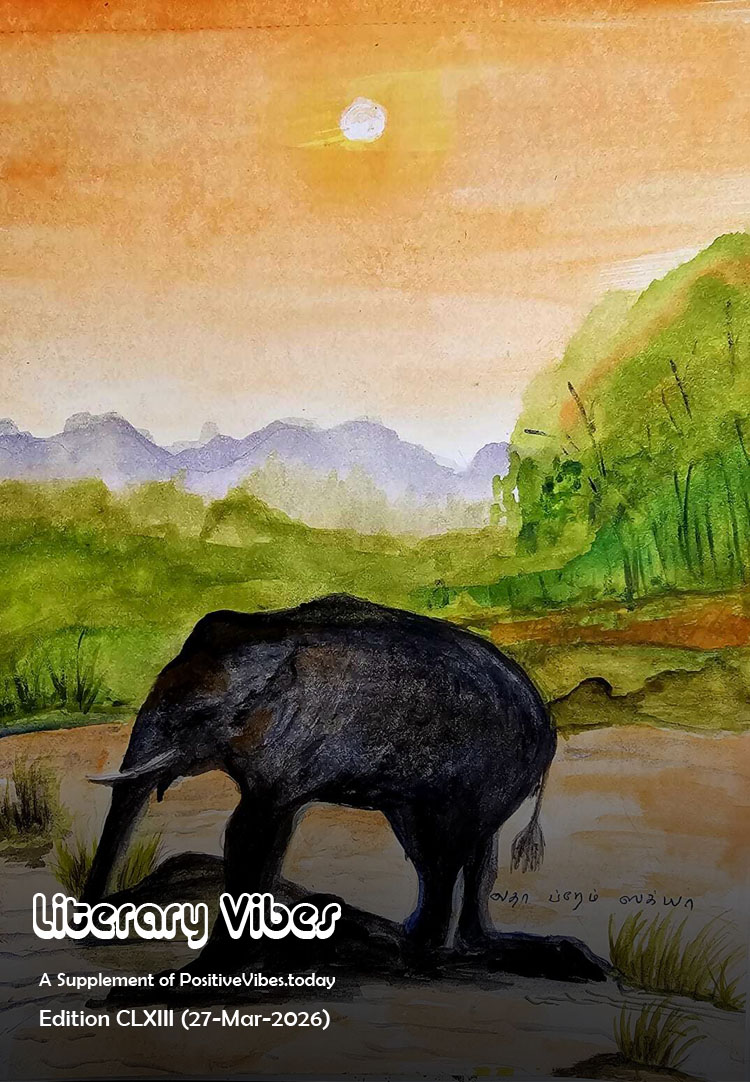
Title : Dawn visit at Athirapalli (Water Colour by Aleena R. Bright)
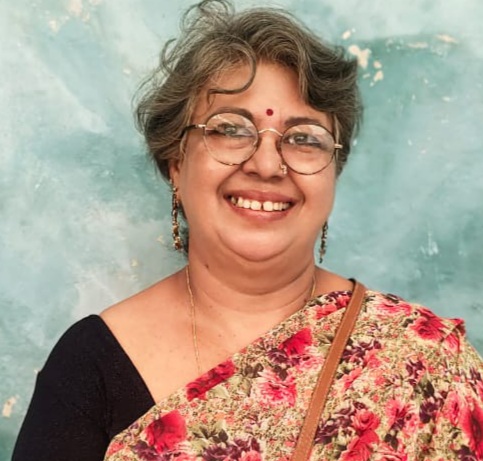
An acclaimed Painter, a published poet, a self-styled green woman passionately planting fruit trees, a published translator, and a former Professor, Lathaprem Sakhya, was born to Tamil parents settled in Kerala. Widely anthologized, she is a regular contributor of poems, short stories and paintings to several e-magazines and print books. Recently published anthologies in which her stories have come out are Ether Ore, Cocoon Stories, and He She It: The Grammar of Marriage. She is a member of the executive board of Aksharasthree the Literary Woman and editor of the e - magazines - Aksharasthree and Science Shore. She is also a vibrant participant in 5 Poetry groups. Aksharasthree - The Literary Woman, Literary Vibes, India Poetry Circle and New Voices and Poetry Chain. Her poetry books are Memory Rain, 2008, Nature At My Doorstep, 2011 and Vernal Strokes, 2015. She has done two translations of novels from Malayalam to English, Kunjathol 2022, (A translation of Shanthini Tom's Kunjathol) and Rabboni 2023 ( a Translation of Rosy Thampy's Malayalam novel Rabboni) and currently she is busy with two more projects.
Table of Contents :: Short Stories
01) Prabhanjan K. Mishra
PEEPLI LIVE: A REVISIT
02) Sreekumar Ezhuththaani
DEAD END
ACHCHA AND BAPPA
03) Avantika Vijay Singh
WHISPERS FROM THE PAST
04) Phalguni Sahu
THE GRACE OF UNSEEN SURVIVAL
05) Usha Surya
HER SHADOW... I WILL BE
06) Satish Pashine
THE KNOCK AT HALF PAST ONE!
07) Annapurna Pandey
KAPDGANDA AS THE MARKER OF DANGARIA IDENTITY AND WOMEN’S SPIRITUALITY
08) Deepika Sahu
MY KERALA STORY: A DAUGHTER-IN-LAW PENS A LOVE NOTE
09) P. S. Sowmya
LIFE’S LESSONS AT LORD ARUNACHALESHWARA’S ABODE
11) Dr. Viyatprajna Acharya
SPAM
12) T. V. Sreekumar
LIVING TOGETHER
13) Bankim Chandra Tola
A PICK FROM THE MEMORY LANE
14) Dr. Rajamouly Katta
OLD AGE HOME
15) Sreechandra Banerjee
ONE OF THE FIRST INDIAN WOMEN TO WRITE IN ENGLISH
16) Mr Nitish Nivedan Barik
LEAF FROM HISTORY: FROM FARMER’S DAUGHTER TO WARRIOR-LEADER AND MARTYR
17) Dr. Mrutyunjay Sarangi
THE LETTER
Prabhanjan K. Mishra
Peepli village was an awakened area lately. It had progressed into a developing small-town in the last thirteen years after the movie ‘Peepli Live’, a dark comedy, capturing the farmers’ suicide issue with a powerful audiovisual irony. The movie brought the neglected patch of sleepy rural neglect into development’s lime light.
Coming to the present, the Criminal Court in Dhatura Town, the headquarters of the Dhatura district of which the village Peepli was a part, was in full attendance in the morning. The bar, the bench, court clerks, court-usher, and agents from the plaintiff, his lawyers, and the defendant with his lawyers, a few local touts and local news-reporters were present. The court room and the adjacent veranda looked more crowded and was more abuzz than any normal day.
In addition to these so called day-to-day essential elements that regularly frequented the court’s premises, the court room was packed to its gill with audience belonging to various extraneous stake holders and players like different political parties represented by their party workers fishing in the troubled waters, a few activists from the upper and lower castes respectively, and a few local intrepid journalists.
Also, were present the three protagonists, Bauri Dom, a member of the low-caste sweepers, the poor Dom Community; Bhima Pandit, a rich Brahmin priest and one of the henchmen of the local MLA; and Manohar Dom, another man from the so-called low-caste Dom community, a small-time social activist.
The previous morning the matter had been placed before the court for its opening proceedings. It was learned that Bhima Pandit, after beating Bauri Dom black and blue, had urinated in his mouth as the ultimate punishment and insult. But the so-called victim Bauri Dom had no problems with the urine discharge on him.
But apparently, the sentiments of Manohar Dom of the sweeper community to which Bauri Dom also belonged, was hurt. Also were hurt the sentiments of many from the Dom Community who were the co-complainants, besides the Dom community’s sentiment as a whole. The Dom community felt Bhima Pandit had not urinated in the mouth of only Bauri Dom, but in mouths of all members of their Dalit community.
So, Manohar Dom had filed the original case against Bhima Pandit for hurting his sentiment and the sentiment of his Dom community. In addition, a few other prominent members of the Dom community had filed cases as co-complainants of Manohar Dom.
The journalists present were puzzled to see the victim, Bauri Dom, sitting with Bhima Pandit, the persecutor and the accused, and both smiling as if sharing jokes. None, present in the courtroom, could guess, who, among the three protagonists: Bauri Dom, Bhima Pandit, or Manohar Dom was the hero, who the villain, or who the joker.
Manohar Dom stood behind his lawyer Saroj Das, looking grim and hurt. Saroj Das, also, felt hurt not because of an induced effect from his clients, Manohar and others of Dom community, but because none seemed paying any attention to him though it was his case as the prosecuting lawyer.
Surprisingly, Bauri, the victim did not look a wee bit hurt by being given the most humiliating treatment a man could digest, a urine drink and bath directly from the source in full public view. He rather beamed all along as if enjoying a big joke.
The honourable judge also apparently wore a sad smile for the apparent absurdity unfolding in his helpless presence. Deep down his psyche, he was stirred by a dilemma how to fish out a solution from the troubled waters that was going muddier every hour in his courtroom.
The younger brood of lawyers behind their sitting seniors appeared to enjoy the dark humour also as their intermittent suppressed titters were breaking as playful reliefs into an over-charged atmosphere.
Bhima Pandit, the perpetrator of the urine-mischief, was a rich man and had the backing of the local MLA of the ruling party; and so, he had employed a very expensive senior lawyer, Bhanu Prakash. The lawyer was famous for winning cases by the tricks of his trade, including even unethical twists. He was assisted by a battery of junior lawyers as money flowed unabated from Bhima Pandit’s pocket.
Manohar Dom, the complainant, who was fighting for the cause of persecution of his low-caste peers including himself, had little money, and had, therefore, appointed Saroj Das, an honest and efficient straight forward senior lawyer, reputed for winning cases by fair means but charging very little from his clients.
Though representatives of opposition political parties had ganged up behind Saroj Das to earn some political brownie points from the low-caste vote bank in the election only a month away, but financially they could not do much as Saroj Das, the odd man out in a corrupt system, a honest lawyer, had rejected all their advances and offers to give money to buy witnesses.
The hubbub and noise were increasing in the courtroom. It compelled the honourable judge to pound his gravel twice, ordering, “Silence in the court.” The court usher took the cue from his boss, and shouted “Silence” twice. A silence prevailed. The judge looked pleased and said, “Proceed”.
Bauri Dom enjoyed himself every minute by anybody’s guess. He was already ushered into the dock meant for the accused and the witnesses. He stood there as a defence witness of the lawyer Bhanu Prakash. He looked very pleased for reasons best known to him. He took oath keeping his right palm on the scripture to tell the truth.
Bhanu Pratap recalled with satisfaction the deposition of the accused, his client Bhima Pandit, as well as, that of the so-called Victim, Bauri Dom, the previous day. He had tutored Bhima and Bauri thoroughly before their deposition the day before. Bhima’s deposition had deflated the senior lawyer Saroj Das of the complainant, Manohar Dom. Saroj Das was looking like a punctured balloon, when Bauri Dom’s deposition took out the rest of his gas, making him a crumpled airless balloon.
Bhima Pandit had simply stated before the judge, “Milord, Bauri Dom requested me to urinate on his face. When I kept his request, he opened his mouth and drank mouthfuls.” Bhanu Prakash, his learned lawyer, had taken over from there to elaborate to the court, “Milord, my client Bhima Pandit only fulfilled the wishes of Bauri Dom, nothing more, and nothing less. Bhima Pandit’s statement is therefore aaine ki tarah saaf hai, (clear as a mirror).” Bhanu Prakash was speaking at a high decibel keeping with his reputation of tricks and voluble firework.
He had passed on his client-cum-witness Bhima Pandit to Saroj Das of the complainant, Manohar Dom, for cross-questioning after that. He sat down keeping three words “I object Milord” ready on his tongue-tip, ready for barking it aloud.
Manohar Dom’s senior lawyer, Saroj Das, questioned Bhima Pandit, “Who did request you to urinate and where?” Bhima answered, “Bauri Dom himself sir, begged me to urinate on his face.” Next question was, “Why and how?”
Bhima promptly answered “Why I don’t know sir. But how, I will tell you. With folded hands Bauri requested me, ‘Please Bhima sir, don’t beat me more. I may die. You may urinate on me as in many earlier occasions.’ So, I fulfilled his wishes. Stopped beating and urinated on him. I only fulfilled his wishes.” There was applause from the Brahmin section of the audience for Bhima Pandit’s smart deposition.
Manohar Dom’s lawyer Saroj Das looked perplexed. He tried to dig why Bauri Dom was bitten black and blue, and why he preferred urination into his mouth to that killer beating. So, he asked, “Mr Bhima Pandit, why were you beating Bauri so severely?”
The defence lawyer jumped to his feet shouting, “Objection Milord, the prosecution is digressing. Urination is the charge in the case before us, not beating.” The judge intoned, “Sustained. The prosecutor may drop the beating issue and proceed.”
The prosecution lawyer had never heard that sort of drivel in courtrooms. Also, he was never told about Bauri’s weird request to Bhima Pandit in his brief from his client Manohar Dom. So, among his charges or preamble there was no reference to beating or reference to Bauri Dom’s request for urination on his person.
Though Bhima Pandit indicated Bauri had asked urination in the place of severe beating, but beating was not the crux of the issue, rather urine was. Bhima’s beating had not hurt Manohar Dom and his peer’s sentiments, but urination had.
The case had been built on a faulty, rather incomplete premises, realised lawyer Saroj Das, if Bauri himself had made such a request, and the realisation was too late. He could not blame Manohar, because he knew the new angle might be the false brain-child of the defence lawyer.
Saroj Das quickly reassembled his shattered wits and changed the track of questioning, “Didn’t you, Mr Bhima Pandit, with the wisdom of a brahmin, have the common sense that urinating on a human being was an abuse of the first order? Such behaviour did not behove your status as a priest of the village temple, and that again, you did it in full public view. You, as a wise priest, should have rejected the request. But you did not dissuade him. That shows your complicit and abuse, doing the demeaning, inhuman, and insolent thing?”
Lawyer Bhanu Prakash knew the tricks of the opponent lawyers. The lawyer in this case was invoking the dignity of the man in the dock, Bhima Pandit, and also confusing him on moral grounds. But before calling ‘Objection, Milord’, he was overwhelmed with joy to see how smartly his tutored student Bhima was tackling the complainant’s lawyer.
He heard Bhima Pandit replying, “No sir, I knew that my action was neither inhuman nor insolent. My father used to lift me when I was a kid, would at times put my little pecker in his mouth. Suddenly, I would have the urge and I would urinate into his mouth. All, present around, would applaud, ‘What a clever kid!’. My father would beam with pride. I had, therefore, no knowledge that, the act was demeaning. It has all along a gesture of love and affection.”
He paused, and added, “Bauri Dom went one step further than my father. He explicitly requested me to urinate on his face. Then only, I did it. Shouldn’t I fulfil the poor man’s wishes because he was a poor, low-born Dom, and not a rich brahmin kid like me? Doesn’t he deserve an affectionate gesture?” Bhanu Prakash clapped and the Brahmins in the audience followed suit. The claps resounded in the court room.
By then, the honourable judge wore a sardonic smile and everyone else in the packed little courtroom were in splits and the combined titter was rising in volume every passing second. The judge now controlled his own sardonic smile and shouted, “Silence in the court”. He sounded aloud, hit his gravel once, and ordered, “Bhima Pandit, you can now go back to your seat. You have explained your position enough.”
He then called Saroj Das near him and out of everyone’s earshot, whispered, “See Saroj, you cannot stoop to the level of Bhanu Prakash and his malicious absurdity. I had to stop that rascal who had been tutored to humiliate you.” He then pounded his gravel once more and ordered, “Proceed”.
The other witnesses were examined in a lackadaisical session by a junior lawyer of Saroj Das from the plaintiff’s side. Honest lawyer Saroj Das felt unequal to devious Bhanu Prakash. All, those who understood even a little of court proceedings, knew by now, who had been the culprit but also knew courts were a stage for playing tricks and twisting the farce in the favour of a client. It had little to do with justice.
Compared to Bhima Pandit’s spicy deposition, what the following witnesses stated were dull like dishwater, that none in the courtroom relished. The courtroom had been emptying out, leaving only the essential guardians of law, besides the prevalent foul smell of musty carpets, the deposited grime and dust of injustice gathered both on the bar and the bench, and the habitual human devils.
Now, Bauri Dom was ushered into the dock to depose and the honourable Judge directly asked him, “Bauri Dom, though you are neither the complainant, nor the defendant, also none has put your name as a witness, yet the whole case revolves around you.”
The judge then became serious and continued, “Bhima Pandit urinated on you, on your face to be specific, into your mouth. Can you explain to me why did you not go to the Police or come before this court with your complaint? At least you should have done that much for your dignity, and the dignity of your fellow beings. Why do Manohar Dom and others are fighting for your and your community’s social dignity, but not you?”
Bhanu Prakash, the senior Defence Lawyer was agitated to hear what the honourable judge was saying, and he thought it could be construed that the judge was prejudiced. So, he stood up to speak, but the learned judge anticipated his intention of raising a point of order, and not to embarrass the court further, he raised a hand to restrain Bhanu Prakash on his track.
He thundered, “I know the law my dear learned counsel, Bhanu Prakash. I know what all the deals you hatch under the garb of law. Before being your witness, Bauri Dom is the main plank for the case and he is to give me the facts. Just sit down or I will get your licence for practising in the court suspended, here and now, for contempt of the court and malpractice.” Bhanu Prakash subsided like a wet cat. The honourable judge rose for lunch break.
Saroj Das, the lawyer of the plaintiff side met the judge in his chamber. Before he opened his mouth, the clever judge understood his predicament, “Sorry Saroj. The terrible Kali Yug is ruling the present generation. We can’t help even if we realize Bauri Dom and Bhima Pandit are talking not the truth but the false texts tutored to them by the corrupt lawyer Bhanu Prakash. But both are speaking under oath. Technically that is truth. Neither you, nor I can deny it. I don’t think any of your witnesses was close enough to hear of Bauri’s request for urination.”
Saroj Das went to Hawa Mahal, the only good restaurant in the vicinity. He saw Bauri Dom cleaning three consecutive plates of chicken biryani with shameless satisfaction at the expense of Bhima Pandit by his side, daintily playing with his vegetarian biryani.
Finally, Bauri Dom took his stand in the dock as the star defence witness. Bhima Pandit’s lawyer, asked, “Yes Mr. Bauri Dom, what was your role in this case? As the hero of the drama unfolding before our honourable judge sahib, I request you to throw light on what all happened and how you felt about it. You tell the prosecution lawyer the truth, only truth.” Then turning to the judge, “Me Lord, I have no questions.” The judge looked at Saroj meaningfully.
To the questions of Saroj Das, Bauri Dom spoke, “Yes sir, on my request, beating stopped and Bhima Pandit pissed on me. It was warm and burned like iodine lotion on my wounds from beating. It tasted and smelled like the fish curry my wife cooked. But what followed was sheer good luck the brahmin urine ushered into my life. "
The plaintiff’s lawyer raised his voice, “Bauri Dom, we are not here to hear the glorification of brahmin urine.” In response, Bhanu Prakash shouted, “Objection, Milord. Saroj Das is browbeating my defence witness.”
Before the honourable judge could say, “Objection overruled, or sustained”, Bauri Dom had a quicker response to Saroj Das, “No sir. I was not glorifying brahmin urine. It might be a lucky coincidence. Good luck and happy tidings, in big loads followed. From a non-entity, I rose to be a hero of my locality. The DM of our district took me from my home to his office, washed my feet and dried them with a snow-white Turkish towel. He took selfies with me and had lunch with me, a Dom, whereas the DM was a Kshatriya.”
He closed his eyes as if recalling sweet reveries, but the judge knew he was recalling his lines taught to him by Bhanu Prakash, the defence lawyer. He opened his eyes and added, “A posse of police officers came to guard my house as if I was a VIP. They gave me and my family security against the crowd disturbing us, a crowd of riff-raff of the media, and the people from my low-born Dom community like Manohar who were jealous of my good luck.”
He paused for a sip of water and added, “Yesterday, a minister came, hugged me, praised me for my clever decision regarding the urine bath, took selfies with me and my family, and gave me a cheque of ten lakhs. I have been promised a pucca house under Pradhan Mantri Awas Yojana (PMAY). They have started digging and fitting a borewell with handpump facility by my existing hut. Even a gas stove with cylinder has come from nowhere, along with utensils for my kitchen. Electric poles are being erected for electricity to my house.”
He took another sip of water, “A concrete road is being laid connecting my house to the main road about half a kilo meter away. That would be very helpful to my Dom settlement of about fifty families. The road is going to be named after me, I have been assured, making me immortal. Obviously, all the goodies are the outcome of the holy urine. Milord, I feel so.” The judge made a face as if he was going to tear his hair.
An embarrassed judge now pulled himself together, cleared his throat, and silenced the courtroom, stirred by supressed laughs of the audience, by hitting the gravel hard two times. He stopped Bauri Dom on his track of creating history, and announced that the depositions were considered closed and he was going to announce his judgement. He started scribbling on his notepad.
After a minute, the honourable judge announced in a clear but sad voice, “I am a creature of the law. My personal feelings are of no meaning here.”
After a meaningful pause, “Having heard all the witnesses and knowing the facts of the case in details, I dismiss the complaints made by Manohar Dom and his co-complainants as frivolous and baseless. Bauri Dom, the real so-called victim, never felt hurt and/or insulted as alleged by Manohar Dom, he rather was happy that Bhima Pandit had fulfilled his wishes for a urine bath, thus proving the basic plank of the case non-existent. So, others from Bauri Dom’s community feeling a sympathetic hurt or insult does not stand.”
He took a meaningful pause before announcing Bhima Pandit innocent and giving Manohar Dom free hand to go in appeal before a higher court within the statutory period. He summarily dismissed the case.
After minutes the judge was sharing tea with the lawyer Saroj Das in his chamber. The room mas silent except the low slurping noise of the tea. The tea looked sad, tasted miserable, and smelled hopeless.
(Disclaimer – This is a fiction with fictitious names for places and persons. Any resemblance of the storyline to any real event, or any resemblance of the names of places and persons in the fiction to any place or persons are only coincidental.)
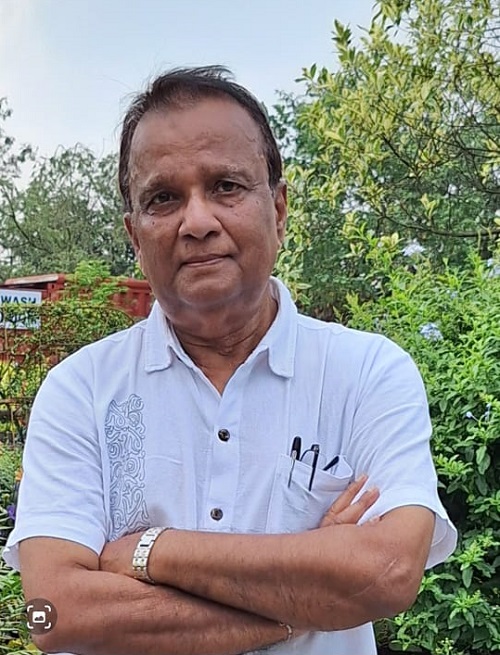
Prabhanjan K. Mishra is an award-winning Indian poet from India, besides being a story writer, translator, editor, and critic; a former president of Poetry Circle, Bombay (Mumbai), an association of Indo-English poets. He edited POIESIS, the literary magazine of this poets’ association for eight years. His poems have been widely published, his own works and translation from the works of other poets. He has published three books of his poems and his poems have appeared in twenty anthologies in India and abroad.
Sreekumar Ezhuththaani

The argument began with something small enough to be mistaken for kindness.
It was a restaurant where the lighting was too soft for clarity and too bright for intimacy. The kind that made people believe they were saying honest things when they were only circling around them.
Ashish noticed the man first.
An old figure near the glass door, thin, unmoving, his palm lifted in a gesture that had forgotten dignity long ago. He did not knock. He did not speak. He simply existed in the margin of the evening.
“Don’t,” Ashish said, without looking at Soumya.
She had already reached for her bag.
“Why?” she asked.
“They do this everywhere. It’s not real need half the time.”
She turned to him slowly, her fingers still resting on the zipper. “Not real need?”
“They’ll use it for something else,” he said, sharper now. “You don’t know anything about him.”
“And you do?”
Ashish exhaled, leaned back. “I’m just saying—don’t encourage it.”
Soumya watched the old man through the glass. “He hasn’t even asked.”
“That’s worse,” Ashish replied. “It’s a trick.”
She let out a small laugh—one that didn’t belong to amusement. “You’re afraid of being fooled.”
“And you’re afraid of not being good,” he said.
That landed.
For a moment, neither of them spoke. Plates arrived. Food cooled.
Soumya took out some money anyway.
Ashish’s jaw tightened. He said nothing. But something in him shifted—not conviction, not quite regret, but an awareness he refused to name.
Because she was right.
He knew it even as he swallowed it down.
When the bill came, Ashish paid before she could reach for it.
“I’ll get it,” he said.
“I can—”
“I said I’ll get it.”
The firmness in his tone wasn’t about money.
It was about something else—something like control, or maybe shame dressed as certainty.
At the counter, he hesitated.
Then, quietly, he added, “One parcel. Same order.”
“For takeaway?” the cashier asked.
Ashish nodded.
“For whom?” Soumya asked when he returned.
“A friend,” he said. “He gave me cash. Asked me to pick something up.”
She didn’t question it.
But she looked at him longer than necessary.
He dropped her off at her room.
The goodbye was brief, unfinished.
“Call me when you reach,” she said.
“I will.”
He didn’t.
Instead, he kept driving.
The city thinned into quieter streets, where light pooled unevenly, and shadows held their ground. He drove without direction until he saw someone. He had reached a dead end.
Not the same man.
Another one.
Older, perhaps. Or just more worn.
Sitting on the edge of a broken pavement, half inside darkness. One hand extended—not pleading, not expectant. Just there.
Ashish parked.
For a moment, he stayed inside the car, watching.
Then he took the parcel, walked up.
The man looked at him, eyes dull but alert.
Ashish didn’t say anything. He simply placed the packet into the outstretched hand.
The man’s fingers closed slowly around it.
“Eat,” Ashish said, almost under his breath.
It wasn’t generosity.
It wasn’t even an apology.
It was something closer to a private correction—an act meant to settle a discomfort that had no language.
He left before the man could respond.
The pain began sometime before dawn.
A dull twist in the stomach, easily ignored at first. Ashish turned in his bed, pressed his palm against his abdomen, and went back to sleep.
That night, he dreamed of his parents, who were no more.
The cold December morning came earlier than it should have.
His phone rang. Soumya.
He picked up, voice thick. “Hello?”
“Ashish…” Her voice was strained. Then, in Malayalam, urgent and breaking,
“ My stomach hurts terribly… I’m going to the hospital…”
He sat up too quickly. The room tilted.
“I—” he began, then stopped.
The pain sharpened.
“I’m coming,” he said.
Hospitals have a way of reducing people to the same expression.
Discomfort, waiting, irritation.
They found each other in that shared space—both bent slightly, both pale.
“What did you eat?” Soumya asked.
“Same as you, and see I got the same as you,” he chuckled.
Food poisoning, the doctor said.
Nothing severe. But enough. Two days in hospital.
Two nights of IV fluids, antiseptic smells, and conversations that hovered at the edge of something unspoken.
“You didn’t call me that night,” Soumya said once.
“I was tired.”
“You were angry.”
He didn’t deny it.
“And now?” she asked.
Ashish looked at the saline drip, watching the slow fall of each drop.
“I don’t know,” he said.
They were discharged on the third morning.
The city felt different after illness, as though everything carried a faint aftertaste.
They walked slowly, hand in hand.
Near the junction, a small crowd had gathered.
Not unusual. But something about the stillness of it pulled their attention.
“What happened?” Soumya asked someone.
“Old man,” came the reply. “Collapsed. Dead.”
Ashish froze.
The words didn’t land all at once. They spread, like something seeping inward.
Dead.
He moved closer before he could stop himself.
The body lay on the roadside.
Familiar, but not.
Or maybe all such faces became one.
Sunken cheeks. Closed eyes. A stillness that no longer asked for anything.
Ashish’s breath shortened.
“What is it?” Soumya asked. “Do you know him?”
He shook his head.
We see a crowd of people on an Indian street. They are crowded around an old beggar lying dead on the street.. On the side, a young couple is walking away
Sreekumar Ezhuththaani
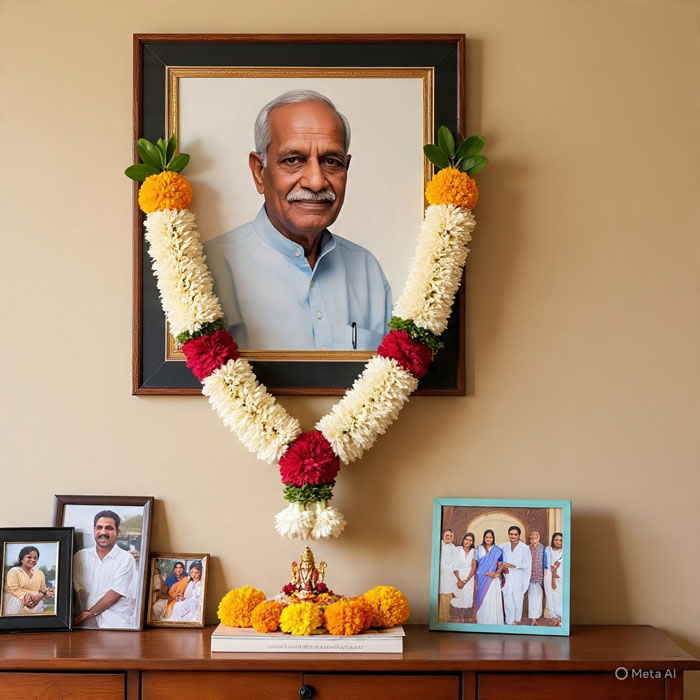
(Hindus and Muslims use these words to refer to their father, respectively. Mash refers to a male teacher, especially in north Kerala.)
Mustafa woke with a start.
On long, dull flights, sleep usually comes easily, light, scattered, filled with forgettable dreams. But the one he had just before waking lingered, unsettling him.
“It’s best if father and son belong to the same religion and caste…”
Warrier Mash’s voice.
Followed by his loud, familiar laughter.
The news of Mash’s death had reached him like a blow. Without weighing anything, without even thinking about the job he might lose, Mustafa booked the next flight from Australia and started back home. Whether that job would still be waiting for him was a problem for later.
There would be time for such things.
The last time they met, they had spoken for hours, easy and unhurried. Mash had told him, half in jest, half in something else, “Come once more before I die.”
He hadn’t gone.
Now the school WhatsApp group was overflowing with memories. Thirty students, thirty different relationships, Mash had held each one differently. Once, when someone asked him about it, he laughed and said: To each according to his karma.
Yet Mustafa noticed something strange. Some who were once close to Mash were silent now, reluctant to say a word. Others spoke as though they alone had shared something deep with him. The distance between people felt sharper than the grief.
Messages kept arriving. People had already gathered at the house.
Mustafa felt curious about something: His Bappa, Umma, siblings, and relatives were all there. Not just them, Mollakka, his Arabic teacher and priest at the mosque, and many others.
Was there truly this much religious ease in Kerala?
Would Muslims gather like this, so fully, for the death of a Hindu?
And that too an upper-caste Hindu?
And yet, some of Mash’s favourite students had not come.
He tried to find out. Numbers were missing; he searched, traced, hesitated. What could he even ask?
Finally, he messaged Ajayan.
“Isn’t Rashmi Nair from there? We used to think of her as Sir’s own daughter. He loved her more than all of us. Didn’t she come?”
“She should come,” Ajayan replied. “But she won’t.”
“Why? What happened? Did she—”
“It’s good if people like that die,” Ajayan cut in. “That ungrateful one. Mash raised her like his own, and she walked away.”
“What are you saying?”
“Didn’t you know anything about Mash then?”
“What is there to know? I saw him six months ago. Nothing serious, just small ailments.”
There was a pause.
Then Ajayan wrote: “Do you know Sir converted to your religion?”
Mustafa stared at the screen.
“What?”
“Yes. He became one of you.”
“Why?”
“Who knows!”
“No one asked?”
“They did. Suresh Babu asked. You remember him. A madcap, fanatic.”
“What did Sir say?”
“He said that old joke.”
“Which one?”
Another pause.
Then: “Anyway… if one has to die, isn’t it better if it is a Muslim?”
Old, stale jokes were Mash’s weakness
Mustafa felt something shift, something he couldn’t name.
“Maybe something went wrong with him,” Ajayan added. “At that age… the mind slips.”
He continued, as if explaining:
“After that girl, the one he raised, and even his own daughter turned away, his people didn’t move an inch. That’s their kind of thinking.”
“Then what is this?” Mustafa asked.
“When his illness got worse, he insisted we inform you. Said you must come and see him.”
“I couldn’t,” Mustafa typed. “It got delayed… too late.”
“Last time you met him, did you say anything special?”
“Nothing much. I told him about my girlfriend. He laughed at the nail polish she had put on me. It was my sister’s wedding, I barely had time, but I went to see him.”
“Mash showed us a message you sent.”
Mustafa hesitated.
“Oh… that.”
“The things my Bappa should have done for me… Mash did all of them. I couldn’t say it to his face. So I wrote to him.”
Ajayan replied slowly.
“Yes. Coming to your house… seeing you… speaking to your Bappa… moving you away and raising you… we didn’t even know. Hey, when I went to see and choose a bride, I didn’t take my father or uncle, I went with him.”
“I heard so Mustafa said.
“Did Sir reply to your message?”
A long pause.
“Yes.”
“What did he say?”
“He said… ‘in the next life, be born as my son’.”
Mustafa swallowed.
“And what did you say?”
“I told him… we are Muslims, we don’t have rebirth.”
“Oh, really?” Ajayan replied. “I didn’t know that.”
Another silence settled between them.
“Plane’s about to land,” Mustafa typed. “I’ll call later.”
He put the phone aside as the aircraft began its descent.
The runway rose to meet him. The city drew closer. The distance to home shrank, slowly, steadily.
Now there was hardly any distance left.
Less, perhaps, than the distance between Achcha and Bappa.
Sreekumar Ezhuththaani known more as SK, writes in English and Malayalam. He also translates into both languages and works as a facilitator at L' ecole Chempaka International, a school in Trivandrum, Kerala.
Avantika Vijay Singh
It was the year 2018. Selected schools from across the Commonwealth nations stood across a global platform in Amiens, France to celebrate the centenary of the ending of World War 1.
My daughter travelled to Amiens with her school group to perform their play for which they had written the script together and made a human-sized pupper.
When my daughter's group's performance ended, the audience rose in a standing ovation — a tribute not just to the performers, but to the history they had brought to life so mesmerizingly. The language of grief is so universal that it can be understood by all.
While that was the outward story that unfolded, another deeper story was unfolding through time... and one that never fails to send goosebumps down my spine.
Let me narrate it to you and you tell me what you think of it. So, when my daughter came back to India my mother and I took to social media, proudly announcing this feat to all and sundry. My mother''s cousin brother reached out to us sharing a newspaper clipping from exactly a hundred years ago, on the same date, and place.
So exactly one hundred years earlier, my maternal great-grandfather, Colonel Bhim Singh Thapa (then Subedar Major) had stood in Amiens as a soldier in the First World War. For his courage in battle, he had been awarded the Military Cross in 1918.
My daughter stood in the same place.
On the same date.
In the same month.
A century later.
He had stood there holding a rifle in war. She stood there holding a human-sized puppet, telling the story of that very war, honouring the sacrifice of soldiers like him.
It felt far greater than coincidence... as if there was some greater significance to it that my mortal mind was not grasping. It felt like whispers from the past, a quiet echo of ancestry reaching across a hundred years.
This serendipitous synchronicity for I know no other way to explain these slivers from the past impinging on the present is what makes me think that there is a greater plan than we are aware of. There are deeper things happening across time and space than that we can comprehend. Perhaps this ancestral echoing is a blessing running deep in a family.
Avantika Vijay Singh is a communications professional, wearing the hats of a writer, editor, poet, researcher, and photographer. She has authored two solo anthologies, edited three anthologies, and has been published in national and international journals. She received the Nissim International Award Runner Up 2023, WE Gifted Poet 2024, and WE Illumination Award 2024.
Phalguni Sahu
Long before she understood love or loss, Arohi learned that the body is a country capable of withdrawing its welcome without warning. At twenty-four, when the world still spoke to her in verbs- run, reach, dance, dream, her hands began replying in hesitation. A tremor appeared first, small enough to be mistaken for fatigue, delicate as a thought that had not yet decided to become real. She ignored it at first. After all, youth is a season that believes betrayal belongs only to the distant future.
She named it nothing. Naming makes things real.
Instead, she learned grace. She learned how to fold her fingers into patience, how to steady her wrists against tables, how to smile before anyone could ask why she moved like memory instead of momentum. Her mother, Vasudha, watched her with the terrible devotion of someone counting time backward. Her younger sister, Anika, pretended nothing was wrong, which was its own kind of love.
The neurology clinic became her most consistent address.
Dr. Anirban Sen was kind in the way people are kind when they know too much. He adjusted dosages, spoke of clinical trials, used words like progression and management as if they could soften inevitability. Meera Sanyal, the clinic nurse, knew her silences by heart. She never rushed her. Never flinched when her hands shook. Meera touched her arm the way one touches glass- careful, reverent.
It was on a Tuesday that she met him.
He was sitting two chairs away, reading poetry in a place designed to drain beauty from language. She noticed the book first. She always did. It felt like destiny lowering its voice.
“You’re brave,” she said, surprising herself. “Reading that here.” He smiled, not politely, but with interest, as though he had been waiting for interruption all his life. “Someone once said poetry belongs where pain gathers,” he replied. “I believed them.”
They began like that; two strangers exchanging borrowed truths.
His name was Vihaan. He was a Civil Engineer and spoke of buildings the way some people speak of lovers; fondly, critically, with attention to light. He noticed how she walked slower than the world expected. He adjusted without announcing it. Love, when it is real, arrives as accommodation before declaration!
They spent afternoons unravelling time.
Coffee that went cold because the conversation refused to end. Walks measured in pauses rather than distance. He learned her preferences: jasmine tea, old romantic songs, benches near trees. She learned his: rainy evenings, underlined sentences, silence that didn’t ask to be filled.
What she never let him learn was the truth! Because love, once spoken aloud, becomes a promise. And she was already breaking promises her body had made to her.
She told herself she would tell him soon. After the next appointment. After the next good week. After the tremors quieted. After she found a version of the truth that did not sound like goodbye.
But Parkinson’s does not respect postponement.
Her hands grew less obedient. Her balance, more tentative. Exhaustion became a language she spoke fluently. Meera noticed the bruises on her arms; small collisions with furniture, with certainty. Dr. Sen suggested assisted living. Vasudha cried in the kitchen where sound wouldn’t travel.
Vihaan noticed too. “You’ve been drifting,” he said one evening, not accusing but concerned. She smiled the smile she had perfected. “Everyone drifts.” But love has a memory longer than denial!
She began to retreat not all at once, but in fractions. She answered messages hours late. Then days. She cancelled plans with excuses that tasted false even to her. Vihaan tried patience. Then confusion. Then worry sharp enough to bruise.
Anika begged her to tell him. Vasudha prayed she wouldn’t. Meera said nothing, but held her hand longer each visit.
And then, one morning, she vanished.
No goodbye. No forwarding address. Just absence folded neatly into the spaces she once occupied. Her phone number changed. Her email erased. Her apartment emptied with the quiet efficiency of someone who had rehearsed leaving all her life.
Vihaan searched like a man learning the limits of effort. He returned to cafés, to the clinic, to the park bench where she once fell asleep against his shoulder. He asked Dr. Sen, who could not answer. He asked Meera, whose eyes said more than her words ever would. He waited for coincidence to resurrect itself. It never did!
Years passed. Life did what it always does; it continued. He built buildings. He loved briefly, carefully. Somewhere inside him, her name remained in a room he did not enter.
Then the email arrived. No sender name, but he recognized her. No subject. Only the message: “By the time you read this, I will have left for my heavenly abode.” The world narrowed to a sentence.
She wrote with the intimacy of someone no longer afraid. She told him about the tremor, the diagnosis, the fear of being loved into dependency. She confessed that leaving had been her last illusion of control. She apologized for choosing silence over courage.
“I wanted you to remember me as capable,” she wrote. “Not diminishing.”
Attached were documents- medical records, consent forms. One in particular froze him. An organ donation agreement. Her entire body pledged to science.
Neurological research.
Early-onset Parkinson’s.
Dr. Sen is listed as the Principal Investigator.
At the bottom, her handwriting again: “If love could not stay, let it still matter.”
Vihaan wept then; deeply, openly for the first time. At the bottom of the letter was a date. Six months ago.
Years had passed since Arohi’s absence had quietly settled into the corners of Vihaan’s life. Time had carried him forward, through new buildings, new cities, and carefully guarded relationships, but some silences refused to age. Her memory remained like a sealed room within him; one he rarely entered yet never truly abandoned.
One evening, seeking nothing more than a quiet dinner after a long day, Vihaan stepped into a modest restaurant in the old market. The room hummed softly with the clink of cutlery and the low murmur of conversations. He had just taken his seat when a familiar profile across the room caught his attention.
For a moment he thought memory was playing a cruel trick on him. But the man sitting there, slightly older now, hair greyer at the temples, spectacles resting low on his nose was unmistakable. Dr. Sen!
Vihaan felt a sudden tightening in his chest, as if the past had risen abruptly from the table beside him. For years he had carried questions that had nowhere to go. And suddenly, without warning, the one man who might hold the answers was sitting a few steps away.
Before hesitation could intervene, Vihaan rose and walked toward him. “Dr. Sen?” he said softly. The doctor looked up. Recognition flickered across his face, followed by a brief, complicated silence.
“Vihaan,” he said after a moment, his voice careful, almost heavy with memory. “It has been… a long time.”
They exchanged polite words at first; the kind people offer when time has placed distance between shared history. But beneath the surface of the conversation, something unspoken trembled like a fragile thread waiting to snap. Finally, Vihaan’s restraint gave way.
“I received her email,” he said quietly. “Years ago.” Dr. Sen’s expression changed, the calm professionalism in his eyes giving way to something deeper, something troubled. “I always wondered,” Vihaan continued, “whether there was more she never told me.”
The restaurant noise seemed to recede, leaving only the weight of that question between them. Dr. Sen lowered his gaze for a long moment, as if revisiting a promise that had once felt impossible to keep. Then he spoke, slowly. “There was.” Vihaan felt the world tilt ever so slightly.
“The trial she enrolled in,” Dr. Sen continued carefully, “worked better than we expected. It didn’t cure the disease, but it slowed it… significantly. It gave her years.”
Vihaan stared at him, the meaning arriving like distant thunder. “She… survived?” he whispered. Dr. Sen nodded, his voice quiet. “She did.”
The revelation struck Vihaan with the strange force of both relief and grief. For years he had mourned a woman who had never truly died!
“Why didn’t she tell me?” he asked, his voice breaking under the weight of the question. Dr. Sen’s eyes softened with a sorrow that had clearly lived there for a long time. “Because she believed loving you meant letting you live freely,” he said. “She made me promise that if the trial succeeded, you would never know.” Vihaan sat back slowly, absorbing the quiet cruelty of that choice.
As Vihaan walked into the night, a strange peace settled within him. Somewhere in the world, Arohi was still alive; her hands steadier, her days unfolding quietly; carrying a love she had chosen never to reclaim!
And though their lives would never meet again, he finally understood her last act of love: sometimes the truest way to stay in someone’s heart is to leave their life forever.
Phalguni Sahu is a development leader who has spent twenty-five years shaping transformative initiatives across government, public sector institutions, and international development organizations. An MBA in Rural Management from the Xavier Institute of Management, Bhubaneswar, she carries into her writing the same depth of insight and quiet sincerity that define her professional journey.
For Phalguni, writing is a sanctuary- an inner courtyard where thoughts unfurl gently and truth finds its voice. She is an ardent reader, forever drawn to the reflective rhythms of literature, and her creative work spans contemplative spiritual blogs and evocative short stories.
Usha Surya
Sharada walked towards the front door as the calling bell chimed twice.
"Must be Jahnavi from next door," her granddaughter Sumitra shouted from the kitchen.
She was right. It was Jahnavi from the neighbouring apartment holding a freshly baked tray of cupcakes. A lovely aroma of vanilla essence was exuding from the delicious looking cakes topped with pink icing.
"I am..." started Jahnavi.
"I know. Jahnavi who bakes delectable cakes and biscuits and supplies them to Bakeries," Shrada said with a smile, taking the tray from her hands and asking her to sit.
"Gosh!! Sumitra has told you all about me?" she asked with her beautiful eyes wide open as she sat on the sofa.
"Yes . Sumi has told me that you bake lovely tasty things. She has also told me that you are holding the fort right now as your hubby has gone on tour and your in-laws have gone to Kumbakonam to attend a marriage."
Sharada said smiling.
"You must be Sumi's grandma from the U S on your way to visit your younger brothers and family at Madurai. She had been incessantly talking about you since last week," Jahnavi said.
Sumitra came in wiping her hands with a dish towel, and sat with them.
"So you have brought cakes !! Ah! Paatti can eat them too as they are eggless. I have told her you bake cakes, biscuits and cookies without eggs. I have also told her that pretzels are your specialities and the American and British ladies who live here in Chennai are crazy about them. You have real esteemed clients."
Jahnavi blushed.
"How is your grandma today? " Sharada asked. "Sumi told me about her. That she had a fall and has lost her memory and is unable to move about. Terrible to hear about it. Have you explored all avenues of treatment ? " Sharada asked.
"We have,aunty. In fact, my uncle - my father in law's younger brother - is a neurosurgeon. He says that it is a form of prolonged amnesia caused by internal injury but that her memory will come back to her. He comes everyday to check on her. He and my aunt are staying just seven kilometres away. He is very positive, as all the tests...blood tests etc... are okay. "
"Sad," said Sharada." How do you manage? Sumi said that you are having a lady nurse who takes care of her for twenty four hours."
"Yes. My uncle arranged for her. Julie feeds her and looks after her so well. There is no hint of recognition of any body in my grandma's eyes. She just cannot recall any of our faces. In fact, we got married just eight months back - her grandson and I - but I had been coming here even before that. She loves my cakes. There was this friend's wedding and after the muhurtham she had gone to the fresh room and on her way back, she tripped and fell down the stairs. There was internal injury but even as we rushed her to the hospital it was of no use. She has been like this now for almost a year. Uncle tells us to keep talking to her. To take every visitor to her to see if she starts talking. But so far, it has been of no use."
"Don't worry my child. Have faith in God! Very soon she will be normal," Sharada said to her.
"I have to go now, Aunty. Why don't you come home with Sumi? Perhaps you can see Grandma too," said Jahnavi as she got up.
"Yes my child, I certainly will," Sharada said.
After Sumitra closed the door, the old lady asked her, "Are they not trying any alternative medicines?"
"Paatti, they are deep into astrology. Jahnavi's father-in-law took Anasooya Paati's - that's her name - horoscope to some naadi Josyan in Vaitheeswaran Koil. Her Naadi says that she will recover miraculously and that she will live for another six years! They went to four or five temples and made some offerings. Thay are all hopeful. Let us see," Sumitra said.
It was just past five in the evening.
"Shall we go to Jahnav's place, Paatti? You will be going off in two days and we are doing nothing in the evening?"
"That will be good Sumi. Let me take some chocolates for her. We should not go empty handed! The cakes were delicious and we will tell her," Sharada said.
Julie, the woman who took care of the old lady, opened the door. A very pleasant looking lady, Sharada thought.
"Ma'am is lighting the lamp and will be here any moment. Please sit down," Julie said and retreated.
Jahnavi came in a few minutes.
" Come aunty...I am so happy to see you."
Sharada handed over the chocolates she had brought with her.
"Oh!! Lovely ! I love chocolates, Aunty. I just made some chocolate fudge and packed them. The bakery guy will be coming in a while to take them. You can taste them and tell me how they are! " she gushed.
They chatted for a while and Jahnavi brought two glasses of orange juice and some fudges. They really tasted good.
"How long have you been baking ? You make all these at home?
Sharada sasked.
"I have been baking for the past two years, Aunty. Actually we are buying a single bedroom apartment in this same compound and I will be shifting my kitchen there. I will have more space and there will be room for packing etc. My husband and in-laws are very supportive aunty. I am very fortunate. And Sumi and I are thick friends now. She writes so well and I bake. My husband too loves the thrillers that she writes," Jahnavi said.
"You don't have to say that , my child. My grandchildren lin U S love her books and she is very popular with their friends too!!." Sharada said.
" Yes, they are my PROs...ha ha ha my Public Relation Officers!! I have a gang of fans in the U S Jahnavi!!" Sumitra said.
" I like both of you!! You are managing the home and are so talented in your own ways. Good." Sharada said.
"Shall we go and see Grandma aunty? My mother-in-law had called and I told her that you are coming home and she asked me to take you to grandma's room. As I told you, they are all expecting miracles!! I hope that magic rubs on me too. I am skeptical but I hope and believe in God. I do wish Granny becomes normal" Jahnavi said as she took them to a cosy bedroom.
Sharada looked around. The room was very neat and smelt of a light lavender perfume. The old lady was reclining on a bed and Julie was playing some devotional song.
" Our grandma loves music. She can also sing aunty. And she cooks so well!! When my father-in-law's brothers and sisters gather here for some function, she takes charge of the kitchen. The whole house would smell with the aroma of food she cooks. I have also tasted her cooking. But now she is like this," Jahnavi said.
She went near her grandmother,
"Paatti. See, Sharada aunty has come to meet you. Say hello to her."
The old lady- Anasooya- stared blankly. There was no response from her.
Sharada said, " Get a chair my girl. I shall sit near her for a while. You go and chat with Sumi. I shall spend some fifteen minutes with your grandmother and keep talking to her."
Julie drew a chair and Sharada sat near the bed. Jahnavi and Sumitra started moving towards the sitting room.
The bedroom was neatly maintained. A window near Anasooya's bed opened to a beautiful view. One could see the sea in the distance.The sea was sparkling in the evening light. It would become dark soon. There was an easy chair near the window.
"Amma used to recline in this, it seems and read her books," Julie said.
There was a shelf packed with books. She must have been a voracious reader.
Sharada took her hand and said, "I am Sharada. "
There was no sign of recognition in the patient's eyes.
Sharada started talking about her grandchildren as if they were known to Anasooya too.
All of a sudden there was a slight movement.
Sharada could feel the lady's hand moving in her palms.
There was a slight flicker in her eyes. Her fingers clasped Sharada's. She looked at Sharada and said, "Shadow !! Yes, my friend Sharada. We used to call you 'Shadow'. How long since I saw you!!"
Her voice was quivering. She tried to move.
Sharada propped her up in the bed.
Julie ran out of the room to tell Jahnavi what was happening and the two girls rushed in.
By now Anasooya had started smiling.
"Sharada! God !! Will it be fifty years since your wedding? Remember we used to call you 'shadow' in college? How are you here? When did you come?"
Sharada was speechless.
Anasooya's eyes fell on Jahnavi.
"Jahnavi...this is Sharada. We studied in the same school and went to the same college. Then she got married and moved away. "
And turning towards Sharada , asked, "Do you still sing? Jahnavi. there was no Inter College Music Competition without her !! I can still hear the song "Oh Sajna..." she used to sing beautifully.!! Jahnavi, will you be staying for a while?"
Jahnavi was speechless.She managed to say, "Yes granny. Amma and Appa left for Kumbakonam yesterday for a wedding and will be back soon."
She did not say that she got married when Anasooya was still coping with her memory loss.
She decided to wait till her father-in-law and mother-in-law came back.
Anasooya got up from the bed effortlessly and pointed towards Julie, and asked "Who is she?"
Jahnavi said, " Oh! She was sent by Gopu uncle to take care of you. You had been ill and she came sometime back. Now that you are okay, she may get back. I shall phone uncle and aunt and say that you are okay now."
She took her mobile but was really confused and excited.
Anasooya sat on the bed and looked towards Sharada . " How come you are here? When did you come? I had no idea that you were in India. Someone said that after your marriage you had gone abroad. Where are you now?"
Sharada said ,
"Your neghbour Sumitra is my
granddaughter. I have come to visit her and am off in a couple of days. I am so happy I met you. We shall certainly keep in touch," she smiled.
"Oh! Sumitra is your grandchild? She writes so well.You should have something to drink," Anasooya said.
"I have had. Jahnavi gave us orange juice and some fudges. A wonderful girl."
Voices could be heard and Jahnavi came in followed by a middle-aged person and his wife.
"Amma!You are fine? Aw!! I was worried! " he said, stroking her hair.
" I am doing fine, Gopu. Now don't make a fuss. This is Sharada who studied with me! I am meeting her after so many years," and turning towards Sharada said, "Shadow, this is my second son Gopu. I have two daughters who are in Madurai and Otrissa and a hoard of grandchildren!!"
By now Gopu's wife started chatting with Anasooya.
Gopu took Sharada aside and held her hands.
"Thank you ever so much aunty for bringing her memory back!! I know it is unbelievable !! But God's ways are great!! Did you read about that lady working in court who was brain dead for days and then on her way to the funeral woke up when the vehicle went with a jolt over a pothole? These things happen!!."
"I am happy she has come out of her illness, whatever it was. It is all God's grace. I am off to Madurai in a couple of days to be with my brothers and family. I will be back here in a month before I fly back. I shall make a visit then and look up Anasooya and all of you. It has been a pleasure meeting you."
"Thank you again aunty. I must break the news of her illness - to my mother - gently and explain also that her grandson got married to Jahnavi eight months back. That girl is amazing!! She spends at least three hours a day reading to amma...whether amma responds or not!! She is such a wonderful person!! My brother is very fortunate to get her as the daughter in law of this house," said Gopu wiping his tears.
Sharada patted his hand.
"Now now....you are all God-fearing people with great faith! Only good can happen to you. Take care."
Sharada and Sumitra left after a few minutes. Anasooya reluctantly parted with Sharada.
Sumitra opened the door to her apartment with the key and as soon as they were in, turned towards Sharada.
"Paatti! You never studied either in school or college in Chennai! You studied in Hyderabad all the while and were the Principal of a College in Hyderabad ! How come..."
She looked puzzled.
"My child, " Sharada said, "It is not a sin to pretend once in a while. If I resembled her old friend and she recovered fully because of that...do you think I did anything wrong? I will always pretend to be her friend "Shadow" !! "
Sumitra hugged her grandmother. There were tears in her eyes!!
The secret would be safe with both of them.
Usha Surya.- Have been writing for fifty years. Was a regular blogger at Sulekha.com and a few stories in Storymirror.com. Have published fifteen books in Amazon / Kindle ... a few short story collections, a book on a few Temples and Detective Novels and a Recipe book. A member of the International Photo Blogging site- Aminus3.com for the past thirteen years...being a photographer.
Satish Pashine
The knock always came at half past one.
Not too loud, not too soft—just enough to be heard.
As if it knew the door would open.
It was the year 1986—perhaps 1987—in Chandrapur, Maharashtra.
Satish had recently been transferred there. Company accommodation was expected, but for reasons never fully explained, it was delayed. Days stretched into weeks, and the wait grew longer than anticipated.
Eventually, he and Archana rented a small house, telling themselves it was only for a couple of months.
But some days do not remain just days.
They quietly turn into memories.
The house was simple—plain, without pretension.
Right beside it, almost attached, was a smaller portion where the landlord lived with his wife and their young son.
The boy went to school every morning and returned at almost the same time each day—between half past one and two in the afternoon.
Gradually, that became Archana’s lunchtime too.
The first time the knock came, Archana opened the door to find the landlord’s wife standing there.
“Mulga shaletun ala aahe…” she said softly.
(My son has come back from school.)
Then, after a brief hesitation—
“Could I have a little sabzi? I’ve run out today…”
Archana paused for a moment, then smiled.
“Yes, of course.”
That evening, when Satish returned from work, she mentioned it casually.
“She came today… asked for some sabzi.”
Satish nodded. “Hmm.”
The next day, the knock came again.
And the day after.
Soon, it became part of the day.
Without discussion, Archana began cooking a little extra—
a little more dal, a little more sabzi.
One evening, Satish noticed.
“You’ve been cooking more these days,” he said.
Archana smiled. “Yes.”
“For them?”
She nodded.
Satish was quiet for a moment, then asked,
“They don’t return anything, do they?”
Archana replied simply,
“No… I don’t think they can.”
“And you don’t mind?”
She shook her head gently.
“It doesn’t feel like we’re giving something,” she said.
“It just feels… normal. Like they are part of the house.”
Satish looked at her, then smiled faintly.
“Then it is.”
Slowly, the request for “a little sabzi” expanded.
Some days it was oil.
Some days, a lemon.
Green chilies.
Sometimes even a little rice or sugar.
Nothing was ever returned.
And nothing was ever expected.
At some point, it stopped being an exchange.
It simply became… a way of living.
The landlord was a clerk—a quiet, unassuming man who spoke little.
But he had built that house himself.
Brick by brick.
More than once, Satish found himself thinking—
“I am an engineer, and yet I live on rent…
and he lives in his own house.”
One Sunday, Satish stood outside, looking at the house.
The landlord came up beside him.
“Looking at the house?” he asked.
“Yes… it’s nice,” Satish replied.
The man smiled.
“It took time to build… but it got done.
Took a lot on credit… still repaying, slowly.”
That was all he said.
But in that “it got done,” there was more than words.
A few days later, Satish noticed that the outer wall on their side had been freshly plastered—smooth and new.
He asked the landlord,
“You had this done?”
The man smiled lightly.
“Yes… thought it would look better. You are sahab people, after all.”
Satish looked at him carefully.
“But you’ve already taken loans… why spend more?”
The man replied with the same ease,
“Just give me a month’s rent as advance—we’ll adjust it in the future rent.
I’ll pay the cement supplier.”
As if it were nothing.
That evening, Satish told Archana.
“He got the wall plastered.”
Archana nodded. “He’s a good man.”
Satish was quiet for a moment, then said softly,
“The house is his…”
Archana looked at him and replied,
“A house is not built by earnings alone…
it is built by how you hold it together.”
Satish said nothing.
But the thought stayed with him.
Soon, the company accommodation was finally allotted.
It was time to leave.
Packing began—newspapers spread across the floor, utensils wrapped, boxes filled.
But that day, the house felt different.
Quieter.
The boy stood near the doorway, watching silently.
His mother stood behind him.
There was no knock that afternoon.
No request.
No “little sabzi.”
Archana stepped outside.
“We are leaving tomorrow,” she said gently.
The woman nodded.
“Do visit sometime,” she said softly.
That was all.
That evening, Satish sat quietly.
“No knock today,” he said.
Archana shook her head.
After a pause, he added,
“Strange… it had become a habit.”
Archana looked at him.
“Not a habit,” she said softly.
“A relationship.”
The next day, they left.
The new house was bigger, better—everything it was meant to be.
Life returned to its structure.
But something had been left behind.
Even today, when Satish thinks back, he does not remember the house—
nor the waiting.
He remembers the knock.
That gentle, certain knock at half past one.
Some relationships are never written down.
They are not counted, not recorded, not returned.
They simply come into being—
in a shared meal,
a little extra sabzi,
and a door that always opens.
Shri Satish Pashine is a Metallurgical Engineer. Founder and Principal Consultant, Q-Tech Consultancy, he lives in Bhubaneswar and loves to dabble in literature.
KAPDGANDA AS THE MARKER OF DANGARIA IDENTITY AND WOMEN’S SPIRITUALITY
Annapurna Pandey
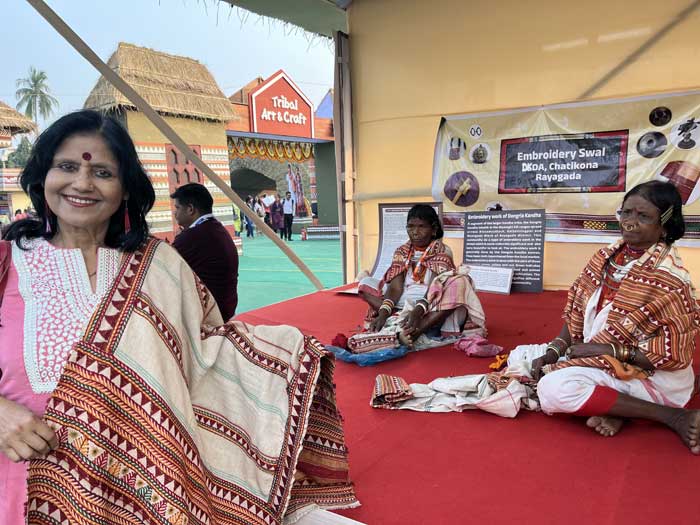
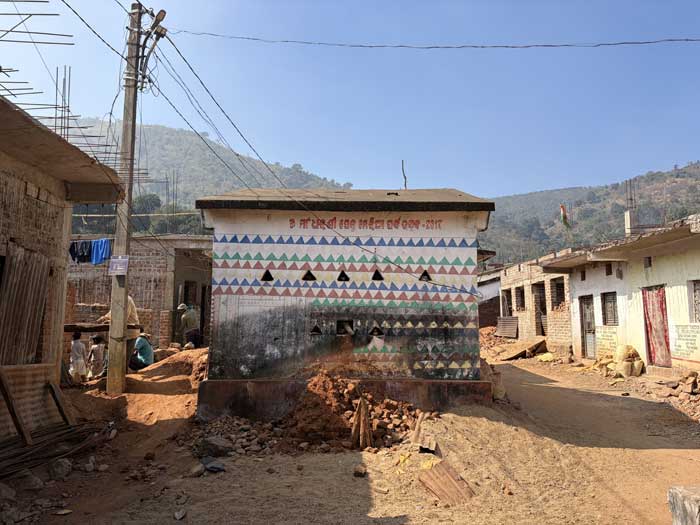

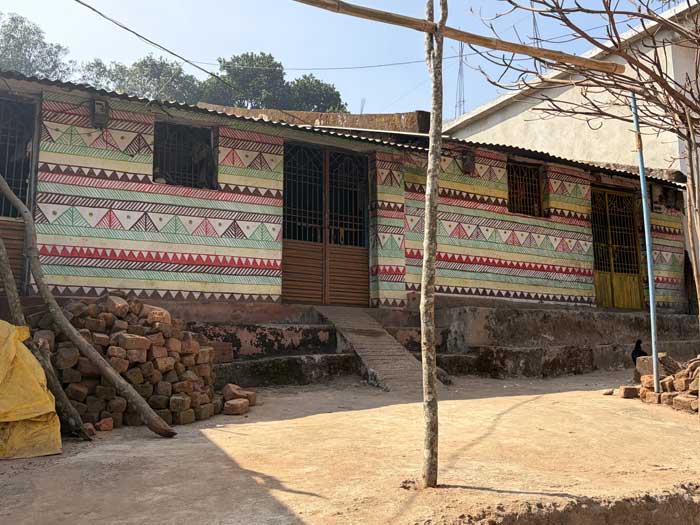
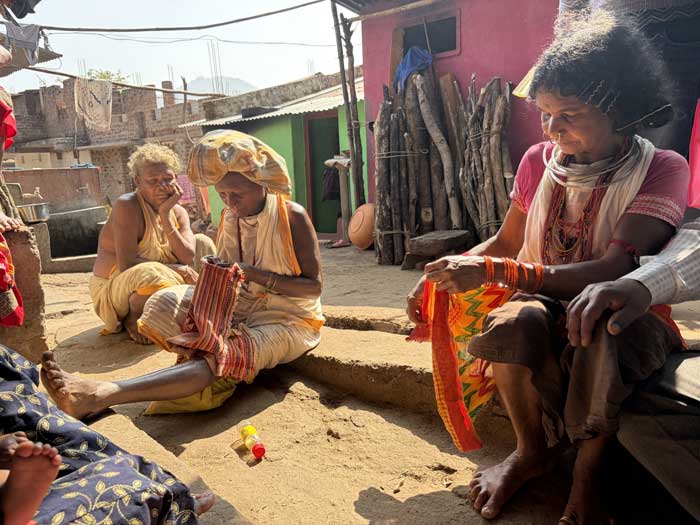
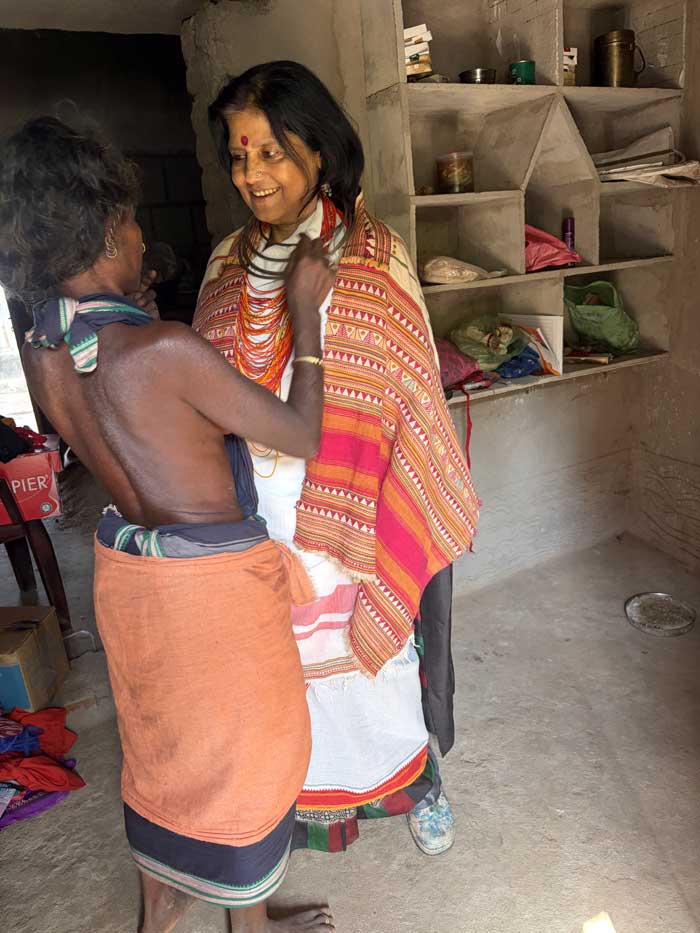
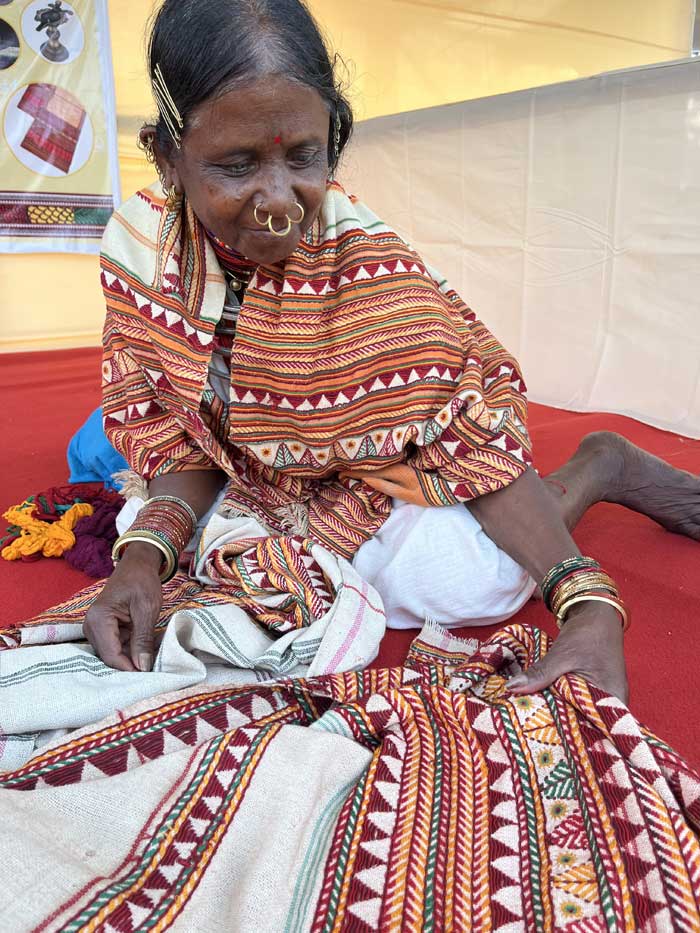
When I asked about the meaning of the shawl, Sindhe Wadakka from Khajuri village, now in her fifties and the president of the Niyamgiri Dangaria Kandha Weavers Association, said quietly, “It is our identity. Kandha people come together with threads of different colors joining.” Her words were simple, but they stayed with me. In the villages spread across the slopes of the Niyamgiri Hills in Odisha, Kapdganda is the shawl that Dangaria women weave and wear over their short saris. It carries the earth, the forest, and Niyamgiri, the dangar, which the Dangarias speak of as mother, father, and protector.
On 8th January, 2026, I visited a few Dangaria Kondh villages in the Niyamgiri hills along with Prof. Nibedita Nath and graduate researchers from Ma Manikeswari University, in the neighboring Kalahandi District. This time, I was struck by the women’s keen engagement with Kapdaganda weaving on a mass scale. Women are proud of their weaving and are eager to share it with the broader society, but on their own terms.
Women spend three to four months, sometimes up to a year, completing a single shawl. Every morning, as Sindhe explained, they walk to the dangar to cultivate and gather . “Because of the dangar, we get the rain, and our harvest is plenty,” she said. The same dangar appears again in the embroidery— as triangles—and also on the mud walls of their homes. In the Kui language, Kapdganda means “chief’s cloth,” yet its making rests entirely in women’s hands.
The shawls are thick, handwoven white or off-white cotton, filled slowly with bright threads of green, red, yellow, and brown. Each color is tied to the surrounding world: green from hills and crops, red from ragi and other millets, yellow from turmeric grown in abundance, and brown from the soil itself. Earlier, natural dyes were used; now the threads are mostly bought from the market. Nevertheless, the meanings associated with colour have not changed.
In Khambesi and Khajuri villages, I observed young and older women sitting together on their porches, a small basket of thread beside them, working on shawls nearly two by five feet. The embroidery begins by entangling thread in a marked area of the cloth and then slowly extending the pattern. These shawls are made for themselves, for brothers, and sometimes for an intimate partner.
Some young women who have completed schooling continue to engage in this work. One girl told me, “I have completed class ten. I do what my mother does, go to the jungle and weave.” Yet there is also hesitation among the younger generation. Sindhe worries that many no longer follow rituals or feel tied to the dangar, their divine. Out of nearly six hundred people in her village, she said, only twenty to twenty-five women continue embroidery. Ramesh Nala, a community resource person, echoed this concern, noting that girls now seek education or wage work because embroidery yields very little income. Due to mining and resource extraction, there is massive unemployment in the area. It has led to a large-scale migration of young people seeking menial jobs. The young women who are left behind, find embroidery time-consuming and low-paying, so they may not be committed to making it.
Traditionally, both weaving and embroidery were done within the community. The yarn for the shawl was bought in the local market, and the weavers, both men and women, would weave yarn using the pit loom locally known as tanta. The pit loom is one of the earliest types of horizontal looms made of wood. Manually operated, it gets its name from the pit over which it is set — four wooden posts sunken into the ground holding the loom in place. The weaver sits at ground level and operates it with their feet on the treadles located inside the pit. It remains
common in traditional weaver communities across Odisha. Today, plain shawls often come from neighboring regions, and Dangaria women focus on embroidery. Government agencies now provide needles, thread, and base fabric; organize training for young women, and a completed shawl earns approximately 2,000 rupees. Pituli Sikkaka from Khambesi told me that if she worked full-time, she could finish one in three months. Women do the embroidery only after completing cultivation, gathering firewood, cooking, and caring for the family.
During my visit, I attempted to lift a bundle of firewood onto my head with the assistance of three women. I could not remain steady. Every day, the women walk uphill a few kilometers to work in the jungle and on their way back, they collect the heavy bundle of dry firewood from the forest. Their daily labor—walking long distances uphill, working in fields, and still finding time to embroider—revealed the depth of effort contained within each shawl.
Kapdganda is a spiritual and cultural symbol of the Dangarias. It is shaped by women’s time, movement, and endurance. On 4th January 2024, Kapdaganda, the Dangaria weave of Niyamgiri received the nationally approved Geographical Indications (GI) tag, recognizing its originality tied to the region, unique handwoven contributions of the Dangaria women and protecting it from commercial duplication. With the GI tag, training of the young women, the Niyamgiri Dangaria Kondh weavers Association continues the work, as a way of connection to the dangar, the land, and the forest, which are destroyed through mining. In the slow stitching of Dangaria women, identity itself is being held together, thread by thread.
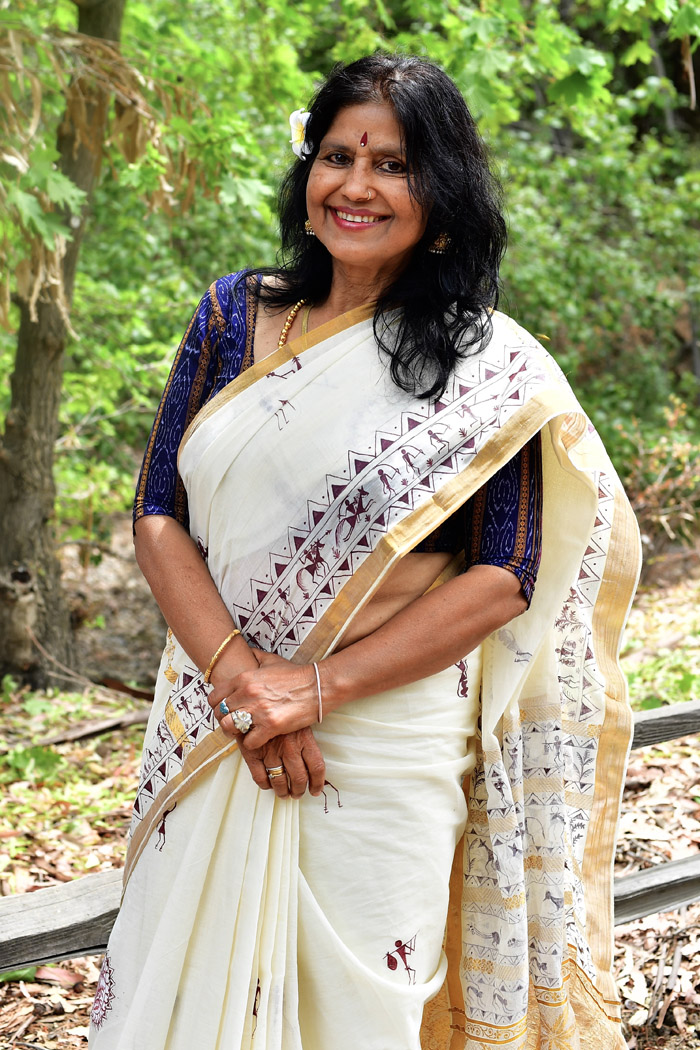
Annapurna Pandey is a cultural anthropologist at the University of California, Santa Cruz. Originally from Cuttack, Odisha, she moved to Santa Cruz, California in 1989. She is a travel enthusiast and loves to write travelogues highlighting her exotic experiences in different parts of the world.
MY KERALA STORY: A DAUGHTER-IN-LAW PENS A LOVE NOTE
Deepika Sahu
(As love has its own quirks and charm, I am referring to Kerala as Kerala in this piece rather than Keralam. Hopefully, you will understand that love need not always be official.)
For weeks, I read stories in newspapers and on social media about the controversy regarding the film ‘Kerala Story 2.’ Then as I was scrolling on my laptop, I paused for a while and ruminated over my own Kerala story. This is my personal narrative and it should be looked at that way only. I love Kerala and love has very little to do with logic. The heart knows what it knows. I am happy to be a daughter-in-law of Kerala even though I don’t live in Kerala. All through my years in Delhi, thanks to my curly hair, people thought I was from Kerala (stereotypes at its best). Well, destiny took all those questions seriously and made me a daughter-in-law of Kerala.
When you live in a dry, dusty and concrete dense city like Ahmedabad (the city where I live now), you really long for trees (unless you belong to another universe of brutal aggressive consumerism). So, every time I visit Kerala, I get excited at the thought of savouring its beautiful gentle landscape. When I first get a glimpse of Kerala’s landscape from the window of my plane, it acts like an instant mood elevator for me. Kerala’s lush green landscape feels like a soothing beautiful song.
My first brush with Kerala happened 27 years ago. And it still brings a smile to my face. When I first visited Kerala as a brand-new bride, my husband's aunt asked me, "Deepika, chor indaka?" And I got damn excited thinking how exciting it is to have a Chor/Thief (in Hindi chor means thief) in the house in broad daylight. Well, even as I was imagining putting up a brave fight against the visiting thief (so that I can leave a lasting impression on the family), I found out that chor in Malayalam means rice. And my aunt-in-law was just checking whether I will have rice or not.
I am a great fan of Malayalee sense of humour. During my first visit to Kerala, one of those cool aunts (with not so butter-tongue) told my husband that she's very relieved to know that he doesn't have a brother-in-law. She thought a wife's brother generally has lots of nuisance value and very little to offer in terms of goodness.
With every passing day, my love for Kerala food goes deeper and deeper. Now, my smartphone has my mother-in-law’s recipes of erissery, thoran, inji puli, kadala curry and the like neatly typed on the 'Note' app. On a good day, I can finish off more than five parippu vadas at one go (Kerala's famous snack). They are absolutely my favourites. I talked about parippu vadas so lovingly that Hussain (the man who was our navigator during my Kerala visit) offered to buy them for me.
It is liberating and refreshing to see food diversity in Kerala. It is just the way it is. It is organic. In Kerala, no one makes a statement about celebrating food of all kinds. As I said before, it is just the way it is. ‘Eat and let people eat what they wish’ – is a wonderful lesson in respect for choices and celebrating diversity. It is saddening to see food becoming communalised or politicised now. There is a magic about Kerala’s culinary diversity and its ability to respect food choices across communities. Here is to the rainbow platter of Kerala. My new culinary love in life is palada payasam. All that I want is my share of sadya with a generous serving of palada payasam. All will be well in my universe.
And I can’t write this love note without mentioning my love for Malayalam films. Once you start watching Malayalam films, it’s almost impossible to watch current Hindi films. I have a long list of my favourite Malayalam films and whenever I rewatch Attam, Ullozhukku, Sunny, The Great Indian Kitchen and many others, I just bow to the originality of the ground-breaking work done by filmmakers, actors, technicians. From being a die-hard Shah Rukh Khan fan for years, I have now changed my loyalty to Mohanlal. God knows how many times I have heard Mohanlal’s heartwarming speech at the National Award ceremony when he was given the Dada Saheb Phalke Award.
As a journalist, it feels great to be in Kerala because you see lots of people reading newspapers sitting in their verandah, garden or at roadside tea stalls.It gives me a sense of hope that all is still not lost.
This love note will be absolutely incomplete without talking about Gulab, an auto-rickshaw driver.
Gulab is beyond time. Time is irrelevant to him. He doesn't wait for time, I have a feeling time waits for him. He took us in his auto from Kalepally to Kalpathy, a heritage village in Kerala. As we were roaming around in the village, Gulab told us to give him a call once we were free. He insisted that he would take us back home ( Earlier in the morning, Gulab was really kind enough to wait at a pre-primary school when we just wanted to spend some time with the kids.)
We had only heard of Gulab's 'time sense' before. That day, we experienced it. Every phone call to Gulab was met with the standard answer, "I am on my way." The shopkeepers, the autorickshawallahs, the vegetable vendors were all amused to see us sitting comfortably on the verandah of a dilapidated house without a nameplate.
While waiting for Gulab, I suddenly had this intense urge to have a samosa. And my friend immediately bought one for me which came on a plantain leaf (you see, South India is a little nicely different from North India). The samosa was really tasty. And thanks to our smartphones, the three of us happily indulged in some photo sessions too. Even after all these self-indulgent acts, still there was no sign of Gulab.
In that state of mind, every auto-driver looked like Gulab. But you know, life is not actually that miserable. So, suddenly we saw our Gulab coming and then as they say, time stopped for us.
Living in cities, chasing deadlines at work has made most of us very impatient. We are always in a hurry, always trying to manage time. But for Gulab, time is something else. It moves or stops as per his wish. Gulab is the ultimate boss.
Ordinary city mortals like me can only wait for Gulab. In God’s own country.
Deepika Sahu is an Ahmedabad-based senior journalist with a career spanning since 1995. During her career, she has worked with India's premier media organisations, including the Press Trust of India (PTI) in New Delhi, Deccan Herald in Bengaluru, and The Times of India in Ahmedabad. Currently, she is contributing India-centric features to Melbourne-based The Indian Sun, a cutting edge media platform. In addition to her journalism career, Deepika is involved in teaching English and Communication Skills to learners from different parts of India through Manzil, a Delhi-based NGO. Beyond her professional endeavors, Deepika is passionate about India's rich diversity, literature, blogging, quiet hours at a cafe and enjoying a cup of tea.
LIFE’S LESSONS AT LORD ARUNACHALESHWARA’S ABODE
P. S. Sowmya
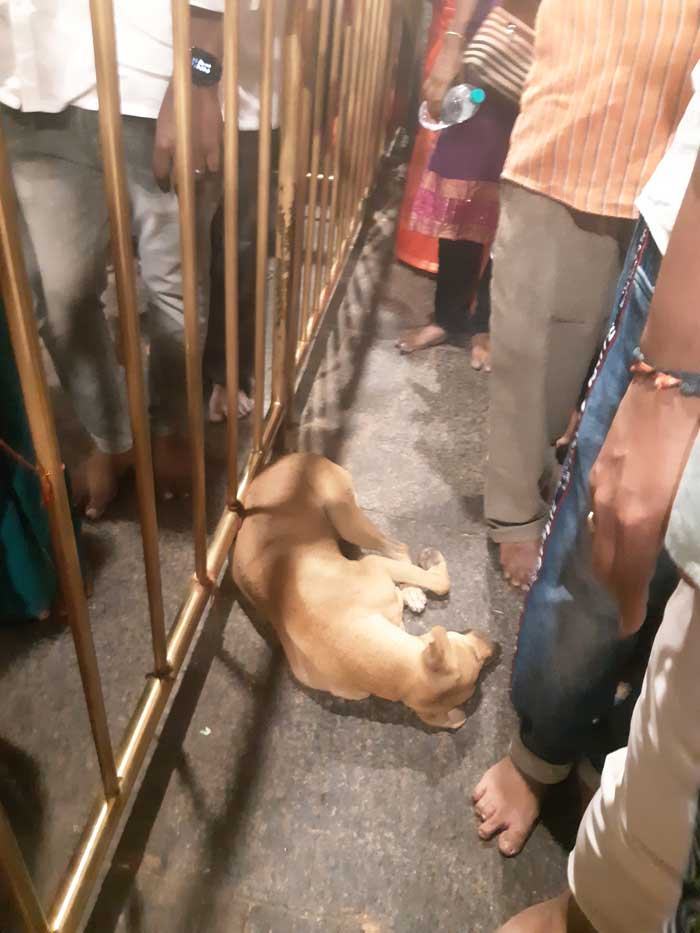
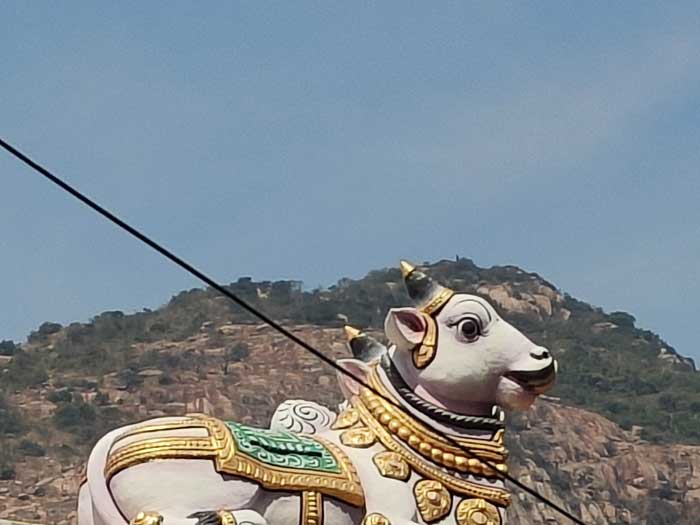
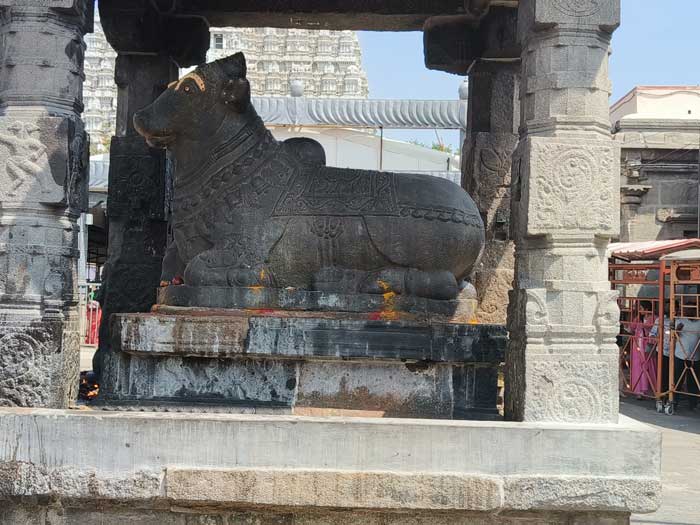
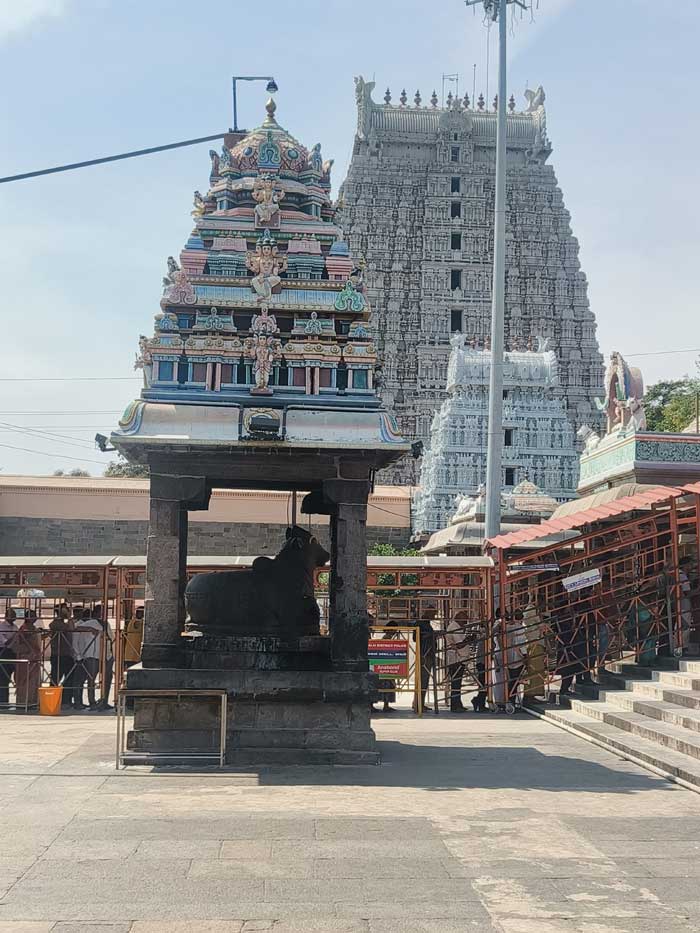
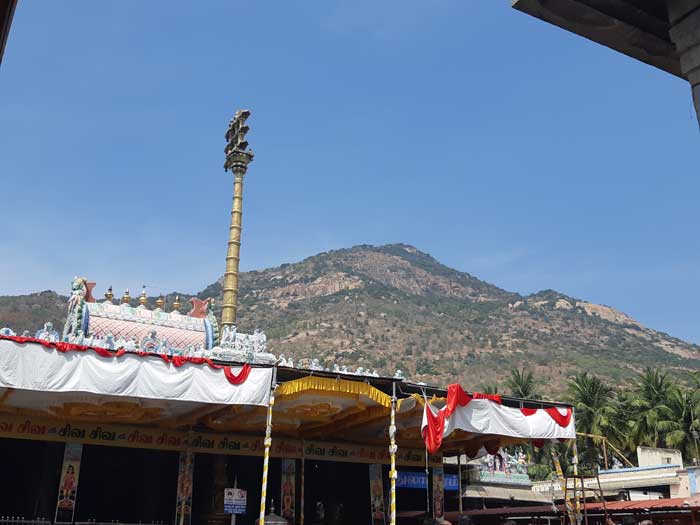
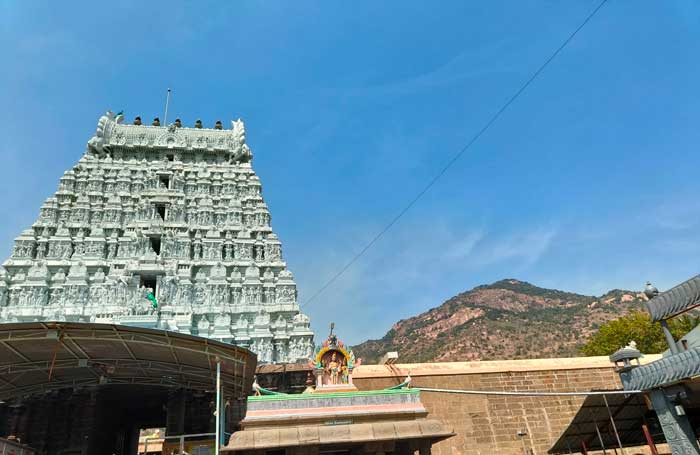
My husband and I had to attend a two-day wedding function at Thiruvannamalai. Our stay at a hotel there was a different experience. The hotel was totally submerged and overflowing with divinity all over. There was a small Ganesha idol at the car parking, and Lord Shiva’s face was engraved on the wall of the corridor through which we had to enter the premises. There were so many idols and pictures of various Gods and Goddesses in the reception and the smoke of the incense sticks added to the divine ambience. The magazines in the reception hall were also spiritual in nature. It was more like a meditation hall than a hotel reception.
We had a good time at the wedding and decided to make use of this trip to have dharshan of Lord Arunachaleshwara. Who wouldn’t wish to see Lord Shiva after being engulfed in the divine ambience at the hotel? After the function ended, we took some rest for a brief period and went to the temple by an auto. The temple was hardly 2 km from our hotel, for which all the auto men demanded Rs 200. On our way to the temple, we witnessed many monkeys and peacocks roaming freely on the streets and the building walls. The houses there had nets on their balconies and windows to safeguard the inmates. There was one house which was completely caged inside the nets right from the compound wall. We also happened to witness a spectacular house with very big garden in which there was a particular tree that had many bats hanging and screeching loudly. “They are all discussing the plan for their hunt tonight”, my husband remarked as I took some photos of the scene. It was a treat to the eye of a nature lover.
As per the convention there, the devotees should enter the temple from the north side and exit by the south side. Accordingly, we went and got the fifty rupees tickets around 11:00 am. There were only two lines, one for free dharshan and the other for Rs.50 ticket. The temple is quite big, and one can see the hill towering above the tall temple *gopuram as one is moving around the premises. In the beginning, we were moving quite fast among the partitions that were set up, then slowed down as we neared the *dwajasthambam area. We had to stop and wait at many places, during when I took photos of the temple gopuram and the towering hill behind it. I also observed that people of all ages and various countries had come to have dharshan of Lord Shiva. There was also a young mother with her one-month-old baby in the queue. As it was an auspicious day for wedding, many couples with their families had come there to get married in front of Lord Arunachaleshwara, which in turn added to the crowd. Then, I started singing the Shivapuranam to steer clear of the worldly diversions and to concentrate on the Lord, and also to overcome the tedium of waiting in the long queue.
After singing songs in praise of the lord, I took a small break and couldn’t help listening to the two young men standing in front of me. They looked like friends and were discussing the pillars and the construction of the temple. “Are they civil engineers?”, I wondered as I was eavesdropping on their conversation about the temple construction. At one point, I introduced myself and got to know that they were architects by profession and college mates. I was happy to take part in their intelligent conversation and engage myself as the queue was moving slowly.
Once we crossed the Dwajasthambam and entered the main gopuram, there were some confusions and crowd pulling. Some people wanted to change the line that they were standing in and others at the back wanted to go past us. As I had already made friends with the two young men in front of me and my husband at my back, I was safeguarded from all these troubles. There were drinking water dispensers kept near us along the line and also many giant fans around us, which saved our day from the frustration of thirst and sweat. I was thanking the divine grace of God and the temple authorities in my heart, while my better half was wondering loudly as why the queue is not moving as the door of the main deity is not closed. “May be some special dharshan is being arranged for some ‘privileged’ people”, he lamented.
Inside the main gopuram, we saw many *homakundas with *agni for the marriage rituals. As we were talking about the beautiful sculpture works there and moving on, suddenly the queue stopped again and many people in front of us sat on the floor. It was 12:30 pm by then. We couldn’t help but let out a sigh. The guy in front of me let out a cry that we all have been trapped. I too felt a bit dejected and disappointed as we were unsure of when the queue will start to move again. I was worried about completing the dharshan and having our lunch on time. At that moment of frustration and dejection, I was reminded of the poem “The Eternal Wait of Nandi” by Prakash Rajachandran of Chennai Poets’ Circle. I read the poem (stored in my phone) again to calm down my nerves and hold on to the divine spirit. I also showed the poem to my husband and the two new friends.
The Eternal Wait of Nandi
By Prakash Rajachandran (CPC)
Nandi does not wait out of impatience.
He waits the way the mountain waits for dawn.
Eyes fixed on Shiva—not to see Him,
but to become ready for Him.
Centuries pass. Empires rise and crumble.
Still Nandi sits, unmoving,
because devotion is not an act with an end date—
it is a posture of the soul.
He faces the sanctum, not seeking entry.
For he knows:
those who rush inside often miss the Presence,
while those who wait are already within.
Nandi teaches a quiet dharma:
Strength kneels.
Power listens.
Action bows before awareness.
His stillness is not passivity.
It is disciplined alertness—
the readiness to move the instant the cosmos exhales a command.
In yogic truth, Nandi is the breath held gently between inhalation and exhalation.
In bhakti, he is faith without demand.
In life, he is patience purified of expectation.
To sit like Nandi
is to trust that Shiva will not arrive late—
only when we are finally still enough to receive Him.
I was able to witness a sparkling divine smile on their faces once they finished reading the poem, which in turn raised my spirits for somehow relieving their troubled mind. With our rejuvenated mood, we were waiting patiently. After some time, the queue started to move again.
We were moving slowly and steadily in two partitioned lines along the wall of the *garbagriha towards the main deity. There was one North Indian family in the line beside us, and our line was near the wall. As there were many sculptures and protrusions along the garbagriha wall and the path was narrow, I walked slowly and carefully looking down, while giving instructions to my husband behind so that we don’t get our pinky toe hurt. I forgot all about the Lord and was worried about getting our toe hurt.
I was taking slow and steady steps with full attention, but suddenly what did I witness???!!!! I saw a big, grown Indian street dog sleeping on our path inside the partition!!! His mouth was only a few inches away from the garbagriha wall. I let out a cry in panic “Ahh!!! Amma!!!”, to which the North Indian uncle who was in the safe line next to ours said “It is not amma ma. It is Nayu.” ( Meaning – It is not mother mam. It is a dog). I was thinking, “Hey!!! Handsome Hindi uncle!!! Are you teaching me my mother tongue when I am panicking???!!!”
Nevertheless, his funny comment lightened the situation, and I had to quickly make up my mind to cross this problem as I had no other choice. I can’t turn back and run away because there were hundreds of people tightly packed in the enclosure. I had to somehow face this and cross it successfully. Moreover, I was wearing a saree that day and was blaming myself for choosing it for travel. Then, praying to God with all sincerity that I don’t make any error, I tucked the saree pallu and lifted the saree up till my calf muscles so that not even my saree fringes disturb the sleeping doggy. I had to gulp down my panic, muster up courage, ignore my pounding heart, use my brain, disregard what people around might say or think, keep my mouth shut, concentrate on my way and cross the hurdle carefully.
Finally!!! I did it and immediately turned around to look at my better half as he too should come out unscathed. When he saw me, he made a facial gesture indicating me to release my lifted saree to which I immediately complied. He has his own worries apart from the fear of the dog. He tied his dhoti up and crossed the dog in a calm and composed way without much ado.
I couldn’t help but think of Thirukural by Thiruvalluvar
“??????? ?????????? ????????? ????????
?????? ??????? ????.”
Meaning : "Those who reach the feet of the Lord will swim the vast ocean of births; those who do not, will not swim it."
Yes!!! Who would have expected a full grown doggy to sleep on the path towards the main deity near the outer wall of the garbagriha??!!! Crossing the sleeping doggy was like crossing an ocean to me. Here, I had to cross this ocean to have His dharshan. I controlled my surging emotions to have the dharshan of Lord Arunachaleshwara with a calm mind. As soon as we crossed the sleeping canine, the queue moved fast and in no time we had the dharshan. We stood there for a few seconds and got a good view of the Lord. It was like a cool rain on a burning forest.
As soon as we came out, all kinds of emotions and thoughts surged back. Initially, I couldn’t help getting angry with the temple authorities for failing to prevent the dog from entering the temple premises. But what is the use of getting angry and spoiling one’s peace of mind after having a good dharshan of the Lord? Everything happens only as per the will of God. May be the universe is trying to give me some message. Was the doggy actually Lord Bhairava acting as the assistant of Nandhigeshwara and lying there as a speed breaker to control the pushing and pulling instincts of the humans waiting in the queue? Or was he trying to teach us the lesson of complete surrender to the almighty? I have heard that when the saints are immersed in devotion and perform penance in forests, panchabuthas (earth, water, fire, wind and sky) are afraid to disturb them. For example, it will rain in all the other places, but not on the saint. Similarly, the doggy was happily doing savasana on the narrow path in a crowded area with complete trust, and the hundreds of people crossing were afraid of disturbing him. Strange are the ways of God in delivering the lessons of life, but is highly potent!!!
When we completely trust God and do the needful without any ego, we become the very hands of God in protecting and nurturing our fellow beings. If detaching from the worldly affairs and immersing oneself in spirituality is one way, then executing one’s duty with detachment (Nishkama Karma) is another way to merge with God. Delivering our duties with such an attitude will certainly have a cascading effect on all the beings around us. If someone from the temple administration takes action for protecting the doggy and giving it a safe place to live, and hence safeguarding the devotees as well to have a peaceful dharshan, then he will be the very example of “Deivam Manushya Rupena” (God in human form).
Footnotes:
Gopuram – A monumental entrance tower, usually ornate, at the entrance of a Hindu temple, in the architecture of South India.
Dwajasthambam – A flagpole erected in the Hindu temple before the sanctum where people prostrate.
Homakunda – A pit in the ground where sacrificial fire is maintained.
Agni – Sacrificial fire for holy rituals.
Garbagriha – The chamber where the temple's main deity is established in a Hindu temple.
P.S.Sowmya has completed her B.A. English literature in Meenakshi College for Women, M.A. in J. B. A. S College for Women and MPhil. in University of Madras. She has worked as a Lecturer (for a brief period), Language Editor and an Instructional Designer. She is a member of Chennai Poet’s Circle (CPC) and her poems are regularly published in the annual anthology of CPC “Efflorescence". A couple of her articles are published in a famous website ( paramparaa.in) and in an e-magazine "Tatvamasi" circulated among a close network of interested people. She is interested in reading, writing, gardening, painting and listening to music. She is a lover of Nature.
Dr. Viyatprajna Acharya
An unusual silence hung inside the house. Ankur and Manasi sat apart on the sofa in their drawing room, deliberately avoiding each other’s eyes. On two chairs opposite them sat Aradhana and Praveen, their faces filled with questions. All four were silent.
Manasi brought four cups of tea and placed them on the table. She had already sent her two children to the neighbour’s house to play. Aradhana and Praveen were not their blood relatives, but the bond between them was one of the hearts. During every festival, the two families celebrated together, and once in a while they even travelled to distant places as a group.
Living far away in Mumbai, the two Odia families had first met at an Odisha Day get-together. Now it felt as if they had known each other for ages.
Everyone lifted their tea cups and took small sips. Ankur held his cup near his lips but sat like a stone. Both Ankur and Praveen worked in an IT firm. Manasi had earlier worked in the hospitality department of a hotel, but after the children were born and with hardly any help from family, she left her job to look after the home. Aradhana worked as a teacher in a nearby school. They had one daughter who had just passed Class 10 and was now studying in Class 11.
Though Aradhana and Praveen were slightly older than Ankura and Manasi, the friendship between them was deep.
“There's something we need to discuss,” Ankur had only said this much to Praveen over the phone before abruptly hanging up.
So, Aradhana and Praveen had come immediately. But now nobody was speaking.
Suddenly, like a bolt of lightning, Ankur said,
“I need a divorce.”
Everyone froze. A heavy silence filled the room. Had they been called just to hear this? Nothing seemed wrong between them before. Why this sudden decision?
Breaking the silence, Aradhana said sharply,
“Chhi! Don’t utter such inauspicious words. Which couple doesn’t argue from time to time? What are you saying?”
This time Manasi’s patience broke. Tears first formed into large drops and then began to flow like a flood.
“I also cannot live with this man anymore,” she said through sobs. “For the last five months, I don’t know what has happened to him. He keeps getting angry with me for no reason. I stay home all day, look after the children, manage the house. What wrong have I done? No more! I’ll take a divorce too. You keep both children with you. I’ll rebuild my career and my life. Staying with you has ruined my life.”
Ankur snapped,
“See, Bhauja (Odia term for Bhabhi)? How easily she agreed to divorce me! She’s already ready to start a new life.”
Praveen intervened firmly.
“First both of you sit quietly. If you were going to fight like this, why did you call us? Tell me honestly, Ankur — are you really getting irritated all the time? Is Manasi not taking care of you? Any problem with food, with the children?”
Ankur lowered his head.
“No… everything is fine on that front.”
“Then what is the problem?” Praveen asked.
“You don’t know her,” Ankur said bitterly. “After I leave for office, what all goes on here! I slog like a bull day and night, and here at home some drama is happening behind my back that you know nothing about.”
Manasi wiped her tears and stood up in shock.
“What drama? Let me hear it. I’m exhausted working all day and if my kitty party happens once a month, that too you can’t tolerate?”
“The kitty party doesn’t bother me,” Ankur replied. “But the children told me everything.”
“What did the children say? And you’re using five-seven-year-old kids as spies against me? Shame!”
Manasi collapsed back onto the sofa.
“I’ve heard it myself too,” Ankur continued. “On Sunday afternoons you sneak to the balcony and talk softly on the phone. You think I’m sleeping, but I’m not. I’ve heard how sweetly you talk before cutting the call.”
“Oh really?” Manasi said angrily. “What else have your Sherlock Holmes told you about me?”
“You put the kids to sleep and then go to the other room with your phone,” Ankur said. “Calls keep coming again and again. Sometimes sweet talks, sometimes even scolding.”
Now tears rolled down Ankur’s cheeks.
“I had given you my whole life,” he said in a broken voice. “But you didn’t value my love.”
“Take whatever you want and leave this house,” he added bitterly. “Otherwise, one day you and your lover might even kill me. Leave my children with me. I will take care of them.”
Aradhana turned sternly to Manasi.
“What is all this I’m hearing? Is it true?”
The tears in Manasi’s eyes suddenly stopped. Instead, sparks of anger flashed.
“Oh really? You know my phone password. Check it and tell me — which one of them is my lover?”
Ankur replied,
“Do you think I’m a fool? The call log is always clean — only calls to your parents, sister, or my mother.”
Manasi suddenly smiled.
Everyone was surprised. What game was she playing now?
“So, what else did you see in the call log?” she asked.
“Nothing,” Ankur said. “Just random calls.”
Manasi held out her phone.
“Look properly again.”
“Nothing there,” Ankur repeated.
Manasi burst out,
“Those are not random calls. Those are spam calls! To avoid them, you have given my number everywhere — malls, banks, jewellery stores, saree shops, Swiggy, Zomato — everywhere. And now day and night, especially in the afternoon when I try to rest, these calls keep torturing me!”
She continued,
“Earlier I used to get angry and scold them badly. Then I started blocking numbers, even installed Truecaller app. But if you block one number, four more appear like “Raktabirya” demons from another number.
Once I went to a jewellery store in the afternoon. There were hardly any customers and only a few sales girls. I thought — ah, they too must have learnt to take afternoon nap like us Odias. When I went to the second floor, I saw two or three young girls sitting with lists of phone numbers, calling one after another — the very spam calls we complain about.
After hearing so many abuses from customers, their faces had dried up. They all looked like wilted plants who were bound by their duties. I felt so sad seeing them. Who knows whether they had even eaten properly? But their stomachs and hearts were already filled with people’s insults — all just to earn a living!
Then one kind customer spoke a few sweet words to them, and I saw a small smile bloom on one girl’s face. That day I decided — next time such a call comes, instead of getting angry, I will chat with them a little. Who knows — maybe someone’s heart will feel lighter.”
Just then a spam call from a jewellery store rang.
Manasi answered and switched on the speaker.
A young woman’s sweet voice came through,
“Madam, I’m calling from Tyra Jewellery. Am I speaking with Manasi Dash Madam?”
“Yes, darling,” Manasi replied cheerfully.
The girl continued excitedly, explaining a birthday offer and different schemes.
Manasi interrupted playfully,
“Wow! Such a wonderful offer! A nice diamond necklace will come within one and a half lakh, right?”
“Yes madam, very beautiful designs are available.”
Manasi lowered her voice mischievously.
“For that I’ll have to make the night a little romantic — just to bring my husband to your shop. Buying is still not guaranteed!”
The girl giggled aloud.
“Leave that,” Manasi said. “Have you had lunch?”
“Where, madam!” the girl sighed. “The maid didn’t come today. Feeding everyone at home and then…”
After chatting informally for five minutes, the girl said warmly,
“Madam, talking to you made my heart so light. The last ten calls only gave me scoldings. My name is Shilpi. If you ever visit the store, please meet me — I’ll surely arrange a special discount.”
The call ended.
Immediately another call came — this time from a bank.
Manasi again put it on speaker and answered dramatically,
“Helloooo…”
A young man said,
“Am I speaking with Manasi ji?”
Manasi replied,
“Tell me — what would you like? A loan, credit card, or overdraft?”
The boy was stunned.
In a whisper he told his colleague,
“Arre, what’s this? She’s offering us a loan!”
Then he continued laughing,
“Madam, actually we had a credit card offer for you.”
“Credit?” Manasi said stylishly. “That’s for small people. I’m offering you a loan! Haven’t you heard the “Charvak” philosophy — Yavat jivet sukham jivet, rinam kritva ghritam pibet!”
“No charges, madam!” he insisted.
“Shall take it in the next life,” Manasi replied mock-angrily. “First you take a loan from me!” Manasi said this in a stylish diva tone and acted accordingly too.
The boys burst into laughter and hung up.
When Manasi finished, the other three were staring at her in amazement.
She laughed lightly.
“These are the lovers I talk sweetly with. Sometimes they feel happy, sometimes I get some entertainment.”
Aradhana clapped with delight.
“Yaar, what talent! You should be an RJ — a radio jockey! Even a stand-up comedian. Don’t waste your talent!”
Ankur sat with his head lowered in embarrassment.
Manasi teased,
“Who will manage this foolish husband and his children then? But after so many years at least I heard from my foolish man that I am his entire world. Full certificate! You two are witnesses.”
Then she turned to Ankur and said,
“Of course, this introvert husband will never say sorry. He didn’t even feel like asking me once! Thank God you didn’t come with a lawyer or tell outsiders.”
Ankur simply sat with a guilty look.
Just then her phone rang again.
She handed it to him.
“Here — another lover of mine from Bandhan Bank. He’ll sweetly offer you a loan or OD. Don’t cut the call — if you do, he’ll call six more times.”
Everyone burst into laughter.
At that moment the children came jumping back from the neighbour’s house.
“Ma, we’re hungry!”
Manasi winked and said,
“Today Papa will take us to a restaurant. Right?”
Everyone laughed again.
Praveen suddenly remembered something.
“Oh no! In the tension I left the pot of rasagolas in the car. Come Ankur, let’s bring it. Today is Rasagola Day — when Lord Jagannath pacifies Goddess Lakshmi with rasagolas. You too pacify Manasi with rasagolas. And yes, of course you have to take us to a restaurant as a penalty.”
“Madhurena samapayet” — let everything end with sweetness.
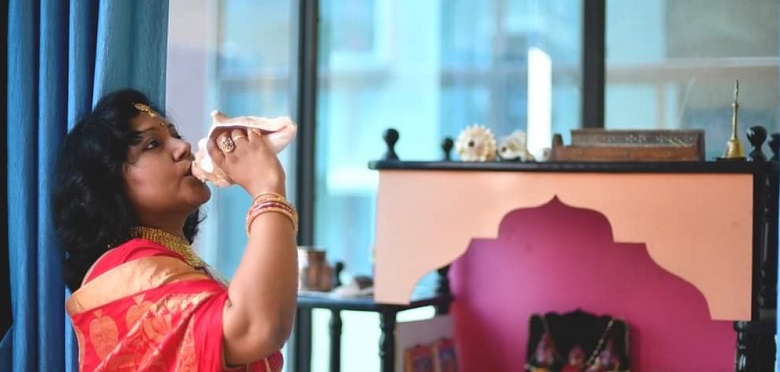
Dr. Viyatprajna Acharya is a Professor of Biochemistry at KIMS Medical College, who writes trilingually in Odia, English and Hindi. She is an art lover and her write-ups are basically bent towards social reforms.
T. V. Sreekumar
June 9th 2023. The date is etched in my mind as that day is the beginning of the turning point in my life. I, Smrithi, with a PG degree in Material Science, was called for an interview at one of the prestigious universities in the country. My passion for teaching and research being uppermost I wished and prayed to get selected. Along with my dad we reached the university town a day earlier and overcoming the language was a big problem. With my knowledge of basic Hindi, we managed to some extent and finally I was in front of the selection board.
A panel of three in suit, tie and what not and I in a simple saree, did put me down a bit. The youngest one in the panel shot the first question
“Smrithi T. S”?
“Yes sir”
“What is the meaning of Smrithi?”
That was least expected and took me a second to regain my presence of mind. I had to recall the day sitting on my dad’s lap as a young school girl and he explaining to me the meaning of my name. Fortunately, all that he told me I could recollect.
“Sir it is memory or recollection but in a wider sense it is the religious laws and teachings”
“That’s enlightening for we people, who know only science” and all of them laughed together.
Was the board pulling my leg? That thought made me sad. Coming all the way from south just to explain my name.
The eldest person started talking
“Seeing your resume, we dare not ask you any questions as you are a topper throughout and your PG project is indeed unique. Tell us what led you into it”?
“Sir, I was curious about ceramic bonding right from an early stage of my Post Graduation and that is what led me into it”
“We are very impressed and we are glad to select you. You may join before the end of the month.”
I may be the first person in history selected for explaining my name, was my thought. That was the beginning of my career and I did join before the end of the month.
My work was very interesting as I was into my favourite field of science and building up that interest in students was a challenge. I succeeded to some extent. A few months into my work an opportunity to do research part time came up and I happily opted for it even though the work load was more. It was at that time I got closer to Rajesh who was an Asst. Prof and the young man who had interviewed me. He was assigned to be my guide and it was discussions and his directions which kept me glued to the books in the library.
Rajesh was a very pleasing person and also hailed from my state which made communication comfortable. I was passionate about my thesis and also struck a balance with my regular classes. One day in the canteen Rajesh was seated in a corner alone when I entered. He called me over and we started talking about our family and other things. He happened to be the only child of his parents just like me. The coffee session became regular and I jokingly named it “Coffee with Rajesh”.
One day over coffee I asked him
“Why did you ask the meaning of my name during interview”?
“It was not planned but your simplicity provoked me,” Rajesh said.
With my classes and project moving on a serious note I should confess that a liking towards Rajesh started creeping into me. I never gave any indication but kept the feelings deep within.
That weekday while discussing a complicated part of our thesis he abruptly started staring at my eyes and then suddenly it came out with,
“I like you very much”
I did not know what to say but just smiled at him
Days passed by and we were two love birds enjoying every moment of it.
“We should get married,” he said one day
I nodded and added “With my parents’ consent.”
“Certainly, but I have suggestion. Of late we see a lot of separations in arranged and love marriages. To avoid that why don’t we live together for a while? I will never leave you but it is for your benefit that I am suggesting it.”
That came as a shock. How can I stay with a man without tying the knot?
I told him that it will not be possible as my parents will not agree to it at any cost and much more, if anything adverse happens what is the value of a girl later who lived with a man without marrying him?
He repeated that it was to my advantage as he will never back off and you have the option of rejecting me if you find any mismatch.
I asked for some time to think about it. Mother is certain to put her foot down. Dad being more than a friend I can try to convince him and promise him that I will not bring any disgrace to the family.
Informed Rajesh that I was going home and will keep in touch with him.
Parents happy at my unannounced visit and next day I asked my dad to accompany me for shopping. Took him to a restaurant and under condition ‘Not a word to Mother,’ I told him the whole story.
It took him some time for the reality to sink in and in broken words said,
“Is it right, is it proper? What if…...?”
“Dad, I will handle it. It is not going to fail as we are deeply in love and he is suggesting it for my sake”.
Even though Dad was sceptical he never said no.
A week later we started living together.
Bought a few utensils for cooking and a friend gave a gas cylinder. Cooking was fun with the milk boiling over, vegetables getting burnt, and some dishes spicy to the extreme. With YouTube as our guide, within a day or two cooking improved. For us academics was easier than cooking. Anyhow it was fun and laughter at our ignorance and blunders.
The initial days were bliss. A few days into staying together Rajesh said,
“Why don’t we sleep together?”
“No dear, I value the nuptial knot close to my life”
“We can take precautions”
“Please Rajesh.”
Rajesh was understanding and never insisted.
We were living together but something was missing. A suffocation, a vacuum started creeping in and we started talking less and less. We knew that something was amiss.
Exactly nine days later Rajesh said,
“Let’s get married. This is not going to work for us”
I looked at him straight into eyes as he did earlier and said
“Repeat it” and he repeated it.
“Sensible boy,” I said and hugged him.
With our parents’ consent we got married in a simple ceremony and…
“Happy days are here again”
T. V. Sreekumar is a retired Engineer stationed at Pondicherry with a passion for writing. He was a blogger with Sulekha for over fifteen years and a regular contributor writing under the name SuchisreeSreekumar.
Some of his stories were published in Women's Era. “THE HINDU” had also published some of his writings on its Open Page..
Bankim Chandra Tola

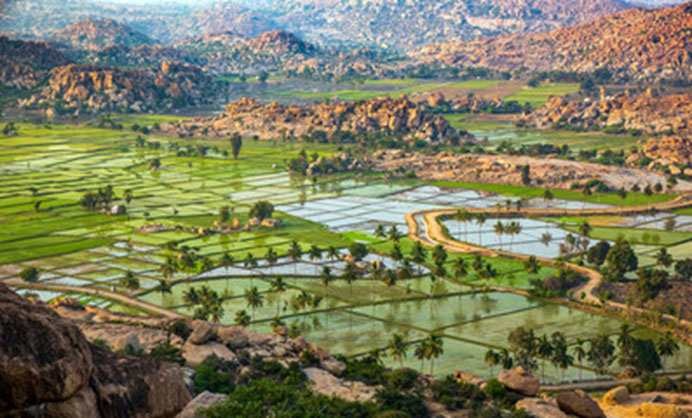
(Image of identical farm taken from net)
“Yaahaan ka maalik kaun hai?” (Who is the owner here? – Asking this question a middle aged Sardarji with a long bag hanging from his shoulder entered my office.
I was then working as Manager, DAV Farm in Rourkela. A few months back it was not the DAV Farm; just an abandoned fallow land covered with thorny bushes, hillocks, dilapidated huts of lepers, since shifted elsewhere under rehabilitation programme of the state Government, a jungle of wild trees, a large pond and two wells lying just beside a range of hills - allotted to the DAV Trust by the Govt. of Odisha on lease at the behest of Dr. A.N. Khosla, Ex Governor of Odisha, for establishing a Polytechnic for women.
Dr. Khosla, who was then the Vice President of DAV Trust soon got the building for the institute and residential quarters for staff constructed with the help of a retired Chief Engineer of Odisha, on a portion of that land and opened it in the name of his wife as Sushilavati Khosla DAV Polytechnic for women. Perhaps at that time, he might have thought of converting the remaining portion of the land to an agricultural farm for generating some income at least to meet a portion of the recurring expenses of the Institute. So, to translate his idea into action, he requested Govt. of Odisha to engage one expert in Agriculture. Thus I was deputed from the Department of Agriculture until further orders. Task being uphill, I as a product of OUAT Bhubaneswar, applied my technical knowhow together with my experience gathered during last five years of service in the Department of Agriculture, to survey, reclaim and lay out a farm within two months of taking charge, so that the farm would be ready for growing crops suiting to the landscape, topography and structure and texture of soil in the ensuing Khariff season.
Thus, once an uneven, rocky and bushy land near the foot of hills with scattered stones, hillocks, gullies and furrows smiled brilliantly with lush green crops presenting an exquisite look that attracted the notice of passers-by on the ring road running beside the farm, to halt for a while and see the gorgeous view of the vegetation. Dr. Khosla also on his routine visit was so delighted to see the novel transformation of the abandoned land that he commented, “Young man! you have made it look like a farm in Punjab.” The students and staff of the Polytechnic started calling it as DAV Farm and so the name came to stay for about a decade until the entire land of the farm including the Polytechnic was taken over by the Govt. for some other project.
However, the sudden entry with abrupt questioning of Sardarji on that day, startled me. I asked him cooly to sit down on a chair lying beside my table. But, instead of sitting, he shot back – (in his own language as translated in English), “I haven’t come here to sit, tell me are you the owner here?”
From his well-built physique donned with saffron attire and serene look, Sardarji seemed to be a learned Yogi. I politely said, “No Maharaj, I am not the owner but only the In-charge of this Farm.”
Before I could ask something, he spoke in a deep yet soothing voice, “Why are you sitting here? Time has come for you to leave this place. Something big and bright is waiting for you.”
At this, I looked straight into his eyes and said, “What do you mean? I have just taken up the job of developing this fallow landscape into a farm as per instruction of the DAV Trust. How and where can I go leaving the job incomplete and why?”
Sardarji said, “That I don’t know, but you are due to move out. Just show me your right palm.”
At this, several thrilling and dreadful incidents of hypnotizing and deceiving simple citizens in the name of doing good by wizards, frauds roving in the guise of monks flashed in my mind and I said, “Why? I do not show my hand to anybody unknown. First of all, tell me who are you and what for you have come here?”
Ignoring my query he said, “Okay then, give me a piece of paper and a pen.”.
Sardarji’s importunity seemed overbearing, yet I had no intent to insult him. Without asking any question, I handed over a sheet of white paper and a pen to him mechanically.
He scribbled something on that paper and handed over to me after folding it nicely. Then he asked me to hold it in my fist and think of a number between one to nine.
For a moment I was stupefied but coming back to senses I thought of the number 7 holding the folded paper in my right fist and waited for the next arrow to be shot at me.
Sardarji – “If you have already thought of a number, then open the paper and see; if the number you thought, is the same as written thereon, you can also see a date, written just below the number and on that date you will be asked to move out of this place. You may also get an offer for foreign visit.”
I thought what nonsense this stranger is talking about by making an unexpected entry to my office but the curiosity within prodded me to see what he said is right or wrong. So, I unfolded the paper and I was astonished to see the number 7 written thereon and just below it a future date after six months and a few days was written. Then I thought, the number in my mind might be a chance coincidence. I said, “The number is right, may be a coincidence, but why should I take the date written below it as the date of my future movement?”
Sardarji sat down on the chair and looking sharp into my eyes said, “If I say some facts of your life, should you believe then?”
I said, “Okay”.
Sardarji cast a microscopic glance at my face and said, “You come from a very poor family, and you lost your father in childhood. Only for this reason, you couldn’t fulfil your ambition for acquiring desired education. Nevertheless you are meritorious, intelligent and studious. You left no stone unturned to pursue your studies to become a doctor but in vain. Somehow you struggled to come up to this position. Meanwhile, you have married and you have a daughter whose name starts with the letter S. If all that I have said is correct, you have to believe in the date written on that paper.”
My goodness! how this man whom I had never seen in the past, could know all these facts of my life? For a moment I was stunned; I said with a note of surprise, “Yes, what you have said is correct, but how do you know all this when we have never met earlier?”
Sardarji – “Your nature and your work are your identity which is written on your forehead. I just read it when you didn’t like to show me your palm. It is not important who I am and why I am telling all these things to you.”
After a pause Sardarji continued – “Because you are a good human being and honest, God is pleased to tell you something through me; so, I am doing it just as a messenger. At your age when people while away time in merrymaking and enjoying life without caring for others, you have done a lot of good work rendering true service to humanity in your previous assignment. I can visualise – for your good work only you were picked for the present job. This is the beginning; lot more work is to be done by you in future and for that matter you have to move out soon. Now, I would like to caution you about something important. Many obstacles would come on your way, and many people, out of jealousy would always try to create trouble for you. Even some people might go to the extent of attacking you physically and mentally to distract you from your aims and objectives. But they cannot succeed against your strong resolution to accomplish the task assigned with immaculate endeavour. For your safety, keep it in mind, - never lose temper or balance of mind in life, don't let yourself be confused or frightened by some unwelcome and unexpected onslaughts from people around you. Try to avoid these elements and overlook their comments. Yes, one more thing you must remember always and that is - never shave on Saturday and never take non-vegetarian food on Saturday and Monday. Never pass urine facing the Sun. Now, I am giving a gemstone to you; put it on your ring finger with silver and everything will be auspicious for you.” Then he gave me a yellow gemstone.
I said, “Thank you Maharaj. By the by, I am a disciple of my revered Gurudev, Sri Sri Swami Swarupananda Paramahansa Dev from 1957. He is my best spiritual guide, yet I will try to keep in mind everything that you said to me. Would you please tell me how much I have to pay for this gemstone?”
Sardarji, “I am glad to know that you follow the advice of your Gurudev. I do not ask for money for this stone. You have listened to me, that is enough”
The fatherly advice in sweet words of Sardarji impressed me much. My Gurudev also never asks for any help from any one even for his living. He works hard to earn his own living and advises all his disciples not to beg from any person in life for any work. I thought I must give him something, otherwise I shall be feeling guilty for my whole life. I searched my wallet and found twelve rupees there. I paid him that amount and bowing down, I paid obeisance to him.”
Blessing me, he said, “One day I shall come again to see you.” and then he left swiftly.
Days rolled by. I was lost in the maze of duties and responsibilities, yet I didn’t forget to follow certain pertinent advice of Sardarji. Once I tried through various sources to find out whereabouts of that Sardarji but couldn’t find a trace of him anywhere. He also did not come back to see me ever again as he had told me before leaving my place. But all that he said to me came true.
It was mid-1971 and I was awfully busy in supervising inter-culture operation of Khariff crops in the farm. One day, I received a registered letter form a nationalised Bank. As I opened it, I was delighted to see that I had been appointed as Field officer for which I had appeared in an interview three months ago. Surprisingly, the date of my appointment letter was the same date which Sardarji had written on that piece of paper. What a miracle! I thought this could not be a mere coincidence. That was not all. The other part of his forecast also came true by and by.
For joining the Bank job, I was asked to resign from the service of Govt. of Odisha. Without giving a second thought to it, I submitted my resignation letter through DAV Trust. But the letter was not forwarded to the Department of Agriculture of Govt. of Odisha for acceptance. Suddenly one day, Prof. Talwani, the secretary of the Trust came to the Farm and tried to persuade me to withdraw the letter. He said, “Dr. Khosla has sent me purposely to request you to continue here until it is decided by the Board of the DAV Trust to depute you to Germany for one month’s training after which you would be posted in our Delhi office as Technical Director for overseeing all the farms of the Trust numbering about 50, across India. So please withdraw your letter of resignation.”
I was not prepared for this unexpected development, but I was resolute in my decision of leaving State Govt. job for two reasons: one - in addition to better pay package, the job offered to me was from a nationalised bank which is a Govt. of India undertaking and two – unlike State Govt. service, there was ample scope for quick promotions and opportunity of Pan-India movement.
I said politely, “Sir, I have an ambition to do something special in life for which I want to join the Bank. As regards foreign visit, this is not a new opportunity for me. I had earlier declined the prospect of visiting USA for Ph. D. before joining service when the professors of Economics, Chemistry and Entomology of my Alma-Mater separately persuaded me to join PG course in their respective disciplines as I had secured highest marks in these subjects in the University - assuring me of my USA visit for Ph. D. at University’s cost as OUAT, (Odisha University of Agriculture and Technology) Bhubaneswar was then in dire need of qualified faculties.”
Even though foreign visit in those days was a coveted prize for anybody, I was undone and very politely and humbly requested him to convey my refusal to Dr. Khosla with my regards to him for his kindness and requested him to forward my letter of resignation for acceptance by the competent authority of the department of Agriculture, Govt. of Odisha.
Disappointed by my refusal, Prof. Talwani left for Delhi with a remark, “Our Board will miss you.”
Then I thought, how strange; what Sardarji told me six months ago has come true. I felt as if he was the messenger of God for conveying relevant and useful advice to me. I prayed in my heart - thank you, God; give me strength and courage to play a long innings in the game of life.
Bankim Chandra Tola, a retired Banker likes to pass time in travelling, gardening and writing small articles like the one posted here. He is not a writer or poet yet he hangs on with his pursuit of writing small miscellaneous articles for disseminating positive thoughts for better living and love for humanity. Best of luck.
Dr. Rajamouly Katta
Chakravarthy was taking rounds on the premises of his house in the morning. He was recalling the past, the days he spent with his parents. That was his usual recollection during his walk. When he thought of his parents living at the old age home, tears were rolling down his cheeks. One evening, his sons Varun and Tharun came to him to inform him about the Grandparents’ Day celebrations at school. He appreciated the school for the happy event, the rarest tradition the school holds. As his parents were living at the old age home, the news about the grandparents’ day filled his heart with joy like lightning amid the dark clouds.
The school his children were studying appeared for him special and appreciable for its rare celebrations like Grandparents’ Day every year. For the first time in his life, he heard about the event, celebrated every year. He appreciated the school in the heart of his heart.
“Generally Traditional Day, Cultural Day, Parents Day, grandparents’ day and so on are celebrated at school along with national festivals: Independence Day and Republic Day every year…this year on 25th September this year. The school is special as a mark of respect for elderly people like grandparents and great grandparents. It is a happy sign indeed,” Chakravarthy said to himself.
In view of the Grandparents’ Day celebrations, the children studying at school were asked to bring their grandparents to school. They, the grandparents along with parents and children were to watch programs from morning to evening. The special event was that grandparents and grandchildren were to be present participating in the programs together. All the children were instructed to bring their grandparents without fail.
Varun and Tharun were studying in their classes 1 and 3 respectively. With all smiles after school, they came home and informed their parents about Grandparents’ Day on 25th September that year.
The children were in school every day. They often saw the grandparents of some of their friends coming to school to drop their grandchildren in the morning and picking them up in the evening after school. They watched their grandparents speaking to them affectionately. It was a pleasant sight for them. They felt they were deprived of having the delightful moments of chit-chatting with their grandparents.
The children of Chakravarthy, Varun and Tharun, did not know their grandparents came and picked them up after school. Now and then they asked their father about their grandparents. They were children of a tender age and so they were not particular about the matter. That day it became compulsory for them to think about grandparents as they were very particular about them on Grandparents’ Day.
“Father, our grandparents must be with us on Grandparents’ Day,” said the children.
“You needn’t ask me about that… I made up my mind to bring your grandparents to your school on the day,” said Chakravarthy.
Children went to school and Chakravarthy went to his office. He was at work. He always thought of bringing his parents as per his promise given to his children.
After work, Chakravarthy came back to his house in the evening. He sat on a sofa, relaxing, and started to think of the way of bringing his parents to Grandparents’ Day at school. He was with his children to chit-chat.
“Sriram is lucky to have his grandparents. They are coming to school to pick up their grandson and go back home in the evening,” said his son Tharun.
“Sriram’s grandparents are here. That is why they are coming to pick him,” Chakravarthy.
“What about our grandparents?” said another son, Varun.
“We go to them and bring them here,” said Chakravarthy.
“We asked our mother about our grandparents,” said Varun and Tharun.
“What did she say?” said Chakravarthy.
“Our mother says, ‘They went on their pilgrimage as they are old, praying to gods and goddesses everyday… The pilgrim center is at a distant place. It is a custom for them to live at the pilgrim center peacefully and spend their time happily’… She doesn’t speak further,” said the children.
“Father, when will they come back to us?” said Tharun.
“Dear son… they come soon,” said Chakravarthy.
Meanwhile his wife, Mrudula came there with a chair to sit on and speak to them. She joined their conversation.
“What’re your sons saying to you, my dear hubby?” said Mrudula.
“They are talking about their school and their teachers,” said Chakravarthy.
“No…Mummy…We’re talking about our grandparents,” said her sons, Varun and Tharun.
“My dear children! You can go to the premises and play throw ball,” said Mrudula.
The children went to the premises of the house for their play. They started playing happily. After some time, Varun said to Tharun, “All school children come with their grandparents on Grandparents’ Day in school.”
“Yes,’ said Tharun.
Chakravarthy and Mrudula were busy speaking about Grandparents’ Day. It was like a debate on a topic. Then he said to his wife,
“Why do we disappoint our children? They feel disappointed when they don’t find grandparents with them on the Grandparents’ Day.”
“What do you think in this matter?” said Mrudula.
“So far, I have not decided anything…,” said Chakravarthy.
“Let us tell something and divert the attention of the children. We can make them forget the idea of our children going to school with their grandparents on the day. When they stay at a distant place how can they come here for the event?” said Mrudula.
“How can we hurt their tender hearts, Mrudula?” said Chakravarthy.
“Keep quiet…I look after the matter…Don’t think of it seriously,” said Mrudula.
“Day-by-day, our children are growing to know what the fact is. We cannot bluff…They are taking about the grand parents of other children to pick them up in the evening,” said Chakravarthy.
“The school has undertaken a senseless program. When grandparents are in Delhi or in California, will they come here to participate in the event?” said Mrudula.
“We should not think of alternatives…Think of making our children happy,’ said Chakravarthy.
“We think of it later…We have time to think of it,” said Mrudula.
The children were playing busily. Mrudula called them back to have snacks and juice in the evening. They came back and joined them inside the house. The children had snacks and juice. Later they did school homework. Later they had dinner and went to bed. Tharun asked Mrudula to tell stories.
“I don’t have any story to tell you now… You can sleep,” said Mrudula to Tharun.
“I want my grandparents at least on Grandparents’ Day. All come with their grandparents,” said Varun.
“Yes, all come with their grandparents positively to school. I’m sure…,” said Tharun.
“We bring the grandparents…They will come, my dear sons… Don’t worry… Sleep well,” said Chakravarthy to children convincingly.
Then the children slept happily. Mrudula started speaking to Chakravarthy.
“You promised to bring your parents and please your children, how do you bring them?” said Mrudula.
“We’ve to go to old age home and bring my parents enabling them to participate in the Grandparents’ Day celebrations,” said Chakravarthy.
“You can go to them and bring them here,’ said Mrudula.
“It is your responsibility to bring them here since you are responsible for their stay at the old age home… Don’t forget it… You think that they will forget what happened in the past… Time has passed…Do you say that they will forget it in course of time?” said Chakravarthy.
“Did I ask them to stay at the old age home…? They went to stay there on their own,” said Mrudula.
“It is you alone you made them stay at the old age home,” said Chakravarthy.
Then there was no response from Mrudula. She wanted to ask him why he had kept silent. She, however, did not ask him the question. She turned her face to that side. She fell into deep thoughts. She questioned herself to answer them.
“I stopped to speak to your parents long ago… How can I speak to them?”
“I am to admit that I have hurt them by my abuses. How can I approach and ask them to come here to be on Grandparents’ Day at school?”
“Your friends, the mothers of your children’s friends bring their in-laws to school. Will it not be insulting to me?
“It is a prestige question! All of them stop speaking to me closely. They stop to respect me. Is it not a prestige question to be posed to me?”
“All mothers should not pose before me. Do I let them pose before me?”
Mrudula’s thought process went on in her mind with the questions one after the other until she slept at last.
The next morning Mrudula went to school to drop her children. The children went to their respective classrooms. Then all female parents were to talk for a while.
“The Grandparents’ Day celebrations are coming near,” said Mrudula to fellow female parents.
“My in-laws staying elsewhere are surely coming to participate in the celebrations,” said they in one voice.
“My in-laws are also coming…,” said Mrudula.
Grandparents’ Day was drawing near. Chakravarthy got ready to bring his parents at old age home, asking his wife Mrudula to follow him. They, with their children, went to his parents staying at old age home.
The grandparents saw their son, daughter-in-law and grandchildren were happy saying they had come to see them. Their happiness knew no bounds. They enquired about their well-being.
“Your grandchildren, Varun and Tharun, want you to participate in Grandparents’ Day celebrations at school along with you. They are going to show some exhibits,” said Chakravarthy.
“O! My grandsons, dear Varun and Tharun are doing wonders…They are gems of gems. I’m happy for their wonders,” said the grandfather with all smiles.
“My grandsons are doing great wonders… I know that they do great wonders…no doubt about it. They would surprise me I thought,” said the grandmother.
Then all were in smiles. The grandparents came to participate in the celebrations happily.
… … … … …
Years passed as if time were in its fast fleet to bring back the days when Varun and Tharun became employees in big firms. They married the matches of their choice one after the other. The daughters-in-law were very clever and so they brought fat dowries in their marriages. Their fathers-in-law, moreover, presented magnificent buildings for them to live luxuriously and lavishly.
All were together after their marriages for some time. One day all of them were speaking in an intimate way.
“We brought up our sons very fondly … People used to say that we were model parents…Our sons never knew any problems in their student career… Now they are doing their high jobs,” thinking so Mrudula opened her conversation with their sons,
“Now time has come for us to live together in a big building as a large family, sharing all kinds of family pleasures. We live with new daughters-in-law… Ours is a model family…ideal big family.”
“Our sons love to live with us, their beloved parents,” said Chakravarthy.
“Most welcome, mother and father, but there is a custom for old parents to live at a pilgrim center, worshipping gods and goddesses. You love your life there very much,” said Varun and Tharun.
“Is it the old age home? We hope it is so in other words,” said the parents.
There was pin-drop silence. All were busy thinking, but no word was heard for a while.
Their new daughters-in-law, Nikhita and Poojita sitting nearby, were looking at each other with feelings of their own. They thought of speaking to their in-laws without hurting them. They thought that they were newly married, and so they needed privacy.
“We welcome you to live with us all together, but we are deprived of privacy,” said Poojita.
“Except that, everything is okay. Otherwise, your wish is our wish,” said Nikhita.
Dr. Rajamouly Katta, M.A., M. Phil., Ph. D., Professor of English by profession and poet, short story writer, novelist, writer, critic and translator by predilection, has to his credit 64 books of all genres and 344 poems, short stories, articles and translations published in journals and anthologies of high repute. He has so far written 3456 poems collected in 18 anthologies, 200 short stories in 9 anthologies, nine novels 18 skits. Creative Craft of Dr. Rajamouly Katta: Sensibilities and Realities is a collection of articles on his works. As a poet, he has won THIRD Place FIVE times in Poetry Contest in India conducted by Metverse Muse rajamoulykatta@gmail.com
ONE OF THE FIRST INDIAN WOMEN TO WRITE IN ENGLISH
Sreechandra Banerjee
Yes, she was one of the first women to write in English. Well, she also wrote in French.
It is on 8th March, each year that we celebrate Women’s Day. So, this March (2026) thought of writing about a little-known poetess of the 19th Century. She was born in the month of March.
At that time, feminine literary voices were not in vogue. Very few Indian women contributed to literature. And she was one of them!
She only lived for 21 years. Yet she embellished the English and French literary world with a rich legacy.
Well, we are talking about the writer and translator Tarulatta Datta, popularly known as Toru Dutt.
Her famous works include - Sita (1881/1882 - posthumous) Ancient Ballads and Legends of Hindustan (1882 – posthumous), A Sheaf Gleaned in French Fields (1876).
Her other famous works, “Our Casuarina Tree’, ‘Lakshman’, ‘The Lotus”, are part of her work ‘Ancient Ballads and Legends of Hindustan’.
Her novel in French “Le journal de Mademoiselle d’Arvers” (1879 – posthumous) is also well known.
One of the trailblazers of Indo-Anglian Literature, Toru Dutt, was born on 4th March 1856 in Rambagan area of Calcutta, to Govind Chandra Dutt and Kshetramoni Dutt (née Mitter).
As says Mr. Nakul Grover, in ‘Limitless Literature’, Toru Dutt was born with a profound literary heritage. Her father Govind Chandra Dutt, (who worked as a Magistrate in Calcutta, now Kolkata) was also a poet and linguist, while her mother Kshetramoni Dutt had translated a religious monograph - “The Blood of Christ” by Andrew Murray from English to Bengali.
She was the youngest of the three children that Govind Chandra and Kshetramoni had.
After her brother Abjie or Abju died, their father wanted to give his daughters the best of education and so travelled to Europe and spent three years in England and one year in France.
Apart from Bengali, she learnt English, French and later she learnt Sanskrit. Apart from Indian mythological tales, she started appreciating great works of English Literature like the epic ‘Paradise Lost’ by John Milton.
Initially tutored by her father and an Indian Christian tutor Babu Shib Chunder Banerjee, Toru later on, in 1872 (or 1871), attended the lecture series” Higher Lectures for Women” at University of Cambridge. As women those days were not entitled to join the University of Cambridge, this opportunity was given to women to access University lectures. It was here that Dutt was drawn to lectures on French Literature by M Bognel.
Her Works: -
Let me start with some of her famous quotes from ‘Our Casuarina Tree’, -
o “"Like a huge Python, winding round and round / The rugged trunk, indented deep with scars".
o "May Love defend thee from Oblivion's curse".
o "Unknown, yet well-known to the eye of faith!".
o “Mine inner vision rose a form sublime, Thy form, O Tree, as in my happy prime. I saw thee, in my own loved native clime.
In this poem, she reminisces her childhood spent with her siblings, beneath the Casuarina tree in their garden residence. This is a poem with a touch of melancholy as she laments the early death of her siblings.
In a sonnet- poem titled ‘Baugmaree’, Dutt elegantly describes the beauty of their garden residence at Rambagan highlighting the verdant greenery, red flowering Seemul trees, mango, tamarind, bamboo trees, and lotus adorned pond. Baugmaree is said to be the garden surrounding their Rambagan residence.
Her literary prowess is well showcased as she seamlessly blended Western literary techniques of Victorian verse, sonnet forms, Romantic poetry etc. to write about nature’s beauty or Indian mythology.
Her noted poem “The Lotus” is in the form a 14 lined sonnet. Here in the first octave (8 lines) the question is raised which is superior – the rose or the lily? In the next sestet, she resolves the dispute by saying that it is the lotus which is superior as lotus combines both the beauty and passion of rose with purity and serenity of lily. This is a Petrarchan or Italian formatted Sonnet named after the 14-th century poet Petrarch.
The imagery in all her works is vivid. In her works on mythology too, the description is vivid and lucid with varied interpretations.
The Literary Voice in Toru Dutt’s Works: -
Dr Priyanka Singla, in her article titled “Some feminist features of Toru Dutt’s poetry” published in March-April 2023 issue of International Journal of Multidisciplinary Research and Growth Evaluation, mentions how Dutt voiced her opinion regarding women empowerment and equality of all.
Says Dr Singla that in the poem ‘Sita’ (based on the epic Ramayana) , “Dutt portrays Sita's strength and resilience:
"She wept a few pale tears,
then set Her young face,
made herself strong.
And bowed her head,
nor in the least Seemed doubtful
or afraid of fate.”
.”
Dr Singla goes on to highlight other aspects of Dutt’s feministic approach. She says that, “In another poem, "The Lotus," Dutt explores the societal expectation for women's behavior. The poem depicts a woman like the lotus flower, who must remain calm and serene, living a life of purity and submission…”
Citing an example of Dutt’s striving for equality – writes Dr Singla: -“Finally, in the poem "Baugmaree," Dutt addresses the theme of equality by depicting the life of a peasant girl. ….
The following lines highlight the message of the poem:
"Shall it then be always so,
That the many toil and sweat,
Turning the whole land to gold,
While the few keep what they get?"
”
It was a time when the farmers and others truly toiled hard, yet could not reap the benefits of their hard work but were exploited.
Toru Dutt died at the tender age of 21 in 1877.
This is my tribute to this great talent who could contribute so much in such a short span of time.
Image, all information and quotes are from the Internet only to which I have no right (Disclaimer).
Copyright Sreechandra Banerjee.
All rights reserved except as noted.
Sreechandra Banerjee is a Chemical Engineer who has worked for many years on prestigious projects. She is also a writer and musician and has published a book titled “Tapestry of Stories” (Publisher “Writers’ Workshop). Many of her short stories, articles, travelogues, poems, etc. have been published by various newspapers and journals like Northern India Patrika (Allahabad), Times of India, etc. Sulekha.com has published one of her short stories (one of the awardees for the month of November 2007 of Sulekha-Penguin Blogprint Alliance Award) in the book: ‘Unwind: A Whirlwind of Writings’.
There are also technical publications (national and international) to her credit, some of which have fetched awards and were included in collector’s editions.
LEAF FROM HISTORY: FROM FARMER’S DAUGHTER TO WARRIOR-LEADER AND MARTYR
Mr Nitish Nivedan Barik
In those days the war was not fought by drones and missiles. It was fought with clashing swords, whistling arrows, thundering cavalry, and the courage of those who dared to stand against overwhelming odds. In the heart of medieval France, when a long and brutal war had pushed the nation to the brink of despair, an unlikely figure emerged, not a trained soldier, not a noble commander, but a simple farmer’s daughter.
Driven by an unshakable faith and a deep love for her homeland, she rose from obscurity to lead armies, inspire a broken people, and change the course of history. This is the story of courage born in the humblest of beginnings, a story that would echo through centuries, turning a young girl into a lasting symbol of national pride. From a humble beginning to becoming a powerful national and religious symbol, her journey is one of the most extraordinary in history.
Joan of Arc, often called the Maid of Orléans, was born in 1412 in a small village in France. She was the daughter of peasant farmers and grew up in a simple rural environment. Unlike many historical figures, Joan never received formal education and could neither read nor write. However, she possessed something far greater, deep faith, compassion, and a strong moral character. People in her village admired her kindness and devotion. She spent much of her time in prayer, cared for the sick, and helped the poor, often putting others before herself.
It is said ,her life took a dramatic turn at the age of 14, when she began to hear voices. Joan believed these voices were messages from saints, guiding her toward a greater purpose. She identified them as Saint Michael, Saint Catherine, and Saint Margaret. These voices, she said, instructed her to help France during one of its darkest periods. At that time, France was caught in the midst of the Hundred Years’ War, a long and exhausting conflict with England. The English, along with their Burgundian allies, had gained control over large parts of France. The rightful king, Charles VII, struggled to maintain his authority, and the nation was filled with fear, division, and uncertainty.
In this moment of crisis, Joan stepped forward with a bold claim that she had been chosen by God to save France. At first, she was dismissed and ridiculed. Military leaders did not take a young peasant girl seriously. Yet Joan remained persistent. When her prediction of a military defeat came true, attitudes began to change. Gradually, she gained attention and was eventually allowed to meet King Charles VII. In a remarkable encounter, Joan identified the king even when he was moving incognito and had disguised himself among others. This strengthened King Charles’s belief in her sincerity. After being examined by religious authorities, who found no fault in her claims, she was given permission to assist the French army.
Joan’s presence brought a new sense of hope and energy. She led troops into battle with courage and determination, much like Rani Lakshmibai of India would do centuries later. Her most famous achievement came in 1429 during the siege of Orléans, where, within about ten days, the French forces, galvanized by her leadership, defeated the English and lifted the siege. Joan then urged the French to press the English during the Loire Campaign, leading to victory at Patay and clearing the way for Charles’s coronation at Reims, which took place with Joan at his side.
Even after being wounded in battle, Joan did not withdraw. She continued to support military campaigns and played a crucial role in restoring French confidence. Her actions not only helped reclaim lost territories but also strengthened the idea of a united France.
In many ways, she contributed to the awakening of French national identity.
However, her journey was not without setbacks. After initial successes, her military campaigns began to face challenges. During one such effort, she was captured by Burgundian forces, who were allied with the English. Instead of being rescued by her own side, she was handed over to the English authorities.
What followed was a deeply unfair trial. Joan was accused of heresy and other charges, including dressing as a man because she wore armor in battle. She was young, uneducated, and had no proper legal support. Despite this, she showed remarkable courage. She answered difficult questions with honesty and intelligence, standing firm in her beliefs even when faced with threats and pressure.
Ultimately, Joan was declared guilty. She was given the chance to deny her visions and beliefs, but she refused to do so. Choosing to remain true to herself, she accepted the consequences. In 1431, when she was hardly 19 years old, Joan of Arc was burned at the stake. Though her life ended tragically, her story did not. In fact, it was only the beginning of her brave legacy. About twenty years after her death, her case was reviewed, and the earlier judgment was overturned. She was declared innocent, and her name was cleared of all accusations.
Centuries later, in 1920, Joan of Arc was canonized as a saint. Today, she is honoured as the patron saint of France and of soldiers. Her life is studied, remembered, and admired across the world, not only for her role in history but for the values she represents. Joan of Arc’s story invites us to reflect on courage, faith, determination, greatness of a feminist warrior and above all national freedom.
How could a young, uneducated girl rise to lead an army? What gave her the strength to stand firm in the face of fear and injustice? These questions make her story deeply engaging and relevant even today.
In the end, Joan of Arc was more than a warrior, she was a symbol of hope and freedom. She showed that true strength comes not from power or status, but from belief and conviction. Her life reminds us that even in the most difficult times, one person’s courage can change the course of history.
Mr Nitish Nivedan Barik hails from Cuttack,Odisha and is a young IT professional working as a Team Lead with Accenture at Bangalore.
Dr. Mrutyunjay Sarangi
The first time we saw Bhuban we refused to believe he was eleven years. He looked so puny, emaciated! But he had a smile which was one in a million. It was like a magic wand touching your heart and filling it with a rare glow.
Yet, in a way, Bhuban had no business smiling like that. At least by all logic his weather-beaten body and ravaged mind should have taken a toll on him. We asked our friend Ranjan and his wife Subhasini where they had got this sample - 'namuna' is the word we used for Bhuban. Both of them laughed, smug with the satisfaction of having acquired a real gem.
- We didn't get him. He literally fell into our home. His father Ramesh, who is from our village, came and dropped him here. It seems Bhuban's mother died two years back and Ramesh married again. His new wife had only one condition for the marriage - he should dump his son as soon as possible and start a new family with his freshly acquired wife. So Bhuban was withdrawn from the school, he roamed around aimlessly in the village, got many beatings from people for straying into their groves, stealing mangoes and guavas. One day Ramesh landed up here, dropped his son here and left. Before leaving he had folded his hands, asked us to open a bank account in Bhuban's name and deposit a thousand rupees every month. That was about a month back.
I was surprised we had not visited Ranjan's home for so long.
- Yes, now that you say it, I realise we have not visited each other for at least a month. Now, coming back to Bhuban, how did he take to the change? Did he resent?
- Oh, he readily reconciled to his position as a domestic help. He knew he was an unwanted appendage to his father when his new mother - he refers to her as Nua Maa - married him. So here he is, happily helping Subhasini with the household work. He does everything with a smile, never complains about anything.
My wife, Kalyani chimed in,
- Ah, his smile! It is so intoxicating! If he was twenty years older I would have fallen for it like a broken telephone pole!
I teased her,
- It's not too late now. For you this humble Sevak can do anything! Let me start a new exploration tomorrow. Looking for a thirty year old with a captivating, one in a million smile.
Ranjan and I were college mates and rediscovered each other in Bhubaneswar after eight years. We became thick friends and our wives also jelled like butter to a knife, although it's difficult to define who is what. Both of us had no immediate plans of adding a child to the family, preferring to wait for buying an apartment first. We led a carefree life, often going out to movies and picnics to nearby places.
Bhuban continued to charm us during all our visits to Ranjan's. Whenever we invited them to our home for lunch or dinner, Bhuban would accompany them, always smiling and lending a helping hand to the ladies. After the meal, prompted by us, he would often regale us with stories of his exploits in the village - how he and his best friend would sneak away from home in the night to steal guavas and how they would break a few Neem twigs and put them at everyone's door step to give them a surprise in the morning for brushing the teeth! And many such stories.
Bhuban would often become emotional and tell us about his mother, the dishes prepared by her, how he would cling to her in the night while sleeping. And how his father would tell him stories. Those were the days his father used to love him like the apple of his eyes. In his infinite wisdom Bhuban would say his Nua Maa is also good, but she had to after all think of her own kids naa! That's why she drove him out of their home.
Bhuban's biggest delight was the day he got a letter from his father. He would show us the post cards, with uneven lines of sentences. Bhuban would thrust them at us, “Read, read naa, my father still loves me, although he wrote last time soon they were going to have a baby of their own. He says he would send me a new pair of dress when the new baby comes. I will visit them during Dussehra. Maa (Subhasini) has promised she would buy a saree for my Nua Maa and a dress for the new baby.” With a wide, innocent smile he would ask us, will it be a boy or a girl? He would wistfully say, may be his Nua Maa would take him back and love him as much as her own baby!
The new baby must have arrived after a few months. We could guess it from the fact that letters from Bhuban's father stopped coming. Bhuban was broken. Why no letters? Has something bad happened? Is his Nua Maa alright? Is the new baby alright? He would wait for the Postman everyday and rush outside, only to return empty handed.
We had no phones in villages those days and Ranjan's village was a good three hundred kilometres away. Even the letters took one week to arrive. Ranjan wrote two letters to Ramesh asking him to come and take Bhuban to the village for a week or two during Dussehra. But there was no reply.
We tried to console Bhuban, telling him that his father must have written letters, but these days the postal department has become very irresponsible. Didn't he know there was a report in the newspaper that in some area in Bhubaneswar someone found thousands of letters dumped in a garbage bin? Probably letters to Bhuban were in that heap.
Bhuban became inconsolable. For four months there was no letter, no news from his father. His eyes were often swollen from crying in the night. His smiles were tinged with a sadness that broke our heart. I found Kalayani wiping a secret tear or two thinking of the agony Bhuban must be going through. Bhuban refused to go away from our minds.
One night I had a strange dream. I saw a heap of letters in a garbage dump - post cards, inlands, envelopes, packages, all kinds. Out of them one post card somehow managed to fly away. It looked familiar to me. Yes, I could see Ramesh's hand writing in the address! The post card went flying from door to door looking for Bhuban's address. Next moment I saw Bhuban jumping around, a long thread in his hand, a kite at the top of it. Oh, it is the post card which had turned into a kite and Bhuban was flying it with joy. The smile was back on his face. He was shouting, look, look, a letter for me!
Suddenly I saw another kite in the sky. It was a huge one, black, like a dreadful monster. It came near Bhuban's kite and started playing with it, trying to have a kite fight. Bhuban got frightened, he tried to wean his kite away from the monster kite. But he failed. In one cruel swoop, the monster kite came down upon Bhuban's kite and cut the thread. The post card flew away into the horizon, out of Bhuban's sight.
Bhuban shrieked and collapsed on the ground in a heap, sobbing.
I woke up sweating. The stab in my heart was unmistakable.
Somehow I thought God was unfair to Bhuban. He deserved better. God should have allowed the little boy to keep the letter and the one-in-a-million smile.
Dr. Mrutyunjay Sarangi is a retired civil servant and a former Judge in a Tribunal. Currently his time is divided between writing poems, short stories and editing the eMagazine LiteraryVibes . Four collections of his short stories in English have been published under the title The Jasmine Girl at Haji Ali, A Train to Kolkata, Anjie, Pat and India's Poor, The Fourth Monkey. He has also to his credit nine books of short stories in Odiya. He has won a couple of awards, notably the Fakir Mohan Senapati Award for Short Stories from the Utkal Sahitya Samaj. He lives in Bhubaneswar.
Viewers Comments