
Literary Vibes - Edition CLVI (29-Aug-2025) - SHORT STORIES
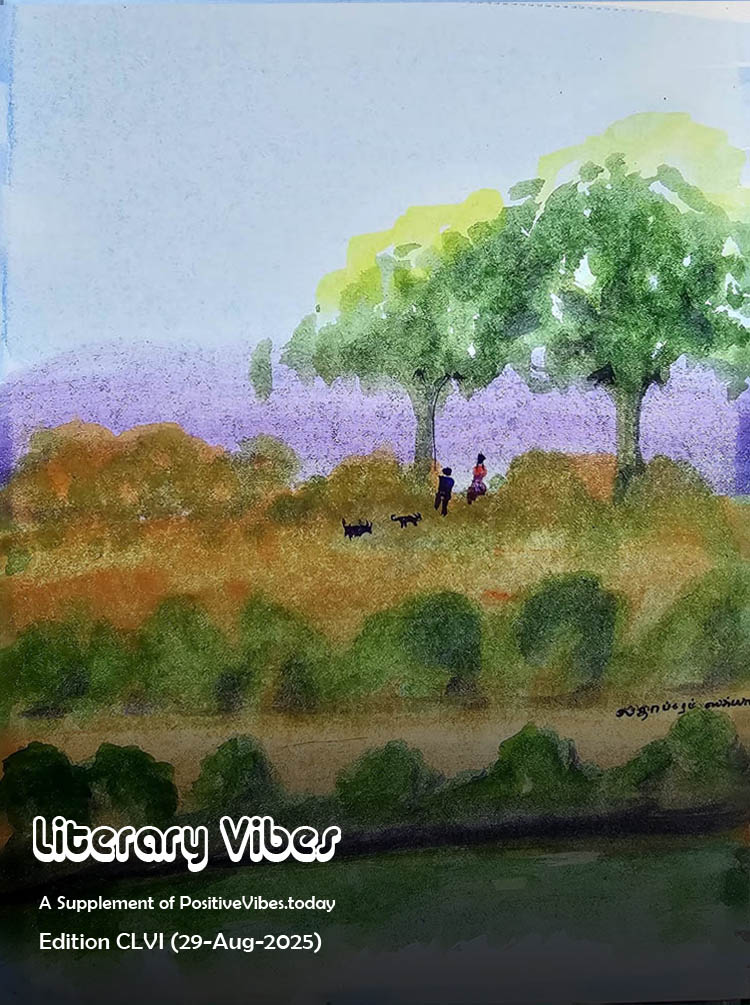
Title : TREK WITH PETS (Watercolour by Ms. Latha Prem Sakya)
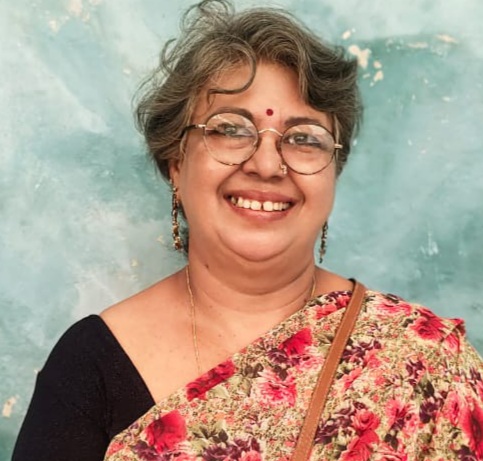
An acclaimed Painter, a published poet, a self-styled green woman passionately planting fruit trees, a published translator, and a former Professor, Lathaprem Sakhya, was born to Tamil parents settled in Kerala. Widely anthologized, she is a regular contributor of poems, short stories and paintings to several e-magazines and print books. Recently published anthologies in which her stories have come out are Ether Ore, Cocoon Stories, and He She It: The Grammar of Marriage. She is a member of the executive board of Aksharasthree the Literary Woman and editor of the e - magazines - Aksharasthree and Science Shore. She is also a vibrant participant in 5 Poetry groups. Aksharasthree - The Literary Woman, Literary Vibes, India Poetry Circle and New Voices and Poetry Chain. Her poetry books are Memory Rain, 2008, Nature At My Doorstep, 2011 and Vernal Strokes, 2015. She has done two translations of novels from Malayalam to English, Kunjathol 2022, (A translation of Shanthini Tom's Kunjathol) and Rabboni 2023 ( a Translation of Rosy Thampy's Malayalam novel Rabboni) and currently she is busy with two more projects.
Table of Contents :: Short Story
01) Prabhanjan K. Mishra
FOR WHOM THE HEART BEATS
02) Dilip Mohapatra
THE BOY WHO NEVER CRIED
03) Sreekumar Ezhuththaani
NOWHERE TO HIDE
04) Snehaprava Das
LOVE
05) Deepika Sahu
AMRITSAR’S PARTITION MUSEUM: A POIGNANT TRIBUTE TO 1947’S UNTOLD HUMAN TRAGEDIES
06) Sujata Dash
THE RAVISHING RAINBOW AND A COCKTAIL OF MEMORIES
07) Annapurna Pandey
WHAT I LEARNED WHEN I BECAME MY MOTHER’S LONG-DISTANCE CAREGIVER
08) Sushree Gayatri Nayak
CRESCENT OF HOPE
09) Triloki Nath Pandey
MY EDUCATION IN ANTHROPOLOGY AT LUCKNOW
10) Jayshree Tripathi
GREETINGS ON INDEPENDENCE DAY
11) Pragya Prasad
THE KNIFE
12) S. Sundar Rajan
MANAGEMENT LESSONS ON THE GO
13) Brahma Acharya
OH SHIVA!!!
14) Seethaa Sethuraman
CONVERSATIONS WITH AMMA – PART 1 (A)
15) Arpita Priyadarsini
INDEPENDENCE
16) Darsana Kalarickal
PETUNIA
17) Sreechandra Banerjee
FIVE SHORT STORIES WITH FIFTY-FIVE WORDS IN EACH OR 5 BALLS – 55 RUNS FOR EACH BALL!
18) T. V. Sreekumar
WINDOW WORLD
19) Bankim Chandra Tola
STORY UNTOLD – PART-3
20) Linkan Sahoo
BESIDE HER CHAIR
21) Mr Nitish Nivedan Barik
LEAF FROM HISTORY: A MUSEUM THAT REMINDS US KNOWLEDGE KNOWS NO BORDERS
22) Dr. Mrutyunjay Sarangi
THE PIANO
Prabhanjan K. Mishra
For Komal every minute of waiting was like a year. She stood at the glass pane of the window in her room in the dimming light as the evening approached and watched the entrance gate of the Hotel Trupti’s compound wall. The nest-returning birds had started their evening clamour. Hotel Trupti was a three-star comfortable joint by the Juhu Beach of Mumbai. Her waiting seemed to be over as she saw at six-thirty in the evening, Riyaz Khan’s car ambling into the Hotel Trupti’s compound.
She recalled when she had arranged that evening’s meeting in the early afternoon, she had said to Riyaz, “I have something very special to you, honey.” Riyaz had insisted not to keep him anxious until they met. But she had giggled to wriggle out, “No, sweetheart, it is a sweet news. And the waiting would make it sweeter. So long, my Riyaz.”
The room in which she had been waiting had been permanently reserved by Riyaz, for himself and Komal, their love nest. They would spend time together, enter and leave without hassles, having their personal keys. But generally, they met once or twice a week by pre-arrangement, spent quality time from afternoon till midnight. They had been meeting like that in that room for about five years. The hotel staff knew them well.
They considered the room as their lucky charm as their first intimacy had happened on the double bed in that room. Komal knew in real life Riyaz was Subrat, a Hindu Bengali, not a Muslim. He was a well-heeled businessman. She guessed, likewise Riyaz might be knowing her real identity, Rehana, not Komal. But the pretenses of not knowing each other’s true identity, Komal thought, had added an extra kick to their romance. Beyond that she knew little about Riyaz.
Though she had not revealed, yet she guessed that her profession before meeting him, a high-priced escort girl, was not unknown to Riyaz. Otherwise, there had been no reason why Riyaz, without being vocal or loud, had deposited a sizeable amount in Komal’s account, euphemistically called a loan, that generated for her a decent monthly income as interest, making her financially self-sufficient, rather affluent. The whole idea might definitely be to wean her off her professionally escorting needy gentlemen, and made her his sole companion. He must have found out that Rehana had been doing that to earn a livelihood.
Another loan of Riyaz had financed her to set up a dress-cum-cosmetic boutique with a few sales staff in Andheri’s posh area. This Riyaz did, she guessed, to keep her occupied when they were not together in India or abroad. With the boutique, she had turned into a busy businesswoman overnight. The boutique earned good money and she was learning the tricks of the trade. Once, Riyaz had unwittingly said, “Now I breathe easy as you are financially sound and a self-made business woman. I would never like my Komal escorting strangers.”
Her meeting with Riyaz had been accidental in the foyer of a five-star hotel where he was cooling his heels waiting for a few business people for a meeting and a deal, and Komal had gone there as a prospect hunter, to find patrons who might hire her as an escort for their tours.
It was for an escort’s charm and technical help in strange places that made rich and outgoing travelers hire escort girls like her. She always tried to make her clients cozy and comfortable. She was professionally competent. But certain escorts extended their services to questionable areas and that brought notoriety and bad name to the ‘escort service’. But Rehana had kept herself aloof when matters tended beyond the professional area. She remained aloof from currying favour with men luring her with large tips, etc. Riyaz was her first weakness beyond her profession.
Both hung around the gift counters and the book shop of the lobby in the five-star hotel, for quite some time. Once she could sense the whiff of a male perfume she saw Riyaz, an affable and well-dressed man, by her side. Their eyes locked for an instant. Riyaz asked, “May I be of any help, madam?” She had replied off-handedly, “No. Thank you. I was waiting for a friend. Wait, excuse me.” Her mobile rang and she took a call. Mobile was the town’s new toy of the rich and powerful. Riyaz was impressed. She said, “That call was from my friend. I was waiting for her. She is not coming.”
That was a cue for Riyaj who jumped into the prospect of making friends with the pretty, young woman. He invited her, “If you have time, madam, let’s take a five-minute break over a sip of coffee in the adjacent coffee-shop. I think my clients are held up also.” She hesitated like any lady with a self-pride, that impressed Riyaj, but she agreed, “You are too suave in your ways to be refused easily. So, I give you my five minutes, and you give me a sip of coffee.” Riyaz was impressed by her reply that oozed culture and good breed in its every word.
That five minutes coffee break kept lingering to hours of friendly talk, exchange of names and other essentials over many cups of the stimulant brew, and snacks, as apparently Riyaz’s business people were not turning up. After a lot of inner-struggle, she revealed to Riyaz that she had been in the escort service, but her services were strictly professional and never crossed any limits that tended to the zone of indecencies.
It was, she informed, always a booking through her escort-providing company who collected the fees for her escort services along with their agency charges in advance as a deposit. She gave Riyaz her company’s business card where her name stood as ‘Komal’.
The next day, her agency informed Komal that one Subrat Mukherji, a well-heeled business man from Andheri area of Mumbai, had booked her escort services for a week of business tour to Japan. The man’s photo on the Adhaar Card, the copy of which she received via her agency, had a Calcutta address and Riyaz’s photograph. She smiled to herself, “Men would be men.”
Komal was intrigued as Riyaz’s tour of Japan turned out to have little to do with business but more of a tour to enjoy various spots of tourist attraction around Japan in her company. It appeared Riyaz was testing waters with Komal as new couples would spend time in their first outing together, to know each other properly before getting intimate.
One morning, while yachting, Riyaz surprised her, “Komal, you may be intrigued if I am Riyaz, then who is Subrat Mukherji. The other name is my sobriquet in the business world. For you I remain your Riyaz.” Komal no doubt had been intrigued, which one was real and which one sobriquet. But in her services the word ‘intrigue’ was a strict no-no.
But Komal felt in last few days it had gone beyond escort services and she had developed immense liking for her client. Further, whenever Riyaz was around, she was troubled by her own demons. Whenever he touched her in the normal course of work, she felt sparks flew. She felt a heat all over when he was within smelling distance.
What Riyaz felt about her she could only hazard from his soft behaviour. His face flushed as if on fire whenever their hands touched, and she could feel the restraint he was applying on himself like a brake, not to melt and flow. But she would know their magnetic attraction only at the end of their Japan trip.
From airport, on returning from Tokyo, instead of going home, he drove to Trupti Hotel with her and checked into that very room that was going to be their lucky charm in the following days until that evening. Only one room was reserved unlike two in each hotel during their Japan tour. It was the small hours of the night they checked in.
After the bell boy left depositing their bags and taking his tips, they put off lights, and as if with a huge mutual understanding, they collapsed into each other with their tired bodies, without changing into sleeping gears, as if in search of a sanctuary.
That is how their cookie of serious reserve over the previous seven days crumbled. The ice of restraint thawed. They stayed in that room, cooped up for three days, falling in love, building monopoly over each other. The pleasant but tired honeymoon that started with a restful drizzle in the small hours of the night they returned, proved to be a sturdy edifice to build a saga of love.
As Komal was relieved to see from the curtains Riyaz’s car entering the gate towards the front portico, she moved to the freshly made double bed and spread herself into a relaxed comma like posture. She knew Riyaz’s friendly nature with the hotel staff, spending a minute or two with whoever he met on his way to the room and getting often delayed by ten to twenty minutes. Without her knowledge Komal drifted into a drowsy sleep.
when she opened her eyes, the clock on the wall said ten in the evening. She was napping for almost four hours. But where was Riyaz? She inquired with the manager at Hotel Trupti’s reception desk, who told her, “Two government officers were waiting in our lobby, and as Riyaz Saheb entered, they had a discussion. After that Riyaz Saheb left our hotel with the officers in his own car. Madam, would you like to have dinner or wait for Riyaz Saheb?”
She was angry as well as surprised. What sort of a situation could have made Riyaz keep her waiting without information. But Komal would never guess the man might have vanished into thin air for the next ten to eleven years.
She had no other method of communication with her Riyaz, except a mobile number and an office address in Calcutta as on his Adhaar Card. Both had gone incommunicado. The mobile telephone number went dead. The Calcutta office no more existed. She kept waiting with pounding heart for days, then weeks, months and years, but her Riyaz did not communicate. She suffered from a massive depression and other health problems for years on end.
She would never know what happened to their love-nest, the room in Trupti. She had no courage to revisit or ask the manager of Hotel Trupti. She continued to run her boutique somehow. But, perhaps, her lack of enthusiasm and bad health was slowing her business skills. The profits started going down, and finally when her expenses exceeded her earning, she sold the boutique. It brought a good price. She deposited it along with the other deposits from Riyaz to earn interest.
In her severe depression and ill health, the memory of Riyaz was her life jacket where she floundered. The psychiatrist, counsellors, and other doctors looked after her mental and physical health. It took many years to feel healthy both physically and mentally. She had lost weight and glamour. Now she tried to piece together her life again and learn to live without Riyaz. Her savings in deposit were down to almost nothing.
Eleven years of her disoriented dreary life ended abruptly, as it had started. It was an early evening. Rehana, the sobriquet of Komal, the house-manager, appointed that very day late in the forenoon by the mistress of the house, Urvashi Mukherji, opened the door at seven-thirty in the evening to a door bell.
And lo! Who stood on the other side of the door took Rehana’s breath away. It was her Riyaz in office regalia: suited, booted and a necktie neatly tied at his shirt collar like in days of his business tours when she accompanied him. Riyaz looked a bit matured but more handsome. Rehana flinched but not Riyaz. Urvashi was standing behind Rehana. Urvashi did not notice Rehana’s utter amazement, and the latter quickly rearranged her features.
Rehana recalled her bewilderment at the time of her joining her new job when she had seen the name plaque hammered to the entrance of the house, that had borne the name ‘Subrat Mukherji’ above ‘Urvashi Mukherji’. She had wondered, was it Riyaz, her heart throb’s house, or just a coincidental name that was also her Riyaz’s sobriquet?
Rehana was overwhelmed with joy to see Riyaz hale and hearty. But her insides felt devastated as Riyaz did not show any emotion on his face though he had met her after eleven years of hiatus, “Didn’t he recognize me at all? Might be long periods of illness and depression had taken their tolls on my face and features, and in fact, Riyaz could not place my changed looks, and again, finding me at the most unexpected place, his own house, might have blocked his cognitive senses to go blind. So, he could not see Komal, his heartthrob in me.”
“Or, was he a perfect thespian in real life? He did not flinch a muscle because his wife was around, and held back his emotion for later time”, Rehana argued with herself, and would recall, “Riyaz had never told her anything about his beautiful wife. Why had he to look for love in another woman, myself, when he had a pretty wife at home?” Rehana was intrigued to her gills.
Also, her courage gave away to ask, though she wanted to very much, “Should he vanish like a water bubble? If he was around in Andheri area living an apparently happy go lucky life, had he never felt the urge to search out his Komal, whom he called his heartthrob?” Her hundred remonstrations died inside her.
Rehana felt an urge to resign her new job in Urvashi-Subrat household and go miles away from Riyaz. She suffered from a huge sulk. Then a saner and balanced Komal, her inner persona, her dead sobriquet that had been rejuvenated to life after Riyaz was found out after eleven years, spoke to Rehana, “Isn’t it a great joy in itself to stay so close to your heartthrob? Let his feelings go to hell. Should you be so selfish a lover to go away because you feel spurned, cheated? Should you not stay and add to your heartthrob’s happiness? He may someday in some way need you, what of that?”
Rehana decided to stay and continue, at least not to leave immediately. She hoped, Riyaz’s mysterious pack of cards would reveal his hands for her comfort.
Rehana had been given her living quarters, a big sparsely furnished room with attached toilet-cum-bath facility. It was one among the several servant quarters, a series of backside facing similar rooms on the second floor of the bungalow. Urvashi and Subrat used the two floors below. The first night after meeting Riyaz, Rehana felt as the most tumultuous night of her life. It had the joy of meeting Riyaz, and the sorrow of Riyaz not batting an eyelid to hint any recognition. She felt no less dejected than Sakuntala spurned by her Dushyant in the legendary love story.
But she had not guessed that the night would be the night of reawakening for her, and the following few days would be a period of revelations, unravelling her doubts about the pretty wife of Subrat alias Riyaz and the rest of her doubts.
As the night progressed, beyond midnight, Rehana heard mute knuckles against her door. Intrigued, she looked out through the peephole and saw the profile of Riyaz etched against the faint street light’s glow behind him. Her weak heart gave a jerk and missed many beats. She gingerly unbolted the door for him to slip in and bolted it back. By then she was already in a warm grip reminiscent of old times.
Held to each other, their hearts fluttered and beat like two prongs of a tuning fork, vibrating to the same frequency and wave length. The reunion was sweet, wordless, searching, melting, dreamlike, like a goddess receiving her god in her earnest.
The night remained fully awake, but like a lived dream. By the first call of the birds at the dawn, Riyaz giving her a last affectionate squeeze, left like a shadow, leaving Rehana happy, spent, but ready in body and mind to face the day in her new abode where lived her heartthrob.
She knew that the new chapter of life was going to be turbulent. Riyaz visited her every night for almost a week, and then twice a week and a routine of once a week was set in. Rehana realized she was pregnant, and her guess took it back to their first reunion in her servant quarters. She felt disturbed about her baby on the way.
As days would pass in Urvashi’s employment, Rehana started knowing Urvashi. Urvashi was a creature of the night. Most days, she would leave bed at around five in the evening, and leave home around ten or eleven in late evenings to join some party. This routine might be breached if she had a social-service engagement, as she was a part of many charity groups. Those days she might be home from the morning and have breakfast with husband, the only occasions the wife and husband met. They slept in separate rooms on separate floors. Some sort of huge estrangement, living together but also living separately.
One night, holding Rehana in his arms, Riyaz told her, “I was arrested from the hotel lobby itself by the Enforcement Directorate (ED) authorities in a money laundering case. It took me five years to prove my innocence, but was out of jail on bail only. My passport and mobile phone, that had been taken away from me by ED at the time of my arrest, remained deposited in the court. For my bail I had to undertake to cooperate in further investigation against me. I was, after my release on bail, called to report to ED office on the fall of a hat. A Damocles sword kept hanging on my head.”
After a pause, he continued, “It took another five years, to get complete exoneration from the charges against me. All along I was worried for you and your safety. I lost your number with the mobile. But as soon as I was on bail, I collected your number from mobile of the manager of Hotel Trupti. I tried your number many times over months, but a gruff and irritated woman’s voice cut me short on every occasion, finally saying: ‘wrong number’. I thought the number was surrendered by you, and was given to another mobile user. I lost all jest for living.”
Burrowing further deep into his lap, a weeping Rehana said, “I have something to share. But would you trust my words. I so far had no courage to tell you. But today, or never, I feel now.”
Riyaz was waiting eagerly, and egging her to unburden herself. A lover’s jealousy had started to hurt badly inside him. Had Rehana a boyfriend during those eleven years? Rehana divulged, “We have a daughter, Riyaz. She is all of ten. She is Lolita, as you were a great fan of that character from Vladimir Nabokov’s novel with the eponymous title.”
Riyaz was beside himself with joy. He remained nonplussed for minutes. Rehana continued, “Do you recall, just before our last meeting at Trupti that did not happen, I had wanted to break some ‘good news’ to you? It was this great news I wanted to share with you that I had tested positive for pregnancy by a path-lab. Our daughter Lolita is studying at Dubai in standard four. The gruff woman’s voice that cut you short every time you called me, it was my mother’s, who took me and our daughter Lalita to Dubai to stay with her.”
She hesitated, rearranged her thoughts to look presentable, and said, “My mother works there as the house manager in a sheikh’s family. After you left, I suffered from depression and paranoia for almost ten years. My health also took a nose dive. The doctors said, I had lost all zeal to live, and that had caused my poor health. My mother held you solely responsible for my degeneration in body and mind. She thought you were an opportunist, a playboy of sorts, who used and discarded her daughter. She never wanted her daughter again to be a prey of the rich and spoiled playboy.”
With that, Rehana found her chest dripping. It was Riyaz’s tear. Her tears started mixing with his. Their tears washed away all misunderstanding and hardship of staying apart so long. After minutes they were calmly planning how to rehab their lives and bring Lolita to Mumbai, and rehab her to a more friendly family life.
They had forgotten to know it was morning and there was a knock on the door. Rehana detached herself from Riyaz and opened the door. Urvashi entered and found Riyaz in Rehana’s bed unkempt in his nightshirts. He did not bother to tidy up himself for his wife.
Rehana was surprised to see Urvashi smiling at her warmly and saying, “Best of luck, Rehana. Perhaps you don’t know, I have filed for divorce. In a few days this divorce would be allowed by the court as I and Subrat have agreed to separate on the basis of incompatibility. But in a week, I am packing and leaving this house to you. I will go to a sprawling flat in Versova, already made ready for me by Subrat. He has made satisfying arrangements for my future. He has been all along a good husband, only I was not a good wife.”
But I have a request, “If social media reacts luridly, tide them through this difficult patch of our life without damaging or maligning my reputation. Marry Subrat, but after a reasonable cooling period. Feathers would be ruffled in the media and social circles, but ignore them with a dignified silence or brief notes. Keep in touch and stay as a friend of mine.”
Overwhelmed, Rehana looked at Riyaz who was smiling happily. (END)
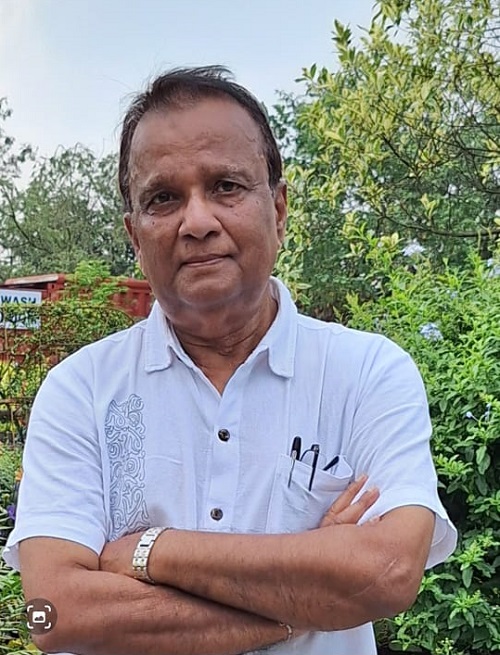
Prabhanjan K. Mishra is an award-winning Indian poet from India, besides being a story writer, translator, editor, and critic; a former president of Poetry Circle, Bombay (Mumbai), an association of Indo-English poets. He edited POIESIS, the literary magazine of this poets’ association for eight years. His poems have been widely published, his own works and translation from the works of other poets. He has published three books of his poems and his poems have appeared in twenty anthologies in India and abroad.
Dilip Mohapatra

Nestled in the folds of Uttarakhand’s Garhwal hills, a little hamlet near Joshimath rests like a quiet sigh against a canvas of rugged peaks and endless sky. Stone-paved paths, worn smooth by generations, twist through clusters of modest cottages—their slate roofs glinting under the sharp mountain sun, walls plastered with mud and lime, often painted in fading whites or soft pastels. Wooden balconies, carved with simple floral motifs, lean out over narrow lanes, where the air carries the faint scent of pine, cow dung, and woodsmoke.
Below, the valley unfurls in a patchwork of green meadows, stitched with wildflowers—yellow buttercups and purple irises swaying in the breeze. Terraced fields, carved into the slopes, cradle crops of millet, barley, and vibrant mustard. A stream, fed by distant snows, gurgles through the village, its icy water diverted into small channels that irrigate the fields. Ancient deodar and oak trees frame the horizon, their shadows stretching long across the meadows at dawn and dusk.
Cows and goats amble along the edges, their bells clinking softly, while children dart through the lanes, their laughter mingling with the call of Himalayan bulbuls. Women in bright headscarves carry bundles of firewood or brass pots balanced on their heads, moving with the steady grace of lives tied to the rhythm of the seasons. At the village’s heart, a small temple with a low dome and weathered bells stands, its stone steps worn by daily prayers and offerings of marigold and ghee.
The days begin with variety of birds tweeting and chirping in abandon and end with the sky ablaze in hues of amber and rose, the mountains standing sentinel against the dim street lights as the village settles into a quiet hum under a star-studded night.
Arjun, an eight year old boy lived with his mother Asha Devi in a small but quaint cottage almost on the edge of the village. He had lost his father to a mountaineering accident, when he was barely four years old. His father Bharat Thapliyal was an instructor in the local mountaineering institute and used to accompany the expeditions. On one fateful day, while on a trekking exercise, he was struck by an unexpected landslide and didn’t return home. Asha Devi worked as a tea-taster in a tea estate nearby and brought up her only child as best as she could do. She had great dreams about her son’s future. She wanted to give him the best education and prepare him for a career in the armed forces. Her father was a Subedar in Indian Army and she had heard many stories from him about the bravery and valour of the men in uniform. She dreamt of her son, with heavy epaulettes commanding troops and foiling the misadventures of any aggressor from across the borders.
It was a Saturday. Arjun had gone to the village school, not very far away from home. Asha Devi had taken a day off from her work, since she had an attack of migraine and was lying down reminiscing the good old days when her husband was alive. She woke up to someone’s knocking on the main door. She found Ganesh, her son’s class mate standing there almost panting, trying to catch his breath. He took out a small note and handed it over to her. It was from the school’s principal, who had asked her to come to the school immediately. In a panic she asked Ganesh what was the matter and learnt from him that Arjun had been caught fighting with another boy. She rushed to the school and found Arjun standing in front of the principal, with a bloodied nose that had a fresh plaster on it. Her quizzical look was met with a stoic indifference from him. Standing next to him, was a rather tough looking boy, who gave her a defiant look as she entered. The principal offered her a seat and told the class teacher who had accompanied the boys to take them back to the class.
“Please take your seat Mrs Thapliyal. Don’t worry about Arjun. It’s a minor injury and the school doctor has taken care of it.”
“ But Arjun never gets into a fight. What happened?”
“It’s not Arjun’s fault. The witnesses say that the other boy is the bully of the class and he always snatches away Arjun’s lunch and leaves very little for Arjun. Today Arjun managed to finish most of his lunch before the bully descended on him. In a fit of rage he only beat up Arjun.”
“ What about Arjun? Didn’t he fight back?”
“That’s the point, what I want to discuss with you. You see not only he didn’t fight back, he didn’t even whimper or cry. When I asked him how should we punish the bully, he just gave a vacant look. There was no anger in him. When I asked him what would you do if that boy beats you up again, he just let the question pass. He didn’t appear to be scared. I found that a bit strange. Then I checked about him from his class teacher and the sports teacher. They also had been observing him. He never danced with joy like the others when their team won a game, neither did he cheer his team during matches. Even when he wins a competition and his teacher praises him or commends him he just shrugs it off as if nothing has happened.”
“ That sounds like my Arjun…He just nods when I tell him that he has done well.”
“We had a cat which lived in the school compound and we adopted it as our mascot. The children loved to play with it during breaks. Recently it died. We had a condolence meeting for the cat. Every student cried except for Arjun. He just stood there in silence with no expression on his face. And now this has happened. My worry is that this may be an abnormality. I thought I must bring it your notice.”
“ Now that you say so, I also had similar doubts many a time. There had been quite a few incidents at home when his reactions had been out of the ordinary. Come to think of it, I have never seen him crying, or getting angry. I also can’t remember when he had ever burst out laughing. I brushed all this aside thinking that it perhaps is his unique personality, you know the reticent type.
“ I suggest that you consult with a therapist and seek his advice. I know one such therapist who practices at Joshimath. If you like I will give you his address and even fix up a meeting with you.”
“That’s really kind of you. I will surely meet him and seek his advice. I have great plans for my son. I am grateful to you for bringing this out. I am hopeful that we will be able to help him out.”
Asha Devi looked out of the school window at the snow-kissed peaks in the distance. Somewhere in her heart, a storm she had long ignored had begun to stir.
The appointment with the therapist was fixed for the next day. Asha Devi and Arjun took a local bus to Joshimath and reached the clinic. They didn’t have to wait long. The doctor was expecting them— the school principal had already briefed him about the case.
The nurse at the reception escorted them to the consultation room. A smartly dressed man in a white apron, who looked to be in his mid-forties, greeted them with a wide smile and asked them to sit. Arjun quietly took his seat and scanned the room as if making a mental inventory of its contents. His eyes paused on a board behind the doctor’s chair. In four neat rows, it displayed the doctor’s name and credentials:
Dr Ashish Pandey, PhD, PsyD
Consultant Clinical Psychologist & Neuropsychotherapist
PhD in Clinical Psychology – National Institute of Mental Health & Neurosciences, India
Postdoctoral Fellowship in Affective Neuroscience – Harvard Medical School
The therapist watched Arjun carefully. With a warm and affectionate smile, he began asking him a few casual questions about his daily life—what he liked, what made him angry, if anything ever made him sad.
Arjun’s answers were clipped, vague, as if the words had to travel a long way from his mind to his mouth. His face remained blank—no fear, no anxiety, no apprehension.
Then the doctor led Arjun into the adjacent examination room. He showed him pictures of people expressing various emotions—joy, grief, anger, fear—and asked him to identify what they might be feeling. Arjun squinted at them as though they were puzzles he had no interest in solving.
Next came a short questionnaire: simple statements describing feelings in different situations. Arjun ticked them mechanically, in a seemingly random manner. That was the Toronto Alexithymia Scale, a standard tool to detect emotional disconnect.
The doctor then showed him a few cartoon panels and asked him to create stories around the characters. Arjun described what they were doing—but not what they might be feeling.
The doctor made his notes, and they returned to the consultation room where Asha Devi was waiting anxiously. From his drawer, the doctor pulled out a small packet of chocolates and handed it to Arjun.
“You’ve been very good during the tests,” he said. “This is just a little appreciation.”
Arjun accepted the packet and mumbled a mechanical “thanks.” The doctor rang for the nurse and asked her to take Arjun to the library and give him some comics to read.
Asha Devi leaned forward, eyes full of concern.
“Doctor, did you find anything unusual?”
“Yes,” he replied gently. “There are signs that it’s not that he doesn’t feel—he just struggles to put those feelings into words. It’s not exactly a disorder, more like a blind spot in emotional awareness.”
“He doesn’t talk much at home either,” she said. “Just stares, or shrugs. But… he’s not autistic, is he?”
“No, he doesn’t show signs of that. All the tests we did today focused on emotional recognition—how he connects with feelings, both his own and others’. He answers more like a witness, not a participant. He describes what happened, but not how it felt. He seems stuck between emotion and expression. If we can bridge that gap, he should gradually exhibit normal emotional behavior.”
“Is it curable?”
“We’ll come to that,” the doctor said. “In the case history, you mentioned he fell from the crib when he was ten months old?”
“Yes,” she nodded. “He landed on the side of his head on the hard floor. But the doctor had said he was fine—no fractures, no bleeding. Just a little swelling that went away in a few days. But now I wonder…”
She paused, catching her breath. “Doctor, am I just looking for excuses?”
“You’re looking for answers,” he replied softly. “That’s very different. What’s important is that he’s not incapable of emotion—he may just not know how to access it, or how to express it.”
“So what can I do?”
“Don’t force emotion. Don’t ask him to feel—help him experience. Let him be exposed to music, stories, TV shows, pets, animals in general. Gentle exposure to emotional contexts—but don’t demand reactions. Let it come naturally, from within. Most importantly, show him what feelings look like—not in words, but in presence.”
“Oh, doctor… thank you. So it is curable?”
“Not in the way a fever is,” he smiled. “But yes, it can heal. With time, patience, and trust. The heart may be whole and willing—but it’s searching for a language that has been muffled. We need to help him find that lost voice. You begin his therapy at home. Keep me informed. We’ll monitor his progress. I’m quite hopeful… he’ll be alright.”
Asha Devi picked up her son from the library and both headed back to their village. The boy sat in the bus in total silence looking out of the window while the mother was trying to piece together the doctor’s advice and frame a plan in her mind to help out her son.
Few days passed uneventfully. Asha Devi picked up the complete set of comics from Amar Chitra Katha and illustrated story books on Panchatantra and Jataka Tales. She made it a point to read out the stories to Arjun at bedtime. On Sundays both of them watched kids’ channels on TV. When Asha Devi subtly nudged Arjun by asking if he found a typical Tom & Jerry show funny, invariably his dispassionate answer was “What’s so funny about a cat chasing a mouse? It’s quite natural Ma’, isn’t it?” But Asha Devi didn’t give up. Whether her son found it funny or not, she deliberately burst out laughing at the buffoonery of a Laurel Hardy Show or at the classical antics of Charlie Chaplin, hoping that her laughter may induce some emotion in her son.
Then something happened, which perhaps was a turning point in Arjun’s life. One day while returning home from school, as he was crossing a small bridge on a nullah, he stopped when he heard a painful whine of a small puppy. He looked around and found one in the nullah, trying to scratch his way up but repeatedly sliding down. He stood there for sometime with a nonchalant look watching the puppy’s desperate attempt to climb up and then continued towards his home. Suddenly the puppy’s wailing became louder, as if imploring him for help. He stopped short and returned. He then bent down and carefully picked up the puppy and brought it to safety. As the puppy looked at him with grateful eyes and gave him few licks, he put it down on the road side and again started for his home. When he reached his home which was just around the corner and climbed to the front verandah, he heard some scampering sound behind. He looked back to find the puppy trying to negotiate the steps to the verandah. It had followed him home. He looked at it indifferently, entered home and shut the door, hoping that it would go away. After a few minutes he opened to door to a sliver and peeped out. The puppy was sitting there looking at the door expectantly. Arjun shut the door fast as if he was caught in the act of snooping. He was unaware that his mother was quietly watching the scene. Asha Devi was amused to see her son on the crossroads of acceptance and rejection.
“ What is it son? With whom are you playing hide and seek? Let me see.”
“ Nothing mom. It’s just a stray. It will go away.”
“ Let me have a look.”
Asha Devi opened the door and the puppy ran towards her wagging its tail. It was a brown Bhutia pup covered with slush and mud. She picked it up and carried it inside. Then she asked Arjun to help her to give it a thorough wash. Arjun was neither enthusiastic nor apathetic. He brought soap and Savlon and helped his mom to scrub and clean up the pup. After the pup was dried up he started prancing around the home exploring every nook and corner. When offered with a warm dish of milk he lapped it up gleefully. Asha Devi designed a bed for it from a large cardboard carton layered with an old quilt and old Turkish towels. The pup gratefully moved into its new abode. Later at night, Arjun felt something soft and warm against his body. He lifted his blanket casually to find the pup snuggling to him and sleeping peacefully. Though the pup loved its own bed during the day, it took it for granted to creep under Arjun’s blanket during nights. Soon Arjun got used to it and in fact he started looking forward to share his bed with the new member of the household.
As months passed, after about a year the pup became a fully grown dog. As an adult Bhutia he was rather huge, almost two feet tall, heavyset with shaggy brown fur. Without any conscious knowledge Arjun accepted him as his one and only friend. Except for the time spent in the school, both were almost inseparable. Funnily Arjun didn’t want to name the dog. He always referred to him as the “pup”. Both of them loved to play in the village meadow mostly running after each other in a “catch me if you can” mode. Though Arjun’s emotions were yet to find their full expressions, there were slight dents in his visible demeanour when he was in the company of the dog. He still wanted the huge dog to share his bed.
Then came the fateful day, which Arjun could never have imagined even in his nightmares. The sky above the Uttarakhand village had suddenly turned a bruised, unnatural gray, the air heavy with the scent of rain-soaked earth. In the meadow below, where wildflowers usually danced under the sun, Arjun and his shaggy dog, were chasing each other. Abruptly their laughter and barks were swallowed by the sudden roar of the heavens. The first drops fell fat and cold and then came the cloudburst—a deafening deluge that tore open the sky, unleashing a wall of water down the hillside.
The meadow, moments ago a soft green cradle, became a churning cauldron. The stream, once a gentle trickle, swelled into a raging torrent, its muddy waters clawing at the earth, uprooting grass and snapping saplings. Arjun, barefoot and wide-eyed, froze as the flood surged toward him, a frothing beast of brown and white. The dog yelped, nudging Arjun’s leg, but the current hit them like a hammer, sweeping them off their feet. Arjun flailed, his arms thrashing uselessly—he’d never learned to swim, the village’s icy streams too treacherous for play. The water was a cold, suffocating grip, dragging him under, his lungs burning as he choked on silt.
The dog, his fur plastered and eyes wild, clamped his jaws onto the tail of Arjun’s sodden shirt. With desperate strength, the dog paddled against the current, his legs churning through the debris—twigs, stones, and clumps of earth swirling in the flood. Arjun gasped, clinging to the dog’s scruff, his fingers numb but desperate. The dog’s determination pulled them toward a half-submerged oak, its gnarled branches clawing above the torrent like a lifeline. Arjun’s hands scrabbled at the bark, slippery and rough, as he hauled himself onto a low branch, coughing and shivering, his heart pounding like a festival drum.
The dog still gripping the shirt, tried to follow, but his strength was fading. Arjun now perched safely on the branch bent down to catch hold of the dog’s paw and tried to lift him up to safety. But his paws slipped, and a fresh surge of water slammed into him. Arjun screamed, as the dog’s jaws released, his brown eyes meeting Arjun’s for a fleeting moment—full of loyalty, then fear. The current yanked the dog away, his robust form tumbling helplessly in the froth, a flash of brown fur merging with the merciless muddy brown water. Arjun clung to the branch, his voice raw, shouting for his dog with no name. His distress call got lost into the roar of the flood. Suddenly the name ‘Shaggy’ came out of his mouth—loud and clear, the name perhaps he had chosen for him all along, but never called him by it. His desperate cry was futile, the dog was gone, swallowed by the churning waters.
He sat on the trunk, mute and motionless, knees pulled to his chest, clothes heavy with silt and water.
The dog was gone. For ever.
He felt his fingers dig into the bark. Then his breath quickened. Like something forgotten had suddenly returned—rushing up from inside, from somewhere deep and dark.
The corners of his eyes burned.
He blinked. Once.
Then again.
Something stirred. An ache unfamiliar so far…
And then—
A single tear slid down, carving a clean path down the mud on his cheek. He gasped. A sharp intake of breath like the first breath after birth. His chest heaved.
Another tear followed. Then another.
His face was unreadable. As inscrutable as the ominous cloud that had burst to cause the flood. Then — a howl. A primal cry. A dam collapses inside him as the physical floodwaters rage outside. He screams the dog’s name—‘Shaggy’—repeatedly, his tears mixing with the rain.
And finally—
he cried, like never before.
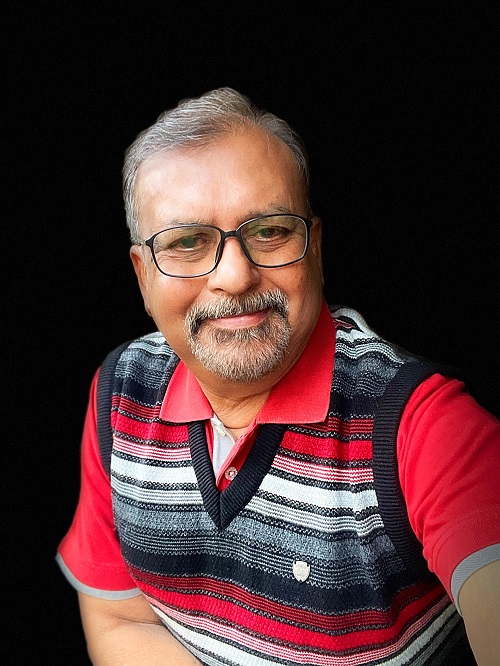
Dilip Mohapatra, a decorated Navy Veteran is a well acclaimed poet in contemporary English and his poems appear in many literary journals of repute and anthologies worldwide. He has seven poetry collections, one short story collection and two professional books to his credit. He is a regular contributor to Literary Vibes. He the recipient of multiple awards for his literary activities, which include the prestigious Honour Award for complete work under Naji Naaman Literary Awards for 2020. He holds the honorary title of ‘Member of Maison Naaman pour la Culture’. He lives in Pune and his email id is dilipmohapatra@gmail.com
Sreekumar Ezhuththaani
Every journalist in the city was there, since the young police officer had told everyone that they should not miss this press meet at any cost.
After a short introduction, the police officer began his story using a well-made PowerPoint presentation.
"Dr. Arun Prakash was a quiet man with a thriving practice in this small but prosperous town. His new wife Vasanthi was radiant, the kind of woman who turned heads at every gathering. Neighbours whispered that their marriage was strange. He, withdrawn and cautious; she, restless and flirtatious. Among her admirers was a young man named Deepak, her bosom friend from the same drama school where she had studied. They also frequently chatted on WhatsApp and other social media platforms.
They also had this strange habit of walking around incognito, challenging each other to not get caught by the other. They would even impersonate each other and attend public functions.
"At first, Arun ignored the rumours. He believed that a beautiful woman would naturally attract attention. After all, they were classmates and had the same innocuous interests. He too enjoyed the pranks they played in public and posted them on his FB.
"But one morning, Vasanthi simply vanished. First, Arun thought it was just one of her pranks. He was looking for her everywhere. He used to stare at the panwallah, the delivery boys and such people, thinking that she might be one of them.
"But then, when she didn't return for more than a week, he approached the police. The police found that her clothes and jewellery were left behind; her phone was switched off. There were no ransom notes, no signs of forced entry. The police scoured the area, dredged the river, and questioned everyone. Nothing. She had evaporated into thin air.
"Naturally, suspicion fell on Deepak. Their constant meetings were no secret, but his alibi was airtight: on the day of her disappearance, he had been out of town at a film shoot where several people confirmed his presence. The investigation stalled. Arun’s grief seemed genuine. Months passed, and the case went cold.
"But grief soon turned to practicality. Arun realised he could leverage his wife’s disappearance for financial gain. He had insured her life for a sizable sum shortly after marriage. Without a body, the claim was complicated. So he concocted a macabre plan. Using a fake identity, he contacted an unscrupulous mortuary worker connected to a medical college. For a price, the man supplied a corpse resembling Vasanthi. Arun disfigured her face, claiming it was from a road accident, and reported it to the police as his wife’s remains.
"The identification process was disturbingly swift. A distraught husband was hardly expected to question his own certainty. The body was cremated within hours, and Arun’s claim was processed. On the day the insurance payout finally hit his account, he sat alone in his study, relieved, sipping whiskey. That was when Vasanthi walked in.
"She looked different, leaner, harder, with a calculating smile. Before he could speak, she shot him in the chest. The silenced pistol made only a soft hiss. Arun gasped his last breath as she emptied his wallet and transferred the insurance payout from his phone to her own account. Then she stepped over his body without a glance.
"Outside the house, another figure waited. Deepak. The young man had never stopped pursuing her everywhere, curious about her intentions. He had followed her on the day of her disappearance and knew more than the police ever suspected. He filmed the entire murder from the shadows. “Now we’re partners,” he said with a grin. She didn’t resist. They left together with the money.
"But fate doesn’t let murderers rest. A shrewd inspector named Narayanan quickly connected the dots. He arrested them at a lodge two towns away. His mistake was underestimating Deepak. On the way to the station, Deepak slashed the inspector’s throat with a hidden blade. The lovers sped away in the police car, dumping his body in the woods. Now bound by blood, they decided to stay together. The money would run out eventually, and they were both wanted. Murder became not just a habit but a necessity. They preyed on drifters and unsuspecting travellers, leaving behind a trail of unexplained disappearances.
"Yet Vasanthi’s nights grew restless. She began seeing Narayanan in the shadows, staring at her, day and night, now and then. Deepak thought she was losing her mind. But the “ghost” was no delusion. It was Narayanan’s son, Ajay, a rookie cop who had vowed to hunt his father’s killers. He tracked them silently, waiting for the perfect moment.
“These two fugitives are your neighbour, a co-worker, or even someone sitting in this very room. They could slip into the police department or the press corps, and you’d never know until another body dropped.”
The words chilled the journalists. Cameras flashed. The statement was calculated to sow unease, but also to smoke the killers out. Ajay released a blurred still from Deepak’s footage of Arun’s murder, proof of the couple’s existence, without enough clarity to betray their current disguises. He promised further updates, careful not to reveal how close he really was.
Outside the press club, the chatter was loud, frantic. News vans revved their engines. Among the crowd stood two new hires at a small investigative magazine: a sharp-featured man with a reporter’s notebook and a young woman with a camera slung across her shoulder. They moved through the commotion calmly.
The woman lit a cigarette with steady hands. “That was a close call,” she murmured, a half-smile curving her lips. “But nothing to fear now. He’s still guessing.” Her companion smirked in agreement.
Their IDs read Anil and Shobha, but the glances they exchanged carried the weight of shared secrets. Behind the polite smiles and professional façade, their minds replayed the trail of blood that had led them here. New haircuts. New names. Perfect forged credentials. Every detail was meticulously crafted.
What Ajay didn’t know was that they had already killed twice since Narayanan. Each time smarter, cleaner. Each time, leaving no loose ends. They had learned from the mistake of underestimating the police once; they wouldn’t make it again.
As the journalists dispersed, Ajay stood on the steps, scanning the crowd. His eyes lingered for a fraction of a second on the departing pair. Something about the way the woman looked back over her shoulder, the faintest trace of a grin, sent a shiver through him.
But then she was gone, swallowed by the bustle of the street.
That night, in their rented apartment overlooking the highway, Shobha sat by the window watching the neon glow of passing trucks. “He’s getting closer,” she whispered. Deepak tightened his grip on the knife he always kept under the pillow.
“We’re smarter,” he said flatly. “We’re ghosts. And if anyone gets too close, we do what we always do.”
Shpbha turned to him, her face lit with the cold gleam of the highway lights. “Then maybe,” she said softly, “the next body should be his.”
In another part of town, Ajay stared at the footage of Arun’s murder once more, pausing on the blurred silhouettes. He could feel their eyes on him, even across time.
The game had only just begun, and somewhere out there, the killers were already planning their next move.
Sreekumar Ezhuththaani known more as SK, writes in English and Malayalam. He also translates into both languages and works as a facilitator at L' ecole Chempaka International, a school in Trivandrum, Kerala.
Snehaprava Das
He saw the small crowd in front of his house as he neared it and got behind a Ganga Siuli (night-jasmine) tree. The tree hid his small and frail body perfectly. His pulse rate quickened. Taking absolute care that he was not seen, eight-year-old Biju peeped from behind the tree, his breath coming in irregular gasps. He had been running hard all the way from the school to his home. But Dinu, the paan-seller in front of the school had beaten him to it. Because he had rode his bicycle. Biju had not expected it. It had never crossed his mind that Dinu would reach his house with his allegations before Biju could gain time to narrate his own version of the story to his father. His thoughts went back to the happenings of the morning as he watched his father speaking to Dinu who was waving his hands excitedly and at times joining them together in a gesture of respect.
It was the morning of the fifteenth of the August, the Independence Day. Biju and Jitu, his close friend, had taken an early bath and donned in white shirts and blue half-pants had arrived at the school. Students of the senior classes had reached even earlier and made all the arrangements for the flag hoisting. After the flag hoisting and the speeches, they were given a packet of refreshment each. Biju and Jitu along with some other classmates walked back home. Some older boys were playing football in the large ground adjacent to the school. ‘Let’s watch the game for a while,’ Biju suggested and they settled on one of the empty benches of the gallery. They ate the refreshments as they watched the boys playing. The football game continued for about another half hour and then the players dispersed. Biju and his friends too came out of the playground.
As they crossed Dinu’s paan-shop on their way back home. Biju’s eyes fell on the miniature tri-colours that hung in a row at one side of the cabin. They looked so beautiful!! And there was also the mouthwatering display of lozenges in attractive colours and shapes inside glass jars. Dinu was busily dabbing the paan leaves with chuna ( paste of lime stone powder )with a brush, folding paans for the customers who stood waiting in front of the shop. Some were taking out lozenges and biscuits from the jars and putting the money on the small wooden counter behind the row of the jars. Biju rummaged in the pocket of his pants. There was only a two-rupee coin. ‘Look, how lovely the tiny national flags look,’ he said to Jitu. ‘Yes, and the lozenges, too. They are in the shapes of tiny animals and flowers and fruits.’
‘Do you have any money with you?’
Jitu shook his head, his face registering his disappointment.
‘I have two rupees’ Biju said. ‘Come with me.’ Biju said, a note of confidence ringing through the words.
‘What can two rupees fetch?’ Jitu remarked discouragingly. ‘You go and buy whatever you can with your big money. I am going home.’ He walked away. Biju walked up to the shop. Dinu was still busy in making paans. ‘Well?’ he glanced at Biju.
‘How much for a flag?’ Biju asked hesitantly.
‘One rupee each. How many of them you want?’
‘One’
Dinu took one of the metal flags off the string and handed it to Biju. ‘How much for the orange coloured lozenge?’
‘Two for a rupee,’ Dinu said irritably. ‘Tell me soon what do you want? Can’t you see I am busy?’
The orange-coloured lozenges looked so tempting!! What shall he do with only two of them? The tiny things will melt away as soon as they go into the mouth. Biju stood in front of the shop eyeing the lozenges, his mouth salivating, frustration pricking at his heart. He was not able to decide whether to relinquish the metal national flag or the lozenge. Both were important, neither of them could be done without. Dinu had no time to wait for Biju to make his decision. Morning- hour customers had gathered by his shop, and he was preoccupied in catering to their demands. One of the customers, an elderly person, took off the lid of the jar of the lozenges and took out a handful of the mouth-watering orange cloves and spread them out on the wooden counter. He began picking out the good ones and keeping them at one side. ‘My son loves these.’ He said as he counted them. Guardedly, Biju made his way to the counter worming through the waiting customers. No one seemed to take notice of him. Even the man who was counting the ones he had chosen had turned to talk to another man who stood a little away from the shop. Biju’s eyes riveted on the small piles of lozenges which lay spread out on the counter. Dinu was taking out something from the shelves, his back turned towards Biju. The customers were busy chatting amongst themselves. Some were scanning the newspapers. When he was sure no one looked in his direction, Biju reached out at the counter, grabbed a handful of lozenges and backtracked cautiously trying to lose himself in the gathering crowd. As he was about to turn and run, one of the customers sighted him and called out. ‘Hey, boy! What are you up to? Keep them back.’ All eyes turned towards Biju who, his heart thumping, began running as fast as his legs could carry him. But Dinu rushed out from the small door by the corner of the shop and chased him. Frantic in fear Biju ran faster to escape Dinu who was chasing him like a devil from the hell. Suddenly his feet struck something hard. Biju stumbled and fell and the next moment Dinu was on him, grabbing the collar of his white shirt, now soiled with dust and dirt. Dinu gave him a hard slap and recovered the lozenges. ‘Wait, I will complain to your father. You little thief!’ He screamed, pointing a menacing forefinger at him.
And now he had reached Biju’s home, carrying his complaint. From behind the tree where he hid himself, Biju saw his father saying something to Dinu waving his hand, perhaps, in a gesture of assurance. Dinu once again joined his palms in respect and turned to leave. The small crowd dispersed soon. Father stood looking around for a while and went inside the house.
**
Biju came out of his hiding place and sprinted towards the back of his house. Taking utmost care not to get spotted by anyone he sneaked inside through the backdoor, and crossing the small back yard in a few quick steps he tiptoed into the small room by the staircase. The room was crammed with junks and unused stuff. Careful not to make any noise, he pushed the door open and got inside. A blast of musty smell emitting out of the old, unused articles hit his nostrils as he did so. He waited to get his eyes accustomed to the thin darkness that hovered in the room and then glanced around. There was a rickety, wooden cot on which lay discarded clothes and some other useless articles in a heap. He slipped under the cot and lay down on the floor, breathing out a sigh of relief.
He could hear the voice of his father. Then of his grandmother and mother. He pricked his ears to listen. The voice of his father grew distinct as, Biju guessed, he strode towards the staircase. ‘Let that boy come back. I will teach him a lesson he will never forget. He is subjecting me to such humiliation! I will break this stick on his back. The rascal!!’ Biju heard his father swearing.
‘He is after all a kid,’ Biju heard his grandmother protesting. ‘What a big crime did he commit? Just took a few lozenges! Why are you raising a hell?’
‘It is your pampering that has spoilt the idiot. He had stolen from the shop! He is a bloody thief!’ His father fumed.
‘Calm down.’ Biju’s mother said. Her voice was cool and composed. ‘He needs to be told that stealing is a crime. Punishment could make a negative impact. I wonder where he had learnt all this!’
‘Do not tell me what I should do,’ His father shouted back. ‘I know how to handle the fellow.’ The sound receded as his father walked away from the place.
‘I will not come out now. At least until my father’s temper is cooled down a bit.’ Biju decided. He was tired and his legs were aching from all that running. He pulled out a torn sheet from the pile of clothes and spread it on the floor under the cot. He stretched himself on it and closed his eyes.
‘Father hates me,’ Biju thought bitterly. ‘He has always disparaged me, regarded me as a naïve, and a good for nothing boy. And look, how he, on the other hand, dotes on apa.’ A repulsive, pungent fluid filled Biju’s mouth as he thought about how father gave priority to his elder sister’s demands. He would give her extra pocket money and cater to most of her needs without a line of reluctance crossing his face. It was not so with Biju. Biju’s father would always consider him as the black ship of the family, the dumbhead, an ugly scar on his father’s reputation. A drop of tear tricked down the corner of his closed eye as he mulled over the discriminatory behaviour of his father.
The place was somewhere in the middle of a forest. Lonely, but blissfully calm. The air was a cool, enchanting flow. The sun shone through the strips of rain clouds and birds sang from their hidden perches in the lush green trees. Biju stood in front of a wooden cabin where glass jars, covered with lids stood elegantly in a row on a wooden rack. The jars were filled with crystal candies, a cornucopia of colours, green, yellow, crimson, in alluring shapes, fruits, flowers, orange-cloves!! The cabin was empty. He stood there for a long time, waiting for the shopkeeper. A long time passed but no one came. It was too much of an effort to resist the urge to fill his mouth with one or two of the mouthwatering things the transparent jars displayed. He cast a quick, shifty glance around and reached out for a jar filled to its neck with candies shaped like tiny orange cloves. He caught hold of the jar with a strong grip and pulled it out of the rack. He held the jar in his left hand and lifted the lid. Holding the jar in his left hand he put his right hand inside the jar and grabbed as many lozenges he could hold in his fist. And then, to his utter dismay, he found that he could not take his hand out of the jar. It was caught in an awkward angle in the neck of the jar. Neither could he open his fist to empty the contents nor could he bring it out of the jar. He struggled hard to pull his hand out of the jar. As his right hand came ricochetting off its mouth the jar slipped from left hand and fell. It hit a small stone that protruded out of the ground with loud crash. The jar smashed sending glass in a crystal spray around and the candies scattered down mosaicking the ground in fancy shapes and colours. Suddenly from nowhere a large mass of black insects crawled in and swarmed around the lozenges, covering them like ugly, wooly shells. When Biju tried to recover some of the candies, the insects stung him with their long proboscises drawing blood out of him. He beat his hands and legs frantically to shove them away. His hands hit something hard and he howled in pain, startled out of his sleep.
The mosquitoes were all around him, humming, stinging him. His skin felt itchy. He slapped at them blindly. Where was he? And where from all these mosquitoes came? And the memory of the morning came slowly sweeping back to him. He snatching the orange lozenges and Dinu slapping him and then coming to complain to his father. His father’s angry vow to teach Biju a lesson, and he hiding under the cot in the junk room. How long had he fallen asleep? He slowly raised his head and looked out. The room was in total darkness. He was feeling hungry but he would not dare to come out from under the cot. He heard voices from a distance and pricked his ears to listen. Someone was crying. Crying? No, may be whimpering. It was his mother, he guessed. ‘Why was she crying?
Has father punished her for my wrongdoing?’ Biju’s heart went out to his mother. ‘Poor mother! She had to go through all this pain on account of me!’ Then he heard his father saying something. The voice drew closer and got clearer. ‘Where are you my precious? My darling son? Come back. Come back. I swear in the name of God that I will not touch you. Biju!!’ His father was sobbing hard. Slowly Biju slid out from under the cot and stood listening, not believing his ears. His father was actually crying. And what did he say about not touching him, Biju tried to recollect, his mouth slightly open in surprise.
‘It is all your fault.’ This time it was his grandmother. ‘He must have learnt somehow that you promised to thrash him and ran away. How could you be so heartless? What did he do after all? He had just taken a handful of candies from the shop. Is that such a great crime and you are all set to hang him for that!’
‘He squanders away his pocket money. He had to steal because he did not have money to buy the lozenges.’ His elder sister said.
‘Did he tell you that he had no money with him?’ his father’s voice.
‘Yes,’ his elder sister answered.
‘And what did you do when you learnt he had no money?’ his father snapped at her. ‘You are his elder sister, after all. He might want to buy certain things. On the occasion of the Independence Day. Shouldn’t you have shared your pocket money with him? Isn’t that the responsibility of an elder sister?’
Biju’s eyes were wide open in a delighted surprise. Father was actually chastising his elder sister and that too because of Biju!’ He tiptoed to the door and peeped out. It was evening but the lights were not turned on. He could see the silhouette of his father who stood his back turned to Biju and waving his hands excitedly at the others. Then he saw him flop himself on the veranda and hide his face between his hands. He cried bitterly. ‘O God! Please bring my son back. I promise I will never punish him. I will never utter a harsh word even. Please God, please!’
Biju could hear his mother and grandmother weeping too. He was puzzled. He knew his father was a strict disciplinarian and would not let an offence like shoplifting go unpunished. ‘But now he promises he will never touch me.’ Biju was overwhelmed with penitence. How much suffering his father had to undergo on account of him! First it was Dinu’s accusations and now this self-inflicted remorse! It was as if a blanket had lifted. Biju could now see how wrong he was about father. Thinking that he did not love him! He actually loved Biju. And loved him more than apa!! The realization washed all his resentments away and filled him with an overpowering sense of guilt. He had been always a nuisance and caused so much trouble for his father who loved him so indulgently. He could not wait to see the joy and relief in his father’s face when he discovered Biju had returned. He came out of the room and walked to where his father sat, hunched down, his face between his hands.
‘Father.’ Biju called softly. His father did not respond, nor did he raise his face to look. But his mother and sister saw him. His sister switched on the light. ‘Biju is here, father!’ She cried out her voice quivering with relief and excitement. His grandmother hobbled in and clasped Biju in her frail arms. ‘Biju, my precious, my darling, where have you gone away?’ She mumbled indistinctly through a flood of tears that choked her. Mother ran to the puja room to offer her prayer of gratitude. She bowed her head before the idols and lifted a flower from the feet of the figurine of the goddess. She ran back and touched the flower to Biju’s head.
The sudden commotion around him gave Biju’s father a jolt and he snatched back his hands off his face. And his eyes fell on the shadowy figure of Biju, who stood in the quasi darkness under the veranda, holding his head down, like an image of guilt and shame.
He slowly got to his feet and wandered over to Biju. In the next instant Biju was in his arms. ‘Where have you gone away child?’ He kissed Biju on his forehead.
Biju could feel his father’s hands trembling slightly. ‘It is because of the sudden relief he experiences.’ Biju thought, feeling gladly relieved himself.
And then abruptly, his father gave him a hard shove. Jerked out of his elation Biju gaped at his father’s face in surprise. There was a hard glint in his father’s eyes. ‘Where have you been all the day you imbecile? Wasn’t the humiliation I suffered in the hands of that darned shopkeeper not enough that you added to my worries by remaining out the entire day? Do you know your mother and grandmother have not eaten a morsel of food the whole day, you dimwit?’ Biju felt a sharp sting as his father brought down his open palm on his cheek. ‘Bring me that stick,’ he screamed in anger. ‘I will thrash this idiot out of his fancy mood.’
Biju stared at his father’s face, bewildered, the burning on his cheek forgotten. Only less than half-an hour ago his father had sworn in the name of God that he would never hit him! And a minute ago tears had streamed down his eyes. How his face had shone in love when he had caught sight of Biju standing below the veranda!
Little Biju was so confused. Which one of the personae his father wore was the real one? What was real? The love that made him cry for Biju or the anger that made him break his promise? No one, however, brought the stick to father. ‘Do not give him anything to eat. Let him go without dinner.’ Father glared at Biju for a moment and strode away leaving him standing there, still wondering if his father actually loved him.
But Biju knew intuitively that mother would not let him go to bed without dinner and father would not stop her!!
Dr.Snehaprava Das, former Associate Professor of English, is an acclaimed translator of Odisha. She has translated a number of Odia texts, both classic and contemporary into English. Among the early writings she had rendered in English, worth mentioning are FakirMohan Senapati's novel Prayaschitta (The Penance) and his long poem Utkala Bhramanam, which is believed to be a.poetic journey through Odisha's cultural space(A Tour through Odisha). As a translator Dr.Das is inclined to explore the different possibilities the act of translating involves, while rendering texts of Odia in to English.Besides being a translator Dr.Das is also a poet and a story teller and has five anthologies of English poems to her credit. Her recently published title Night of the Snake (a collection of English stories) where she has shifted her focus from the broader spectrum of social realities to the inner conscious of the protagonist, has been well received by the readers. Her poems display her effort to transport the individual suffering to a heightened plane of the universal.
Dr. Snehaprava Das has received the Prabashi Bhasha Sahitya Sammana award The Intellect (New Delhi), The Jivanananda Das Translation award (The Antonym, Kolkata), and The FakirMohan Sahitya parishad award(Odisha) for her translation.
AMRITSAR’S PARTITION MUSEUM: A POIGNANT TRIBUTE TO 1947’S UNTOLD HUMAN TRAGEDIES
Deepika Sahu
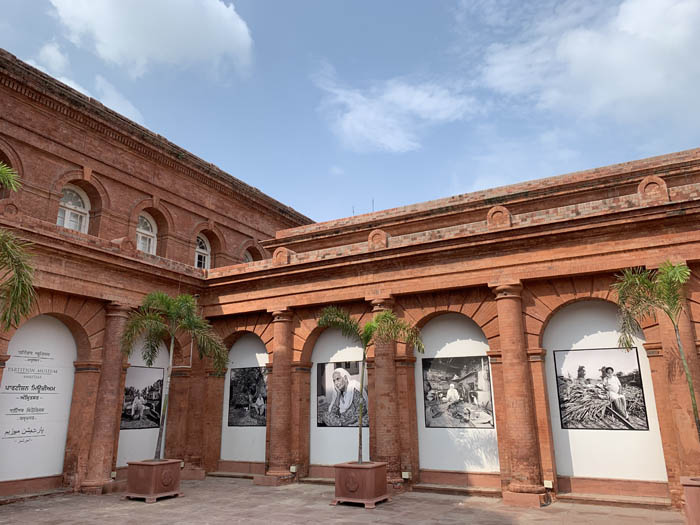
The Partition of India in 1947 was the most tragic and defining event in the history of the subcontinent. It also marked the largest migration in human history. The Partition led to the creation of two independent nations, India and Pakistan, but also resulted in immense human suffering, with up to 20 million people displaced and widespread loss of life and property.
Despite the scale of this immense human tragedy, for many decades, there was a notable absence of dedicated memorials or museums to remember and honour the millions affected by this historical upheaval.
The Partition Museum in Amritsar, situated at the Town Hall, came into existence in October 2016 to fill this significant void and to share the stories of people who lived through the horror of those violent times.
Created by the Arts and Cultural Heritage Trust (TAACHT), the museum serves as a poignant reminder of the human cost of the Partition and the strength and resilience of those who endured the trauma of displacement and loss.
The museum’s collection includes a rich array of papers, personal testimonials, documents, objects, and artefacts donated by individuals, many of which date back to the time of Partition. Through personal testimonies, artefacts, photographs, documents, art installations, and oral histories, the museum tells the story of Partition from the perspectives of those who experienced it, ensuring that their voices and experiences are not forgotten.
The Partition Museum in Amritsar offers a deeply immersive and personal experience, bringing to life the harrowing yet resilient stories of those affected by the Partition of 1947.The museum also dedicates areas to specific families and notable individuals who were impacted by the Partition and migrated to the Indian side of the border. These include stories of prominent figures such as Milkha Singh, the legendary athlete, and Mahashay Dharampal Gulati, the founder of MDH Masala. These personal narratives offer a glimpse into the lives of those who not only survived the Partition but went on to leave a lasting legacy.
Visitors to the museum can engage with history in varied ways. They can watch historical recordings, listen to evocative soundscapes in each gallery, read letters from refugees, and read official documents, gaining a personal look at people’s material memory. These varied experiences make the museum a comprehensive and deeply moving tribute to the enduring human spirit in the face of unimaginable adversity.
Photography is not allowed inside the museum (except in one area). As you navigate through the oral histories, people’s material memories, documents, and photographs displayed in the museum, the haunting sound of a train passing by and the installation of an anonymous railway platform stay with you for a long time. This nameless platform is in memory of all those innocent ordinary people who lost their lives in train attacks and all those who survived this intensely traumatic train journey without food or water as they fled from the land that was their home. You come closer to stories of loss, grief, betrayal, and also the story of hope and the indomitable human spirit to rebuild lives from the ashes.
Here are some glimpses of life and loss during the Partition as seen through all that is displayed in the museum.
THE LINE THAT DIVIDES: Sir Cyril Radcliffe had six weeks to draw the borderline. He was commissioned to equitably divide 450,000 sq km of territory with 88 million people. Radcliffe had never visited India before and had no idea of its people, landscape, and culture. He arrived on 8th July and completed his report by 12th August. In an interview later, he said, “I had no alternative, the time at my disposal was so short that I couldn’t do a better job. Given the same period, I would do the same thing. However, if I had two or three years, I would do it differently.”
Following the mindless violence the Partition saw, Radcliffe did not take any money for the work he had done. He said, “The people who died, their blood was on my head.”
YOU CAN’T READ LOSS: Loss is personal, yet in many ways, it’s universal too. Sudershana Kumari and her parents had to flee their home one evening while they were preparing their dinner. They just jumped from one terrace to another in desperation and left everything that was once theirs. Sudershana was eight years old then. Decades later, she recounts that horrifying night as tears flow continuously from her eyes. In an extraordinary gesture, she has donated a ‘Kari Glass’ (among other things) to the museum. She explains, “When you respect a guest, you offer them milk or lassi in a Kari glass. As the polish never goes off, it was considered precious.” Her sense of belonging lies in that glass.
Major Jagat Singh’s family and their village did not migrate initially because they assumed Lahore would be with India. When their kafila finally moved, they were attacked. Singh had just crossed the Ravi river when he looked back to see his father and many others killed on the other side of the river.
(Radcliffe had said, “By population, property, and standards, Lahore was originally in India. But then there was no city left for Pakistan. So I took Lahore from India and gave it to Pakistan. From East Pakistan, Calcutta was coming to India.”)
In Thoha Khalsa village in Rawalpindi, women jumped into the well to protect their honour.
In the museum, when you see the well (an installation) under the subtle light, you feel a knife cutting through your heart.
THE POOR ALWAYS SUFFERS THE MOST: Many with limited or no means travelled by kafila, walking miles and miles in the scorching heat and the torrential rains of heavy monsoon. They were particularly vulnerable to attack by mobs. They walked without shelter, sanitation, food, and water. Thousands, especially the elderly, the sick, and the children, perished from exhaustion and starvation. They began the journey but never made it to their final destination.
WHO CARES ABOUT DALITS? Not much has been documented about the Dalits and Partition. Dalits could not stay in the main refugee camps and were also cut off from getting access to clothing and food rations. Rameshwari Nehru, the head of the committee to rehabilitate Dalits, notes that the land compensation policies excluded Dalits as they were viewed as tillers, not owners.
HOW DO YOU DIVIDE CULTURE? The tragic consequences of the Partition were felt in music, literature, cricket, and heritage. In an absurd matter-of-fact effort at equity, ancient necklaces belonging to Mohenjodaro were broken, and an equal number of beads were given to India and Pakistan. Even giving either country one extra bead had to be discussed and formally documented.
MOVING FORWARD WITH HOPE, LOVE, AND LIGHT
One of the most poignant spaces in the museum is the Gallery of Hope. This area stands out as a favourite among visitors for its interactive and symbolic expression of peace and reconciliation. In this gallery, visitors are invited to write messages of love and peace on paper cut into the shape of leaves. These leaves are then hung from a barbed-wire tree, transforming a symbol of pain into one of hope and unity. History can be our greatest teacher if we are willing to learn from it.
Facing the Hope Tree, there is a board with the following lines of Sufi poet Bulleh Shah: “The entire universe is contained in a single point. God is found not by those who follow rites and rituals but by those whose hearts are pure.”
From the souvenir counter, one can buy books on Partition and tote bags.
Trivia:
The Museum is open from Tuesday to Sunday, 10 am-6 pm.
Monday Closed
Indian Nationals: INR 10/- Foreign Nationals: INR 250/- Children (5 and below): Free Partition Survivors: Free
How to get there:
Amritsar is well-connected by air and rail with India’s major metros.
Town Hall, Amritsar, is located at the start of the Heritage Plaza, a 5-7 minute walk from the Golden Temple and Jallianwala Bagh.
Distance from Sri Guru Ram Dass Jee International Airport: 13 kms. Time: 25 – 30 minute drive. Distance from Amritsar Junction Railway Station: 2.1 kms. Time: 10 – 15 minute drive. Distance from Madan Lal Dhingra Inter-State Bus Terminal: 950 metres. Time: 7 – 10 minute drive.
Cabs and auto-rickshaws are easily available to commute around Amritsar.
Paid parking is available at the Golden Temple parking lot (2-minute walk to the Partition Museum, Town Hall).
Deepika Sahu is an Ahmedabad-based senior journalist with a career spanning since 1995. During her career, she has worked with India's premier media organisations, including the Press Trust of India (PTI) in New Delhi, Deccan Herald in Bengaluru, and The Times of India in Ahmedabad. Currently, she is contributing India-centric features to Melbourne-based The Indian Sun, a cutting edge media platform. In addition to her journalism career, Deepika is involved in teaching English and Communication Skills to learners from different parts of India through Manzil, a Delhi-based NGO. Beyond her professional endeavors, Deepika is passionate about India's rich diversity, literature, blogging, quiet hours at a cafe and enjoying a cup of tea.
THE RAVISHING RAINBOW AND A COCKTAIL OF MEMORIES
Sujata Dash
"Leave me alone maa! Today is a Sunday. Let my mane be unkempt for a day at least. "
I used to blurt out at mom when she was rigid with her weekly oil application regime.
I even behaved like a stray dog shooing away pigeons, when she tried to tie my hair in braids and put a ribbon to arrest my curls, fix them rather. Her only intention was to tame the unruly curls and fasten them so that they behave properly and no more I looked messy.
We used natural ingredients like amla and fenugreek to soften our mane and bring luster to dull hair. Home cooked coconut oil was liberally applied to hair almost daily as a matter of routine. Since I abhorred oil application on a day today basis, mom was allowed once in a week to fondle the thick bouncy crop and discipline them.
Colorful matching ribbons were fashion accessories and fashion statements during those days. I am recounting my experience of five decades and more. I had a whole lot of them. My box was full of sheen. Bundled up, they looked like a ravishing rainbow. So many colors on one platter!
They were of different shapes and sizes. There were bows, thin ones, wide ones. The make too varied from cotton, rayon and satin to suit all kinds of occasions. I was lucky to possess so many varieties. They were gifts. Being the youngest in the family, I was lavished with tokens of love from elders and my closet was full to the brim.
I still possess a few. They are neatly wrapped up in a muslin cloth and find a special place in my closet. They are my trinkets of memory and nuggets of bliss in life's sojourn. They beckon mystical skies and billowing clouds amid dancing hues of horizon . I get besotted by nostalgia each time I palpate them. They are no less than bright shades of some immortal dream.
The above outpourings make sense all the more because no more I sport long hair. I can no longer use those colorful accessories if I want to though I have crossed the age.
I have cut my hair short, rather had to cut it off after spells of medication and rounds of chemo.
Well, that is a long sad story.
Here goes the synopsis-
Sujata Dash is a poet from Bhubaneswar, Odisha. She is a retired banker.She has four published poetry anthologies(More than Mere-a bunch of poems, Riot of hues and Eternal Rhythm and Humming Serenades -all by Authorspress, New Delhi) to her credit.She is a singer,avid lover of nature. She regularly contributes to anthologies worldwide.
WHAT I LEARNED WHEN I BECAME MY MOTHER’S LONG-DISTANCE CAREGIVER
Annapurna Pandey
Caregiving doesn’t always come naturally, especially in a culture that expects children to care for their parents as they age. In India, parents raise their children with the belief that, in their later years, those children—especially sons—will take care of them. Here’s what I learned when life didn’t follow that script.
I never imagined that I would become my mother’s primary caregiver from 8,000 miles away. Growing up in India, I was the only one among five children who spent most of my adult life living with my parents before moving to the United States in 1989. After completing my higher studies in Delhi in 1981, I returned to my hometown, Cuttack, to teach at the local college. For eight years, I lived with my parents, enjoying the comfort, attention, and rhythm of home. Those were blissful years.
In India, after marriage, daughters typically move away, becoming busy raising families and less involved in their parents’ aging process. In my case, even though I moved away, I was slowly initiated into the role of a long-distance caregiver.
The Beginning of Caregiving
It started with loss. My father passed away unexpectedly in 1993 at the age of 64, just a few years after his retirement. Six years later, my younger brother, the sole caretaker of my mother, died suddenly at 38. My mother, who had always lived in a bustling household, suddenly felt old and found herself alone at 64. My oldest brother brought her to Mumbai to live with his family.
Every summer, I traveled from California to Mumbai, spending three months with her and taking her to our ancestral home in Cuttack. But I sensed her unhappiness in Mumbai—physically, socially, and emotionally, she was constricted. In 2001, I brought her to California to live with me in Santa Cruz. For 12 years, my life revolved around her.
A Difficult Decision
In 2013, my oldest brother asked her to return to India. She couldn’t say no. She moved back to Mumbai, reluctantly. I was worried about her happiness. During visits in 2014 and 2015, I saw how unhappy and fragile she had become. I flew back often, trying to maintain her care from afar, but the distance made everything harder.
The Crisis That Changed Everything
In October 2015, I returned to India for a brief meeting and went to see my mother for a day. My sister-in-law took me inside, and what I found shook me. She was lying on the floor with a fractured hip. I called a portable X-ray service, confirmed the fracture, and arranged for surgery. My brother took her for the surgery. I had to return to the U.S. the next day to teach, only to collapse on campus soon after, suffering injuries from the stress and exhaustion. Still, I flew back to India, stayed with her post-surgery, and finally moved her back to her home in Cuttack with two caregivers.
Since December 2016, she has lived in her ancestral home, surrounded by familiar neighbors and caregivers. I travel to India three times a year to manage her care.
The Emotional and Ethical Weight of Caregiving
Medical care in India is expensive and lacks social security. There is no Medicare. Government hospitals lack resources, while private hospitals are prohibitively costly. I have travelled to arrange my mother’s cataract surgeries and post-operative support long distance. Often in the middle of the night, from California, I call doctors, nurses, and medical assistants for her ailments. Also, I realize I became the emotional support for the caregivers to deal with my mother’s odd demands for paan, tea, and calls day and night.
Despite my best efforts, I constantly battle feelings of inadequacy. I can’t comb her hair, feed her, or sit beside her at night. She now has no control over her bowels, relies on others for everything, and has lost the will to care for herself. Caregiving has taught me patience, tolerance, and humility. My mother has become childlike—innocent and vulnerable—and I do everything I can to ensure she feels loved and cared for.
The Bigger Picture
My mother’s story is not unique. According to a 2024 Agewell Foundation study on solo aging, 14.3% of elderly people in India live alone, with a higher prevalence in urban areas. Many transnational adult children, like me, grapple with the ethical and emotional strain of caregiving from a distance.
The moral dilemmas are profound:
Whose wishes matter most? Do we honor a parent’s desire for independence or make decisions in their best interest?
How do we prioritize? Between caring for aging parents, supporting spouses, and managing careers, where do we allocate time and resources?
How do we cope with guilt? The sense of insufficiency is overwhelming when we can’t physically meet every need.
Caregiving is not just about logistics—it’s about love, patience, and navigating cultural expectations, personal values, and moral distress.
What I’ve Learned
Being a long-distance caregiver is a constant balancing act. I’ve learned to accept my limitations, collaborate with paid caregivers, and lean on community support. I’ve realized that caregiving doesn’t always come naturally—it is a skill you develop under pressure, often at great personal cost. But it also transforms you, deepening your empathy and resilience.
My mother has taught me this: aging strips away layers until what remains is pure, unfiltered vulnerability. To care for someone in that state is both a privilege and a profound responsibility.

Annapurna Pandey is a cultural anthropologist at the University of California, Santa Cruz. Originally from Cuttack, Odisha, she moved to Santa Cruz, California in 1989. She is a travel enthusiast and loves to write travelogues highlighting her exotic experiences in different parts of the world.
Sushree Gayatri Nayak
The morning had the audacity to shine. The golden rays pierced through the sheer curtains, sliding over the ledge of the window and the edge of the unmade bed. The clock on the bedside table showed 8 a.m. He lay there, blinking at the ceiling fan. The silk bedsheet clung to his skin—like his debts.
After an hour of brainstorming, he rose—not to begin his day, but because sleep was tired of him. He felt like choking in the dusty room. To get some fresh air, he walked up to the rooftop, barefoot and careless, holding his breath as if the air could charge him rent.
Finally, he stood on the rooftop, amidst the shadows of big water tanks. He raised his hand to feel the sunlight on his skin, but noticed a lame pigeon sitting high on the parapet of another building. It looked at him constantly, as if mocking his fall. He tried to scare it away, but the pigeon sat still and didn’t move. That stirred something inside him and made him return in frustration, thumping his feet on the staircases.
The pendulum of the wall clock rang ten times. It was 10 o’clock in the morning. He was planning his day in his mind. With a sudden pop, the toasted bread leapt up, breaking his thoughts. He took the toast and applied jam on it—something he used to hate as a child. He had his breakfast, but not with contentment.
The sun climbed higher, and time moved forward. With it, his feet moved downward on the stairs. He was not in a hurry. The darkness of the corridor deepened with his steps. His eyes were lost in that darkness, reminding him of Lucifer, the god of hell, and how people compared him to him—not the fallen angel, but the fallen star of the business world. But he was never the culprit. He had always chosen the path of truth and honesty. Why did he have to endure someone else’s mistakes? Still, he had no choice but to fight through legal procedures. Amidst this storm in his head, his eyes flickered in the golden sunrays. He looked forward, and the corridor seemed like a labyrinth of hope and despair, as shadow and light played hide and seek there.
He started his car and drove out of the basement. Just as he hit the road, he saw that lame pigeon again. He stopped his car. The pigeon flew away toward the building rooftop, and he stared at it until it reached there. The symmetrical design of the building caught his eye. Once again, he got lost in his world of thoughts. The apartments had the same design—same balconies, same windows—yet each apartment held a different story, a different family, a lot of different faces. He was one of them too. He should have been thankful to his father for saving at least this small apartment and car for him, or else he would have been one of the beggars on the road. He looked toward the beggars in rags and their sick children. One of them, a thin, skinny boy, poured water on him. But he didn’t shout. Instead, he silently got back in the car and drove away.
The car stopped in front of a local cloth store. He went inside and asked the shopkeeper for a pair of Joe’s Jeans. The shopkeeper looked at him in surprise and said, “Huh?” He repeated the name. The shopkeeper replied with a sober gesture, “Sorry sir, we don’t have jeans of that brand.” He bought another pair for just ?1500. He changed into the new jeans in his car and left for the lawyer’s office.
He entered the lawyer’s chamber, but only the assistant was there, busy with some paperwork. The lawyer was not present. He asked the assistant for the lawyer, and the man gestured toward the sofa, asking him to wait. After half an hour, the lawyer arrived. When he saw him, he greeted him and brought out his files. They beat around the bush for two hours, even though the lawyer knew the chances of winning the case were just one percent. But for money, everything is fair, and the lawyer too played his part—draining the rest of his savings. Still, these futile discussions gave him hope to regain his lost reputation.

After the meeting, he returned straight to his apartment. It was evening, and the sun had already set in the west. He went to the window and sat on the ledge. In his hand was a glass of water, not wine. He sipped the water with great difficulty and watched the road below. He chose to go to the terrace rather than inhale the dusty smell of the room. He went there, hoping to breathe fresh air, escape the chaos of the town, and relax his mind. He opened the door and searched for that lame pigeon. Thank God, the pigeon wasn’t there.

He took off his glasses, took a deep breath, and stood at the edge of the roof, holding the balustrade, watching the city from above. The city lights looked blurred, reminding him of the colorful lights of the clubs—the parties, the wine, the champagne, the dancing and singing. Those friends who once stood close to him, whose hands once patted his back, were the same hands that stabbed him too. Now, he was all alone. He sighed and looked up at the sky—the dark grey sky—not colorful, but true. It was like his current state.
After some time, he sat on the ground, looking at the ladder and pipes on the wall in front of him. On the wall, he saw a crescent moon made of darkness. His face smiled a little. He raised his hand to touch the moon. Yet it was only an illusion created by the end of a pipe. And with that, his hope withered.
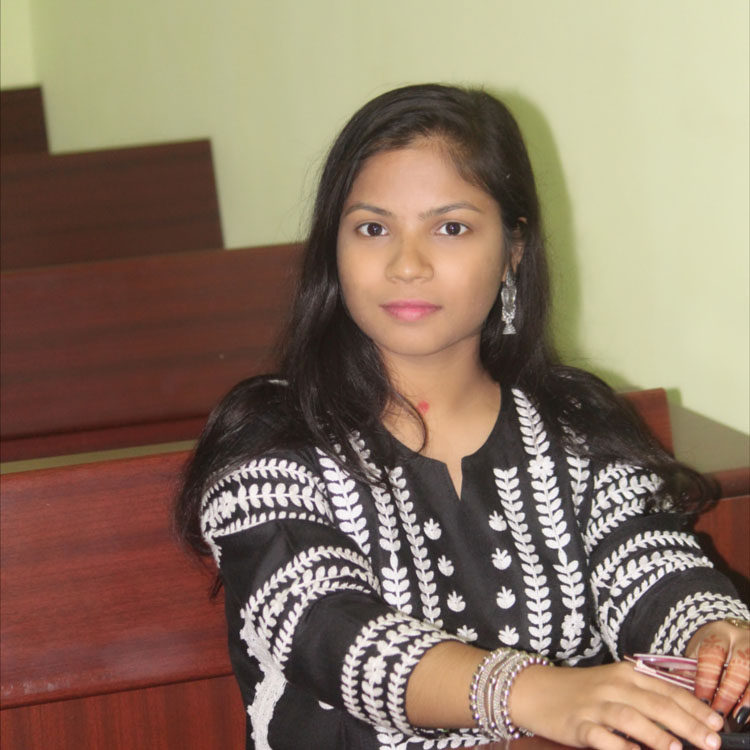
Sushree Gayatri Nayak is a budding muse and poet from Odisha, India. Currently pursuing her studies in English literature at Utkal University, she channels her passion for love, nature, and current social issues into heartfelt poetry. Her verses weave emotional depth with thought-provoking reflections, capturing both personal experiences and broader societal concerns.
MY EDUCATION IN ANTHROPOLOGY AT LUCKNOW
Triloki Nath Pandey
In my education, I reached a point where I had to decide whether to pursue a career in science and technology or the arts and humanities. I was not as strong in sciences as my Queen’s College friend, Alokh Niranjan Mantri, and G.I.C. friend, Ashok Banerjee, were. My marks in chemistry were higher than theirs, but I did not enjoy spending much time in the laboratory. Consistently, I scored higher marks in Hindi, English, and Sanskrit, but I could not see myself specializing in any one of them. I realized that I was better than many of my classmates in dealing with people from diverse backgrounds.
With this mental uncertainty, I went to see Pandit Hazari Prasad Diwadi, a fellow “Balliatic” and the doyen of Hindi scholars. He heard me patiently and said, “Get admission at Banaras Hindu University (B.H.U). We are strong in every subject. You can make your career choice later.” I followed his advice and took admission at B.H.U.
I went home to spend some time with my family. While I was sitting at my Bhaiya ji’s shop, his business partner, Paras Nath Agarwal, dropped in. On hearing my decision, he said, “Why B.H.U.? Go to Lucknow and study anthropology – the science of man.” I was 19 and had neither visited Lucknow, the capital of Uttar Pradesh, nor heard the word anthropology (much later, I learned that Professor T.N. Madan had a similar reaction). I went back to the Hanuman temple and informed my father that I was thinking of going to Lucknow for my college education. As luck would have it, that very moment, Pandit Raghunath Sharma walked in. We both greeted him warmly, and my father told him about my decision. He was a celebrated scholar of Sanskrit and a distinguished professor at the newly started Sanskrit University at Varanasi. He told me that he was friends with Vice Chancellor Iyer of Lucknow University and wrote him a personal letter in Sanskrit, introducing me. He also informed us that the registrar of the University, K.D. Tewary was from Ballia, so was Satyavrat Singh, the new professor of Sanskrit.
With Professor Sharma’s letter, I took the overnight train to Lucknow. I went to the office of the U.P. Congress Party, as I had never been to a hotel. I was greeted by a prominent party member who told me that General Secretary Pande had gone to New Delhi, but I could stay there for a couple of days. I left my bag there and took a rickshaw to go to the residence of Vice Chancellor Iyer. It was a redstone building behind the registrar’s office. His Dutch wife opened the door, and I handed her the letter of introduction. After a few minutes, a peon ushered me to a room where the Vice Chancellor was sitting. He had read Professor Sharma’s letter and asked me to show him my I.Sc marksheets. He read them carefully and asked me why I wanted to study at Lucknow University. I told him that I wanted to study anthropology, and no other university in the U.P. offers it. He smiled and said, "Why not combine it with Sanskrit?" I told him that since I have to choose three subjects for my B.A., I had decided to take English, Sanskrit, and Anthropology.
Later in the day, I walked into the registrar’s office with a slip that the Vice Chancellor Iyer had given me. The Registrar Tewary was not in his office, but his deputy, Raibahadur Saheb, took the slip, read it, and said, “ Barkhudar (in Urdu son), take a seat. Tewary Ji is on his way.” When the Registrar Saheb entered his room, everyone got up and greeted him warmly. He looked at me and said, “No need for any introduction, my brother had already told me about you.” He asked me whether I have a place to stay. He requested his peon to take me to see Professor Ramesh Mohan, the provost of N.D. Hall. While we were waiting for him, he walked in with Professor G.S. Mishra, the deputy provost. They read the registrar’s note the peon gave them and said, “Bring your things to N.D. Hall. You will be allotted a room there.” I had nothing except a bag, and I told them I was going home to return in a few days.
Everyone in my family was glad that I was going to study at Lucknow University. My father had never heard the word anthropology, but when I explained what I was going to study, his response was, “anything dealing with human beings can not be bad.” He was pleased to know that I had decided to study Sanskrit as well. “If nothing works out, you can easily do panditai (priest’s work) ,” he said.
After a week at home, I returned to Lucknow. I went to N.D. Hall and I met with Professor G.S. Mishra. I learned from him that I was allotted a double room on the second floor. I went to my room and met with my roommate, who had been there for a fortnight. The room was full of cigarette smoke, and I could hardly breathe. I had never lived in that situation. I went back to see Professor Mishra and told him about my problem. He heard me and said, “You are no longer in Ballia. This is Lucknow. You'd better get used to this.” I felt very hurt and went to see the political leaders from Ballia, mainly members of the legislative assembly. Luckily, they were all in town since the assembly was in session.
Bachcha Pathak was the M.L.A. from my constituency, and he was joined by Gauri Shankar Rai and Ram Anant Pandey, some of the other members from Ballia. They heard me and were offended by what the Deputy Provost had said. They agreed that since Ram Anant Pandey was M.L.C.(member of the legislative council) and a senior member, he should go. Right away, Pandey ji said, “Chalo, Hum Baat Karenge” (Let us go, we will talk). We arrived at Professor Mishra’s office and were greeted warmly. His political attire took Professor Mishra– Khadi Kurta-Dhoti and the Gandhi Cap! Pandey ji introduced himself and explained the reason for his visit. He said he wanted to come and see him first before going to the higher-ups. Right away, Professor Mishra told him that there was no need to do that. He asked his peon to check whether there was a single room available on the third floor. He responded, “Sir, we have kept room 112 for a Master's (MA) student.” Professor Mishra told him, “Take Mr. Pandey’s bedding and books to room 112 right away.” He thanked M.L.C. Pandey for his visit and went home. I spent the next four years in room 112 N.D. Hall.
Classes had already started, and I was a week behind. I went to see my English teacher, Professor Naresh Chandra, and my Sanskrit teacher, Professor S.S. Mishra. I had come to Lucknow to study anthropology. So I went to the anthropology department; there I met Hira Lal and Mewa Lal, the department assistants. Hira Lal took me to Professor Majumdar’s office to meet him. He said, “You are a bit late, but come to my class tomorrow.” That was the beginning of many meetings I had with the legendary Professor during the 1959-60 academic year.
Several decades later, I was invited to deliver the first centennial lecture at the D.N. Majumdar centenary in March 2003, and it appeared in the special number of the Eastern Anthropologist founded by Majumdar in 1947 – the year India became independent.
In this paper, I described my cordial relations with the beloved professor. For six months, I went to his house once a week to tutor his daughter, Kumkum, in Hindi. One evening in late April, when I arrived, I was told by Kumkum’s mother, Mrs Madhuri Majumdar, that Doctor Saheb wanted to see me. Kumkum and I walked into his room. He was resting in bed, but was in a mood to talk. He told his daughter, “No lesson today, I want to talk to your tutor.” Professor Majumdar told me how he and his wife had given their blood to establish the anthropology department at Lucknow. He told me what he thought of each member of the department. He was so happy that T.N. Madan had come back after finishing his doctorate at the Australian National University. He said, “You see, fieldwork is the basis of anthropology. Madan cannot do good fieldwork due to his hearing disability.” He continued, “Mathur also went to Australia, but he is basically a family man. He does not have much time for anthropology. Gopal Sarana is paranoid. He brought his father to meet me and tell me that I gave TB. to his son. I do not carry any TB germs. Jain is young and ambitious. He comes from a wealthy family. It is too early to say in what way he was going to grow. That leaves Sen. I encouraged him to go to London and finish his doctorate in physical anthropology. He complains that he does not have a son. You see, Madhuri and I do not have a son, but you are all my sons.”
Shortly, I shall say more about what I learned from each member of the department mentioned above. Here, anthropology became a University subject for undergraduate, graduate, and post-graduate students at Lucknow University. Professor Majumdar, in his book, “The Matrix of Indian Culture” (1947), and “Sociological Traditions” (2011), as well as in his pamphlet “Sociology at Lucknow University: The First Half Century” (2013), gives details on the beginning of anthropology and sociology in India. We learned from Majumdar that “the introduction of anthropology in the curricula of the Calcutta University in 1920 [was initiated by] Sir Ashutosh Mukerjee” (1947:47), the legendary Vice Chancellor. Majumdar, N.K. Bose, K.P. Chattopadhaya – the future leaders of Indian anthropology – were trained at Calcutta in the early 1920s. After earning his M.Sc., Majumdar got a fellowship from the University to visit the tribal region of Bihar. He met the veteran ethnographer – Rai Bahadur Sarat Chandhra Roy – “the father of Indian anthropology” who introduced him to various tribes – the Ho, the Munda, and the Oraon – of Chhota Nagpur. The people and their lifestyles captured Majumdar’s imagination, and he had written a great deal about them. Impressed by his work, Professor Radhakamal Mukerjee invited D.N. Majumdar to join him and D.P. Mukerji – what Madan calls the “Lucknow Trinity” – to build a new school of social sciences there. I will have more to say about it in the next section. I want to conclude this part with a few comments about Lucknow.
My life in the city made me aware of the advantages of the social capital I had. I was mesmerized by the cosmopolitan composite cultural tradition of Lucknow. For the first time, I was exposed to English medium education. Still, all my teachers were men, but half of my classmates were women. In all my classes, some women freely interacted with us. I made friends with Muslim women classmates who came from orthodox families but had little inhibition in interacting with Hindu boys. Lucknow has been one of the leading centers of Shia Islam, and Imam Khomeini's grandfather had gone to Iran from here. Many of my Muslim friends told me that they feared Sunnis more than their Hindu neighbors.
Lucknow was not a temple city like Prayag or Varanasi, where I had lived earlier. It was a city of bookstores, libraries, intellectuals, and politicians. Some of the magic of polish, sophistication, and tahzeeb rubbed on me as well, and I loved the four years I spent in Lucknow.
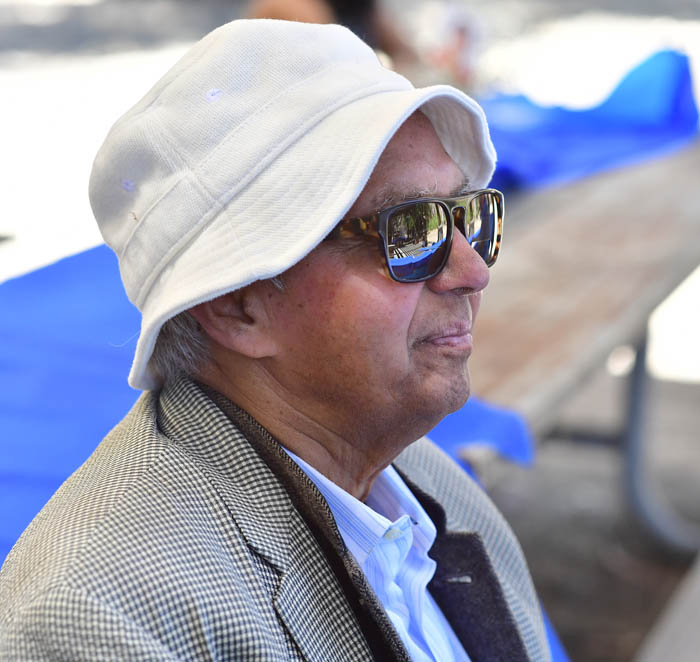
Triloki Nath Pandey is a well known anthropologist, educated at University of Lucknow (B.A., M.A.), University of Cambridge (M.A.) and the University of Chicago (Ph.D.). He has taught anthropology at various Western Universities—Chicago, Pittsburgh, N.Y.U., Columbia, and Cambridge, and since 1973, at the University of California, Santa Cruz. He often visits India for lectures, and on teaching and research assignments. He is a well respected scholar of indigeneity.
Triloki Nath Pandey
Professor Emeritus of Anthropology
University of California, Santa Cruz
California, 95064, USA
Jayshree Tripathi
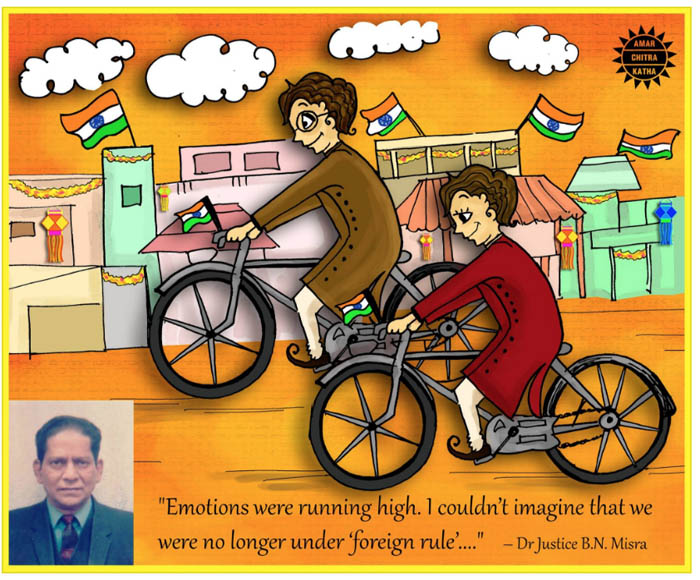
A big thank you to everyone for sending in Independence Day stories. We will start posting the stories in the coming week. We leave you with one last story for our side.
Dr Braja Nath Misra, former Chief Justice of the Sikkim High Court, was a 17-year-old student of Ravenshaw College, Cuttack, when India got her independence. He has shared his story with us.
That August 15, most of us were keen to wear something 'national', not our usual shirts and trousers. Some of us decided on `sherwani' and `churidar pyjamas'. I had `churidar pyjamas", but didn't have 'a sherwani'. Acting on a hunch, I called on my dear friend Abdul Bari and what luck - he produced a sherwani which fitted me snugly! Promising to meet him later, I returned home with the borrowed `sherwani' and a few flags.
Around five 'o' clock I went to Bari's place. We embraced each other as if we were meeting after a very long time! Emotions were running high. I couldn't imagine that we were no longer under 'foreign rule'. Then we set out on our bicycles for a tour of the city. Almost every house was decorated with coloured paper and flowers. We heard a few groups singing `Bande Mataram' and others singing 'Jana gana mana'. At times there were loud calls of `Inquilab Jindabad'. We returned home, tired and hungry, but God be praised that "sweet home' was sweeter that night."
Artwork by Ritoparna Hazra
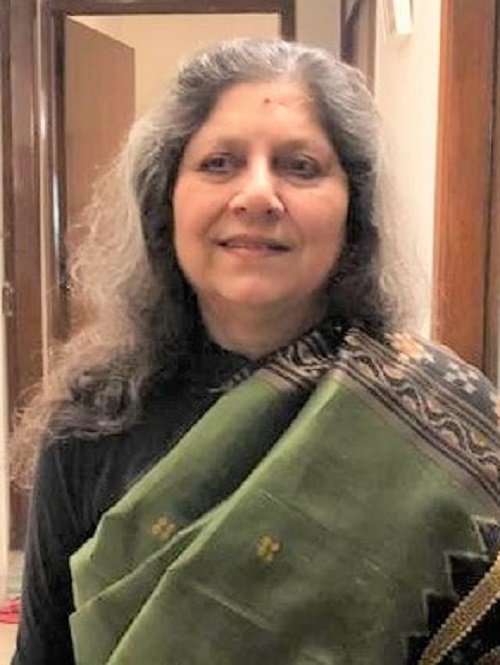
Jayshree Misra Tripathi has been a consultant, educator and examiner in English Language and Literature, for the Diploma of the International Baccalaureate Organization. She worked in print media in the late ’70s and ’80s in India. Having lived in diverse cultures for over thirty years with her late husband, a career diplomat in the Indian Civil Service, her short fiction and narrative verse dwell upon journeys through the diaspora, highlighting women's 'voices' and cross-cultural conversations. Her books include Trips and Trials, What Not Words, Two Minute Tales in Verse for Children Everywhere, Uncertain Times and The Sorrow of Unanswered Questions. Online blogs are on Huffington Post India Archive and News 18.She includes her maiden surname in her writing, as the eldest of five daughters.
Pragya Prasad
The knife was tired.
It was tired of the metallic tang of blood, the feel of its victim’s skin as it plunged into their body. It was tired of being coated with the viscous red liquid every night and then cleaned with soap and water as if it had never taken a life, a child’s tears, a mother’s smile. Every night it would be pulled out to see the face of its new victim in its shiny, polished blade, forced to hear their screams for help as it cut the thread that bound them to this world. And then, it would be tucked back into its cover as if nothing had ever happened, a mystery in the dark. It would lie on the shelf, hidden inthe dark, dreading the moment when its master would pick it up and yet again use it to commit a heinous crime. Nights passed with deaths piling up, and the knife grew used to this murderous routine.
Yet one day, as it was pulled out of its victim, an old man who had only smiled as the blade plunged into his body, it was cast aside in a second as it skittered across the paved cobblestone. And it lay there, alone and abandoned till the storm began. Thunderous raindrops marched their way across the air in anger and the knife too was swept away by their force and conviction, its crimes washed away by Mother Nature herself. And when the rain stopped, the knife found itself lying in a gutter in a village, forgotten with no use now. It thought about its old master, which poor weapon he would sacrifice for his twisted fantasies this time.
It lay there, alone for sometime before a warm hand picked it up happily. In its blade it saw the reflection of a young girl and it was reminded of all the people like this girl who had perished because of it. Ashamed, it tried to become a heavy weight in her hand, but the child, skipping lightly, carried it all the way to her humble house, a frail cottage in the village.
She gave it to her mother, a woman whose face seemed wise but not so old, maybe hardened by ages of hardship. She took it with a calloused hand and made her child promise to never touch something dangerous like it again. Yet, in their state, the knife was a gift, a treasure for them. She scrubbed it clean and washed it well and as the water poured over it once again, this time the knife felt surprisingly clean. The mother called out to her child for dinner and used the knife to cut out two slices of bread, the bigger one for her daughter, dragging it softly through the hardened loaves in a way reminiscent of its master.
The knife was set aside then and it watched as the mother and child enjoyed their meager dinner. It had never been used for anything other than death, and it had never seen what it could be. The knife was pleased to see that it could bring happiness too, and waited to be stored away in a drawer, taken out the next night for another slice of bread.
Pragya Prasad is a young student of class 11 from Greater Noida near Delhi. An avid reader, Pragya enjoys writing stories and poetry of her own.
S. Sundar Rajan
With Navaratri round the corner, I was scouting round for some ideal gifts for the invitees. What better gift than the big colourful bead malas exquisitely handmade by the gypsies, I wondered. And at no better place than Besant Nagar, to pick them up.
I was passing through the main road of Besant Nagar around 11.00 AM and stopped my vehicle at the spot where I normally noticed these road side shops. To my dismay I couldn't spot the gypsy vendors. I got out of my vehicle to survey and was lucky to spot the vendor.
Noticing a prospective customer in me, the vendor, a short and stout gipsy, gave a wide smile and said, "I generally open my shop at 11.00 A.M. But today, being Friday, most of the ladies will be busy worshipping at temples and hence they generally turn up a bit late. That's why I open my shop a bit late today."
She then politely told me, "Sir. Would you mind waiting in your vehicle for about ten minutes, as I need time to open my shop. I do not want to keep you standing."
I was very impressed on her emphasis on time, human psychology and customer relationship. I gave her a smile and stood at the place to watch her in action.
I found that her shop resembled a wooden container of dimensions 5'*4'*4', slightly raised from the ground and held in place by four wheels. The top of the container was her display table covered by layers of plastic sheets, neatly held in place by jute ropes. About four feet above the display table, she had arranged an overhead cover for protection against ravages of the weather.
She started removing the ropes, skillfully rolling it on a stick. There were about six layers of sheets, which she removed one after the other and handed them over to her assistant, who folded them neatly and placed them on the roof of the container.
She then proceeded to unlock her container and brought out varieties of beads carefully stacked in trays. She spread a sheet on the footpath and said, "Sir, it would be easier for you to pick your choice, if I keep it on display here."
I was amazed at the variety on display and picked up ten beads, for which we agreed on a price, going by the volume. She neatly packed them up on a newspaper and handed them over to me with a beaming smile.
Her emphasis on time, human psychology, concern for protection of her stock and tidiness in unpacking took me by surprise. It was a profound learning experience to the on line shopping to which we are slowly migrating. All in all, my day started on a pleasant note with a positive learning experience.
S. Sundar Rajan is a Chartered Accountant with his independent consultancy. He is a published poet and writer. His collection of short stories in English has been translated into Tamil,Hindi, Malayalam, Telugu, Kannada and Gujarati. His stories translated in Tamil have been broadcast in community radios in Chennai
and Canada. He was on the editorial team of three anthologies, Madras Hues, Myriad Views, Green Awakenings, and Literary Vibes 100. He has published a unique e anthology, wherein his poem in English "Full Moon Night" has been translated into fifteen foreign languages and thirteen Indian regional languages.
An avid photographer and Nature lover, he is involved in tree planting initiatives in his neighbourhood. He lives his life true to his motto - Boundless Boundaries Beckon.
Brahma Acharya
7:00 AM. Shiva hoped the day would be different. He had wandered far from his place, into the heart of Mumbai, Nariman Point. Mumbai is unforgiving. The streets, more so. Crowds flooded by, all in a hurry, feet thudding with restless rhythm. The stench, the pollution, the street debris, always the same. Then the chiaroscuro: of rich and poor; of hope and despair; of mansions and slums. Shiva could relate to one. Bedraggled clothes, uncombed hair, and torn slippers. He moved on. Without despair, without destination.
“One day at a time,” he thought.
He felt his pocket. Rs. 200. That was all. Just enough for food. He needed to return to his place before sundown. Street-food vendors abounded. After checking handwritten rates at five stalls, he stopped at the cheapest. A plate of vada paav for ?30. He devoured it like a hungry canine. The best breakfast he’d had in years. He wanted another plate, but a quick calculation dismissed the thought.
He walked on.
Peals of laughter stopped him in his tracks. Two street urchins were trying to spin a top. They took turns. None succeeded. Every failure triggered giggles. Shiva remembered his forgotten childhood. A sense of hiraeth. He ambled along.
The sun had now warmed the streets. His feet ached through the torn slippers.
“Ha... lucky me,” he murmured. “At least I have something, unlike the scores who walk barefoot.”
He stopped near a curb where a group of youngsters gossiped. Barely twenty. He scanned their faces. None seemed to have a care. The camaraderie was infectious. He kept watching. Famine in pockets, castles in hearts. Nostalgia struck again. He remembered his friends. And the smile with which they had abandoned him. Maybe the difference in status had grown too loud. A tiny tear escaped the corner of his eye. Time to move on.
Almost noon. Hunger returned, persistent and sharp. The same ritual followed. He settled for a ?50 lunch, fish curry and rice. It melted in his mouth. But like breakfast, it wasn’t enough. And again, he couldn’t afford more.
His feet now throbbed from walking and the scorching heat. He needed rest.
He scanned the street. Across the road, a group of beggars sat in the shadow of a tree. He hesitated. Then gathered courage and walked to their side. Seeing his condition, they made space. He sat quietly, eavesdropping. They were comparing earnings. One old man grinned wide barely able to conceal his excitement. Two generous strangers had each given him ?100 each.
“Today, finally, I’ll buy the toy for my grandson,” he beamed.
Others cheered him on.
He must have such a loving family, to give his entire savings for a moment of happiness, Shiva thought. He wondered if he could ever have a family. Then slipped into a deep siesta. His body, aching from hunger and heat, gave in.
When he woke, they were all gone.
An hour? Two? Didn’t matter.
Hunger pangs returned.
Maybe some bhel or paani puri?
But if he ate now, he wouldn’t be able to get back home. He eyed a street vendor with hunger-lust, but didn’t order.
A man smoking nearby noticed Shiva's plight.
He called the vendor and asked for a plate of papdi chaat, paying quietly.
Shiva’s eyes welled up again. He thanked the stranger and devoured the chaat in one go.
Oh Lord... heavenly.
Evening approached.
He took a bus to Navi Mumbai. Stood at the back, not daring to sit though seats were empty.
The conductor took ?20, gave a ticket.
Exhaustion and hunger didn’t matter now. Shiva alighted at his stop. One final auto to reach his remote and isolated place. After haggling, one driver agreed to ?100.
As they rode, the cool evening breeze breathed life into him.
“Stop here,” Shiva said.
The auto driver looked puzzled. It seemed like the middle of nowhere.
A few confirmations later, he shrugged, collected his ?100, and sped off.
Shiva stood still, watching the auto disappear. Then he walked to a bush and gently parted it. A concealed door emerged.
He placed his index finger on the sensor. The door roared open.
He stepped inside, waited for it to shut behind him.
Then pulled off his wig and sighed.
What’s more difficult, he thought — being the richest man in the country or a nameless destitute? But of one thing he was certain. Happiness was never for sale.

Brahma Acharya is a prolific writer whose storytelling echoes the flair of Jeffrey Archer or Dan Brown, marked by sharp narrative arcs, nuanced characters, and an impeccable command over the English language. His works seamlessly blend intellect with imagination, weaving plots that keep readers engaged while challenging them to reflect on the complexities of human nature and society. A technology enthusiast by profession and a storyteller by passion, Brahma brings a rare duality into his writing—melding the precision of analytical thought with the artistry of literary expression. Whether exploring ambition, morality, or the unpredictable turns of fate, his narratives carry depth, elegance, and universal resonance. He is the founder and director of Kare4u Pvt Ltd, Bhubaneswar.
CONVERSATIONS WITH AMMA – PART 1 (A)
Seethaa Sethuraman
Amma has left behind an oasis of precious memories that I dip into from time to time and feel rejuvenated. In the last slightly over 1.5 years that I have tried to pick the pieces of my life without her (and without Appa who passed away in 2009); there are these small day-to-day conversations with her that come to the fore of my thoughts.
At the outset, these come across as normal conversations that I happen to recall based on some trigger (more below) but open a pandora’s box of deeper meanings that have been waiting to be unravelled...maybe like Alice in Wonderland. Towards my growth as a human being and towards understanding life and the underlying meanings better.
Mulling over these now makes me realize that they are nuggets of wisdom that Mom was sharing with me in a non-preachy practical way or maybe, she was also doing all that subconsciously, from the repertoire of wisdom that she was carrying within herself. For me, it is the “heirloom of emotions wrapped in love that I carry in my mind” and will always treasure. And, while encountering those moments now and unearthing the depth of meanings that lie within those moments; I’m amazed at how what Amma has “said/ triggered/ help me understand better”, without in fact, saying too much at all. In her own minimalist way…a mother was sharing her learnings of life with her daughter…. possibly serving as a mental, mobile library to refer to…. while journeying through life.
I’m sure there are several such nuggets that are waiting to be tapped into. But, for now, sharing the ones that I’ve stumbled into so far. This one is the initial part of Part 1. I don’t know how many more parts would happen and when; but suffice to say, I’m sharing a piece of me through these writings, and I’ll share more as and when I experience more. More parts of Part 1 in the coming editions.
Trigger 1 - Preparing Resource: There is this Nestle’s Resource, a high protein supplement that I typically drink on some evenings, especially when I’m either feeling very tired for whatever reason or need extra stamina before my dance class/ run or sometimes after that activity. (Just a tip here shared by my diet coach, it is good to drink protein post work-out while carbs/ fat is good before). Resource comes in a powder format and needs to be mixed in water or milk to be consumed properly. But it was not as simple as it seems like Amma used to say; was what I’ve come to realize. The seed of realization was probably sown even when Mom was around whenever I used to attempt making it, but the depth of that realization dawned only after her. Mom used to say that the milk/water had to be heated just to the level that would help the Resource to blend well; not less, not more – either of them can lead to a grainy/lumpy drink instead of a smooth one. I’ve done both and realized what Amma meant, conveyed in her own sweet way. And I both smile as Amma’s words play back in my mind as well as feel even more loved for the attention of detail that Mom went about for me. She was a mother, and mothers derive their happiness in such quiet, unspoken ways of doing their own “experiential” things that are best for their children.
When you dig deeper, you understand the meaning of being detail oriented in everything that you do; to get it right. You also start respecting the women homemakers that much more and the efforts they put in their daily household chores; without expecting anything in return but smiles on the faces of their family members. As a society, can we ponder for a while about how much more sensitive/ supportive we ought to become to the unconditionality exhibited by these homemakers?
Trigger 2 – Amma’s mobile phone: Her phone continues to be my companion for managing/ attending to certain household related matters as well as for playing slokas during my workouts – powerful slokas that she held very close to her heart and recited/ listened to them regularly. She used to say that hearing/ reciting these slokas helped in multiple ways. As far as Vishnu Sahasranamam was concerned, especially in the later years, she would like to recite it lying down before going off to sleep. It was a good thing to do, to ward off unnecessary thoughts before resting, she would say. She knew it by heart. So, I would recite it by referring to the book and she would without, and we both enjoyed our blissful chorus and togetherness…invoking the God Almighty and invoking happiness in the process. Sometimes owing to excessive tiredness, she would dose off in between and then awaken few stances later, smiling at the limitations of an aging body. Now, a look at her phone triggers all those thoughts and several more.
Mom had her own share of minor struggles with her mobile phone but took on to WhatsApp well. She used her phone judiciously in a limited fashion – which is a great practice that I would also like to emulate… (there…she set herself as an example without making a song and dance of it). She would from time to time mildly complain to me about her phone becoming slow owing to excessively jamming of WhatsApp and wonder if there was a good way to manage that; call volumes not being sufficient when the battery charge has become lower and the irritating frequency with which mobile phones require charging, etc, etc. She had her own interpretations of why something was happening to her phone and some of them were merely backed by her intuition. Maybe there is indeed much more to her phone experiences that mobile phone makers could pay cognizance to while designing future phones for elderly?
For all the concerns around the addiction of WhatsApp and the university that it has become among several Indian elders; her WhatsApp messages to my brother (who lives close by with his family) are still lying there in her phone and talking to both of us in caring, loving, motivational terms; like her, in her own soft, subtle manner. So, in that sense, grateful to technology for all these treasured memories. Ostensibly, technology is a boon, but we shouldn’t allow it to become a bane by our overdependence on them.
Seethaa Sethuraman has had a creative orientation right from her school days – dabbling in writing,drawing and painting as well as learning Indian dance forms and Carnatic music. Thereafter, the usual suspect in professional education and corporate pursuits assumed centre stage (B.Pharm, MBA by education and a Health market researcher by profession); till the pandemic strongly nudged her to delve back into her creative side; alongside her continuing corporate endeavours. While formally learning Bharatanatyam had already begun since mid-2018; writing poems and drawing-painting turned somewhat prolific since the last 2 years.
As per seethaa, she writes/ draws-paints when the calling within her turns so strong at that moment; that it just cannot be brushed aside till it has been acted upon. So far, she has been doing them for her own self without giving much thought about publishing them. Coming across the Literary vibes platform has, however, enthused her to share this creative happiness with the outer world. Through this process, she also looks forward to receiving feedback/ comments that will encourage her to keep creative expressing; always.
Arpita Priyadarsini
How exactly do you define it?
Some say it's synonymous to freedom
I say, it's the opposite of non dependence
When you free yourself
From the wrath of all the things
That you once were bound to
Independence for me isn't the failure of patriarchy
It's actually the win of morality
From the generational trauma
That it has created
Independence isn't women roaming around freely
Independence is actually understanding that
Women are equal beings
Cause independence brings safety
Irrespective of everything
Independence to me is not people living on their own terms
Independence defines the realisation of no term being valid enough to hurt other's values and traditions
Independence isn't an overnight delivery of freedom
It's an age old continuous process
Progressing each second
And validating the minor and major wins
Independence defines honesty
Morality and loyalty
Towards anything that one considers as their own
Independence lies deeply in loving freely
And living without thinking of the consequences
Independence defines every being's freedom
Irrespective of their choices
- Elly
Arpita Priyadarsini, I`m currently working under Home department, Government of Odisha, has keen interest in literature. She loves reading fiction and poetry. She started writing poems few years back and has been published by an international publication house twice. Her Instagram handle is @elly__.writes, which is solely dedicated to her love for poetry.
Darsana Kalarickal
It was one of those sultry May mornings when the air itself seemed heavy. I stood in the kitchen, sweat trickling down my back, lost in the usual chaos of boiling milk and a cabbage stir-fry that was on the verge of burning. Suddenly doorbell rang. Once, then again—insistent.
I heard footsteps thudding down the stairs. Manu must have woken up.
“Manu, see who it is,” I called out. “If they’ve come for consultation, ask them to wait in the room.”
The milk hissed and frothed over the pot just then. I quickly set it aside and began sautéing onions. Manu appeared at the kitchen door.
“May I help you, ma’am?”
Ignoring his question, I added chopped tomatoes, slit green chillies, and curry leaves to the pan. “Who was that?”
“Oh, that? A girl sent by your friend. She said you’d kept a petunia sapling for her aunt.”
“And where is she ?”
“I told her that you were busy and to come another day. So she left,” Manu replied carelessly.
“You could’ve called me! I’d set it aside for Bhadra especially.”
“Oh, and if I had? You’d only have said, ‘Manu, stir this for a while, I’ll be right back.’ And both of us know you’d never come back quickly. I don’t have time today, Mamma. Very busy. The new film’s work begins—a whole week of training. The director’s made it clear: no full-time attendance, no job. If you want me to have breakfast, better give it to me now. After nine, you can't see me.”
“Then eat if you must. But what must that girl have thought?” I muttered.
Unbothered, he took two dosas, poured steaming chickpea curry over them, and said, “Mamma, has someone poisoned you with ginger? Ginger tea, ginger chutney, and now ginger even in this curry!”
“If you don’t like it, put it aside,” I snapped, my irritation rising.
He only grinned. “What’s the value of a petunia plant anyway? We could make a business out of this. Look, it’s even budding.”
I shot him a sharp glance while stirring Boost into hot milk.
“Listen, Nandumol . If I say Bhadra’s aunt asked for it, how can I refuse? That too for such a lovely girl. We’ll think about the rest later.”
He smirked mischievously, and the cup I was handing him slipped from my hand. It crashed, splattering sweet cocoa fragrance across the kitchen. I froze. He looked startled at my pale, sweat-drenched face.
“Mamma, are you alright?”
“You go and eat. Isn't it time for you to leave for work?”
I murmured, hiding the sudden fear that had swept over me. I busied myself cleaning the floor, but the scent of Boost lingered stubbornly.
Then, like a lightning bolt tearing through my spine, pain surged into my abdomen. Heat spread downward. I felt the unmistakable trickle—blood soaking through, its sharp metallic tang replacing the boost fragrance in the air. I rushed into the bedroom.
---
When I emerged from the washroom, weakness overcame me. I lay on the bed, eyes closed, the fan whirring overhead. A door banged shut upstairs—my son leaving for duty.
The phone buzzed. A message from him:
Nandu mol, is the pain any less? Don’t just lie down—please drink the coffee.
On the table sat a cup, neatly covered. My eyes stung. What a tender heart he had.
But how could I give him what he wanted? That girl… a survivor of unspeakable cruelty, brutalised by many—could I really place her in my son’s life? How could I tell him what I had seen—her blood-soaked body, her brokenness? And if I did, would the girl herself ever agree?
Another message pinged.
"Mamma, why the tension? Did you forget what Bhadra’s aunt said? If the bleeding hasn’t stopped, Rukku aunty has gone to her home, and I can’t really help, you know.
Then came another:
"And Mamma, if it’s about that girl—you don’t need to worry. I know everything. I wasn’t joking. This isn’t sympathy. I truly like her".
" I’ve put a board outside saying no consultation today. I’ve mailed your leave application too. Today, full rest. Promise".
Wrapped in the warmth of his words, I drifted into half-sleep. In that haze, I saw the courtyard ablaze with colour—petunias, blooming in every shade, smiling back at me.
*Darsana K.R., residing in Venginissery, Thrissur district, is an employee at Venginissery Service Cooperative Bank and a passionate poet. Her published works include the poetry collections *Kavithaye Pranayichaval, Pranayathil Akappettathinte Ezhaam Naal, and Kuldharaayil Oru Pakal; the short story collection Thekkedathamma V/S Ramakavi (co-authored with Dr. Ajay Narayanan); the memoir Kunnirangunna Kothiyormakal; and the poetry study Kavithayude Veraazhangal. Her poems and articles have been featured in various periodicals and online platforms. phone : 9645748219, email darsanakr1973@gmail.com.
FIVE SHORT STORIES WITH FIFTY-FIVE WORDS IN EACH OR 5 BALLS – 55 RUNS FOR EACH BALL!
Sreechandra Banerjee
At The Library
Everyday we sat at the same table and occasionally looked at each other. We didn’t know each other but I knew that she liked me. That day, waited, waited, waited….
Suddenly heard her bangle chimes just behind!
She was not there!
It was then that heard the librarian saying: “that lady died in an accident!”

At the Sewing-Class
She always undid my knitting! She seemed to be in a good mood. I was returning from painting classes.
So, today’s sewing classes would go on well!
She rose from her chair to write on the blackboard. Yes, I had managed it, her white sari had red spots. Lost some of my colour paste though!

She Ditched Me
I tried to talk to her. She turned away. One year passed. This year she herself came and asked: “Will you marry me?” Very whimsical!
“See, I had a lump, thought... I would die…, was benign” she said!
Now it’s too late, married as per my mother’s choice and my wife is now expecting too!

At The Restaurant
My friend Amit and his wife were seated when we entered and took a table. They joined us. I didn’t want to invite them.
“No problem, I’ll ask for a separate bill and pay. Haven’t met for ages, would like to talk.”
He ordered many nice, yummy dishes.
After eating suddenly, they left!
Human Nature!

At The Dance-school
It was her first day at the dancing-school. Our teacher asked me to be her partner for Foxtrot.
My schoolmate, she had everything, a meritorious student, good looks, good family-background, what not?
Took her near the edge of the staircase.
Down..., down she went – broke her leg!
Why, why would she always be so privileged!
Each story has 55 words excluding the title.
All images are from the internet only to which I have no right (Disclaimer).
Copyright Sreechandra Banerjee. All rights reserved except as noted.
No part of these stories can be reproduced by anyone.
Sreechandra Banerjee is a Chemical Engineer who has worked for many years on prestigious projects. She is also a writer and musician and has published a book titled “Tapestry of Stories” (Publisher “Writers’ Workshop). Many of her short stories, articles, travelogues, poems, etc. have been published by various newspapers and journals like Northern India Patrika (Allahabad), Times of India, etc. Sulekha.com has published one of her short stories (one of the awardees for the month of November 2007 of Sulekha-Penguin Blogprint Alliance Award) in the book: ‘Unwind: A Whirlwind of Writings’.
There are also technical publications (national and international) to her credit, some of which have fetched awards and were included in collector’s editions.
T. V. Sreekumar
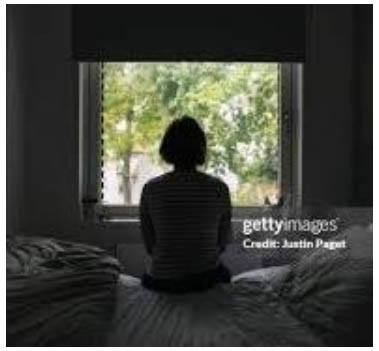
Hello,
Confused as I am in which way to address you, I have finally settled on a neutral word. Take it easy, I am just trying to make it funny, but on a serious note this mail is to convey my appreciation for your writing which has impressed me a lot.
The real story of your cousin who had to undergo a kidney removal at a young age due to cancer and you have been so encouraging quoting statistics of survival. You have gone beyond by making her laugh mentioning the incident where she bought a whole lot of tapioca from the wayside and the aged seller smilingly walking home triumphantly early in the day.
The catchy title so apt “Live a hundred years laughing all the way”.
Thank you for making my day.
Regards,
Mrinalini.
I got this mail for my post in a leading daily and the words were so impressive and encouraging. Mrinalini was a lovely name and the only Mrinalini I had heard was from the Sarabhai family.
The letter impressed me so much that it was more than a compliment understanding the hidden thoughts I wanted to convey. I wrote these few words and mailed it to her.
Madam, Miss or Auntie, but a Hello,
Thank you so much for those wonderful words and let me confess that you too have made my day.
Regards,
Sreekumar.
That was the beginning of a bond which got stronger and stronger day by day. A communication once in a fortnight talking about simple nothings but saying a lot and I keenly looked forward to her mails.
Mails exchanged knowing each other by name only and at one stage a doubt crept into my mind and I added a line in my mail
“Are you not well”?
The reply took a long time and her delayed mail made me sad, very sad.
“You guessed it right. Just completed my third session of chemo and radiation and was under its torture and hence the delay in replying”
My replies to her changed in approach and content from then as I had seen the misery at close quarter at my house. I took care in my words not to be sympathetic but always tried to divert her thoughts from her health issues as it had to be taken care of professionally. I never asked her the kind of dreaded disease she was going through and maybe she must be interacting first time with a person who was not inquisitive.
Almost two years into our communication and one of her mails mentioned it.
“A breast removed during the initial stages and this constant review and lifelong medication is taking its toll. Lucky being financially stable but on seeing those poor souls who just can’t afford makes me very unhappy. They will not be able to “Live hundred years” nor “Laugh all the way”.
That mail was so touching. In spite of her illness, she was thinking of the poor and the weak. Only a noble soul can have such thoughts and my admiration towards her only multiplied.
Mails exchanged in between and a few years passed with ups and downs in her health.
Almost into our fourth or fifth year of communication I get this shocking mail.
“It appears that fate seeing my tolerance level has decided to promote me. I heard them saying Multiple Myeloma”.
She had not lost her sense of humour and having seen at close hand how this MM behaves made my heart sink. Had no words of encouragement or hope to add in my mails. Still, I wrote to her.
“I am not an atheist nor a firm believer and do not pray. But for the first time I prayed for you”
A “Thank you” was immediate.
I feared asking her condition and a few months later her mail came.
“It is getting from bad to worse and typing becoming difficult as bones are failing. This will be the last mail from my hands and I will take help from my niece hereafter”
I replied immediately
“I pray daily and you are responsible for spoiling me”
Even though she mentioned that the previous one was her last mail she was forced to reply.
“Man, you make me laugh. Fear that I will live thousand years”.
A few months later
“I am getting this typed through my niece and you are the only one with whom I communicate. Bed ridden as the bones have become too weak. A home nurse to take care of but my biggest joy is the window by my bedside and my world is the vision though the window. I find it so beautiful and see many things which I had seen a thousand times earlier in a different light. Life is beautiful with or without cancer”.
I imagined her lying there and enjoying the world through the window where the world tries to squeeze itself into her frame.
How a life will change into a small dot. I was wondering what to write and mailed
“Window World”
A few months later the much feared and expected note comes.
“Aunty passed away in her sleep last night”.
I was not shocked but it made me sad.
This friendship had been very special, unique, beautiful and divine. We knew each other only by name. Never knew the looks, family background or age. Nothing more, nothing less but Mrinalini was more than a flower to me. She was an angel who made a very big impact in my life, unseen and unheard.
I cried, I prayed.
T. V. Sreekumar is a retired Engineer stationed at Pondicherry with a passion for writing. He was a blogger with Sulekha for over fifteen years and a regular contributor writing under the name SuchisreeSreekumar.
Some of his stories were published in Women's Era. “THE HINDU” had also published some of his writings on its Open Page..
Bankim Chandra Tola

Recap:
(Arun, the Regional Manager of a nationalized Bank, was promoted to the next higher grade scale -V by superceding 36 out of 43 contestants senior to him in the interview conducted for filling up of 7 vacancies. His selection was done in a novel manner unheard of in the history of his Bank when unlike all other candidates who were grilled in the interview with stiff questions for about half an hour each, he was selected without a single question, further by entertaining him with a glass of fruit juice. He could not comprehend how this easy promotion was awarded to him. Instead of his cherished posting in home state on promotion, he was placed in a large and troublesome Region far away from his home state as Chief Regional Manager(CRM) in the rank of Asst. General Manager (AGM) where two Ex-CRMs holding higher rank than he as DGMs, failed miserably compelling the Bank Management to plan for abolishing that Regional office before picking him for posting there as the last resort for its revival. This was according to the feedback received by him from the Chief Vigilance Officer(CVO) of the Bank. Despite disappointment and displeasure, Arun as a disciplined officer of the Bank accepted the posting with humility and set off for the destination to take up the assignment with new spirit).
And then…….
Seated on the plane bound to the city of his new posting, Arun found himself lost in a whirlwind of uncertainties while rewinding the strings of CVO’s feed backs in his mind. Known as a game changer of the Bank until then, Arun was however to some extent daunted, yet he felt within a surge of excitement at the prospect of steering the troubled Region back to the normal track - no matter how severe be the obstacles. What troubled him most was the lack of integrity of officers posted in that Region. Most of them were under cloud as briefed by CVO. In that case; he trembled to think how can he function with strict confidentiality when some of them who are potentially compromised, may be the key members of his team? As his thoughts swung between hope and concern, two hours slipped by unnoticed. He had no attention to air hostesses moving to and fro in the aisle several times for serving food, water and soft drinks to passengers. Suddenly he was jolted back to reality by the flight attendant’s announcement – “Please fasten your seat belt; we are preparing for landing.”
……. After coming out of the arrival gate, Arun was surprised to see the outgoing Chief Regional Manager (CRM), Mr. Sen, a DGM in rank (scale VI) coming towards him.
“Good morning, Arun Babu, welcome.” Mr. Sen said offering him a flower bouquet.
“Good Morning Sir! Great, you’re here! I heard you’re on extended leave for more than six months; when did you join?” asked Arun.
“Yesterday only, after coming to know of your arrival today to join, I thought it would be my prime responsibility to receive you and apprise you of details of the Region first.” Mr. Sen replied.
“Thank you so much. Trust you’ll feed me with every bit of information for my quick understanding” Arun and Mr. Sen headed for the Regional office. On the way they had just casual discussions on personal matter and reached Regional office situated in the heart of capital city of the state -about 30 KMs. away from the airport.
After formal introduction with all officers of Regional office on his arrival, Arun asked Mr. Sen to give him a brief yet lucid account of the Region. Mr. Sen then asked the Chief Manager (CM) of his office via intercom not to allow anybody to come in to his chamber unless asked.
Mr. Sen continued - “Arun Babu! In spite of having one Chief Manager (CM) in the grade scale-IV and five Dy. Regional Managers (DRM) in grade scale-III and a battery of officers in this Regional office, I could not bring order to the Region. This is mainly due to disruptive activities and dastardly humbug created by a single individual, a clerk of the main Branch named Mr. Z - incidentally he happens to be the President of Employees Federation of the Bank. Frequent interruptions and disturbances created by him on frivolous reasons, impeded normal functioning of the Bank affecting the Region’s business growth. He has orchestrated baseless agitations across branches almost every day causing widespread disruption in normal operations which has led to huge backlogs in all areas of banking and piling up of Non Performing Assets (NPA). Worst still - most officers including some Branch Managers openly support him using their association as a shield to cover their lapses both operational and financial. I transferred him under Bank’s rotational transfer scheme along with all eligible lstaff to another branch in the same city, but he did not accept the order. On the contrary, he ignited statewide revolt among the employees paralyzing Branch operation. For his disobedience in accepting the reasonable order, a charge sheet was issued to him but that also he did not receive. He became violent and created all sorts disturbances in Branches and Regional office. One day he made a force entry into my chamber with a group of his followers and went on to the extent of assaulting me physically and threatened me for life if I did not withdraw his charge sheet and transfer order.”
Instantly Arun interfered, “Why did the CM and DRMs not come to your rescue when a large number of employees entered your chamber without permission? Why didn’t you lodge an FIR against him for manhandling?”
“So suddenly this weird incident took place that I couldn’t have the chance to call them. Moreover had they come to my rescue, there might have been a violent altercation further complicating the situation, making it harder to control and restore peace. I also thought if Police was involved, the case would have no easy solution as Mr. Z, had strong political connections including some state ministers and local ruffians. Anticipating a major disruption that could have caused immense damage to the Bank, I chose not to escalate the matter.” Replied Mr. Sen.
Arun could grasp quickly the shambolic state of affairs plaguing the entire Region largely due to confusing administrative decisions and parlous control mechanism adopted by Mr. Sen. Faced with such disorder, Arun resolved to relieve Mr Sen immediately recognizing that a person of his temperament and capability was of no use, rather a headache.
Shortly after taking over charge from Mr. Sen, Arun in his characteristic executive style convened a meeting with Chief Manager (CM) and all the five Dy. Regional Managers (DRMs) to comprehensively assess the prevailing condition of the Region. From interactions with them Arun could envision indiscipline in all areas of Banking operations brewing out of utter mismanagement and serious administrative failures have crippled the Region’s growth in all parameters.
Then addressing the group firmly he stated, “If we are to restore healthy work environment and drive business growth, enforcement of discipline and curbing disruptive activities should be our top priority. This calls for a holistic approach with collective effort and strict confidentiality. Any breach of this principle could lead to chaos culminating in disaster as you have experienced so far. From now onwards all of you must rise above the strata of fear and doubt created by the trouble makers and confront with all adversities by working in tandem with velour. I shall stand by you in all lawful actions and honest initiatives that you take.” Saying this Arun asked all DRMs except CM to return to their seats to resume work.
The Chief Manager (CM) was the only officer in that Region, apart from Arun, who had been posted from some other state. He freely revealed several secrets before Arun. He stated – “Sir, I don’t know what our Ex-CRM has briefed you, but for your kind information, let me tell you the secret behind all staff and officers following Mr. Z blindly. What I have gathered, - Mr. Z has strategically laid a vicious trap of fear and doubt for officers of this Region. Taking the garb of his position as President of Employees Federation, he exercises his pseudo authority over all staff and officers by giving them hollow assurances of protecting them from any disciplinary action if ever taken against them by the management for their lapses and irregularities in operational banking. He has masterminded this move in a tactical way by forcing all Branch Managers to sanction loans and advances in favour of the constituents as recommended by him - assuring them running of the branch trouble free. Perhaps in such deals both he and Branch managers were benefitted financially but he was clever to run this mechanism in such a crafty manner that nobody would have an iota of doubt about his involvement in all these irregular advances which have turned NPA. Previous CRMs were also trapped in his claw for which one resigned from service and left the Bank and the other escaped remaining on long leave as he could not resist his frequent attacks for fulfilling his irrational demands.”
Arun visualized from these revelations how Mr. Z, has deliberately created an atmosphere of fear among all employees of the Region only to exercise his dominance and feed his interest fat by terrorizing them about their alleged financial involvements.
He thought it was high time to plug all loopholes and bring the main culprit operating under the carpet to the fore. He instructed his CM to expedite completion of pending enquiry against Mr. Z after observing all legal formalities leaving no room for the delinquent employee to challenge the proceeding in any legal forum. In that respect he tutored CM about full proof modalities and the way of handling eventual hurdles that might crop up to block the enquiry proceeding.
The next day CM engaged Enquiry officer and Presenting Officer to start enquiry afresh without any break. Mr. Z having come to know of institution of enquiry against him, sought permission for a meeting with CRM. Arun as CRM allowed the meeting and asked his C.M. and DRM (Admn.) to remain present as per official decorum. Mr. Z along with three office bearers of his federation entered the CRM’s Chamber with an aggressive mode as if to tear CRM into pieces. Without wishing Arun as the new CRM to the Region or introducing his followers he occupied the chair displaying most obstinate demeanor may be in his habitual obtrusive manner and started with a bang -
“Mr. CRM, how ridiculous it is that just after joining you have hit the hornet’s nest without thinking of its plausible consequences. I came to know that a charge sheet has been issued against me and to that effect, hurriedly you have initiated an enquiry. May I know what for this farce is going on here when I haven’t done anything wrong? You are new to this Region and you may not be aware of ground realities. Before setting the house in order by solving several outstanding problems, you have jumped in to taking disciplinary actions against me for nothing. As an ex-chief of Personnel department of the Bank, should you not first of all dig out the reasons why one of your predecessors, a DGM left the Bank by submitting resignation? Should you also not try to know why your immediate predecessor being also a DGM remained on extended leave for six months avoiding his responsibility of running a vast Region like this? Should you not try to know, how this Region with so many Branches was running for last six months without a head? For your advantage, now I shall urge upon you to withdraw the charge sheet against me forthwith for the sake of maintaining peaceful banking environment in furthering business growth. If necessary I am open to sit with you for negotiation to sort out the pending issues.”
“Well,” - reacted Arun – “I appreciate your concern for maintaining peaceful banking atmosphere for furthering business growth. At the same time may I ask you what prompted the Bank management to issue a charge sheet against you who is a prominent union leader? All other points that you have raised are answered by yourself when you said that I was the chief of Personnel department of the Bank. Definitely all the points will be taken due care, I assure; but what was the reason of your willful violation of reasonable order transferring you to another Branch in the same city under the Bank’s rotational transfer scheme along with all the eligible staff who have accepted their transfer orders as bonafide employees of the Bank? Now institution of enquiry proceeding is just a formality to close the case. If you are not guilty as you say, you may present your case accordingly and enquiry officer shall prepare his report based on his findings. In that case, there is nothing to be panicky. Rather you should cooperate with the enquiry for early disposal of the case so that due justice is rendered to you.”
“What do you mean by justice?” Mr. Z flared up. “You have issued my transfer order intentionally to harass a national leader of employees of all Banks and now you talk of justice. How funny it is? For the sake of betterment of the Region, withdraw the transfer order and charge sheet forthwith and sit with us for negotiation for smooth functioning of branches under this Region.”
“Sorry Mr. Z, I hope you agree that as an employee of the Bank you are bound to abide by Bank’s rules and regulations first. Your leadership of Employees Federation comes next. Enquiry has been instituted, it has to be closed after completion of procedural formalities as per rules. I have no authority to close it before that. If your ground is strong, why do you worry about it? Face it boldly and see it turns in your favour.”
Mr. Z sprang up from his chair and yelled, “Mr. CRM, you are doing wrong. We came here to solve the outstanding problems amicably but it seems you do not want peaceful settlement of outstanding issues. Remember our federation will not be responsible for any untoward consequences arising hereof.”
Mr. Z with his followers exited CRM’s chamber shouting slogans against CRM and the Bank. Arun could surmise that Mr. Z being the President of Employees federation shall not remain silent hereafter. Anticipating imminent upheaval, he ferreted out action plans to counter possible disturbances likely to be created.
The very next day Arun instructed his team to speed up the process of enquiry observing all legal formalities strictly. But the delinquent employee, Mr. Z did not participate despite allowing reasonable opportunities for appearance before the Enquiry officer; on the contrary he started instigating employees of Branches to non-cooperate with Branch management and not to do normal banking operations except rendering customer service.
As per instruction, the Enquiry officer concluded enquiry ex-parte for non-appearance of the delinquent employee even after allowing reasonable opportunity. Based on the report of Enquiry officer, the disciplinary authority awarded punishment by way of dismissal from service to the delinquent employee. For effective communication of the order of dismissal, all constructive methods as recognized by law were followed, but he did not receive the same. For abundant precaution a copy of the order was notified in all the local news papers and his name was struck off from the Branch’s attendance register.
All these quick actions taken by the Bank infuriated Mr. Z to such an extent that he went berserk for taking revenge like a wounded tiger. Reports came in that he came to the Branch from where he was dismissed and started shouting at the top of his voice thereby disturbing normal functioning of the Bank. He asked his followers in the branch to dislocate branch operation for the day. He conducted a meeting in business hours to instigate all employees of the Branch to rise to create instability until his demands are fulfilled. The Branch Manager was helpless to control such an unprecedented turmoil. But Arun as controller of the Branch advised the Branch Manager how to complete the day end operation without adding fuel to the fire by initiating disciplinary action or entering into any provocative confrontation. It was reported that the dismissed employee was fuming with anger and scolding management and CRM by name inside the branch in slang language out of despair as his image as a central leader was tarnished and his prestige was badly hurt for his dismissal.
Next day as usual when Arun was coming to the office at 10 A.M., his driver said, “So many people have gathered in front of the office gate; what shall I do sir??”
Arun said, “Don’t worry they must be staff of our Bank who would have assembled at the call of their leader now dismissed from service. I think they won’t do anything, you just put horn and proceed, they may allow the car to enter.”
The driver followed the instruction and drove the car to enter the gate by putting repeated horn. The gathering made way and Arun could get into the office easily. Then he called his C.M, DRM (Administration) and DRM (Law) into his chamber. He wanted to know the position in detail.
The C.M. explained, “Sir, that dismissed employee has come here with a large number of members of his federation with intent to demonstrate their solidarity and stage “Dharna”. He has also put several cots in front of the office to make a stage for meeting and has installed loud speakers around the stage on bamboo poles.”
Then DRM, Administration said, “Last night Mr Z held a meeting with some members of the federation of our Bank and from other Banks too near my residence where he resides. I got the information that they have planned to gherao you in the office, and force you to withdraw his dismissal order. I got the information that along with our bank employees, leaders of employees association of many other Banks in the city agreed to join here for picketing. Apart from this sir, he has also in the mean time, filed a case against the Bank and CRM by your name, sir in the High Court as one of his followers informed me last night. Simultaneously he has also lodged a written complaint before the Assistant Labour Commissioner of this state for withdrawal of impugned orders. Sir, I think the situation today might be very tense and uncontrollable. These people might demonstrate their old habit of terrorizing even making physical assault to get their job done as they had successfully done in the past.”
“Just a minute, do you also feel the orders issued to Mr. Z were irregular? If so, why didn’t you suggest modification or alteration as deemed necessary?” interrupted Arun.
“Sorry sir, it is their saying. All orders issued to him are as per rules and just.”
Then DRM, Law said, “Sir, Mr. Z is a rogue. He has no sense of proportion. He can go to any extreme if his goal is not fulfilled. Ex CRM being a DGM was so badly entrapped by him that he had to resign from service. The next CRM who was relieved yesterday, went on prolonged leave for more than six months only for frequent attacks by Mr. Z , now dismissed from service. One day Mr. Z entered the chamber of previous CRM with five of his followers demanding withdrawal of his transfer order and manhandled him and shouted slogans. So for abundant precaution we may inform police for protection and for maintaining law and order sir.”
Arun again interrupted, “When the CRM was assaulted, why didn’t you come forward to protect him and inform police?”
DRM Law – “Sir, they did this inside the chamber and the Ex-CRM did not call us at that moment. Afterwards when we suggested taking police protection, he refused. So we were helpless.”
Having heard all this, Arun in an assertive tone advised CM, “Now listen to me carefully; ask all DRMs and officers to attend to their work like normal days. Nobody should come to my chamber without my permission. If any or more number of demonstrators attempt to make force entry to my chamber, do not stop them. At that time you only should come in along with them. Ask all other officers not to interact with any of them even if they come in to talk to them. Ask them to avoid conversations tactfully. Only my driver whom I have asked to watch them from outside, shall be allowed to come to my chamber as and when he would like to.”
At about 11 A.M. four loud speakers fitted by the agitators roared with the slogans, ‘Management down down, CRM murdabad’ and so on. After about 10 minutes of sloganeering there was a pause. At that moment Arun just came out of his chamber and intentionally went to see the gathering. Coming near the stage he saw the picketers were looking aggressive and violent. None, even the staff of his Bank did show any respect to him; even then he told gazing at all demonstrators, “Look friends, from different banks you have come here voluntarily. If you want any logistic support like drinking water, tea etc., please ask the office bearer whom I am asking now to be at your service.” Saying this Arun asked one sub-staff to look after them and came back to his chamber.
Arun visualized that his move shall bear fruit. So it happened. Just after 15 minutes, five demonstrators including the dismissed employee entered the chamber of CRM. As advised, CM also came in. Arun asked them to sit down. The dismissed employee introduced two members who came from other Banks, one as General Secretary of Employees Association of M Bank and the other was president of Employees Federation of K Bank. Other two were the members of staff of own bank.
The dismissed employee looked aggressive with large red eyes as if he was awake for the whole night yesterday. He started - “Mr CRM, you have irrationally transferred me to another Branch and most illegally charge sheeted me and over and above that without conducting a valid enquiry you have dismissed me from service which is again unlawful. All these illegal actions of yours have hurt me seriously. Without caring for my position and prestige being the central leader of a large Employees Federation of all Banks, you have acted ultra vires to take arbitrary action to dismiss me from service. Now, withdraw all the impugned orders and reinstate me in the Branch where I was posted.” Likewise he went on, spewing all venoms inside him.
Arun heard him patiently and then said, “I think all of you being the responsible leaders of different workmen associations will please hear me without interruption. Your friend Mr. Z is an employee of my Bank first and then an association leader. As an employee, he is obliged to abide by set rules outlined in conduct regulations of his service. But he has violated all reasonable orders which compelled the bank to take action as deemed fit and necessary.”
After this a lot of heated debate took place between Arun as CRM and all the five members present there. When nothing positive could come out, Arun made a suggestion. “Now order of dismissal for Mr Z has been issued and implemented. The matter has been recorded by Head office. I, as CRM cannot change it. But I may suggest some way out if you agree. I shall give you three options and if Mr. Z chooses any one of them, I shall try to turn the table in his favour. Those optilns are:
1) Mr. Z may be allowed to join the branch to accept the transfer order and get released to join his new place of posting even if his name has been struck off from the attendance register, or
2) he may opt for another Branch in the city for which I can modify the transfer order, or
3) he may opt for VRS which I may recommend for acceptance and he would be released with all terminal benefit with honour.”
Having heard CRM, all the members requested Arun for half an hour break to think about these proposals. Then all went out of his chamber.
Just after 15 minutes Mr. Z along with two members of his federation came in and said, “None of the proposals given by you are acceptable to me. All your orders are illegal and one sided. I have challenged them in appropriate forum. My struggle for justice shall continue.” They left the chamber shouting slogans.
After 10 minutes three members of the same team who discussed with Arun, came in to meet him. Two were from other Banks and one from his own Bank. They in one voice said “Sir. Mr Z has gone mad. We all tried to convince him to accept any one of the proposals given by you. But he was arrogant and shouted at us. Sir, we are with you. We had confrontations with many Bank heads in the past, but we did not see a person like you. No Bank head so far has shown so much of magnanimity as you have done today by offering us logistic support despite our bitter protest against you. No Bank management ever would agree to reverse dismissal order and allow the dismissed employee whose name is struck off from the Bank’s book to join without valid reason or court order to reinstate him as you have offered now. You are so kind and just. We do not understand why this man fights against you unnecessarily. Had we known about you, we wouldn’t have come here to join the picketing. Thank you sir.” All of them left the chamber.
Then at 4 P.M. about 20 demonstrators entered into CRM’s chamber and made slogans and handed over a memorandum to CRM for onward transmission to Head Office for consideration of their demands and made exit shouting slogans.
When all the protestors left the premises, CM, DRMs and all officers came into the chamber of Arun and said in one voice, “Sir, you are great! How tactfully you have managed the upheaval and controlled these union leaders who are by nature militant and non-compromising. We have seen how these people used to treat with previous CRMs violently. Now this Region shall never face any problem in future under your leadership. But sir for our clarification please tell us how could you make three suggestions without permission of Head office?”
Arun thanked them and said, “It is all the blessing of God, I have done nothing; I was simply following His direction to perform the duty of a CRM. As regards my impromptu suggestions please note, I just took an audacious attempt to read Mr. Z’s mind as I calculated, he wouldn’t agree to anyone of them as he has already filed a case in the High court and a complaint before the Labour commissioner and he might have been confident of his victory. By chance, had he accepted any one of the offers made, I would have prevailed upon Head office to reverse the orders and consider his option.”
Then he asked his DRM, Law to engage a renowned advocate in the High court to defend the case filed by the dismissed employee against the Bank and CRM by name.
A few days later, the case came up for hearing and to everyone’s surprise, the case was cleared in favour of the Bank in one hearing. Thus the dismissed employee lost the case and now waited for the decision of the Labour Commissioner.
Soon thereafter, Arun received a letter from the Asst. Labour Commissioner of the state for hearing of complaint filed by Mr. Z for withdrawal of the order of his dismissal.
On due date, when the CRM(Arun) appeared personally before the Asst. Labour Commissioner(A.L.) for presentation of Bank’s plea, the A.L. said, “Sir, why did you come for this small matter? You could have deputed any one of your assistants.”
In reply Arun said, “You have called CRM that means me; so I’m here. I don’t like the case to be adjourned for my absence or deferred on flimsy grounds. Therefore please record my statement so that I may go back to my office as quickly as possible.”
The Labour Commissioner said, “Sorry sir, the complainant has not come yet.”
Arun said, “How strange? He lodges the complaint but fights shy of hearing. Either you may call him to report immediately or start recording my statement.”
The A.L. appeared to be in a fix and telephoned to that party and conveyed CRM’s sentiments. Perhaps the other party did not agree, so the A. L. requested Arun to talk to him on telephone and handed over the receiver to him.
Arun reluctantly took the receiver and said, “Time is precious for me; I have come here as per the notice of A.L. leaving behind important official engagements; so I must complete this episode today at any cost whether you are coming here or not.”
The Union leader defending the case of dismissed employee, Mr. Z, was from another Bank and he said, “Sorry, please take a date for I am compelled to stay in my Bank as the Chairman and Managing Director has come for a visit. So please take another date for hearing. I regret for the inconvenience caused to you.”
Promptly Arun replied, “Why don’t you request your Chairman to take over this branch along with all staff including your friend for whom you are pleading and we are ready to sell them. In that case you will have no problem in reinstating the dismissed employee.”
At this he was dumbfounded and left the telephone saying – “As you please.”
On hearing CRM’s conversation, the Asst. Labour Commissioner was taken aback and agreed to start recording his deposition. Arun coming back to office reported everything to the Chairman and Managing Director of the Bank begging apology for his absurd proposal of selling the Branch to another Bank which was impossible.
All these developments enraged the dismissed employee beyond proportion and he became more violent to attack Arun from various angles. That night his wife received an anonymous telephone call at about 11 P.M. when Arun was asleep. She woke up Arun and said that the caller using all slang languages, saying “I am a mafia, I can do anything here. Your husband has done wrong, so he has no right to stay here in this place any longer. He may be finished at any time, so be careful.” Then he cut off the line.
Arun consoled her saying, “The caller must be the dismissed employee who is going to lose all battles waged against the bank and me. He has gone mad. He tries to threaten me like this. Don’t worry, tomorrow morning I will take care of it.”
The next day after going to office Arun communicated all that had happened last night about threatening his wife to Head office. He lodged an FIR with the local Police station. He also talked to S.P. of the city police for providing security at his residence for safety of his wife. Instantly the S.P. obliged and posted two armed guards to keep watch on suspects near his residence.
On that day at 4 P.M. after the business hours of the Bank, Arun convened a staff meeting in the Branch with CM and DRM (Admn.) with all employees of five Branches and Regional Office in that city. In the meeting he convincingly conveyed the sentiment of management and the duties and responsibilities of all employees. When the meeting was going on, the dismissed employee was listening to his speech standing just outside the door. Arun was informed of this by DRM (Admn). With this feedback Arun diplomatically delivered his lecture conveying the message, how much damage has been caused to them by dislocating Banking operations deliberately being misguided by their so-called leader. Whatever was done until then it was all to their peril and now time has come to rebuild their position.”
The next day, when Arun was busy in office, the CM came in to deliver a speed post in the name of CRM. The mail was from the Assistant Labour Commissioner. With keen interest Arun opened the cover and was delighted to see that the complaint filed by the dismissed employee has been rejected and Bank’s action of dismissal order of Mr. Z was upheld. Sharing the content of the letter with CM, Arun became emotional to state, “Poor fellow lost everything simply for his importunity fueled by his shallow hubris. Perhaps his ego of being a leader of a large Employees Federation inflamed his obtrusive arrogance. And over-confidence camouflaged his conscience from choosing any one of the three options given by me to save his job honourably”.
CM said, “You are right, sir. It’s quite likely that his audacity in orchestrating disruptions across the entire Region might have stemmed from huge amount of ill-got money he might have earned by taking commissions from customers in exchange of facilitating sanction of their loan proposals from different branches of the Region. That is why he didn’t care for security of his job. Now if the Region has recorded the lowest recovery and highest NPA, it is due to his illegal activities done by exercising undue influence over the Branch Managers to work according to his direction for fear of being caught for their complicity in such deals. That is why he doesn’t bother if his job is lost.”
Arun said “Why vigilance department of the Bank was not informed? If not done, that must be done forthwith.”
CM said, “Yes sir, several advance accounts which have turned NPA are under scanner of Vigilance Dept. 28 Branch Managers involved in sanctioning bad advances are under charge. Disciplinary proceedings are going on against 16 of them too. I think sir, now everything will come to order under your guidance.”
Arun’s resounding success fetched laurel conferring letters of appreciation with basketful of kudos for him. In addition his next promotion to the rank of DGM was also guaranteed. Arun’s joy knew no bound, but his anxieties grew manifold counting uphill task of monitoring bad and doubtful advances to the tune of hundreds of crores and reconciliation of accounts pending for decades in several Branches were pricking him from all sides. However he felt a bit relaxed for the king pin being removed for all time to come. Relying on his strong determination to do something new he propelled the engine of his life forward.
…………..To be continued.
Bankim Chandra Tola, a retired Banker likes to pass time in travelling, gardening and writing small articles like the one posted here. He is not a writer or poet yet he hangs on with his pursuit of writing small miscellaneous articles for disseminating positive thoughts for better living and love for humanity. Best of luck.
Linkan Sahoo
Every morning at G:30, Dada went to the small tea stall at the corner with two steel cups .one for him, one for Dadi.
The tea-seller, raju, never asked anything. He just made the tea and gave both cups with a smile. dada had became his regular costumer
Dada came back home, quietly opened the gate so he wouldn’t wake her and poured Dadi’s tea into her favorite cup -the floral one
Then he sat near her wooden rocking chair, and slowly sipped his tea. But the truth was Dadi’s chair had been empty for 3 years.
Some people in the street said, He still hasn’t accepted her death. But no one really knew what had happened.
Dadi had passed away in her sleep one winter night.
That evening, they had a small fight regarding sugar in the tea. dadi forgot to add the sugar He said, “You never listen to me.”
She said, “And you keep repeating like a old radio.” They slept without talking.
Next morning… she didn’t wake up.
After her death, Dada made tea for both of them every day. He never added sugar.
He always poured her tea first. And he never touched her cup. One rainy morning, Dada didn’t come to the tea stall.
By evening, neighbors saw his door was open. The cup for Dadi was full. newspaper was opened
Dada was sitting in his chair, eyes closed. The other cup was still warm.
On the table, there was a note
"Sorry for that night. I hope you forgave me. I’m coming to sit beside you again. This time, I won’t complain about the sugar.”
moral- We think there’s always tomorrow to say sorry ,until there isn’t.
Linkan Sahoo is a young poet and writer pursuing a post-graduate degree in Political Science at Utkal University, Bhubaneswar. His writings reflect themes of human relationship, understanding and compassion.
LEAF FROM HISTORY: A MUSEUM THAT REMINDS US KNOWLEDGE KNOWS NO BORDERS
Mr Nitish Nivedan Barik
The museums under discussion are hailed as a treasure trove for every curious mind. Situated in Washington, DC, the Smithsonian Institution stands as one of the world’s most expansive and inclusive museum complexes. Spread across the National Mall and beyond, the Smithsonian includes 21 museums and galleries, plus the National Zoo, almost all offering free admission. It is not just a place to see old artifacts or paintings—it is a living archive of human creativity, scientific progress, and cultural diversity.
More than a decade and a half ago, as a young school student, I had the privilege of walking through its halls—an experience that left a lasting impression on my understanding of history, democracy, and global interconnectedness.
Recently, the Smithsonian Museums have entered public discourse following a statement by President Trump, who criticized certain exhibits for focusing too heavily on slavery and the struggles of marginalized communities. While such debates reflect the evolving nature of America’s domestic policy, my intention here is not to engage in controversy, but to reflect on what the Smithsonian includes—especially from an Indian lens. The museums encompass a vast range of narratives, from the triumphs of technological innovation to the complexities of civil rights. They house powerful exhibits on African American and Indigenous histories, which are integral to understanding the full arc of American democracy. For an Indian visitor, these stories resonate deeply, echoing our own journey through colonialism, resistance, and constitutional transformation.
For any visitor, especially someone from India, the Smithsonian offers a unique opportunity to explore the world through American eyes while also discovering unexpected connections to Indian history, art, and global heritage. The Smithsonian Institution was established in 1846, thanks to a generous bequest from British scientist James Smithson, who had never visited the United States. His vision was to create an institution “for the increase and diffusion of knowledge.” Today, the Smithsonian is the largest museum and research complex in the world, housing over 150 million objects ranging from dinosaur fossils to spacecraft, ancient manuscripts to modern art.
Among the most popular museums within the Smithsonian Institution are the National Museum of Natural History, renowned for its dinosaur skeletons, the Hope Diamond, and compelling exhibits on human evolution; the National Air and Space Museum, which chronicles the history of flight from the pioneering efforts of the Wright brothers to the technological marvels of Mars rovers; the National Museum of American History, where visitors encounter the original Star-Spangled Banner and explore transformative chapters in American innovation and civil rights; the National Museum of African American History and Culture, offering a powerful and immersive journey through the struggles and triumphs of African Americans; and the Freer Gallery of Art and Arthur M. Sackler Gallery—collectively known as the National Museum of Asian Art—featuring exquisite collections from India, China, Japan, and the Islamic world.
One may ask, why should It Interest an Indian Visitor? Well, the answer is that India and the United States share deep cultural ties, and the Smithsonian reflects that in many ways. For an Indian visitor, the museums offer a global perspective. The Freer and Sackler Galleries, together forming a vital part of the Smithsonian Institution, house one of the finest collections of Indian art outside India. Visitors encounter an extraordinary array of Mughal miniatures, temple sculptures, and Buddhist manuscripts, alongside textiles, jewellery, and ritual objects representing diverse Indian traditions. The exhibits thoughtfully explore the rich interplay of Hindu, Jain, Buddhist, and Islamic influences that have shaped Indian artistic expression over centuries. These galleries offer a serene and contemplative environment, where Indian visitors often experience a profound sense of cultural pride and connection.
The Smithsonian does not just tell America’s story—it tells the story of humanity. Whether it is ancient trade routes, shared scientific discoveries, or global art movements, Indian contributions are often part of the narrative.The Smithsonian Museums hold particular interest for Indian visitors due to the shared democratic values they reflect. The National Museum of American History includes exhibits on civil rights, freedom movements, and constitutional development. Indian scholars and students may find meaningful parallels with India’s own journey toward independence and democracy.
Equally compelling is the Smithsonian National Air and Space Museum, which houses the world’s largest collection of aviation and space artifacts, as pointed out, from the Wright brothers’ 1903 Flyer to the Apollo 11 Command Module, and contemporary marvels like SpaceX Falcon 9 rocket parts and a 3D-printed Mars habitat, the museum offers a sweeping narrative of human ingenuity and exploration. For Indian visitors, these exhibits evoke reflections on scientific advancement, global cooperation, and the aspirational spirit that underpins both nations’ technological ambitions.
The Smithsonian Institution offers a rich tapestry of India-related highlights across its museums and cultural spaces. At the National Museum of Asian Art, visitors can explore exquisite Indian textiles and sculptures that reflect centuries of artistic tradition and spiritual symbolism. The National Museum of American History features compelling exhibits on Mahatma Gandhi and the philosophy of nonviolent resistance, drawing meaningful connections between global movements for justice. At the National Zoo, Indian elephants are not only a beloved attraction but also part of broader cultural programming that celebrates India’s ecological heritage. Periodically, the Smithsonian hosts special exhibitions showcasing Indian photography, contemporary art, and the experiences of diaspora communities, offering nuanced perspectives on identity and migration. In addition, India-focused events—ranging from classical dance performances and film screenings to scholarly lectures on Indian history and culture—underscore the institution’s commitment to fostering cross-cultural dialogue and appreciation.
At the end we may say that the Smithsonian is a place for reflection and Inspiration. For Indian academics, artists, students, and travellers, the Smithsonian offers more than just sightseeing. It is a place to reflect on the shared human experience, to see how India’s story fits into the global mosaic, and to appreciate the richness of cultural exchange. Whether you are gazing at a 12th-century Chola bronze, reading about the American civil rights movement, or watching schoolchildren marvel at a space shuttle, the Smithsonian reminds us that knowledge is a bridge—not a boundary.
Mr Nitish Nivedan Barik hails from Cuttack,Odisha and is a young IT professional working as a Team Lead with Accenture at Bangalore.
Dr. Mrutyunjay Sarangi
There was no reason why I should have switched over to the music channel on TV at that particular moment. Except that there was a long commercially break in the World Cup cricket match and I hate those advertisements coming up again and again in the midst of an interesting game.
The music on the TV was superb. Must be some maestro playing the Piano. I looked at the artist. And my heart skipped a bit! Saswati! In a light green saree she was looking lovely, almost angelic. Her thin, long fingers were flying on the key board of the Piano with a charming grace. The song was a melancholic splendour, piercing the heart, soaking it with an ethereal sublimity.
I looked closely at Saswati. Her face was glowing with an inner peace, although a tinge of sadness was unmistakable. The last time I had seen that face, it was different. But that was ten years back, when Saswati was just a twelve year old school girl. And the occasion was also different, quite unlike the beautiful and elegant TV studio. All these years that face has come to haunt me as a sad canvas of pathos. And the eyes brimming with tears, the face swollen with grief.
That was the year 2009. I was in Rairangpur, a small town of Western Odisha, in connection with some office work. I usually stay in hotels when I visit different towns on my tours, but at Rairangpur my friend Nagen would not have allowed that. We were very close friends in College, room mates in the hostel and shared each other's samosas and rasgollas practically every afternoon, sometimes eating half of each when we were short of pocket money. After college I had joined the government as a junior officer. Nagen had chosen to join a private college at Rairangpur as a lecturer and had stayed there for years.
By the time my bus reached Rairangpur it was evening. Nagen and his wife were waiting for me to have dinner. Saswati, their twelve year old daughter and Nayan, her seven year old brother came and touched my feet and after collecting the packets of Cadburys I had brought for them went back to their room to finish home work for the school. Nagen, his wife Sushmita and I chatted for some time and I went for sleep around eleven in the guest room.
Next day, it was early winter morning in Rairangpur and pleasantly cold. Under a warm quilt I was comfortably asleep when I suddenly woke up to a wonderful and melodious music. Someone was playing a lovely song on Piano - O Sajanaa, Barakha Bahar Aayii....., a favourite song of mine. I am one of those rare species who go crazy over old songs and this morning the early winter, the soft quilt and the tranquil music made me feel as if I was in a dream.
When the music stopped abruptly, breaking a spell, I got up, wondering who was playing so beautifully on the Piano. I knew Sushmita was a very accomplished singer. In the early days of their marriage when they had visited us at Berhampur, Nagen was proudly displaying her talent by goading her to sing more and more songs before us. She was superb. I remember her rendering the O Sajanaa song in Bengali, Na Jeyonaa, Rajani Akhono Baaki... and Jaarey, Jaarey Udjarey Paakhi.....and lovely Odiya songs, Sandhyaa Tara Nisitha Batayaney, Durey Kaahin Durey Durey, Ei Chuna Chuna Tara Phooley Aaji and many more. We were virtually in a trance, listening to her. And Nagen? He was smugly sitting there so proudly and lovingly looking at his wife that she was blushing all the time.
I wondered if Sushmita had learnt playing a Piano also. The mystery was solved at the breakfast table. The children had left for the school and we were having a sumptuous breakfast. I looked at Sushmita and asked,
"When did you learn playing a Piano? You play it so well!"
Before she could reply, Nagen chipped in,
"When did you hear the Piano music?"
"This morning. Such a heavenly music, I woke up as if in a dream. And one of my favorite songs - O Sajanaa, Barakha Bahar Aayii! Ah, I wish the music had not ended."
Nagen's eyes twinkled with paternal pride,
"Not Sushmita, it is Saswati, our daughter who plays Piano. She is like a prodigy. Must have got the musical talent from her mother!"
Sushmita smiled,
"She is so good that we spent most of our savings and bought a Piano for her from Jamshedpur and put it in her room. She practices for one hour every morning before going to school. Today we had asked her not to disturb your sleep by playing the Piano, but she must have played one or two songs just out of habit. Sorry, your sleep was disturbed."
"No, no, please don't say sorry. I really enjoyed it. She is indeed very talented, born with a divine gift."
Nagen was in a hurry to leave. He had a class at ten. I also had to go for the office inspection starting at ten.
For me the day was spent in a trance. I just could not get the music out of my mind. My mood remained upbeat, soaked in a sweet mix of lilting music and soulful lyric. In my subconscious mind I was seeing a woman, drenched in love, looking at the rains and pining for her lover.
I was eager to return to Nagen's house and if possible, hear Saswati playing my favourite song again. I had to catch the bus at eleven in the night. We had an early dinner. I could not take my eyes off Saswati. Such a lovely girl, so meek and docile, her expressive eyes were captivating. A father of two sons, my love for Saswati was for a daughter I never had.
By the time we finished dinner, I still had more than two hours before I had to leave for the bus stand. I looked at Saswati and asked her if she could play the Piano for me. Suddenly the room fell silent, as if I had violated some sacred code. Saswati looked away, Sushmita gasped and Nayan broke into a laughter. Only Nagen appeared to be calm. He asked Saswati to play at least one song for me. Saswati shook her head, a very mild refusal from a soft, delicate child to her father.
Nagen was not prepared to take a no. Not for his closest friend,
"We all know you don't play the Piano at anybody's request, but do make an exception for this uncle, who is your Papa's best friend. Please!"
Saswati sat there unmoved, her head bowed.
Nagen was getting angry,
"Didn't you hear me? Go and play the Piano!", he shouted.
Saswati got up, threw a pleading look at her mother and ran away to her room.
Sushmita looked at me,
"In her early days of learning a lady who was visiting us, made a request to her to play the Piano and Saswati made some mistakes. The lady was very rude and made some awful, cruel comments. It broke Saswati's heart. She cried for two days and promised to herself that she will never play again at anyone's request. She has a fear of getting hurt by unknown people. She is very delicate."
I was embarrassed. But Nagen was not prepared to give up. He had got up and followed Saswati to her room. We heard him shouting at her. And Saswati saying something to him.
I rushed to Saswati's room, just in time to see Nagen giving her a resounding slap and Saswati collapsing on the bed in a heap. I will never forget the expression on Saswati's face at that unfortunate moment. She looked at her father, intense agony clouding her face, her eyes welling up, but the tears stopped in their track by her quiet determination.
I took leave from Nagen and Sushmita, my voice choked with tears for causing this unexpected turn to a wonderful day which had started so well, but broke into a thousand fragments of sadness by the night. I went to Saswati's room to speak a few words to her, but it was dark, the door was closed. With a heavy heart I boarded the bus and spent a sleepless night, Saswati's agonised face haunting me all the way.
I called Nagen the next day. He sounded a bit distraught. I asked him to say sorry to Saswati on my behalf and he said he had already done that. A week later when I called again I was told that Nagen's slap had so much hurt the poor girl that she had stopped playing the Piano and no amount of pleading by her parents had worked. I felt so guilty that I resolved I will never stay in any friend's house when I visit a town, and I have kept that promise to myself ever since.
By an unfortunate twist of fate I had to go to Rairangpur again, five years after that fateful visit. Nagen suddenly passed away, after a stroke on a hot summer afternoon, when he was going to the college. Somehow I came to know of it five days after the incident and immediately rushed to Rairangpur. His family was devastated. My heart shattered to pieces to see the sindoor-less face of Sushmita, who had aged by ten years in the past few days. Saswati came and stood by her mother, looking down. I broke into uncontrollable sobs, looking at Saswati's wet eyes and swollen face.
I had taken a few thousand rupees with me to give to Sushmita. She declined, but I forced it upon her and made her promise that she will contact me if she needs any further help. I spoke to her a few times after that and came to know that with the help of the principal of Nagen's college, she got a job at the local school as a music teacher. She also told me that with part of the money I had given her she had got the Piano cleaned up and Saswati had started playing the Piano again, as she wanted to give lessons to children and supplement her mother's income.
Sushmita and I kept in touch, but gradually the calls became infrequent and stopped after some time like a stream losing itself in the sand of time.
Today seeing Saswati play such superbly on the TV brought back many memories. Her face had lost nothing of its charm, although it looked more mature. But she presented a picture of quiet dignity and calm serenity. I had forgotten about the cricket match. I sat mesmerised, listening to her soulful music. Suddenly her face broke into a soft smile. She looked up and in an eerie, unreal way, I felt as if she was looking directly at me from the TV screen, trying to tell me something. Then she looked down and started playing O Sajanaa, Barakha Bahaar Aayii...
I sat up, as if jolted by an electric current. What an incredible telepathy! Does she know that I am listening to her sitting in my drawing room, going over priceless memories? Is she trying to tell me, Uncle, this one is for you, for my dear Papa and for the memory of an unforgettable evening when I had refused a simple, heartfelt request from you!
Tears started flowing from my eyes, tears of deep and timeless love for a daughter I never had.
Dr. Mrutyunjay Sarangi is a retired civil servant and a former Judge in a Tribunal. Currently his time is divided between writing poems, short stories and editing the eMagazine LiteraryVibes . Four collections of his short stories in English have been published under the title The Jasmine Girl at Haji Ali, A Train to Kolkata, Anjie, Pat and India's Poor, The Fourth Monkey. He has also to his credit nine books of short stories in Odiya. He has won a couple of awards, notably the Fakir Mohan Senapati Award for Short Stories from the Utkal Sahitya Samaj. He lives in Bhubaneswar.
Viewers Comments