
Literary Vibes - Edition CLIV (27-June-2025) - POEMS & BOOK REVIEWS
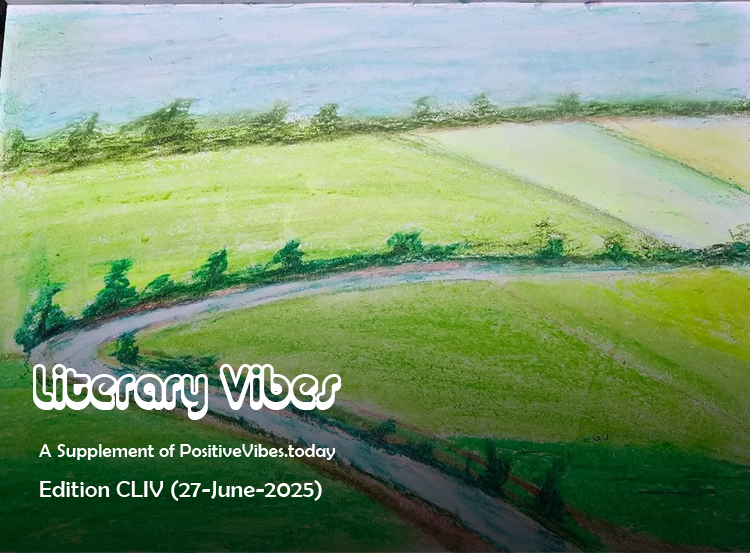
Title : Paddy Fields (Oil Pastels by Ms. Latha Prem Sakya)
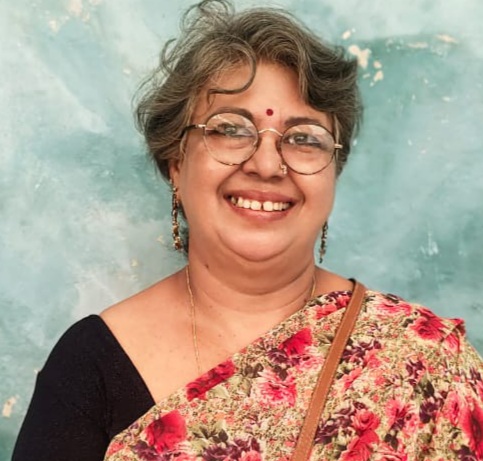
An acclaimed Painter, a published poet, a self-styled green woman passionately planting fruit trees, a published translator, and a former Professor, Lathaprem Sakhya, was born to Tamil parents settled in Kerala. Widely anthologized, she is a regular contributor of poems, short stories and paintings to several e-magazines and print books. Recently published anthologies in which her stories have come out are Ether Ore, Cocoon Stories, and He She It: The Grammar of Marriage. She is a member of the executive board of Aksharasthree the Literary Woman and editor of the e - magazines - Aksharasthree and Science Shore. She is also a vibrant participant in 5 Poetry groups. Aksharasthree - The Literary Woman, Literary Vibes, India Poetry Circle and New Voices and Poetry Chain. Her poetry books are Memory Rain, 2008, Nature At My Doorstep, 2011 and Vernal Strokes, 2015. She has done two translations of novels from Malayalam to English, Kunjathol 2022, (A translation of Shanthini Tom's Kunjathol) and Rabboni 2023 ( a Translation of Rosy Thampy's Malayalam novel Rabboni) and currently she is busy with two more projects.
Dear Readers,
Heartiest Greetings from the land of Rath Yatra. Invoking Lord Jagannath's blessings on all of you.
Another month, and a new edition of LiteraryVibes! Happy to present to you LV154, embellished with some lovely poems and interesting stories. Grateful to the new poet Ms. Darshana from Veniginiserry, Thrissur, Kerala, whose nice short story, ably translated by our valiant literary warrior Sreekumar, adorns the page of the current edition. We also have an excellent book review of Joydeep Sarangi's book by Ms. Pratiti Ghosh, a brilliant academic from Kolkata. A hearty welcome to both of them and best wishes for abundant success in their literary journey.
The country is still recovering from the ghastly air crash at Ahmedabad on 12th June. It was a tragedy of monumental proportions. Just to think of the 241 unfortunate passengers going into flames along with the ill-fated aircraft causes goosebumps and leads to nightmares. And 34 young lives meeting an untimely death in the Medical college hostel, only reinforces our notion how fleeting life can be and how unpredictable death is. In the midst of these tragic happenings, the story of some dedicated doctors, nurses, paramedical staff and members of the local community in rendering ceaseless help and service, is quite heart-warming. The tragedy and the aftermath, including the way the country rose to share the sorrow will undoubtedly be etched in the history of the country.
Speaking of inspiring acts, stories from our brief war with the neighbour still crop up to enthral the country. I came across one such story recently and would like to share it with the readers:
................
In the sweltering heat of Tara Wali village, nestled near the India-Pakistan border in Punjab’s Ferozepur district, a heartwarming tale of courage and devotion emerged during one of India's largest military mobilisations in recent times — Operation Sindoor. While armed forces prepared for the unknown, a young boy armed only with compassion and resolve stepped forward to do his bit for the nation.
Shravan Singh, a 10-year-old son of local farmer Sona Singh, became a familiar and cherished figure among the troops stationed in his village. As the soldiers carried out their duties in the oppressive heat, Shravan chose to stand by them — not with arms or strategy, but with unwavering service and affection. Daily, he brought them water, milk, lassi, and even ice, running tirelessly across the dusty fields to deliver the much-needed relief to the jawans.
Shravan’s sense of purpose and patriotism was all the more remarkable given his young age. While many might have been daunted by the sight of military convoys and heightened border tensions, this spirited boy saw an opportunity to help those protecting the nation. He didn't miss a single day, ensuring that the soldiers knew they were supported by the very soil they stood upon.
His act of service did not go unnoticed. In a heartwarming ceremony, Major General Ranjit Singh Manral, the General Officer Commanding of the 7th Infantry Division, felicitated Shravan Singh. He was presented with a memento, a special meal, and his favourite treat — ice cream, as a token of gratitude and appreciation from the Indian Army.
“I wasn’t scared. I want to be a soldier when I grow up. I used to bring water, lassi and ice for the soldiers. They loved me a lot,” Shravan shared with quiet pride.
For his father, Sona Singh, the recognition brought an indescribable sense of joy.
“From the first day, Shravan began helping them. We stood by him, and he stood by them,” he said, eyes glistening with pride.
As the history of Operation Sindoor will one day be written in military books and strategic annals, it will also carry a softer, human footnote — that of a boy with no uniform, yet a soldier in spirit, whose actions warmed hearts and lifted spirits.
In Shravan Singh, India has found not just a young patriot, but a shining symbol of hope, service, and love for the country. His story reminds us that heroism isn’t always found on the battlefield — sometimes, it runs barefoot across a field with a jug of lassi in hand and love for the nation in heart.
.........................
And here is another story, probably a work of fiction, forwarded by a friend of mine. I am sure it will leave a sweet taste in the mouth due to its sheer humanism and inspiring spirit:
A Story of Service
I was working in Chennai, and my ancestral home was in Bhopal. Suddenly, I got a call from my father asking me to come home immediately, saying it was something extremely important. I rushed to the railway station and tried to get a reservation, but due to summer holidays, not a single seat was available.
Right in front of me stood the Grand Trunk Express. It was packed too, but what could I do? I had to reach home somehow. Without thinking much, I pushed into one of the general sleeper class coaches. I assumed the ticket examiner wouldn’t say anything in such a crowded situation. The condition inside was terrible. I somehow managed to find a berth where a gentleman was lying down. I humbly requested him to let me sit, and he smiled, sat up, and said, “No problem, you can sit here.”
I thanked him and sat quietly in the corner. Soon the train started moving. Within a few minutes, everyone settled down and began opening their food. The aroma of food filled the coach. I looked at my co-passenger and decided to strike up a conversation.
I said, “My name is Alok, and I’m a scientist at ISRO. I had to rush home urgently today, so I boarded the sleeper class, otherwise I never travel below the air-conditioned class.”
He smiled and said, “Wow! So I’m traveling with a scientist. My name is Jagmohan Rao. I’m headed to Warangal, near which my village is located. I often go home on Saturdays.”
Then he opened his bag and took out a lunchbox. He said, “This is homemade food. Would you like to have some?”
I hesitated and politely declined, taking out a sandwich from my bag. The name "Jagmohan Rao" seemed familiar, but I couldn’t place it at the moment.
After some time, everyone had their meals and tried to sleep. Opposite our berth was a family—father, mother, and two grown children. They too had their meal and laid down to sleep. I crouched near the foot of the berth playing a game on my mobile.
The train was running at full speed when suddenly I noticed the gentleman in the opposite berth, around 55–57 years old, start convulsing. Foam came from his mouth. His family woke up in panic and tried to give him water, but he couldn’t speak. I shouted, “Is there a doctor? It’s an emergency!”
Where would one find a doctor in a sleeper coach at night? The family, helpless, began to cry. Just then, my co-passenger Jagmohan Rao woke up and asked me, “What happened?”
I quickly told him everything. Hearing this, he jumped up, pulled his suitcase from under the berth, and opened it. To my surprise, he took out a stethoscope and checked the patient’s heartbeat. His face turned serious. Without a word, he took out an injection and administered it, then began performing CPR—compressing the man’s chest, using a handkerchief over his mouth to give him artificial respiration.
After a few minutes, the man's convulsions reduced.
Dr. Jagmohan Rao then took out some pills from his suitcase and said to the man's son, “Son, don’t panic hearing this. Your father suffered a severe heart attack. He was in danger, but I’ve given him an injection. Give him these medicines.”
The son asked, astonished, “But who are you?”
He replied, “I’m a doctor. I’ll write down his condition and the medication on a prescription. Please take him to a good hospital at the next station.”
He pulled out a prescription pad from his bag, and when I read the heading, my memory returned.
It read: Dr. Jagmohan Rao, Cardiologist, Apollo Hospital, Chennai.
Then I remembered—just a few days ago, when I had taken my father to Apollo Hospital for treatment, I had heard of Dr. Jagmohan Rao. He was the senior-most, highly reputed cardiologist there. Appointments with him took months. I looked at him in awe—such a great doctor was traveling in general class while I, a mere third-tier scientist, had been boasting about always traveling in AC class. Yet he was so humble.
Soon the train reached the next station. The elderly heart patient and his family got off with assistance from the ticket examiner and medical help called to the station.
The train moved again. Curious, I asked him, “Doctor sahib, you can comfortably travel in air-conditioned class. Why general class?”
He smiled and said, “When I was young and lived in the village, I saw that trains never had doctors, especially in the lower classes. So whenever I travel, I go by general class. You never know when someone might need me. I became a doctor to serve people. What’s the use of our education if we can’t be of help to others?”
The rest of the journey passed in conversation. It was 4 AM. Warangal was approaching. He quietly left, having shared smiles, relieved pain, and served humanity anonymously, heading toward his village. I sat there, still savoring the aura he had left behind.
Now I understood why, despite the crowd, there was a special fragrance in the coach. It was the aura of that great soul who filled both my journey and my thinking with meaning.
“Selfless service is the highest form of penance, sacrifice, and worship.”
...........................
In this era of rampant medical commercialism, the above story may sound like a fairy tale, but it certainly fills the heart with hope and joy.
Please share these stories and the rich fare of poems and fiction from LV154 with all your friends and contacts through the following links:
https://positivevibes.today/article/newsview/597 (Poems)
https://positivevibes.today/article/newsview/596 (Short Stories and Anecdotes)
https://positivevibes.today/article/newsview/595 (Young Magic)
There is also a medical related anecdote from the pen of the famous gynecologist Dr. Gangadhar Sahoo at
https://positivevibes.today/article/newsview/594
You will also find 16 excellent short stories at https://positivevibes.today/article/newsview/562
Hope you remember that all the 154 editions of LiteraryVibes can be accessed at https://positivevibes.today/literaryvibes
Please take a few minutes off to write a few lines of feedback and post them in the Comments Box located at the bottom of each page. That will be a big encouragement forn the poets and writers.
Relax, enjoy the 154th edition of LiteraryVibes against the backdrop of lilting music of the cascading rains. Bye, till we meet again on 25th July.
With warm regards,
Mrutyunjay Sarangi
Editor, LiteraryVibes
Friday, 27 July, 2025
Table of Contents :: Poems
01) Prabhanjan K. Mishra
THE VENTRILOQUIST
LONELY
02) Dilip Mohapatra
RUST RESURRECTED
03) Snehaprava Das
SEASCAPE
04) Abani Udgata
SONG
05) Sudipta Mishra
ON A FULL MOON NIGHT
06) Dr Bichitra Kumar Behura
WALK SLOWLY, LIFE
INVISIBLE INK
07) Pradeep Kumar Biswal
HANGING GARDEN
FOOTSTEPS OF WIND
08) Manjula Asthana Mahanti
IT IS LIFE
09) Baldev Samantaray
MONOCHROME
10) Dr Nanda Kishore Biswal
RIVER HAS TO MOVE ANYWAY
11) Ajit Patnaik
AN INNOCENT’S JOURNEY
12) Dr. Rekha Mohanty
WISHFUL THINKING
13) Sujata Dash
INCARCERATION
14) Sushree Gayatri Nayak
WHAT IF- HE LET GO OF THE PAST!?
15) Rudra Pati
BOTH THESE ARMS
16) Matralina Pati
YOU
17) Hema Ravi
CONSERVE, NOT MUTILATE
18) Mrs. Setaluri Padmavathi
THE MAGICAL TOUCH!
19) Ms Gargi Saha
INEFFABLE ALTRUISM
ONAMATOPOEIA
THE SIMPLE PLEASURES OF LIFE
20) Mrs. Sreeja Sree
ALL AROUND YOU
21) Padmini Janardhanan
FINANCIAL INDEPENDENCE
22) Kunal Roy
THE WISDOM
23) Dr. Rajamouly Katta
HOW TO MEASURE EQUALITY
THE SEED IS THE TREE
24) Arpita Priyadarsini
UNSETTLED WORDS
25) Bipin Patsani
ON MEETING A POEM
26) Sreedharan Parokode
THEY SAY
27) Dr. Niranjan Barik
FROM THE WINDOWS
28) Dr. Mrutyunjay Sarangi
WALKING HOME
THE LONG NIGHT
Table of Contents :: Book Review
1) Pratiti Ghosh
“WITHIN HER HOME AND OUTSIDE: ESSAYS ON INDIAN ENGLISH POETRY”
Prabhanjan K. Mishra
Gaunt, silent, you stand,
I sense you in my heartbeats.
A distant sea bangs its head;
howls from pain and loss.
Casuarinas like bereaved widows,
watch you walk away
blistering your bare feet
on hot sand, with soles of ice.
From dignified vastness,
from tumultuous undulations
you have shrunk to ditches, pits
like a great leader lying in state.
Your lips do not move, your skin
does not shiver, your scarf in the sky
does not fly as puffs of cloud
in complicity with the winking stars.
I walk to meet you among wild irises.
Have you ebbed forever, taking to sleep,
never to rise to seek your shore, your home?
Has your coursing blood sobbed its last sitar?
(A tribute to the Poet Louise Gluck, who authored the iconic work ‘The Wild Iris’. The poem was crafted on the day of her death, 13th October, 2023)
Prabhanjan K. Mishra
It is so quiet here,
no, not even a pencil tip breaks,
so away from all
eyes sweep over blank spaces.
The air is cut parallelly
layer over layer of silences
heaped one above the other,
like raw fish, and raw meat on rice in Sushi.
I stand on my head. An inverted Buddha,
perhaps striking roots, unmoved,
ascetic or Oak; does it matter?
Does it matter if I am meditating or sulking?
No, it is not so. Look close
through layers of affected acts
of a poet, busy spreading
his net for catching fresh images.
No, it's not true either. Look still closer.
Not a dejected friend, or a helpless husband,
not a reticent father, all of them moving
in their own loci. I, a man, left in desolation.
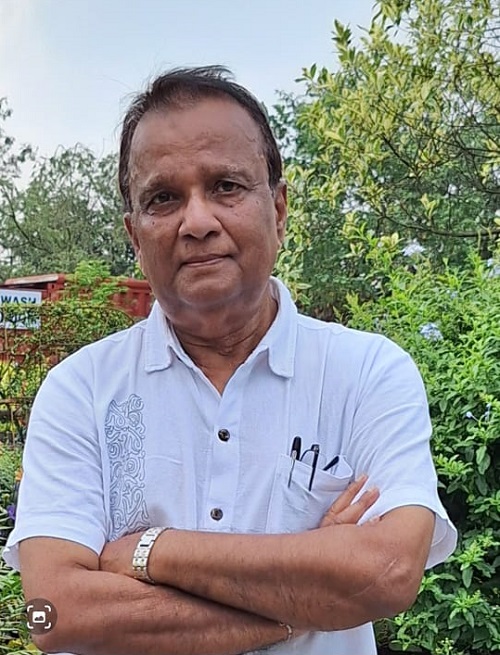
Prabhanjan K. Mishra is an award-winning Indian poet from India, besides being a story writer, translator, editor, and critic; a former president of Poetry Circle, Bombay (Mumbai), an association of Indo-English poets. He edited POIESIS, the literary magazine of this poets’ association for eight years. His poems have been widely published, his own works and translation from the works of other poets. He has published three books of his poems and his poems have appeared in twenty anthologies in India and abroad.
Dilip Mohapatra

Finally the time has come
to shoot the old sea horse
in the head
as the winches tighten the ropes
and I am slowly dragged
through the caisson
into the dock
and lowered onto the blocks.
As my keel settles down
I look around
and am utterly dismayed
to find littered jetties
choked with rusted cables
and splintered crates
that I am not used to.
No longer my sonar pings
nor my radars sweep
to search
locate and track the targets
my crow’s nest no longer scans
the distant horizon
and my echosounder
is silent forever
my guns no longer boom
my missiles leave no trails.
My yard arm will never fly
the gin pennant again
no champagne will spill
no beer will drench
in the quiet wardroom now
no laughter
no cheers
the shining but wet stripes
will become a thing of the past.
A lone raven replaces the lookout
in my crow’s nest
briefly
for a while
till it’s torn down and razed.
But I know for sure
my hull would now
never be cleaned and
be rid of the barnacles
which carry the story
of my glory
and of the tumultuous days at sea
as the behemoth of my shadow
gets diminished bit by bit
everyday
and the relentless blow torches
cut me into pieces
to be later molten in a smelter.
My anchors and screws will soon
find their way
to be installed in front of a
maritime academy
and my able limbs would be torn apart-
maybe for transplanting
into another needy ship.
My bell would be re-installed
in a costal watchtower
and would toll to
issue storm warnings.
While my verve and valour
as a man-of-war
would live for perpetuity
on the pages of
maritime history
and naval chronicles
one day another ship
would be
commissioned with my name
to brave the waves
once again.
My rust would never be
a case of dust to dust
I will continue to live
in many a form-
and in my death
I will be born once again.
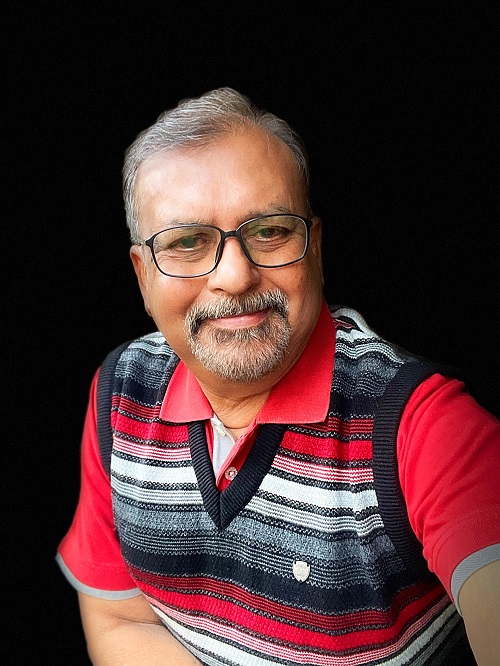
Dilip Mohapatra, a decorated Navy Veteran is a well acclaimed poet in contemporary English and his poems appear in many literary journals of repute and anthologies worldwide. He has seven poetry collections, one short story collection and two professional books to his credit. He is a regular contributor to Literary Vibes. He the recipient of multiple awards for his literary activities, which include the prestigious Honour Award for complete work under Naji Naaman Literary Awards for 2020. He holds the honorary title of ‘Member of Maison Naaman pour la Culture’. He lives in Pune and his email id is dilipmohapatra@gmail.com
Snehaprava Das
What loss do the billowing tides lament
What secret they struggle so hard
To spill out on an impassive shore?
What arcane rhythms
of a music in the dark depth of the sea
are choked out of breath in their futile effort to flow out,
What secret of men living and dying through century old sins and salvations,
What briny lump of that ultimate pain they carry inside,
What primeaval urge spurs them on to
Dash on the sand, break, build up,
and break again,
Relentlessly like a perpetuity,
Pronouncing the
Permanence of pain that is man's destiny,
A nomad moon caught in the glass-waves,
Floating and breaking and going out of shape,
swirling like some misbegotten dream,
does not help much to ease the agony,
Still,
There are times when the moon is not in sight
The black, dense waves
in the sea of night
Are punctured by the reflection of
numerous silver pins of light
Flickering faint but unyielding, constant,
Holding promises of a halcyon time for
The tormented souls
Spell out hope and a blissful quiet.
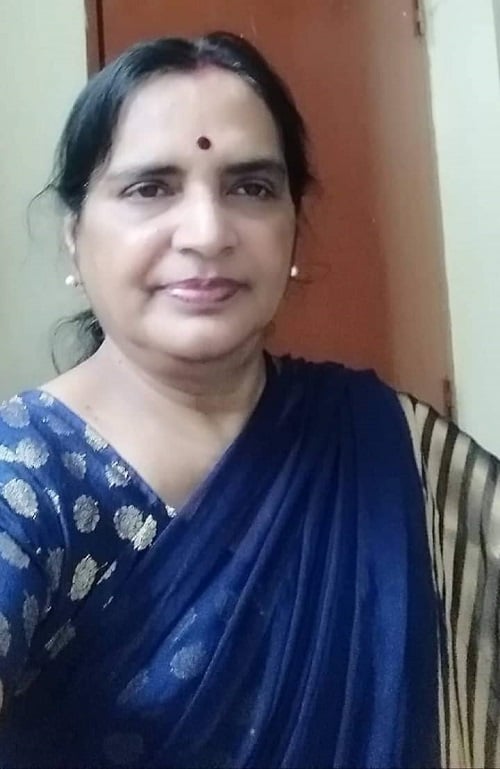
Dr.Snehaprava Das, former Associate Professor of English, is an acclaimed translator of Odisha. She has translated a number of Odia texts, both classic and contemporary into English. Among the early writings she had rendered in English, worth mentioning are FakirMohan Senapati's novel Prayaschitta (The Penance) and his long poem Utkala Bhramanam, which is believed to be a.poetic journey through Odisha's cultural space(A Tour through Odisha). As a translator Dr.Das is inclined to explore the different possibilities the act of translating involves, while rendering texts of Odia in to English.Besides being a translator Dr.Das is also a poet and a story teller and has five anthologies of English poems to her credit. Her recently published title Night of the Snake (a collection of English stories) where she has shifted her focus from the broader spectrum of social realities to the inner conscious of the protagonist, has been well received by the readers. Her poems display her effort to transport the individual suffering to a heightened plane of the universal.
Dr. Snehaprava Das has received the Prabashi Bhasha Sahitya Sammana award The Intellect (New Delhi), The Jivanananda Das Translation award (The Antonym, Kolkata), and The FakirMohan Sahitya parishad award(Odisha) for her translation.
Abani Udgata

I love that voice, singer
that rises to the clouds with
you and takes me up, beyond.
With you, I stand in music all around
and dissolve in the soft glow
of early day light.
I love your note, musician.
As fingers strum the lyre
the waves shiver on water
and sounds travel to the dark world.
Your song, mine and ours, are bridges
to the song-less tranquility .
When they soar above we enter
In to that empty room.
Our dear objects lie there scattered,
no longer our own.
A still eye on the horizon looks on like
a transfixed sun .
Those dry leaves in summer
in a rotating frenzy, spinning madly
swept off in the caress of whirlwind
scale the stairs of pale evening light
to join in the chorus with moist clouds
marching on air like sadhus in kumbh
and sail on to unknown destination.
When the dry leaf meets the cloud,
the song reaches that space .
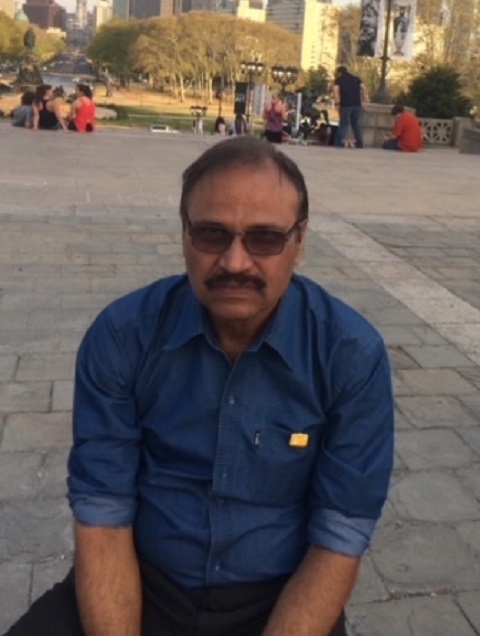
Abani Udgata lives in Bhubaneswar. Writes poems both in English and Odia. Udgata has been awarded in all-India poetry competitions and published in anthologies. He has been a regular contributor to LV. Email: abaniudgata@gmail.com
Sudipta Mishra
I often reflect on my situation.
As the enchanting rays of the moon illuminate the night,
I lose myself in the festivities, ignoring my true self
while adoring
the beauty of the moonlit sky from my balcony.
Time and again,
the naive girl in me steals
joy from the mesmerising scene.
With every drop of milk that flows through the Milky Way,
straight from the stars,
I soak in the magic of nature on each full moon night, just like the other revellers in this cosmic realm around me.
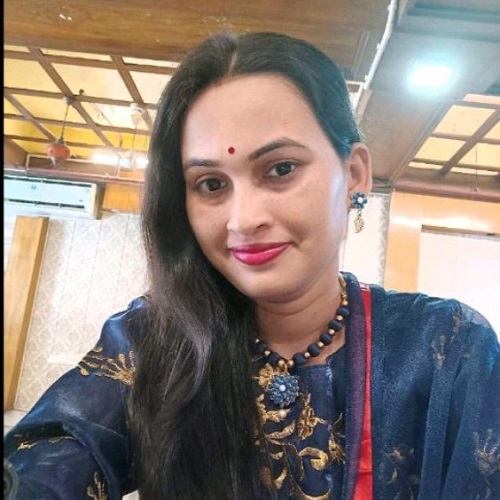
Sudipta Mishra is a multi-faceted artist and dancer excelling in various fields of art and culture. She has co-authored more than a hundred books. Her book, 'The Essence of Life', is credited with Amazon's bestseller. Her next creation, 'The Songs of My Heart' is scaling newer heights of glory. Her poems are a beautiful amalgamation of imagery and metaphors. She has garnered numerous accolades from international organizations like the famous Rabindranath Tagore Memorial, Mahadevi Verma Sahitya Siromani Award, an Honorary Doctorate, and so on. She regularly pens articles in newspapers as a strong female voice against gender discrimination, global warming, domestic violence against women, pandemics, and the ongoing war. She is pursuing a Ph.D. degree in English. Her fourth book, Everything I Never Told You is a collection of a hundred soulful poems. Currently, she is residing in Puri.
Dr Bichitra Kumar Behura
Walk slowly, Life—
there are still debts left to repay.
Some wounds still seek healing,
some duties wait to be fulfilled.
In the haste to keep pace with you,
a few dear ones slipped away,
some moments were left behind.
There are still hearts to console,
and faces that deserve to smile again.
Some bonds were formed, only to break,
others never found their full shape.
The scars of fragile ties
still call for gentle mending.
Some dreams remain half-drawn,
some tasks—urgent and unfinished—
still await a second glance.
The tangled riddle of life
is not yet fully solved.
Walk slowly, Life—
let me love freely,
without needing to unravel
every thread of feeling.
Let the moment be enough—
even if it leaves
some longing unmet,
some questions unanswered.
I never wished to slow your flow,
nor stand as a hurdle in your path.
I know, dear Life,
you are a ceaseless stream,
eternal in your rhythm.
All I ask for is the solace
of seeing things reach
their rightful end.
Dr Bichitra Kumar Behura
Tell me the story
you left unfinished—
when you ran off chasing
an unseen shadow
into a moonless night.
I followed you,
like a desert breeze
circling soft dunes—
always near,
yet never quite touching.
I cannot complete this journey
without my soul beside me,
still waiting to finish the tale.
I can no longer bear
this silence stretched too thin—
each moment aching
to unfold what never was.
Come back, if you can,
to recreate the painting
from half-formed sketches.
Never mind the spilled colors—
a few shades
of black and white—
enough to complete
the story
and its quiet meaning.
And in that quiet merging,
between shadow and flame,
the story will speak
without words—
etched in soul’s
invisible ink.
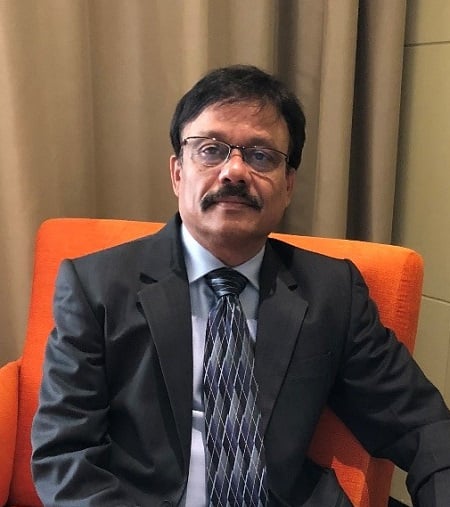
Dr. Bichitra Kumar Behura, is an Engineer from BITS, Pilani and has done his MBA and PhD in Marketing. He writes both in Odia and English. He has published three books on collection of English poems titled “The Mystic in the Land of Love” , “The Mystic is in Love” and “The Mystic’s Mysterious World of Love” and a non-fiction “Walking with Baba, the Mystic”. He has also published three books on collection of Odia Poems titled “ Ananta Sparsa”, “Lagna Deha” and “Nirab Pathika”. Dr Behura welcomes feedback @ bkbehura@gmail.com. One can visit him at bichitrabehura.org
Pradeep Kumar Biswal
Through emerald leaves
Shining in golden gleams
A verdant dream takes shape
Where sunlight streams
A paradise whispers
In the afternoon air.
No earthly roots
But they claim the space
These blossoms bold
In vibrant flame.
From terraced heights
The cascades fall
A symphony of green
Enticing all.
The hum of bees
A drowsy tune
Beneath the boughs
Of the sun and moon.
Rare orchids bloom
In vivrant grace
Each petal kissed
By time and space.
Here worries fade
Like morning dew
As soft breezes
Sooth the skin
A hidden world
Of profound beauty
Where earthly worries
Found absent.
Watching silently
The sun-drenched stones
The spirit of this garden
Keeps smiling .
A testament to dreams
Unfolded day by day
Life in a hanging garden
Touches the sky.
Pradeep Kumar Biswal
Across the fields
Where tall grasses dance merrily
Blue clouds gather gently
An unseen breeze flows silently.
It treads so light
Leaves no shadow behind.
The ripples spread softly
On the surface water
Where unseen currents
Pass swiftly.
Like a fleeting touch
A kiss upon the pane
It vanishes as quickly
As comes the summer rain.
It rustles leaves
Beneath the gaze
Of the pale silent moon.
It stirs the dusts in circles
Quite wild and free
A silent journey of the air
No one can escape to see.
There’s no echo
Just nature's breath
The beatings of a hidden heart.
The footsteps of wind
It’s a mystery untold
An ancient story
Unfolding a magic.

Mr. Pradeep Biswal is a bilingual poet writing both in Odia and English. His poems are widely anthologized. He is also an editor and translator of repute. A retired IAS Officer, Mr. Biswal presently holds the position of Member, Odisha Real Estate Regulatory Authority and stays with his family at Bhubaneswar. Views are Personal
Manjula Asthana Mahanti
Dusk approaching
Day shyly dooming
One more day of each one's life
With so many stories
Of the particular day
Have guilt and repentance
Of wasting one valuable day
Encouragement ,somewhere
Smiles as a result, cheerfull faces
Somebody lost someone
Someone met some interesting person
Joy, annoyence, disappointment ,so on
So many situations to hang on
One has to live whatever gone
Day ended, not the desires
Darkness was becoming deeper
Stars happily twinkling in the sky
Half Moon also had marked
It's presence in the sky
Tired bodies, lying like logs
Trying to have some relaxation
But not the minds
They were proactive
With the results of today
Plans for the coming day
Trying to find some easy way
Jumping into the lap of sleep
Slowly, slowly
Yes, it is the life.....
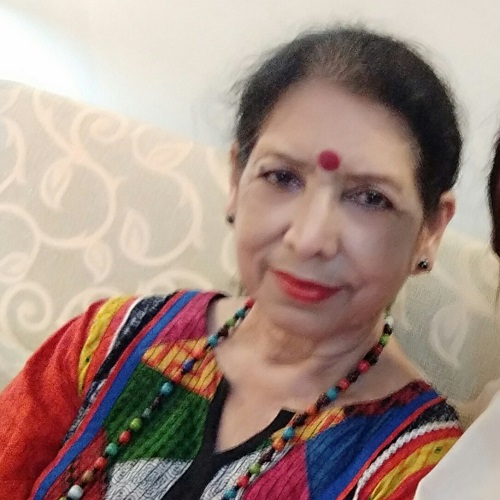
Manjula Asthana Mahanti is a post graduate in Sociology and Hindi. Her Graduation was in English honors. She is a Sangeet Prabhakar (vocal) and has done her B. Ed. She worked in a college as Senior Lecturer. Her last assignment was that of a high school Principal. She lives in Forest Park, Bhubaneshwar, Odisha, India.
She is a published trilingual poet, author, editor, translator and story teller. She has eight collections to her credit along with a long list of participation in national, international anthologies, e-magazines, etc. She is a recipient of several national, international awards, Samman Gujarat and Telangana sahitya akademy award amongst many more. Her recent award was "Icons of Asia"
Baldev Samantaray
Reality is tripod driven
The camera sees what is visible
Through the glass
That we have made
Through the angle
We have conjured
Like the Sun that lights all
Yet there is darkness
On the other side
Even the rock
On the hillock
Changes it’s colour
With the rising Sun
It silently grins at you
On a moonless sky
The one that you saw in daylight
Are figments of superstition at night
The wisdom of the sage
The diktat of the judge
Are as transient
As twilight
It takes us years to see
What the mayflies see in a day
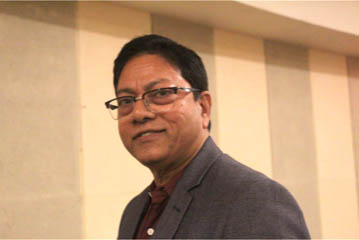
Baldev Samantaray is a retired banker who lives in Bhubaneswar. He did his post graduation in English literature from Ravenshaw College (76-78).He started writing from his Ravenshaw days. Many of his poems appear in various journals and anthologies.
Dr Nanda Kishore Biswal
The river grows through
what it goes through.
Strange routes, difficult terrains,
unforeseen obstacles, detours, setbacks,
heart breaks— all part of life’s journey.
Come hell or high water,
not submitting anyway.
When going gets tough
and retreat feels like the only option,
on the face of falling apart
it puts on a brave face
and the tough gets going.
There’s relentless need to keep going
with shifts.
It is not obliged to explain its drift.
In the middle of hurdles,
and call it quits being the only possible answer,
call it its quiet defiance.
The river is never meant to stay rooted
like a tree
and stuck up to rot in stagnation,
like a ship anchored in the harbor.
To press ahead in motion with no strings attached—
is its be-all and end-all.
A crushed childhood it had
under the rock literally,
to find hope in the smallest corner
to be released
and move ahead with new vigour,
never to look back again.
The river is to find its own path by all means.
Every path worth walking
is not free from the fear of falling;
not obviating the thrill of flying though.
Every growth costs one something however.
The river is not chasing the rainbow
that has no end;
it has to go ahead
to find itself along the way;
it has to cover its own path
that doesn’t lie in hustle,
but in stillness.
Whatever it is,
the river chases only life’s momentum.
So, it has to move anyway.
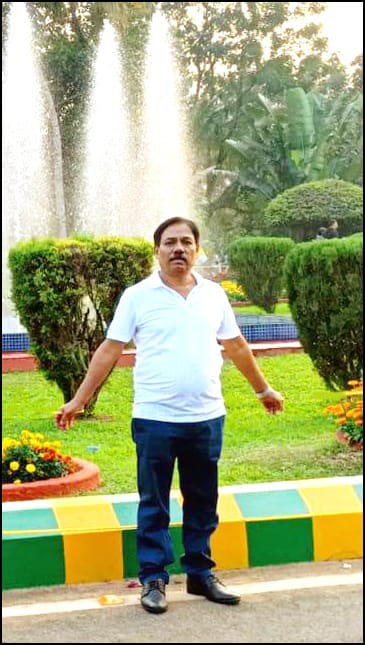
Dr Nanda Kishore Biswal, after teaching English language and literature for more than thirty five years in different colleges of Odisha, retired as an Associate professor. Passionate in reading poetry, intermittently, he has been writing poetry since his college days.1996 to1999 was his most fertile period when his Odia poems were published in almost all Odia dailies as well as in most of the Odia magazines. Also he writes English poems. He has authored The Fictional Transfiguration of History in the Novels of Salman Rushdie, Amitav Ghosh and Rohinton Mistry. Besides, he has edited Prananath Patnaik:A purveyor of Egalitarianism Currently, he is engaged in writing reviews of the poetry collections of the new poets who write in English.
Ajit Patnaik
Life was all innocence flowing on like a small mountain stream,
With the murmur of pebbles making sweet symphony,
In harmony with the banks, watering the green grass beside,
Facing no barrier to arrest the triumphant and musical flow.
Oh, how blissful it was to be in sync with the obliging world,
The ambient surrounding welcoming it unresistingly,
Everything seemed a perfect piece placed in a perfect order,
Every step a move forward of a bigger promise towards a bigger future.
But it received a jolt path blocked by a sudden landslide,
Out of nowhere like a thunderbolt it came crashing on the current,
It was so huge and sudden it devastated the flow into disarray,
Life is searching desperately ever since the escape from the vicious grip.
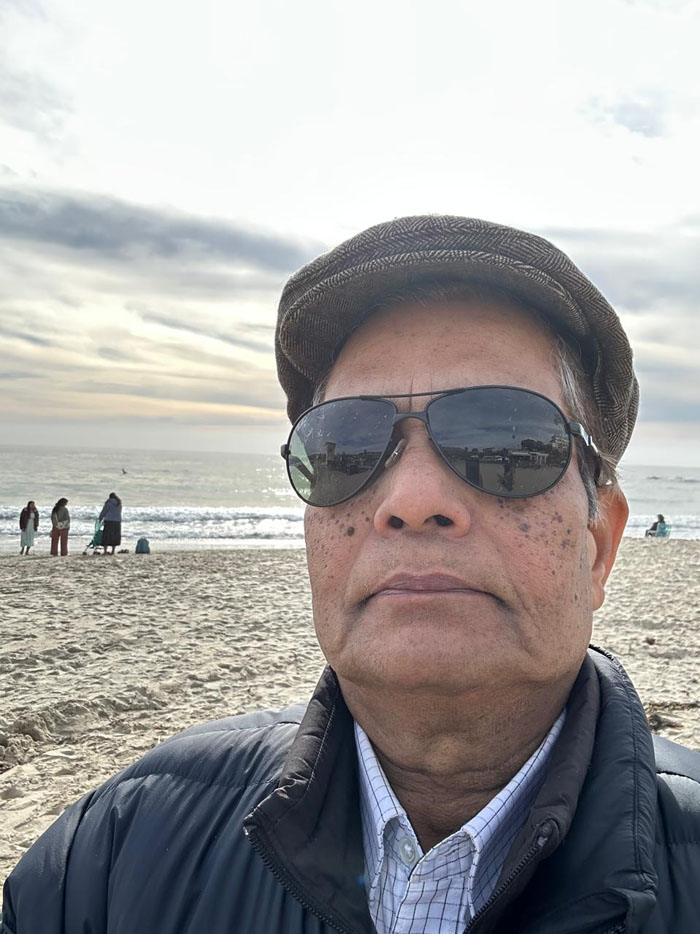
Ajit Patnaik is a former government official who retired as the Deputy Comptroller and Auditor General of India. He is an avid reader of books particularly of the genre of spiritual. He has edited the book "Government Audit and Governance" and has contributed regularly to Professional journals.
Dr. Rekha Mohanty

My wish reflects
your image all the time,
I don’t know why with
some twists and turns
I repeat the same line,
If my wishes were horses
I would not let you
leave me and go,
The mighty horse
with colourful wings
would have flown across
seven seas have nice
time you never know…
The hunger of a destitute
never gets fully satiated,
Earthen pot never turns into gold, A golden one never
turns into a rice bowl,
I am destined to be one
as I see me today,
Learnt to enjoy the moment,
To live life as is thrown every day,
Life is as fragile as a bubble, Wishes flow as shining stream
can turn dry into dust and rubble…
I had a wish that
remained unfulfilled
To breathe my last
in your lap with open eyes,
To have eternal rest
looking at your loving eyes,
None the less
I wish every one
‘ALL THE BEST’
for every venture of their lives,
Let all be really happy
is my sincere wish…
The stories of kings and queens ending with a happy note
not withstanding creates
a hope never ending,
We always would live
happily here after
is a positive wishful thinking…
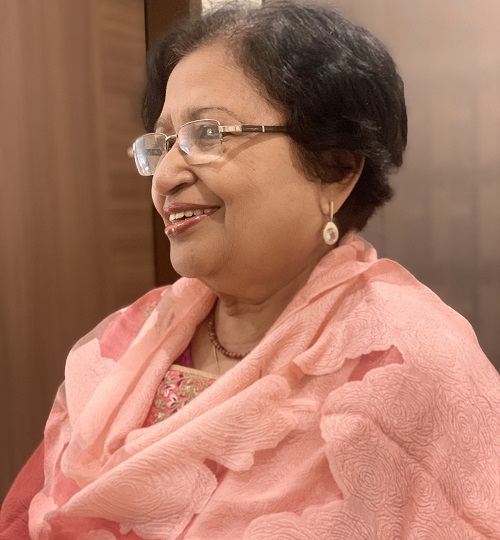
Col( Dr) Rekha Mohanty is an alumni of SCB Medical College, Cuttack, Odisha and she has spent most of her professional life in military hospitals in peace and field locations and on high altitude areas.She has participated in Operation Vijay (Kargil war)in 1999 and was selected for UN missions in Africa for her sincere involvement in crisis management of natural calamities in side the country and abroad where India is asked to do so in capacity of head QRT in Delhi for emergency medical supplies.She had also participated in military desert operation
’ Op Parakram’ in Rajasthan border area.After relinquishing Army Medical Corps in 2009,she worked in Ex Servicemen Polyclinic in Delhi NCR and presently is working in a private multi-speciality hospital there to keep herself engaged.
Her hobby is writing poetry in English and Odia.She was writing for college journals and local magazines as a student in school.
Being a frequent traveler around the world,she writes travelogues.The writing habit was influenced by her father who was a Police Officer and used to write daily diary in English language he had mastered from school days in old time.Her mother was writing crisp devotional poems in Odia language and was an avid reader of Odia and Bengali books.Later her children and husband also encouraged.
Dr Rekha keeps herself occupied in free times for activities like painting, baking and playing card games the contract bridge.
She is a genuine pet lover and offers her services to animal welfare organisations and involves in rescue of injured stray dogs.Being always with pets at home since early childhood ,she gives treatment to other dogs in society when asked for in absence of a vet.She delivers talks on child and women health issues to educate the ladies in army and civil.
After sad demise of her husband Dr( Brig)B B Mohanty in February 2023,she devoted more time to writing and published her first poetry book’Resilient Leaf’in August 2023.Since then there is no stopping and she is going to publish her second book of poetry soon.
She enjoys reading E magazine LV , newspaper current affairs ,writing poetry and watching selected movies whenever she gets time.She keeps travelling places of interest in between for a change which is a passion as a girl since days roaming with parents and siblings .Her motto is to be happy by giving the best to self and to the society.She is lucky to have a supportive family.
Sujata Dash

When sorrow rules vistas of life
Embellishes pleats and folds of story
You become an echo in an empty room
Capturing own thoughts in the dreary vacuum
Like my not so ever and anon disposition
A gnawing sense envelopes
Wraps the forlorn soul
You become a solitary island in no time
In life's vast ocean...like me
Unable to swim ashore despite best of efforts
When you are reduced to a wilting flower
In life's blooming garden
Bereft of mushy oral exchange with a companion
You die slowly each day like I do
As happiness chooses not to be an ally anymore
When scorpion of Isolation gives a lethal sting
Nostalgia ridicules reality, overpowers normalcy
Sprinkling a damper on soaring spirit,
One is engulfed by a twinge of panic
Making evacuation impossible, akin to my existing plight
As I squirm in the grasp of sulky seasons
My soul dithers, craves to unburden
Enigma of silence sends a grim reminder
That, I have to cling to endurance as such
Till hope lets belief fruition
And I Stumble upon life's greener pastures.
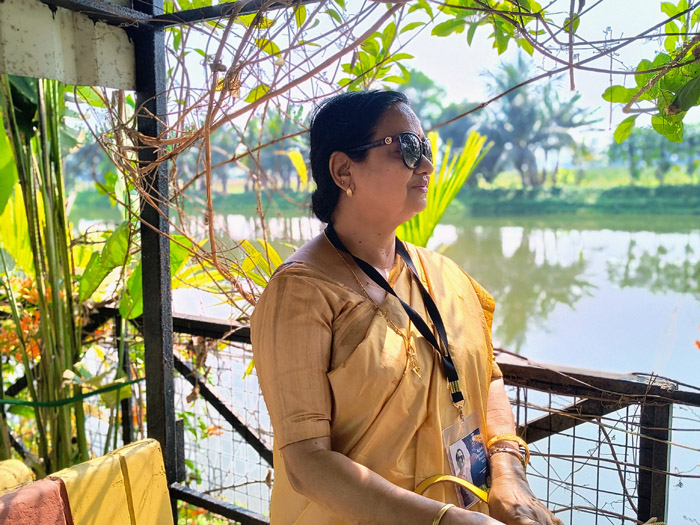
Sujata Dash is a poet from Bhubaneswar, Odisha. She is a retired banker.She has four published poetry anthologies(More than Mere-a bunch of poems, Riot of hues and Eternal Rhythm and Humming Serenades -all by Authorspress, New Delhi) to her credit.She is a singer,avid lover of nature. She regularly contributes to anthologies worldwide.
WHAT IF- HE LET GO OF THE PAST!?
Sushree Gayatri Nayak
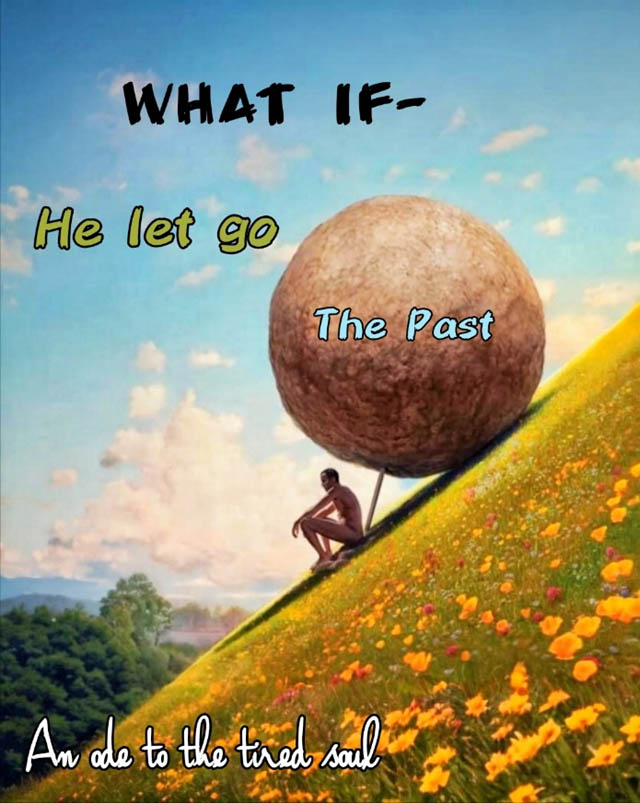
What if—
One day, the King of Corinth
Set down the boulder on a stick
And rested a while in the middle of the hill,
Beneath the shadow of the great stone?
He would admire the azure sky
And the whipped-cream-like clouds,
Appreciate the green meadow
And the bright yellow flowers.
What if he sighs—
Not out of pain or shame,
But grieving how he played the game?
He neither treated his people well,
Nor obeyed the Almighty.
The web of deceit he wove—
Now, he is entangled in it.
The burden of his karma—
Heavier than the rolling stone—
Lingers in his heart,
Pressing his veins and arteries,
Making the blood flow freely.
Oh! He can’t bear the burning.
What if he wishes to be free—
To be a free-flying bird
With light feathers and a kind heart,
To visit the other side of the hill
And count the flowers,
To feel the green grass beneath him,
And talk to the moon at night?
What if epiphany happens?
The greed, the treachery—
All will vanish from his mind;
Only the wish for redemption will remain.
What if he repents?
What if he apologizes?
Will God have mercy on him?
Maybe… yes.
He won’t be a sinner anymore,
But a soul who endured.
He only has to let the stone roll free.
Because not every curse is meant to last.
Perhaps, some end
When we leave the past in the past.
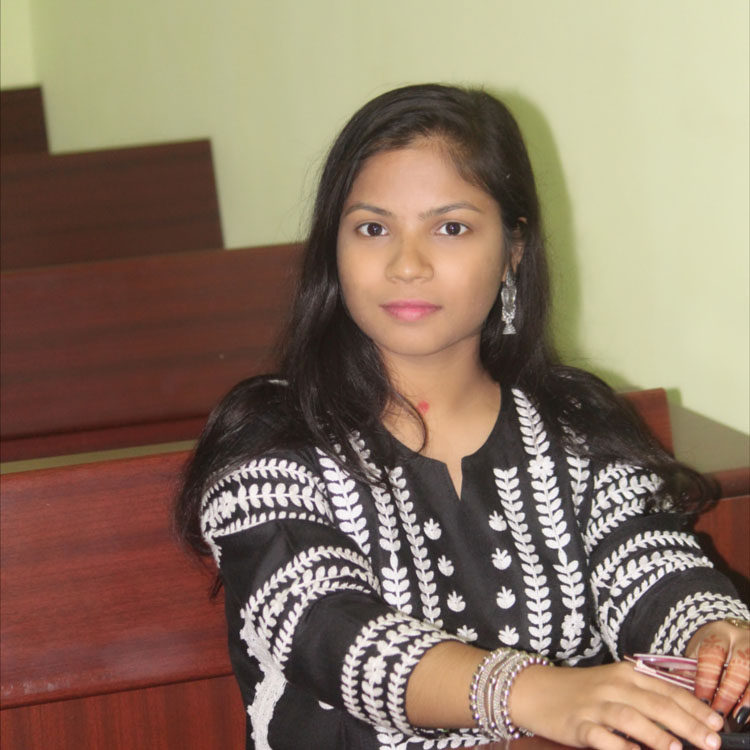
Sushree Gayatri Nayak is a budding muse and poet from Odisha, India. Currently pursuing her studies in English literature at Utkal University, she channels her passion for love, nature, and current social issues into heartfelt poetry. Her verses weave emotional depth with thought-provoking reflections, capturing both personal experiences and broader societal concerns.
Rudra Pati

All of a sudden,
These two arms
Stretch earthward,
Like the roots of a tree!
O, look!
How I have clutched the soil
With these limbs,
Digging deep into
The entrails of the earth.
I, too, crave salt, water,
And love.
I have clung to your body:
The primal plinth of life.
All I desire is to live,
And flourish into shade.
All I seek is to bloom—
A brief flowering
In the hush of light.
Translated from Bengali into English by Matralina Pati
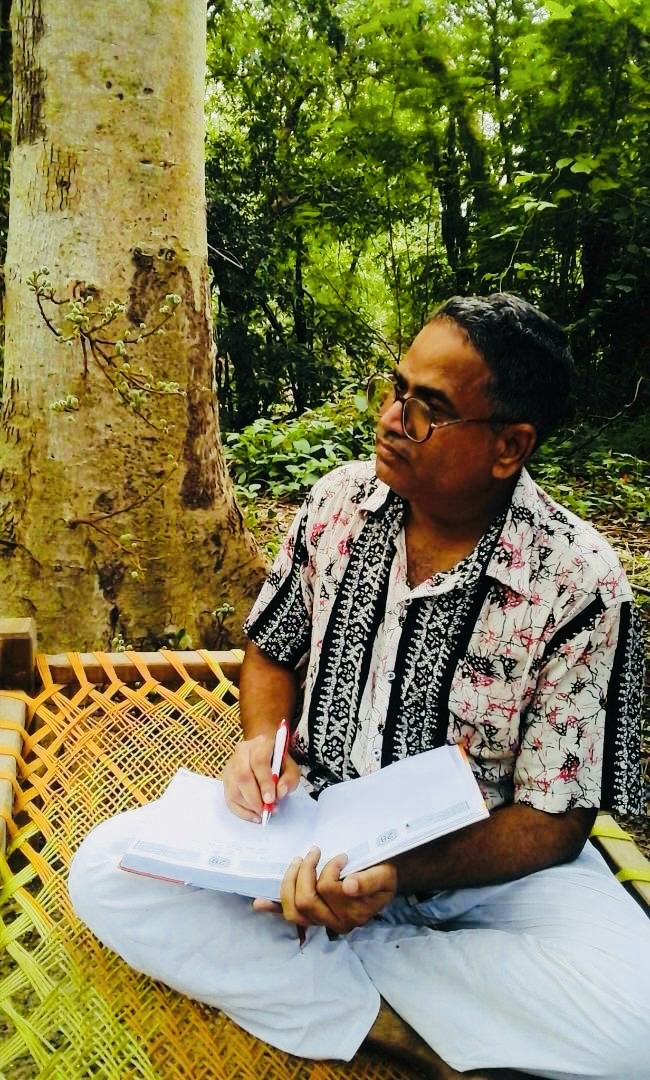
An eminent poet of contemporary Bengali literature, Rudra Pati (born in 1968) is an authentic representative of post-modern Bengali poetry. Rudra Pati teaches in a government-aided school and has a penchant for astronomy, Euclidean geometry, farming, and shepherding cattle in his native place, a drought-ridden rural region of Purulia in West Bengal. His published works include Prantik Chasha (1993), Lathe Othoba Osomprikto Hydrocarbon(1993), E Bachar Shrabon Bhalo (2004), Bekarer Kobita(2004), and Guchhomul (2005).
He was invited by All India Radio to present his poetry at Akashvani Bhawan, Kolkata. He has read his poetry at numerous literary festivals such as Paschim Banga Bangla Academy, Bangla Kobita Utsav, International Poetry Festival, Biswabangla Kabita Utsab, and many more. He is a recipient of the ‘Krishnamrittika Sahitya Award’ (1997). Rudra Pati says: "My dream shatters, yet I dream anew."
Hema Ravi

The sepia pictures sans
‘cheese’ smiles
photoshoot of yesteryears
rouses fond memories.
Gajendra Circle aka GC - the conspicuous
landmark of IIT- M, dear to students,
residents, employees, and visitors to
the salubrious environs then; and now…
How GC came to be is unknown; it
continues to charm with upbeat thoughts,
unlike monuments that evoke scenes
of battlefields, weapons, aftermaths…
Whatever reasons memorials come to be,
their existence has an eternal impact
figuratively and literally in their societies –
Safeguard them for the future Gen…
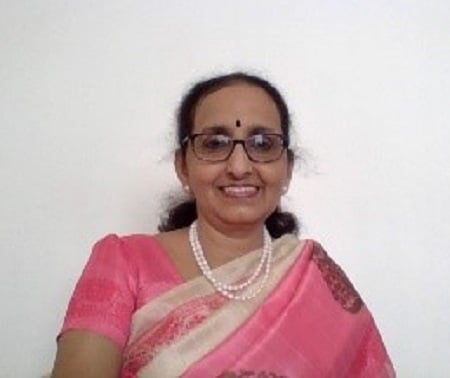
Hema Ravi is a poet, author, reviewer, editor (Efflorescence), independent researcher and resource person for language development courses... Her writings have been featured in several online and international print journals, notable among them being Metverse Muse, Amaravati Poetic Prism, International Writers Journal (USA), Culture and Quest (ISISAR), Setu Bilingual, INNSAEI journal and Science Shore Magazine. Her write ups and poems have won prizes in competitions.
She is the recipient of the Distinguished Writer International Award for excellence in Literature for securing the ninth place in the 7th Bharat Award, conducted by www.poesisonline.com. In addition, she has been awarded a ‘Certificate of Appreciation’ for her literary contributions by the Gujarat Sahitya Academy and Motivational Strips on the occasion of the 74th Independence Day (2020) and again. conferred with the ‘Order of Shakespeare Medal’ for her writing merit conforming to global standards.(2021). She is the recipient of cash prizes from the Pratilipi group, having secured the fourth place in the Radio Romeo Contest (2021), the sixth place in the Retelling of Fairy Tales (2021), the first prize in the Word Cloud competition (2020) and in the Children’s Day Special Contest (2020). She scripted, edited, and presented radio lessons on the Kalpakkam Community Radio titled 'Everyday English with Hema,' (2020) a series of lessons for learners to hone their language skills. Science Shore Magazine has been featuring her visual audios titled ‘English Errors of Indian Students.’
A brief stint in the Central Government, then as a teacher of English and Hindi for over two decades, Hema Ravi is currently freelancer for IELTS and Communicative English. With students ranging from 4 to 70, Hema is at ease with any age group, pursues her career and passion with great ease and comfort. As the Secretary of the Chennai Poets’ Circle, Chennai, she empowers the young and the not so young to unleash their creative potential efficiently
Matralina Pati
“ Fainting I follow. I leave off, therefore,
Sithens in a net I seek to hold the wind.”
_ Thomas Wyatt, “Whoso List to Hunt, I Know where is an Hind”
You descended on this earth
And embalmed my wounded heart
You fetched a few dewdrops along ;
I could not hold them for long,
Then you were gone,
Those fleeting pearls vanished
In the pallid air.
Like an improbable redemptory promise,
Ethereal,
You deluded my grasp;
To earn a glimpse of your visage
I have bartered my hurts
Then,
You have deigned to return.
You are gone again:
Shreds of my heart
Remain scattered.

Matralina Pati, is a PhD research scholar working on marginal Indian bhasha literature (UGC Junior Research Fellow), a bilingual poet and a translator from Bankura, West Bengal. Her critical and creative writings have been published on national and international platforms. She has authored a book of translations titled Monsoon Seems Promising This Year (selected poems of postmodern poet Rudra Pati translated from Bengali into English).
Mrs. Setaluri Padmavathi

You gently caress the numerous minds
Minds that are inquisitive and eager
Like a candle, you spread the bright light
The light that eliminates bleak darkness!
No caste, creed, age, or a particular religion
The diverse students are your only world
The world you create is full of wisdom
The world that creates another serene globe!
The civilized crowd worships you a lot
The mighty mob is the replica of you
Dedication is your breath and commitment is your love
You're the maker of many skilled professionals!
They place you on the top of the world
They thank you for your magical hand
Oh dear, nobody can replace you ever
You're the eternal zeal and power!
Dear teacher, they greatly respect you,
They respect your magical touch!
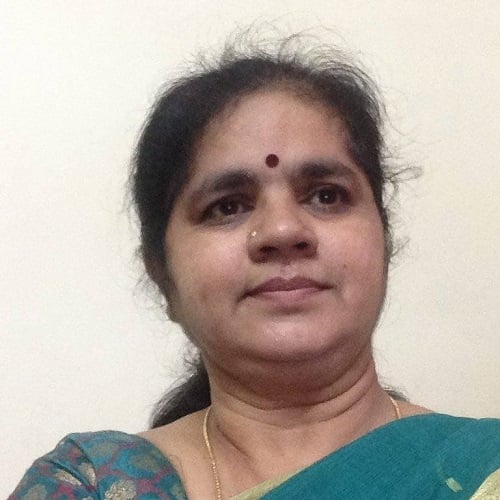
Mrs. Setaluri Padmavathi, a postgraduate in English Literature with a B.Ed., has been in the field of education for more than three decades. Writing has always been her passion that translates itself into poems of different genres, short stories and articles on a variety of themes and topics. She is a bilingual poet and writes poems in Telugu and English. Her poems were published in many international anthologies and can be read on her blogsetaluripadma.wordpress.com. Padmavathi’s poems and other writings regularly appear on Muse India.com. Boloji.com, Science Shore, Setu, InnerChild Press Anthologies and Poemhunter.com
Ms Gargi Saha
The green fields give us fruits, flowers, grains
We admire its beauty
And how do we repay them?
Do we really love them a week bit?
Or ruthlessly cut them down, turning it to a cruel, eccentric 'Wasteland'?
Ms Gargi Saha
The rustling of the trees
The humming of the bees
The blowing of the conch shells
The tinkling of the bees
The chirping of the birds
The lowing of the herd
The splish splash of the rains
The roaring of the lion
The cheering of the successful
The groaning of the painful
The ripple of the water
The murmuring of the preacher.
Ms Gargi Saha
The chirping of the birds
The gazing of the calm herd
The wandering of the sheep in their fleecy fold
The sun rays on the mountains, oceans and greenery
The singing of the cuckoo
The rains and the rainbow,the inseparable two
The sloping,steep valleys
The red cherries like lollies
The greenery's laden carpet
The ponds that are always wet
Everything awaits in nature's gate
To be rejuvenated, thrilled and delighted it's never too late.
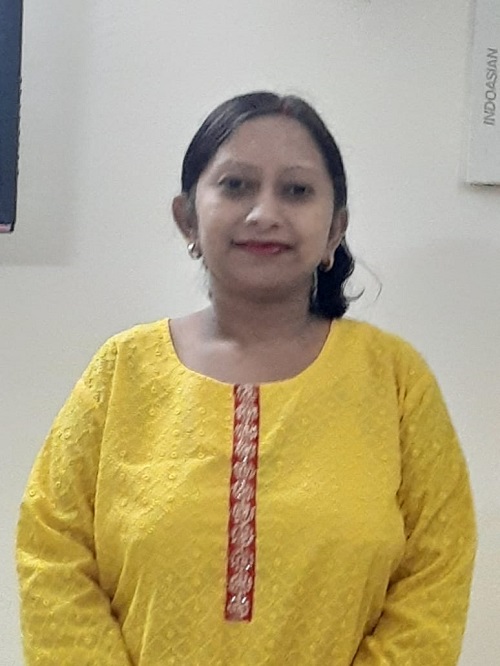
Ms Gargi Saha is a creative writer and has published two poem books namely, 'The Muse in My Salad Days ', and 'Letters to Him '.Her poems have been featured in National and International Journals. She has received the Rabindranath Tagore Memorial Award and the Independence Day Award for poetry. Presently she edits several scientific research papers. She can be reached at gargi.paik@gmail.com
Mrs. Sreeja Sree
When you, my love, ask me to wait,
Time itself pulls hard on the reins.
Around me, I feel dark wings beat,
The scent of death—like rotting eggs.
This brief moment, a fragile islet—
We stretch and twist it, thin and taut.
Though time runs short, we press around it,
An ocean of love, too vast to be caught.
Like a dry leaf, wind-blown from nowhere,
I landed in your path—and you picked me up.
When downpour, chill, or sun find you,
I’m wrapped around you, warm as a cup.
When duty calls and you vanish from sight,
How do you still reach my heart, my dear?
No bounds, no bargains—just something true,
A matchless feeling. A matchless match.
(Translated from Malayalam by Sreekumar Ezhuththaani)
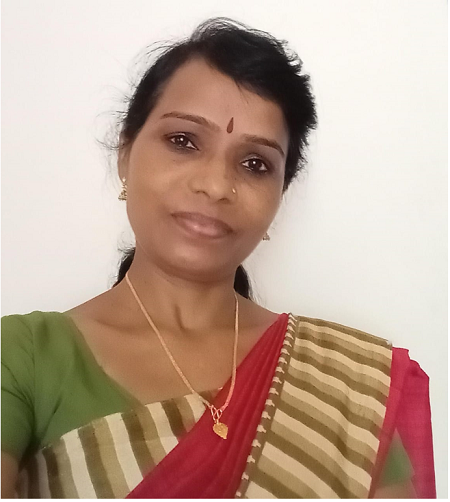
Mrs. Sreeja Sree from Kattuppara, a village in Malappuram, Kerala, India, is a multi-talented mother. She writes, composes, sings, illustrates, and makes her living as a dance teacher at her own dance school, after teaching herself classical dance forms like Bharatanatyam which is almost impossible to learn on one's own.
Padmini Janardhanan
A time for everything
Everything in its time
Financial independence
No exception.
As a balaka:
financial independence - apertinent
parents, parental figures, not just duty bound
a pleasure to indulge them
As a bramhacharya:
financial independence - a disaster
not yet ready to handle it
financial acuity - work in progress.
As a gruhastha:
financial independence - no elixir; oxygen
not merely for self indulgence;
to duly dispense every duty.
As a vanaprastha:
yes, needs must be met
legitimate desires indulged;
no, not important who pays.
For every adult
with next-gen, prev-gen to support,
not just financial independence
financial acuity too is a must.
Note:
Balaka- childhood
Brhamacharya- studentship
Gruhastha - adult
Vanaprastha - senior citizen
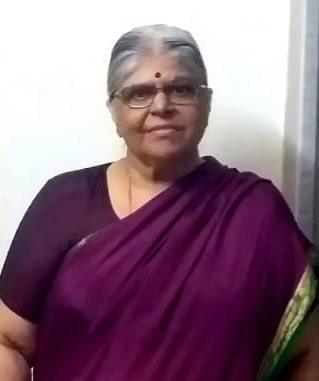
Padmini Janardhanan is an accredited rehabilitation psychologist, educational consultant, a corporate consultant for Learning and Development, and a counsellor, for career, personal and family disquiets.
Has been focussing on special education for children with learning difficulties on a one on one basis and as a school consultant for over 4 decades. The main thrust is on assessing the potential of the child and work out strategies and IEPs (Individual Educational Plans) and facilitating the implementation of the same to close the potential-performance gap while counselling the parents and the child to be reality oriented.
Has been using several techniques and strategies as suitable for the child concerned including, CBT, Hypnotherapy, client oriented counselling, and developing and deploying appropriate audio-visual / e-learning materials. Has recently added Mantra yoga to her repository of skills.
She strongly believes that literature shapes and influences all aspects of personality development and hence uses poetry, songs, wise quotations and stories extensively in counselling and training. She has published a few books including a compilation of slokas for children, less known avathars of Vishnu, The what and why of behaviour, and a Tamizh book 'Vaazhvuvallampera' (towards a fulfilling life) and other material for training purposes.
Kunal Roy

In the realm of molars,
You appear as the last offspring,
Crack the gum,
Erupt,
Cause anguish,
Breed trauma,
Suffers the individual!
It is a journey
in the teens
You grow
either oblique
or amorphous
or half - broken!
Concern emanates,
The swollen jaw,
The tingling,
The nagging feeling
disrupt the mood,
disturbs the air of harmony!
Unbearable ,
Rushes to the doctor,
uses instruments,
pacifies the pain,
temporary though!
Medicines intervene -
Root out becomes mandatory!
The pain relieves,
Normalcy restores,
Yet the wisdom remains -
not an ally of intelligence,
But :
A bleeding scar,
A black nightmare,
A black thought!!
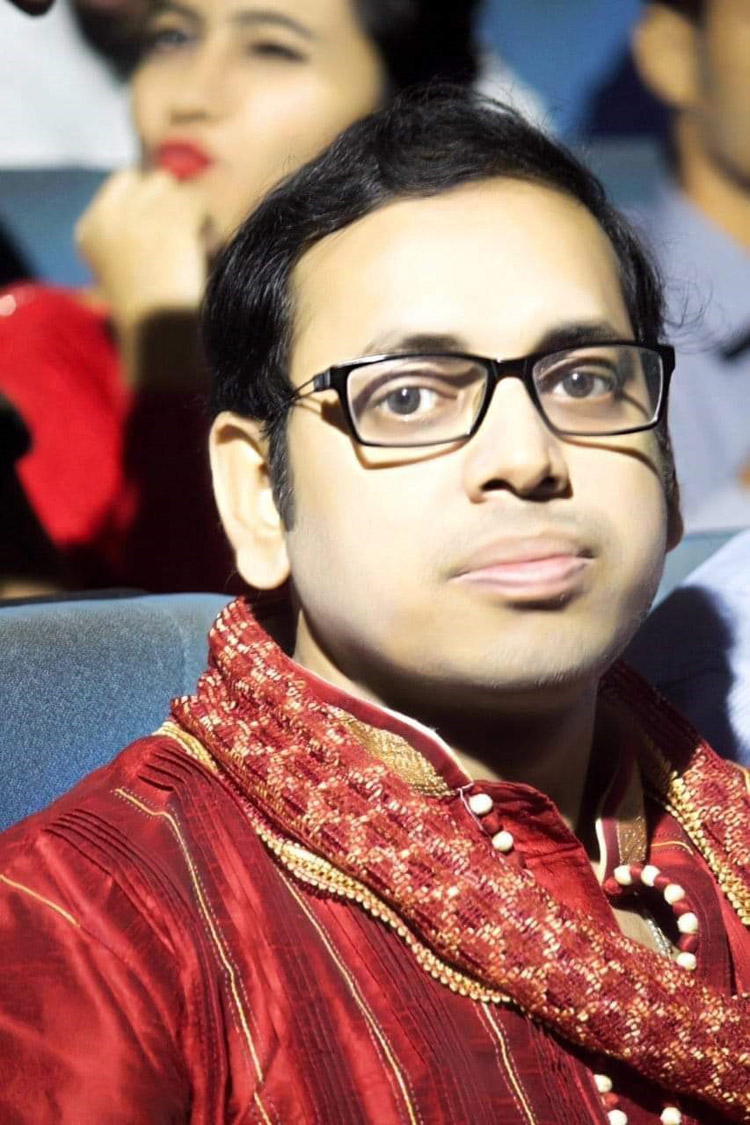
Kunal Roy has always been an ardent lover of literature. He has received various awards for his literary contributions. He is a poet and a critic of poetry. His works have been published both here and abroad. Currently working as an Assistant Professor of English Language and Communication in George Group of Colleges, Kolkata.
Dr. Rajamouly Katta
equality, not just the vote right
on the day of poll,
ballot paper with all in fray
and the distinguishing mark in hand
to vote for the candidate of one’s choice,
it is surely everything beyond
as all are equal in choice
for all prospects in all respects:
in breathing air like others
in quenching thirst like others
in fulfilling hunger like others
in enjoying rights like others
away from humiliation
away from subordination
like the lessons of nature
all to revere its majestic stature
sunrays are for all
moonbeams are for all
drops of rain for all
stars in the sky for all.
one-fourths of land for all
like the ocean one-thirds is for all
like the vast sky overhead for all
like flora and fauna for all
as whoever is born on earth
surely to live for mirth,
with none to be superior
to treat others as inferior,
that is all meant by Supreme creation,
for man has no power for fabrication.
Dr. Rajamouly Katta
the million-dollar question
in our minds for rumination
whether the seed is first
or the tree is first.
like the query in complexity
at our hearts a perplexity
in knowing if the egg is first
or the bird is first.
a child is the father of man,
a seed is the mother of the tree
and a chick is the mother of a hen,
one minute and other majestic,
for, at its heart, it preserves
the tree with its stems
the stems with its leaves,
flowers and fruits
that are for sure in the bud
in store for the seed main
all soft beyond touch
all minute in its couch
macrocosm in microcosm
all molded in a microscopic way
in the art of creation
like the baby in the womb,
mother in miniature,
the secret of nature.
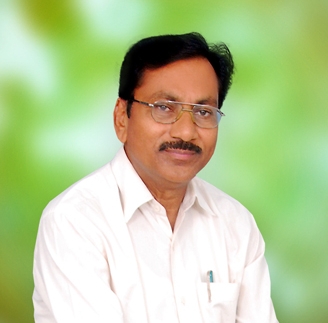
Dr. Rajamouly Katta, M.A., M. Phil., Ph. D., Professor of English by profession and poet, short story writer, novelist, writer, critic and translator by predilection, has to his credit 64 books of all genres and 344 poems, short stories, articles and translations published in journals and anthologies of high repute. He has so far written 3456 poems collected in 18 anthologies, 200 short stories in 9 anthologies, nine novels 18 skits. Creative Craft of Dr. Rajamouly Katta: Sensibilities and Realities is a collection of articles on his works. As a poet, he has won THIRD Place FIVE times in Poetry Contest in India conducted by Metverse Muse rajamoulykatta@gmail.com
Arpita Priyadarsini
I often wonder
How it'd feel
To be able to write again
Or atleast
Express in ways I used to
I ask myself and fail
Fail to find words
That feel like home
So I run away
I run away from words
As if they were never my home
There's a rough puncture on my ribcage
That oozes out the exact words
That I'm afraid to write down
So I pause
I pause to never start again
When did everything get this complex
And when did I exactly stopped breathing
I can't remember
But I know how it feels
Cause it has not stopped feeling
Some other way since then
I quietly sneak into my dane
Hoping for a day
That inhales the sun
And exhales the moon
As everyone else here does
I try to be proud of myself
I try so hard
That it hurts
Hurts to an extent
That I feel numb
They say it'll stop aching someday
But they don't mention the exact date
So I wait
I wait and another autumn passes by
I wait and another August passes by
I wait so that I could console myself
But
All of it seems vague
As a hint of blue touches my lips
And fly away

Arpita Priyadarsini, I`m currently working under Home department, Government of Odisha, has keen interest in literature. She loves reading fiction and poetry. She started writing poems few years back and has been published by an international publication house twice. Her Instagram handle is @elly__.writes, which is solely dedicated to her love for poetry.
Bipin Patsani
I met a poem at the ikebana show
In the Parnassian Mogul Garden,
A wild flower collection, the unusual
Cohabiting with the earthly
In a sublime poetic peccadillo.
Beautiful and elegant the tribe,
She was in her full bloom,
A little bit shiny at the surface
But thoughtful at the core,
The in-depth emotion and passion
In her eyes, honesty and poetic
Sanctity, all rippling ashore;
Fire, thunder, thirst, rain and fun
Carefully kneaded into one,
The flame in the boat in vision
Gracefully sailing across the ocean…
Of suffering, of pain and anguish,
Of fulfillment and promise.
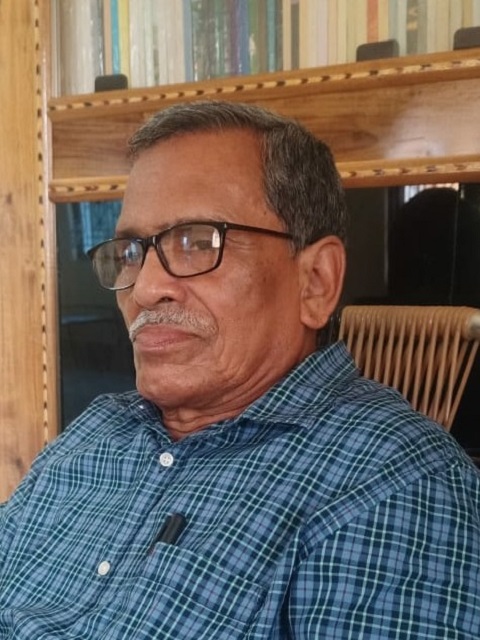
Bipin Patsani (b. 1951) has published poems in many prestigious journals and poetry anthologies including Indian Literature, Chandrabhaga, Journal of Indian Writing in English, Indian Scholar, Kavya Bharati, Poetcrit, International Poetry and Prophetic Voices etc. He has been translated to Spanish and Portuguese. He has three poetry collections to his credit (VOICE OF THE VALLEY, ANOTHER VOYAGE and HOMECOMING). He is a recipient of Michael Madhusudan Academy Award/ 1996 and Rock Pebbles National Award in 2018. He did his Post Graduation in English at Ravenshaw College, Cuttack in 1975 and served as a teacher in Arunachal Pradesh for 34 years till his superannuation in 2012. He also received Arunachal Pradesh State Government’s Award in 2002 for his dedicated service as a teacher. He lives with his family at Barunei Colony, Badatota in Khordha District of Odisha, India.
Sreedharan Parokode
They say don't go there :
There is inanimate objects
with cursing power and
their approach may apprehend us,
so don't go there.
They say don't see that:
As the sight is blurred on
the real things.
Your eyes may betray you
so you don't see the picture.
Hundreds of thousands are in utter starvation.
You don't take it out:
The vessel you take may have
poisonous materials.
It is malicious and will affect
the thinking power of the taker.
So please don't take it.
Don't say so dear:
Since your words have
the capacity to burn the
unrealistic world and make the
unreal one real,
Please say so, dear.
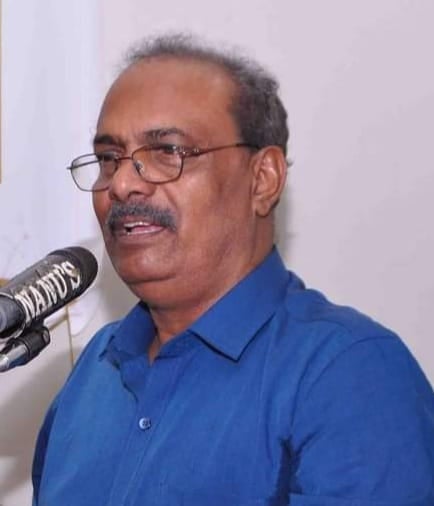
P.L.Sreedharan Parokode is a bi-lingual poet and lyricist from Malappuram district, Kerala. He has a Master's degree in English literature and Population Studies and a Post Graduate Diploma in Parental Education. Sreedharan has thirty books of poetry to his credit, including 'Weeping Womb', 'Slum Flowers,'Mahatma Gandhi' 'Nelson Mandela',Poems', 'Don't mum Please' etc. He has also written songs for professional dramas, for albums, songs for competitions, devotional songs etc. He has written songs for animation film also.
Sreedharan has attended various literary conferences in India and abroad. He presented his poems at World Congress of Poets, in Taiwan, 2015, China, 2018, and literary conference in Serbia, 2007.
He has received awards and honours from various organisations, such as, Sahitya shree Award, Sahitya Shiromani Award, Shan E Adab Award etc. He has also received an Hony.Doctorate from the World Academy of Art and Culture
Sreedharan is currently engaged in Doctoral Research in Population Studies from Annamalai University. Earlier he was working in the Administrative wing of the University of Calicut.
Dr. Niranjan Barik
These are the doors to the world outside—
But could they serve a deeper call?
They're built to let in light and air,
Yet hold far more than light and form
The back window, shut through summer heat,
To keep the room serene—
Now swung ajar, it softly greets
A Mandar flower, unseen.
It smiled—surprised by being seen,
And twirled in breeze’s song,
Its petals danced where quiet had been,
As though it waited long.
From the front window I would gaze
Across the narrow lane,
Where neighbours left a window half-ajar
To feel less alone in pain.
But after sorrow struck their door,
That window stayed withdrawn.
Too late it opened once again—
Still, light leaks out at dawn.
Who can bear another’s grief?
What balm can truly heal?
Perhaps, these panes can offer brief
Relief that light reveals.
One evening, from my perch I saw
A wedding, grand and loud—
A second take, and then a third—
The Director moved the crowd.
The scene replayed with band and jazz,
Each step retraced with care,
For film demands its perfect truth,
Though life is rarely fair.
At midnight, one lone figure walked—
A shadow on the street,
Why did he roam beneath the dark,
Where silence and footsteps meet?
These are not mirror images,
Reflecting crafted lies—
But windows onto shifting truths,
Where silence speaks, and sighs.
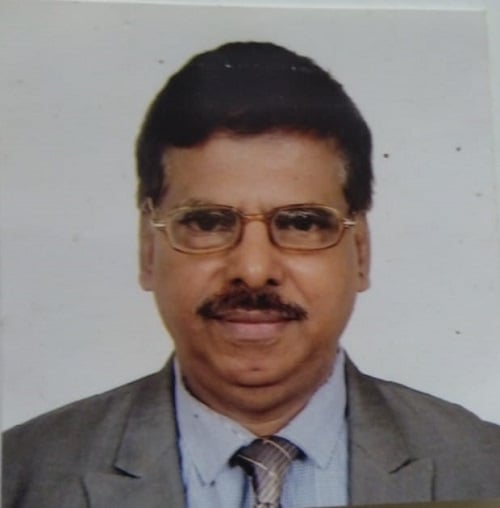
Professor Niranjan Barik ,formerly Professor and Head, Department of Political Science at Ravenshaw University also served as a Professor of Pol.Sc and Principal , Khallikote Autonomous College, Berhampur, Odisha. A Fulbright Scholar-in-Residence at Miles College, Birmingham, AL, USA in 2007-08 , Prof Barik evinces interest in reading and writing short stories and poems in Odia and English. His poetry book , “Freedom from Bondage: An Ode to Nature” published by Black Eagle was released in Bhubaneswar in December 2023.
Dr. Mrutyunjay Sarangi
The little girl walked by my side
matching each step with her soft gait,
None could see her, but me.
Someone gave me a funny stare,
someone an annoyed look,
as invisible she walked along, holding on to my hand.
It was a long walk home,
Without her I would have been lost,
But she walked with me all the way holding my hand.
I had a thousand questions,
she only had a smile for an answer,
all my questions bounced back on her bewitching smile.
Oh, what beauty in that radiant smile,
spreading from cloud to cloud, waves to waves,
rainbow to rainbow, across countries and continents.
I walked on with the little girl by my side,
and a time came when I heard nothing, saw nothing,
except her serene face and reassuring smile.
That's how I reached Home,
my abode of eternal rest,
riding the crest of the little girl's beatific smiles.
Dr. Mrutyunjay Sarangi
Across the sky ran
streaks of white lights,
aching, whining,
warning of an impending Apocalypse.
It lasted the whole night, the long night
None had seen lights like that,
never in their life time,
no one knew what to make of them.
The wise men said
the world is coming to an end,
Scientists broke their head
to fathom which elements had collided.
The festivities stopped,
Movie halls closed down,
Shops closed their shutters,
weary revellers rushed home.
But the night stretched on and on
till panicked people ran unto the streets,
blaming each other for all the ills
and fighting fierce battles.
Blood flowed on innocent streets.
Buses were burnt, stones pelted,
Dust and smoke filled the air,
as did cries of the anguished.
And the sun never rose to end the long night.
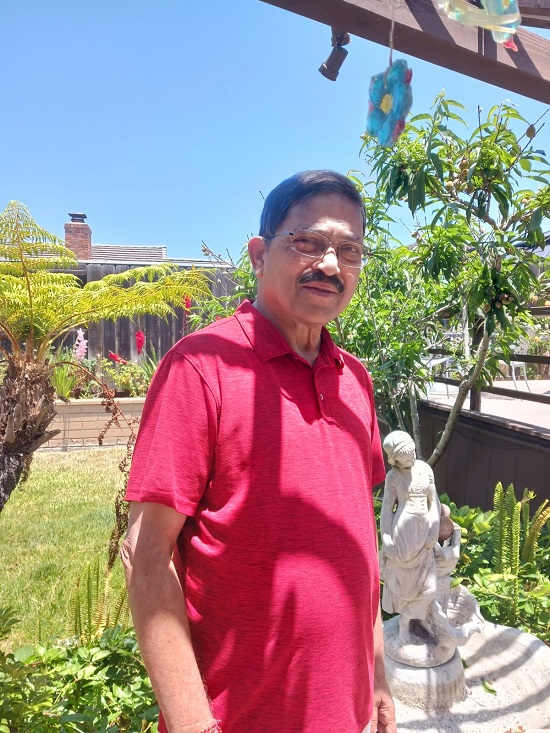
Dr. Mrutyunjay Sarangi is a retired civil servant and a former Judge in a Tribunal. Currently his time is divided between writing poems, short stories and editing the eMagazine LiteraryVibes . Four collections of his short stories in English have been published under the title The Jasmine Girl at Haji Ali, A Train to Kolkata, Anjie, Pat and India's Poor, The Fourth Monkey. He has also to his credit nine books of short stories in Odiya. He has won a couple of awards, notably the Fakir Mohan Senapati Award for Short Stories from the Utkal Sahitya Samaj. He lives in Bhubaneswar.
“WITHIN HER HOME AND OUTSIDE: ESSAYS ON INDIAN ENGLISH POETRY”
Pratiti Ghosh
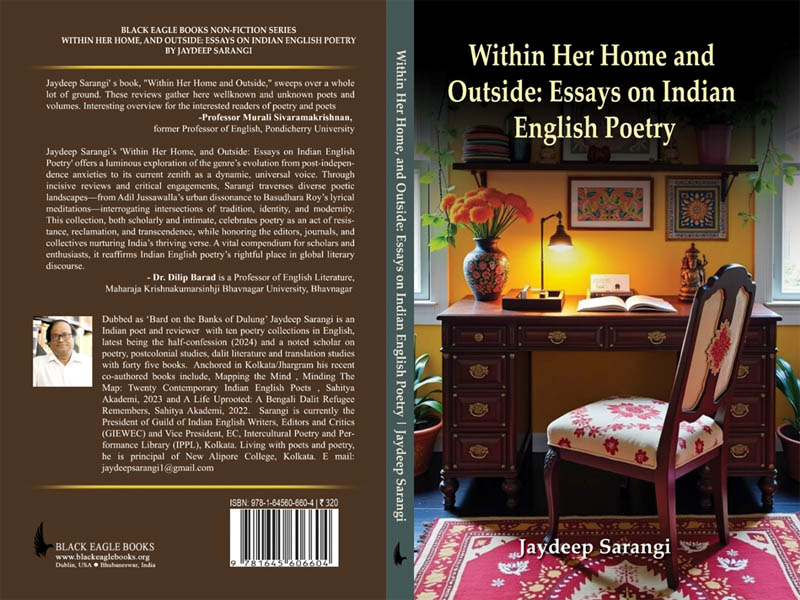
Within Her Home and Outside: Essays on Indian English Poetry| Essays | Jaydeep Sarangi | ISBN:978-1-64560-660-4(Paperback) | Black Eagle Books, 2025 | pp-172 | Rs.320/-
Listening to the Heartbeat of Poetry: Jaydeep Sarangi’s Tribute to Indian English Poets
Jaydeep Sarangi’s book, Within Her Home, and Outside, reads as a lyrical tribute to Indian English poetry-part memoir, part cultural reflection, and part literary manifesto. Sarangi opens with a poignant quote by Mamang Dai, which establishes a contemplative tone that seamlessly resonates throughout the book. In Within Her Home, and Outside, Jaydeep Sarangi brings together thirty three essays primarily poetry reviews that collectively trace the dynamic landscape of Indian English poetry in its contemporary moment. Each review stands alone as a thoughtful engagement with the text, and also collectively they offer a wide view of how Indian English poetry has become a space for resistance, reflection, and artistic experimentation. Sarangi pays careful attention to how poets write from distinct emotional landscapes and transforms personal anguish, ecological anxiety, and social injustice into powerful poetic expression.
The title itself-Within Her Home, and Outside hints at the dual movement present in the collection: inward into the poet’s private world, and outward into the ground realities of gender, caste, nationhood, and history. This duality runs through many of the reviewed works-from Sanjukta Dasgupta’s Sita’s Sisters, which reclaims myth from a feminist perspective, to Sharankumar Limbale’s White Paper, a searing narrative of Dalit struggle. Sarangi does not merely assess their work-he listens to their heartbeat. Each review becomes an exploration of how poetry can be a site of memory, myth, resistance, healing, and transformation.
Sarangi’s voice is that of a poet who has walked with poetry, struggled with it, and continues to explore fresh perspectives every day. This tone carries through the reviews, whether he is reflecting on the timeless intensity of Jayanta Mahapatra’s Noon, the feminist resonance in Sanjukta Dasgupta’s Sita’s Sisters, or the political urgency of Black Lotus, a collection of Telugu Dalit women’s poetry. These reviews reflect Sarangi’s awareness that Indian English poetry today is not a solitary effort but a collective movement nurtured by networks of editors, journals, and cultural institutions. When Sarangi writes about Stitching a Home by Basudhara Roy or Nadistuti by Lakshmi Kannan, we feel the delicate interplay between place, gender, and poetic voice. He approaches each text not merely with objectivity, but with bhakti-a deep respect for the creative process.
Importantly, this book positions poetry as both a form of activism and a mode of artistic expression. In reviewing collections like Letters to Namdeo Dhasal by Chandramohan S or White Paper by Sharankumar Limbale, Sarangi affirms the role of poetry in diconstructing structures of caste, patriarchy, and colonial memory. Sarangi does not confine himself to conventional names but engages with a diverse and often underrepresented range of voices. The book features reviews of renowned poets like Jayanta Mahapatra, Meena Kandasamy ,and Bibhu Padhi , as well as emerging and regionally rooted writers like Ramakanta Das , Smitha Sehgal , and Gopikrishnan Kottoor.
He acknowledges that Indian English poetry today is no longer limited to urban centers or elite circles. Writers from diverse geographies-be it Kerala, the Northeast, Bengal, or Odisha-find representation in this collection. The presence of poets like Malsawmi Jacob, GJV Prasad, Lakshmi Kannan, and Ajanta Paul reinforces the plurality and richness of poetic expression across India.
What emerges from the collection is also a sense of personal literary history. Sarangi shares moments from his life, his early encounters with poetry, his admiration for Neruda, Lorca, and Jibanananda Das, his curatorial work with journals like Teesta Review and anthologies like The Hearth Within. This self-reflexive mode lends authenticity to the reviews; we read not just about poets, but also about the critic’s evolving relationship with poetry itself. Another notable theme is the idea of poetry as a spiritual and healing space. In essays on collections like Nadistuti by Lakshmi Kannan or Mandalas of Time by Malashri Lal, poetry becomes a form of pilgrimage-an inward journey toward clarity, rootedness, and transformation.
In short, Within Her Home, and Outside is a celebration of words, of silence, of the poet’s solitary struggle, and of the critic’s attentive listening. It is not just a chronicle of Indian English poetry’s current flowering; it is itself a part of that blooming. This is a book for lovers of poetry, for teachers, for students, and for those who believe that words can still change the world.
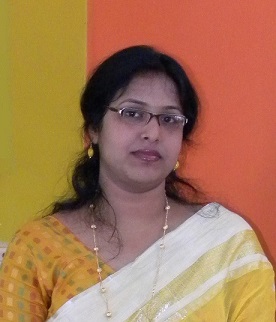
Pratiti Ghosh is a State Aided College Teacher in the Department of English at Muzaffar Ahmed Mahavidyalaya, Murshidabad (Affiliated to University of Kalyani). She has been teaching since 2014. Her area of interest includes Indian Writing in English, language teaching methodologies and Dalit literature. Currently, she is pursuing her Ph.D. She has actively participated and presented papers in international and national conferences and workshops.
Email: pratitighsh@gmail.com
Viewers Comments