
Literary Vibes - Edition CLXVIII (28-Aug-2026) - STORIES 2
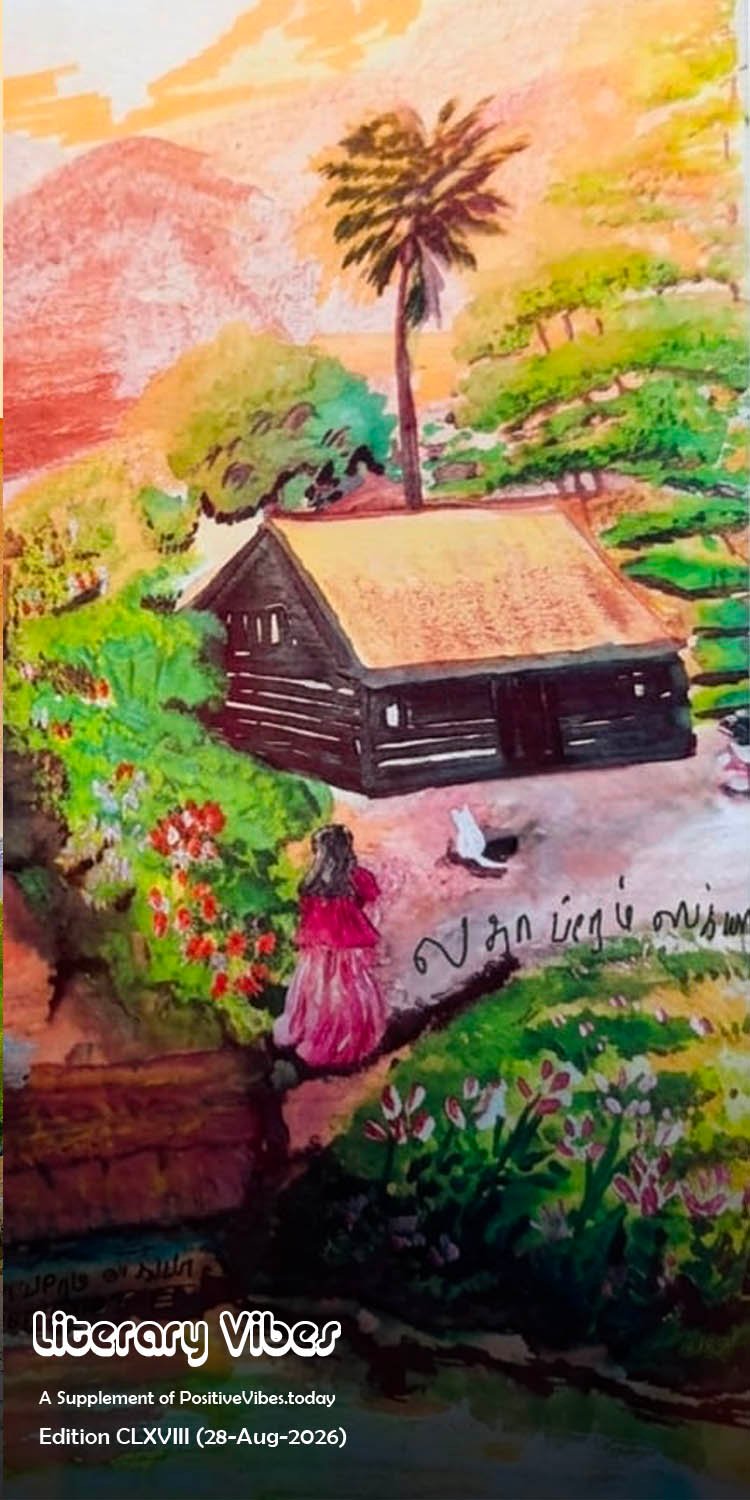
Title : Dreamy Hour (Water colour by Lathaprem Sakhya)
An acclaimed Painter, a published poet, a self-styled green woman passionately planting fruit trees, a published translator, and a former Professor, Lathaprem Sakhya, was born to Tamil parents settled in Kerala. Widely anthologized, she is a regular contributor of poems, short stories and paintings to several e-magazines and print books. Recently published anthologies in which her stories have come out are Ether Ore, Cocoon Stories, and He She It: The Grammar of Marriage. She is a member of the executive board of Aksharasthree the Literary Woman and editor of the e - magazines - Aksharasthree and Science Shore. She is also a vibrant participant in 5 Poetry groups. Aksharasthree - The Literary Woman, Literary Vibes, India Poetry Circle and New Voices and Poetry Chain. Her poetry books are Memory Rain, 2008, Nature At My Doorstep, 2011 and Vernal Strokes, 2015. She has done two translations of novels from Malayalam to English, Kunjathol 2022, (A translation of Shanthini Tom's Kunjathol) and Rabboni 2023 ( a Translation of Rosy Thampy's Malayalam novel Rabboni) and currently she is busy with two more projects.
Table of Contents :: Short Story
10) Anita Panda
11) Lopamudra Mishra
12) Sujatha Krishnamurthy
13) Darsana Kalarickal
14) Mary Josey Malayil
15) Annapurna Pandey
BEFORE DAWN AT BALIJHUDI MARKET: TAKING ODISHA HANDLOOM TO THE WORLD
16) Braja K Sorkar
THE INDO-HELLENIC NEXUS: FROM CLASSICAL ANTIQUITY TO MAURYAN EMPIRE
17) Sreekumar Ezhuththaani
18) Avaya Mohapatra
19) Dr. Viyatprajna Acharya
20) T. V. Krishnakumar
SREE MOOKUTHALA BHAGAVATHI TEMPLE
21) Dr. Rajamouly Katta
22) T. V. Sreekumar
23) Bankim Chandra Tola
24) Sreechandra Banerjee
25) Ashok Kumar Mishra
26) Sree Latha Tangarila
27) Mr Nitish Nivedan Barik
LEAF FROM HISTORY: PANIMORA — WHEN GANDHI REACHED A VILLAGE HE HAD NEVER SEEN
28) Dr. Mrutyunjay Sarangi
“Travel far enough, you meet yourself.”-
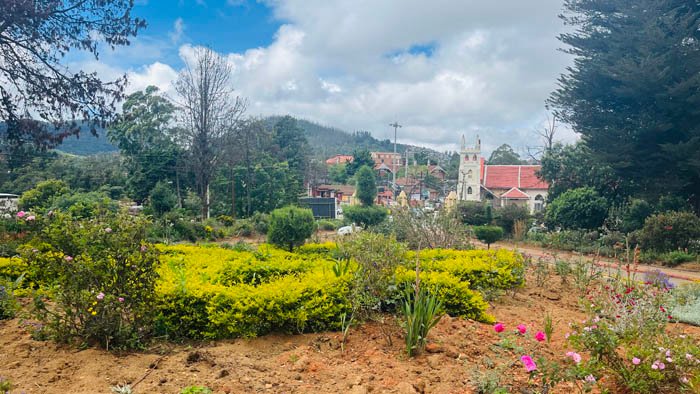
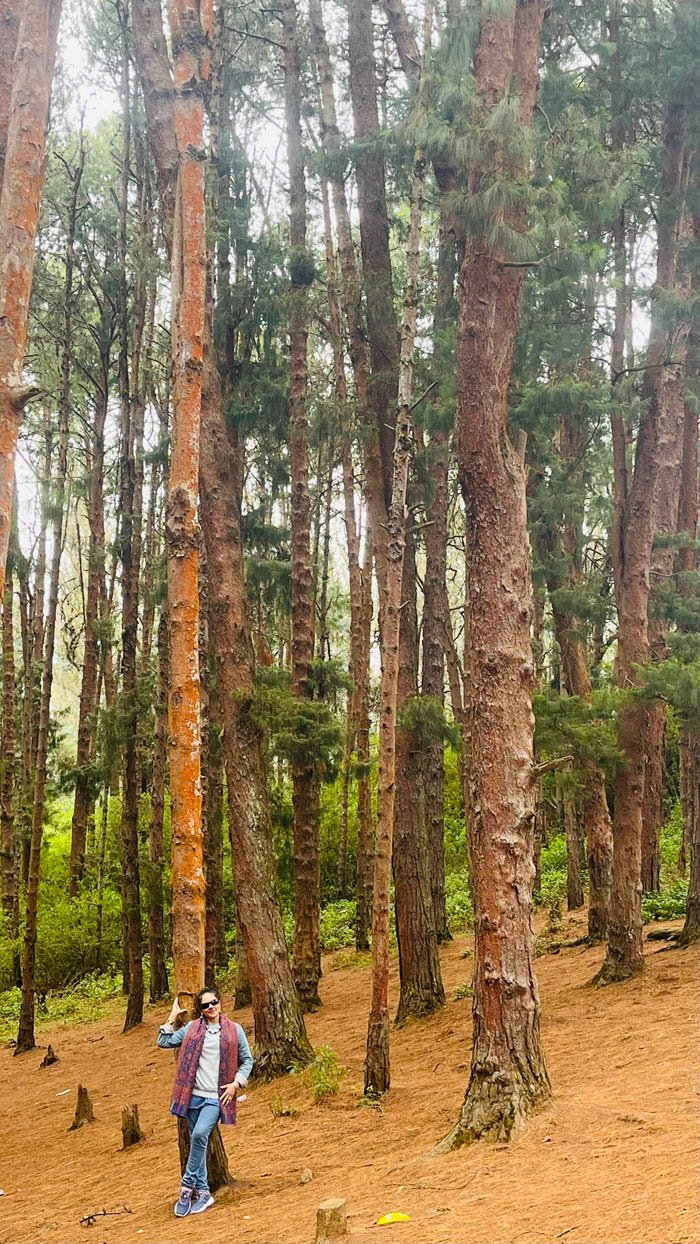
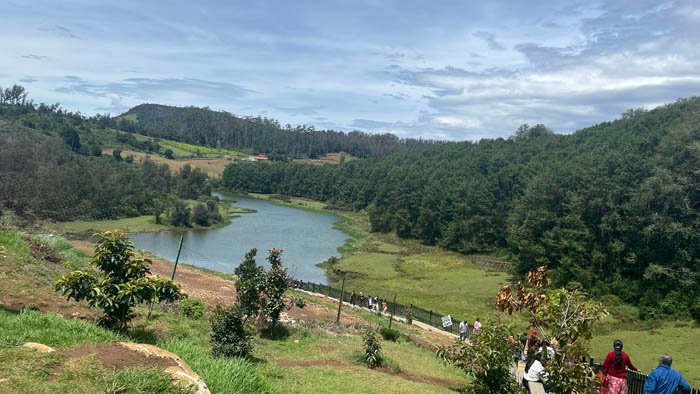
Ooty, the “Queen of hill stations”, misty, mesmerising, charming and beautiful, nestled in the lap of the Nilgiri mountains, which forms a part of the Western Ghats in southern India’s Tamil Nadu state enchants with its beguiling beauty. Ooty is much more than a tourist’s paradise! A chain of misty, cloud kissed hills spread across a lush green expanse, it is easily one of the most beautiful hill stations in India.
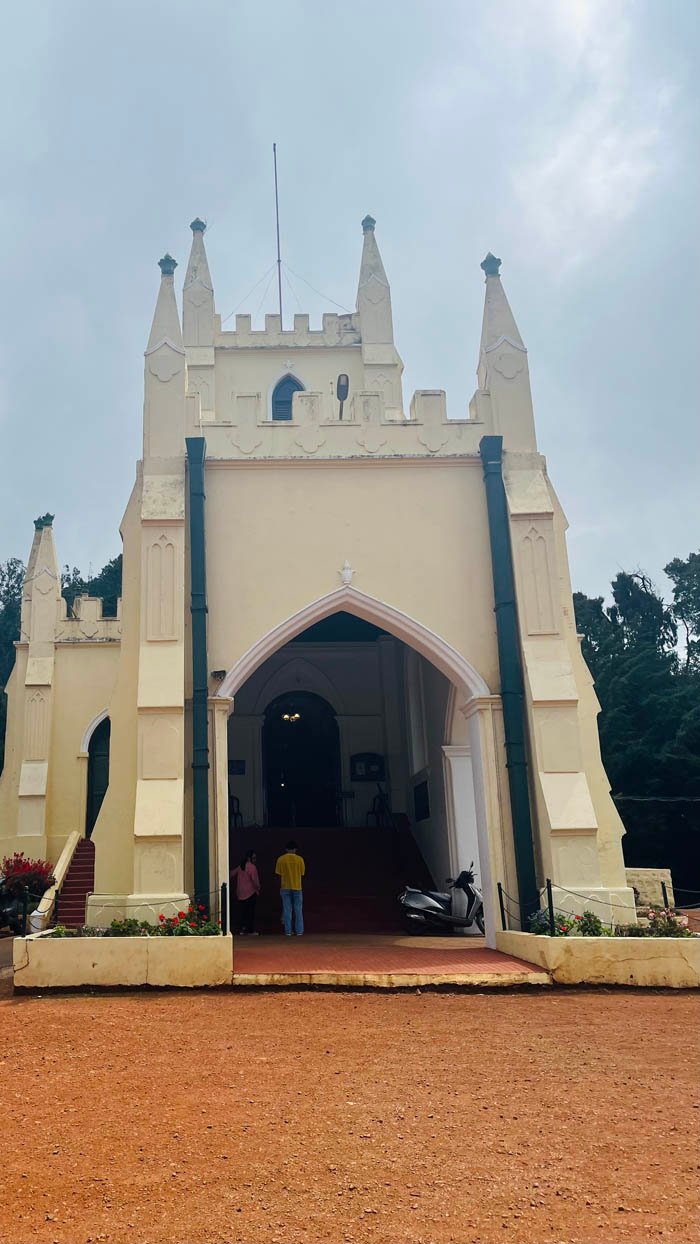
Short for ‘Udhagamandalam’ and founded as a British Raj summer resort, it evokes reminders of its colonial past- the Stone House, a 19th century residence, circa-1829 St. Stephen’s church and the 55-acres Government Botanical Gardens that lies on the slopes of Dodabetta peak. Famed as the “Switzerland” of India, Ooty is like a slice of heaven with its grandeur and panoramic vista of mountains and hills. It takes the visitor on a thrilling ride through its winding roads, pretty lakes, gushing waterfalls, parks, peaks to a spiritually elevating and meditative experience. Sitting back and soaking in the vastness of Nature, sipping a cup of the fresh, aromatic Nilgiri tea.
The Nilgiri biosphere, rich in flora and fauna is like a welcome break allowing one to escape into the depths of jungles and hills. A once-in-a-lifetime experience! The only daily operational metre-gauge railway in India is the tou train ride from Mettupalayam to Ooty.
The top attractions in Ooty are- 1) GOVERNMENT BOTANICAL GARDEN- Spread over 55 acres, it is an enchanting tourist site attracting visitors for years. It stands at an altitude of 2400-2500 mts above sea level and was established by Marquis of Tweedale & architect William Graham McIvor in 1897. It offers over 600 varieties of plant species cultivation and exhibited here for Nature lovers. The verdant lawns and exotic flora and the lofty Dodabetta peak from here are a sight to behold!
The cork tree, rare and one of a kind in India, the paperback, the monkey puzzle tree, the majestic 20 million-year old fossil tree trunk and the Toda hill are some of its enticing attractions. The myriad hues of the flowers and plants are a sight for flower lovers. Another highlight is the fern house here with around 127 fern species and orchids.
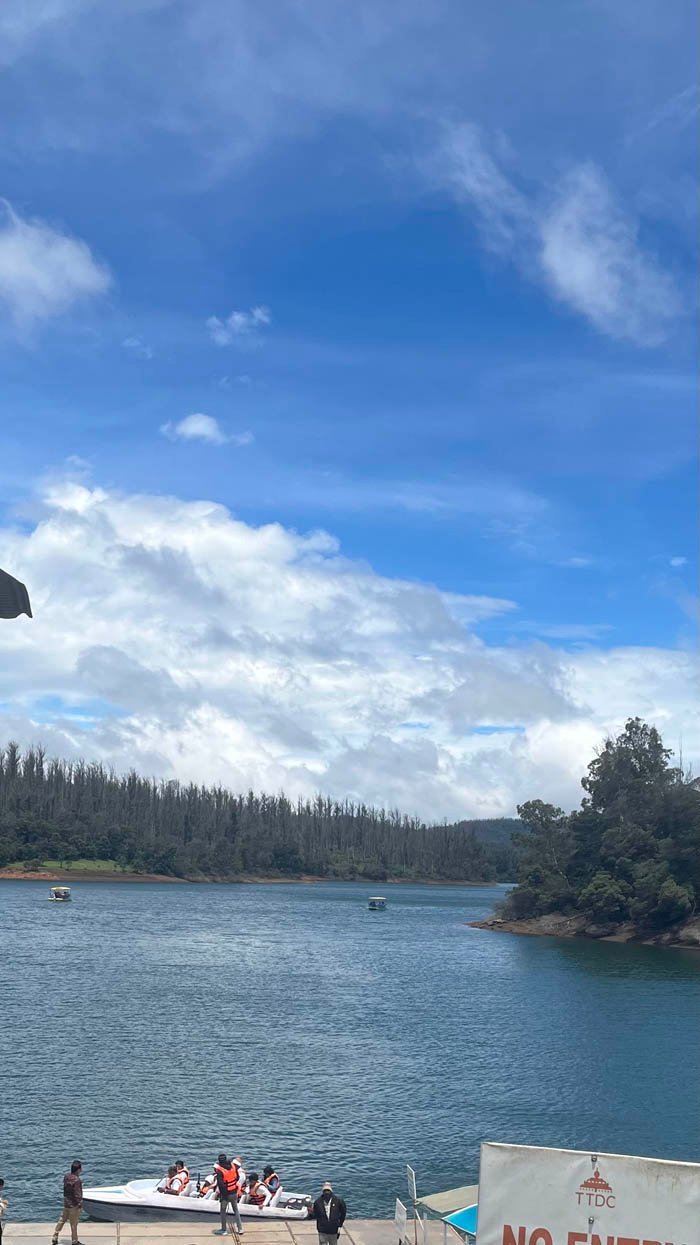
2) OOTY LAKE- Tje picteresque Ooty Lake or the Ooty boat house, an artificially constructed lake, built by John Sullivan in 2824, is a top tourist attraction here located amidst serene greenery. Surrounded by towering eucalyptus trees and dotted with green bushes along the shores, the lake, spanning over 65 acres, is an arresting sight. A tranquil boat ride through the waters allows visitors to soak in the serene greenery and allure of the distant hills. Paddle boat, motor boat and rowing boat services are available too. Boat races and boat pageantry are conducted as part of the summer festival here in May.
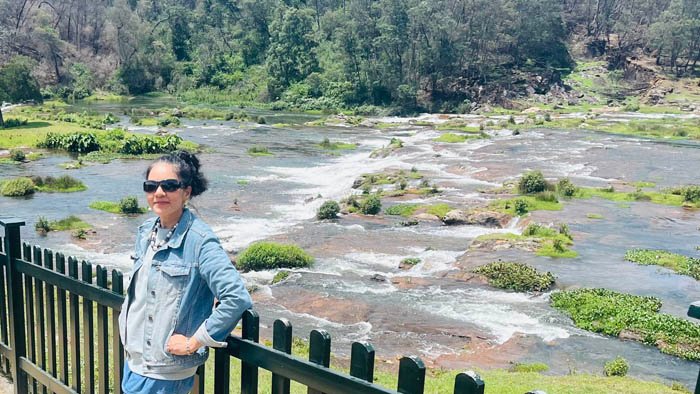
3) PYKARA LAKE & WATERFALLS- Speedboat rides, treks through dense jungles and a walk to the gorgeous Pykara falls are some of the most enjoyable things to do in Ooty.
4) AVALANCHE LAKE- A nature lover’s paradise, the lake offers a vista of beautiful, untouched reservoir, lush green forests and rolling hills.
5) OOTY TEA FACTORY & MUSEUM- Breathtaking tea plantations here offer a tour of the tea factory, sampling fresh tea and learning about the process in the museum.
6) 6th MILE & 9th MILE SHOOTING POINTS- Home to some of Ooty’s most iconic pine plantations, grasslands and clear valleys, it is one of the most popular shooting locations in the region.
7) OOTY ROSE GARDENS- One of the amazing attractions here attracts the flower enthusiast with the bewitching colours, fragrances and richness of varieties of roses. A fascinating place to visit.
8) DODABETTA PEAK- A very tall hill in Ooty with a serene spot and breathtaking views of the entire town is one of the best places to visit in Ooty.
9) KALHATTI FALLS- Among the most famous falls of Ooty, this is a great spot for trekking, relaxing, taking a quick dip
In the lake and other interesting activities.
10) ANNAMALAI TEMPLE- One of the lesser known gems of Ooty and situated atop a hill, this beautiful temple is dedicated to Lord Murugan, the Hindu deity of war, victory and wisdom. This quaint temple offers a good mixture of nature and spirituality.
Visiting these Ooty attractions requires proper planning and timing. Most of the tourist places here open by 9 a.m. and close by 6 p.m. One must be prepared to know exactly when to go and how to explore it.
The best time to visit Ooty for sightseeing is the dry season between October and June and 4-5 days are adequate to cover it. There are multiple options to reach Ooty by flights, trains and roads from anywhere in India. From
Coimbatore International airport, taking a cab or a bus up the mountain is the fastest and most practical route. for a classic picturesque experience, catch the Nilgiri toy train from Mettupalayam.
With its salubrious climate, scenic tea gardens, colonial architecture, the UNESCO listed Nilgiri Mountain Railway toy train and lip-smacking local delicacies- homemade chocolates and fresh Nilgiri tea, Ooty effortlessly entices and attracts. A MUST-VISIT!



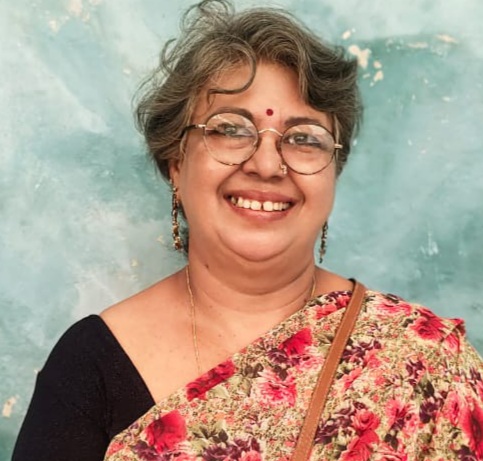
Anita Panda is a passionate bilingual author-poet, nature lover and an aspiring TEDx speaker. She dedicated ‘GENESIS’ (2021) to her valiant Late soldier brother, debuted with her own book ‘SONGS OF MY SOUL’ (2023) & her debut Hindi book ‘Bhavnaon ki Dastak’ (2025) recently published by AUTHORSPRESS. It formally launched on national and global platforms ‘Mudramoksh’ & ‘The Fertile Brains’ in 2026.
What child am I? A water baby? How did I come to this world of human beings who are aliens to me? When can I go back to the water world? When I entered the womb and was floating in the water there, I never thought I would be delivered into a waterless world.
Oh...oh... oh... It is painful, 19 years have elapsed and many changes have occurred in my body. I have become a hulk of a man, an ungainly figure with a child’s brain.
Oh...oh...oh... My wails fall on deaf ears. I am always under constraints here. In the world of water, I was free to move without a stitch on. There we lived as water spirits with the frolicsome fish and fish tailed Mer-people. I slept inside the lotus flower like the other water babies and spent the whole day playing with them. Riding piggyback on tortoises or frogs or even fish. Clinging on to their slippery backs and sliding into the water was an exciting game for us. What fun it was!
I am a good, harmless water baby. I have never hurt anyone. But many among us are evil and torment human beings. If ever they come to the pond or lake or stream where we reside, that is their end. They are dragged to the bottom of the lake and hidden in some deep caves or crevices. It is a kind of revenge the water babies wreak on humans. You know we are the spirits of malformed babies discarded by our parents and the human community. So, we have very little love for human beings and harm them whenever we get a chance. But I, being gentle and good, was fated to be born again, and I entered the world of humans.
My life span was short in the water world I loved. I died when I tried to playfully open the mouth of the water snake with which I was playing and in agony she bit me and a minute dose of poison was injected into my body and I languished and died. I was sent to the netherworld by the Lord of the Dead, but in the world of shades I was very unhappy. So, he sent me to the human world. I revelled in the womb of my mother and hated to leave it but I had to. I was delivered one day into a dry world. The cloth that swaddled my body was so warm that I cried and cried until it was removed and my mother found out I preferred the coldness of water to warmth.
I enjoyed bathing and I would gurgle and chuckle and my grandma who bathed me would be tickled to laughter. She would call everyone and show my antics in the small tub in which I was bathed. She would lovingly call me "thannipillai" meaning, water baby. But as days went by, I was far removed from the world of water and was forced to survive on dryland which I couldn’t understand and I cried and cried non-stop. No one understood why I was crying.
Oh, oh, oh, this reincarnation as a human babe is torturing! How I wish I were back in the water and playing with the other water babies. When this urge to swim assails me, I dash out of the house and open the garden tap to splash water on my body and enjoy its coolness, until someone drags me into the house while I scream aloud and create a din.
Oh, oh, oh when can I be a water baby again? Ah...ah...ah... it is agony! There were no shackles on me in the beginning but slowly I felt restrained. What I hated most was the clothes my mother put on me. I would cry sprawling on the ground banging my head on the floor. My father would lift me up and remove the offending clothes and console me.
As I grew up my hatred for clothes increased. In order to appease me and to put an end to my tantrums I was often allowed to walk without clothes inside the house. When we had visitors, I was kept inside the room. But I allowed my father to dress me up and take me to school or to the nearby temple. As soon as I reach home, I wriggle out of the clothes and run to open the bathroom tap and play in the water to my heart's content.
I never understood my growth, as years passed by. My body grew and I was bigger than my age. I became tall and hefty but my brain did not grow. I remained an overgrown child. Because I hate wearing clothes, I am allowed only up to the front room which is always kept locked. I do understand certain things. I know food, but I eat beyond my capacity. I am always hungry and my father takes me out and buys me whatever I demand, pointing them out to him.
Oh...oh... oh... why is he lying inside this box? My only sister is wailing like me. My grandmother too...Open your eyes Acha (father), I am standing near you, dress me up and take me out...Wake up. I started banging on the glass box and two men came and dragged me away. I pestered my mother to dress me up and once more I went to where Acha was lying and peered into the misty box. I thought my father was smiling at me gently as he always did.
Oh, oh, oh, my gentle, loving father... Two hands pulled me away as I struggled, two more hands tightened their hold on me. I saw the box being lifted and taken out. I struggled and started howling. I felt cold inside, something sank inside me. I crumbled down. I sensed deep inside something had happened to my loving, smiling, father…
Oh...oh...oh...the house is silent. I ran out of the bedroom and my sister sat huddled in a corner in the hall. I have never seen her like that. She looked tired and worn out. I went to her and sat down in front of her and put my finger into my mouth. And she started sobbing loudly and hugged me. She got up and brought me some buns. I started eating hungrily and smiled at her but instead of smiling she started wailing once more loudly I couldn’t understand...I have never seen her like that. Just like acha, she was always gentle and kind to me and catered to all my needs. I huddled close to her…Suddenly I felt a weakness.
I had not eaten for two days after my father was taken to the hospital. When he came back weak and tired, I was happy. I never left his side. He would hug me and tell me I should obey my sister and that she would look after me. That evening he fell down and was taken away. Then he was put in that glass box and he was beyond my reach. I felt heartbroken and screamed my head off. No one could console me.
I moved closer to my younger sister and she put her arms around me. I felt as if my strength was leaving me. I was sliding down … with her loud sobbing pounding in my ears, I closed my eyes and slid into the world of sleep. In my sleep I saw myself walking out of the house. I crossed the road and entered the lane and walked towards the lotus pond a favourite haunt of ours. Acha used to take me there in the evenings, he would sit watching me while I played in the water to my heart’s content, when totally drenched and tired of playing I would go and sit near acha. He would towel me up and dress me in fresh trousers and Tee shirt which he always thoughtfully brought along with him when we came down for this evening jaunt. Somehow, he had guessed that this lotus pond gave me a lot of happiness and peace and made me calmer in the night. I reached the pond and stepped into the water. The coldness of the water was inviting. I lay down and curled up as if I were in my mother’s womb and went to sleep lulled by the gently rippling water.
I saw my Acha beckoning me with that same loving, yet sad smile on his face. I ran towards him and was gathered in his arms and I hid my face on his shoulders in peace.
I splashed and splashed the water on the water babies gaily, as they swam around me in glee. I felt I was home at last. This is the place I belong…The lotus flowers in full bloom stood waiting for us… And there in the distance I saw my Acha's shade as he entered the netherworld. Yes, at last we were in the world of shades together...
( Published in Cocoon Stories)
Lopamudra Mishra, a contemporary poet, author, translator, editor, social activist, motivational speaker, orator and personality development coach, hails from Bhubaneswar, Odisha.
Her writings are intended to touch the inner chord softly by emphasizing on "Sense and
Sensibility" of attachment and bonding. She has six books till date on her name- “Rhyme of Rain”,
“First Rain”,” Tingling Parables”, “Rivulet of Emotions”, “Red Tulips” and “Hurricane Heart under the Honeyed Sky”. Her poems have been published in various magazines and anthologies. She has been Editor of Radical Rhythm-4 & Co-editor of Radical Rhythm Series and Durga.
She is a proud alumnus of Sailabala Women’s college and Ravenshaw University.
MIRROR IMAGE
Sujatha Krishnamurthy
I am on my way back home from a leisurely stroll around our sub division called Whispering Heights. The architecture of each and every house makes a statement by itself. No cookie-cutter homes in our neighborhood. Unending acres of sunflower fields and the majestic Sierra Mountains as a backdrop complete this stunning scene. With amazing Mediterranean weather to boot makes this neighborhood a most sought after in this county.Truly priceless.
Yes, This is Davis, the city that houses one of the top prestigious agricultural universities in the country, The University Of California, Davis (UC Davis). Located just about 10 miles away from Sacramento and 70 miles from San Francisco, the city shelves us from the menacing traffic, pollution, and high crime rate.
My watch sends a notification that I have taken 5000 steps and have another 2.5 miles to reach my daily goal of 10,000. Today, out of the ordinary, remainder of my walk flirts with lanes and cross roads of memories from the way past.
My wedding in Mysore with Shiv takes place in a very modest way. Very shortly, I step into a new country and an unfamiliar city in Florida named Gainesville. In Gainesville we settle in a comfortable apartment near campus. Shiv, as post doctoral fellow at the University, is busy with his academic responsibilities. I initially struggle to get into the American groove. With a lot of time in hand and extensive training in Bharatha Natyam in Chennai, I explore ways to start my own dance studio. A chanced introduction to some well known, long time, Indo
American families in town ends up being beneficial to me in ways more than one. Abhinaya, my first dance school in USA, sets the stage for many learners and future performers.
Like all our predecessors, we purchase a cute little home, not very far from campus. Shiv’s scholastic credentials help to bump us up in obtaining our permanent residency aka Green Card on a fast track. Seven years rolls by and with so much going on in our lives, there leaves no time to think about starting a family.
No worries. Our parents were keeping a close eye on that track. Every FaceTime would somehow find ways to bring the subject of a grand kid. My mom would say,” Sohini. You are not getting any younger. You are 32. You should check with a Ob/gyn.” My mother in law would lament,” Shiva. Will I see my grand child before I die?”
A lengthy discussion leads to the decision to take up on my mom’s advise and consult a gynecologist, Dr. Ratna Kumar. After filling a questionnaire with million questions and a thorough check up , she recommends me to undergo a few more follow up tests. Consecutive visit at the drs’ ends up being a bombshell. Dr’s words still rings in my ears. “I am sorry Sohini. Your fallopian tubes are completely blocked. The only option for you to conceive is to try IVF (In vitro fertilization).”
Suddenly our life gets shrouded with sadness and disbelief . My fruitless efforts to broach the subject with Shiv ends up in heated exchanges. I am filled with guilt and helplessness. Sharing this information with either sets of parents is out of the question.
During those difficult times I take refuge in my most supportive and trusting friend Savithri, a retired Ob/Gyn. She invites Shiv and me for a tea to her house and explains all about IVF, procedure, risk factors, success rate, and more. Still it takes us almost a year to decide to try IVF at a nearby clinic.
Oh! Those painful procedures, unending waits for results, and financial commitment drains the two of us. Several failed attempts later, our dream comes true with our baby girl Sia. She comes into our lives hale and hearty with curly hair and cute dimples, two days before our Aluminum Anniversary.
Just a few weeks after Sia’s delivery, we are super excited to find out that Shiv has an offer from UCD to start his professorial responsibilities in fall. It’s a dream come true to Shiv. We still have a few months to sell our home, and start planning our move to west coast. My mom and mother in law’s visit helps ease my postpartum blues and with our fussy new born.
I almost stumble and lose my footing when a flashback of an unrelated and forgotten incident from twenty-five years ago hits me like a rock. I manage not to trip and continue with my walk down memory lane.
This is our last week in our home in Gainesville before moving to Davis. Sia is five months old and is taking her afternoon nap in her crib. On that balmy afternoon, in between folding laundry and scrolling through social media posts on my phone, I stumble upon a reel with a bizarre story of a young couple named Charles and Anita Ronan.
Anita between sobs says, “ We went through IVF procedure at a fertility clinic. First look at our baby girl Rhea Marie after delivery we realize that something has terribly gone wrong. A mix up by the doctor, who performed the procedure, has implanted some other donor’s fertilized embryo in me. We neither know the identity nor the ethnicity of the donor.” Charles appears on the screen furious and screams, “My lawyers will make sure that both the doctor and the fertility clinic pays for this terrible mix up.” I think in my mind.” This is rubbish. How is this even possible? I have first hand experience on how this whole thing
works.” The front door bell rings and before even reaching the door the Ronans and their story is forgotten.
I wonder, “ Why did my brain, after all these years, remember this story today after all ? Weird!” My mind wanders back into the past and my steps towards our home. Our move to Davis and Whispering Heights has been really good in every way. Shiv starts teaching, Sia starts day care, and I start my dance school Abhinaya at our home studio. As years roll by, we watch Ria blossom academically and artistically. Early on, she shows signs of a gifted dancer with keen interest in the Indian scriptures and dance traditions.
One evening, out of the blues, Sia mentions that she has been accepted at Fashion Institute of Technology (FIT) in a highly competitive five years program, all tuition covered . We spontaneously give her a huge hug and a shout out, “ Congrats Sia. We are so proud of you darling.” It feels like just yesterday, although five years have gone by in a blink. A newly minted graduate will be coming home in a few weeks.
On that note, I reach my daily goal and my sweet home. I walk up to the mail box and am taken by surprise to see only one piece of mail. No junk mail? It looks like an invitation of some sort addressed to Prof. Shiv Raman and Mrs. Sohini Raman. The sender’s name makes me beam with pride. Fashion Institute Of Technology, 227 West 27th Street, New York, NY 10001.
Opening the door, I scream,” Shiv, Shiv. Look what we have in mail today?” I find him in the library engrossed in a book and once again with child like enthusiasm repeat, “Shiv. Look what we have in mail today.” Between lines, he looks up at me and with a big smile says, “ OK . Instead of me guessing all the wrong things, why don’t we both open the mail together?” We open the envelope carefully to read out loud the invitation for Sia’s commencement ceremony on May 25 in New York City. I start
dancing like a child twirling round and round. “ Shiv, let’s start planning our trip to NYC.”
Fast forward.Graduation Day. We are eagerly sitting not too far from the stage. Name call: “Sia Raman. Masters in Design and Management.” We see Sia in her cap and gown waving at us from the stage. Shiv and I hold our hands with tears of joy. What an amazing journey!
We are leaving the hall to meet with Sia at the quadrangle for pictures and later to a celebratory lunch at the highly acclaimed Indian restaurant Tabla . As I am about to reach the door, I hear another name call. “ Rhea Marie Ronan. Masters in Arts and Management”. Why does that name somewhat sound familiar? I freeze for some unknown reason and turn back at the stage. There in cap and gown, beaming with pride and joy, waving at the audience, I see that beautiful girl Rhea, a mirror image of Shiv.
Hi
I am Sujatha Krishnamurthy writing from Kalamazoo, Michigan, USA. Born and raised as a true Kolkatan, studied at Andhra Association School and Shivnath Sastri College, and worked at Central Cottage Industries. Moved to Pasadena, CA, USA in ’84 and later to Kalamazoo, MI in ’91. Studied, worked, and retired after a stint of 20 years in different organizations, including family owned business , NPO(Non-Profit Org) , and MNC( Multi National Corp).
A habitual reader and writer since younger years, a habit cultivated in the banks of the Ganges, has continued to flow till date. Since 2023, my contributions have been published in my alma mater’s monthly e- magazine SPARKZ. I also contribute regularly to our Indo American Cultural Center and Temple’s monthly e-newsletter covering cultural activities in and around town.
As a full time volunteer, I dedicate many hours at our local Hindu temple (Indo American Cultural Center and Temple). Have served in the temple board of directors in many leadership positions, such as, Religious Committee Chairperson, President, and Chairperson. I am the Bal Vihar teacher of 25 years teaching Indian scriptures, teachings, and bhajans to the next generation.
As the Community Outreach Program Coordinator of our temple, I bridge our Indian community with the rest by taking our Indian culture and heritage to local schools and institutions of higher learning. My role facilitates in bringing several visiting Indian artists and American Indian talents to our temple and community. My efforts have been successful in drawing many local, city, and state officials, including Governor, Mayor, and City Counselors and Indian Consul from Indian Consulate, to our temple’s land mark events, such as 25th anniversary and others.
Since 2019, I have been recording audio books for the visually impaired for Samarthanam Trust For The Disabled, an organization based out of Bengaluru. I am currently working towards my goal of reaching the century mark for the Samarthanam Library. My other hobbies include globe trotting, music listening and singing, tasting and trying out new recipes, being an active influencer in social media, and above all, staying close to my families and friends.
It was a bright, crystal-clear morning. Sunlight sketched delicate patterns on the windowpanes. Mithra sat beside me, her face clouded with worry. She had looked the same the previous day. Ever since the television began reporting the riots, she had been like this—unable to settle her mind on anything.
"Aravind hasn't woken up yet, dear?"
The reply came from the doorway.
"My routines have all gone haywire," he called out.
I looked at Mithra. She was pouring tea from the flask. The sadness had not left her face.
I felt an overwhelming anger toward Aravind.
"Everyone knows who's disrupting the routines now. You're always buried in work, meetings, and official trips. You don't even have enough time to sit with your own wife."
After handing him a cup of tea, Mithra quietly began breaking an idli with her spoon. Realizing that nothing he said would make things better, Aravind picked up his tea and walked away.
Father was still reading the newspaper in the hall, the television humming beside him. The newsreader narrated the day's events with carefully measured emotion. Just as I was beginning to tire of the endless political coverage, Aravind noticed the scrolling headline:
"Over a hundred killed in the Manipur riots."
No wonder Mithra had been so withdrawn.
I must have spoken my thoughts aloud.
"What are you muttering?" Father asked.
"Nothing... I was talking about the riots. Mithra must have seen the lnews."
"Yes. Couldn't you have called her family? She said she couldn't reach them. I tried too, but there was no response. The violence must have disrupted everything."
Aravind placed his teacup on the table and walked into the bedroom.
Since Mithra was exhausted after vomiting twice that morning, I called Aravind for breakfast instead of disturbing her.
"Where is she?" he asked.
"She's not feeling well. Come and eat."
His irritation showed even while he ate. He had barely finished when his phone rang. Seeing that everyone was watching, he answered with unusual caution. His tone was completely professional.
"Our overseas partners have arrived. It's an urgent official trip. I have to leave for Delhi."
He spoke casually, as though it meant nothing.
I looked at Ajay.
"But today is a holiday, Aravind. Do you really have to leave today?"
"Do private firms ever get holidays? We still have targets to achieve. I can't avoid this trip."
Mithra sat beside Grandma with tear-filled eyes. Grandma pulled her close.
"At least stay with the child for a couple of days, son."
Though she knew it wouldn't change anything, Grandma kept pleading.
Aravind paid no attention. He was busy making phone calls. Soon he hurriedly packed his clothes. By then, a car had already arrived outside.
"Tomorrow is her doctor's appointment. Have you forgotten?"
"You and Dad can take her. I'll go with her after I return."
Mithra silently watched him leave.
Even when I called her to eat, she only sat at the table without touching the food.
"Please eat something, dear. It's not good to skip meals at this time."
I placed another idli on her plate and began pouring sambar when she suddenly covered her mouth and ran to the bathroom.
"How many times has she vomited today?"
"You were exactly the same," Ajay's mother smiled at me.
"How many times were you admitted to the hospital on IV fluids? This child is probably going to be just as mischievous as Aravind."
She spoke with a bright smile.
I boiled some milk and mixed in chocolate powder. Mithra loved it.
After she washed her face, I gently persuaded her to drink it and then sent her to rest.
Sarala hadn't come to work. Her daughter was ill. Since she hadn't come for two days, I had been taking leave from the bank. Even though Ajay's mother was with us, I couldn't leave Mithra alone in this situation.
The news of the riots had changed her completely. Until then, Aravind's frequent travels had never bothered her. She had always been cheerful and playful.
How could she remain calm when her own homeland was burning, especially with her mother and brother trapped there?
It had been six months since Mithra came into our family as Aravind's wife.
She was Siddharth's younger sister. Siddharth had been Aravind's closest friend during their years at Jawaharlal Nehru University. Studying there had always been Aravind's dream, and he had excelled academically.
During a couple of vacations, Siddharth had visited our home with Aravind. He was an intelligent, gentle young man.
Whenever Aravind spoke about Mithra, he became unusually animated.
One day, amused by the way he spoke about a girl I had never met, I teased him.
"Aravind... are you in love with her?"
He immediately laughed.
"She's Siddharth's sister."
That simple answer revealed how deeply he valued his friendship.
Siddharth's family had been farmers for generations.
He often said that after the fall of the previous government, Manipur's future had become uncertain. Later, government decisions and court rulings that affected their community only intensified the ethnic conflict.
Although Aravind hadn't met Siddharth after university, they remained in touch.
Then Siddharth's father died.
Aravind went to meet his friend.
But he returned with Mithra.
I still remember how we tried to stop him from going.
"The place is dangerous. Riots are raging. Don't put yourself in unnecessary trouble."
He refused to listen.
Three or four days later, while I was getting ready for work, I heard a vehicle outside.
"Radhika... come here!" Ajay called.
I rushed outside.
There stood Aravind.
Beside him was Mithra.
Though I had never met her before, I recognized her from photographs.
"Why are you just standing there, Mom? Won't you invite us in?"
He smiled.
I had never imagined things would happen so suddenly.
"Take this, dear."
Ajay's mother stood holding a lit ceremonial lamp.
Without a word, she handed it to Mithra and led her into the house.
The girl looked terrified.
Her tear-swollen eyes broke my heart.
As I went to prepare tea, Aravind came into the kitchen and hugged me from behind.
"My dear Mom... I couldn't leave her behind. I just couldn't. Siddharth has no one else. He trusted only me to protect Mithra."
"I didn't say anything. Tell me... does she prefer tea or coffee?"
"Anything is fine. She'll adjust."
And so she came into our home, leaving behind her birthplace without choice.
She became the daughter I never had.
Later I asked her why Siddharth had never accepted the excellent job he was offered after graduation.
"He didn't want to leave Father alone."
Only then did I learn that their father's death had not been natural.
He had been murdered.
Siddharth had secretly arranged for Mithra to cross the border safely with Aravind.
Now six months had passed.
The doorbell rang, pulling me out of my thoughts.
It was Ashwin, one of Aravind's colleagues.
"Is Mr. Aravind home? Mr. Chandramohan asked him to come."
"Didn't he already go there?"
"No. He was supposed to arrive by ten. When he didn't, Sir sent me to bring him."
"But he left for Delhi. He said he had an important company meeting there."
"No... Today they were supposed to inspect a new project site with Mr. Chandramohan."
I was stunned.
Why had he lied about Delhi?
Had he gone to see Siddharth?
What did all this mean?
Anxiety gripped me.
Ajay was at the shop. When I told him everything, he too was shaken.
"Radhi... don't tell Mithra or Mother anything. Let me find out what's going on."
"Mom... I'm hungry."
It was Mithra.
I smiled.
"So now you're hungry? I kept begging you to eat earlier, and you refused."
"When will Father come?"
Her Malayalam was still charmingly imperfect.
Aravind often joked that our bond had grown stronger because neither of us knew the other's language. Yet Grandma, who knew only Malayalam, had somehow become even closer to Mithra.
"Call Grandma. If you're hungry, let's all eat together."
"Father won't be back now."
Though I spoke normally, my heart was burning.
I alone knew how we survived that week.
Mithra grew quieter with each passing day.
On the eighth day Aravind finally called.
He said he would arrive on the evening flight.
When I offered to pick him up from the airport, he refused.
"I'll come by myself."
He could be incredibly stubborn.
It was around nine at night when he finally arrived.
The woman who stepped out of the car with him left everyone speechless.
It was Mithra's mother.
Mithra ran forward and embraced her, bursting into tears.
She looked utterly helpless.
My eyes searched for Siddharth.
But Aravind's eyes concealed him—
from me,
from Mithra,
from all of us.
Yet his mother could not hide the truth.
Holding Mithra tightly in her arms, she wept stopplessly.
*Darsana K.R., residing in Venginissery, Thrissur district, is an employee at Venginissery Service Cooperative Bank and a passionate poet. Her published works include the poetry collections *Kavithaye Pranayichaval, Pranayathil Akappettathinte Ezhaam Naal, and Kuldharaayil Oru Pakal; the short story collection Thekkedathamma V/S Ramakavi (co-authored with Dr. Ajay Narayanan); the memoir Kunnirangunna Kothiyormakal; and the poetry study Kavithayude Veraazhangal. Her poems and articles have been featured in various periodicals and online platforms. phone : 9645748219, email darsanakr1973@gmail.com.
CATTLE FEED (PINNAKKU) VASU
Mary Josey Malayil
Today is a D-day at YWCA. A new president and secretary are going to be elected. The so-called high class society ladies have marked their esteemed presence in full make-up as if to participate in a fashion show. The participants’ list includes names like Dr. Kathika Krishnan and Celina John. Mercy, a familiar face at YWCA, has brought her friend Maya to enroll her as a member.
The election results are finally out. Dr. Kathika has been declared winner ! Her dark-complexioned elegance can be compared to that of Black Beauty, a fairytale race-horse. A good-looking 5 feet 6 inches tall lady in her early 30s who can grab anyone’s attention with her killing appearance- seems to be an apt way to describe her. Currently, she is in the midst of her fans and followers who are showering her with congrats and words of praise. There are many cameras that are clicking non-stop capturing each and every moment of the coronation of the new queen !
Maya the newly enrolled member asked her friend Mercy, “In which hospital does Dr. Karthika work?” A close aide of Celina John who was unhappily licking the wounds of defeat, was quick to infect the newbie’s brain as she reacted scornfully, “Karthika’s husband is a dentist. That’s why she is addressed as PINNAKKU (cattle feed) DOCTOR.”
“Pinnakku Doctor ?!” exclaimed Maya trying hard to hide her laughter. “What kind of a doctor is that? Is she addressed so because of a doctorate she achieved through her research in pinnakku ?” This innocent doubt of the newbie was enough for Celina as the lousy gossip-monger in Celina sprang into action. Each and every sentence Celina said thereafter was accepted by her head-nodding followers. The story of Karthika, the enstranged doctor unfolded thus.
Karthika was the only daughter of Pinnakku* Vasu. Vasu’s grandfather was a professional milker. Vasu’s childhood was spent in acute poverty. However, Vasu’s dad never milked cows. Instead, he somehow made both ends meet by selling coconut oilcake and related stuff. Vasu studied till seventh grade and decided not to waste any more time there after that. He started assisting his dad in his business.
Vasu was very hardworking. His business flourished step by step. By the time his father died, Vasu was financially stable to a large extent. He became a wholesale dealer of fodder. In 10 to 20 years, he successfully established himself as a ‘Ritchie Rich’ ! He didn’t forget to marry in between. His daughter Karthika was lucky enough to be born with a silver spoon in her mouth. Like most kids born in rich families, Karthika too was extremely ‘patient’ when it came to studies. She was in no mad rush to pass exams on time. By the time she climbed the Mt. Everest named PLUS TWO, she was already in her 20s. She joined college for BA. However, a realistic Vasu knew well in advance that she wouldn’t pass this any time in the near future. Right from LKG to twelfth grade, she had a multitude of private tutors orbiting her for almost all subjects. Many a female graduate in the locality successfully earned their extra income to meet miscellaneous expenses by tutoring Karthika.
Today, Vasu is the proud owner of a car and a big bungalow. To deliberately proclaim his financial supremacy to the society, he has taken membership in Lions’ Club as well. But the co-lions at the club were not that easy on him. In Vasu’s boozing and card-playing circles at the Club, he was still called as “PINNAKKU.” For the average Malayalam movie-lover, Vasu was a real-life depiction of ‘Ari Praanji,’ the character in the movie directed by Ranjith. The character ‘Ari Praanji’ could at least find some comfort in thinking that he sold rice. But Vasu’s public image was well below that as the commodity (pinnakku) he sold catered to not even humans, but cows. It was this business that catapulted him to the position he is now. Due to that sentiments, he was not that eager to wind it up as well.
“While playing cards, I share the table with millionaires including business tycoons and film producers. I seriously feel mentally harassed at the Club. The inferiority complex I feel is beyond words,” moaned Vasu to a friend at the Club. The friend replied in a consoling tone, “Get your daughter married to a doctor. You will be known as ‘DOCTOR’S DAD’ thereafter.” Vasu liked the idea. The friend continued, “You have just one daughter. I don’t think this much earnings are a necessity for you. Slowly withdraw yourself from your pinnakku business. In the long run, that will help you shed the nickname ‘pinnakku Vasu’ gradually.”
Marriage brokers are not available in plenty nowadays. Technology has taken over that field too. The to-be-bride’s profile has to be registered in a matrimonial website first. Guys will log into it, scroll up and down, ‘like’ the profiles of girls they are impressed with and start chatting. That is the order of the day. However, Vasu was not impressed with this concept. Although his daughter was poor in academics, she was raised as a very obedient and humble girl with strong family values. Besides, Vasu was also worried about cyber miscreants who could do some mischief with his over-fed daughter’s photo to be uploaded in the website.
Vasu has a friend and ex-class mate named Chandy. Vasu went to meet him as Chandy was a marriage broker. However, Vasu was disappointed to know that his comrade was no more into the marriage brokering field. Chandy was into real estate now and Chandy was not happy with his earnings in that either. His family comprised of wife Pennamma and three daughters managed to meet daily expenses with the money earned by Pennamma as a housemaid. Vasu was not the one to accept defeat easily. He convinced Chandy with money to become active in his marriage broker profession for daughter Karthika. To keep Chandy’s spirit and enthusiasm up, Vasu also put forward an attractive offer to him before leaving as Vasu said, “Get a ‘doctor son-in-law’ for me and I will help you financially to get your three daughters married.”
Spurred by the lucrative offer, Chandy started his MISSION DOCTOR SON-IN-LAW for Vasu from the very next day. The extensive research lasted for a week, but there was no positive result. Many who saw Karthika’s photo didn’t like her because of her dark complexion. However, the main issue was, ‘doctor bride-grooms’ were looking for ‘doctor-brides .’ Nobody wanted a first year BA student however tempting the package and perks were. Chandy became dejected. He was happy earlier that Vasu proposed an attractive offer for such an ‘easy’ job. However, the job was not all that easy. It was at that point that Chandy’s wife Pennamma came to his help.
Pennamma works as a maid in the house of a rich man. In her day to day cat chat with his wife, Pennamma remembered hearing that the rich couple had a 27 year old son studying for BDS in Davengere or Bengaluru. “I will try presenting the matter to them,” Pennamma consoled Chandy. She did as discussed and it worked successfully. Karthika got married to the boy and Vasu was lavish in his perks to his newly attained doctor son-in-law. The marriage ceremony was grand enough to raise many an eye-brow in the locality.
A good-looking wealthy dentist – that could be an apt description for the bride-groom. After marriage, Vasu kept his promise to Chandy. The money to conduct marriages for all three daughters were credited to Chandy’s bank account by Vasu. Chandy was really grateful to his wife Pennamma for her timely interference when he was in dire need for help.
After the routine visits to relatives’ houses post-marriage, the parents of doctor and Karthika dropped the newly married couple at Davengere along with two lorries full of household equipment including furniture. A month passed. Vasu got a phone call with some exciting news. Daughter and son-in-law are coming from Davengere. Vasu was overjoyed. He had already spent many a sleepless night trying hard to overcome the sorrow of not seeing his daughter. The very thought of disturbing his son-in-law who is busy with his studies was enough for Vasu to keep all sentiments aside and suppress his grief.
The pair arrived finally. Karthika has lost some weight. A week passed and then came the twist in the tale. “I am not going back,” sobbed Karthika hugging her mother tight. The mother was shocked. She questioned her daughter repeatedly as to why she was telling like that but no response. After much weeping Karthika said, “Before marriage, my husband said he was doing house-surgency. Character-wise he is not so neat. A month was more than enough for me to find it all out. I never needed a BA degree to understand it. Pure common sense was more than enough.”
Vasu summoned Chandy. They secretly went to the doctor’s house and informed the doctor’s father behind locked doors about this new unpleasant development. The doctor’s innocent father was also taken aback. The worried but illiterate trio of Vasu, Chandy and the doctor’s father immediately flew to Davengere along with a well-educated and reliable mediator in the Vasu’s Audi car. The quartet reached the room of the principal of dental college. Vasu, Chandy and the doctor’s father sat silent. English and Kannada were the only languages the principal knew. He started speaking in English.
The principal briefed them about the issue. The course Karthika’s husband has been studying for was supposed to be completed by four years. But he has been studying this for 6 to 7 years. He never attended exams. Even if he did, the results were very poor. However, he was very prompt and punctual in paying fees. That was the reason the principal never made a fuss about it. “I don’t think he can complete this course even if he spends another 5 years here,” the principal said bluntly.
The worried quartet reached home. They understood that it’s no longer wise to leave the lad in Davengere. Chandy came up with an idea. “Karthika is your only daughter after all. Let your son-in-law take over all the business establishments run by you,” suggested Chandy. Vasu replied, “I conducted this marriage with the sole intention of wiping off my image of a pinnakku-dealer in the society. Won’t that purpose get defeated if he takes over my business?” An impatient Chandy asked, “What is your priority then ? Improving image or daughter’s future ? A month has passed since the pair tied the knot. Let’s blame it on fate, face the reality and move on. After all, what’s there in a nickname to be worried about so much ?”
Chandy who has swam across many a current of poverty finally came up with an idea to sort out Vasu’s misery. As a first step towards implementing that, Vasu arranged a grand party and invited all the members of Lions’ Club he was a part of. He delivered a speech at the function where he said thus: “My doctor son-in-law has finally surrendered in front of my unconditional love. I have been able to convince him to drop his successful career as a doctor and join me in my business. I feel like the luckiest father-in-law on earth ! I am extremely glad to announce that my doctor son-in-law will be taking over the reins of all my business establishments from tomorrow onwards.” Vasu indeed set the stage on fire with his emotional yet inspiring speech which was well received by his half-drunk co-lions from the Club. Chandy thus solved the problem to the best of his ability.
After enquiring with the salesman at a medical store, Vasu bought some medicines for teeth-ache and stocked them at home. Vasu had already transported son-in-law’s stethoscope and white coat from Davengere. Anyway the public was saved from a fake doctor. One could only imagine the damage he could have done to the teeth of many an innocent dental patient if he did become a dentist. A mahout needs just a stick to control a violent elephant. Similarly, with the help of her parents and husband’s parents, Karthika was able to control her husband. They have been living happily ever since.
To conclude, not only did the nickname Pinnakku Vasu not change, but it got cemented strongly in the minds of the public, as the son-in-law too came to be known as Pinnakku for carrying the legacy forward. Born to a pinnakku dealer and married to a doctor, Karthika thus came to be known as Pinnakku Doctor.
[*Pinnakku = cattle feed.]
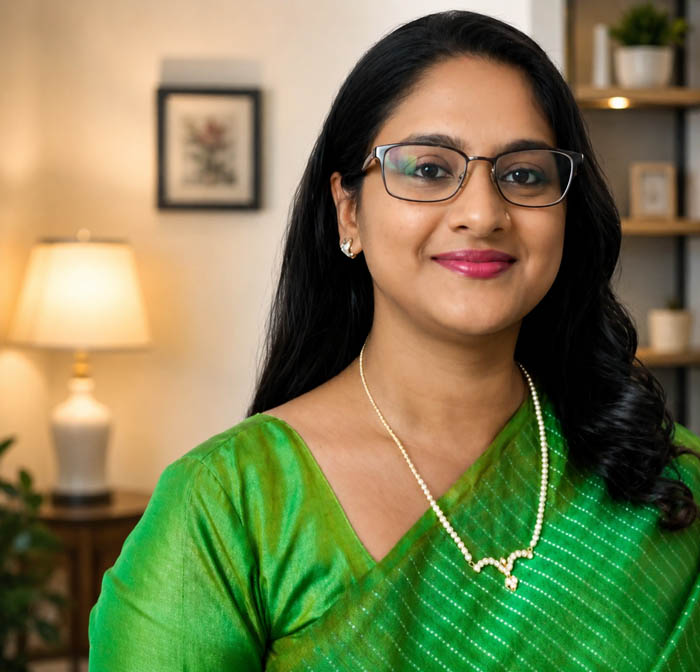
Mary Josey Malayil, a native of Thiruvananthapuram, Kerala, is a talented writer with a rich family legacy. As the second daughter of T. R. Johny, retired Chief Engineer of the Kerala State Electricity Board, and the late Rosily Chirayath, sister of the renowned actor C. I. Paul, Mary was born on June 22, 1964. Her primary education spanned various locations, including Pallam, Palakkad, Thrissur, and Thiruvananthapuram, before earning her B. Com degree from All Saints College, Thiruvananthapuram, in 1985. She then moved to Alappuzha, joining the esteemed Catholic family of Malayil Thomas, Senior Manager at SBT, as his daughter-in-law. Mary is married to Josey Thomas Malayil, a skilled cartoonist and medical illustrator, and they have a son, Thomas Josey Malayil, who works in corporate communications at Technopark, Thiruvananthapuram. During the lockdown, Mary discovered her passion for writing, driven by a desire to overcome boredom. Since then, she has contributed stories to numerous esteemed publications, including Karmabhumi, Arsha Bhoomi, Malayala Manorama Online, KSEB Pension Bulletin, Keralathanima, Malayalam Rachanakal Online, Koottaksharangal, Ima, and Malayil Varthapatrika. She gratefully acknowledges Raju Shankarathil, Chief Editor of Malayali Manassu in Philadelphia, for his mentorship and support, which led to her appointment as an editorial board member. Mary draws inspiration from her maternal uncles C. I. Paul (late) and C. I. Joy, brother T. J. Raphael (former General Manager of South Indian Bank), sister and fellow writer, Rita Manuel, and Mary’s online community, including Nirmala Ambatt, Chief Admin of the ‘Samskruthi Facebook Writing Group’ and ‘Arsha Bharati’. Surrounded by a rich storytelling heritage, Mary continues to contribute to the world of literature. She currently resides in Thiruvananthapuram with her family, where she weaves her own unique literature.
BEFORE DAWN AT BALIJHUDI MARKET: TAKING ODISHA HANDLOOM TO THE WORLD
Annapurna Pandey
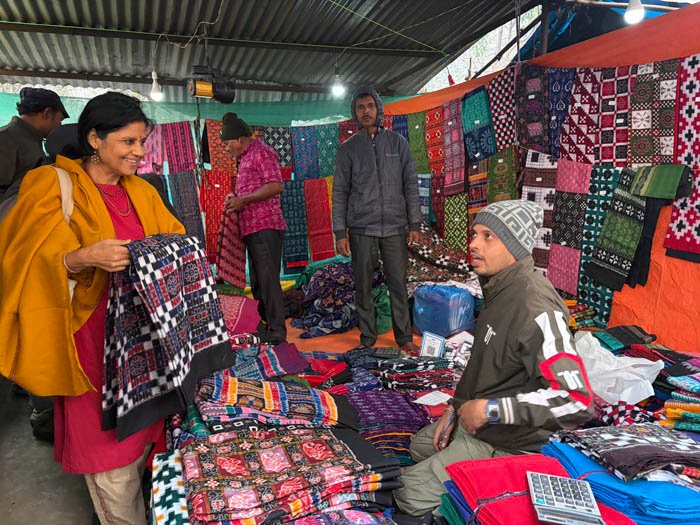
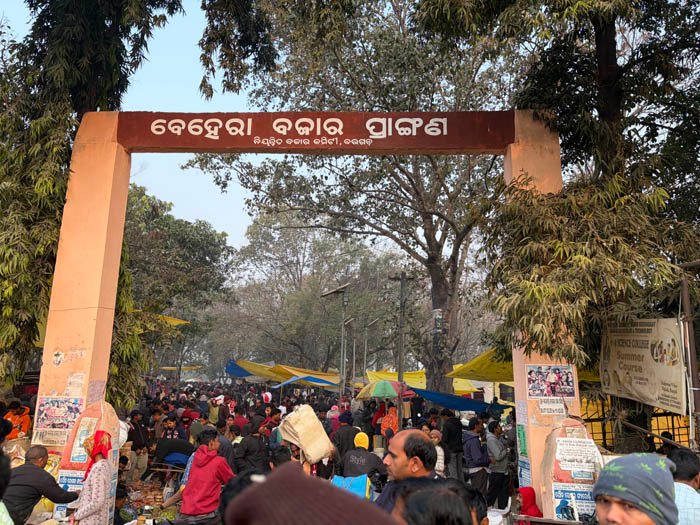
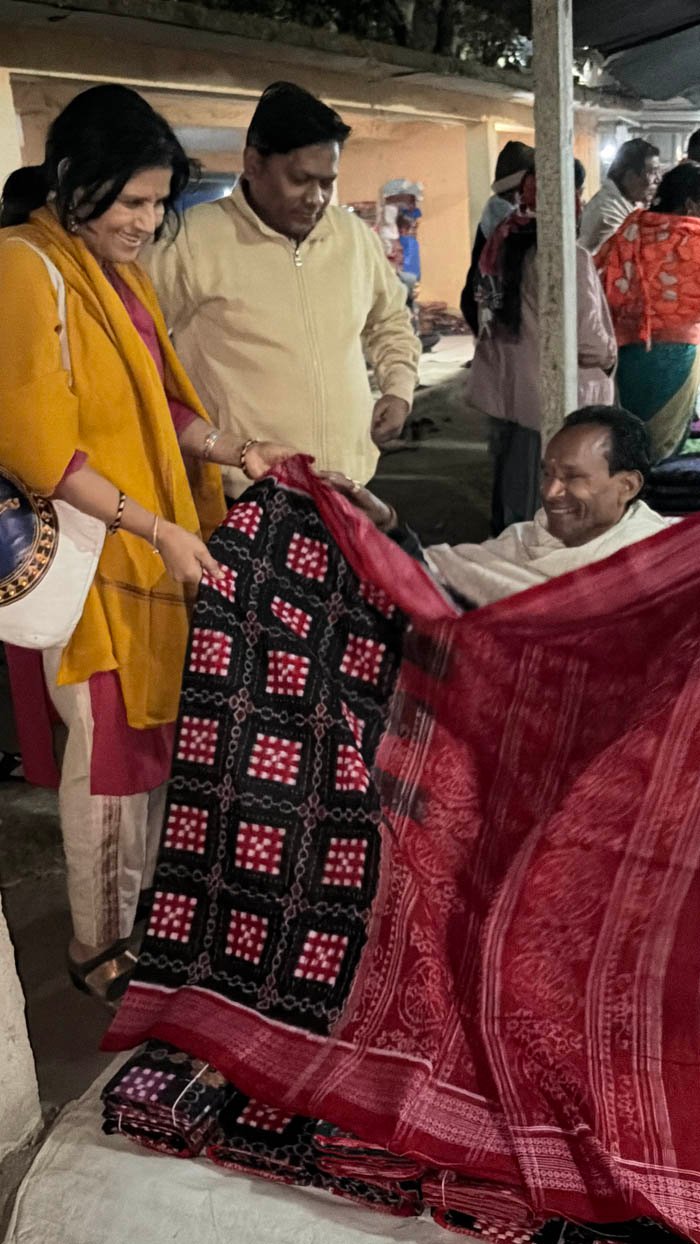
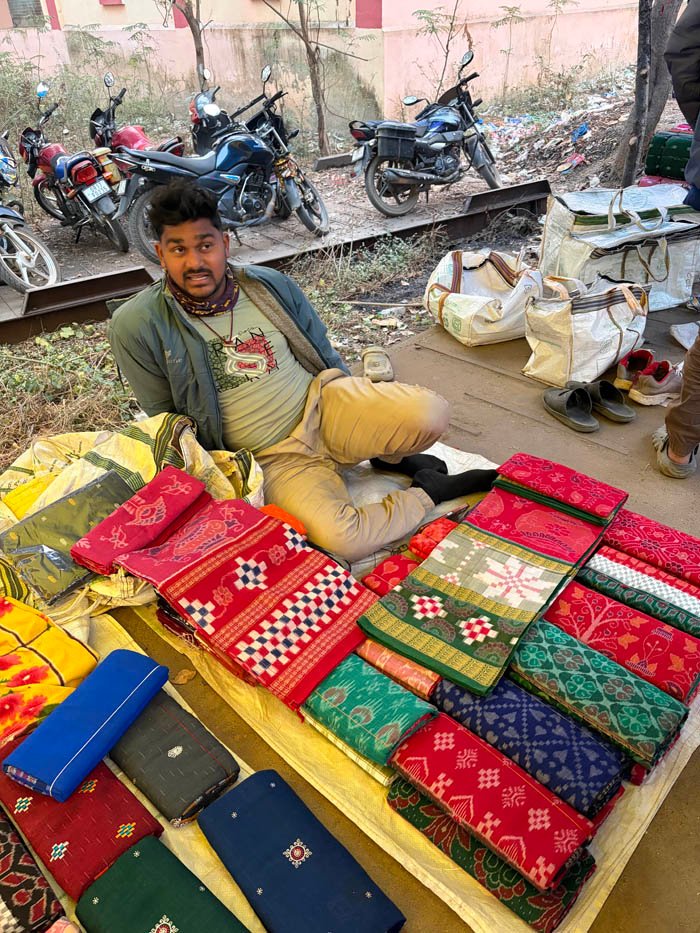
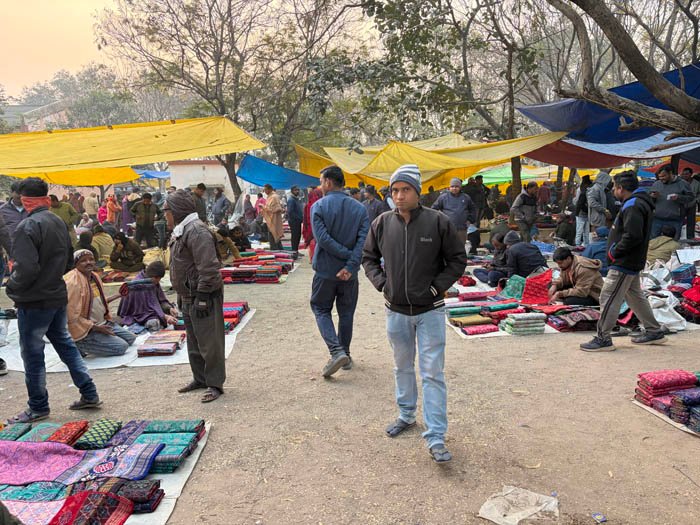
Happy 12th National Handloom Day, 2026
Field notes from Balijhudi market, Bargarh, and from nearly two decades of visits to Odisha's weaving villages — alongside reflections on what it will take to carry this craft into the world.
7th August was declared the first National Handloom Day in 2015 by Prime Minister Shri Narendra Modi in Chennai, to honor the multitude of weaving traditions and the weavers as artists. Here I want to highlight Odisha handloom, the unique identity of my home state, whose roots go back to ancient times, when Odia Sadhab Puas — traders — sailed the mighty Mahanadi out to the Indian Ocean, carrying Odisha textiles to Bali, Java, and Sumatra. Odisha is known above all for ikat, its designs varying across 35 dedicated handloom clusters that support over 192,000 active weavers (Das and Paltasingh, 2024). The number of weavers keeps shrinking, since a family's average earnings from weaving come to less than ?15,000 a month, roughly $150, and their children increasingly turn away from the craft to work as contract laborers in neighboring states.
Before Dawn at Balijhudi Market
One of my most memorable experiences with Odisha handloom was not at a showroom, an exhibition, or a government-sponsored event. It was 4:00 in the morning at the night market in Bargarh, in the western region of Odisha.
On 18th January 2026, I was in Sambalpur to give a lecture in the Political Science and Women's Studies departments at Gangadhar Meher University. But my main attraction was the opportunity to visit Balijhudi market, Bargarh — known as the largest open-air market in Asia — where weavers come from far and near to sell their products directly to customers.
A brilliant postgraduate student in Political Science from a weaver family of the Bhulia caste, Subham Meher, arranged to accompany me to this market in Bargarh, about 60 km away from Sambalpur. He drove me along with his parents and sister Lima the night before, and we stayed with their uncle, Bichitra Meher, and his family in Bargarh so I could gain this experience. That evening, Bichitra Meher, an award-winning weaver whose father, mother, and brother are also awardees, became my teacher in Bandha design and weaving. I gained two beautiful families on this trip. We woke up around 4 am, and Subham drove us, along with Bichitra Meher and Lima, to the market at the end of the town. It is called Behera Bazar, popularly known as Balijhudi market, and it runs the whole night. In the morning, people disperse, and the day becomes quiet. What I saw in those wee hours has stayed with me ever since.
The sky was still dark. Cars, trucks, and two-wheelers had lined up for almost a mile before the market started. We had to walk for about 30 minutes to reach the hustle and bustle of the market.
Colors everywhere.
Hundreds of weavers and buyers had gathered — from villages across Bargarh, Sonepur and neighboring clusters, and even from Chhattisgarh, the neighboring state — carrying freshly handwoven ikat textiles. The sellers were largely the weavers themselves, proudly displaying their own work. The buyers were wholesale marketers who had driven 500 kilometers from Cuttack and Bhubaneswar, as well as individual buyers. I saw a young couple beaming, the man holding a beautiful red and tallow ikat silk sari wrapped in a plastic bag, the woman with a small child. I asked how much they had paid for it. The price was not important. But the couple's smile said they had found their treasure, and the man could not wait to see his young wife in that beautiful sari.
While watching the weavers sell their products, I noticed they were collecting payment directly from consumers. There was something deeply empowering about watching the weaver who created the textile standing directly in front of the person buying it. No middleman in between. That is the future of handloom I envision to see overall improvement in the lives of the weavers.
Balijhudi market is built around the weaver. It has been there for generations; the market association's president, Ajodhya Meher, and secretary, Siva Meher, told me when I talked with them. In 2002, with increasing demand for space, it moved to this seven-acre site. "The product has to be handloom," Meher said — "no room for copy designs, synthetics, or powerloom." One weaver I spoke with told me that 40 weavers work with him and that he had brought their products here to sell on their behalf. Some buyers even arrange meetings in advance to collect specific textiles in bulk. The energy is remarkable. Even so, weavers I talked to that morning worried about pirated versions of their designs finding their way onto the market, and about government support that is too often absorbed by cooperative societies before it reaches the individual weaver.
This night market is not merely a place where saris are sold. It is an ecosystem — connecting production with demand, letting weavers interact directly with customers, and giving them a sense of ownership over the product and its sale.
I remember being enchanted by the extraordinary range of colors and the names carried by the saris — Gajagamani, the graceful gait of an elephant; Mriga Nayani, the enchanting eyes of a deer; Hansa Chali, the elegant walk of a swan — all drawn from the natural world. The border motifs are drawn from fish, birds, flowers, fruits such as rudraksha, from the wider natural world.
Half a World Away
Last week, at a dinner at a friend's home in the Bay Area, I noticed several men wearing beautiful Odisha ikat shirts paired effortlessly with western trousers. I complimented a senior member of our community on his Sambalpuri shirt. His face lit up. He told me enthusiastically that he had several Sambalpuri shirts and had decided to wear one that evening. He was beaming with pride.
I felt an expansion of Balijhudi market and an appreciation of the weaver's crafts. I could not help thinking of the weaver who had made that shirt, and of the market where he might have sold it directly, at dawn, to someone who would carry it thousands of miles.
Today, it is increasingly common in the North American diaspora — not only for women but also for men — to proudly wear Odisha handloom garments: shirts, jackets, kurtas, sherwani sets, and sarees. Not just during Odisha Day, Rath Jatra, Bahuda, OSA conventions, or weddings, but also on ordinary festive occasions and when visiting one another. This is precisely the transformation we need to accelerate: from handloom as occasional traditional attire to handloom as contemporary, desirable, everyday global fashion.
What I Saw in the Weaving Villages
I have worn Odisha handloom, particularly ikat, since childhood. But I never knew the source and significance of the weave from my home state until 2007, when, while working on a documentary titled The Myth of the Birthplace of Buddha, I traveled through several weaving regions of Odisha.
What I witnessed was extraordinary craftsmanship — and hope for change. When weavers sell their goods directly to customers, they keep the profit that would otherwise be lost to middlemen. Nearly two decades later, Balijhudi showed me that hope realized, once a week, before sunrise. Yet the industry stands at a crossroads. The Fourth All India Handloom Census (2019–20) recorded approximately 2.67 million handloom weavers and 0.85 million allied workers in India, with 73% of weavers earning less than ?5,000 per month and only about 15% earning more than ?15,000 per month. Low, non-remunerative earnings are the crux of the problem. The younger generation is discouraged from continuing in the family's traditional occupation, which drives mass migration of youth for contract labor, leaving them alienated from their villages.
If we want the next generation to become weavers, designers and entrepreneurs, handloom must become economically aspirational.
A Model That Works
There are encouraging examples beyond Balijhudi. SHRADDHA, an NGO working with weavers across Odisha, has shown what happens when you pair better design with direct-to-customer sales. In Jagatsinghpur district, women weavers who once produced cotton sarees only for local markets began selling contemporary pastel sarees and running yardage straight to customers, with no middlemen involved. Daily earnings rose from roughly ?300 to ?450, and in a single exhibition day, weavers sold ?5.16 lakh worth of fabric — about 30% more than they would have realized selling through the village supply chain.
This is the future we need to build.
Shraddha proposes the Weavers School to train the younger generation from weaver families in handloom skills, entrepreneurship, and technology, nurturing them into a new generation of producers and entrepreneurs.
The youth hold the key. The children of weaver families should not have to choose between abandoning their heritage and remaining economically insecure. They should have a choice: become skilled weavers, designers, technologists, marketers and entrepreneurs — and build globally competitive businesses around their heritage.
A weaver at Balijhudi should be able to tell the story of her saree to a customer in California, London, Singapore or Sydney — and receive payment directly into her bank account. That is not a distant dream. The technology already exists. What we need is imagination, training, design innovation, market access, and an entrepreneurial ecosystem to make it happen — freeing young people from an old mindset built around government support that so often comes too little and too late.
Wear It. Share Its Story.
On this National Handloom Day, let us celebrate not merely the beauty of the fabric, but the dignity of the person who creates it. Let us make handloom aspirational. Let us make weaving remunerative. Let us make young people proud to inherit and reinvent their family's craft. And most importantly, let us take Indian handloom beyond borders — from our villages to the global marketplace. Every handwoven garment we choose is more than clothing. It carries the hands, history, culture, and creativity of the weaver community. We must wear it, share its story, and try to buy directly from weavers and introduce it to the world. The future of handloom will not be secured merely by preserving the past. It will be secured by making our heritage relevant, desirable, and economically sustainable for the future.
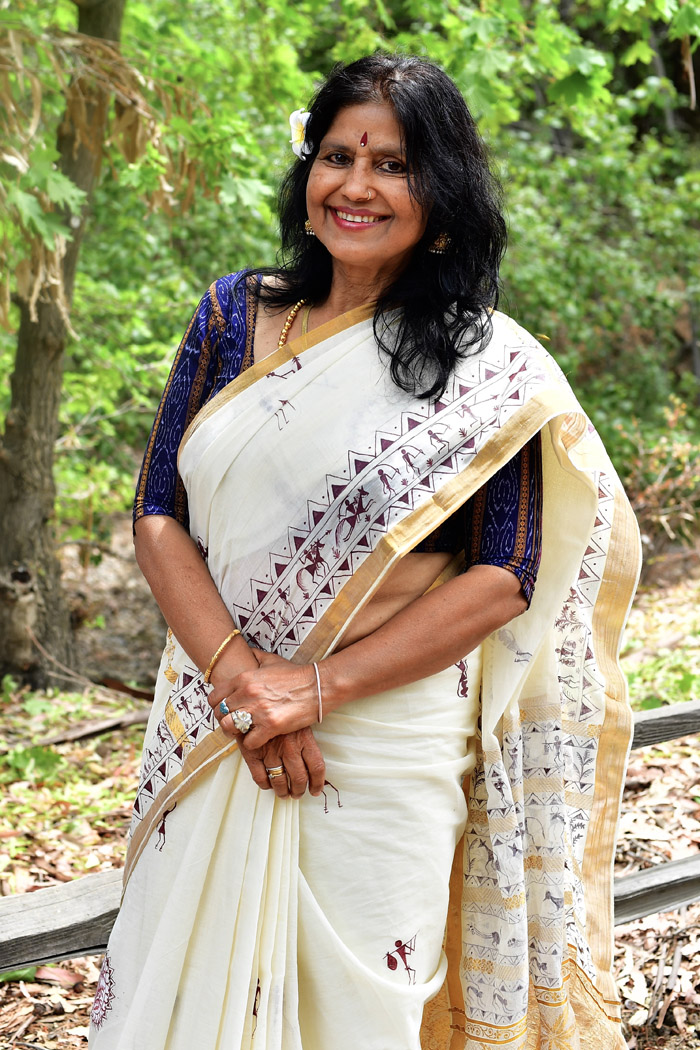
Annapurna Pandey is a cultural anthropologist at the University of California, Santa Cruz. Originally from Cuttack, Odisha, she moved to Santa Cruz, California in 1989. She is a travel enthusiast and loves to write travelogues highlighting her exotic experiences in different parts of the world.
THE INDO-HELLENIC NEXUS: FROM CLASSICAL ANTIQUITY TO MAURYAN EMPIRE
Braja K Sorkar
1. Introduction
The historical interaction between India and Greece represents one of the world's most enduring civilizational dialogues. Far from being a series of isolated encounters, the cross-pollination between the Indic and Hellenic worlds has consistently reshaped the arts, philosophies, and political structures of both regions. This paper provides an interdisciplinary analysis of these linkages, tracing them from the battlefield of the Hydaspes in 326 BCE to the intellectual hubs of 19th-century Calcutta, and finally to the modern strategic partnerships of the 21st century. By weaving together literature, philosophy, art, and history, this dossier charts the evolution of a unique trans-continental partnership.
2. Classical Influences on Bengali Literature and Culture (The 19th-Century Renaissance)
The nineteenth-century Bengali Renaissance represented a profound intellectual reawakening, largely catalyzed by the introduction of Western classical education under British colonial rule. Bengal’s intelligentsia engaged deeply with Greco-Roman antiquity, sparking a revolutionary synthesis that introduced Western rationalism, epic structures, and dramatic concepts into traditional Bengali arts and socio-religious frameworks.
2.1 Literary Innovations and Tragic Archetypes
Prior to the nineteenth century, Bengali literature was dominated by devotional poetry (Bhakti) and auspicious narratives (Mangal kavya), largely bound by traditional Sanskrit aesthetic theories (Rasa) that strictly prohibited tragic endings in favor of cosmic harmony and divine resolution. Nineteenth-century writers fundamentally broke away from these constraints by adopting the Aristotelian framework of tragedy, introducing flawed, majestic heroes whose downfalls were driven by hamartia and unyielding destiny.
The pioneer of this structural shift was Michael Madhusudan Dutt. In his 1861 masterpiece, Meghnad Badh Kavya (The Slaying of Meghanada), Dutt revolutionized Bengali poetry by abandoning traditional rhyming couplets in favor of blank verse (Amitrakshar Chhanda), modeled explicitly on Miltonic and Homeric structures. Dutt utilized conventions from Homer's Iliad to consciously subvert the moral binaries of Valmiki’s traditional Ramayana, re-imagining canonical antagonists through classical Greek tragic lenses:
Meghnad as Hector:
Dutt explicitly modeled Prince Meghnad after Hector of Troy. Rather than a demonic figure, Meghnad is portrayed as a noble, deeply human patriot defending a doomed city against foreign invaders, meeting an untimely demise due to divine deception and a fated vulnerability reminiscent of Achilles.
Ravana as King Priam: The ruler of Lanka is elevated from a symbol of absolute evil into a grand, fatalistic monarch echoing King Priam of Troy, watching his sons perish and his magnificent empire crumble under the immutable decrees of fate.
Rama as Aeneas:
In a radical departure from traditional deification, Rama is humanized with deep emotional vulnerability and psychological frailty, at one point undertaking a classical descent into the underworld (Patala) to seek counsel from his deceased father, mirroring the epic journeys of Aeneas and Odysseus.
2.2 Philosophical Reform and Socratic Dialectics
Beyond literature, the introduction of Greek philosophy provided the intellectual vocabulary necessary to challenge entrenched socio-religious orthodoxies in Bengal.
The Brahmo Samaj and Strategic Dialectics:
Founded by Raja Ram Mohan Roy in 1828, the Brahmo Samaj sought to purge Hindu society of idolatry, polytheism, and regressive social practices such as Sati (widow immolation). To achieve this without entirely severing ties with tradition, Roy systematically deployed Socratic dialectics. He published extensive public tracts structured as rational debates between an "Advocate" and an "Opponent" of social reform. By guiding the interlocutor through logical contradictions based on their own premises, Roy used the Socratic method to force intellectual self-realization and ethical critique rather than relying blindly on scriptural dogma. This methodology was further institutionalized by Debendranath Tagore's Tattvabodhini Sabha (1839), which subjected religious traditions to rigorous, rational cross-examination.
The Young Bengal Movement and Radical Skepticism:
A more radical phase emerged through the Young Bengal movement, led by the firebrand Anglo-Indian scholar Henry Louis Vivian Derozio at Hindu College during the late 1820s and early 1830s. Operating out of the Academic Association, Derozio acted as a "Bengali Socrates," encouraging his students to question all institutional authority. Adopting the principles of Western rationalism and Socratic skepticism, the "Derozians" rejected scriptural authority entirely. They applied relentless cross-examination to the caste system, ritual purity, and orthodox taboos. While their uncompromising iconoclasm faced a severe backlash from conservative society, they established a permanent legacy of scientific inquiry, free thought, and intellectual dissent within the modern Bengali psyche.
3. The Campaign of Alexander the Great and Early Geopolitical Re-alignments (326 BCE)
Alexander’s two-year military expedition into north-western India acted as a geopolitical and cultural watershed moment for the Indian subcontinent, breaking down regional isolations and setting off long-term transformations.
3.1 Political Consolidation and the Mauryan Empire
Prior to the Macedonian invasion, north-western India was a highly fragmented geopolitical landscape characterized by a loose mosaic of autonomous tribes, independent cities, and competing principalities (such as the kingdoms of Taxila under Ambhi and the Pauravas under King Porus). By systematically dismantling or weakening these fiercely independent local factions, Alexander's campaign inadvertently eliminated regional fractures.
Following Alexander's retreat and subsequent death in 323 BCE, the resulting political vacuum in the Punjab and Sindh regions facilitated the rise of the Mauryan Empire. Chandragupta Maurya capitalized on the destabilized north-western frontier and utilized Hellenistic administrative and military paradigms to overthrow the Nanda Dynasty, establishing India's first centrally unified empire. This geopolitical shift culminated in the historic Maurya- Seleucid Treaty (c. 305 BCE) between Chandragupta and Seleucus I Nicator, which established a formal matrimonial alliance, secured stable imperial frontiers, and led to the transfer of 500 elite Indian war elephants to the Seleucid army.
3.2 Tactical Paradigms: Elephant Warfare at the Hydaspes
The Battle of the Hydaspes (326 BCE) forced the Macedonian army to confront a highly disciplined, large-scale deployment of war elephants. King Porus stationed over 200 combat elephants along his frontline at intervals of approximately 100 feet, creating a formidable living wall designed to disrupt Alexander's elite cavalry, as horses naturally panic at the scent and sound of elephants.
Tactical descriptions by Arrian and Quintus Curtius Rufus detail the immense physical and psychological toll inflicted upon the Greek phalanx, noting that the elephants trampled infantrymen, gored lines with their tusks, and disrupted defensive formations. Alexander was forced to adapt his tactical doctrine mid-battle, deploying light infantry units (Agrianians) to launch targeted missile attacks against the vulnerable human mahouts (drivers). Concurrently, heavy infantry utilized specialized curved axes (kopides) and scythes to hamstring the animals' feet.
Once blinded, wounded, and deprived of their drivers, the panicked elephants turned blindly upon their own lines, trampling the Indian infantry and causing a chaotic collapse of Porus's formations. Although Alexander achieved a tactical victory, the profound psychological trauma of this encounter—coupled with intelligence reports indicating that the eastern Nanda Empire possessed an elephant corps numbering between 3,000 and 6,000 beasts—triggered the historic mutiny at the Hyphasis (Beas) River, permanently halting Alexander's eastward advance.
4. Historiographical Review of Megasthenes’ Indica
The structural fragments of Megasthenes’ Indica occupy a critical space in early South Asian historiography. Arriving as a Seleucid ambassador to the Pataliputra court of Chandragupta Maurya around 300 BCE, Megasthenes provided the earliest external, secular, and systematic written documentation of an Indian imperial administration.
Because the original text was lost to antiquity, its contents survive entirely as disjointed citations, paraphrases, and critiques embedded in the later works of Greco-Roman writers such as Strabo, Arrian, Diodorus Siculus, and Pliny the Elder. Analyzing the Indica requires an understanding of its epistemological value, its structural methodology, and the classical distortions introduced by its author.
LOST ORIGINAL TEXT
Megasthenes' Indica (c. 300 BCE)
-------------------------- --------------------- --------------------------
Diodorus Siculus Strabo Arrian
(Bibliotheca historica) (Geographica) (Anabasis / Indica)
(Narrative / Imagery) (Skeptical Critique) (Military/Tactical)
4.1 The Typology of Transmission and the "Fragmentary" Problem
The primary challenge of utilizing the Indica as a primary historical source is its fragmentary transmission. Modern historical reconstructions rely on the collection of these fragments compiled by scholars like E.A. Schwanbeck in 1846 and later translated by J.W. McCrindle. When analyzing these texts, historians face a double layer of authorial bias: the original author's Hellenistic lens and the compilers' selective preservation to serve their own literary goals. For instance, Arrian used Megasthenes to provide accurate logistical background, while Strabo was deeply skeptical, branding Megasthenes a fabricator of myths because of his accounts of fantastic creatures like ants that dug for gold.
4.2 Ideological Distortions: The Socratic "Utopia" Framework
Recent historiographical critiques suggest that Megasthenes did not just record objective observations. Instead, he framed Mauryan society to fit a specific philosophical ideal: the idealized Socratic state. Having witnessed the chaotic, bloody wars of Alexander's successors in the Mediterranean, Megasthenes painted India as an orderly, stable utopia. This philosophical lens explains his most striking errors:
The Idealization of the Seven Castes:
By splitting Indian society into seven functional classes (Philosophers, Farmers, Herdsmen, Artisans, Soldiers, Overseers, and Councillors), Megasthenes' structure mirrors the idealized class hierarchy outlined in Plato’s Republic rather than the real-world four-fold Varna framework. He transformed an intricate system of ritual purity into a perfectly organized, functional state apparatus.
The Myth of an Empire Without Slavery:
His claim that "all Indians are free, and not even one of them is a slave" was a projection of Greek political theory. Mauryan society routinely utilized servitude via the Dasa system, as detailed in Kautilya's Arthashastra. However, because Indian law protected Dasas from arbitrary execution and allowed them to own property, their status looked nothing like the brutal chattel slavery of Greek city-states. Megasthenes chose to interpret this humane legal framework as a complete absence of slavery, highlighting India as a moral contrast to the Mediterranean world.
4.3 Epistemological Merits: Corroboration with the Arthashastra
Despite these philosophical biases, when Megasthenes recorded concrete physical infrastructure and administrative systems, his accounts closely match indigenous texts like the Arthashastra. This cross-textual agreement confirms the Indica's value as a reliable historical record for several key areas:
------------------------------------+----------------------------------------
Megasthenes' Indica | Kautilya's Arthashastra
------------------------------------+----------------------------------------
City Board of 30 Officials | Paura-Janapada (Administration)
Astynomoi (Quartermasters of Road) | Pathadhyaksha (Superintendent of Roads)
Agronomoi (Rural Overseers) | Sanyatri / Adhyakshas (Rural Officers)
------------------------------------+-------------------------------------------------------
The Municipal Administration of Pataliputra:
Megasthenes documented that the capital city was managed by a complex board of 30 officials divided into six specialized committees of five members each. These committees oversaw industrial arts, foreign visitors, vital statistics, trade, manufacturing weights, and tax collection. This detailed account directly mirrors urban administrative systems outlined by Kautilya.
The Royal Road and Infrastructure:
The Indica accurately described the construction of a massive imperial highway tracking across northern India, featuring milestones every ten stadia to mark distances and intersecting routes. This ancient highway served as the direct structural precursor to the historic Grand Trunk Road.
The Military Machine:
Megasthenes described a massive, state-funded standing army managed by a dedicated war office of thirty men. This body was split into six specialized divisions: Admiralty, Logistics, Infantry, Cavalry, Chariots, and the Elephant Corps. This highly organized military apparatus confirms that the Mauryan state exercised centralized, bureaucratic control over its armed forces.
5. The Holistic Intellectual Nexus: Synthesis of Literature, Philosophy, Art, and History
To understand the full scope of Indo-Hellenic relations, historians must look beyond isolated military or diplomatic events. The deep, lasting tie-up between these two civilizations is built upon a continuous, interdisciplinary exchange across literature, philosophy, art, and history. When these fields intersected, they created entirely new cultural and intellectual frameworks that reshaped both European classicism and South Asian traditions.
===========================================
THE INDO-HELLENIC INTERDISCIPLINARY SPHERE
===========================================
LITERATURE <=======================> PHILOSOPHY
- Blank Verse (Dutt) - Socratic Dialectics
- Tragic Archetypes - Gymnosophists & Stoicism
- Epic Confrontations - Platonic /Vedantic Monism
ART <=======================> HISTORY
References & Bibliography
I. Classical & Historiographical Sources
Ancient India as Described by Megasthenes and Arrian
Thacker, Spink & Co. (Reprinted by Munshiram Manoharlal, 2000).
II. Literature, Philosophy & The Bengali Renaissance
Dasgupta, S. (2010). The Renaissance in Bengal: Search for Identity. National Book Trust.
Derozio, H. L. V. (2002). Song of the Stormy Petrel: Complete Poetical Works of Henry Louis Vivian Derozio. (M. Maddern, Ed.). Progressive Publishers.
Dutt, M. M. (2004). The Slaying of Meghanada: A Ramayana Epic. (C. Seely, Trans.).
Oxford University Press. (1969).
Thapar, R. (2003). (Asoka and the Decline of the Mauryas), Oxford University Press.
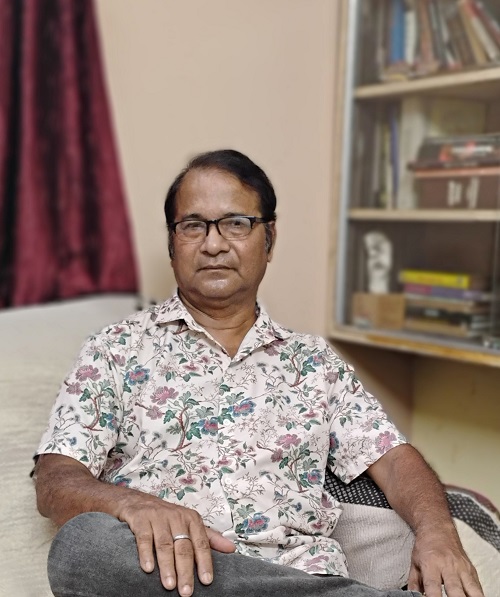
Braja K Sorkar is a widely published author, editor, and translator. He has authored two collections of English poetry, including the award-winning title Syllables of Broken Silence, which earned him the Indology Award in 2021. A dedicated curator of global literature, he edited and published an international world poetry anthology in 2021 titled ‘Voices Now: World Poetry Today’ and has served as the editor and publisher of a reputed international literary magazine since 2023, titled Durgapur Review. His own poems are featured widely in numerous anthologies both in India and abroad, with translations extending into Chinese, Spanish, Bengali, Hindi, Assamese, Manipuri, and several other Indian languages. Professionally, he is a registered translator with the National Translation Mission (NTM) and is closely associated with the Sahitya Akademi. He remains a regular contributor to leading literary magazines worldwide.
TIMES THAT NEVER PASS
Sreekumar Ezhuththaani

When I sat in the mosque for the afternoon prayer, there was nothing else on my mind except hunger.
Everyone who came here to work from distant lands would say how tired they were of eating hotel food. As for me, I was sick of the food at home. I had been trying my best to avoid breakfast. If I ate it, I was almost certain to throw up at some point.
I didn't know why.
For years, it had been the same food. The same kitchen. The same vessels. The same hands. Yet recently, the moment breakfast was set before me, a knot of resistance would tighten inside my stomach.
Today was no different.
I had arrived at the shop without eating anything. By noon, my head felt light and dizzy. The rush at the shop hadn't let up either. One customer wanted to see shirts, another needed measurements for trousers, and a third was haggling over the price. By the time I thought of stepping out to grab something to eat, the time had already slipped away.
That was when the call for prayer came.
I thought going to the mosque might bring some relief from the hunger. It didn't.
Everyone lined up for prayer. The Imam stood at the front, with the rest of us behind him.
The gentle murmur of prayers rose around us.
I stood, bowed, pressed my forehead to the floor alongside everyone else, and rose again. Everything was mechanical. My mind simply wasn't there. My stomach felt hollow from hunger, an emptiness so complete that nothing else could enter it.
As I stepped outside after the prayers, I walked straight into the Musaliyar.
I had hoped to pass by unnoticed, but luck wasn't on my side.
“I knew you'd come,” he said.
I forced a smile. “What is it, Musaliyar?”
“What is it?” His voice echoed across the mosque veranda. “Don't you know the construction work for the mosque is going on?”
“I know.”
“How can you think handing over one lakh rupees settles it?”
“Business has been slow, Musaliyar.”
“If business is slow, does that mean the mosque shouldn't be built?”
I remained silent. He stared directly into my face.
“Hasn't your shop been doing business all these years?”
“It has.”
“Then?”
Before I could answer, he started again.
“Everyone here is contributing. You're the only one dodging it with one excuse after another.”
I disliked being confronted on the veranda where everyone could hear.
“Give me a little time. Once business picks up—”
“When will it pick up?” he interrupted sharply.
I didn't know. Since I couldn't answer, I stayed quiet.
He led me outside the mosque gates, and that was where the real scolding began.
“If you can't do it, just say you can't. But when it comes to the mosque, everyone has to take responsibility.”
“I didn't say I couldn't.”
“Then what are you saying?”
“Just that I need some time.”
“Time! Time!” He gave a mocking laugh. “Everyone needs time. Only the mosque runs out of it.”
I said nothing.
His eyes suddenly shifted away from my face. Not to my neck or my hands. It felt as though he were looking straight towards my home.
“What about your wife's gold?”
I looked at him. “What about it?”
“Isn't it for the mosque?”
“That belongs to her.”
“I know it's hers,” he said, lowering his voice. “But isn't she your wife?”
I didn't reply.
I didn't know exactly how much gold was around her neck, but I knew she wouldn't touch it—not even if my business went under, or if we had no money for medical expenses at home. Whatever happened, that gold had to remain on her body. I didn't bother explaining any of that to the Musaliyar.
“She wouldn't agree to touch it even for hospital expenses,” I said.
The Musaliyar looked at me for a moment.
“Have you tried asking her?”
“I have.”
“And?”
“She said no.”
“You should ask her again.”
I chuckled softly. “She isn't someone who listens just because I say so.”
“That's your problem.”
He turned to walk away, took two steps, and then turned back.
“Try for at least two lakhs more.”
“I can't right now.”
“You must try.”
I said nothing more, and he walked away.
The minaret of the mosque stood tall against the sky. Its white surface gleamed in the harsh noon sun, dazzling my eyes.
The hunger hit me again.
I didn't know if the little breakfast I had tried to eat at home was still in my stomach. If it was, I felt it would have been better to throw it up right there.
That was when I noticed a man standing near the mosque gate.
At first, I didn't recognize him. He looked at me and smiled, then raised a hand.
“Hey…”
The moment I heard that voice, a long-lost time suddenly stood before me.
“Vishnu?”
He smiled.
“I didn't expect to see you here.”
“Neither did I.”
For a moment, the joy of seeing him after so many years made me forget the Musaliyar, the mosque, and even my hunger.
Vishnunath looked towards the mosque.
“I came looking for an office room here,” he said.
“Where have you been all these years?”
He didn't answer immediately. A soft smile appeared on his face.
“I'll tell you,” he said, placing a hand on my shoulder. “Let's get something to eat first.”
I didn't have to think twice.
“Do you know?” Vishnu asked, wrapping a piece of beef fry inside a parotta.
“What?”
“In North India, the sacred cow used to be food for many human beings.”
I looked at him.
“And today?”
He smiled.
“Today, the sacred cow is food for worms.”
I didn't understand.
“What are you saying?”
“Nothing.”
He went back to eating.
“I don't get it.”
“You don't necessarily have to.” He paused for a moment. “To understand certain things, you have to spend ten years trapped inside them.”
I stared at him.
“Ten years?”
He nodded.
“After ten years, I grew sick of the ashram.”
He said it so casually, as if he had merely grown tired of living in a particular house.
“How did you leave?”
“With their permission.”
I was surprised.
“With permission?”
“Yes.” He picked up another piece from the beef curry. “I told them I wanted to set out on a pilgrimage again. They agreed.”
“And then?”
“And then I just never went back.”
I stayed silent for a while, letting that sink in.
“For how long?”
“Two years.”
“Where?”
“All over India.” He smiled. “Well, I don't know if I can say all of it. A lot of places.”
“How did you travel?”
“Mostly on foot.”
“Didn't you have money?”
“I didn't have a single paisa on me.”
There was no sadness in his voice when he said it.
“Then what?”
“Sometimes someone would give me food. Sometimes I'd sleep at a stranger's house. Sometimes I travelled on trains without a ticket.”
“Didn't you get caught?”
“I did.”
“And then?”
“They threw me off.”
“Why?”
He chuckled.
“When I didn't even know who I was, why would anyone bother holding on to me?”
I smiled too, but there was no laughter left on his face. He went back to his meal.
“What was it really like in the ashram?” I asked.
Without stopping to wash his hands, he began talking as he ate. First about small details, then about larger things. I kept asking questions, one after another.
Who made the decisions?
What were you allowed to eat?
When were you supposed to sleep?
Who were you allowed to speak to?
What should you read?
What were you forbidden from reading?
Who was to be revered as the Guru?
Why did money have to be given?
Who should never be doubted?
Who ought to be suspected?
Vishnu answered every question with the patience of someone who had lived there for a decade. Much of what he said was entirely new to me. I had never imagined life inside an ashram—a world that looked so peaceful from outside, but once inside, had a rule for almost everything.
Behind every rule, a reason.
Behind every reason, a belief.
Behind every belief, a single person.
He kept talking, and I kept listening.
At one point, he said, “There, they teach you how to believe. But what you are supposed to believe is decided entirely by them.”
I raised my head and looked at him. He didn't notice—or perhaps he did, but chose to say nothing.
A quiet uneasiness began to settle in me. Certain words he spoke seemed to echo back into my ears in a completely different voice.
You must believe.
Do not question.
You must obey.
Do not doubt.
I quickly brushed those thoughts aside.
That was about the ashram. What did any of that have to do with my life?
I refused to think about it further.
Instead, I asked, “What about the Guru?”
Vishnu smiled.
“I expected you to ask that.”
“Why?”
“It seems to be what interests you the most.”
“Not really.”
“It is.” He looked at me. “I can see it in every question you ask.”
I gave a faint smile.
“Just tell me.”
He remained quiet for a brief moment, then began describing the ashram once more. I listened intently, following each detail with a new question—about the ashram, the Guru, the rules, his escape, and why he never returned.
There was only one thing he never spoke of: the one thing I never asked about.
He was telling the story of the ashram, yet some of his words kept striking a nerve somewhere deep inside me. Pretending not to hear the echo, I asked him again.
“What really happened there?”
“In a single word: fear.”
He said it abruptly.
I put down the piece of parotta I was holding.
“Who?”
“What?”
“Who were you afraid of?”
“Not who.” He smiled. “It was fear itself.”
“What does that mean?”
“This is the mistake we make.” He leaned back in his chair. “We try to eliminate the things we fear from our lives, one by one. In the end, we waste life itself.”
I looked at him.
“And then?”
“You have to eliminate the fear.”
“What?”
“The emotion of fear.”
I laughed.
“How do you eliminate that?”
“If you try, you can.”
“Isn't fear a survival skill acquired by humans through language during evolution?”
He stared at me.
“You haven't changed at all, have you?”
“How so?”
“The moment someone says something, you immediately start dissecting it.”
“Isn't that a good thing?”
“It is.” He picked up a piece from the beef curry. “But when you eat beef, do you think about its evolutionary history too?”
I laughed.
“Don't change the subject.”
“I'm not changing it. The food is getting cold.”
“Finish what you were saying.”
Without even washing his hands, he continued.
“Fear might be natural. But carrying every natural instinct on our heads isn't necessarily good for us.”
“That's true.”
“Anger is natural. Jealousy is natural. Revenge is natural. The desire for power is natural too.”
“So?”
“Isn't culture about shedding what we don't need among those?”
I looked at him for a moment.
“So, is culture about destroying fear?”
“No. It's about what we do with that fear.”
“You need to clarify that a bit more.”
“You are afraid.”
“Of whom?”
“That's the problem.” He tore off a piece of parotta. “You're still going in circles.”
“Fine.”
“A person feels fear. Without investigating the cause of that fear, he believes everything the fear tells him is true. Then, to escape that fear, he creates rules.”
“Are rules bad?”
“No.”
“Then?”
“Creating rules isn't bad. But at some point, the rule itself becomes the master of that fear.”
I interrupted him immediately.
“A society needs rules.”
“It does.”
“And so does religion.”
“Does it?”
“Of course.”
He smiled.
“I knew it before you even said it.”
“Knew what?”
“That you would come to the defence of religion.”
“I didn't come here to defend religion.”
“Then?”
“I'm talking about logic.”
“Your logic wears a fine garment.”
“What garment?”
“Religious consciousness.”
I laughed.
“Don't think you understand everything just because you spent time in an ashram.”
“I don't think that.”
“It sounds like you do.”
He stayed quiet for a moment.
“Fine. You tell me.”
“Tell you what?”
“What is religion for?”
I answered immediately.
“To give human beings a moral life.”
“Can't morality exist without religion?”
“It might be possible. But religion provides a foundation for it.”
“And who built that foundation?”
“Humans.”
“And then?”
“What do you mean, ‘and then’?”
“Why say that humans shouldn't question the very foundation that humans built?”
I said nothing.
He continued.
“That's what I learned when I was at the ashram. At first, they didn't frighten me. They made me feel safe.”
“What's the difference?”
“There's a huge difference.”
“How?”
“First, convince someone that the world outside is dangerous. Then tell them that the only place that can save them is yours.” He looked straight into my face. “Then you will choose to stay there on your own.”
“What does that have to do with religion?”
I asked the question, though the moment it left my mouth, I felt how unnecessary it was. I didn't know if Vishnu noticed.
“It might have something to do with it. Or it might not,” he said very calmly. “But one thing is certain: authority thrives wherever humans live in fear.”
I interrupted again.
“Authority is everywhere. At home. In offices. In politics.”
“In religion too.”
“That too.”
“So you agree.”
“To what?”
“To what I just said.”
“I didn't agree to anything.”
He burst out laughing.
“You haven't changed.”
“Neither have you.”
“I have changed.”
“Where?”
He looked down at the beef fry in front of him.
“Here.”
“Because you're eating beef?”
“No.” He picked up a piece. “Because no one else is deciding what I should eat.”
I smiled, but he didn't.
I didn't fully grasp the meaning of what he said—or perhaps I understood, but wasn't ready to face it. Instead, I found another counterargument.
“If humans decide everything freely, how will society function?”
Vishnu didn't answer immediately. He drank some water and set the glass back on the table.
“Freedom isn't about everyone doing whatever they please.”
“Then what is it?”
“It's about not making decisions out of your own fear.”
I remained silent.
He continued.
“Behind every argument you make to defend religion, there is a good intention. That's why those arguments feel so strong.”
“But?”
“But an argument with a good intention doesn't necessarily make it the truth.” He smiled again. “Now you'll ask me the next ten questions.”
“Definitely.”
“And nine of them will be aimed at saving religion.”
“And the tenth?”
“You won't ask that one.”
“Why?”
He looked at me.
“Because it will be about yourself.”
I laughed.
“You still haven't lost your old habit.”
“What habit?”
“Bringing everything back to me in the end.”
“That's your big problem.”
“What is?”
“Seeing everything as someone else's problem.”
He went back to eating.
I ate in silence too.
I didn't know then how much truth lay in what he said.
And I didn't really want to know either.
“On my recent two-year journey, some of the people I met told me to escape from the ashram as quickly as possible,” Vishnu said.
“And the others?”
“Others said the exact opposite.”
I laughed.
“There are always two sides to everything. People are just like that.”
“That isn't what caught my attention.” He picked up a piece from the beef fry. “The ones who intrigued me were those who urged me to give up even my deepest religious beliefs.”
“Why?”
“Most of them were living independently.”
“Meaning?”
“They seemed to be living happily.”
“So?”
“Doesn't every human being long to live happily?”
“Yes,” I said, pausing to think. “Isn't that why every religion speaks of heaven?”
Vishnu looked at me.
“What do you mean?”
“Humans ought to find happiness here on earth. They should try to build heaven right here. Religion speaking of heaven might just be a pointer towards that.”
Vishnu shook his head.
“I don't see it that way.”
“Then how?”
“Talking about heaven is just a way to make human life on earth seem like a failure.”
I stared at him.
“What?”
“If you tell someone they'll get everything they lack here over there instead, the life they actually have right now starts to feel cheap.” He remained silent for a moment. “They dangle heaven before your eyes to stoke a sense of longing.”
“Longing?”
“Yes. A craving that never ends.”
“What for?”
“To keep man from seeing the life right in front of him.”
“Is that all?”
“It's worse than that.” He didn't laugh. “He stops seeing both the heaven on earth and the hell on earth.”
I kept my eyes on him.
“He lives lulled to sleep in an illusion created by religion.” He drank some water. “God is the remedy for everything. Prayer is the answer. You must endure. You must wait. And then, one day, everything will be fine.”
He spoke those last words very slowly.
“While saying all this over and over, a person's entire life simply passes by.”
A sudden uneasiness washed over me. This didn't feel like a mere argument anymore; it felt like blasphemy. If I kept listening to this, would the sin of it fall on my head too, just as my wife always warned? If she were here now, she would have looked at me and said something immediately.
Even listening to this is a sin.
It felt as though I could hear her voice echoing in my mind.
I looked at Vishnu. He was eating quite naturally, completely unbothered. He didn't have an ounce of fear in him.
That was when a line from a Tolstoy story crossed my mind: The person you are with right now is the most important person in your life.
I didn't know if that was true, but sitting beside Vishnu, I felt as if my adolescence were rushing back to me—a time when we fluttered about like butterflies without a single care in the world. Back then, we didn't know this much about God, nor did we know about heaven, hell, or fear.
Life was simply life.
I needed a new subject to pull myself out of those memories, and I found one right away.
“Hey,” I said.
“What is it?”
“Do you remember our Elizabeth?”
The food in his hand came to a sudden halt.
I chuckled.
“If only you had been brave enough back then to take her and run off somewhere.”
He said nothing.
“What did she say to your proposals back then?”
“Isn't that an old story?”
“Old as it is, it's still entertaining.”
“You still remember that?”
“How could I forget?” I laughed. “By the way, do you know where she went?”
Vishnu nodded.
“I didn't use to.”
“And now?”
“When I rebuilt my life, the memory of her came back to me.”
“When you rebuilt it?”
“Yes.”
“Then what?”
“I searched for her in many ways.”
“Why search so much?”
He smiled.
“In the end, I found her.”
I looked at him, grinning.
“You sly fox!”
He laughed.
“You really are a hopeless rascal.”
“Why?”
“Finding your long-lost love ten years later!”
“In my experience, what we truly wish to know eventually finds its way to us.”
“Grand philosophy!”
“That's not all.”
“What else?”
“Under a fake name, she had started a vlog called My Married Life.”
“A vlog?”
“Yes.”
“How did you find it?”
“It went viral.”
“And her?”
“No matter how much she hid her identity, I found her.”
I stared at him for a moment.
“This sounds like a plot from a Hindi film.”
“No, man,” he smiled. “It's way beyond that.”
“What's beyond that?”
Before he could answer, the waiter cleared the empty plates from our table. Vishnu leaned back in his chair, and the smile slowly faded from his face.
“When I saw her, I didn't recognize her at first.”
“And then?”
“She had changed.”
“How was she?”
Vishnu stayed silent for a long moment.
“The way you remember her…” He looked right into my eyes. “…she wasn't like that at all.”
“Then how?”
He didn't answer immediately.
For the first time, what I saw on his face wasn't curiosity or pity. It was something like an old wound being torn open again.
“If I tell you what happened to her…” he began, then paused.
“What?”
“You won't talk about her like that ever again.”
I said nothing.
He picked up his glass of water.
“Have you heard about her husband?”
I shook my head.
“He was an alcoholic,” Vishnu said softly. “But there was a problem far bigger than that.”
“What?”
“He was a deeply religious man.”
He set the glass down on the table, and then he began to tell the story of Elizabeth's life.
“Faith and addiction go hand in hand,” I said.
Vishnu looked at me.
“Why go hand in hand?”
“What?”
“What's the difference between them?” He didn't smile. “Both are intoxicants.”
Hearing that word, I felt as if something inside me cracked and peeled away—like a small fissure opening somewhere in a closed room, letting a sliver of light stream through.
In that light, the world I saw was completely different from anything I had ever known before.
Religious faith.
Addiction.
Intoxication.
Refuge.
Fear.
Suddenly, everything seemed to stand inside the very same circle.
I quickly shook myself awake.
Friendship was fine, but I couldn't afford to get lost in all this. I already had a hundred different problems in my life.
Vishnu returned to Elizabeth's story.
“Her husband died two years ago. I had inquired and found all that out even before I met her.”
“I didn't know that much.”
“Do you know what a strange similarity there was between my life and hers?”
I looked at him.
“What?”
“Even though she escaped from me, she was destined for someone just like me.”
“Meaning?”
“She joined the Pentecostal church after listening to a preacher, and then she married him.”
“Ah, I see.” Something suddenly occurred to me. “I heard that was the reason for her sudden financial prosperity—a three-story house and all that.”
“Yes. She told me all that herself.” Vishnu remained silent for a short while. “When she realized his simplicity was nothing more than a facade, her heart sank for the first time.”
“And then?”
“Then she tried to become like him.”
I gave a faint smile.
“That's how it is.”
“What?”
“That's the biggest trap in a marriage.” I tore off a piece of parotta. “You have to force yourself to agree with so many things you actually dislike.”
As I said that, my own life flashed through my mind.
Vishnu didn't notice.
He continued.
“When foreign funds began flooding into his account, his true nature came out.”
“Which was?”
“Secret, relentless drinking.”
“Hmm.”
“And then, continuous trips.”
“That too?”
I unconsciously lowered my voice, thinking of Tolstoy again—the story of the devil who increased a peasant's harvest, turned the surplus grain into alcohol, and drenched him in it. Listening to Vishnu, I couldn't understand why that story kept coming back to me.
“Before she could even raise those allegations, he started throwing accusations at her,” Vishnu said.
“What accusations?”
“Suspicion.”
“He suspected her?”
“He behaved like a complete paranoid.”
“And then?”
“He abused her physically.”
“Typical behaviour of drunks.”
“Yes.” Vishnu paused for a moment. “And he got the punishment drunks usually get.”
“What?”
“His liver gave out.”
I said nothing.
“She endured all of it.”
“Why?”
“She thought his heart would change.”
“And then?”
“Prayers. Fasting. Abstinence. That was her life.” He looked at me. “She inflicted twice as much torment on herself as God gave her.”
I sat in silence, hearing those words.
It was true. Humans often create twice as much tragedy for themselves as fate ever hands them. Though it is happiness we seek, it is often sorrow that we welcome with open arms.
“With his death, she felt she needed a new life,” Vishnu said.
“How?”
“Ignoring what everyone said, she sold her house and land in a single day.”
“Everything?”
“Everything.”
“Then?”
“She vanished somewhere.”
I looked at him.
“Are you talking about that poor Elizabeth?”
“Yes, man.” He smiled. “If we manage not to die, life just keeps growing us.”
He went quiet for a moment.
“She grew too.”
“How?”
“Life's tragedies gave her strength.”
“So quickly?”
“Not quickly,” he said. “It took two years.”
He took another bite of food.
“She tracked down her old friends. That's how I happened to learn about her.”
“What did she say when you went to see her?”
“She didn't open her heart up much to me.”
“Didn't she remember the old love?”
“I did.”
“And her?”
“I don't know.”
I chuckled.
“Didn't you expect at least a ‘sorry’ for rejecting you back then?”
“I expected it.”
“Did you get it?”
“No.”
“But?”
Vishnu looked at me.
“She has to go to Delhi next February to collect some certificate.”
“And?”
“She asked if I could go with her.”
“Good God!” slipped out of my mouth before I could stop it.
Vishnu laughed.
“Everything was in that one question.”
“It's not like she had no one else to go with her, right?”
“Exactly.”
I stared at him for a moment, then smiled.
“Ah, yes. So we have to wait till February to know if it's a boy or a girl, huh?”
Vishnu burst out laughing.
“I couldn't wait that long.”
“Then?”
“Last week, I took her on a trip around Munnar and Kodaikanal.”
“Awesome!”
“Now there's no need to struggle and go all the way to Delhi.” He laughed out loud.
I laughed too.
“Give me a hand, brother! Give me a hand.”
I reached out my hand.
“At least one of us escaped.”
Vishnu held my hand.
“We'll wait and see about that.”
He let go.
“You got married too, didn't you?”
“Yes.”
“And yet these kinds of misunderstandings haven't cleared up, have they?” he said, laughing.
I winced inside as if a hot ember had poked right into my heart, though I showed nothing on the outside.
“Hey,” I changed the subject, “why don't you stay over with me for a day?”
“No, man. I'm heading back right now.”
“What's the rush?”
“There's a meeting for a social service scheme. If I don't show up, they'll scold me.” He smiled. “Usually, I'm the one who scolds those who don't show up.”
He laughed again, a laugh completely free of guilt.
His bus was at two-thirty. There was still an hour left.
We sat in silence for a while.
Then he asked, “If you drink, let's go grab a quick shot.”
I looked at him.
“You used to love it so much back when we were studying.”
“I quit completely.”
“When?”
“When I left the ashram.” He smiled. “I don't need any other intoxicants anymore.”
I didn't dwell on those words.
“Come on,” I said, standing up. “I need to go to a shop.”
I felt like spending a little more time with Vishnu.
It had been so many years since I had last seen him. Who knew when we would ever meet again once he left?
I had it in mind since morning to buy two pardhas for Laila. She had sent a photo of the model she wanted on WhatsApp. I thought we would go to a textile shop first. I could also buy him a shirt. It didn't feel right to let an old friend go without giving him something.
That was my plan.
We walked into the first shop. I showed the salesman the photo Laila had sent on WhatsApp. He pulled out several options, but none of them matched. I took photos of each one and sent them to Laila.
She didn't like any of them.
“Not this.”
“Don't want this either.”
“The colour isn't right.”
“The model is different.”
“The neckline should be a bit more closed.”
Finally, she sent a new photo.
“Like this.”
I showed the photo to the salesman. He looked at it for a moment and said, “We don't have this here.”
We went to the next shop.
The same story repeated there.
By the time we reached the third shop, Vishnu started laughing.
“Doesn't your wife come to the shop herself?”
“No.”
“Then?”
“I'm the one who buys.”
“What if you buy something she doesn't like?”
“That's the problem.”
“Can't you just buy what you like?”
I looked at him.
“Can I just buy what I like?”
“Why not?”
“She's the one who has to wear it, isn't she?”
He said nothing, but he smiled. He was thoroughly enjoying the spectacle.
I kept entering and leaving shop after shop, showing photos, sending them back on WhatsApp, and getting responses in return.
She didn't like them.
She wouldn't go out to buy them herself either, but she would keep me running around like this.
To Vishnu, it all seemed like a joke.
“How many more shops are you going to visit?”
“Until I get it.”
“Do you like this job?”
“Which one?”
“Running around for your wife.”
I smiled.
“I haven't really thought about whether I like it or not.”
“Give it a thought.”
“I don't have time to think right now.”
He laughed again.
Time kept slipping away, and the departure time for his bus drew near.
In the end, I gave up on the pardha and bought just a shirt for him.
“This is for you.”
“What for?”
“I just bought it for you.”
“I have shirts.”
“Keep it.”
He took the shirt in his hands, looked at it for a moment, and then looked at me.
“Thank you.”
“Don't mention it.”
I took him to the bus stand.
The bus arrived, and he got in. Standing by the window, he waved his hand.
I waved back.
The bus slowly pulled away. His face remained visible through the window for a little while longer before it dissolved into the sea of other faces.
I stood there for a moment, then turned and walked away.
It was time to open the shop.
Even if I was a little late today, it didn't matter. I could open the shop and sit there for a while. Then it would be time for the evening prayer.
On the way, I remembered what the Musaliyar had said at the mosque that morning:
Two lakhs more.
I didn't know how I was going to pay that.
When I got home, Laila would ask about the pardha again. I could take her along on Sunday. It would be better to bring her directly to the shop and let her pick out whatever she liked. If I told her we could visit her mother on the way, she might agree.
That's what I'd tell her.
I crossed the road.
The mosque's minaret was visible in the distance once again.
The hunger I had felt while sitting there that morning hadn't completely gone away. I wondered what food would be waiting at home. I didn't know if I would be able to eat it, or if I would end up throwing it up if I did.
Even so, I had no other choice but to go home.
Sreekumar Ezhuththaani known more as SK, writes in English and Malayalam. He also translates into both languages and works as a facilitator at L' ecole Chempaka International, a school in Trivandrum, Kerala.
UNE VOYAGE A’ PARIS
Avaya Mohapatra
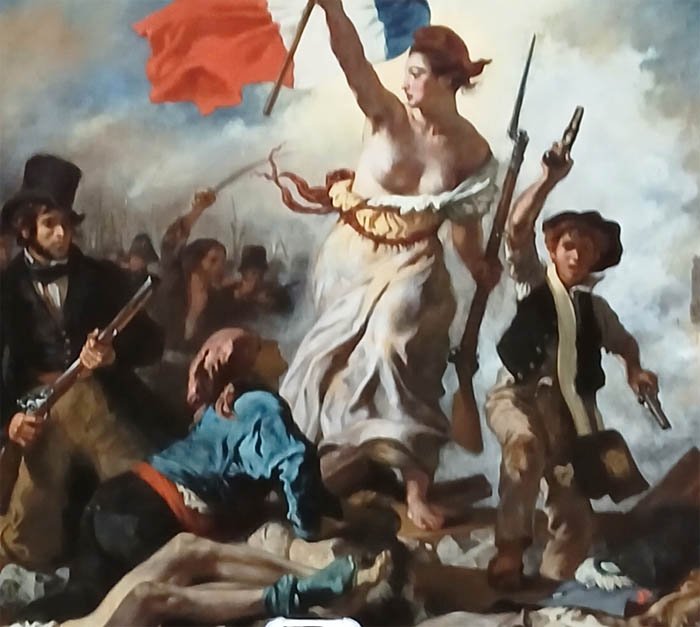
(Painting by Eugene Delacroix on the FR, of 1930 July, in the Grand Hall at Louvre, Paris)
Of course I am a great admirer of the French Revolution, not because it was a fin de siècle, churning the French society and the European world in general, after the European mind getting enlightened (le Lumiere) between the decades after the passing away of Luis XIV (1715) and the French Revolution in 1789, but the ideas it promoted of Liberte et Fraternite, but Egalite (equality) was more of a slogan as much then, as is of now. The division between the working class and the elite is as much sharp today as in yester years, giving rise to popularity of leftwing political parties for decades and strong trade unionism in France. Why one considers it important is perhaps, though philosophers of the enlightenment decades, from Immanuel Kant, Rousseau, Diodorat and Voltaire and many others have argued for freedom of human body and mind, they could awaken the mind only but could not make the society walk—the walking was carried forward by the common men and men of action on the street. The Luis Dynasty lasting just 110 years, from ascendancy of Luis XIV (the Sun King, Suryabanshi in Indian parlance) from 1683 to the final Guillotining of Luis XVI in January 1793 saw the beginning and the end of the absolutists, brutal regimes that had complete grip on the upper elites, the merchant classes who wanted to break free (from the clutches of the Church as well as the Monarch) and the common men terrified by a powerful king on the throne. France was the largest European Kingdom, compared to the fragmented German principalities, the fractured Italian city-states Florence, Genoa, Venice et al, both in the north and the south before unification in late 19th century (1888). On the other side of the English Channel, the British Parliament had already a final grip on the Kings, after ordering the killing of Charles I in 1649, the House of Lords abolished and briefly becoming a Republic. But again it brought back monarchy and reinstated the House of the Lords—so much duplicity and the grip of the elite, especially after the Enclosure Movement, sealing the fate of tenants and the poor. The merchant class were getting better off too, in alliance with the affluent manorial class and the landed aristocracy looking for investments into now an expanding international trade and the mercantile capital, especially in the Indian Ocean region and particularly the Indian subcontinent, becoming the Jewel in the (British) Crown.
The Tale of Two Cities immortalized by Charles Dickens was precisely about the capital cities across the Channel, one, Paris in the throbs of the Revolution and apparent anarchy before after the Revolution, purportedly for freedom and equality and yet after the guillotining of the King and the Queen in 1793 and the Robespierres and Dantons and myriad others, Nepoleon Bonaparte emerged as a great Hero of the French Nation in 1799 and in 1803 declared himself the King—and went out into the rest of Europe with the might of French Army and Cavalry. He was finally struck-down at the gates of Moscow with an unforgiving winter—all there in fine prints of Tolstoy’s, War and Peace. There were wars, there after wars and there is war now, but no peace that remains a mirage, even two centuries after Kant’s treatise on Perpetual Peace written in 1795, precisely when once again Napoleon rose to power and raised a perpetual war to be finally defeated at Waterloo by the English in 1815 and banished to St. Helena, only to return in Coffin to be buried in the Cathedral in central Paris. That was the end of the First Republic. But after ushering in the era of Republicanism, 1700 years after the Roman Republic collapsed into absolute monarchy, France too falls back to monarchy, with Bourbon Restoration (1814-30) with Kings Luis XVIII and Charles X at the helm again, but fell to July 1930 Revolution and establishment of a more liberal constitutional monarchy (1830-1848), the same year that France launched a campaign to colonise Algeria (1830 till 1964)—a quest for freedom and equality at home and yet, campaign to capture a large neighbour’s territory across the Mediterranean. The Second French Republic emerged in 1852 with Napoleon III (Luis Napoleon), the People’s King with a rapid modernization agenda (the Opera House eg.) to finally collapse in 1870 with the Franco-Prussian War and the rise of Germany under Bismarck after German Unification. Finally, the Third Republic and Paris Commune, briefly restored the original agenda of the French Revolution to achieve and finally, the monarchy ended and rose the French Republic. It took nearly a century, from July 14, 1789 siege of the Bastilles (Juy 14), till death of Napoleon III in 1871, that France could become a Republic and a truly representative Government. In the USA, the Republicanism came about by default, from an anti-colonial war (1776) against Great Britain, since there was no hereditary monarchy, until of course, some pretentious contemporary POTUS(s) arrive. Britain retained its silly monarchy in the 21st century, (no offense to the King on the Throne, a good man) but that is their business. Our Republic (India) did far better than the enlightened Europe and North America, getting the Kings and Queens go at one go in 1948-49 soon after the Independence from the burdensome yoke of Great Britain, adopted the Constitution and declares herself a Republic on January 26, 1950, 76 years ago. Britain has now been cut to size after the Crown has gone, and late, Mrs. Gandhi gave the final good-bye to the Kings and Queens of the medieval world after abolition of privy purse (private privileges at public expenses) of the erstwhile rulers, some 570 of them.
The point I allude to is the duplicitous and contradictory characterization of the European Enlightenment and the French Revolution, the ambers took 8 decades to douse and several wars including two World Wars to settle the European nations. They preached democracy and still preach democracies around the world, putting under carpet all their misdeeds and after the havoc they perpetrated of 5 centuries of colonialism and plunder, in the ruse of ‘civilizing the savage’ and all associated hypocracies . In a recent short visit to Paris one could see still the etches of a confused history and polity on the walls of Louvre or Versailles Palace or the grandeur of the Opera House— all a testament to the past that still hunts Europe. English are no different—7 PMs in 10 years time and instead of a history of ruling much of the world, today holds on to the apron strings of the USA. As the Orientals would say, your ‘Karma’ catches up with you one day or the other—finally.
(Dr Avaya Mohapatra is a retired Sr. Professor (North Eastern Hill University, Shillong where he worked between 1976-2017. He had his education at (then) Ravenshaw College, Cuttack, Jawaharlal Nehru University, New Delhi and the Central School of Planning (the Kalecski Institute), Warsaw. Stays at Shillong and writes semi-academic blog: acmohapatra.blogspot.com, Email ID: acmohapatradr@gmail.com)
BAND, BAAJA, BARAAT (2)
Dr. Viyatprajna Acharya
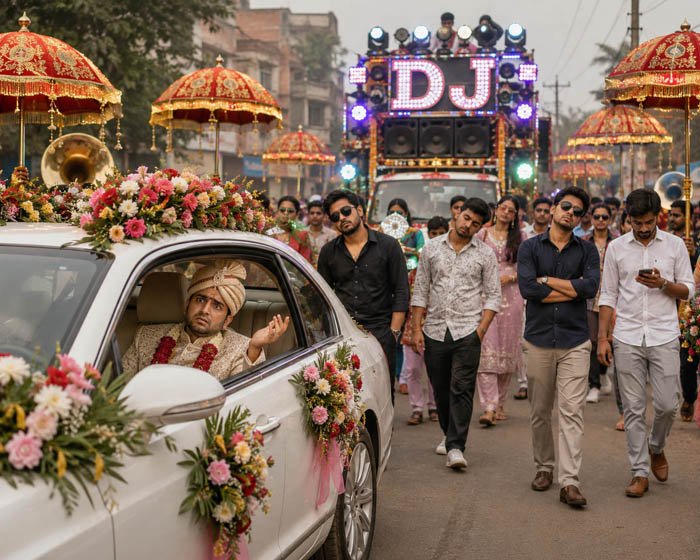
On my way back after picking up my daughter from school after her examination, we got caught in a crowd. A DJ vehicle was moving ahead of us, blasting ear-splitting music and songs. A wedding procession at 1:30 in the afternoon! Seriously! That too in the month of March! With rising concrete jungle, environmental pollution Bhubaneswar is left with one season out of six i.e. Summer, one may subdivide it as mild, moderate and severe though. Now March means it was moderate summer.
On one side, my stomach was rumbling with hunger; on the other, the DJ vehicle had created a traffic jam. If a heart patient happened to be stuck behind that vehicle, he might well get a fast-track ticket to heaven! And the deafening vibrations must certainly feel as though they could rupture the eardrums of a small child.
A procession? Or a farce?
A few women from the groom's family were walking along with their heads covered with their veils. Apparently, the groom's friends were not around to dance. Even if they were there, who would want to dance or jump around in the scorching heat at half past one in the afternoon?
Anyway, thankfully I was on my scooter, so I managed to weave my way through and get ahead.
A little further on, there was yet another procession. Since in India, we go by our indigenous calendars, marriages are considered as sacred yajnas and are performed at specific days and time of a day, we call as tithi and it is not a mere celebration and can be celebrated on weekends or at any point of time as per our convenience. And hence you may encounter multiple such processions in a single day and all convention halls booked and beautifully decorated which becomes actually a feast for the eyes.
This time I could see a few young women walking. Every now and then, they seemed to raise their hands and dance a little. But after observing them for some time, I realised that one of the three was actually feeling dizzy. She eventually got into an air-conditioned car.
The DJ continued blasting away in its own way… and ahead of it, another group of musicians was playing the shankha and mahuri, the traditional instruments, and moving along with the procession. We Indians are stuck like Trishanku with an eagerness to adopt newer trends and struggling to save our past traditions. But in lieu of that double sound pollution!
Now for this grand arrangement, where were the people to celebrate! Reasons might be many. The groom might have more virtual friends rather than real ones, who would have responded to e-vites with long wishes on mobile phone. Or if the groom is getting married after 30, which is becoming a constant trend in India nowadays, causes being many, then probably none would have been able to come from their workplaces.
But what has happened to the youth mass that was accompanying physically?
In just 3-4 decades the entire society has become slave to air-conditioning! With all kinds of gadgets, the physical work has almost become redundant. They neither seem to know what exercise is nor walk even a few steps if the situation calls for. As if there’s a mass hatred created for sweat!
The DJ alone must have cost somewhere around ?20,000–30,000. Who actually listened to it? Who danced to it? Yet the money was spent, purely for display and video recording and social media posting. And the sufferers? Commuters like us who faced traffic jams and incurred some irritation due to the blaring music.
Seeing such a helpless state of our younger generation, I remarked jokingly among my friends:
“Ah! If only someone would start a company where young men and women could be hired to dance behind the DJ during wedding processions. Surely people wouldn't mind paying them a rental fee as well!”
Before I could say more, a female friend replied:
“What's left to invent? Such companies that provide dancers on rent have already come up! They come dressed beautifully, dance for the occasion, eat at the wedding feast and leave.”
Hawww…my jaw dropped open.
Earlier, friends and relatives would happily participate in weddings of their own accord. Then came the era of persuasion, pleading and even offering alcohol to get people to participate.
Now, apparently, nobody is willing to do even that!
Everyone is excessively busy with their own lives. Or perhaps, after spending so much time in air-conditioned environments, they have simply lost the habit of stepping outdoors or tolerating the heat.
Bravo! Bravo! The band, baja and baraat!
But seriously, do we really need all this spectacle?
Unless your friends and relatives themselves request to be part of the procession, or unless you are absolutely certain that you have a large number of well-wishers who would genuinely want to celebrate with you, there is little point in wasting money on noisy, sound-polluting DJs.
There is already a beautiful tradition of playing mangal badya, auspicious traditional music, during ceremonies.
Instead, why not respectfully include shankha-mahuri musicians and pay them well for their performance?
When in today’s marriage ceremonies I see friends coming down for the celebration and participate whole-heartedly, I feel those bride and grooms are really fortunate to have them around and definitely in future these kids have a smooth societal relationship and few may prove as leaders too who know how to get up from the couch and come for real help.
Coming back to Band, Baaja and Baraat- let the musical procession begin at the entrance of the wedding venue itself, rather than taking it onto the road. That way, there will be no unnecessary traffic jams and no mechanical noise pollution caused by DJs.
May all be well.
Dr. Viyatprajna Acharya is a Professor of Biochemistry at KIMS Medical College, who writes trilingually in Odia, English and Hindi. She is an art lover and her write-ups are basically bent towards social reforms.
SREE MOOKUTHALA BHAGAVATHI TEMPLE
T. V. Krishnakumar
SREE MOOKUTHALA BHAGAVATHI TEMPLE is about 40 kms from Thrissur and 25 kms from Guruvayur Kerala on Thrissur- Kuttipuram State Highway. It is managed by a local Trustee Board under the control of Malabar Devaswom Board and comes under HR & CE guidelines. This Temple was founded by Adi Sankara, where the deity of Bhagavathi is Swayambhu (self-manifested) .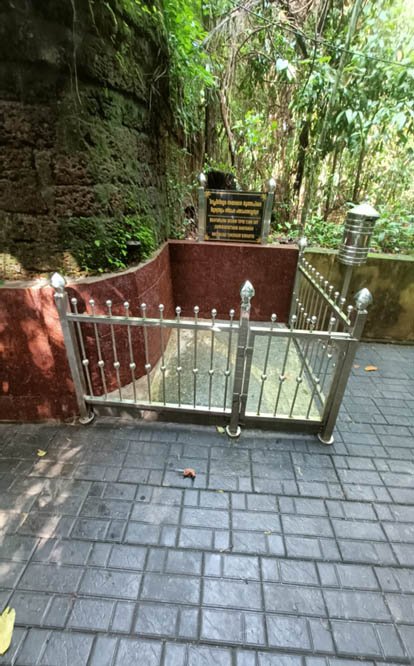
The revered Narayaneeyam is a Sanskrit Devotional text on Lord Guruvayurappan composed by Melpathur Narayana Bhatathiri in the 16th Century. He composed this to get cured from rheumatism. It is also said that he took rheumatism on himself to get his Guru cured and composed all the 100 chapters of Narayaneeyam, which is a summary of Bhagavatha Purana.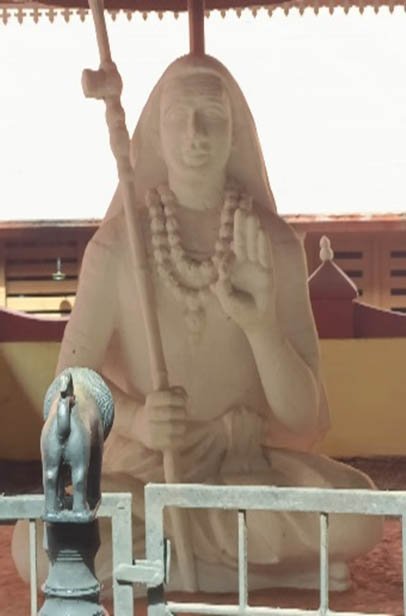
It is believed that Narayana Bhatathiri after completing Narayaneeyam , was advised by Lord Guruvayurappan Himself to go to and worship Sree Mookuthala Bhagavathi , which is a combined form of Saraswathi,Lakshmi and Durga. Bhatathiri worshipped Goddess in the form of Mookkolamma (Lotus like feet of Devi ) and was in this place for 12 years. During this period he wrote Sripada Sapthapadi, containing 70 slokas praising Sripada, the Holy feet of the Goddess to get inner peace. He finally attained salvation in this place. The holy spot where Narayana Bhatathiri attained salvation is marked by an enclosure (refer picture1) .There are statues of Adi Sankara (refer picture 2) and Narayana Bhattathiri (refer picture 3) in this Temple which add to the Divinity . There is also a Holy Well, which is believed to be dug within a night by the Grace of Bhagavathi on hearing the prayers of Poojari (refer picture 4) .Many artists come to this Temple and achieve fame and glory. 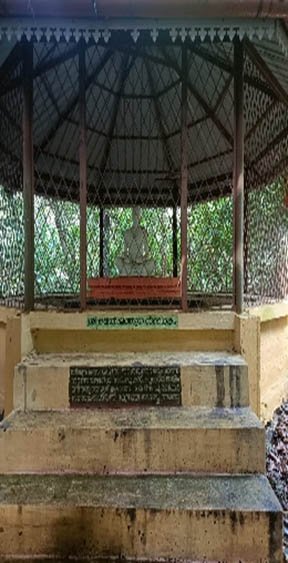
The temple has some features which are different from other temples. This Temple is situated in a forest area of about 5 acres and has lot of vaazha (banana) trees. It has no Sreekovil (inner most part of the Temple or sanctum sanctorum) and the deity can be worshipped from at a distance. There is an idol of Mahavishnu besides idols of Siva, Ganapathi, Muruga and Ayyappa , all in a single enclosure. There are 2 separate Temples here, one on the ground level which is called Melkavu and another a few steps down in the lower level called Keezhkavu . Goddess Bhagavathi is the deity in both the places. Being in a forest area, it has a lot of birds and insects. It provides a very serene atmosphere and creates a calming influence on the minds of devotees.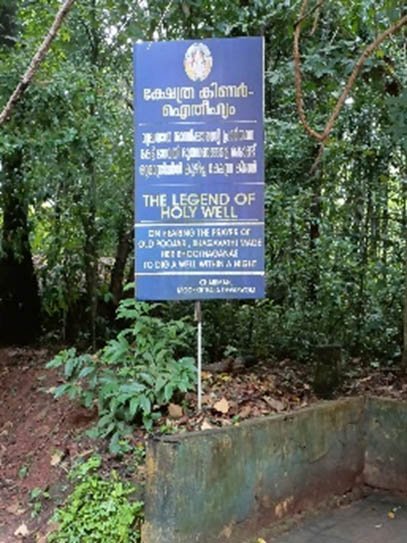
I visited this Temple in the first week of August 2026 by taking an autorickshaw from Guruvayur. It took about 45 minutes through a fairly good road and the weather was conducive , though there were intermittent showers. There is a dress code for Melkavu alone. Ladies are permitted to wear only Sarees (Churidhar not permitted) and gents are to wear Dhotis and angavastram /towel to cover the top portion. Gents are not permitted to wear pant and shirt. The temple opens at 5 am and closes at 10am. Again it opens at 5 pm and closes at 7.30 pm. Deeparadhana/Aarti is only between 6 pm and 6.30 pm. Chandanam/Sandal paste is given on a small banana leaf as Prasadam. There are Poojas like Niramaala (offering a garland of Flowers, Chuttu Vilakku(adorning the Temple with lamps, Ganapathi Homam, Bhagavathi Seva (where Goddess is invoked on a big brass lamp with 5 wicks and placed on a hand drawn Rangoli using coloured rice powder), Mangalya Pooja,Swayamvara Homam etc. I did a Pradakshinam of the Temple and felt very peaceful and happy and wanted to share my happiness and the details about the temple with as many people as possible.
I am T.V.Krishnakumar, aged about 66 years. I am a C.A who was in employment in a U.S company in Chennai doing U.S accounting and U.S tax work for clients in the U.S.A. I was also employed in a logistics firm and later went for freelancing. I am now retired and post retirement I am in the Board of Nungambakkam Saswatha Dhanarakshaka Nidhi Ltd which is 144 years old and into the business of granting gold loans and mortgage loans to the lower strata of society.
THE PAST STANDS BEFORE ME
Dr. Rajamouly Katta
Prof. Rajashekhar was taking rounds for a usual walk in the evening on the lawns of his house premises sprawling in an acre. A man suddenly appeared at the gate wishing him ‘Good Morning’. He was none but a man close to him. The man joined him walking on the lawns of the premises, saying,
“In Warangal, a society was started for the welfare of the poor and the helpless.”
“I see… It’s good news for the people of Warangal,” said Rajashekhar.
“Every year, the welfare society extends financial aid to the helpless as a support to their families,” said the man.
The man was none but Prajahit. He came to Rajashekhar and put the receipt book in his hands, requesting him,
“You’re the first person to donate to society generously. It is a good start for the success of the welfare society. You will be an example to others. When you donate a big amount, others follow you as an example,” said Prajahit.
“Yes…I sympathize with the poor and the helpless in my limits… It is not a big amount to be a model to others…There are many people with receipt books seeking donations from me,” said Rajashekhar.
“You’re a professor… well settled…with two sons settled in the USA. They are earning dollars,” said Prajahit.
“What you say is right, but I cannot donate their earnings to any welfare society… Their earnings are theirs… They know their problems and situations. All seeking donation should mind it,” said Rajashekhar.
“When you write Rs 25, 000 in the receipt book, others will write Rs. 25,000,” said Prajahit earnestly.
“I’m a retired professor… recently retired…pension dependent now, I can’t do as you expect,” said Rajashekhar.
“When you do not donate generously, others will not do so. It is my wish that you should not donate less than I expected. There are families and children of deceased parents in the streets. They are to be helped by you generously… They are in dire need… Please, be liberal and donate so that other donors feel liberal,” said Prajahit.
“As I told you that I’m a professor retired… but I’m not a millionaire or a billionaire earning from various sources… You can catch business magnates to earn lacs and crores…,” said Rajashekhar.
“Though they are rich magnates they do not donate Rs 25,000 like you…Some business magnates donate 2500, I hope they do not see the last zero in your donation, Rs 25,000. Some other business magnates donate Rs 250. They perhaps do not see the last two zeroes in your donation. All others donate only Rs 25. They do not see the last three zeroes…The magnates are poor people in this regard. They think zeroes are waste,” said Prajahit.
“They do not understand your strategy,” said Rajashekhar to Prajahit.
“Yes, they don’t care for my strategy… My strategy is that when donors see your name as the first one with the donation of Rs 25,000, they feel inspired to write in the way you do…They feel insulted to donate less than the first donation written in the receipt book,” said Prajahit.
The members of the family heard all this. They supported Rajasekhar’s view opinion. Prajahit heard a loud protest inside the family. He stopped pressurizing him to write Rs 25,000 towards donation for the welfare of society.
Rajashekhar wrote Rs 25,000 when it became inevitable in Prajahit’s force. He was very clever and so disappeared from the scene, promising to come back the following week and collect the amount. His conscience immediately encountered him boldly.
“You are paying Rs 25,000 from your pension… How do you pay it while meeting all the expenses in the maintenance of the family…?” said his conscience to him.
“Dear conscience! You are right…I did a mistake…Hereafter, I donate a hundred rupees… It’s my limit… Do you agree with me, my dear conscience,” said Rajashekhar to his conscience.
“Yes, stick up to your promise. Under any forced circumstances, you should not yield to the situation,” said Rajashekhar.
Rajashekhar entered inside of his house. His wife angrily said to him, “You would have written Rs 25 for the donation. Many people are for donations. They force you and you should not yield to their pressures.”
Whenever Rajashekhar heard about the figure Rs. 25, he recalled the incident that had taken place in his boyhood days to remind him of it in life. The figure Rs. 25 was memorable in his life. On recalling the incident, his eyes are filled with tears. For everyone, life is a store of memories.
… … … … … …
Rajashekhar was a brilliant student with a record of merits. He stood first in his class every year. For his best performance in studies, the Government awarded merit scholarship of Rs 120 in those days. It was a blessing on his part to have the scholarship every year in his student career. He gave the amount to his father who was in financial crisis. His father could not run the circus of his family with six children.
Rajashekhar belonged to a poor family. The members of the family were to lead hand-to-mouth life. Sometimes they did not have food to eat for a few days. It was the situation in which he was placed as a student right from school days.
Whatever the situation may be, Rajasekhar was regular to the class. There were instances that he went to school without having food. His school was at Veenavanka. It was his favorite because it turned his life from the poor situation to the professor’s position as he was in the quest for education that lit the light of knowledge. Despite poverty, he completed his high school studies successfully. He was known to the people in the area as a student of sincerity and hard work, intelligence and perseverance. They liked him very much and referred to him as a brilliant student from a poor family. They appreciated his brilliance and sought his help for their children. They all loved him as a student par excellence but never helped him in times of need.
Rajashekhar was fond of studying further. He wanted to study PUC at a distant place Jammikunta, but he had no money for admission to the course. His classmates, though they got less marks than he, sought admission to the course in other places as their parents were able to afford their sons financially. He was worried about his poverty and so his father mortgaged his partial house to have money for his admission to the PUC course.
Rajashekhar completed the course, securing the highest rank in the College. For that, he was given a certificate of merit and appreciation, and an award. The Collector of the district gave away certificates and awards at a function. He felt pride to receive them when the collector was present on the occasion. Studying further became a problem again due to poverty. He, however, applied for admission to graduate study at the Osmania University college in the city of Warangal.
In College, admissions were finalized duly. Rajashekhar’s name topped in the first list of admissions. He was to pay Rs 75 for admission to B.A. Course with English literature as the main subject. His parents were helpless in giving him money due to poverty. He sold his previous year PUC textbooks and got Rs 50. Still, he needed Rs 25 to pay admission fees for his undergraduate study. His first problem was to get Rs 25 and manage all expenses for rent and others. He approached the people known to him, but he was not successful. Some felt sorry for his helpless situation and others did not show any interest in his continuation of his studies. His beloved teacher Sri VVS Sharma tried his best to find a source for him to earn some money to continue his studies, but his efforts were not successful.
The following day was the last day for the payment of fees for his admission to his undergraduate study in the city of Warangal. His efforts to get Rs 25 became futile. He went and sat on the mound to the west of his village. Tears were rolling down from his eyes. He asked all the objects of nature earnestly to solve the problem of getting Rs 25 for admission fees. He saw the rivulet flowing in the south of the village and addressed it,
“O Rivulet! you flow nonstop. You witness a stop in my studies…”
The rivulet listened to his words and saw his tears flowing down the cheeks but was silent. It minded flowing. He looked at the setting sun in the west and said,
“O! Sun, you offer light and warmth to all people. Here, my life is gloomy. I’m seeking your help. There is continuity in your rising and setting knowing no stop in your routine, but you witness a stop in my studies. I have Rs 50. Still, I want to add the amount of Rs 25 to it for the payment of fees for my admission to my undergraduate study.”
The sun was slowly moving down to set in the milky ocean. He looked in all directions helplessly. He looked at the tank in the north. The waves in the tank, going ahead without any halt. I said to the waves in the tank,
“O! Waves, I see dynamism in your ceaseless movement… You mind the movement in your waves. You don’t know any stop…but there is a stop in my studies. When I don’t have Rs 25 to pay admission fees and continue my education like the nonstop movement of your waves,” said Rajashekhar to the waves.
Then he looked at hills and trees in all directions helplessly. They were silent…The sun was going to set in the west. Then he heard a call. It was a call from his mother. She was in search of him as he did not come back before sunset,
“Raja! … Raja!!’
“Here you are. I have been searching for you for a long time, my dear son,” said his mother while her eyes were welling with tears.
His mother knew the situation… She did not know how to console her son, Rajashekhar, as he was keenly interested in studies, but he was not able to pay fees for his admission to his graduate study. She said to her son,
“Let us go home, my dear son… I am helpless… I am not able to console you.”
“Maa! My name is first in the first list of admissions to seek admission for my undergraduate study…I can’t pay fees… It is not my fault…,” said Rajashekhar.
“Yes, my dear son…only circumstances,” said mother.
“Circumstances do not favor… I know,” said Rajashekar.
His mother tried to console her son while she was shedding tears continuously. She was quite aware of financial problems confronting the poverty-stricken family. She did not forget to have sold her anklets for his PUC examination fee. She had only the rush of tears in her eyes this time, but she knew no way of getting Rs 25 to offer him, enabling him to pay admission fees.
His mother took Rajashekhar home. All the while he thought of the way to continue education.
“It is not possible for me to pay fees and seek admission to my undergraduate study as per my wish. What is the use of having Rs 50 when I don’t have Rs 25 to make it Rs 75 and pay admission fees for my undergraduate study… My name is first in the first list of admissions. What is the use…?” said Rajashekhar, while shedding tears.
“I know you and your brilliance but what to do now…We are helpless, my dear son,” said his mother with all feelings.
They came home. Rajashekhar was in bed. He thought of the problem constantly. He found no solution.
The sun rose for the day to begin, reminding him of the last date for the payment of admission fees. His elder brother was on his way to seeking employment. He was with his friend. He was very casual in expressing the situation when Rajashekhar was shedding tears for his inability to pay fees for admission to his undergraduate study.
“You needn’t worry about the continuity of your studies. You can continue your studies next year. I shall be employed then,” said his brother so convincingly as if he were helping him to study then without break.
The note of Rs 50, that had been in Rajashekhar’s hands for some days, was in his brother’s hands as he took the note of Rs 50 from him. It happened like that. Rajashekhar’s eyes continued to well with tears with no money in his hands then.
His brother did not try to get Rs 25 to help him pay admission fees but took Rs 50 from him. The fifty-rupee note was in his brother’s pocket.
Rajashekhar’s efforts ended like that against his wishes. The situation was like a storm raging furiously sans calm.
The day passed with a great difficulty as the feelings were unbearable… All the feelings continued until his name was first on the first list of admissions again the next year at the same college and he paid admission fees from the amount he saved all the year. He chose the way suggested by an elderly friend. It was to engage tuition and get some earnings to get on livelihood and continue studies. He completed his studies and reached the heights of honor as Professor with the lessons of the past to look into the future with courage and confidence, tenacity and dynamism.
Prof Rajashekhar recalled the incident that took place in 1970, decades ago while tears were rolling down the cheeks. The tears shed in problems and difficulties merged with those shed in happiness for his success. He was bold in crossing all hurdles and hazards of life. It was not crying over the past but foreseeing the future with strong will. He kept recalling the past to be successful in academic pursuits. He firmly believes even today that failures surely lay a strong foundation for success in life.
Dr. Rajamouly Katta, M.A., M. Phil., Ph. D., Professor of English by profession and poet, short story writer, novelist, writer, critic and translator by predilection, has to his credit 64 books of all genres and 344 poems, short stories, articles and translations published in journals and anthologies of high repute. He has so far written 3456 poems collected in 18 anthologies, 200 short stories in 9 anthologies, nine novels 18 skits. Creative Craft of Dr. Rajamouly Katta: Sensibilities and Realities is a collection of articles on his works. As a poet, he has won THIRD Place FIVE times in Poetry Contest in India conducted by Metverse Muse rajamoulykatta@gmail.com
HARD NUT TO CRACK
T. V. Sreekumar
That a new recruit was about to join our startup company was doing the rounds for a few weeks and finally, he was joining the next day. Our company was into solar cells developing a cheaper version of solar panels using composite materials and it had attracted international attention within a few months. Faced with teething issues and minimum staff for economic reasons a new face would be a value addition. When we came to know that he was a fresher our hopes vanished as he will have to learn from scratch about our project.
Subramanian arrived next day right on time. Casually dressed, he walked in and each of us shook hands and welcomed him into our family. He had a stony expression with not a tinge of a smile which made it worse. He opened his mouth only to ask, “Where is my seat?”
Reshma and Arun were to assist him and although a new face he had very few doubts which surprised us. Next day the security guard told us that the new recruit left very late but he was there in the morning on time. The late work continued for days together and there was hardly any interaction with anyone except his assistants. Whenever we tried to interact his reply was always in monosyllables, not encouraging us to converse further. His behaviour stood as an irritant as he was the only one who stood away from our happy family. This provoked us to know more about him. From HR it was found that he was from Tirunelveli and a topper in school and college. A rank holder and PG from IIT, Kanpur his project was on solar cells.
One of our colleagues had a close friend in Tirunelveli and an SOS was sent to him to get the details of this Master Brain.
The report came within a week. As already known, he was an achiever in academics and what was not known was that he had appeared for the final interview of civil services. He might not have fitted into that role because of his rigid body language. What came as a pleasant surprise was that he was a hard-core Rajnikanth fan. That was news to exploit his weakness.
We put our brains bit away from solar cells for a while. It was decided that all of us will change our ring tones to Rajni music. We planned to call each other during intervals and it did draw Subbu’s attention.
Net day he asked Reshma. “All Rajni fans here?”
“Yes Sir”
That did bring a light smile sort of thing on his non-emotional face. That was a good beginning. In between while passing by all of us made up a point to wish him and he did respond.
In between Subbu alias Subramanian sent a detailed report regarding his observations and thoughts regarding the project which was highly appreciated by the HO. All of us congratulated him and the report which had lot of innovative ideas was circulated. We requested him to hold a meeting that evening. It turned out to be a very enlightening meeting which resulted in ideas being exchanged and polished. Our interactions improved and our project progressed successfully with each step.
A week later we invited Subbu to the hall. He came hesitantly not knowing what it was about. There was a cake and he was asked to cut it. Caught unawares he had no choice and he asked, “What is this about?”.
He noticed the bold writing on the cake and his eyes widened and he seemed moved. On it was written stylishly,
“Happy Birthday Rajni”
“Thank you so much” he said in a voice choked with emotion.
Our start up progressed rapidly with inputs from Subbu and others and HO very pleased with the work, announced an increment even before it was due.
One day we were having tea outside in the shop near our office. As we were regulars, the owner, Hamid had become our friend. That day he asked us,
“That Sir who does not smile comes here sometimes…”
“So”
“No, yesterday he was here and some folks were standing nearby and talking in a loud voice. I was not listening to them but our Sir might have as he could not even finish his tea. He left, controlling his smile and giggling all the way”
“Is it so?”
“Yes, Sir, it surprised me also as I was seeing him smile for the first time”
We put in our heads together and tried to guess what made Subbu laugh.
“Certainly, a naughty joke” one said.
“No doubt about it” and all of us agreed.
At the office we approached Subbu and asked him.
“Can you spare a minute?”
“Why not," was his reply.
We drew ourselves closer to him and asked.
“Can you share the joke you heard yesterday at the tea shop?”
Subbu blushed, became nervous, then trying to control his laugh mumbled,
“Not now, not now please. I will do it sometime later”
We are still waiting to hear that joke which made the HARD NUT CRACK
T. V. Sreekumar is a retired Engineer stationed at Pondicherry with a passion for writing. He was a blogger with Sulekha for over fifteen years and a regular contributor writing under the name SuchisreeSreekumar.
Some of his stories were published in Women's Era. “THE HINDU” had also published some of his writings on its Open Page..
A LADY TEA-SELLER CRACKS UPSC
Bankim Chandra Tola
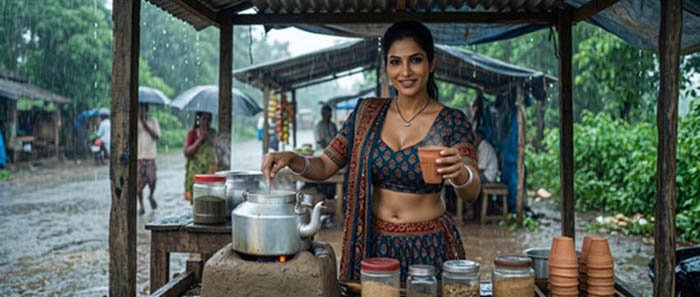
Last night Malini jolted suddenly from bed and stepped forward to open the door at the call of her father. It was pitch dark – nothing was visible. Her eyes tried to search but nobody was seen. Oh no, it was just a dream; how could her father come here to call when he was no more? A fatal road accident ended his life. She gently patted her head from behind for her goofy attempt to open the door at the dead of night - closing the door she lighted her small room and saw it was 02.30 A.M. Gosh! She never got up at this hour of night, but for a dream only.
Throat perched, she advanced to sip a gulp of water from the earthen pitcher kept in the corner of her small room and then lied down on her bed - but sleep did not restore. The more she tried to close her eyes, the more her eye lids drifted apart. At once, glimpses of golden moments with her loving father flashed before her mind. Lying on the bed she remembered how he used to say, “Baby, I shall work, day and night to provide all that is necessary for you to fulfil your ambition.”
Malini lost her mother at a very young age, but her father always tried to fill the gap of mother’s love and for that matter he didn’t like to go for second marriage like other widowers in the society. He was feeling uncomfortable when neighbours and friends repeatedly persuaded him to marry for taking care of his young daughter. He used to tell them, “Don’t tell me about second marriage again. My baby is my life; I can’t see her ill-treated by other woman coming in my life. No body can replace her mother.” Such was the love and affection he had for her. What a great sacrifice he did for her! Malini thought and thought and resolved doing something in life that would uphold her father’s image. But how? She has no house of her own, no job to earn her living. How could she think of fetching miracles when her very survival is at stake? More so, she had no grandparents both maternal and paternal who could give her a shelter.
Thinking heaven and hell she went on changing sides to redeem her sleep. Soon her thoughts rolled down to her college days when her batchmates, Rina and Gita used to tease her saying – “Malini, you are not only talented but exquisitely beautiful also – why only the doctors or engineers, the I.A.S. and I.P.S. officers shall stand in queue to ask for your hand.” Instantly her another friend, Rita interrupted – “Bakwas! What rubbish you talk - I.A.S. or I.P.S. – does her hero, Suresh allow anybody to enter the race?”
She remembered how she blushed then and shut their mouth bubbling with pseudo anger. All those bygone days appeared to her a nightmare. Indeed, she was a very good student, meritorious and studious securing always high ranks. She also heard her batchmates and seniors saying that she was more beautiful than all other women students in the whole college. Of course, for her career building, indeed she fanned her ambition of becoming an I.A.S. officer in future so that she would have administrative power to foster welfare to poor and downtrodden seeking help for a decent living by running from pillar to post but return disappointed.
Yes, it was a fact that she liked Suresh, her batchmate a brilliant student and topper in the class. He is tall, handsome and a lovable human being who always stood by her and found solutions for her problems. He also encouraged her to prepare for UPSC just after the final examination. She remembered how one day she rebuked him for a small matter and how he took it sportively. He is really a good guy. She loved him very much – ‘O’ no, what nonsense she is thinking; it is unfair to think of him like this. She wished all his lofty ambitions come true. But surprisingly just after the final examination, he disappeared and she could not keep a track of him. No matter, wherever he is, let him rise and prosper in life.
Next moment her thoughts took a serious turn. The horrible scenes of her father’s dreadful accident occupied her mind, she started sobbing. Tears rolled down unrestrained. A few days after her final examination of degree course, her fate cast a cruel glance at her washing out all her wishes, ambitions together with her safety and security. She was reduced to a helpless lone young woman when her father while returning from office by motor bike, was badly hit by a speeding lorry crushing him to death on the spot. She couldn’t bear to see that horrible scene when her father’s dead body fully distorted was lying in a pool of blood on the street before police took custody of the body for investigation.
Scenes of those fateful days flashed before her – how some people might be the neighbours, staff of the company where her father was working gathered around and expressed grief and condolence. Some of them showing sympathy assured her of help of any kind whenever needed but at that moment she had no mind to listen to them except crying for her loving father. As per custom, death rites were completed; friends, relatives, her father’s office colleagues, neighbours attended, mourned and by making promises for help disappeared. She thought to herself perhaps this is the reality of life that she has to face.
Reels of past went on in her mind - a time came when she felt so deserted that she was out of wit thinking what to do. She tried to search Suresh, her best friend in the college frantically to seek his help. But in vain. She couldn’t find a trace of him anywhere. After a few days, she received a notice from the company where her father was working to vacate the house provided to them for stay. Where to go? She approached her father’s friends and relatives who made tall promises after his death and at the time of performance of his death rites to stand by her in bad days. But no one came forward to her rescue. Though all of them expressed sympathy and concern but ingenuously cut their way narrating several concocted stories of their problems as if heaven has fallen upon them at a time. For a moment she thought, is this the real character of people who neatly portray the role of well-wishers and sympathisers by putting on the masks of kind-hearted good human beings? Next moment she consoled herself thinking that they are also the creation of God. Only God can pull her out. Being utterly clueless she surrendered unto her revered deity, Lord Ganesh and raised her hands for His divine bliss.
Soon a proverb hit her mind - why not cut her coat according to the cloth. She then counted the balance amount of money left with her after meeting all expenses of death rites and found that only a sum of rupees five thousand and odd was available with her. She thought until she finds a regular source of income, it will be suicidal to take a house of her choice at a high rent. So, she preferred to take a small cottage at nominal rent in a slum nearby where labourers, masons, carpenters etc. made a temporary residential colony and shifted there. Thus, this small cottage has become her present abode from where she has to rise to face the brazen realities of the world to struggle for her living with dignity. Thank God, the lady who provided her the cottage for stay at nominal rent is an exceedingly kind and considerate human who heard her sorrowful plight patiently and assured her staying there as long as she is not financially stable to find a good house. Voluntarily she also extended all the help required to start a new life. With all these thoughts when slumber overpowered her, she didn’t know.
x x x x
Two months elapsed since Malini shifted to the labour colony. During this period, she moved out every day in quest of a job but returned empty handed. Meanwhile the result of her final exam was declared. She passed B. Sc. Chemistry (Hons), with distinction. She rushed to the college and collected provisional certificate and mark sheet. She thought, she had now a degree certificate in hand that might help her getting a job.
Momentarily she was delighted with her incredible success in the final exam.; next moment she was dismayed thinking of her condition. She thought perhaps all her ambitions seemed farfetched then. She thought how can a helpless, homeless and parentless young woman like her be victimised for no fault in the realm of Almighty? No, she can’t sit by simply counting her bad days but she has to rise and fight for her dignified existence with fortitude despite all hurdles and all limitations. She started her job hunting and applied to different companies picking ads from employment news. But the journey for her was not that easy as she thought of. Her candidature was rejected by the companies for which she attended the interviews on frivolous grounds like no experience or no reference despite her brilliant academic record. She wanted to try her luck with bank service, but no Bank made any advertisement for vacancy either clerical or probationary officers at that time.
Nervousness for her survival soared high when she found that the balance of money she had, was depleting fast. Out of frustration, one day she discussed her problems with her land lady. The wise lady having heard her problems said, “Malini Beta, you are educated. When you couldn’t find a job to your standard, what an illiterate woman like me living on selling her labour can tell you other than suggesting you to go for a business. If you don’t mind, for the time being you may open a tea stall here, so that you may earn something with least investment for your maintenance and simultaneously you may continue your search for a suitable job.”
Malini thought, when all doors are closed, God opens another door for existence. Who knows, the tea stall might be the door to open for a brighter future. She said, “Aunty, good suggestion but I have no idea of running a shop?
Land Lady, “Don’t worry beta, I shall help you how to do.”
Malini thought for a while and said, “Aunty I am ready, kindly help me to open the stall.”
The land lady was happy and arranged required utensils and furniture for the stall and informed all colony people to cooperate and take tea from Malini’s tea stall daily. She had a good command in the colony; so, most of the residents obliged.
Her cottage was beside the main road of the colony. It was an easy approach to passersby for taking a cup of tea there. On the day of opening the stall, Malini placed the photo of her revered God, Ganesh and a photo of her late father in a corner and prayed, “O my revered God and my dearest Papa, I am going to start a tea stall only for my survival. Do bless me. Papa, your loving baby shall continue her effort to rise from here; bless me for my smooth journey.”
x x x x x
Malini’s tea stall, by virtue of her good demeanour and amiable dealings, gained strength by influx of large number of customers both in the morning and afternoon, Malini engaged one unmarried girl of the colony as per advice of her land lady to help her on daily wage basis so that she could find some time to prepare for UPSC prelim. for the current year nevertheless, she was aware that it was an impossible task for her to compete for UPSC without the support of requisite study material and coaching from a reputed Institute. Even then she ventured doing so for gaining some knowledge and experience so that she could develop herself. She collected some study materials and started her preparation; every day she also made her time to visit the nearest library to update her studies. However, never did she forget to pray to her revered God, Lord Ganesh and pay homage to her father.
By degrees, she became popular in the labour colony. Message passed on that an educated lady has started running a tea stall in their colony. Her land lady spoke so high of her among the men and women in the colony that everyone started respecting her and supported her struggle.
Fortune favours the brave. One day an unexpected incident took place. As usual Malini opened her shop at 6 A.M. on that Sunday when a luxury car came and halted a little away from her tea stall. Mailini just cast a glance at the newcomer and saw a tall young man coming out of the car, asked a man standing beside the road about something not audible to her. Malini thought, perhaps the gentleman has come to the colony for some work but the man whom he asked led the gentleman towards her tea stall. She then stayed busy with the customers waiting for a cup of tea each.
As the gentleman came near her stall and looked at Malini who was busy in preparing tea for customers gathered around her, he exclaimed “Hey Malini, you are here?”
Malini looked at the gentleman by raising her head from tea kettle and saw that he was none other than her intimate batchmate, Suresh, she exclaimed with joy, “Arey Suresh! I can’t believe seeing you here. I thought some business tycoon has come with a luxury car in search of labourers. But you, how?”
“Malini, leave it; now tell me - why are you here in this labour colony? What happened to your study? How is uncle? Why are you doing this thing?” At a stretch Suresh loaded her with a volley of questions.
Malini – “Suresh, why talk of this unlucky poor girl; situation has made me to be faded into obscurity. Forget about me, now tell me something about you. You disappeared just after our final exam and today you are in a distinctive look. Tell me what you are now and the purpose of your coming here?”
Suresh – “After our final exam, we shifted to Delhi as my father was transferred there. Then after passing out, I joined PG in a reputed college in Delhi, simultaneously prepared for UPSC in a coaching centre. In my first attempt I was selected and became an I.A.S. officer. Now posted as Dy. Collector here in this city. As regarding you, never say that you are lost or neglected. At least I have not but for my busy schedule for preparation for UPSC I could not keep a track for which I am sorry.”
Malini – “Congratulation Suresh! I knew very well that you have the talent and extraordinary calibre to strike UPSC in your first attempt. I am glad to know that you are posted here. Suresh, you know what we thought of one day in the college? If we become administrative officers, we will pay our full attention to uplift the condition of poor and helpless people. Now you are in power never forget to do something good for the poor. Don’t feel sorry. Truly I am proud of your endeavour for accomplishing your ambition.”
“That is right; but Malini, tell me first what made you to land here?” asked Suresh with a lot of concern in his tone.
Malini – “Suresh, perhaps my fate did not favour me to achieve my target as aspired in college. One after the other horrendous mishaps came upon me in quick succession to shatter my dreams, my confidence and my ability to stand alone. But I am not runout fully despite all mishaps.” Then Malini narrated all that had happened in her family soon after the final examination of degree course and how she ended up running a tea stall here.
Suresh was stunned to hear Malini’s pitiable condition. He said, “My goodness! What a nerve eating suffering you had! Why didn’t you inform me about this?”
Malini said, “You know I have no mother. When I lost my only support, my father I was at my wit’s end. Yes, being undone I tried to search your whereabouts but in vain. Being tortured by the cruel spell of my destiny, I was compelled to compromise with this condition; so, I am reduced to tea seller for the time being as a means of living. But I have not forgotten my ambition and to pursue the same I am diverting some time daily for preparations for ensuing prelim of UPSC though I know it is a wild attempt without the support of relevant study materials and appropriate coaching. Anyway leave it; why I am telling all these things to you; now tell me how you do with your present assignment and what for you have come here:”
Suresh – “Malini, I can’t see a brilliant student like you rot under the heavy weights of poverty and helplessness. I shall be ashamed of calling your friend if I leave you like this having come to know of all details. Wait, I shall do something, if you agree to accept and cooperate.”
By that time a good number of people both male and female had assembled near her tea stall, and all were listening to the conversations between them with keen attention. Some of them started whispering among themselves that their Malini Didi is the friend of Collector Saheb. Malini’s land lady also joined them and said to others that her Bitiya is not an ordinary woman like us. One day she will also sign like her friend; just wait and see.
Then Malini said, – “Don’t worry Suresh, I have to fight with my sufferings and that might be the carried over effects of my bad deeds done in previous life. I do not like to share my misery with anybody; let me struggle and employ my effort and perseverance to stand up in life. You should not spoil your valuable time for me. Now tell me what for you have come here?”
“What nonsense do you talk? Do you mean to say that I shall leave my dearest friend suffer like this? Shame on me being the Dy. Collector. I know, you are a self-esteemed independent lady who never depended on anybody. But that doesn’t mean that your friend has no right to fulfil his obligation. Do you know how I have engaged my messengers to look for you after I joined here? But none could trace your whereabouts. I was disappointed; but God favoured me to locate you here. How can I leave you like this now? For your information, – I came here to contact some masons and labourers for construction of my house.”
Malini, “Very fine. Your building will be constructed by most competent and efficient masons available here.”
Looking at the gathering in front of her tea stall, she said, “Ramu Kaka, ask Hari to engage his team to start doing the construction work of Dy. Collector Saheb with due attention and care.” She ordered as if she was the leader of a large gang of workers. She also said to her land lady, “Aunty kindly do this favour for my friend so that his building is constructed in time.”
The land lady came forward to say, “Saheb, you just give us your address, rest will be our responsibility. When our Bitiya is your friend, you need not worry about it.”
Then Malini told Suresh – “Rest assured that your building will be constructed as per the approved plan and according to your wish within your expected time. At least I am here to keep track.”
Suresh did not utter a word, thanking her, he left with a simple smile on his face. On the way home, he thought Malini has the calibre to fit into any circumstance and excel in the job she undertakes. He has to do something special for her before her talent and knowledge lay suppressed under the loads of misery.
As Suresh’s car sped away, the colony people coming near her tea stall, clapped their hands and some elders said, “Malini Beta! Who says that you are unlucky and helpless. God has sent his messenger in the form of your friend to stand by you and might be for all of us. Now you march forward as Dy. Collector Saheb has suggested. We all are behind you. Don’t worry.” Talking high of Malini among themselves, all left for their work.
Next day Suresh came to her tea stall again unexpectedly and asked his driver to bring all the study materials for UPSC from the car. He then handed over those books and notes to Malini. He asked her to sign on the form for admission in the premier coaching centre for UPSC.
Maini could not believe that Suresh has done all this thing for her in a day. She had no words to thank him but said, “Suresh I don’t have money to pay the fees of the coaching centre and at the same time if I go daily for the class how do I earn my living?”
Suresh - “You need not worry about that. Fees for the whole session has been deposited. For running your stall, you may ask your present help working with you. Let me see what other Govt. facilities available to support you and other residents of this colony. Now you just devote yourself fully for preparation.”
Malini said with a bit of hesitation, “What Suresh, why are you doing all this for me?”
Suresh at once pounced upon, “How do you forget what you once told me when I was fully broken for my failure in a project? Just recollect, at that tough time you said to me – ‘honest effort with noble intent never goes fruitless; its effect is timeless and it comes at appropriate time; just like a good investment always begets good dividends. So, take it as my investment in you; at appropriate time I shall realise everything with interest; don’t worry about that.”
Malini was speechless. What a drowning person could do except catching at a straw. She meekly accepted what Suresh asked her to do and continued.
But Suresh did not stop there. He could visualise if Malini devoted her full time in studies how can she earn her livelihood? He knew Malini is a very sensitive, self-conscious and self-esteemed lady. She won’t accept any material help from anybody. So, he directed concerned departments to provide all Govt. benefits allowed to people of lower income group and homeless persons dwelling in slum areas. He asked departmental heads to make a camp in the colony where Malini stayed to conduct survey and enrol the members eligible for different benefits allowed by the Govt. Next day a team of departmental officials came to that labour colony and after due inquiry took signatures from all eligible persons of the colony including Malini on different forms for supply of free ration, allotment of flat under Prime Minister’s free housing scheme for slum dwellers, allowances for widows and physically handicapped persons and for unemployment allowances.
Lo, just within a week Malini’s condition along with many others of the colony improved miraculously. They received free rations from Govt. ration shop, unemployment allowance for eligible youths, allowance for widows and allotment orders for each eligible persons in the apartment built for the housing of slum dwellers. Now entire colony people were happy, and they virtually held Malini with high regard. They all assembled near her tea stall and said in one voice, we all are so obliged to you that only for you our condition improved. May God bless you to achieve your goal. On seeing the contentment and joy of colony people tears of joy welled up in her eyes. She thanked Suresh, bowed down before Lord Ganesh and her father’s photo with tears. She contacted Suresh in her mobile and thanking him profusely, invited him for a cup of tea. He too nodded affirmatively.
That was a Sunday. Suresh cancelled his all-other programmes and decided to call at the tea stall of Malini. From his college days he had developed some weakness for her. He felt as if an unspoken love for her is ingrained in him, but he lacked courage to express it before her. He thought, today he will open his heart before her with full confidence and perhaps she won’t disappoint him. Soon he thought no no, it would be premature to express his love subdued for years so suddenly particularly at a time when she needed help to rise. What would happen if she took it otherwise and declined accepting his help for preparation for UPSC? All his efforts, all his dreams shall be evaporated in the twinkling of an eye. He should not take this hasty step to disturb her mental stability and divert her attention from studies to thinking unnecessarily about his exposition of love to her. He was getting restless thinking of all these angles and frequently looked at his watch to call at her stall at 5 P. M. when the rush of customers would have receded.
Malini, as usual, was busy with her tea stall which has now been enlarged to a small tiffin centre where she has engaged a cook also to prepare snacks and dinner on order. Since it was Sunday, the customers were not much. Malini entrusting the work to the helper, engaged herself in her studies sitting on a stool lying in the stall. Exactly at 5 P. M. Suresh arrived. Malini was surprised to see him suddenly without information. Closing her books she advanced to welcome him.
“Welcome Suresh to a poor woman’s shop.”
Without any formality Suresh came in and sat down on a stool and said, “Malini - I am just your friend Suresh, not the Dy collector of the district visiting you. Please come out of all inhibitions and give me a cup of tea.”
“Oh sure” Swiftly Malini came to her form and started preparing the tea.
Offering him the cup Malini said with full gratitude in her eyes “Suresh, you have given me everything before I ask for them. Why? Is it out of compassion for an unfortunate woman rolling in the dust or out of pity for a helpless old friend?”
Supressing his emotion Suresh said, “Not at all. If you treat me as an outsider, I shall leave just now. Malini, I can’t see you suffer like this. Once a brilliant student showing extraordinary results, can’t waste her talent like this. If you take me as your close friend, do what I say.”
“But why” asked Malini.
“Because I am your intimate friend and I can’t be happy seeing you suffer like this. You have to rise to prove your worth. Society looks for your service. Now it is up to you how you apply your resources and talent.”
Controlling her emotion Malini said, “Suresh don’t make me indebted to you further? I have no words to thank you for your approach to economic development of the slum dwellers. These poor people have nothing to offer except praying to God for your wellbeing and prosperity. Your benevolence shall never go unnoticed in the domain of Omniscient.”
Suresh – “Nothing more. Now it is time for you to focus on your studies. Never hesitate to call me at any time for any problem.”
Suresh took leave of her and came back home. On the way he thought, “Thank God, I didn’t express my intent with which I went to her place. I have done the right thing. It is not the right time to open my heart before her. I must wait for her success. Once she comes to a dignified position with her success in UPSC, she might consider my proposal if I express my love then. Let me now work for her success and wait for it.” Suresh drove fast to reach home.
x x x x x
Malini was no longer a simple tea vendor. She has returned to her original form – fully resolute and given to study, attending coaching class and library. In between she never forgot to be in touch with Suresh for guidance. Date for prelim exam was notified, and Malini employed her full effort in making thorough preparation.
Prelim exam was over. Malini was satisfied with her answers and waited for the result. One day at about 11 A.M. when She was transacting with customers in the stall, suddenly her mobile rang. She eagerly picked up and the caller was none other than Suresh.
“Congratulation Malini! You have cleared Prelim. I knew that you could do it. Now engage fully in preparation for main to take place just after a month. For any support and any assistance never forget to contact me without bothering a bit where I am and what I have been doing. Okay. Now goodbye. Take care.” With this Suresh disconnected the line.
Malini’s joy knew no bound. Out of ecstasy of joy, she bowed down before her revered deity, Lord Ganesh and photo of her father and paid obeisance. Then she ran to her land lady’s house to convey the news since she had none so close beside her to share her happiness except the land lady who stood by her in bad days. On seeing Malini, the land lady anxiously came out and asked “Any problem Beti?”
Malini embraced her and said Aunty I have passed the examination.”
Highly delighted land lady said, “Tu zaroor kuchh banogi”(Definitely you will become something.
Malini – “I have nobody in this world to share my wills and owes except you and my friend Suresh. I thought my first success is your right; so I came to inform you first.”
Land lady – “Never feel alone Beta. I shall always be there with you. Whatever you want, tell me; I shall try to fulfil.”
After Malini left for her tea stall, the land lady made a wide propaganda of Malini’s success. The news spread like wildfire and within minutes the colony people both men and women assembled near Malini’s cottage and showered flowers on her and sang songs for her success in a tough examination being a slum dweller. Overwhelmed with joy, Malini thanked them all.
x x x x
Meanwhile a lot of change came in Malini’s life. She got an allotment of residential flat from the state Govt. and shifted to her new abode. Along with her many others in the colony who too got the allotment of flats, shifted to their respective flats. She handed over the tea stall to her land lady and then she devoted fully to her preparation for the main. She was regular in attending coaching class and Library and spent about ten hours daily in her studies. Date of main exam. was declared. With full confidence she appeared. Suresh was keeping track of her progress regularly. On the day of exam. he took her in his car to the examination center and wishing her best of luck, asked her to call back just after the close so that he would come to pick up.
Anxiety of Malini for the result of main was growing to overpower her. She felt as if days are going longer for her. Suddenly one day Suresh came with a flower bouquet and a packet of sweets to the flat of Malini to surprise her for her success in main. Blinded with joy she caught both hands of Suresh and expressed her gratitude saying “My dear Suresh, this success is not mine but fully yours. Without your help nothing could have been possible for me. I am obliged.”
Suresh asked with a naughty smile – “Who appeared in the exam? You or me? It is your whole-hearted perseverance, and dedication that made this a day. Now get ready for the interview. I am sure, you will come out with flying colours.”
Very soon Malini received the call letter for interview. Instantly She contacted Suresh and informed. After two hours Suresh called back and told her to contact coaching centre for joining a mock interview session.
On the scheduled date of interview, Malini dressed in a pale-yellow sari with least make up called at the interview centre. A sizeable number of candidates assembled in the hall, waiting for their turn to get into the Board. After six candidates, Malini was called in. With full confidence yet with a bit of anxiety she entered the boardroom and bowing down she said “Good morning, Sirs” and stood there.
The chairman of the board sitting in the middle of the panel of interviewers said, gently, “Sit down miss Malini.”
Malini - saying thank you sir, occupied the chair lying just in front of the Chairman.
Chairman – “Ms Malini, Tell us something about you and your preparation for UPSC.”
Malini – “Sir, I lost all hope of pursuing my further studies after B.Sc. final when my father died from a fatal road accident. At that stage I thought, as if my future was doomed totally as I had none of my own to support my living. Although some people may be neighbours, friends and office colleagues of my late father joining his funeral and death rites, expressed grief and condolence and consoled me with help but their shallow assurances faded away with time when I, humbly and fervently begged them for help. Sir, everything appeared gloom before me. Being homeless and helpless, I wandered Helter skelter for a job for earning a loaf of bread.”
“Then”- another member of the board asked.
Malini narrated the whole story how she landed in a slum where daily wage earners made a colony and how she, a young naïve woman, was led to open a tea stall for her survival when her appeal for a job for earning was declined from all corners on flimsy grounds. God is great. One day unexpectedly her best friend Suresh, a collegemate who by then had become an I.A.S. officer and posted as Dy. Collector in the same town where she lived spotted her in that labour colony and helped her to rise.
Chairman – “How about your preparation then?”
Malini – “My friend Suresh arranged everything for me right from study materials to coaching. If I am here today, it is only for his kind help, sir.”
Then all other members in the board asked questions to assess her basic knowledge of constitution of India, politics, science, literature, linkage between Government and public and current affairs. Calmly and cooly she replied all questions with full confidence in her eyes and expression. Finally, the Chairman asked – “Ms Malini, what is your vision as an administrator?”
Malini – “Sir! As I have learnt – world is a unique classroom and life is the teacher. The said teacher has planted in me the crude experiences of the mundane realities to contemplate the vision of building a nation where people would be guaranteed peaceful coexistence with equal right and opportunities. In a democratic country when Govt. is of the people, for the people and by the people; then why disparity everywhere? – Rich growing richer and poor going poorer day by day. Perhaps this state of affair might be the resultant effect of failure of administration in effective implementation of lofty Govt. schemes launched for holistic development of a nation ensuring equal opportunity for all citizens. My first action, if I am given the responsibility of administration, would be to identify the gaps and loopholes and plug them for all time to come by enforcing strict discipline and ensuring effective channelisation of benefits of Govt. schemes to reach the tail-end unimpeded and unaltered.
“Then I would work upon my next vision to reform education system whereby a child studying in a village Gov. school can acquire the same standard of education like private institutions in towns and cities where children of common men have no entry owing to financial incapacitation of their parents. A slum dweller or even a person of low-income group like my late father does not repent for admitting his ward in a Govt. school where the standard of teaching and opportunities are limited for career progression. Secondly, I shall work upon combining vocational training with the curriculum to build students to gain self-confidence to stand on their own without solely looking for jobs.
“My vision is also to bring about massive reform in health sector where people have lost confidence in Govt. hospitals and Primary health centres for improper treatment.
“I have also a vision for expediting women empowerment and ensuring safety and security of women in a society. These are my visions sir apart from maintaining law and order.”
Another member asked- “Do you mean to say that the present pattern of administration is inadequate?”
Malini – “No sir, I don’t mean that, I just wanted to enforce discipline in all sectors ensuring unbridled flow of Govt. facilities to have-nots with zero tolerance of corruption and leakage of funds. Had it been so, the residents of slum from where I come, had not been suffering for decades being ignorant of welfare programmes of Govt., Sir. For instance, had my friend, an I.A.S. officer not come to spot me in a slum and seen in his own eyes the pitiable condition of slum dwellers who are unaware of what the Govt. has been doing for their upliftment and simply remained content with the cooked reports prepared by his office under the influence and pressure of politicians and heavy weights, he couldn’t have changed the lives of the people living there and I couldn’t have been able to appear before you sir.”
Chairman – “Can you translate your visions into action?”
Malini – “Right question sir. It is not that easy as I stated. I am sure, many administrative officers must have also thought like me in the beginning of their career but they might not have been successful in converting their plan of things to reality, most probably owing to undue influence of haves, strongmen of the villages and pressure of political leaders including the elected bodies to act as per their wishes when they find their interest, consequent upon implementation of the Govt. scheme is impaired and their hold on public is weakened. I know these bottlenecks would obviously be there and they would pose a big challenge for me to face and come out successful, but I shall not deviate from my aim and continue to harp on dissipating the tussle and endeavour to neutralize the differences by joining the gap for smooth passage of Govt, benefits to reach the deserved.”
Chairman – “Thank you.”
Thanking the board Malini came out of the room.
After she left, the members including the Chairman of the board had a brief discussion on her unambiguous deliberations and confidence in her reply and her rise from rags with unshattered determination to reach the target and all of them were unanimous in selecting her with high score.
Malini while returning home with Suresh, reported every detail to him. Suresh reacted, “Malini you shouldn’t have said so much about my small help. After all it was my duty, not a favour.”
About a month and half after the interview, the result was published. On that day both Suresh and she together searched her roll number in the list of successful candidates and to their utter surprise, they found Malini’s all India Rank was at 17. She burst into tears and Suresh consoled her saying – “O my brave lady! You have done miracle which I couldn’t. Rather I should regret as my rank was 138. Let us celebrate now.”
Malini was overwhelmed with joy and tears of delight rolled down her cheeks incessantly. She paid her homage to Lord Ganesh and then to her father. Out of emotion she said, “My dear Papa, your baby has done it. Bless me for my future.”
Her voice was choked, she became emotional and said, “Suresh, this success is yours only; I am fully obliged to you; I don’t know how could I repay you? This life will be small for me to pay back.”
Suresh cooly said, “Do you remember what I told you once when you said to me why I was doing so much for your study? If you remember correctly, I told you then, I shall recover everything with interest at appropriate time and now the time has come for me.”
Anxiously Malini asked, “What can I do for you, tell me I am ready.”
Suresh – “Wait for a day, you will know everything; now celebrate and enjoy.”
Suresh dropped her in her flat and left for office.
Malini’s success spread to all fabrics of her present and previous colony in no time and in the evening, people gathered as if a big fair and all congratulated her. They started singing, dancing by beating drums out of joy.
But Malini was restless thinking of what Suresh wanted her to do tomorrow? That night was a long journey for her. She couldn’t get sleep despite her enviable success simply thinking of what Suresh meant to say.
Next day morning Malini unlike other days got up late and hurried to finish her morning duties. Hang over effects of last night’s thoughts were tormenting her. However, without wasting time in churning the words of Suresh, she got ready and waited for him to come. As that was a Sunday, Malini thought he may come at any moment and waited for his arrival eagerly.
At 11 A.M. her door was knocked; when she opened, she was astonished to see Suresh with his parents standing near her door with flower bouquet and a packet in hand. Bowing down she touched the feet of his father and mother and welcomed them to come in. In her one BHK flat she had no more furniture except a chair and a stool, she was fumbled to find a place to offer them to sit. Suresh’s Father was aware of everything and putting his right palm on her head he said, “Don’t worry beta we will manage with this chair and the stool. After praising her success, Suresh’s mother said, “Beta, we have come here with a big hope; do not disappoint us.”
Malini was at a loss to read what she meant by saying so. Most humbly she said – “Aunty, just put orders, I am at your service. Suresh has changed my life. What I am today it is for him only.”
Suresh’s father said, “Beta, now you have no time to spare for us as you have to proceed to LBS Academy of Administration at Mussoorie for training; so we thought this is the right time to tell you about our wishes to know your mind. Suresh has told us everything about you that how you are alone in this world and how you have struggled to rise. Beta if you don’t take it otherwise, may we ask your hand for our son Suresh. Beta do not think that we are trying to take undue advantage of what Suresh has done for you, but we are really interested to ask your hand for him - if you agree to it. Suresh wanted to convey his wishes to you, but he preferred to make it through us only.”
Malini was spell bound. She blushed and hid her face in the lap of Suresh’s mother. His mother out of love and affection caressed her hairs putting her hand on Malini’s head and took her for a tight hug and kissed her head.
In the meantime, Suresh arranged four plates of sweets brought by him and served to his father, mother and Malini. He said, “Malini – now your debt is fully repaid, and my investment has earned rich dividend. Trust you won’t repeat saying my favour and your gratitude again. Everything is squared off now. From tomorrow make your preparation for a full year’s sojourn. Okay.”
Touching the feet of Suresh’s father and mother, Malini took their blessings and they left. Malini then stood before the photo of her father and said with tears in her eyes - “Had you been there, Papa to see how your baby, a tea seller finally struck the stiffest test of UPSC and became an I. A. S. officer; simultaneously how her marriage with her best friend Suresh was fixed. I miss you, Papa. Bless me from On High.”
Moral:
(The Devnagri script of above sloka learnt in school is copied from net.)
The Sanskrit verse means: - Prosperity which is put here as Goddess Laksmi, comes to a person who is industrious and courageous like a lion. Weak and cowards say that the destiny is supreme. Disregarding such dependence on fate, one should exert oneself to the best of one’s ability. If, even after making best possible effort, the desired result is not achieved, where is the fault?
Bankim Chandra Tola, a retired Banker likes to pass time in travelling, gardening and writing small articles like the one posted here. He is not a writer or poet yet he hangs on with his pursuit of writing small miscellaneous articles for disseminating positive thoughts for better living and love for humanity. Best of luck.
ON THE DAY OF RAKHI PURNIMA
Sreechandra Banerjee
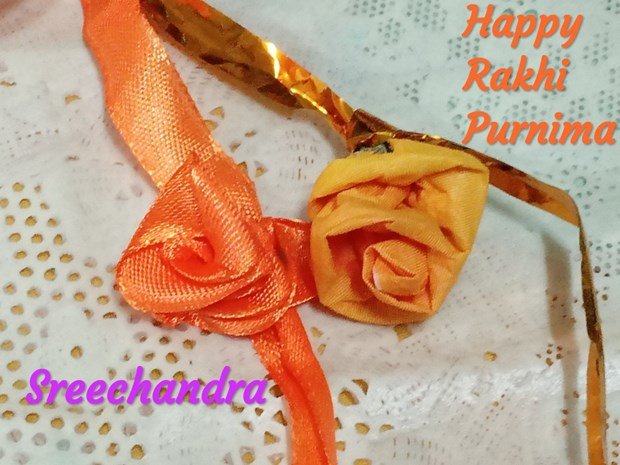
Heard that she is also on the audition board!
A distinguished danseuse now, wonder whether she will recognize me after so many years.
Today is the auspicious day of Rakhi Purnima and I have my audition. I will have to play the role of a dance teacher in a proposed TV serial “Dance Shyama dance”.
I still remember that day!
That was also on this day of Rakhi Purnima. How happy she was when I tied a Rakhi on her slender right-hand wrist.
“What are you doing? Tying a Rakhi? But I have not brought anything for you,” she said.
It was so many years ago, almost ten years now. We went to the same dance school ‘Rhythms beyond Reason’. She was one year my senior and her Diploma exams were nearing.
That day, I was passing through the corridor and saw that she was almost on the verge of falling down. I rushed to help her.
She was probably unmindful and had not taken off her musical ankle bells or ‘ghungroo’ before coming out of the classroom.
One of the bells of the ankle bells was broken, fastener of the ankle bells seemed to be coming out too. Probably these were hurting and she was about to trip.
“Thank you so very much, in which class are you in?” she said.
I told her and asked her name.
“Nrityasree Mitra is my name, but people everywhere call me Nitu in short,” was her reply, “and you, what’s your name?”
“Mridangam Rao”, I said,” “You are my senior, so shall I call you Nrityasree-di?”
“Oh, you needn’t add ‘di’ after, Nrityasree or even Nitu would do” she said, “may be in dance school I am senior, but may not be age wise!”
And we became friends. We discussed so many matters but mostly related to dance. She wanted to specialize in Odissi Dance while I wished to take up Kathak. She also wanted to take some of the Western Dance classes at our dancing school as becoming a dance choreographer and dance-director of TV serials was her dream too.
…and then came the day of Rakhi Purnima, the auspicious full moon day of the month of Sawan or Shravan.
I decided to tie ‘Rakhi’s or protection bands on wrists of all friends. After all, Rakhi comes from the word “Raksha” which means protection. Protection bands are needed for all.
“You know that many believe that only women tie Rakhis around brothers’ wrists. Good, that you cared to tie a Rakhi on my hand too, Rakhis should be meant for everyone,” she said, her radiant face looking beautiful.
May this Rakhi give her protection, I prayed.
“Yes, it is a very unfair belief that Rakhis should be worn by men only,” I couldn’t remove my eyes from her. Seeing her from such a close distance was unbelievable!
“Apart from various legends like Draupadi tying Rakhi on Krishna, etc., there is a folklore that in 326 BC, during the Battle of Hydaspes River, wife Roxana (Roshanak) of Alexander the Great was worried about her husband’s life because of King Porus or King Puru’s menacing military power.
Hydaspes River is Jhelum River located in Punjab region, you know. King Puru was then the king of the region between River Jhelum and River Chenab.
So, Queen Roxana sent a sacred thread to King Puru who accepted her as his sister and wore it on his wrist.
In the battle that followed, King Puru was about to kill King Alexander, but when he noticed the sacred thread on King Puru’s wrist and remembered his promise to his sister, King Puru refrained himself from killing Alexander.
Thus, the concept of tying a Rakhi or sacred thread on a brother’s wrist for his protection, you know,” I was eager to tell her the legendary tale behind.
“That’s interesting, but I heard there are contradictions to this tale too?” she asked.
“Yes, but whatever contradictions, the fact remains that King Alexander was not killed. The military contradictions are that Alexander won the battle by using a clandestine river-crossing strategy. But Alexander was impressed by Puru’s bravery and so Alexander reinstated Puru as a governor. Thus, Puru’s territory actually expanded,” I continued.
“Tying of Rakhis has another significance, you know?” she asked.
“Is it something to do with partition of Bengal and Rabindranath Tagore’s protest to it in 1905?” I started remembering what my Bengali mother used to say when I was a child. My father hailed from the South and had settled here along with his parents when my grandfather was transferred to Calcutta.
“Yes, the then undivided Bengal Presidency under British Rule comprised Odisha, Bihar, present-day West Bengal, Bangladesh, and parts of present-day Jharkhand and Tripura.
It was on 19th July 1905, that the then Viceroy of India, Lord Curzon announced that Bengal would be divided! This order would be implemented on 16th October 1905.
Rabindranath Tagore declared this day (16th October 1905) as the ‘Day of National Mourning’ to protest against this partition.
To celebrate the bond between all Bengalis and as a call for uniting all, irrespective of caste, creed and religion, Tagore decided to tie Rakhis on each other on this day. He composed a song for the occasion to glorify the soil and water of the ‘Bengal’ of those days.”
And on 16th October 1905, thousands thronged for the protest march along River Ganges. What a mass protest it was!” She seemed to become emotional.
Well, life continued likewise and she gradually became busy with her Diploma exams.
Didn’t see her after her Diploma exams. Heard that she had an accident.
And now, am waiting for my turn at the audition. I couldn’t but remember these conversations of those days.
.
Then it was my turn. I entered the hall with a palpitating heart. But the audition went on well. I was selected.
Shooting episodes started and we became friends again.
Then one day she said, “you know I had a severe accident”.
“Yes, yes, I had heard about it”, I wanted to know more though I tried not to show my concern in my voice.
“They were about to amputate this right hand because of severe tissue damage”, she continued. Her voice broke and she looked sad.
Then slowly her face started radiating again, “I slowly started recovering and amputation wasn’t necessary. After all , you had tied a Rakhi on my wrist , you remember?”
“of course I do, how can I forget!” I was quick to reply.
“Yes, probably it had provided me protection,” she said so softly that almost brought tears in my eyes.
Now, I couldn’t look at her and was trying in vain to control myself.
“Yes, Rakhis are not only symbols of bonding, but also are emblems of protection or ‘Raksha’, ”she said while wiping of tears from my cheeks.
She started crying too and then it was my turn to console her though they were tears of joy as that harrowing episode was over now.
Friends, this year (2026) Rakhi Purnima was on 27th August. Let me tie knots of e-friendship by greeting you with a poem.
Here we go:-
Greeting you all on Raksha Bandhan
May this friendship knot
Protect you always,
And bring you sunshine days!
As the Purnima full moon
ties a silver knot
on the evening sky,
I tie a floral knot
of FRIENDSHIP
on my e-pages
to continue our
golden bonding
of friendship
till eternity.
And here is my floral knot of friendship: -
This Rakhi I made with a fresh Balsam flower.
The Rakhis on top, I made with ribbons and paper.
Copyright Sreechandra Banerjee. All rights reserved. No part of this post can be reproduced by anyone.
Sreechandra Banerjee is a Chemical Engineer who has worked for many years on prestigious projects. She is also a writer and musician and has published a book titled “Tapestry of Stories” (Publisher “Writers’ Workshop). Many of her short stories, articles, travelogues, poems, etc. have been published by various newspapers and journals like Northern India Patrika (Allahabad), Times of India, etc. Sulekha.com has published one of her short stories (one of the awardees for the month of November 2007 of Sulekha-Penguin Blogprint Alliance Award) in the book: ‘Unwind: A Whirlwind of Writings’.
There are also technical publications (national and international) to her credit, some of which have fetched awards and were included in collector’s editions.
A mild whimper was enough to break the mid-night silence of the ICU. Grandma was in a hospital bed for the first time. That faint grunt was enough to awaken me, so I went to her side and asked whether the pain was unbearable and if she needed assistance from the night-duty nurse. In a barely audible voice she denied, complaining instead about the discomfort of lying on one side of the bed for so long. The surgery on her bedsores was preventing her from moving freely.
To the villagers of Manibandha, she was their dear, sweet "Grandma." She was the live wire of both our family and the entire village. Her days usually started long before the roosters crowed. Every morning, well before daybreak, her first task was to clean her heavy brass vessel (Gara). She would rub it with ash collected from previous day's wood-fired stove (chulha) from the kitchen mixed with coarse river sand and red soil, working until the vessel shone as bright as gold. Her sparkling vessel was the envy of the other village women when she led them to the bathing ghat of the Bhadra River, flowing by the side of the village half a mile away.
The procession of village women would end at the riverbank. After completing their morning chores, they would collect fresh water from hand-dug waterholes on the sandy bed of the river. The muddy, uneven pathway from river to the village was filled with sharp stones, rough pebbles and soaked with overflowing water and their sweat as they walked back home barefoot.
By the time the amber rays of the sun appeared in the eastern sky, Grandma—the true energy giver of our household—was ready to clean the hearth (chulah) with a fresh mix of cow dung and water to cook. They would carry water in vessels in one hand and a bucketful in other hand or a headload. Twice daily it was the responsibility of womenfolk of the village to carry water for household use. Grandma had been doing the same since her marriage to grandfather. These daily chores of village women continued until piped water and cooking gas made their presence in our village very recently.
Grandma had no rest until late into the night.
During evenings, back when Grandfather was alive, he would read Bhagabatam, squatting on the front veranda with the faint lights from a lantern placed nearby by grandma.
Grandma would stand at a distance with folded hands, leaning against the mud wall with her eyes closed, listening intently while occasionally rubbing her back against the wall to soothe her annoying sweat rashes.
Later, when my father moved the family into a pucca(brick and mortar) house, the painted walls were not to her liking. The chemical paint triggered her allergies and irritated her skin rather than soothing it. Eventually, Father had to leave a section of the veranda wall unpainted so that she could comfortably rub her back against it.
Now, this once-strong woman who had seen ninety springs was lying helpless in a hospital bed recovering from bedsore surgery. The thought made me emotional, and I gently caressed her wound, which gave her a moment of comfort.
Every day, as a matter of routine after day’s cooking was done, Grandma would douse the rising flames of the hearth (chullah) and on the burning charcoals; she would place vegetables or fish mixed with wet-grinded spices and a splash of oil, neatly wrapped in leaf plate or plantain leaf. Placed directly over the dying embers, the parcel would roast slowly. Grandma was famous throughout Manibandha for this local delicacy, known as patua. Village women frequently thronged our house just to learn the secret recipe for this mouthwatering dish. Even after aluminum foil became popular, Grandma always insisted on using plantain leaves. On special occasions, she shared it with neighbors as a warm gesture of goodwill.
Patua was a favorite dish of mine, as well as everyone else in our family across three generations. No major meal was complete without it. This continued until my mother took charge of the kitchen; she found the process too cumbersome and soon removed it from our menu.
Occasionally—much to Mother's disdain—Grandma would happily take charge of making the dish whenever Father (before he passed away a few years ago) or I insisted on having it.
Another passion of Grandma's was preparing Kajal (kohl) and forehead marks for newborns. Whenever a baby was born in the village, the family would fetch Kajal from Grandma well in advance to use as eyeliner and to put a tikka on the baby's forehead, to ward off any evil eye.
She prepared it with great care, collecting soot on a brass vessel turned upside down over a burning ghee lamp. However, following some incident unknown to me, she suddenly stopped making Kajal almost two decades ago, when I was just a ten-year-old boy.
A sudden whimper from Grandma brought me to my feet again. Straining through the pain, she tried to say something. I quickly called the nurse on duty, who came running, checked her vitals, and advised me to wait for the doctor, whom she had summoned urgently. I still held onto faith in Grandma's willpower and fighting spirit, unaware that she was entering her final hours.
When Grandma was younger and stronger, she defended her family tooth and nail. She never backed down whenever our neighbor Chachi, hurled abuses at us from across the boundary fence. Chachi would shower choicest abuses from her side of the barbed fence and Grandma would launch her own verbal ammunitions right back, as if two warriors of Mahabharata were unleashing Brahmastras to protect their pride and as a show of their valour. The two lionesses would quarrel to their hearts' content until they grew tired. Yet, by the very next day, they would be friendly again, realizing their follies and reconnecting emotionally.
The verbal duel was a regular routine affair that never bothered the rest of us. Father used to joke that it was their favorite pastime and part of their entertainment. It was in no way different from modern day military war drill/exercise.
When Grandma eventually moved out of the village into Papa's new apartment, Father joked that she would miss her frequent verbal duels with Chachi, as there were no barbed-wire fences between neighbours in apartments. After Chachi passed away and Grandma became weaker day by day due to advanced in age, Father often expressed a playful regret over the lost art of neighborly bickering, noting that there would be no one to carry forward this fine art form.
Upon arrival, the doctor examined Grandma and administered several life-saving injections. He warned us that the next twenty-four hours would be extremely critical. I immediately called all our family members and close relatives over phone to inform them about critical condition of her health. However, her health deteriorated rapidly, and with a final hiccup, everything ended. The doctor and ward nurse rushed back in, but after a brief examination, the doctor pronounced her dead.
A blanket of gloom descended upon us, and the entire village of Manibandha felt a deep sense of loss. The news of her passing was covered by local media.
The next morning, I received a phone call from a man named Mr Babu Patua Singh, who wished to visit our home to pay his respects. I could not recall anyone by that name among our relatives or acquaintances, but since he insisted, I agreed to let him come over right away.
A short while later, a Mercedes pulled up in front of our gate. A well-dressed gentleman stepped out, introduced himself as Mr Babu Patua Singh, and explained that he had once worked in our household as an errand boy before being thrown out of the house on charges of stealing. He later moved to the UK and launched a food startup featuring Patua (roasted leaf-wrapped curry) at his food stall. His chicken tikka and tuna fish Patua dishes were particularly massive hits among customers. The special dish of Patua helped him make a fortune and customers have lovingly added it to his name.
Having returned to India on vacation, he heard of the passing of the woman who taught him the art of making Patua and wanted to pay homage to the departed soul.
He then cleared up the past: he had been falsely accused of stealing a peacock shaped costly silver Kajaldaan (the container used to hold kohl), and only he and Grandma knew who was the real culprit, who stole the dazzling bright costly masterpiece, after the same was received from village Sarpanch’s wife. When I pressed him for details, he revealed that it was a distant uncle (Mama), who had been staying with us then as a guest stole the valuable silver container to gift it to his girlfriend, who hailed from Manibandha village.
"As it would have brought bad name to the girl from your Manibandha village, Grandma made me promise never to divulge this to anyone," he explained. "So I had to take the blame and leave your house.
He gently placed a floral wreath on Grandma's mortal remains, instructed his driver to turn the car around, and drove away.
(The end)
Completed his MA and M Phil in Political studies from JNU and served as Deputy General Manager in NABARD. He made pioneering contribution in building up Self Help Group movement in Odisha and popularized Amrapally mango plantation in the state. He has authored several books and written several articles on micro credit movement. Four tele films were made on his book titled “A Small Step forward”. He served as Director of a bank for over six Years.
An acclaimed Short story writer in Odia and English. His stories are rooted in the soil and have sublime human touch. Many of his short stories in Odia have been published in reputed magazines. His short story collection “Michha jharanara pani” was released recently.
(9491213015)(m)
THE STRANGER WHO STAYED
Sree Latha Tangarila
It had rained cats and dogs all night. I hurriedly got into the cab, clutching my luggage, while a thousand thoughts raced through my mind. By the time I reached the railway station, the city seemed to be in a frenzy; the blaring horns, hawkers weaving recklessly through the traffic, passengers rushing hither and thither, and rainwater-filled potholes splashing mischief onto unsuspecting passers-by. Amid all this chaos, there was something strangely familiar about the scene. This was my city; unruly, impatient, rain-soaked, and unmistakably alive.
The train was late, as trains often are when you’re in a hurry. Life reminds you that everything is not in control.
Rain stitched silver threads across the station platform. People, like trees, stood in small islands of impatience; phones glowing, umbrellas tilting, faces shut like closed doors.
I was carrying more than a suitcase that evening; a resignation email unsent, a heart heavy with doubts, and an unclear fear that I had somehow chosen the wrong path.
I was in deep thinking, when the stranger sat beside me.
He was old, wearing a coat that had seen many winters. His hands looked like they had held both sorrow and bread. He offered me half of a newspaper to shield from the rain.
I was confused.
“Storms don’t ask permission,” he said, as if we were already in conversation.
I smiled politely, as you do with strangers you’ll never meet again.
Then a child ran past us, slipping near the edge of the platform. Before anyone else moved, the old man’s hand shot out; not to grab, but to steady the boy’s mother as she stumbled too.
The mother whispered frenzied thanks. The old man simply nodded, as if kindness was a small, ordinary thing.
A few minutes later, another stranger approached; a young woman with tired eyes and a backpack full of books. She asked if this was the train to Chennai.
“No,” I said quickly.
“Yes,” the old man corrected gently, “but not directly. Life rarely is.”
Surprised, the woman laughed. She sat with us, and for a while, we became a brief triangle of warmth in the rain.
I took strange interest in the man. We spoke of simple things: delayed trains, lukewarm station tea and the perplexing loneliness of crowded places. Then, unexpectedly, the young woman confessed she was going home from the University after failing an exam.
“I’ve disappointed everyone,” she said.
The old man stirred his tea slowly. “Failure is not a full stop,” he said. “It is a comma. Only pride makes it a period.”
His words sank into the air, soft but heavy with truth.
I found myself admitting, almost to my own shock, that I was about to quit my job because I felt overlooked and invisible.
The old man looked at me then.
“Visibility,” he said, “is not always given. Sometimes you must become a lamp first.”
The announcement came. The train arrived with a groan, doors opening lazily like reluctant opportunities.
We stood. The young woman wished us luck as if we were old friends. The old man simply adjusted his coat.
Before boarding, he turned to me.
“Remember,” he said, “strangers are often teachers with no syllabus.”
Then he disappeared into the crowd.
The train moved.
Outside, the rain continued.
Inside, something in me had shifted - quietly, forever; like a life lesson delivered in passing. Accidental encounters with strangers can leave permanent lessons behind!
Dr. T. Sreelatha is a Professor in the Training and Placement Cell at NRI IT, Vijayawada, Andhra Pradesh. She has a great passion for literature and writes excellent short stories.
LEAF FROM HISTORY: PANIMORA — WHEN GANDHI REACHED A VILLAGE HE HAD NEVER SEEN
Mr Nitish Nivedan Barik
What gives a village a place in history? Is it its size, its wealth, its prominent inhabitants—or the courage of ordinary people when an extraordinary moment arrives? Panimora, a small village in western Odisha, offers a compelling answer.
In August 1942, when Mahatma Gandhi's call of “Do or Die” reverberated across India, its message travelled far beyond the cities and political centres. It reached distant villages, including Panimora in what is now Bargarh district (in the western part of Odisha. There, the response was remarkable. As many as 32 people from the village were arrested and imprisoned for their participation in the Quit India Movement. The scale of participation was extraordinary for such a small community.
The British authorities did not regard Panimora with any affection. They gave the village a name meant to intimidate and disgrace it—“Badmash Gaon,” or rogue village. But history has a way of turning the language of power on its head. What the colonial administration intended as a mark of notoriety has survived instead as a testimony to the village's spirit of resistance.
The men and women of Panimora were not governors, generals or celebrated politicians. They were cultivators and ordinary villagers. Yet when the call for freedom reached them, they were willing to risk imprisonment and hardship. Their participation reminds us of something that is sometimes forgotten when the freedom struggle is narrated through the lives of its most famous leaders: India's independence was also fought for in villages, by people whose names seldom entered the conventional histories of the nation.
For the people of Panimora, freedom was not merely a slogan but a personal commitment, expressed through imprisonment, hardship and defiance of British authority. Though they had never seen Gandhi, his message of satyagraha inspired them. During the Quit India Movement, villagers took over a British court in Sambalpur, with Chamaru Parida as judge and Jitendra Pradhan as orderly. In a symbolic assertion of self-rule, the court asked petitioners to withdraw applications addressed to the British authorities and resubmit them addressed to Mahatma Gandhi.
The British eventually reasserted control and arrested those involved. But by then something important had already happened. A remote village had demonstrated that the idea of freedom could take concrete form even in places far removed from the centres of political power.
Panimora's Gandhian spirit was not confined to the political struggle against British rule. In the early 1940s, the villagers had also challenged untouchability. In an extraordinary act of social reform, they marched into the village Jagannath temple with about 400 Dalits. The action is said to have angered some of the Brahmins associated with the temple, while others supported the villagers. Even the village chief, who was the temple's managing trustee, reportedly left the village in protest; his own son, however, sided with the reformers.
The village's response to the freedom movement was not confined to opposition to colonial rule. It also produced a local social ethic shaped by Gandhian ideas—khadi, self-reliance, opposition to untouchability and a commitment to non-violence. Sainath's reporting records how the freedom fighters continued to wear and produce khadi and maintained Gandhian practices long after Independence.
The story of Panimora has received wider recognition largely through the work of P. Sainath. His reporting on the village appeared in the People's Archive of Rural India (PARI) years before the publication of his book The Last Heroes: Foot Soldiers of Indian Freedom. Panimora is one of the stories represented in PARI's Freedom Fighters Gallery and is also part of the wider narrative of The Last Heroes.
Sainath's work is important because it restores to the history of India's freedom struggle something that official narratives often overlook: the voices of ordinary people. In Panimora, those voices included Chamaru Parida and Jitendra Pradhan, men who had actually lived through the events of 1942 and carried those memories for decades.
Chamaru Parida died in July 2009 at the age of 90. By then, the number of surviving freedom fighters of Panimora had already dwindled sharply.Jitendra Pradhan remained for much longer. He died on 21 January 2022, aged 102, and was widely reported as the last surviving freedom fighter among the 32 from Panimora ,jailed during the Quit India Movement. With his death, a remarkable living connection with the generation of 1942 finally came to an end.
There is something poignant about that ending. For decades, history in Panimora was not simply something found in books or archives. It lived in the memories of men who had actually faced the colonial state. When the last of them died, a particular kind of historical testimony disappeared with him.
Yet Panimora has not forgotten Gandhi! Gandhi’s photographs still have a place in the village. The memory of the freedom fighters continues to shape local traditions. The village has preserved its association with khadi, Ramdhun prayers and Gandhian ideals, while the story of the 32 prisoners continues to be passed from one generation to another. There is a tall statue of Mahatma Gandhi at the entrance to Panimora, with a pillar beside it carrying the names of the said 32 freedom fighters. This is a memorial to the village's freedom struggle. The British once called it “Badmash Gaon.” History has left the village with a very different inheritance. A village of courage, now called Sangram Tirtha !
(Mr Nitish Nivedan Barik hails from Cuttack,Odisha and is a young IT professional working as an Associate Manager with Accenture at Bangalore.)
LOONEY OF THE TOWN
Dr. Mrutyunjay Sarangi
Anjali grabbed the finger of her Grandpa and pointed to the crazy old man, "Look there, Grandpa, our town's famous looney. You know what he did yesterday?"
Ashish Narayan looked at his bubbly, vivacious fourteen year old grand daughter and smiled, "What's it now? You have already told me about his manning the traffic island and trying to regulate traffic, standing in a corner of the road and doling out water to thirsty souls, and his sitting in the middle of the road to sing Raghupati Raghava Rajaram. So what's new? What did he do yesterday?"
"You know, yesterday I was going to school with a group of girls. The old man saw us at the Kutcheri Chowk, came running to us, made us stand in a single row and march towards the school doing Left, Right, Left; Left, Right, Left. He went up to the school gate, saluted the watchman who could hardly control his laughter, seeing all of us giggling. But he also saluted back, opened the gate for all of us and we ran for our lives!"
"Why?"
She rolled her eyes, the way usually grand daughters do with their grandpas, "Why what?"
"Why did you run for your lives?"
"Because we almost died laughing, silly!"
"O, I didn't know anyone could die laughing!"
"You can, Grandpa, if you march half a kilometer on the road led by a crazy old man shouting slogans and people stopping and staring at you."
Ashish Narayan knew the slogans, but wanted his darling Anjali to tell him, "What slogans?"
"Absurd slogans, like 'British Sarkar, Bharat Chhodo,' 'Inquilab Zindabad', 'Humey Azadi Do!' Grandpa, isn't he crazy, asking the British to leave the country? Doesn't he know India had got her freedom from the British since 1950?"
Ashish Narayan stopped in his track.
"Say that again, my darling Anjali? When did India get her freedom?"
"1950, don't you know?"
Grandpa slapped his forehead with his hands, "O my God, save me from this young generation of dimwits! Aarey donkey, India became a republic in 1950, she became independent in 1947! Do you know what a Republic is?"
Anjali looked at her grandpa, hurt. Why this quizzing? But she was game, "Republic is when you have your flag hoisted by a minister finister, a march past by school and college students and some old, boring, moth eaten songs playing in loudspeaker. That is what a republic is. We have a holiday for that day, don't we?"
"My half-wit angel, what you have said is celebration of Republic Day, but we are a Republic because we are sovereign and democratic. Tell me who was the first Prime Minister of India?"
Prompt came the reply,
"Mahatma Gandhi!"
"Mahatma Gandhi? And who was the first President?"
A little hesitation,
"Chacha Nehru, may be? No, no, it is that Pagadiwallah, Radhakrishnan, yes, Radhakrishnan, because on Teachers’ day our Head Sir tells us Radhakrishnan was the President of India."
"O my little donkey, Mahatma Gandhi was never President or Prime Minister. It was Jawaharlal Nehru who was our first Prime Minister and Rajendra Prasad was our first President. Hasn't your Civics teacher taught you all this?"
Anjali smiled mischievously,
"He might have, but who listens to him? He is an old man, totally hard of hearing. So in his class we tell jokes to each other and laugh. He thinks his lecture is interesting, so we are laughing. That's how he is happy, we are happy, India's history jumps out of the class room window, breaking its legs in a free fall!"
Ashish Narayan laughed at the scenario. Anjali continued, "But Grandpa, this Arjun Sir, our Civics teacher, is a funny man, terribly funny, he says he had joined the freedom struggle and gone to jail when he was seventeen years old. Some days he makes us write Bharat Mata ki Jai hundred times in our note book, other days he asks us to close our eyes and meditate by chanting Gayatri Mantra. He is so boring! You know what he did one day?"
Ashish Narayyan looked at his grand daughter indulgently, "What?"
"He was teaching in the class, the students were talking, there was lot of noise, but being hard of hearing, he didn't know about it. Suddenly one of the boys took out a whistle from his pocket and blew it. Somehow Arjun Sir could hear it, the sound was so piercing. He stopped lecturing, looked at the class and asked what was that sound. No one answered, every one wanted to protect the class mate who had blown the whistle. Arjun Sir guessed it was the sound of a whistle. He got very angry, kept on asking who blew the whistle when he was teaching. After a few minutes he squatted on the floor, and started singing Raghupati Raghava Rajaram and other bhajans. When the bell rang at the end of class period, he refused to get up. He didn't allow the next teacher to come in. He said he was sitting in Satyagraha, to make the student who had blown the whistle confess."
"And what were the students doing?"
"We got scared, the boy who had blown the whistle told us not to disclose his name and we all sat silently, wondering what would happen next. The Head Sir came and requested Arjun Sir to get up, but he refused. Head Sir enquired who blew the whistle, no one came forward to tell him. The school ended in one hour and we left for home. Next day when we came to our class room to leave our school bags before going for prayer, we were shocked to see Arjun Sir still sitting there, he had not left the place, had not eaten anything and had announced that he had launched a fast unto death to promote truth and honesty among students. After the prayer the Head Sir asked our class to stay back. The boy who had blown the whistle started crying and went to him to confess. We were scared that the Head Sir would beat him black and blue, to our amazement he also started crying. Seeing
the Head Sir cry, we all burst into tears. Led by the Head Sir we went to the class room and all of us fell at Arjun Sir's feet and begged for his forgiveness. Head Sir gave him a glass of fruit juice and Arjun Sir broke his fast. After that for a few days we did not disturb Arjun Sir's class, but we considered him a funny man who went on a fast to catch a wrong doer."
Ashish Narayan was surprised,
"Why, what do you think he should have done?".
"Done? Nothing! Why make an issue of such a small thing? And why fast? God has given us only one life, we should eat and enjoy."
"But thanks to his Satyagraha you learnt a valuable lesson."
"Lesson? What lesson? Only for a few days students were quiet in the class, after a week or so we were back again to talking in his class, exchanging jokes and gossip. Grandpa, I don't think this Satyagraha thing works any more. If the Head sir had caned that boy and every one else in the class that day and warned the students against disturbing Arjun Sir's class, we would have been scared and behaved. The language of the cane is the only one students understand. Rest is all farce, innocent entertainment."
Grandpa looked at his teen aged pet. And wondered what kind of society the young generation was growing into.
Anjali paused for a moment and continued, "You know Grandpa, most of my friends think we became a weak nation because we got our freedom through nonviolence, if we had fought bloody battles and won our freedom, if every family had sacrificed a son or a daughter in the Independence war, our country would have been much stronger. What do you think Grandpa, are they right?"
Grandpa was shocked, did the young generation really think like that? Was Gandhi already dead in the hearts of these kids? Had he been shot again by those who thought nonviolence was irrelevant? He looked at Anjali, "No, dear, the whole world thinks nonviolence is a potent weapon, an eye for an eye will leave every one blind. Gandhiji is a Mahatma for the entire world, he set an example for others by winning freedom for India through truth and nonviolence".
Anjali nodded. She was not finished about the old looney on the street, "See, see Grandpa, he has got under the traffic umbrella and is trying to regulate the traffic. But you know what happened yesterday, I had a big shock during lunch hour. After we finished our lunch we were going to wash our hands in the common row of taps. We had to pass through the Head Sir's room and glanced there. To our shock we found this old man squatting on the verandah outside the Head Sir's room and taking his lunch. The Head Sir was also sitting there, along with two teachers and they were urging him to eat. We wondered why they were fawning over this crazy man. Do you know why? Who is he, Grandpa? He must be your age or older to you. Do you know him?"
Ashish Narayan smiled. Know him? Know Birabhadra Bhanjdeo? Who in the town of Rairangpur didn't know him? He remembered a hot, rainy summer morning fifty two years back, he standing before Birabhadra Babu, hands folded, eyes brimming with hope. And Birabhadra Babu, getting up from his chair, patting him on the head and assuring him he shouldn't worry and should proceed to Patna to pursue his B.Sc.. Then he handed over fifty rupees, promising to give more when required. But that was enough to launch Ashish Narayan's studies; in Patna he started giving tuition to high school students and earned enough to finish his B.Sc and M.Sc.
That was two years before India won her freedom from British rule. By the time Ashish Narayan had returned after six years to take up a job as a Lecturer in Physics, things were different. Birabhadra Bhanjdeo himself was a changed man. No longer a freedom fighter, he had become a social crusader.
He wondered if his grand daughter would ever realise in what way life changed in the few years before and after independence. But he felt the time had come to unravel the mystery of the looney of the town, the once celebrated Birabhadra Bhanjdeo, the toast of the town in the pre-independence days.
They were passing along the road abutting the hospital. He stopped and asked her to read out the signboard of the arched gateway. She read it aloud, "Birabhadra Bhanjadeo General Hospital". On the other side of the road was the Government college, "Birabhadra Bhanjadeo Degree College", he pointed it out to her.
"Do you know why they were named after Birabhadra Bhanjadeo? There are half a dozen other buildings also, the Orphanage, the ITI, a few government buildings."
Anjali had no idea.
"Because the land for all these buildings was donated by Birabhadra Bhanjadeo. Do you know who he is?"
She again shook her head.
Grandpa pointed to the old man busy directing the traffic standing under the stone umbrella, as if that was his assigned job and his life depended on it.
Anjali gasped, her hand went to her mouth, eyes bulged out like she was going to have a fit!
"This crazy man, the famous looney of the town? He is such a big man? You say he donated hundreds of acres of land to the government? How much land did he have? A thousand acres?"
"More than that, much, much more. He had inherited all that land. He didn't have any children because he never married. At a young age he had joined the freedom movement, became a disciple of Gandhiji. When India became independent, he gave away all his land to the government. As a high school student......."
Anjali interrupted him,
"Which school was he in? The same school as mine?"
"Yes, I was also a student in that school; your school is more than eighty years old. Even as a high school student Birabhadra babu was quite daring. He used to lead processions of students, burn the mill clothes and stage demonstrations against the government. When you pass through the Kutchery road, you will see the national flag on top of that building..."
"Yes, I have seen it. In winter when the wind is strong it flutters like crazy, as if it will tear itself from the flag pole and fly away."
"It used to be like that even when we were students in the High school except that the flag was different. There was a British flag flying there. Can you imagine a British flag there? Close your eyes and try….."
Anjali closed her eyes and tried but she didn't know what a British flag looked like. She gave up.
"Leave it naa Grandpa, tell me about that uncle!"
Ashish Narayan chuckled. Children in modern times called everyone uncle! Even someone older than her grandpa is also an uncle!
"This uncle, as you call him, was so daring that one night he, along with two of his friends, climbed the sloping roof of the Kutchery building and tore out the British flag and replaced it with an Indian flag. When they were getting down, one of them slipped on the tile and fell. The sentry who was guarding the treasury came running, fired in the air and stopped the three in their tracks. In no time half a dozen other police men came running. They arrested the three young men, took them to the police station and beat them up. Next day they were taken to the British magistrate who sentenced them to three months imprisonment."
Anjali was shocked, it looked like this was a day of shocks for her!
"Grandpa, this uncle went to jail? And the police beat him up? Ah, poor uncle!"
Ashish Narayan nodded, memories of the golden days of freedom struggle flooding his mind, "That was not the only time he went to jail. After that incident, Birabhadra Babu got beaten by the police many times, mostly in a brutal way, but he never gave up, going back to his protests, demonstrations and subversive acts. In four years he went to jail five times and his final release from jail was just a few days before we got our freedom. I was twenty years old in 1947, studying in Patna. And you know, it is Birabhadra Babu who had given me money to buy my ticket to Patna and pay the first year's fees. I can never thank him enough!"
Anjali looked at the old man at the traffic stand indulgently, a new spark of love and respect for him lighted up her eyes, "So this uncle was a good man, how did he become crazy, the undisputed looney of the town?"
"That is another long story. After India won freedom, there was celebration for many, many days. Every one was happy; everyone wanted a piece of the pie which would come in the form of power and loaves of office. Not our Birabhadra Babu, he transferred almost all his land to the government to build hospitals, colleges, old age homes, orphanages. He wanted to be a social worker, going from village to village, telling people to be self-reliant, to produce their own crops, vegetables, and to maintain cleanliness. And you know what, he was obsessed with family planning, whoever he met he would preach the values of a small family. People would often laugh at him, snidely remarking that once he got married he would forget about family planning and produce ten children. But Birabhadra Babu had no plans of marrying. He had a motor cycle, he would leave every morning moving from village to village, door to door and return in the evening".
Anjali had a doubt,
"How did he survive? Was he doing a job?"
"No, he didn't have to. He still had enough income from his left over land. During this time he also started writing a lot, about the country, agriculture, sanitation and all kinds of things. Whatever he used to talk to the people he put down his words on paper and got them printed as pamphlets. He was proud to tell the world that he was a freedom fighter as if it was a badge of honour. So all his pamphlets ended with his name Shri Birabhadra Bhanjdeo, followed by FREEDOM FIGHTER in capital letters and below that "Went to Jail Five Times" in brackets. See how proud he was to announce that he had been in jail to fight for the freedom of our country!"
Anjali was getting impatient. Young girls didn't have a stomach for so much detail, they wanted to know what happened at the end. Given a choice they would like to see a movie starting with the end and rewinding!
"Yes, yes, but tell me how did he become crazy?"
"It happened on one of his trips to Jamshedpur. You know the steel city is the nearest big city for us. Those days our town didn't have many facilities, so Birabhadra babu used to drive to Jamshedpur in his motorbike to print his pamphlets. There were a couple of presses there for printing in Odia also. The incident that changed his life took place three years after our independence. He had parked his motor cycle and gone inside the press. It was already evening when he came out. He found a police constable leaning on the motorbike. Somehow with the number of beatings he had received form the police Birabhadra babu had an aversion for them, although he knew that the police no longer worked for the British. But he was tired, hungry and eager to return home. He must have burnt a fuse seeing the police man leaning on his motor bike and smoking a bidi. No one knows what kind of arguments took place between the two. In our Rairangpur town Birabhadra babu is a legend, no policeman would have touched him, but in Jamshedpur hardly anyone knew him. The policeman, who was probably drunk, took him to the police station and started abusing him. Birabhadra Babu being a freedom fighter had a dreamy vision of the free India in which police atrocity had no place. He got so angry that he slapped the policeman. In independent India slapping a policeman is like kicking a cobra. The police man tied him up inside the lock up and gagged him. Then he drank some more liquor and beat up Birabhadra Babu as if he was a dreaded dacoit. The brutal attack left him traumatised, his nose was broken, his eyes were swollen, elbow was shattered, his brain had concussions. Next morning the duty officer found him unconscious. He searched the bag and from the photo and the name he knew the police had bitten more than they could chew. But even in those early days of independent India our policemen were very smart. They tied him to the pillion of the motor bike and the duty officer drove it into the forest and left it there. He made it appear like an accident, pushing the bike to the ground and laid the unconscious body of Birabhadra babu at a distance. The bike and the famous freedom fighter were found by some local men and somehow he was brought to Rairangpur. But enough damage had been done to the brain of the hero of our town."
Anjali was aghast to hear this, she raised her eyebrows, "How did you come to know all this?"
"A week later, the rogue police man bragged about it in a liquor shop after he was drunk and that is how the story came out and spread. Birabhadra babu recovered after a month but he had gone insane. Somehow the severe beating and torture in the police station at Jamshedpur gave him the idea that he was brutalised by the British police, that India was still under British rule, fighting for freedom. Birabhadra babu jumped into the freedom struggle again, against all that the British rule stood for; injustice, oppression, insane brutalities and inhuman treatment. He is still fighting for it........"
Ashish Narayan fell silent, his voice choked. He remembered life had not been kind to him either. He also stood for principles, honesty and justice. Things had changed rapidly in free India, as if freedom was a license to perpetrate all kinds of irregularities. Promotions, transfers in jobs were bought by paying bribes, red tape killed initiative for academic excellence and students were more interested in passing exams than acquiring knowledge. Teachers like Ashish Narayan had become increasingly irrelevant, often objects of ridicule and pity.
Anjali sensed something had gone wrong, Grandpa was probably silently communicating with his old friend, the freedom fighter and reliving his good old days with him, when the uncle was sane and the world was saner.
Dr. Mrutyunjay Sarangi is a retired civil servant and a former Judge in a Tribunal. Currently his time is divided between writing poems, short stories and editing the eMagazine LiteraryVibes . Four collections of his short stories in English have been published under the title The Jasmine Girl at Haji Ali, A Train to Kolkata, Anjie, Pat and India's Poor, The Fourth Monkey. He has also to his credit nine books of short stories in Odiya. He has won a couple of awards, notably the Fakir Mohan Senapati Award for Short Stories from the Utkal Sahitya Samaj. He lives in Bhubaneswar.
Viewers Comments