
Literary Vibes - Edition CLXVIII (28-Aug-2026) - STORIES 1

Title : Monsoon Whispers (One brush stroke technique Water colour by Lathaprem Sakhya)
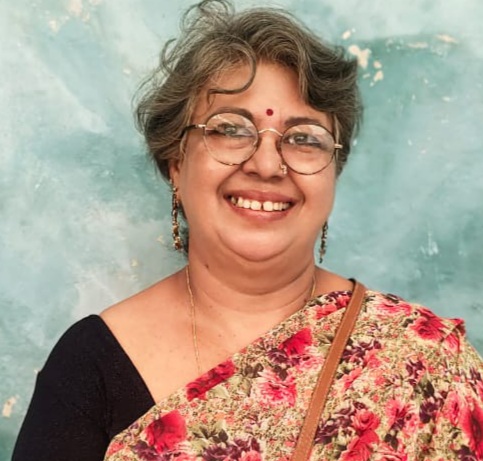
An acclaimed Painter, a published poet, a self-styled green woman passionately planting fruit trees, a published translator, and a former Professor, Lathaprem Sakhya, was born to Tamil parents settled in Kerala. Widely anthologized, she is a regular contributor of poems, short stories and paintings to several e-magazines and print books. Recently published anthologies in which her stories have come out are Ether Ore, Cocoon Stories, and He She It: The Grammar of Marriage. She is a member of the executive board of Aksharasthree the Literary Woman and editor of the e - magazines - Aksharasthree and Science Shore. She is also a vibrant participant in 5 Poetry groups. Aksharasthree - The Literary Woman, Literary Vibes, India Poetry Circle and New Voices and Poetry Chain. Her poetry books are Memory Rain, 2008, Nature At My Doorstep, 2011 and Vernal Strokes, 2015. She has done two translations of novels from Malayalam to English, Kunjathol 2022, (A translation of Shanthini Tom's Kunjathol) and Rabboni 2023 ( a Translation of Rosy Thampy's Malayalam novel Rabboni) and currently she is busy with two more projects.
Table of Contents :: Short Story
01) Prabhanjan K. Mishra
02) Dilip Mohapatra
03) Phalguni Sahu
04) Deepika Sahu
05) Ananya Priyadarshini
06) Rabi N. Dash
07) Dr. Sukanti Mohapatra
08) Usha Surya
09) Satish Pashine
FROM ROCKET TO GENERATIVE AI: AN ENGINEER’S JOURNEY
OTHER SIDE OF THE BED
FROM CURIOSITY TO KARMA
THE FIFTEENTH OF AUGUST
AN EMPTY HEART ACHES THE MOST
Prabhanjan K. Mishra
It was a cool November morning on a Sunday. Radhika alighted from her train at Dadar Terminus of Mumbai, and felt her feet growing wings. She almost flew to taxi stand, hailed one, and headed to her friend Suchitra’s flat in Andheri East.
She was all of twenty-three, with a chiseled and strong body and a face with sharp features, and was considered to be a pretty tomboy in her college. Her nature was described by her admirers as rippling with energy, raring to go ahead of her peers, and a go-getter.
She had got a joining letter in reference to her campus selection interview as a bank executive in a Mumbai branch of a foreign bank and looked ahead to the associated thrills and frills against the maga city’s backdrop. She had nowhere to go except either a hotel or friend Suchitra’s flat, who lived alone, until she had her own accommodation from the bank. She had decided to prefer Suchitra’s place. After being classmates in B Sc at Calcutta, Suchitra had moved to Mumbai for her IT Engineering. Radhika did her IT Engineering in Calcutta.
Radhika was known as a doer and not a procrastinator. She was not an existential hesitator vacillating between “To be or not to be”; but her abruptness was at times her enemy. Suchita was more adaptive; she would rather run with the hares and hunted with the hounds.
Radhika pressed the bell and expected the door to be thrown open by her laughing friend Suchitra and she would jump into her arms. But the door opened a little, enough for a hirsute face, with a salt-pepper beard trimmed in style, to poke out. A hint of a suppressed teasing smile dazzled showing a flash of clean white teeth on a handsome face with smiling eyes.
Radhika liked the face – rather loved it, and fell for the clean teeth, the full maroon lips peeping from a salt-pepper sprinkled hirsute face. She forgot her purpose, place, time, job, over and above all - Suchitra, her friend, and blurted out in her abrupt style, “May I kiss you, man? You have rather a yummy mouth.”
The manly face smiled and barked, “No. Not at all. Now from your words I confirm my guess – you are Radhika, Suchitra’s friend. She had warned me – “Radhika is a go-getter. Abrupt. Fast. Her lexicon does not have the word ‘Hesitation’. That fits. Welcome Radhika ji. I am Suchitra’s boyfriend Avinash. We live together in this pad of mine. Come in…” With that he threw open the door and called out, “Radhika is here, my sweetheart.”
Avinash surprised Radhika. Suchitra never shared her secret of a live-in arrangement and about her handsome boyfriend partner.
That ‘Sweetheart’ from Avinash’s mouth for Suchitra pricked Radhika like a hornet sting on her heart that suddenly rattled empty and hurtful. Radhika grimaced uttering, “Ooh”. She would never know if Avinash noticed her ‘Ooh’. If he did, if he understood. If he understood, his visage did not reflect any sign. But, even Radhika herself was at sea for her own feelings – why should her heart feel suddenly empty, and why should it hurt so acutely for a hardly known person?
That was the first line on the first page of her love story that was going to sweep the bland looking flat of its foundation. Suchitra came out, looking fresh, washed, wet hair held in a towel as most stereotype women of India from her fresh bath. She took Radhika in arms with lots of oohs and aahs and smooches. Suchitra, however, noticed a disinterest in Radhika. But, she would not know Radhika’s heart had gone bereft and was hurting for someone else who was now belonging to her close friend.
Suchitra showed Radhika her guest room, “This room is now yours, stay here as long as you need. No formality. Everything in this house belongs to you, as much as to us. Feel free.” Radhika looked at her with a mock smirk, “Everything?” Suchitra looked dismayed, “Yes.” But something in Radhika’s eyes she didn’t like. “But what was that?” she would wonder that night in bed lying awake by a slumbering Avinash’s side.
When Suchitra had exited Radhika’s room, Radhika followed her casually without her knowledge. She entered her own room and Avinash came from behind and took her in a hug, burying his face in her semi-wet hair as if deeply inhaling. A very intimate gesture of love. But Suchitra detached herself from his warm grip, “Not all the time Avinash.” Radhika who saw all that had many simultaneous reactions –
She didn’t like Avinash’s overindulgence with another woman than herself - should it have been with her, she would have appreciated it -, Suchitra spurning Avinash’s advances pained her as much as it might have been to Avinash. She felt he was so sweet but her friend was so rude.
Radhika had a déjà vu type sensation - she was in Avinash’s arms – and he was saying, “Ah baby, everything in this house is yours. And that ‘everything’ includes, me, Avinash Chaudhuri as well, hook-line-sinker.” Radhika blushed all over. Even her imagination was overworking on that image of ‘hook-line-sinker’. How intriguing, she thought.
At the breakfast table, the food tasted ambrosia after knowing it was cooked by Avinash. She touched Avinash’s bare foot under the table making it appear accidental. But in the second attempt to make it a pleasurable game of footsie, she couldn’t locate his bare feet, but found a mocking smile hanging on his lips. Suchitra was looking down into her bowl of cornflakes moodily. Radhika knew - all was not well between the couple.
On the breakfast table Radhika learnt – Avinash does not do any job, wrote poems, stories and novels, was a homemaker in his own words like her mother. He stayed home to housekeep when Suchitra went out as the ‘hunter and gatherer’, meaning, to her corporate office to bring home the bacon. Avinash was about twenty years older to Suchitra. He was a plain-Jane MA in English literature from Calcutta university unlike them, she and Suchitra, IT Engineers.
His late parents, both tragically lost to a road accident, had left behind enough bank balance and landed property, houses etc., put together, the wealth would look after Avinash through his lifetime, even if he kept writing and did nothing to earn a paisa. The house in which they ate breakfast belonged to Avinash. Suchitra was his live-in partner over almost four years, after being a PG for a year.
She looked at him. His receding hairline, thinning hair, large forehead with a few parallel crease lines made him look so wise and handsome in a matured way. He looked suave but with hints of mischief that she felt was a rare combination. Suddenly she was head over heels in love with her friend’s boyfriend.
Her tomboy attitude, she felt, pushed to back burner, she salivated for him to be in her arms. She came to senses to hear Suchitra, “Darling, you look so disoriented after the long journey. It appears a jetlag, I mean you didn’t sleep well in the lurching train. So, you be home and take rest. You can join your office tomorrow.” Suchitra left for office.
Radhika lay down in bed but could not sleep. She intently tried to hear all movements from behind closed eyes. Sne expected behind close eyelids that Avinash might come and touch her inert body pretending to check if she was OK. But nothing happened.
How couldn’t Avinash, a sensitive writer, feel her restlessness? Why didn’t he move even an eyelid? Or was he waiting for a signal from her? Why was she, a tomboy, a go-getter, feeling shy of calling the shots herself, not taking the reins in her own hands? Was she changing, as she had heard, love would make roaring breakers change into quiet pools? She knew by now Avinash was the heavy weight center around which Suchitra the light weight planet, a material and mechanical woman, circumnavigated.
Radhika guessed, hers was a stumble into his rabbit hole called love and the fall could only be controlled by Avinash. She felt bad – was she trying to steal Avinash from Suchitra? Was all, as they said, was fair in love and war?
Things moved inexorably fast after Radhika’s arrival in the flat. Radhika helplessly noticed, though she loved it in her weaker moments, Suchitra drifting away and all efforts by Avinash to hold her back or move closer to her subtly, was not working. Even Radhika’s interference separately and together didn’t seem to work for a rapprochement between the warring couple. She was at a loss. Whether she should support Suchitra or Avinash? Her longstanding friend or her new crush?
Radhika thought the best course would be to wait and watch and side with the party who played fair. A realization slowly came – perhaps both of them were fair in their own way. In love often skirmishes led to great wars or great understandings. No party can be blamed, but the inevitability.
The fifteenth day of her arrival at the flat, the issue solved itself, but in a bitterness all around. Returning from office, Radhika found until nine in the evening Suchitra did not return from office and Avinash looked gloomy. At nine, Avinash set the table for dinner for two. Radhika raised an eyebrow. Avinash said, “Suchitra would not eat with us. She has packed and left.” Radhika worried, “Where did she go?”
Avinash consoled, “Don’t worry. Two days ago, she was given a furnished flat by her company. I came to know it today only before she left. She did not want to give me time to request her not to leave. I was in my study. After she packed, she informed me, and left even without giving the address of her flat, abruptly saying - Don’t wait for me. I am not coming back. This is our last meeting. There is nothing left in our relationship. Good bye.”
They finished the dinner moodily. They lived the next few days moodily. Radhika waiting for her love to show her its first green shoot, Avinash living like a keyed-up toy, she could not guess his feelings. He did not ask her if she would continue living in his house or leaving. Almost a year of stalemate continued. Her bereft heart kept aching unbearably without respite.
She was allotted a furnished flat by her company. She informed Avinash, “But I won’t go away leaving you alone.” Avinash did not say a thing, as if he was still under a spell, a gloom. She continued living in Avinash’s flat.
As before, Avinash kept house, wrote his creative stuff, packed her tiffin box for office lunch, kept dinner ready when she returned, but never accepted a pie from her except gifts she bought for him. Of course he gave back equally sensitive gifts. On Sundays and holidays, she would cook, mostly Avinash’s favorite dishes. Some evenings she was taken out for dinner by Avinash.
One day Avinash received a prestigious literary award for his novel and was invited for felicitation by the Press Club. Avinash broke the news on her mobile when she was in an important meeting with her team. She was so happy, her legs melted and she excused herself from the meeting. Her teammates thought some bad news had struck her like a thunderbolt. It was four in the afternoon. She took leave from office and ran home.
Knowing she was coming, Avinash made tea and buttered toast and they sat down for an early high tea. Avinash suddenly got up, came around and taking her from behind in his arms, kissed her on the mouth. It was a long intimate engagement whose impression appeared to last a lifetime,
He then said ‘sorry’ and returned to his tea. They silently sipped tea and chewed the crispy buttered toast and ate sweet cookies. That was a signal to her aching heart, the green shoot. She went to Avinash, sobbed a little like a child, took him by hand to her bed, and in the dwindling light of the dusk when day was mixing with night, they made love.
Both were crying and missing Suchitra in that hour of celebration, expressing their anxiety in their own special ways, wishing she should be safe and happy wherever she was. Suchitra, after leaving the flat, had changed her company, changed her telephone sim, and had sort of melted into incommunicado realm for both of them. As if theirs was the chronicle of the death of one love story and the birth of another a year later foretold’ in advance to Suchitra.
On Radhika’s insistence, both moved to the little shrine she had built for her Blue Lord in the store room and Avinash put a spot of sindoor on her forehead with the Lord as the sole witness to their marriage of bodies and souls.
From that night, Avinash moved to Radhika’s bed in the guest room, because Radhika could not feel free on his bed that had memories of her friend Suchitra. Her friend’s smell filled Radhika with a sense of betrayal. A guilt of stealing her friend’s man haunted her in that room.
That night Avinash expressly said, “Radhika, I just fell into your magical rabbit hole.” As it was a joke in young circles those days for falling in love, they laughed on that together. Then a serious Radhika rejoined, “No, we fell together into love’s rabbit hole together.” Radhika looked pleased and redeemed, her heart was so full, it had no empty space to keep more love there. Neither any aching.
Almost eventless years, smooth and happy, sailed by like hours. Or those years were packed with so much warmth and love so continuously, end to end, that felt natural and none-event. All around, the neighbors knew the couple, one effervescent and bubbly, choppy and the other serious, sensitive, very sensible, in one boat, drifting without rolling or rocking. They would comment, “What a match!”, one looking young and beautiful like an apsara and the other a Rishi Vishvamitra. One day, Radhika was looking at an old calendar for something and noticed with amazement, she had pressed the calling bell first time to that flat eleven years ago.
Suddenly two arms closed around her from behind and she felt irritated without her own conscious knowledge. She extricated herself rudely from his affectionate grip with a vocal retort, “I don’t want it twenty-four hours, three-sixty-five days. You know.” Avinash recoiled, came around, and gave a wry laugh, “Oh, I didn’t hug the wrong wife, I presume.” Radhika could not like his loaded sarcasm and flashed an angry look.
The next second she realized she just committed a sin. She had a second of freefall back to her abrupt era. She felt sorry. But her feminine pride prevented her to say so to her husband. The moment she thought of their relationship in husband-wife terms, the irritation returned and with her sixth sense she had an awakening that the past few days had not been so hunky-dory. She also realized, the reason was her volatile mood.
She recalled a few skirmishes between herself and her husband in last few months, might be more. Once, Avinash was too considerate to the young well-endowed female house help. Radhika made a sarcastic joke of her husband’s generosity, “Would you handout a thousand bucks if she was not that pretty?” Radhika had spoken in English to hit Avinash, but pass over the maid’s head.
Though Avinash did not react, the maid retorted in English, the so-called language of a privileged few, “Madam, you behave like an archetypal fishwife with a sour tongue. If you repeat such cheap mentality, I would resign and go. Be ready with my pending pay packet.” Radhika had no words to reply the impromptu development. She like a tortoise retracted into her silent carapace.
But Avinash roared taking her side, “We don’t need erudite maids like you. Before your appointment we handled our household ourselves. You are dismissed now. Consider that packet of 1000 rupees as your pending wages for the two days of the new month. just get out.”
But Radhika did not like her husband’s actions. A gift of 1000 just for asking was too generous, and terminating the maid’s job for being erudite was too rude, too mean. That night she had cried her heart out and no coaxing or cajoling by Avinash worked. It took several days to seal the crack between them, but under the crust the wound remained livid, bled off and on.
Radhika felt bitter as the maid’s feminist advocate of the dismissed maid. On the other hand, Avinash was Radhika’s advocate defending her against the same rude maid. It seemed the peculiar twain of ideas would never meet.
Such sensitive issues were being precipitated between the couple too often those days, and most issues were insoluble quadratics of ego. A funny but tragic stalemate. One evening over a dinner at home, Radhika was talkative.
She opened a gambit move with a black piece on their board, “I feel Suchitra and you were so lucky to have each other.”
But Avinash’s response seemed like a bigger gambit to her, “I thought so those days. When she came to this city, she had no house, only a letter asking her to get admitted into IT Engineering in a college. A mutual friend had referred her to be my paying guest. She moved here as my PG from YWCA guest house where she had lived a week already. It was not she who fell in love with me. It was I. But I hesitated for she was so young. But I think, by her feminine sense she could sniff my hormones oozing for her, and she herself walked into my life one very late night. I was on the cloud nine. She said she felt the same.”
Avinash appeared removing a teardrop from his cheek. He choked on tears when said, “But I knew after years she felt trapped, and did not know how to exit. I also didn’t know how to check her out of my love’s grip with her pride intact, might that be the Land’s End for me. But you came like an angel and made it easier for both of us. Her to open her wings and I to open the door with all fairness.”
Then he said something she did not like but after deliberating a lot with herself she found out that he was not untrue from his point of view.
He had said, “Radhika dear, after the Suchitra-less house haunted me, her smells in bed without her preyed on me, it was very hard to stand it for a year. But then that literary award came to push me into another rabbit hole, yours, like a broken star stumbling down from its orbit. in the sky. I had seen the shine in your eyes that only love could ignite but had ignored it so far. I had looked around for your object of love. But only I stood in that space. Do you recall, it was me who first fell into your rabbit hole.”
Also, he had exploded a bombshell, “I feel, you also feel trapped. Do you? Only a guess. But you are free. The cage is open. You fly out. Some other bird would enter and like it, to stay caged.”
The uneaten dinner appeared to have called itself to a closure. The two diners sat in silence looking at the spoons and forks lying idle and the food cooling feet. As if an unbelievable gospel truth had been uttered by an oracle that was pregnant with prognoses – fearful, unbelievable, yet holding a door half open, ajar, for anyone that wanted an exit.
The doorbell rang. For whatever reasons, to Radhika’s ears, it sounded like a rattle and to Avinash’s ears a smaller gong announcing a change of monotony. They looked at each other and Avinash opened the door when doorbell sort of screamed, the caller might be losing patience. Suchitra sailed in bag and baggage.
In mock anger she rebuked her friends, “One has to ring and wait so long to enter her own house.” Both raised eyebrows of surprise, “Where were you, bloody Suchitra? Didn’t you vanish after you left here?”, questioned Avinash but in reply Suchitra countered, “But have I not returned home finally? I am a self-propelled grown woman. Can’t I decide when have I to return home?”
She quickly washed her hands and face and sat down by the dining table, “I am famished, but two of you have no pity to offer me food. Have you left anything for me?” Radhika spoke, “We hardly ate. Enough food for three of us. Eat your fill Suchitra.”
Suchitra liberally helped herself; they noticed in ten years she had added ten kilos or more to her opulent body. But she looked youthful and pretty still. Radhika felt her appetite whetted suddenly. So was the hunger of Avinash. All ate heartily. Then all became vocal. They learned in ten years Suchitra might have jumped ten jobs and stayed in ten PG accommodations in ten cities. She was still more bubbly than Radhika.
Suchitra suddenly asked to Avinash, “I am pissed out of exhaustion. Can I join you in our bed, my sweetheart.” Avinash was straightforward, “No, your bed is still unoccupied. I clean it every other day, the sheets and covers are fresh. You may go and have your seven hours of oblivion.” Suchitra raised an eyebrow, “And you?”. Avinash unabashedly replied, “Why, with my wife, Radhika here, in the other room, the guestroom.”
Suchitra gave a wounded look, “So, you jumped bed, from your girlfriend’s, to my friend’s bed? Couldn’t you wait a little? A little skirmish and a little delay in returning home and you, my man, my partner jumped bed; how unfair? And, you Radhika, I made you my guest, but you usurped my Avinash, stole him?”
It appeared the jubilation had ended. The pall of gloom, that had just lifted an hour ago on Suchitra’s arrival, descended on the three of them again. The three of them sat down brooding losing the count of time.
Next day passed as it should pass. Avinash cooking breakfast, setting the table, after finishing a frugal helping into his plate and sipping a little tea, he left for his study. No words were exchanged. Radhika left for office, taking the tiffin box prepared for her and placing a light peck on his forehead. After an hour Suchitra, who was in her room, came out, took Avinash from behind placing passionate smooches hinting her desire to be intimate.
But Avinash remained wooden and after a minute of Suchitra’s efforts, he unceremoniously detached himself, “You are diverting me Suchitra from my writing.” A livid Suchitra fired back, “But you never said so earlier ever? You have changed. You are no more my fair-deal-friend Avinash.”
The threesome quadratic did not resolve on its own this time. The unsolved hard equation with three unknown factors pulled on and on painfully without respite. The two bedroom-hall house that had seen the best of days, when love, bonhomie, warmth ruled the roost, must be feeling choked with uncomfortable vibes, as Radhika felt.
Radhika never came out of the guilt that she had wronged her friend by stealing her lover. She also felt more guilty of not being able to reciprocate the affection of her husband Avinash. The double guilt preyed on her health, confidence and glamor. She remained only a shadow of herself crunching algorithm in her IT company earning a big salary but with no happiness. Her heart was empty of peace, rest, urge to live, and an ever-throbbing ache all the hours all the day.
She found Avinash withering away – might be missing her even when she was present by his side. He perhaps wanted his wife warm and cuddly in his arms, returning his warmth with equal or more warmth, but Radhika’s insides were cold, hard stone. He slept perhaps feeling immensely lonely when she lay by his side like a piece of cold metal.
She felt, Suchitra had no plans to leave her and Avinash. Suchitra apparently remained livid, ready to pour petrol in the fire at every opportunity for the double-betrayal, she claimed her friends, Radhik’s and her boyfriend, Avinash’s, had played on her. The stalemate continued almost for another five years. A swampy miasma hung around the house. Radhika inhaled it with cringing nostrils every minute the last five years and her soul died a little at every breath.
Radhika’s heart broke the day, she on return from office saw Avinash assembling a DYU camp bed in a corner of the hall. He said he was going to sleep on that for as long as he would live. As if that was the last nail in her coffin. That night Radhika’s heart conked and she died in sleep. The aching in remaining two hearts, beating in total discard, was unbearable.
Avinash told to Suchitra, “I am packing and leaving tomorrow, giving the house to you. I don’t know my destination, so I can’t leave a contact address.” But he had no strength to leave or go anywhere. Suddenly he found himself very old and frail. Suchitra also looked old, podgy, and grey. Avinash refrained from his adventure.
The neighbors noticed the two occupants of the flat never coming out. But a middle-aged woman working as their house help would come and go as their last connect with the world. When any curious neighbor would ask the maid, “What’s wrong with the two?” “Oh, nothing much serious.”, she would smile, “They keep lying in their separate rooms almost unwashed and unbrushed. Whenever I ask what’s your ailing them? Each of them complains, ‘My heart is empty and aching. It is unbearable.’ Ah, these rich people and their antics! People suffer from headaches when having cold. But have you, uncle, ever heard of hearts going empty and aching? Ha!” (END)
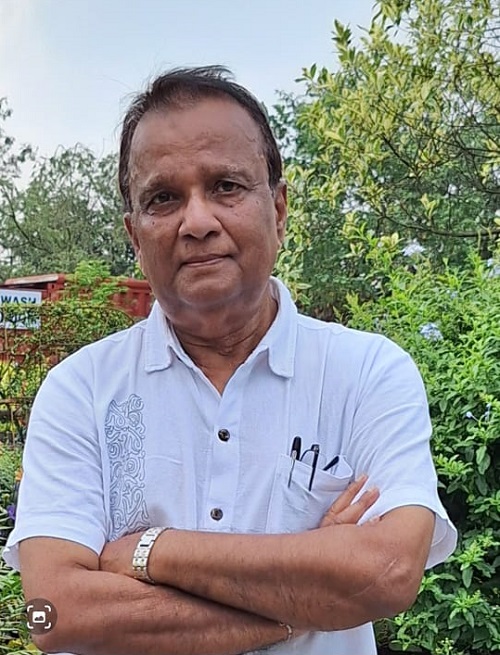
Prabhanjan K. Mishra is an award-winning Indian poet from India, besides being a story writer, translator, editor, and critic; a former president of Poetry Circle, Bombay (Mumbai), an association of Indo-English poets. He edited POIESIS, the literary magazine of this poets’ association for eight years. His poems have been widely published, his own works and translation from the works of other poets. He has published three books of his poems and his poems have appeared in twenty anthologies in India and abroad.
PREDATOR AND PREY
Dilip Mohapatra

It was an impromptu get-together. One of our old schoolmates, Satyanarayan—fondly called Satuna—who had done very well for himself and settled in the USA, was visiting his ancestral city, Pune. An old boys’ meet was organised in his honour. I was entrusted with arranging an evening of drinks and dinner at our local Armed Forces Institute.
The criterion for selecting the venue was rather interesting. The dinner wasn’t expected to rival a five-star hotel. The real attraction was the tax-free liquor—civilian’s envy and fauji’s privilege.
After retirement, quite a few of our classmates had settled in Pune. We were an interesting mix of senior citizens who had traversed very different paths in pursuit of our chosen professions. Some had scaled stellar heights, while others hadn’t quite made it beyond base camp. Yet, in our sunset years, we were all like chess pieces back in the box after the game.
One of our friends, Bikash, a retired digital architect who lived alone in a not-so-humble spacious villa in Koregaon Park, had formed a WhatsApp group that brought us together virtually. It was no different from countless others. Many of our otherwise reticent classmates suddenly became eloquent and verbose, holding forth with equal conviction on the future of the world in the wake of the Strait of Hormuz crisis and the rising price of coriander leaves in the local market.
The group’s most prolific contributor was Ashok, a retired neurologist, who somehow had access to an inexhaustible supply of circulating videos. He posted them untiringly—sometimes entertaining, occasionally enlightening, but more often lengthy, insipid and eminently forgettable. Beyond the obligatory good morning messages and birthday or anniversary wishes, little of consequence was discussed. Yet the group served one useful purpose: it brought us together every now and then for reunions such as this.
By seven in the evening, people had started arriving. I had reserved a private room with its own bar, complete with liveried stewards in attendance. By half-past seven everyone had gathered. We were seven in all, including Satuna.
Perhaps I should introduce my companions before the evening unfolds.
Satuna, after school, joined an IIT to study Chemical Engineering before moving to the United States for higher studies. He spent his professional life with Chevron in Houston, Texas. Though now happily retired and settled there, he made it a point to visit India every year or two.
Suresh came from a modest lower middle-class family that struggled to make ends meet. Gifted, disciplined and fiercely determined, he was always among the brightest students in our class. He joined the Indian Revenue Service and eventually retired as a Principal Income Tax Commissioner.
Shaikh Noor Mohammad—Noora to all of us—had been our school’s football captain. Sport remained his lifelong passion, and after representing both the University and the State, he retired as a respected football coach.
Prafulla, universally known as PK, chose banking after completing his post-graduation in Geology. He retired as a General Manager with the Bank of India and now devoted much of his time to social work.
Ashok, true to his youthful ambition, became a doctor. He specialised in Neurology, earned an enviable reputation, and even in retirement continued to see patients at his private clinic.
Next to him sat Rajesh, though these days he answered only to the name Swami Gyan Prakash. Admitting him into the Institute had proved to be an operation in itself. The dress code required tucked-in shirts, trousers and shoes. Even the recently relaxed rules permitted only tucked-in T-shirts and jeans—provided they weren’t fashionably distressed. Shoes, however, remained compulsory.
Rajesh arrived in immaculate white dhoti-kurta, chappals and a rudraksha mala around his neck. After retiring as the headmaster of a local high school, he had gone on a pilgrimage to Haridwar. Rumour had it that he met an ascetic there, took deeksha and returned transformed. He left home, moved into an ashram, embraced a life of austere simplicity and became a strict vegetarian. Fortunately, a steward known to me quietly ushered him in through the rear entrance. Since ours was a private gathering, no eyebrows were raised.
As for me, after hanging up my naval uniform following a long career, I spent a few years in senior leadership roles in industry before retiring for good. These days I devote myself to what had always been my first love—writing. Poetry, fiction and literary criticism now occupy the time that the Navy and corporate life once claimed.
After the initial greetings, punctuated by guffaws and the exchange of affectionate expletives that only old friends can get away with, we settled comfortably around a large round table. The warmth of decades instantly dissolved the years between us. Bonhomie flowed as freely as the drinks that were about to arrive.
The liveried stewards moved briskly around the table, taking individual orders. Soon, plates laden with kebabs, fish fingers, peanuts and other appetising tidbits began to appear—what we in the Navy fondly call small-eats.
Most opted either for beer or a single malt. Swamiji alone asked for plain soda.
While eager hands reached for the steaming platters, Swamiji was patiently questioning the steward.
“Are the vegetarian dishes free from onions?”
The steward apologetically shook his head.
“No problem,” I intervened. “Bring him a generous helping of French fries and some boiled peanuts.”
Satuna asked for a double Indri on the rocks. He lifted the glass, admired its amber hue against the light, inhaled its aroma, took a measured sip and let the whisky linger in his mouth before swallowing with evident satisfaction.
“Hey, Dilip,” he smiled, “India has come a long way with single malts. This is remarkably smooth. I would rate it above some of the Westland whiskies I’ve had in the US.”
“What did you expect?” Noora boomed, thumping the table hard enough to make the glasses quiver. “That we’re still some developing third-world country? Just wait. We’ll overtake all of you one of these days.”
Laughter erupted around the table.
PK, meanwhile, was quietly studying the dinner menu with the seriousness of an auditor examining a balance sheet, occasionally nodding as though approving the value for money.
Ashok had already retreated into his own digital universe, scrolling through YouTube in search of yet another video worthy of forwarding to his innumerable WhatsApp groups.
Suresh alone remained unusually quiet, nursing his beer in thoughtful silence. He had always been like that—even in school. While the rest of us chased footballs and cricket balls, he pursued numbers with equal intensity, collecting academic laurels where we collected bruises.
Swamiji broke the silence.
“What’s bothering you, Suresh?” he asked with a mischievous grin. “Still planning income tax raids? Or are you writing a book?”
He paused just long enough for everyone to look up before adding,
“Thank God I have nothing worth taxing.”
The room exploded in laughter.
Once the laughter subsided, Satuna turned towards me.
“By the way, Dilip, I read the Kindle edition of your short story collection Once Upon a Time. Thoroughly enjoyed it. Tell me, where do your stories come from?”
“I don’t think stories come looking for writers,” I replied. “Writers stumble upon them. Most of my stories begin with ordinary observations. To me, there are three essentials for writing fiction—an eye that observes, a mind that understands character and a language that can bring both to life. The world is constantly telling stories. Most of us simply fail to notice them.”
I continued, “ let me illustrate what I mean. You see every morning without fail I go for a brisk walk within my society compound. It not only helps to wage my daily battle against the bulge but also keeps my overhauled heart ticking faithfully. Old naval habits die hard. Every morning I step out wearing one hat or another, and almost invariably carrying my old Captain’s baton. I don’t really need it. But without my hat and my baton somehow I feel incomplete, almost underdressed. While walking, I watch people. Sometimes all it takes is a fleeting image, which gives enough impetus to trigger the idea for a story.”
“ Just the other day I noticed an elderly gentleman stopping every few yards—not because he was tired, but because he bent down to greet every stray dog by name. That evening I found myself writing about loneliness disguised as kindness.”
“On another morning I noticed a couple walking hand in hand. The husband, a middle-aged man with thinning hair, a generous pot belly sported a loud pink T and fluorescent parrot green sneakers while wearing a permanent scowl. Beside him walked his much younger wife, her hourglass figure accentuated by a snug track suit giggling all the way. The contrast amused me. My first thought was: what an unlikely definition of ‘made for each other’! The story had already begun writing itself.”
Then I concluded, “ You see, I don’t consciously invent stories. I collect moments. They lie scattered like pebbles along the walking track. Every now and then one finds its way into my pocket.”
Everyone was listening to me with rapt attention and suddenly Suresh broke the silence, “Interesting. My younger brother does something rather similar.”
“Is he a writer too?”, I asked.
“No. A journalist. He writes for Pune Times. Serialises a column on wit & humour , titled ‘Tea Time Trivialities’.”
He continued “He doesn’t walk. He sits on his balcony every morning with his tea and watches the walkers below. Every week he turns one of them into a humorous sketch.”
“Only last week he wrote about a gentleman…”Suresh paused for a moment and looked around the table.
Then continued:
“There is apparently a retired military gentleman who owns more hats than a milliner. Every morning he marches around the complex, baton in hand, as though inspecting a ceremonial parade. Nothing escapes his roving eyes. He surveys fellow walkers with such forensic attention that newcomers instinctively check whether they have violated some unknown regulation.”
As my pulse quickens in anticipation, Suresh laughs and says:
“The piece was titled Vanity Fair—with apologies to Thackeray.”
In faltering voice I asked hesitatingly , “Suresh, where does he reside?”
“Oh, I forgot to mention, he stays in your society on Nagar Road.”
The steward announced that dinner was served and we all moved towards the dining table.
As I absent-mindedly spooned the last of the caramel custard, I found myself wondering how many mornings I had walked past that balcony without once looking up. All those years I had imagined myself to be the watcher. It had never occurred to me that somewhere above another pair of eyes had quietly been watching me.
For years I had believed that I alone carried the privilege of observing others. That evening I discovered an unsettling truth. Every observer is also somebody else’s subject. Every predator, sooner or later, becomes prey.
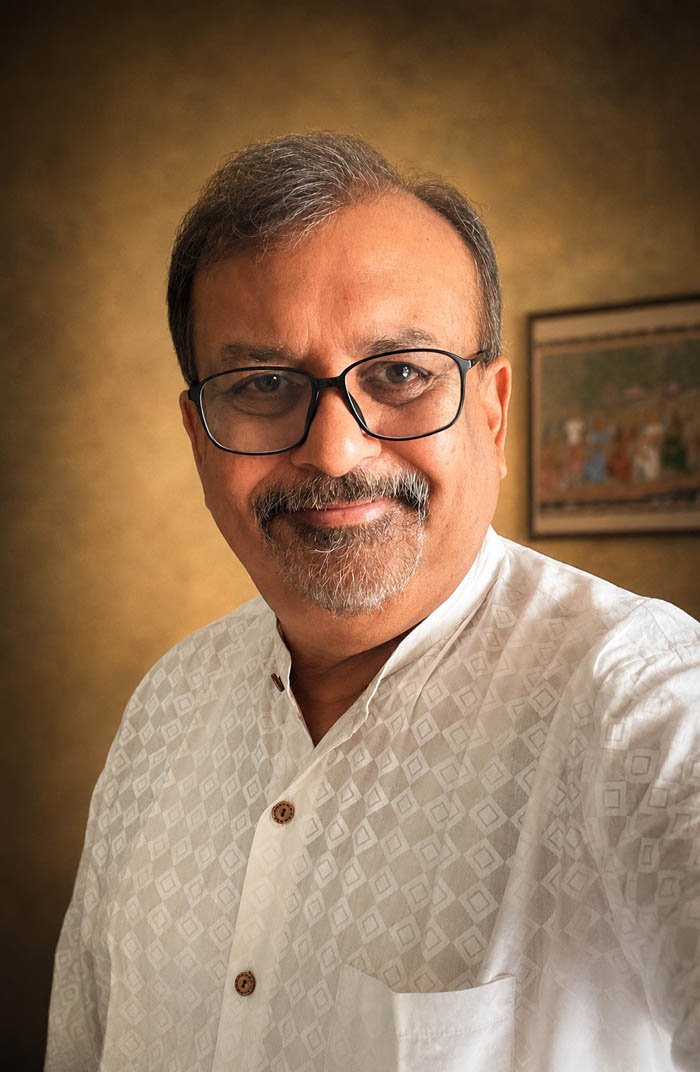
Dilip Mohapatra writes poems that dwell at the threshold where the tangible yields to the ineffable. Rather than describing the world, they uncover the hidden correspondences that bind its disparate realms. Quietly meditative yet intellectually alert, his poetry invites the reader to move beyond appearances into a space where the finite touches the infinite and every ending gestures towards a larger wholeness.
A globally published author, he has to his credit eleven poetry collections, two short story collections and two professional books.Winner of multiple International Awards and recognitions he writes from Pune and is a regular contributor to Literary Vibes. His email id is dilipmohapatra@gmail.com
THE GHOST IN THE DOCK
Phalguni Sahu
Part-I
It was an ordinary day at DAV Public School (CDA), Cuttack.
The morning bustle was at its usual peak when a gleaming Mercedes came to a smooth halt in front of the school gate. For a moment, heads turned almost instinctively. Luxury sedans were not an everyday sight at the school, especially not one arriving with a chauffeur.
The driver stepped out, walked around the car, and opened the rear door. A girl stepped out.
She was wearing golden-rimmed spectacles and carried herself with an effortless elegance that made her look graceful, composed, and impeccably put together. But there was nothing timid about her. She looked smart, fashionable and remarkably confident.
She adjusted her spectacles, slung her bag over her shoulder and walked towards the school gates as though she had been there a hundred times before.
The students gathered nearby began whispering. “Who is she?” “I have never seen her before.” “She must be new.” “She’s coming to our school for the first time, right?”
A boy suddenly looked at her more closely. His eyes widened with recognition. “Oh! I know her.” Everyone turned towards him. “Who is she?” “That’s Debika Rath. She was my schoolmate long back.” “Debika Rath?” someone repeated.
“Yes. And you know who her father is?” There was a pause. “Justice Rudra Pratap Rath.” A few eyebrows shot up. “The High Court Judge?” “Exactly.”
Another student stared at Debika as she disappeared through the school entrance. “Wait… you mean that Debika Rath?” The boy laughed. “Of course. Haven’t you heard of her?” “Heard of her? Why?” “She was the CBSE Class 10 topper this year.” For a moment, there was silence.
Debika Rath was an unusual girl, even by the standards of her exceptionally bright classmates. She was a nerd in the truest sense of the word - a voracious reader who could devour a book in a matter of hours and then spend the rest of the day thinking about it. Her mind was sharp, her memory astonishing, and when she spoke, she had a rare gift for turning thoughts into words. As an eloquent debater, she could hold her ground against anyone, never raising her voice, never losing her composure, and almost always having the last word.
But beyond her brilliance was a certain reserve that made her difficult to know.
Debika was intensely serious. She hardly smiled, and laughter seemed almost foreign to her. She never went out of her way to make friends, nor did she seem particularly interested when others tried to befriend her. She wasn't rude; she was simply… distant. There was a quiet wall around her that nobody seemed able to cross.
Perhaps that was what fascinated people about her.
She was beautiful, intelligent, impeccably dressed and came from a powerful family and yet she seemed completely uninterested in being noticed.
While other students rushed to the school canteen after class, gathered in groups, exchanged gossip or made plans for the evening, Debika invariably headed towards the school library. She had already discovered her favourite corner there - a quiet table beside a tall window where the afternoon light fell softly across the pages of her books.
She would sit there for hours, golden spectacles resting delicately on her nose, completely oblivious to the world around her. Sometimes, students passing by would stop and look at her through the glass doors. She never noticed. Or perhaps she simply pretended not to.
When her driver arrived in the evening, Debika would close her book, mark the page carefully, put it back into her bag and walk towards the waiting Mercedes. She never lingered at the gate. Never waited for friends. Never looked back. And yet, beneath that composed exterior and behind those golden spectacles, there was something about Debika Rath that nobody had yet understood!
Part-II
It was during the inter-school debate competition held at St. Paul’s School, Rourkela that Devika’s path first crossed with Kabir Malhotra.
Devika was representing her school, while Kabir was competing on behalf of the host school. Kabir was everything she was not in temperament- outgoing, energetic, a natural go-getter and social butterfly. He excelled not only in speaking but also in sports, and his confidence filled every room he entered. From the very beginning, there was a fierce competition between them, each round sharpening the rivalry further.
Yet, as fate would have it, the final results could not separate them. Devika and Kabir were declared joint winners and had to share the trophy. That was the first time they met properly- standing side by side, holding the same trophy, neither willing to show surprise, both equally composed in victory.
Kabir was one year senior to Devika, studying in his plus two second year, while she was still in her first. The joint victory had brought Kabir and Debika together. But neither of them had expected that a debate competition would leave them with something far more difficult to argue with- their own hearts!
The next morning, the campus was buzzing with activity. Teams were moving from one venue to another, participants were rehearsing in corridors, and volunteers were rushing about with files and badges.
Debika was walking towards the auditorium when she heard a familiar voice behind her. “Excuse me, Ms. Joint Champion.” She turned.
Kabir stood there, holding two cups of coffee. “What?” she asked, trying hard not to smile. “I thought champions deserved coffee.” “And what about the other champion?” Kabir held out the second cup. “I was considerate enough to get one for myself.” She laughed. “You are impossible.” “I have been told that before.”
They began walking together. It was strange how easily it happened. There was no plan. No invitation. No conscious decision. They simply kept finding each other. At breakfast. Outside the auditorium. During the afternoon sessions. On the steps of the old academic block. Every time they met, their conversations lasted a little longer.
Debika discovered that Kabir could talk to absolutely anyone. He knew the names of volunteers, joked with security guards, helped a nervous participant find her hall, and somehow managed to turn even the most ordinary incident into an adventure.
“You don't think before doing anything, do you?” Debika asked him at one point. “I think.” “When?” “After doing it.” She shook her head. “You are reckless.” “And you are too careful.” “Someone has to be.” “Someone has to live a little too.”
She looked at him. For a moment, neither spoke. There was something about him that unsettled her- in the most wonderful way. Kabir was everything she wasn't. Spontaneous where she was cautious. Fearless where she was calculated. Restless where she was composed. He walked through life as if every unexpected turn was an invitation. And somehow, Debika found herself wanting to follow.
That evening, they wandered towards the far end of the campus. The crowd had thinned. The noise of the competition was fading behind them. They sat beneath an old rain tree. “Do you ever plan anything?” Debika asked. “Very rarely.” “And that doesn't scare you?” “No.” “Why?” Kabir looked at her. “Because the best things in life are usually the things you didn't plan.” Debika lowered her eyes. She knew exactly what he meant. And perhaps, for the first time, she wondered whether this meeting had been one of those unplanned things.
The following day was their last full day on campus. Neither mentioned it. But both knew. They spent almost the entire day together. They attended events they had no particular interest in. They shared lunch. They argued over which team would win. Kabir stole a piece of dessert from her plate. She protested. He laughed. She pretended to be angry. He knew she wasn't.
By evening, they found themselves sitting on the terrace of the guest house. The sky was turning orange. “You know,” Kabir said quietly, “I didn't expect to like this competition so much.” “You liked winning.” “No.” He looked at her. “I liked meeting you.” Debika's smile disappeared for a moment.
She looked away. “Don't say things like that.” “Why?” “Because…”
She stopped. “Because they make things complicated.” Kabir smiled softly. “Maybe some things are supposed to be complicated.” She finally looked at him. Their eyes met. And something passed between them that neither dared to name.
The morning of departure arrived far too quickly. Suitcases stood outside rooms. Cars were waiting. People exchanged photographs, hugs and hurried promises. Debika stood near the gate with her luggage when Kabir came running towards her.
“Wait!” She turned. He was breathless. “You were leaving without saying goodbye?” “I thought you were busy.” “I was.” He looked at her. “Not anymore.” For a few seconds, neither spoke. The noise around them seemed to disappear.
Kabir took out his phone. “Give me your number.” She smiled. “Why?” “So that I can irritate you after we leave.” “You already do that perfectly well.” “Exactly. I don't want to lose practice.” She gave him her number. He called. Her phone rang. She looked at the screen. “Kabir.” “Now you can't escape.” She smiled. “Neither can you.”
He then took a small notebook from his bag. “Your address?” She hesitated for a second before writing it down. He folded the paper carefully and put it inside his wallet. “Why are you keeping it there?” “So, I don't lose it.” “Your phone has my number.” “I know.” “Then?” He looked at her. “Some things are better kept close.” Her eyes softened.
A bus horn sounded in the distance. It was time. Debika's smile trembled. “So…” “So,” Kabir repeated. “Take care.” “You too.” “Call me.” “I will.” “Don't forget.” “I won't.”
She took a step towards him. For one brief moment, she wanted to say everything. That she would miss him. That these three days had somehow become important to her. That she was afraid distance would change what had begun between them. That she had fallen for him without even realizing when it happened. But she said none of it. Instead, she smiled.
Kabir understood. He always seemed to understand what she didn't say. As she walked towards the waiting vehicle, she turned once. Kabir was still standing there. Watching her. Their eyes met one last time. Neither waved. Neither smiled. They simply looked at each other. And in that silent moment, they said everything their lips had been too afraid to say. Then the vehicle began to move. Kabir remained where he was until she disappeared from sight. Debika looked back through the window until she could no longer see him.
Part-III
It was almost eleven when Debika finally entered her room. The house was quiet. Too quiet. She placed her bag on the chair and slowly removed the little things she had carried back from the competition. Her ID card. A few papers. Her notebook. And then she saw it.
The slip of paper on which she had written Kabir's address. She picked it up. For a moment, she simply stared at it. Three days. Only three days. And yet somehow, it felt impossible to imagine that morning without him. She sat on the edge of her bed.
Her phone lay beside her. She picked it up. Opened her contacts. There it was. Kabir! Her thumb hovered over the name. She almost called. Then stopped. “No,” she whispered to herself. Why should she call? He had said he would call.
She put the phone down. Thirty seconds later, she picked it up again. Nothing. She sighed and tossed it onto the bed. “Ridiculous.”
Her phone rang. She nearly dropped it. Kabir! She stared at the screen for two seconds before answering. “Hello?” “Were you waiting?” “No.” “Good.” “Why?” “Because I was waiting.” She laughed softly.
“You are impossible.” “I missed you.” The laughter disappeared from her face. There it was. The first honest sentence. No teasing. No disguise. Just three words. She didn't know how to respond.
Kabir seemed to realize he had said it too directly. “So,” he quickly added, “how was your journey?” “Fine” she replied
They talked for another hour. About nothing. About everything. The competition, their teachers, their childhood memories, the strangest food they had ever eaten, and the places they wanted to visit.
After the call ended, Debika placed the phone beside her pillow. She lay down, closed her eyes, and smiled. Across the city, Kabir did exactly the same. Neither had said love. Neither had promised anything. But both knew something had changed!
The distance between them was no longer measured in kilometres. It was measured in the silence between phone calls. And neither of them wanted that silence to last very long.
Part-IV
For the first few days after their separation, Kabir called every night. Sometimes at ten. Sometimes at eleven. Once, well past midnight. And every time, Debika waited for him.
She never admitted it- not even to herself. But her days slowly began to arrange themselves around those calls. She would finish dinner a little earlier, make sure her books were closed, and keep her phone beside her. And when the screen finally lit up with his name, something inside her would brighten.
Their conversations became longer, more intimate. Kabir would tell her about his day. She would tell him things she had never told anyone else. He teased her about her seriousness. She teased him about his inability to stay out of trouble.
Sometimes they spoke for hours. Sometimes they said almost nothing. But neither wanted to hang up. And somewhere between those nightly conversations, Debika stopped thinking of Kabir as someone she had met at a competition.
He had quietly become part of her life. Perhaps even more dangerously- part of her heart!
Then, one evening, the phone did not ring. She waited. Ten o'clock; Eleven; Midnight; Nothing. She checked her phone repeatedly. Perhaps he was busy. Perhaps his battery had died. Perhaps he had fallen asleep. She told herself not to worry.
The following morning, she called. The phone was switched off. She tried again in the afternoon. Still switched off. She smiled at herself. “Probably some stupid adventure,” she murmured.
But that evening, she called again. Switched off. The next morning. Switched off. The next evening. The same. Something began to feel wrong. Days passed. Kabir didn't call.
Debika sent him a message. Where are you? No reply.
Another message. Are you okay? Nothing.
She stared at the screen for a long time. Then she called again. The same mechanical voice answered.
The number you are trying to reach is switched off.
She began calling every day. Then, twice a day. Then, whenever she could no longer resist the urge. The phone remained silent.
A week later, Debika wrote her first letter. She didn't know why she was writing instead of calling. Perhaps because a letter felt more permanent. Perhaps because she wanted her words to reach him somehow.
She wrote about ordinary things- the competition, the campus, a teacher who had mentioned their joint victory, a funny incident that reminded her of him. And finally, almost reluctantly, she wrote: I hope you are well. She stopped there.
She wanted to write - I miss you. She couldn't.
She folded the letter, put it in an envelope, and posted it to the address Kabir had given her. Then she waited. Nothing came. Not a call. Not a message. Not a letter. Nothing.
She wrote again. This time she was less careful.
“Kabir, I don't know what happened. You disappeared without saying anything. If you are angry with me for some reason, please tell me. If I have done something wrong, tell me. But please don't disappear like this.”
She posted it. Again, nothing. Weeks became months. The phone number remained permanently switched off. Her letters remained unanswered.
At first, Debika was angry. Then worried. Then hurt. And eventually- she stopped expecting anything.
But she never stopped wondering. What had happened? Had he met someone else? Had he simply changed his mind? Had those three days meant nothing to him? Had she imagined everything? She would sometimes take out the little slip of paper on which she had written his address. The ink had begun to fade. But she couldn't throw it away. Not yet.
One evening, months later, Debika sat by her window. Rain tapped softly against the glass. Her phone lay beside her. For a brief moment, she looked at it. Then she smiled sadly. She no longer waited for it to ring. She had learned not to.
But some wounds don't disappear merely because you stop touching them. Kabir had vanished from her life without an explanation.
No goodbye. No reason. No final conversation. Just silence!
She never knew whether Kabir had stopped loving her- or whether something had happened that had made it impossible for him to come back.
That unanswered question became the one thing she carried with her silently and faithfully for years….
Part-V
As Devika stepped into her second year at school, life acquired a new rhythm. Her days were consumed by lectures, coaching classes, committee meetings and, above all, her preparation for the CLAT examination. She had always been ambitious, but now her ambition had a clear direction. She wanted to follow in her father's footsteps and one day sit on the Bench as a Judge.
Her hard work paid off. She emerged as one of the top scorers in the CLAT examination and secured admission to NLSIU, Bengaluru. The achievement brought immense pride to her family, particularly to her father, who quietly saw in her the continuation of a dream he had carried for years.
Once she joined the Law University, Devika immersed herself completely in academic life. She joined several committees, participated in debates, seminars and moot courts, and soon became one of the most visible students on campus. She was a voracious reader and could spend hours in the library, surrounded by books on constitutional law, criminal jurisprudence, philosophy and history. Before long, she was elected Class Representative and became one of the most prominent students of her batch.
It was during one of the moot court competitions that she met Neil Kapoor.
Neil was a third-year student- tall, handsome, articulate and effortlessly confident. He possessed an extraordinary ability to persuade people, not merely through arguments but through the conviction with which he presented them. He was from Mumbai and had already decided what he wanted from life: he would become one of the country's most celebrated Criminal Lawyers.
Unlike most people Devika met, Neil never seemed intimidated by her seriousness. He enjoyed challenging her opinions.
They began meeting frequently in the library. Their conversations started with books and gradually moved to law, courtrooms and the changing legal landscape of the country. Neil introduced her to authors she had never read and encouraged her to look beyond textbooks.
“You read too much law,” he once told her. “Isn't that what we are here for?” “No. We are here to understand people.” She looked at him curiously. “And how does reading help with that?” “Books tell you what people say. Courts teach you why they say it.” She smiled. Perhaps that was when she first began to see him differently.
Neil was also generous with his time and connections. He helped Devika secure internships at some of the country's most reputed law firms and introduced her to senior lawyers who could guide her career. Whenever she struggled with an application or needed advice, Neil was there.
Sometimes he would call her after classes. “Coffee?” “I have work.” “Everyone has work.” “I really do.” “Then come for twenty minutes. I will return you to your books.”
Initially, Devika found it difficult to refuse him. She felt indebted to him for all the help he had given her. But gradually, the sense of obligation disappeared. She began going because she wanted to. Their coffee conversations became longer. Twenty minutes became an hour. An hour became an evening. They spoke about everything- law, ambition, family, music, films, food and the kind of lives they wanted to build.
Neil made her laugh. That was something Devika had not expected. He brought an ease into her otherwise disciplined life. With him, she did not always have to be the brilliant student, the Class Representative or the daughter of Justice Rudra Pratap Rath.
She could simply be Devika. And Neil liked that, Devika!
As the months passed, they became inseparable. Their friends began noticing it before either of them acknowledged it. “You two are always together,” one of her classmates teased. Devika laughed it off. Neil merely smiled.
There was, however, one thing Devika never told Neil. There was a name she had never spoken about in years. “Kabir” She had long ago learned to live with his absence. The unanswered letters had stopped hurting every day. The memories had become quieter. Life had moved on. Or so she believed!
Sometimes, when she passed a railway station or heard a particular song, something inside her would stir. A voice. A laugh. A boy who had once told her, “Only you!” Then she would push the memory away. That chapter was over. At least, that was what she told herself.
By the beginning of her third year, Neil and Devika had become a familiar sight on campus. They studied together, attended competitions together and often stayed back after classes discussing cases.
Then came the annual cultural festival. Neil asked Devika to be his partner for the ramp walk. She hesitated. “I don't do these things.” “You debate in front of hundreds of people.” “That is different.” “How?” “I don't have to walk while everyone looks at me.” Neil smiled. “Then look at me.” She looked at him. “That's the problem,” she said softly. For a moment, neither spoke. Then she agreed.
That evening, when Devika walked onto the ramp beside Neil, the applause seemed louder than usual. Under the lights, they looked perfectly matched- confident, elegant and completely at ease beside each other.
But Neil was no longer thinking about the audience. He had made up his mind. Later that night, after the crowd had dispersed, they stood away from the noise, near the quiet end of the campus. The lights from the buildings fell softly across the lawn.
Neil looked at her. “Devika.” “Hmm?” “I have something to say.” She smiled. “That sounds serious.” “It is.” He took a breath.
“I don't know when it happened. Maybe somewhere between our conversations in the library and all those coffees. Maybe much earlier.” Devika's smile slowly faded. Neil continued. “I know what I want from my career. I know where I want to go. But lately, whenever I imagine the future, you are there.”
She looked down. “Neil…”
“I know you have your ambitions. I know how much becoming a Judge means to you. I am not asking you to give up anything.” He paused. “I just want to know if there is a place for me in that future.”
Devika remained silent. For years, she had believed that love was something that happened suddenly- like a storm, unexpected and uncontrollable. But standing there with Neil, she realized that perhaps love could also arrive quietly. Through conversations. Through companionship. Through someone remembering the coffee you liked, the book you were searching for, the argument you had made three days ago.
She looked at him. “I don't know what the future holds,” she whispered.
“I don't either.”
“But…”
She hesitated. “I would like to find out.”
Neil smiled. It was the answer he had been waiting for. He reached for her hand. She did not pull away. And that night, under the quiet sky, Devika gave Neil her consent. For the first time in years, she allowed herself to believe that perhaps the past could remain in the past. She went back to her hostel that night with a strange lightness in her heart.
She sat beside the window, looking at the city lights. Then, without knowing why, she remembered another night. Another voice. Another boy. “I really did miss you today”.
Devika closed her eyes. “No,” she whispered to herself. That was long ago. She opened her eyes and smiled. Neil loved her. He was here. He had chosen her. And perhaps that was enough!
She did not know then that some stories do not end when people disappear. They merely wait!
Part-VI
Years passed.
Devika had become a District Judge. Her reputation preceded her wherever she went. She was known for her strict adherence to the law, her disciplined conduct and her uncompromising approach to justice. Her serious demeanour often intimidated those who appeared before her. Lawyers knew that emotional arguments would not move her, and litigants knew that she would judge only on the basis of facts and evidence.
Neil, meanwhile, had become a celebrated criminal lawyer in Delhi. His sharp arguments, persuasive courtroom presence and extraordinary understanding of criminal law had earned him a formidable reputation. Their careers had taken different directions, but their relationship had endured. They had built a life around mutual respect, ambition and companionship.
Then, one morning, an ordinary court proceeding changed everything.
Devika entered the courtroom and took her seat. The proceedings began as they did every day. Cases were called, lawyers presented arguments, and the familiar rhythm of the court continued.
Then the reader announced a new matter. It was a case involving the rape and murder of a minor girl. Devika listened without any particular reaction. Such cases were unfortunately not unfamiliar to a judge.
Then the accused was called. “Accused: Kabir Malhotra.”
For a moment, Devika stopped breathing. The name struck her like a blow. Kabir?? She slowly lifted her eyes. And there he was. Standing in the dock. Older. Thinner. His face hardened by years she had never known about. But those eyes- they were unmistakable!
Devika felt the world around her recede. Was this really the same Kabir? The Kabir who had once watched her from across a campus? The Kabir who had remembered that she forgot to eat when she was thinking? The Kabir who had told her, “Only you”. The Kabir she had loved silently, completely and without ever having the courage to name that love?
She looked away. She was a Judge. She could not allow herself to be anything else.
The trial began…...
The Public Prosecutor presented the prosecution's case. Witnesses were examined. Documents were submitted. Medical reports were placed before the court. The Investigating Officer described the circumstances surrounding the crime.
The Defence Counsel challenged the evidence at every stage.
Devika listened. She took notes. She asked questions when necessary. She maintained the same stern expression she had worn in hundreds of other cases.
But inside, she was fighting a battle no one in that courtroom could see. For the first time in her judicial career, she found herself praying that the evidence would collapse. She wanted the witnesses to be mistaken. She wanted the forensic evidence to be inconclusive. She wanted some piece of information to emerge; anything that would prove Kabir was innocent.
Not because she believed in favouring an accused. But because somewhere inside her, another Kabir still existed. The boy she had loved. The boy who had disappeared without explanation. The boy whose memory she had carried for years.
But the law did not deal in memories. It dealt in evidence. And as the days passed, the evidence became stronger. One witness after another testified. The forensic evidence supported the prosecution's case. The medical findings corroborated the circumstances of the crime. The Defence Lawyer attempted to create doubt, but the inconsistencies it pointed out were insufficient to overturn the overwhelming evidence.
Devika watched everything with increasing heaviness. She had wanted the evidence to be wrong. It wasn't!
She had wanted Kabir to be innocent. The evidence did not allow her that comfort. As the trial neared its conclusion, Devika stopped thinking about the Kabir she had once known.
She began thinking about the girl whose life had been brutally taken away.
A minor.
A child.
A daughter who would never return home.
A family that would carry that absence for the rest of their lives.
The law demanded that Devika put aside everything she felt and decide only on what had been proved before her. And she knew what she had to do.
Then came the night before the judgment. Devika could not sleep. She lay awake, staring into the darkness. On one side was the first man she had ever loved. On the other was the accused standing before her, convicted in her mind by evidence of a crime so horrific that she struggled even to comprehend it.
She turned from one side to the other. Her memories tormented her. The library. The phone calls. The laughter. The promises that had never been made. The silence.
And now- the courtroom.
She wondered whether she had been wrong about him all those years ago. Had she fallen in love with an illusion? Had the Kabir she remembered ever truly existed? Or had life simply revealed a side of him she had never known?
She spent the entire night without sleep. At dawn, she finally rose. She dressed in her judicial robes and looked at herself in the mirror.
The woman staring back at her was no longer the young girl who had waited beside a telephone for a call that never came. She was a Judge. And a Judge could not deliver justice according to memory. She had to deliver it according to law.
Devika entered the courtroom. The room was silent. She took her seat and looked down at the judgment. For a brief moment, her eyes moved towards Kabir. Their eyes met. Perhaps they were both remembering the same three days. Perhaps they were both wondering what had happened to the people they had once been.
Then Devika looked away. She began reading the judgment. Her voice was calm. Firm. Impartial.
She discussed the evidence, the testimonies, the forensic findings and the arguments presented by both sides. She explained why the prosecution had established the guilt of the accused beyond reasonable doubt.
And then came the sentence. Devika pronounced the maximum punishment permissible under law for the crimes of rape and murder of a minor.
The courtroom fell silent. Kabir stood motionless.
Devika closed the file. For one brief second, something inside her broke. But her face remained composed. She rose from her chair. She did not look at Kabir again. She walked out of the courtroom.
Her footsteps echoed through the corridor. Behind her, Kabir continued to stare at the doorway through which she had disappeared. He had recognized her the moment he saw her. But he had been afraid to believe it.
Could that really be Devika? The girl he had once loved? The girl whose voice he had waited to hear every night? The girl he had disappeared from without explanation? And if it was her- why had fate brought them together again like this?
He lowered his eyes. For years, he had imagined what it would be like to see her again. He had imagined her smile. Her questions. Perhaps even forgiveness. He had never imagined seeing her from the other side of a courtroom.
And Devika, walking alone through the corridor, carried a different question in her heart. Not whether Kabir was guilty. The evidence had answered that.
Her question was much more painful.
Who had Kabir Malhotra really been?
The man she had loved?
The man standing in the dock?
Or had they always been the same man- and she had simply known only one side of him?
For the first time in her life, Devika understood that justice could sometimes give you an answer to a crime while leaving the deepest question unanswered.
And somewhere behind the courtroom doors, Kabir was asking himself the same question.
Was she still the Devika he had loved- or had she become someone he had lost forever?
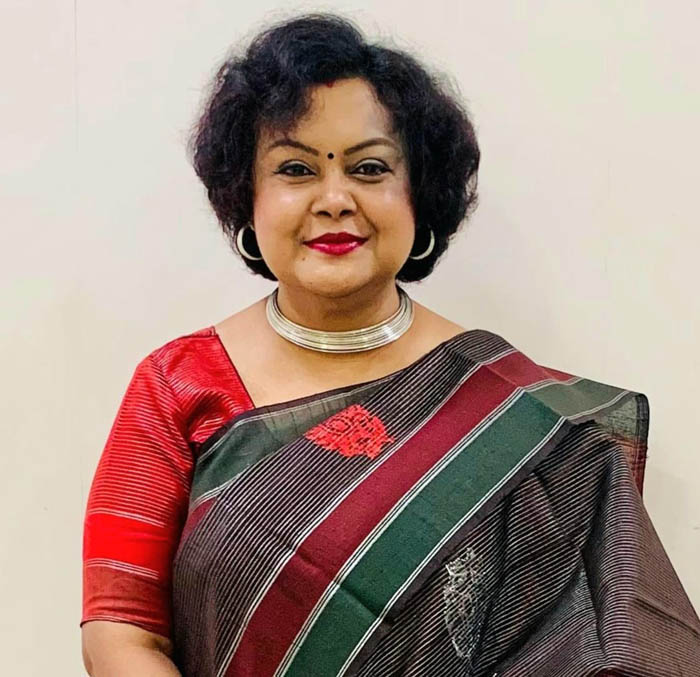
Phalguni Sahu is a development leader who has spent twenty-five years shaping transformative initiatives across government, public sector institutions, and international development organizations. An MBA in Rural Management from the Xavier Institute of Management, Bhubaneswar, she carries into her writing the same depth of insight and quiet sincerity that define her professional journey.
For Phalguni, writing is a sanctuary- an inner courtyard where thoughts unfurl gently and truth finds its voice. She is an ardent reader, forever drawn to the reflective rhythms of literature, and her creative work spans contemplative spiritual blogs and evocative short stories.
INDIA, A MILLION VOICES
Deepika Sahu
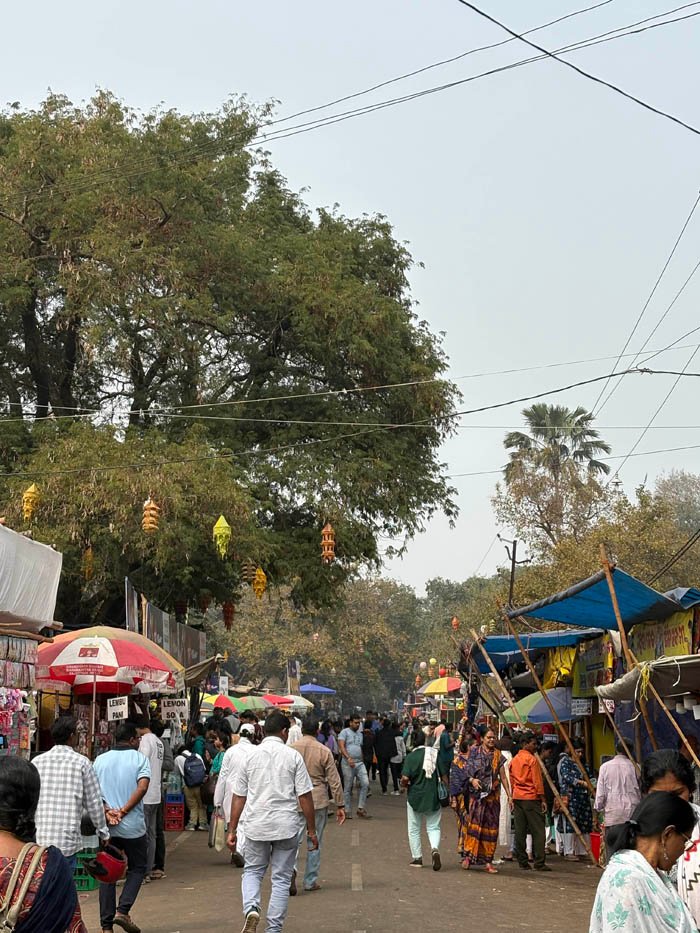
India is a country of voices. Silence is almost alien to our culture. We love talking, haggling, bargaining, arguing. For nothing, economist Amartya Sen wrote a book titled 'Argumentative Indian'.Our weddings are a lot about voices, giggles, arguments and counter-arguments. Our streets are full of voices and noises. This is a collage of India's many voices as the nation turned 80 on August 15. These voices are not related to each other. They are droppings from that caravan called life in India.
We board the train from Ahmedabad, this train goes to Bengaluru via Manmad. After putting our luggage, we exchange pleasantries with our co-travellers. Suddenly all of us start feeling restless. And we discover that the AC is not working properly. Finally the coach manager is being tracked down. A lady passenger walks up to him and asks him to adjust the AC properly. The coach manager seems to be in an aggressive mood and he says, “This is how the air-conditioned coaches are like.” She gives him a stern look and says, “Do you think that this is the first time I am travelling in an AC coach?” Well, the argument ends there. The AC starts to work in full swing almost magically. And we are all happy.
**************
This conversation is from my visit to Shirdi, a temple town. Everything happens around the temple. From a dusty little village, it is now in the midst of a construction boom. There are hotels and there are more hotels. We are walking on the main street in the evening. The mellowing sun makes everything feel nice. Suddenly, my attention is diverted by cries of 'Ramphal.... Ramphal'. This is the first time I am seeing this fruit called Ramphal, it's a much bigger version of sitaphal (read custard apple).
And there comes a beggar woman and she probably takes a liking to me. She follows me and asks “Bhabhi (sister-in-law), please give me something.” Well, it definitely sounds endearing. But I am in no mood to fall for this affection. She is also in no mood to give up. Then she says, “Didi (elder sister), please give me something.” I keep on walking, pretending that I haven't heard her. And then she says, “Madam (she gets into a professional mood), give me something.” I am impressed by her creativity and she knows her business. Even as I move forward, she walks behind me and says, “Mataji (O Revered Mother), please give me something.)”
At that time, I just couldn't control my laughter. We are definitely a creative nation.
******************
There's a young boy in my apartment who loves playing cricket. One evening, I see him walking with great confidence (wearing a helmet, pad and gloves) to play a game in the parking space of the apartment. I tell him, "Hello, Virat Kohli. " He looks at me, "Na aunty, Subhman Gill." He's in sync with time.
*******************
I am in a mood to buy some traditional dolls in a local market in Ahmedabad. I ask him the price, he says "Rs 200". I remember my mother-in-law's wise words -- "Don't be a fool. When you bargain, just reduce the price to half and then subtract Rs 20." I try to be wise and say, "Rs 80." He doesn't agree but still follows me and urges me to buy. I tell him, "Why are you following me?" He walks faster and goes ahead of me. And then tells me, "Who's following whom? Me or you?" I start laughing and then the bargaining starts again.
************************
I am on a visit to an elephant sanctuary in Karnataka. As a great lover of elephants, I am really excited to see some wild elephants. Our guide tells us to wear sturdy shoes, a cap and comfortable outfits as it involves lots of walking in the forest. We get ready and start our day on an enthusiastic note. We keep on walking and he tells us to follow him. And then suddenly he tells us in a totally dramatic tone, “Shhhhhshhhh…. Now start crawling because I can sense some movement.” And then we start crawling for quite some time but no sighting of elephants happens. We keep on walking, crawling with utmost sincerity and obedience and then he shows us some elephant shit on our path and tells us, “I told you na … see the movement is happening right here. Just keep on walking.” We keep on walking for hours and crawling without having any darshan of wild elephants. Finally, he brings us back to our guest house. When we tell him about our big flop show of not seeing any elephants, he cooly tells us, “At least you all are very lucky to see elephant shit. Many don’t even get to see that. So, what are you all complaining about?” We all laugh and marvel at his marketing skills.
***************
I am in Goa with a close friend of mine. Both of us decide to go on a high-octane water-scooter ride. We choose one guy to take us on this ride. His name is Rick. Even as I am putting on the life-jacket, I am imagining myself getting a sea-burial. My friend tells me, “We are too young to die. More so in the sea. So you hold him tightly.” I sit in the middle holding Rick (he is the one driving the scooter) and my friend sits behind me on the scooter. As the scooter goes on a dancing ride in the Arabian Sea, both of us put our lungs power to full use. And as advised by my friend, I am holding Rick really tightly. Suddenly, in the middle of the ocean, Rick screams at the top of his voice, “Mujhe saans lene do.. itna tight mat pakdo (Allow me to breathe. Don’t hold me so tightly). Mein mar jaunga toh tum dono bhi idhar mar jaogi. (If I die here, you two will die too). And then I just can't stop laughing but I loosen my grip on Rick. We all come back safely.
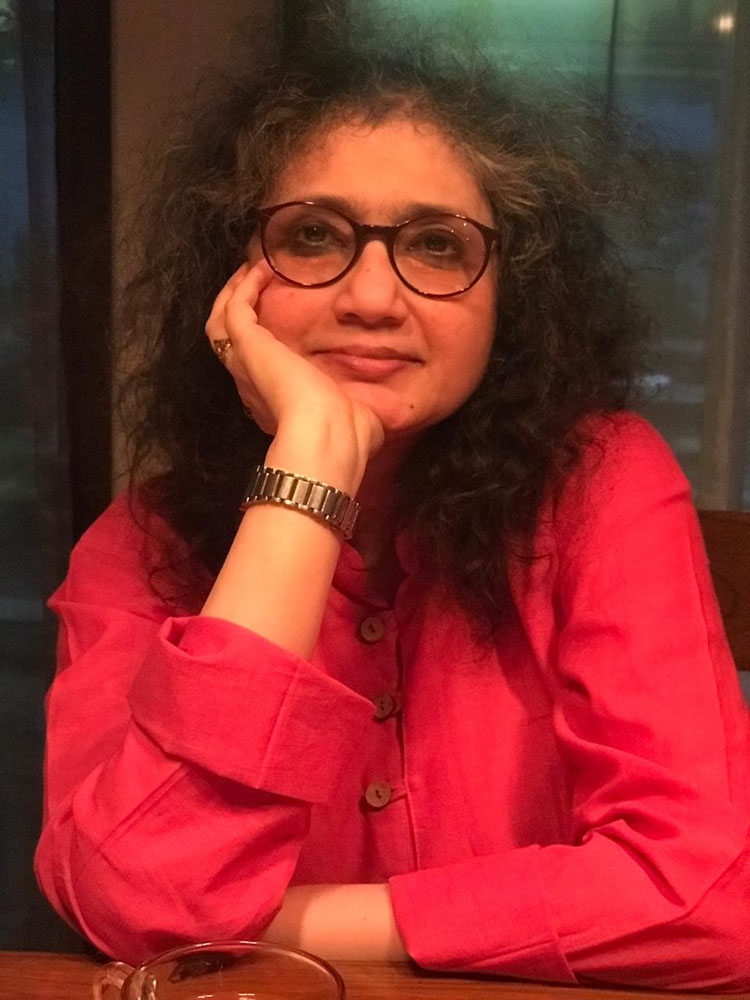
Deepika Sahu is an Ahmedabad-based senior journalist with a career spanning since 1995. During her career, she has worked with India's premier media organisations, including the Press Trust of India (PTI) in New Delhi, Deccan Herald in Bengaluru, and The Times of India in Ahmedabad. Currently, she is contributing India-centric features to Melbourne-based The Indian Sun, a cutting edge media platform. In addition to her journalism career, Deepika is involved in teaching English and Communication Skills to learners from different parts of India through Manzil, a Delhi-based NGO. Beyond her professional endeavors, Deepika is passionate about India's rich diversity, literature, blogging, quiet hours at a cafe and enjoying a cup of tea.
BECAUSE I WANTED TO
Ananya Priyadarshini
He smoked as though cigarettes were a form of punctuation.
One before work. One with coffee. One after lunch. Two on the way home. More when the day had been particularly long, though he could never explain what made one day longer than another.
She knew the number.
She had once counted.
Twenty-seven.
She had been sitting cross-legged on his bed, her hair spilling down her back and over the edge of the mattress, while he stood at the window with the twenty-seventh cigarette between his fingers.
“Twenty-seven,” she said.
He turned.
“What?”
She pointed at the cigarette.
“You've had twenty-seven.”
He looked genuinely impressed.
“You counted?”
“I was bored.”
“You could have counted something useful.”
“I was counting how many times I've asked you to quit.”
He smiled.
She didn't.
“I'm going to quit.”
“When?”
“Soon.”
“You've been saying soon for three years.”
“Maybe I'm bad with deadlines.”
She threw a pillow at him.
He caught it and laughed.
That was how they survived most things then.
She was a banker.
So was he.
They had met somewhere between fluorescent lights, spreadsheets and bad coffee and had gradually become something neither of them had thought to name.
Friends, technically.
Except friends did not sleep with their feet tangled together.
Friends did not discuss where the dining table would go in a house they hadn't bought.
Friends did not know what the other's mother would say about the wedding.
They were getting married.
At least, that was the plan.
She painted at night.
She had always painted.
Not particularly well at first.
Then better.
Then, eventually, very well.
She also wrote poems—some good, some embarrassing, some she would later deny having written at all.
Her long hair was another thing she had always had.
Thick, black, almost absurdly long.
He liked it.
He liked to complain about it too.
“You're going to kill me with this thing someday.”
“Then stop sleeping on it.”
“Move it.”
“Move yourself.”
Sometimes he braided it badly just to irritate her.
Sometimes she left it loose because she knew he liked it that way.
He thought he knew her.
Perhaps he did.
He just didn't understand her.
---
The bank announced layoffs one winter.
People began speaking in lowered voices.
Managers started having private meetings.
The cafeteria became full of speculation.
She wasn't worried.
She was good at her job.
Very good.
Her employer had no intention of letting her go.
They told her so.
They offered her incentives to stay.
Her manager asked her to reconsider.
She resigned anyway.
He stared at the resignation letter when she showed him.
“You're serious?”
“Yes.”
“But they're not laying you off.”
“I know.”
“They're literally trying to retain you.”
“I know.”
“Then why are you leaving?”
She looked at him.
“Because I want to.”
He waited.
He thought she was joking.
She wasn't.
“You're leaving a secure job when you don't even have another one?”
“Yes.”
“To paint?”
“Yes.”
“For how long?”
She smiled.
“I don't know.”
He stared at her.
There were so many things he wanted to say.
Instead, he said,
“Why?”
She laughed softly.
“I just told you.”
“That isn't a reason.”
“It is for me.”
He disliked that answer.
Not because it was irrational.
Because it wasn't.
There was nothing to argue with.
She wasn't angry at the bank.
She wasn't unhappy there.
She wasn't escaping anything.
She simply wanted something else.
And that, to him, seemed like an irresponsible way to make a life.
---
A few months later, she told him she was moving.
“Where?”
She named the city.
He laughed.
Then realised she was serious.
“Why there?”
“I like it.”
“Like what?”
“The city.”
“That's it?”
“Yes.”
He looked at her.
“That place has no professional potential.”
She shrugged.
“I'm not looking for professional potential.”
“You gave up a banking career and moved to a city with no banking career.”
“I don't want a banking career.”
“And you're going there because you like the city?”
“Yes.”
He rubbed his forehead.
“Do you ever think about what happens five years from now?”
“Sometimes.”
“And?”
“I don't know what happens five years from now.”
He stared at her.
She smiled.
He did not.
That evening, they fought.
Not about the city.
Not really.
They fought because he couldn't understand how someone could make a decision without first building a case for it.
She tried explaining.
He tried correcting.
Eventually she said,
“You don't need to approve of every choice I make.”
“I didn't say that.”
“You're asking me to justify it.”
“Because we're supposed to build a life together.”
She looked at him for a long time.
Then said,
“Maybe that's the problem.”
He went silent.
She softened immediately.
But the sentence remained.
---
He stopped talking about introducing her to his mother.
There was always a reason.
Timing.
Work.
His mother's health.
Her new city.
Her uncertain career.
They would do it when things were settled.
She noticed.
She always noticed.
She asked once.
Then twice.
The third time, she stopped.
She also stopped asking him to quit smoking.
That was the beginning of the end.
Not because either of them stopped loving the other.
Because she began to understand that love could not make someone see what they had no desire to see.
---
They drifted apart quietly.
No affair.
No betrayal.
No final catastrophe.
Just two people who had once known the exact hour the other would call, gradually learning to live without that knowledge.
She moved.
She painted.
He remained where he was.
He smoked.
They spoke less.
Then not at all.
And somewhere in the middle of all that silence, they stopped being engaged to each other.
Neither of them knew precisely when.
---
Two years later, he lost his job.
The bank called it restructuring.
He called it being thrown out.
The distinction stopped mattering when the money ran out.
He watched his savings disappear.
Then his investments.
Then the things he had never imagined he would have to calculate.
One evening, he stood outside a cigarette shop and counted the cash in his wallet.
Not enough.
He checked again.
Still not enough.
He went home.
That night, lying awake, he thought of her.
He remembered the twenty-seven cigarettes.
Her expression.
Her voice.
Quit.
And something strange happened.
He didn't feel accused.
He felt sad.
Because now he knew what she had wanted.
Not a promise.
Not a sacrifice.
Not proof that he loved her.
She had simply wanted him to want to stop.
He had always assumed that if he quit for her, it would count.
He was beginning to understand that she would have hated that.
He wondered if she would have been happy to see him now.
Broke.
Unemployed.
Unable to afford cigarettes.
He smiled at the absurdity of it.
Then he realised he missed her.
Not the idea of her.
Her.
Deeply.
---
His mother took him to Kashi.
For his job, she said.
For his marriage, she said later.
He told her he didn't believe in God.
She told him God had not asked.
So he went.
Kashi was loud with bells, smoke, prayers, flowers and the river.
His mother prayed.
He stood beside her.
When she closed her eyes, he closed his.
He had no idea what to ask for.
His career seemed too trivial.
Marriage seemed ridiculous.
Forgiveness seemed presumptuous.
So he asked for one thing.
Let me see her.
Not have her.
Not bring her back.
Not even speak to her.
Just let him see her.
Once.
He opened his eyes.
---
He saw her near the river.
At first he recognised only the way she sat.
Then the shape of her shoulders.
Then her hands.
Then the face.
And then—
nothing.
His mind simply refused the rest.
Her hair was gone.
Completely.
The thick, impossible length that had once covered half her back.
The hair he had told her never to cut.
The hair he had complained about.
The hair he had loved.
Gone.
She was sitting before the river while someone shaved the last remnants from her scalp.
He stopped.
Something inside him went very still.
He could have walked toward her.
He could have called her name.
He could have asked what had happened.
But he didn't.
Because he knew.
He knew her well enough to know what she would say.
Because I wanted to.
And suddenly he couldn't bear it.
Not the baldness.
Not even the loss of the hair.
The unbearable ease of the answer.
She would not tell him she had done it because she was suffering.
Or because she was trying to forget someone.
Or because she wanted to punish herself.
She wouldn't give him a wound he could understand.
She would simply say she wanted to.
And that would be enough.
It had always been enough for her.
He turned around.
He went home without letting her see him.
---
Four days later, he received an interview call.
An art gallery.
Accountant.
He almost deleted it.
Then he laughed.
Life, he had begun to suspect, had a strange sense of humour.
He went.
The gallery was white and quiet.
Paintings covered the walls.
The smell of turpentine lingered beneath the air-conditioning.
Someone led him into an office.
She was sitting behind the desk.
For several seconds, neither of them moved.
She looked at him.
He looked at her head.
She noticed.
Of course she noticed.
Then she looked at his résumé.
“Please sit.”
He sat.
She read.
“Your record in banking is good.”
“It was.”
She glanced up.
“You were laid off?”
“Yes.”
“I'm sorry.”
He shrugged.
She looked back at the résumé.
“Why do you want to work at a gallery?”
He nearly laughed.
There were a hundred answers.
He gave her the least dignified one.
“I'm broke.”
She looked at him.
“I can see that.”
He smiled.
“Also, I want to afford cigarettes again.”
For the first time, she smiled.
Barely.
It was enough to make his chest hurt.
“You're an accountant.”
“Yes.”
“You've never worked in an art gallery.”
“No.”
“You've never worked with artists.”
“No.”
“Why should I hire you?”
He looked around.
At the paintings.
At her.
Then said,
“Because I'm good at numbers.”
She considered that.
“Monday.”
He blinked.
“Monday?”
“Start Monday.”
---
They worked together.
It was strange.
Sometimes unbearably so.
She was his employer.
He was her accountant.
They spoke about invoices and taxes and gallery commissions.
They discussed artists.
They discussed money.
They discussed almost everything except themselves.
He watched her work.
She watched him work.
He learned that she had become successful.
Not famous.
Not yet.
But successful enough that people knew her name.
Successful enough that her paintings sold.
Successful enough that the decision he had once regarded as foolish had become, inconveniently, a life.
He did not apologise for having doubted her.
She did not ask him to.
One evening, months after he'd joined, he finally asked about her hair.
“Why did you shave it?”
She looked up from the papers.
He expected an explanation.
She gave him one.
“Because I wanted to.”
He laughed once.
Not because it was funny.
Because of course.
She waited.
“That's it?”
“Yes.”
He looked at her.
“You just wanted to?”
“Yes.”
He shook his head.
She smiled.
“You're still trying to find the reason.”
He didn't answer.
She went back to her work.
He watched her for a while.
He still didn't understand.
---
His first salary arrived.
It wasn't much.
But it was his.
He paid rent.
Bought food.
Cleared a few debts.
And bought cigarettes.
He stood outside the gallery, opened the packet and lit one.
He inhaled.
The smoke entered him like an old habit returning home.
He closed his eyes.
She saw him through the glass.
She didn't say anything.
Neither did he.
---
Her exhibition opened in spring.
He had watched her prepare for it for months.
The paintings had changed.
Or perhaps he had.
There were rivers.
Empty rooms.
Women without faces.
A series of portraits of the same woman, each painting removing something from her—hair, jewellery, clothes, colour—until the final portrait was almost entirely bare.
And there was one painting of the Ganga.
A woman sat on the steps.
Her head was shaved.
Her face was turned away.
He stood in front of it.
He knew immediately that it was not a portrait of grief.
It was a portrait of release.
The exhibition was a success.
A real one.
People crowded the gallery.
Collectors came.
Critics came.
Someone called her work fearless.
Someone else called it liberating.
She smiled politely at both.
He watched her from across the room.
She looked happy.
Not because she had proved him wrong.
That was what hurt.
She looked happy because she had made something she wanted to make.
There was no audience she needed permission from.
No person she needed to convince.
No reason she needed to provide.
She had simply wanted to.
And somehow, she had built a life out of that sentence.
---
Late that night, after the guests had left, he found her alone.
She was standing near the window.
Barefoot.
Her head gleaming beneath the gallery lights.
“Congratulations.”
“Thank you.”
“You were brilliant.”
“I know.”
He laughed.
She smiled.
For a moment, it felt like the old days.
Then he said,
“Can we start over?”
Her smile faded.
He continued.
“I mean it.”
She studied him.
“Have you quit smoking?”
“Yes.”
“When?”
“A long time ago.”
She looked surprised.
“I'll quit again.”
“Again?”
He smiled.
“For good. For you.”
She looked away.
“And you have to promise me something.”
“What?”
“Don't shave your head again.”
She closed her eyes.
He knew immediately.
He had said the wrong thing.
When she opened them, there was no anger in them.
Only a tired kind of tenderness.
“You still don't understand.”
“I love your hair.”
“I know.”
“I just don't want you to—”
“That's the point.”
He stopped.
She looked at him.
“You never do anything simply because you want to.”
His expression changed.
She continued.
“You left banking because you needed the money for cigarettes. You took a job here because you wanted to afford them again.”
“That was a joke.”
“I know.”
She smiled faintly.
“You don't even realise how much you need a reason.”
He said nothing.
“You want to quit smoking for me.”
“I want to quit.”
“Then quit.”
“I will.”
“For yourself?”
He couldn't answer quickly enough.
She saw it.
“You see?”
He looked away.
“You wanted me to stay in that city because you thought it had better professional opportunities.”
“I thought it was better for you.”
“I know.”
“You wanted me to keep my career because it was secure.”
“I was worried about you.”
“I know.”
She came closer.
“You thought there had to be a reason for every choice.”
He stared at her.
“And when there wasn't one, you thought I was being careless.”
“I was trying to build a life with you.”
“Yes.”
Her voice softened.
“That was the problem.”
He looked wounded.
She looked almost sorry.
“I never wanted you to understand every choice I made.”
“Then what did you want?”
She took a breath.
“I wanted you to trust that I knew what I wanted.”
He had no answer.
She touched her bare head.
“When I shaved this, you know what I thought about?”
He looked at her.
“You.”
His heart lifted.
Then she continued.
“I knew exactly what you'd ask.”
He went still.
“I knew you'd want to know why.”
She smiled sadly.
“And I knew I'd tell you the truth.”
He whispered,
“Because you wanted to.”
“Yes.”
He looked at her.
“I don't understand that.”
“I know.”
She turned toward the paintings.
“You think wanting something isn't enough.”
“Sometimes it isn't.”
“For you.”
He frowned.
“For me, it is.”
She faced him again.
“That doesn't mean I'm always right. It doesn't mean every impulse is wise. It doesn't mean consequences don't exist.”
She paused.
“It means I don't need another person to make my choices legitimate.”
The words landed quietly.
He felt them anyway.
She continued.
“You quit smoking for me. You want to keep your hair because I like it. You chose this job because you needed something. You wanted me in a certain city because you thought it made sense.”
She looked directly at him.
“Everything has to make sense to you.”
He swallowed.
“What's wrong with that?”
“Nothing.”
She smiled.
“Except that sometimes you want something.”
He stared at her.
“And you don't know how to admit that without turning it into a reason.”
Silence.
He thought of all the times he had loved her.
All the times he had been afraid.
All the times he had mistaken fear for responsibility.
He thought of the resignation letter.
The city he had hated.
The cigarettes.
The hair.
The river.
The prayer.
He suddenly understood that she had not been careless.
She had simply never been interested in defending her freedom to him.
He had mistaken that for immaturity because he had never possessed it himself.
His voice was quiet when he asked,
“Do you love me?”
She looked at him.
“Yes.”
It broke something in him.
He hadn't expected the answer to hurt.
“Then why can't we?”
She looked down.
Then back at him.
“Because love isn't the same thing as wanting the same life.”
He said nothing.
She walked toward the door.
He called her name.
She stopped.
“Maybe we can start over.”
She didn't turn around.
“Maybe.”
“When?”
She thought for a moment.
“When we both want to.”
He frowned.
“We do.”
“No.”
She turned.
“You want me.”
He stared at her.
“That isn't the same thing.”
“What else is there?”
She smiled.
“Everything.”
He waited.
She said,
“Start over when you quit smoking because you don't want cigarettes anymore. Stay at the gallery if you stay because you want to be here. Leave if you don't.”
Her eyes softened.
“And if you ever choose me, choose me because you want me.”
She glanced at the painting of the shaved woman by the river.
“Not because loving me gives you a reason to become someone else.”
He looked at her.
“And you?”
“What about me?”
“Would you change anything for me?”
She thought.
Then said,
“I might.”
His heart moved.
She smiled.
“But not because you asked.”
And there it was.
The thing he had spent years mistaking for selfishness.
It wasn't.
It was freedom.
---
After she left, he stayed in the gallery.
The paintings surrounded him.
The river.
The women.
The empty rooms.
The bare head.
He reached into his pocket.
The cigarette packet was still there.
He took one out.
Held it between his fingers.
He could smoke it.
He could throw it away.
He could quit tomorrow.
He could quit tonight.
For the first time, none of those choices had anything to do with her.
He looked at the cigarette.
Then he laughed softly.
Because he finally understood the cruelty of what she had been trying to tell him.
She had never asked him to give anything up for her.
She had only wanted him to be capable of giving something up without needing her at the other end of the sacrifice.
He put the cigarette back.
Not forever.
Not for her.
Just for tonight.
He turned off the gallery lights.
Outside, the city was dark.
He walked home alone.
And for once, he did not wonder whether she would come back.
He did not wonder whether she had forgiven him.
He did not wonder whether he had finally become the man she wanted.
He simply walked.
Perhaps that was what she had meant all along.
Not that you should stop loving someone.
Not that you should stop needing anyone.
Only that, somewhere underneath all that love and need, there should remain one small, untouched place that belonged entirely to you.
A place where you could say:
I want this.
And not have to explain why.
Dr Ananya Priyadarshini
Budding orthopaedic surgeon
Passionate about literature (inherited from my mother)
I think in 'Odia', write in English, Hindi and Odia.
Hoping my stories are relatable more than anything else.
THE VISION OF THREE GIRLS
Rabi N. Dash
The vision came to me in the middle of the night.
There was no transition, no gradual slipping from wakefulness into sleep. One moment I was lying in my bed, and the next I found myself standing somewhere I had never been before. Yet, strangely, everything seemed familiar. I knew the places. I knew the people. Above all, I knew the time.
It was fifteen years into the future.
And there were three girls.
I cannot explain how I knew who they were or how old they were. In the vision, such knowledge required no explanation. They were simply there, fully formed in my consciousness, as though I had known their lives all along.
The first girl was standing alone on a railway platform.
It was early morning. A pale, uncertain light hung over the station. She carried a small suitcase in one hand and held her telephone in the other. Every few moments she looked towards the entrance of the platform, waiting for someone.
I knew she was expecting someone.
The train arrived.
Passengers got down. Others hurried into the coaches. The platform became noisy for a few minutes and then gradually quietened again.
But the person she was waiting for never came.
She looked at her phone once more. There was no message.
Then something changed in her face. It was not anger, nor even disappointment. It was the quiet expression of someone who has finally understood a truth she had been resisting for a long time.
She put the phone away, lifted her suitcase and walked slowly towards the exit.
I wanted to call out to her.
I wanted to tell her to stop.
I wanted to run after her and somehow alter whatever was waiting for her beyond that station.
But I had no voice.
I could see her.
I could feel her sorrow.
Yet I could not reach her.
Then the scene changed.
The second girl was sitting alone in a hospital corridor.
The lights were harsh and white. She wore a simple blue dress, and her hair was loosely tied behind her head. She sat very still, her hands clasped tightly together.
Behind the closed door was someone she loved.
I did not know who.
Perhaps it was her mother. Perhaps her father. Perhaps someone else whose absence would change the course of her life.
She was praying.
There were tears in her eyes, but she was not crying. It was the peculiar stillness that comes after one has exhausted all one’s tears.
A doctor eventually came out.
He looked at her for a moment before sitting beside her.
He placed his hand gently on her shoulder.
She looked up at him.
He said something.
I could not hear the words.
But I understood.
The news was bad.
I felt a terrible pain inside me.
Again I tried to move towards her. Again I tried to put my hand upon her shoulder and tell her that she was not alone.
Again my hand passed through the air.
I was only a witness.
A helpless witness to a sorrow that had not yet happened.
Then came the third girl.
She was standing on the balcony of a tall building at sunset.
Below her stretched an enormous city, already beginning to glow with thousands of lights. The sky was fading from gold into violet.
She was not crying.
That somehow made the scene more painful.
She looked utterly alone.
After a while she reached into her handbag and took out an old photograph.
I recognised the people in it, though I had never seen them before.
She held the photograph against her heart for a long time.
Then she whispered something.
I could not hear the words.
Yet, somehow, I understood them.
She was saying goodbye.
That was the moment the anguish became unbearable.
I suddenly realised that I knew all three girls—not merely as characters in some strange vision, but with the peculiar intimacy one feels for people whose lives matter deeply.
I loved them.
And I wanted to save them.
But I could do nothing.
Nothing.
I cried out into the darkness:
“Why have you shown me this if you will not allow me to change it?”
There was no answer.
The three scenes disappeared.
For a moment there was only darkness.
Then, unexpectedly, I saw the three girls again.
But now they were children.
Perhaps eight or nine years old.
They were running through a garden in the golden light of afternoon, laughing with the complete abandon that belongs only to childhood.
One of them stumbled.
The other two immediately turned back.
They lifted her up, brushed the dust from her clothes and began laughing again.
Then all three ran together towards the trees.
I watched them disappear.
And something within me changed.
Perhaps, I thought, the vision had not shown me the future at all.
Perhaps it had shown me my fear of the future.
Perhaps it was not a prophecy but a reminder of the strange helplessness that comes with loving another human being.
We can love someone deeply.
We can pray for them.
We can guide them.
We can stand beside them.
But we cannot walk every road for them.
We cannot take every sorrow away.
We cannot bargain with time.
And perhaps that is one of the deepest cruelties—and beauties—of being human.
Then the darkness began to dissolve.
I woke up.
For several seconds I remained completely still.
The room was familiar. The ceiling was above me. The clock was ticking quietly. Everything around me was exactly where it should be.
But the vision remained.
Not fragments.
Not impressions.
Everything.
The railway station.
The suitcase.
The unanswered telephone.
The hospital corridor.
The doctor’s hand.
The balcony.
The photograph.
The three faces.
I remembered it all with a clarity that frightened me.
I sat on the edge of the bed.
The first question that came to me was:
Can the future be changed?
Then came another:
Was it ever the future?
And finally, the question that troubled me most:
Why was I shown it?
I walked to the window.
Outside, the world was still asleep. The first light of dawn had not yet touched the sky.
And slowly, almost imperceptibly, another thought came to me.
Fifteen years separated me from those scenes.
Fifteen years.
Perhaps that was not a sentence.
Perhaps it was a gift.
If the vision meant anything at all, perhaps it was not telling me what must happen. Perhaps it was reminding me that the future is always being written by thousands of small choices, acts of love, accidents, courage, mistakes and moments of grace.
Those three girls were still somewhere in the present.
Still laughing.
Still growing.
Still making mistakes.
Still dreaming dreams whose endings they could not possibly know.
And I was here.
Perhaps the only thing I could do was to love the present more deeply.
To cherish people while they are here.
To say the words that are so often postponed.
To forgive sooner.
To be kinder.
To pray more sincerely.
Because perhaps the purpose of seeing suffering is not always to prevent it.
Sometimes it is to teach us not to take happiness for granted.
I closed my eyes.
The anguish was still there.
Rabi Dash is a recent entrant to the world of creative writing. After a lifetime of varied experiences and observations, he now writes primarily for the joy of storytelling and reflection. His interests include spirituality, history, human nature, and the small moments that reveal deeper truths. Writing, for him, is less a pursuit of publication and more a way of sharing thoughts, memories, and wonder with fellow readers.
He is a retired officer from the Indian Revenue Service (IRS) who served as the Director General of International Taxation and subsequently acted as a Member in the Tribunal for Prevention of Money Laundering.
NEVER AGAIN
Dr. Sukanti Mohapatra
It was a scorching summer afternoon with the sky pouring heat like fire. Upon hearing the news of his friend's passing from a sudden heart attack, Gopalakrishna headed straight from his office to the village. Neighbors, friends, and relatives had already gathered there.
Aniruddha, who had passed away at just fifty by massive heart attack, lay bound on a wooden bier. People were looking around for someone to perform the last rites.
"Doesn't he have a son?" asked someone who barely knew the family.
Those who knew the truth remained quiet.
"Yes, he has a son," someone suddenly said with a sigh.
Everyone turned to look in that direction. Standing there was a middle-aged woman dressed in white, her demeanour radiating grace and dignity. A few acquaintances bowed to greet her. Gopalakrishna Mishra, Aniruddha’s close friend, stepped toward her.
"Surama, is that you?" he asked in utter disbelief.
A gentle, faint smile appeared on Surama's face. Looking at the body lying on the bier in the courtyard, she said calmly, "Why delay, Krishna? It's summer—do you want Ani to decompose?"
"No, but... the last rites! Tell me, Surama, will Tapomay be coming?" Gopalakrishna asked hopeful.
"How can I say for sure? Coming all the way from Singapore may or may not be easy, but he has been informed," Surama replied quietly.
Gopalakrishna stared at Surama. He was seeing her after twenty-five long years. She looked just as she used to—beautiful and slender, untouched by time. Tears welled up in his eyes as old memories rushed back.
Thirty years ago, Gopalakrishna, Aniruddha, Surama, and Kanchan studied together in the same college. The two young men were best friends, and so were the two young women. Both women excelled in studies, dance, and music. Gopalakrishna and Aniruddha were the sole heirs to prominent families, but they were loved not for their wealth, but for their helpful nature, ability, and leadership.
In time, the two friends fell in love with the two popular young women. Right after graduation, Aniruddha married Kanchana to fulfill his father’s last wish to see a daughter-in-law. Gopalakrishna and Surama went on to pursue their Master's degrees, and their love grew even deeper.
Around that time, two pieces of news arrived—one sad, one joyful. Aniruddha’s father passed away peacefully after being lovingly cared for by Kanchan for over a year. Aniruddha had already taken over his father’s business, and the second piece of news was the birth of his son, Tapomay, which soon erased the pain of losing his father.
He joyfully told his wife Kanchana, "I see my father in our son, Kana." Kanchana smiled and kissed her baby's cheek. Their happy married life filled the hearts of their friends; Gopalakrishna and Surama with joy.
But happiness, as they say, is fleeting.
Gopalakrishna passed the Odisha
Administrative Service examination and was posted to a distant town. Surama followed him there and joined a local college as a lecturer. Talks of their marriage began between both families.
Then came the terrible news. While taking a holy dip in the early hours of Kartika Purnima in the river behind their house, Kanchan was swept away by the strong current, and her lifeless body was later recovered. Aniruddha was shattered, and three-month-old Tapomay became motherless.
Gopalakrishna and Surama hurried to the place by taxi. Unable to bear his closest friend's grief, Gopalakrishna pulled Aniruddha aside and said, "Marry again, Ani, I will personally find a good girl for you."
Despite his deep sorrow, Aniruddha chuckled sadly. "Find a girl? Really? Someone who won't be a stepmother to my child, but just a mother? Kanchana’s memory will haunt me forever. How could I accept another woman? Besides, what good girl would marry a widower with a newborn baby?"
"There is a girl, only you have to make up your mind." Said Gopal a little seriously.
Aniruddha tried to avoid this topic and immersed himself in the preparation of ekadasaha karma of his dear departed wife. Surama and Gopalkrishna stayed in the house until the rites are over. Baby Tapomaya was well taken care of by Surama. Whenever Aniruddha looked towards his infant son his heart broke with a deep pang of sorrow. Yet, he never entertained Gopal's proposal to remarry.
It was the day after all rites were over. Aniruddha was carefully packing Kanchan's belongings in a big suitcase. Gopalkrishna entered the room in silence.
"Memories cannot be packed and given away, I know. But you have a choice to move on and create new memories". Aniruddha listened but didn't reply. A sigh escaped him. Gopal again asked, "Did you consider my suggestion?"
Aniruddha replied a little restlessly, "was it worth considering?"
"Yes, of course it is, Ani. Think of Tapomaya's future. How will he survive? Your mother is no more. Mother-in-law is sickly."
I know this will be hard Gopal, but I cannot trust a stepmother for my son."
"Even if she will be more than a mother for him?"
"Don't fantasize Gopal, such women are rare nowadays."
"Not at all, I know someone who will truly care and fill your house with joy."
"Really? Where did you find her, may I know?" Aniruddha's tone was sarcastic.
"Here, in your very house." Gopal said with some emphasis.
Aniruddha froze at Gopalakrishna's words. "Are you out of your mind? Have you brought someone from the streets?"
"Not from the streets—she is a friend of yours too."
Those words shook Aniruddha out of his sorrow. Summoning strength into his weak, starved body, he slapped Gopalakrishna across the face.
"Get out of my house, both of you! Did I ask you to sacrifice your happiness? You are going to marry Surama! Doesn't it hurt you to force her on me?"
"No, it doesn't. Does love always have to end in marriage?" Gopalakrishna argued. "Surama is a good person; she will love your son like her own. Wasn't Kanchan her friend too?"
Aniruddha stood stunned. "Have you even asked her, Krishna? Does her own happiness and choice mean nothing to you?"
"I am asking her now," Gopalakrishna said, summoning Surama.
Surama entered, holding baby Tapomay in her arms, her eyes full of questions.
"Surama, please marry Aniruddha. Give a motherless child a new life. This is my plea to you."
Surama felt thunderstruck. Her heart got shattered by the force of such cruel, unreasonable words of Gopalkrishna. Without saying a word, she turned and walked away.
A month after Kanchan’s tragic death, Aniruddha married Surama.
The sound of a car stopping outside brought everyone back to the present. Seeing Tapomay step out, both Gopalakrishna and Surama's eyes lit up, and the funeral arrangements began immediately.
Before leaving after the rituals, Tapomay bowed to Surama and said, "Maa, you are free now. Live your life without any burden on your heart and reclaim the happiness you lost—that is my only wish. You have sacrificed and suffered so much for me."
Wiping her tears, Surama gently patted his head.
That afternoon the house was almost quiet and Surama, ready to depart, was looking outside sitting on an easy chair in the balcony of Aniruddha's house when Gopalakrishna approached. After a brief conversation he suddenly asked "Will you forgive me, forget the past, and accept me as your life partner, Surama?"
Surama looked at him intently and said, "If I wanted to, I could have done so twenty five years back Krishna. Your friend had told me, 'Don't listen to this fool, Surama. His love for me has made him selfish. I will reason with him.''
Taking a deep breath, Surama continued, "It was I who asked him not to try to bring you into sense back then. I was angry with you. I agreed to marry Aniruddha only to take revenge on you, for your cruelty, incondideration, lack of empathy for my feelings. Did you think I was a commodity to handover to anyone you please? That marriage was only for appearance's sake. Not for a single day did he assert any marital rights over me. We lived together as Tapomay’s parents, not as husband and wife.
Once Tapomay left for his studies, Aniruddha himself encouraged me to take up job again and live independently. Tapomay knows everything—his father had told him the truth. I owe nothing to anyone here. But with what right are you proposing to me today? That day, blinded by sympathy for your friend, you never gave my feelings a thought. You never even came to see me. Even if you couldn't come home, you could have visited me at my college, Krishna!" Surama continued, "What didn't happen then will never happen now."
Layers of long-suppressed anguish melted into tears in Surama's eyes. She quickly put on her sunglasses and walked down towards her car. She didn't look back when she left.
Gopalakrishna, an unmarried man of fifty looked vacantly as Surama's trail receded and then turned his face away towards the distant horizon.
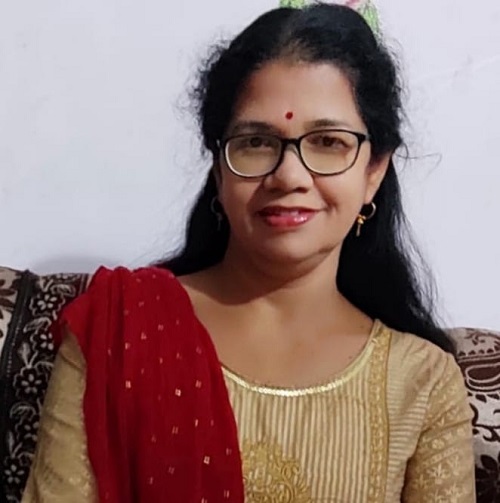
Dr. Sukanti Mohapatra, a senior lecturer in English in the Higher Education Department, Govt. of Odisha is a bilingual writer writing both in Odia and English with equal flair. Her poems, stories and articles are published in many state, national and international magazines and journals. She has three published anthologies of poems to her credit. Besides, she has published many research articles in different research journals. She contributes regularly to Radio Bulbul.
It was more than a thirty minutes’ bus travel from Mylapore to Neelangarai. Being afternoon. the bus was not too crowded and Swapna got a window seat and settled comfortably. Her mother was worried that she was going that ‘ far ‘ to work but Swapna refrained from just sitting idle till Christmas that year . And, this was just July. The job of a Math teacher would fall into her lap only from January the coming New Year, but all the formalities had to be completed in the school in December when that private school would close for vacation. She had spoken to the Headmistress and the lady was very much impressed by Swapna’s curriculam vitae. Her M Sc in Math and the grades pleased the Headmistress.
“ It is a pity that I can’t hire you immediately. The present Math teacher is expecting her first child in December and will be away for more than a year. I cannot promise you that you will teach here after a yeat but I am happy to enrol you as a teacher,” she had said.
But Swapna was thrilled. The campus looked beautiful and the Headmistress impresses her.
‘I must pray for my permanency’ in the school,’ she thought. ‘I must keep my mother happy. She can perhaps stop working so hard.’
Her mother had started a Canteen at home and was supplying food to eleven families. She had a helper to cut the vegetables and grate and grind coconuts and pack the food also in he tiffin carriers. There was a boy who came promptly at eight thirty in the mornings to pick up the carriers and supply to the eleven homes. The clients loved her “food” which they decared was very tasty. In her free time in the evenings, she prepared some pickles and there was a big demand for those too. Swapna was a bit doubltful about her mother giving up all these.
Cookibg was a ‘passion; with her mother. One of the customers had asked her if Swapna was willing to go to a certain house in Neelangarai in the evening for two hours and make chapthis and side dishes for a month as their cook was leaving on a short leave. Swapna readily agreed much to her mother Radha’s surprise.
“Swapna...think anout it. You are an MSc graduate and will be taking up a job soon. Are you sure you can go here? This place Neelangarai is so far.”
Swapn had said, “Amma I am going to be paid six thousand rupees . it is quite tempting. And it is just for a month or perhaps a little more than a month. I love cooking...like you !! Why don’t I do it? “ Her mother had to agree and now Swapna was on her way to Neelangarai ( a cross-country - run. as her mother put it!!) to be interviewed by the lady of that house.
“Funny” she told herself. “Interview for a cook!! A cook who will be there just for three hours making chapathis. Ah!! Times are changing . So long as the present generation can afford to, they get help- maids to do the kitchen work. Cutting vegetables, kneading atta , grinding chutneys etc. have all become ‘work’. Not labour of ‘love’ anymore! “
Swapna had no qualms about doing house work. Her only brother was in Tanjore working in a well-known company and had just got married. His wife was working as a teacher in a school and very happy teaching English. A wionderful human being, she had wanted Radha to quit this “ food supply job” and move with her and Raju
- Swapna’s brother. . But Radha had refused.
“Let Swapna get the job first. She can perhaps apply later to teaching in your school...she will have some experience by then.We will think about shifting, later.”
Her daughter-in-law had agreed to this. They were a happy family.
There were fifteen minutes yet for the bus to reach Neelangarai. The vehicle was passing through a beautiful panorama. The sea- Bay of Bengal- gleamed and the breeze stroked her face gently.
“My thoughts are running at the same speed as the bus,” Swapna said to hersekf and a light smile spread over her face.
The children were always under the impression that their father was working in the Mid East. Radha had convinced them thus and they spoke to their friends also of their father sending them money. They were only wondering as to why their father was never coming home. Radha had told thrm that it was a ‘signed contract’ and they had to be patient. Those were the days when children never questioned the parents. Yes, innocent days...till their mother Radha told them the truth prior to Raju’s marriage.
Yes, Raju was then twenty three years old and she, Swapna - was twenty.
The story ran thus.
Radha was a very pretty looking young wife with the glow of a new mother. Swapna had just been born. Radha’s husband Venkatesh was ‘ lured’ into love by his co-worker. Fair skin and wealth blinded his vision.The affair had been going on for a while, till on a fine evening he announced that he was leaving them – the mother and two kids- and marrying Revathi, the name of his new “love”. Radha was shocked and was in tears. She felt terrible. Felt helpless.
Venkatesh was an adopted son and his uncle and aunt who had taken him under their wings when his parents died in an accident, that had happened when he was just four, tried their best to stop him but the mission failed. He went away with his things and Radha accepted this as her fate. She did not wish to be legally divorced and told Venkatesh that she will not cross his path or trouble him.
He walked out coolly with his things. His aunt and uncle were shattered
“ You are too soft. Did you not fight Radha? “ uncle had asked her.
“Uncle...when he is so infatuated with that moneyed woman, you think he will listen to anybody? I will blame her. Knowing that he is married and has two children, how could she...” Radha could not say anything more.
Venkatesh’s uncle and aunt were very fond of Radha. They showed their concern by buying her a small apartment in Mylapore and a sum of fifty thousand rupees were added to her account which had but a negligible amount. Venkatesh had withdrawn all the money from the joint account. He had an account of his own and did not care about his wife and children.
“Now it is up to you to manage Radha. We will take care of the children’s education till they complete their studies. I have entrusted everything to our family lawyer and he will take care. We plan to shift to Varanasi. I have got an assignment there to translate some Sanskrit books into English. We will keep in touch, my dear,’’ the uncle had said.
“ Uncle. This itself is a great gesture and I should be grateful to both of you till the end of my life. I am so blessed ! What more can I ask? ”
Radha started the Catering business in a small way and it flourished. Now she had a girl to help her in packing and delivering and she quietly accepted all that had happend.
Swapna ‘s eyes were filled with tears at the terrible truth her mother had revealed to them.
Swapna could feel silent anger rising in her heart. Radha was very beautiful though she was dark. But her father has been drawn by a fair skin and viles of his colleague in his office !!
The house in Neelangarai was huge and looked imposing and impressive.
“Please wait here,” Swapna said to the auto-driver whom she had engaged from the bus terminus.
”I will be back in half an hour and you can drop me back in the bus stop. There seem to be no autos here. Looks a very posh area. I shall give you some extra money for waiting.”
The driver was an old man and he gave her an affectionate smile.
“Take your time, child. I shall wait.”
Swapna rang the bell. The door was opened by a maid, who, Swapma thought wore a better saree than the one she was wearing.
‘I can also pass off for a maid in a millionare’s house.” she thought and smiled..
“Come in. Madam is waiting for you.” the maid said.
Swapna entered the sitting room. It was packed with expensive statues and other decorations..all arranged haphazardly without much aesthetic taste. It was similar to a mini-museum with no order.
‘How beautifully these can be displayed’, Swapna thought.
She folded her hands and wished the lady seated in the grand sofa ...upholstered with red velvet. Such opulence!
“Sit down,“ the lady pointed to a ‘plastic’ chair, probably belonging to the driver or maid, placed there for her. Swapna was happy to sit down . The room was cool and it was a gratifying factor to sit there after a hot bus travel.
“What is your name?”, the lady asked her.
She was dressed in a flashy synthetic saree. Had make up on her “beautiful” fair face . One should give the ‘devil’ its due.She was slim and must have dyed her hair. The way she was seated with legs cossed , leaning on rhe sofa displayed a little arrogance.
Swapna, answering her , sat on the wornout plastic chair.
“My friend Leela said that your mother is catering for her aged parents and you bake cakes and make sweets for her kids’ birthdays. “
Swapna nodded her head.
“What are you doing? What are your education qualifications?” the lady asked.
“I completed my MSc in Maths and will be joining a school as a teacher in January. Till then I plan to help my mother. “
“Oh!! A qualified girl! Doesn’t it disturb you to work in a kitchen after securing a degree?”
The lady was twiddling her fingers.
“No Ma’am. Cooking is also a passion with me as numbers are. I love experimenting with vegetables and lentils to create new dishes.”
The lady leaned towards Swapna and said,
“I need your service for just a month and a half. My cook has gone on leave and I need a replacement. I want chappathis made for me and my husband, some dal and a vegetable dish. Just dinner for the night. I shall pay you two hundred rupees per day for the work in the kitchen and for your commuting. If Leela says that your cooking is good, it ahould be. I believe her. I will not be here when you come everyday. The maid who let you in will be here. Her mother was working for us; my parents are in U K now with my brother. I shall leave two hundred rupee notes for you near the water bowl in the kitchen...I believe in paying for everyday’s work. No taking leave inbetween and go gossiping with any one! I expect you to be on time and do your work quietly and leave the premises. Do you agree?”
Swapana was a bit uneasy to hear the lady speak so off-handedly! May be “money-power” or “arrogance ‘ she thought,.
“Yes Ma’am,” she said.
“Come now. I shall take you around the house. It is a large one. There is a swimming pool and a tennis court in the garden.You should see the whole home. We- my husband and I – built this a few years back. Maybe when we throw parties, you could supply us with sweets and fritters, Leela told me that your mother is very good at it,” she walked ahead.
‘Why show me the house?’ thought Swpna. ‘Showing off? Arrogabce ? Display of her wealth?’
“This is where we have our parties. This one, here, is our library. My husband reads a lot. As for me, I collect jewels,” she said.
Swapna passed through the rooms mechanically, waiting to get back.
“This is our bedroom opening out into a large balcony, where we have a few cane chairs and have our coffee and tea,” she said showing a large lavishly decorated bedroom.
There was a kingsize- bed with flashy bedspread. Two side tables with ornamental lamps. The floor was carpeted. It was like walking on sponge !!
Swapna stopped abruptly looking at a photograph in a silver frame, on the side table.
The lady smiled.
“Isn’t that lovely ? My husband and I - taken some thirty years ago. See how beautiful I look ! My husband is very handosme. He is very fair – to be precise, he looks like a Greek God. Ours was a love marriage. He still looks the same. Perhaps you can meet him sometime. He likes to converse with intelligent young girls. “ The lady kept talking.
Swapna had ceased to listen .
They came out of the room.
“So! You can start working from Monday, tomorrow being Sunday. Yes, you need not come on Saturdays and Sundays. We love to eat out. You can go now/. Be here by two thirty on Monday . I am sure you will not have work for more than two hours.”
Is she a human” Swapnawondered!
Will you have some coffee? AS little juice ? No offering water even!!
The photograph...
A similar one was at home, which her mother had shown her and Raju .
The “wife” was different of course- her mother Radha with the Greek God whom she had married.How beautiful my Mom looked! Swapna remembered! May be dark...but beautiful long sparkling eyes, smiling lips, small sharp nose. lovely long hair...
Oh How could you , you...you...
Anger raged in her heart!!
As she sat in the bus, there were tears in her eyes.
“You are not well, Swapna?” Radha asked as she opened the door for Swapna.
“Oh!! I am okay amma. It is too long to travel everyday and not worth it!! The timing is two thirty to four thirty in the evening. You can ring up Leela aunty and say that I don’t want to take up this job. To return I’ll have to walk atleast a mile to catch an auto to the bus stop. I’d rather help you till I take up a teaching job! I love you amma,” she said and hugged her mother.
In her deep heart she was saying silently.
“ I hate you...you bloody Venkatesh!! You...lowest scum on earth! How could you do this to my lovely mom!! How could you leave us? I hate you! I hate you! “ She felt better after calling ‘him’ names. She was a bit startled too at using abusive terms ! She would never will, in future!! The “father”- the Greek God- ceased to exist for her.
Radha was perplexed seeing her daughter hugging her and whispering “You are the best Amma in the world!!”.
**************************
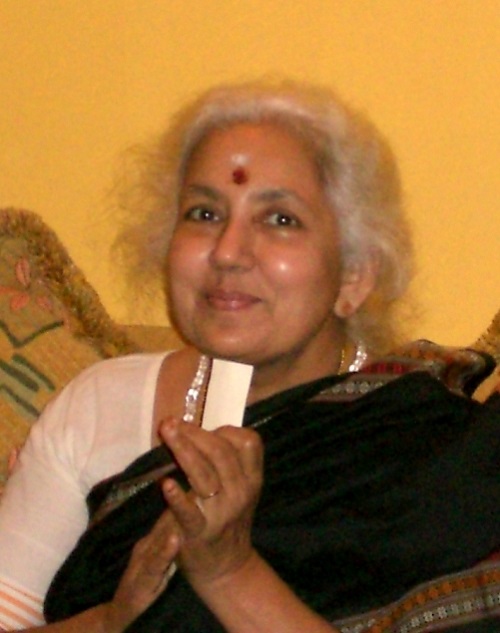
Usha Surya.- Have been writing for fifty years. Was a regular blogger at Sulekha.com and a few stories in Storymirror.com. Have published fifteen books in Amazon / Kindle ... a few short story collections, a book on a few Temples and Detective Novels and a Recipe book. A member of the International Photo Blogging site- Aminus3.com for the past thirteen years...being a photographer.
FROM ROCKET TO GENERATIVE AI: AN ENGINEER’S JOURNEY
Satish Pashine
Author’s Note
This is a personal account of my journey as an engineer and of the ideas, questions and experiences that shaped the way I looked at technology over more than five decades.
Some of the ideas described here were conceived long before the technologies that can support them became widely available. I do not claim that these ideas were the first of their kind, nor that they directly led to the technologies we use today. The similarities are presented simply as reflections on how my own thinking evolved alongside technological change.
Where I relate earlier experiences to concepts such as predictive maintenance, Expert Systems, Virtual Reality, Digital Twins or Generative AI, the terminology is largely that of today. At the time, I may not have used these terms—or, in some cases, the technologies did not yet exist in their present form.
The purpose of this article is therefore not to claim foresight or invention, but to share a personal observation:
Sometimes curiosity comes first, an idea follows, and technology catches up much later.
The Birth of Curiosity
People often say that Artificial Intelligence is a product of the twenty-first century.
Whenever I hear this, I smile.
Not because I claim that I imagined today’s AI decades ago. I certainly did not. I smile because my fascination with intelligent machines began at a time when the words Artificial Intelligence were not even part of ordinary conversation.
Looking back now, I realize that there is a thread connecting my childhood experiments, my engineering career and the extraordinary world of Generative AI we are witnessing today.
That thread is curiosity.
During my school days in the 1960s, I read almost every popular science book I could get my hands on. It was the era of the space race. Newspapers regularly carried stories about satellites, astronauts and rockets. For boys of my generation, space represented the ultimate frontier.
I was fascinated.
Like many others, I dreamed of building a rocket of my own.
And I actually did.
There was plenty of enthusiasm, but very little practical knowledge.
I built a small petrol-fuelled rocket. To my great surprise, it actually took off.
My excitement, however, lasted only a few seconds.
The rocket lost its balance, came straight back down and crashed onto the tiled roof of a nearby house.
Fortunately, nobody was hurt.
My dream of becoming a “rocket scientist” ended that day.
But my curiosity did not.
A little later, another idea occurred to me.
I wondered whether I could make a lighted kite using a torch, a battery, a small bulb and some wires. The idea was to create something that could fly at night while carrying its own light.
The idea seemed perfectly reasonable to me.
Physics, however, had other plans.
The apparatus became so heavy that the kite could not rise properly from the ground.
Another failed experiment.
But years later, I realized that it had taught me something important.
Today, when I look at lightweight LEDs, lithium batteries and miniature electronic components, I can see how easily the same basic idea could be implemented.
The idea was not necessarily wrong.
The technology simply had not arrived yet.
That thought has stayed with me.
Sometimes an idea fails because it is bad.
But sometimes it fails simply because its time has not yet come.
The Seed of Intelligent Machines
Sometime between 1967 and 1969, I came across a book on cybernetics, published in Russia.
It was not an impressive-looking book. The paper was cheap, the printing was simple and the English translation was sometimes difficult to understand.
But the ideas inside it were fascinating.
The book described systems that could gather information about their surroundings, communicate with one another, process information and make decisions based on feedback.
To a young student in the 1960s, this sounded almost like science fiction.
Looking back today, I can see echoes of ideas that would eventually become associated with intelligent automation, the Internet of Things, connected manufacturing and feedback-based control systems.
But at the time, I knew none of those terms.
What stayed with me was a much simpler question:
Are machines made only to obey instructions?
Or could they one day cooperate with human thinking?
I did not know where that question would lead.
Perhaps that was the day a seed was planted in my mind—a seed whose significance I would understand only many decades later.
I went on to study Metallurgical Engineering, followed by a Postgraduate Diploma in Ferroalloys Technology and, later, a Postgraduate Diploma in Management of Systems from IIT Delhi.
At the time, these may have seemed like separate academic choices.
Looking back, they now seem closely connected.
Metallurgy taught me that the final properties of a metal are determined not by its chemical composition alone. Temperature, time, pressure, cooling rate and many other variables interact to produce the final result.
Systems management taught me a broader version of the same lesson:
A system cannot be understood merely by studying its individual parts. We must also understand the relationships between them.
Perhaps this is why I was naturally attracted to problems in which many seemingly unrelated pieces of information had to come together before the larger picture became visible.
I did not recognize it at the time.
But that way of thinking would eventually lead me towards Artificial Intelligence—not through computer science, but through engineering.
And perhaps that is an important part of my story.
I did not set out to become an AI expert.
I simply kept asking questions.
The technology changed around me.
The questions remained.
Looking Beyond the Instrument Panel
From 1974 to 1981, I worked with blast furnaces in the steel industry. From 1981 to 1983, and again from 1988 to 1991, I worked with submerged arc furnaces in the ferroalloy industry.
These were very different types of furnaces, but they had something important in common: they were massive, complex systems operating under extremely harsh conditions, where the refractory lining was critical to both safe operation and process efficiency.
One thing particularly concerned me.
The condition of the refractory lining was generally assessed only after there were already signs of deterioration—unusual temperatures, shell overheating or other abnormal symptoms.
By then, significant damage might already have occurred.
The consequences could be serious: expensive repairs, production losses and, in some cases, an unplanned shutdown.
I began to wonder whether we were always reacting to a problem only after it had become visible.
Could we recognize the warning signs before the failure occurred?
I kept asking myself:
Are we making the decision too late?
The furnace was constantly giving us information.
Electrical parameters, temperatures and other process variables were continuously being transmitted to the control room through telemetry.
The data was already there.
But, for the most part, it was being used to monitor and record what was happening.
I began to wonder whether the data could tell us something more.
Could subtle changes in the process parameters indicate the developing condition of the refractory lining?
Could a computer recognize those changes and warn us that the lining was approaching failure—early enough for us to take corrective action during a planned shutdown?
Today, we would call this predictive maintenance.
In that period however, I did not have that terminology.
For me, it was simply an engineer’s question:
Can a machine merely display data, or can it understand what the data is telling us?
I discussed the idea with the systems department.
The computer specialists understood computers very well.
I understood process metallurgy.
But the two areas of knowledge were largely separate.
The computer experts did not have the detailed understanding of the metallurgical processes taking place inside the furnace. I, on the other hand, did not have the software tools or computing expertise needed to convert my understanding of the process into a practical computer model.
Today, we would call this interdisciplinary collaboration.
At that time, it was simply an unfinished idea.
Yet the experience taught me something that has stayed with me throughout my career:
The challenge in applying a new technology is often not the technology itself. It is bringing different kinds of knowledge together.
The process engineer sees the physical system.
The computer specialist sees the data.
The real breakthrough often comes when the two begin to see the same problem together.
Today, AI-based predictive maintenance, real-time industrial analytics and digital twins are becoming increasingly common.
Whenever I encounter these technologies, I remember that question I asked myself in 1981.
The technology has changed enormously.
But the question has not.
My First Encounter with an Intelligent System
A few years later, around 1990–91, I encountered what was then described as an Expert System.
It would be unfair to compare it with today’s Generative AI.
It could not learn in the way modern AI systems can. It could not generate stories, create images or produce original ideas.
But for its time, it was remarkable.
Expert knowledge had been encoded in the form of rules.
If certain conditions were present, the system could apply those rules, draw logical conclusions and make recommendations.
For the first time, I saw something that seemed genuinely significant.
A computer was not merely a calculating machine.
It could take human experience and apply it systematically.
That immediately reminded me of the Russian book on cybernetics I had encountered more than two decades earlier.
The question I had asked as a young student—
Would machines merely obey instructions, or could they eventually help humans think?
—had received a preliminary answer.
The answer was not yet Artificial Intelligence as we understand it today.
But it was a beginning.
I could see that knowledge did not necessarily have to remain inside a person’s head. At least some of it could be structured, represented and made available through a computer system.
That was a powerful idea.
The Questions Remained the Same
Over the years, my work gradually expanded beyond metallurgy.
I became involved in Management Systems, Quality Assurance, ISO Standards and organizational improvement.
The subjects changed.
The technologies changed.
The terminology changed.
But my fundamental questions remained remarkably similar.
Can the signs of a problem be recognized before the problem actually occurs?
Can the experience of experts be captured in a system so that others can benefit from it?
Can scattered pieces of information be brought together to reveal something that is not immediately visible?
When I First Imagined Generative AI
I remember that, perhaps twenty years ago, a rather unusual idea occurred to me.
By then, computers had already become far more powerful than the systems I had encountered in the early part of my career. Yet I was still fascinated by the same question:
Could a computer go beyond processing information and actually create something new?
One day, I began thinking about films.
I wondered what would happen if we created a vast computer database containing the scripts, dialogues, songs and characters from a large number of successful films.
Could a computer use all that information to create a completely new film?
My imagination went something like this.
First, the main characters would be defined—their personalities, relationships, backgrounds and perhaps even their typical ways of speaking.
Then the writer would provide only the opening dialogue and identify which character had spoken it.
Could the computer take it from there?
Could it understand the situation, develop the story, write the next dialogues and introduce appropriate twists and turns?
Could it create songs at suitable points in the story?
Could it compose the music?
And, if the writer wanted, could it even produce several different endings to the same story?
At that time, this seemed almost like science fiction.
I did not know how far computer science had actually progressed. I certainly did not know whether the technology required to do any of this was remotely practical.
It was simply an idea.
Yet the idea fascinated me because it represented a different kind of machine intelligence.
The computer would not merely retrieve information.
It would not merely follow a fixed set of rules.
It would use what it had learned from a large body of existing material to generate something new.
I did not have a name for this concept.
Today, we do.
Generative AI.
When I look at what Generative AI can now do—create stories, screenplays, images, music, software and increasingly sophisticated video—I sometimes think back to that idea from twenty years ago.
Of course, what exists today is far more sophisticated than what I imagined then.
But the underlying possibility is strikingly similar.
Something that once seemed almost like science fiction has become a practical reality.
It was another reminder of a lesson I had first encountered with my lighted kite:
Sometimes the imagination arrives before the technology.
When Technology Caught Up With Imagination
Many years later, while working as a consultant at a sponge iron plant, another idea occurred to me.
It is not easy for an engineer to understand everything that is happening inside a large industrial reactor.
An engineer has drawings, sectional views, photographs, operating data and personal experience.
But there is one thing an engineer cannot normally do:
Walk inside the actual reactor.
At the same time, I was seeing increasingly sophisticated three-dimensional virtual worlds being created in the gaming industry.
That made me wonder:
If a child can walk around inside a virtual world, why can’t an engineer walk virtually inside a reactor?
Why shouldn’t maintenance engineers be able to explore the interior of a reactor virtually before an actual shutdown?
Why shouldn’t new operators be able to receive realistic virtual training before entering the real plant?
Why not identify design shortcomings before construction or operation?
Why not allow an engineer to examine a plant from perspectives that might be difficult—or impossible—to experience in the physical world?
The ideas that came to my mind would today be associated with technologies such as Virtual Reality, Digital Twins and immersive engineering.
At the time, however, they seemed far ahead of what most industrial organizations were prepared to adopt.
I nevertheless tried to take the idea forward.
I contacted a product manager at Meta. The possibility of applying gaming technology to industrial applications seemed interesting.
There was no further response.
I also discussed the concept with IT professionals.
The response was understandable:
“Technically possible, but very expensive.”
Even industry associations found it difficult to see the immediate value of the idea.
Looking back, I do not blame anyone.
Every technology has to find its way.
A technology is usually developed to solve a particular problem, and only later do people discover that it can solve entirely different problems as well.
Virtual Reality developed largely through gaming and entertainment.
But its potential did not stop there.
Today, related technologies are being explored and used in medicine, aviation, defence, education, manufacturing, training and industrial design.
The lesson for me was simple:
Innovation is not always about inventing a new technology. Sometimes it is about seeing a new use for an existing one.
And sometimes, perhaps, it is about seeing that use before the technology is ready to support it.
From Mannequins to Virtual Fitting
Another idea came to me in a clothing showroom.
The clothes displayed on the mannequins looked extremely attractive.
But experience tells us that the same clothes do not necessarily look the same on every person.
People differ in height, body shape, proportions and appearance. What looks perfect on a mannequin may look quite different when worn by an actual customer.
I began to wonder:
Why should a customer repeatedly enter a trial room just to find out how different clothes might look?
Why not create a virtual representation of the customer and digitally place different garments on it?
The customer could then see, almost immediately, how a particular garment might look.
It could save time for the customer.
It could reduce dependence on physical trial rooms.
It could also make the process more efficient for retail staff.
At the time, this was simply another thought experiment.
Today, technologies such as Virtual Try-On, body scanning and augmented-reality mirrors are gradually making such experiences possible.
Once again, I found myself thinking about the same principle:
An innovative idea does not always require inventing a completely new technology.
Sometimes it requires looking at an existing technology and asking:
“What else could this be used for?”
That question has repeatedly influenced the way I look at technology.
Efficiency or Heritage?
A few years ago, another experience made me think about technology from a very different perspective.
I visited a handloom exhibition where the price of silk sarees started at around ?20,000.
The exhibition was being managed by a retired IAS officer who was working for the welfare of handloom weavers.
I found the prices quite high.
I asked him:
“If the same raw material were woven using modern machines, production would be much faster, the quality would be more uniform and the cost could also be lower. Why don’t we do that?”
His answer surprised me.
He said:
“We are not merely selling sarees. We are preserving our heritage. The small variations in a handwoven saree are precisely what make it authentic.”
I thought about his answer.
Then I asked another question:
“Are we really preserving the heritage—or are we preserving the livelihood of the weaver?”
Even today, I do not have a definitive answer.
Perhaps the answer is: both.
But that conversation taught me something that technology alone cannot answer.
Every new technology does more than change the way something is produced.
It can also force society to decide what is worth preserving.
Should we always choose greater efficiency?
Should lower cost and higher productivity always be the deciding factors?
Or should we sometimes preserve human skills, traditional knowledge and forms of craftsmanship precisely because they cannot be measured only in terms of efficiency?
The handwoven saree raised a question that goes far beyond textiles.
And today, I see the same question emerging in the age of Generative AI.
What Should Remain Human?
Generative AI can now create a story, write a poem, compose music, produce an image, generate software and even help develop a screenplay within seconds.
That raises an uncomfortable question.
If a machine can create, what happens to human creativity?
Will the value of a human-written story diminish because a computer can produce one instantly?
Will a piece of music composed by a person have the same meaning when a machine can generate thousands of alternatives in seconds?
Will human art become less important because machines can produce technically impressive images?
I do not think the answer is simply yes or no.
Perhaps the handloom offers an analogy.
A machine-made fabric may be cheaper, faster and more uniform.
But a handwoven saree can carry something else—a human touch, a tradition, the skill of a particular community and the story of the person who made it.
Its small irregularities may not be defects.
They may be part of its identity.
Perhaps human creativity will have a similar value.
An AI-generated poem may be beautiful.
An AI-generated image may be extraordinary.
An AI-generated piece of music may be technically impressive.
But a human creation can carry something that is difficult to measure—the experience, memory, emotion, struggle and intention of the person who created it.
This does not mean that we should reject AI.
Quite the opposite.
AI can become an extraordinarily powerful creative partner.
It can help an artist explore possibilities, help a writer develop ideas, help a musician experiment with sounds and help an engineer find solutions that might otherwise take much longer to discover.
The question is not whether AI should be allowed to create.
The more important question is:
What do we want humans to continue creating?
Perhaps the future will not be a choice between humans and machines.
Perhaps it will be about finding the right relationship between them.
Some tasks should be given to machines because efficiency matters.
Some should be shared between humans and machines because collaboration produces better results.
And some activities may be worth preserving precisely because they express human creativity, craftsmanship, experience and emotion.
Finding that balance may become one of the most important decisions of the AI era.
And this brings me back to a question I have encountered throughout my life:
Technology can tell us what is possible. But who decides what is desirable?
From Artificial Intelligence to Human Intelligence
Today, we are living in the age of Generative AI.
AI can process enormous quantities of information, identify patterns, summarize complex material, generate content and assist with decision-making.
It can do things that would have seemed impossible when I was a young engineer.
Yet a recent medical consultation reminded me that there is an important boundary we should never forget.
During a discussion about the investigation reports of a family member, I was looking at the numbers and trying to understand what they might indicate.
As an engineer, I naturally focused on the data.
The reports contained numbers, trends and values that could be compared and analyzed.
The nephrologist listened to me and then smiled.
He said:
“You see the numbers. We see the patient and the symptoms.”
That simple sentence stayed with me.
It was not a criticism of numbers.
It was a reminder that numbers are not the whole story.
AI can recognize patterns in data.
But human beings understand the context in which those patterns exist.
AI can identify possibilities.
But humans must decide which possibilities matter.
AI can generate recommendations.
But someone must understand the consequences of acting on those recommendations.
And ultimately, the responsibility for an important decision cannot simply be handed over to a machine.
This is especially important as AI becomes more capable.
The more convincing the machine becomes, the greater the temptation may be to assume that it also understands.
But generating a convincing answer is not necessarily the same as understanding the human situation behind the question.
A doctor does not treat a laboratory report.
A doctor treats a patient.
An engineer does not merely operate a machine.
An engineer must understand the process, its risks and the consequences of failure.
A manager does not simply evaluate numbers.
A manager must understand the people and circumstances behind those numbers.
That is why I do not see Artificial Intelligence as an argument against human intelligence.
I see it as an opportunity to extend human intelligence.
A calculator did not make mathematics unnecessary.
Computers did not make engineers unnecessary.
The internet did not make knowledge unnecessary.
In each case, technology changed what humans could do.
AI is likely to do the same on a much larger scale.
The greatest value of AI may therefore not be that it replaces human thinking, but that it enables human beings to explore more possibilities, examine more information and solve problems that were previously beyond our reach.
But there is another lesson that I have learned from my journey.
The better the technology becomes, the more important the human questions become.
What should we ask?
What should we believe?
What should we create?
What should we leave to machines?
And perhaps most importantly:
What should we never stop doing ourselves?
These are not questions that AI can answer for us.
They are questions for human beings.
One Journey, One Question
Looking back now, the different episodes of my life no longer seem like completely separate experiences.
There was the schoolboy who dreamed of building a rocket.
There was the young experimenter who tried to make a lighted kite.
There was the student fascinated by an inexpensive Russian book on cybernetics.
There was the engineer who wondered whether furnace data could reveal the early signs of refractory failure.
There was the professional who encountered an Expert System and saw, perhaps for the first time, a computer applying human knowledge through rules.
There was the person who imagined a computer creating a film from a vast database of stories, characters, dialogues and songs—long before Generative AI became part of everyday conversation.
There was the consultant who imagined engineers walking virtually inside an industrial reactor.
There was the customer in a clothing showroom wondering why a person could not try on clothes virtually instead of physically.
There was the visitor to a handloom exhibition who began wondering whether efficiency should always take precedence over heritage.
And today, there is the same person witnessing the extraordinary rise of Artificial Intelligence and Generative AI.
The technology has changed enormously.
But the habit of asking questions has not.
Perhaps that is the real continuity in my journey.
Not the rocket.
Not the furnace.
Not the computer.
Not Virtual Reality.
Not even Artificial Intelligence.
Curiosity.
Throughout my career, the questions were often different, but they came from the same instinct:
Can this be done differently?
Can we see the problem earlier?
Can information be used more intelligently?
Can technology solve a problem that has always been accepted as unavoidable?
Can something developed for one purpose be used for another?
And, again and again:
Why can’t that be?
Perhaps that is the question that has connected all the seemingly unrelated chapters of my life.
And perhaps it is also the question that drives technological progress itself.
Towards the Future
Today, as I look back on a journey of more than fifty years, I realize that technological progress rarely follows a straight line.
It moves through small ideas, failed experiments, unanswered questions, unexpected connections and the imagination of people willing to explore what others may consider impossible.
When I built my first rocket, I knew very little about aerodynamics.
When I tried to fly a lighted kite, the lightweight electronics we take for granted today were not available.
When I wondered whether furnace data could reveal the condition of refractory lining, Artificial Intelligence and data analytics were still in their infancy.
When I imagined using virtual reality in industry, most people associated it primarily with gaming.
When I thought about virtual fitting, shopping still meant physically entering a trial room and changing clothes.
And when I imagined a computer creating a film from characters, dialogues, songs and stories, Generative AI was still far from everyday reality.
Some of these ideas failed.
Some were ahead of their time.
And some have gradually become reality.
That has taught me an important lesson:
Ideas have no expiry date.
Sometimes an idea appears long before the technology capable of realizing it.
Sometimes the technology exists, but society is not yet ready for it.
And sometimes the technology arrives first, and only later do we discover what it can really be used for.
That is why I believe that the future will not belong simply to those who know the latest technology.
It will belong to those who can imagine what the technology could become.
Today’s generation is fortunate to live in a time when Artificial Intelligence is entering almost every field—engineering, medicine, manufacturing, education, agriculture, finance and countless others.
AI will undoubtedly change the way we work.
It will help engineers detect equipment failures before they happen.
It will assist doctors in analyzing complex medical information.
It will accelerate scientific research and the discovery of new materials and alloys.
It will help designers, writers, musicians and artists explore possibilities that would once have required enormous amounts of time.
It may even solve problems that we cannot yet properly define.
But every powerful technology brings responsibility.
AI can provide answers.
But humans must ask the right questions.
AI can analyze enormous quantities of information.
But humans must decide what information matters.
AI can generate alternatives.
But humans must decide which alternative is desirable.
AI can make recommendations.
But humans must understand the consequences and accept responsibility for the final decision.
And perhaps there is an even deeper responsibility.
We must decide what should remain human.
The handloom taught me that efficiency is not the only measure of value.
The doctor taught me that numbers are not the whole of a human situation.
My engineering experience taught me that data becomes meaningful only when we understand the system behind it.
And my experiments taught me that imagination often begins before technology catches up.
All these lessons seem particularly relevant now.
The future should not be a competition between humans and machines.
It should be a partnership—but a partnership in which humans remain responsible for the purpose, the values and the consequences.
We should allow machines to do what machines do better.
We should allow humans to do what humans do better.
And where the two complement each other, we should bring them together.
The real challenge of the AI era, therefore, may not be asking:
“What can AI do?”
We already know that the answer is becoming astonishingly broad.
The more important question may be:
“What should we ask AI to do?”
And beyond that:
“What should we continue to do ourselves?”
I do not know exactly where Artificial Intelligence will take us.
No one does.
But I am reasonably certain of one thing.
The technology will continue to change.
Machines will become more capable.
AI will become more intelligent.
Ideas that seem impossible today may become ordinary tomorrow.
And somewhere, perhaps, a young student will be reading about one of these developments and thinking of something that nobody else has thought of yet.
That student may not have the technology to build it.
May not have the resources.
May not even know whether it is possible.
But that should not stop the question.
Because that is how my own journey began.
Not with Artificial Intelligence.
Not with a computer.
Not even with a sophisticated scientific laboratory.
It began with a schoolboy, a few simple materials, a failed rocket, a failed kite—and a mind that kept asking questions.
Looking back, I realize that my greatest achievement is not a position I held, an award I received or a project I completed.
It is something much simpler.
I have managed to keep my curiosity alive.
Even after more than fifty years, I still find myself wondering whether something can be done differently, whether an old problem can be approached from another direction, or whether a technology developed for one purpose can solve an entirely different problem.
Perhaps that is the greatest asset of an engineer.
Perhaps it is the greatest asset of a scientist.
And perhaps it is the greatest strength of any human being.
Because technology may change the tools we use.
It may change the way we work.
It may even change the way we create.
But as long as there are people willing to look at the world with curiosity and ask—
“Why can’t that be?”
—the journey of discovery will never end.
OTHER SIDE OF THE BED
Satish Pashine
The Promise to Stay
He was twenty-six. She was nineteen.
At nineteen, she had the kind of beauty that needed no explanation—slim, graceful and effortlessly pretty. She seemed unaware of it, or perhaps simply did not care. He cared. He was tall and lean, dark-skinned, with sharp features and serious eyes. In those days, Bollywood’s idea of a handsome hero was different. Fair, romantic-looking heroes made girls dream. He did not look like them. If anything, there was something of the young Ajay Devgn about him.
He had never considered himself handsome, so when someone told him that this nineteen-year-old girl might say yes to him, he laughed.
When they finally met, he tried hard to appear calm. She was much calmer than him. There were no dramatic declarations or cinematic romance. Just two young people trying to understand what the rest of their lives might look like.
Finally, he asked, “Do you have any objection?”
She looked at him. “No.”
“Are you sure?”
She smiled. “Yes.”
That was it.
Years later, he would tease her. “I still don’t understand why you said yes.”
She would simply smile.
Marriage did not begin like a fairy tale. There were adjustments, disagreements and discoveries. Both had definite ideas about how things should be done, and neither was particularly good at surrendering. Their arguments were usually about small things, yet at twenty-six and nineteen, every disagreement felt important.
One evening, after a silly argument, she stopped talking.
“What happened?”
“Nothing.”
He knew that “nothing” meant something.
“Tell me.”
“You don’t listen.”
He was silent for a moment.
Then he said, “I am listening now.”
“Now? Why not before?”
He had no answer.
Perhaps that was the first lesson of their marriage: sometimes winning an argument was not worth what it cost.
He learned slowly. She learned too.
Two Become Four
The first few years passed before they realised how quickly life was moving. At twenty-six, he thought he had plenty of time; at nineteen, she believed life would always feel young.
They were both wrong.
Their first daughter arrived before they had quite figured out how to be husband and wife. Now they had to learn how to be parents.
The first night at home with the baby, neither slept. The baby cried, he got up, she got up, and soon they were both trying to understand what she wanted.
“I think she is hungry.”
“I know.”
“Then why isn’t she drinking?”
“Because you’re holding her like a football.”
He changed his grip. The baby stopped crying.
He looked triumphantly at his wife.
“See?”
She smiled. “Don’t become too proud. You only got lucky.”
Later, when the baby finally slept, they sat watching her.
“She’s so small,” she whispered. “Do you think we’ll be good parents?”
He looked at her.
“We’ll learn.”
She smiled.
“Together?”
“Together.”
Parenthood made life fuller, if not easier. There were sleepless nights, doctors, vaccinations, school admissions and unexpected expenses. He came home tired from work and often found her even more tired.
The second daughter arrived a few years later, and the house became louder, messier and, somehow, happier. The girls fought, laughed, demanded attention and filled every corner of the house.
He and his wife sometimes complained that the other had the easier job.
“Do you want to exchange places?” she would ask.
He would immediately retreat.
“No. Because I value my life.”
She would laugh.
They were not perfect parents or a perfect couple. They were simply two people learning how to live together.
The years passed almost unnoticed. The little girls became teenagers and then young women. The toys disappeared, then the school bags, and eventually the girls developed lives of their own.
One day, the elder daughter announced that she wanted to marry.
He asked the questions fathers ask. Did he respect her? Did he love her? Was she sure?
She answered yes to everything.
He looked at his wife.
She smiled.
“I think our daughter has already decided.”
He sighed.
“Bring him home.”
Both daughters eventually married boys of their choice. Their parents had raised them to make their own decisions, and now they had to accept the hardest part of parenting—letting them go.
The weddings were filled with music, relatives, laughter, photographs and tears. But after each wedding came the silence.
After the younger daughter left, the house seemed enormous.
One evening, they sat at the dining table—two plates, two cups, two people.
“No children, no homework, no requests, no noise,” he said.
“Too quiet,” she replied.
“I miss them.”
“I know.”
After a moment he asked, “What will we do now?”
She smiled.
“We?”
“Yes.”
“We’ll do what we’ve always done.”
“What?”
“Live.”
He reached across the table and held her hand.
For the first time in nearly twenty-five years, they were alone again.
Not lonely.
Just alone.
The Empty House
The first morning after their younger daughter left, she woke at six, as she had done for years. Six o’clock had always meant tea, breakfast, lunch preparation, school, office and a hundred small things that had to be done.
That morning, there was nothing urgent.
Habit took her to the kitchen. She put the kettle on, then stopped.
Two cups?
For years there had been four—two for them and two for the girls.
She took out two and stood there for a moment.
“It is only tea,” she whispered.
But it wasn’t only tea.
It was the first morning of a different life.
He came into the kitchen a little later.
“Good morning.”
She didn’t answer immediately.
He looked at her.
“What happened?”
“Nothing.”
He smiled.
“Again?”
She gave him a look.
“You think you’re very clever.”
He poured his tea and sat down.
“Missing them?”
She looked away.
“A little.”
“A little?”
She smiled sadly.
“A lot.”
He reached across the table and held her hand.
The house still remembered the girls. Their rooms, books, photographs, a forgotten hair clip, an old school certificate, a soft toy and a dress at the back of a cupboard—all seemed to say, Someone used to live here.
She began cleaning more than necessary, rearranging cupboards and polishing furniture that was already clean.
One afternoon he watched her.
“You’ve cleaned that cupboard three times.”
“Have I?”
“Yes.”
“It was dirty.”
“It wasn’t.”
“It was.”
He smiled.
“You are becoming impossible.”
She turned towards him.
“Becoming?”
He laughed.
That was how they survived the empty house. He teased, she complained, he made her laugh, and slowly the house became theirs again.
The girls called regularly. There were photographs, video calls, birthdays, festivals and visits. Yet after every call, the house became quiet again.
One evening, after speaking to both daughters, she put down her phone.
“They’re happy.”
“Good.”
“They don’t need us.”
He looked at her.
“That’s the whole point.”
She sighed.
“I know.”
Then she added, “Because I’m their mother.”
He had no answer. He simply put his arm around her, and she rested her head on his shoulder.
That was enough.
Just the Two of Us
With the children gone, they slowly rediscovered each other.
They began exploring their own city—parks, restaurants, temples, markets and places they had never found time for before. Sometimes they went nowhere. They simply walked.
Their conversations changed too. Earlier, most of their lives had revolved around the children—their studies, friends, exams, careers and marriages. Now there was space for other questions.
“What do you want to do?” he asked one day.
“Travel.”
“Where?”
“Anywhere.”
He smiled.
“You stole my answer.”
“Because it is a good answer.”
They began travelling, first for weekends and later for longer holidays. They took photographs, argued about them and laughed.
“My face looks fat.”
“It’s the camera.”
“Don’t blame the camera.”
“It’s a bad camera.”
“You bought it.”
He laughed.
“Then I bought a bad camera.”
Friends noticed the change.
“You two are always together.”
He would shrug.
“We like each other.”
After a pause he would add, “Especially after all these years.”
She would pretend not to hear.
But she heard.
And she smiled.
Retirement brought another major transition. For decades, his life had been governed by calendars, meetings, deadlines and responsibilities. Suddenly there was nowhere he had to be.
The first few weeks felt wonderful.
Then strangely empty.
One morning she found him sitting quietly with his tea.
“What happened?”
“Nothing.”
“You’re thinking.”
“About retirement.”
She smiled.
“You retired. You didn’t die.”
He laughed.
She put another cup of tea beside him.
“You have work.”
“What work?”
“Walk with me.”
He smiled.
“That’s work?”
“For you, yes.”
Then she added, “I’ve been waiting thirty years for you to finally have time for me.”
He looked at her and smiled.
“Fair enough.”
Morning walks became a ritual. Sometimes they walked several kilometres. He liked to walk faster; she disliked being rushed.
“Slow down.”
“I’m not walking fast.”
“You are.”
“You’re walking slowly.”
He would sigh dramatically and slow down, only to speed up again a few minutes later.
These little quarrels became part of their mornings.
They travelled, took photographs, remembered old friends and, when grandchildren arrived, discovered a new centre for their conversations.
Their friends admired their companionship, but nobody saw the small disagreements—the arguments about food, things left in the wrong place, missing glasses, or evenings when one wanted to go out and the other wanted to stay home.
What mattered was how quickly they came back to each other.
They were not happy because they never fought.
They were happy because neither wanted the fight to last.
Life had taught them something simple:
You can win an argument and still lose the evening.
Growing Older
Age did not arrive with a knock on the door. It slipped in quietly—first the reading glasses, then the occasional stiffness in the knees, the slower climb up the stairs and, eventually, the medicines that appeared on the dining table.
At first they laughed about it.
“We have become old,” she said one morning.
He looked at his medicines.
“We?”
“Yes, both of us.”
“I’m still young.”
She laughed.
“At seventy-five?”
Beneath the humour was a truth neither wanted to discuss too much: their bodies were changing.
The young couple in the old photographs had slowly disappeared, yet strangely, their relationship had not grown old in quite the same way.
She remained particular about the house. Dust and clutter irritated her; things had to be kept where they belonged. He sometimes deliberately left something in the wrong place just to tease her.
“Who left this here?”
“I don’t know. Maybe it moved.”
“Things don’t move by themselves.”
He laughed.
He knew that behind her fussiness was something deeper. Taking care of the house was her way of taking care of them.
He, meanwhile, had become more relaxed. He could sit with the newspaper for an hour, enjoy his tea or take an afternoon nap.
She could never understand how anyone could simply “do nothing.”
“I’m thinking,” he would say.
“About what?”
“Nothing.”
She would shake her head.
They had slept beside each other through illnesses, arguments, celebrations, worries and countless ordinary days. Sometimes they talked until late at night; sometimes one was angry and the other silent; sometimes they simply slept.
One evening, after looking through an old photograph, they talked about how young they had been when they married.
“Did you ever think we’d reach this age?” she asked.
“No,” he replied.
Seventy-five had once seemed impossibly old.
Yet here they were.
Living it together.
When the Heart Changed Its Rhythm
He had always considered himself reasonably fit. Walking regularly was part of his routine, and he usually walked quite fast, without giving much thought to his pace.
Then came the episode that changed that rhythm.
One morning, his heart suddenly began racing.
He checked his smartwatch.
The number seemed impossible.
He sat down.
For the first time in years, he felt genuinely frightened by his own body.
She noticed immediately.
“What happened?”
“My heart.”
“Should we go to the hospital?”
He nodded.
There was no joke this time.
No teasing.
They left.
The doctors examined him, tests followed, and then came the words:
Atrial fibrillation—AF.
Neither had expected those two letters to become part of their lives.
Suddenly there were medicines, a blood thinner, medication to control his heart rate, precautions and follow-ups. The man who had spent decades taking care of everyone else now found himself being watched over.
“Did you take your medicine?”
“Yes.”
“Are you sure?”
He knew she was frightened.
So was he.
The diagnosis also changed something as ordinary as his morning walk. The doctor advised him to slow down and not push himself as he had done before.
At first, walking at a slower pace felt strange. He was used to moving quickly, covering distance almost without thinking about it. Now he had to listen to his body and accept a different rhythm.
His regular walking companions gradually stopped joining him because they preferred to maintain their faster pace.
For him, this was another small but unexpected change brought by AF.
Perhaps that was one of the quiet lessons of growing older:
sometimes life asks you not to stop, but simply to slow down.
One evening, he told her he had been thinking about how long they had been together.
“Almost fifty years,” he said.
Then he asked, “Would you do it again?”
“Do what?”
“Marry me.”
She looked at him.
“Would you?”
“Yes.”
“Even knowing everything?”
He smiled.
“Especially knowing everything.”
Her eyes became moist.
“Why are you crying?” he asked.
“I’m not.”
“You are.”
“Shut up.”
He moved closer.
They laughed through the tears.
For a while, the fear disappeared.
The Sound Between Us
The doctor had given him one particularly important instruction:
“You need good sleep.”
That night, he climbed into their familiar bed beside the woman he had slept beside for nearly fifty years.
Within minutes, she was asleep.
Then the snoring began—softly at first, then louder.
He had lived with it for years and usually treated it as something to tolerate and joke about. But after the frightening episode with his heart, he was more conscious of his need for proper sleep.
He turned from side to side, adjusted his pillow and looked at the clock.
The sound continued.
Perhaps the snoring had not changed.
Perhaps he had.
Unable to sleep, he finally nudged her awake.
What began as a simple complaint turned into an argument.
Both were tired. Both were worried. Neither meant to hurt the other.
By morning, neither had slept properly.
For the next few nights, they tried to solve the problem themselves. They changed pillows and sleeping positions, went to bed at different times and even tried earplugs.
Nothing worked consistently.
Eventually, one night, exhausted and frustrated, he woke her again.
“You’re snoring.”
She sat up.
“I can’t help it.”
“I know. I just need sleep.”
“So do I.”
The words came out more sharply than either intended.
Silence followed—not the peaceful silence of sleep, but the uncomfortable silence of two people who had hurt each other without meaning to.
The next morning, she was unusually quiet.
“I don’t want to affect your health,” she said.
“You aren’t affecting my health.”
“But you need sleep.”
He reached for her hand.
“The situation is the problem, not you.”
Yet she found that difficult to accept.
For the first time in decades, they were facing a problem that neither love nor conversation could immediately solve.
A few days later, he spoke to the doctor.
He explained that he was not sleeping properly.
The doctor listened.
“You need good sleep. If something is disturbing it, remove the disturbance. Do you have another room?”
He hesitated.
“Yes.”
“Then use it if necessary. This is a sleep problem, not a relationship problem.”
The advice was perfectly logical.
But for two people who had shared the same bed for nearly fifty years, it was anything but simple.
When he told her, she went silent.
“Separate rooms? After all these years?”
He explained that it was not because he did not want to sleep beside her. He simply needed to protect his health.
She understood, but tears filled her eyes.
“I don’t want anything to happen to you.”
He held her hand.
“You are not the reason.”
She whispered, “But it feels like I am.”
Two Rooms
The next few days were difficult. Neither wanted to talk much about separate rooms, but the possibility followed them through the day. They tried practical solutions once more, hoping something would change.
Nothing did.
One afternoon, they looked through old photographs together. There they were—young, healthy and carefree.
They had never imagined that, after almost fifty years together, they might one day have to sleep in different rooms.
She looked at one photograph and said quietly, “I don’t like this. It feels wrong.”
He understood.
“We have shared the same bed for nearly fifty years. Of course it feels wrong.”
That night they tried once more.
After she fell asleep, the snoring began again.
He lay awake, remembering the doctor’s advice. He looked at her sleeping peacefully and whispered,
“I love you.”
Then, reluctantly, he picked up his pillow and walked towards the spare room.
She woke.
“Where are you going?”
“To the other room.”
“I don’t want you to go.”
“I don’t want to go either. But you need sleep, and so do I.”
He left the door slightly open.
The spare room felt strange and empty. Instead of sleeping, memories came—their first night together, their children, illnesses, holidays, arguments and reconciliations.
Almost every night of their married life had been shared.
Now a few metres of hallway seemed to separate a lifetime of togetherness.
In the bedroom, she was awake too. The empty space beside her felt unfamiliar.
The next morning they met in the hallway, both exhausted.
“Did you sleep?”
“No.”
“Neither did I.”
They looked at each other and began to laugh—a tired, helpless laugh.
He reached for her hand.
They had discovered something neither had expected: sometimes love cannot solve a practical problem. Sometimes taking care of each other requires an uncomfortable compromise.
Distance, they were beginning to understand, did not necessarily mean separation.
That evening, while folding clothes, he asked quietly, “Should we try the other room tonight?”
She stopped.
“Do you want to?”
“No. But you need sleep. And so do I.”
She nodded.
That night, he carried his pillow and blanket to the spare room. At the door, she reminded him about his medicines, water and phone, just as she always had.
“Anything else?” he asked with a smile.
She looked away.
“You.”
He knew she was not joking.
The arrangement remained difficult for both of them. He slept better, but waking in a strange room felt unsettling. She sometimes reached across the bed in the darkness and found only an empty pillow.
After a few days, he noticed that she was looking tired.
One evening, she finally broke down.
“I hate sleeping alone. I spent almost fifty years sleeping beside you.”
He held her hand.
“Your snoring is not doing this. My heart is.”
She cried, and he tried to make her laugh.
For a moment, the pain became lighter.
Slowly, they found a rhythm that worked. They continued to spend their days together—walking, eating, shopping, talking, watching television and planning small outings.
At night, they said goodnight and went to different rooms.
It felt strange at first.
Then painful.
Eventually, it became simply another part of their life.
Their daughters eventually noticed.
During a video call, one asked, “Why is Papa sleeping in another room?”
Her mother explained that he needed better sleep because of the doctor’s advice.
The daughter paused.
“Then take care of each other.”
After the call, they looked at each other.
She smiled.
“That is what we have always done.”
A Different Kind of Together
The arrangement gradually became easier.
He slept better. His exhaustion reduced. The doctor was satisfied.
“Keep doing it,” he advised.
For him, it was a medical solution.
For them, it was a new way of living.
She took longer to adjust. She missed the quiet reassurance of knowing he was beside her. For nearly fifty years, even when they were angry with each other, his presence had been part of her nights.
Now there was a wall between them.
Only a wall—but sometimes it felt much larger.
One morning she said, “I don’t like this.”
“Neither do I.”
“Then why are you so calm?”
He smiled.
“Sometimes you have to do something you hate because you love someone.”
She looked at him.
“That sounds very wise.”
“I’m seventy-five. I’m allowed to sound wise occasionally.”
She laughed.
They soon developed another ritual. At bedtime, they would talk for a few minutes, then say goodnight. Sometimes she would return to ask, “Did you take your medicine?” Sometimes he would call after her simply because he wanted to hear her voice again.
One afternoon, while looking through old photographs, they found one from the beginning of their marriage.
She was nineteen.
He was twenty-six.
“Would that girl have believed she would one day sleep in a separate room from this man?” she asked.
“Probably not.”
“Would the man?”
“Definitely not.”
They laughed.
“We’ve shared almost everything,” she said. “Children, money, problems, holidays, illnesses and old age. And now separate rooms.”
He looked at her.
“Only rooms.”
She understood.
That evening she came to his room again.
“I don’t think we should feel guilty,” she said.
“About what?”
“This.”
She looked around.
“We aren’t doing it because we don’t love each other.”
“No.”
“We’re doing it because we do.”
He held her hand.
“Exactly.”
She smiled.
“But I still hate it.”
“So do I.”
“Good.”
“Why?”
“Because if you ever tell me you like it, I’ll know something is wrong.”
They laughed.
She stood at the door.
“Sleep well.”
“You too.”
Then she turned back.
“We’ve had fifty years to learn.”
He smiled.
That night, for the first time, they both fell asleep peacefully.
Two rooms.
Two beds.
Two separate nights.
But one shared life.
And perhaps that was the most important thing they had learned about love:
being together does not always mean being in the same room.
FROM CURIOSITY TO KARMA
Satish Pashine
Two Friends, Two Journeys and the Lessons of Bhagavad Gita, Chapter 3
It Began with Ashok
Some conversations remain conversations.
Others make us look back at our lives.
This one began with my childhood friend, Ashok.
We have known each other since our school days. More than five decades have passed since those early years and, as happens with most lives, our paths gradually took different directions.
We entered different professions, lived through different circumstances, made different choices and faced different challenges. Yet the friendship survived the distances and the changes.
From time to time, we would meet or speak, exchange ideas and talk about things that interested us.
Recently, one such conversation took an unexpected turn.
Ashok sent me a podcast on the third chapter of the Bhagavad Gita—Karma Yoga, by Nityanand Charan Das.
He did not merely suggest that I listen to it. He encouraged me to think about what the chapter meant in the context of our own lives.
More importantly, he suggested that I write about it in my own way—not as another conventional explanation of the Gita, but by looking at its ideas through experiences that we had actually lived.
That suggestion stayed with me.
The more I thought about it, the more I realised that perhaps the most interesting way to approach the third chapter was not to begin with a definition of Karma Yoga.
Instead, I could begin with a person.
With Ashok.
With the choices he had made, the responsibilities he had accepted and the way he had responded when circumstances did not necessarily make life easy.
His story also made me look at my own journey differently.
Our lives have been quite different, yet there seemed to be a common thread running through them.
Neither of us had followed a perfectly straight road. There had been changes, uncertainties, disappointments and opportunities.
At different stages, life had presented us with situations that required a response.
And somehow, we had continued to respond.
That made me wonder whether this simple act of continuing to engage with life might itself be one of the practical meanings of Karma Yoga.
What Does Karma Really Mean?
We often use the word karma rather casually.
We may associate it with work, profession, duty or the consequences of our actions.
But Chapter 3 of the Bhagavad Gita presents a much deeper idea.
Krishna tells Arjuna:
? ?? ?????????????? ?????????????????????
??????? ?????? ???? ????? ????????????????? ?.??
Na hi ka?cit k?a?am api j?tu ti??haty akarma-k?t;
k?ryate hy ava?a? karma sarva? prak?ti-jair gu?ai?.
No one can remain without action even for a moment; everyone is impelled to action by the qualities born of Nature.
At first, this may sound like a simple statement: human beings are always doing something.
But perhaps Krishna is saying something deeper.
Life does not allow us to remain completely outside action.
We are constantly thinking, choosing, responding, learning, attempting, failing and trying again.
Even when circumstances change beyond our control, we still have to decide how we will respond.
Life keeps presenting the next situation, the next responsibility and the next question.
What will I do now?
What can I do with what I have?
Where am I needed?
How should I respond?
These questions are not limited to a battlefield, a profession or a particular age.
They belong to human life itself.
Ashok’s Story
Ashok’s journey made these ideas particularly meaningful to me.
His professional life brought him into situations where the problems before him could not always be solved by simply following a convenient or established path.
His association with Occupational Therapy and his work involving people with disabilities, including those who were blind, required a practical and humane approach.
When resources were limited or when an obvious solution was not available, the response could not simply be:
“Nothing can be done.”
Someone had to think of another possibility.
Someone had to try.
Someone had to accept responsibility for finding a way forward.
What I remember most about Ashok is not one particular achievement but this attitude towards problems.
He seemed naturally inclined to ask:
“What can be done?”
rather than:
“Why can this not be done?”
That distinction may sound small, but it is fundamental.
There are people who see a problem and immediately look for reasons why it cannot be solved.
There are others who first ask what can be done with the resources available.
The second approach does not guarantee success.
In fact, it may lead to several failures before a workable answer emerges.
But it converts a difficulty from a dead end into a problem that can be engaged with.
Looking back, I see this quality in Ashok as one of the expressions of Karma Yoga—not because every action necessarily produced a dramatic result, but because the response was to act, to try, to learn and to continue.
Duty and Responsibility
There was another aspect of Ashok’s life that made me think more deeply about the meaning of duty.
At different stages, he encountered choices where personal advancement and responsibility did not necessarily point in the same direction.
There were situations in which he could have asked what was best for his own career, but he also had to consider where his contribution was genuinely needed.
His association with work for the blind was not simply a professional assignment.
It became a responsibility towards people who depended upon that work.
In such situations, the question changes.
Instead of asking only, “What will this opportunity give me?”, one begins to ask:
“What is my responsibility here?”
That is a much more difficult question because the answer may not always bring immediate recognition, financial benefit or personal convenience.
This is where I began to see a connection between Ashok’s experience and Krishna’s teaching.
Karma Yoga is often reduced to the familiar phrase, “Do your duty.”
But duty is not always a clearly marked road.
Circumstances change.
Responsibilities compete with each other.
What is easy is not always what is right.
What brings recognition is not necessarily what brings meaning.
Sometimes duty simply means doing the work that is in front of us because it needs to be done.
Sometimes it means staying with a responsibility when it would be easier to walk away.
Sometimes it means using whatever ability we possess to make another person’s situation a little better.
And sometimes it means accepting that our contribution may remain largely unseen.
When Results Do Not Come
This last point is particularly important.
We naturally like results.
We want to know that our effort has produced something.
We want appreciation, recognition and evidence that our work mattered.
There is nothing unusual about this. It is part of being human.
But if visible results become the only reason for action, we may eventually stop acting altogether.
A teacher may stop teaching if students do not appreciate the effort.
A social worker may become discouraged if the problem remains larger than anything one person can solve.
An engineer may stop experimenting after repeated failures.
A writer may stop writing because the work is not published.
A person may stop learning because there is no obvious reward for learning something new.
The Gita asks us to look at action differently.
Results matter.
But they should not become the sole condition for action.
What Engineering Taught Me
My own professional journey gave me another way of understanding this.
I was drawn towards engineering because of curiosity.
Rockets fascinated me.
They represented a question as much as a machine:
How could something so heavy leave the earth, overcome gravity and travel into space?
One question led to another.
Curiosity led to learning.
Learning led to engineering.
And engineering led to a lifetime of solving problems.
But engineering taught me something else as well.
Not every calculation works the first time.
Not every experiment succeeds.
Not every design behaves exactly as expected.
When something fails, the engineer does not normally conclude that action itself was meaningless.
The failure becomes information.
We examine what happened, identify what went wrong, modify the approach and try again.
Only much later did I begin to recognise how closely this resembles the practical spirit of Karma Yoga.
Do the work before you.
Learn from what happens.
Correct what needs correction.
Do not allow an unsuccessful result to convince you that action itself was pointless.
Keep moving.
Two Journeys
Perhaps that is why Ashok’s story resonated with me.
His road was not my road, and my road was not his.
Yet both journeys involved the same basic human process.
Circumstances presented questions.
We responded as best we could.
Sometimes we succeeded.
Sometimes we did not.
Sometimes the next step was obvious.
At other times, it emerged only after we had taken the previous one.
Life rarely gives us the complete map before we begin.
This is also why I have become increasingly uncomfortable with the idea that a person’s life can be measured only by positions held, money earned or achievements accumulated.
These things have their place, but they do not tell the whole story.
A person may contribute enormously without becoming famous.
Someone may quietly solve problems for others without receiving any public recognition.
Someone may spend years caring for family, teaching children, helping colleagues or serving people whose names will never appear in a newspaper.
If Karma is understood only as visible achievement, much of meaningful human action disappears from view.
Ashok’s journey reminded me of this.
His story is not important because it is extraordinary in the conventional sense.
It is important because it is recognisably human.
It shows what happens when a person continues to respond to life instead of waiting for perfect circumstances.
And perhaps that is precisely why it helped me understand the Gita better.
When One Chapter Ends
There comes a stage in life when a person begins to wonder whether the most productive years are over.
Retirement can reinforce that feeling.
A professional designation disappears.
The office is no longer there.
The daily routine changes.
The responsibilities that once gave structure to life may gradually reduce.
Society sometimes treats retirement almost as an endpoint—as though a career were a railway journey and retirement were the final station.
But is it?
My own experience has suggested otherwise.
Work can change without life becoming inactive.
A professional role can end without curiosity ending.
One form of responsibility can disappear while another emerges.
Teaching can replace management.
Writing can replace formal work.
Helping someone can become more meaningful than building a career.
Learning something new can become an activity in itself.
The question is no longer:
“What is my designation?”
It becomes:
“What can I still contribute?”
That, perhaps, is one of the reasons Chapter 3 feels increasingly relevant with age.
Karma is not confined to employment.
It is not merely what we do for a salary.
It can mean teaching, caring, writing, helping, learning, guiding, creating or simply remaining mentally engaged with life.
It is the willingness to participate rather than withdraw.
Ashok’s story was the reason I began thinking about all this.
His life made me look at the Gita not as an ancient text offering abstract philosophical advice, but as something that could be examined against the ordinary choices we make every day.
My own journey then became another lens through which to look at the same ideas.
Two friends.
Two different roads.
Two different sets of circumstances.
But perhaps one shared lesson:
Life does not always ask us to achieve something extraordinary. Sometimes it simply asks us to do what needs to be done, learn from what happens, and take the next step.
This version should read much more easily than the previous one while retaining the reflective depth. I would keep Part 2 in the same paragraph style so the complete article feels consistent.
The Work Before Us
Perhaps the most difficult part of Karma Yoga is not understanding the idea of action.
It is understanding our relationship with the result of that action.
We naturally want our efforts to produce something visible. We want to know that the time we have spent, the difficulties we have endured and the decisions we have made have led somewhere.
We want appreciation.
We want recognition.
We want the satisfaction of seeing the outcome we had hoped for.
There is nothing unusual about this. It is part of being human.
Yet Krishna’s teaching asks us to develop a different relationship with results—not to become indifferent to them, but not to allow them to determine whether we continue to act.
This distinction is subtle.
Perhaps it becomes clearer through experience than through philosophy.
Learning from Failure
In engineering, I learned that a result is important, but it is not always entirely within our control.
We can define a problem carefully, collect the available information, design a solution, test it and make every reasonable effort.
Yet the result may still differ from what we expected.
Something may have been overlooked.
Conditions may have changed.
An assumption may have been wrong.
A component may have behaved differently from the theoretical model.
The appropriate response is not to abandon engineering.
We examine the result, understand the deviation and improve the next attempt.
In that sense, engineering taught me a lesson that I later found reflected in Karma Yoga:
Concentrate on the quality of the action, learn from the consequence, but do not become paralysed by the uncertainty of the outcome.
Life is not very different.
We make plans for our careers, our families, our finances and our future.
We imagine that if we work hard enough and plan carefully enough, life will follow the plan.
But it rarely does.
Circumstances intervene.
Opportunities appear unexpectedly.
Some doors close.
People change.
Our own abilities change.
Health, age and responsibilities alter the choices available to us.
A plan that seemed perfect at thirty may no longer be appropriate at sixty.
Something that looked like a setback at one stage may eventually open a completely different path.
The difficulty is that we understand this mostly in retrospect.
While living through the uncertainty, we still have to decide what to do next.
What Does Detachment Mean?
This is where the idea of detachment becomes meaningful to me.
Detachment does not mean that we stop caring.
It does not mean that we work without commitment or become indifferent to whether our efforts succeed.
Rather, it means that we do not allow the desired result to become so important that its absence destroys our willingness to act.
We can care deeply about what we are doing and still accept that the final outcome may not be entirely ours to determine.
That is a difficult discipline.
It requires effort, judgement and, sometimes, humility.
Ashok’s journey offers another perspective on this.
Much of his work involved people and circumstances where success could not always be measured in simple numbers.
When we help another person, especially someone facing a significant limitation, the result may not be dramatic.
Improvement may be gradual.
Some problems may never be completely solved.
Yet that does not make the effort meaningless.
The value of the action may lie in the difference it makes to another person’s life, even when that difference cannot easily be measured.
Perhaps this is one reason service can teach us something about Karma Yoga that professional achievement sometimes cannot.
Service forces us to recognise that the value of an action is not always proportional to the recognition it receives.
Beyond Achievement
There is also a danger in measuring our lives too heavily by achievement.
When we are young, achievement seems to provide a natural structure.
We study.
We obtain qualifications.
We find employment.
We build careers.
We earn money.
We acquire possessions.
We take on responsibilities.
Society provides fairly clear measures of progress.
But as we grow older, some of those measures lose their importance.
Retirement changes the meaning of work.
Children become independent.
Professional responsibilities diminish.
The question “What have I achieved?” may gradually be replaced by another:
“What does my life mean now?”
I think this is where Karma Yoga becomes especially relevant.
If our identity is tied completely to our professional role, retirement can feel like a loss of identity.
But if work is understood more broadly as contribution, then retirement does not have to mean withdrawal.
It can mean transition.
The form of action changes, but action continues.
I have experienced this in my own life.
After spending much of my working life in engineering and management-related responsibilities, I gradually moved into consulting, auditing and teaching.
Later, writing became important to me.
Each of these activities was different from the previous one, yet none felt like a complete break.
Each grew, in some way, from what had come before.
Engineering taught me to examine problems.
Management taught me to see systems.
Auditing taught me to look for evidence and question assumptions.
Teaching required me to explain what I knew in a way that another person could understand.
Writing required me to look back and ask what those experiences meant.
The activity changed, but the underlying habit of learning and contributing remained.
Perhaps this is what it means to remain engaged with life.
Learning Has No Retirement Age
We sometimes imagine that continuing to learn is something expected of the young.
Children go to school.
Young people acquire qualifications.
Professionals attend training programmes.
But after a certain age, learning is often treated as optional.
We begin to say:
“At my age, why should I learn something new?”
Yet the ability to learn may be even more valuable when formal roles begin to disappear.
It gives life movement when external structures become less demanding.
Ashok’s example again comes to mind.
What I admire is not simply that he acquired knowledge or built a career.
It is that curiosity remained connected with usefulness.
There is a difference between knowing something and being willing to use what we know.
Knowledge becomes meaningful when it enables us to do something—solve a problem, help someone, teach another person, understand a situation or make a better decision.
In that sense, learning and action are not separate.
One leads naturally to the other.
The Example We Leave Behind
This brings me to another important teaching from Chapter 3: the responsibility to set an example.
Krishna says:
?????????? ???????????????????? ????
? ?????????? ?????? ???????????????? ?.???
Yad yad ?carati ?re??has tat tad evetaro jana?;
sa yat pram??a? kurute lokas tad anuvartate.
“Whatever a person of excellence does, others follow; whatever standard such a person sets, the world follows.”
I find this verse particularly meaningful at this stage of life.
When we are young, we often imagine that we influence others through what we say.
As we grow older, we realise that our behaviour may be a more powerful form of teaching.
We can tell children that learning is important, but it is more convincing if they see us learning.
We can tell younger people not to fear change, but it is more meaningful if they see us accepting change ourselves.
We can tell them that failure is part of life, but the lesson becomes stronger when they see us recover from our own failures.
This applies especially to parents and grandparents.
Younger generations do not necessarily need another lecture about the importance of hard work.
They need to see what perseverance looks like.
They need to see that a person can change direction without losing dignity, begin something unfamiliar without embarrassment and continue contributing without needing constant recognition.
Perhaps the most valuable example we can set is simply to remain curious.
Remaining a Beginner
That is one reason I have continued to be interested in things that are unfamiliar to me.
In recent years, I encountered Generative AI.
I do not see it as some grand destination of my professional journey.
It is simply another reminder that there are things I do not know and can still learn.
In that sense, it has brought back an old feeling—the excitement of being a beginner.
The technology itself may change rapidly, but the underlying human quality is much older:
Curiosity.
And perhaps that is the real connection between the rocket that fascinated me many decades ago and the technologies I encounter today.
The machines are different.
The questions are different.
But the impulse is the same:
How does this work?
What can it do?
What can I learn from it?
The answer may lead to another question, and that question to another action.
Perhaps that is how a life continues.
Different Roads, Same Principle
When I look back at Ashok’s journey and mine, I do not think the important comparison is who achieved more or whose career was more successful.
Such comparisons miss the point.
We were given different circumstances and different abilities.
We made different choices.
We had different responsibilities.
The Gita does not suggest that everyone should perform the same work.
Each person’s nature, ability and circumstances shape the actions that become his or her responsibility.
One person may build machines.
Another may teach.
Someone may care for a family.
Someone may serve people with disabilities.
Someone may manage an organisation.
Someone may write.
Someone may work with his hands.
Someone may spend later years helping younger people.
The outward forms are different, but the underlying principle can remain the same:
Do what is yours to do. Do it sincerely. Use your abilities. Learn from what follows. And continue.
Perhaps that is why Ashok’s story became the starting point for this reflection.
Had he sent me the podcast without encouraging me to connect it with our own lives, I might simply have listened to it and moved on.
Instead, his suggestion made me look backwards.
And when we look backwards after many decades, patterns sometimes become visible that were impossible to see while we were living through them.
At the time, we thought we were simply making decisions.
Now, those decisions look like parts of a journey.
We thought we were solving individual problems.
Now, we see that each problem taught us something about responding to the next one.
We thought careers were separate stages.
Now, we can see that curiosity and learning connected many of those stages.
And perhaps this is one of the gifts of age—not that we necessarily know more than everyone else, but that we have enough distance to recognise patterns.
The Journey Continues
I began this reflection with Ashok because he reminded me of something that is easy to forget:
A meaningful life is not necessarily a life without difficulty. It is a life in which we continue to respond to difficulty with whatever courage, knowledge and ability we possess.
Karma Yoga, as I now understand it, is therefore not simply about working hard.
It is about remaining engaged with life.
It is about doing what needs to be done without allowing uncertainty about the result to stop us.
It is about accepting that our circumstances will change and that our form of contribution may have to change with them.
It is about learning, adapting and continuing to be useful.
Most of all, it is about movement.
Not necessarily physical movement.
Not necessarily career movement.
But the movement of the mind and spirit—the willingness to ask another question, learn another lesson, help another person, try another approach and take another step.
Ashok’s journey and mine have taken different roads.
But perhaps the common lesson is simple.
A career can end.
A profession can change.
A responsibility can pass to someone else.
Technology can become obsolete.
Circumstances can change beyond our control.
But as long as there is something worth learning, there is a reason to remain curious.
And as long as there is something we can contribute, there is a reason to remain engaged.
Perhaps that is what Krishna was reminding Arjuna.
Do not stand still because the future is uncertain.
Do not refuse to act because the result is not guaranteed.
Do what is yours to do.
And then take the next step.
Looking back at the long journey that Ashok and I have travelled, I find that message both simple and profound.
Keep doing.
Keep learning.
Keep adapting.
Keep contributing.
And keep moving.
Perhaps that is not merely the essence of Karma Yoga.
THE FIFTEENTH OF AUGUST
Satish Pashine
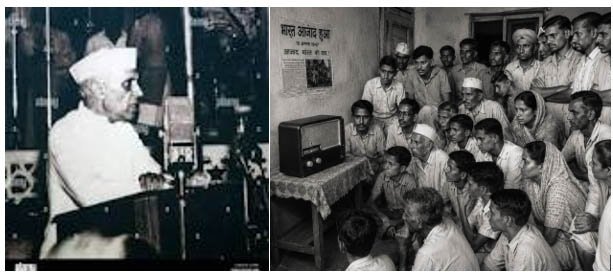
The Night India Became Free
It was August 1947.
The monsoon had arrived late that year. That evening, the village smelled of wet earth, cow dung and wood smoke. The sky was covered with dark clouds, and every now and then a flash of lightning revealed the narrow lanes and the tiled roofs of the houses.
There was unusual excitement in the village. For several days, people had been talking about the same thing. The British were leaving. India would soon be free. Nobody in the village had seen freedom, and most had no clear idea what it would look like. Some imagined that prices would fall. Others thought the police would become kinder. A few believed that the next morning would somehow look different.
At the village square, the schoolmaster had brought out his old radio. It was a temperamental machine that often produced more crackling than sound, but that night nobody complained. Men sat on the ground, some women stood behind them, and children moved in and out of the gathering.
Twenty-four-year-old Gopal stood beside his father, Ramnath.
Ramnath was a farmer. He was nearly sixty, with a sun-darkened face, rough hands and a body shaped by years of work in the fields. He did not talk much. Gopal had grown up watching him listen more than he spoke.
When the voice from the radio finally became clear, the murmuring stopped.
Everyone listened.
The words were not always easy to understand through the static, but everyone understood the essential message.
India was free.
For a few moments, nobody moved.
Then someone shouted, “Bharat Mata ki Jai!”
Another man began distributing sweets. Someone ran towards the temple and rang the bell. Children started shouting. Men who had spent their lives working under someone else’s authority stood a little straighter.
Gopal turned towards his father.
“Baba, are we free now?”
Ramnath looked at him.
“Yes.”
Gopal smiled.
“Then what can we do now?”
Ramnath did not answer immediately. He looked towards the dark fields beyond the village.
Finally he said, “What we could not do before.”
Gopal waited.
“What does that mean?”
Ramnath smiled faintly.
“You will understand.”
That was all he said.
— — —
The next morning, nothing seemed to have changed.
The same buffalo stood in the same muddy corner. The same women waited at the well. The same farmer argued about water for his field. The same shopkeeper opened his wooden shutters. The same children ran barefoot through the lane.
Gopal found this strangely disappointing.
He had expected something.
He did not know what.
Perhaps a new road.
Perhaps a new flag everywhere.
Perhaps some unmistakable sign that the country had crossed a great line in history.
Instead, the village had simply woken up.
He went to the fields with his father.
After walking for some time, he said, “Baba, the country became free last night. Why does everything look the same?”
Ramnath continued walking.
“Because history changes in a night. Lives do not.”
Gopal thought about that.
“What will change, then?”
Ramnath stopped.
He bent down, picked up a handful of soil and let it fall slowly through his fingers.
“That depends on what we do with what we have been given.”
Gopal did not understand.
Ramnath smiled.
“You have time.”
— — —
Ramnath had never been a political man.
He had not gone to jail, had not made speeches and had never stood on a public platform. His contribution to the freedom struggle, if anyone had asked him, would have seemed insignificant.
He had simply lived through it.
He had watched men disappear from the village because they had joined protests. He had seen policemen arrive and search houses. He had heard people whisper about arrests and beatings. He had seen neighbours lose work because they had angered someone in authority.
But he had also lived with older burdens that had nothing to do with the British.
Poverty.
Illiteracy.
Social divisions.
Fear.
He knew that independence could remove one kind of power from people’s lives without automatically removing the others.
That was why he had one particular dream for his son.
He wanted Gopal to study.
When he told him so, Gopal laughed.
“I am a farmer. What will books do for me?”
Ramnath replied, “Perhaps nothing. Perhaps everything. You should at least have the choice.”
“The choice to do what?”
“Whatever you are capable of doing.”
Gopal looked at his father.
“And if I choose badly?”
Ramnath smiled.
“Then you will have to live with your choice.”
The words stayed with Gopal.
He did not know it then, but his father had given him something more valuable than advice.
He had given him permission to choose.
— — —
Gopal studied.
First in the village school, then in the district town. He travelled there by train, carrying a small metal trunk and two sets of clothes. The first time the train pulled away, he watched his village disappear behind him and wondered whether he would ever belong anywhere else.
He eventually became a teacher.
When he returned to the village, people were curious.
“So you are not going to farm?”
“I may still farm,” he would say. “But I can do something else too.”
He opened a small school for children in the village.
His father sometimes sat outside and watched him teach.
One afternoon, after the children had left, Ramnath asked, “Do you think this will change anything?”
Gopal looked at the empty classroom.
“Not immediately.”
“Then why do it?”
Gopal smiled.
“Because someone has to begin.”
Ramnath nodded.
He had no answer to that.
Perhaps none was needed.
— — —
Gopal married and had a son, Arun.
Arun grew up in a country that had always been free in his memory. He knew about the British only from books and stories.
One afternoon, while preparing for the Independence Day celebration at school, he asked his father, “Why do we celebrate the Fifteenth of August every year?”
“Because India became independent.”
“But that happened long ago.”
“Yes.”
“So why remember it every year?”
Gopal looked at his son.
“Because some things are worth remembering.”
Arun waited for more.
Gopal continued, “You remember birthdays even though they happen only once a year. You remember people who are no longer alive. You remember the day you first went to school. Not because the day will happen again, but because remembering changes the way you see the present.”
Arun considered this.
“Do you remember 1947?”
Gopal smiled.
“I remember the night.”
“What do you remember most?”
“The question your grandfather asked me the next morning.”
“What question?”
Gopal looked towards the fields.
“He asked me what I was going to do with my freedom.”
Arun smiled.
“And what did you say?”
“Nothing.”
“Why?”
“Because I did not know.”
“And now?”
Gopal looked at his son.
“Now I think I am still answering it.”
— — —
Years passed.
The village changed slowly, almost without announcing the change.
Electricity came. A bus began coming twice a day. The school acquired more classrooms. The post office got a telephone. A few houses bought televisions. Young men began leaving for cities.
Arun went to college and eventually found a job in a city.
When his appointment letter arrived, he telephoned his father.
“Baba, I got the job.”
There was silence on the other end.
Then Gopal said, “Good.”
“Only good?”
“What should I say?”
“Something bigger.”
Gopal laughed.
“Then congratulations.”
“That is better.”
After the call ended, Gopal opened his father’s old wooden trunk.
Inside was a yellowing newspaper clipping from August 1947.
He held it carefully.
The headline was still visible:
INDIA IS FREE.
He wondered how long his father had kept it.
Perhaps all those years, the paper had not been there to remind him of the British.
Perhaps it had been there to remind him of a promise.
What Freedom Means
By the time Gopal became an old man, the world around him had changed beyond anything he could have imagined in 1947.
His grandson Nikhil grew up with a television, then a computer, and eventually a mobile phone that could connect him to almost anyone in the world.
One afternoon Nikhil asked him, “Grandfather, did you really live without a mobile phone?”
Gopal laughed.
“Yes.”
“How?”
“We survived.”
Nikhil laughed.
Then he became serious.
“Grandfather, what was India like when it became independent?”
Gopal looked at him.
“Poor.”
Nikhil was surprised.
“Was everyone happy?”
“Not everyone.”
“Why?”
Gopal took his time before answering.
“Because freedom does not erase everything at once.”
Nikhil waited.
Gopal continued, “Some things change because laws change. Some things change because people change. And some things take much longer.”
“Like what?”
“People’s minds.”
Nikhil nodded, although he was not sure he understood.
— — —
Gopal grew older.
Every Fifteenth of August, however, he still woke early.
He would put a small tricolour outside the house. He would listen to the national anthem on television. Sometimes he would sit quietly afterwards, staring at the flag.
One year Nikhil asked him, “Why do you still do all this?”
Gopal smiled.
“Because I remember the first one.”
“What was it like?”
“There was a radio in the village square.”
“And?”
“People were excited.”
“Were you excited?”
“Yes.”
“Were you happy?”
“Yes.”
“Then why do you always look serious when you talk about it?”
Gopal smiled.
“Because I was young.”
Nikhil laughed.
Gopal continued, “When you are young, freedom looks like a door opening. When you grow older, you begin to wonder what you will do after walking through it.”
— — —
That evening Nikhil brought his ten-year-old son, Aarav, to see him.
Aarav was carrying a small paper flag.
He held it up proudly.
“Grandfather, look!”
Gopal took it from him.
“Very nice.”
“Do you know what today is?”
“Independence Day.”
“And what is independence?”
Aarav answered immediately.
“Doing whatever you want.”
Nikhil laughed.
Gopal smiled.
“Is that what you think?”
“Yes.”
Gopal handed the flag back.
“Then tell me something. If you want to play loudly at midnight and your neighbour wants to sleep, what happens?”
Aarav frowned.
“I can’t disturb him.”
“Why?”
“Because he has the right to sleep.”
Gopal nodded.
“And if you want to drive a car when you are older?”
“I need a licence.”
“Why?”
“Because there are rules.”
“And if you don’t like the rules?”
Aarav thought about it.
“I can try to change them.”
Gopal smiled.
“There.”
“What?”
“You are beginning to understand.”
Aarav looked puzzled.
Gopal did not explain further.
— — —
That night, Gopal asked Nikhil to bring the old wooden trunk.
He opened it slowly.
Inside were photographs, letters, old school certificates and the newspaper clipping from 1947.
He handed it to Aarav.
“Read the headline.”
Aarav read it aloud.
INDIA IS FREE.
“When was this?”
“1947.”
“Who kept it?”
“My father.”
“Why?”
Gopal looked at the paper.
“I think he was afraid that we would forget.”
“Forget what?”
“What that day meant.”
Aarav looked at the old man.
“What did it mean?”
Gopal was silent for a while.
Then he said, “For him, it meant that nobody outside the country would decide its future for us.”
He paused.
“For me, it meant that I could decide what I wanted to become.”
He looked at Nikhil.
“For your father, it meant something different again.”
Nikhil smiled.
“I suppose you are going to tell me what it meant for me.”
“No.”
“Why not?”
“Because that would be my answer, not yours.”
The old newspaper and the question passed from one generation to the next.
— — —
Gopal took out an old notebook.
Its pages were fragile. The handwriting changed from page to page as the years passed.
On the first few pages were entries made by Ramnath—births, deaths, harvests, marriages and small family expenses.
Later pages contained Gopal’s handwriting.
Then Arun’s.
The last page was blank.
Gopal handed the notebook to Aarav.
“Write something.”
“What?”
“Anything.”
Aarav looked at him.
Then he wrote slowly:
15 August. Grandfather gave me an old newspaper.
He stopped.
“What else?”
Gopal smiled.
“You decide.”
Aarav thought for a while.
Then he added:
He said freedom means being able to choose.
He looked up.
“Is that right?”
Gopal shook his head gently.
“It is your notebook. You don’t need my approval.”
Aarav smiled.
For some reason, that made him happier than praise would have.
— — —
Later that evening, the three generations sat together outside.
The flag moved gently in the night breeze.
Aarav asked, “Grandfather, do you think India is completely free now?”
Gopal looked at the road outside.
He could have given the easy answer.
Instead, he said, “India is an independent country.”
Aarav waited.
“But freedom in a person’s life is more complicated.”
“How?”
Gopal looked at the boy.
“Sometimes a person is free but afraid. Sometimes he is free but poor. Sometimes he has rights but does not know them. Sometimes he knows his rights but forgets that other people have the same rights.”
Aarav was quiet.
Gopal continued, “That is why every generation has some work left to do.”
Nikhil looked at his father.
There was no speech in Gopal’s voice. No grand conclusion.
Just an old man’s observation after a long life.
— — —
The night grew late.
Nikhil helped his father back into the house.
Before going to bed, Gopal asked him to leave the newspaper clipping on the table.
“Why?”
“I want to see it tomorrow.”
Nikhil smiled.
“You have seen it every year.”
“I know.”
The next morning, Gopal did not wake up.
The old newspaper remained on the table.
Beside it lay the notebook.
Aarav opened it.
On the first page, in his great-grandfather’s handwriting, was a list of names and dates.
On another page, in his grandfather’s handwriting, was a description of the night India became free.
On another, his father’s first job.
And on the last page, in his own uneven handwriting:
15 August. Grandfather gave me an old newspaper. He said freedom means being able to choose.
Aarav looked at the sentence for a long time.
Then he added one more line.
I think he also meant that I must let others choose for themselves.
He put down the pen.
Outside the window, the tricolour was moving in the morning breeze.
India had been independent for generations.
Yet the question that had begun in a village in 1947 had not disappeared.
It had simply travelled.
From Ramnath to Gopal.
From Gopal to Arun.
From Arun to Nikhil.
And now to Aarav.
A new generation inherits the freedom — and the responsibility.
The question was no longer—
“Are we free?”
It had become something harder:
“What will we do with the freedom we have?”
Aarav folded the old newspaper carefully and placed it back in the trunk.
Then he closed the lid.
The story of independence was already history.
But the story of freedom was not.
That story would have to be written by every generation.
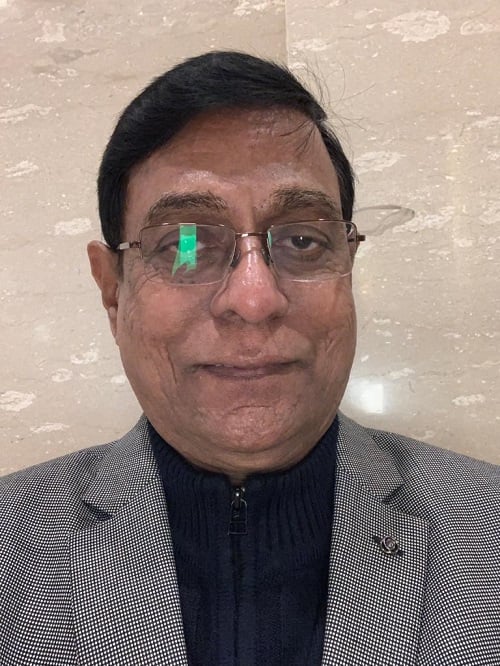
Shri Satish Pashine is a Metallurgical Engineer. Founder and Principal Consultant, Q-Tech Consultancy, he lives in Bhubaneswar and loves to dabble in literature.
Viewers Comments