
Literary Vibes - Edition CLXXI (27-Nov-2026) - POEMS

Title : Me at Agatti Beach with Friends (Water colour by Lathaprem Sakhya)
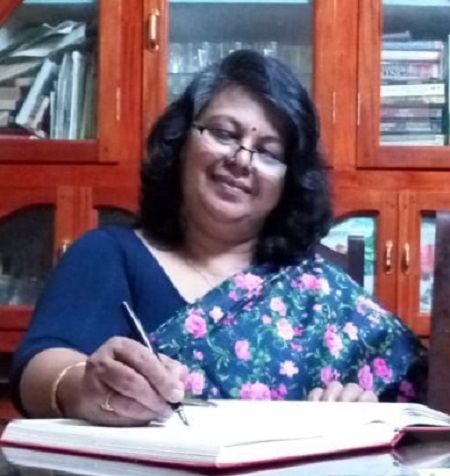
An acclaimed Painter, a published poet, a self-styled green woman passionately planting fruit trees, a published translator, and a former Professor, Lathaprem Sakhya, was born to Tamil parents settled in Kerala. Widely anthologized, she is a regular contributor of poems, short stories and paintings to several e-magazines and print books. Recently published anthologies in which her stories have come out are Ether Ore, Cocoon Stories, and He She It: The Grammar of Marriage. She is a member of the executive board of Aksharasthree the Literary Woman and editor of the e - magazines - Aksharasthree and Science Shore. She is also a vibrant participant in 5 Poetry groups. Aksharasthree - The Literary Woman, Literary Vibes, India Poetry Circle and New Voices and Poetry Chain. Her poetry books are Memory Rain, 2008, Nature At My Doorstep, 2011 and Vernal Strokes, 2015. She has done two translations of novels from Malayalam to English, Kunjathol 2022, (A translation of Shanthini Tom's Kunjathol) and Rabboni 2023 ( a Translation of Rosy Thampy's Malayalam novel Rabboni) and currently she is busy with two more projects.
Dear Readers,
Welcome to the 171st edition of LiteraryVibes. Like every month, it comes loaded with enchanting poems and engrossing stories. With winter tiptoeing acrosss the horizon like a shy, demure princess, the prospect of sitting down with a cup of steaming tea and reading through our wonderful magazine looks so enticing. Please enjoy and share the eMagazine with all your friends and relatives through the following links :
https://positivevibes.today/article/newsview/750 (Poems and Book Reviews)
https://positivevibes.today/article/newsview/749 (Stories, Anecdotes and Short Travelogues)
https://positivevibes.today/article/newsview/748 (Young Magic)
https://positivevibes.today/article/newsview/747 (Article by Dr. Gangadhar Sahoo)
The highlight of this edition is a superb story by one of LV's most accomplished writers - Ms. Meena Mishra, an educator, motivator and editor. She is also the person behind The Impish Lass, a much sought-after publishing house in Mumbai. The story in today's edition is about bullying and the accompanying trauma. It is a theme which will touch many hearts. Since the story is long I have posted it in a separate link and you can access it at
https://positivevibes.today/article/newsview/746
Odisha, together with Andhra Pradesh, is going through yet another cyclone (named Akvan). As I sit to write this editorial (on 20th November) I see the rains pouring outside and the music of the rains soothes my heart. I am no stranger to heavy rains, having lived in coastal India most of my life.
The rains bring both good memories and bad memories. I can never forget a bright afternoon in 2002 at Munnar (Kerala) when steady rains poured like sheets of water, drenching the tea gardens. The scene was mesmerizing, greenery of the vast gardens getting greener and breathtakingly beautiful.
And the sad memory comes from my childhood when as an eight year old I had accompanied my elder brothers in torrential rains to a nearby riverfront to watch the ravages of flood. I still remember hordes of cattle getting washed away in the flood, their eyes awash with terror, the strong current carrying them to a certain death on the way to the sea. Later as a senior government official (Sub-Collector) in late seventies I would be leading relief teams in pouring rains to rescue poor people from rain affected areas or the lowlands adjoining the Cauvery River near Kumarapalayam and Pallipalayam in Tamilnadu. Rains wreak havoc on the lives of the poor in the most tragic way.
Rains also bring me the memory of snow. My first feel of snow was in November 1993, when on a cold evening at State College (Penn State) in USA I was eagerly waiting for snowfall. Everyone in the university town had predicted a snowfall. By evening the sky had an orange glow and the snowfall was imminent. Covered in a heavy winter coat I was roaming on the streets waiting to touch the snowflakes. And when they came the scene was overwhelming. First there were a few flakes of snow falling on my coat like white butterflies opening there delicate wings. And in about half an hour it was white everywhere, the road, roofs of the cars and houses, the tree tops and bushes. I danced in joy in the company of other international students who had never seen snow in their life.
There was a big expanse of forest on the highway, half a kilometer from where I used to live in Penn State. On many winter evenings I would stop my car at that spot and stare at the forest, drinking in its exquisite beauty and imagining how a Robert Frost would have felt, "Stopping by the woods on a snowy evening." The beauty of the place and the time was incredibly deep and even today, after thirty years I can see and feel that forest patch, an ecstatic shiver passing through me.
But snow had its own peril also. I remember a snowy afternoon in December 1993 when I was travelling to Boston in the car of my friend and former classmate Prof. Satya Das of Indiana University. I was sitting in the front seat, his family in the back. (I was alone in USA at the time, my family would join me after a year to enable me to save enough from my student stipend to afford their stay till my wife got a job.) The highway was covered with ice, Satya missed an exit and applied sudden break to the car. To our horror the car skidded uncontrollably and fell into a ditch. Satya and I shovelled the snow around the wheels. Finally after an hour of labour under the falling snow we pushed the car out of the ditch and drove slowly to reach our destination.
I had another brush with disaster in 1996. I was driving with my family (wife, son and daughter) from Delaware to State College on a winter day. It had snowed continuously for three days and the roads were covered with sleet and frozen snow. Suddenly our car skidded on a small bridge on a stream. The car almost tumbled into the frozen stream and we shrieked in horror. With great difficulty I could control the slide in a split second and we were saved. Even today I have goosebumps when I think of those dreadful moments.
Thinking of rains, I received a very nice story forwarded by a friend last week. Although the story is about rains, raincoats, a teacher and his student, there is a lesson in it for each one of us - to create a miracle with a touch of love and kindness. Let me reproduce the story here, with a massive thanks to the anonymous writer :
I have seen almost ten thousand answer scripts in my life.
Bangla exam scripts. Red ink. An eight here, a twelve there. A twenty-five. A zero. Judging people by their writing was my job. I never thought one script would end up judging my own life.
It was almost twenty-two years ago.
I was a teacher at Mohanganj High School. I taught Class Nine. That year the essay topic was "A Rainy Day I Have Seen."
Most of the students wrote the same things. Rain. Mud. Umbrella. Wet roads. Khichuri. River. Some brought in Rabindranath. Some Nazrul. "Rain is my favorite season." "The beauty of rain is exquisite." All familiar lines.
Then I found a script that was not like the others.
The boy had written:
"When it rains at our house, mother puts another pot under the pot. Because water drips from the roof."
I kept reading.
"My mother says rain is good. Because when it rains, there is less dust."
Then,
"I don't like rain."
And in the next line, the reason:
"On rainy days my father's mood is bad."
I paused.
"My father drives a rickshaw. When it rains, fewer people take rickshaws. So on those days we get less rice to eat."
And at the end, one last line:
"When I grow up I want to do a work where no one's rice will become less when it rains."
I checked the rest of his paper. He had answered only three out of five questions. In the other two he had got thirteen. Which meant if he didn't get full marks in the essay, he would fail.
I don't know why, but for the first time in my career, I broke the rule. I closed the script and wrote on top - 33.
33 is not a big number. But for him, it was enough to pass.
Under it I wrote in small letters, "Good language. Hold on to your own experience."
That day I had checked around one hundred and twenty scripts. When I went home at night, I forgot about his.
Twelve days later a letter came from the school. A few scripts had been sent for re-evaluation. One had a complaint - too many marks given. The script came to my hand. I recognized the name. The same boy.
Subhojit.
The Head Sir had recommended cutting his marks from 33 to 20. Reason written: "Overly emotional. The subject matter not presented properly."
I read the script again. Same writing. Same rain. Same leaking roof. Same rickshaw-puller father. I kept it at 33.
The Head Sir was furious. Perhaps for that reason, a month later I was transferred to Rangamati Govt. High School.
Many years passed.
I retired. My students scattered across the country. Some became doctors, some bankers, some teachers, some went abroad. Some never contacted again. That's natural. Students come into a teacher's life, they stay, then they leave. Only some scripts remain. Some lines remain.
One afternoon, a young man came to my house. Around thirty-five. Simple shirt. A file in his hand.
"Sir, do you recognize me?"
"Your face looks familiar."
He smiled. "You won't."
He opened the file and took out an old paper. My handwriting. Red ink.
"Good language. Hold on to your own experience."
I stared at it for a long time.
"Subhojit?"
He nodded. "Yes."
"After so many years?"
"I came to show you something."
He took out a photograph from the file. A large shed. Lots of machines. On the wall it was written: "Work will not stop even on a rainy day."
"What is this?"
"My factory."
"You built a factory?"
"Yes."
"What do you make?"
"Raincoats."
I laughed.
He stood with his head bowed. I offered him tea.
"Sir, I want to tell you something."
"Tell me."
"If you had not given me 33 in that paper..."
He stopped.
"Then?"
"My father would have stopped my studies. Perhaps I would have had to pull a rickshaw like my father."
"Why didn't you answer all the questions?"
He looked down. "My mother was very ill. She was admitted at Netrokona Hospital. When I went for the exam I didn't even know if she would live. Sitting in the exam hall I kept thinking, what am I doing here? That day I didn't have any exam in my head, Sir. I only kept thinking, mother is lying alone."
"Your mother?"
"She died a month later."
I was silent.
"Did you go to college after that?"
"Yes."
"University?"
"Yes."
"What did you study?"
"Textile."
I smiled. "So there is a connection with raincoats."
"There is," he said. Then after a pause, "But my real work is different."
"What?"
He looked out the window. "I am trying to make a cloth that keeps people dry at a very low cost."
"Why?"
He looked at me. "Because I have eaten less rice in the rain."
He took me to his factory. A huge place. More than a thousand workers, mostly women. Standing in front of a machine he said, "Here, no one lacks rice on a rainy day."
"Do you pay them extra on rainy days?"
"No."
"Then?"
"I give them more work. This factory stays open for those who cannot work on the streets outside."
He stopped near another machine where a woman was sewing.
"How many today, aunty?" he asked.
"Thirty-two," she said.
"Okay."
We came back. Before I left, he gave me a small packet.
"What is this?"
"Please open it after you get home. I will feel shy if you open it in front of me."
On my way home, I opened it. A beautiful raincoat. Inside, a small piece of paper: "Sir, you gave me marks. I just tried to live up to them."
I sat holding that paper for a long time. As if to celebrate the moment, it started to rain. I took the raincoat out of the bag and wore it. The road was getting wet. Rickshaws were moving slowly. Water was dripping from the tin roofs of the shops. A small boy stood by the roadside watching the rain. He had no umbrella. But he wasn't afraid. I stood and watched him for a while.
I had spent my whole life giving marks to papers. That day I realized I was never grading papers at all - I was grading futures. And sometimes, a future needs just a few extra marks to pass.
xxxxxxxx
Interesting story. I was moved by it, particularly by the inherent message of positivity.
Hope LV171 will bring a lot of warmth to the upcoming winter days. Relax and enjoy the eMagazine till we meet again on 25th December, last Friday of next month.
With warm regards
Mrutyunjay Sarangi
Editor, LiteraryVibes
Table of Contents :: Poems
01) Prabhanjan K. Mishra
EMOJIS
DON`T WALK GENTLY, LITTLE ONE, PREDATORS ABOUND
SHANTIES IN MONSOON
WILD JASMINES
02) Dilip Mohapatra
THE ASHTAVAKRA IN US
LARGER THAN LIFE
03) Abani Udgata
04) Pradeep Kumar Biswal
05) Dr. Saroj K. Padhi
06) Shreya Suraj
07) Madhumathi. H
08) Sathya Venkatesh
09) Darsana Kalarickal
THE LAKESIDE APARTMENT AND THE GIRL ON HILLSIDE
10) Lata Krishnan
11) S. Sundar Rajan
MUSINGS OF A BIRD(RHYME ROYAL FORM)
12) Kunal Roy
13) Sujata Dash
14) Dr Nanda Kishore Biswal
15) Dr. Rekha Mohanty
WHEN HEART CRIES THROUGH SILENT BEATS
16) Baldev Samantaray
17) Lopamudra Mishra
THE SEVENTEENTH WEEK
THE DESIRABLE MOMENT
18) Dr. Tangirala SreeLatha
19) Nandini Mitra
I BURY YOU IN MY MEMORIES
BEYOND THE HORIZON
20) Matralina Pati
21) Bipin Patsani
THE AGONY OF PROMETHEUS
ANOTHER PURGATORIO
22) Anindita Sen
23) Mrs. Setaluri Padmavathi
24) Dr R. S.Tewari
LET THE FESTIVAL OF LIGHTS..
RELATIONS LIKE CREEPERS
AFFINITY WITH NATURE
GOAL-ORIENTED STRIDE
25) Dr. Rajamouly Katta
26) Swatilekha Roy
27) Sukanya Kunju
ROMANCE BEFORE MARRIAGE VS COMMITMENT AFTER MARRIAGE
28) Dr. Niranjan Barik
29) Dr. Mrutyunjay Sarangi
Table of Contents :: Book Review
01) Pradeep Trikha
ABSTRACT ART THROUGH THE LENS OF KASHMIR SHAIVISM
02) Kunal Roy
I hated emojis.
Imprecise.
Too condensed to hold reflection.
Often flippant,
like hopes and dreams,
a flitter-away timidity.
I did not like emojis.
not generous—
rather miserly.
Not thrifty,
not even minimalist.
They did not espouse
concerted efforts.
Bits of teasing
a blue dot
for the sky.
Today,
chatting with my old—
not elderly—friend,
memories drifted fluttering
like shorn kites
without rope,
without hope.
Would the kites be
ever retrieved?
My moist eyes
were a giveaway.
I held my tears in check,
unsure
if I had succeeded
before they soaked my words.
I wanted my friend
insulated from my pain;
hers was no less
a mess.
I searched for words
to save our souls —
as well as hers,
the delicate hibiscus
pulsating inside her chest.
Not surreal,
not impressionistic—
An emoji
bailed me out.
It stood cool,
collected;
neither rude,
nor reticent,
nor petulant.
DON`T WALK GENTLY, LITTLE ONE, PREDATORS ABOUND
Prabhanjan K. Mishra
Don’t walk gently, little one.
The adoring looks
could be knives
hidden behind lashes.
Sweet smiles poison
a daggerlike tongue;
the caressing fingers -
manicured claws.
This, a season of vultures.
The serene night is calm -
of the kind that tolls silence before a storm,
the moon no slice of solitude, no slice
of a juicy watermelon
from our kitchen garden -
it hangs, an unsheathed
sly knife at the sky's waistband.
Little darling, put on
your red riding hood
before meeting old aunts.
Look up. Look down. Look sideways.
Lift the silent blind -
the woods are whispering:
lonely, deep and dark,
spaced densely tight, suffocating,
tangled with intents.
Read the sky.
Know from Ursa Major.
Learn from Arundhati -
her sacred distance
even from saints:
close yet apart,
a divine testament
of love with caution.
The day is breaking.
The whispering woods
harden into concrete,
feelingless megaliths
rigid with borrowed power -
rootless, no past,
nothing for memory, no commitment.
Little one, look beneath the skin,
know the face from the mask,
do not be the bird in hand
of men who lift weights
but drop conscience,
and keep a bird or two in the bush.
This land’s new sun spills blood,
pull your boots high.
Tie your laces tight.
Wear a mask impervious
to flattery and fangs.
Put on Halloween eyes -
let innocence wait
behind pumpkin-hard sockets
for the right hour.
SHANTIES IN MONSOON
Prabhanjan K. Mishra
(Bastire Barsha Pani – Odia Poem by Runu Mohanty – from her book PARADESHI)
Shanties are soaking wet
sulking on hunches, look miserable.
Your last letter streaming in my tears
as a paper boat, writing smudged unreadably.
My chest, still bears your nail marks
do you recall where you scratched,
privacy and pain coyly hide them
even from me. Neither can I see, nor show.
Our metaphors paired us lovingly
as a river and her ocean
as a moth and his bloom
as a star and his moon.
Perhaps, another image
would be more at home with reality -
a shower and his earth. But left alone
the earth parches dreary, dry and fallow.
Who would vouchsafe it? -
I pushed you out of the nest
or you flew away for greener pastures?
Who but you should know better.
The rain drops enliven petals
and thorns equally, as does my love.
You grow dearer, farther you go;
these bleeding verses stand witness.
WILD JASMINES
Prabhanjan K. Mishra
(Giri Mallika, an Odia poem from the same book of poet Runu Mohanty)
Many occasions
I consider to free you
of our bond, cutting the thread
of a kite in flight.
But tears blind me -
my life and my world
would cease without you;
the lush leaves wither.
Our love suffuses me
with an unearthly fragrance.
I ripple like a river in a hurry, you
the Pacific Ocean, calm, patient.
My joy, is no pretence
when you crush me like ginger
to ooze, and whenever I doubt
your love, I enjoy my defeat.
You and me, two leaves
of the leaf fall, flowing with destiny,
hungering for each other, like
the stream down and the bloom on banks.
Often your intense ardour
makes me feel unequal, I think
of bowing out of the race
but my longings defeat my thoughts.
I long for your touch, your breath,
like never before, new, nascent,
and fresh like the first dew
of the autumn, a new fulfilling.
I feel like hiding you as my trophy
like the mother cat her kittens;
also, your letters and gifts, and
the wild jasmines you put in my hair.
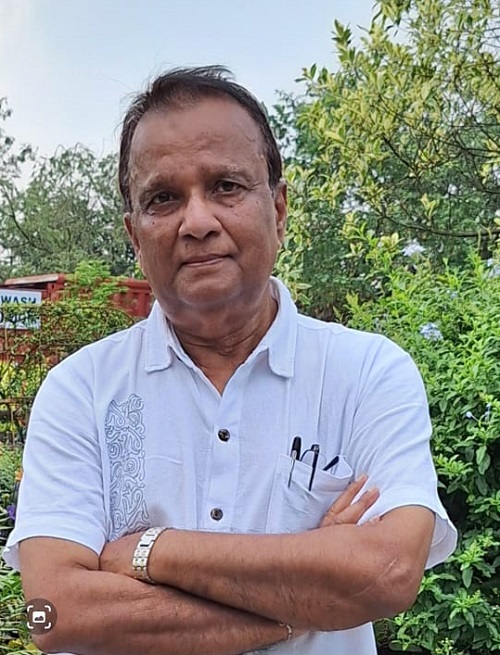
Prabhanjan K. Mishra is an award-winning Indian poet from India, besides being a story writer, translator, editor, and critic; a former president of Poetry Circle, Bombay (Mumbai), an association of Indo-English poets. He edited POIESIS, the literary magazine of this poets’ association for eight years. His poems have been widely published, his own works and translation from the works of other poets. He has published three books of his poems and his poems have appeared in twenty anthologies in India and abroad.
THE ASHTAVAKRA IN US
Dilip Mohapatra
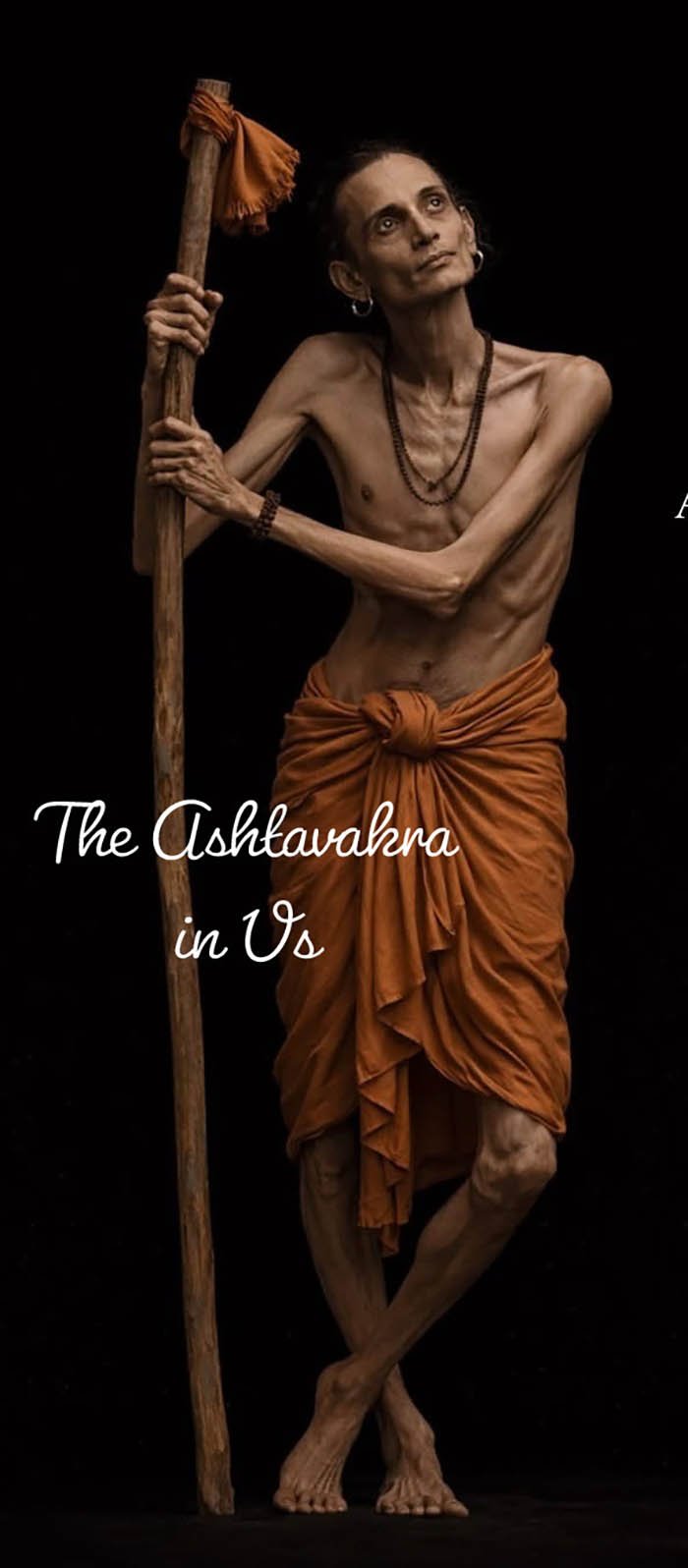
While floating in the amniotic fluid
the fetus presses its ears to the wall of the womb
and listens to the incantations of
the scholarly sage Kahoda
its learned father
and absorbs every drop of wisdom
till it whimpers in disdain
and points out a few flaws in his intonation.
An infuriated seer with his bruised ego
and his pride dissolving into sudden shame
erupts in blind rage
and spews out a curse to his child yet unborn
“let every truth you dared to speak
twist in your bones and wrap in your spine”—
and so the straight became oblique
eight times the unmade flesh gave away
eight times the developing form was broken
and a grotesquely deformed body
an abominable atrocity
a physical debt for a truth softly uttered
carried into the light of the day.
But what about our inherited
and inherent deformities—
our warped trust
rigid perceptions and crooked self-worth
the curses passed down to us
from the environment and the elders
projecting their own
unhealed insecurities
and which hide within us
behind our straight spines
and practiced smiles that we have
cultivated so very carefully?
Ashtavakra wore his asymmetry outside
and he knew he was not his body
as it appeared to be
but much beyond its finite confines
but how do we cope with our distortions
when the mirror is fractured too
and the masks are transparent?
And how do we straighten the unseen bone
when the hands that bent us were not our own?
Or perhaps beyond the baggage that we carry
lies our core identity
unsullied and untouched
waiting to be discovered.
LARGER THAN LIFE
Dilip Mohapatra

As you take your first baby step
you are told that this is the start
of your unending race ahead
and you have to outsmart
and outpace everyone else
and stay ahead of all
all the time.
You relentlessly dream to outrace Usain Bolt
to pack a punch in your gloves
more brutal than that of Muhammad Ali
and compete with Luciano Pavarotti’s lung power
and one day you discover yourself
standing beyond the stratosphere
a towering shadow eclipsing
the feeble stars scattered around.
Alas the diminutive dwarves down below
are unable to behold such blinding blaze
far away beyond their limited gaze
a silent myth wrapped in the cosmic cloud
and you in your avatar of a chimera:
a composite of superlatives—
wonder if staying ahead is relevant any longer
when all are left behind lightyears away
and none visible in the rearview mirror.
The intriguing question however
echoes through the empty space:
“Whether the monstrous height
demands a monstrous grace
and whether you may take
an apneic pause
with a touch of humility
when your smallest breath
is a hurricane
to those far below?”
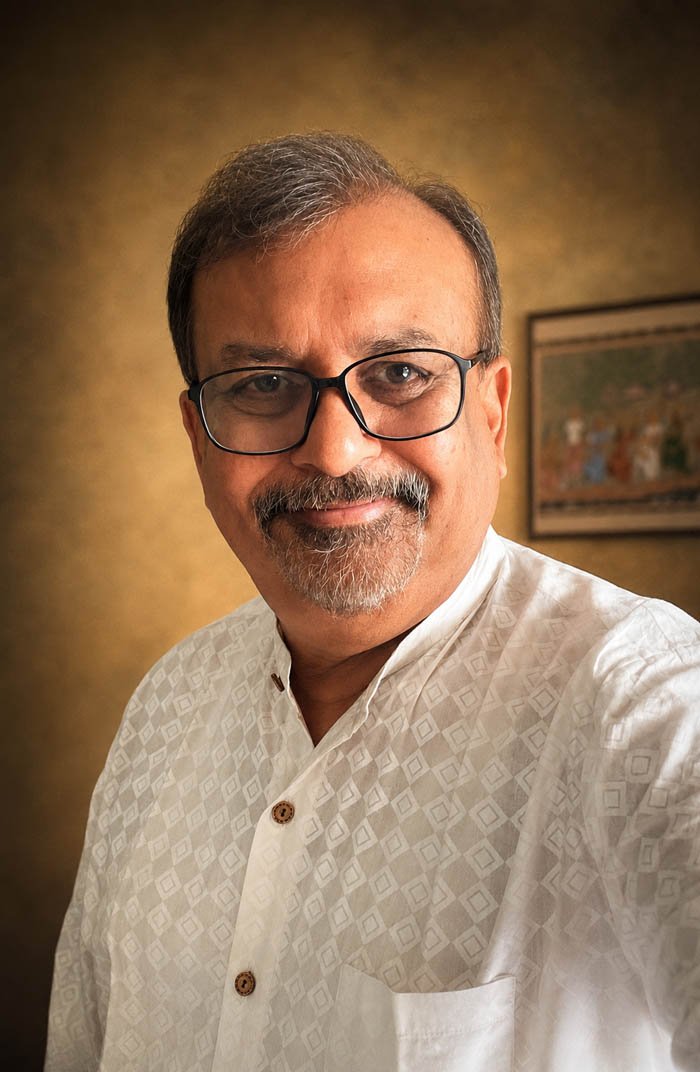
Dilip Mohapatra writes poems that dwell at the threshold where the tangible yields to the ineffable. Rather than describing the world, they uncover the hidden correspondences that bind its disparate realms. Quietly meditative yet intellectually alert, his poetry invites the reader to move beyond appearances into a space where the finite touches the infinite and every ending gestures towards a larger wholeness.
A globally published author, he has to his credit eleven poetry collections, two short story collections and two professional books.Winner of multiple International Awards and recognitions he writes from Pune and is a regular contributor to Literary Vibes. His email id is dilipmohapatra@gmail.com

The colour of the years
trembles in these waters.
The sky in a cold-blue descent
settles on the iridescent plane
where my body lies looking inside.
The time zones in the map, smudged,
no longer, wake up to different alarms.
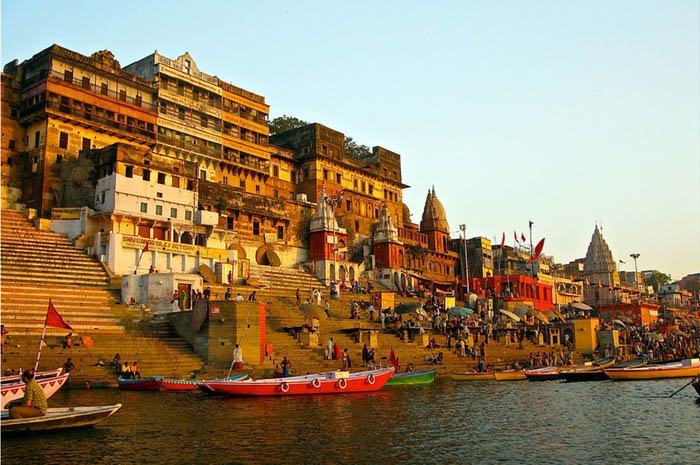
Those cast-away wreaths on
the timeless waters of Ganga
in Varanasi go nowhere.
Daylight dies at the end, and
bodies sink in to the river,
each day in to memory.
Like a slow flight of birds
curls of smoke travel from
Chillums of unknown sadhus
towards the city thoroughfare
where bulls roam and ruminate
under the streetlights of Kashi.
The edges of the river and the sky
meet like two lids to encase the earth.
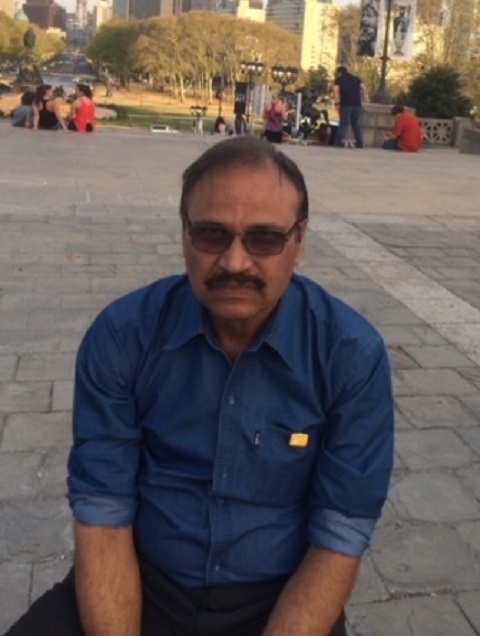
Abani Udgata lives in Bhubaneswar. Writes poems both in English and Odia. Udgata has been awarded in all-India poetry competitions and published in anthologies. He has been a regular contributor to LV. Email: abaniudgata@gmail.com
ON THE BANKS OF POETRY
Pradeep Kumar Biswal
On the banks of Poetry
I stand gazing
At the distant horizon
Bathed in crimson and blue.
Letters dance to a melody
I have never heard before.
Is Poetry an art
Or perhaps a science?
I keep wondering
For it remains an enigma to me.
I have never ventured
Deep into its depths
Nor have I been able
To fathom its mysteries.
Poetry to me
Is as much about what it does
As about what it doesn’t;
A magical world
Half revealed
Half concealed
Where words and images
Unfold hidden meanings
That even a critic
May struggle to decipher.

Pradeep Biswal is a distinguished bilingual poet, translator and editor. He has nine poetry collections in Odia and three in English. His poems have been translated into Hindi, Telugu, Punjabi, Assamese and Malay languages and got published in separate volumes. He’s the curator of Toshali Literature Festival and editor of monthly web magazine kabitalive.com. A retired IAS officer, he’s staying with his family in Bhubaneswar.
Oft’ as I go out visiting places and people
in quest of peace and calm in open spaces,
again I’m drawn back to the humdrum soon
by life’s conditioning to hug the old stresses;
not knowing what to do as boredom returns,
there’s preparation for new outings
to appease the eyes, ears and a roving mind,
knowing little about their shortcomings !
But now I know there’s a sanctuary to retreat,
deep inside the aching heart and soul
where the mind is made to sit with little role
and you’re left wondering at a new goal !
There’s peace, calm beneath bone and marrow
with a radiant Sun’s promise of a bright morrow.
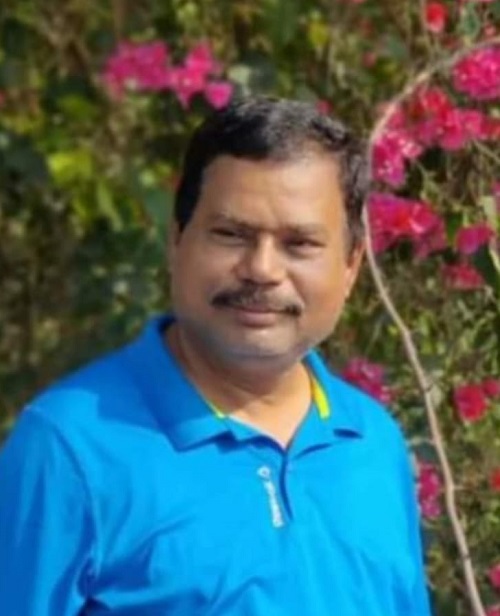
Dr. Saroj K. Padhi, an Associate Professor of English in the Govt. of Odisha is at present working at J K B K Govt. College, Cuttack . Born in 1962, he has been writing poems in English and Odia since his school days. He has published several reseach papers, two books of criticism: 1. JAYANTA MAHAPATRA’S RELATIONSHIP : A CRITICAL STUDY 2. ENGLISH ESSAYISTS : A CRITICAL STUDY and got 14 anthologies of poetry in English namely PEARLS OF DEW, SHATTERED I SING , RHYMING RIPPLES, PETALS IN PRAYER, SILENT SIGHT, MOON MOMENTS , A SLICE OF SILENCE , ELUSIVE SPRING, MONSOON MEMORIES and WHERE BUDS REFUSE TO BLOOM, THE ENDLESS FLUTTER ,STARS IN THE COVID SKY, IMPULSE FROM WOODS AND SELECTERD POEMS
He has received several awards including the national ROCK PEBBLES AWARD, 2017.

Once upon a time
Long long ago
I too was a naughty girl
Playing silly pranks
Was so much fun
I always looked so innocent and sweet
Nobody thought that I could do something mean
One day ,
I heard some screams
I knew my mischief had taken the lead
I heard my classmates shouting for help
The brave boys pretended to help
Both were too scared to move
Because they saw some eww
There was a big lizard on the desk
Who didn't move even a bit
Minutes felt like hours for them all
But I started laughing till tears began to fall
I walked bravely up to the lizard
Pretended to utter some magical words
Then lifted my hand
I quickly lifted up the lizard
And pretended to throw it out of the window
Boys and girls were in awe
Until someone realised it was a prank
They realised that the lizard was not real
It was a plastic lizard
Some laughed out loud
While some gave me dirty looks
People took turns to borrow the lizard from me
Till one day someone got very angry and cut it into tiny bits
School days were full of fun
Amazon is selling those lizards again
Should I buy them to scare my kids now?
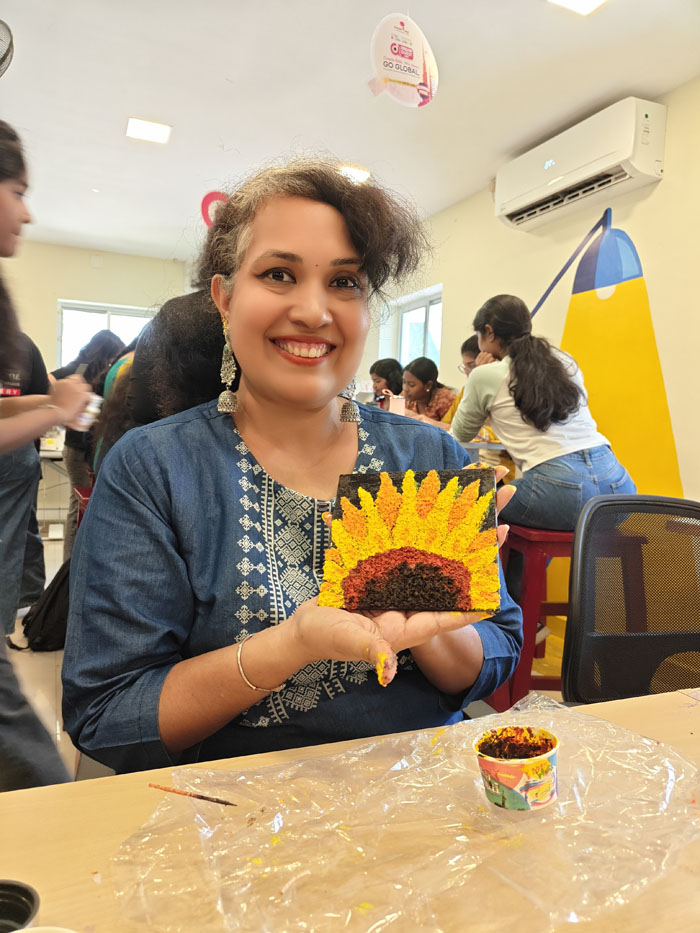
Shreya Suraj is a mathematician, artist, photographer, poet, and environmentalist. She is the founder of the global art group Anybody Can Draw on Facebook, which has grown to a community of over 30,000 members. She has conducted more than 300 art workshops worldwide and has actively participated in over 400 beach clean-up drives in Qatar. In addition, she volunteers in tree-planting initiatives and sustainability campaigns. Deeply passionate about creative expression and nature, she believes that we have one Earth and that it is our collective responsibility to protect it for future generations.
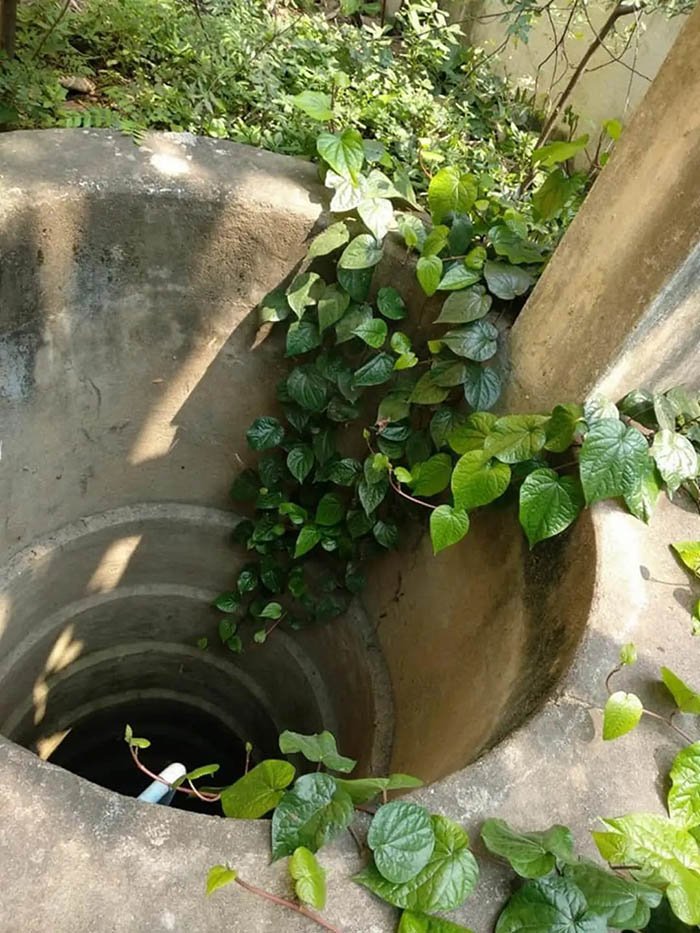
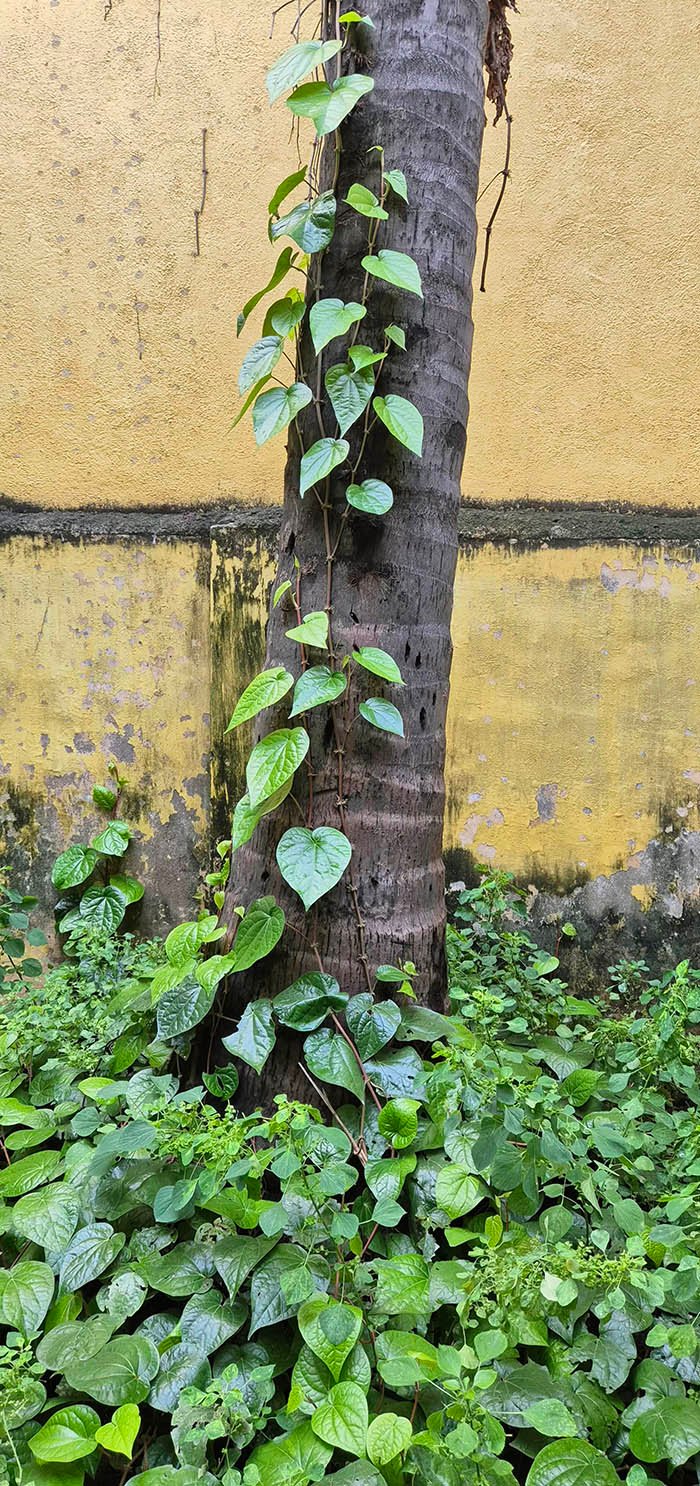
Betel leaves all around
Growing erratic
Into the depths they descend...
Of all the benefits
They protect the heart
Heal wounds...
But never did I find them so
When I walked around
Carrying an ache, a question...
Why do you become
The depth in a well
The more you hide
The more I see you
The more curtains you weave
The more light I find
You restore yourself
In your cocoon, and
I love the art of Metamorphosis.
WARMTH OF LOVE...
Madhumathi. H

Colder winter...
Walking under snow flurries
What warmth is love
That is not given, shared...
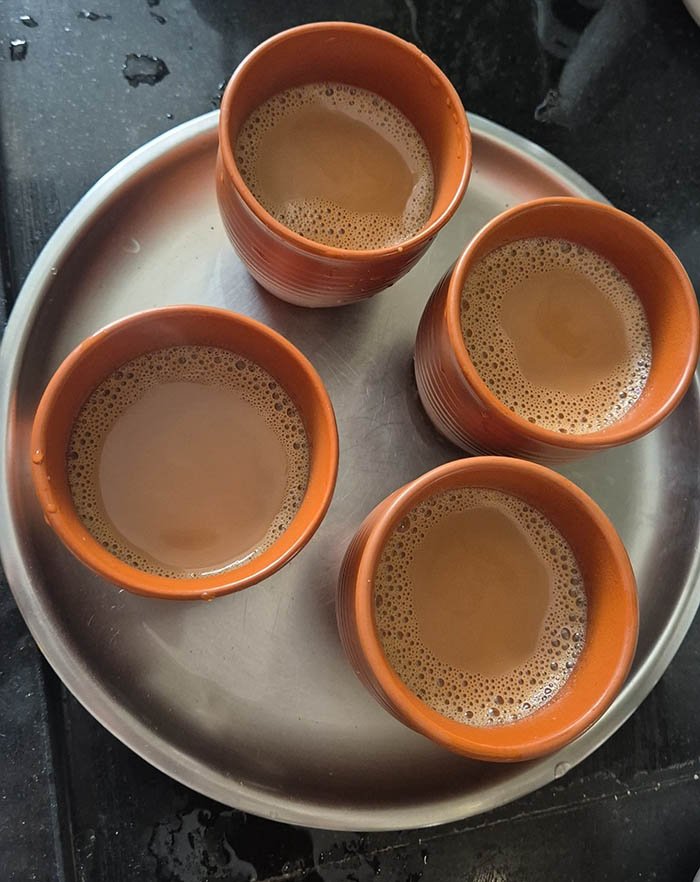
Love is a kettle, a cup of tea
A quilt, to snuggle into
Love is a kind shoulder, a gentle hug
Hands wiping the tears, and
A kiss on the forehead that
Plants hope, paints happiness
Love is anything that
Becomes a bonfire
To thaw the frozen heart
And heal the frostbites of the soul...
Brighter heartprints blossom
When love is poured, and not sprinkled or spilled.

A bilingual poet-writer(Tamil, English), Madhumathi. H is an ardent lover of Nature, Poetry,
Photography, Music.
Her poems are published in Anthologies of The Poetry Society(India), CPC- Chennai Poetry
Circle's EFFLORESCENCE, IPC's(India Poetry Circle) Madras Hues Myriad Views, Confluence, Spring Showers,
Amaravati Poetic Prism, and in e-zines UGC approved Muse India, Storizen, OPA – Our
Poetry Archives, IWJ - International Writers Journal, Positive Vibes, Science Shore.
e-Anthologies Monsoon moods - Muse India, Green Awakenings - On Environment, by
Kavya-Adisakrit.
Madhumathi's poems are part of YPF's(Yercaud Poetry Festival) Ignite Poetry, Breathe Poetry, Dream Poetry, Winterful Whispers, Auburn Ambrosia,
Of Soul Scribers' Soul shores that have 10 of her poems
published, Soul Serenade, Soul songs, Soul Dance, Shades of Love-AIFEST - Special Jury Mention, and
secured 'A Grade’ in the International Poetry Writing Competition(published Anthology)
conducted by All India Forum for English Students, Scholars, and Trainers (AIFEST) in March-
April 2023 in connection with International Women’s Day celebrations, Arising from the
dust, Painting Dreams, Shards of unsung Poesies, are some of the Anthologies her poems,
and write ups are part of.
Besides Poetry, Madhumathi writes on Mental health, takes part in related activities to create awareness, break the stigma, believing in the therapeutic, transformational power of words.
BETTER – HALF SIDE BY SIDE
Sathya Venkatesh
She calls herself my better half,
and I let her.
She keeps the house in orbit—
food finding the table without delay,
bills clipped to a nail by the door,
shirts dried before the rain returns.
I carry the weight outside—
late travel, hard bargains,
a leaking faucet silenced at dawn,
money folded into the month.
She knows when my voice trails off,
sets tea beside me without asking.
I stand at the threshold when the world hammers at our door
my words firm, my back unbent.
She says she is the better part—
and some days, she is.
But what she builds, I secure
what I carry, she anchors—
we stand as equals.
Hailing from Coimbatore and with a background in Economics, Sathya Venkatesh has always been passionate about English literature and poetry. After fifteen years as a freelance content writer, she transitioned to teaching English to government school students. She finds joy in poetry, travel, painting and Indian Philosophy which she feels deepens an understanding of self and fuels her creativity. She has published haiku poems on reputed journals such as haikuKatha, Haikuniverse and Autumn Moon Journal. She firmly believes in a higher purpose guiding her path.
THE LAKESIDE APARTMENT AND THE GIRL ON HILLSIDE
Darsana Kalarickal
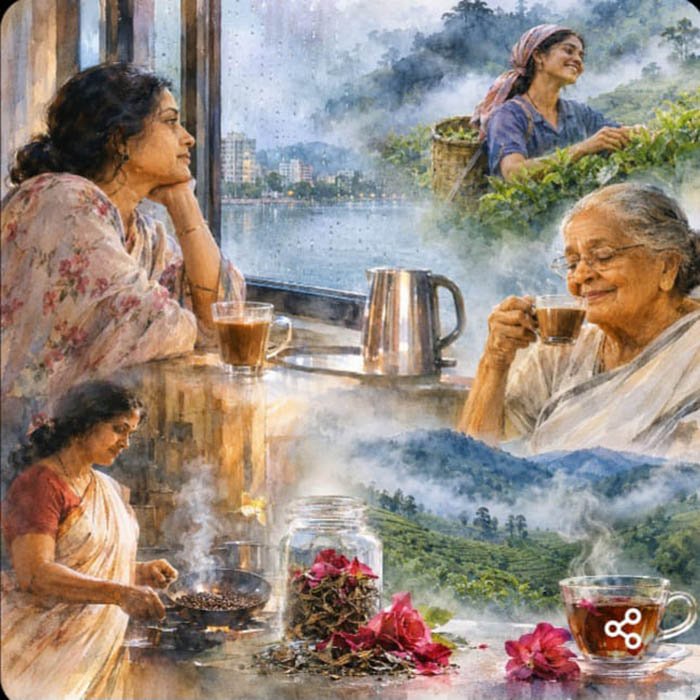
On the tenth floor
of a lakeside apartment,
as I poured boiling water from the kettle
into a glass cup
and dipped a little tea bag into it,
she was plucking tender tea leaves
beside the mist-covered mountains.
Perhaps the song she hummed
in that solitude
was echoing all around her.
The windowpanes kept it hidden from me.
"What a terribly bitter smell this has!"
Grandmother said, unable to swallow
even a sip.
"It's green tea, Grandma,"
I replied, touching neither here nor there.
"Do you even know how to make coffee, girl?"
My eyes remained fixed on the view.
She was walking down the hillside,
a smile filling her face,
her eyes sparkling,
with the cool breeze, mountains and forests for company.
How fortunate she was!
How many evenings had I trembled
at the slightest movement of shadows
along the roadside at Madakkathanam!
As I sighed deeply,
she was spreading the tea leaves
on a pan, heating them
and gently rubbing them dry.
As I sprinkled sugar-free sweetness
over the coffee powder in my glass cup
and poured hot water into it,
My mother at Madakkathanam
was roasting peeled coffee beans
in a pan, grinding them to powder.
She added a little of it
to the boiling water.
The rich, inviting aroma of coffee
rose like an intoxicant through my veins.
The girl on the hillside
scooped a handful of dried tea leaves
into a glass jar,
scattered crimson rose petals over them,
added hot water and stirred,
then poured the infusion into a glass cup
and slowly brought it to her lips.
Behind her, the hillsides blushed.
Clouds drifted by...
A flash of lightning
raced through the mother's chest.
The coffee cup slipped from her hand
and rolled across the floor.
The girl on the hillside
faded from my eyes.
"Grandma will keep saying all sorts of things.
Your job is to follow the menu."
Susan Kochamma's face
turned red on the screen.
"Girl, where is the coffee?"
Grandmother's impatient longing...
I caught the cup
just as the coffee was about to spill
into the washbasin.
As Grandmother blew on the coffee and sipped it,
her eyes sparkled.
But I did not wipe away
the tears filling my own eyes.
*Darsana K.R., residing in Venginissery, Thrissur district, is an employee at Venginissery Service Cooperative Bank and a passionate poet. Her published works include the poetry collections *Kavithaye Pranayichaval, Pranayathil Akappettathinte Ezhaam Naal, and Kuldharaayil Oru Pakal; the short story collection Thekkedathamma V/S Ramakavi (co-authored with Dr. Ajay Narayanan); the memoir Kunnirangunna Kothiyormakal; and the poetry study Kavithayude Veraazhangal. Her poems and articles have been featured in various periodicals and online platforms. phone : 9645748219, email darsanakr1973@gmail.com.
Memories of many years knocking inside
thoughts dancing to its tunes
every day as it glides.
Years are eaten up living in the past
Rereading and rewriting
Many scenes of wrong and right,
reminiscing the foolish acts of youth’s style
past grandeur of status and prestige with smug smile
in heydays, your mission never let you sleep
now, sleep evades and time just creeps
stiff joints and aches are some doctor’s gain
advice on exercise invites more pain
health now seems the main topic on walks
still control on taste buds never lasts
Money and comfort for which you slogged
Means little now that there is no one to talk
Eyes seek old connections to smile
And live in the past just for a while
A sliver of fear deep within
For what unknown tomorrow will bring
Spirituality gradually springs,
In philosophy acceptance sinks
Difficult it is to bridge the mind, body gulf
both must be tamed to realise yourself.
Lata Krishnan is a writer presently based in Coimbatore, India. Having spent her growing up years in Kolkata, she became enamoured with poetries and litrature and started penning a few lines now and then. After finishing her education in Kolkata where she spent almost 32 years, she shifted to Chennai and many others cities due to demands of her office work as a Bank Manager. After her retirement from the banking industry, she decided to indulge in her love for writing. Her experiences with life reflects in her work. She explores themes of nature, life, love, and self- reflection. She is the author of the poetry collection "Strewn Petals of the Heart" which she published in 2023.
MUSINGS OF A BIRD(RHYME ROYAL FORM)
S. Sundar Rajan
My second home is nestled in a tree,
Along with rustling leaves with top gear,
With a river calmly flowing, carefree,
Brings scintillating music to the ear.
So refreshing, that one could aspire,
The sky is bereft of smog on our flight,
The Earth presents a heavenly sight.
With humanity all gone underground,
On our flight from home, such empty scene,
There is a strange quietness all around,
Never in our earlier days, we've seen.
An unpolluted environment, clean.
Nature has again spelt it out,
Co existence is the best way, no doubt.

S. Sundar Rajan is a Chartered Accountant with his independent consultancy. He is a published poet and writer. His collection of short stories in English has been translated into Tamil,Hindi, Malayalam, Telugu, Kannada and Gujarati. His stories translated in Tamil have been broadcast in community radios in Chennai
and Canada. He was on the editorial team of three anthologies, Madras Hues, Myriad Views, Green Awakenings, and Literary Vibes 100. He has published a unique e anthology, wherein his poem in English "Full Moon Night" has been translated into fifteen foreign languages and thirteen Indian regional languages.
An avid photographer and Nature lover, he is involved in tree planting initiatives in his neighbourhood. He lives his life true to his motto - Boundless Boundaries Beckon.
AMID THE BATTLEFIELD
Kunal Roy
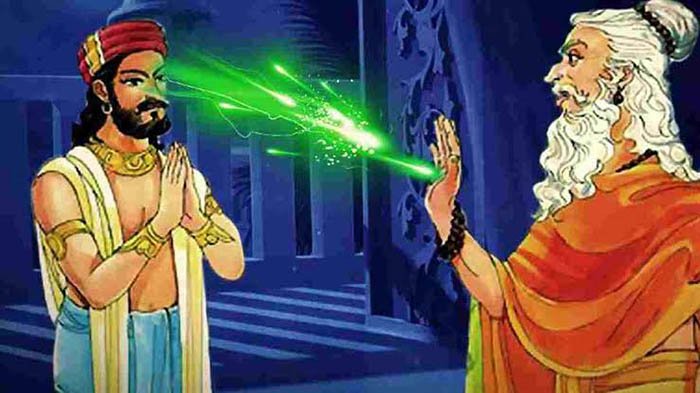
The sun reached the mid sky,
ready to incline at the west!
Sanjay, the clairvoyant,
listened to a summon,
wasting no moments,
rode a chariot,
down the undulating land,
the snaky curves,
the bents and buts,
landed on the auspicious ground,
where the Lord spoke the words,
to his ally Arjuna,
summed up the essence of Gita!
Sanjay stood overwhelmed
Thought he ' Is this the Kurukshektra?
No reply from any corner,
Absolute necropolis - reigned supreme!
All dissolved into -
the reedy residues of poetry!
Sanjay submerged in thoughts,
Sattaki, the warrior,
confronted Sanjay,
desired to move him
into the gaping mouth of death!
Sanjay fell on the ground,
the stone dust evening,
the rapier was to about -
to take a blood bath!
A miracle happened.
An apocalyptic vision!
Vyas appeared,
commanded the warriors,
"Leave Sanjay. He has an important work to peform!"
Sanjay went scot free,
met Duryodhana,
hidden in Dwaipayan lake,
frozen,
stood the times!
The evil made a plea,
not to reveal of his secret hub!
The darkness descended,
symbolic of Duryodhana's destiny,
time awaited with bated breath,
for the Dharma to settle peacefully,
for the new sun to rise,
for the new birds to chirp,
for the new humanity to evolve!!
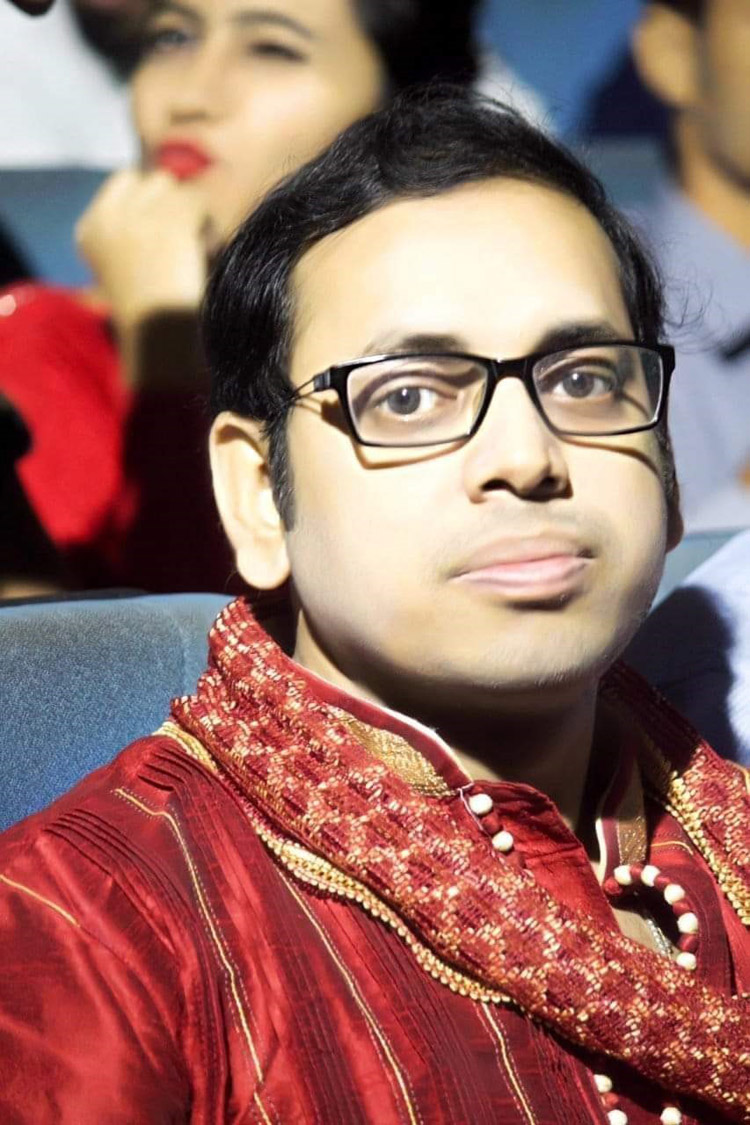
Kunal Roy has always been an ardent lover of literature. He has received various awards for his literary contributions. He is a poet and a critic of poetry. His works have been published both here and abroad. Currently working as an Assistant Professor of English Language and Communication in George Group of Colleges, Kolkata.

Time rose from langour
When you walked in
Braving Incessant ebb and flow of daily grind
And the naked realities of life
Time folded twice
When our resilience was challenged
But, we gathered our shards
Mindfully exuded stoicism
Life's lotus bloomed indubitably then
Overriding cimmerrion dark phase
And our eyes smiled through tears
Time stood still
When our secrets found a berth
Secured footing in the baneful turf
Salvaged demolished hopes and aspirations
Welled up tears froze mid ecstasy
Under the canopy of love and bliss
Time applauded
When our souls chimed
To the subtleties of reverie
Crisp morning air crackled with unflagging zeal
Composed a meaningful rhapsody
Time breathed serenity
When life's fabric sculpted an exclusive motif
Out of diverse strands of living
Overcoming tomorrow's apprehensions and niggles
Time became immortal
When our fondness grew manifold
Transcending boundaries of physical sine qua non
Everyday life felt like a blessing
Salvaged demolished hopes
Embraced eternal sunshine.
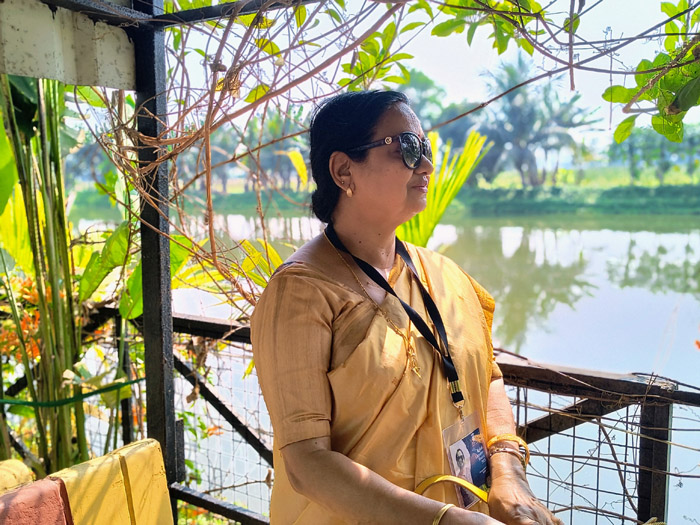
Sujata Dash is a poet from Bhubaneswar, Odisha. She is a retired banker.She has four published poetry anthologies(More than Mere-a bunch of poems, Riot of hues and Eternal Rhythm and Humming Serenades -all by Authorspress, New Delhi) to her credit.She is a singer,avid lover of nature. She regularly contributes to anthologies worldwide.
THE ALLURE OF QUIETUDE
Dr Nanda Kishore Biswal
She is no shrinking violet,
yet when we differ on the path, though never on the goal—
bound as we are by shared, unspoken truths—
she slips into a graceful reticence.
And frankly, in that quietude lies half of her allure.
I never tire of offering my praise,
for she knows well it is no fragile currency.
Even when nature’s spell grows strong enough
to rival her silent, gravitational pull.
And I stand deep within the bosom of a wood,
breathing the ancient scent of trees—
where tension melts, anxiety subsides,
and every dormant sense wakes into life—
I never miss the forest for the trees.
I watch the sunset spill in awe,
through layered boughs of green and gold.
When drifting clouds hang low enough to touch,
they kiss my cheeks, and in their mist
I feel her gentle fingertips caressing through my hair.
And when the sudden rain invites,
a sudden ensemble of light across the sky,
I see her standing there in full resplendence.
I am no poseur, still less a critic bold enough to claim
that softening the orange in the corner might have made the rainbow whole;
Nor one among those meddlesome philistines
who dare to find a flaw in Michelangelo’s carved stone.
She is a masterpiece—a living peace—
shaped by the steady hand of that supreme Artist
of infinite finesse and artistry.
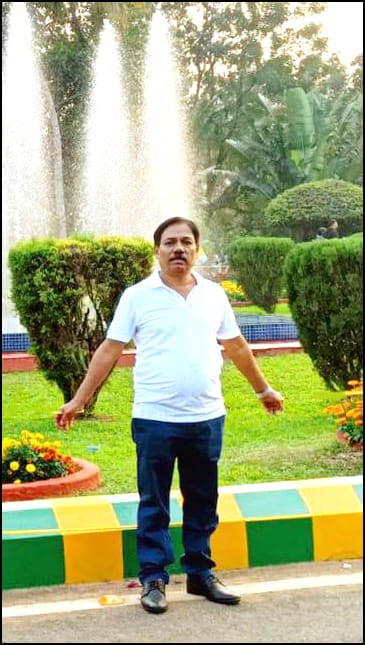
Dr Nanda Kishore Biswal, after teaching English language and literature for more than thirty five years in different colleges of Odisha, retired as an Associate professor. Passionate in reading poetry, intermittently, he has been writing poetry since his college days.1996 to1999 was his most fertile period when his Odia poems were published in almost all Odia dailies as well as in most of the Odia magazines. Also he writes English poems. He has authored The Fictional Transfiguration of History in the Novels of Salman Rushdie, Amitav Ghosh and Rohinton Mistry. Besides, he has edited Prananath Patnaik:A purveyor of Egalitarianism Currently, he is engaged in writing reviews of the poetry collections of the new poets who write in English.
WHEN HEART CRIES THROUGH SILENT BEATS
Dr. Rekha Mohanty

One can not rewind time
which makes the life strange,
Mixed with moments
happy and sad
one can not exchange…
Joyful days get over soon,
Sadness lingers on,
Tiny sharks like pins
stick to heart
make it bleed every
now and then,
Again and again…
Sad moments are powerful,
Deep seated wounds
difficult to reveal,
Refuse to heal,
Ugly stains tend to spill,
Sufferings prolonged,
Solutions trapped indefinitely
in a mesh entangled…
With silent beats
of a bleeding heart,
one feels miserable,
Dear ones in life now
neither bothered
nor dependable,
One completely is heartbroken
in spite of all good will,
Life limps with
fractured relationship,
Unbearably painful…
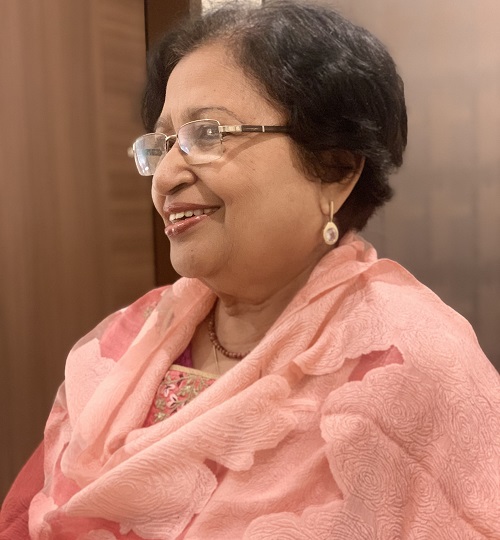
Col( Dr) Rekha Mohanty is an alumni of SCB Medical College, Cuttack, Odisha and she has spent most of her professional life in military hospitals in peace and field locations and on high altitude areas.She has participated in Operation Vijay (Kargil war)in 1999 and was selected for UN missions in Africa for her sincere involvement in crisis management of natural calamities in side the country and abroad where India is asked to do so in capacity of head QRT in Delhi for emergency medical supplies.She had also participated in military desert operation ’ Op Parakram’ in Rajasthan border area.After relinquishing Army Medical Corps in 2009,she worked in Ex Servicemen Polyclinic in Delhi NCR and presently is working in a private multi-speciality hospital there to keep herself engaged.
Her hobby is writing poetry in English and Odia.She was writing for college journals and local magazines as a student in school.
Being a frequent traveler around the world,she writes travelogues.The writing habit was influenced by her father who was a Police Officer and used to write daily diary in English language he had mastered from school days in old time.Her mother was writing crisp devotional poems in Odia language and was an avid reader of Odia and Bengali books.Later her children and husband also encouraged.
Dr Rekha keeps herself occupied in free times for activities like painting, baking and playing card games the contract bridge.
She is a genuine pet lover and offers her services to animal welfare organisations and involves in rescue of injured stray dogs.Being always with pets at home since early childhood ,she gives treatment to other dogs in society when asked for in absence of a vet.She delivers talks on child and women health issues to educate the ladies in army and civil.
After sad demise of her husband Dr( Brig)B B Mohanty in February 2023,she devoted more time to writing and published her first poetry book’Resilient Leaf’in August 2023.Since then there is no stopping and she is going to publish her second book of poetry soon.
She enjoys reading E magazine LV , newspaper current affairs ,writing poetry and watching selected movies whenever she gets time.She keeps travelling places of interest in between for a change which is a passion as a girl since days roaming with parents and siblings .Her motto is to be happy by giving the best to self and to the society.She is lucky to have a supportive family.
She stood by the table
Holding the famous portrait
She cried at the protruding belly
Of the naked woman
Her lanky neck
Tempered with vodoo necklace
Her eyes defiant
As the glowing ambers
Of a burning charcoal
The spark of fire
Rose for a moment of eternity
The frames gave way
And with it the comfort
of warm and cozy tears
The nonchalant tears
That reminded her
Of her soul far away
It all evaporated
Consumed by the fire
And energy of the eyes
That has seen it all
Not from far.
We all cry for ourselves
to flush our guilt.
Baldev Samantaray is a retired banker who lives in Bhubaneswar. He did his post graduation in English literature from Ravenshaw College (76-78).He started writing from his Ravenshaw days. Many of his poems appear in various journals and anthologies.
THE SEVENTEENTH WEEK
Lopamudra Mishra
The morning sun slipped quietly through the curtains, painting soft patterns on the floor. She stood beside the window, one hand resting on the chair, preparing herself for the first few steps of another day. Every morning began with a silent conversation between her heart and her injured leg.
"Will today be easier?"
Sometimes the answer was yes. Sometimes it was only silence.
Before the accident, walking had never been a thought. It was simply life flowing forward. But on a quiet afternoon in March, a single fracture changed the rhythm of everything. The calendar continued turning its pages, but time inside her seemed to slow into tiny, measured steps.
The cast came first.
Then the waiting.
Then the questions.
Would she walk again without fear? Would the stiffness ever leave? Would the swelling disappear? Would life return to what it once had been?
Doctors spoke in weeks. Physiotherapists spoke in exercises. Friends spoke in encouragement. But none of them lived inside her body. None of them felt the strange ache that appeared without warning, or the frustration of watching one leg obey while the other hesitated.
The hardest battles were not fought in hospitals.
They were fought in the quiet hours.
Every evening she watched people walking outside her window. Children raced each other without thinking. Elderly couples moved slowly but confidently. Delivery boys hurried past. Life seemed so effortless for everyone else.
She never envied their speed.
She envied their freedom.
The mirror became both friend and stranger. It reflected a woman who smiled politely when people asked, "How are you now?"
"I'm getting better."
The answer was true.
It was also incomplete.
Getting better was not a straight road. Some mornings she felt almost normal. By afternoon her ankle swelled. Some days she walked with confidence. The next day her knee felt weak again. Every improvement seemed to arrive holding the hand of another challenge.
Hope became a disciplined habit rather than a feeling.
Physiotherapy was rarely dramatic. There were no miraculous moments. There were repetitions. Bend. Hold. Lift. Balance. Walk. Rest.
Again.
Again.
Again.
At times she questioned whether any of it mattered. Could a few simple exercises really rebuild a life interrupted by one unexpected fall?
Yet, week after week, invisible changes accumulated. Muscles remembered forgotten work. Bones quietly healed beneath the skin. Confidence, though fragile, slowly returned.
Recovery taught her a language no school had ever offered.
It taught her that healing is rarely visible while it is happening.
A seed does not become a tree overnight.
Neither does a wounded spirit.
The loneliness surprised her most.
People cared. They called. They asked questions. They wished her well.
But pain has a room where only one person can sit.
In that room she met impatience, fear, anger, gratitude, faith, exhaustion, and resilience. They visited like unexpected guests, each leaving something behind.
There were evenings she cried, not because the pain was unbearable, but because she wanted one ordinary day.
One day without calculating every staircase.
One day without thinking about swelling.
One day without wondering if tomorrow would finally be easier.
Then came the smallest victories.
Standing a little longer.
Taking ten steps without hesitation.
Sleeping without waking because of discomfort.
Climbing a few stairs.
Trying a gentle squat.
Stretching a little farther than yesterday.
To the world they were tiny achievements.
To her they were mountains conquered.
The fracture had not only broken bone.
It had broken certainty.
She had always believed effort guaranteed progress. But recovery introduced another truth: effort sometimes produces results too slowly for the impatient heart to notice.
She learned to celebrate fractions instead of miracles.
One degree more movement.
One minute more walking.
One little reduction in limping.
One morning with less fear.
Some afternoons she imagined the future.
She pictured herself walking through busy streets, travelling, attending cultural programmes, standing confidently before an audience, smiling without secretly measuring every step.
Those images became promises rather than fantasies.
Faith, she discovered, was not believing that healing would happen tomorrow.
Faith was continuing today's exercises despite not knowing exactly when tomorrow would arrive.
People often think courage appears loudly.
They imagine speeches, applause, dramatic victories.
Real courage, she found, was much quieter.
It was putting one foot in front of the other despite disappointment.
It was beginning again after an uncomfortable day.
It was refusing to let one difficult morning define the entire journey.
There were setbacks.
An ankle swollen after standing too long.
A knee that suddenly felt stiff.
A moment when the leg buckled unexpectedly, sending fear rushing through her mind faster than pain itself.
Each setback whispered, "Perhaps this is just unfolding ".
THE DESIRABLE MOMENT
Lopamudra Mishra
You supposed to be the most desirable moment
One of the finest experiences
I love to travel with
Among the ugliness, I became enchanted with the beauteous generosity
You displayed
Among the pretentions, I became influenced with the simplicity
You presented
Among the artificial mechanism, I became swayed with your theory of naturalism
You delivered
To be honest
The moments with you are desirable
I travel with you to the stars
I feel the time heavenly and enjoy the time wholly.
Lopamudra Mishra, a contemporary poet, author, translator, editor, social activist, motivational speaker, orator and personality development coach, hails from Bhubaneswar, Odisha.
Her writings are intended to touch the inner chord softly by emphasizing on "Sense and
Sensibility" of attachment and bonding. She has six books till date on her name- “Rhyme of Rain”,
“First Rain”,” Tingling Parables”, “Rivulet of Emotions”, “Red Tulips” and “Hurricane Heart under the Honeyed Sky”. Her poems have been published in various magazines and anthologies. She has been Editor of Radical Rhythm-4 & Co-editor of Radical Rhythm Series and Durga.
She is a proud alumnus of Sailabala Women’s college and Ravenshaw University.
A CUP OF TEA AND A MOMENT
Dr. Tangirala SreeLatha
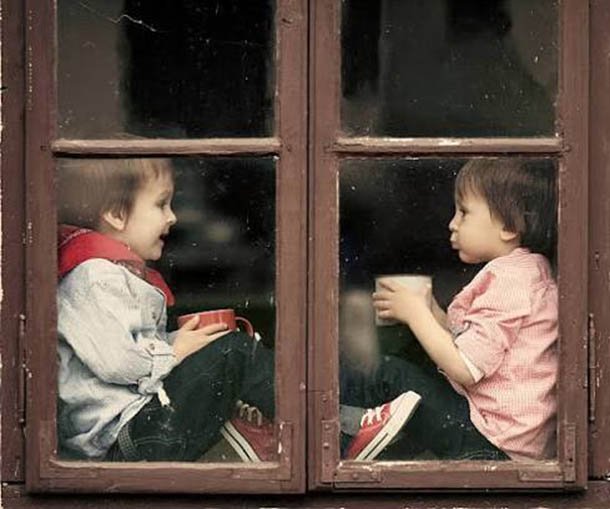
A moment of instant refreshment
Nurturing senses with nourishment
Affordable to men from every station
A cherished comfort across the nation
It’s the tempting TEA in all flavours
Resolving issues and fostering favours
Influencing minds through every taste
A timeless pleasure none would waste
It brews storms in teacups and snapchats
Eases tensions during casual chitchats
An energizer beyond any recent medicine
A supplement above any decent discipline
A silent companion in moments of despair
A soothing presence when burdens we bear
A refreshing pause amidst life's busy race
A little warmth that brings smile on the face
From roadside stalls to luxurious high-ends
A convivial den to strangers and old friends
A common delight transcending every class
A bond that grows as fleeting moments pass
Its leaves, processes and flavours many
With regional blends and ingredients any
From humble homes to gatherings grand
Strengthening brotherhood across the land
Many a time, beyond its refreshing taste
A priced moment makes it more than chaste
A lingering glance, a smile, a word or two
Make an ordinary moment excited and new
An adored memory afresh in my heart
That brought me close to my sweetheart!
It wasn’t a petty storm in the cup of tea
But a loving promise whispered in glee
I surrender to those lasting promises
Which keep us united in our premises!
*** Image Courtesy – Google Images.
Dr. Tangirala SreeLatha, Professor & Head Department of English, has been an educator for 31 years in professional Language and Soft Skills training. She is a bilingual poet, critic, short story writer and translator. Her poems are anthologized in various National and International journals. Received awards for BEST SHORT STORY and BEST POEM. She published many research papers, an anthology “VOICED THOUGHTS” and edited “DIAMOND INDIA - UNHEARD SONGS OF OBSCURE HEROES” and translator of THE VALIANT KALINGA. She was awarded UTTAMA ADHYAPIKA and Visishta Seva Ratna, Ugadi Puraskaram.
Postal Address
# 33-25-33A
Bellapu Sobhanadri Street
Opposite ‘CHINNARI’ Hospital
Suryaraopet
Vijayawada – 520002
Andhra Pradesh
Contact Details
Mobile No - 9440488455
sree.tangirala@gmail.com
I BURY YOU IN MY MEMORIES
Nandini Mitra
You left me at the bend,
I took a turn and moved along.
Yet nothing here has changed;
The sky remains as blue as ever,
Kissing the mountain peaks in all sincerity.
I still recall the smile that used to lift me up,
Helping me fly, without my wings,
Through the high clouds of our shared dreams.
Yes, nothing is the same,
And yet our song remains—
I sing it through the fading day to greet the starry night,
Where the lone moon keeps watch with me.
You left me at the bend,
And I moved on.
Yet nothing here has changed;
My heart still pounds to hear the thunder roll.
I reach for your broad arms to hide myself within,
Forgetting for a breath that you are gone.
But I have learned to soothe my wandering, romantic soul,
To lose myself inside the quiet of my mind,
Pining like an anguished lover,
Yet dancing to the first cold drops of winter rain.
You left me at the bend,
And I moved on.
Nothing truly changes.
A gentle breeze still breathes upon my neck,
Stirring the happy moments that I keep.
You lived within my sunrise and my sunset;
But now, I step ahead,
Burying you softly in my memories.
BEYOND THE HORIZON
Nandini Mitra
I will touch your love far beyond the horizon,
Where no shadow can spill from the dark of the sky,
Where the light overflows into all empty spaces,
And we walk step by step, just your spirit and I.
We will seek out our arbor of peace and alignment,
Deeply hidden away from the world and its scars,
Where the silence is pure and the air is a healing,
And our path is lit bright by a lattice of stars.
In the heart of the quiet, a voice will awaken,
As the nightingale breathes out its sweetest refrain;
It will sing to the wilderness, wild and untaken,
Washing clean every memory of sorrow and pain.
We will wander away to the edge of the stillness,
Past the borders of grief where the weary minds break,
Far away from the noise and the roar of the city,
To the beautiful promise of all we can make.
When the night sheds the weight of its velvet-black mantle,
And the morning puts on her new crimson-spun gown,
The horizon will burn with a promise of waking,
As the walls of our isolation come tumbling down.
At each turn I will capture myself in your mirror,
In the depth of your eyes where my old selves will drown;
I am found in the grace of your sudden reflection,
Wearing love like a priceless, invincible crown.
Love will wander the lengths of each uncharted alley,
With a fierce, wild devotion that nothing can tame;
It will search out the secrets we hid in the valley,
And ignite every spark into permanent flame.
We will lock in an embrace where all falsehoods are shattered,
Like the truth that drowns lies in a furious sea,
And the rise and the fall of the ages that follow
Will engrave our one name through all history.

Nandini Mitra is a poet based in Kolkata. A post- graduate in English Literature from Jadavpur University. She is in the profession of teaching for last twenty -five years. She has published her first book of poetry,The Road To Tranquility, recently. Has worked as a freelance journalist for a prestigious Bengali magazine published from Kolkata. She is passionate about Music and is a trained classical singer. However, writing poetry has become an integral part of Nandini’s journey of life since 2011. She believes in the religion of humanity, compassion and love. She has a rich sense of metaphors and imageries and enthusiastic about weaving poetry relating to the realities of lives and the diversities of nature. Her poems have featured in various national and international anthologies.

I planted myself
Within the roots
Of a lonely forest.
Trees, dusk-laden
Have grown reticent.
The ancient began to breathe
Through me
I could no longer tell
If I were healing
Or becoming the earth.

Matralina Pati, is a PhD research scholar working on marginal Indian bhasha literature (UGC Junior Research Fellow), a bilingual poet and a translator from Bankura, West Bengal. Her critical and creative writings have been published on national and international platforms. She has authored a book of translations titled Monsoon Seems Promising This Year (selected poems of postmodern poet Rudra Pati translated from Bengali into English).
THE AGONY OF PROMETHEUS
Bipin Patsani
Bound to the earth
With my indecisive fire
Of potentiality,
I burn within
Because of my helplessness.
Why should I mourn
Of my fire
That which contains all,
All probabilities
And all improbable
Possibilities?
A fountain of fuel
In her divine grace
Will perhaps make me awake
Unmaking the bonds of inaction
And the dullness of death,
Awakening me to eternity.
The fire that warms up
And the fire that burns, then
Will embark upon the poetic spark.
ANOTHER PURGATORIO
Bipin Patsani
If you ask me
What binds me to my childhood,
My answer would be –
Dreams unfulfilled and shattered,
Failure, frustration and loss of faith;
I would go back in my subconscious
In search of the missing link.
The diversion easy and automatic,
I would think of women
As bundles of sex and wonder,
Waiting to be unpacked.
And then seeking solitude and satisfaction
Both aesthetic and intellectual,
I would wander like a cloud
Never gaining ground,
And not being allowed to hold on to the pulpit
In spite of my strong desire,
The urge to watch and wonder
At the divine glory and splendour,
So as to be absorbed in its silent symphony,
The song of harmony and union.
A wandering soul, impatient to meet
Both primitive and the perennial,
I would fall again seeking joy and fulfillment,
Latent though in the dark depth of the transient,
Sinking, sinking and sinking to the bottom,
Indifferent to this life, this death,
Mud, water and sand all over
Until my fingers reach the golden lotus.
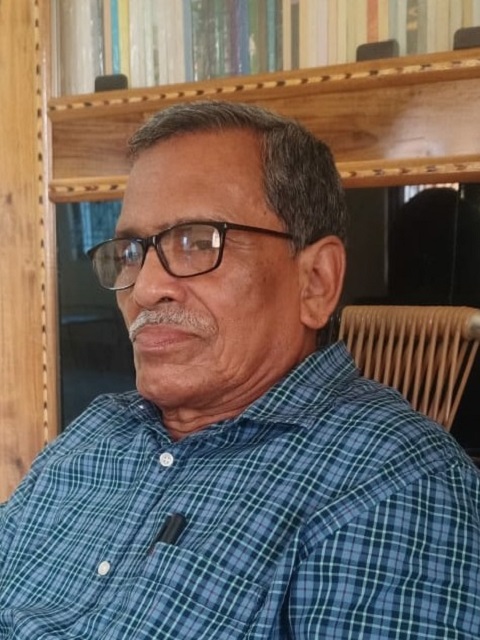
Bipin Patsani (b. 1951) has published poems in many prestigious journals and poetry anthologies including Indian Literature, Chandrabhaga, Journal of Indian Writing in English, Indian Scholar, Kavya Bharati, Poetcrit, International Poetry and Prophetic Voices etc. He has been translated to Spanish and Portuguese. He has three poetry collections to his credit (VOICE OF THE VALLEY, ANOTHER VOYAGE and HOMECOMING). He is a recipient of Michael Madhusudan Academy Award/ 1996 and Rock Pebbles National Award in 2018. He did his Post Graduation in English at Ravenshaw College, Cuttack in 1975 and served as a teacher in Arunachal Pradesh for 34 years till his superannuation in 2012. He also received Arunachal Pradesh State Government’s Award in 2002 for his dedicated service as a teacher. He lives with his family at Barunei Colony, Badatota in Khordha District of Odisha, India.
A river flows in my veins
My dreams are still written in its ink
Creates and destructs
Ever continuing as eternal
Harbours hatred and wrath
Spewed malice and all the sins!
By the power of immersion
Somewhere it anchors
With the grace of letting go
With the power of surrender to the flow!
The steamed nature hallucinates
Disrupts the silent world
Venturing into the deep
Shattering into the sanctuary of the sea
Still I drowned…
Drowned myself in the middle of
nowhere, in the midstream!

Anindita Sen is a bilingual published author and Translator.She has published seven collection of poetry and four novels in her credit. She is a well known translator, a regular contributors to various literary journals in English as well as in Bengali. She was awarded a few literary awards. As a profession, she was a Biology teacher associated with Hem Sheela Model School based at Durgapur, West Bengal.She lives in Asansol, West Bengal.
I AM THE BACKBONE OF A NATION
Mrs. Setaluri Padmavathi
I’m the backbone of the nation
and a food bowl of any state;
Folks stare at me with a smile
as I welcome them with peace!
I am not comforted with tar road
but a wooden plank gives a way;
People don’t mind a pebbled path
and muddy spaces, that they walk!
I attract you with greenery around,
Any part of the earth paints green;
Neem, mango, and coconut trees
replace your air conditioned rooms!
The colourful shrine of temple top,
the different sounds of chirping birds,
and the fun filled hearts of tiny tots;
give you a thrilling mind and ecstasy!
A fresh water pond between roads
gives life to mankind and animals
The tidal waves gently come and go,
Kissing your face with cool breeze!
Cottage dwellers invite you with love
and affection, and their delicious food;
Their houses are small, but heart is big
that makes you reside in their hearts!
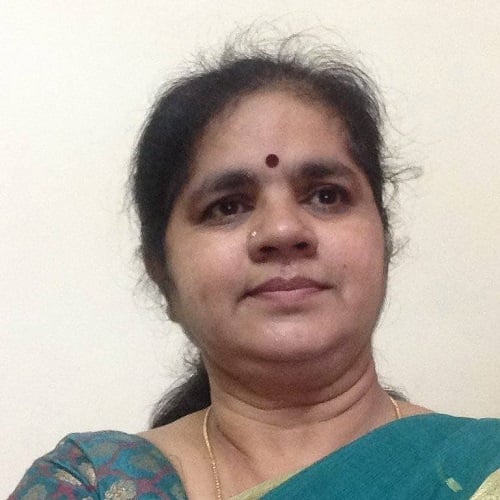
Mrs. Setaluri Padmavathi, a postgraduate in English Literature with a B.Ed., has been in the field of education for more than three decades. Writing has always been her passion that translates itself into poems of different genres, short stories and articles on a variety of themes and topics. She is a bilingual poet and writes poems in Telugu and English. Her poems were published in many international anthologies and can be read on her blogsetaluripadma.wordpress.com. Padmavathi’s poems and other writings regularly appear on Muse India.com. Boloji.com, Science Shore, Setu, InnerChild Press Anthologies and Poemhunter.com
LET THE FESTIVAL OF LIGHTS..
Dr R. S.Tewari
Let there be light within to enlighten the world outside,
And eliminate the darkness of ignorance,gloom and sin world-wide.
Let the global fraternity realise the needs of people for their better survival,
And try to resolve the concerns for peace, prosperity and progressive revival.
Let all the wars for supremacy and subterfuges be pacified, and the hoarding of arms and ammunition be restricted
To their safety and security,and the lights of lamps and fireworks resonate the shrivelled ones to be protected.
Let this festival of lights illuminate the poverty of nations, already have suffered beyond imagination,
May God bless all with good sense,ethics and values to establish harmony for truth, justice and liberation !
RELATIONS LIKE CREEPERS
Dr R. S.Tewari
Relations without intended expectations go longer ,
Spread like creepers with flowers and fruits for ever.
If really sprouted, go on flourishing like a Kalpvriksh (a wish fulfilling tree) every time,
And make life oily, and strengthen the untold bond to fulfil well deserved chime.
Those who have vicious intents, and delve deep into the mud of selfishness and Pseudo- calculations,
Are bound to suffer sooner or later, and also pay the compound interest on their illegitimate justifications.
Pious and selfless relationship breeds an immortal commitment and treaty beyond imagination,
Once it is fructified, the journey howsoever simple or complex, culminates into a vibrant satiation.
AFFINITY WITH NATURE
Dr R. S.Tewari
The song of humanity sung in the courtyard of Nature is so melodious
That it creates the symphony of life and love ,far from the mundane rumpus .
Nature ,our mother, vital source and support, is the saviour of mankind,
Ever enlightens, guides, navigates, warns ,and also does our duty, remind .
Right from the earth to the firmament ,She showers her blessings in varied ways and forms,
Making life vital and the echo-system intact,truly teaches composite values and transforms.
Let us learn from the humble plans of Nature for the welfare of the whole creation,
And protect plants, trees, planets, rivers, seas, oceans, mountains and all the evolution .
Affinity with Nature and her sacred plans will make human future glorious,
Beware and be her obedient children, follow her holy plans, quite indigenous.
GOAL-ORIENTED STRIDE
Dr R. S.Tewari
Inspite of all that has taken place, and may intervene the future,
The valour within is unflinching to face both present and future.
Let life conspire against your dreams and destiny,
Be ever ready to face, fight and unearth the honey.
The solution to every issue lies in its womb,
Be prepared to climb the tower or dig the tomb.
Blessings in disguise wait beneath every adversity,
Know this secret, and smile within with intrinsic chastity.
For sure,all that is legitimate you aspire for is yours,
Be up with goal -oriented stride,far from all airy flares.
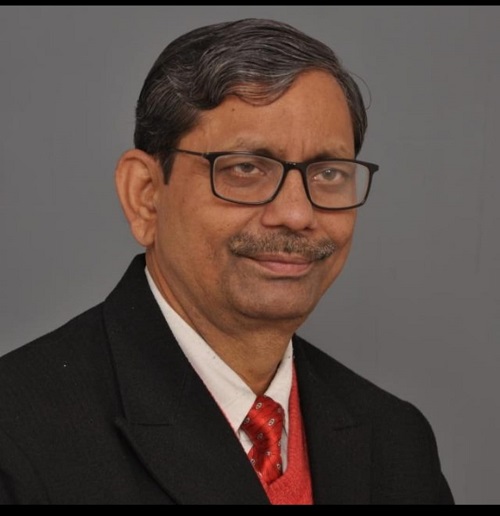
Dr R. S.Tewari 'Shikhresh' is a retired Assistant Director(O.L.)from Govt of India ,awarded by Honourable President of India,Honourable Governor of Uttarakhand and U.P.,Honourable State Home Minister (Govt of India) for commendable work in Official Language of the country is an M.A.( English Literature ,Hindi Lit. Philosophy ),PG Dip.(Translation and Journalism )and Ph.D.in Philosophy of Religion ,
Dr Tewari to his credit has 23 books of English verses,Hindi verses,books on Official Language and English Grammar.He has delivered more than five hundred lectures in various workshops on various topics.He has written more than a dozen of reviews of books in Hindi and English. Having started his career as an English teacher ,Dr Tewari worked as a Translation Officer, Hindi Pradhyapak and Assistant Director (Official Language) in Income -tax Dept.He has also served as a Consultant, Officilal Language and Communication in a training Centre of the ministry of MSME.
He has also worked in the Departments of Philosophy and Journalism in Agra University as a visiting faculty for a short span. Presently, he is a Visiting Faculty in the distance cell of D E I Deemed University, Dayalbagh ,Agra (UP),India.
SOFT TOUCH ENOUGH
Dr. Rajamouly Katta
The veena, to sing myriad melodies,
Strikes dumb when hung to the wall,
Its silence is heard but its melodies unheard,
When you touch its strings, they enthrall,
Audiences are spell bound, all readies.
A pat on the back when in nervousness
A clap as a big round of applause to enliven,
A kind gesture fills in hopes in weakened minds,
Frightened hearts and darkened spirits even
As failures sure to lead to success.
A sapling in soil is arid needs water,
Show in planting, not to grow it no planning,
Sheer love for the tree to save all in its stature,
To excel all, the virtue in value teaching,
Man to learn it to be man greater.
What one needs is encouragement,
By words to come from a munificent heart
It is stimulus that works on mind for response.
It is genesis of man-to-man treating art,
The nucleus role for enlightenment.
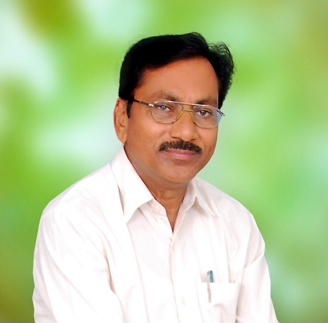
Dr. Rajamouly Katta, M.A., M. Phil., Ph. D., Professor of English by profession and poet, short story writer, novelist, writer, critic and translator by predilection, has to his credit 64 books of all genres and 344 poems, short stories, articles and translations published in journals and anthologies of high repute. He has so far written 3456 poems collected in 18 anthologies, 200 short stories in 9 anthologies, nine novels 18 skits. Creative Craft of Dr. Rajamouly Katta: Sensibilities and Realities is a collection of articles on his works. As a poet, he has won THIRD Place FIVE times in Poetry Contest in India conducted by Metverse Muse rajamoulykatta@gmail.com
I could not, I just could not,
bloom white Noyontara on the balcony
escaping your gaze.
You had already taken away all the seeds
with your blue eyes.
Look, how the plants are bending down.
You only gave old age...
What did you take!

Swatilekha Roy , She is a bilingual poet,Lecturer ,F.A degree College ,Cachar Assam.She is creative and passionate nature photographer too
ROMANCE BEFORE MARRIAGE VS COMMITMENT AFTER MARRIAGE
Sukanya Kunju
Before marriage, love is a spark,
A fire, a flame, a dream in the dark.
It's passion, excitement, butterflies, desire,
Sweet whispers that never tire.
After marriage, love is not a spark,
It's a lamp that stays lit in the dark.
It's patience, respect, loyalty, trust,
Not just lust, but a must.
Before, it's romance, it's thrill, it's high,
It's "you and I against the sky".
After, it's grounded, it's real, it's true,
It's "me standing strong for you".
Before, love is words - cute, kind, sweet,
Promises that make the heart beat.
After, love is action - calm, steady, deep,
Promises that it actually keeps.
Before marriage, love is how you fall,
After marriage, love is how you don't let me fall.
Before is chemistry, feeling, emotion,
After is commitment, strength, devotion.
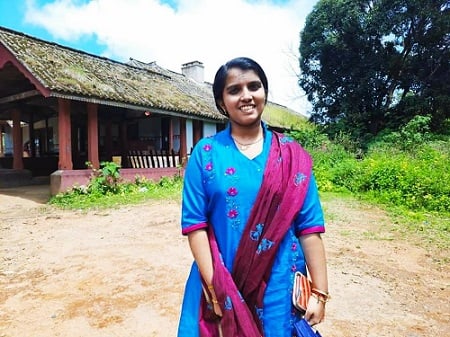
Sukanya V Kunju is a postgraduate in English language and literature from St.Michaels College, Alappuzha. Most of her poems have been published in Literary Vibes. She is an aspiring poet. She is the co-author of the book Dusk and Dawn.
C O U N T I N G
Dr. Niranjan Barik
Counting ?
I fail to count
The stars scattered across the sky;
They seem to joke with me,
With their mischievous twinkling eyes.
From one end, as I begin to count,
I lose the thread at the other end;
The numbers refuse to stay,
And my counting comes to an end.
One leisurely evening,
I sat down to count my friends and foes;
But at the break of dawn,
The whole arithmetic went awry.
The friends and foes had crossed the floor,
Changing sides, as they often do;
There was no Anti-Defection Law
To restrain them from the political coup!
The foes had become friends,
The friends had turned turncoats;
What a futile exercise it was,
To count them in the first place!
Why did this happen?
Mathematics has no answer;
Nor does my beloved Politics
Offer any convincing explanation.
It is the mind , theirs and mine ,
Where everything begins;
Yet, over this mysterious territory,
Not everyone has control.
And then comes repentance,
Sometimes with tears in the eyes;
How could a friend turn into an enemy,
On the strength of mere hearsay and lies?
And so, Ghar Wapsi takes place;
The estranged return, the bridges mend.
After all, what is the point of counting?
It needs no counting,
But courting!
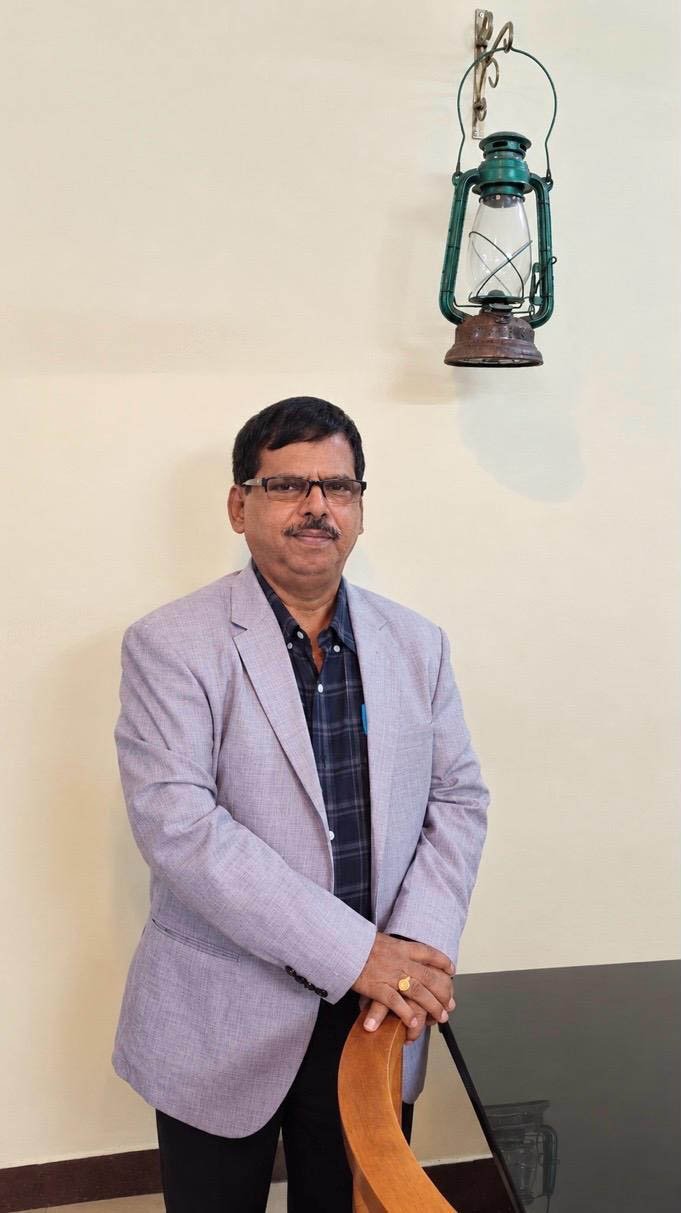
Professor Niranjan Barik ,formerly Professor and Head, Department of Political Science at Ravenshaw University also served as a Professor of Pol.Sc and Principal , Khallikote Autonomous College, Berhampur, Odisha. A Fulbright Scholar-in-Residence at Miles College, Birmingham, AL, USA in 2007-08 , Prof Barik evinces interest in reading and writing short stories and poems in Odia and English. His poetry book , “Freedom from Bondage: An Ode to Nature” published in 2023 was released in Bhubaneswar in December 2023.
THE BELL
Dr. Mrutyunjay Sarangi
As I sit at the window
I count the whispers
that come through the air
quietly beckoning me
The quiet raindrops
that may or may not be tears
falling from invisible eyes,
the soft footsteps closing in
When was the last
anyone talked to me,
beyond a mere hello,
when was the last smile I saw?
The room is empty,
yet so crowded with memories
so filled with fun, laughter
of the days long gone
Now the whispers frighten me
the raindrops threaten to drown me,
images pass by like floating clouds
and the silence is so deafening
I know when the time comes
they will all vanish,
the whispers, the raindrops
and the silent images.
Only the bell will toll -
when, no one knows,
and for whom -
for the one going away
or the ones staying back?
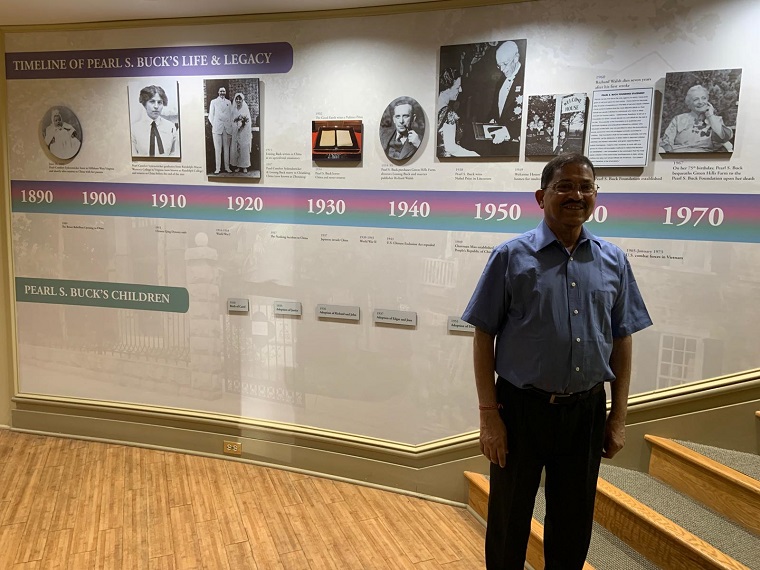
Dr. Mrutyunjay Sarangi is a retired civil servant and a former Judge in a Tribunal. Currently his time is divided between writing poems, short stories and editing the eMagazine LiteraryVibes . Four collections of his short stories in English have been published under the title The Jasmine Girl at Haji Ali, A Train to Kolkata, Anjie, Pat and India's Poor, The Fourth Monkey. He has also to his credit ten books of short stories in Odiya. He has won a couple of awards, notably the Fakir Mohan Senapati Award for Short Stories from the Utkal Sahitya Samaj. He lives in Bhubaneswar.
ABSTRACT ART THROUGH THE LENS OF KASHMIR SHAIVISM
Pradeep Trikha
Title: Beyond Form: Abstract Art: A Kashmir Shaivism Perspective – Cosmic Dance on Canvas: Paintings of Chaman Lal Raina
Interpretative Study by Abhinav Kamal Raina
Published by: Inkstone Publication, New Delhi
ISBN: 978-81-689147-6-6
Year: 2026
Price: 999/-
Art has always been a profound medium through which human beings attempt to explore, interpret, and communicate the mysteries of existence. While figurative art seeks to represent the visible world, abstract art moves beyond physical representation to explore emotions, consciousness, energy, and invisible dimensions of reality. Beyond Form: Abstract Art: A Kashmir Shaivism Perspective – Cosmic Dance on Canvas: Paintings of Chaman Lal Raina, an interpretative study by Abhinav Kamal Raina, offers an intriguing exploration of this relationship between artistic abstraction and Indian philosophical thought. The book invites readers to look beyond the apparent visual structures of paintings and discover the deeper philosophical and spiritual impulses underlying abstract expression. The central attraction of this study lies in its attempt to interpret the abstract paintings of Chaman Lal Raina through the philosophical vision of Kashmir Shaivism. Rather than approaching abstraction merely as an artistic technique or an arrangement of colors, shapes, and textures, the book encourages an understanding of art as an expression of consciousness. It opens up a fascinating dialogue between modern abstract art and an ancient Indian philosophical tradition that regards the universe as an ongoing manifestation of supreme consciousness.
The introductory chapter establishes the conceptual foundation of the book by introducing readers to the world of abstraction. Abstract art does not imitate external reality; instead, it creates an independent visual language through which the artist communicates inner experiences and perceptions. Its vocabulary consists of color, movement, rhythm, texture, form, and spatial relationships. The expression "Beyond Form" is particularly significant. It suggests that the meaning of an artwork cannot be confined to what is immediately visible. The viewer is encouraged to move beyond literal interpretation and participate in an imaginative and contemplative experience.
Chaman Lal Raina’s paintings become spaces of exploration where artistic expression and philosophical reflection intersect. The paintings are visual experiences that invite multiple interpretations, challenging the conventional distinction between seeing and understanding by requiring both intellectual engagement and intuitive sensitivity.
Abhinav Kamal Raina’s write up, "Reading the Paintings: Symbol, Form and Abstraction" serves as the core interpretative framework of the study. Abstract art often communicates through symbols and visual suggestions rather than clearly identifiable objects. Lines, circles, geometric configurations, layered surfaces, and spontaneous gestures acquire deep symbolic significance depending on their arrangement and the viewer's engagement. The symbolic mechanism comes to life vividly across Chaman Lal Raina's visual repertoire:
Oval Enclosures & Textural Swirls: In works featuring nested oval frames surrounded by heavily textured, paint-splattered grounds, the canvas operates as an cosmic egg (Brahmanda). The central pool of stippled blues, greens, and reds, surrounded by thick ringlets of gray, crimson, and yellow, visually captures the transition from chaotic unmanifest potential to structured manifestation.
Iconic Sacred Forms & Concentric Motifs: In more structured compositions, a vibrant red, totem-like central vessel rests inside a radiant yellow aura set against a stippled blue backdrop. Marked with white concentric circles, teardrop shapes, and a crowning wave motif, the form acts as a focal point for meditative reflection—embodying the sacred vessel (kalasha) or the concentrated essence of Shakti.
Yantras, Sacred Syllables, and Eye Spheres: Advanced energetic structures manifest through stacked concentric rings, crescent moons, and an overarching divine eye (Bindu or Trinetra) framed by the sacred Om symbol at the apex and protective mantras at the base.
The philosophical framework of Kashmir Shaivism provides an illuminating context for these forms. In this tradition, the universe is understood as the dynamic manifestation of Shiva, the supreme consciousness, through the creative power of Shakti. Creation is an expression of consciousness's inherent freedom and creative energy. Viewed through this lens, abstraction becomes an artistic parallel to the process of manifestation: forms emerge, interact, transform, and dissolve, transforming the canvas into a metaphorical space where the visible and invisible encounter one another. Abhinav believes that colour is among the most compelling elements of abstract expression. In the chapter "Colour, Movement and Energy", the relationship between color, rhythm, and artistic vitality receives particular attention.
Colours in Raina's abstract paintings are far more than decorative elements; they evoke emotional states, suggest movement, and generate psychological and sensory responses. The intense contrast between deep ultramarine blues, radiant golden yellows, fiery crimsons, and organic greens creates a visual rhythm that mirrors the pulsating energy of the universe. The idea of cosmic dance (Tandava) becomes especially meaningful here. In Indian philosophical and aesthetic traditions, cosmic movement symbolises the dynamic relationship between creation, preservation, and transformation. Kashmir Shaivism, with its emphasis on the creative freedom of consciousness (Svatantrya), frames these compositions as visual expressions of energy in motion:
Pulsating Textures: Splattered blues and textured impasto surrounding central forms evoke the restless, vibrant play of primordial energy (Spanda).
Radiant Rays & Luminosity: Golden halos and luminous green rings radiating outward simulate the expansive diffusion of divine light (Prakasha).
The canvas becomes a field of interaction where color and form participate in an ongoing creative process, inviting the viewer to experience the painting dynamically rather than observe it passively.
Pradeep Trikha’s essay “Abstraction, Consciousness, and the Poetics of Visual Experience” is perhaps the most intellectually engaging dimension of the book is developed in the chapter "Beyond Form: Abstraction, Consciousness and the Poetics of Visual Experience". Kashmir Shaivism regards consciousness not as a passive instrument of perception, but as the fundamental reality that makes all experience possible. Its creative power (Shakti) enables consciousness to manifest itself in diverse forms. The dual concepts of Prakasha (illumination/divine light) and Vimarsha (self-awareness or reflective consciousness) are directly embodied in Raina's visual language: Prakasha (Illumination): Represented by glowing central spheres, radiant halos, and white-hot focal points that illuminate the surrounding field. Vimarsha (Reflective Awareness): Symbolized by the overarching third eye, concentric circular rings, and inscribed mantras, inviting inner contemplation and self-reflection. Artistic creation thus becomes an interaction between the inner vision of the artist and its manifestation through paint. The abstract artwork is transformed into an experiential meeting point between the artist, the artwork, and the viewer.
The "poetics of visual experience" highlights how these paintings communicate through visual relationships—radiance, geometry, color vibrations, and sacred script—rather than verbal statements. The viewer becomes an active participant in constructing meaning, raising fundamental questions about creativity, perception, and the relationship between art and consciousness.
An Interview with Chaman Lal Raina
The inclusion of an interview with Chaman Lal Raina adds a personal and artistic dimension to the study. While philosophical interpretation offers an external framework, the artist's reflections provide insights into creative intentions, artistic evolution, and the tactile experience of making art. It bridges Raina's individual creative process with the interpretative observations developed throughout the book. It highlights how intuitive gestures—such as expressive paint splatters, raw impasto textures, and carefully placed mantra inscriptions—merge with deliberate aesthetic choices. This dialogue reminds us that the meaning of abstract artwork is open-ended and not restricted to a single fixed narrative.
The contributions of artist Ravi Dhar, and abstractionist Pramod Singh, add multi-faceted intellectual rigor to the publication: Ravi Dhar: Provides insight into artistic technique, execution, and material expression. Pramod Singh: Contextualizes non-representational art forms within contemporary abstract movements. This interdisciplinary engagement enriches the book's interpretative scope, making it valuable for artists, art historians, philosophers, and general readers alike.
Beyond Form: Abstract Art: A Kashmir Shaivism Perspective – Cosmic Dance on Canvas: Paintings of Chaman Lal Raina offers a compelling conceptual framework for understanding abstract art through Indian thought. Its most significant contribution lies in bridging modern visual abstraction with the metaphysical depth of Kashmir Shaivism. By grounding its theoretical arguments in paintings rich with cosmic eggs, radiant yantras, pulsating colors, and sacred mantras, the book demonstrates that abstraction is not an absence of form, but an avenue to explore the source of all forms. A painting becomes a meditation, a metaphysical diagram, and a direct encounter with creative consciousness. Through Abhinav Kamal Raina's interpretative study and Chaman Lal Raina's visual works, the "cosmic dance on canvas" becomes an invitation for the viewer to step beyond physical boundaries and participate in the ongoing rhythm of art, consciousness, and existence.
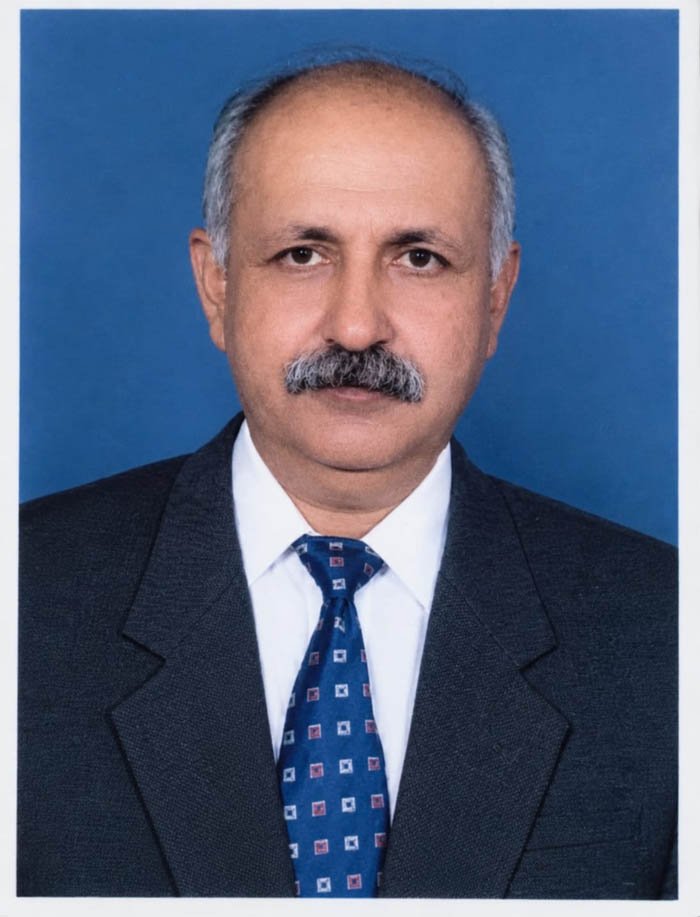
Pradeep Trikha: Professor & Head (Retired), Dept. of English, MLS University, Udaipur. A poet, translator, and literary critic, he has contributed extensively to Indian literature and to the Sahitya Akademi in New Delhi. Trikha has written several monographs on contemporary writers and has conducted extensive research on medieval bhakti poets such as Baba Farid and Meera Bai. His translated book Meera vs Meera has been well received. He has lectured at the University of Washington, Seattle; Harvard University, Boston, USA; and has been a Visiting Fellow at the University of Sydney, Sydney, since 1999. He has also been a fellow at the Indian Institute of Advanced Studies, Shimla. His latest book is Mediations on Memory: Poetics of Forgetting.
DANGER, DELICATE, DELIGHT
Kunal Roy
Name of the Book : Wasp and Filament.
Author: Gopal Lahiri
Publisher: Hog Press, Madison, Wisconsin, USA
Year 2026
++++++++++++++++++++++++++++++++++
In the realm of English Literature Contemporary Poetry has gained a considerable importance and accepted by the society at large. The contemporary work comprises the subtle moves of nature, the incertitude of bonds and the innumerable waves of experiences. To experiment with the wide range of Gopal Lahiri's work demands a meticulous study and an act of fortitude. His poetic landscape oscillates between the personal perspectives and surreal fantasy. Flipping through the pages offers a robust notion of the expansive nature of his work.
The title of his work is extremely pertinent and justified. 'Wasp' represents vulnerability, peril and an incisive response. On the other , the filament is a tender structure that blissfully attempts to weave the myriad shades of experiences -often dislocated and disoriented! Throughout the entire work, Lahiri has encapsulated divisive forces, coherent images and above all profound philosophy. However, it is interesting to note that the whole gamut offers a deep insight into his magnum opus. A visual appeal is a natural appendage in the accepted sense of term.
What strikes an avid reader is the discipline and structure of the work to be discussed here. The opening section entitled, " Hibiscus Eyes and Renewal" ably renders a feast of fantasy subjugated by the rostrum of memory, absence, mental perturbation and the probability of restoration. " Gossamers and Strands" , " Abundant Seeing" and " Urban Reverbation - all these explore three different planes of connection, segregation, consciousness and socio - cultural delight! Moreover, it is worth mentioning his " Shorts " , where he has emphasized on Haiku and Haibun. It seems as if observation, expansion and intimacy run through the common thread of this collection.
Poetry like " Departure" and " Hibiscus Eyes" are diametrically opposite poles. The images of uncertainty, frality , silhouettes accompanied by a philosophical restrain are quietly discovered in "Departure". " Hibiscus Eyes" meditates on compassion and sufferings. Lahiri has repeatedly laid importance on the natural dimensions of loss and struggle. Very adroitly he has transformed the naive spheres into the gleaming reflections of poor mortality!
Nature asserts its expansive presence in " Abundant Seeing" . Inspiration has been drawn from the various ingredients of nature like Palamau forests, Vindayas Range, Rupnarayan River, Satapura Range and Ninia Falls. It gives an idea of how the poet has depicted a perfect geography blended with the necessity of ecological equilibrium. Other poems like " Khoai", " Satapura Green" and " Ancient Story tellers" explore the significance of communities and gatherings, opulence of mother nature and the brilliant narrative textures that travel beyond the collective human memory! Forsooth Lahiri has perfectly captured the subtle nuances embedded in the conglomeration of the finest details with the highly connotative philosophical axioms!
Eulogy spreads far and wide as one manages to read between the lines. " Urban Reverberation" brings together the known potraits of a city life. The lonely boreens, the celebration of life , the tram paths , the fleeting nature of human identity and many more make a foray into his poems like " Summer in Kolkata ", " Shadow Lines ". On the other, " Stone Envelope " and " Refugee " showcase a stark reality which encapsulates sleeping dog, noctural jets of rain , the sheer problem of identity crisis, the pangs of displacement and other crude happenings. The poet doesn't turn emotive nor nostalgic, but feet tied to the terra firma of reality!
Abandoning his " Haikus and " Haibun" would not do any poetic justice! Replete with metaphors and imagery, the short compositions leave a lasting impression on the reader's mind!
The strength of this collection is clearly manifested in the exhaustive use of visual imagery, rare figures of speech, lucidity, keen observation and above all artistic expressions.
Lahiri is completely a different kettle of fish with a wide range of publications and innumerable awards. A deep study of this collection will surely help the readers fathom the underlying layers of human emotions.. Loss, anguish, bereavement, anxiety , relationships and the lingering of human memories form the foundation of this mamooth task! It is an attempt to rediscover the soul amid the rare meanings of wasp, filament, elegance, experience , incertitude and the eventual shift into the pattern of spiritual barrenness as incorrigibly explored in Eliot 's " Waste Land". Any explanation?

Gopal Lahiri is a Kolkata based bilingual poet, editor, critic and translator and published in English and Bengali language. He has authored 29 books (19 in English and 10 in Bengali) to his credit that includes three solo edited collections of English poetry on Jallianwala Bagh, translations of Tagore songs, Voices Within, and four jointly edited collections of English poetry on Indo-American Anthology, Scaling Heights, Home Anthology and Poetry Conclave Anthology. His translation work (From English to Bengali) of short stories of Israel was published by National Book Trust. His poetry is also published across various anthologies and in eminent journals of India and abroad. His poems are translated in 16 languages. He has been nominated for Pushcart Prize for poetry in 2021. He is the recipient of the Poet of the Year Award in Destiny Poets, UK, 2016, Setu Excellence Award, 2020, Pittsburgh, US. His latest collection of poems ‘Alleys are Filled with Future Alphabets.’ has received Pan Asian Ukiyoto awards.
Kunal Roy has always been an ardent lover of literature. He has received various awards for his literary contributions. He is a poet and a critic of poetry. His works have been published both here and abroad. Currently working as an Assistant Professor of English Language and Communication in George Group of Colleges, Kolkata.
Viewers Comments