
THE BULLY

THE BULLY
Ms. Meena Mishra
1st Paperback Edition Published: 2026
Copyright: The Impish Lass Publishing House
The Bully is not a work of fiction. Names, characters, business, places and events are not the product of author’s imagination. Resemblance to reality is purely intentional.
The author is solely responsible for all the thoughts, choice of words, views and postulates expressed in this book.
Cover Page Design : Kartikeya Typesetting By : Lalit
Printed At : The Impish Lass Publishing House
© Copyrights Reserved
ISBN: 978-93-49956-09-4
THE BULLY
The word ‘Hero’ was not a word Mitul associated with himself. It was a word that brought images from movie screens where caped characters flew across the sky saving humanity. He, on the other hand was so ordinary! He woke up every day to his mother gently calling him “Mitul, get up, get ready for school – another day to play, have fun, and another opportunity to learn and grow up to be a good human.’ Mitul had always wondered at her words; they were simple and hopeful but a bit vague- what did she mean by the words ‘a good human being?’ and why was that something he would have to strive for? But his mother never explained. She did not think it needed to be analysed and evaluated like a scientific experiment. In her wisdom, she knew that ‘Heroes’ lived with their loving families and listened to the heroic tales from their grandparents and became good human beings and responsible citizens.
But word ‘Hero’ followed Mitul around, in fact, it was his aura since he was ten. The word floated into the corridor, where juniors stepped aside for him and rested on his shoulder; it reflected in the smiles teachers gave when they said his name. It was just that Mitul didn’t realise that the word had wrapped itself around him like a protective cape that some admired while a few found intimidating.
Saint Paul’s school awoke long before its students arrived. Pigeons fluttered beneath the red tiled roofs as the early morning sun rays warmed their nests. Sunlight fell in bright rectangles on the polished floors. The groundskeeper watered the flower beds, and the smell of wet earth drifted through open windows, mixing with chalk dust and floor cleaner. Then, the assembly bell clanged through the corridors, and scrunch of starched and freshly ironed uniforms filled the space. On the broad staircase, children carried heavy schoolbags, exchanged homework, whispered secrets, and rushed to their classrooms as the bell for classes caught them unprepared. Mitul walked quietly through the daily uproar with a calmness that belied his age. At just ten years old, he had become the kind of boy every school wanted. He won debates at morning assembly, scored the winning goal during afternoon football, and sat beside struggling classmates after school, explaining difficult lessons without making anyone feel foolish. In Grade Four, he became the youngest Head Boy Saint Paul's had seen in years.
The small badge pinned to his chest filled him with a quiet sense of responsibility, but he never allowed his position to make him arrogant or distant.
Teachers admired him. Juniors looked up to him. His classmates gravitated towards him, not because he demanded attention but because being around him made people feel noticed and included. He understood the difference between friendliness and familiarity, between making someone laugh and making someone uncomfortable, between standing up for another person and expecting praise for doing so.
Mitul never thought of himself as extraordinary. Being a good person did not require an audience, a certificate, or a round of applause. It was simply what one ought to be, as naturally as breathing, and perhaps it was this quiet confidence that made him so difficult for someone else to tolerate. This was not to the liking of Kaira, the Head Girl. She was intelligent, ambitious, and accustomed to being admired. She had entered the academic year believing that her new position would make her the most influential student in the school, the person whose name teachers would mention with approval and whose opinions would carry weight among her classmates. Instead, she found herself sharing the spotlight with a boy whose popularity seemed to come effortlessly.
She disliked how teachers mentioned Mitul during staff discussions, how younger students hurried towards him with questions, how even those who disagreed with him seemed willing to listen when he spoke. Most of all, she disliked that he could enter a room and command attention without appearing to seek it, while she, despite all her careful efforts to distinguish herself, sometimes felt invisible standing beside him.
"Does he ever get tired of being everybody's favourite?" she muttered to a friend one afternoon, watching Mitul surrounded by a group of students near the playground. Her friend followed her gaze and shrugged. "Perhaps people simply like him."
Kaira's lips curved into a smile that did not reach her eyes. "People can be made to change their minds," she replied.
She had no idea how much those words would cost her, or how completely a single decision could alter not only another person's life but the person she herself would eventually become.
The incident happened on a Thursday afternoon, right after the last school bell rang, as the corridors of Saint Paul's teemed with the customary bustle of students heading out. Children called out to friends. Classroom doors banged shut. Shoes scraped against the stone staircase. The sports teacher's whistle carried across the playground where a few reluctant students were still finishing their game.
Mitul was walking towards the school gate when he noticed several boys surrounding Malathi, a quiet girl from another section, near the corridor leading to the classrooms. Their laughter sounded sharp and unpleasant, quite unlike the carefree laughter that usually filled the school after dismissal. Malathi clutched her schoolbag and kept her eyes fixed on the floor.
At first, he assumed that they were quarrelling over something trivial, but when he heard the remarks they were making about her body, accompanied by pointing fingers and bursts of cruel laughter, his expression changed.
"What is wrong with you people?" he demanded, stepping towards them.
The boys turned, momentarily surprised that someone had interrupted their entertainment.
"Relax, Head Boy," one of them replied with a smirk. "We are only joking."
"She is not laughing," Mitul said, his voice firm enough to silence them for a moment.
"Why are you interfering? Is she your girlfriend?"
The question was followed by another round of laughter, but Mitul felt neither embarrassed nor intimidated. He moved between the boys and Malathi.
"Apologise to her. Now."
They muttered under their breath, exchanged irritated glances, and eventually began to disperse, although none of them appeared
particularly sorry for what they had done. Mitul remained where he was until the last boy had walked away, and only then did he turn towards Malathi, whose shoulders were trembling as she struggled to hold back her tears.
"Malathi, it is all right now. They have gone," he said gently.
She shook her head, unable to speak, and he noticed that the buttons of her uniform shirt had come undone during the commotion.
Conscious of her discomfort, Mitul turned his face away rather than look at her and spoke in the same practical, reassuring tone he might have used to help a younger student who had fallen on the playground.
"Malathi, please close your shirt buttons, and do not worry about those boys; nobody has any right to make you feel ashamed of yourself. Come, I will call a teacher."
He believed he had done the right thing. As he walked towards the staffroom to seek help, the faint smell of dust rising from the corridor mingled with the fragrance of the flowering shrubs outside, while the fading afternoon sunlight stretched across the floor and the familiar school sounds slowly dissolved into the distance.
He could not have imagined that this ordinary Thursday would become the afternoon that destroyed the boy he had always been.
From the corridor above, Kaira had witnessed part of the incident. She had not heard the boys' remarks, had not seen Mitul step between them and Malathi, and had not understood the sequence of events that had brought the three children together. What she had seen, however, was enough for her to construct a story that suited her purpose, and in the quiet space between what she knew and what she assumed, jealousy found the opportunity it had been waiting for.
Twenty minutes later, Mitul stood outside the Principal's office, his palms damp and his heart beating faster than usual, while through the partly open door he could hear Malathi crying and the Principal asking what had happened.
Inside, Kaira sat beside the distressed girl, her expression set in concern.
"Sir," she began before anyone else could speak, "I found Malathi crying, and she told me that Mitul had approached her and made inappropriate comments about her body. When she became uncomfortable, he told her to button her shirt."
For a moment, Mitul simply stared at her, unable to understand how the truth of an incident could be turned upside down so effortlessly.
"What?" he exclaimed, stepping forward. "That is a lie! Those boys were making fun of her, and I stopped them!"
Kaira lowered her eyes, appearing reluctant to speak against him, as though she were making a painful sacrifice for the sake of the school.
"I did not want to believe it either, Sir. He is the Head Boy, after all, but we cannot ignore something like this simply because he is popular."
"Then why was she crying?" Kaira asked softly when Mitul tried to explain again.
"Because they were humiliating her!" he replied, his voice rising with desperation.
"Mitul!" the Principal thundered, striking the desk with his palm.
"Mind your tone!"
The sharp sound seemed to fill the entire room, and Mitul felt his stomach tighten as the Principal's words settled over him with the weight of a judgement already delivered. He looked towards Malathi, hoping that she would lift her head and explain what had really happened, that she would remember how he had stood between her and the boys, and that the truth, once spoken, would surely be enough to undo the misunderstanding.
"Malathi," he whispered, his voice breaking, "Please tell him what happened."
Malathi heard his voice — the same voice that had said she is not laughing, the same voice that had told her to button her shirt and not be ashamed. She wanted to speak. She wanted to say: He saved me. Those boys were cruel, and he stopped them, and he turned his face away so I would not feel embarrassed. The words gathered in her throat, fully formed, desperate for release.
But then she felt Kaira's presence beside her, felt the older girl's shoulder pressing gently against hers in what looked like comfort but felt like a warning, and she remembered the whispered words from moments earlier: If you contradict me, the school will blame you for everything. Nobody will believe a girl who cannot even explain why her shirt was undone.
The words turned to stone in her throat.
She had spent months enduring the boys' laughter, their comments about her body, their fingers pointing at her as though she were something to be examined and mocked. She had learned that speaking up only made the laughter louder, that tears only gave them more to enjoy, that silence was the only armour she had. And now, sitting in the Principal's office with her shirt still buttoned wrong and her face still wet, she could not find the courage to trade that armour for a truth that might not even be believed.
She raised her eyes for the briefest moment and saw Mitul's face, the hope there, the desperate belief that she would save him as he had tried to save her, and then she looked away.
That small movement hurt him more deeply than any reprimand could have done, because until that moment he had believed that the truth was something solid, something that could be held up to the light and recognised by anyone willing to look at it honestly.
Malathi felt the break inside her as she watched him realise that she would not speak. She wanted to reach for him, to grab his hand and say I am sorry, I am sorry, I am a coward, but her body would not move, and the silence stretched between them like a wound that would never fully close.
The Principal dismissed Mitul's explanations, reprimanded him severely, and reminded him that a leadership position demanded exemplary behaviour, telling him that he had brought shame upon himself and the school. By the time Mitul stepped out of the office, the corridor seemed impossibly long, the voices of students passing outside sounded distant and distorted, and the smell of chalk and furniture polish, once associated with ordinary school days, suddenly felt suffocating.
By the following morning, the story had spread through Saint Paul's.
By lunchtime, it had changed.
By the end of the week, it had become something almost unrecognisable.
Mitul was no longer the boy who had defended a classmate but the boy who harassed girls, the boy who pretended to be innocent, the boy whose popularity had apparently been nothing more than a disguise. Kaira did not need to repeat her accusation loudly or defend it with evidence; she only had to whisper it to the right people, let their curiosity do the rest, and watch suspicion travel from one classroom to another with a speed no school bell could match.
Some students avoided Mitul altogether. Others stared at him with expressions that mixed curiosity and contempt. One afternoon, while he stood near the staircase, he overheard two classmates speaking in low voices.
"Honestly, I always thought he was too friendly with girls," one said.
"Exactly," the other replied. "Nobody is that nice without a reason."
Mitul remained behind the wall, feeling as though the air had grown too thick to breathe, and the taste in his mouth turned unpleasantly dry as he tried to understand how people who had known him for years could so easily replace everything they had witnessed with something they had merely heard.
A good reputation, he realised, could take years to build, yet a single rumour could begin dismantling it before the afternoon was over.
Even his friends offered little comfort. One of them approached him after school, avoiding his eyes as he spoke.
"Mitul, why did you get into this mess?"
"What do you mean?" Mitul asked, bewildered.
"You should have stayed out of it. You know how people talk."
"I was helping her!"
"I know, but look where it has got you. Why could you not simply walk away?"
Mitul searched his friend's face for something familiar, a trace of loyalty, a little trust, perhaps even the faintest suggestion that the person standing before him still remembered who he had been before the accusation, but all he found was discomfort and a desperate wish to escape the conversation.
"So next time," he said quietly, "if someone is being humiliated in front of you, I should just walk away?"
"Do not twist my words."
Mitul managed a small, broken smile.
"No. I am only trying to understand when doing the right thing became the wrong thing."
He left before his friend could answer, carrying home a question that would remain with him long after the school uniform had been put away.
That evening, he told his mother that he did not want to return to Saint Paul's. She initially believed he was reacting to an embarrassing misunderstanding that would soon pass, while his father reminded him that a Head Boy could not run away from a problem and insisted that he should hold his head high when he returned the following morning.
"Everything will settle down," his father assured him. But everything did not settle down.
Each day brought another whisper, another suspicious glance, another joke disguised as concern. His teachers advised him to be mature, his father urged him to be strong, and his friends told him to forget what had happened, yet nobody seemed willing to ask what it felt like to enter a classroom in which everyone had already decided who he was.
Nobody asked why the boy who once laughed so loudly that teachers had to remind him to quieten down had begun to sit silently at the back of the classroom, or why he no longer
volunteered answers, joined games, or hurried towards his friends during recess.
One morning, when his mother called him to get ready for school, Mitul remained beneath his blanket, staring at the wall as though it contained a question he had been trying to answer all night.
"I cannot go, Ma."
She sat beside him and touched his forehead, searching for signs of fever.
"Are you unwell?"
"I am tired."
"Tired of what, sweetheart?"
He turned towards her, and for the first time she saw a fear in her son's eyes that no examination, punishment, or childhood disappointment had ever produced.
"I am tired of proving that I am not the person everyone says I am."
She had no answer, and the silence between them was more painful than either of them knew how to express.
Eventually, his parents decided to send him to stay with his grandmother in another town, hoping that a change of surroundings would allow him to begin again. He transferred to a different school, continued his education, performed well in examinations, and fulfilled every academic expectation placed upon him. Yet the boy who left home was not the boy who had once filled Saint Paul's corridors with his laughter.
The extrovert became reserved. The all-rounder withdrew from competitions. The child who had once collected friends wherever he went began to avoid conversations that might require him to trust someone new. He changed his phone number, deleted his social media accounts, and stopped answering calls from former classmates, gradually building a quiet distance between himself and the people who reminded him of a time when being good had seemed sufficient.
His grandmother sometimes found him sitting beside the window long after sunset, watching the streetlights flicker on as the evening air carried the smell of cooking from neighbouring houses and the distant calls of children playing outside. On one such evening, she placed a cup of tea beside him, its warmth rising through the cool air, and sat down without demanding that he explain the sadness he had carried into the room.
"Mitul?"
"Hmm?"
"Do you know what the saddest thing about a closed door is?"
He shook his head.
"People outside assume you do not want them to enter, when sometimes the person inside is simply afraid of being hurt again."
He turned towards her, and the tears he had spent months suppressing finally gathered in his eyes.
"Dadi, what if I never become the person I used to be?"
She took his hand in hers, holding it with the quiet certainty of someone who understood that love did not always need to solve a problem to make it bearable.
"Then we will love the person you are becoming."
Mitul began to cry, not with the restrained tears of a child ashamed to be seen suffering, but with the unguarded sorrow of someone who had finally found a place where he did not have to defend himself.
His parents eventually arranged therapy when they realised that distance and time alone were not enough to heal him, and slowly, with considerable effort, he began to speak about what had happened, learning that he was allowed to feel angry, that he was allowed to grieve, and that an injustice committed against him did not have to determine every choice he would make for the rest of his life.
Nevertheless, something within him had changed permanently.
He no longer believed that goodness guaranteed fairness, that truth would always speak for itself, or that being liked by people necessarily meant being safe with them. He learnt to be careful with his trust, to observe before opening his heart, and to recognise that the absence of cruelty was not the same as the presence of kindness.
Years passed, and Mitul grew into a thoughtful, disciplined man who studied business management, built a career through quiet determination, and eventually became a director of a multinational company. His colleagues admired his intelligence, his employees valued his fairness, and those who worked closely with him knew him as a man who listened before deciding, though something remained distant about him, as if a part of his childhood still lived in a school corridor he had never truly left.
He rarely attended reunions, never spoke about his school days, and took one particular day off work every year, a habit that puzzled even his closest colleagues, none of whom knew that the date marked the day he had stopped being the boy he once recognised.
Then, one morning, Kaira walked into his office.
She was thirty-two, elegantly dressed in a formal suit, and carried a folder with her certificates and a résumé that reflected years of effort. The position she had applied for was prestigious, the salary attractive, and the company one she had wanted to join for a long time, so she had prepared herself thoroughly for the interview, rehearsing answers about leadership, teamwork, professional integrity, and the difficult decisions she had supposedly made while protecting her colleagues from a crisis.
When the receptionist informed her that the director was ready to see her, Kaira straightened her shoulders and entered the boardroom with the confidence of someone who believed she had prepared for every possible question.
Three interviewers sat at the table, and the man in the middle was studying her résumé.
"Good morning," she said. He raised his eyes.
For one impossible moment, the years between childhood and adulthood disappeared, and Kaira found herself looking at the same face she had last seen in the corridors of Saint Paul's, although the boyish softness had vanished, the jaw had sharpened, and the eyes that had once looked at the world with uncomplicated trust now seemed to carry a depth she could neither interpret nor ignore.
Mitul !
The folder shifted in her hands. He showed no visible surprise. "Please sit down, Ms Kaira."
She sat, trying to steady her breathing as a question rose in her mind with frightening clarity: could this really be the boy she had accused, the boy she had watched disappear from school, the boy whose name had once become a warning whispered in the corridors, and the boy to whom she had never offered an apology? Mitul glanced at her résumé.
"Excellent academic record. Strong leadership experience. Impressive references."
"Thank you," she replied, her voice quieter than she intended.
The other interviewers asked questions about business strategy, conflict resolution, and team management, and Kaira answered them with the fluency she had practised at home, although she could barely concentrate on the words coming from her own mouth because the man seated across the table had become an unwelcome presence in every corner of her thoughts.
Finally, Mitul closed her file. "I have one question."
Kaira straightened. "Of course!"
He looked directly into her eyes.
"Have you ever bullied someone?"
The room became so quiet that the faint hum of the air conditioning seemed audible.
Kaira gave a nervous laugh. "No!"
The answer arrived too quickly, before she had even considered what honesty might require of her.
"Never?" Mitul asked.
"Never. I have always believed in fairness and treating people with respect."
He nodded slowly, then turned towards the other interviewers. "Thank you for your time, Ms Kaira. We will not be moving forward with your application."
She stared at him, unable to understand what she had just heard.
"What?"
"The interview is over."
"But may I ask why?"
"Your application was impressive, and your answers were well prepared. Unfortunately, we have decided not to proceed."
Her face grew hot with embarrassment, and as she rose from her chair, the words escaped her before she could stop them.
"You cannot reject me because of something that happened when we were children!"
Mitul looked up, and for the first time that morning, something shifted in his expression.
"Interesting," he said quietly. "I do not remember mentioning anything that happened when we were children."
Kaira froze.
He closed the file.
"Good afternoon, Ms Kaira."
She left the room trembling, carrying the uncomfortable realisation that a boy she had believed she had buried in the past had returned to her life in a position of authority she could never have anticipated.
Outside the building, she sat in her car without starting the engine, her hands resting on the steering wheel as she tried to decide whether to leave or return to ask the question that had begun to torment her.
Eventually, she went back to reception and requested a private conversation with Mitul.
Five minutes later, she was escorted into his office, where he stood beside the window overlooking the busy street below.
"Why did you come back?" he asked. "Because I need to know."
"Know what?"
"Why did you do that? Was it revenge?"
He considered the question for a moment.
"Would you have preferred that I pretend not to remember you?"
"No."
"Would you have preferred that I congratulate you on your answers about fairness and integrity?"
She lowered her eyes.
"I did not know you were going to be the interviewer." "That is not an answer."
She swallowed, then attempted to retreat into the familiar defence of time.
"Mitul, it was years ago." "Yes," he replied. "For you."
The words settled between them with a weight she had not expected, and for several moments neither spoke, until Kaira finally admitted what she had spent years refusing to acknowledge.
"I was jealous of you." Mitul remained silent.
"You were everybody's favourite. Teachers trusted you, people admired you, and I thought you were always trying to make me look bad."
"I never competed with you, Kaira." "I know that now."
"No," he said gently. "You know that because you have grown up. There is a difference."
Her eyes filled with tears.
"I did not think it would go so far." Mitul turned towards the window. "Neither did I."
"I am sorry," she whispered.
There it was, the apology he had imagined hearing countless times during the years when he wondered whether anyone would ever acknowledge what had happened to him, yet when those three words finally arrived, they could not restore his childhood, bring back his friendships, or erase the long years in which he had questioned his own goodness.
"Do you know what I remember most?" he asked. Kaira shook her head.
"Not the Principal shouting at me, not the rumours, and not even the way my friends walked away."
His voice faltered.
"I remember going home and asking my mother whether I was a bad person."
Kaira covered her mouth, tears slipping down her cheeks.
"I was ten, Kaira. Ten. I did not understand how a person could tell the truth and still lose everything."
She apologised again, but he did not offer forgiveness merely to ease her discomfort, because he had learnt that some wounds required acknowledgement before they could begin to heal, and that forgiveness, if it came, could not be demanded as a reward for saying the right words.
Then he asked a question she had not expected.
"Did you ever wonder what happened to Malathi?"
Kaira went still.
"After I left school, did you ever wonder what happened to her?" "I do not know," she replied, her voice faltering.
"Of course you do not."
Mitul walked to his desk and removed a small envelope whose edges had yellowed with age, the paper softened by years of being kept in a drawer, its front bearing two words written in a child's handwriting: For Mitul.
"What is that?" Kaira asked. "A letter."
"From whom?" "Malathi."
He opened it and read aloud, his voice steady:
For Mitul — I do not know if you remember me. I am the girl you helped that afternoon. I have wanted to tell someone the truth for years. You did nothing wrong. It was me. I was afraid. Kaira told me that if I spoke, everyone would blame me, and I believed her. I have been ashamed ever since. I know this letter cannot fix anything. I am not asking you to forgive me. I only wanted you to know that you were good, and I was a coward, and I am sorry.
Kaira's lips parted, but no words came.
She remembered the Principal stepping outside to take a telephone call, Malathi sitting beside her with trembling shoulders, and the quiet threat she had whispered into the frightened girl's ear, assuring herself then that she was merely protecting her own version of events.
For years, she had convinced herself that the accusation had simply spiralled beyond her control, that the consequences had been unfortunate but unintended, and that childhood jealousy was too insignificant to explain what had happened afterwards.
Now she understood that she had known Malathi was afraid, and that she had deliberately used that fear to silence her.
"I never blamed Malathi," Mitul said, folding the letter. "She was a child too. She was frightened, and she did not know how to fight back. I understood that."
He paused, his fingers resting upon the old envelope.
"But I spent years wondering why doing the right thing had made me feel so ashamed."
"Why did you never expose me?" Kaira asked. He looked at her for a long moment.
"Because I wanted to forget you."
Then he added, almost reluctantly, "And because I thought that if I ever saw you again, I would finally feel better."
"Do you?"
"No."
His answer was immediate.
"I thought seeing you suffer would give me something back, but it does not."
For the first time, Kaira understood that the man before her was not the triumphant boy she had feared he might become, but someone who had survived an experience that had changed him in ways she could never fully comprehend.
Surviving, she realised, was not the same as healing.
"Then why did you ask me that question?" she whispered. "Why did you reject me?"
Mitul glanced towards the door before answering.
"I did not reject you simply because of what you did to me. I rejected your application because when I asked whether you had ever bullied anyone, you lied."
"But I was afraid."
"So was I."
His voice remained quiet.
"The difference is that I was ten, and nobody asked me what I was afraid of."
Kaira lowered her head, finally recognising the difference between regretting the consequences of an action and accepting responsibility for the action itself.
"You could have told the truth," Mitul continued. "You could have admitted that you hurt someone when you were young, explained what you had learnt from it, and shown that you had changed. Instead, you chose the answer that protected your image."
She wept openly now, but he did not interrupt her or look away. "I cannot undo what I did," she said eventually. "I know that. But tell me what I can do."
For a long time, Mitul remained silent, and then he opened a drawer and removed an old school photograph in which a row of children stood in their uniforms, smiling at the camera beneath the familiar sign of Saint Paul's School. At the centre stood a beaming Mitul, his Head Boy badge pinned proudly to his chest; beside him stood Malathi, and beside her stood Kaira, all three children smiling with the uncomplicated happiness of those who had not yet learnt how easily trust could be broken.
On the back of the photograph, someone had written: Grade Four. The year we thought we knew everything.
Kaira touched the photograph with trembling fingers. "I remember this day."
"So do I."
"Why do you still have it?"
Mitul's eyes shone.
"Because I refused to let the worst thing that happened to me become the only thing I remembered about my childhood."
He took the photograph back, holding it gently between his fingers.
"That boy was happy. I do not want to hate him for being happy, I do not want to hate myself for trusting people, and I do not want to spend the rest of my life trying to punish everyone who hurt me."
He paused before adding, "But I will not pretend that what happened did not matter."
Kaira nodded through her tears. "I understand."
"Do you?"
"No," she admitted honestly. "Not completely. But I want to."
For the first time that day, Mitul smiled faintly, and although it was not forgiveness, it was at least something honest, something that neither of them needed to pretend was more than it was.
Kaira left the office without the job, carrying no certificate of redemption and no promise that a single conversation could repair the past.
Three weeks later, a letter arrived at Mitul's home, containing no excuses, no demands for forgiveness, and no attempt to turn remorse into a defence. Kaira had written to the former Principal and several of their old classmates, correcting the story she had spread years earlier, and she had contacted Malathi to apologise to her directly, accepting that neither woman owed her the comfort of an immediate response.
She did not know whether Mitul would ever read her letter, and for once, she did not ask to be rewarded for doing what she should have done long ago.
On the anniversary of the day, he had left Saint Paul's, Mitul read the letter, folded it, and placed it beside Malathi's old note, allowing the quiet room to hold the memories without forcing them into an answer.
Then he picked up his phone and searched for his former school's name.
He did not call the office, arrange a reunion, or attempt to discover what had become of every child whose face appeared in the photographs. He simply looked at the familiar buildings, the classrooms, and the corridors that had once seemed to contain
his entire world. For the first time in years, he allowed himself to remember those places without feeling that the boy he had been was somehow responsible for what had happened to him.
The following morning, he returned to work, where a fresh stack of interview applications waited on his desk.
A young candidate entered his office, visibly nervous, and Mitul smiled as he gestured towards the chair.
"Relax. This is not an interrogation."
The candidate laughed uncertainly, and Mitul glanced at the résumé before asking a question that had nothing to do with qualifications or carefully rehearsed achievements.
"Tell me something about yourself that is not written here."
As the young man began to speak, Mitul listened, not merely waiting for his turn to ask the next question but genuinely listening, because he had learnt something that no school textbook had ever taught him: that the person sitting across from you may be carrying a story you know nothing about, that a confident smile can conceal uncertainty, and that the truth does not always arrive in a form that makes it easy to recognise.
Years earlier, a little boy had stood between a crying girl and a group of bullies, asking them to stop because he believed that every child deserved dignity, and for that simple act of kindness, he had lost his friends, his reputation, his laughter, and a part of the childhood he could never recover.
Yet he had not lost everything.
He had kept his grandmother's kindness; he had kept the truth, and somewhere beneath the years of silence, he had kept the boy who believed that people deserved to be treated with respect, even when the world failed to offer him the same courtesy.
Mitul had once thought that healing meant becoming the boy he used to be, returning to the easy laughter and unguarded trust that had defined his childhood, but he finally understood that healing meant something different: becoming a man who could remember that boy without wishing he had been less kind, less trusting, or less willing to stand up for someone who needed help.
As for Kaira, she never got the job, but she began to understand the difference between being admired and being worthy of trust, between regretting a mistake because it had damaged her reputation and accepting responsibility because it had damaged another human being.
The most unexpected twist in their story was not that Mitul had eventually become powerful enough to reject her, but that after everything she had taken from him, he had never allowed her to turn him into someone who enjoyed taking things away from others.
He had spent years believing that the world had silenced him, only to discover that his voice had never truly disappeared; he had simply stopped needing to use it to prove himself to people who refused to listen.
And somewhere in the quiet space between the boy he had been and the man he had become, Mitul finally found a kind of peace that did not depend upon everyone believing him, Kaira suffering for what she had done, or the past being rewritten into something more bearable.
Sometimes, the strongest revenge is not making someone feel the pain they caused you; it is refusing to let that pain decide the person you become.
And perhaps the saddest part of the story was not that the boy never came back, but that for years he had believed he needed to become that boy again before he could finally be whole.
He did not.
He only needed to understand that the child who had stood up for Malathi had done nothing wrong, that his goodness had never been the weakness others made it seem, and that the day he lost his childhood was not the day he lost his worth.
The boy who never came back had grown into a man who could finally welcome himself back home.
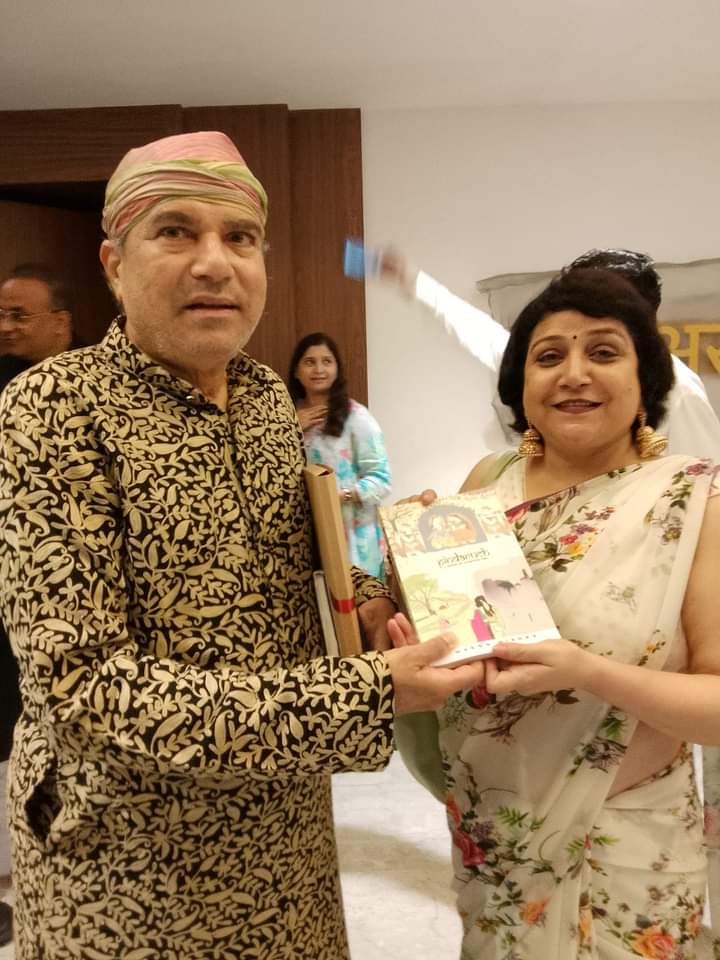
(The Impish Lass Walking the Literary Isle)
"The Bully" authored by Ms. Meena Mishra, is a well-written work of fiction that bears a striking resemblance to reality. In this piece, Ms. Mishra delves deeply into the issue of bullying and intimidation among schoolchildren, seen through the eyes of all the characters in her story. She handles the subject with sensitivity and finesse while remaining focussed on the big picture. The piece also highlights the scars that these abominable activities leave on victims. Bullying in schools should not be dismissed as kids' play but addressed immediately and handled by appropriate professionals. Both the perpetrator and the victim may also need counselling from trained mental health professionals. This story is a must-read, especially for students, their parents, guardians and teachers,"
Says Viswanath Krishnan,Director, Basiz Fund Service Private Limited.
MEENA MISHRA (Founder & CEO - The Impish Lass Publishing House) is an award winning author, poet, short-story writer, social worker, novelist, editor, an educator and a publisher. The Impish Lass Publishing House is her brainchild. Her poems, stories and book-reviews have been published in manyinternational journals and magazines. She is the recipient of several prestigious awards. She is an active member of Mumbai English Educators’ Team and was invited by the Education Department of Maharashtra to be a part of The Review Committee for the new English text book. She has been invited as a judge for several literary competitions. Her poems are published in many magazines, including the prestigious periodical Woman’s Era. She has been a contributing author and poet for more than 30 anthologies.
Her contribution to the field of education and writing has received acclamation from the esteemed newspapers like Times of India and Mid Day. Her articles published in Times of India’s NIE and a suburban newspaper and leading educational magazine of the country- Brainfeed Higher Education Plus.
She is on the mission of publishing the articles of students and educators of various schools across the globe under her unique project, ‘The Young Bards’. Her autobiographical novella, The Impish Lass, has been converted into a web-series by Visionary Studioz (Mumbai) and can be subscribed on YouTube.
Under the banner of her publishing house ( The Impish Lass Publishing House- Mumbai ) she has successfully published more than 50 books in 2 year’s duration apart from The Young Bards- Series .More than 500 writers across the globe have received an opportunity of becoming published writers and poets under this banner. She was invited to share her views by Sony TV for their first episode of, Zindagi Ke Crossroads, based on needs of special children. She was recently invited by the “AajTak” news channel to express her views on the special episode on the PMC Bank scam victims.
She had written an exclusive poem which was read and appreciated by the living legend of Bollywood- Amitabh Bachchan. She has received Wordsmith Award 2019 for her short story , “Pindarunch,” from the Asian Literary Society.
As a publisher she believes that EACH SOUL THAT WRITES HAS THE RIGHT TO GET PUBLISHED.
Viewers Comments