
Literary Vibes - Edition CLIX (28-Nov-2025) - SHORT STORIES

Title : The Lonely Road (Water Colour by Ms. Latha Prem Sakya)
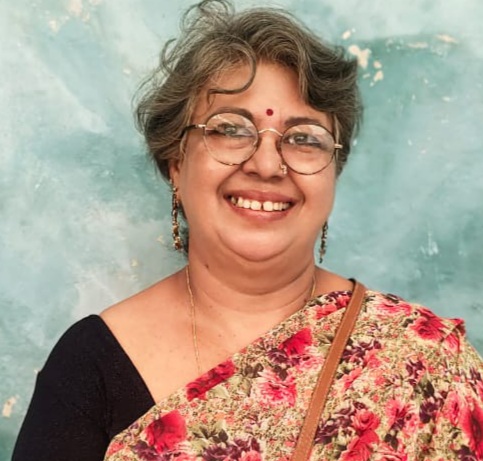
An acclaimed Painter, a published poet, a self-styled green woman passionately planting fruit trees, a published translator, and a former Professor, Lathaprem Sakhya, was born to Tamil parents settled in Kerala. Widely anthologized, she is a regular contributor of poems, short stories and paintings to several e-magazines and print books. Recently published anthologies in which her stories have come out are Ether Ore, Cocoon Stories, and He She It: The Grammar of Marriage. She is a member of the executive board of Aksharasthree the Literary Woman and editor of the e - magazines - Aksharasthree and Science Shore. She is also a vibrant participant in 5 Poetry groups. Aksharasthree - The Literary Woman, Literary Vibes, India Poetry Circle and New Voices and Poetry Chain. Her poetry books are Memory Rain, 2008, Nature At My Doorstep, 2011 and Vernal Strokes, 2015. She has done two translations of novels from Malayalam to English, Kunjathol 2022, (A translation of Shanthini Tom's Kunjathol) and Rabboni 2023 ( a Translation of Rosy Thampy's Malayalam novel Rabboni) and currently she is busy with two more projects.
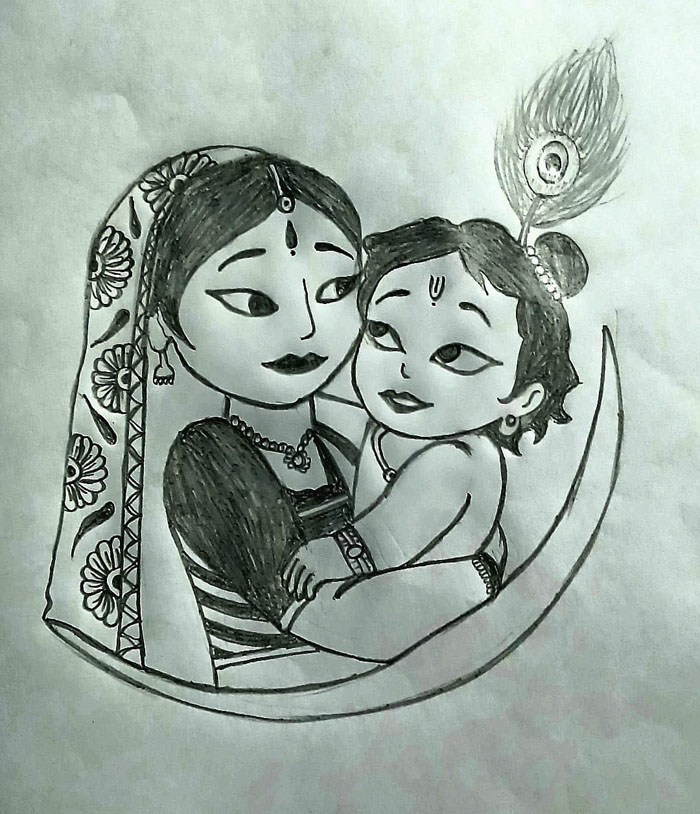
Title : Sacred cradle (Colour Painting by Swatishree Parija)

Swatishree Parija is a second year B.Ed..student from Jajpur, Odisha. She is passionate about literature, painting and photography from her school days. She writes excellent poetry. Her paintings and photographic creations are equally outstanding. She has won many awards in essay writing, painting, and debate at the block, district, and state level.
Table of Contents :: Short Story
01) Prabhanjan K. Mishra
THE APPROVER
02) Sreekumar Ezhuththaani
IGNORANCE, A HEINOUS CRIME
CONTEXTS
03) Dilip Mohapatra
BACK TO BASICS
04) Snehaprava Das
THE NEW YEAR GIFT
05) Alpana Patnaik
BROKEN HEART OF A GRANDMOTHER
06) BB Mohapatra
THE WONDERFUL, ENCHANTING WORLD OF TRIBAL MYTHS
07) Annapurna Pandey
A CAMINO WITH MY MOTHER: CATHOLIC PILGRIMAGE IN SPAIN
08) Satish Pashine
THE MEASURE OF THINGS
09) Ashok Kumar Mishra
SEA VOYAGE OF BUDDHA TOOTH RELIC- KALINGA TO LANKA
10) Deepika Sahu
ROSES ARE RED. WOMEN IN BLUE: LET’S SMASH THE PATRIARCHY. ME AND YOU
11) Bankim Chandra Tola
AFTERNOON
12) T. V. Sreekumar
MIDNIGHT MUSINGS
13) Sreechandra Banerjee
PAINTED MASKS
14) Dr. Rajamouly Katta
VAJRA "A VICTIM OF DOWRY-VENOM"
15) Dr. Mrutyunjay Sarangi
HYENA
Prabhanjan K. Mishra
Vibhuti was a bit worried. He felt as if he was standing between the Devil and the deep sea. On one side, were his friends-cum-company colleagues, and on the other, were the police. The friends who had picked him from his ruins, fed him, supported him financially and morally, and made him stand on his own feet again. And the police that had implicated him in a false case, jailed him, but he was freed by one of his friend-cum-colleague, John Mathew, the chairman of the company, a lawyer by profession.
His friends gave him work in their company when he badly needed money, and abided with his misfortune with all sorts of support until he joined them as a director, and started working as an important spoke in their company’s hub. He became the lock-expert of their Risk Management Company Limited (RMCL) and resolved the risks of the company’s clients in the sector of lock-and-key - ancient, medieval, and modern locks including electronic locking systems.
But he was lately informed by the police that his rescuers and partner-directors in RMCL were a league of high-profile thugs and cheats. Their so-called business firm was projected by the outer façade as a firm of white-collar professionals, all qualified engineers, except the chairman John Mathew who was a lawyer. The company, in fact, looted the rich and also laundered the ill-earned black loot into white money. In their crime Vibhuti was one of the puppets, possibly innocently.
Vibhuti was an expert in matters of locks and keys. After doing his mechanical engineering, he remained jobless. To pass time he tinkered with locks that had fascinated him from his childhood. He had played with locks and keys as a child, as his father had been a street-corner key maker for locks whose keys were lost.
He had played with locks, making and breaking them from childhood. People said he was almost a current day Houdini in matters of locks, because locks sort of opened at Vibhuti’s touch, as they had responded to the great magician Houdini’s touch. Vibhuti understood from his playhouse days the inside-out of locks-and-keys, their mechanism and basics, and that again, of almost all the varieties and makes, the current as well as of the old time’s.
In the case of new brands of lock-and-keys introduced into the market, he would buy a piece, dismantle it, study its parts, and know how it worked. If the key of a mechanical lock was lost, or the password of an electronic lock, or the code number of a combination or tumbler lock was forgotten, he could fix them in a jiffy, making a key, setting new codes, or PINs. He was a much sought after man in his locality. So, after his engineering, when he remained jobless, lock and keys gave him an earning.
The police were persuading him to turn a government witness or approver, and help them to arrest his company-colleagues in his Risk Management Company, who were in reality swindlers. With his help but without his knowledge, the police informed him, his company colleagues were breaking locks of strongrooms, lockers and ATMs, and looting the booty like cash, gems and jewellery.
Even certain master-keys, he made believing those were for hotels and automobile companies, were not for them, but were used by their company’s stooges for stealing valuables from hotel rooms and cars. They also stole cars and other automobiles, and sold them as second hand cars or car components through automobile dealers.
The police wanted him to be a patriot, help his nation, help the police. At the starting of these sessions with the police, Vibhuti did not believe them who had once implicated him in a false case of lock-breaking. But what they said next, slowly appeared to have some credibility.
After the police raised the issue, he recalled, in fact, he never had come across any document, file, or records, in soft or hard copies, relating to any agreement, license, or the firm’s registration, balance sheet, or any such financial or contractual document related to the company that he and his partners were part of. In fact, as a director of the company, he had rights to see them, but he recalled at times he had asked for a document, but his request was ignored. He however recalled that he had not insisted and slowly his forgetfulness made him forget.
At the time of his joining the company as a director, Vibhuti had found that the company had six directors including himself, all of them engineers in different streams, and a chairman, John Mathew, a lawyer by profession. Vibhuti in his last two years of working with the company had never attended a meeting of the directors. He had no idea of the numbers of other employees of the company. In spite of those apparently unusual symptoms, Vibhuti could not believe if his company without his knowledge were lock-breakers and thieves.
But how Vibhuti and his connections to a suspect firm, the Risk Management Company Limited (RMCL), came to the suspect list of the police? To make that long story short -
As Vibhuti could not land a job for his poor rank in mechanical engineering, he opened a workshop in his father’s unused cowshed and started earning a little by repairing locks, as well as making keys for the lost or misplaced ones. He got married to a comely science graduate, Amruta. She came into his life like a pot of honey or amrita.
He bought the old locks from ragpickers and pawnshops, dismantled them and made new locks from the parts still in good condition. He sold them in market at a cheaper rate as Amruta Brand locks. Also, he was asked to visit houses to unlock a strongroom, household lock or locker and he was paid much better compared to his fees when locks were brought to his workshop.
At this stage, one John Mathew, a well-known local lawyer, sked him to visit his house and open the lock of his strongroom, its alpha-digital password-key had gone awry. Vibhuti visited John Mathew’s hose, studied the lock, and recreated a new password to operate the strongroom. John Mathew paid him very well.
The strongroom of John Mathew, the lawyer, was robbed after a few days. Vibhuti’s distractors in the neighbourhood of his town gossiped it was he, the lock expert, who had refixed the subject lock’s password a few days earlier. As the lock was not forced but picked by using password, the police arrested Vibhuti on suspicion, and took him on remand for a week for questioning and investigation.
The high-profile case got a lot of political attention and press mileage. The police came under much pressure to solve the case. So, they followed the adage ‘a bird in hand is better than two in the bush’, and Vibhuti was their bird in hand. They quickly implicated Vibhuti with a cock and bull story, got a confession note under third-degree threat, and fabricated a watertight case against him as the thief. Vibhuti was sentenced to a three-year term in prison.
Amruta planned to move the appellate court to free her husband and looked for a lawyer. But her bad finances did not afford a good lawyer. However, John Mathew himself, in whose matter Vibhuti was implicated by the police, came forward to fight his case, “I know your husband. He is an honest man. I know he has been framed by the police. I will bare their conspiracy in a jiffy. Let me handle it.”
As good as his words, he filed appeal in Vibhuti’s case, proved him innocent, and freed Vibhuti in a few weeks. During the celebratory thanksgiving party that Amruta threw for the well-wishers, John Mathew took Vibhuti and Amruta aside and presented a weird proposal.
His proposal – “I chair a small risk-management company. Will you, Vibhuti, join this newly formed company where I, its chairman, and five others are director-partners work. You know I am a professional lawyer, but other five are engineers in various disciplines. We need a mechanical engineer as our sixth director-partner. We invite you to join us as our sixth director-partner on equal terms. We advise in both theoretical and practical fronts to our clients’ risk-management. We mostly work online, but offline if necessary.”
“In our company’s risk management area, we want to include locks and keys, that may include problems relating to master-keys, strongrooms, household or bank-lockers, etc. You, Vibhuti, would bring solution to this end of the distress. So, you would be a very important asset for our company as a lock expert. You would be paid handsomely from company’s profit. But you are to take an oath of secrecy that is the part of our policy, that you won’t discuss company’s work before outsiders. So, would you join?”
The couple, Vibhuti and Amruta decided to join, and test the water for some time. But could they afford to close their Amruta-brand lock-manufacturing? But John Mathew had said, “I am OK with that. Your little lock-making factory can continue if you can manage time for the company also. See, your contribution would mainly be in service sector of locks and keys and mostly online.” Vibhuti joined RMCL the next day by accepting a contract through e-mail.
When his first month’s remuneration from RMCL was received in his bank account, supposed to be the one seventh of the month’s net profit after the deduction of over heads and sinking funds, Vibhuti and Amruta could not believe their luck. Their income had skyrocketed almost tenfold. But the contract had clearly said, the monthly payment would depend on profit and loss of the previous month.
The observant neighbours of Vibhuti found him and Amruta more affluent, moving in a new car instead of their ramshackle two-wheeler, and living a much better life. Many of them felt a tinge of jealousy.
Their jealousy spilled as loose talk to a police informer, who spoke to the beat-constable of Vibhuti’s locality. The news gladdened the policeman. The beat-constable came calling on Vibhuti, and stayed for the afternoon tea in Vibhuti’s house.
Amruta, just to be polite, asked him to stay for dinner but she expected the policeman to decline politely. The beat-constable he stayed. He was served with an excellent homecooked meal by Amrutaa, and was coaxed to take home a parcel of a big bowl of chicken curry.
But the beat-constable was a police officer by caste-creed-and-religion, and he had been trained by his department to squeeze the hand that fed him. He made it a habit of visiting Vibhuti’s house and besides dinner, he had a packet of food for his wife every visit. He also, touched the good man at times for a little cash on the pretext of a delayed salary.
The beat-constable had a brilliant idea of a reward and promotion, rather than a dinner, a packet of food or a small loan at times. So, he informed his police station’s senior inspector-cum-chief about Vibhuti’s disproportionate earning from his little lock-and-key workshop making Amruta Brand locks. A ‘Zero-F.I.R.’ was registered and a secret investigation started.
Vibhuti and Amruta’s mobile and landline phones were tapped. The beat-constable, now familiar to Vibhuti’s household, was asked to keep watch on their movements.
Vibhuti and his wife noticed a strange thing happening around them. They found the beat-constable whom they called Bade Bhaya (big brother), popping up in most unexpected places, like in a vegetable market, mall, park, or wherever they visited, and even once, they found him occupying their side seat in a movie theatre while watching a film. It was a pleasant surprise to start with, but gradually they felt being stalked by the constable. But on the other side, all efforts of the police failed to find any evidence of wrong doing.
The police brought their best hacker from their cyber cell to hack into Vibhuti’s laptop and analyse his online activities. That is how after three years of joining the RMCL or Risk Management Company Limited, Vibhuti was found by the police as a director-partner of the said software-based company. Though Vibhuti had not talked to anyone of his joining the company, but the company was lawfully registered and paid its taxes his fat remuneration was all through banking transaction.
But the ever-mischievous police attributed it in their files as Vibhuti’s secret activity, and with that as evidence, they threatened Vibhuti during his interrogation. They went digging deep, and eavesdropping for almost another year to solidify their case, and later it would be revealed to Vibhuti that their deep plumbing into the company’s past only built deeper suspicion.
They tried to take Vibhuti into their confidence. They tried to influence him to reveal the malpractice and be their approver, so his personal involvement would be looked into leniently. But Vibhuti refused.
Their last trump card was played by the inspector, “Vibhuti, weren’t you implicated last time in a big strongroom heist in John Mathew’s house where on invitation you had opened their strongroom earlier?” Vibhuti nodded. The policeman continued, “Weren’t you were jailed in that case? Then the case came in appeal before the higher court, weren’t you freed by the lawyer John Mathew? After you became a free man, wasn’t it the same John Mathew who asked you join the RMCL company?”
The inspector looked at Vibhuti meaningfully, “Does it strike you, an intelligent man, that John Mathew popping up at every important turn of your life could be much too many times for coincidences? Doesn’t it appear a well-planned move to recruit you as the Knight of their chess board? Doesn’t it look to have all the trappings of a well-laid trap? A conspiracy carefully hatched, starting with a call to open his strongroom’s lock, and ending with your joining his company?” Vibhuti thought, “Might it be, as they said, but how does it show that John Mathew is a thief?”
Because of his hesitation to be the police approver, the police threatened him, “You are to give us proof about your company’s innocence. How dare you ask us to show you proof of your company’s malpractices? Are we investigating you or you investigating us? It is rather a good turn we have not extracted your secrets by third degree methods, but are requesting you like a friend. We are kind because you have a young and pretty wife.”
Vibhuti knew, they were blackmailing him with a threat to implicate Amruta, who had been asked to sit with him during all the sessions. All along Amruta quietly sat by Vibhuti during his interrogation. The police kept her there to bring moral pressure on Vibhuti. Finally, Vibhuti after consulting his wife yielded to police pressure. It was a shock to his company colleagues.
The high-profile case of the online company RMCL was notified on the town’s criminal court’s notice board, and the case started. The partners of RMCL were standing in docks. They were dismayed to see Vibhuti sit with the prosecution lawyer. John Mathew, the chairman of RMCL was allowed to defend his own company.
The case was loftily opened by the prosecution lawyer by examining other government witnesses including the investigating inspector, and the beat-constable. Vibhuti was kept as the trump card. The judge was given a wholesome idea of the case alleging theft, fraud, cheating, money laundering, lock-breaking, and evading taxes etc.
Now Vibhuti was announced as the star-witness on the government side to fully establish the case. He was ushered into the witness box by the inspector himself. He was introduced by the prosecutor as the inside man of the accused company, the government witness, the approver.
The government prosecutor asked, “What activities does your company handle, Mr. Vibhuti?” The approver Vibhuti replied, “Sir, I am a lock-expert and resolve the lock related hardship for the company’s clients. Beyond this I do nothing.”
The irritated prosecutor twisted his question, “Tell the court about activities regarding theft, cheating, converting black money into white, and evading taxes. Also, tell the court about using your expertise with lock and keys, your company looting the public.” Vibhuti replied, “I have information that RMCL is involved in theft, cheating, converting black money into white, and evading taxes, etc. I have learnt that risk management and consultation was only a façade for my company. In fact, their real activities are lock-braking, stealing, cheating, money laundering, and all sorts of illegal activities.”
The prosecutor banged table, and smiled unabashedly, “There lies the truth, My Lord, the point to note.” The prosecution lawyer, bowed to the judge obsequiously, spreading his hands wide, and said, “The defence lawyer may cross examine the witness.”
John Mathew, asked Vibhuti –
“My friend, you alleged serious charges against my clients, the RMCL. Tell me the source of your information.” Vibhuti sounded confident, “Of course, my source of information is the police. They passed on the information to me.” John Mathew asked, “Mr. Vibhuti, did the police show you any transaction documents, and money trail for money laundering, or videos or audios to prove lock breaking, or brought to you any eye witness to tell you about the company?”
Vibhuti shook his head in disbelief, “Are you, Sir, accusing the police? They are the authority. They are the evidence. What more proof do I need to believe them? My wife was all along by my side. She can vouchsafe my truth.” On John Mathew’s request Amruta, Vibhuti’s wife, was ushered into the witness box and took the oath to tell the truth, and the truth only.
On asking she said, “Sir, I witnessed my husband acquiring the valuable information about the company’s malpractice from the police. I vouchsafe his statement. Even I have a pen drive record of the last important session he had with the police.” She passed on a pen drive that the judge played in the open court. It was revealed how the police had threatened Vibhuti to implicate RMCL, and also how he was blackmailed to be the approver by bringing his wife into the picture.
The judge smiled and gave his judgement, “After going through the entire gamut of information on record, especially the witness of the approver, I come to the conclusion that the approver is an honest fool and the police are clever crooks. I find the last witness Amruta to be the epitome of a virtuous Indian housewife, who can defend her husband against any evil. She demonstrated the power of an Indian wife, a shield and armour for her husband. I give her a standing ovation.”
With that erudite statement, the judge stood up and clapped for Amruta and the entire court room joined him. He then sat down, hit his hammer, and read his judgement, “The case of the prosecution is dismissed. RMCL is declared innocent. The police are directed never to needle or threat an approver to perjure the court. They are left with a warning as it is their first offence of this kind, if repeated, the court would descend heavily on them.” (END)
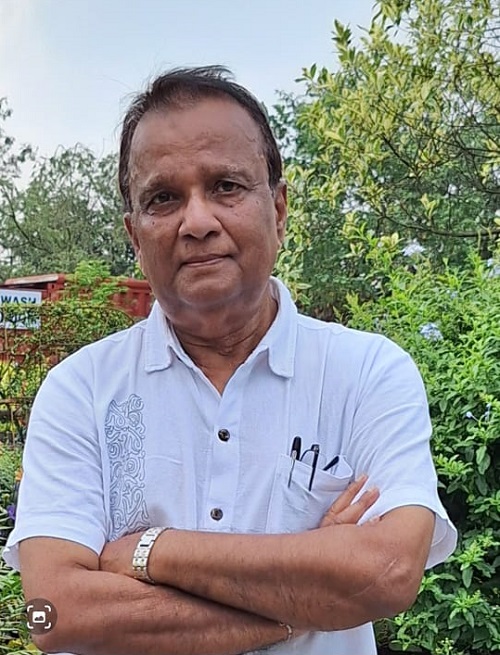
Prabhanjan K. Mishra is an award-winning Indian poet from India, besides being a story writer, translator, editor, and critic; a former president of Poetry Circle, Bombay (Mumbai), an association of Indo-English poets. He edited POIESIS, the literary magazine of this poets’ association for eight years. His poems have been widely published, his own works and translation from the works of other poets. He has published three books of his poems and his poems have appeared in twenty anthologies in India and abroad.
Sreekumar Ezhuththaani
Yesterday, I boarded a bus from the city carrying a big box. I was tired and in a hurry to reach home which was six or seven kilometres away.
I got in and looked around eagerly for a seat. On the seat opposite the steps sat two women.
At the far end, a middle-aged woman; nearer to me, a very old woman.
There was one more seat empty beside them, and when I went to sit there, the old woman said sorry and refused to let me sit there.
She told me to sit on the conductor’s seat.
I said that wouldn’t be right.
“There are other seats in the front,” she argued.
“None. And this seat is not your private property,” I replied.
Hearing the advice of the woman sitting next to her, she finally moved aside.
When I sat down, she muttered:
“Men have all kinds of tricks to sit near women.”
I let it slip by.
But for the next four or five kilometres I kept cursing her for her selfishness, lack of civility, even looks and clothing.
The it was the stop just before mine. I got ready to get down.
Another woman just boarded, and I told her,
“I’m getting off at the next stop, you can sit here.”
At that moment, the old woman, saying sorry again, held my hand, linked her elbow with mine in the western courting manner, and said:
“Don’t get down now. I need to go till Neyyattinkara.
You also stay till there.”
Me: “That’s not possible. I need to go home.”
She didn't reply or even look at me. But she tightened her grip.
Then after having a sight, still looking afar, she said, “Son, I had a boy like you once.
He went to watch blasting work at Mukkunnimala…
and he fell into the quarry and died.
When I saw you, I remembered him.
If you sit next to me, I’ll recall all of that.
That’s why I told you not to sit here.”
I got down only at Neyyattinkara
and I’m waiting for the bus back.
Sreekumar Ezhuththaani
The road home smelled of rain and rust.
After three long months, I was driving back from an Ayurveda resort where I had gone to treat my arthritis. I wanted to be at my summer house for the next few months. It is a small white cottage on this side of a lake near a reserve forest. The evening light fell in ribbons across the windshield, soft and golden, like a memory trying to find its way back.
I should have felt eager to return, but a dull ache pressed behind my ribs.
I knew what awaited me.
My garden, the one I had built with years of care, every seed chosen like a promise, would be gone. Three months without water, without love. My girlfriend, who had promised to tend it while I was away, had called halfway through my stay at the resort.
“I’m sorry,” she’d said, her voice light, distracted. “I had to leave. It’s just a garden, after all.”
Just a garden.
But for me, it had been more, a sanctuary of colour and silence.
As I reached the gate, the evening wind carried the faintest hint of jasmine. For a moment, I thought it was my memory playing tricks. The latch groaned as I pushed it open.
And then I froze.
The garden wasn’t dead.
It was alive, wildly, impossibly alive.
The roses blazed red along the fence. The orchids. those fragile, temperamental things, swayed with new blooms. The soil was dark and breathing, the air thick with fragrance and light.
I walked through the path in disbelief, my fingers brushing petals that felt warm and soft, pulsing with life. Someone had loved this place in my absence, tenderly, faithfully.
Then I saw her.
A girl stood among the flowers, barefoot, her torn and tattered dress hem damp from watering. She turned at the sound of my steps. The sunset caught in her hair, turning it to strands of bronze.
It took me a heartbeat to recognise her.
Saroja, the quiet neighbourhood girl who used to come by to clean the porch and sweep the floor. She had always been there, skinny, unimpressive. unremarkable, part of the furniture, blending into the corners of daily life.
I looked around. Then I looked straight at her.
She looked very pretty and charming.

Sreekumar Ezhuththaani known more as SK, writes in English and Malayalam. He also translates into both languages and works as a facilitator at L' ecole Chempaka International, a school in Trivandrum, Kerala.
Dilip Mohapatra

ACT I: The Awakening
The room was dimly lit. A familiar tune from an old TV set echoed against walls. Prakash, reclining like a pasha in his faded La-Z-Boy, swayed gently to the rhythm of the tune in the baritone voice of a gyrating Baloo, cheerful and carefree:
“ Look for the bare necessities, the simple bare necessities
Forget about your worries and strife
I mean the bare necessities, old mother Nature’s recipe
That bring the bare necessities of life…”
“Come on Seema, are you there? You’re missing it! Baloo and Mowgli are back in action. Come, listen to the song, Bare Necessities— it’s timeless.” Prakash was almost hollering at Seema, his wife.
From the kitchen came the clatter of steel bowls and Seema’s half-muffled retort: “ Oh! You and your Jungle Book ! Either you are glued to it or are lost in your literary jungle. Retirement has given you wings, but I’m grounded in the kitchen.”
“That’s exactly the point, Seema. The song’s talking about freedom. About not being tied down,” Prakash replied with a chuckle.
He closed his eyes as the final chords faded and started gently rocking in his recliner. These slow, rhythmic sways often signalled the onset of one of his cerebral churns— a telltale sign that an idea was brewing. Since retirement he had delved deep into creative writing and over the past few years, published a few books of poetry and short stories. After a while he stopped rocking and called out for his wife.
Seema emerged with a tray, wiping her hands on her apron. She had seen this expression before— eyes half shut, smile brewing in one corner of his mouth like tea not fully steeped.
“Okay, what is it this time? A poem about honey-licking bears or a short story about Mowgli growing up to become a monk ? Or maybe a sequel to Kipling’s Jungle Book?”
“You know Seema, I was decoding Baloo’s song— Bare Necessities. It triggered an idea for my next book. This time I am thinking of writing a full-fledged novel. I have tried my hands on poetry and short stories and the readers have received them well. I think now it’s time for a bigger challenge.”
“ And what is that going to be about?”
“ I am planning a novel around the theme of ‘Bare Necessities’. A character who’s had it all suddenly decides to live as a minimalist. I want to chronicle his journey from abundance to near-nothingness— his adventures, mis-adventures and inner transformations.”
“The idea sounds to be promising to me. But in today’s world of delivery apps, online shopping, credit cards and OTT binges, who’d believe such a fairy tale.”
“ True. One of the major attributes of a good story is authenticity. Normally I do some research to create my characters and plots and ensure that they appear almost real. But this time I have a better idea. I would like to make it experiential.”
“What does that even mean—experiential? It can’t be autobiographical any way. Just look at your wardrobe where dozens of suits still hang, and you use them no more— check your shoe-rack which has at least twenty pairs of shoes of all kinds , most of them looking dusty and dilapidated due to non-use—and your watches enclosed in a box, most with run out cells !”
“Hold on. You’re missing the point. I’m thinking of taking a sabbatical— giving up everything, even the comforts at home. Even, you, my constant companion— for a while. Just experience the bare minimum, live on the streets, fending for myself with nothing in my pocket, and translate that into my book. What else can be more realistic.”
“Wait a moment, what did you just say? I am also included in the list of your material possessions? After walking together for fifty years with you after our betrothal, after being your partner both in joy and sorrow, never leaving your side, you finally label me, the mother of your kids, just like your car, your golf clubs, your cluttered shelf of gadgets!”, she exclaimed sobbing.
“No my dear. That’s not what I meant. It’s not you— it’s the idea of comfort, familiarity, dependence. Even attachment. You’re surely not a possession— you’re my obsession. But obsessions too are anchors.”
There was a silence. Then, a sigh.
“ Alright. You always were the mad one between us. Go ahead. Take your plunge to poverty. But remember— even Baloo returned to the jungle after the story ended. Let me pack you some essentials”
“ No need. If it doesn’t fit in my pocket, I don’t need it.”
Early morning, the next day. The house smelled of warm parathas and old memories. Prakash stepped out wearing a pair of worn khaki cargo, a plain T shirt, sandals, and a smile. No watch. No phone. No wallet. But he had not forgotten to carry a small pocket diary and a pen. Add to that, a folded note in his shirt pocket, scribbled by Seema: “ You may be chasing bare necessities— but don’t forget to come back home with your soul intact.” The note was pinned to a hundred rupee note.
Seema stood at the door— waving not with her hand, but with her moist eyes.
The gate creaked shut.
The road ahead was open.
ACT II: The Descent (The Street Diaries)
Scene 1: Day 1
Prakash followed the road leading to the Main Street near his place and started walking leisurely along the footpath. The street was lined with variety of shops on both sides. Though Prakash had driven down the street quite a number of times, he never paused to see what it offered. Banks, hospitals, grocery shops, automobile showrooms, jewellery shops, eateries, you name it—almost everything was there. Suddenly he stumbled over a carelessly parked two wheeler on the pavement. He managed to maintain balance and saved himself from a fall and surveyed what lay in front him. It resembled a makeshift obstacle course. Some stores had displayed their items bang on the pavement, some eateries had placed tall tables for their customers enjoying their fare while standing around, a puncture repairer had placed a pile of worn out tyres to indicate his presence. As he moved ahead cautiously he encountered a ditch right on the pavement dug by the electricity department for some repair work on the underground power cables. Somehow he cleared the stretch of pavement leading to a bridge atop a river that passed through the city. He paused a while and took a narrow path leading to the bank of the river under the bridge. The town planners had started work on constructing a riverside promenade. Prakash heaved a sigh of relief to have escaped the hazards of the Main Street pavement and started pacing up and down the promenade under construction. There were no workers around since it was a Sunday. After sometime, he discovered a new cement bench under a tree and parked himself on it. Most part of the year the river remained dry except for the monsoons. When it rains in upper reaches, the river comes to life. It was a cloudy day. The cool breeze and the soft murmuring of the water flowing in the river had a magical effect on him and his eyelids became heavier as he slipped into a peaceful slumber.
He remained lost to the world until a cold spray of rain startled him awake.He quickly got up and found himself half soaked in the rains that had started a while ago. Suddenly he was struck with panic. He realised that he didn’t have a change. He wondered if he should have included an umbrella in the list of his basic needs. He managed to keep himself from getting wetter by squeezing himself under a fat branch of the tree. It was a passing cloud and soon the rain stopped. It was going to be around one in the afternoon. He suddenly felt a slight twitch in his stomach. It was his lunchtime. He thought why should he go to some fancy restaurant and deplete his meagre money. He decided to go to an Irani Cafe close by and manage with ‘Bun-Maska’ and a cup of hot tea.
As he entered the cafe just around the corner, the owner Ardeshir greeted him with a wide smile. Ardeshir had started the cafe about twenty years ago. Prakash had been a regular customer. After he finished his frugal lunch and paid for it, he cleared his throat and asked Ardeshir, “ Brother, I am looking for an engagement. I was wondering if you may consider me for a waiter’s job in your cafe?”
Ardeshir raised his eyebrows in surprise and enquired if he was joking.
“Sir, you had held a very high post in the corporate sector. You stay in a four bedroom villa in one of the posh housing societies. You drive a high end car. And you want to be a lowly waiter in my humble cafe?”
“ Hello, let me explain. I have left home to live a life on the streets. I want to check if I can survive or not with just the basic needs. If so many homeless people can, why can’t I? But for meeting my minimum needs I will still need some money. No job is really small. I will be happy if I may earn just what I need for a simple meal.”
“Sir, with all humility I will disappoint you. Because if I give you the job I will have to terminate the job of one of my existing staff. You want it for fun or just to satisfy your whim. But he needs it for survival. Sorry. Please forgive me.”
“Alright, I will try somewhere else. Can you at least help me to find a place where I may spend the night.”
Ardeshir thought for a minute and offered, ” OK Sir. You go and meet my brother Behrouz who runs a cafe near the railway station. He knows someone from the Railways. I am sure, he can help you to get some place in the railway station, maybe in a shed, or on the platform itself.”
Prakash thanked him and as he was stepping out, Ardeshir handed him a package and few old newspapers.
“I have packed a cheese sandwich for your dinner. On the house. Keep these old newspapers with you, you will need them.”
Prakash accepted them with a grateful smile and started for the railway station. It was almost a five kilometre walk.
Behrouz was Ardeshir’s elder brother. Slightly plump and with scant hair on his head he welcomed Prakash and offered him a seat. Ardeshir had already called him and briefed him about his requirements. Both sat facing each other sipping hot tea, Behrouz scanning Prakash’s face as if to size him up and Prakash meeting his gaze with equal interest.
“ I have called my friend Abdul who works in the railway yard as a security guard. He will fix something for you. But it won’t be for free. He normally charges people twenty rupees for a night’s stay. But I have negotiated with him specially for you. You pay just ten.”
“That’s really very kind of you. My sincere thanks.”
Prakash checked his pocket. He had thirty rupees left after paying for his lunch. At least he didn’t have to worry for the night.
After about half an hour Abdul appeared and escorted Prakash to the railway scrapyard through a gate far away from the platforms. The yard was strewn with many derelict and dilapidated looking wagons, some in rakes and some singly. Abdul stopped at a lone wagon on the outer track away from the goods shed.The wagon was empty with its door open. Abdul asked Prakash to climb in and use the straw inside to make his bed. He told him to stay inside and not loiter around. He promised to look him up the next day morning and check if he wants to renew the arrangement for another day.
After Abdul left Prakash sat down inside the wagon and started recounting his experience so far. The eerie silence was periodically interrupted by distant clangs of metal and clatter of wheels on far off tracks. He took note of his own anxieties and apprehensions. He was wondering if he had been irrational or whimsical. The reality had started nibbling him.
Thankfully the yard did not plunge into total darkness after sunset. There was a powerful security light near the goods shed. His wagon received just enough ambient light. Around seven he felt hungry again. He unpacked the sandwich and relished it. Then he realised that he was not carrying any water. He wondered if he should have included a water bottle in the list of his basic needs. He got down from the wagon and surveyed the area very cautiously. He was not prepared to be caught as an intruder and face charges. He was lucky to find a water tap behind the wagon. He bent down and scooped palmfuls of water and drank to his heart’s content. The smell of wet soil and the feel of the cold metal of the leaking tap transported him to another world. When he returned to the wagon, he was shocked to find a young boy in his early teens in dirty clothes and with scruffy hair standing at the door. He held a naked knife in his hand. Prakash had to convince him that he was Abdul’s tenant for the night. The boy closed the knife and told that he would have to share the wagon with him, since he was the older tenant.
“First time?”, the boy asked.
“Yes,” Prakash said. “You?”
“Don’t really remember. Maybe about seven years. OK. Now get in and relax. Don’t worry. I am Jaggu, here. I will take care of you.”
Prakash was amused to see the boy’s confidence. The boy, who had just threatened him with a blade, now offered reassurance like an elder brother. The street had rewritten their roles.
Both of them made their beds by spreading the straw. Prakash covered the straw with the old newspapers and handed few over to the boy.
“Have you eaten something? I have a packet of bread that I have managed to pick it up from the railway stall when the vendor wasn’t looking. Let us share it.”
“ Thanks. But I have already eaten. You go ahead.”
Prakash was feeling weary and tired. He stretched himself on his makeshift bed and thought if he could have brought along a bed sheet.
“Are you feeling sleepy?,” Jaggu asked. “Let me warn you about something that you should know before you go to sleep. There are many rats and bandicoots around. Don’t get scared if they give you company. They just scurry around. They won’t harm you. You have to get used to them”
Prakash took out his pocket diary and scribbled on it:
“ 1. A house is not just four walls and a roof. It gives you warmth and a sense of security. A bench on the riverside or a makeshift bed in a temporary shelter are no substitutes.
2. When you are on the same boat you all are equal, with no difference. It’s all about survival. “
Scene2: Day2
The morning was no different from the last—hot, humid, and humming with city noise. Prakash squinted at the rising sun, got down from the wagon and stretched his aching limbs, sore from the uncomfortable straw bed he was not used to. Jaggu had also got up and was cleaning his teeth with a tooth cleaning stick he had broken off from a nearby bush. Both greeted each other with a smile. Prakash washed his face with the tap water and started walking out of the yard. Both had agreed to meet again in the evening.
Prakash quietly slipped out of the yard gate and found Abdul standing next to a tea shop. He went and handed him a ten rupee note as advance payment for the night’s stay. Then he dipped his hand into the pocket to feel few left over coins. He asked for a ‘cutting chai’ and slowly started sipping from an earthen cup, relishing each swig while rolling the liquid in his mouth and hoping that it would not be over soon.
The events of Day One had left him with a bitter taste. The meagre coins left in his pocket were barely enough for a banana. The whole day was ahead of him. He had to earn some money somehow to sustain himself. He tried hard to think of a way, but couldn’t figure out how he may do it. In that muddle of shame and curiosity, suddenly an idea had sprouted, when he saw some beggars from a distance huddling near the temple. He thought if he learnt the trade by observing the veterans, understood the mechanics and dynamics, he may be able to gather enough for the day. After all, hadn’t he always prided himself on being a quick study?
It was near the temple’s rear wall, in the shaded corridor flanked by the neem tree and the garbage skip, that he found them—four beggars of varying shapes and states of undress. They sat like sentinels in their assigned spots, each with a battered tin bowl, plastic bottle, or coconut shell, marking their territory. One had no limbs below the knee. Another was blind in one eye. The third muttered mantras intermittently, while the fourth simply stared into space with a placid grin that revealed three teeth.
Prakash cleared his throat and approached them with cautious respect.
“Bhaisahab,” he began, addressing the blind one, “Can I speak with you all for a minute?”
The men sized him up. He didn’t look like one of them—not yet. But his sunken eyes and disheveled hair offered a hint of eligibility.
“I wanted to ask…” Prakash hesitated, the words tasting strange in his mouth, “…if someone wanted to… learn how to beg, properly, I mean—could he make, say, a hundred rupees in a day?”
Silence followed. Then came a wheezy chuckle from one and a loud guffaw from another.
“Hundred rupees? In this economy?”
The blind man smiled grimly.
“Try twenty. On a good day. Unless you’ve got something special—like no legs or a baby with snot.”
The others joined in, their laughter dry and cracked. But it wasn’t mocking—it was resigned, even friendly in a strange way.
They offered him advice, of course.
“ Don’t approach people in a rush. Stand near temples, hospitals, or traffic signals.
Never be too clean. Keep a cloth for drama—wipe your eyes, pretend to cry.
And most importantly, don’t talk too much. Just let the misery speak.”
When Prakash was about to leave, thanking them profusely, one of them approached him and asked him to take off his shirt. Prakash quietly but hesitantly removed his shirt. Then the beggar took out a torn and dirty shirt from his bag and exchanged it with Prakash’s shirt. They all urged him to put it on. He slipped into the stained shirt, the fabric clinging awkwardly to his skin. It itched, both literally and metaphorically. When he put it on, all of them clapped and looked at him with admiration.
Prakash took it all in like a diligent student. But when he tried it for himself—squatting near the signal with a cupped hand and downcast eyes—the coins came few and far between. A child dropped a toffee in his palm.The toffee was sweet only in appearance; it melted into his palm like pity, not nourishment. A woman wrinkled her nose and crossed the road. A cyclist tossed a twenty five paisa coin as if to drive him away. Every rejection felt like a stone in the gut.
By noon, he had barely managed seventeen rupees and two toffees. His back ached, and his ego was bruised beyond repair. Sitting under a flyover pillar, he examined his haul and shook his head.
He had thought he had nothing left to lose. But today, he had lost something more—his illusions. There was a craft even to this, and he wasn’t cut out for it. Not desperate enough, not broken enough, not invisible enough. He was an amateur in a profession that demanded perhaps a high level of expertise, infinite patience and total surrender.
He felt, once again, like a tourist in another man’s sorrow— snapping mental pictures but never belonging.
Scene3: Day 2
By mid-morning, the sun was already merciless. Prakash had tried his luck near the traffic lights, mimicking the techniques the beggars had shared with him earlier that day—downcast eyes, stretched palm, a sigh now and then. But the returns were rather meagre. Just seventeen rupees. When he realised that nothing more was forthcoming, for whatever maybe the reason, he decided to leave the place and see what more does the day have in store.
He had hoped for one thing, at least a hundred rupees. A symbolic number. Perhaps a basic need for the day. A figure that would prove his theory: that life could be stripped to the bare minimum and still hold dignity. But the city had other lessons to teach. Each coin tossed his way was loaded with disdain, and every look that passed over him was a denial of his existence.
Shaken and sore, he drifted toward the shade under a cluster of trees behind a dusty bus depot. There, he found three men lounging in a makeshift nest of plastic sheets, torn gunny bags, and discarded cardboard. A crude chillum passed between them, its smoke curling lazily into the heat. They seemed quite happy and carefree. They welcomed him with mild curiosity, offering space and a puff. He declined politely but sat down beside them, drawn by their languid ease.
They talked—endlessly—about nothing: a rumour of a film star visiting town, the price of liquor, the unfairness of police raids. One of them even commented on Trump tariff and another on Russia-Ukraine war. It felt like tuning into a broken radio, where fragments of geopolitics and liquor rates floated aimlessly.
Occasionally one would laugh, and the others would follow. Prakash smiled faintly, but the disconnect was palpable. These men had nowhere to go, and that gave them a strange calm. But their world was closed, looping in trivialities and haze. He couldn’t enter it, nor did he want to. They weren’t searching for anything—they had given up the search.
Restless, he rose and wandered off, hugging the boundary wall of a nearby construction site. That’s when it happened:
A staggering figure emerged from behind a pile of debris—a drunkard, disoriented, perhaps looking for a place to relieve himself. His eyes locked onto Prakash, and something about him—a stranger, a loiterer, a misfit—provoked an eruption.
“What are you looking at?” the drunk snarled. “Think you’re better than me?”
Before Prakash could respond, the man lunged at him. A wild shove knocked him to the ground, and a sharp kick landed in his ribs. The kick didn’t just bruise his ribs— it cracked something intangible. Pride? Hope ? Even he couldn’t tell.
The assault was brief, but humiliating. A few labourers nearby watched without intervening, then looked away. The city had seen worse.
When the man stumbled off, muttering curses, Prakash remained on the ground for a while, his body aching, his mind hollow. He didn’t cry out. He didn’t curse back. He just stared at the sky, as if expecting an answer.
Then came the quiet—the kind that settles after violence, the devastation in the wake of a tsunami, not as peace, but as vacancy, a bitter emptiness. He slowly sat up, brushing cement dust from his elbow, the pain beginning to settle into his bones.
And that’s when the inner dialogue began—not loud, not defiant, but clear.
“So this is what I wanted to test myself against,” he thought. “The bottom. The raw edge of existence. I thought I could survive on the kindness of strangers and the wisdom of the broken. I thought minimalism would make me free. But this isn’t freedom—this is friction. A struggle for survival.”
He stood up and limped toward a tea stall, hoping to wash his face. The glassy stares, the stray blows, the dull smoke—it all began to feel like noise. Not the kind that needed to be endured, but the kind that needed to be transcended.
“Maybe I misunderstood simplicity,” he reflected. “ Was it ever about owning less, or was it always about being less owned— by want, by noise, by fear?”
“Maybe it isn’t just about eating less, owning less, or wandering without destination. Maybe it’s about inner stillness. Not shrinking life, but silencing it—inside.”
He remembered the faint image from somewhere in his past—an ascetic seated by a riverside, unmoved, untouched. A world within a world.
“They too had renounced everything. But they had done it not in protest—but in pursuit.”
And then the realization struck him—not dramatic, but decisive.
“I am not meant to mimic the broken. I am meant to seek wholeness. I’ve seen what’s outside. Now it’s time to turn inward.”
A gentle breeze stirred the dust around his feet. Somewhere in the distance, a temple bell rang—soft, persistent, like a beckoning. He found a tree in the temple compound and lay down under its shade for a couple of hours.
As the sun set he started walking slowly towards the railway junk yard. He had packed a few rotis and some vegetable curry from a roadside eatery to share with Jaggu.
ACT III: The Hilltop Hermit
Prakash lay tired and worn after the day’s onslaught. He tried to sleep, but sleep played truant. Beside him, Jaggu snored softly, curled up like a pup after a long chase.
With eyes wide open, Prakash retraced the chain of events that had unfolded since the moment he walked out of home. What had begun as a rebellion against excess now seemed to be evolving into something deeper. No longer seeking solace outside, he felt an urge to turn inward—to explore the quietude that comes not from deprivation, but from detachment.
He had long been curious about the ascetics—those who renounce the world, live in solitude, and commit themselves to meditation, contemplation, and penance. He’d read of those who set out with only a kaupin (loin cloth) and a kamandal (water gourd), abandoning all possessions, even symbolically performing their own shraddha—a death ritual while still alive.
He wondered: was their path mere rejection of the world, or was it a fuller embrace of something else? Having now tasted discomfort, directionless-ness, and fear firsthand, Prakash felt compelled to understand the distinction—between his form of minimalism and theirs, between voluntary simplicity and spiritual renunciation.
His thoughts drifted to Prince Siddharth—who had left the comfort of a royal palace in search of truth and a way out of suffering. Perhaps, he mused, a true ascetic held the key to his own wandering search.
And yet, he still couldn’t say exactly what he was searching for.
As the night deepened, his thoughts thinned into silence. Somewhere between confusion and clarity, his mind let go. He didn’t even realise when sleep finally claimed him.
Scene 4, Day 3:
The morning sun filtered through the banyan leaves, casting dappled shadows on the pavement. Prakash sat on the edge of the broken footpath, tying the lace of his worn sneaker, his eyes fixed on the chirping sparrows darting between overhead wires. Jaggu stood close by sharpening a piece of wood with his knife absentmindedly.
“Jaggu,” he said, turning to the boy, “do you know of any baba or sadhu who lives nearby? Someone who has renounced everything?”
Jaggu scratched his head and nodded. “Haan bhaiya. There’s one baba who lives on the hill… up there,” he pointed toward the distant silhouette of a craggy outcrop beyond the city’s edge. “All alone. But not like the mad ones who scream or beg. This one… he’s different. Quiet. Keeps to himself. But sometimes he allows people to meet him.”
That was all the cue Prakash needed. With a pat on Jaggu’s head and a warm “Thank you, my friend,” he began the slow, winding climb toward the hill.
By the time Prakash reached the summit, his shirt clung to his back with sweat, but the sight before him was balm to his senses.
A man-made cave carved expertly into a massive outcropping of granite. The entrance opened onto a stone courtyard swept clean of dust and leaves. A crystal-clear stream spilled from a rock crevice, cascading into a small pond with a gentle gurgle, bordered by tufts of lemongrass and flowering vines. On one side, neat vegetable plots thrived—radishes, carrots, aubergines, sweet potatoes—all orderly, lovingly tended. It fitted exactly to the description of Shangri-La, the mythical paradise: remote, idyllic and tranquil.
And in the middle of it all, on a flat rock under a neem tree, sat a man. Barefoot, dressed in white shorts and a faded floral shirt, his posture erect in a perfect lotus pose. His eyes were closed, his hands resting lightly on his knees. He seemed to be meditating. A smartphone lay beside him.
Prakash paused respectfully, unsure. This couldn’t be the baba, could it? He glanced over his shoulders toward the cave entrance, expecting to spot a dreadlocked sage in saffron, his forehead smeared with sandalwood paste and vermilion, Rudraksha beads adorning his bare chest, perhaps with a ceremonial trident leaning against the wall.
As if sensing his thoughts, the man opened his eyes and smiled. “Looking for someone?”
Prakash hesitated. “Uh… I was told a baba lives here. Alone.”
“You’ve found him,” the man said, rising gracefully and dusting his palms. “I’m Gyanadev.”
Prakash blinked. “You… live here? Alone?”
“Yes,” Gyanadev chuckled softly. “Don’t worry, I disappoint a lot of first-time seekers.”
As they settled on a low stone bench, Gyanadev offered him a cup of freshly brewed tulsi tea and gestured toward the view beyond—a panoramic sweep of the city skyline blurred in the noon haze.
“I wasn’t always here,” he began. “I was an engineer. Designed bridges, dams, even one of the metro lines. I retired five years ago.”
“But why… this?” Prakash asked, sipping the tea.
“My life started in an orphanage,” Gyanadev said. “Later raised by foster parents who gave me everything—education, values, love. I worked hard. Earned money, name, recognition. But somewhere along the way, I realised I was only adding layers. Never peeling any away.”
He smiled wistfully. “I lost my foster parents to old age. I never married. Not by design. I just… never made time for love. And later, it felt too late.”
Prakash listened, drawn in by the matter-of-fact warmth in Gyanadev’s voice.
“So, after retirement, I built this place. Just enough to sustain. Solar panels for electricity, a pump from the stream, a little farming to stay grounded. I get pras?d from the local temple—I pay for it, not beg for it. And I talk to those who seek me out. Like you.”
Prakash glanced into the cave. A cot, a mat, a small stove. A stack of books. A laptop on a wooden desk. A charging cable. No idols, no incense, no rituals. Just serenity.
“But this,” he pointed to the mobile phone, “this doesn’t seem…hmm, very… ascetic.”
Gyanadev laughed. “Ah, the kaupin-kamandal stereotype!Let me clarify, I have no miracles to sell, no scriptures to quote. I’ve simply redefined what ‘basic’ means in today’s world. For me, this phone connects me to ideas. The laptop helps me write. I don’t preach. No discourses. I only speak to people who come to me for solving their life’s problems. More like a life coach. I analyse their problems in a participatory way and give them some practical tips and make them see the reason and common sense. May not be exactly prescriptive. I don’t escape the world—I engage with it, selectively.”
“But how do you live with so little?” Prakash asked.
Gyanadev looked at him and raised three fingers. “Three things trap a man—Need, Greed, and Ego.”
He dropped one finger. “Need, if not recognised properly, becomes endless hunger.”
Another finger down. “Greed makes us hoard what we don’t need, fearing others will get it first.”
And finally, “Ego… the trickiest. It convinces us we deserve more than others.”
“By themselves they are not bad. They too have some value. They can be life’s driving force. But we must learn to balance all three—need with contentment, greed with generosity, ego with humility—and then you find bliss. Not escape. Not austerity for show. Just… balance.”
Prakash sat still. Something within him shifted—quietly, imperceptibly, like the settling of dust after a gust of wind. His own experiment now seemed naive—more like a protest than a practice. What he had sought outside in hardship, he had missed within.
“Thank you,” he said, his voice low.
Gyanadev stood, stretching. “You’ve already thanked me by listening. That’s all most people forget to do.”
He pulled out his phone and smiled. “Now, let me call you an Uber. Time to return home.”
Prakash laughed for the first time in days. “You really are… something else.”
As the car snaked up the hill and came to a halt, Prakash looked back one last time. Gyanadev stood there waving, silhouetted against the brightening sky—not a holy man, not a guru, but perhaps something rarer in today’s world.
A man at peace. Who has realised true bliss.
Epilogue: Full Circle
The familiar scent of home greeted him as he stepped through the front door—mildly musty, yet comforting. The walls hadn’t changed, nor had the ticking of the wall clock or the distant hum of the refrigerator.
But something inside him had shifted.
He stood in the living room, letting his eyes rest on the polished wood cabinet, the slightly crooked photo frame on the wall, the frayed rug at the doorway. None of it bothered him now. Nor did it excite him. It simply was. A part of his life. Not to be judged, only to be lived.
He heard soft footsteps. Seema stood at the hallway, her expression unreadable—part concern, part relief, part question.
They didn’t speak for a moment. Then she stepped forward, and without a word, wrapped her arms around him. Her eyes damp.
No drama. No accusations. Just presence.
Later, as dusk folded itself gently into the room, they sat together on the balcony—the same spot where his thoughts of rebellion had first taken root. The tea between them steamed quietly. A breeze teased the curtain behind.
Seema placed her hand lightly over his.
“You’ve changed,” she said, not accusing, not praising.
“I think I’ve arrived,” he replied.
A silence, then a smile passed between them. The kind that says: We’ll figure it out, from here.
Prakash picked up his old notebook and opened a fresh page. He began to write:
I left home in search of less.
I thought shedding comfort would reveal truth.
I confused emptiness with freedom, discomfort with depth.
But simplicity is not absence—it is presence, refined.
It is knowing what to hold on to, and what to let go.
It is not withdrawing from the world, but living within it without being owned by it.
I do not wish to become a monk.
Nor do I wish to drown in consumption.
I only want to be awake to my own life—its needs, its noise, and its silences.
Back to basics is not going backward.
It is going inward.
And maybe, just maybe, forward.
When he looked up, Seema had brought a small potted plant and placed it on the balcony ledge.
“Something to nurture,” she said softly.
He nodded, touched the leaf, and smiled.
This time, he was home.

Dilip Mohapatra, a decorated Navy Veteran is a well acclaimed poet in contemporary English and his poems appear in many literary journals of repute and anthologies worldwide. He has nine poetry collections, two short story collections and two professional books to his credit. He is a regular contributor to Literary Vibes. He the recipient of multiple awards for his literary activities, which include the prestigious Honour Award for complete work under Naji Naaman Literary Awards for 2020. He holds the honorary title of ‘Member of Maison Naaman pour la Culture’. He lives in Pune and his email id is dilipmohapatra@gmail.com
Snehaprava Das
The loud giggles of Rohit and his friends filled the house as they barged into the drawing room. It was followed by an excited cry from Rohit. ‘Mama, see what I have brought.’ I was preparing fruit- milkshake for him in the kitchen. ‘Coming darling. Go and wash your hand and feet first,’ I called back loudly over the sound of the whirring juice blender.
My husband had asked me and Rohit to get ready by six thirty. It was the evening of thirty first December and we were to attend a New year Eve dinner party at his club. I was in a hurry to wrap up the remaining kitchen-chores and make the milkshake for Rohit.
‘You come here first and take a look…’ Rohit shouted back. I switched off the blender and scuttled out of the kitchen, curious to know what made him so excited.
‘What is it?’ I asked and saw the thing he was clutching in his small arms almost simultaneously. It was a baby animal… perhaps a puppy, looking white and soft as a curled ball of cottonwool. The two other kids too looked eagerly at the thing cuddled up in Rohit’s arms. All three pairs of eyes were sparkling with the joy of making a rare discovery.
‘What is that? Didn’t papa ask you to get ready by six thirty? What have you been doing till this late?
Very carefully, as if he was handling an expensive piece of glass, Rohit put the thing down and raised his eyes gleaming with a beatific smile to watch my reaction. I looked at the tiny creature. It was a kitten, a week or so old may be. So soft that I was afraid that it will be crumpled even at a light touch from my hand. The kitten was all white except for a deep black spot on its nose.
‘ It is milk-sucking newborn. Why did you take it away from its mother?’ I asked.
‘I will feed it milk in a bottle Mama. We will get a feeding bottle for it . And we will celebrate its birthday tomorrow on the New Year.’ Rohit urged. I did not have the heart to get angry with him so keen was he on keeping the kitten. ‘But it is born a week or so before,’ I smiled amusedly. ‘Why should we celebrate its birthday on the New Year Day?’
‘Because it will be admitted into our family as a new member on that day. Please Mama! Do not say no!’ Rohit implored, his small delicate arms encircling my waist.
‘Ok . Ok,’ ‘Now go and get yourself washed and have your milkshake. Let me think where we will keep it tonight when we will be away for the party. I will call Mina to get a old feeding bottle of her son. we will manage for the time being with that. Tomorrow we will make some permanent arrangement.’ ‘Love you Mama,’ Rohit ran towards the washroom. I asked the other two kids to go back to their homes and come the next day to celebrate the kitten’s birthday.
Slumped on the cold floor the kitten looked as if it had no life in it. But the gentle rise and fall in its body testified to the fact that it was breathing. There was no one in the drawing room now.
I knelt down and squinted at its face. It seemed I had known this tiny animal closely, and long since. As if I had some intrinsic connection with it since years. And suddenly a long-forgotten name that had created an upheaval in my childhood came alive like a flash of lightning.
Domii!!
Now I realized why this baby cat looked so familiar. It was an exact replica pf Domi… the same snow white furs and the same tiny black spot under the nose!!
A small shiver, I am not sure whether of excitement, or happiness or of apprehension ran through me as I peered at the furry white ball of a creature lying still by the leg of a couch.
I clicked the number of Mina on my mobile phone. ‘Get me an old feeding bottle of your son, Mina and make it quick.’
Domi!
The forgotten days of childhood came back to me in an overwhelming onrush.
**
It was a day of celebration for me and my brother when Rani gave birth to four kittens under the drumstick tree at the far corner of our backyard. I was in class seventh and my elder brother was in class ten. Rani had been living with us for more than a year and was a great help in driving the notorious, obdurate rats away who damaged books and papers and ripped the clothes and quilts to tatters. That way Rani had become the favourite of all of us, especially my father. She too never hesitated to extract advantage of our love for her. She would settle stubbornly in front of the plate when any one of us sat down to eat and demand her share of food with an obstinate and constant mewing until some foods was put before her.
I was overjoyed when mother revealed that Rani was going to have babies. ‘How many babies Ma and when? ‘ I asked eagerly, finding it difficult to hold on to my patience to see the baby cats. In a month,’ mother said touching my head fondly. Rani was given fish almost every day, and a small bowl of milk. Days seemed to be dragging painfully slowly as I waited for the babies to arrive and then in one cool November morning I woke up to the happy announcement of mother that Rani had given birth to four kittens. I jumped out of the bed and ran to the drumstick tree that stood aloof in one far corner of our backyard like an abandoned soul and looked. There she was! Rani, lying under the tree on a heap of ash, contentment in its haff open eyes as the four kittens sucked at her udders as if they had been hungry for an eternity. I did not want to leave the spot and would have stood there for hours watching the babies curled up together in a grey and black bundle but for father’s angry admonitions. My elder brother, concerned that the babies would catch cold put a piece of a torn blanket on that pulsating bundle.
The real problem came up when a robust and aggressive looking male cat made its disturbing appearance in our backyard. ‘Male cats kill the newborn babies. We have to be careful.’ Mother warned. So, I and my brother kept guard over the kittens outside of our school hours and father put them in the abandoned junk room at the far end wall of the backyard and bolted the door from outside preventing the entry of the male cat.
A month passed. I and my brother now fed the babies with bread and biscuits soaked in milk. The kittens grew up healthy and strong only except the smallest one who remained skinny and weak even with the healthy diets. They came out to the open to play in the back garden. It was one of their favourite sport to bit and scratch at one another. Sometimes they rolled about on the ground and over one another. At other times they would try to climb up the trunk of the drumstick tree clawing at the bark. It became an engaging pastime more for me than my brother to watch them playing and chasing one another.
‘Two are male and the other two are female..’ mother said. ‘I will name them Ma, I claimed. ‘I have already thought of the names,’ Father smiled fondly. ‘And what will they be?” he asked. ‘Romi and Domi for the two male ones and the female ones will be called Julie and Lily.’ ‘Nice names. So we will call them by those names,’ my brother remarked.
I liked them all though I was a bit disappointed at Lily’s sickly physique. But it was Domi who had the lion’s share of my love and concern. He was the healthiest and cutest amongst all four. He looked like a small bundle of glossy white fur, the whiteness enhanced by the tiny dark spot under his nose. he will rush to may the moment I entered the front gate and twine itself around my legs wagging its furry tail and making a soft purring sound. I would fling my schoolbag across the veranda and lift it up in my arms. ‘You, naughty girl,’ mother would yell at me. ‘What are you doing. The dirt of its feet will soil your school uniform. The furs will get into your nose and mouth. Put it down and get yourself washed clean with Dettol and water.’ I would not listen to mother and run about the front yard cradling Domi in my arms. after that I would put a bowl of milk before it. I would not budge until he had licked away the last drop of milk. I would change my school uniform, wash myself and sit down to eat only after he had finished his milk.
***
I and my brother spent the whole of the Christmas vacation playing with the four of them. Mother made delicacies at home on the new year day. It was one of the best New Year Day in my entire childhood as far as I could remember.
I was more indulgent in my love and care, especially for Domi, than my brother who seemed to have developed an interest in Romi. The school reopened after the vacation and I had to go to school leaving Domi alone for about six hours a day. And he would circle around me happily licking at my legs when I returned.
Another month passed.
One day Romi did not show up at the meal time. He was not there in the backyard nor was he found roaming about the house as he always did. Romi was my brother’s pet and he was expected to quell the anxiety.
‘Where is Romi?’ Father asked my brother who sat burying his head in a book, apparently oblivious to the commotion relating to Romi’s absence.
‘Bibhu had taken him to his home. He replied without looking at father. ‘Taken him? Why? Where does Bibhu live?’
Brother did not say a word.
‘I am asking you.’ Father demanded. ‘Where does this Bibhu live? Why have you given Romi to him?’
‘He gave me twenty rupees and took Romi away. He wanted to keep it.’ Brother said at last, in a voice that quavered in fear.’
‘You have sold it for twenty rupees?’ Father stared at brother. ‘What a despicable act!! Why did you take money from him? Where did you learn making such deals? He can keep Romi if he promises to take good care of it. Give the twenty rupees back to him first thing when you meet him tomorrow. No body in our family sells animals this way, and get that deep into your thick skull.’ Father stamped away.
‘How could you sell Romi, bhai? I asked accusingly.
‘Now, don’t you get started. Mind your own business. Take Domi to your in-laws’ house as your bridal gift.’ Brother sneered.
I did not like to argue with my brother.
The three other cats were growing up fast. Julie looked cute with the small brown patches on her white skin. Even Lily was beginning to look glossy despite her black sin. But it was Domi who was the cutest amongst all and had the maximum claim over my love. Julie was now spending most of her time in another Bengali family living in the neighbourhood. ‘That Julie has a preference for fish, ‘ father remarked laughing. ‘She has chosen to live closer to the Bengali family because they fed her fish every day.’ I did not mind Romi or Julie leaving home. I did not bother much about ‘Lily the blackie’ too. It was Domi that my mind was totally focused on. Except for that six or seven hours spent at school my I kept Domi by my side all through the day. He sat by me leg when I studied and ate from my hand. Given a choice and the chance I would never have let Domi out of my sight even for a moment. ‘That cat had cast some magic on this girl.’ Mother would complain thoroughly vexed when I put Domi on my bed while I studied. ‘It is shedding furs everywhere contaminating the bed and the clothes. Keep it out of the bedroom.’ I did not pay much heed to her admonitions. I knew she too liked Domi and would not want to harm him in any manner.
‘You were perhaps a cat in your previous birth, and was somehow related to Domi’s family.’ Megha, my friend teased. ‘Why talk of previous life?’ Ginny joined, ‘She will be changed into a cat in this life. Look at her eyes, they have become round in shape and green-tinged; her teeth were getting sharp and pointed like those of a cat. You will hear her mewing during the roll call and the teacher would wonder how a cat has entered the classroom.’ And all of them would laugh boisterously at the joke. My face flushed in anger and embarrassment. ‘I won’t speak to you if you say such things.’ I retaliated. Then they would coax me. ‘It was just a joke dearie’ don’t be so serious.’
‘But it is true that your Domi loves you a lot, just the way you love it.’ Ginny said.
**
My annual examination was drawing near. I had to attend tuitions and extra classes. Father warned me not to while away time playing with Domi and to focus more on my studies. Domi seemed to understand the seriousness of the situation and kept himself a bit aloof. He was growing up fast and was now roaming about in the neighbourhood during most part of the day. But he would never miss to greet me with his soft purring and wagging of tail whenever I came in from outside and would not deviate from his routine of eating out of my hand every night and sleeping on the foot-mat by the bed.
The annual examination was finally over. I was relieved and happy that there would be no time restrictions for playing with Domi. But Domi was now more interested to play outside. Often I had to take him outside the front gate while he scampered about here and there, excited at exploring the world beyond the huge iron gate. I stood by the gate chatting with the girl who lived next door but studied in a different school. But my gaze followed Domi constantly, never letting him out of sight. It was early summer and the warm breeze blowing from south had made the afternoons pleasant. I would come back with Domi before the sun set and close the gate behind us.
I had joined a private tuition center for an advance study of the next year’s course. The timing of the tuition class was from morning seven to eleven. As usual Domi would wait for me on the inner side of the iron gate and would instinctively know when I reached and begin mewing and purring and would twine itself around my legs the moment I stepped inside.
My school reopened after the summer vacation. It was monsoon time and rained most of the days. Domi did not prefer to go outside the gate when it rained. He would squat on the heavy doormat closing his eyes, enjoying the warmth of the mat. My brother was now in class eleven and was seriously preparing for the school finals. He had joined more than one coaching classes for different subjects and had not much time to spare for other engagements.
Days moved on.
And then Domi went missing.
**
That day it rained nonstop. I returned from school early. Domi was not there by the gate. It was obvious since there was water all around and the ground was sloshy. I came inside and stepped on to the veranda. Domi was not there on the doormat. My eyes roved around searching for him. May be he was somewhere inside, or in the kitchen with Ma. I walked to the kitchen. Ma was busy cooking some afternoon snack. Domi was not around. ‘Where is Domi?’ I asked mother, anxiety dripping from my voice.
‘It must be somewhere around. Why are you so worried? Get changed. I am making fritters and chutney.’
I had lost interest in fritters now, though it was one of my choicest snacks and more so in the wet climate, my mind filled with premonitions. I searched all the rooms even the abandoned shed adjoining the far wall of the backyard even though Domi never goes there. Domi was not found after a frantic search of half an hour or so. Where had he disappeared? I slumped down on the bench that stood against the wall of the inner veranda, still in my damp school uniform. Helpless tears ran down my eyes. Mother came out of the kitchen to soothe me. ‘He may be somewhere in the neighbourhood and will come back when it gets dark. He is growing up and does not like to remain confined inside the house. Come on, get changed and have something to eat.
‘I will not eat until Domi comes back,’ I whimpered. ‘Don’t behave like a two-year old,’ mother snapped. He will come back.’
But Domi did not come back. Father returned from office and brother from the coaching class. ‘Perhaps he had taken shelter in someone’s house,’ Father said trying to explain Domi’s unexpected disappearance but there was no conviction in his voice. He stroked my head. ‘Let us wait for the night. He will surely come back in the morning.’
Mother’s reasonings and father’s assurances did not do much to quell my fear. I knew instinctively that Domi would never return. I could not eat even a morsel of food that night despite my parents’ coaxing. I lay down in the bed staring into the darkness, my thoughts around Domi. Where must he be? What had happened to him? Did he come under an automobile? I tried desperately to fight the frightening thoughts away but they came creeping back, haunting my sleepless night, making me tremble all over.
After a seemingly endless night, the dawn broke. I climbed off the bed and ran down to the gate. There was no sign of Domi. I woke up my father and implored him to go searching for Domi.
‘I shall come with you,’ I urged father as he mounted his bicycle.
‘’There is no need for you to wander around with me. I will search every possible place where he could be.’ He assured me.
‘Possible place? What possible place is there for little Domi to go? He had hardly crossed past the front gate in months,’ I wanted to cry out loudly. But no sound came out of my mouth that felt dry as if it was filled with sands.
Father returned around midday. He looked tired and worn out. He must have been moving around in the sun searching for Domi. I was waiting impatiently without taking my breakfast. I ran to the front gate as he opened it. He cast a lingering glance at me before he turned to close the gate. The sadness and frustration in his eyes answered the question before I uttered it. I had nothing to ask now, and I heaved my stiff legs back to the front veranda and sat down on the bench staring blankly at the heavy foot mat where Domi used to squat and dose dreaming of some happy hunting grounds where he chased elusive grasshoppers.
‘Somebody must have taken him,’ mother said.
‘Could be. He is a cute one.’ Father agreed.
My tears had congealed into a lump that stuck at my throat that obstructed the swallowing of the food. It was a torture to sit by the plate and go with the pretense of eating while my whole body revolted at the sight of food.
‘I will go again in the afternoon and search some more places. Eat properly and stop worrying. Cats and dogs always remember the way to their homes. Domi too will come back in a day or two.’ Father said consolingly.
The search in the afternoon yielded no result as it did not in the morning. The only hope rested on Domi’s choice and chance to make a voluntary return.
***
It was on the third night after Domi had gone missing that the fever came. My head ached like someone was hitting it with a sledge hammer. And there was a violent churning in my stomach which made me throw up whatever little I had eaten in the evening. Then came the rigors, shaking me from head to feet. One moment my body felt as if it was set on fire, and the next I was drenched all over in sweat. I moaned and whimpered and blabbered and my own voice sounded strange to me.
‘I am getting Doctor Sinha,’ I hear father saying. I could hear mother saying something but could not make out what it was. I shut my eyes tightly and there He was!! Domi! Perched comfortably on the edge of the compound wall, looking at me with his round greenish eyes, mewing loudly. I wondered how could he climb up the high wall.
‘Come down you silly cat, ‘ I shouted ‘Or you will fall and hurt yourself.’
I heard mother’s voice.. ‘Calm down my baby,’ Everything will be fine. The doctor will be here in a minute.
Then I heard voices. May be, it was my father speaking. There was another voice that sounded unfamiliar. I wanted to make out who could that be but my head reeled. I felt something cool and heard pressed to my chest and a hand trying to lift my eyelids.
And then there was Domi again, running along a partially deserted street. I ran after him but he ran very fast as if trying to escape me. A vicious looking dog emerged from a large gate of a bungalow on the roadside and began to chase Domi. ‘Hey you, stop.’ I screamed but the dog pounced upon Domi who mewed frantically. I ran towards him as fast as my legs could carry me. But by that time Domi was mauled so badly that he was reduced to a crumpled ball of red and white. I began to tremble uncontrollably and then someone put a big blanket on me suffocating me. There were voices everywhere, low and gentle at first then rising to a crescendo threatening to burst open my eardrums. I felt a prick just above my hip and the sounds died down almost immediately. I saw myself in the park near my school. Domi springing and bouncing around chasing the tiny birds that came swooping down from the trees. I laughed out loudly. And then Domi was gone. The park had vanished too. I was in a vast desert standing alone, my throat burning in thirst.
Something that felt cool and wet was placed on my forehead. Once again I felt the prick at the right side above my hip. I felt relaxed and light as if something weighing a ton was taken off my head. I was feeling sleepy and the noise around me had subsided.
**
A bird, a koyal probably, cooed in a distance. My body was no longer burning. The thirst had gone too. I liked the bird’s song and wished it would never stop cooing. A soft hand touched my forehead. a cool, glass filament like object was thrust under my tongue. ‘Normal. The fever is gone. She is fine now. The weakness will go in a few days.’ someone said. I was feeling hungry. ‘Ma I am hungry.’ I said feebly. ‘Yes, darling,’ mother’s voice glistened with tears. I was made to sit on the bed propped up against pillows and mother fed me some semi-solid thing that was a blend of salty and sweet. It tasted good. Then mother adjusted the pillows and lay me down straight. ‘Enough of your antics,’ I heard my brother saying, sounding happy and relieved. ‘Now be a good girl and get back to your routine,’ he added. I wanted to smile at him but my lips felt stiff and dry. I shut my eyes.
I found myself in a garden of exotic flowers. Birds chirped and a cool breeze blew from the south. I sat on a bench and watched small kids darting around, chasing the butterflies. Then I saw Ginny and Megha in the swing laughing happily. They waved animatedly at me. I wanted to play with them but had no strength to get up from the bench. But I was feeling happy and relaxed and hungry again.
**
‘You had given all of us a fright, sis!’ my brother said. I had recovered fully now and had resumed my routine. Surprisingly enough no one in my family mentioned Domi, and still more surprising was that I had stopped missing him. I seemed to have lost interest in Domi somehow and any other pet animal for that matter. I could feel that a change had come over me.
**
Days turned into months and months into years. My brother had joined college after completing school. I was in my final year at school and was heavily preoccupied with my studies. During the pre-board months I, Ginny and Megha were attending different coaching classes for different subjects.
‘Hey! Look at that.’ Megha said, her voice loud with surprise and joy. I and Ginny turned almost simultaneously to look at the object she pointed at. It was a big sized cat, perhaps a male one, with very white furs and a deep black spot under its nose.
‘Doesn’t it look exactly like your Domi?’ Megha asked, sounding enthusiastic.
I glanced at the big cat. It waddled towards me confidently as if it knew me before. I stepped back. ‘Hey, get back I said and began to move faster.
‘What happened dear?’ Ginny asked me. ‘You should have been happy that Domi has returned. It has grown up but it still remembers you.’
‘Yes, it is Domi all right. Often the people and things we love a lot and circumstances compel us to get separated from them, return to us acquiring new forms and shapes. Like the story of ‘Kafka and the Doll’ we read last year. Perhaps your Domi was travelling around, exploring the world and now has come back.’ Megha added.
I stared hard at the big white cat.
Domi?
Could it be Domi?
What is the big deal even if it was Domi? I did not want to fall into that kind of temptation any longer. Love, whether it is for people, animals, birds or even plants always brings pain. The cat looked a little like Domi but I believed it was a different cat. Love had not returned to me like it had done to the girl in the story. Nor was I deluded by the semblance of Domi this cat carried in its looks.
‘Forget it. I do not like this cat even if it looks like a bigger version of Domi. Ma will get worried if I am late.’ I pulled Megha by her hand and strode forward, Ginny at our heels. After we had walked about a couple of meters I stole a glance behind. The cat was gone. A sigh of relief escaped me. ‘I was right. It was not Domi.’ The incident of meeting a big cat that resembled Domi was soon forgotten.
And time moved relentlessly on.
**
And after years my son had brought me a replica of Domi! What an amazing new year gift!! I remembered the story of Kafka and the Little Girl’s Doll and the famous lines
‘Everything you love will probably be lost, but in the end, love will return in another way.’
I was no longer ashamed to admit that Domi had never gone out of my mind. I was just pretending to reason with myself that I had lost interest in him. I was shocked to see the big white cat which Megha announced to be the bigger Domi. I had secretly believed in Megha and that was the reason why I boldly denounced her assumption. The sight of the tiny snow white cat my son had picked up and which looked like a mirror image of the Domi I had lost years ago was like the doll in Kafka’s story, …. a thing loved earnestly and lost, but love had returned in another way.
It was the best New Year Gift for me.
‘Shall we name it Domi?’ I asked Rohit that evening as I was dressing him up for the New Year Eve party. ‘Why, yes mama,’ Rohit exclaimed happily. ‘That is such a cute name. Do you like the kitten, mama?’
‘Very much!’ I smiled and kissed his forehead.
Dr.Snehaprava Das, former Associate Professor of English, is an acclaimed translator of Odisha. She has translated a number of Odia texts, both classic and contemporary into English. Among the early writings she had rendered in English, worth mentioning are FakirMohan Senapati's novel Prayaschitta (The Penance) and his long poem Utkala Bhramanam, which is believed to be a.poetic journey through Odisha's cultural space(A Tour through Odisha). As a translator Dr.Das is inclined to explore the different possibilities the act of translating involves, while rendering texts of Odia in to English.Besides being a translator Dr.Das is also a poet and a story teller and has five anthologies of English poems to her credit. Her recently published title Night of the Snake (a collection of English stories) where she has shifted her focus from the broader spectrum of social realities to the inner conscious of the protagonist, has been well received by the readers. Her poems display her effort to transport the individual suffering to a heightened plane of the universal.
Dr. Snehaprava Das has received the Prabashi Bhasha Sahitya Sammana award The Intellect (New Delhi), The Jivanananda Das Translation award (The Antonym, Kolkata), and The FakirMohan Sahitya parishad award(Odisha) for her translation.
Alpana Patnaik
Grooming of the young to become efficient, skillful, and worthy citizens of the country is the dream of every teacher and parents. As a teacher, I always strive to empower our students and let them discover light within themselves by serving humanity. keeping this in view we encourage students to celebrate life and festivals with a difference. Instead of encouraging them to celebrate with materialistic way of celebration, we teach them to share and care for the underprivileged, challenged and downtrodden people of our society. The students of our school visit old age homes, orphanages and Homes for dying destitutes.
Once we visited an old age home named Ozanam Home in the premises of Rosary School situated at KingswayCamp. Students of standard five were with us to visit this old age home. I was surprised to see an inmate, an old lady who first enquired about our school and then asked whether a student named Shreya was among these students. She was very anxious to know about her.
The next day when I discussed the experience of other students of the old age home, Shreya, a student of my class, recognized her grandmother in the photos of the old age home. She told me she is her maternal grandmother. This touched my heart; I was very disturbed. A few days back during the Parent-Teachers' Meeting, I enquired from Shreyas's mother about her mother. She wa surprised and tried to conceal her feelings and emotions but could not. She felt ashamed of her deeds and promised to take care of her mother and also let her live with the family.
This is a very serious and an alarming change quite prevalent in our society. Its root lies in the social fabrication of our society. We, the youth of today's world, are moving towards individualistic society where we only think about our own selves, moving from joint family to nuclear families. I think technology and social media are making our lives comfortable but our feelings, emotions, and consciousness more difficult. I think we should ponder on these serous issues.
Alpana Patnaik completed her M phil in linguistics from Delhi University in 1991. She worked as a teacher in Presentation Convent School, New Delhi, for 32 years as an English teacher. She did her research in Sociolinguistic: Pronominal Hierarchy: In Hindi Speech Community. Post-retirement, she is
presently working as an academic Counsellor in IGNOU centre, Shyam lal College for online classes on weekends. She also conducts Workshops on Cooperative learning: A new teaching Methodology in different schools of Delhi. She teaches online ESL (English as a Second Language ) students of elementary level and also underprivileged children at DUWA (Delhi University Women's Association), an NGO in Delhi university
THE WONDERFUL, ENCHANTING WORLD OF TRIBAL MYTHS
BB Mohapatra
(Compiled from various sources by B.B. Mohapatra.)
Koraput is a beautiful district of Odisha. Situated in the southern corner of the state, its undulating hills, lush green forests, cascading waterfalls and sparkling rivers are a wonderful feast for the soul.
The other beauty of the district is its multiple tribal communities. Koraput is home to a variety of tribes, with the Paraja being the largest group. Other prominent tribes include the Bhumias, Bhatras, Kondhs, Gonds, Koyas, and Bondas. Many of these tribes have distinct languages, cultures, and traditions, and some, like the Bonda and Didayi, are considered Particularly Vulnerable Tribal Groups (PVTGs).
The tribes have nurtured a plethora of myths and folklore which are enchatingly beautiful. One need not believe in all of them, but they permeate the heart and soak the soul with a rare fragrance which can only come out of an all-pervading existential reality.
Here are folklore-style stories and oral-tradition inspired narratives built around places of Koraput Distt, drawing from the cultural flavour of the Adivasis, Koya, Bonda, Paraja (Didayi) and Gadaba tribal belts of south Odisha. These are storytelling in the style of local hill traditions. Badadural is a village of Malkangiri.
1. The Story of the Singing Hill of Badadural
People of Badadural say that the hill behind the village once “sang” during the monsoon.
Long ago, a young girl named Domboru, known for her sweet voice, would climb the hill every evening and sing to call her cattle back home. One night, when the sky was heavy with rain, she did not return. Villagers searched but could not find her.
The next dawn, when the first light touched the valley, a strange thing happened—
the hill echoed her exact song, note for note.
Even today, elders of Badadural say that when monsoon winds blow through the cracks of the rocky slope, it produces a humming sound, which they call:
“Domboru Geeta” — the Song of Domboru.
2. The Spirit of the Mahua Tree
On the edge of Badadural stands an ancient Mahua tree, believed to be home to a protector spirit called “Penda Budha”.
A legend says:
A group of traders once tried to cut the huge mahua tree to build boats. When they struck the trunk, red sap resembling blood flowed out. Frightened, they stopped. That night they dreamed of an old man with long white hair warning them:
“If this tree falls, the rains will stop, and your children will thirst.”
The next morning, the sky turned dark and the strongest storm the villagers had ever seen hit the region. The traders prostrated before the tree and promised never to harm it.
Even now, no one in Badadural touches that Mahua tree.
Every summer, the first collection of mahua flowers is offered to Penda Budha.
3. The Tiger Who Guarded the Village
Long before forest roads reached Malkangiri, Badadural was connected only by footpaths. In those days a tiger, called “Hinjili Puli”, lived in the dense forest nearby.
Strangely, the tiger never harmed anyone from the village. But when poachers entered the forest, the tiger would roar through the valley and chase them away.
Once, two children from Badadural got lost in the forest at dusk. The story goes that the tiger followed them silently, keeping away wild boars and hyenas, until they reached the village boundary. When they stepped into the clearing, the animal turned around and vanished into the forest.
Since then, villagers say:
“Badadural re bagha bhi parija rakhya kari thila”—
Even the tiger protected Badadural.
4. The Hidden Spring of the Ancestors
There is a belief that a hidden spring lies somewhere inside the hills west of Badadural. According to elders, the spring was revealed by the ancestors of the Koya/Didayi people when the village was first settled.
The story goes that during a terrible drought, a tribal elder named Sirimi Sisa dreamt of a woman dressed in leaves who guided him toward the hills. When he struck a particular rock with his wooden staff, a small stream burst out, enough to save the village.
People say the spring still exists but is hidden under thick forest cover—
it appears only to the pure of heart or those seeking water with good intention.
5. The Drums of the Night
Badadural villagers say that during certain full-moon nights, faint drum sounds can be heard from the direction of the hills. They claim these are not from humans, but the spirits of ancient drummers who once protected the valley.
According to the story, when enemies tried to invade the village many generations ago, the tribal drummers climbed the hill and beat their huge Dhemsha drums so loudly that the enemy believed a massive army was approaching and fled.
After the drummers died, their spirits returned to those hills.
During certain nights, when wind travels through the valley, the rhythm of the dhemsha seems to echo naturally — giving rise to the legend:
“Badadural ra Nishara Baja”—
The Night Drums of Badadural.
..................
The Bonda, Gadaba, and Koya tribes of South Odisha, are very simple people and their myths are carried through songs (geet), seasonal rituals, ancestor worship, and clan traditions.
The stories below preserve that flavour — earth-centred, ancestor-centred, with spirits living in hills, streams, trees, and sky.
1. Bonda Myth: The Children of the Mountain Mother (Nangborang)
The Bonda people believe that humanity descended from Nangborang, the Great Mountain Mother who shaped the first beings from red earth.
According to the myth:
Long before villages existed, the hills of Bonda Ghati were covered in white mist. Nangborang walked barefoot through the mist, carrying a basket woven from moonlight. From that basket she dropped small pieces of clay, and each piece became a living creature — birds, deer, insects, and finally, humans.
The first humans were weak and could not speak. Nangborang breathed on them, gifting them Khoi, the “fire of awareness.” With Khoi, they learned to make tools, songs, and homes.
The Bonda say they are the “Nangborang Rando” — the Mountain Mother’s own clan, which is why they still live closest to the high slopes, nearest to the “wombs of creation.”
Even today, before cutting a tree or clearing a forest patch, the Bonda whisper:
“Nangborang, we touch your children gently.”
2. Gadaba Myth: The Fire Stealer and the Sky Buffalo
In the Gadaba worldview, fire is sacred and came from the heavens. The story goes:
Once the world was dark and cold. People lived by eating tubers and raw fruits. One day a giant Sky Buffalo (called Gono Penge) descended from the clouds, carrying flames on both horns.
Seeing that humans shivered in the cold, Lombo, a clever forest woman, decided to steal the fire. She climbed the tallest ficus tree and reached the sky. With the help of a woodpecker spirit, she hopped onto the Sky Buffalo’s horn and grabbed a tiny spark.
Enraged, the Sky Buffalo chased her, striking the earth with its hooves. Wherever it hit, the ground split and formed deep gorges — the Jalaput and Sileru valleys.
Lombo returned to her people with the spark, hiding it inside a sal leaf. That spark became the first hearth, the first cooking fire, and the origin of the Gadaba Pong (fire dance).
To this day, the Gadaba say that drumbeats in their festivals imitate the hooves of the Sky Buffalo, reminding everyone of the chase that created the deep valleys of Koraput.
3. Koya Myth: The Hunter Who Married the Grain Goddess
The Koya believe their rice came not from trade but from a divine marriage.
Long ago, Peddan Dora, a skilled hunter, lived alone in the forests of Malkangiri. One evening he found a mysterious woman sitting near a stream, her hair golden like ripened paddy and her dress shimmering like grain.
She introduced herself as “Raen Gudi” — the Goddess of Grains.
She told him that the world was hungry because people did not respect the spirits of the earth. Peddan Dora promised to honour the land, so she agreed to marry him under one condition:
“Never strike the earth in anger. It is my body.”
The hunter agreed. She then taught him the secrets of sowing, weeding, and harvesting. Under her guidance, the first Koya rice fields were born.
But one year, during a terrible storm, Peddan Dora angrily struck the soil with his bow, cursing the crop. The Goddess disappeared instantly, turning into a stalk of rice.
That is why the Koya treat grain like a living relative, and why women traditionally lead the harvest rituals — they believe Raen Gudi lives inside every seed.
4. Shared Tribal Myth: The River That Carries Memories
Across Bonda, Gadaba, and Koya territories, rivers are believed to hold memory.
One tale says:
When the first ancestors died, they feared being forgotten. So they asked the Earth Mother:
“How will our children know our paths?”
She told them:
“Flow into the rivers. Become the memory of the land.”
Thus, the spirits of ancestors dissolved into the waters. This is why the tribes believe:
• A river does not simply flow — it remembers.
• Throwing flowers or rice into the water is a way to speak to one’s ancestors.
• Certain bends of rivers (especially near Gumma, Motu, and Kanger) are considered sacred because “memory collects there.”
This idea of “ancestral water” is unique and deeply spiritual in these tribes.
5. Bonda-Gadaba Myth: The Night the Moon Lost Its Light
An inter-tribal myth shared in variations across the hills tells of a time when the Moon disappeared.
One night, a giant spirit called Buru Miso (the Hungry One) swallowed the moon whole. The world went dark. The Bonda, Gadaba, and Koya people gathered in fear, unable to hunt, cook, or find water.
The elders said that only collective rhythm could scare Buru Miso. So people beat dhangro drums, bamboo flutes, and seed rattles all night. Their music created a vibration so powerful that Buru Miso spit out the moon in terror.
When the moon returned, it was dimmer than before — tired, shaken, and slightly cracked. The tribes say that is why the moon has scars and uneven brightness even today.
And that is why, during certain full-moon festivals, the tribes still drum through the night — to keep Buru Miso away
B B Mohapatra is a retired civil servant from the Central Customs and Excise department. He retired in 2024 as Chief Commissioner and was selected as a Member of the Central GST Appellate Tribunal, a position of great prestige and responsibility.
Having been born and brought up in Koraput, an enchanting district of pristine beauty and charm, Shri Mohapatra has a natural empathy for the tribals, their culture and simple, uncluttered life. He has distinguished himself by managing a family Trust, running a 70 bedded charitable eye hospital in the Dandakaryana belt at Nabarangpur and another 150 strength charitable tribal boys hostel with free education, stay, food etc from class VI to XII at Bhubaneswar. He has blended his tribal background and surroundings into his life, for doing welfare, social, developmental works for the tribal population of his area.
Shri Mohapatra has a penchant for writing on tribal issues in Odisha. He is a passionate reader of literature and spends considerable time in its pursuit despite his busy official schedule.
A CAMINO WITH MY MOTHER: CATHOLIC PILGRIMAGE IN SPAIN
Annapurna Pandey
I had heard that the Camino de Santiago was not merely a walk across Spain but a pilgrimage of the soul — a path that calls half a million people from more than 190 countries each year, demanding as much of the spirit as it does of the feet. For centuries, pilgrims have walked toward the tomb of St. James in Santiago de Compostela, known as the patron Saint, following many routes: the French Camino from Saint-Jean-Pied-de-Port (SJPP), the Portuguese Camino from Porto, and the Northern Way from San Sebastián in Spain. People call it spiritual, a reflection on life; a renewal of love; and a revival of spirit within you and around you. When I booked my ticket to Spain in September 2025, I imagined walking the 320-kilometer Camino Frances de Santiago from Leon to the Compostela with a light heart. I had no idea my pilgrimage would begin in grief. In May 2025, my almost 90-year-old mother fell in India and fractured her hip for the second time. She was bedridden, with a cast on her right leg. From 10,000 miles, I flew to her, and when the cast came off in June, she was radiant to see me. After I left, “You went away so quickly,” she complained in Odia. “I thought you had gone somewhere and would be back.” In August, I returned to find her unconscious in a hospital bed, nurses searching for veins near her feet. My proud, self-conscious mother, who gave birth to all her five children at home, would have hated the poking and prodding. On August 18th, just before Ganesh Chaturthi, she passed away. Relief and grief arrived hand in hand: relief that her suffering was over, grief that I would never again hear her voice ask, “Ma khaichu? To gelha kana karuchi?” — “Did you eat? What is your dear dog Kim doing?” I returned to California on August 30th, having completed the rituals and endured sleepless nights. In ten days, I was meant to fly to Spain. My family urged me to cancel. My friends tried to dissuade me. “You need rest, not a punishing walk,” they said. But something inside me insisted: I had to go. I packed hurriedly — jackets, rain gear, sandals, but no knee brace, nothing for foot care. My luggage was heavy. My spirit was heavier still. The Beginning: An Inter religious dialogue On September 10th, I began in León, famous for its cathedral, one of the centers where pilgrims start their journey on their way to Santiago. The first person I met was Gwen from Santa Cruz. Being Jewish, she was walking in memory of her mother, who had died with dementia. This is her second time. On this journey, her goal was to reach Santiago de Compostela by September 30th, the first anniversary of her passing. “It’s the Jewish new year,” she told me. “A new beginning.” I felt a kinship immediately. Both of us daughters, both walking with our mothers’ shadows. The next morning, I stepped out from the León Cathedral, my backpack tugging at my shoulders, my feet already protesting. “What have I done with my time so far? What do I want to do with the time that remains?” The quietness of early morning was the perfect time to ask such questions. By midday, blisters had peaked under my toes, despite wearing wide shoes. By evening, my legs throbbed. Yet I felt my mother with me, urging, "Chalte raho." Keep walking. I hopped and skipped to the pension. Pain and Presence The Camino tests you in layers. First your body, then your spirit. On one silent stretch, loneliness swelled, and I was wondering: Why am I here? I should be home grieving, not blistering in Spain. Am I doing the right thing? Will I ever achieve my goal? Then a bird cut the sky with sudden grace. A single wildflower resembling saffron bloomed in an empty field. A stranger’s “Buen Camino” lifted me. I began to notice these small mercies as signs—not coincidences but reminders. My mother’s love had not vanished. It was stitched into the world around me. On the hardest days, I prayed not to finish but simply for the strength to take the next step. And every time, the Camino sent someone. Faith knows no bounds in terms of race, ethnicity, gender and religion. One afternoon, as I sat fanning my swollen feet, Elizabeth from New Zealand stopped and studied my toes. “Wait here,” she said. Her husband, Craig, rummaged through his pack and produced sheep’s wool, straight from their country. She wrapped my toes gently. “Line your socks with this. The wool will protect you.” I laughed through tears. “Today I thank both you and the sheep.” Craig smiled. “That’s the Camino. We take care of each other.” I walked an additional fifteen kilometers without pain. Threads of Grief As the days passed, fellow pilgrims shared their losses: Debbie, from Southern California, limping along after her husband’s death. Alfred, completing the journey his wife had dreamed of before she died. Eve, trying to put closure on many sorrows including the sudden loss of her nephew. Grief was not mine alone. On the Camino, it traveled beside us all—sometimes heavy, sometimes lightened by laughter, often softened by the kindness of strangers. One evening, my neighbor Angela from Brisbane sat on the floor of our pension and carefully drained my blisters, applying tea tree oil. Gabriele from Germany handed me a roll of black sheep’s wool. I thought of my mother, who always took care of others’ pains, with the same quiet devotion. Every act of kindness felt like her hand reaching through someone else’s. Transformation On a long uphill climb, my knees burning, I nearly gave up. I was nervous. Is it the end of my journey? I would hear my mother’s voice: `Chalte raho, chalte raho.` One more step. One more breath. I walked on. By the time I reached Santiago, my grief had not dissolved. But it had changed. I saw that my sorrow was one thread in a vast tapestry of human loss and resilience. I was not walking alone. None of us was. After the Camino Now, back home, I still hear my mother’s voice when I walk my neighborhood trails. She is there in the sunlight on leaves, in the crow cawing at dawn, in the rhythm of my own footsteps. The Camino taught me that grief does not erase love. If anything, it reveals it—woven into raindrops, wool, birdsong, the kindness of strangers. The Camino remains with me. Alfred, my German companion, was right: “Everyone should do the Camino.” To walk it is to step out of one’s own skin and become porous to the world — to the trees, the birds, the leaves, the flowers, and to the people who appear and connect with oneself like unexpected blessings. It taught me this: grief does not erase love. If anything, it reveals it. Love abides in “Buen Camino,” in sheep’s wool, in the hands of a stranger. The Camino gave me what my mother always whispered: Chalte raho. Keep walking.

Annapurna Pandey is a cultural anthropologist at the University of California, Santa Cruz. Originally from Cuttack, Odisha, she moved to Santa Cruz, California in 1989. She is a travel enthusiast and loves to write travelogues highlighting her exotic experiences in different parts of the world.
Satish Pashine
Disclaimer
This is a work of fiction. Any resemblance to real persons, living or dead, is purely coincidental. The story is not intended to judge or depict any real individuals or institutions; its themes explore human relationships and choices within a fictional context.
Two Worlds, One Beginning
The first light of dawn always slipped into Parul’s house as if it knew the way. It rested softly on the polished floors, brushed the carved legs of the teak furniture, and settled over a bungalow that stood quietly behind old mango trees. Parul had grown up in this calm, curated world—one where comfort wasn’t discussed; it was assumed. Her father spoke little, but when he did, people listened. Her mother moved through the house like someone who knew exactly where she belonged.
Parul absorbed all of it—the confidence, the polish, the expectations that rose around her like invisible walls. She was taught to look up, to think forward, and to believe that her future was meant to be bigger than the lane she grew up in.
Just a few kilometres away, the world looked different.
Arun lived in a modest but lively neighbourhood, where the evenings carried the aroma of frying onions and the damp freshness of monsoon mud. His home wasn’t large, yet it was well-kept—its tin roof replaced every few years not out of necessity, but habit. His father repaired radios at a sturdy wooden table set near the window, a place where the soft hum of tools blended with the street sounds outside.
The floor stayed pleasantly cool in winter and warm in summer, holding the rhythm of the seasons. Arun grew up believing that comfort wasn’t something handed down but something shaped by steady effort and quiet pride.
He studied under a bulb whose light wavered gently, not from neglect but from age. It had been with them for years—sometimes flickering, sometimes glowing with renewed brightness—its perseverance mirroring his family’s own.
Two childhoods formed like parallel tracks. They were near but not meant to meet.
St. Helen’s High
St. Helen’s High gathered children from all kinds of homes—some large, some cramped, some loud, some practically silent. Parul sat in the front row, usually near the window where the sunshine seemed to find her first. Arun sat in the back, where the desks bore names carved by bored students.
One Wednesday morning, Sister Lorna announced a group project on Modern Indian History.
“Pairs,” she said. “You don’t get to choose.”
The class groaned.
“And no complaints,” she added.
When she read the names, Parul looked around before she even realised, she was doing it.
“Parul Kapoor and Arun Rath.”
Arun walked over, holding the assignment sheet. “Hi,” he said simply. “Looks like we’re partners.”
There was no hesitation or awkwardness in his voice—just quiet sincerity. Parul wasn’t used to boys speaking without swagger or nervousness. She nodded, a little unsure. “Yes… I’m Parul.”
“I know,” he said, smiling. “Everyone knows.”
It should’ve ended there—a polite school interaction. Instead, it became the first link in a chain neither of them recognised then.
Afternoons in the Library
They began meeting after school in the library, sitting across from each other at long wooden tables. At first, the conversations were about dates and facts, but they slowly drifted into things that mattered more.
“You’re good at writing,” Arun remarked once.
Parul looked up, surprised. “Really? I always feel I say things in a roundabout way.”
“That’s what makes it interesting,” he said.
She studied him then—the seriousness in his face, the way he listened without trying to impress her. No one in her world listened that way.
One evening he said, “My father thinks I study too much. He says I should spend more time outside.”
“And what do you think?” she asked.
“I think he wants to protect me from disappointment,” Arun replied. “But I want… more.”
The honesty in that small confession touched her in a way she didn’t immediately understand.
Their friendship grew in pauses, in shared smiles, in the stillness of turning pages. They argued, laughed, disagreed about random facts, discovered small corners of each other’s worlds without even realising they were doing it.
Gulmohar Evening
It happened unexpectedly—love, or the first quiet shape of it. They were walking home under the gulmohar trees that lined the school road. A warm wind shook the branches and orange petals rained down like tiny sparks.
Parul bent, picked up a petal, and held it to the sinking sun. “It looks like a small flame,” she murmured.
Arun watched her. Something in him shifted—something soft, unfamiliar, frighteningly clear.
“Maybe the world wants to be beautiful for you,” he said without thinking.
She looked at him, startled by the sincerity in his voice. Her cheeks warmed. “You say things very simply,” she said.
“I don’t know how to say them any other way.”
She didn’t reply. She just walked beside him, feeling something in her chest open like a door she didn’t know existed.
The Turning of Seasons
But childhood doesn’t last. Plans arrive before you’re ready for them. Parul got into a prestigious city university. It was nothing like her quiet neighbourhood. Here, people spoke of markets, internships, careers abroad. Ambition was not just a word; it was a collective heartbeat.
Arun cleared engineering entrance. He finished his computer science degree from a local college, coded at night, worked part-time, and saved slowly for a laptop. He emailed Parul:
“Did your economics paper go well?”
“I repaired another radio today. I’m close to buying that laptop.”
Her replies were warm… then shorter… then delayed… then careful. It wasn’t that she stopped caring; life around her accelerated, and she was running to catch up. Their worlds were different.
One cold December night, she typed: “Arun… maybe our paths are too different. I’m sorry.”
Arun never replied. But he kept the email.
Two Marriages, Two Lives
Life, ever practical, moved forward.
Parul’s marriage to Soumen was arranged—polished, appropriate, and approved by every elder. Soumen was a supreme court advocate and son of a top army general. He was gentle, soft-spoken, and carried dignity the way some men carry strength. He loved Parul steadily. She respected him and tried sincerely to build the life expected of her. Their daughter, Aanya, became the centre of that effort.
But Parul’s ambition didn’t fade—it intensified. She rose in her father’s company, travelled, led strategy meetings, acquired the sharpness of a woman who had stopped apologising for wanting more.
Meanwhile, Arun’s startup took shape. Investors noticed his work. London offered him opportunities he had once only read about. He married Sheila through family networks. She was warm, quiet, and soft in presence—no sharp edges, no demands. They discovered they couldn’t have biological children, but when Kshitij entered their lives, Arun loved the boy with fierce tenderness.
By his late thirties, he had stability, success, and a family.
Yet on rainy nights, he still remembered an orange petal held against the sun.
A Message After 25 Years
Parul and Soumen’s only daughter, Aanya, had married and settled in America. After she left, Parul’s life grew quieter at home and louder at work. Between deadlines and decisions, she filled the silence Aanya had once softened.
Soumen and Parul, meanwhile, grew into a gentle, almost courteous distance. They were still partners—just the kind bound by habits and shared history rather than longing.
After his father retired, Soumen moved to Odisha and set up a private law chamber. Soft-spoken and unfailingly polite, he struggled in a profession that rewarded aggression more than grace. Much of his work came through Parul’s company, an unspoken arrangement neither of them ever named.
They now lived in neighbouring twin cities, meeting occasionally—two lives running parallel, close enough to touch, yet rarely crossing.
Then, one evening, Parul’s phone buzzed.
“Congratulations on your company’s new venture. —Arun”
No emotion. No invitation. Just acknowledgment.
But something inside Parul shifted, as though a compass needle lost its direction for a second.
They began messaging. Slowly. Carefully.
“How’s London?”
“How’s the company doing?”
“I heard Aanya moved.”
“Yes. And your son?”
Small steps, then deeper confessions.
“Sometimes I wonder what life would’ve been if I had chosen differently,” she wrote one night.
After a long pause:
“I still walk past gulmohar trees,” he replied. “I still look for that girl holding the flame.”
Parul stared at the screen for a long time.
Her hand trembled.
Reunion
On her next London business trip, he asked if she’d like to meet.
They chose a café near Regent’s Park. Parul arrived early, breath unsteady. When Arun walked in—broader shoulders, gentle eyes threaded with grey—her heart stilled.
“Parul,” he said softly. Just her name.
They sat by the window for hours, speaking about choices that had shaped and misshaped them, about marriages held together by duty, about the selves they had lost along the way.
There were no promises. No declarations. Only honesty. When she boarded her flight back to India, she realised a locked room inside her had opened again.
Cracks and Choices
Soumen sensed the shift long before Parul found the courage to speak it aloud. He noticed how she paused before answering simple questions, how her eyes drifted toward some distant thought she never named. She stared at her phone too long. She smiled too little.
He didn’t confront her. Confrontation wasn’t in his nature. He simply waited, sitting with the discomfort the way some men sit with old injuries—without complaint, without drama, but with an unspoken ache.
One night over dinner, Parul kept her hands clasped, breath short, food untouched. The silence stretched like a held breath.
Finally, she whispered, “Soumen… there’s something I need to say.”
He nodded, slow, steady. “I’m listening.”
She looked at her plate. “I want a divorce.”
For a moment, nothing moved. Then his spoon fell softly onto the plate. He didn’t raise his voice. He didn’t ask whom she had met. He didn’t accuse her.
He asked only one question. “Why now?”
She swallowed. Words felt like stones. “I’m not… happy.”
Soumen watched her with a dignity she would remember for the rest of her life. A slow, controlled grief settled in his eyes—not loud, but deep.
“I won’t fight you,” he said quietly. “But some wounds don’t bleed outside.”
Parul couldn’t speak. She just nodded; tears balanced at the edge of her lashes.
Two lives, two decades, one daughter—ending not with anger, but with a soft, unbearable sorrow.
Arun’s Storm
Arun’s separation was anything but quiet. Sheila had sensed the growing distance long before he spoke it aloud. She had tried to close it gently—cooking his favourite meals, waiting awake for his late returns, asking small questions to understand a silence she could not name. But some distances don’t shrink; they stretch slowly, quietly, until one day you realise you’re sharing a roof, not a life.
When Arun finally told her the truth in their London apartment, Sheila’s composure cracked.
“Arun… we can fix this,” she whispered through tears. “Just tell me what changed. Tell me what I failed to give.”
He listened, guilt tightening around his ribs. But guilt is not love, and love—once replaced by fear, duty, or exhaustion—rarely grows back.
“I’m sorry,” he said, barely above a breath.
Sheila cried for days afterward. At night, she sent long messages that read like open wounds—part pleading, part farewell.
But the decision stayed.
Kshitij, now an adult, chose to remain with Arun for the sake of his future, though the choice left him hollow in ways he didn’t know how to express. Sheila let him go with a trembling nod, choosing not to bind him with her grief.
After the paperwork was done, Sheila returned to Cuttack. The familiar humidity, the slow fan, the quiet street outside her childhood home—everything felt both comforting and unbearably empty. Every morning she watered her plants, as if tending to fragile leaves could keep her own heart from collapsing.
Love doesn’t always end in fire. Sometimes it simply fades into a long, echoing loneliness.
A New Life, A Familiar Light
Parul and Arun married quietly and moved into a townhouse in St. John’s Wood—brick walls, ivy creeping along the edges, large windows holding pale London sunlight.
Arun had chosen the house deliberately.
“I thought you’d like the morning light,” he said when she first walked in.
She hadn’t replied then, but the way the sunlight slid across the wooden floor made her eyes sting. He remembered the girl she had been—the one lifting a gulmohar petal to the sun.
They settled into a rhythm. Parul worked long-distance, handling her India responsibilities from her laptop, crossing time zones like someone used to juggling lives. Arun worked from his study; a room filled with books and memories of Cuttack.
Their mornings were gentle. Their evenings were warm. Their silences were comfortable.
But beneath the peace lay the subtle pulse of guilt and the shadows of the people they’d left behind.
Sheila and Soumen — The Other Side of the Ripple
In Odisha, Sheila lived like someone whose life had slowly come apart. Her smile was polite but thin. She continued teaching at the college. Students loved her calm, her patience. The neighbours checked on her with bowls of hot khichdi and soft pithas.
“Has Kshitij called?” they asked gently.
“Yes,” she would reply. “He is doing well.”
No one asked if she was doing well.
She spent her evenings in the garden. The jasmine vines grew wild, the tulsi thick. She let them. Growth felt like a comfort she could watch without participating in.
Farther down the coastline, Soumen lived in his father’s old house. He stopped chasing court victories and instead mentored young lawyers. They loved him for his clarity, his decency, his refusal to treat law like a battlefield.
One evening, a student asked, “Sir, how do you win when everything is against you?”
Soumen smiled gently. “Sometimes the point is not to win. The point is not to lose yourself.”
But after the students left, the silence inside the house grew heavy. The chair Parul once chose for reading stood untouched. He kept it clean. Facing the sea.
His sister visited, full of opinions and concern. “You should remarry,” she insisted.
Soumen shook his head. “Some relationships end without ending.”
She sighed. “Will you spend your life loving someone who doesn’t love you back?”
He didn’t answer. Some truths are too deeply rooted for words.
Guilt Has Its Own Language
Parul carried guilt like a quiet companion.
Arun carried it like a wound that healed and reopened on difficult days.
Sometimes Parul caught him staring at the rain-soaked window, eyes distant.
One evening she found him sitting on the floor, leaning against the wall.
“Arun? What’s wrong?”
He looked up, voice tired. “I keep seeing Sheila crying. I hear her asking me why.”
Parul sat beside him. “You cared for her—”
“No,” he said softly. “I compensated her. That’s not the same.”
She held his hand. “You didn’t abandon her.”
“I took away her family,” he whispered.
The rain outside pressed hard against the glass, as if echoing his ache. Parul leaned in, resting her head against his shoulder.
“We can’t rewrite the past,” she said. “But we can make sure no more harm comes from it.”
He closed his eyes and nodded, though the pain didn’t fully leave his face.
London Days, Quiet Joys
Despite the shadows, small joys stitched themselves into their routine.
On Sundays, they cooked together. Parul forgot spices, Arun chopped vegetables with exaggerated concentration. They teased each other, laughed, and discovered a softness that their younger selves never had time for.
Arun sometimes pulled out old photo albums—grainy images of his childhood, his parents, young Kshitij.
“I thought I’d show these to my family someday,” he said once.
“You’re showing them to me,” Parul replied.
He looked at her for a long moment. “I wish we had memories like this.”
She touched his hand. “We’re making them now.”
He nodded, eyes warm. “Yes. We are.”
The Long Shadow of Loneliness
In Odisha, loneliness became an illness for Sheila—slow, invisible, heavy. She lost weight, slept poorly, forced a smile for others.
A doctor finally said gently, “You’re experiencing mild depression. You need companionship. Travel. Stay with your son.”
Sheila smiled politely. “He has a new life. I don’t want to disturb him.”
That night she sat near her jasmine plant and finally cried—silent, steady, letting the grief spill out after months of holding it in.
Joy Arrives on a Phone Screen
One cold London evening, Parul’s phone pinged with a message from Aanya.
“Mama… I’m pregnant.”
Parul gasped, tears filling her eyes. Arun rushed in as she repeated the news, laughing and crying at once.
For the first time in years, happiness arrived without guilt attached.
Later, on the balcony, Arun asked softly, “She sounded happy telling you.”
“She did,” Parul said. “She’s processing things… in her own way.”
“Does she accept us?” he asked, voice cautious.
Parul touched his arm. “She does. But acceptance takes time.”
“I can wait,” he said.
And she believed him.
Cracks Beneath the Calm
One afternoon, while walking near Primrose Hill, Arun stopped suddenly.
“Parul… do you ever regret choosing me?”
The question pierced her. She placed a hand on his cheek. “I regret the pain. Not you.”
Arun looked away. “I regret not fighting for you when we were young.”
She squeezed his hand. “We can’t fix the past. But we can choose what’s left.”
He nodded, but the wind above them carried a hint of unease—as if life was preparing its next test.
The Call
It came late at night.
“Mama…” Aanya’s voice cracked. “I’m having complications. They’re admitting me.”
Parul froze. Arun grabbed the suitcase and keys instantly.
“We’re leaving,” he said. “Now.”
Airports blurred into a haze of fear. On the long flight to America, Parul stayed upright, trembling. Arun held her hand the whole night.
Whatever happens, we face it together, he murmured.
For the first time, she understood the depth of his steadiness—not dramatic, not poetic, but unfailing.
Aanya’s Fragile Smile
Aanya was safe when they reached her. Pale, shaken, exhausted, but safe. Parul held her tightly.
“I was so scared, Mama.”
“I’m here,” Parul whispered again and again.
Arun stood back, respectful, quiet. “Uncle?” Aanya said softly when she noticed him.
He smiled. “How are you feeling?”
She nodded faintly. “Better… thank you for bringing Mama.”
He said nothing more. But Parul noticed something in his eyes—a tiny flicker of distance. He was helpful, kind, but not yet included.
It stung him more than he admitted.
A Slow, Delicate Recovery
Two weeks passed between hospital appointments, cooking for Aanya, and long nights of talking. Sometimes Aanya asked sudden questions.
“Mama… does taking a second chance always hurt someone?”
Parul hesitated. “Sometimes.”
“And… do you regret choosing Arun?”
“No,” Parul said quietly. “I regret the pain around it. But not the choice.”
Aanya nodded slowly. “I want to understand. I really do.”
And in that dim hospital room, mother and daughter took their first step toward healing.
Arun’s Quiet Ache
Aanya got stronger each day. Parul stayed close—cooking, cleaning, rearranging her small apartment with affectionate fussiness. Arun helped in all the ways he could—talking to doctors, picking up prescriptions, making breakfast.
But Parul sensed something under his calm.
A distance. A quiet ache.
One evening, she found him sitting alone on Aanya’s balcony, city lights flickering behind him.
“Arun?” she said softly. “You’ve been quiet.”
He didn’t look up. “Is she okay now?”
“She will be,” Parul replied. “She just needs rest.”
He nodded, then said after a long pause, “Being here… watching you with her… I realised something.”
She pulled a chair close. “Tell me.”
“I’m not part of her family,” he said simply.
Parul reached for his hand. “That will change. Give her time.”
Arun shook his head gently. “Time, yes. But even time has limits. I just… sometimes feel I took too much from others already.”
She tightened her grip. “Don’t punish yourself.”
“I’m not,” he said quietly. “I’m just… accepting what I am in her world.”
Parul whispered, “You’re my family.”
He smiled faintly. “And you’re mine. Maybe that’s enough.”
But she knew it wasn’t enough for him. Not yet.
Returning to London
When Aanya stabilised, they returned to London. Life slid back into its rhythm—the kitchen light, the soft rain on the windows, morning tea, evening walks. But something inside their home had shifted, the way a river changes course after a storm.
Parul threw herself into work. Calls, meetings, travel plans—her schedule filled again. Arun watched her with admiration, but also worry.
One evening she was packing for yet another trip to India. Arun closed the suitcase gently.
“Parul… stay home this week.”
She blinked. “Why? Is something wrong?”
“No. But you’re exhausted.”
She touched his cheek. “Ambition is a discipline, Arun. Women don’t get to slow down.”
“I know,” he said. “I just don’t want to lose you to your work.”
She smiled. “You won’t.”
But when her taxi pulled away, Arun stood at the door longer than usual.
Something tightened in his chest—fear he hadn’t named yet.
Odisha Shadows
In Odisha, Sheila grew weaker. Loneliness eroded her quietly.
She still taught at the college; students adored her soft voice and steady patience. But in the evenings her small house grew unbearably quiet. Meals lost their taste. She barely slept.
Kshitij came home during Durga Puja. When Sheila opened the door, his heart clenched—she looked thinner, paler.
“Ma… you’re not taking care of yourself.”
She smiled the way people smile when they want to hide the truth. “Age catches up.”
He stayed a week—cooking for her, repairing things, taking her to the park. But on the last night, she held his hand.
“You’re doing so well in London,” she whispered. “I’m very proud.”
“Come with me,” he said suddenly. “Stay for a few months.”
She shook her head. “This is my home. These are my memories.”
“Ma, please—”
“No,” she said softly. “Your life is there now. I don’t want to be a burden.”
He didn’t argue.
Some sorrows don’t listen to reason.
When he left, she stood at the gate until he disappeared.
Only then did she allow herself to cry.
Soumen’s Sea-Facing Solitude
Soumen’s life was quieter but steadier than Sheila’s. He mentored young lawyers, spoke at seminars, and helped neighbours with legal issues without charging them.
People respected him deeply.
But his evenings were long.
The chair Parul had once chosen—wooden, sturdy, with a cushion she’d liked—sat in the corner exactly where she’d placed it years ago.
He dusted it himself.
His sister visited with packed tins of sev and unsolicited advice.
“You’re too young to stay alone,” she insisted. “Find someone. There is dignity in companionship.”
Soumen stirred his tea. “Some relationships end without ending.”
She sighed. “You can’t love someone who doesn’t love you back.”
He looked at the chair. “We don’t choose these things,” he said quietly.
His sister didn’t understand.
But he wasn’t explaining it for her.
A Letter from Parul
One morning, Soumen found a letter slipped under his door. He recognised the handwriting instantly.
Parul.
He opened it slowly.
Soumen,
I heard about your lecture at Ravenshaw. People say your words helped many young students.
I wanted to thank you—for your grace, for the years we shared.
I remember those years with gratitude.
I hope life is gentle to you.
—Parul
When he finished reading, Soumen closed his eyes.
He did not smile.
He did not break down.
He just sat silently, letting the weight of closure settle into the room.
The Call That Changed Everything
Parul was in Bhubaneswar for a board meeting when her phone buzzed violently.
Arun.
Her breath caught.
“Parul… I’m at the hospital.”
Her heart stopped. “What happened?”
“I collapsed at work.”
“What? Arun—”
“The doctors say it’s stress-related heart strain.”
Parul didn’t hear the rest.
She was already running out of the office.
“I’m coming,” she said, voice shaking.
That night she caught the first flight to London. Her mind replayed every moment she had brushed aside his worries, every time she had rushed past him chasing meetings and deadlines.
Ambition. Ambition. Ambition.
The word felt suddenly sharp.
When She Saw Him
Arun lay in the hospital bed, pale but awake. Wires ran across his chest; the monitors beeped softly.
When he saw her, his eyes softened. “Parul…”
She rushed to him, gripping his hand tightly.
“Why didn’t you tell me you weren’t feeling well?”
He sighed. “I didn’t know. It hit suddenly.”
She trembled. “I should’ve been here.”
He placed a finger on her lips. “Don’t. Just stay. That’s all I need.”
She leaned her head against his chest, listening to the fragile, stubborn heartbeat.
In that moment, she understood the true cost of the life she had built.
Healing
Arun recovered slowly. The doctors prescribed less stress, more rest.
For the first time in years, Parul cancelled meetings. She postponed travel. She stayed home.
She cooked for him. Read to him. Walked with him through Hyde Park. Watched old movies beside him.
“Parul,” he said one afternoon, “you don’t need to stay every day.”
She smiled softly. “I want to.”
“You’ll fall behind at work,” he warned.
She leaned her head against his shoulder. “Let them miss me.”
He kissed her forehead, eyes warm. “I love you.”
She closed her eyes. “I choose you. Every time.”
The Ripple of Renewal
In Odisha, Sheila wrote in her diary: Some heartbreaks become the soil from which kindness grows. I hope I use mine well.
Soumen wrote in his notebook:
Dignity is not in holding on. Dignity is in letting go without bitterness.
Kshitij wrote to his mother:
Ma, I’m coming next month. For longer. I miss you.
Aanya wrote to Parul:
Mama, I think I’m understanding your choices. It’s complicated, but I can see how much he cares for you.
I’m happy for you, Mama.
And Parul—quietly, without paper—wrote in her heart:
I forgive myself. Not fully. But enough to breathe again.
New Sunlight
Aanya’s daughter was born healthy—tiny, warm, perfect. Parul cried when she held the baby for the first time, feeling life return in a new shape.
Kshitij became a pillar in Arun’s company and visited Sheila faithfully, bringing warmth into the quiet corners of her life.
Soumen became a beloved mentor in law—his name quietly synonymous with integrity.
Sheila turned her loneliness into empathy, guiding young women with compassion.
And Parul and Arun—finally steady, finally honest—built a life from choice and tenderness.
They cooked. Travelled. Argued. Laughed. Held each other during storms.
Two souls who had wandered through regret and consequence finally found the home they once lost in youth.
Not perfect.
Not painless.
But true.
Shri Satish Pashine is a Metallurgical Engineer. Founder and Principal Consultant, Q-Tech Consultancy, he lives in Bhubaneswar and loves to dabble in literature.
SEA VOYAGE OF BUDDHA TOOTH RELIC- KALINGA TO LANKA
Ashok Kumar Mishra
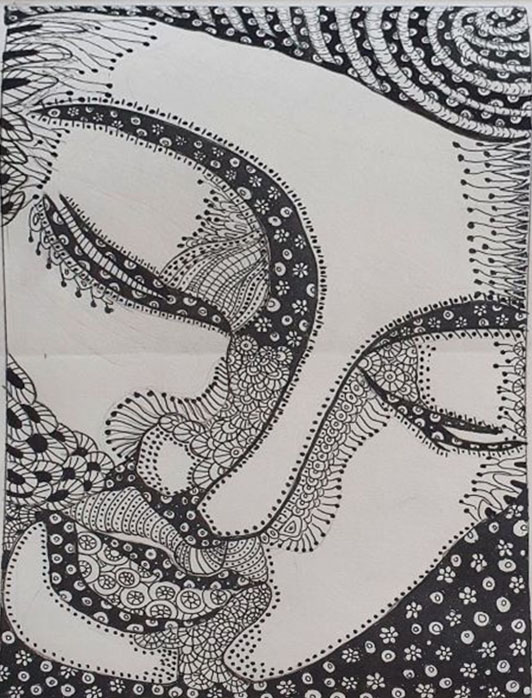
It was no ordinary relic-left canine tooth of Gautam Buddha, a great son of India and an enlightened soul, who spread light across many lands and was one of the radiant illustrious preachers of his time. This historic event dating back to fourth century AD was a part of our magnificent past, yet unknown to many.
History of modern Odisha and the then Kalinga and Utkal has witnessed many ups and downs and under its shroud, several chapters of splendid and gloomy past are buried and are yet to be unearthed. Much of the glorious maritime history of courageous Odia mariners( locally known as Sadhabas) who used to take voyages to the high sea for trade and commerce, much before steam ships were invented, sailing and ruling the seas with their sail-ships (known as Boitas) and record of these heroic seafarers are lost under tides of the sea. It is impossible to unearth history of several ancient river mouth port-towns and the flourishing ship building industry. Most of such history is buried under layers of earth and many were lost to natural decay due to flood, sea storms, cyclones and change of many river courses over time.
We have lost the record of conquest of South-East Asian region and about conquest of Lanka by indomitable gallant Odia soldiers as we have lost accounts of many prosperous Buddha Viharas and Jain centres of learning as well as many palm leaf texts.
Huge temples which have withstood test of time are at best partial testimony to rich heritage of the then socio cultural economic life of Odissa. In the absence of Hatigumpha inscriptions the conquests of great emperor Chedi king Kharavela would have been lost forever. Similarly who would have given testimony of Odisha’s distinct rich dance, music and art lineage in the absence of sculptures of temples of Puri, Konark and Bhubaneswar?
History of any nation reflects and speaks volumes about the culture, the socio- economic and political life of common citizens. But there are many missing links in history. The period that followed Kalinga war and reign of Chedi king Kharavela up to conquest of Samudragupta in 350 AD is considered by many as the dark age of Odisha History. Beyond Kalinga war history of Odisha even otherwise is not known to many.
The story was exactly of that time during 4th century AD, almost 1700 years ago.
It is mentioned in Buddhist religious texts like Mahaparinirvana Sutra, Mahavamsa and Dathhavamsa that Gautam Buddha attained Mahaparinirvana at the age of eighty years on the last hours of Baisakh Purnami at Kushinagar. Before leaving his mortal body he travelled towards north from Rajgriha, the capital of Magadh empire and crossed river Ganges at Patali before entering Vaishali region and spent Chaturmasya( four months of monsoon rains). By that time Tathagat Buddha was aware that his time of leaving this mundane world has arrived and informed the same to his prominent disciples who were accompanying him. Gautam Buddha had twelve prominent disciples viz. Sariputta, Aanand, Upali, Anirudhha, Mogalan and others. Out of them, some including Sariputta had already left this world by that time. During the time of Mahaparinirvana of Gautam Buddha all other living prominent disciples including prominent female disciples like Khema,(wife of king Bimbisara of Magadha) and Upalabana were present. After Gautam Buddha left his mortal body his body was placed in a flower decorated vimana and was taken on procession to Mukutabandhan cremation ground. Buddha’s mortal body was kept on a pyre of sandal wood and cremated.
Many rulers were interested to collect the bones and ashes after Buddha’s cremation. Khema collected the left canine teeth of Buddha from the pyres and gifted the relic to King Brahmadutta of Kalinga who carried the tooth relic to his kingdom and placed the same at Dantapura, after building a temple for the Buddha relic. The same has found a mention in Buddhist religious text Dathhhavamsa and the same is vividly described on walls of Temple of Tooth at Kandy in Srilanka. Historian R C Mazumdar has also mentioned about it in his book “A comprehensive History of India (300 to 985AD)”. Another tooth relic of Buddha was sent to Gandhar in Afghanistan about which much is not known.
It is also mentioned in Buddhist religious texts Mahavamsa and Dathhavamsa that Ikshwaku ruler Pallava who was ruling Masulipatnam (presentday Machhalipatnam area in AP) was defeated by Pandya king Simhavarman. Subsequent Pandya king Kshiradara and his two sons Kshirajantu and Kshirabhisan attacked Kalinga very frequently to take away the tooth relic of Buddha.
Frequent attacks by Pandya king on Kalinga had adverse impact on the military strength, trade and commerce particularly the maritime trade by Kalingan traders as well as the overall economy of Kalinga. To save the holy tooth relic of Buddha Murunda king Guhasiva of Kalinga sent a word to his friend Kirthisri Meghavarna Mahasena of SriLanka( 301- 328 AD)who agreed to accept the Kalinga tooth relic of Budhha and protect and pray the holy tooth relic with respect.
Accordingly King Guhasiva of Kalinga made arrangement to shift the holy relic on a sea voyage in a sailboat from Tamralipta port to Lankapatana port of Lankathura region in Eastern coast of Srilanka.
In this dangerous secret sea-expedition, for the safety of the holy relic his daughter Princess Hemamala and son-in-law Sudatta( known as Dantakumar in Srilanka) carried the tooth relic in a small gold casket in Hemamala’s hair. The sail boat crossed many obstacles on the high sea before finally touching eastern coast of Srilanka at Lankapatana. Princess Hemamala and Sudatta were given a ceremonial welcome on arrival. With pomp and ceremony, the holy tooth relic of Buddha was taken to capital Anuradhapur.
The holy tooth relic from Kalinga has changed places with change of capital and finally kept in a magnificent temple (Dalada Maligawa) in Kandy, the capital of last king of Lanka. Every year in July- August the holy relic is taken in a pompous procession outside the temple with hundreds of thousand devotees gathering to pay reverence. This function (Kandy Eshala Perhera) has been continuing since arrival of Kalinga tooth relic in Lanka. Kandy tooth temple is declared as a UNESCO protected world heritage site. Outside the temple premises a statue of Princess Hemamala and her husband Sudatta has been erected as a mark of respect. In Kelaniya Buddha Vihar a huge painting of Princess Hemamala and husband Sudatta is displayed.
(The End)
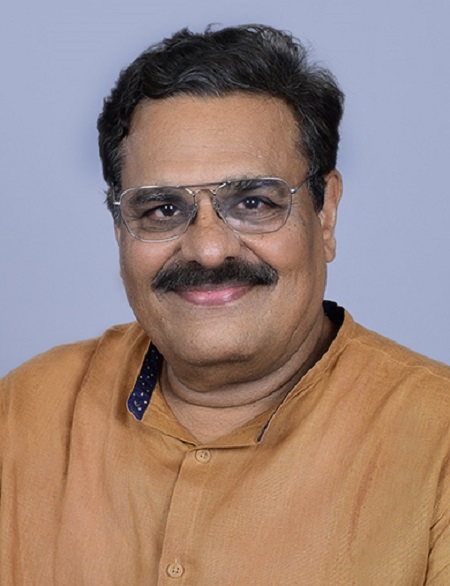
Completed his MA and M Phil in Political studies from JNU and served as Deputy General Manager in NABARD. He made pioneering contribution in building up Self Help Group movement in Odisha and popularized Amrapally mango plantation in the state. He has authored several books and written several articles on micro credit movement. Four tele films were made on his book titled “A Small Step forward”. He served as Director of a bank for over six Years.
An acclaimed Short story writer in Odia and English. His stories are rooted in the soil and have sublime human touch. Many of his short stories in Odia have been published in reputed magazines. His short story collection “Michha jharanara pani” was released recently.
(9491213015)(m)
ROSES ARE RED. WOMEN IN BLUE: LET’S SMASH THE PATRIARCHY. ME AND YOU
Deepika Sahu
The final catch by the captain Harmanpreet Kaur. The ecstatic victory run. The sweat, the hard work and the smile that smelt of heady success. And then an endearing image of the young players locked in a warm embrace. November 2, 2025 will be etched in history for all times to come as the day of Indian Women Cricket Team being declared as the ICC champions. Former cricketer and commentator Ian Bishop put it beautifully when he said, “A victory that will ignite the nation and will create a legacy for generations of young women to follow.” This is the stuff dreams are made of. This is the stuff that feels like personal victory even to men and women who probably have never touched a bat in their life.
I have been thinking of this special victory for the last few days. My friends have been watching on loop the instagram reel of our young women cricketers singing Amit Trivedi’s Naina de kasoor and soaking in the joy these young women exude in that short reel. Why does this victory feel so intimate? Why do the girls and their raw emotions touch us so intensely? How does one explain the vastness of this victory when every other day one reads reports of horrendous crimes against women? Even days after the victory, when I close my eyes, images of Harmannpreet Kaur, Smriti Mandhana, Jemimah Rodrigues, Shafali Verma, Deepti Sharma, Kranti Gaud, Radha Yadav, Arundhati Reddy, Richa Ghosh and other team members dance in front of my eyes. Their victory feels like a blooming flower. This team’s predecessors like Diana Eduliji, Anjum Chopra, Mithali Raj and Jhulan Goswami have fought hard lonely battles against apathy of the system, patriarchy and lack of resources. They were subjected to barbs like, “What are they doing on the field, they should go back to the kitchen.” Much water has flown under the bridge since then and now the girls have shown to the world where they actually belong.
The champions of 2025 are like a beautiful collage, they represent India’s geographical and cultural diversity. Many players come from the mofussils and small towns and they have the hunger to excel on the field. And that drives them to work hard on their game and put their best foot forward against the world’s best cricket teams. These young women have no fear of failure. They are comfortable in their skin.Their body language has elements of spontaneity, their moves both on the field and off the field are not curated. They are on the field to put up their best game and they do it wonderfully as a team. They are thick as a team and they revel in each other’s success. If you have seen them celebrating, you will understand what I mean. Their cricket is not about self-help books, insta influencers or those entitled men and women sailing through life with an ovarian lottery and clipped accents. Most of these girls are non-English-speaking and come from diverse socio-economic backgrounds. They played with the spirit of young women wanting to push the envelope and prove their worth in a game that’s called gentleman’s game.
Many of them have a common thread of their fathers giving them rock solid support in this wonderful but tough journey. From Harmanpreet Kaur, Smriti Mandhana, Jemimah Rodrigues, Pratika Rawal to Shafali Verma. The father-daughter support ecosystem is truly inspiring. This becomes more precious because on the other hand we have stories of fathers turning brutal vis-a-vis their daughters.
Consider Chandrika Chaudhary, an 18-year-old from Gujarat’s Banaskantha who scored well in NEET, allegedly killed by her father as he didn’t want her going away to medical college and falling in love. Or 25-year-old Radhika Yadav, a tennis coach in Gurugram, allegedly shot dead by her father as he didn’t like her running a sports academy. Vijay Solanki from Kheda district of Gujarat,, was arrested in July 2025 for the alleged murder of his seven-year-old daughter, Bhoomika, whom he threw into the Narmada canal because he wanted a son. Well, both these cases of solid support and brutality are not the norm. But then it is a fact that many women in India have lived through years of “why are you laughing so much?”, “Why do you have to be on the street at 8 pm?” “Why is your hair so short?” “Who will marry you?” And these are not mere questions they slowly destroy a woman’s confidence and her desire to excel in life.
Most of these women cricketers come from places that are just tiny dots on the map and many in Indian metros with fancy degrees will have little or no idea of these places.Skipper Harmanpreet Kaur is from Moga in Punjab, Vice captain Smriti Mandhana is from southern Maharashtra’s Sangli district. Uma Chetry comes from east Assam’s Golaghat district, Richa Ghosh is from North Bengal’s Siliguri, Kranti Gaud is from Ghuwara town in MP’s Chhatarpur district, Shree Charani was born in Kadapa town in south Andhra Pradesh.
Their journeys in these small towns were far from being smooth and needless to say many of them faced harsh gender bias. Shafali Verma from Haryana’s Rohtak town cut her hair to pass off as a boy. Like her, Harmanpreet played with boys because girls didn’t play the game. Kranti Gaud had once been the ball-fetcher at local tennis ball tournaments, known simply as the “ball boy”. For years, Deepti Sharma from Agra had cycled 36 km a day to reach Eklavya Stadium to up her game. Far up in Himachal’s Rohru valley, Renuka Thakur lost her father when she was only two. Her uncle, Bhupinder, found her a place at a Dharamshala academy, paying for travel with money meant for his son’s schooling. In an interview, her mother Sunita said, “She started with a cloth ball and a wooden stick, but she made the world her pitch.”
Quite a few come from modest homes: daughters of vegetable sellers, constables, carpenters and goldsmiths. Money has been a real struggle for the women cricketers for many years. At one point of time even the women cricketers had to struggle for their air tickets to go for an international series being played abroad.
But when we see these young women giving their best on the field, their victory becomes more special and more intimate. With men’s cricket becoming a money making machine, it's a different ball game altogether. Cricket suddenly feels like a game of money and more money and the stakes have become too high. In that high stake driven world, probably emotions have little value. Authenticity has become a distant word. So, when Jemimah Rodrigues talked about her anxiety and mental health issues after playing a superb innings against Australia in the semi-final match, it felt like mint-fresh autumn breeze. She was being herself in front of the whole world with all her vulnerabilities and tears. And that authenticity has made women's cricket so different and so relatable.
The women’s team victory brings back an element of elegance and aesthetics to the game itself. When Harmanpreet and her victorious team invited Mithali Raj and Jhulan Goswami to join in the celebrations, they acknowledged with gratitude all those gutsy women who had played the game before them. The tears in Jhulan Goswami’s eyes while holding the trophy said it all. It was a moment of sisterhood being celebrated with lots of love, recognition and gratitude. And it exudes hope and joy for the millions of young girls in this country wanting to carve a niche for themselves in this whole wide world. Cheers to that!
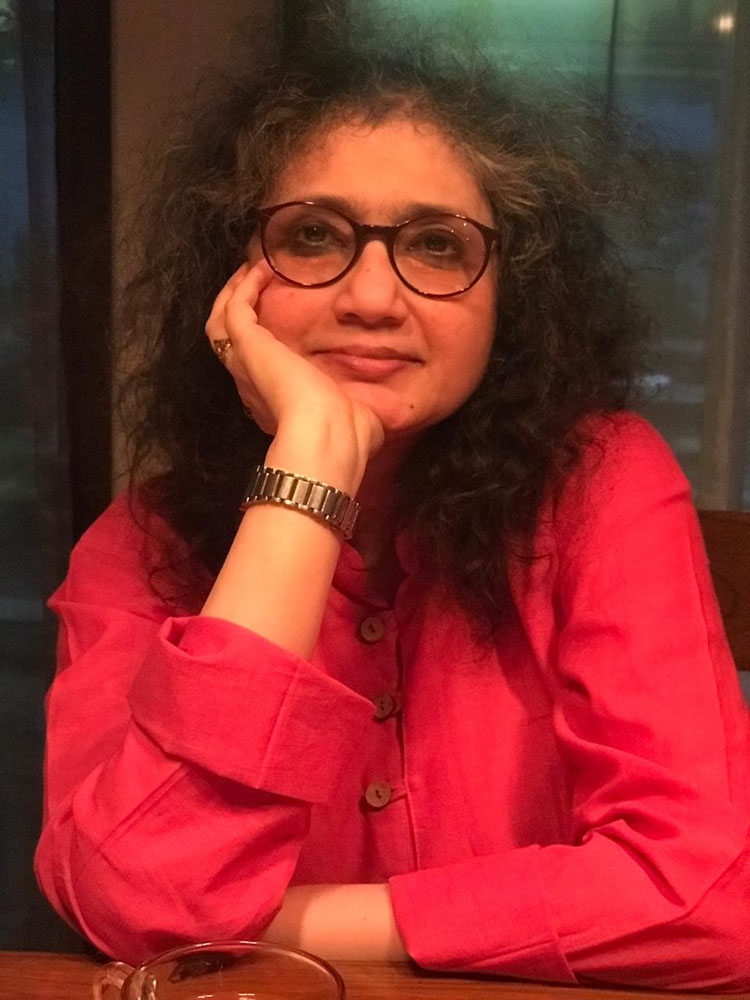
Deepika Sahu is an Ahmedabad-based senior journalist with a career spanning since 1995. During her career, she has worked with India's premier media organisations, including the Press Trust of India (PTI) in New Delhi, Deccan Herald in Bengaluru, and The Times of India in Ahmedabad. Currently, she is contributing India-centric features to Melbourne-based The Indian Sun, a cutting edge media platform. In addition to her journalism career, Deepika is involved in teaching English and Communication Skills to learners from different parts of India through Manzil, a Delhi-based NGO. Beyond her professional endeavors, Deepika is passionate about India's rich diversity, literature, blogging, quiet hours at a cafe and enjoying a cup of tea.
Bankim Chandra Tola

“Why do high waves dash against the shore one after the other relentlessly? No wind, yet they surge high - can’t they stay still?” Mahesh muttered to himself standing on the slopy beach of the seashore at Gopalpur on a Saturday afternoon.
Yes, the sea has its own rhythm but that does not mean, it’ll act erratic always - these absurd thoughts were tormenting his idle mind. Not that he is unaware of the science behind high waves rising only near the seashore but, for his old age shadowed with anxieties, he often goes unmindful and talks irrelevant - forgets simple things though momentary. At that moment he, however, couldn’t solve the puzzle of foam tipped crests advancing with roaring sound as if to swallow him, - but simply kept on gazing at the vast expanse of the sea - lost in a visionary world not known to him. In the melee of thoughts, he failed to reconcile how fast the afternoon of life came upon him. How colourful, how lively were the days a few years ago, and what they have turned out to be today.
Mahesh was one of the top executives of a reputed company. After retirement, he settled in his hometown at Berhampur. As a keen observer of scenic beauty of nature, he travels to different picturesque destinations in India as well as abroad with interest to see, enjoy and learn things around.
Sometimes old age drags one back to childhood; so, it was with Mahesh on that day. Like a boy of ten, he was just counting the foam laden billows touching his feet until he was startled by a sudden jerk from abrupt interruption of a sweet voice striking his eardrums. Mechanically as his eyes turned towards the wave of sound - he was surprised to see a white complexioned elegant lady standing beside him smiling bright.
“Good afternoon, sir!” the lady wished him.
Raising his eyebrows Mahesh said, “Good afternoon – Are - re Rashmi how’re you here?”
She advanced to touch his feet seeking blessings and said, “Sir, I came to Bhubaneswar to attend a seminar on behalf of our company. I thought why not go round the sightseeing places near Bhubaneswar. I heard about the prospect of upcoming Gopalpur port; so, I was curious to have a look at it. But sir, you how ….??” She asked with excitement.
Mahesh chuckled softly, shaking his head he said, “Rashmi, you know, how a tour-bug I was in the past and now a full-fledged wanderer. After retirement, when there was no work, no responsibilities to discharge and no more tension for presentation, what should I have done then? To pass time, I think, seashore is probably the best place.”
As he spoke, something lying hidden within tugged at the edge of his memory. He went down the memory lane - this Rashmi, a shy village girl –nineteen or twenty might be – stepped into his office one day for interview for the post of stenographer, advertised by him. How fast and accurate she was in taking dictation and typing; - she was hired on the spot.
Suddenly, the chain of his thoughts shattered by the interruption of Rashmi, “Sir, how is Madam?”
He smiled, “Oh! she is fine. Still the queen of her kitchen but today she is awfully busy with a small party with her colleagues in our colony. Instead of being an odd man out there, I preferred to come here for a stroll. But what about you? After your marriage you left the job and disappeared.”
Her smile faded - with a deep sigh; she spoke slowly,
“That was a painful phase of my life from which I have wriggled out with much difficulty to breathe free in the open air. Truly speaking, if I stand before you today holding a good position in a reputed company, it is because of you, sir. You have been my path finder – a light post to guide me to the right destination. Sir, you gave me the first employment to stand on my own feet together with an inspiring push to forge ahead in life by fixing target.”
Mahesh raised his hand with full smile and said,
“O! No, Rashmi, I haven’t done anything special for you. I might have given you a beginning but your journey - that’s all yours. You are the maker of your own destiny. Anyway, I’d like to hear the full story.”
Rashmi nodded slowly and continued,
“Sir, if you kindly remember the day when I reached out to you in desperation being confounded in a crossroad – confused and overwhelmed, after my father suddenly arranged my marriage without my knowledge. At that critical moment, as a resourceful guide you advised me - “Rashni, do not go against the decision of your father; who knows, under what circumstances he might have decided the marriage without your consent? If you decline the proposal, he would be badly hurt; so never dishearten him. No father, however rude he might be, ever likes to throw his daughter into a dungeon deliberately – and you happen to be his most loving daughter. So, accept it as the blessing of God and prepare yourself to face the realities of life.”
“Yes there is a point for your concern; in that respect I will say, probably the decision of marriage blocking your expectations, your ambition, and above all ignoring your opinion, has been taken in haste, - any quick decision taken on life’s crucial matter particularly where the future of own daughter is involved without proper enquiry and verification seldom ends well. But now, for you I think, the right step would be to go by the order of fate and watch the sequence of events silently with due caution. If everything goes fine and you feel the marriage is harmonious, carry on with it happily. But, when you find the marriage has fetched unbearable misery and immense hardship, do not be panicky to take impulsive decisions that might worsen the situation further to your detriment. Stay calm and seek your father’s support. If things still don’t improve, quietly document every instance of mistreatment meted out to you leaving no room for an iota of doubt. Then wait for an opportune moment to seek a legal exit. Until then you must endure all atrocities done to you for which you need to be strong both mentally and physically. God forbid this situation does not arise for an innocent girl like you.”
“Sir, at that moment I was not happy with your advice but later all your words came as boon in disguise for me.”
Mahesh was more curious to know the details. He said, “Do elaborate what exactly had happened?”
She continued, “Sir, things were going good for about three months after marriage; but then everything fell apart. Sadly enough, during this period my father died from a road accident. I felt a big vacuum in my life in his absence. I could realize then why he was in a hurry to get me married.
“My mother-in-law pressurised me to leave the job and attend domestic work. I had to comply under compulsion. But soon everything became crystal clear before me when I observed licentious conduct and unusual behaviour of my husband. He was an unemployed youth - fully misguided and uncontrolled. An addict by nature he used to come late every day after attending night parties and drinking. He was a characterless spoilt child of a plutocrat who is a special class contractor rolling with money. As the only son, he was given full liberty to while away money like an extravagant without caring least for his future. He had also very bad habit of keeping illicit relation with several girls until one day he was landed in police custody before my marriage as I came to know form my maid servant. When situation went out of control, his parents might have thought perhaps a marriage can fix him and make him responsible to desist from bad habits. So, his father, I mean my father-in-law might have persuaded my father who was his friend asking my hand by giving several false assurances. But nothing positive came to pass after marriage in spite of my sincere effort to bring him back to normal life.”
She continued, “Sir, after my father passed away, my condition became worse. I tried to get support from my mother-in law but in vain; instead of supporting me, she fell upon me heavily accusing me as a useless woman in his son’s life.”
“Very sad.” Reacted Mahesh and asked, what did you do then?”
She continued, “When their torture crossed all limits, I was at my wit’s end to catch at a straw for saving myself. God is great! At that critical moment, your advice flashed before me as divine placebo, and I made up my mind to follow all the steps you had suggested. Without making any hue and cry, I made secret reels of his torture and collected details of his visiting other women. I waited for an opportune moment and that came soon when I was beaten one day by my husband. I fled from his house silently to stay with my widowed mother. I knew that my father-in-law was a very powerful man, and he can do anything with his money power. So instead of filing an FIR, I called on the Chairman of Women welfare commission with all evidence that I had collected. The Chairman of the Commission, who was strong and powerful lady, took full cognizance of my statement together with the evidence and keeping the delicacy of the case in mind she advised me to file a divorce petition before the family court. She helped me finding a competent advocate and it was done without much loss of time only to safeguard the evidence before they were tampered or lost. My father-in-law tried to compromise and persuade me to withdraw the case, but I was firm and pursued quick hearing. Finally with a lot of exercise, the case was decreed in my favour only when I adduced before the Judge that I shall not ask for alimony. With the grace of God, I was extricated from the clutch of a powerful man and became free.”
Mahesh looked at her with pride – more than even he felt at any time in his service life. He said, “Rashmi! You didn’t just survive – you rose with dignity. I am proud of you. You have set an example for many in your position. May God bless you.”
Inviting her to his house Mahesh said, “Why don’t you make it to visit my house to meet your aunty when you are here just 16 KMs. away? She would be very happy to see you.”
Begging due apology Rasmi said, “It would have been my proud privilege to have blessings from aunty but sir, I am under obligation to reach Bhubaneswar before 9 P.M. to participate in group discussion scheduled at 9.30 P.M. Sir, I promise, I shall certainly come to meet aunty unexpectedly. How can I forget you and my aunty sir? For the time being kindly excuse me.”
Bowing down before Mahesh, Rashmi hurried back to board her cab waiting on the marine road.
Mahesh’s eyes followed her stepping fast like a dancing butterfly graceful and freely finding her own sky. This, he mused, is life. A quiet void seemed to close in around him. He thought why do people grow old and weary? He stirred from reverie acknowledging – he is really in the afternoon of his life.
Bankim Chandra Tola, a retired Banker likes to pass time in travelling, gardening and writing small articles like the one posted here. He is not a writer or poet yet he hangs on with his pursuit of writing small miscellaneous articles for disseminating positive thoughts for better living and love for humanity. Best of luck.
T. V. Sreekumar
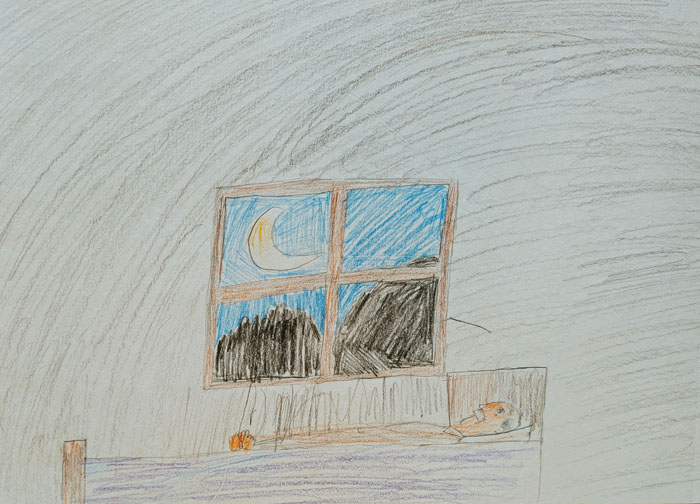
Some stories are never to be told and some stories are meant to be erased from mind. This one is written as an attempt to explain and convince everyone about my true feelings and believe me the happenings are true.
A marriage was proposed. Both of us were working away from our home state and I was to meet her first time travelling overnight from my work place. I located a good restaurant and fixed the time according to her convenience. I reached the place very early and waited for Malini. Right on time she walked in identifying me from far and her looks at that moment of first sight were embedded in my mind. A simple girl in an ordinary outfit with no fancy extra additions except for a bunch of jasmines adorning her flowing hair and a micro bindi which suited her.
Some decisions we take defy explanation. Then and there with one look I decided that this girl was for me. It happened just like that and after a few months of preparation and getting her transfer to my place the marriage took place. She being a teacher in the Central School and me in a nearby bank, everything went easy.
A life together with both spouses working was initially difficult but gradually it fell into place and it was almost a smooth ride from then. Ammu, our little girl came after two years and it was my mother who helped us during those difficult times. With Ammu going to school our work schedule was planned accordingly, with a maid to help. Malini was happy and my daily supply of jasmines kept her very pleased.
A few years went by and Ammu was into her third standard. One weekend Malini appeared very much upset. On my insisting, she told me that she felt a lump in her left breast. That was a worrying factor and without delay we went to the hospital. All those tests and tense moments passed like a swift storm. The word “suspected” from the doctor and later confirmation was a shock beyond words. One more statement from the doctor was more piercing. “Had you come a bit earlier.......” Fear kept her from talking about it earlier and she falsely believed that it will vanish with time. Unfortunately, it never happened but took a turn for the worse.
The harsh treatment took away her lovely flowing hair and she started losing weight very fast. In spite of all the setbacks I got her jasmines daily even with no hair to wear. With time she became immobile and words turned very feeble. One day she told me in broken words,
“Get me more jasmines today”
I bought for her a big bunch that evening. With a shaky hand she smelled it and with one hand holding me she breathed her last after some time. It was as if she was waiting for the flowers to arrive. A budding life was snatched away so early.
Coming to terms with the harsh reality took time. Life was in a totally unbalanced state and finding the fulcrum was impossible. To find stability with the center of gravity misplaced was the only choice left and I did exactly that.
Years went by and Ammu grew up. She became a teacher according to her mother’s wish. I decided to get her married after she got a job and was fortunate to find an ideal husband for her. They were comfortable in their place, far away from me.
At home all alone, with memories sweet and sour to cherish, I could manage myself with a reasonably good health. Cooking becoming a passion for me.
Almost a year went by and one night I become alert as if someone had woken me up from my sleep. It was not the darkness that bothered me but the smell of jasmines. It was so intense that the message was loud and clear. I trembled, fear crept in and my mouth was dry and body was sweating. Was it Malini’s presence? No doubt, I loved her intensely but such an appearance I shuddered to think of. Don’t know how long I remained in that state of shock but came into terms with the situation with the jasmine smell still lingering.
Involuntarily my mind spoke loudly.
“My dearest, is it you?"
I could hear and feel the response. It was so soothing and comforting and I felt so lucky and privileged for this unbelievable midnight gift. My thoughts turning vocal in silence and it started in that mysterious way and became regular. I spoke to her with my mind and body, about anything and everything that came to my mind. At times it was the most foolish thoughts which she accepted in a way I knew, with a giggle. From then life was never the same. My silence had given way to thoughts exchanged at night and it was life rejuvenated.
People near and dear must have noticed the change in my behavior and me talking at odd hours and at times laughing loudly all alone. Daughter called me up a few days later to say they were coming over. I wondered what made them take the decision suddenly and only after arrival they told me about taking me for medical consultation. There was no point in trying to make them understand what was happening and the joyful interacting moments I go through daily. Will she ever believe that I talk to her mother in my own way?
I never objected to visiting a doctor and the learned man put me through a lot of tests and experiments. Can I tell the machines the real happenings and the emotional feelings running in me?
The doctor had a long talk with my daughter and son- in-law and back at home everything was normal, when I happened to overhear my daughter talking to someone on phone.
“It is a harmless hallucination called intrapersonal communication and I was told to ignore it”
I could never make them understand the reality. It was happening and it was real and I was very much in my normal senses.
As long as no one said I am abnormal and people left me alone in my midnight world, I am happy and content with my midnight musings.
“MIDNIGHT MUSINGS”
T. V. Sreekumar is a retired Engineer stationed at Pondicherry with a passion for writing. He was a blogger with Sulekha for over fifteen years and a regular contributor writing under the name SuchisreeSreekumar.
Some of his stories were published in Women's Era. “THE HINDU” had also published some of his writings on its Open Page..
Sreechandra Banerjee

“Now, Raju wear this mask.”
-“No, no I will not wear this mask. This is an old man’s mask! I will not wear these masks anymore.”
Meanwhile the show producer had come in.
-“No, Raju, you know you have to wear a mask, you can’t anchor this show without a mask,” yelled the producer Rajesh, who knew how difficult it was these days to force Raju to wear a mask. Not only was Rajesh the producer, but he was Raju’s maternal uncle as well.
It was a children’s game show called “Wonder-brain”. His parents had got him this job for a child anchor. Though Raju was excited at first, but later he started disliking this role. Yet he was compelled to execute by his ever-aspiring parents.
There was one thing that he detested the most, the wearing of painted masks! All sorts of masks he had to put on- those of clowns, demons, Gods and Goddesses- Lord Ganesh in particular, animals …what not? Having just stepped into his teens, he hated wearing masks of women and old men.
Yet he had no alternative.
“Didi, whatever may be, let him be himself. Don’t spoil Raju’s life amidst this glamour world,” his uncle Rajesh had pleaded to Raju’s mother when she had given the proposal.
“This is necessary, you know. It would build up confidence in him if he appeared wearing different masks. There would be variety in this show too if Raju acts out the role of the masks he would be wearing. Other children would see him in masks too. Raju would definitely like it,” Raju’s mother had clarified her intentions.
“But would Raju be comfortable with these masks?” his father had been sceptical at the beginning. Now it was he who encouraged Raju the most.
When parents of other participants would ask, “why doesn’t Raju ever appear without a mask?”, it was his father who used to promptly answer, “the world is like that only. It is to give other children the actual impression of life from the very beginning. In real life, each of us wears so many masks every day to camouflage ourselves. It’s the case of ‘Thousand Masks- a Single Face’ everywhere these days.”
It’s almost two years now that Raju was anchoring the show. It was in the month of November that he started doing this job. He was really bored with this. But then, what to do? His parents would not listen. Oh My God, to go on putting up this show! Managing school homework, tutorials and then everyday coming to the studio to anchor this show! Tiring it was indeed for Raju.
As it was, the glamour had taken its toll. He couldn’t enjoy life like other boys of his age did. Neither could he ever go out freely without a mask!
Yesterday, he was on the verge of another catastrophe! The mask, made to go with his original face and complexion, almost came off when he was playing with his friends. What, if it came off?
What it would have been like if the other catastrophe had not occurred two years back, on Diwali night!
He was not careful while lighting a rocket and its sparks had partially burnt his face. Instead of driving away darkness on Diwali night, the incident had brought darkness to their home.
His father was standing nearby and had rushed him to the emergency department of the nearest hospital. Thanks to the Almighty that his eyes were saved. Things could have been worse!
After prolonged treatment, Raju recovered a lot. Yet his parents, on consultation with a plastic surgeon, had deemed that surgery would do him good.
A deep scar was left on his right cheek even after the surgery. His parents were apprehensive that other boys might tease him although his friends quite understood.
So, an ‘all-time mask’ was made for him to mask his very own self. He wore it to school and other places. It was so well made that it was hard to make out the masked Raju from the ‘original pre-accident’ Raju.
But masks had now become a burden for him. How could he deceive the whole world for ever with his masks? He was masking his very own self from himself! He wanted to get rid of this encumbrance. And now the pressure of this game show! What to do? No other alternative?
A voice within him cried out:
Run, Raju run………………………………..
Yes, he would have to do that.
Run, run, run away……………………………….
………...far away………………………………….........................
where he would be himself, masked or unmasked!
Above image is from the internet to which I have no right (Disclaimer).
Copyright Sreechandra Banerjee. All rights reserved except as noted. No part of this story can be reproduced by anyone.
This story was written long back in 2009, long before it became compulsory to wear masks because of the pandemic.

Sreechandra Banerjee is a Chemical Engineer who has worked for many years on prestigious projects. She is also a writer and musician and has published a book titled “Tapestry of Stories” (Publisher “Writers’ Workshop). Many of her short stories, articles, travelogues, poems, etc. have been published by various newspapers and journals like Northern India Patrika (Allahabad), Times of India, etc. Sulekha.com has published one of her short stories (one of the awardees for the month of November 2007 of Sulekha-Penguin Blogprint Alliance Award) in the book: ‘Unwind: A Whirlwind of Writings’.
There are also technical publications (national and international) to her credit, some of which have fetched awards and were included in collector’s editions.
VAJRA "A VICTIM OF DOWRY-VENOM"
Dr. Rajamouly Katta
That year it didn’t rain sufficiently. The crops were grown when supplied with well water. The tanks were not to the brink. Acute drought hit that area particularly the rain-dependent village, Ramakrishnapur. The people of that village were unhappy as their investments were a gamble in rain. Their dimmed faces reflected their financial crisis.
In such circumstances, the villagers were unable to celebrate any festival and afford new dresses in the way they liked in the past. The most important festival, Dasara was fast approaching for the advent of daughters and sons-in-law. The guests on Dasara in any house hardly have a facility for their felicity that year due to the acute drought.
Time on its wings brought Dasara to every doorstep. In view of Dasara, Vajra came to her parents as she had come last year after her marriage. The trees and plants were fading away, and the birds were not singing as she came at that time with tears in her eyes. She didn’t reveal any reason for that. Her parents and brothers knew the reason. A day before Dasara, she told her parents about her husband and father-in-law’s demands largely enlisted. They strictly passed strictures to clear of dowry-arrears that year apart from the gifts on festive occasions and main functions. They always compared the dowry to be cleared to her husband with those given to other sons-in-law. Her father, Laxmiveeran knew that he was to clear off the dowry-arrears at that time. He rested his head in his palms and ruminated over a way to convince his son-in-law, Abhay in that regard. He made up his mind to promise Abhay to pay dowry-arrears next year. His better half, Laxmikantha was doubtful of Abhay to be convinced under any circumstances. She was shaken with fear at her heart’s core as her husband was poor and had no sufficient income to run the circus of the family. They had three sons in pursuit of studies. His income was not enough to make both his ends meet.
As per the plan, Abhay came to the in-law’s house on the eve of Dasara festival with his big bag in his hand. Soon after he had come, he said to them,
“I particularly bought this bag and brought it. It looked simple so that no thief’s eye would fall on it for a chance to steal it. I carry this bag back to my house, filling it with dowry-arrears.”
All the members of the family received him cordially as the son-in-law is the most prominent guest in every house. When he told them about the purpose of his visit to their house, they became dumb-stricken and heart-broken. They had no way left to clear off anything except to keep mum to his commanding demands and bear with the unwelcome situation.
Dasara was celebrated in a befitting manner only to please the most prominent guest, their son-in-law, Abhay. A dress was bought on credit basis and presented to him. He said, “This dress… it is costly, isn’t it? I suppose, it’s… OK… What about a silk sari to your daughter? What about Dasara gifts: a T.V, an air cooler, a refrigerator, a pressure cooker, a grinder, etc? Anyhow you don’t present them. If I go on listing out, it’ll be an act of singing to a deaf man…I open the bag. Come on… Bring the dowry-arrears to fill in the bag. Nowadays, the people are ready to offer more dowries, more gifts, and more respect than you.”
Lakshmiveeran and Lakshmikantha with folded hands to make an appeal said, “Babu, you’re quite aware of our financial position. This year we’re not able to clear off the rest of the dowry as there’re no crops and no incomes in the profession. We’ll do it soon. In fact, we want to clear everything as per our promise as early as possible. But it’s humanly impossible for us this time. It’s well and good for us indeed if we clear off what we promised. Now we’re helpless. I hope you understand and excuse us.”
Abhay said in a ferocious mood as he decided to tell them as per his decision: “I clearly know that you tell cock and bull stories every time. You’re quite accustomed to doing so but I’m ashamed of hearing it. My friend’s father-in-law offered gifts such as a bike of the latest model along with the license and a helmet, crockery, a refrigerator, etc. To offer such gifts is to respect me but to greet with folded hands is to neglect or to insult me. What you are to do is to clear off the dowry arrears on time. That is the way to respect your son-in-law. Fathers-in-law are meant for sons-in-law and their welfare, but you aren’t… You celebrate the marriage and forget your son-in-law permanently. This is your great attitudinal gratitude.”
Next morning Abhay said to Vajra in an angry mood, “Get ready to quit this place. Do you want to come or not? Why do you keep silent when your father doesn’t clear off the dowry-arrears? O! ...They’re your parents… I’m going to teach you a suitable lesson there…there to make you talk here.”
Vajra was unable to move a step further from her parents. Her eyes were filled with tears. She was dumb-stricken and was unble to utter a single word like a desolated harp. What she was going to face was obvious in her face. She expected that her father-in-law, Lakpathi and her husband, Abhay would torture her much more than before. She was going to face hell that time.
Vajra’s parents were extremely sorry for their inability to clear off the dowry-arrears. Lakmiveeran said to his daughter, “When you expect that their torturing you, you can stay back here… We can’t tolerate your being tortured nor can we live on earth if you feel dejected and depressed. My dear daughter! Your well-being is our family’s well-being.”
Vajra was quite sure of being tortured by them, but she could not express that. She said, “Father, nobody is there to prepare meals for my husband and father-in-law. In the event of my stay here, they’ll face a lot of inconvenience. In such circumstances, I’m supposed to go there and stay there to look after my husband’s family at all hours.”
Vajra thought of their safety, convenience, and well-being despite their inhuman treatment to her. Her father said,
“Your face reflects your inexplicable, intolerable agony and unbearable torture. I know that face is the index of the mind. I foresee numerous troubles happen to you, my dear daughter.”
Vajra still controlled herself not to express her feelings, saying,
“My dear parents and brothers … I want to go along with him. I must perform my responsibilities as the daughter-in-law of that house. Whether to stay in that house is hell or heaven must be borne by me alone… I got married not to stay here… I’ve got to go with him now. It’s certain.”
Vajra never thought of her welfare as she was very specific about the well-being of her husband and her father-in-law. While the torrent of tears was flowing down her cheeks, she moved a step as a committed daughter-in-law. Her mother, Laxmikantha, went ahead in the mood of convincing her to come back and said,
“You never came to us with pleasure, and we never saw pleasure in your face. You didn’t associate yourself with your childhood friends in Ramakrishnapur for the fear that they’d ask about your life in the in-law’s house without the mother-in-law. You’ve only tears to shed only in sorrow, and you don’t talk about this to your friends. Vajra! Don’t go now. You can go to their house when dowry is given to your husband.”
When Laxmikantha tried to persuade her not to go to her in-laws’ house, she said,
“It’s my bounden duty to stay in my husband’s house to perform daily chores and cook food for him and his father.”
Vajra went along with her husband with tears in her eyes. The parents followed her up some distance to bid farewell to her. Laxmikantha said to her son-in-law,
“Why is my daughter weeping?”
He replied bluntly, “When daughters go to the in-laws’ house, they weep; they keep on weeping. Don’t you know this?”
While Vajra was travelling, her parents came back heartbroken. She tried her best to forget her intense suffering so that she recalled her happy life before her marriage for a sigh of relief.
… … … … …
Vajra was the youngest child of her parents. She had three brothers in pursuit of their studies and two married sisters. All the members of the family enjoyed each other’s love and affection and became ideal to the villagers. They were perfect in all fields but poor as their income was very low. The people in their village liked their sincerity, hard work and perseverance. They treated the members of the family with love and affection. They particularly liked Vajra for her charming manners and refined culture.
Vajra used to read the scriptures in pictures at home with a little knowledge of mother tongue. She sang songs melodiously at work. She helped the women of the village learn knitting. The women dropped in their house situated at the heart of the village near the Hanuman temple for an intimate chit-chat with her. They acclaimed her as a good girl, saying to her in intimate terms:
“When you go to your in-laws, we all feel sorry for your absence. Your glowing smile is the light of our village. It delights us. You’re as affectionate towards us as your aunt, your father’s sister. We lost your aunt’s love and affection as she died untimely when you were a child.”
Vajra listened to them when they expressed all their feelings. Meanwhile her father came to take part in their conversation. They spoke to her with feelings,
“In the wake of your marriage one day, we’ll miss your lovely chat and sweet chimes. We can’t hear your humming in your absence.”
In response to their intimate talk, Vajra used to smile. Her charming smile appeared like fresh daisies when Laxmiveeran enjoyed the talk of the women with his lovable daughter.
Savitri, an elderly woman, who used to speak to Vajra at least once a day, came to her and said to express her concern for Vajra as a well wisher of a family, “Laxmiveeran! I’ve been very close to Vajra since her childhood. Her marriage soon will be an eye-feast for us. I know your departed sister had the only son. Vajra must be wedded to her only son. He’ll be the most suitable match for her as he is your nephew. You may think that it isn’t good to go for an alliance with the motherless son. Don’t think so... She’ll be happy.”
Later Kausalya, a well-wisher of the family said, “I hope you remember your sister’s wish that you should be blessed with one more daughter for her only son. You, being blessed with the youngest daughter, Vajra made her dreams come true. She didn’t live longer to see her only son’s marriage to your youngest daughter. If you offer your daughter to the motherless son in marriage, the people applaud your laudable sacrifice.”
Sulochana, an intimate of the family for a longer period made all the people present listen to her high-sounding words: “You must be ready for the marriage alliance with the only son and motherless child of your sister. God will be delighted in heaven. Your departed sister’s soul will be gladdened and satiated. This marriage will be a holy one. People consider it a pious deed. If you aren’t ready for the marriage, it will be sinful on your part. The ball is in your court, decide yourself.”
Lakshmiveeran who had deep affection for her nephew responded properly to express his views: “I too want to go for the same match for the satisfaction of my sister’s long cherished wish. But I have not known anything about my nephew and my brother-in-law since my sister’s passing away. I don’t know whether they have fallen into false ways and bad habits or have been keeping as disciplined as in my sister’s care. I am not sure that my nephew continued his studies.”
The innocent girl listened to all their opinions attentively. All said in one voice, “If you shoulder the responsibility of looking after the family of a motherless son, credit goes to you. It’s a great sacrifice on your part. God will be the companion and guardian to support your daughter always in all ways.”
Vajra was very innocent, but she knew the ideals of an ideal woman from the scripture like The Ramayana. She didn’t utter a single word. For that matter, she was unable to decide anything as she did not know the outside world, the changing society in the post-Gandhian days, especially in the nineteen seventies. But they all compelled her to accept the alliance.
Abhay along with his father Lakpathi came to Ramakrishnapur in response to the message of Laxmiveeran. When they appeared in a pathetic and miserable condition after the sad demise of his sister, he was bound to sympathize with them. He didn’t try to know whether Abhay was a suitable match for his daughter or not since there was affinity between them. Over and above his motherless state made him accept to offer his daughter to him in marriage. He made up his mind to transform him into an ideal person. He had firm conviction in the maxim that man can transform himself into a sage provided he plans well and toils hard.
In the presence of five elderly people, they fixed the marriage of Vajra and Abhay at an early date. Immediately the big-bellied Lakpathi demanded dowry to be given in or before the marriage. Lakmiveeran was taken aback but he agreed to give the dowry though Abhay, his nephew, did not deserve to marry his daughter. He was a man of a little education and no employment. Because of their affinity, he accepted his demand despite his financial crisis in the reign of poverty, which often played hide-and-seek with him. When he specifically wanted dowry, he said, “My sons are studying at present. Shortly, they’ll be employed. As it’s our primary responsibility to offer something to my beloved daughter, we do it to you when my sons are employed.”
The date of her marriage was nearing soon. The villagers were aware of their poverty and so they extended their help in giving money to them as hand loans.
Laxmiveeran did all possible to celebrate Vajra’s marriage. Musical instruments and pipes were going on. The priest chanted mantras, and the marriage took place while all villagers and relatives were witnessing the marriage and watching the feelings of Vajra as a bride. One-fourth of the dowry was offered to the bridegroom. He took it curiously as if he had never seen money. He, once again, reminded the bride’s father of the condition to give the dues of the dowry soon. Those days witnessed the dowry system prevailing and dancing to the tune of the bridegrooms’ wishes. On that occasion, they presented all they demanded and promised to give whatever they would ask in the future. The parents knew that their daughters would be harassed if the bridegrooms were not satisfied.
There were instances of dowry deaths as the dowry system was like the flame constantly burning to attract insects and burn them alive. The parents of the brides felt crushed at the cost of dowry-venom. Vajra’s father presented whatever he could, only to satisfy the bridegroom. He understood that Abhay, who became his son-in-law in unexpected circumstances had no gratitude and was regardless of his being a motherless son.
The marriage was coming to the crucial stage of the parting ceremony, the offering of the bride to the bridegroom and to his parents for their responsibility to look after her as parents. In the parting ceremony after marriage, Vajra’s parents, with his sons and daughters, surrendered their daughter to the bridegroom for due care, while tears were rolling in their eyes.
The villagers also fell in that line. The parents said, “Till today we’ve fondly brought up our dear daughter as our eyelash and looked after her as the eyelids do to protect the eyelashes. She hasn’t known tears in sorrow so far. Hereafter you’ve to look after her life long as exactly as we’ve done all the years.”
Similarly, the parents surrendered the bride to her father-in-law Lakpathi and her husband Abhay, making them responsible for her safety. All the people couldn’t prevent their tears at that sight. The women who encouraged Laxmiveeran for Vajra’s marriage with Abhay patted on her head and put their heads touching her cheeks, saying, “All will be well according to our wishes and mainly by the grace of God. You’re going to your father-in-law’s house, leaving us here in your absence. How can we bear, Vajra? Wish you a happy married life.”
The women stood with tears in their eyes watching her moving in the palanquin. When she disappeared from their view, they went back home telling the fact, “Daughters are born not to stay here but to live there, becoming victims to their mothers-in-law.”
Vajra entered the father-in-law’s house as a bride, bearing in mind her aim to serve them and get a good name as the daughter-in-law.
Like that, Vajra had been lost in flashback in the journey to have a sigh of relief before entering the torture-house when her husband Abhay disturbed her, saying, “You forget many things including our destination. Get ready to get off. Our station is nearing very soon. Collect the bag and baggage.”
… … … … … … … …
After going home, Abhay told his father all about the non-payment of dowry-arrears in the mood of exasperation. His father shouted at her, talking nonsense. She felt hurt when they passed comments heartlessly. She was sorry to listen to their volley of abuse. She couldn’t bear the swords in the guise of words: “That nasty fellow begot this foolish fellow to overburden the earth.”
They further threw a volley of abuses on Vajra. She did her best to control her profound sorrow. She went inside to tidy the house and prepare meals.
Her father-in-law became ferocious and shouted at his son. He said to his son, “You don’t know how to treat your wife. Man, who weds is a master and woman who is wedded to man is a slave. She’s nothing but a slave, your lifelong slave. You… timid fellow… you don’t have the dominant voice in making commanding demands. You should teach her a bitter lesson so that she’ll bring the dowry and all gifts for all occasions.”
“Throughout the year I thought that they would give the remaining dowry on this Dasara. They insulted me. This fellow was silent. She didn’t demand the dowry arrears to be cleared off. Daddy, you can witness how my treatment will be towards her hereafter,” said his son in response to his father.
Vajra spent that day with great difficulty. One cannot imagine how she could moon away the following days. They harassed her on some pretext or the other. They heartlessly commented referring to the taste of curries, the quality of chilli-powder, the time for the early preparation of meals, etc. She was treated as a slave. She could bear her torture for many days, but she never told her neighbours about their treatment of her.
Vajra was totally dejected. She thought of the poverty-ridden family of her parents. She couldn’t find any way to clear off the dowry arrears to quench their dowry hunger. She firmly decided to put an end to her life to be free from their shackles on the All-Human Rights Day. She poured kerosene on her clothes and put a match to it to burn herself to ashes. When she screamed and wailed, it resounded nearby. The neighbours rushed and found her burning in flames like charcoal. The neighbours took her to hospital by auto. While going, she said, groaning, “There is some life in me. I preserve it with great difficulty in speaking to my parents and brothers. The last breath is in me only for my last words to be spoken to them as a token of my gratitude for paternal love and fraternal affection towards me.”
They said to Vajra who was suffering with full of tears in her waiting eyes, “Your parents and brothers are coming soon. You can speak to them.”
While the auto was going fast, her burnt body was shaking in its movement. She lost control by retaining her breath, meant for her last words to be spoken to her parents and brothers. She breathed her last and her parents and brothers lost her without hearing her last words. The sweet-tongued violin struck dumb not to utter at least the first syllable of the last words.
The big-bellied Lakpathi heard the news of her death. He burnt down his hut to create an impression that she got burnt in the flames when Abhay fled in panic somewhere for life.
When the parents and brothers rushed to her, they found the heart of their sweet Vajra was silent. She never made them listen to the sweet music of her love and affection. The words, she wanted to speak lastly, spread in the wide wild sky to ring in the ears of men and women. They bid farewell to Vajra with overflowing tears.
The news of Vajra’s sad demise ruffled the hearts of the people of Ramakrishnapur too. They started to weep in deep sorrow. They directly grieved her tragic death with their sorrowful feelings, “We are quite responsible for her marriage and for her sudden demise.”
The people advised Vajra’s parents and brothers to go the court of law to teach a bitter lesson to the rogues, but the latter said, “We never get and speak to Vajra though the court pronounces a verdict to hang the culprits in the presence of all dowry mongers… God is great. He has the Divine Court of Justice to punish the sinners… That’s His look out… We cannot recover from the shock to do any thing right now.”
A few months passed to welcome Lakpathi, Vajra’s big-bellied father-in-law, to hell for proper punishment. Her husband, Abhay, also died. He too died in an explosion of a coal mine after one year. The dowry victim’s mother Laxmikantha only said, “God punished the sinners in His Divine Court of Justice, but we have not yet recovered from the shock of my daughter’s becoming a victim to dowry-venom. Though my daughter is not alive, she lives in our hearts. The people of Ramakrishnapur still admire her for her virtues par excellence. They adore her as an ideal daughter and committed daughter-in-law even today. Her virtues went unrewarded by the sinner but are remembered, recognized and regarded by women until the class of women exists.”
Dr. Rajamouly Katta, M.A., M. Phil., Ph. D., Professor of English by profession and poet, short story writer, novelist, writer, critic and translator by predilection, has to his credit 64 books of all genres and 344 poems, short stories, articles and translations published in journals and anthologies of high repute. He has so far written 3456 poems collected in 18 anthologies, 200 short stories in 9 anthologies, nine novels 18 skits. Creative Craft of Dr. Rajamouly Katta: Sensibilities and Realities is a collection of articles on his works. As a poet, he has won THIRD Place FIVE times in Poetry Contest in India conducted by Metverse Muse rajamoulykatta@gmail.com
Dr. Mrutyunjay Sarangi
The voice at the other end was fluctuating, but there was no mistaking who was on the line. Mantriji! After so many years! Amaresh was thrilled!
"Hello.o.o, Hello.o.o.o, is it Amaresh? Pehchaanaa? Are you able to place me?"
Place him? Of course he would place Mantriji from anywhere in the world! For five long years Ameresh had been like a shadow to him, officially he was his PS, but he, Jyotsna and their two kids had almost become a part of Mantriji's family. Amaresh replied to him, happiness brimming over his voice,
"Yes Sir, can I ever forget you, your affection for me and my family? I am just like a younger brother to you, remember how often you used to say that? It's such a pleasant surprise to hear your voice after so many years!"
Mantriji was pleased,
"Yes, yes, theek hai, theek hai. I got your number from your old PA in the Ministry. How are you in your new place? Darangbadi?"
Amaresh wanted to correct Mantriji, the place is called Daringibadi, the only hill station in Odisha, a hundred and twenty kilometres away from Berhampur, the nearest big town. And it was no longer a new place for Amaresh, he and his family had shifted there eight years back, immediately after Amaresh quit his government job and decided to take up horticulture farming in this quaint little place, famous for its salubrious climate and fertile soil. After serving Mantriji as PS for five years, he had to return to the Ministry of Finance to report to his parent department, but somehow he was made to feel unwelcome. He was posted in a ministry where his boss was known to be very very difficult, throwing tantrums at the drop of a hat, shouting at subordinates and often flinging files at their face like guided missiles.
One evening after a particularly disgusting day he came home with a massive headache and asked Jyotsna whether she would like to quit Delhi for ever. She was more than happy. A school teacher's daughter from the small town of Balasore she had never been able to adjust to the fast life of Delhi. So Amaresh resigned from service, spent a couple of weeks at Daringibadi to locate a chunk of twenty acres of land where he could raise his farm and live happily. The local school for the children was half a kilometre away, the air was pure, the water crystal clear and the surrounding forests, and hills with cascading streams made the kids feel at home and the parents happy beyond their wildest imagination.
Amaresh had lost touch with Rajesh Singh, his old boss, the Minister. The year Amaresh had got back to the Ministry, the minister lost the elections to the Lok Sabha. He went back to Chhatisgarh and next year became an MLA and a Minister in that state. After five years he again lost in the elections and his party also got unseated from power. The last he heard about Rajesh Singh, he had settled in Bilaspur, was active in politics and managing his three hotels and half a dozen petrol bunks.
Amaresh wondered how Rajesh Singh remembered him after so many years. As if Mantriji could read his mind, he spoke to Amaresh,
"I want to ask you a favour Amaresh, a very small one. I am sure you won't disappoint me".
"Please don't embarrass me saying that. Just tell me what you want. Your wish is my command".
Mantriji chuckled on the other side,
"I know, I know I can always depend on you. Do you remember my son Ajay?"
"Yes, of course. He was a such an active, vibrant boy those days. He must be around twenty years now?"
"Twenty two to be exact. After I returned to Chhatisgarh and became a minister here, he became extra active, bunking school, enjoying life and spending money like a Maharaja. Got into some wrong company and picked up some bad habits. I want him to spend a couple of months with you and your family so that he can become a good man again. I want you to exert some good influence on him and teach him the good ways of life".
"Yes sir, I will do my best. When is he coming?"
Mantriji laughed, an open hearted, cunning laugh,
"He has already left for Darangbadi, with an attendant. His train should reach Berhampur by ten in the morning, he should reach your place by two o clock."
Amaresh was startled. How come Mantriji did not think of asking him first before sending Ajay to live with his family? Mantrij had anticipated this doubt,
"Actually he had to leave in a hurry. Some of my political opponents are targetting him to settle score with me. Amaresh, please take good care of him. And make sure nobody knows he is with you. This is absolutely important. If my opponents come to know he is in Darangbadi, they will come after him. There could be fireworks because of that. Politicians and their followers are not very civilised in this part of the country."
Before Amaresh could ask any more questions the phone got disconnected. He wanted to call back, to ask a few questions, did the Mantriji mean that Ajay was to be kept in hiding, not stepping out of the house at all? What did he mean by fireworks? But Rajesh Singh had called from an unlisted number, there was no way Amaresh could call him back.
Next afternoon around two thirty a tall handsome young man alighted from a taxi, accompanied by a short dark person who carried his master's stroller bag into the house. Ajay bent and touched the feet of Amaresh and Jyotsna. They were happy to see this nice, well mannered, soft spoken young man who was more like a grown up boy. They all had lunch together and Ajay's attendant left after two hours. He had to catch the night train back to Bilaspur.
When the kids came back from school, they were really happy to meet the big Bhaiya. They were thrilled that they could speak to him in Hindi, their Hindi had got rusted after they left Delhi. The expensive chocolates brought from Bilaspur were grabbed by them and finished in no time. Fifteen years old Abhijit and Kajal, younger to him by a year and half, soon became great fans of Ajay Bhaiya. There was a door from Ajay's room opening outside to the farm, Ajay set up a badminton court there and they played in the evening after school.
At the dining table Ajay showed impeccable manners addressing Amaresh as uncle and Jyotsna as Aunty. He would help Jyotsna carry the plates to the kitchen, despite her forbidding him to do so. Amaresh and Jyotsna's room was next to Ajay's. After a few days of Ajay's stay, Jyotsna heard a slight creak in the door one night after everyone had gone to sleep. She went to the window and peeped out. In the dark a light was glowing, it was clear someone was smoking a cigarette. She got terribly scared. What is this boy doing, doesn't he know, it was an open farm and all kinds of animals come there in the night?
The next morning at the breakfast table Amaresh suggested to Ajay that he should not go out into the open in the night. Ajay smiled,
"What will happen if I go out?"
"Animals often come into the farm looking for a stray hen or a rabbit."
Ajay's tone got slightly harsh, surprising Amaresh and Jyotsna,
"What kinds of animals?"
"Jackals, foxes and sometimes hyenas, all violent and dangerous species."
Ajay dismissed them with a derisive laugh,
"You think I am scared of them? I am a Rajput, I can kill them with my bare hands."
Amaresh and Jyotsna looked at each other, this was a different Ajay, over confident, arrogant and reckless! They had not seen him like this before. The next moment Ajay softened,
"Uncle please don't worry, I won't step out in the night unless it is absolutely necessary".
Jyotsna checked for the next two nights. Ajay didn't go out.
The attendant Preetam came exactly on the fifteenth day. Ajay was waiting eagerly for him. Preetam left after two hours. That evening Ajay was restless before dinner. In the night the glow of cigarettes reappeared in the open. It also lasted a long time.
In a few days balmy October nights gave way to chilly November weather. Winter is known to be quite severe in Daringibadi, occasionally going below zero. Ajay had been in the Samaresh home for almost three weeks. Outwardly calm, it was obvious he was getting restless. One evening Abhijit came running to Jyotsna,
"Mummy, you know what, Ajay Bhaiya has a pistol, he showed it to me today. You know, he said he has shot three people with that pistol. He showed me how to shoot.and we killed a rabbit in the dense part of the farm."
Jyotsna was horrified! Teaching shooting to a fifteen year boy! Has Ajay gone out of his mind? At the dinner Amaresh asked him if it was true that he had killed three persons with his pistol. Ajay smiled,
"No uncle, I was just bragging, wanted to impress Abhijit."
"Please don't show that pistol to him again and for heaven's sake don't teach him shooting, understand?"
"Yes uncle", Ajay was his usual humble, well-mannered self.
Two days later, early at dawn, Jyotsna got up suddenly to the sound of clothes being washed, the unmistakable sound of soap being rubbed against dresses startled her. Who was washing clothes? So early in the cold morning!
She came out. To her horror she found Ajay washing everyone's clothes, dipping them in water, rubbing them with soap and rinsing them with water. The bundle had her clothes and Kajal's also! What a shame, how scandalous! Ajay's face was flushed, his eyes were red, it appeared he had not slept in the night. She shouted at him,
"What are you doing, why are you washing our clothes? Who told you to touch my garments? Get up, go to your room."
Ajay looked at her and smiled,
"Aunty, am I not a part of your family now? Please let me help."
Amaresh had got up at the noise and come out. He was amused to see Ajay sitting cross legged like a yogi and washing clothes with full dedication!
Jyotsna was still shouting at Ajay,
"Ajay, get up immediately and go back to your room!"
Ajay smiled again and took out a blouse of Jyotsna's and a frock of Kajal's, he started rubbing the soap on them. That's when it struck Amaresh how wrong it was. He thundered at Ajay to stop what he was doing and go to his room. Ajay looked sheepishly at them and walked to his room slowly.
That night the humming started in Ajay's room. It was clear Ajay was humming a song alternating between a high pitch and a low pitch, he would come near the connecting door to Amaresh and Jyotsna's room and start whispering a song in a super low voice. Amaresh was a deep sleeper, but Jyotsna slept light. She got up, she could feel Ajay standing near the door, almost leaning on it. His breath was heavy, the whisper was persistent, the song indistinct. She shook Amaresh to wake him up, the sound of the other side stopped. Annoyed, Amaresh went back to sleep. And the humming started again, rising to a soft crescendo and petering off to a slow whisper. Jyotsna had a restless night.
Next morning everything was normal. Ajay was on his best behaviour, head bent, munching his breakfast slowly and talking politely to Amaresh and Jyotsna. But night was a different story, Ajay's humming started the moment Amaresh went off to sleep. It was a peculiar sound, starting as a whisper like a snake hissing and turning into a slow hum like a bee humming. It got on Jyotsna's nerves. And the worst was when she could see the shadow of Ajay's feet under the door as if he was leaning on the door and then a panting sound. What was he doing, and why? How long would he stay at Daringibadi? An unknown fear had gripped Jyotsna, as if the young man staying with them was highly abnormal, during the day he was good manners personified, but with the night deepening he turned into some kind of a psycho, a monster with his mind in turmoil.
A few nights after that, the humming was accompanied by another frightening sound, the cry of a jackal, the howl of a dog, and the meow of cats. The sound was very subdued, as if Ajay was trying to make it appear like it was coming from somewhere in the farm. But Jyotsna had no doubt in her mind it was he who was producing those sounds. And the day a hyena entered into the farm, trying to break into the poultry shed, Ajay produced the sound of a hyena barking! Jyotsna woke up Ajay, and the moment Ajay asked what was the matter all sounds ceased in the adjoining room.
The next day Kajal came to Jyotsna, a heavy frown crowding her face,
"Mummy, how long Ajay Bhaiya is going to stay here? Why doesn't he go back to Bilaspur?"
Jyotsna looked up at her daughter,
"Why? What happened? Why are you asking this question?"
"Mummy, somehow I don't feel comfortable in his presence any more. He looks at me in a very different way, which I don't like"
"What different way? Tell me clearly Kajal, be frank with me"
"Mummy, if someone talks to me, he will look at my face, right? Ajay Bhaiya's eyes keep roaming over my body, often staying still at my chest. I feel very uneasy when he does that. It's a creepy feeling. And sometimes he comes very close to me trying to touch me, on my hand, my waist or my face."
Jyotsna felt the earth slipping from under her feet. She knew exactly what kind of perversion had gripped Ajay's mind!
"Beti, don't wear frocks at home any more, wear Salwar Kameez, cover your front with a dupatta all the time, please. Please be careful. I will speak to your daddy tonight, let him check with Mantriji how long he is planning to keep his son here."
Kajal was not happy about the restrictions in dress,
"Yes Mummy, please do that. Why should we have to guard ourselves against an outsider? It's getting very frustrating."
That evening after dinner Jyotsna posed the question to Amaresh, he also had no answer.
"I am not able to talk to Mantriji, he had called from an unlisted number, Ajay gave me a number of his father, but that phone is always switched off. I don't know how long he is going to hide his son here."
Jyotsna sat up,
"Hiding? Yes, I wonder why he is hiding his son here! What is Ajay hiding from? What has he done?"
Suddenly Amaresh remembered something,
"When is the next visit of Preetam? It must be somewhere close, he comes every fifteen days, right?"
"Yes, he comes on alternate Sundays. His next visit is due four days from now."
"This time I will go to Berhampur to pick him up. Let me try to get some idea about what Ajay is hiding from."
Next Sunday when Preetam got down from the train around ten in the morning, he was pleasantly surprised to see Amaresh waiting for him.
"Sahab aap? Yahan kaise?"
"I had come yesterday to buy some plants, pesticides and fertilisers. Since I was going back today I thought I would pick you up. It will save you the taxi fare."
"Yes Saab, very thoughtful of you, now I realise why Mantriji is so fond of you! Let me go and take a shower in the lodge and we will leave after an early lunch."
"Sure, some lunch and a couple of beer, may be!"
Preetam"s eyes shone with anticipation,
"No Saab, no beer! Wine and Beer are for aristocrats like you, I will have whiskey, Royal Challenge is my favourite brand".
Animesh looked at his watch.
"Sure, let's go".
By the time they reached Daringibadi it was three in the afternoon. Jyotsna was waiting eagerly for Animesh,
"Any news, does Preetam say when will Ajay leave?"
Animesh shook his head,
"Not in the near future, we are badly stuck with this monster. May be for two three months."
Jyotsna cried out,
"Monster! What do you mean monster?"
"Not now, Ajay might hear us. I will tell you in the night."
"Do you know what he did last night, I almost fainted out of fear."
Animesh sat up, waiting eagerly for Jyotsna to continue,
"We were watching a movie on TV after dinner. Ajay sat near Kajal. When everyone was immersed in the movie, unknown to me, he slowly let his hand roam over Kajal's back. She wanted to get away from there but somehow he managed to pull her back. After about ten minutes he took his hand near her thighs and started squeezing them. I saw Kajal squirming and Ajay's hands on her thighs. I got the shock of my life. I didn't want to create a scene, since you were not at home. I simply switched off the TV and asked everyone to go to their rooms and sleep. In the night Ajay kept on humming and imitating the sound of animals. In the morning he wanted to take both the kids into the dense part of the farm to look for rabbits, I forbade them to go out. He has been sulking ever since. Now that he saw Preetam and the bag he is carrying, it cheers him up. I wonder what is it that Preetam brings with him which immediately uplifts Ajay's mood".
Animesh shuddered,
"I know, I will tell you everything in the night."
Preetam left after two hours. Dinner was taken early. Jyotsna was impatient to hear what Ajay was up to.
Animesh was deep in thought, lying on the bed, waiting for Jyotsna to come.
"You know, the person staying under the same roof with us for the last six weeks is a rapist, a murderer, and a drug addict..."
Before he could proceed further Jyotsna shrieked,
"What, do you realise what you are saying?"
Animesh nodded, a deep worry crowding his face like dark clouds on a clear sky,
"Yes, after five pegs of whiskey, Preetam Singh opened up and sang like a parrot. Ajay is hiding because he had shot a man on the day he left for here, he was put on the train by Rajesh Singh before police could arrest him. He had committed two murders earlier but his father was a minister at the time and could suppress the cases. This time it was difficult because his party is not in power. A year back Ajay had also raped a young receptionist in one of their hotels, that case was also buried under the files. Preetam beings him charas and cocaine every fortnight. Ajay also injects himself with some drugs."
Jyotsna's face had collapsed like a paper bag,
"And the humming, the sound of animals?"
"It is a habit from Ajay's childhood. It seems he used to imitate all kinds of sounds perfectly and enjoys doing that. He also has a split personality, with elders he can be very polite and well mannered with others he can be extremely abrasive and arrogant."
Jyotsna started crying, tears flowing from her copiously,
"O My God, what kind of mess your Mantriji has pushed us in? Of all the people in the world he chose you to be saddled with this monster! Is this the price you pay for being decent, polite and helpful to people? What to do now? Tomorrow morning you tell Ajay to leave, we can send one of our farm boys to accompany him to Bilaspur."
"No. No, let's not commit that mistake. Preetam says Ajay has a mercurial temper and can become very violent if provoked, that's how he committed those murders. We must think of our safety and that of the children. I was told by Preetam that Mantriji is trying his best to get the case withdrawn, but it may take two three months, or if the heavy amount of bribe works, it may happen earlier. Nobody knows for certain. Ajay has become very restless here, he is missing his girlfriend who is in Bilaspur. He is also putting pressure on his father to do something. Let's just wait for a few more days."
Amaresh went off to sleep. Jyotsna's mind was in turmoil. She heard the faintest sound of a door being opened. She peeped through the window, Ajay was walking like a shadow down the path to the huge sal tree where he would sit and smoke his charas. Jyotsna shuddered, remembering the way his hand had crept to Kajal's thighs. Was he already under the influence of some drugs at that time? Otherwise how could he do such a vile thing in the presence of Jyotsna?
The next morning Ajay was excessively polite to Jyotsna offering help in the kitchen. He was also eyeing Elizabeth, the young tribal maid who was bending over the wooden board cutting vegetables. His eyes were red and swollen, Jyotsna knew that must be the lingering effect of the drugs he had taken in the night. Jyotsna could read the language of lust in Ajay's eyes, the way he was looking at Elizabeth. She took the vegetables from Elizabeth and asked her to go home. Ajay returned to his room disappointed, his face looking even more sinister than before. In the evening he was looking for Elizabeth, "to bring a glass of water to his room", but Jyotsna sent the water through Abhijeet. Ajay called Kajal to his room to teach her Math, she refused to go. Ajay came out of his room and caught hold of Kajal, threatening her for insulting him with her refusal. She went crying to Jyotsna who pacified Ajay.
It was end of November, Daringibadi was turning colder. In the nights the animals were getting more active, howling all the time.
Ajay had been sleeping quite soundly for the last three nights, his after dinner glass of milk being spiked with a couple of sleeping pills. On the third night Jyotsna woke up. There was the sound of a pack of hyenas howling. She got curious, she had never seen a pack of hyenas. She opened the door in Ajay's room and went outside. The night was vibrant, with all kinds of sounds echoing from the nearby forest. All she could see was the trees swaying to a gentle wind. She tiptoed back to her room.
Around three she and Amaresh got up to the sound of a hyena howling. He wanted to go and check, she pulled him back,
"Must be Ajay trying to imitate the cry of a Hyena, go back to sleep chanting Namah Shivay, Namah Shivay."
xxxxxxxxxxxxxxxxxxxxxxxxx
Three months have passed since that fateful night. Animesh and his family have shifted to a rented house half a kilometre from their farm. They are still haunted by the heart rending image of a young man of twenty two, shredded to pieces by a pack of hyenas. The kids are traumatised by the thought of how the hyenas had bitten off pieces of flesh from different parts of the body. Amaresh had a tough time explaining to Mantriji how Ajay had this habit of going into the open to smoke his charas despite being warned by him not to do so. Jyotsna tries her best to get over that unforgettable night - the darkness outside, the swaying trees, the sleeping Ajay and the half open door. She shudders at the thought of it and closes her eyes, chanting the Maha Mrutyunjay mantra!
Dr. Mrutyunjay Sarangi is a retired civil servant and a former Judge in a Tribunal. Currently his time is divided between writing poems, short stories and editing the eMagazine LiteraryVibes . Four collections of his short stories in English have been published under the title The Jasmine Girl at Haji Ali, A Train to Kolkata, Anjie, Pat and India's Poor, The Fourth Monkey. He has also to his credit nine books of short stories in Odiya. He has won a couple of awards, notably the Fakir Mohan Senapati Award for Short Stories from the Utkal Sahitya Samaj. He lives in Bhubaneswar.
Dr. Mrutyunjay Sarangi is a retired civil servant and a former Judge in a Tribunal. Currently his time is divided between writing poems, short stories and editing the eMagazine LiteraryVibes . Four collections of his short stories in English have been published under the title The Jasmine Girl at Haji Ali, A Train to Kolkata, Anjie, Pat and India's Poor, The Fourth Monkey. He has also to his credit nine books of short stories in Odiya. He has won a couple of awards, notably the Fakir Mohan Senapati Award for Short Stories from the Utkal Sahitya Samaj. He lives in Bhubaneswar.
Viewers Comments