
Literary Vibes - Edition CLVII (26-Sep-2025) - SHORT STORIES

Title : The Dawn (Watercolour by Ms. Latha Prem Sakya)
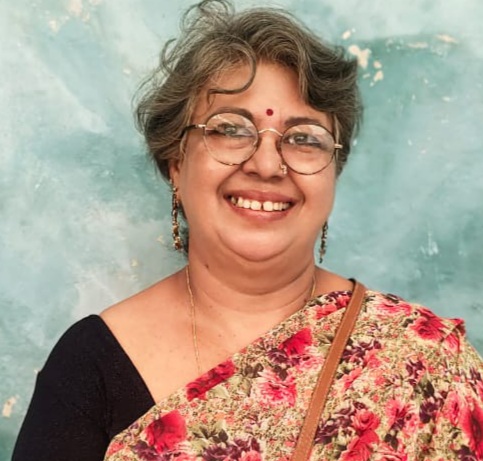
An acclaimed Painter, a published poet, a self-styled green woman passionately planting fruit trees, a published translator, and a former Professor, Lathaprem Sakhya, was born to Tamil parents settled in Kerala. Widely anthologized, she is a regular contributor of poems, short stories and paintings to several e-magazines and print books. Recently published anthologies in which her stories have come out are Ether Ore, Cocoon Stories, and He She It: The Grammar of Marriage. She is a member of the executive board of Aksharasthree the Literary Woman and editor of the e - magazines - Aksharasthree and Science Shore. She is also a vibrant participant in 5 Poetry groups. Aksharasthree - The Literary Woman, Literary Vibes, India Poetry Circle and New Voices and Poetry Chain. Her poetry books are Memory Rain, 2008, Nature At My Doorstep, 2011 and Vernal Strokes, 2015. She has done two translations of novels from Malayalam to English, Kunjathol 2022, (A translation of Shanthini Tom's Kunjathol) and Rabboni 2023 ( a Translation of Rosy Thampy's Malayalam novel Rabboni) and currently she is busy with two more projects.
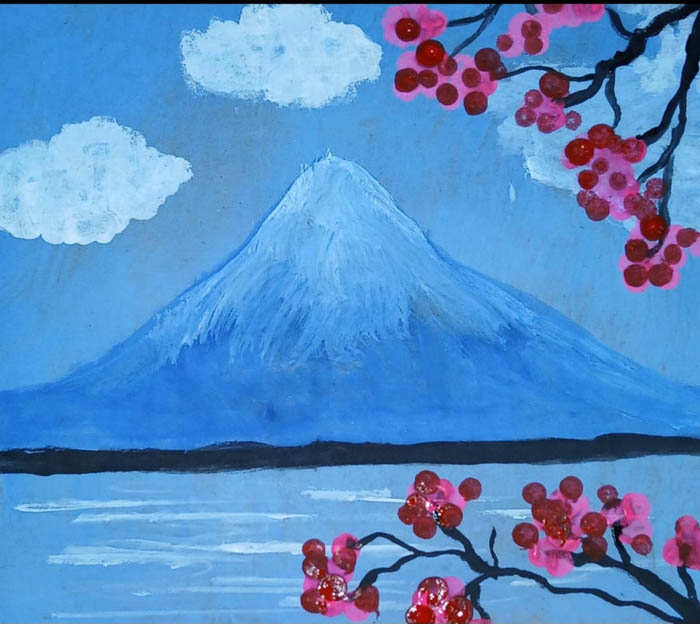
Title : Blue Serenity (Watercolour by Swatishree Parija)

Swatishree Parija is a second year B.Ed..student from Jajpur, Odisha. She is passionate about literature, painting and photography from her school days. She writes excellent poetry. Her paintings and photographic creations are equally outstanding. She has won many awards in essay writing, painting, and debate at the block, district, and state level.
Table of Contents :: Short Story
01) Prabhanjan K. Mishra
MRS AND MR DOG
02) Sreekumar Ezhuththaani
FRUITFUL LIVES
MUJHKO SAPNAA DEJAA
03) Dilip Mohapatra
UNHOLY DESIRES
04) Dr. Ajaya Upadhyaya
DELIVERANCE
05) Snehaprava Das
THE FORTUNE TELLER
06) Satish Pashine
I WILL BE A FOREMAN ONE DAY
07) Ishwar Pati
DAVID AND GOLIATH
08) Deepika Sahu
CELEBRATING FEMININE ENERGY: INDIA’S MOST ANCIENT 64 YOGINI TEMPLE, HIRAPUR
09) Annapurna Pandey
THIS GANESH CHATURTHI, MY MOTHER TOOK HER FIRST STEPS INTO A NEW LIFE, A NEW BIRTH
10) Prasanna Kumar Hota
CLOSED SUITCASE
11) Triloki Nath Pandey
THE STATE OF ANTHROPOLOGY DURING MY LUCKNOW DAYS
12) Dr. Rekha Mohanty
CAMPING IN DESERT
13) Dr. Sukanti Mohapatra
RAJASTHAN: A TAPESTRY OF TIMELESS WONDERS
14) Sujata Dash
THE NIGHT SOON RINSED OFF
MOMENTS OF SOLACE
15) Hema Ravi
EVERY ONE GETS HIS SHARE
16) Darsana Kalarickal
DITHI’S SKY
17) T. V. Sreekumar
MAHABALI COMES KNOCKING
18) Bankim Chandra Tola
THIS TOO SHALL PASS
19) Sreechandra Banerjee
AM BUSY PACKING
SMALL TALK
20) Dr. Rajamouly Katta
CUTE SERVANT-MAID
21) Mr Nitish Nivedan Barik
LEAF FROM HISTORY: THE ACCIDENTAL PRESIDENT
22) Dr. Mrutyunjay Sarangi
THE PROCESSION
Prabhanjan K. Mishra
We, Suravi, alias Hazel Jacob, and me, Kabir Khanna, humorously referred to as Mrs and Mr Dog, had married rather late in life, both at about matured forty. By then, our hormones had stopped bungee jumping. Our love story had not been a headlong plunge from the precipice of loneliness into the abysmal happy pit called love, crowded by two people, but it was a late slow swim together in a rippling lake of clear water looking for the shore.
For me, so far, an obsessive-compulsive loner, a sudden feeling of emptiness had started creeping in those days, when like a coincidence Hazel came before me, and that moment became special.
My loneliness of late, had made me feel like a peanut pod without its nuts, incomplete, hollow. It made me feel something was terribly amiss. That led to this and that, and Mrs Dog of today, who had been Hazel Jacob alias Miss Dog until then, drifted into my life. The empty pod of peanut got its nuts, filling it wholesomely.
Miss Dog, after becoming my wife, Mrs Dog, confessed to me of having some such or similar feelings as mine after our first meeting. Of course, it was not in the category of ‘love at first sight’. The mutual feelings had a slow building-up. That would be a long story, from empty pod to a synchronous tick tock clockwork between two individuals. I should rather cut it short, but not too short to lose the fizz entirely.
One lucky day, I would call it lucky my whole life, because I have stepped from luck to more luck from that day onwards, a Sunday morning, my instinct led me into a park near my colony where I lived in a small apartment flat. Usually, I went to another park for my morning constitutional. And lo, in the different park I met my future life-mate, my would-be wife.
After jogging a while, when walking at a fast pace on the track drawn around the park’s periphery, suddenly I stopped in my track, my attention being arrested by a show stealer. She was neither a fashion-model doing a catwalk with newly designed panoply of regalia, nor was she showing off her lungs’ power over a soprano in an open-air opera; but the exquisitely pretty woman in a Kaftan was only feeding a few stray dogs in the tender mustard sun of the morning with an uncommon elan in an open corner of the park.
Generally, Kaftans, an indoor informal garment for urbane Indian women, if donned outdoor, attracted raised eyebrows for its impropriety. That should upset the society’s self-appointed moral keepers, there was no reason why I should not include me, myself, as one of those prudes. But, not only she wore it to the park, but she wore it in style, like a fashion statement, daringly choosing her piece to create the impression of a butterfly, in shape as well as colour scheme.
As her hands were raised and lowered during feeding the dogs, she gave the impression of an exquisite butterfly flapping its wings ready to fly away. I had stopped on my track, taking a break from my fast walk, and was shamelessly ogling her.
Years later, once we discussed that scene. She wrinkled a pretty nose and said, “Mr Dog, that was in bad taste. To ogle a woman’s body-profile through her loose kaftan was terribly impolite. But on a second thought, I thank that minute’s bad taste and impoliteness of yours because that had caught my attention and with this and that, united us.”
She was like that, a charming unpredictable woman and wore her caprice on her sleeve. I loved her unpredictability, as it kept our relationship, fresh and well-oiled with a suddenness now and then, all along on toes, and in full of anticipation like a speeding, swerving vehicle before you. She was also temperamental and footloose. I loved those traits as her signature oddities, you know ‘all is fair in love and war’ and I had to rage a war against some of my cautioning instincts for that love I had invested in her, caprice or no caprice.
That late afternoon when I ogled the butter-fly woman of exquisite beauty by stopping on my walkers’ track of the park, when the woman was feeding a few stray dogs in style, often feeding by hand, at times tossing the nuggets above their noses into the air and asking them to lunge at them, catch, and eat. I had in the process was not aware if my mouth, out of spontaneous appreciation, was ungainly open with the lower jaw hanging out, but when I came to senses, the pretty woman was found standing before me.
There was not much distance between us, and an overpowering smell, that was the mixture of a mature woman, dogs, and an exotic ladies’ perfume, assailed my nose. I loved the smell instantly, an out of the world fragrance. I then heard the whip like low rasp, “Close your trap man, before swallowing a dozen, the park is infested with gangs of ungainly mosquitoes. A few may unknowingly dive into and die in your mouth. Bad for them, bad for you. It would cost them their lives, and may cost you an infection.” I became conscious and closed my mouth.
I liked the smell and decided to have it again, and again. I would recall on a future date that the very animal like smell of a lightly sweating full-bodied woman wearing a strong perfume was the key to my heart and she had unknowingly used that key to open, break in, and steal.
I also had loved that rasping female voice and decided to hear that some more. I tried to extend a link to her to take for further rejoinders in our tete a tete, and said, “Thank you. Also, many thanks on behalf of these mosquitoes.”
She demurred, “Oh, that’s nothing. I swear, that was neither a rebuke, nor a tease. Just a concern, a caution. By the way, was it, I mean, the open-mouth-goggle-eyed-ogling, in the honour of my dogs or me?”
Before I conjured up a polite reply, she continued, “And, I am Miss Dog, people around here refer to me as that or as the dog-lady. My name, as they say ‘my good name’, is Hazel Jacob. I have never seen you around here. But your mug was a common sight in the colony. I presume you live in the same colony I do.”
We laughed together. I sort of saw a vision - the dogs were laughing as well. They then surrounded us in circle and yelped, “Ooooooo…”, an undecipherable hymn in the honour of our laughing together. Also, their kind eyes laughed, and shone out of honest joy. I was blissed out, swooned. She shook me, “Sir, you are hallucinating. Your eyes have gone goggle, your mouth has started to twitch ugly.” I came to myself.
I blurted out, “Oh, yes, I am Kabir Kanna, a lawyer, people in our colony call me Vakil Sahib. I don’t know any dogs. I also don’t know anything about dogs. I practice law in the town’s Session Court and High Court in civil matters. So far, dogs have never been my clients, but just now, rather minutes ago, I had a sort of revelation, they live and love like us, humans. Thank you. In future I will allow them to use my good offices if they have a grievance.” Then I paused, and blurted out, “Suravi, may I call you by that name. when you are close by, that name comes around to me.”
I went to her, took some dog feed, from her bag, and followed her movements, though not as gracefully, and fed the animals. I felt connected to her through those tail-wagging and yelping four-legged affectionate friends of man. She, me, dogs, and the dog feed made a garland of empathy, basking with an aura of bonhomie, compassion, charity, and service. The sun felt mellowed. The breeze balmy. Peace reigned all around. The park, a mutedly throbbing Eden, heavenly.
The meeting happened next day again, all today’s steps repeated, stopping on the track, but not gawking goggle-eyed, open-mouthed, but eyes shining with a ‘I find out you’ light, with humming mosquitoes making a halo on her head, giving her an aura of a love-goddess. Also were there the walker in a track suit, me, and the dog-feeder in a butterfly kaftan, she, every bit as yesterday, but except my epiphany of dogs surrounding us and softly yelping a hymn to us. Also, today’s kaftan was another butterfly of another colour, another design. It kept happening day after day with pleasurable changes.
As days passed, the trappings, like superfluous panoply of greetings, feeding dogs compulsively together, and using flattering words for each other, vanished one by one. Nothing came between me and her when we met on a pious Sunday, it was an Ester Sunday forenoon. Just us, two of us, ensconced on a park bench behind a thick bush of bougainvillea, holding hands under the wraps of her shawl to feel warm and loved and cozy. A few dogs had come to lie around us on the grass, the witnesses to our holy communion. Like a sudden leaf falling from a tree, we exchanged a kiss, an intimate sharing of lips.
I hesitated, “Can I call you Suravi from now on? And would you like, Suravi dear, if my father asks your father for your hand for me?” She pressed me under her shawl I was sharing and said, “My dear doubting Thomas, call me Suravi, let’s reserve it as your copy right on me. The the more serious prospect. You may directly ask me for my hand, why bother our old folks. Let’s go home. I mean my flat, not much away from yours. I will show you my gardens, and give you a gift I have never given to anyone and been saving for this day.”
We went to her pad that forenoon. She cooked us a lunch. When meat was simmering in the pot over the gas oven, she took me on a tour-de-force around her garden raised in her two balconies.
She also treated me to a visiting of her gorgeous secret garden on the floor of the kitchen itself on a reed mat. She made it happen like a prayer, intense with my missionary devotion and her evangelist zeal. Going around her gardens, eating the meat curry from her hand, and our muted body languages expressing a grateful thanks giving made a sumptuous and wholesome meal with many courses lingering over the whole Ester Sunday. She said she felt resurrected like her Lord on that Ester Sunday and her resurrected self was her most precious gift to me. I agreed ‘Amen’.
I learnt she was a CA, sitting and working under the umbrella of a reputed CA firm that gave services to companies as their auditor of accounts and advisor in money matters. She had an intense love for animals, the voiceless persecuted ones, especially dogs, the worst misunderstood, feared for wrong reasons. She was connected to various groups of animal activists, NGOs.
I looked around her big flat and surprised her with a question, “Where is your pet Dog?” She replied, “Kabir, they are all my equal pets who live in the park, on our colony’s grounds, and streets. Which one of them would I bring home, can you guide me? How can I be partial to one, on one hand bringing it home, lavishing love on it, and on the other hand depriving it the free air and the open sky, and the nature’s bounties? In one sense I would be rewarding it and in the other sense I would be punishing it.” It was a revelation to me.
We started living together. She had the bigger flat between us, and I moved in with her. She gave me a bedroom where I settled with bag and baggage. We slept in separate bedrooms, but had the liberty to move into each other’s room, bed, private hours as we wanted, and were in the mood.
We never married, in fact, the formal ritual was felt redundant to both of us, after each of us proclaimed before each other to be married in souls. The marriage ceremony or registration before authorities were legal institutions of possessing each other, that we knew was hollow if we were dispossessed at the level of our souls. Further, the rituals giving the material security in the case of separation, was meaningless for us as each of us was self-driven and on our own steam.
But by mutual consent we threw two parties, one for our colony friends, and the other for our friends and colleagues in our professional lives. There we introduced ourselves as husband and wife. Surprisingly, there were no probing questions - when, where, how. We found, the world around us had been maturing, growing sensitive, and more understanding.
She asked, “Why do you call me Suravi? A memory revived? A baggage from your past?” “No,” I replied, “I am a man of million nostrils. Smell is my guide and philosopher. I accept or reject a person to come close from the smell he or she wafts. My first brick of mutual relationship is an amenable smell. I loved your smell when we met first. You smelled fabulously fragrant – an exquisite exotic mixture of a mature woman, a dog, and a French perfume.
Then and there, I decided to love you, call you Suravi, meaning ‘the fragrance’. You saved my love from being an one-sided affair the day you kissed me behind the big bougainvillea in the secluded corner of the park, holding me under the wrap of your shawl, and married me, sort of, with a few dogs lying around as our witnesses.”
“Oooo!”, she exclaimed, “You are like my dogs. A dog is just like you, the smell matters. Dogs can sniff kindness, love, and goodness from hate, violence, and evil. That’s the reason they spontaneously wagged tails, rubbed themselves with you after sniffing you the first day. And that was my unwitting guide to love you.”
That was our story in short. We lived together. She slowly and steadily inculcated intense love in me for the dogs. We never thought of making our own human children as we had children already at every street corner, park or housing society. Any amount of love from parents like us around the city, country or the world seemed insufficient for those loveable tail-wagging voiceless children of ours, who fawned and expressed gratitude even for the smallest gift of kindness, a pat on the head.
An aged uncle of our colony was against homeless dogs and cats moving in the colony compound, loved by most, ignored by the rest, but hated by a very few. The roaming dogs, who were fed by the colony’s dog-lovers, served as the warning system in the daytime, but invariably during the nights, warning against strangers and intruders. They were patted and loved by the night security staff as they kept vigil with them to guard the colony in hours of scary silent nights. The cats roaming the ground were a veritable army against mice, rats, and snakes. But the aged uncle, turned a Nelson eye to all those good services.
But a strange incident changed his perspective. It happened before my eyes, converting a doubter into a believer. I heard him howl unintelligently in great panic on day. I saw, a cobra with hood unfurled by his feet at a distance less than a meter. When many including me started running towards him to help, Sheru, a sturdy dog of our colony ground, came charging at the snake like a lightning, barking in loud bass. The nervous cobra put its hood down and slithered away into the hedge at the edge of the colony compound.
Suddenly, a transformation descended on the dog-hater, aged uncle. He sat down with relief, collected Sheru in his arms, cuddling, patting, whispering sweet nothings to him like Sheru was his grandson. I had tears in my eyes to see the great union of the opposite poles. That night on the dinner table I narrated the touching incident to Mrs Dog, my wife. She was so moved, she cried, and then marched behind me to my bed. Thanks to the aged uncle, the cobra, and Sheru, we had a very satisfying night together.
The next morning, I was shaken awake unceremoniously by wife. I got up full of concern and anxiety for her, but she aggravated my anxiety further by putting the morning newspaper under my nose. The news had devasted her and it devastated me.
It was reported that two honourable judges of the apex court had taken Suo moto cognizance of some media reporting about the suffering of people of our city, caused by the community dogs, meaning homeless street dogs. They refused to hear any intervention by any dog-lover NGO, group, or individuals, and ordered, “All street dogs to be rounded up and put in dog-shelters of Municipality with immediate effect. No dog was to be left roaming the streets anymore.”
The order was one-sided, autocratic, and against the principles of natural justice. But at its bottom, it was the order of the top court of the country, right or wrong, and could be weaponized by the people who disliked those voiceless and most defenceless friends of human beings. We were heart broken. We skipped breakfast, and ran from pillar to post to understand the implications.
That was like a day of reckoning, I decided to wear my lawyer’s black gown to the hallowed precincts of the top court the first time, filing an PIL (Public Interest Litigation), that I themed it with the hardship faced by the homeless – the humans, and animals.
The homeless humans consisted of vagrants, beggars, and migrants from neighbouring provinces or countries who had left home in search of greener pastures, just for a hand-to-mouth living. Somehow, they managed bare minimum food, but had no shelter. They slept on footpaths.
The homeless animals were cats and dogs in the streets besides other creatures like old donkeys, horses, cattle including the holy cow, etc. who had outgrown their age of giving services, and so, were driven out into the streets by their owners to fend for themselves. I fought a war for all those homeless humans and animals with special thrust on dogs who were dealt with dire injustice in the current time by another smaller bench of the same court.
The review bench, which heard all stakeholders’ concerns, that the homeless street dwellers, might they be humans, cows or dogs, who were not responsible themselves for their unfortunate fate to live on streets, were driven to that discomfort by greedy and apathetic humans, and therefore, should be allowed to live with dignity and charity on streets, parks, colony-grounds until suitably housed amenable to their needs.
The top court reviewed the earlier order concerning dogs, setting it aside, and allowing our prayer. It was a relief to us the dog-lovers, frustrating the few dog-haters by nullifying their evil designs by taking some sensational yellow journals into their influence.
That night I had a vivid dream. The dogs around our colony and in the park danced with joy and expressed their gratitude by giving low yelps of pleasure. They were joined by the heart-changed-aged-uncle who danced the maddest. Mrs Dog gave me extra hugs, and other treats. In my dream we were morphed into a loving canine couple lost in amorous adventures.
When I confided my dream to Mrs Dog the next morning, feeling rather bashful, she had a surprise for me. She confided, “No, Kabir, I was wide awake. It was not a dream, but a real meeting of body and soul like a true Mrs. and Mr. Dog. I liked it immensely, as every Mrs Dog, worth her smell, should like it.” (END)
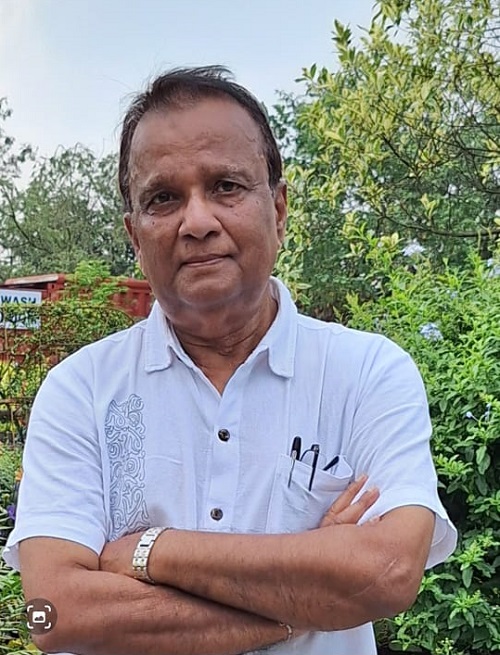
Prabhanjan K. Mishra is an award-winning Indian poet from India, besides being a story writer, translator, editor, and critic; a former president of Poetry Circle, Bombay (Mumbai), an association of Indo-English poets. He edited POIESIS, the literary magazine of this poets’ association for eight years. His poems have been widely published, his own works and translation from the works of other poets. He has published three books of his poems and his poems have appeared in twenty anthologies in India and abroad.
Sreekumar Ezhuththaani

In her bedroom, Kamala had a large window through which she could see the big country fig tree in the yard. When the house was first built, that window wasn’t there. Back then, her mother was still alive.
One day, a few years back Kamala had seen her aged mother standing alone in the yard, arranging stones around a tiny sapling. Her memory and her legs were no longer what they used to be. Alarmed, Kamala rushed out, caught hold of her, and led her back inside, scolding her for wandering out alone.
“That’s the sapling of a fig tree,” her mother explained.
“But who even wants fig fruit these days? Don’t you have anything better to do?” Kamala snapped.
“Even if we don’t eat them, the birds, the squirrels, and the civets will,” her mother said quietly, and went to lie down.
A few months later, after an illness, her mother passed away.
It was nearly a year later that Kamala noticed the tree her mother had planted. Each time she saw it, she remembered her mother taking care of the sapling. When the tree blossomed for the first time, Kamala felt as though her mother had returned just to witness it. That very day, she had a new window built in her bedroom so she could see the tree whenever she wished.
But when the tree began to bear fruit, the figs hung so high she could never reach them. Her school-going son could easily climb and pluck them, but Kamala knew the branches were fragile. They don’t break; they tear off. So, though she longed for them, she never mentioned it to her son. She watched the ripe figs drop, one by one, wasted on the ground.
Then, in the heavy rains and winds of the season, half the tree broke away. Yet once the storms passed, it bloomed and fruited again. Kamala watched from her window, full of yearning. One day, she stepped out into the yard, looked up, and saw her fears confirmed, the squirrels, the birds, the civets had already bitten, scratched, and spoiled most of the fruit.
Just as she had once been frightened to see her mother outside, her son, now frightened to see her staring up at the tree, came running. She said nothing, but he understood. If he wanted to pluck the figs, let him—after all, the tree was lower now.

That evening, at the dinner table, Kamala was astonished. A big bowl of figs. She ate three or four skipping her dinner. Overwhelmed with gratitude, she hugged her son and thanked him for fulfilling her wish.
But the next morning, when she looked out of the window, the figs on the tree were all still there.
Puzzled, she called her son:
“Weren’t fruits we ate yesterday from our yard?”
“No, Amma,” he said, “I bought those from the shop. These ones aren’t ours. Let the poor squirrels, the birds, and the civets have them.”
Hearing her own mother’s long-forgotten words coming from her son’s lips, Kamala was stunned. Just then, a cool breeze drifted through the window and embraced her.
She shivered with a quiet chill.
Sreekumar Ezhuththaani

We knew very little about Sajeesh’s family. It often puzzled us. Why would someone so well-educated take up a job in our small pre-primary school? But for the children, he was everything at once: father and mother, uncle and aunt, playmate and companion.
Our school believed in learning through play, and there was no folk game Sajeesh didn’t know. He sang, he danced, he drew beautifully, and shaped little animals out of clay.
After school, we would keep him back for a while. I had always been obsessed with, lullabies. I grew up listening to my mother sing them to me and my six younger siblings as she lulled us to sleep. But before I had a child of my own, my mother had already slipped behind the curtain of time. Among her children, only my third sister had inherited her gift of singing, but she had settled in the Gulf.
So I had Sajeesh sing to me the lullabies I could still remember. I often wondered what his home life must be like, how lively and joyous it would be if he sang like this at home. My husband had no sense of art; surely Sajeesh’s wife must be luckier, I thought. Yet, strangely, he never spoke a word about his family.
One morning, I copied down the lyrics of “Surmayee ankhiyon main nanha munna ek sapana de jaa re” and handed it to Sajeesh, asking him to sing it for us in the evening.
That evening, I even arranged a small tea gathering outside the canteen. We sang many songs, joked, and laughed, but Sajeesh hesitated when it came to the one I had given him. At last, he sang.
And in that song, we all became children again. It felt like a lullaby sung by some unseen angel. We closed our eyes and swayed in the cradle of memory.
Then suddenly, he managed to sing sachcha koi sapanaa dejaahe with a broken voice and he stopped singing. Sajeesh looked at us, and from his eyes tears streamed in heavy drops. Without a word, he grabbed his bag and left.
We were shaken. The next day, Sajeesh didn’t come to school. When our principal heard what had happened, she scolded us for making him sing lullabies. She told us something we hadn’t known, though Sajeesh had been married for eleven years, he had never been blessed with a child.
That truth shocked all of us, especially me, who had insisted he sing lullabies again and again. Our little music club ended that day.
The next year Sajeesh left the school for another job. I too changed schools three times afterward. My children grew up, and the memories of my mother slowly faded. Even the lullabies slipped away.
But there was one thing I never stopped doing. With stubborn devotion, every evening during prayer, I asked God for the same thing: give Sajeesh a child. Let this be my atonement for the pain I caused him.
Seven more years passed before I finally heard the joyful news. Sajeesh had become a father, not of one, but of two children.
I saw it on a television program. His wife and two little ones were seated proudly in the front row, and Sajeesh stood on the stage singing:
"Surmayee ankhiyon main nanha munna ek sapana de jaa re
Nindiya ke udate paakhi re, ankhiyon maon aaja saathi re”
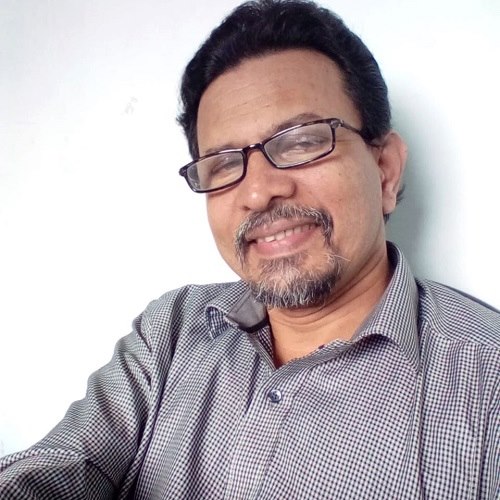
Sreekumar Ezhuththaani known more as SK, writes in English and Malayalam. He also translates into both languages and works as a facilitator at L' ecole Chempaka International, a school in Trivandrum, Kerala.
Dilip Mohapatra

Act I: Restlessness
The summer afternoons seemed to stretch endlessly, heavy with the smell of dust and mango skins rotting by the roadside. Ritesh lay sprawled on a cane chair in the veranda, the latest newspaper wilting in his hands. The job classifieds were full of promises—management trainees, bank probationary officers, even a few teaching posts—but each ad seemed to belong to another world, one where he had not yet been invited.
He had just appeared for his postgraduate examination in Humanities, and the results were still weeks away. His eyes were firmly set on cracking the bank probationary officers’ competitive exam and building a career in banking, but he knew that goal was still a long way off.
A group of neighbourhood boys passed by the gate, laughing loudly. One of them called out,
“Still no girlfriend, Brahmachari? The bank might hire you, but the girls won’t!”
The others cackled and moved on.
Ritesh smiled faintly, though the words pierced something tender inside him. Being called a celibate was one thing; being taunted as Chhakka—a jab implying he was gay—hit deeper. He wasn’t ugly—people had told him so often enough—and he was far from dim-witted; his marks spoke for themselves. Yet somehow, through school and college, he had never found himself in the easy company of girls, unlike his friends. It was as if some invisible wall separated him from that part of life. He wasn’t sure if the problem lay within him or simply in the lack of opportunities.
Folding the paper, he gazed at the jacaranda tree across the road, its purple blooms trembling in the dry wind. Perhaps love, flirtation, romance—these were simply not meant for him. And yet, somewhere deep inside, a stubborn ember glowed, refusing to die.
Summer Sunday evenings in Cuttack had their own unmistakable flavour. One of the city’s peculiar rituals was the gathering of people—mostly college students—around the cold drink stalls that mushroomed in every street corner and market as soon as the season began. Bamboo scaffolding and colourful plastic canopies shaded crooked wooden tables lined with bottles of bright green, yellow, and pink sherbet syrups. A few rickety, sun-bleached benches stood around, completing the scene.
The regular fare was simple: a sherbet of curd stirred with sugar syrup and ice, flavoured with a splash of essence. For those wanting something richer, there was lassi—churned vigorously with crushed ice in aluminium pitchers, then topped with sweet condensed milk (rabri) and sprinkled with cashews and pistachios. And for the select few, there was a third, clandestine variety: lassi laced with bhang, a paste of cannabis leaves ground on a stone slab. That special order was strictly hush-hush.
When the monsoon arrived, these makeshift stalls vanished overnight—only to reappear faithfully with the next summer.
More than just refreshment stops, these stalls were social hubs—places where debates on current affairs seamlessly slipped into juicy gossip, and harmless little conspiracies were hatched over glasses of cold lassi.
That evening, Ritesh headed to one such stall at the local bazaar near his home, where a few of his college friends were already gathered. After the usual greetings, the conversation quickly turned to job hunting. Each had their own dreams, but all shared the same urgency: to get started, to land something soon.
The sound of a motorcycle broke the chatter—a deep, throaty thump that drew every eye. A Royal Enfield Bullet rolled to a stop beside the stall. The rider was tall, broad-shouldered, dressed in a crisp shirt tucked neatly into faded jeans, polished pointed shoes completing the look.
It was Sanjay bhai, elder brother of their friend Raju. He swung the bike onto its stand with practiced ease, greeted the group warmly, and explained that Raju couldn’t make it—he’d been called to their village on an errand. Then, in typical Sanjay style, he ordered cold drinks for everyone.
Between sips, he began talking about careers, casually sharing his own experience as a medical representative for Raptakos Pharma. His job, he said with understated pride, not only paid well but gave him opportunities to travel and mingle with the city’s elite doctors.
Ritesh listened intently. Something in Sanjay’s confidence, his ease, his style, struck a chord. For a moment, he saw himself in that seat—riding a Bullet, earning well, standing tall. Perhaps this could be the stepping stone he needed before cracking the bank exams.
He took his chance. Cornering Sanjay, he asked if he might help him apply for a medical representative’s job in his company. Sanjay smiled and agreed readily. He would introduce Ritesh to his Regional Manager, Tapas Bose, who lived nearby, and would personally recommend him.
They planned the meeting for the coming Sunday. For the rest of the evening, Ritesh could barely contain his excitement. His mind was already racing ahead—to the interview, the job, and perhaps even his own gleaming Bullet.
Act II —The First Meeting
As planned, Sanjay bhai came to pick up Ritesh the next Sunday morning. He had fixed an informal appointment with his RM. The Royal Enfield growled to a halt outside a modest two-storey house, its pale-blue walls fading under the sun. A lace curtain stirred in the upstairs window as Sanjay called out,
“Come, Ritesh—this is where the Regional Manager lives.”
The RM himself opened the door—a tall, spare man in his early thirties, with sharp Bengali features and a smile that reached his eyes. The house carried the faint aromas of mustard oil and frying aubergines. After handshakes and introductions, Sanjay called over his shoulder,
“Boudi, see who has come with me.”
She emerged from the dim interior, adjusting the end of her sari over her shoulder. For a moment, Ritesh thought she had stepped straight out of a Durga Puja pandal—large kohl-lined eyes, a vermilion bindi glowing like an ember, the faint scent of jasmine trailing behind. She greeted them warmly, her smile unhurried, as though she had known them for years.
Ritesh was spellbound. He wished her with a silent nod, and she acknowledged it with a smile and a quick twinkle in her eyes. He barely noticed the RM inviting them to sit. Only when she turned back into the kitchen did the spell begin to break.
A little later she returned, balancing a tray with delicate porcelain cups, the spoons tinkling softly as she set it down. The RM asked why Ritesh wanted to join their organisation.
“Sir, it’s for the adventure—and to learn on the job about the dynamics of sales and distribution,” Ritesh replied, just as Sanjay had coached him.
The RM took his résumé and assured him he would refer it to HR. As the two men discussed sales targets and doctor networks, Ritesh found his gaze drifting to her fair, slender hands stirring sugar into her tea. The faint chime of her bangles seemed to echo inside him. He told himself it was polite interest, nothing more—yet somewhere deep within, something stirred. A door had quietly opened.
The conversation turned to families, interests, and hobbies. Learning that Ritesh was an avid reader, the RM mentioned that his wife, Chaitaly, shared the same passion. Since he travelled almost twenty days a month, books kept her company. He invited Ritesh to drop by from time to time with something good for her to read.
Ritesh accepted—gratefully, almost eagerly.
Act III — The Acquaintance
The following Sunday, Ritesh found himself once again at the RM’s doorstep, a neatly wrapped book tucked under his arm. He had chosen Tagore’s Gitanjali, hoping it might please her as much as it had once moved him. Sanjay had not come this time—Ritesh told himself it was only a small errand, no need to involve him. With his heart fluttering faintly against his ribs, he pressed the doorbell.
Chaitaly opened the door. The faint scent of jasmine reached him before her smile did. She wore a simple cotton sari, the pale green lending her skin a subdued golden glow. He mumbled a nervous greeting.
“Please, come in. Boudi will do,” she said lightly, ushering him inside.
The RM was away on tour. The house felt quieter, more spacious, as though it had exhaled. She led him to the drawing room, the lace curtains stirring in the morning breeze. On the table lay a half-finished embroidery hoop and a small stack of books.
“You read Tagore?” he asked, nodding towards the pile.
She laughed softly. “Every Bengali house has him somewhere—though I read him less now. Some lines stay with you for years; others change their meaning as you grow older.”
They spoke of books—of her fondness for R. K. Narayan, Premchand, and Ismat Chughtai—while he confessed his habit of marking favourite lines in pencil, and his admiration for Manoj Das. Time seemed to slow, the minutes unspooling easily. When she served tea, the gentle chime of her bangles came back to him like a remembered tune, and his eyes grew dreamy, enchanted. They didn’t need many words; their glances carried the rest—his gaze charmed, but with a latent fire quietly burning within, hers serene and affectionate.
After that day, his visits became almost routine. Every week or so, he brought a book—sometimes one she had asked for, sometimes one he thought she might enjoy. At first, they exchanged polite summaries and opinions. Gradually, the talk wandered—to the weather, to her childhood in Shantiniketan, to the peculiar neighbours she had met in this town. He too spoke of his family, his ambitions, and his likes and dislikes.
Ritesh began to notice details he had missed before: the way she tilted her head when listening, the faint dimple that appeared when she smiled, the absent-minded tapping of her fingers on the armrest while thinking. None of it was overt, nothing he could name as improper—yet he carried these fragments away like treasures, replaying them in the quiet of his own evenings. He wondered if she sensed the feelings slowly taking root within him—and whether she might ever encourage something more. Whatever it was, it was both delightful and unsettling, an experience he found himself unwilling to resist.
He told himself it was only friendship, a meeting of minds over books. But somewhere inside, the door that had opened that first day remained ajar—and the space beyond it kept drawing him in.
Act IV — The Fever
It was midweek when the phone rang. Ritesh was reading by the window, the late afternoon sun slanting across the page, when he heard her voice—slightly husky, a little slower than usual.
“Ritesh… sorry to trouble you. I’m feeling a bit feverish. Could you… get me something for the flu? Just from the pharmacy across the street. Tapas is still away, and I don’t feel up to going out.”
He was on his feet before she finished, tucking his wallet into his pocket, telling himself it was just neighbourly concern and nothing more. But as he hurried down the street, there was a flicker of something else—an anticipation that made his steps lighter and quicker.
She opened the door almost immediately, wrapped in a soft shawl over her cotton sari. The faint scent of eucalyptus oil hung in the air. She looked paler, her hair loose and slightly tousled, and to him she seemed somehow more fragile, more reachable—and a little more sensuous.
“Here,” he said, handing her the medicine packet and a bottle of water. “Take two now. It should bring the fever down.”
She smiled faintly. “Thank you… you’re very kind.”
As she took the glass from his hand, her fingers brushed his. The touch was brief, accidental, but he felt it travel upward, tightening something inside his chest. She sat down on the sofa, and he found himself standing close, watching the slight flush on her cheeks. It appeared as a sea tinged incarnadine reflecting a rising sun.
Without thinking, he reached out and touched her forehead. The warmth beneath his palm startled him—it was real, yes, but also electric. For a moment, her eyes met his and didn’t move away.
“You do have a bit of fever,” he said, his voice quieter than he intended, “don’t worry it would go away.”
She tilted her head slightly, as though assessing him in return. “It’s nothing… will be gone by tomorrow.”
The room seemed to narrow around them. Their conversation slipped into gentler tones—of her childhood monsoons in Shantiniketan, of the old verandas where she would sit with her mother sharing with her crisply fried peanuts during rainstorms, of his own memories of home, the people he missed. There were small pauses, moments when neither spoke but each felt the other’s presence acutely. He could hear his own breath hovering on the verge of a sigh.
A strand of her hair fell forward as she adjusted the shawl. It grazed his wrist, and he didn’t move right away.
Then, as if sensing the weight in the air, she straightened and gave a small, practical smile. “You should go now, before it gets dark.” And her bangles jingled bringing back to Ritesh the memory of their first ever meeting.
He nodded, masking his reluctance.
Outside, the evening air felt cooler, but his mind was still warm with the touch of her skin. By the time he reached his room, he was already replaying it—her shawl, her smile, her jingling bangles and the way her eyes had held his for that one suspended moment. In his imagination, the moment stretched longer, her gaze deepened, her hand lingered on his in gratitude.
He told himself it was simple concern, nothing more. Yet, as he lay awake, the image of her in the pale shawl returned again and again, until it began to feel less like memory and more like a beckoning. He wondered if she had taken the second tablet as he had told her. He wondered if she was still warm with fever. The fever, he told himself, was hers alone. The heat, however, was all his.
He wondered, most of all, when he might next find a reason—any reason—to be at her door again.
Act V — The Revelation
It was a soft August afternoon, the kind where the light hangs in the air like gold dust. Ritesh had dressed more carefully than usual, the faintest trace of aftershave at his jaw, a neatly ironed shirt. He took extra care to dress up since he was getting ready to call on Chaitaly. He had told himself the visit was to return a book, but he knew better.
She opened the door in a rich red-bordered sari, her bangles chiming softly, the vermillion in her hairline glowing in the muted light. For a moment, it was exactly as he had imagined — no, dreamed — in the restless hours since that fevered afternoon.
“Come in,” she said warmly.
The drawing room smelled faintly of sandalwood. She motioned him to sit and disappeared into the inner room. His eyes roamed — the embroidery hoop lay where it always did, the curtains breathing with the monsoon breeze. Somewhere in the house, a small brass bell tinkled.
When she returned, she carried a thali: marigold flowers, sandal paste, a small oil lamp, and a bowl of sweets. His pulse quickened. The sight of her leaning towards him, arranging the items, made the air between them taut again. He was close enough to catch the faint fragrance of her skin.
She sat across from him, her eyes soft. His gaze lingered on the curve of her wrist, the play of light on her cheekbone. A part of him — the part that had been restless for weeks — urged him forward, to bridge that small space between them. He mustered enough courage to show his affection maybe with a close hug or a passionate kiss. His body leaned forward further, ever so slightly, his heart pounding loudly.
And then, over her shoulder, he saw it.
A framed photograph, garlanded, on the shelf above the incense stand.
The face in the picture — younger, thinner — was his own. Or close enough to make him start.
He drew back, startled. “That…” he began.
Her expression didn’t change; her voice was gentle. “My younger brother. He passed away three years ago, in a mountain hike accident. Today is Rakhi Purnima. You look so much like him…and from the first day we met, I saw my brother in you. It felt like a sign…from the Almighty.”
Before he could gather himself, she had dipped her fingers in the sandal paste, marking his forehead. The lamp’s flame wavered between them. She tied the rakhi around his wrist with steady, affectionate hands.
“From now,” she said softly, “you are really my brother.”
He sat frozen, the heat that had brought him there dissolving into something heavier — not unpleasant, but unexpected. The air seemed to shift, carrying the scent of marigold and incense, replacing the charge with a strange, solemn warmth.
The Aftermath
The sun was slipping towards the horizon when he stepped out. The street glowed with that brief, bruised light between day and night. Her bangles still echoed in his ears, but now they carried the scent of incense rather than the thrum of desire.
He walked slowly, the rakhi brushing his wrist with each step. Perhaps the universe, in its own way, had given him not what he wanted, but what he needed.
At the corner near his lodgings, he glanced once more at the thread on his wrist. “Didi,” he murmured to himself, tasting the word, as if sealing a pact no one had asked him to make.
The evening breeze lifted, carrying away the last trace of sandalwood — and with it, the castles he had built in the air.
——————
Author’s Note
Although told as fiction, this story is almost autobiographical and springs from a real afternoon long ago, when life in its quiet way redirected the course of my heart. The memory has stayed with me through the years, a reminder that not every longing is meant to be fulfilled — some are meant to be transformed.
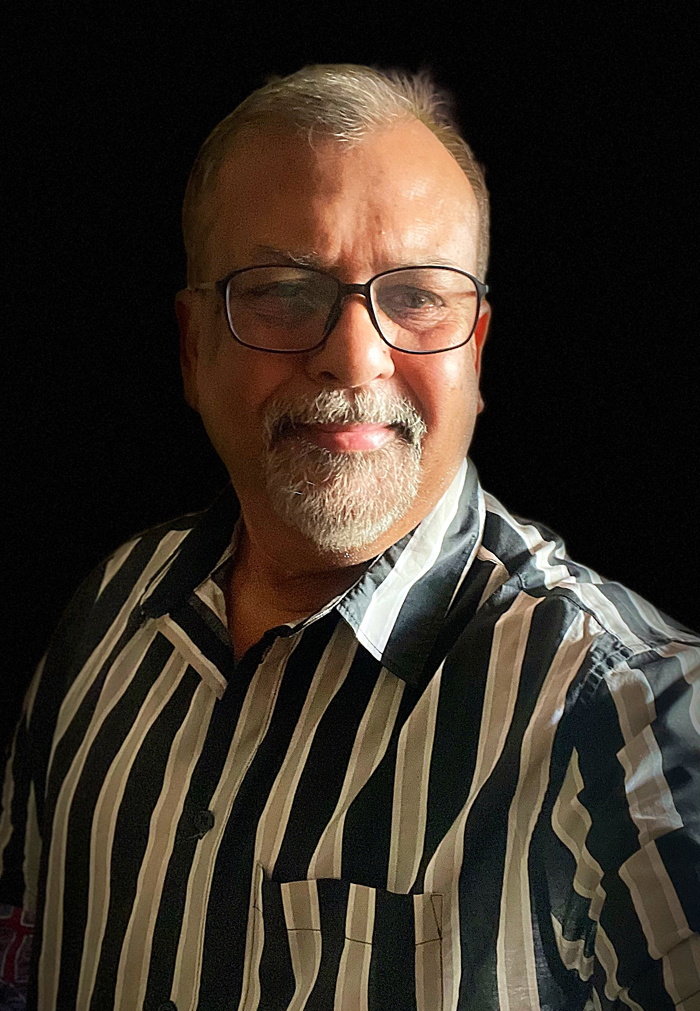
Dilip Mohapatra, a decorated Navy Veteran is a well acclaimed poet in contemporary English and his poems appear in many literary journals of repute and anthologies worldwide. He has nine poetry collections, two short story collections and two professional books to his credit. He is a regular contributor to Literary Vibes. He the recipient of multiple awards for his literary activities, which include the prestigious Honour Award for complete work under Naji Naaman Literary Awards for 2020. He holds the honorary title of ‘Member of Maison Naaman pour la Culture’. He lives in Pune and his email id is dilipmohapatra@gmail.com
Dr. Ajaya Upadhyaya
Reluctantly, Hari stepped inside the quaint hotel. His father, Amar Nath Mahamuni, had the means to book into any luxurious hotel he wanted. But on this trip to his native Nepal, Amar Nath's heart again directed him to the economy hotel named Hotel Mukti. Hari knew his father well enough not to argue over the choice of the hotel. Amar Nath abhorred extravagance in any form. More importantly, he had an emotional tie to this hotel. Often, Hari reasoned with his father, trying to persuade him to choose a more comfortable hotel, but Amar Nath remained adamant.
Long ago, Amar Nath told Hari about his attachment to this hotel. He was from humble origins and had grown up in a remote village in Nepal. Whenever he visited the city on official business from his village, this was the only hotel he could afford to stay in.
He once had a strange dream while staying here. He did not know he was dreaming at the time, for it was so real. He was exhausted after a bumpy bus ride from his village to the city, which took much longer than usual. After checking into the hotel, he lay down to rest his tired back. He dozed off without bolting the door of his room.
One of the hotel staff had entered his room and, finding him asleep, turned round and was about to leave. But Amar Nath called him back. He greeted the staff member with a warm welcome and invited him to sit down on the sofa. But there was no sofa in the room. The staff member suspected that something was amiss. Next, Amar Nath called out to someone, ordering them to bring his guest a cup of tea. Amar Nath then urged him to taste some of the fruit on the coffee table, saying it was from his garden. But there was no table nor fruit in sight in that spartan hotel room.
It became apparent to the hotel staff member that Amar Nath was not fully awake and most likely was dreaming. When Amar Nath finally woke up, he realised he had been talking in his dream. He vividly remembered being in a house large enough to qualify as a mansion. Its sprawling garden had an orchard of apple and pear trees. He pondered the dream's details and concluded the house must be somewhere abroad. He had heard that dreams of daytime turn out to be true. That is when Amar Nath decided to work his way out of Nepal to live somewhere abroad.
He had a basic college degree, and with his humble origins and without any connections, it was not easy to get a job. His aspiration to migrate to the West for a better life for himself and, more importantly, for his progeny was still a dream. Turning that dream into a reality was no mean task. Ultimately, his perseverance paid off, and he moved to England. Every time he visited his motherland, he stayed in the same hotel. Mukti, in his mother tongue, means liberation or freedom. True to its name, this was where the idea of his release from the shackles of humiliating poverty germinated. The Hotel Mukti reminded him of his dream, which had set him free from a life of incessant strife and degrading drudgery.
Amar Nath struggled for years to make a life for himself in a foreign land. Through the kindness of acquaintances and the generosity of strangers, he survived his initial months there until he found a foothold.
Eventually, he secured a job and steadily worked his way up. Although he made a modest living from his job, thanks to frugal habits, he managed to save a large chunk of his earnings. In a few years, his savings grew to a tidy sum, and he turned his attention to investing. Real estate was booming at the time, and he proved to be a shrewd investor to capitalise on the opportunity. He had an eye for derelict houses with potential for rebuilding, which the average buyer would shy away from. He chose his properties strategically, which yielded handsome returns in the rental market. As his property portfolio expanded, his personal wealth grew to a level beyond his wildest imagination.
Despite his phenomenal success, Amar Nath was constantly at odds with his son, Hari, regarding his investment strategy. Amar Nath opted for real estate. To him, it was solid enough to withstand the fickle winds of the financial world, which frequently changed direction. Hari was a mathematical prodigy in school. After earning a master's degree in mathematics, he chose a career path which couldn’t be more different from his father’s. Steady employment did not suit Hari's temperament, and he became a professional poker player. He would often make fun of his father's old-fashioned methods, criticising him for being overly cautious. While Amar Nath relied on the tried-and-tested method of compounding to grow his assets, Hari focused on the high-stakes strategies of the modern financial world. He dabbled in new-fangled financial products, including Bitcoin. Hari would often deride his father, who, in his view, was stuck in a 20th-century outlook.
It was true that Amar Nath could not claim his son’s knowledge of the mathematics behind the financial products of the 21st century. Admittedly, the magic of making money out of thin air was alien to him. When he first heard people talking about hedge funds, he assumed it was an investment opportunity in a gardening company. His grasp of mathematics was too rudimentary for fiendishly complex investment vehicles, such as credit default swaps. He thought it was a clever ploy by credit card companies to encourage you to borrow more than you can afford. Blockchain, the concept behind Bitcoin, proved too sophisticated for Amar Nath; he assumed it was a new name for power tools.
Nonetheless, Amar Nath could sleep in peace, knowing that his money was secure in bricks and mortar. He stuck to his golden rule: Invest only in things you understand, and it never failed him.
While Amar Nath had the Midas touch when it came to properties, he himself lived in a modest house. His friends moved houses every few years, each larger than the previous one. He believed a house should be a sanctuary for protection from the elements, not a statement of one’s wealth. He would often say, 'No house that money can buy can ever match the size of the human ego.'
With his accumulated savings, Amar Nath was set to plan his retirement. Following the death of his wife, Hari became the sole beneficiary of his substantial estate. After gifting a considerable sum to Hari, he planned to leave most of his remaining wealth to charity. He considered setting up a foundation to support underprivileged yet gifted children in their education, including scholarships for bright students from Nepal to pursue studies abroad.
Hari would remind him that charity begins at home, implying that Amar Nath should seriously consider leaving most of his assets to him instead of apportioning a significant chunk to charity. Amar Nath's rebuff was equally punchy: Of course! Charity no doubt begins at home, but it does not end there.
Amar Nath stayed at odds with his son over his plans for charity work in Nepal as well. According to Hari, his father’s contribution was a mere drop in the vast ocean of philanthropy. He cited names like Bill Gates to point out that Amar Nath’s charitable activities were inconsequential in the grand scheme of things. Amar Nath would counter his son’s jibes: ‘A drop of water may be insignificant for the proud ocean, but for the humble plankton, every drop matters – each drop is like a sea’.
Amar Nath scrupulously ensured that Hari’s share of the inheritance would give him a comfortable start in life. He had finalised his will and planned for his retirement, leaving most of his assets to his charitable trust. He was often heard saying, ‘I have achieved all I wished to, and I am ready to depart. If I dropped dead now, I would have no regrets.
***
Hari, having grown up in England, had changed the spelling of his name to Harry. He considered his own life a financial success story, although his fortunes fluctuated with the ebb and flow of a gambler’s luck. Despite their disagreements, Harry was not oblivious to his dad’s generosity. While he gratefully acknowledged his windfall, he felt belittled by his father’s summary dismissal of his investment ideas. His dad’s dogged refusal to even consider them infuriated him. Harry bitterly regretted that his father missed out on opportunities for the exponential growth of his investments. While neither felt fully understood by the other, both had a grudging appreciation for the alternative perspective. In short, their relationship was far from acrimonious, and both were resigned to an uneasy truce.
Harry had recently overheard his father's conversation with his accountant about how to avoid the hefty inheritance tax on his assets, which would rob him of almost half his wealth. To ensure that most of Amar Nath's assets would pass on to Harry without the taxman's cut, a significant portion of Amar Nath's wealth had been stashed away in a pension fund, which was exempt from inheritance tax.
Harry could not believe his ears when he first heard the value of this pension fund, which easily eclipsed the money already gifted to him. Even Amar Nath was taken aback by the figure and repeated the amount more than once to confirm that he had heard it right. But there was no doubt about the sum, which was staggering even for a poker player. For the first time, Harry realised the enormity of his dad's wealth. He'd had no idea what a successful investor his father had been. Curiously, Amar Nath kept the pension fund a secret to ensure that it would arrive as a surprise second gift to Hari, hopefully at the right time, when he was ready to settle down and have a family.
On his 70th birthday, Amar Nath decided to devote the rest of his life to charitable activities. He spent the next few years planning projects. Following meticulous homework, the time had come to execute his plans, which was the purpose of this trip to Nepal. Amar Nath hated publicity and kept all his grand plans to himself, hoping to unveil them in the presence of his most trusted friends during this trip. He was confident that they were discreet enough not to publicise his plans prematurely. He had invited them for a final meeting the next day. Ahead of this crucial meeting, he wanted to share the project details with Harry. Despite their differences, Harry had the brains to grasp Amar Nath's operations. Despite their differences, Amar Nath wanted Harry to be in the picture to step in if something happened to him. Harry was gifted with savvy business acumen and could supervise the operation of the projects if required.
Amar Nath sat Harry down to go over the details. A few minutes later, he stopped mid-sentence. Before Harry could say anything, his father clutched his chest and went pale. The next moment, he slumped on the chair before tumbling to the floor.
For a moment, Harry could not work out what had happened. Should he try to revive his dad? Should he call for help? Or dial for an ambulance to rush him to the hospital?
Amid all this confusion, something kept Harry rooted to his chair. It was a thought which sprang to his mind at that precise moment. He remembered his father's sizable pension fund, which he was the sole beneficiary of. But the actual sum in his hand would be slashed by half after he paid the tax on that inherited wealth. While the eye-watering size of the pension fund was a delight, the thought of sharing it with the taxman was troubling. But the taxman did not have the last word. There was a further twist to it; the final sum he would receive was in God's hands. A quirk in the rules would allow Harry to inherit the entire fund untaxed if his father died before the age of 75. This arbitrary cut-off age seemed strange, and it lingered in his mind.
Harry looked at his dad. Amar Nath’s face was serene, without a trace of distress. He was lying on the ground as if he were in a deep sleep. He looked so peaceful that anything done to disturb him would amount to a travesty. Perhaps this was the dignified death his dad had always wished for, and Harry shouldn’t get in his way. With primitive facilities in the local hospital, what were the chances that they could save him? It was probably pointless to call an ambulance; God knows how long it would take to arrive anyway.
Harry remained seated, lost in thought. He had no idea how long; time seemed to stand still for him. Suddenly, he was jolted out of his own world. Perhaps his dad was in mortal danger. The enormity of his action, or more precisely, his inaction, dawned on him. Was he giving his dad a richly deserved millionaire's death – a painless passage out of this world without the suffering or hullabaloo of the hospital? Or, to be more honest, was this a pathetic afterthought: a devious attempt to disguise his selfish motive?
He jumped off his seat. Perhaps it wasn’t too late to revive his dad by cardiac massage or mouth-to-mouth resuscitation. At the very least, he should make an attempt. But before that, he must summon help and call for an ambulance. He rushed to grab the phone.
As he did, Harry was stung by a violent electric shock. Its ferocity flung him high into the air. His limp body hit the ground with a heavy thud.
In a flash, everything was finished.
***
The next day, the local newspapers carried a news item:
Freak Accident in Hotel Mukti
A young man was tragically killed yesterday at the Hotel Mukti. While attempting to call for help for his father, who was suffering a heart attack, the man was fatally electrocuted due to a crossed connection between the telephone line and the main electric supply.
Just as evil acts attract punishment, no good deed ever goes unrewarded. But reward and punishment are the perception of the onlooker. For Harry, they were rolled into one. With blood on his hands, it is hard to imagine how Harry could have lived his life in peace.
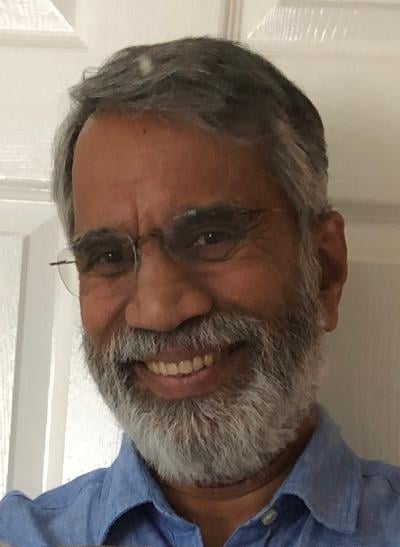
Dr. Ajaya Upadhyaya from Hertfordshire, England, is a Retired Consultant Psychiatrist from the British National Health Service and Honorary Senior Lecturer in University College, London.
Snehaprava Das
The strident ringing of the land phone woke Myra up. There was a click followed by father's voice.. hello!
In that state of half wakefulness Myra was not interested nor able to know the caller and the subject of the conversation.
'Where are you, Subhadra? Come here.'
Her father called out to her mother. There was something odd in his tone that brought Myra fully awake.
What's it?
Subhadra asked, sonding a little concerned as she walked into the living room.
'They are asking for a motorcar.'
Motor car?
Subhadra slumped down on the sofa, and stared at her husband.
'But they said they would not want anything except the bare minimum we would gift our daughter depending on what our financial condition permits,' She said brokenly after sometime.
Myra was now listening intently her ears picking out every word.
'I know. This is just a pretext to reject the proposal. I had never expected these people to behave like the others did. They appeared so sensible and so down to earth!'
What could we do except enduring the humiliation.. Subhadra breathed out a heavy sigh.
Myra's eyes burned with unshed tears.
This was the third time the family of the prospective groom had said no to the proposal taking some kind of a plea. Myra was a plain looking girl, the run of the mill type. A round face with pair of not so big eyes, thick dark eyebrows that joined over the bridge of her nose that was neither sharp nor flat made her an average looking girl. She was short heighted and had a wheatish complexion. She knew that she was not beautiful in the accepted sense and that was the reason why the suitors were reluctant to go ahead with the proposal. It was extremely embarrassing and humiliating to sit silently before strangers holding her face down while three or four pairs of appraising eyes scanned her looks.
Myra was the second of the two daughters
Her father who was a bank employee had retired from service a year back. Her elder sister was married off to a decent person who also was an employee in a bank. Myra worked as an assistant librarian in the City college. She was an amicable person and everyone in the college liked her for her friendly and unpretentious behaviour. She was sincere to her duty too. All put together Myra was happy with her life until this charade of the ' seeing the prospective bride' episodes started some seven to eight months back. Despite Myra's protests her father who was more than interested to fulfill his filial duty kept looking for a suitable candidate for his daughter. During the past six months two supposed -to -be grooms accompanied by friends and relatives had paid visits to Myra's house. Myra, acting upon the advice of her mother, had served them tea and snacks and kept sitting before them like an item displayed in an exhibition waiting to be assessed. They would look over her, ask a few questions, assure her parents of an early reply from their side and leave. A week or so later the mediating fellow would call to inform her parents that the groom's family was not interested in the proposal. After two such episodes Myra had sternly denied to make herself an object of humiliation. But her father had coaxed her to put up with the embarrassment for one last time with a promise that he would never ask her for a repeat performance. He was hopeful that everything would be fine until the phone rang that afternoon. Myra slid off the bed and walked into the living room. Her parents sat on the sofa, silent and glum. 'Never mind father,' she said trying to take the edge off their desperateness, 'I knew this was going to happen. I have told you several times that I am not too eager to marry now. But you won't listen to me. Why not wait and leave things to take their own course? i do not understand why you are so very inclined to throw me out of your house, ' she said and smiled broadly to make it sound light. Her father touched her face affectionately.
'You have a point there. Let us wait patiently and let events take their own course. And do not ever say again that we are eager to send you out of this house,'
'I hope you would keep your promise, father. You would not make me stand before strangers like a made up puppet any more.'
'Alright dear. I will leave it in the hands of god from now on.' Her father said resignedly.
'Let us wait and hope that everything will be set right soon.' Mother said.
Myra breathed a sigh of relief.
Two uneventful months passed. Days and nights followed one another routinely. Myra went to college regularly and was happy that the mediating man had not brought any other proposal. Her parents seemed to have reconciled to the inevitable and waited patiently for things to turn corner.
That afternoon it rained heavily. A storm wind blew at a great speed. It kept Myra and her friend Kriti who worked as a junior librarian in the samecollege, detained in the college for a long time. After about an hour the rain stopped and the wind slowed down. They came out to the road. But they could not find an empty autorickshaw to get back home. They had to travel in opposite directions and they needed two rickshaws. But there was not a single rickshaw that did not carry passengers more than its capacity.
'Let's walk up to the next chowk and have some tea. There is no point in waiting here.'
'Fine. A hot cup of tea might give us an idea to solve the problem.'
So they walked, chatting and looking at the shops on either side of the road.
'Hey, look at that.' Kriti said suddenly.
Myra's gaze followed her friend's. Squeezed between a small hotel and a beauty parlour there was a small door on which was written in letters of faded blue KNOW YOUR FUTURE.
Should we go in? Kriti looked expectantly at her friend. 'What on earth for? I don't believe in these things. All these clairvoyance is pure trash.' Myra moved on
'But I do. Why not give me company? I want to know when they are promoting me to the post of Asst. Librarian and you can also ask about your marriage.'
'I am not interested.' Myra said shortly. But Kriti would not give up. Finally she persuaded Myra and both of them walked up to the door. Myra looked for a bell but there was none. She gave a light push and the door opened. They walked in. A young boy wearing a uniform sat behind a rickety table on which there was a visitors' register. He looked up as them and asked their names. After entering the names in the register he got to his feet.
Please wait here. I will inform madam.
Myra and Kriti looked at each other.
Madam? Seems quite posh.' Myra said with a smile that could have been a blend of surprise and sarcasm.
You can go I now. The boy said, returning.
They went inside.
The interior was in sharp contrast to the modest, unassuming facade. The room was big, spacious and brightly lit. The panelled walls hung with old tapestries Curtains of velvet and silk draped the windows. It was furnished with taste and style. There was a massive , heavily cushioned sette that spelt money and luxury. An ornate bowl of silver containing a bunch of freshly cut roses stood on the big oval glass topped table behind which sat a woman of about fifty flashing her diamond earrings at them. Her attractive face wore an welcoming smile.
Please come in. Have a seat.
Myra and Kriti greeted her back and sat down.
Want to know her future? She asked without waiting to make small talks.
'Yes', Kriti said promptly.
'Please come here.'
Kriti wandered to the oval table. 'Sit' , the woman pointed to a sitting stool by her side. Kriti took her place on the stool and waited. A delicate looking thumb flashing a diamond finger-ring pressed a bell at the under the edge of the table. A maid like character appeared instantly as if she was ready for it carrying a coffee mug. She put it before Kriti.
Drink it. Madam said.
Kriti turned to look at Myra who watched her uneasily.
Drink it. Nothing will happen ... Madam assured.
Kriti drank the coffee in a few large swigs.
The coffee was only slightly warm. The sediments looked a blackish brown at the bottom of the cup. Madam took the cup from her hand and peered into it.
' You have a job issue.'
' Why yes! How did you...'
Never mind that . You have to wait for the brush flowers to bloom.'
'Brush flowers? In what way the brush flower is linked to my promotion? Kriti asked, bewildered.
'Wait for the brush flowers to bloom,' Madam repeated and flicked her.fingers , a gesture of dismissal. Kriti , looking flustered, returned to the sette.
Madam motioned Myra to come and take her place on the stool beside her. There was an action replay. The maid brought in the black lukewarm coffee and Myra drank it. The coffee tasted strong and bitter. Madam peered at the sediments while Myra watched her anxiously. After a minute which seemed to be a perpetuity to Myra Madam turned her big, penetrating eyes to Myra.
'Do not worry.' She said with a smile. 'Your prince charming will come riding a horse!'
Now it was Myra's turn to look bewildered.
She had not said even a word about her bungled up marriage proposals to this woman and here she has come up with a reading!! But she did not say anything and rose to her feet.
'Four hundred' Madam said.
Without a word Myra unzipped her handbag, took out a couple of two hundred rupees notes and put them on the table. The madam repeated her finger flicking act, gesturing them to leave.
Out in the thin darkness of the approaching evening, Kriti looked at Myra, an uneasy smile hovering on her lips.
'What a waste of hard earned money!! I am sorry. ' Kriti said apologetically.
'Forget it,' Myra said. ' I had warned you. These fortune tellers are a bunch of cheats'.
An autorickshaw pulled up on the roadside. The driver looked expectantly at them.
We would need two. Kriti said.
Another one drifted in even as Kriti spoke. They got into the rickshaws heading towards their homes that were in different directions.
Father did not ask Myra again to appear before the strange visitors of the supposed to- be- groom's family. But as days passed he looked more and more worried. Myra could do nothing about it except blaming her own destiny.
'Have you bought the gift for Shovan sir's birthday?'
Kriti asked.
'Not yet. I will buy it this afternoon while returning home. '
Let's visit that new gift shop downtown. They say that one can find many varieties of traditional as well as modern gift items there.'
Fine. We will try the one.
We will leave here a little early. We will be late for the party otherwise. We will.have to go home first.
Yes. Let's start at 3 pm. We will.have sufficient time in our hands for getting ready for the party if we make it that early.
Myra consented.
A newly married young professor of the college was hosting a party. Most of the staff could not attend the marriage function because they had to travel to his village which was in a different state. So he organized a special wedding reception exclusively for the college staff.
Myra gave a gentle push to the polished glass door and entered. Kriti followed. The interior of the shop was brilliantly lit from the several tiny, almost invisible light bulbs fitted in the chandeliers that hung from the ceiling. It flaunted glass panelled show cases on either side of the aisle. There was a small crowd and the salesmen and women were busy displaying attractive artifacts before the prospective buyers. A young boy noticed Myra and Kriti and approached them.
Yes ma'am,
'Can I help you?'
Myra's gaze wandered over the statues and framed pictures in a comparatively larger glass case. Kriti looked at the ornate flower vases and fancy handbags.
Could you show that brass flower vase, please Kriti said
Sure ma'am. The young boy took out the case and put it on the display table.
You can see the others too ma'am, the young boy said, giving her that artificial smile the salesmen keep reserved for the customers. He brought out a few more items and placed it in front of her.
Show me that handbag, please '
Kriti pointed at a white and black posh looking handbag.
Sure, ma'am
The over-eager young boy took it out for Kriti's inspection.
All the time Kriti was busy selecting her gift, Myra looked at the statues and paintings. There were acrilyc paintings and oil paintings. Myra could not make up her mind and stood undecided looking helplessly at the glass case.
Can I help you?
A voice spoke behind her.
She turned abruptly and almost collided with the man.
'Excuse me' Myra said, 'Do I know you?'
Of course not. I happen to be a friend of the owner's son. He is not here now and I am in charge, if you could call it that.
He flashed a disarming smile at her.
I was watching you. You seem to be interested in the paintings. So I thought if I could help you in making a choice..
Thank you. Actually I am not sure which one of these I should go for.
I will try to select something if you permit me'
'Please'
The man who introduced himself as the friend of the owner's son took out a few paintings.
He spread them out on the display table. A beautiful autumn landscape, a woman silhouetted against a silver moon, a mosaic Buddha , a sea scape , a peacock and a peahen ......bound in black and brown and silver and gold lined frames.
Myra fingered the paintings and looked undecidedly at the show case.
'Here, take a.look at this.'
The young man picked out another that stood partially hidden behind a the picture of a ferry in a moonlit river.
Myra flicked a glance at the painting thenman held out. It was a silver framed painting of a pair of horses, one a little ahead of the other, galloping on. The snow white horses were in sharp contrast with the dark backdrop they were painted against and looked very alive as if they would leap out of the frame at that very moment and run away. Myra looked at the painting with interest.
'Yes,' she thought, 'this is a good one. There is no point in wasting more time here.'
'Please gift wrap it.' She said aloud.
'Sure,' the man handed the painting to a boy for getting it gift wrapped. By that time Kriti too had chosen her gift. After much deliberation she had finally settled for a fancy flower vase of bell metal. They both stood waiting at the counter while the girl did the billing. The man came back.
'Will you please give us your address and phone number so that we can inform you when there is a discount sale or any such good offer.' He said politely. Kriti gave her address. Myra hesitated. I do not share my number with strangers, she said. I can give my home address only.
No issues. Home address will do.
The man wrote down the address of both Myra and Kriti. The salesboy put the nearly packed gift items in two carry bags and handed one to each.
It was about a month after the party at the professor's house. Myra was busy in cataloguing the books which were to be transferred to the seminar library of different departments. She was a bit rushed because she had to complete the cataloguing before the puja holidays that was to start after two days.
Kriti scuttled in, her face flushing in excitement.
'What happened?' Myra inquired. 'Why are you so excited?'
'Guess what?'
'No suspense. ... come out with your secret.' Myra laughed.
Kriti dangled a brown envelope in front of her.
'What is it'
'See it for yourself'
Myra took out the letter from the envelope and let her eyes run over the contents.
Kriti was promoted to the post of Asst. Librarian..
'My God! What a marvellous piece of news,' she embraced Kriti. ' Congratulations, dear. I am so happy for you.'
Tears of joy swam in Kriti's eyes.
The other staff members came to the library and congratulated Kriti.
'This calls for a party,' one of them said.
Yes , we want a party Kriti madam. Others said in a chorus.
Myra and Kriti went to an icecream parlor for a mini celebration. Kriti was very happy
and Myra was happy for her friend.
The sun has set by the time they got out of the parlor. The cloudless early autumn sky was wrapped in grey. They got into two autorickshaws and headed home.
Myra's mother stood at the front gate waiting for her daughter. Myra felt a bit guilty. She had not even called home to inform that she would be late.
I am so sorry mama, she apologised,
It so happened that Kriti got the orders of her promotion today. So both of us went to have some icecream and got delayed.
No problem dear, her mother said fondly. I just could not wait to tell you the news. Myra's curious gaze travelled to her mother's face. Her lips were curled with a strange smile.
What is it, mama? Why do you look do mysterious? Myra said through a smile.
Come inside and get freshened up first.
Her mother said and turning walked into the house. Wondering vaguely what could possibly be the cause of her happiness Myra followed her.
Father was sitting on a rocking chair on the front veranda speaking to someone on his mobile phone. Myra walked past him her ears involuntarily capturing snatches of the conversation.
'We have no objection. We just want to keep the the ring-exchange event a simple affair since the formal engagement ceremony will be performed within a month. ..
His voice faded as she moved further inside and entered her room. She went into the washroom and changed into a pair of cotton salwar and kurta.
Her mother had dished out hot pancakes made of rice and black gram paste and a big dollop of spicy chutney to go with it. Myra sat down to eat. Mother lowered her self into another chair beside her.
'Will you please cut the suspense now, mana, ' Myra said. ' It seems to me a day of surprises for me. First Kriti and then you...'
'The boy's parents had come here in the afternoon. They are very much interested in the proposal. Their son doesn't even want to see you, they say. But they want the marriage to be solemnized at the earliest. '
'Marriage? Whose marriage?'
'Yours, obviously. Whose else?'
'How could you decide everything without even asking me for once?' Myra sounded hurt.
'We haven't committed anything. How could we do that without your consent? But they seem to be good people, simple and straight. They boy is their only child. He works as a .........
They have brought a photograph of him. You take a look at it. Ultimately it is your decision. We can always say no.'
Myra was both shocked and surprised at the sudden turn of events. Who would want to marry a girl without seeing her, she wondered. Even the parents did not want to see the girl they were to take as a bride into their family? It was hard to believe.
' It seems the boy has seen you some where before. Actually they had called a few days ago. I did not tell you about it because I and your father did not expect it to materialize so soon.' Myra's mother added.
Seen me? Where? Myra wondered and tried to recollect the recent happenings. She could remember nothing significant.
'Here. Take a look'. Mother handed a passport size photo to Myra. Myra cast a brief glance at it not showing much interest. The face of a young man with a mass of black hair, kind eyes under thick brows , a well shaped nose and a smiling mouth gazed back at her. The face looked familiar in a way. Where had she seen him? Then she remembered and her heart began to beat faster. It was the young man in the gift shop. The man who had chosen the painting of the horses for her!!
Horses!!
The words of a strange looking woman wearing flashing earrings of diamond flashed before her with the speed of lightning.
' Your prince charming will come riding a horse....!!!'
She was right after all..
'Oh My God!' The words spurred out of her mouth before she realized.
'What is it, dear?' Myra's mother asked anxiously. 'We can always say no if you do not agree to the proposal, ' ...
''It is nothing mother,' Myra said. ' I just remembered I had seen him in a shop' ..
'Do you want us to go ahead with it ?' Mother looked expectantly at Myra.
' If you and father think it is ok I have no objection, ' Myra said, blushing.
Her mother took Myra in her arms and kissed her forehead. Tears glistened in her eyes.
A few days after the date of marriage was fixed in a formal ring ceremony.
'Did they like the painting which I had chosen? ' her would-be -groom asked, an amused twinkle in his eyes.
Myra smiled shyly.
Yes! The horses changed everything!'
An overjoyed Kriti hugged Myra tightly. ' I am so so happy' ..
Do you remember the fortune teller Madam Kriti?
Myra asked as they were returning to Myra's house after the ceremony was over.
Of course I remember her. She had swindled four hundred rupees out of us.
She hadn't. She was right in her predictions.
How could you say that?
Didn't she tell that my groom will come riding a horse? It sounded so absurd at that time. But it was that painting of the horse which in its own mysterious way has brought us together.
Kriti gaped at Myra as the truth of what she said began to sink in.
You are right! She said in excitement. It has proved true in your case. What about me?
She was right when she said that your job issues would be solved when the brush flowers bloomed. Didn't you get your promotion letter in the early autumn, just before the puja holidays, when the brush flowers began blooming by the riversides?
Oh yes, yes!! Kriti' eyes opened wide.
'So the Madam was not a cheat, ' she exclaimed. 'We just failed to gather the meaning.'
Why don't we go and meet her? Just a formal visit, to say our 'thanks?'
That's a good idea. We shall meet her tomorrow.
The afternoon was ripe when the friends reached the place. A construction work was going on. Men were at work digging the sides of the road. A couple of JCB machines almost blocked the path. Myra looked around but could not locate the modest door that held the faded sign .
WANT TO KNOW YOUR FUTURE
In fact all the roadside shops were demolished by the Municipality for the execution of a road widening scheme. Myra and Kriti returned with heavy hearts.
' Did the Madam know she would have to leave here for good? Let her be happy wherever she is, and let her make the right predictions to people in her weird ways,'
Myra wished silently as the autorickshaw
threaded its way noisily through the streaming traffic.
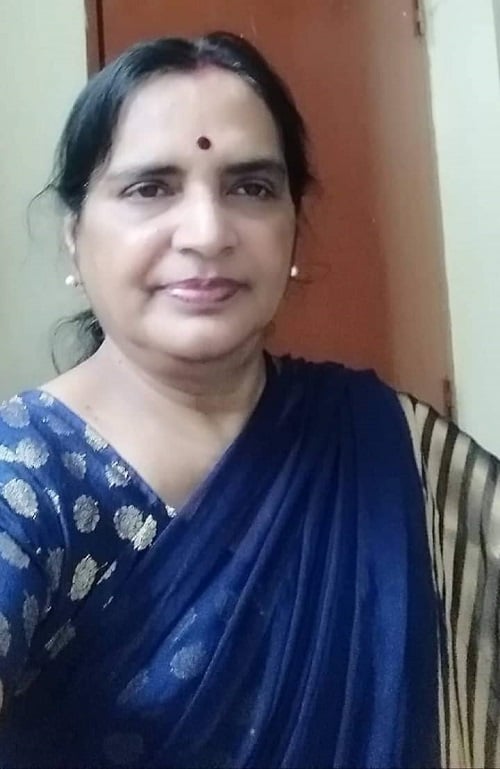
Dr.Snehaprava Das, former Associate Professor of English, is an acclaimed translator of Odisha. She has translated a number of Odia texts, both classic and contemporary into English. Among the early writings she had rendered in English, worth mentioning are FakirMohan Senapati's novel Prayaschitta (The Penance) and his long poem Utkala Bhramanam, which is believed to be a.poetic journey through Odisha's cultural space(A Tour through Odisha). As a translator Dr.Das is inclined to explore the different possibilities the act of translating involves, while rendering texts of Odia in to English.Besides being a translator Dr.Das is also a poet and a story teller and has five anthologies of English poems to her credit. Her recently published title Night of the Snake (a collection of English stories) where she has shifted her focus from the broader spectrum of social realities to the inner conscious of the protagonist, has been well received by the readers. Her poems display her effort to transport the individual suffering to a heightened plane of the universal.
Dr. Snehaprava Das has received the Prabashi Bhasha Sahitya Sammana award The Intellect (New Delhi), The Jivanananda Das Translation award (The Antonym, Kolkata), and The FakirMohan Sahitya parishad award(Odisha) for her translation.
Satish Pashine
In the dusty, sun-baked lanes of Rajgangpur — a small industrial town cradled between chimneys, coal smoke, and the distant rumble of cement trucks — lived a boy named Deepak. He was lean like a bamboo shoot, with eyes that missed nothing and a smile that came as quickly as it disappeared. Life in Rajgangpur wasn’t easy, but Deepak had learned early to find joy in the little things: the hiss of boiling tea from the street vendor, the rhythmic clang of factory tools in the distance, and the way the evening sun painted gold on rusted rooftops.
Every morning, like clockwork, Deepak would watch his father, Raghunath, step into his worn sandals, pick up his dented, rusting toolbox, and head out towards the looming cement factory at the edge of town. Dozens of men gathered there each day — casual labourers with sun-lined faces and hungry eyes — waiting silently for the foreman to choose who would get work and who would be sent home empty-handed. It was a daily lottery. And the foreman, in his crisp shirt and air of authority, might as well have been a king.
Raghunath was an electrician by trade, a good one too. But he wasn’t on the payroll. His fate, like that of many others, hung in the balance of the foreman’s mood, the factory’s whims, and the day’s demand. Some mornings, he would be picked, returning home in the evening with calloused hands darkened by grease and soot, but a smile playing on his lips. On other days, he came back slower, shoulders heavy, toolbox still full, and pockets turned quiet.
To young Deepak, the foreman wasn’t just a man in charge — he was the one who decided whether that night’s dinner would be a spicy curry with vegetables or just plain boiled rice and salt. He could not yet name it, but he felt the injustice in his bones.
One dusky evening, as the power flickered and the air smelled of damp earth and diesel, Deepak sat on the cool floor beside his mother. Savitri, a woman of few words and immense grace, was carefully sifting through a pile of rice, picking out pebbles and husks with quiet precision. Her fingers moved with the ease of someone who had done this a thousand times, and her eyes, though tired, held the same quiet spark her son had.
“Maa,” Deepak said, his voice thoughtful but full of quiet fire, “main foreman banunga. Bahut bada foreman. Sabse bada.”
Savitri didn’t look up immediately. She found another tiny stone in the rice and flicked it aside. Then she smiled — a slow, knowing smile — and placed a warm hand on Deepak’s head.
“Pehle padhai toh kar le, beta,” she said gently. “Itni achhi padhai kar ki tujhe scholarship mile… aur fir ek din, foreman kya, poori factory tere aage salaam kare.”
Deepak didn’t say anything more that evening. But long after his parents had gone to sleep, he lay awake on the thin mat spread across the cool floor. The kerosene lantern hissed quietly beside him, casting shadows on the cracked walls. Outside, the factory’s hum had faded, replaced by the soft chorus of crickets and the occasional barking dog.
He stared up at the tin roof, imagining a different life — one where he wore clean, pressed clothes, carried a clipboard under his arm, and people nodded respectfully when he walked past. A life where his father came home smiling every single evening, not weighed down by uncertainty. In his mind, the foreman had vanished. He had taken his place.
What exactly was a “scholarship”? Deepak wasn’t sure. But if it meant changing their lives, he wanted it. Badly.
From the next day, something shifted. In the classroom, Deepak no longer let his mind drift out the window. He sat up straighter, listened harder. The words in his textbooks — especially the English ones — still felt foreign, like songs from a radio station he couldn’t tune properly. But he refused to let them scare him. He borrowed tattered books from seniors and studied under the fickle light of the kerosene lamp. When power cuts came, as they often did, he lit a candle stub or sat near the doorway to catch the last light of the setting sun.
His mother noticed first. “Tu kitna der tak padhta hai aajkal,” Savitri said one night, gently massaging oil into his scalp. “Jaldi samajh nahi aata toh der lagti hai, Maa,” he said, half-apologetically.She chuckled softly. “Toh samajh ke aage nikal ja, beta. Tere jaise koi nahi yahaan.”
In high school, a new subject entered his world — biology. He hadn’t picked it intentionally. In fact, it had been his fourth choice when he enrolled in pre-university college. Most boys from their basti chose arts, or took up welding, tailoring, or driving. Science was for boys from English-medium schools — sons of government clerks and doctors, not electricians who stood outside factory gates.
But Deepak… Deepak was stubborn. He struggled with the diagrams, the Latin names, the theories that twisted his tongue and thoughts. But his eyes lit up during practical classes. Dissecting a frog, examining plant cells under a microscope — it was like entering a world that was finally speaking back to him.
“Sir,” he once asked timidly after class, “agar main doctor banna chahoon toh… bahut mushkil hai kya?” His teacher, Mr. Pradhan, looked up from his register. He had taught in better schools once but had returned home after retirement.“Mushkil toh hai,” he said, peering at Deepak over his glasses. “Par tere jaise bachche, jo haar nahi maante, wahi doctor bante hain.”
From that day, Deepak stopped doubting himself. He wasn’t the smartest in class, but he outworked them all. His notebooks were filled edge-to-edge, margins bursting with extra notes and questions scribbled in the dark. When the board exam results came in, Rajgangpur was abuzz. Deepak’s name was on the district merit list. A government scholarship came with it — crisp, official, with his name spelled correctly for the first time on a letter.
That evening, Raghunath walked to the tea stall and bought sweets — not the usual half rupee ones, but proper pedas. “Kya baat hai, Raghu?” the stall owner asked. “Hamra Deepak… scholarship mila usko. Doctor banne jaa raha hai,” he said, his voice choking just a little.
And for the first time anyone could remember, someone from their basti walked through the gates of a medical college.
But the journey had only begun. MBBS was another mountain. The lectures were fast, the textbooks thick, and the competition brutal. Deepak found himself surrounded by polished English, branded shoes, and classmates who had grown up around doctors. There were nights he wept quietly into his pillow, feeling like an outsider in a world that wasn’t made for boys like him.
“Maa, chhod doon kya?” he asked once over the phone, his voice barely a whisper. “Ek baar haan bol diya na, Deepak,” Savitri said gently, “ab sirf aage dekh. Peeche nahi.” So he did. One exam at a time. One night duty at a time. He walked hospital wards in threadbare shoes, skipped meals to buy photocopies of medical notes, and read until his eyes stung. But every time he wanted to quit, he remembered his father’s silhouette at the factory gate, toolbox in hand.
Years later, when Deepak walked across the stage in a stiff white coat to collect his MBBS degree, the applause felt distant. What mattered was standing with his parents afterward, under a sunlit tree, taking a photo — the three of them smiling like they had never smiled before. But Deepak wasn’t finished.
He appeared for the postgraduate entrance. This time, he didn’t just pass — he ranked high enough for a fully-funded MS seat. The government would now pay him to study, and he’d receive a monthly stipend. No more borrowing money. No more worrying about rent or fees. Holding the admission letter for MS General Surgery, Deepak stared at it for a long time. It felt unreal. He thought back to the boy with the kerosene lamp and dreams bigger than his surroundings.
“Doctor Babu!” someone called out jokingly from the basti when he visited home. Deepak turned and smiled. Not out of pride, but gratitude. After years of sleepless nights, ward shifts, and surgeries that tested both his body and soul, Deepak finally held his MS degree in his trembling hands.
But before he could plan what came next, Raghunath, as always, had something else in mind. “Ab tu Doctor ban gaya,” his father said one morning, sipping tea from a steel glass. “Haan Baba,” Deepak replied, adjusting his stethoscope absentmindedly. “Ab tu clinic khol le yahin. Apne Rajgangpur mein. Hamare logon ke liye.” Deepak looked up. His father’s eyes weren’t asking — they were dreaming.
One dusky evening, just as the last light dipped behind the factory chimneys, Raghunath cleared his throat and announced, “Achha rishta aaya hai.” They were sitting on the same narrow verandah where, years ago, Deepak had once said he wanted to be a foreman. Now, a doctor sat there — shoulders heavier, dreams taller, but heart still tethered to that little boy from Rajgangpur.
Raghunath continued, with a rare glint of pride in his eyes, “Steel Plant ke Financial Controller sahab ke ghar se baat pakki hui hai… ladki padhi likhi hai, MA kiya hai. Family izzatdaar hai.” Deepak looked up sharply, surprised. “Baba, abhi toh main bas degree le ke nikla hoon. Pehle naukri mil jaaye, fir shaadi… samajhdaari yeh hi hai.”
But Raghunath, who had spent decades standing in line outside the factory gate, waiting for a foreman’s nod, had no appetite for waiting anymore. For him, opportunity was a fleeting thing — not to be overthought, just grabbed.“Hum bahu ko pal lenge,” he said firmly, voice hoarse but resolute. “Tu itna bada doctor hai ab… itna accha rishta baar-baar nahi aata.” Savitri nodded silently, her expression unreadable as she folded clothes nearby. She had always been the bridge between the two men in her life — the patient translator of silence and stubbornness.
Deepak looked down at his hands. Callused from years of effort, not surgery. He didn’t argue further. He knew that look in his father’s eyes — the same look from years ago, when he came home empty-handed but still told Deepak to dream. The marriage was fixed with quiet efficiency. A modest, dignified ceremony followed in the town’s community hall, lit with borrowed fairy lights and filled with neighbours who had watched Deepak grow up.
That’s how Ananya entered his life. She was everything the description had promised — elegant, well-educated, calm. She wore her silks with grace, spoke little but thought a lot. Her world had been cleaner, more ordered — a home with a car parked outside, a fridge humming in the corner, shelves filled with books that no one had borrowed. Ananya didn’t look down on Deepak’s background. She had a gentle way of observing things — never mocking, never praising, just quietly absorbing. But still, Deepak felt the pressure. He now had a wife from a polished home, parents still living in a basti, and no permanent job in hand.
In the nights after the wedding, when Ananya slept peacefully beside him, Deepak would lie awake again — this time not dreaming, but calculating. So he got to work. He rewrote his CV, polished his old internship certificates, and began applying everywhere. Bhubaneswar, Cuttack, even some far-off hospitals in Jharkhand. He sent emails from dusty cyber cafes, made phone calls from erratic landlines.
Soon, the interviews began. A private hospital in Bhubaneswar offered him a junior consultant’s post. Not bad — clean campus, steady patients, and close to home. A district government hospital in Sambalpur called him for a posting — lower pay, but full job security. And then, unexpectedly, came a registered mail stamped with the Ashoka emblem: Selected — Army Medical Corps.
He told Ananya over tea one evening. She blinked. “Army? You applied?” “Haan… form bhara tha,” he said. “Socha tha try kar leta hoon.” Her face didn’t change, but he noticed the pause. “Aur… jaana padega?” “Training pe bulaya hai. Posting baad mein pata chalega. Salary… theek hai. Accommodation bhi milega.”
Soon, opinions from every corner of the family began pouring in. “Bhubaneswar le le,” said one uncle, “family ke paas rahega. Sheher ka comfort bhi milega.” “Government ka naukri lena chahiye,” offered another. “Pension aur safety hai. “Fauj? Arre tension bhara life hai,” whispered a cousin. “Discipline, transfers… abhi nayi shaadi hui hai.”
Deepak nodded at all of them. Listened patiently. Said nothing. At night, he sat with a pen and paper, writing out numbers: salaries, allowances, rent savings, future EMIs. The Army posting offered the highest pay — along with quarters, healthcare, and a uniform. He didn’t feel a surge of patriotism. No swelling music played in his head. It was a simple decision born out of survival, responsibility, and math.
The next morning, he printed the acceptance form, signed it, and folded it neatly into his pocket. When he stepped off the train for his first day of duty, Deepak wore the crisp olive-green uniform like it was borrowed — stiff, alien, and proud. A brass nameplate sat just above his heart: Dr. D. Raghunath — a name carrying two lives, two generations of struggle. As he stood in formation with other doctors in training, eyes forward, spine straight, he felt the weight of his journey — not as burden, but as purpose.
He hadn’t taken this path for glory. He took it so that his mother could finally switch on a ceiling fan without praying for electricity, so that his father could sit on the verandah and talk about his “doctor beta” with pride, and so that Ananya could step into a life where compromise wasn’t the only option. The boy who once wanted to become a foreman had now become a soldier in scrubs — standing tall not for medals, but for a future his family had never dared to imagine.
In the vast expanse of the cantonment grounds, where even the birds seemed to fly in straight lines and morning drills echoed like clockwork, Deepak worked with steady hands and a steady heart. The uniform gave him order, the wards gave him purpose. But beneath the routine of injections, diagnoses, and salutes, a quiet, deeply personal dream lingered. It wasn’t a medal he wanted. Not a promotion. Not even a house on the hill.
What Deepak longed for was simple: to take his parents for a ride in his own car. A real car. His car. He pictured it often — his father seated beside him, not clinging to the door of an overcrowded bus, not limping home after a long day at the factory. Just sitting, quietly, his legs stretched out, his back supported by a cushioned seat, the wind from the rolled-down window brushing past.
Every time Deepak went home on leave, he noticed the change. Baba’s steps had slowed. He no longer walked with the long, firm strides of a man used to standing his ground. His knees creaked, and there was a slight wheeze in his breath that he dismissed with a wave. “Thoda thakaan hai,” Raghunath would say, brushing away concern like dust off his kurta. But Deepak knew. The years had left their mark — waiting under sun-scorched skies, working jobs that paid by the hour, hoping for a foreman’s nod. The body remembered what the spirit tried to forget.
One night, after dinner, Deepak sat with Ananya on their small balcony, sipping tea. “Main chah raha hoon… gaadi le loon,” he said suddenly. Ananya turned to him, a little surprised. “Abhi? Car?” “Baba ke liye,” he said softly. “Zindagi bhar paidal chale hain. Sochta hoon… ek baar toh bithaun unhe apni gaadi mein.” She didn’t answer right away. Just looked at him, and then nodded.
“Lijiye,” she said simply. “Waise bhi aap ke sapne kabhi sirf aap ke liye thodi hote hain.” His salary as a medical officer wasn’t bad — steady, with perks — but between remittances to home, some savings for their sons, and daily expenses, there wasn’t much left. Loans weren’t easy either. Despite the uniform, the banks remained skeptical. “Four years’ service minimum,” the loan officer said, tapping at his keyboard. “Unless you have a guarantor or fixed collateral.” Deepak didn’t.
He returned home that day not dejected, but more determined. He began combing through his provident fund account — the one untouched, slowly accumulating, his only real financial backup. But PF withdrawals had rules. Strict ones. “Car purchase?” laughed a colleague. “Arey, luxury samajhte hain log yeh toh. Withdraw karna mushkil hai.”So Deepak did what thousands of quiet strivers have done across the country. He bent the system just enough to fit his dream through. He wrote a letter citing “urgent home repair.” Submitted the documents. Followed up without pestering. Waited. Prayed. Weeks later, the withdrawal was approved.
On a humid, half-cloudy afternoon, Deepak walked into the Maruti dealership with his Army ID and paperwork in hand. No fuss. No back-and-forth. He pointed to a simple, pearl white Maruti 800 — India’s most modest dream car. “Yeh chahiye,” he said. The salesman blinked. “Sir, you want to test drive—?”“Nahi,” Deepak smiled. “Lena hai. Bas lena hai.”A few days later, the car arrived. Small, sturdy, and with that faint scent of new upholstery and fulfilled dreams. He drove it all the way to Rajgangpur, heart thudding louder than the engine.
As the car came to a halt near the basti, neighbours peered out from behind doors, kids chased the wheels, and someone called out, “Doctor Babu aaye hain! Apni gaadi mein!” Raghunath stepped out of the house slowly, eyes adjusting to the glare off the white bonnet. He walked to the car, almost afraid to touch it. But when his fingers met the cool, smooth surface, he laughed — a raw, stunned laugh, almost boyish. “Humra Deepak… apni gaadi…” he whispered, as if still not convinced. Deepak opened the passenger door, grinning. “Aayiye, Baba. Ab chalte hain humare sheher ke raaste pe — ek baar, aaram se.” Savitri hesitated at the backseat. “Main toh sochi thi… hum log ke liye yeh sab kabhi na hoga…”
Deepak leaned in, touched her feet lightly. “Maa, aap logon ke liye hi toh hai yeh sab.” And so they rode — slow, proud laps around Rajgangpur. Past the school, the old tea stall, the factory gate where Raghunath had once stood with a rusted toolbox.People waved. Some clapped. Others simply stared. Inside the car, Raghunath leaned back, one arm resting on the open window. His eyes half-closed, not in sleep but in peace.That day, for the first time, Deepak saw what true rest looked like on his father’s face.
Years passed, but that ride remained a memory stitched into Deepak’s soul — more valuable than his degrees or medals. Life moved on, but gently now. Arvind and Nikhil, the two boys who once watched their father scribble case notes at midnight, inherited his discipline. They studied, prepared, and cracked engineering entrances, not with ease but with effort — the family legacy.“Papa,” Arvind once said during a late-night chat, “aap thakte nahi ho kya?” Deepak smiled, setting down a half-read medical journal. “Aadat hai beta. Humare ghar mein sapne aram se nahi aate — mehnat se aate hain.”
Both boys graduated in engineering with flying colors. Jobs came — steady, respectable. Interviews cracked, offers negotiated, joining letters printed. And when it was time, Deepak left no stone unturned for their weddings. He booked better halls, arranged larger feasts, ordered custom-stitched sherwanis, even hired a wedding planner — something he had once mocked in newspapers. Ananya teased him one night, watching him fuss over stage décor. “Aap toh bade shaahi taste ke nikle.”
Deepak laughed, tired but happy. “Bas itna sochta hoon… jo humne nahi dekha, wo apne bachchon ko zaroor dikhana hai.” After Arvind’s wedding, Deepak folded away his olive-green uniform for the last time. Alone in his room that evening, he ran his fingers along the creases of the shirt one last time, lingering over the name tag that read Col Dr. D. Raghunath. The uniform still smelled faintly of starch and eucalyptus oil — a scent that had become part of him over the years. He laid it down neatly in a trunk, alongside the woollen beret, a pair of faded boots, and three modest service medals. No fanfare. No send-off ceremony. Just the soft click of a trunk being shut, and the quiet dignity of a man closing one chapter to begin another.
A few days later, he joined a teaching hospital in Bhubaneswar — a medical college that was bustling with young, wide-eyed students, stethoscopes hanging awkwardly around their necks, notebooks stuffed with lecture printouts. They addressed him as Sir, stood up when he entered the room, scribbled down his words as though they were gospel. But Deepak never tried to impress. “Doctor banna hai?” he would say in his opening lecture, his voice calm but firm. “Toh pehle insaan bano. Dard samajhna seekho. Yeh sab books se nahi aata.” In those classrooms, he didn’t teach only anatomy or medicine. He taught hunger, humility, discipline — the unwritten syllabus of survival that he himself had once studied by the light of a flickering lantern.
His sons, Arvind and Nikhil, were now building lives of their own. New apartments, new jobs, new in-laws, new beginnings. One evening, sitting on the balcony sipping tea, Deepak said to Ananya, “Main soch raha hoon… dono ke liye ek-ek gaadi le lu.” She looked at him, amused. “Aur apne liye? Nayi Innova aa gayi hai… hybrid model. Ek baar showroom chalte hain?” Deepak chuckled, shaking his head. “Mujhe nai chahiye. Meri gaadi abhi chalti hai, naa?”
That “old” car was a fifteen-year-old Toyota Innova, with a slight rattle in the dashboard and worn-out seat covers that smelled of mothballs and memories. But to Deepak, it wasn’t just a vehicle. It was a witness. That car had seen him rush to midnight emergencies, had ferried ailing neighbours to hospitals, had driven through monsoon-flooded lanes and narrow village roads. It had carried his mother’s ashes to the ghat, and his sons to their engineering colleges.
One day, Arvind said gently, “Papa, ab toh aap afford kar sakte ho. Naya Innova le lo. Iska AC bhi thik se kaam nahi karta.” Deepak patted the steering wheel affectionately. “Beta, yeh sirf gaadi nahi hai. Yeh toh saathi hai. Isne zindagi ke har mod pe mera saath diya hai.” He paused, then smiled. “Bacchon ke liye sab kuch naya hona chahiye… par main toh purani cheezon mein sukoon dhoondhta hoon.” So, while Arvind and Nikhil received gleaming, touchscreen-laden sedans, Deepak kept driving his loyal old Innova — slow, steady, and full of quiet pride.
He wasn’t trying to be modest. It just wasn’t in his nature to upgrade for the sake of it. Somewhere deep inside, he still carried the boy from Rajgangpur who had once stood on tiptoes to look over the factory gate, watching his father return home with tired shoulders. That boy had never dreamed of status. He had only dreamed of security, of dignity, of not having to choose between bus fare and schoolbooks. Now, as the years softened into a comfortable rhythm, Deepak lived by the principle that had carried him through every hardship: “Apne bachchon ko sab do jo tumhe kabhi nahi mila. Aur unki sukoon mein hi apna sukoon dhoondo.”
And so, in a quiet colony in Bhubaneswar, every morning, an old silver Innova would rumble out of the driveway. Its paint a little weathered, wipers a little squeaky, but the man behind the wheel—Professor Deepak Raghunath—drove it like it was brand new.
He wasn’t rushing to an emergency room anymore, nor hurrying between lectures. These drives were slower now—grocery runs, chai with old colleagues, or visits to the park where he would sometimes sit quietly and watch pigeons shuffle around. Deepak had just turned sixty-nine, and a strange calmness had begun to take root in his chest. Not boredom. Not fatigue. Just… peace. The hospital college had already begun prepping for his retirement function. Speeches, shawls, and awkward clapping. But Deepak didn’t care much for ceremony. His mind was elsewhere—on a different kind of milestone.
His first grandchild had just been born. A baby girl with sleepy eyes and a strong grip. When Deepak had held her for the first time, something shifted inside him. A chapter hadn’t just ended. A whole book had closed. One warm evening, as Ananya folded the laundry and the television buzzed faintly in the background, she said, “Sun rahe ho? Tumhare liye kuch lena chahiye ab.” Deepak glanced up from his crossword puzzle. “Mere liye? Kya lena hai?” “Tumne sabke liye liya. Apne liye kab kuch liya? Na kapde, na shoes, na phone… aur gaadi toh…” She let the sentence trail off, shaking her head. Deepak smiled. “Gaadi toh chalti hai… aur kya chahiye?”
“Chalti hai, haan. Lekin tumhare jaisi zindagi chalti thi… ab toh thodi chmakdaar bhi ho sakti hai.” She paused, then added with a little mischief, “Kal ek Range Rover dekhi… chamak rahi thi showroom ke bahar. Driver usko pyaar se pocha laga raha tha.” He laughed, full-throated and amused. “Range Rover? Arre Ananya, tum toh bilkul Arvind jaisi baat kar rahi ho.”
The next morning at breakfast, Arvind and Nikhil both chimed in. “Baba, she’s right. You’ve never done anything for just yourself.” “Abhi nahi toh kab?” Nikhil said, pouring tea. “Is baar koi Innova ya sedan nahi. Something bold. Something different.” Deepak hesitated. “Mere liye car lena thoda ajeeb lagta hai…” Arvind leaned forward. “You gifted us new cars. Even our wives drive better than what you do. Bas ek baar showroom chalo.” So they went.
It wasn’t loud or dramatic. Just a quiet weekday, Deepak in a clean white kurta, Ananya in a light blue cotton saree. The dealership doors opened with a hiss of air conditioning, and inside, rows of gleaming machines stood under lights that made them look like they belonged to another world. “Sir,” the salesman said with a respectful nod, “aapke jaisa gentleman toh classic model ke liye aaya hoga. Maybe Mercedes C-Class?” Deepak nodded vaguely, not yet sure what he wanted.
But the salesman had done this dance before. He watched the subtle way Deepak looked at the electric models, the way his hand brushed over the smooth, silent hood of one particular car. “Sir,” he said, voice gentle, “you’ve driven through every decade of Indian roads. This one’s for the road ahead—no noise, no engine, no tension. Full-electric. Effortless.” Deepak looked at Ananya, who simply smiled and said, “Khud ke liye hai. Soch samajh ke le lo.” He didn’t ask for discounts. He didn’t flinch at the price. He only closed his eyes for a second—and saw himself as a ten-year-old boy in Rajgangpur, waiting at a factory gate, clutching a schoolbag stitched by his mother. And he said softly, “Iss baar, haan.” A week later, the family gathered outside the Mercedes showroom. Balloons fluttered in the heat. A camera clicked. The delivery team handed over the key with the practiced enthusiasm of people who did this daily. But for Deepak, it was not just another delivery. It was the first time in seventy years he had bought something large, luxurious, and guilt-free—for himself.
He sat behind the wheel, Ananya beside him, and the others around clapping. He turned to her and said, “Yeh toh bilkul chalti hi nahi…”She looked confused. He grinned. “Kyunki awaaz hi nahi hai. Bilkul meri zindagi ki tarah—ab shor nahi, sirf sukoon hai.” They drove out, the electric car whispering onto the main road. A soft breeze floated in through the sunroof. Ananya held his hand briefly on the gear knob and said, “Late toh hua… par achha kiya.” Deepak nodded. His eyes weren’t teary. But his grip on the steering tightened just slightly.
From dreaming of becoming a foreman to signing off on a luxury car in his 70s—not as a gift, not as a necessity, but as a celebration—he had come further than anyone from Rajgangpur might have imagined. And this time, the road ahead wasn’t a challenge. It was a rewardHe smiled to himself, rolled down the window slightly, and let the wind touch his face. The factory gate was long behind him. The boy had made it. And the man was finally free.
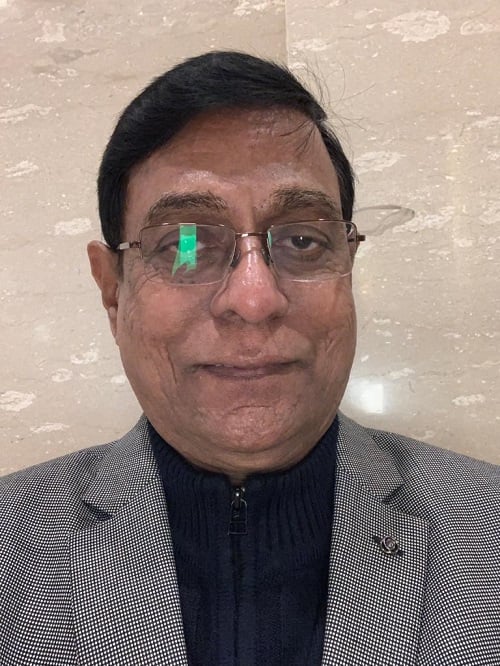
Shri Satish Pashine is a Metallurgical Engineer. Founder and Principal Consultant, Q-Tech Consultancy, he lives in Bhubaneswar and loves to dabble in literature.
Ishwar Pati
A comedy created by an error, it could have turned into a tragedy for the poor driver had it not been for a quiet David in the hierarchy showing the temerity to cock a snook at his Goliathan boss.
The Goliath in this drama happened to be the general manager of the company. One of his duties was to inspect the company’s upcountry outlets, and in those days rules permitted the use of only a non-AC Ambassador car, even in the heat of the northern summer. Though it was painful, he was not a stranger to heat. In fact, he had his own Tamil way of tackling it — a white dhoti and bush shirt on the outside and plenty of chhas (buttermilk) inside. He would comfortably settle into a state of hibernation on the rear seat as soon as the car rolled, bestirring himself only on reaching the destination, when he would slip into formal attire for his official engagements.
One hot day, his car was caught in a long line at a level crossing. The driver walked idly up to the gate to spot the oncoming train. In the meantime, the GM got out of the car to stretch himself and also to answer the call of nature. When the gates opened and the traffic started moving, his driver started the car and moved off — without the GM! By the time the driver realised that his precious charge was not reclining on the back seat, he had covered a good 50 km. He immediately turned the car around and sped back. But the GM was nowhere to be seen.
Poor GM! Stranded without his purse and money, he watched helplessly as cars sped past him, paying no heed to his pleas for a lift. His appearance didn’t help matters. Dark and stocky, he looked like a caricature as he scurried on the road in a dhoti and chappals. Which motorist could ever imagine him to be a top corporate official? It was almost half an hour before he could convince someone to take pity and transport him to his destination. The driver also made it there after some time, inquiring all along the route for his GM. Needless to say, there was an explosion when they came face to face. Poor driver!
But the hard-nosed GM was not content with only a verbal firing. He instituted a full-scale inquiry, to “fix him” as he called it. The investigation was given to a middle level officer who went through the motions diligently. In his report, he listed out the various acts of omission and commission on the part of the driver, including “reckless driving” for being “unmindful of movements on all sides”. But he ended his report with a flourish, which perhaps saved the day for the driver. “The GM had no business to leave the car without informing the driver”, the daring investigating officer commented.
No one had the courage to show the report to the GM, though he was keen to know the action taken against the driver. How could that be done, without initiating action against the GM too for negligence?
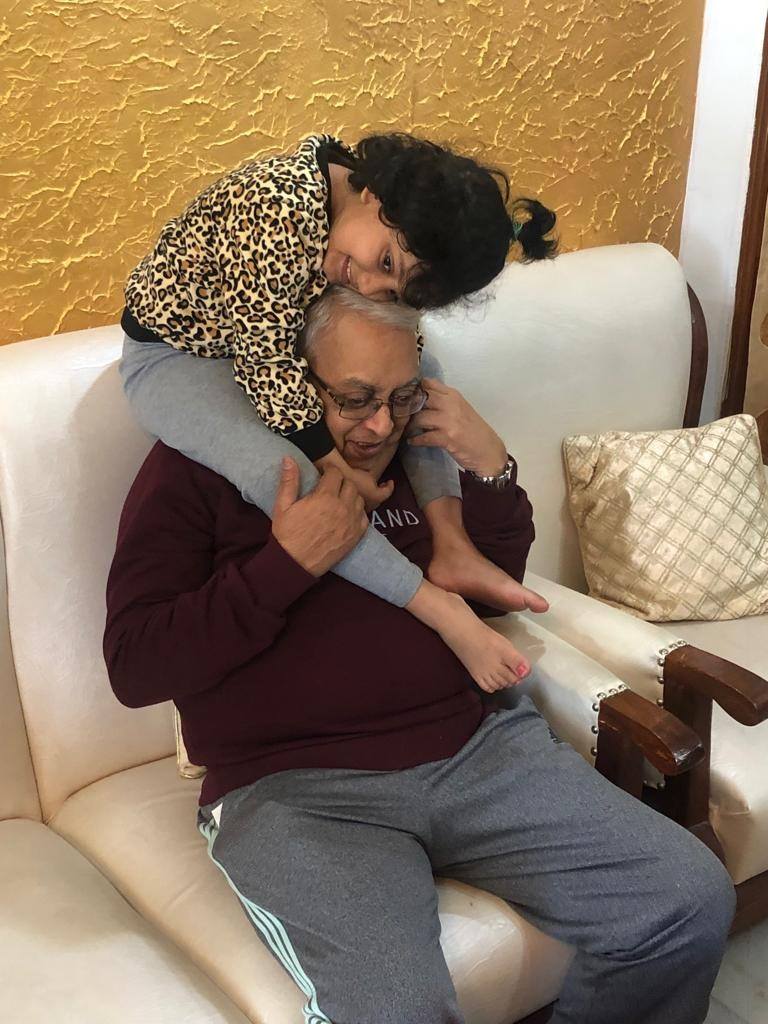
Ishwar Pati - After completing his M.A. in Economics from Ravenshaw College, Cuttack, standing First Class First with record marks, he moved into a career in the State Bank of India in 1971. For more than 37 years he served the Bank at various places, including at London, before retiring as Dy General Manager in 2008. Although his first story appeared in Imprint in 1976, his literary contribution has mainly been to newspapers like The Times of India, The Statesman and The New Indian Express as ‘middles’ since 2001. He says he gets a glow of satisfaction when his articles make the readers smile or move them to tears.
CELEBRATING FEMININE ENERGY: INDIA’S MOST ANCIENT 64 YOGINI TEMPLE, HIRAPUR
Deepika Sahu
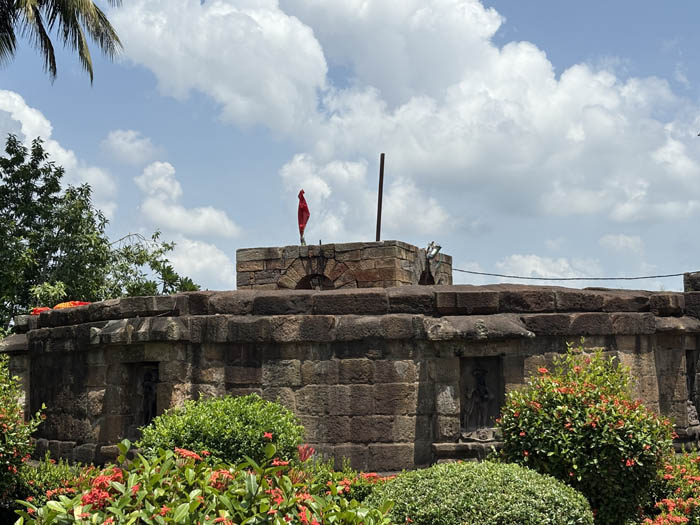
Hirapur, a quaint little village, just 20 kms away from Bhubaneswar, is home to India's most ancient 64 (Chausathi, as it is said in Odisha) Yogini Temple. which is a Shakti Pith that celebrates feminine energy in all its radiance. The small, circular Yogini Temple in Hirapur dates back to the 9th Century and celebrates feminine It is one of the few existing Chausath Yogini shrines in India. The temple is a tantric shrine, with hypaethral (roofless) architecture as tantric prayer rituals involve worshipping the bhumandala (environment consisting of all the 5 elements of nature – fire, water, earth, air, and ether).
THE ENERGY CALLED YOGINIS: In both Hinduism and Tantric Buddhism, yoginis are powerful figures embodying divine feminine energy, often associated with mysticism, wisdom, and fierce independence. The term 'yogini' not only highlights their spiritual strength but also links them to deeper cosmic forces.
In Puranic literature and other sacred texts, yoginis are seen as embodiments of Shakti, the primordial cosmic energy that powers the universe. Their forms as dakinis, bhairavis, and shaktis emphasize their multifaceted roles as both nurturers of life and fierce protectors. They are the ones possessing the incredible supreme "life-enhancing energies" for elevating both material and spiritual well-being. Their untamed nature reflects a complete embrace of the feminine in all its forms—raw, sensual, powerful, highly energetic, deeply affectionate, connected to the elements of life in all its purity.The yogini is not merely a practitioner of yoga but a symbol of cosmic balance, embodying the sacred power of creation, transformation, and destruction.
Because of their wisdom and power, yoginis are deeply revered figures in many different lineages. In fact, they are mentioned across various languages, scriptures, religions, and philosophies – from Hinduism, Buddhism, and Jainism. The yogini is a powerful symbol of feminine energy, immense strength, empowerment, and agency. She is a powerful force for both inner and outer transformation and has the ability to delve deep within her consciousness and subconsciousness. There is no Shiva without Shakti -- that's the fundamental of life and creation.
This temple was discovered only in 1953, when archaeologist and historian Kedarnath Mohapatra of Odisha State Museum came across the sandstone blocks of a ruined temple. It was subsequently pieced back together.
According to legend Goddess Durga once took the form of 64 yoginis to defeat a demon. Once victorious, the yoginis requested Devi Durga to construct a temple in their honour, hence the concept of the Chausath Yogini Temple. In absence of an exact date of construction, some scholars opine that the temple was constructed by Queen Hiradei of the Bhaumakara dynasty during the 8th – 9th century CE, as the nearby village of Hirapur (originally Hiradeipur) was named after her.
The 64 yoginis are based on the Asta Matrakas or the eight major forms of Devi, the mother goddess. These are Brahmani, Vaishnavi, Maheshwari, Indrani, Kaumari, Varahi, Chamunda, and Narsimhi. Each of these yoginis has eight attendants and when they are all assembled, they add up to 64 yoginis. The yoginis are depicted in the form of chakra, and probably for this reason their temples are built in a chakra or a wheel formation. Each yogini sits on a spoke of this wheel.
THE ANSWER LIES IN INTERCONNECTEDNESS OF LIFE: This ancient shrine is all about interconnectedness of life. Nothing happens in isolation in this universe. We are all connected to each other and all our emotions make us who we are. And in the truest sense of feminine energy, we must embrace all emotions in its pure forms. The yogini murtis represent female figures standing on an animal, a demon, or a human head depicting the victory of Shakti (feminine power). They express emotions from joy, desire, happiness, love, anger and pleasure.
The presiding deity of the temple is Goddess Mahamaya. This vivid description of a Yogini temple evokes the mystical energy and divine femininity of the space, reflecting both the sacred and symbolic nature of its architecture and sculptures. The narrow and low entrance, requiring visitors to bow their heads, signifies an act of humility as one enters this sacred space. It also highlights the transition from the mundane world into a divine realm filled with ancient, powerful energies.
The presence of Jai and Vijay, the doorkeepers (dwarapalakas), adds a layer of guardianship, suggesting that only those prepared for spiritual transformation may pass into the sacred sanctum. Their role as divine gatekeepers is steeped in Hindu mythology, often appearing as the protectors of sacred spaces. The path to the sanctum, sculpted with the figures of Kaal and Vikaal—personifications of time and destruction—further enhances the sense of entering a timeless, otherworldly realm.
The outer wall adorned with the sculptures of Katyayini, one of the powerful forms of the goddess Durga, represents strength and divine feminine energy. The presence of these nine female figures further reinforces the significance of feInside the circular sanctum with an open roof, the 60 niches housing the idols of Yoginis in black granite symbolize a powerful cosmological circle. The open roof connects the sanctum to the sky, possibly symbolizing an unhindered connection between the earthly and divine realms. Each Yogini, standing in her unique pose with a different vahana (animal vehicle), represents a different aspect of divine feminine energy, reflecting both power and grace.
The diversity of their adornments, from bangles to anklets and other jewellery, emphasizes the richness and vibrancy of their characters. The depiction of some as huntresses, musicians, or balancing on wheels signifies their multifaceted roles, combining elements of creativity, destruction, and life. This temple feels like a living testament to the power, mystery, and beauty of the divine feminine.
In front of the temple, towards the east is a platform called Surya Pitha or the Sun platform. As a manifestation of the five elements, there is a beautiful pond just outside the temple. You just have to stand there and soak in its tenderness.
Trivia: The 64 Yogini Temple is 20 kms away from Bhubaneswar, capital of Odisha. So, the nearest airport/railway station is Bhubaneswar. Bhubaneswar is well-connected with India's major cities.
The temple is an ASI (Archaeological Survey Of India) protected monument.
There is no entry fee and the temple is open till 7 pm in the evening. You can visit the temple during the morning/daytime. The temple opens at 4 am but it would be better to visit after 7 am.
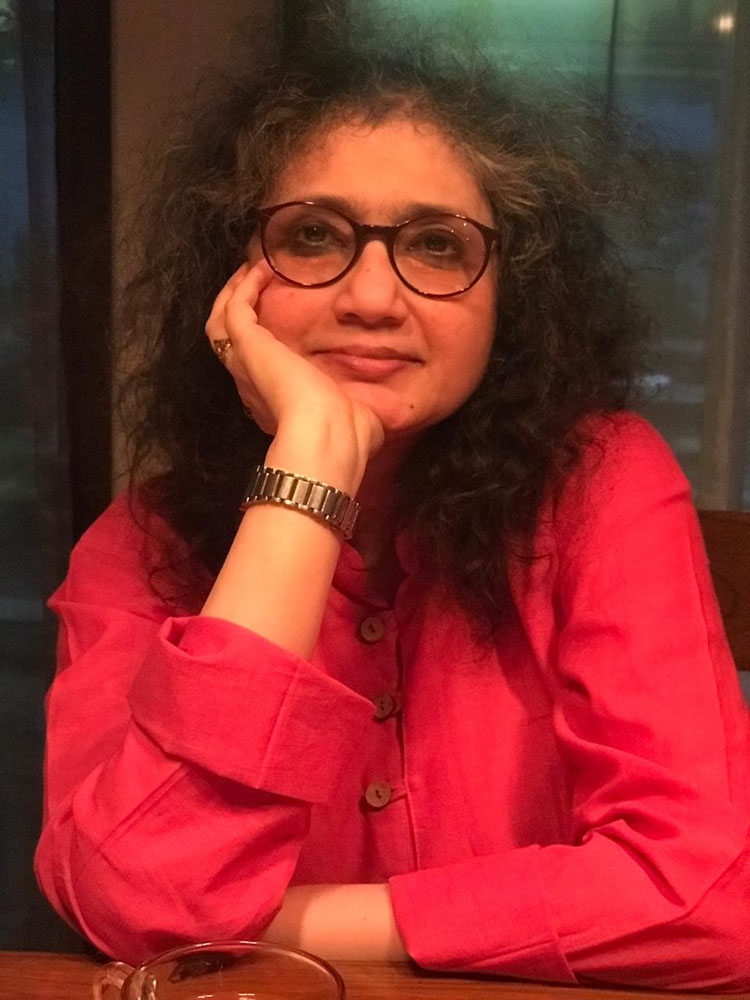
Deepika Sahu is an Ahmedabad-based senior journalist with a career spanning since 1995. During her career, she has worked with India's premier media organisations, including the Press Trust of India (PTI) in New Delhi, Deccan Herald in Bengaluru, and The Times of India in Ahmedabad. Currently, she is contributing India-centric features to Melbourne-based The Indian Sun, a cutting edge media platform. In addition to her journalism career, Deepika is involved in teaching English and Communication Skills to learners from different parts of India through Manzil, a Delhi-based NGO. Beyond her professional endeavors, Deepika is passionate about India's rich diversity, literature, blogging, quiet hours at a cafe and enjoying a cup of tea.
THIS GANESH CHATURTHI, MY MOTHER TOOK HER FIRST STEPS INTO A NEW LIFE, A NEW BIRTH
Annapurna Pandey
For Bou, it was the beginning of another cycle of existence. For me, it is the beginning of a world without her—a world where I must learn to carry her love, her values, her voice in memory through my children and grandchildren.
On August 27th, 2025, Ganesh Chaturthi coincided with the 10th day of my mother’s passing. She lived three months short of 90 years and left us on August 18th. The overlap of these two occasions carried profound significance for me.
On August 11th, my oldest brother admitted Bou to Kar Nursing Home in Cuttack after she became unresponsive. Being 10,000 miles away, I arrived in Cuttack on the 14th. I found her lying in a hospital bed, breathing faintly, eyes closed, with a nasal tube and saline drip. When I called, “Bou, bou, mu kie kahilu?” she gave no reply—but her eyelids fluttered, her left hand and leg moved feebly. I knew she felt my presence.
Her hair, usually neatly oiled and tied in a bun, was dry and uncombed. I stood there, helpless. Why wasn’t she speaking? Why did she look so deeply asleep? Doctors spoke of “sensorium issues,” scans, and procedures. Some spoke carelessly, as if she were already gone. My brother and I decided she should not endure painful interventions—no ventilator, no invasive tubes. We wanted her not to endure any pain and leave this world to the world beyond peacefully. I whispered in her ear: “Bou, I make you free. You decide what is best for you, without worrying about your children, as you have sacrificed for us all your life.”
On the morning of August 18th, I reached the hospital around 9:30 am. The floor near the little Ganesh idol at the entrance had been freshly washed for an elaborate Monday puja. But upstairs, in the ICU, my mother was breathing her last. Her face was calm, her forehead still warm under my hand.
Just as Ganesh clears obstacles and blesses fresh starts, I too must embrace a new path—living forward with gratitude, love, courage, and the hope of renewal.
That same morning, my brother and I became the pallbearers and carried her to the Khannagar funeral ground, where my father and brothers had also been cremated. I poured water over my head to purify myself before giving her mukhagni. My brother said, “Bou loves you,” and guided me to perform the final ritual, traditionally reserved for sons. As the fire consumed her, the afternoon aarati began at the nearby Kali temple. The drums, the bells, and the sound of the Mridangam rose with the flames, as if the gods and goddesses themselves were welcoming her spirit. She did not resist the fire—she accepted it.
Ten days later came Dasaha, the ritual of cleansing and renewal. At the banks of the Mahanadi, my brother, guided by the priest, offered food for her soul. The flowing river, the grazing cows, the drifting boats—all bore witness, as if my mother herself was merging into the mighty Mahanadi. The riverbank was full of people, from our village and extended family. They remembered her as the kindest soul and how she had helped them in so many ways. That night, a lamp was placed on a mound of sand, covered by an earthen pot with small holes. Through the night, its light glowed, guiding her soul forward. By morning, we saw human footprints in the sand. For us, it was a divine sign: my mother had taken her first steps into a new life, a new birth.
Ganesh Chaturthi, too, is about new beginnings. Every ritual in Hindu life starts with the invocation of Ganesh—the remover of obstacles, the giver of wisdom, the childlike god who blesses learning, laughter, and life itself. Growing up, I remember placing my notebooks before Ganesh during Chaturthi, seeking his blessings before beginning studies. My mother will make sure, we did the Ganesh Puja to get his blessings for the year and for our life. In 2025, Ganesh blessed me in a different way—by aligning his festival with my mother’s passage into a new life.
For Bou, it was the beginning of another cycle of existence. For me, it is the beginning of a world without her—a world where I must learn to carry her love, her values, her voice in memory through my children and grandchildren, even without her physical presence. The coincidence of Ganesh Chaturthi with her Dasaha has given me strength, courage, and determination to stay strong and spread her love and kindness. Just as Ganesh clears obstacles and blesses fresh starts, I too must embrace a new path—living forward with gratitude, love, courage, and the hope of renewal.
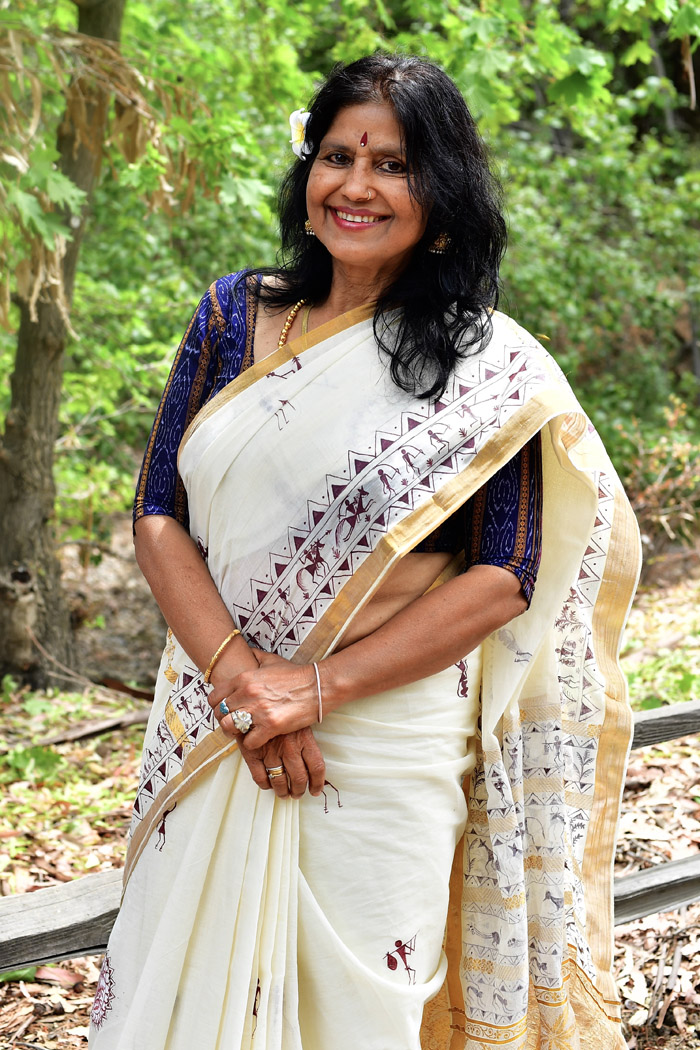
Annapurna Pandey is a cultural anthropologist at the University of California, Santa Cruz. Originally from Cuttack, Odisha, she moved to Santa Cruz, California in 1989. She is a travel enthusiast and loves to write travelogues highlighting her exotic experiences in different parts of the world.
Prasanna Kumar Hota
I am returning to my home town after many many days.The year of 1990… The turn of the Century is not far away…
As if Goddess Lakshmi came into our home smiling after I married Tanushree. Tanushree is definitely beautiful... I am grateful to my parents. I had requested them to choose a bride for me. I held a good government job; the salary was also high. So it was natural for parents of attractive and educated girls to show interest in me as a prospective bridegroom I am indebted to my father because he chose Tanushree, a beautiful educated woman, for me without bothering about dowry etc
The memory of our nuptial night is ever alive in my memory… a shaft of moonlight falling into the room through the skylight… our first touch… our first mingling… all fresh. I was dedicated to arranging all comfort and happiness for Tanushree. That's why I was careful not to have a child anytime too soon.
Perhaps, so much happiness could not be tolerated by Fate. My bad luck started three years after my marriage. Both father and mother passed away in a horrendous road accident. Imperfections started creeping into my life. How could anyone escape what Fate has ordained for you! Tanushree's calm courage and the companionship of Bikram, the best all-rounder, of our college days helped me somewhat to pull through the shock of losing my parents. Bikram was my old classmate, now working as a high-level civil servant. He was recently transferred to Bhubaneswar and was residing in our neighbourhood. His visits to my house somewhat helped me relieve my pain.
Bikram was in a very responsible high-ranking job in Government. Despite his busy schedule, he dropped by my quarters every day on the way back from his office. He would spend time with us drinking tea and recalling funny incidents of our college days trying to make us laugh. My recently orphaned depressed mind did not think of his anecdotes as particularly interesting or sometimes even decent enough. However, Tanushree appeared to enjoy his small talk, and I was also not averse to Bikram bringing some changes in the atmosphere of our house.
Bikram used his position to get me an allotment of a government residential plot for building a good house in our city. He also used his influence with the bank, so I could get a liberal house-building loan. I devoted my attention to building a new house to repair my broken mind. I had to go for office work; and after the office was over, I oversaw the construction of the house. The location of the new house was four kilometres away from my government quarters. At times, it was late in the evening by the time I could return home,as I had to settle the wages of the construction labour and plan for the next day's sand, cement, etc. I was relieved to see that invariably Bikram was there chatting with Tanushree. At least I was happy that Tanushree was not alone and was not a victim of the melancholic atmosphere of the house.
Bikram's wife, expecting their first child, had gone to her parents' house in a faraway district three months before the delivery date. Bikram would have been bored by his own empty house!
The construction of the house was over. I kept counting the days – when would this mess be over! Then I could be home before dusk.
One Saturday evening, I got the carpenter and his workmen together and explained the details to them to start the woodwork of the new house. In the morning, there was a talk that we would all go to the Club on Saturday night and our dinner would be in the Club. My work wasn't done; It was getting late. Meanwhile, the old servant of our house came on a bicycle, sweating it out. Tanushree had sent a message through him – ‘Bikram Saheb has been waiting for a long time. Tanushree will go to the club with him.... I should go straight to the Club after finishing my work ’. An hour later, I reached the Club. The music program had already begun. Tanushree and Bikram arrived after my arrival. Bikram said, 'You should not forget your present house while building a new one.’ He ordered whisky for both of us. I saw Tanushree looking dazzling in a new copper-coloured churidar kameez, despite looking tired. I used to buy all her dresses; but I didn't buy this pair. I started gulping down the whisky ordered by Bikram, bemused by this deviation in my life's routine…
That night, Bikram ordered for me a few more drinks. I didn't have a habit – but I couldn't refuse, hoping to overcome the tiredness of that evening. It was eleven p.m. by the time we returned to our house.
That night Tanushree turned her face away on the bed and slept. I felt annoyed with myself. There was a faint but intolerable intruding smell in the bed… Perhaps, the smell of alcohol ! I shouldn't have imbibed so much!
The house was almost complete. Bikram helped to rent out my house for a good monthly sum to a public sector enterprise to use it as its guest house. The house got completed
At my home, however, I found my home becoming gradually incomplete!
All the small and big items of work in the new house got finished on time. Last day of the month… According to the rent agreement, the Enterprise would come to occupy the new house from the 1st of next month. When I reached home, I saw Bikram sitting – holding Tanushree's hand. Looking at me, he said, 'Look, sister-in-law's palm is not only beautiful but the fate line is also bright. I didn't know that Bikram was an expert in reading palms. The two of them were sitting on the same sofa. I sat down on the other sofa and said, 'See, what is written on my hand?' Bikram did not hold my hand but asked me to open my palm well. "You'll be promoted soon," he said. ‘But it is showing that you will be transferred to a distant city. You will be the head of some new big project and get a new kind of responsibility. "
Seven days later, I was promoted. But due to the promotion, I had to leave Bhubaneswar and go to Jamshedpur as the head of an irrigation project jointly owned by the Governments of Odisha and Bihar. Tanushree's parents lived in Bhubaneswar. It was decided that I would go and join the new assignment. After a few days, I would set up a new house, come to Bhubaneswar to fetch Tanushree to Jamshedpur.
But…. I went to Jamshedpur and left Bhubaneswar behind… I got absorbed in new work, new city. … When longings get choked in the cobweb of doubt, hopes immerse in a quagmire of self-pity, Time becomes sileweach day dragged, but months lost meaning… Two years flashed by… I couldn't go to Bhubaneswar and bring Tanushree to Jamshedpur. I thought that she would be okay with her parents in Bhubaneswar. My project site was actually fifty kilometres away from Jamshedpur. Tanushree might not have found it convenient.. She too didn't display keenness – being the only child of her parents. She had told me several times earlier that it was her duty to take care of them. I too couldn't go to Bhubaneswar as I was engrossed in work.
Seven days ago, I got a phone call. Tanushree informed me that Bikram had been transferred to the Central Government; he had left for Delhi.
There were a lot of trees in the compound of the bungalow allotted to me in my project. Several species of birds thronged the trees. When I first came, a parrot came and sat on the branch of a big guava tree and sometimes pecked at the guavas. I observed that five days ago, two parrots flew in and sat on the guava tree. I remembered that I had planted good guava saplings in my new house at Bhubaneswar. These might have already turned into big trees, and the parrots would come and sit on the branches. I started to miss my home a lot. I thought of Tanushree also. Once again I began to have an irresistible longing to live in my new home at Bhubaneswar of my dreams. Fortunately, I was transferred to Bhubaneswar with new responsibilities at a higher post in my previous department.
I'm going back home.
In Jamshedpur, I had forgotten what home life was like – just work and work. My whole luggage was filled in two suitcases. One of the two suitcases was an old costly leather suitcase. During my marriage, Tanushree's parents gave me this suitcase filled with a lot of gifts. This leather suitcase had a thick blue coloured silk lining inside. I remembered – there were all the new things for me – trousers, shirt, vest, underwear, shaving razor kit, new Turkish towel….so many interesting things. After a few months of marriage, those things remained in my possession; but Tanushree started using the suitcase for herself.
I remembered that when I left Bhubaneswar, my train was in the evening. Tanushree had gone to her father's house. I removed the suitcase from Tanushree's closet, took out her belongings and put them on the shelves of her closet. It was getting late as I was held up at my ‘farewell’ function. I packed my clothes in a hurry in the suitcase and rushed to the railway station to catch the train. The suitcase…at least, one thing should keep me company to remind me of my marriage. The department driver took me to the station with the same suitcase as my only luggage. I didn't bid farewell to anyone – Tanushree hadn't returned from her father's house. I couldn't even take time to bid Bikram goodbye.
Bikram used to ensure that he would collect the rent for my home each month and hand over the same to Tanushree. I didn't even notice how I spent the two years in the Jamshedpur project guest house.
Now all my belongings were packed in the same old suitcase and another new suitcase. I filled my old suitcase with a variety of gifts for Tanushree….. a copper sulphate -coloured saree, a rainbow-coloured pashmina shawl, 'Poison' brand perfume, high heel shoes, beautifully designed handkerchiefs and a poetry book. Along with that, there were other signs of endearment -innerwears for Tanushree – as well as a box of chocolate pastries…. cosmetics such as powder lipstick etc...
I could almost find all these in the super-store of the newly opened mall at Jamshedpur. After buying everything I was ready to go to the check-out counter. My eyes suddenly fell on the rows of TV displayed for sale in the electronic section of the huge store. Some of these were turned on to woo buyers. News was playing on one TV screen. I glanced at it for a moment without any premeditation. The newsreader was saying that in Patna, a man suspected his wife's character and stabbed her. I didn't know why this news left me shaken to my roots. I moved to the crockery cutlery section of that store.
At times, I act as if I am in a trance… not quite in control of my faculties…!
I packed all the newly bought items into the old suitcase and filled the new suitcase with my old belongings. I had received that suitcase with gifts as the new son-in-law – now I was going to bring all the new gifts to woo Tanushree as my new wife as if to give her 'Kanya Soona'. I stuffed my clothes into another simple new suitcase, and left for the railway station.
Till the last hour, I was tied up with all the office work. It took quite some time for
settling the accounts, official papers on my last day.
This is the story of my life - I forget my personal life drowned in my work..
Now, sitting alone in the first class coupe compartment of the train, I leaned back on the berth. Like the practice prevalent in our Puri district, there was a culture of imbibing ‘bhang sherbet' in Bihar. My bhang intake had increased a bit during the holidays during my posting near Jamshedpur. What else could one do when one was left to dream alone! The staff and the team of friends had urged the driver to hand over to me a bottle full of bhang sherbet and sweets filled to the brim of a tiffin box to make me feel relaxed and enjoy the train journey.
I closed the door of the coupe as I was the only occupant. I put on the door latch for security.
I finally drew a long sigh of relief and settled back on my berth. I was thirsty with all the running around. Without pondering too much, I drank the bottle full of sherbet in one go. The sherbet tasted a little thick. I also ate three to four sweets to change the taste of my mouth. My eyes became sleepy – it was time for the train to leave the station. I switched off the big lights and put on the blue light. I lifted the iron window and looked up at the sky. The full moon was resplendent... Sometimes the floating white clouds, sometimes the black clouds were, however, covering it now and then… Tanushree’s bright face in darkness! … I didn't know when my eyes had closed with fatigue, sleep; – the train suddenly lurched and commenced its journey. I was startled; in the dim blue light I saw the shadowy figure of another passenger. – In his hand was also a suitcase resembling my old suitcase. Before I could say or think of anything, he stuffed the suitcase below my berth and sat down on the far side of the berth with his legs stretched out... I peered at him and noticed that he was close to my age. Like me, he appeared to be wearing a cloud-coloured grey shirt and a pair of expensive blue jeans from Levi's. Bikram always wore smart clothes. Since I was returning home after so long, I bought and wore a new shirt and jeans – Tanushree would be happy to see me well dressed.
Now my co-passenger aroused my curiosity… I had not expected an intruder. But what can be done now – someone like me had already come into the compartment and sat down. I would have to reconcile with his presence. ….
I couldn't see his face in the dim light.. Yet at some point, a conversation ensued between us... He too was returning home after almost two years. At home, his wife would be waiting for him. He was in charge of the huge coal project near Ranchi. Now he is on leave going home. He kept expounding his wife's charming appearance – I could hear him describing someone like Tanushree. He told me that his wife was very beautiful, cooked and danced very well. When he was in Odisha, there were a lot of visiting friends at his home. Judge, I. G. Collector, came to his house as guests for dinner, etc.. Now that he was returning home, his wife would be happy. His house would be crowded again.
And he kept on speaking, without waiting for me to ask, - his wife liked copper-sulphate coloured sarees – so he did a lot of shopping buying silk saree etc, all packed in his suitcase. His wife liked good sweets, perfumes too – and so on….
At some point, I felt sleepy. I requested him to wake me up when he would get down. Then he probably moved to the upper berth. I tried to sleep in the lower berth. At some point, he joked about his high-ranking friends from his upper berth…about their obsession with his attractive wife. I was drowsy and felt sleepy – in between his endless stories would fall on my ears.... I couldn't figure it out – the words he was saying – or were these the incidents that had happened in my own life – or the strange music of life churning out of the wheels of the moving train, or all such sounds and words I was merely imagining!
After a while, I vaguely heard the sound of snoring. Such strange things can happen! I can also hear my own snoring at times...
Anyway, I fell into a deep sleep after many months. I had not been able to sleep well due to my unidentifiable anxieties. I was grateful to the co-passenger that listening to him slowly made my mind light and free... I felt as if I had been liberated from the shackles of doubt and self pity.
I had a strange dream in the deep of the night...that I had become a smart all-rounder like Bikram – And on the way back from my office, I was not entering with the office car inside my official bungalow, but was going to another beautiful bungalow and stopping the vehicle. When the driver opened the door of the vehicle, I went to the house and put my office briefcase on the drawing room sofa, and sat with my legs stretched out. At some point, the beautiful lady of that bungalow came in and was not at all surprised to see me… Rather she said, "Oh! You are late. I've been expecting you for a while. Will you drink tea or coffee? Today, I'm going to prepare it for you myself"....And then she walked away into the house.... My sleep and my odd dream were over... I smiled – how did I get such bizarre feelings ??
When I woke up, I saw that it was already morning...And I was all alone in the coupe. Perhaps the train was about to reach Bhubaneswar!
What a strange co-passenger! Where did he vanish! I remembered my request to him to wake me up when he would get down. Suddenly, a lot of doubt sprang up in my mind... Who was that man? The stories of frauds and tricksters who waylaid innocent passengers on the train that I had read in all the crime magazines etc. swamped my mind. I hurriedly looked down below my berth – I was somewhat relieved to see that there were two suitcases. At least the co-passenger didn't run away with my belongings. I pulled the suitcases out. One was of course the new suitcase I bought the day before..I glanced at the other aristocratic suitcase. Suddenly, it looked somewhat different. I scrutinized it carefully. Oh God, the co-passenger had taken my suitcase and left behind his suitcase…! Perhaps he made the mistake while in a hurry. I was puzzled,... How like a magician the co-passenger had simply vanished. How did he go with my suitcase!... The door of the coupe was still closed. !
I was surrounded again by a cloud of sadness. The co-passenger had vanished like a good day. All I knew was from his conversation that his home was in the outskirts of Bhubaneswar. However, I reprimanded myself for not asking him where he lived, what he did in Bhubaneswar – not even asking his name. What would I get from his wife – I am now back in the mist of doubt. I promised myself not to take any more intoxicants.
What to say to Tanushree when I meet her – how can I convince her that after all these years, I have come back to try to keep her happy – wearing the clothes she likes, bringing for her everything of her choice…!
However, I grabbed hold of the co-passenger's suitcase and started pulling it out. At least, there's something in one's hand to hold on to... Once from a movie show, I came out of the cinema hall in a hurry forgetting my new umbrella that I had carried with me to the hall. After coming out, I reached the gate of the premises and found a fifty-rupee note lying on the ground... I picked it up. Now I was in a similar strange state of mind. The man had even said that he had also bought a copper sulfate coloured silk saree for his wife. On reaching home, I shall deal with the situation suitably… – Tanushree may not know after such a lapse of time if the suitcase has been exchanged – I have to handle the scenario as per the evolving conditions. Everything has to be managed carefully…
.
The office vehicle had come to the station. I stuffed both the suitcases into the car and reached home... My new home... Our new home!!
The Guava trees hav grown tall.
Tanushree was waiting at home. Meeting each other after so many days, we had smiles on our faces.... Seeing her beautiful face, I thought it would be better to speak out the truth. I thought of the strange co-passenger I met on the train and the exchange of the suitcase. However, I paused before speaking out about all that happened.
I opened the closed suitcase of the fellow traveller in front of Tanushree... It did contain a copper-sulphate coloured silk saree. Tanushree picked it up eagerly. I restrained myself—I did not intend to interrupt her joy...meeting her after such a long time.. Let me not do anything that might make the situation go haywire. However, I thought it might be right to tell her the truth. Meanwhile, Tanushree saw the sweet box – 'Do you remember even after so long that I like this particular sweet?' I expressed my gratitude to my co-passenger silently – the man had good taste.. He had selected the right things like me. There was a shawl too! Tanushree picked up the shawl and draped it on her shoulders and started to gaze at herself in the mirror. Even the perfume was the famous 'Poison' brand. She sprayed a little on herself…. Then a little on me. She then picked up the poetry book . I was pleasantly surprised. I couldn't restrain myself further! I started talking about the co-passenger out of gratitude – all these things he had shopped for his wife and was returning to her after many months. Both appreciation and sympathy for the co-passenger poured out from my mouth. I started talking about his wife… also about her male admirers.
I removed one thing after another from the suitcase. I turned my suitcase upside down and kept searching it hoping that perhaps I could find something about the co-passenger's identity. A sharp knife tumbled out from one of the flaps of the suitcase! I was shocked!.
If the familiar closed box opens too much, one may stumble upon strange things!!
"Everything is possible in our Creation," I said. The man was praising his wife. He actually suspected his wife and came with a knife. ... What a terrible guy!"
I kept shaking the box upside down. I noticed a slight crack in the lower silk lining of the suitcase. Suddenly the corner of a blue piece of paper appeared – perhaps an old letter tucked away. I extended my hand to take it out and to open it to read.
Tanushree clutched my hands. The smile on her face was gone – tears welled up in her eyes. "That guy is probably not bad; His wife may be guilty. It's not good to read other people's letters. .. As you had related to me yourself- in the last year of your school, you used to study together with a girl called Neera. She fell in love with you. You touched her – the best moments of yours and her adolescent virgin life – everything happened… yet those moments passed in a flash… as if really nothing happened. You never understood the purity of her love. It was too late when you could understand Neera's worth. You told me yourself that she was the only girl who really loved you – unconditionally, forever... And she never showed any arrogance or guile! But you didn't understand the value of her immense and invaluable love. Many years later, by the time you came to realize how precious her love was, life had dragged you down a different path – you were unlikely to ever regain that rare love.
Mistakes can happen in life, but it is probably possible to get back to the joy of living if you are ready to start afresh. I shall ensure that the suitcase is thoroughly cleaned, and only you will use it hereafter.... "
I looked at Tanushree with affection. I cut the packing of the sweet box with the knife I was holding in my hand and picked up a sweet and lovingly fed it to her. A few drops of tear rolled down her eyes too – she also put a piece of the sweet in my mouth. I looked out through the window... On a guava tree, two Golden Oriole birds came and sat on a branch and started cooing....
Tanushree opened the book of poems from the middle and recited:-
"Oh clasp me with your confidence,
My love, you need not be a God..
Dearest, be my Man!
Be jealous, violent, conspire… enmesh me in your web!
Keep hungering,, have insomnia, go mad
For me!
Be bad, dearest, I don't crave for a good man…
I seek your love!"
'Storm' - Har Prasad Das
Tanushree longingly gazed at me... "You don't have to be so good," she said. “I want our baby from you soon....! Our baby will be happy to see the Golden Orioles on guava trees . . . ”
Infrequent writer, avid reader of stories, Hota (IAS 1969) requests the reader of this story to poiint out the 'key sentence' of this story to p.hota46@gmail.com
THE STATE OF ANTHROPOLOGY DURING MY LUCKNOW DAYS
Triloki Nath Pandey
As I mentioned earlier, I would like to discuss in some detail the state of Anthropology during my days in Lucknow, 1959 - 1963. During my first year, I took courses with every member of the department except K.S. Mathur. I took Gopal Sarana's course in Prehistory, mostly dependent on books - MC Burkit’s “Stone Age,” Kenneth Oakley’s “Man the Tool Maker,” Stuart Piggott’s “Prehistory of India,” and V. Gorden Child's
“ Man Makes Himself”. Sarana had not done any field work; he relied on the stone and bone specimens and other artifacts the Department's museum had. T.N. Madan taught us a course in Social Organization, his field of specialization. Robert Lowie’s “Primitive Society” and the textbook, “An Introduction to Social Anthropology,” which he had co-authored with Majumdar, freely appeared in his lectures. He had returned from Australia a couple of months earlier with a cultivated British accent, and we Hindi bhasi (Hindi speaking) students were floored by his elegance and style. I took every class he taught for the next three years. I considered him my role model as an academic.
R.K. Jain was the newest member of the department, just a couple of years older than us. I don't remember what course he taught us, but we became good friends. When the whole campus was marooned due to heavy flooding, food packets were dropped from the air by a helicopter, and he asked me to move with him. He was not in good health at the time. He had applied to the Australian National University for a research fellowship. I described his situation to the powerful registrar, and Tewariji granted him a year's leave, which infuriated Madan and Sarana, prompting them to complain to the registrar. Tewari ji responded, “Gentlemen, if you think I have done something wrong, why have you come to me? Go to the court”. Instead of doing that, Sarana got mad at me and began shouting, “Why did you go to Tewaraji? I will settle the account with you”. Madan remained friendly. In fact, when Jain got married to Sobhita ji, I accompanied Pashupati Iyer, a research scholar, and him to the marriage ceremony held in the bride's home.
I should say a few words about an incident circulating in the department those days. An M.A. student in Dr Madan's class began abusing him in Hindi to the amusement of the whole class. He adjourned the class and took the student to Professor Majumdar's office. He narrated what had happened in the class. Professor Majumdar asked the student whether he had to say anything in his defense. The student responded, "Sir, I do not know how to use abusive language in English. Since Dr. Madan forgot his Hindi in Australia, how did he know whether I was abusing him or singing about his great lecture style?”. Majumdar let out a big, hearty laugh and asked the student to behave in the future.
The Academic Year ended in a tragedy. On May 31st, 1960, Professor Majumdar hosted an end-of-the-year party for the faculty of Arts. As the dean of the faculty and a hugely popular Professor, he was greeted by everyone, and then suddenly he fell to the ground. He had a massive cerebral hemorrhage, and before the medical help arrived, he was dead. I had gone home for the summer and got the news from the Hindi newspaper Aaj. I wrote an obituary in Hindi, published in Aaj, and went to see Mrs. Majumdar, who had moved with her brother's family to Calcutta. Professor Majumdar had asked me to come to spend a fortnight with him that summer.
His sudden death was a great loss to anthropology. Had he lived for another year, he would have become the Vice Chancellor when Kali Prasad had to resign due to student protests, which continued for 62 days. There were hardly any classes held during that period. The University offered S.C. Dube of Sagar University a professorship in Anthropology, but D.K. Sen, next in line after Majumdar, filed a writ petition in the court, and the appointment was canceled. Many years later, Professor Dube told me that he was ready to return to Lucknow, where he had been a Lecturer in Political Science a decade earlier. Saurav Dube describes how upset his father was with developments in anthropology at Lucknow (2008: 477).
Now I have a vague recollection of my second year in the department. Dr Sen was now head of the department. I took his course in Physical anthropology and learned new things about blood types, their distribution, and the racial classification of Indian tribes. The high point of the year was a course in the prehistory of India, taught by V.N. Mishra, who had come from the Deccan College for a year. He discussed the new excavation and discoveries, his teacher H.D. Sankalia, and his colleagues had made about the extensions of Harappan culture and civilization into Gujarat and adjacent regions. Next to D.K. Sen was Dr. K.S. Mathur, and only these two men were the permanent lecturers. The rest - Madan, R.D. Singh, R.P. Srivastav, Khwaja Arif Hasan were temporary lecturers. As Dr. Madan reports in his book, “ Sociological Traditions”, a scholar of his stature was a temporary lecturer for a decade.
Things were quite unsettled in the department after Majumdar's death, and Registrar Tewary was well aware of the situation. He advised me to move to Delhi. He wrote a letter of recommendation to Professor M.N. Srinivas, whom he had met when he visited Lucknow in 1955. With his letter and our mark sheets, my friend and classmate Hira Singh and I took the overnight train - Dehradun Express, and went to Delhi. We stayed at 164 South Block, the MP's quarters, close to Teen Murti, the residence of Prime Minister Nehru.
Professor Srinivas had moved to Delhi from Baroda( now Vadodara) in 1959 and established a new Department of Sociology as part of the Delhi School of Economics. Since M.S.A. Rao was already in Economics, he moved to Sociology as a reader, and Andre Beteille from Calcutta (now Kolkata), Shanti Tangri from Poona (now Pune) were brought in as lecturers. A year later, A.M. Shah, his student from Baroda, joined as a lecturer. Srinivas was keen to have students from different regions of India come to study in Delhi.
When Hira Singh and I came for our interview with the admissions committee, I saw a large number of students waiting in the hallway at the D. School. Srinivas, Rao and Beteille were standing together in a row, and students' applications and marksheets were on a table in front of them. Since I had a letter from Registrar Tewary for Srinivas, I was interviewed by him. He read the letter, glanced through the marksheets, and said, "You have done so well at Lucknow. Finish your education there and come here for your research work. What we are doing here is very different from what Lucknow does.” Both Hira Singh and I decided to come back to Lucknow. He moved to the Sociology Department, and I chose to remain in anthropology.
In what way was Lucknow different from what Srinivas and his colleagues were doing in Delhi? The University of Delhi already had a department of anthropology in the faculty of Sciences. Its leader, P.C. Biswas, was trained in Germany and was committed to a three-field approach - archaeological, biological, and Cultural anthropology. Lucknow developed a single unit department of Economics, Sociology, and Anthropology under its leaders Radhakamal Mukerjee, D.P. Mukerji, and D.N. Majumdar, what Madan calls “the Lucknow Trinity.” As I mentioned earlier, Majumdar was trained in anthropology at Calcutta University, which also had a three-field approach with L.K. Ananthakrishna Ayer, B.A. Gupte, R.P. Chanda, H.C. Chakaladar, and P. Mitra, all well-known workers in the various aspects of the study of man, teaching there, as mentioned by Majumdar (1947: 48). Radhakamal Mukerjee brought Majumdar to Lucknow in 1927 as a Lecturer in the economics of “primitive” people. Majumdar told me that for two decades he taught courses in “tribal economic life.” Just a few years after joining Lucknow, he got an opportunity to go to Cambridge University, where he studied with Sir Alfred Haddon and Professor T.C. Hodson. Frequently, he also attended the late-night seminars of the renowned anthropologist Malinowski at the London School of Economics. In his book, “The Matrix of Indian Culture” (1947:26) and Himalayan Polyandry (1962:Viii), he talks of Malinowski, his “famous” teacher, and the way he inspired him. He completed his Ph.D thesis on the Ho of Bihar (now Jharkhand) under the supervision of Professor Hodson. Hodson was famous for his work on Maithies and Naga tribes of Manipur in Northeast India. Majumdar's books, “A Tribe in Transition” (1937) and its revised version “The Affairs of a Tribe (1950), dealt with the data he had collected during his various field trips to the Ho country. Various Scholars, including even Madan, have mentioned that Majumdar was essentially a “fieldworker” and “hugely popular teacher” (Madan 1983: 15 and 2011: 242). I will have more to say about it and revisit this in forthcoming sections.
Here, I want to emphasize that Professor Majumdar was a charismatic and complex person, and he had a knack for attracting bright and promising students to anthropology. During the winter of 1946, while delivering some endowment lectures at Nagpur University, he spotted the young S.C. Dube sitting in the front row. At that time, Dube was studying Political Science at Nagpur University. They interacted after the lectures, and Majumdar was impressed. A year later, Dube moved to Lucknow as a lecturer in Political Science and spent a lot of his time with Majumdar. As Saurav Dube reports, his father, Professor Dube, found Majumdar’s “zest for anthropology infectious. He lived anthropology talked anthropology and even drempt anthropology” (2008: 456). Even though I didn't have the opportunity to spend as much time with him, the Majumdar Dube describes is very familiar to me!
At age 47, Majumdar became a full professor in 1950, and finally, his department was separated from Economics and Sociology. In 1951, he was made head of his department. Now he had the freedom to create his own curriculum and develop anthropology with the few resources the university had. He relied on Dube and other professional friends and benefactors to help him teach, invite famous anthropologists to come to Lucknow to give lectures, and organize workshops. As Professor Madan mentions, among the visitors were A. Aiyappan, N.K. Bose, Louis Dumont, Irawati Karve, S.F. Nadel, M.N. Srinivas, and Clyde Kluckhohn (2011: 245). Several other anthropologists, such as L.K. Mahapatra, N.S. Reddy, Dharani Sen, also taught at Lucknow for brief periods.
During my last year in the department, Gopal Saran had moved to Punjab University, and D.K.Sen left the department to join the Anthropological Survey of India as Deputy Director. That left Dr Mathur the only permanent lecturer. He became the Head of the Department; Dr Madan went to London for a year as a lecturer in Anthropology at the School of Oriental and African Studies (SOAS). Majumdar had been there four years earlier.
My friend K.D. Tewary, the powerful registrar for 16 years (1946 -1962), retired and went to Varanasi. What was comforting to me was the departmental library and the appointment of Jagmohan Singh Bhandari to teach the courses Madan taught. I still remember Bhandari Ji teaching us social structure - the essays by Edmund Leach, Levi Strauss, S.F. Nadel, Meyer Fortes, and Marion Levy. After one class, a fellow student asked me, “Is Levy different from Levi? The same person or different ones?” Together, we were struggling to make sense of what we were reading. I did not know what sui generis meant. I asked Dr Mathur, and his answer was “let us see the dictionary”. Bhandariji was a few years older, and we were reading the same books and essays. We had very productive discussions in class and outside of it. At the end of the year, he moved to Delhi as a lecturer in Anthropology. We remained good friends until his last days, as I wrote about him in the Eastern Anthropologist (2002,55 (4):417-18).
As luck would have it, on my floor in N.D. Hall, there was an American student, Will Wilcox, who was spending his junior year abroad at Lucknow University. He often saw me reading books and debating with my classmates - Bageshwar Singh, Binod Agarwal, and Hira Singh, who often stopped by for tea and samosas. Once he saw me alone and asked, “What are you going to do after a few months? Why not go to Chicago for your graduate work? I told him I was already doing that here. He responded, “No, no. Graduate work in America means research leading to an M.A. and Ph.D. After a few days, I ran into Owen Lynch, who was studying for his Ph.D. at Columbia University and was doing fieldwork in Agra on his project “politics of untouchability”. He was in Lucknow for consultation with some political leaders. He explained to me the nature of graduate work in American universities.
Pretty soon, my class was going to the Gonda District of Uttar Pradesh to do field work among the Tharus in the terai region. My friend Wilcox suggested writing a letter to Chicago before going to the field. We met in his room on December 17, 1962, and he typed the letter to the chairman of the Department of Anthropology. We knew nothing about the department there. The only thing Willard knew was that several of his teachers at Michigan had their degrees from there. On my return from the field, I went through my mail, and there was no letter from Chicago. I told that to Will, and his response was “things get lost in the Christmas rush. Let us send them another letter. Luckily, he had kept the carbon copy of the December 17th letter. Enclosing that with my letter of January 20, 1963, I asked whether they had ever received my earlier letter. On February 21st, a big packet from Chicago was waiting in my mailbox. It was a letter from Julia Jacobs, the administrative assistant, informing me that the last date for admission was January 1st. However, since I had submitted my application on December 17th, the admission committee would consider my request if I completed the enclosed application form and mailed the required documents within a week. I was required to mail them attested copies of my marksheets, certificates, and three letters of recommendation, sent separately. I got busy collecting copies of these things. Since I had never told anyone in the department about my correspondence with Chicago, I had no idea whom to ask for letters of recommendation. I requested Naresh Chandra, my English teacher, and S.P. Nagendra of the Department of Sociology, who was reading my field report on the Tharus. I had requested a letter from T.N. Madan, but he wrote me that “I did not want to waste a letter on you since Chicago was not going to admit you”. His advice was “finish your MA, do some teaching and research, and then you should try”. I was at a loss to figure out why he wrote me a letter like that. I had to wait for fifteen years to find the answer. It was during the time of the 10th International Union of Anthropological and Ethnological Sciences meeting in New Delhi that Madan hosted a get-together of his friends. He invited me to attend it, but I told him that I was taking the Eggans to dinner that evening. Can he invite them as well? He responded, “No, no, the party was only for my friends”. I went to the party and saw over 200 people, but I left early because I didn't want to be too late for the Eggans. I told Fred Eggan the reason for my being late. His response was, “Why will Madan consider me a friend? He wanted to pursue his Ph.D. with me in Chicago, but I advised him that he first needed to complete the necessary requirements, pass the exams, and then consider his Ph.D. thesis. He wanted me to waive all the coursework and the exams, but I declined to do that. How can I? That was the departmental requirement”. This made me appreciate Madan’s reluctance to write a letter of recommendation for Chicago. My friend, Willard Wilcox, helped me get the third letter. He took me to meet Joseph Elder, Professor of Sociology at the University of Wisconsin-Madison, and he promised to write a letter about the work I was doing at Lucknow.
On March 25, 1963, I received a letter from the University of Chicago, informing me that I was admitted to do graduate work in Anthropology and awarded a University Fellowship of $3,000 for the Academic Year. That opened up a new world for me! I gave the news to Dr. Mathur, who responded in Hindi, "Arey yeh kaise ho gaya?" Tum ne to mujhe kuch kaha nehi”. How did it happen? You never told me about it”. I myself did not know how it happened. I took it as a divine blessing and thanked my friends and well-wishers for their help.
In a few days, I was going to have my viva voce with Professor N.K. Bose, the director of the Anthropological Survey of India. Dr. Mathur must have shared the news with Professor Bose, who had spent a couple of months at the University of Chicago in the mid-1950s. During the exam, he mostly talked about his time there and his friendship with Robert Redfield, Fred Eggan, and Milton Singer, the celebrated Chicago anthropologists - who were soon going to be my teachers.
Dr. Rekha Mohanty
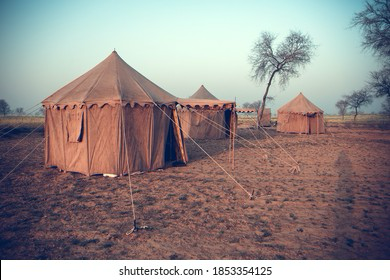
It has been a satisfying and honourable job to serve in Indian Army.It has given me an opportunity to serve sick and wounded in peace and war.Cantonments are self sustaining hubs in peace locations in contrast to life in a inhospitable field area is different and difficult.
We know there is no gender bias in DefenceService .There is equal opportunity for all .Lady doctors are regularly deployed in military operations and in high altitude stations. In one such Military exercise I had to go to give medical cover to a brigade under an Infantry Division in North west region of India. We set out for Operation (Op Parakram ) in a convoy of about thirty army three ton vehicles. My medical team consisted of one medical officer, four male nurses, four ambulance assistants and one safai wala. Ambulance assistants are trained for casualty evacuation and they are also multipurpose workers. I was in a jeep with one driver. The jeep was open at backside. All the vehicles were covered with camouflage nets. The paramedics were travelling in a one ton ambulance.We had our own tents, buckets,tools and medical supplies loaded in the ambulance.That time we did not have mobile phones. So communication was done through signal equipment sets. We travelled in day time, had lunch breaks in between. We together used to have food in a make shift tented mess which brought extraordinary feeling of camaraderie amongst us.Cooks prepare fresh food with dry ration.Some ready to eat food packets were also carried for emergency use. At night we do not undertake journey, take rest at a suitable place. Soldiers quickly set up mess, cook house and folding camp cots are put inside tents earmarked for officers,JCOs and jawans.
It was mid summer and day time temperature was above 50 degrees Celsius.Heat was unbearable with dry ,hot and dusty winds in desert.For me there was no relief in day except putting wet towels on face which get dried up in no time. Our troops are very tough to work in extreme climatic conditions and mine was first exposure to desert heat . Being sandy area it gets heated up fast in day time and gets cool down slowly at night. I used to really wait for sundown.
On third day we were nearing desired location and were fatigued. It was already dark by the time men spotted one open area with leafy trees and decided to set up the camp hurriedly. We halted there .My medical team put up tents for them and as usual converted the ambulance to my rest room.Being a lady amongst 600 odd men ,they put tent of a covered toilet at ground adjacent to ambulance.
The place was isolated and was getting darker. It was pleasant with cool breeze .The half moon was visible in sky and the tents with dim light and shadows under trees looked eerily beautiful. After some time the camp area rendered a ghostly appearance as it got quiet. All had gone to deep sleep after a stomach full of Dal khichdi ( Rice and lentil porridge)and pickle in dinner.
After midnight I got up for wash room and went down.As I entered inside some object struck on my foot and I stumbled.Thinking it as a log of dry piece of wood I lifted it in my right hand. It felt it quite smooth . I was sure it was not moving as I know sand snakes are found plenty in the region and are poisonous.I lit my pocket torch and to my horror I found myself holding a long human thigh bone like a weapon to be thrown at someone. Subsequently I saw pieces of skull , ribs and other small and long bones scattered around . I tried to compose myself not getting scared in so called abode of Netherland beings. I came back inside the ambulance and felt reassured and safe. Sleep has already eluded me and mentally I got ready for next day’s ordeal. By this time it was early dawn and jawans had got up for morning chores .They also discovered same unsightly things . One even started shouting’ We are sleeping in a cremation ground’ Bhut Bhut ! !( ghosts ) Also some one screamed bhago bhago ( leave as soon as possible). All hurriedly packed and we moved out to another place for tea and breakfast. We took another two days of travelling in that extreme heat condition to reach our destination site. Luckily for me no one suffered from heat stroke as all took plenty of fresh water from any nearby wells along side our route . Then irrigation project made dry fields to look some what green. Hydration was important for unacclimatised people and it was implemented under my strict instructions to halt at sight of a well.
This episode later turned out to be a hilarious experience .This long military operation was an example of successful team spirit and grit in face of adversity.
Call of Nation is always of utmost importance in a soldier’s life.
Col( Dr) Rekha Mohanty is an alumni of SCB Medical College, Cuttack, Odisha and she has spent most of her professional life in military hospitals in peace and field locations and on high altitude areas.She has participated in Operation Vijay (Kargil war)in 1999 and was selected for UN missions in Africa for her sincere involvement in crisis management of natural calamities in side the country and abroad where India is asked to do so in capacity of head QRT in Delhi for emergency medical supplies.She had also participated in military desert operation ’ Op Parakram’ in Rajasthan border area.After relinquishing Army Medical Corps in 2009,she worked in Ex Servicemen Polyclinic in Delhi NCR and presently is working in a private multi-speciality hospital there to keep herself engaged.
Her hobby is writing poetry in English and Odia.She was writing for college journals and local magazines as a student in school.
Being a frequent traveler around the world,she writes travelogues.The writing habit was influenced by her father who was a Police Officer and used to write daily diary in English language he had mastered from school days in old time.Her mother was writing crisp devotional poems in Odia language and was an avid reader of Odia and Bengali books.Later her children and husband also encouraged.
Dr Rekha keeps herself occupied in free times for activities like painting, baking and playing card games the contract bridge.
She is a genuine pet lover and offers her services to animal welfare organisations and involves in rescue of injured stray dogs.Being always with pets at home since early childhood ,she gives treatment to other dogs in society when asked for in absence of a vet.She delivers talks on child and women health issues to educate the ladies in army and civil.
After sad demise of her husband Dr( Brig)B B Mohanty in February 2023,she devoted more time to writing and published her first poetry book’Resilient Leaf’in August 2023.Since then there is no stopping and she is going to publish her second book of poetry soon.
She enjoys reading E magazine LV , newspaper current affairs ,writing poetry and watching selected movies whenever she gets time.She keeps travelling places of interest in between for a change which is a passion as a girl since days roaming with parents and siblings .Her motto is to be happy by giving the best to self and to the society.She is lucky to have a supportive family.
RAJASTHAN: A TAPESTRY OF TIMELESS WONDERS
Dr. Sukanti Mohapatra
The moment I planned my trip to Rajasthan, an exhilarating sense of anticipation filled me. Rajasthan, the land of kings, has always evoked images of grand palaces, formidable forts, and endless stretches of golden desert. The vibrant culture, the echoes of royal history, and the promise of exploring age-old traditions stirred a deep excitement within me. I could already envision myself wandering through bustling bazaars, gazing at intricately carved temples, and immersing in the colors and sounds of this majestic land. The adventure ahead felt like stepping into a vivid tapestry of timeless beauty and splendor.
I boarded Air India flight from Biju Patnaik Airport, Bhubaneswar to Jaipur after a layover at Delhi Airport. We spent a day there and visited the Jantar mantar. The Jantar Mantar in Jaipur, a UNESCO World Heritage Site, is an extraordinary 18th-century astronomical observatory built by Maharaja Sawai Jai Singh II. It houses a collection of massive stone and marble instruments designed to measure time, predict eclipses, track stars, and study planetary movements with remarkable precision. The most striking of them is the Samrat Yantra, the world’s largest sundial, whose shadow can tell the time to an accuracy of just a few seconds. Wandering through the giant geometric structures feels like stepping into a blend of science and art, where astronomy meets architecture in timeless harmony.
I boarded the evening train to reach Jaisalmer early in the morning next day as a part of my travel plan.
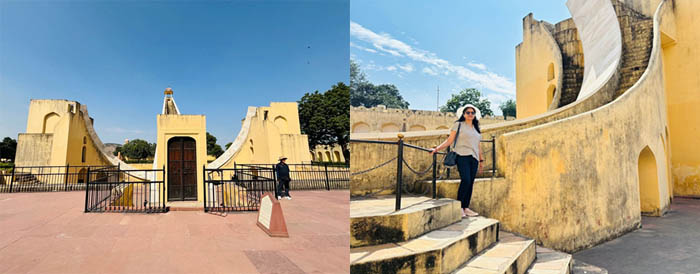
Jaisalmer- The Golden Fort
As I approached the sun-kissed sands of Jaisalmer, the magnificent Sonar Quila—the Golden Fort—rose from the earth like a mirage, shimmering against the vast Thar desert. Crowned in the golden hues of the desert sandstone, this fort built in 1155AD by King Jaisal, stood timeless and grand, a sentinel of history woven with the splendor of Rajput pride. Walking through its colossal gates felt like stepping into a page of a forgotten epic—each stone whispered stories of battles won and lost, of caravans laden with spices and silks, and of the resilient spirit of its inhabitants who still call this living fort home.
The narrow, winding lanes inside were alive with the sounds of vibrant bazaars, where the aroma of Rajasthani delicacies mingled with the fragrance of hand-woven textiles and intricate jewelry. Every corner revealed a treasure—an ancient Jain temple adorned with delicate carvings, a grand haveli standing as a testament to the wealth and artistry of its time.
As the day waned, the fort bathed in the soft glow of dusk, its golden walls radiating a warmth that seemed to bind past and present. Standing atop its ramparts, I gazed out at the endless desert below, marveling at how this majestic fortress had not only withstood the ravages of time but had embraced it, becoming one with the sands it was built upon. Jaisalmer Fort, a true jewel of Rajasthan, had etched itself into my memory as a place where history, culture, and beauty meld into a golden dream.
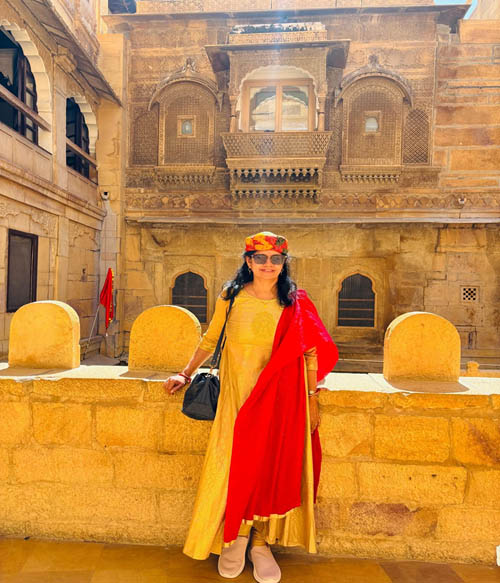
Desert Camping:
We started from our hotel Vrinda Palace after a delicious lunch at one of the restaurants inside the golden palace enjoying traditional dishes like Ker Sangri curry, Gata ki sabji, Dal bati churma, bazra roti with butter, makkhan lassi, and spaghetti. At about 4 pm we began our 45 minute journey by a cab towards our desert camp. Fifteen minutes after we checked into our tent house the inside of which was furnished like a star hotel, we started our tour by a jeep. As the sun dipped below the horizon, casting hues of orange and purple across the endless dunes of Thar, I found myself at the heart of Rajasthan’s desert magic.
It was a new adventure as we embarked on a thrilling desert tour. Riding on sturdy jeeps, we dashed over undulating dunes, feeling the rush of wind against our faces. The landscape shifted with every turn, revealing hidden oases and ancient ruins that whispered tales of the desert’s history.We met two local girls who approached us to take our photographs and sing and dance to us. We heartily welcomed these girls and befriended with them.
Later, atop majestic camels, we traversed the soft sands, swaying gently to the rhythm of their steps. The camel ride offered a serene contrast to the jeep’s excitement, allowing us to absorb the vastness of the desert and marvel at its tranquil beauty.
The evening sky painted with a thousand stars welcomed us to our desert camp adorned with colorful tents, glowing lanterns, and the promise of an unforgettable night under the open sky. The aroma of traditional Rajasthani cuisine filled the air, setting the stage for a night of stories and stargazing.
Returning to our camp, we were greeted with warmth and hospitality that Rajasthan is renowned for. The traditional welcome ceremony, with tilak, made us feel like honored guests. The friendly smiles of the camp staff and the aromatic chai served in clay cups with plateful of biscuits instantly made us feel at home amidst the wilderness.
As night descended, the desert camp came alive with the melodies of folk music and the rhythmic beats of traditional Rajasthani dance. Dressed in vibrant attire, local artists enthralled us with their performances, showcasing the rich cultural heritage of Rajasthan. The twirls of the dancers, the soulful tunes of the musicians, and the lively atmosphere filled our hearts with joy and left us spellbound by the magic of Rajasthan’s artistic traditions.
Each moment in Rajasthan’s desert was a brushstroke on the canvas of my memories, painting a picture of adventure, hospitality, and cultural richness that I will cherish forever.

The Haunted Village
In my Rajasthan trip, one of the most intriguing parts of Jaisalmer was my visit to the Kuldhara Haunted Village. This abandoned village, once a prosperous settlement of Paliwal Brahmins, now lies in eerie silence, enveloped in mystery. As I walked through the narrow lanes, flanked by crumbling houses, the air felt thick with untold stories and legends. The haunting beauty of this deserted village stirred a sense of wonder, as though the very walls whispered the tale of a curse that drove its inhabitants to vanish overnight. Some of the best known movie shootings were done in this village setup.

From the haunting to the exquisite, our next stop was the Patwon Ki Haveli, a grand cluster of five ornate havelis. Each haveli was a masterpiece of intricate carvings and golden sandstone architecture, standing as a testament to the lavish lifestyle of the merchant family who once resided there. The intricate jharokhas (balconies) and detailed murals spoke volumes of the artisans' skill. As I wandered through the richly adorned rooms, I could almost picture their regal past, where life was filled with opulence and grandeur.
To balance the intensity of these experiences, my visit to Gadisar Lake was a peaceful respite. This tranquil lake, with its calm waters reflecting the golden glow of the setting sun, felt like an oasis in the midst of the Thar desert. Surrounded by temples and ghats, it was a perfect spot to unwind. As I sat by the lake, watching the ripples dance in the water, the calmness of the place enveloped me, when the waters rose and the laser light and sound show started. The past reappeared before us as the heroic past of the king Jaisal unfolded. The colourful patterns of the lake water make a perfect ending to an eventful day in Jaisalmer.
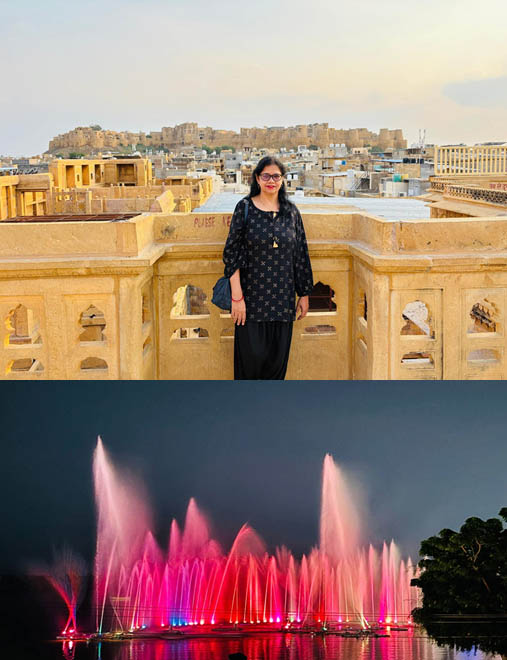
Jodhpur: Mehrangarh Fort
Mehrangarh Fort, perched atop a rugged hill in Jodhpur, is a towering testament to Rajasthan's majestic past. Its imposing walls seem to rise directly from the rocky landscape, blending seamlessly into the horizon, as if etched into the earth by time itself. As you approach its grand gates, you're met with intricately carved sandstone, each detail a whisper of ancient hands shaping history.
Legend has it that Mehrangarh was built on the site of an ancient hermitage. When Rao Jodha, the founder of Jodhpur, laid the foundation for the fort in 1459, he was faced with the wrath of a local hermit, Cheeria Nathji, who cursed the land. To appease the sage and ensure prosperity for his kingdom, Jodha had to make a grim sacrifice to lift the curse. Even today, locals speak of Raja Ram Meghwal, the brave soul who volunteered for this eerie fate, his name etched into the annals of time.
Walking through the fort’s labyrinthine corridors, you hear echoes of countless stories, like the tale of the handprints on the Loha Pol Gate. These delicate imprints belong to the queens of Maharaja Man Singh, who famously performed sati, following their husband to the funeral pyre after his death in battle. Their prints are more than a relic—they are a haunting reminder of the price of loyalty and honor in the Rajput era.
The fort is also tied to tales of courage and valor. One such legend surrounds the battle of Mehrangarh, where Rao Maldeo defended the fort against the mighty Mughal emperor Sher Shah Suri. In awe of his resilience, even Sher Shah is said to have remarked, "For a handful of Bajre (millets), I almost lost an empire."
From the towering battlements, one gazes over the blue city of Jodhpur, where every house mirrors the endless sky. The fort, though steeped in blood and sacrifice, radiates a certain untamed beauty—a fortress of both stone and legend, where every nook holds a secret, and every shadow is cast by a story waiting to be told.

Udaipur: The Land of Rajput Glory
Kumbhalgarh Fort
Our journey to Kumbhalgarh Fort took us deep into the rugged Aravalli hills, where the fort suddenly appeared before us—vast, impenetrable, and breathtaking. Known for having the second-longest wall in the world after the Great Wall of China, Kumbhalgarh stretches over 36 kilometers, an awe-inspiring sight that left us speechless. As we walked along its winding pathways, we felt transported back to a time when the mighty Rajputs held their ground against invaders.
The fort, built by Rana Kumbha in the 15th century, carries with it stories of unyielding defense. We learned about how its walls had never been breached, except once, when the combined forces of Akbar, Malwa, and Gujarat attacked it. Even then, it was never conquered for long. The fort is a tribute to Rajasthan’s resilience, its thick walls hiding temples, palaces, and even secret tunnels that once provided sanctuary to the likes of Maharana Pratap. The breathtaking view from the top, where the hills and forests of the Aravallis stretch endlessly, felt like looking over a kingdom of timeless beauty.
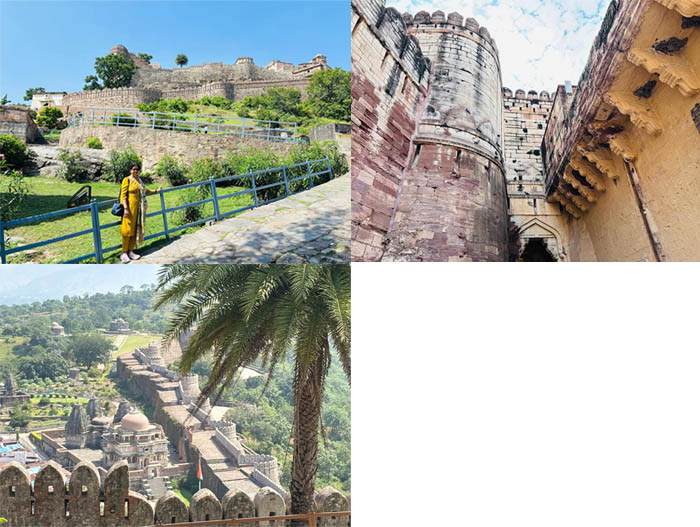
Sajjangarh Fort (Monsoon Palace)
Next, we made our way to the Sajjangarh Fort, known as the Monsoon Palace, perched high on a hill overlooking Udaipur. While not as ancient or as massive as Kumbhalgarh, Sajjangarh’s charm lies in its serene, almost ethereal beauty. Built by Maharana Sajjan Singh in the late 19th century as an astronomical center and later a monsoon retreat, it offers panoramic views of Udaipur’s lakes and the misty Aravalli hills. The fort seemed to touch the sky, and with clouds swirling around us, we felt as if we were standing on the edge of the heavens.
As the sun began to set, its golden rays bathed the white marble palace in a warm glow, making the entire experience magical. The tranquil air of Sajjangarh, along with the gentle breezes from the surrounding hills, gave the place an almost dreamlike quality. It was a peaceful contrast to the rugged grandeur of Kumbhalgarh, and yet, both forts left their distinct marks on our hearts.These forts, standing as silent witnesses to centuries of history, reminded us of Rajasthan’s eternal spirit—a land of kings, warriors, and dreamers.
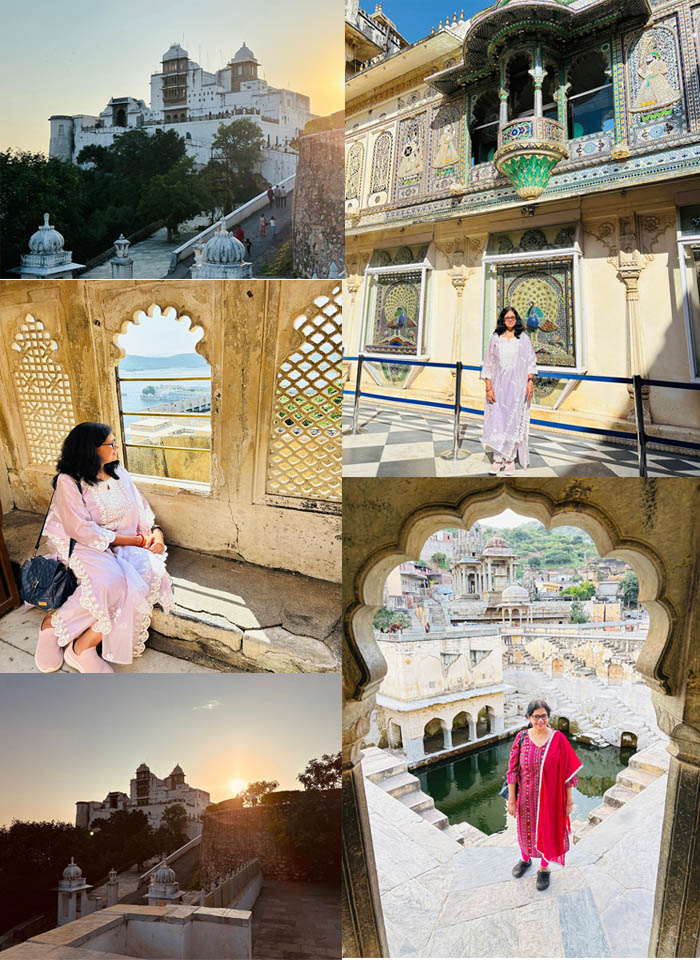
Taj Lake Palace heritage hotel Udaipur
My experience of Rajsthan would have been incomplete without our stay in Taj Lake Palace, heritage hotel,Udaipur. As we stepped out from the cab and checked into Taj Palace's security area, we were greeted by the security staff and guided to the ferry waiting for us. As the ferry gently cut through the shimmering waters of Lake Pichola, the magnificent Taj Lake Palace gradually revealed itself like a marble gem floating on the serene surface. The palace, bathed in the golden hues of the afternoon sun, seemed to beckon with an ethereal charm. Stepping off the boat, we were welcomed like royalty—a ceremonial umbrella overhead, rose petals softly raining down, and the melodious strains of traditional folk music filling the air.
The hotel staff, dressed in regal attire, performed an Arti, placing a tilak on my forehead as a warm sign of respect. It felt as though I had been transported to a bygone era, where hospitality was an art form and every guest was treated like a Maharaja or Maharani. The 278 year old summer palace of erstwhile Mewar Royal family unfolded an unimaginable grandeur and magnificence as we were briefed about the hotel and led to our second floor rooms through many corridors elegantly furnished and decorated.
My room, attached with a significantly large terrace with lake view, netted from all sides to restrict the movement pigeons and doves to the living area, was simply a piece of luxury and wonder.
As evening descended, I enjoyed the vibrant sunset from my terrace. The crimson glow of the setting sun with birds fluttering over the lake, the distant Aravalli range bathed in the golden hue were a feast to the eyes and benediction for the soul.
A cultural program unfolded in the courtyard, with Rajasthani folk dancers swirling gracefully in their vibrant attire, accompanied by the rhythmic beats of dhols and soulful melodies of the Rajasthan starting with their welcome song Pagharo hamaro desh. The dancers amazed us with their skillful performance. The courtyard, illuminated by soft diyas and lanterns, seemed to dance along with them in perfect harmony.
Later, the palace took on a magical quality in the night, its white walls gleaming under the moonlight, casting a soft reflection on the lake. The tranquility of the surroundings was only punctuated by the distant sound of temple bells and the occasional ripple in the water.
Dinner was a regal affair, served in the royal dining hall that overlooked the sparkling city lights of Udaipur amidst soft music pouring into the air. Every dish was a symphony of flavors, bringing the richness of Rajasthani cuisine to life.
The soft breeze carried the fragrance of jasmine and rose as I moved through the courtyards and corridors fully immersed in the palace’s timeless splendor.
Staying at the Taj Lake Palace wasn’t just about luxury—it was an experience of stepping into a living history, where every corner whispered tales of royalty, grandeur, and the timeless beauty of Rajasthan.
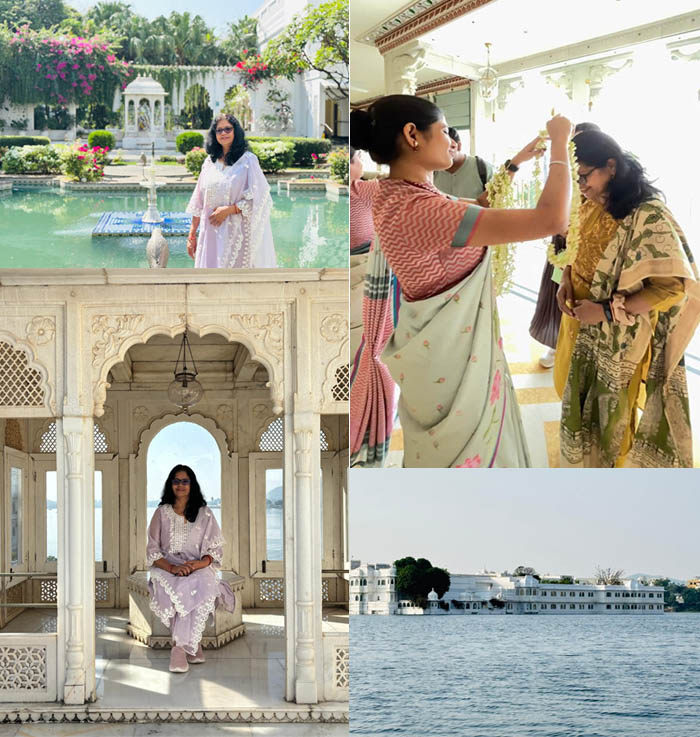
City Palace, Udaipur
Our visit to the City Palace in Udaipur felt like stepping into a world of royal splendor, where every corner whispers tales of the Mewar dynasty’s regal past. As we approached the grand gates, known as Badi Pol, the sheer size and elegance of the palace left us in awe. Situated on the banks of Lake Pichola, the City Palace stands tall and proud, its white marble and granite walls reflecting the sun’s golden hues, making it appear as though it were bathed in light.
Inside, the palace unfolded like a maze of courtyards, balconies, and towers, each offering stunning views of the shimmering lake and the city below. The architecture, a blend of Mughal and Rajasthani styles, was adorned with intricate carvings, delicate mirror work, and stunning murals that depicted the lives of the Maharanas and their legendary battles. The Mor Chowk was particularly captivating, with its three mosaic peacocks glistening in vibrant blue and green tiles, symbolizing beauty and grace.
As we wandered through the Zenana Mahal (Queen’s Palace) and the Sheesh Mahal (Palace of Mirrors), it was easy to imagine the grandeur of courtly life that once filled these halls. The richness of the interiors—gilded ceilings, marble columns, and stained glass windows—transported us to an era of splendor and opulence. We paused at the Amar Vilas gardens, an elevated courtyard with lush greenery, where we soaked in the quiet charm amidst the grandeur.
What made the City Palace even more magical was its connection to the lake. The sight of the Lake Palace, floating gracefully on Lake Pichola’s waters, added a fairytale-like quality to the entire scene. The palace, with its sprawling grounds, serene courtyards, and ornate chambers, felt alive with history, and yet it exuded a sense of timeless beauty.
Our day at the City Palace was like a journey through time, where we not only witnessed the architectural brilliance of Rajasthan but also felt the spirit of Udaipur’s royal heritage in every step.

Jaipur: City Palace
Our exploration of Jaipur took us to the magnificent City Palace, a blend of royal grandeur and intricate artistry that left us spellbound. As we entered through the towering Udai Pol and Tripolia Gate, the palace’s sprawling courtyards, ornate gateways, and vibrant facades welcomed us into a world of regal splendor. The combination of Mughal, Rajput, and European architectural styles was evident in every corner, with delicate frescoes and exquisite carvings adorning the walls.
The palace complex was like a living museum. We marveled at the Mubarak Mahal, once the royal reception hall, now a textile gallery showcasing beautifully embroidered robes and costumes worn by the kings. The Chandra Mahal, though partially off-limits to visitors, was a highlight—its seven stories towered over the complex, and from its terraces, we could gaze over Jaipur's bustling streets. The most beautiful part was the Pitam Niwas Chowk, where the four intricately painted gates, each representing a different season, reflected Jaipur’s artistic heritage. My favorite was the Peacock Gate, with its detailed peacock motifs that symbolized autumn.
The Diwan-i-Khas, with its grand assembly hall and massive silver urns, offered a glimpse into the grandeur of royal gatherings. It was hard not to imagine the splendor of the court in full swing, where kings discussed matters of state in such opulent surroundings. The rich history and culture of Rajasthan came alive within these palace walls, making it an unforgettable experience.
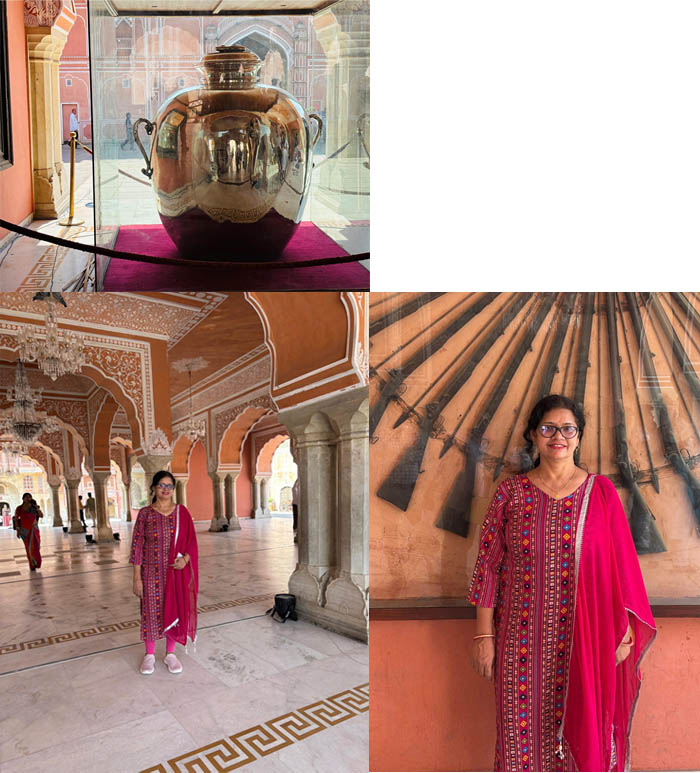
Hawa Mahal
From the City Palace, we made our way to the Hawa Mahal, one of Jaipur’s most iconic landmarks. Standing tall and slender in the heart of the city, its honeycomb-like façade instantly caught our eye. The Palace of Winds, as it’s known, was a marvel of design—its 953 small windows, or jharokhas, were intricately latticed to allow the royal women to observe street life below without being seen themselves.
The five-story structure, built from pink and red sandstone, gleamed in the sunlight, giving it a warm, almost ethereal glow. Despite its towering presence, the Hawa Mahal felt light and airy, with gentle breezes flowing through its corridors, living up to its name. As we climbed the narrow stairs to the top, we were rewarded with panoramic views of Jaipur’s bustling bazaars and the distant Aravalli hills.
The palace’s unique design, with its sloped walls and detailed stonework, was a masterpiece of architecture. It was fascinating to learn how the structure was built to keep the interiors cool even in the scorching heat of Rajasthan, a testament to the ingenuity of ancient Indian architecture. The Hawa Mahal, though small in comparison to the grand City Palace, left a lasting impression with its elegance and charm—a delicate blend of beauty and function that stood as a jewel in Jaipur’s royal crown.
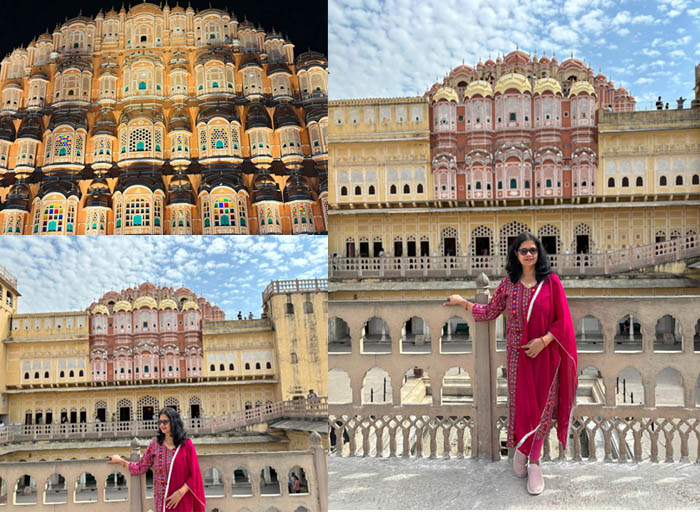
Amer Fort:
As the sun dipped behind the rugged Aravalli hills, Amer Fort stood tall in the fading glow of twilight—its sandstone and marble walls bathed in a golden aura. The fort, with its grand gateways, ornate palaces, and mirrored chambers, seemed less like stone and more like a living legend etched against the evening sky. Walking through its courtyards, I could almost hear the echoes of royal footsteps, the clink of anklets, and the hushed whispers of courtly tales.
When night descended, the fort transformed into a stage for the Light and Sound Show. The ramparts lit up in brilliant hues, each beam of light painting the ancient walls with new life. As the narration began, in a deep resonant voice, the history of Amer unfurled before us—the tales of Raja Man Singh, the glory of the Kachwaha dynasty, the valor of kings, and the romance of queens. The music, blending Rajasthani folk strains with regal orchestration, heightened the drama of each story.
The night air carried the fragrance of the desert breeze, and as the fort glimmered under the starry canopy, I felt time dissolve. For that one hour, I was not a visitor but a part of history—watching Amer rise and shine again, century after century.
When the show ended, silence returned, yet the fort seemed alive with stories it had just whispered to us. It was not merely a monument anymore; it had become a memory carved into my journey.
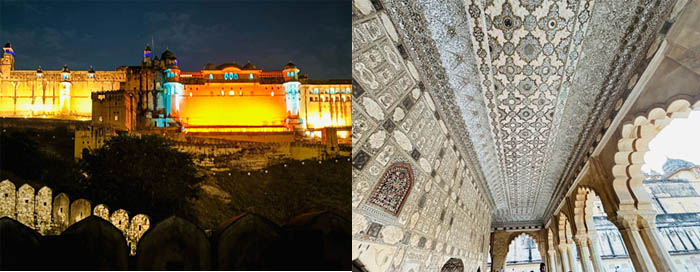
Albert Hall Museum
Albert Hall Museum in Jaipur, a mesmerizing blend of Indo-Saracenic architecture, sits like a jewel amid the hustle and bustle of the Pink City. As I approached this magnificent structure, its sandstone façade stood dignified and grand, capturing the charm of a bygone era. Intricately designed arches, domes, and corridors spoke volumes of its historic legacy and the artistic finesse of the time.
Entering the museum felt like stepping into a treasure trove of Rajasthan's rich cultural heritage. The halls were filled with a myriad of artifacts—each with a story of its own. From delicate Rajasthani miniature paintings to ancient pottery, ivory carvings, and royal costumes, every display held my gaze and sparked my curiosity. The Egyptian mummy, carefully preserved and presented, left me particularly spellbound. It was fascinating to see this piece of ancient history far from its homeland, offering a glimpse into civilizations from worlds apart.
The museum’s peaceful ambiance made it an ideal space to reflect on the timeless beauty of art and history. Wandering through the exhibits, I felt as though I was transported through Rajasthan’s illustrious past. The Albert Hall Museum, with its treasures and tales, added a new depth to my journey, connecting me to the soul of Rajasthan in a profoundly memorable way.
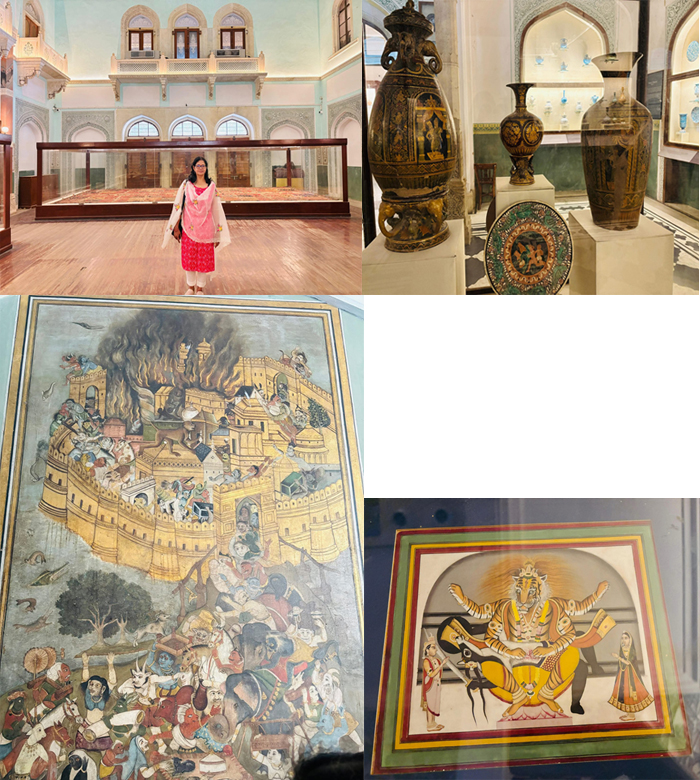
As I bid adieu to Rajasthan, I carry with me not just the memories of its golden sands and majestic palaces but the echoes of its vibrant culture, timeless traditions, and warm hospitality. Every corner of this land whispered tales of valor, romance, and heritage, leaving an indelible mark on my soul. Rajasthan is not just a destination; it is an experience that lingers in the heart long after the journey ends. Until we meet again, O land of royalty and splendor, you shall remain a cherished chapter in my book of wanderings.
Dr. Sukanti Mohapatra, a senior lecturer in English in the Higher Education Department, Govt. of Odisha is a bilingual writer writing both in Odia and English with equal flair. Her poems, stories and articles are published in many state, national and international magazines and journals. She has three published anthologies of poems to her credit. Besides, she has published many research articles in different research journals. She contributes regularly to Radio Bulbul.
Sujata Dash

Nagen was about to ring the doorbell but didn't as pin drop silence prevailed around. He furrowed his brows as he peeped inside and found everything was in disarray.
"It seems there are no inhabitants in the forlorn house!"
"To be or not to be" jammed his mind and he looked up with an auditor's lens for a find in the dimly lit congested room.
“Perhaps he has come to the wrong house! The school authorities probably are not abreast of details of houses and individuals in the locality. ”-He muttered.
"Who is there?" a shrill voice pierced the deafening silence.
Hearing the voice, Nagen mindfully glanced inside. He found an old lady resting on a lone chair in a corner of the house.
"How could I evade noticing her being slumped in the chair?" He controlled his repercussion and replied-
"It is me, madam."
"Good heavens! Who is me?"
Precariously balancing himself between the broken door and the fragile screen, he replied-
"Oh sorry! I am Nagen. I was bewildered , so forgot to tell you my name."
"But I don't think I know anyone by this name. Well, why are you scared to come inside?"
"See, I am a little indisposed, a bit hard of hearing too. So come closer, so that I can listen to and hear from you."
"Ok, madam. Thanks."
Let me introduce myself. " I am Sally. Sally Hans. I am a retired school teacher. I live alone. I am the sole owner of my turf."
"Nice to meet you mam." He tried to tread cautiously .
"Be free. I am the only inhabitant of this place. I have been living alone as I do not have any suitable alternative. Now don't say 'I am sorry to learn'. I hate when people utter sympathetic words."
Nagen tried to compose himself. He took time in choosing his vocabulary carefully so as to avoid any kind of squabble.
His silence irked her-" Do you think something is wrong here or you are hard of hearing ? I am asking you to say something and you seem to defy my entreaty? "
The spooky thin slits on her face that one may call eyes were filled with rage and she fumed like an engine.
On encountering the gripe, Nagen's face became red with indignation like a ruddy moon. But he did not precipitate.
" Calmness! Be my friend. Let this ordeal be over only soon or very soon." He prayed silently.
"Neither mam. I am not deaf, nor am I fault finding by nature." He answered quietly.
"I work for the Modern School. Our new principal desires that during the Annual Day function of the school, the oldest surviving person of the locality be felicitated. So, I am here with the invitation card mam."
"But how could the school authorities make out that I am the oldest? Have they done their homework properly?" She smiled sheepishly.
With all humility he answered-"I have no idea mam. This is the card with your name written on it. I was asked to deliver, so I am here."
"Ok! Nice way to greet senior citizens and pep up their languorous spirit! But, Am I the oldest? Can't believe this. I am only seventy five years of age. Still the oldest? Then, this land must be a cursed one."
"Anyways, after years I am getting an invitation, that too for felicitation.”
Her face lit up like a Christmas tree with the deliverance. She seemed charged up in the primal instincts of a neighborly bond.
"I don't know you and cannot remember your name though you introduced yourself a while ago. I forget things easily these days. The physician told me the other day to write down things as a remedial measure. Jotting down things about daily grind! This is what I abhor the most. So, I discarded his advice at the outset. "
"But, I must tell you my boy! You have not only cheered me up but also have made my day. Life is fun with people around. Alas! I am not a blessed soul that way. The place belongs to me, but I don't belong to it as my soul hovers around the place where I had my job, happiness and satisfaction."
Nagen was happy that he could elicit a positive response from her.
"Madam, please spare your time to join. We all shall be eagerly waiting for your gracious presence."
"But I am old, haggard, immobile too. Yet, I will try to be there."
"I shall tell Principal sir to send one escort for you. Hope you don't have any objections mam."
"That would be a sweet and kind gesture. Thank you. You are a sweetheart."
Nagen could notice a slender ray of toothless smile adorning her demeanor as he took leave of her.
He could realise how a small dose of interaction festoons someone's life! Especially if someone is languishing in loneliness.
Modern School, being the oldest English medium school in the vicinity, stood tall in terms of academic excellence. The teachers were disciplined and took good care of the students. Apart from studies, students were encouraged to take part in co-curricular activities especially social service to inculcate wholesome education in them.
Father Vincent took charge as the principal a few months ago. It was his wish to honor the oldest senior citizen of the locality on the occasion of foundation day of the school. He also had plans to have some charitable acts like distribution of fruits, blankets and clothes in nearby orphanages and destitute homes . The staff members lauded his idea and promised to hail the occasion in both letter and spirit.
The day of celebration arrived. It was a Sunday. The sky was clear but the Sun was not harsh. The school compound was large. The humongous trees in the compound swayed their branches chiming to the tune of the gentle breeze. It lent both autumnal bliss and regal ease. The happy and cheerful aura was like a toddler exuding joy in the company of family. The finely pruned bushes, the seasonal flowers and the asphalt laid pathways complemented each other well. The transformation of foliage accentuated slow grace captivating senses with vibrant colors and enticing aromas. It appeared as if the earth conspired with the cerulean sky to lend credence to the much cherished celebration.
Slowly the chairs, both near and far off the podium meant for guests, parents of students got filled up. Excitement was abuzz and many rolled off their tongues in sync with the catchy number that played on to regale the audience.
Nagen along with another peon of the school went to fetch Sally mam. She was eagerly waiting for their arrival. Dressed in a gown of pastel shade and pearl necklace to match, she exuded a warm smile upon meeting them. Her enthusiasm was palpable. It twined with the sequin embellishments of her dress and added aesthetic to her moves. A little shiver of delight ran through Nagen too as she watched her descend steps like a princess.
"I am ready, young man. In fact I finished off daily chores quite early this morning after revising the invitation card. Being a diehard disciplined person I got ready as per the time slot in the card. We may now leave for the function ."
Nagen helped her to board the car sent by the school, and made her sit comfortably in the first row. The first two rows near the podium were meant for VIPs, persons from press and dignitaries invited to grace the stage also personalities invited from various walks of life for felicitation. The stage was lit and the meeting ensued. The inauguration began with the opening song. Reading of the annual report followed. The next agenda was the felicitation of notable individuals and students for their outstanding contributions and performances.
From her seat, Mrs Sally was escorted to the stage when her name was announced. While presenting her with a shawl, a bouquet and a citation father Vincent closely looked at her. She too tried to place things in the right perspective after looking into his deep eyes full of respect and love.
A faint recollection flapped its wings to perch on her memory repertoire as she adjusted her specs of yore with foggy lenses.
"Are you madam Sally? Father Vincent asked.
"Madam, I mean to say, you resemble her so much. She was my most favourite teacher in the school and my mentor too. I have not met her in recent times though."
"Yes, I am Sally Hans. But, how do you know me? I mean no one calls me by that name now. My identity has been shrunken to ‘an old lady’ as such".
"My Goodness! Are you the one who was chosen amongst a few to be honored by the president of our country? Your excellent interactive teaching method while you were at a reputed school in Mumbai fetched you the laurels."
"I am one of your proud students mam and one of the naughtiest if you can remember! I vexed you a lot. not only vexed but tormented too."
She held his hands fondly and looked into his eyes to say -"Now I recollect those moments. How can I erase from memory your mischief? Apart from being a prankster, you were the wittiest too. I am so happy that you have chosen this noble profession. As they say, pelf remains the driving force in life. How come you are not lured by any white collar job?Or, your merits did not suffice any such suitable ones?"
Her voice was choked towards the last part of the sentence. It was an overwhelming scene to behold.
The principal took the mike. He was still holding her hands gently, like a father does to his little one.His baritone voice resonant with authority was ready to pour yards of verbiage. But he began with a calm and affectionate address.
"Ladies and gentlemen! I now present to you the best find of my life-my teacher. She taught me when I was a toddler and instilled in me values I still count on. She shaped my future and her words rang in my ear when I groped in darkness to find ways out of the maze of life. I settled for this profession after serving some very lucrative, high paying options. I was perched atop affluence once. But, when I found out the reality beyond illusion I became good at forgiving and better at forgetting. That is a long story. Someday I will dwell at length, but not today. My greatest pleasure and purpose of life now is to impart education, instill ethical values in the lives of these tender souls. I wanted to follow her footsteps. So I am here to give back to society in whatever small way I can."
"A big round of applause please for the architect of my life!"
The claps went non stop as both of them stood frozen on stage with unblinking moist eyes. A sense of deja vu soon overpowered them. The night of obscurity in the life of Sally Hans soon rinsed off . A surging sense of self belief rose above wistful reveries to palpate a future laced with golden hues of positive vibe.
Shreeya Sampada
Suren had no idea about the chances of a bachelor getting a house on rent till his hunt ensued. The city was new to him. Being methodical, he made a list of houses to be rented out from ads of different sites. Then proceeded with an area wise hunt.
It was the sixth day of his expedition. The previous five days bore no result whatsoever . Everyone he had approached was in a denial mode. Some had opened their doors to discuss,some did not bother to open their doors even. For them discussions were held through partially opened windows.Some went to the extent of answering from their balconies even, adding up to his anguish and frustration.
"Insane, isn't it?"
"What has happened to us?
"Are we not human beings? "
"Why are we so stubborn in helping out a needy person? If help is not possible, then a few kind words can even assuage and educe solace. "
"Who knows? Someday we may sail in the same boat. Who will come to our rescue then? "
These thoughts kept coming to him when he set out on the mission of finding a suitable accommodation. Suitable in the sense, just enough space to live in. An airy place with a modest rent.
After spending five frustrating days of search, he could elicit a response on the sixth day. He assumed that number six was lucky for him though till such time he had never shown allegiance to numerology.
The landlady was middle aged. She had a wheatish complexion and had sharp features.But, she was not very keen nor was careful to look elegant, it appeared. She was shabbily dressed.Her long black mane was not combed properly . It was tied in a top knot. Her slippers were worn out and the glasses of her specs were almost opaque, deeming prospects of a clear vision. Perhaps, she had not cleaned them for a long time. She blinked every now and then to catch up with clarity. The frame of the specs was on the verge of giving up.This was the overall sketch that Suren could draw of his prospective landlady.
She opened the main door of the house to let him in. A creaking sound greeted Suren at the door.Having lent services for decades, perhaps the door was in a give up mode. It badly needed an overhaul. A bewildered Suren tried to mutter-
” What to say!The sad song is searching for its parting tune.”
“Did you say anything? “ She enquired.
“No madam, I was just trying to remember the topic for today's online essay contest. I was talking entirely to myself."
" Essay writing? Oh! Nice. Are you a student? You must be studious. The younger
ones today abhor lengthy and elaborate writings. But, you know, essay writing needs both knowledge and patience and I have always held scholarly people in high esteem. So, you interest me."
He had a close shave, and thanked providence profusely for the presence of mind. It evades him mostly, especially during strategic and critical junctures of life ushering in loads of humiliation.
The lady started her babbling like an incessant brook that rushes and gushes after being detained by a barricade for long.
"Listen to me carefully, young man!"
"I don't give my house on rent to bachelors for obvious reasons.They don't take proper care of the house. They leave the gate ajar and cows stray into the garden and ruin my cherished seasonal flowers grown with love and care. But, you seem to be gentlemanly and I don't have any objection in renting out this one bedroom house to you.
But,you have to be regular in payment of rent. Keep the house in a spick and span condition . Don't try to pry into my lifestyle and way of doing things.I don't approve of people poking their nose into my personal matters. Last but not the least, I need two month's advance rent payment as a security deposit. Previously I was insistent on three months rent as advance. But nowadays I have become more lenient.The deposit will be refunded to you on surrender of the house.I shall deduct money from security deposit if there is any kind of damage to the house. Is that clear?"
"Yes mam!"
Saying that,he breathed a sigh of relief as he could perceive her nod of affirmation after a lengthy spell of sermons.
"Finally! I am so relieved." This was Suren's joyous outpouring.
He shifted the next day after fulfilling formalities like payment of advance rent.He kept to himself all through the day and did not show any interest in the landlady's daily chores.
It was almost evening. His peep from the only window of the house corroborated his hunch that night would grace soon. He went to prepare tea in the one burner gas stove that has been his sincere companion for five years. In the hustle of shifting he forgot to procure milk . Now he had two choices before him. To skip tea or have it sans milk. He chose the latter. He sat near the window and began looking around while sipping his cup of green tea.
Slowly the atmosphere was filled with the aroma of the night queen's fragrance.
"Ah! So soothing . It fills my heart with a sense of longing.After so many years I am having a chance to smell my favourite bloom. In the concrete jungles of big cities one is miles away from such bliss."
He wanted to come out of the confines, mingle with the chirpings of the homebound avians and let his soul resonate with the sublime feeling. But, he immediately recalled his commitment to the landlady that he would only mind his own business. This being his very first day, he tried to shoo away all desires for indulgence including his stepping out of the rented accommodation.
"I should be careful enough not to put my stay in jeopardy. After such a prolonged combing operation I could get a place to stay."
He could feel his euphoric soul diving deep into ecstasy and taking him on a nostalgic trail.A smile glued to his lips and he let it stretch upto ears. A full throttle smile, you may say. He had brought along his dinner pack knowing well that he would be exhausted completely after shifting and arranging belongings.
With no cooking in the offing, he had ample time on hand to complete his half finished painting .The deadline of submission for the art exhibition was drawing near. The alarm for the same was set in the back of his mind.He arranged the canvas, and cleaned the paint brushes with care and love.
Since childhood ,he has been passionate about drawing and sketching. He had earned himself a name as an artist and at the same time pursued his career in academics with diligence. He was self taught. Nature was his teacher and mentor.This particular painting which he was working on depicted twilight. Suren wanted to add a bunch of night queens to the scenic poster to buck up the image. He did it, taking a cue from the twilight aura of the lively garden resplendent with parting hues of the sun.
He got up early next morning after enjoying a goodnight's sleep. With his morning brew in hand, he sat near the window.His roving eyes tried to take stock of the flora and fauna in the garden.
He could notice the nuggets of bliss in the garden as he focussed attention.There was an arch shaped trellis in the shadow of a row of hibiscus trees.A few green vines climbing up the timber lattice gave artistic touch to the entire atmosphere.His delightful watch was the sunrays streaming in through the branches of trees. They pumped vitality into the entire stretch of greenery around.
The landlady was seen at a distance plucking flowers from the garden.Long sleeves of her nightgown were rolled up beyond elbows . After plucking flowers and neatly keeping them, she went to size the flower pots and prune the plants.To relieve herself from the onerous task, she was humming the tune of an old hindi film number. Suren was familiar with the tune but exercised double caution not to sing along and invite her wrath again. He was once bitten twice shy by now.
She remained engrossed in the activities, till such time she turned back and their eyes met.
“What are you gaping at? Did I not tell you to mind your own business and not poke your ugly nose into my affairs?”
“Yes, you did aunty, and I do vividly remember my promises made to you."
"I woke up listening to the chirpings of birds.I swear,this is happening to me after a long while. The house where I stayed before was amidst concrete jungles.I was virtually deprived of this natural splendour.Since painting is my passion,it too suffered a setback due to lack of natural surroundings.I am so happy,I can open up my wings now like a free bird.”
“But, do not cross the limits set for you.”
“I shall dutifully abide by aunty.”
She left in a huff and Suren could feel his pounding heart slogging like a giant pump.
He could not discern the reason behind her ill-temper. He had virtually done nothing to cause her wrath.He tried to collect his shards and put a stroke or two to his almost finished painting to revive his mood.His painting exhibition was due. His promotion examinations too were looming large. He could not afford to ruin his mood and invite setbacks on both fronts. Each one was important to him.
Last two years were no less than an ordeal. Both his personal and professional lives were struck hard.He had a break up.The anguish and hurt seeped into his appalled soul.He could not paint nor sketch as an aftermath.His source of extra income from selling paintings suffered a setback. His long absence from office entailed deduction of salary. His savings dwindled. He had to leave the fully furnished leased house soon as he had no money to pay rent. It went to such an extreme that he had to survive without food on certain days. Finally he decided to leave the place that gave him so much hurt feelings and ripped apart his core.
He relocated to this less crowded city. The place was completely unknown to him. He decided to start from the scratch both career- wise and hobby wise.
Some act as a good Samaritan in our lives when need arises. His friend Sunit lent him money ungrudgingly to start life afresh. It was difficult for him to adjust to the new surroundings in the office. But finding a house was more challenging . His grueling search for accommodation concluded two days ago.
A soliloquy that he would repeat often to take things easy-
”I have been toasted enough in the flares of the past.No more dissection and postmortem of days gone by.Now I deserve some fair dealing. No business to look back. I need to focus on driving forward with a radiant face and sparkling eyes."
But,can he or anyone for that matter prevent a casual invasion of a doleful past ?
Perhaps “no”.
Life is like that.
Unpredictable at every twist and turn.Love inundates at times, at times we have to bear with romantic penury.
As an artist , he was an ardent admirer of nature. He fancied to spend time in nature's lap where the sun played hide and seek, flowering plants encrusted with scarlet and gold blooms,stretched to infinite distance.He yearned to borrow a speck of light from the majestic moon.He vied to remain drenched in its aura and flow with time.But it was not to be.He has faced abrupt negation most of his life.It has traipsed many a time in a short span making his head abuzz and gut in knots.
It was another bright morning promising a sunny day. Suren watched the landlady in the garden, humming an old number and muttering to self.From his window he could watch her activities like caressing plants, plucking flowers.
Out of nowhere , there was a shrill distressed voice that pierced his ear drums.He was shell shocked.
”Mama I am hungry. Where are you?I cannot find you.”
The voice he heard was that of a girl and it emanated from the house of the landlady.
“I am coming soon dear .Stay where you are. Do not move.You may fall.”
She started running towards the main door of the house to take the stairs.She looked anxious as well as apprehensive as she strided.
There was a loud thud immediately after. Suren could make out that someone fell down.Yes, he heard it right. For, wails and sobs followed thereafter.
His innate goodness got the better of his inhibitions and he decided to enter the banned territory and find out what was wrong.
Upon reaching the ground floor ,he found a girl in her twenties lying with bruises all over. Blood was oozing from one of the deep cuts.The landlady, the mother of the girl, was crying bitterly. She was too aghast to decide the course of action. Suren did not waste time in requisitioning an ambulance from another corner of the city. It would have been a time consuming process. He rushed them to the local dispensary instead for urgent medical attention. He sat through the entire procedure of dressing of wound and bandaging. Then accompanied them to the nearby hospital for further treatment .Spending a sleepless night in the corridor, he ensured that the best treatment was facilitated.
They were discharged from the hospital the next day. He helped the daughter climb stairs and reach her room . He procured veggies, fruits and milk for the duo. Having done his bit for the family, his exhausted self found relief in the bed. Sprawling his tired limbs he was lost in the thought of his ensuing exam and completion of painting . Both the events were important to him. One would ensure promotion and money. The other would satiate his childhood longing, fulfil his dream.
There was a knock on the door. The landlady was at the door. She quietly handed over a packet to him saying in a subdued voice-
" This is all I have for now.Rest of the money spent on my child will be repaid in a day or two. Is that ok with you?"
" Yes, of course aunty. I am in no hurry."
He could very well discern the change in the landlady’s behavior. She seemed to be ashamed of her previous dealings.Though she did not open her lips, through nuances and gestures,she emoted the feeling of remorse .
The long week finally ended. So also the ordeal. The mother and the daughter managed their daily checkup schedules on their own. The daughter took some time to heal completely.
By now, Suren was conversant with the closely guarded secrets of the house.He came to know of the tragedy that had befallen the family a year ago.With the demise of the man of the house,the breadwinner, the landlady was completely devastated. The swelling waves of sorrow never left the shores of her life .Her only child, the daughter (who had a fall the other day )became blind due to a wrong diagnosis . It was a rare disease. Proper medical attention could have saved her . But with her dwindling resources and lack of help in managing things she could not do much. Taking advantage of her pitiful condition, people tried to cheat her every now and then. The Mold of her heart hardened day by day by acts of such deceit. The way fate kept on adding tacit notes to her dismay, it was but natural for her to embrace abrupt negation.Hence she was unsocial and curt in her dealings and started behaving like a possessed person.
The entire story unfolded in a first person narrative followed by a hollow breathy sob.
The next week was supposed to be very eventful for suren.He had geared up with enthusiasm to crack the exam as well as to top the art competition. He knew it well that his winning would open a gateway to elicit contacts and contracts to sell his paintings. He was both nervous and anxious like a river before it met the sea.
It was past evening. He was busy with the revision exercises.There was a tap on the door.On opening, he found the landlady standing outside with a plateful of sweetmeats.
" This is for you dear. Today is my daughter's birthday. She wanted me to get this for you. When her father was alive, we used to celebrate on a grand scale. But, no more. She has conveyed her heartfelt thanks too for everything that you have done for her."
" But, it was my duty aunty. Anyone in my position would have done the same."
" Not anyone" she snapped.
"I have seen the ways of the world. I have been through a lot. Most people would remain aloof, some would add to the pain and grief. Only a few good Samaritans like you would offer help and assuage pain and hurt."
She could utter this much in a choked voice.She faked a smile and her teary eyes conveyed her gratitude.
“Thank you my son.God bless you.You can stay in this house as long as you want to.Tomorrow I shall refund the advance amount deposited by you.I don't mind if you become irregular in paying rent.What you have done for us, no near and dear would have.I misunderstood you my boy! Feel free to come to my place, poke your nose into my daily grind. I would not mind. In the evenings,we can have tea and snacks together.My daughter will be happy to have you around. She has no one else to talk to. Company cheers her up. "
"Bye and Good night.”
“Good Night aunty.”
Moments of solace amidst rattling sounds of life embraced Suren.
Breathing a sigh of relief, getting intoxicated in own myth he said-
“Some journeys of life rejuvenate us, if taken alone. But most journeys need a companion, a friend, an acquaintance even, for smooth sailing. The wind however cool does not cut the rain. Similarly, life sans bonhomie has no meaning.”
He looked up with folded hands and sought blessings of the divine to perform well in his forthcoming tests.
Sujata Dash is a poet from Bhubaneswar, Odisha. She is a retired banker.She has four published poetry anthologies(More than Mere-a bunch of poems, Riot of hues and Eternal Rhythm and Humming Serenades -all by Authorspress, New Delhi) to her credit.She is a singer,avid lover of nature. She regularly contributes to anthologies worldwide.
Hema Ravi
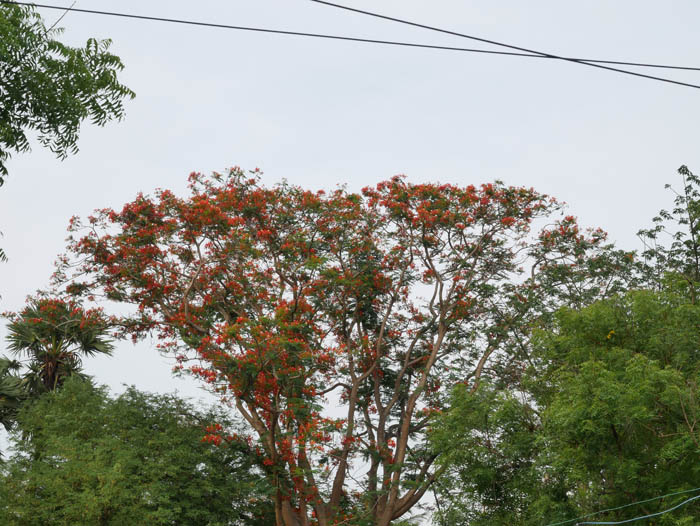
‘Happiness….’ its mention brings joyfulness and exhilaration to all. Happiness is believed to be a state of mind characterized by emotions associated with optimism, positivity, contentment and exhilaration.
A recent news report mentioned: “Nordics are always winning the happiness race. Finland took the top spot for the fifth year in a row, followed by Denmark, Switzerland, and Iceland.... they are small, homogenous, and wealthy.”
While it is fair enough to admit that people are happy when they are taken care off well by the governments, have substantial incomes, pensions, parental holidays, sound health care, unemployment benefits and maintenance for the ill and disabled, the other side of the argument is also valid - warmer temperatures and bright sunny days bring in greater happiness to people than long, dark and depressing winters.
Here is an interesting anecdote:
Little Laya was holidaying in India with her parents. While driving through the city roads, she watched young and older children playing under the glaring sun; they were scantily dressed, a little grimy too, however, their eyes were radiant. Alongside them were patched-up tents, aluminum- utensils and brown-black mongrels. An elderly lady was resting on the pavement, with her head covered by a faded old cloth. Laya’s mom pointed out that they were poor people who lived on the pavement. Almost at once, the four year old retorted – but they are all happy!
Harmony amidst the chaos and uncertainties! The fleeting scene exuded a picture of enjoyment for the little girl. Enjoying with peers was an act of freedom and joy, which did not come easily in other countries. ‘Play dates’ were necessary, parents had to fix the dates with their friends’ in order that their children could spend time at the friend’s place.
Well, does luxurious living bring in happiness? Many of us recall the film “Richie Rich” - the poor little rich boy who had everything except ‘companionship.’ And how jubilant he was at the end, reunited with his parents and in the company of his ‘humble’ friends with whom he had longed to play baseball at one time.
Happiness means different things to different people: to a fulfilled personality, it could mean sharing a hearty meal with friends and family, to a materialist, happiness implies saving, to fill the ‘proverbial’ seventh jar with half-filled gold.
By and large, people who have an optimistic view of life are generally happy, they have greater contentment and acceptance of challenges that life offers, even though doubts, apprehensions, feelings of loneliness and anger can haunt them occasionally.
Writers and lyricists wax eloquently about happiness. Borrowing the lyric of a renowned comedian and singer -
“Happiness, happiness, the greatest gift that I possess
I thank the Lord I’ve been blessed
With more than my share of happiness…”
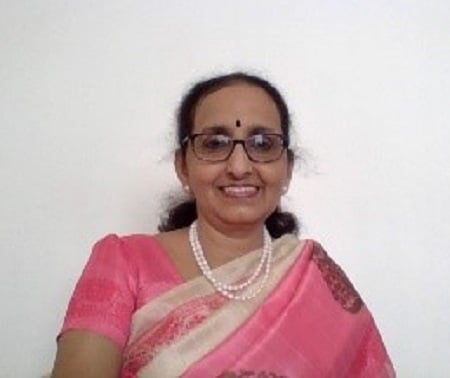
Hema Ravi is a poet, author, reviewer, editor (Efflorescence), independent researcher and resource person for language development courses... Her writings have been featured in several online and international print journals, notable among them being Metverse Muse, Amaravati Poetic Prism, International Writers Journal (USA), Culture and Quest (ISISAR), Setu Bilingual, INNSAEI journal and Science Shore Magazine. Her write ups and poems have won prizes in competitions.
She is the recipient of the Distinguished Writer International Award for excellence in Literature for securing the ninth place in the 7th Bharat Award, conducted by www.poesisonline.com. In addition, she has been awarded a ‘Certificate of Appreciation’ for her literary contributions by the Gujarat Sahitya Academy and Motivational Strips on the occasion of the 74th Independence Day (2020) and again. conferred with the ‘Order of Shakespeare Medal’ for her writing merit conforming to global standards.(2021). She is the recipient of cash prizes from the Pratilipi group, having secured the fourth place in the Radio Romeo Contest (2021), the sixth place in the Retelling of Fairy Tales (2021), the first prize in the Word Cloud competition (2020) and in the Children’s Day Special Contest (2020). She scripted, edited, and presented radio lessons on the Kalpakkam Community Radio titled 'Everyday English with Hema,' (2020) a series of lessons for learners to hone their language skills. Science Shore Magazine has been featuring her visual audios titled ‘English Errors of Indian Students.’
A brief stint in the Central Government, then as a teacher of English and Hindi for over two decades, Hema Ravi is currently freelancer for IELTS and Communicative English. With students ranging from 4 to 70, Hema is at ease with any age group, pursues her career and passion with great ease and comfort. As the Secretary of the Chennai Poets’ Circle, Chennai, she empowers the young and the not so young to unleash their creative potential efficiently
Darsana Kalarickal
“Grandma, walk a little slower… I can’t keep up.”
Dithi pressed her palms hard against her knees as she spoke. Her grandmother, careful not to stumble over the roots in the darkening path, stopped suddenly. The chickens in the sack she carried fluttered cluelessly. They were at the edge of a steep hill track. From the verandas of the small houses nearby, lamps flickered weakly, unable to light their way. Through the branches above, the sky stretched wide, pinpricked with stars.
“We’re almost there, child. Just a little more.”
“Do we have to climb like this again, Grandma?”
“That’s all over now. Only a patch of teak woods lies ahead—grass thick beneath, and maybe a few crawling creatures. Careful where you place your foot. If only we had light! These wretched hens…”
“Who’s there?”
A figure wrapped in black stepped out from the veranda of a hut nearby. In the glow of the small wick lamp she carried, the stones in her necklace gleamed; the faded red beads in her ear stud had long forgotten how to shine. Startled, Dithi hid behind her grandmother.
“It’s the day we go home” , her grandmother’s voice trembled. “We had a few hens… got delay catching them. That’s all, Kaaliyamma.”
“Had you taken the path by the cliff, you’d have had light underfoot. Why didn’t you go that way?”
“We never knew that road. Both times we came, it was this path we took.”
“Here, take this lamp with you. The child must be frightened. Once you climb higher, there’ll be enough brightness. But sit and rest a while.”
Kaaliyamma handed over the lamp. Grandma shifted the sack to her left hand and took the wick lamp with her right.
“You’ve done me a great kindness. I’ll return it tomorrow morning,” she said softly.
They walked on, guided by the faint glow. Kaaliyamma’s hut was the last house near the path.
“Step firmly, child,” she warned. “Creeping things will slip away when they feel your tread.”
At the hilltop, Dithi stopped short. Teak trees rose thick, grass covering the ground like a new crop. A pale light spread across the meadow, and the sky shimmered with stars. The moon was rising, silvering the edges of everything. She stood still, staring.
“Hurry along,” Grandma urged.
In the distance, faint lights from houses twinkled. After crossing the meadow, they came to a broad track—wide enough for a lorry.
“This was once the colony road,” Grandma muttered. “They quarrelled over it and blocked it off. It was the easier way. But what use in saying so? Humans do no kindness to one another anymore—only betrayals.”
Soon, another road from the left joined theirs. Perhaps this was the one Kaaliyamma had spoken of.
“Grandma, did you know her before?”
“No. She wasn’t home when I came before. Met her only when I walked through that yard. Poor woman, living alone. She gathers roots and herbs, sells them to the pharmacy for a living. Gives away little things to people. There are such souls, child,” she sighed deeply.
Dithi tripped on a round stone and nearly fell.
“Stones everywhere. Miss your step and you’ll fall,” Grandma warned.
They had reached their destination. First came a cattle shed, and behind it, a thatched house. Dithi thought with surprise—there had been no other thatched roofs along the way. On the mud-smeared floor, an oil lamp flickered. She climbed up the verandah steps and sat down beside it.
It was just a bottle of kerosene, a cloth wick dipped inside. The flame burned dull and yellow, unlike the bright, milky light of the kerosene lamp they once had at home.
“Why so late? I was afraid Father might not return you tonight.”
Her mother’s voice called from the doorway. Behind her, Dithi’s little sister came and sat down, staring at the insects singeing their wings in the lamp flame.
“Where’s Father?”
“He’s gone to the shop. Had to buy things.”
“Don’t bathe tonight. The place is unfamiliar. Just wash your face and feet.”
“Put the hens in the coop?”
Grandma handed the sack to mother. The birds fluttered and clucked as if angry at being exchanged.
As Dithi followed mother inside, her heart pounded. Luckily, no one had asked questions about her little adventure at her friend’s house.
The house was long, rooms opening from a central corridor. At the far end was their room, neat and orderly—her mother’s way.
“Come here, what are you staring at?”
It was the kitchen. Aunt sat by the stove, the smell of fresh cooked rice rising in the air. Something boiled in a pot.
“Lentil curry,” Aunt smiled. “With a tangy chutney. I told them to bring pappats and dried fish from the shop. Wonder when they'll be back.”
From the yard her mother’s voice rose again: “Dithi, come, wash your face and feet. I’ve other work.”
The hens strutted about noisily in their new freedom. At the water tank, she splashed her hands, feet, and face. The chill shot through her.
“Where were you today? Next time you wander, you’ll get a beating.”
Her mother’s tone was stern, but in the dim light, Dithi couldn’t see her face. She slipped back inside quickly, relieved the scolding had ended there.
They ate together. Dithi marvelled at how swiftly life had adjusted to this new place. That night, lying beside her grandmother, she heard jackals wail in the distance. Later, an elephant’s trumpet rolled through the hills.
“Grandma, Grandma…”
Her voice was trapped in her throat.
Where was Grandma?
A stabbing pain shot from her head to her cheeks. The sharp smell of medicines. Whitewashed walls. The corner table. The nurse. A hospital room.
“Thirsty, Aunty?”
The nurse’s voice was familiar, comforting. She held water to Dithi’s lips.
“Don’t move. You’ve been unconscious for two days. I’ll call the doctor.”
She touched her forehead gently before moving away. The hum of the air conditioner breaked the silence.
What had happened? Every effort to remember twisted her nerves into waves of pain, tears spilling down her face.
“Don’t think of anything now. Rest. The doctor is coming,” the nurse whispered.
“Mother, do you feel any relief from the pain?”
She opened her eyes, startled. She felt asif her son stood before her. Poor boy, he must be so worried. Would he have come from Bangalore?
“You frightened us, Mother. You lay still for a whole day. Last night, in your half-sleep, you spoke of stories—that’s when we felt a little hope. Rest now.”
The doctor spoke quietly to the nurse about medicines.
“I want to go home,” Dithi said faintly.
The doctor looked at her for a long moment, then sat down and took her hand.
“Not yet. Wait a couple of days. Then we’ll see.”
“You know what’s wrong with me, Doctor. This cursed pain will never leave me, no matter where I lie.”
His eyes widened.
“How long have you known?”
“Six months.”
Her voice shook. “Let me be home. I want to see them all. Don’t shut me inside these four walls.”
“Does your family know?”
“No. Sometimes I joke—‘Maybe I’ve a brain tumour!’ They scold me for speaking nonsense.”
Her breath was shallow, words heavy. Tears welled.
“In my room at home, I can see the trees in the courtyard. And in the hanging pot outside, a pair of doves had built their nest. My grandchildren and I watched them through the window. They’ve laid eggs. Have they hatched by now?”
“ you are a writer, aren't you ?” doctor asked .
"Who told?"
"Your son". Doctor replied.
“Who is Dithi?” he asked.
“I am,” she murmured.
Her eyes closed, damp with tears.
And then—
She was once again climbing the black cliffs, gathering fallen blossoms of the white alstonia tree.
“Don’t go there, deedi… they say a Yakshi lives there,” the village children cried in fear.
“She’s my friend. She tells me stories. Go on, you all.”
They fled, terrified.
Dithi looked up at the sky. At noon, the sun blazed in the blue, cotton clouds drifting. Suddenly the air was filled with the scent of flowers. In the cashew grove, bamboo thickets swayed, singing in the wind.
She closed her eyes. And waited for the Yakshi to come.
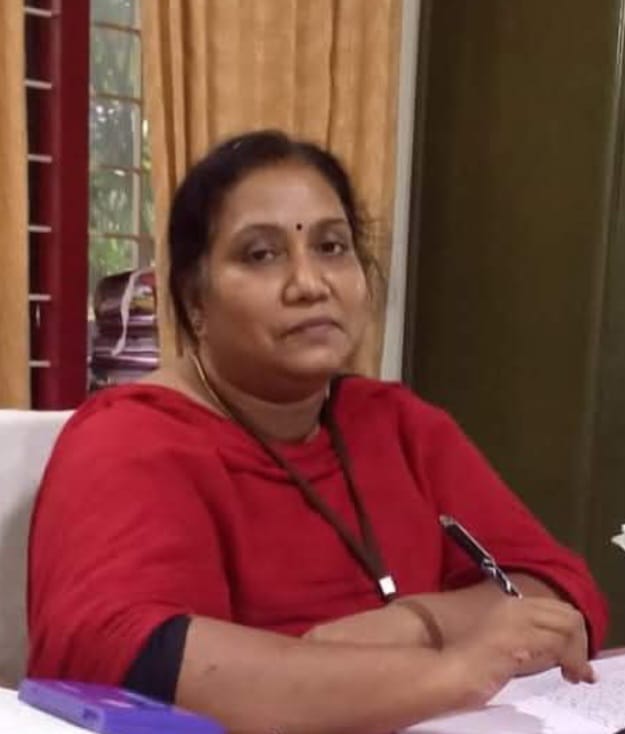
*Darsana K.R., residing in Venginissery, Thrissur district, is an employee at Venginissery Service Cooperative Bank and a passionate poet. Her published works include the poetry collections *Kavithaye Pranayichaval, Pranayathil Akappettathinte Ezhaam Naal, and Kuldharaayil Oru Pakal; the short story collection Thekkedathamma V/S Ramakavi (co-authored with Dr. Ajay Narayanan); the memoir Kunnirangunna Kothiyormakal; and the poetry study Kavithayude Veraazhangal. Her poems and articles have been featured in various periodicals and online platforms. phone : 9645748219, email darsanakr1973@gmail.com.
T. V. Sreekumar
Festivals are a part of our life cycle and they come each year without fail and get past with a lot of sound and festivities. Stored with happy and exciting memories of them, today living alone, I sink deep into those playful days which remain enriched with many people who unfortunately have faded away from life leaving thoughtful memories to cling on. Onam is the most important among festivals and the preparation for it started days earlier with making sweets, buying new clothes, balloons in plenty and the house danced to the tune of Onam songs. Visiting relatives and friends and all other festive activities squeezed into the available time which was insufficient. Kite flying was never missed and me at this late age thought of all those happenings which rekindled and excited me to no end. It was when I was soaked in these colourful thoughts I heard the knock on the door. I opened the door and found there right in front of me The King Mahabali in all his glory standing there with a wide smile. The grandeur in dress, ornaments with the crown in place and the umbrella in hand flabbergasted me. But, I was not much surprised as a premonition earlier in the day that something important was going to happen but never ever dreamt it will be this important. The King’s visit was a moment of pride and proud I was at this Royal visit.
I extended a warm welcome and made him sit in the most comfortable place. I told him to change into a dress which will make him at ease and gave him a new dhoti. Relaxed he was after shedding the heavy dress and after a few minutes said that coming after a year the places changed in looks drastically with new constructions which confused him and often led him to the wrong place.
“I hope this is not a wrong place” I asked him jokingly
“No, never. I wanted to come here only” the King said laughing.
“Shall I bring a glass of water”?
“Why not?”
As an afterthought I asked,
“What about sambaram”? (Buttermilk)
A smile of relief and he nodded.
Gulping a big glass of buttermilk the King was more relaxed and asked me,
“How are my people here”?
“As you can see it is not like what was in your days when all were happy and united. Now they are divided along political, caste and religious lines and also the rift between have and have-nots has widened. But the silver streak is, there is an underlying strength that holds all together”
“That is relieving to hear,” said the King.
“Will you have dosa and sambar for breakfast?" I asked
“Why not” he said in a loud voice.
“Then do join me in the kitchen while I make the dosa for you.”
While I was making dosa he said,
“Last year I was to rise in Cochin but due to some seismic undercurrents came up in Trivandrum. Walked into the house of a Professor and all of them were screaming with joy and excitement seeing me. The house was an old traditional type like my times with lot of greenery and tall trees. Inside, the walls of the house were adorned with photos of men from the army, which proved my choice of house was right. It was a memorable visit and I had appam and stew from there. They also took pains to make my favourite Kappa (Tapioca) which I relished. The highlight of the visit was poetry reading. The Prof was a writer and poet in her own right and the session was very interesting. She was kind enough to translate the poems into Malayalam which brought me closer to the feelings. Small joys, sorrows and struggles of a girl child, the rains, thunder and the blooming flowers all came live in her poetic words.
He was enjoying the dosa I made and while having it I told him
“I have Chilled beer in the fridge”
He looked at me with surprise and then a smile,
“Keep it for lunch”
We discussed about the people and their problems. The King was aware of tariff imposed by the big brother and I gave him a picture of how the Nation was preparing to tackle it.
“A world without war will clear a lot of human sufferings” I said.
He replied with a sigh which indicated that it was a false hope.
We had lunch on a plantain leaf with minimum dishes I had made and the King enjoyed it along with the beer.
It was a happy encounter and time for him to leave. He got dressed into his old self with all those fancy fittings then hugged and thanked me and said
“Last year lovely poems intoxicated me and this year the real one”.
His parting words were
“Wish you and all my people a happy and prosperous Onam.”
T. V. Sreekumar is a retired Engineer stationed at Pondicherry with a passion for writing. He was a blogger with Sulekha for over fifteen years and a regular contributor writing under the name SuchisreeSreekumar.
Some of his stories were published in Women's Era. “THE HINDU” had also published some of his writings on its Open Page..
Bankim Chandra Tola

As human beings, most people are aware of the transient nature of their existence and their role within the society they inhabit. They recognise that their actions, accomplishments, setbacks, relationships, and interactions are all ephemeral. Even with this awareness, it becomes difficult for them to remain calm, composed, and unaffected in all conditions, all situations in life — to stay Sthitaprajna(one of steady wisdom) – an eternal advice of Srikrishna to Arjuna – “Dukhesunidbignamana sukhesu bigataspriha, Bitaragah bhayakrodhah sthitadhi muniruchyate” as compiled in Bhagavad Gita. That means – “One whose mind is undisturbed in sorrow, who is free from desire in pleasure, who is free from attachment, fear, and anger—such a sage is called a person of steady wisdom."
People work to live, let others live and yearn to earn recognition with name and fame at the same time to acquire wealth and power for comfort and smooth go of life. In this process they invariably meet with the moments of success and the moments of failure. What is seen in common with many a man that they are overwhelmed with joy in success and victory and become sad and dejected at failure or defeat.
Except for a rare few enlightened sages, hardly anyone attempts to transcend the ever-shifting nature of mind, which is influenced by the outcomes of one’s own actions either verbal or physical. Thus, incidence of joy and sorrow in one’s life is natural. but they are transitory - they come only to pass. As someone rightly says:
"Victory is not yours; defeat is not yours—you are merely a witness. Everything passes. Happiness comes and goes. Sorrow comes and goes. You have no control over them; you are just a watcher."
A tale from the days of yore may throw some insight into this matter.
Once upon a time in the ancient past, there was a king who was puissant and invincible. He had his kingdom with extended territory yet well protected, ensuring peaceful living to his subjects. Despite this grandeur and power, he was not happy as if something was biting him from within. One day he hit upon a plan and asked his Chief Advisor to call all the wisemen in the kingdom to assemble in his court. Order was carried out instantly and soon the royal court was filled with scholars, venerable personalities known for their sagacious wisdom coming from all corners of the kingdom.
Addressing the mammoth gathering, the king posed a profound question –
“Is there anybody among you, O the learned scholars and renowned wisemen of my kingdom who can suggest me a Mantra or a formula or a piece of advice that holds true in every situation, in all places, at all times – in moments of joy or sorrow, in defeat or in victory? Something that could guide me when none of you are there beside me to advise in extreme situations? Seek a single answer to all these questions?”
The moment the king asked this question, all the wise men in the royal court were utterly dumbfounded. They felt as if the sky had come crashing down upon them. The query sounded so bizarre, so absurd yet so puzzling that it left them scratching their heads making them flummoxed.
They racked their brains, argued back and forth, held deep deliberations and intense debates, but no matter how hard they toiled, nothing presentable could be arrived at. The fear of the king’s fury loomed over them like a sword hanging by a hair. Failure was not an option; but a solution seemed hopelessly out of reach.
When they were at their wit’s end, just then one of them — a very old man with thick silvery beard, time-worn wrinkles on face, eyes drooped yet looking savant shining bright with wisdom — quietly raised his voice and made a proposition. What he suggested caught everyone's attention like a spark in the darkness. It was a simple idea yet carried a depth none had contemplated.
The entire assembly turned to him with hope and reverence, urging him to present his suggestion before the king.
Garnering fortitude and swallowing all fear, the old man approached the king's dais. With trembling hands, he offered a small, neatly folded piece of paper and said, "Your Majesty, this slip contains the answer to all your questions. I humbly request that it should never be opened—no matter how curious you may be—unless you find yourself in a moment of absolute despair, when all hope of survival seems lost, and there is no soul by your side to guide and help."
The king gave a thoughtful nod, took the paper, and tucked it securely beneath his diamond ring, ensuring it would never be lost or misplaced — only to be unveiled in the darkest hour.
Days rolled by until one fateful morning, when a neighbouring kingdom made a sudden attack unprecedentedly. Though unalarmed and unprepared, king and his army fought valiantly, but the aggressors could not be resisted. With no choice left, the king had to flee from the battlefield on horseback, but the enemy pursued following him.
As the king rode through dense forests and winding paths, suddenly he found himself at the end of the road. Before him came a steep, bottomless valley—an abyss that would surely mean death if he proceeded further. Behind him, the sound of pounding hooves grew louder. There was no way forward, and no path back.
Trapped and desperate king's heart pounded thinking of his imminent end. His eyes darted around, searching a way out for escape. Then, a glint caught his eyes. The sunshine had struck the diamond on his ring, causing it shimmer brightly. He remembered the secret within. Quickly, he twisted the gem and opened the folded piece of paper given by the wise men.
It read: “THIS TOO SHALL PASS.”
He stared at the words. Read them again. And again.
A strange calm settled over him.
"Yes," he whispered to himself, "this too shall pass."
What an irony! Till yesterday he was the emperor regarded like a deity by one and all in his kingdom, all other kings of neighbouring states had no guts to challenge him and they were bowing down before him and now he has been reduced to nothing, in his own territory fleeing like a thief to save his life. A wave of gloom shadowed his person and he thought, if his grandeur and power have faded away, this phase of misery shall pass too.
He felt as if a wave of calm suddenly washed over him. He stood still, almost petrified. The place where he found himself was breathtaking — full of natural beauty he had never noticed before. He hadn’t even known such a serene spot existed within his own kingdom. In that tranquil moment, he relaxed and, for a while, forgot about the enemies on his trail.
After a few minutes, he noticed the sound of approaching hooves had faded. Perhaps the pursuers had taken a different route in their hunt for him.
The King was not the one to be defeated for long. Summoning his courage, soon he reorganized his army and marched forward to face the enemy head-on. He fought with unshakable resolve and reclaimed his kingdom through sheer bravery.
Upon his victorious return, the capital erupted in celebration. The city was alive with joy. Flowers were showered on the king from every house, songs filled the air, and people danced in the streets. In that moment of triumph, the Victory fuelled king’s ego, and he said to himself with hubris "I am the best and invincible. None can defeat me.”
Yet amid jubilation, he however caught a glimpse of the message in his diamond ring and said to himself, “This too shall pass."
Bankim Chandra Tola, a retired Banker likes to pass time in travelling, gardening and writing small articles like the one posted here. He is not a writer or poet yet he hangs on with his pursuit of writing small miscellaneous articles for disseminating positive thoughts for better living and love for humanity. Best of luck.
Sreechandra Banerjee
“Am busy packing, I told you, I will be going to my parental home and now you say you want this and that!” Ma Durga was furious.
“Oh, my dear beloved Priyée, I know you are busy packing, but you go down to Earth, you know I will miss you, so just wanted you to cook this delicacy for me before you leave,” Lord Shiva tried to console Her.
“Moreover, you are Dasho-bhuja and have ten hands, why don’t you cook with two hands and do the packing with other eight hands? I have just two hands with which I can only embrace you dear,” He continued.
“What rubbish? Am busy now, what rubbish are you saying, how can I cook and pack simultaneously! Then I will have to take the suitcase to the kitchen, and all husbands are the same, want their respective wives to cook and only cook, what a male chauvinist you are.”
“So, what do you have ten hands for, honey?” Lord Shiva was approaching Devi.
“For slaying demons from all directions and protecting my devotees, you stop there, don’t you come forward, listen, someone is coming,” quick was Devi Durga’s reply.
“I know, know dear, now here comes Saraswati,” Lord Shiva’s voice started choking.
“Ma, I have decided to take this Vichitra Veena this time, last time I took Rudra Veena,” Devi Saraswati was striking some of the chords of the Veena that She held in Her hand.
“But sister, why don’t you take the Saraswati Veena, it is mainly used for Carnatic music, but you can this time also play Hindustani music,” in came Devi Laskhmi.
“Well, all veenas are stringed instrument with bars and I will try to play Hindusthani next time with Saraswati Veena. Yes, Saraswati veena is used mainly for Carnatic music. Year before last, I took it, and don’t you remember apart from Raga Hamshadhwani, I even played some numbers from the instrumental composition ‘Four Seasons,’ that the Italian composer Antonio Vivaldi used to play.
But dear Lakshmi, will you take both white and a pink lotus?” Goddess Saraswati was eager to know.
“Yes, both, as white signifies enlightenment, purity, and spiritual perfection. Pink lotus will signify beauty, grace, and prosperity – both spiritual and material. Lotus, you know signifies the blooming of prosperity that stems from inner peace, culminating in capability to eventually rise above material attachments. Both lotuses are however associated with worldly abundance and spiritual wisdom,” clarified Devi Lakshmi.
“I will carry this celestial spear or Vel, which Ma gifted to me. This Vel also represents destruction of evil and ignorance, divine power, and spiritual wisdom. This Vel, you know, embodies the concept of power. People on Earth revere me as the War of God, so I have to carry this Vel. I will also be revered again in the month of Kartick when I go again. My other hand will be in the blessing gesture as usual to bestow divine grace and protection,” Lord Kartick has meanwhile joined in.
“Yes, brother, you will go again next month, now that this is month of Aswin. I just came from Earth; they had revered me on the day of Chaturthi last month. They call it in my name “Ganesha Chaturthi,” Lord Ganesha probably was nostalgic about His recent visit to Earth and looked forward to going there again with His Mother and Siblings.
“I will carry my usual Axe that will cut attachments, a Rope that will pull towards truth, a Lotus that will bring in enlightenment, a sweet or Modak that will symbolize the reward of spiritual discipline. I will hold one hand in Abhaya Mudra or gesture that would symbolize protection and reassurance,” continued Lord Ganesha.
“Lakshmi, you will have to visit Earth immediately after on Full Moon Day of this waxing lunar phase. But I will have to go much later, at advent of Spring season, on the day of Vasant Panchomi,” it was Devi Saraswati.
“Yes, dear, we all visited Earth on Chaitra Navaratri or Spring Navaratri, and now this is Sharadiya or autumnal Navaratri,” Ma Durga seemed to be excited to visit Earth again.
“It is during Shivaratri in Spring season, that I will visit Earth,” Lord Shiva’s voice was choked.
Probably tears also appeared.
“Why are you crying?” Ma Durga tried to scold Lord Shiva.
“I will miss you all, will send you WhatsApp messages,” Lord Shiva said in between sobs.
“Don’t you send WhatsApp messages, I hate WhatsApp, when you find time just give me a call, if am not busy attending to the prayers of the people there, I will definitely talk to you. Or else, seeing your missed call, will you back later,” Ma Durga assured Lord Shiva.
And so, packing was completed, and they were all ready to come to our Earth.
Let celestial blessings cascade down here on Earth with Their visits and may our lives become embraced in the Joy that resides irrespective of caste, creed, and religion. After all, it is in this Joy that The Almighty resides.
Greetings to you on Durga Puja.
On 15th December 2021, UNESCO inscribed Durga Puja (in Kolkata) on the Representative List of Intangible Cultural Heritage of Humanity.
HAPPY DURGA PUJA,
HAPPY NAVARATRI,
HAPPY DUSSHERA.
Copyright Sreechandra Banerjee. All rights reserved.
No part of this story can be reproduced by anyone.
Sreechandra Banerjee

“Voting date is here and now you are scaring me that I must strengthen my campaigning as my opponents are stronger” exclaimed Member of Parliament Sampurna, who was contesting for the second time.
- “Yes Didimoni, you must win. I have asked all people here and in the nearby Santhal settlements to help us as your opponents are taking all measures” said Janaki, the village woman who had known Sampurna from her very childhood.
It was difficult campaigning at this time of the year with summer approaching. Summer here in Massanjore was not as hot as the rest of the region, yet mercury often kissed the 40-degree mark on the Celsius scale.
The tropical deciduous forests adorning the low surrounding hills with a green hue, had imparted a cooler look to this region. These hills probably merged with the Chotanagpur plateau. Year after year, summer was becoming intolerable as the wheels of modern civilization were cutting through these forests.
Urbanization was the staple objective, though in some places, slopes were terraced for cultivation and in some other places, the innate love for forests have driven the aboriginal Santhals, Paharias and Mundas to save some of these forests.
The River Mayurakshi was the main artery pulsing water through this region. More often the existence of the river was a curse than a boon when vast areas of land were inundated. So, in an effort to harness the power of the mighty river, Massanjore dam was constructed. Vast areas of cropland got irrigated and wheels started rotating to generate hydroelectric power.
Sampurna, or Purna as she was called, was born and brought up in this land. Now that her parents were no more, she lived in the palace with some relatives and cousins who had moved in.
- “Till you are married off and settled elsewhere with your husband, we are here to look after you Purna” reassured her maternal aunt, mother of a good-for-nothing son who had decided to stay abroad even for a sweeper’s job.
How much her aunts and uncles had tried to marry her off!
- “Oh, you needn’t worry about me. I very well know the reasons why you are here!” an outspoken Purna used to scowl.
Yet it was probably better than living in a palace alone in this less populated town on the Bengal Jharkhand border in Birbhum.
Her great grandfathers were kings who became the “zamindars” during the British Raj. Although monarchy didn’t exist these days, yet the glamour of being born as descendants of one-time kings, was always precious.
Purna was never in the good books of her mother who hailed from a middle-class family. She was the fourth daughter in a family of five daughters followed by a son. Purna had heard that her maternal grandfather had to dole out a huge dowry to marry her mother off. Rumors said that after her marriage, her mother was found to be ill; probably she had tuberculosis of the uterus.
Rumors were in abundance, but even from her very childhood, Purna was disinclined to rumors.
- “Your Ma was so ill before you were born, she was confined indoors and was not allowed to see us you know,” her aunt used to say.
- “Stop spitting rubbish about my Ma” Purna couldn’t tolerate her aunt saying all this about her mother although she herself never got on well with her mother who cared more for her adopted brother.
In want of a male heir, her parents had adopted a son on constant pestering of her grandmother. Purna was then four years old and was hurt that they hated her because she was a girl child.
Her father behaved indifferently towards her, especially during her early childhood. Relations, however, improved as she grew up and her father started caring for her although he, for some reason, wanted her to stay away from the palace and had sent her to a boarding school in Siuri. Probably he had not wanted Purna to meddle much with other people in the palace.
Purna had always fared brilliantly in academics, and she obtained an MA in anthropology from a renowned university in Kolkata.
It was the talk of the town that she became such a scholar despite being the daughter of a school dropout father and a non-matriculate mother.
Her adopted brother went to some local school, got into bad company and became a drug addict. Later, he became a political worker and was killed in some political rivalry.
This happened when her parents were alive, and she was teaching in a college in Kolkata. Her father wanted her to return, but her mother had vehemently objected. It was the first and last time that her mother had ever written to her:
- ‘You are now well settled in Kolkata. You needn’t come here. We are doing fine.’
This very letter made her adamant to return. It was when she decided to join politics. The urge was also to do good for the people, to set things right. Atrocities against women appalled her. The hardship of people like Janaki-bai struck her the most.
- “Didimoni, you have to become a scholar, you must study and stand on your own feet.”
Janaki-bai used to motivate her in her childhood days.
- “You said your maternal grandfather was an engineer who was involved in the construction of this Massanjore dam. Why didn’t your maternal uncle let you continue with your studies?”
- “It’s a long story Didimoni. My grandfather moved to Siuri during the construction and later the beauty of this place made him settle here. I was sent to stay with my maternal uncle here when both my parents died. I was in Class IX then. Both my parents were professors, and I wanted to become a scholar myself. But faith….” lamented Janaki-bai.
- “But your cousin sister, a few years older than you, she went to the university in Shantiniketan, so why couldn’t you continue with your studies?”
- “They were not financially very well off. And then, not everyone gets an opportunity to study. But Moni, you have to study and be established.”
Sometimes Janaki-bai fondly addressed Purna as “Moni”.
Purna remembered how Janaki-bai used to come regularly to the servant’s quarters to sell all sorts of things. This was probably how she earned a living. Whenever she came, she used to discreetly send for Purna. These clandestine meetings were held backdoors as per Janaki-bai’s wishes. Once her mother had seen them cajoling and had scorned:
- “Don’t you talk to that bad woman. If I ever see you talking to her again, see what I do!”
How old was Purna then? Seven or eight years old!
Janaki-bai never came to the palace again after this incidence as long as her mother was alive.
However, Purna used to meet Janaki-bai when she went to attend the folk festivals of the Santhals- a tribe famous for their distinct cultural traits and heritage. Purna used to sneak out with one of the Santhal maidservants who even taught her some Santhali language and also some of the Olchiki script in which Santhali alphabets were written.
Folklore attracted Purna a lot and she always attended Santhal cultural expositions despite objections of her mother who forbade her from going out much. It was a good thing that she had studied in a boarding school and later in Kolkata or else the claustrophobic indoors of the dilapidated palace would have freed her existence to the ultimate “outdoors”.
Purna, who felt lonely in a warmth-lacking home, thus grew up amidst Santhal festivals, experiencing which was a must for her whenever she came home during the vacations. Everything was so ornate, the flower head-wears, colorful clothing, and all the arboreal things that they used for decorations.
She used to be fascinated by the different Santhal musical instruments like the Dhodrobanam, Tirio, Phetbanam, Junko and the Singa. Folkdances were often performed to the accompaniment of a drum like instrument called the ‘Madal’. Purna had somewhere heard that this ‘Madal’ was probably of Nepali origin.
These Santhals were gifted with the ability to make mats, baskets, food, agricultural and musical instruments from plant products. What Purna found astonishing was that these tribal people knew how to use plants for treating chronic diseases.
Purna often thought about the paintings that decorated the Santhal homes. The famous Santhal paintings called ‘Jadu Patua’ made with organic materials were spectacular.
When the first full length Santhali feature film ‘Chandu Lekhon’ was released, Purna was then in Kolkata and had seen the premier show.
Janaki-bai used to narrate many tales of the region and of yesteryears, especially about her cousin’s wedding. One day Purna had asked her:
- “Why didn’t you marry Janaki-bai and have children? You would have been a nice doting mother!”
- “Oh! Didimoni, I never felt like marrying. But you must marry and live happily.”
- “I am quite happy, I don’t want to marry. Why do you all think that happiness and fulfillment only come out of marriage?” Purna regretted saying this. How could a simple woman like Janaki-bai, who had spent most of her years amongst the simple nature loving Santhals, understand what Purna wanted to say?
Well! She might have understood as Janaki-bai always nurtured modern ideas as far as emancipation of women was concerned.
And now election time was full of activities. It was a small constituency and Purna went campaigning everyday, more due to the instigation of Janaki-bai who also cautioned her to be careful. Of late, political unrest and insurgency have reigned supreme and political workers of different parties have been killed.
Finally, the day of counting votes arrived. They all sat in the party office for the results to be declared. Janaki-bai was probably the most anxious person.
The final results were declared. Yes, Purna won for the second time. Janaki-bai couldn’t refrain herself from hugging Purna.
- “My daughter has won” she exclaimed.
The entire town, it seemed, had come to cheer Purna. Some in the mob said:
- “Oh Janakibai, now that she is a Member of Parliament, you have made her your daughter!”
Some taunted: “Oh! she never married because she was incapable of bearing a child and now, she thinks that everyone is her child.”
Someone shouted: “Women and specially these “bazaar” women are always like that.”
Janaki-bai veiled her face like she always did when such things were said about her.
It was indeed a night of celebrations. Many became intoxicated with a local variety of wine made by fermenting ‘Mahua’ flowers.
Janaki-bai was about to leave but what she had said struck Sampurna who asked her to meet her the next day.
- “Why did you call me your daughter, Janaki-mashi?” she asked her inside closed doors.
Janaki-bai couldn’t utter a single word. Her tear clogged eyes, however revealed the joy of a mother, yes, the joy of a biological mother! Who knows, probably the joy of a biological mother, deprived of bringing her child up, seeing her daughter trying to change society, is more than that of a biological mother, who is privileged to bring her child up!
Janaki felt like screaming and telling the whole world how she was sold by her uncle to be a biological mother so that they could marry off their own daughter.
It was Durga Puja time and Janaki with her cousin sister had gone to the palace to attend the Puja festival there. The day after, Sampurna’s grandmother had sent this proposal to Janaki’s uncle. Sampurna’s grandparents were in desperate need of a male heir and her mother could not conceive. They had thought that a ‘man’ like Sampurna’s father could only begot a son.
How could Janaki forget how she was forced to go to the palace everyday till she had conceived! Every time she was forced to submit with her face veiled and her limbs tied. She could never forget the cruelty done to her at the tender age of 18, to endure the pain all her life without any pleasure to comfort her. The nine months followed in some dark rooms in the basement of the palace. Never for a moment could she feel the joy of the fetus slowly growing inside her womb. Fear had always engulfed her.
Now that her daughter was well established, could she still declare that Sampurna was her daughter? No, she couldn’t! Not because of her promise to her uncle but because of how society at large would take this! Janaki would love to live to see her daughter being successful in life. Besides, knowing Sampurna’s background, people might not accept her as their leader!
So better, it would be that no one knew anything about it and Sampurna won the elections over and over again. At least, society would be benefited.
(Note: Some years back, I saw a movie “A Handmaid’s Tale” written by Margaret Atwood and had decided to write a short story on such exploitation of women. This story is from my book “Tapestry of Stories” published in 2011.)
No part of this story can be reproduced by anyone.
Image above is from the internet to which I have no right (Disclaimer).
Copyright Sreechandra Banerjee. All rights reserved except as noted.
Sreechandra Banerjee is a Chemical Engineer who has worked for many years on prestigious projects. She is also a writer and musician and has published a book titled “Tapestry of Stories” (Publisher “Writers’ Workshop). Many of her short stories, articles, travelogues, poems, etc. have been published by various newspapers and journals like Northern India Patrika (Allahabad), Times of India, etc. Sulekha.com has published one of her short stories (one of the awardees for the month of November 2007 of Sulekha-Penguin Blogprint Alliance Award) in the book: ‘Unwind: A Whirlwind of Writings’.
There are also technical publications (national and international) to her credit, some of which have fetched awards and were included in collector’s editions.
Dr. Rajamouly Katta
Charms and skills are not the monopoly of anyone belonging to the class of the rich and the educated. Any one of any class can have charms and skills irrespective of their economic highs and lows and social statuses and levels.
There was a servant-maid with all those charms and skills, and she was better than the rich and all educated in all respects. She was none other than Aparna with a little education. By birth, she had all excellent features and eminent skills, but she was born in a poor family.
Aparna looked dignified in manners and beautiful in features. She had excellent communication skills. Her soft skills were appreciable and enjoyable. Her all appeared as if she had learnt all the extraordinary skills and charming manners. She had all impressive features in addition.
Aparna married a boy who was working on daily wages in an office as her husband’s income was too adequate to make both the ends meet. It became essential for her to work in some houses as a servant-maid to run the circus of her family economically. She was very obedient and skillful in her work. All liked the style and the skill of her working. Her work was neat and tidy. All appreciated her sincerity and hard work in household chores and neatness and cleanliness in housekeeping. All wanted her to work in their houses, but her limited time allowed her to work in some houses, as she was sincere and regular in her work. She wanted to work in their houses permanently.
Aparna and her husband Rajiv were sincere and hard working. After some years, by taking a loan, they constructed a house in the colony where she was working.
Aparna sincerely worked in only some houses not to spoil her reputation of being regular in her work. As per the time available, she worked only in the houses for her income to support her husband. She wanted her children-- a son and a daughter-- to study well. She admitted her children in an English medium school like others. She taught her children whatever she knew. Her husband Rajiv, who was working on daily wages, was devoting his time to teaching the children. The children were very brilliant. They were standing first in their respective classes.
Aparna was reading books to enrich her knowledge like her husband. All felt they were made for each other as they were born for each other and lived happily.
Work was worship for Aparna. She worshipped work in the heart of her heart though it was in others' houses or in her house. She did not receive any complaints but all compliments from the houses for her sincerity, punctuality, and regularity in her work. Apart from salary, they offered her old saris, old things, tips, gifts, and food items to please her though she did not ask them to do so. They offered and she just received them humbly.
Aparna looked dignified in her appearance though she wore old or simple costumes. Sometimes the wives of the rich were jealous of her beauty. Everyone told her directly and barefacedly,
'You look very dignified and beautiful even in the old sari that I gave you to wear... When I wore the sari, I wasn’t so dignified and beautiful as you...'
'You all like me very much...I appear so to the people whoever like me...I’m an ordinary woman,' said Aparna to them modestly.
'You would have gone to the film field to act as a heroine. You look very charming even in the old dress...You're lucky to have excellent features, ' said Meenakshi, the wife of a realtor.
'I don't deserve so, as I’m not educated highly... I discontinued my studies as I belonged to a poor family...,' said Aparna in response to Minakshi's comment.
'Where did you learn how to wear the sari...? The style of your wearing is excellent and super. Your appearance is very appealing,' said Gopika, the wife of a noted contractor.
'It’s simple...If we take some care, we can wear so gracefully...We should spend some time for that...,' said Aparna.
'The people in the colony feel that I am not dignified...I look like a servant-maid...but you do not...Though I wear rich, costly costumes, I don't appear like you... What should I do to look like you...?' said Ranimalinidevi.
'You think so...We should have dress sense. We should take care of wearing a variety of costumes... We should be neat and tidy... You use only two saris to wear either of them even though you have hundreds of saris. You generally wear them in functions. Life is beautiful...We should be happy... We should also make ourselves happy by our appearance and communication. You can wear all saris whatever you have... You can wear your Sunday best on occasions. This is what I do and that is what you do not do...This is my principle...That is your principle...,' said Aparna.
Yashoda, the wife of a big landowner was very jealous of Aparna. The landowner observed her attentively all the time while she was working in her house. She murmured to her one day when she was at work,
'Even in poverty, you are very beautiful and delightful, how is it possible, to you, Aparna...?
'There is nothing special...,' said Aparna.
'You're after all a servant-maid to work in some houses...There is something special,' said the wife of millionaire's wife to Aparna, as she felt very jealous of her beauty.
'Yes, like you all I'm a woman... a servant-maid with something special. A woman should be in pursuit of elegance and excellence. As a woman and mother in a family, I look into the future with a ladder for me to step up or scale towards excellence while being in elegance,' said Aparna.
'You're greater than we all, for you look dignified even in simple costumes,' said Amritha, the wife of a cloth merchant.
'It isn't the dress that makes one dignified...See I'm an ordinary woman to make others happy by my sincerity... I should never hurt anybody's feelings. It's my principle...my utmost principle,' said Aparna and left the group of gossiping women, bearing a hearty smile.
'Aparna is a cute servant-maid...We can't compete with her,' said all the women who used to spend their valuable time in gossiping.
All the women raised their eyebrows high at the sight of Aparna. Were they encouraging her in true spirit?
... ... ... ... ...
Days passed to keep the deserving people in the deserving position. Aparna was trying her best to promote her position. She was prepared to achieve what she had lost in the past because of poverty.
All the women still raised their eyebrows when Aparna promoted her position by improving her qualifications. As she used to participate in dancing competitions in her school days, she learnt dancing and singing in one of the houses for her work. She became a music and dance teacher in a famous school. The school authorities offered her a handsome salary. She stopped working as a servant-maid in the houses. Her children were pursuing their studies successfully.
The Prime Minister started the Swachcha Bharath programme. In view of this programme, the people of the colony wanted to prove their best in support of the programme as they supported it whole-heartedly. All made up their minds to keep their houses and their surroundings neat and tidy. They also made it a point for well housekeeping as well. They had committees formed at the national level in this regard in the execution of the programme.
There were a hundred houses in the colony. The women were very competitive in well housekeeping. They kept all household things in their possible ways. A committee was ready to visit the colony and offer awards to the dwellers especially women for keeping household things orderly and comely and house interiors and surroundings clean and tidy while maintaining conjugal relations.
In the competition, on a Sunday as per schedule the panel of judges was ready to assess the orderliness and cleanliness both inside and outside of the dwellings in the colony. The panel was very particular about the conjugal, cordial relations between husband and wife in their offer of awards.
The awards were ready for the best family in the colony. The cordial relation of the couple, their well housekeeping, the beautiful gardening in the surroundings and all the essential qualities of a model house irrespective of their riches and statuses, highs and lows. The dwellers were eagerly waiting for the awards given by the committee.
All the panel members visited all the hundred houses to assess the houses and the couples as per the principles evolved by the committee.
As it was Sunday, in some houses the couples and their children were in a relaxing mood. In some houses, the couples woke up late. They were brushing their teeth at the time of the panel visit.
In some houses, the dwellers did not keep their houses neat and tidy, as the servant-maids did not come. They were waiting for them to come and sweep the surroundings of their houses.
The gates of some houses were not open. They did not unlock and open the gates. They were in their bed.
In some houses, the couples were late in having their bath. They did not come out to welcome the panel.
The panel was unhappy to find the houses and the dwellers in them discouraging. In the houses they visited, they told the panel that it would start visiting the houses from the first one in the other corner as their houses were bearing the numbers from fifty to eighty.
In some of the houses, the couples received the panel in a careless way. They were in their informal dresses.
In some houses, all things were disorderly and untidy. The panel found newspapers, towels, caps, kerchiefs, and all kinds of dresses on the sofas of their houses. The panel did not see the other rooms in the houses as they expected the same disorder and untidiness in them.
In some of the houses, the couples had just woken up. They came out to receive the panel while they were brushing their teeth. They rose late from bed when the panel rang the calling bell three times at the gate.
The couples in some houses asked the panel to wait at the gate and were busy keeping the things in the apple-pie order then to win the competition. The panel did not enter the house. It went to the other house.
The panel felt stunned in some houses when it found the kitchen dirty and dusty. The utensils, the plates and all were in the sink, waiting for someone to clean them. They did not feel like cleaning them. They had bed-coffee and left the cups on the table. There were various kinds of articles like pens, pencils, combs, brushes, teacups, saucers, needles, threads, toothpaste, dolls, scissors and all on the dining table. It all appeared 'a storeroom on the table' to their surprise.
The panel heard some sound in some houses. The couples in them were fighting on an issue. They were shouting at each other. They silenced themselves when the panel arrived. The panel did not feel like entering the houses. They left the houses without visiting them.
The members of the panel felt extremely sorry for most of the members of the families could not impress them. They felt discouraged, as their housekeeping was not good, not proper, not clean, and not orderly. They found their houses with their surroundings also untidy and disorderly.
When the panel visited the house of Aparna and Rajiv, the plants with all kinds of flowers in full bloom welcomed its members at the threshold. They dressed in a neat manner and were ready to invite the panel at the gate. They opened the gate and welcomed the panel with suitable gestures. The surroundings were very neat and tidy. They lead the panel to the drawing room, the living hall, dining room, kitchen, and the bedrooms. Everything was clean, orderly, and systematic. The house was pleasing. Their manners were appealing. It was the abode of peace. They introduced all the parts of the house to the panel in a polite manner. They were cordial in their approach and friendly in their dealing with the panel.
All the panel members of the committee selected Aparna and Rajiv to be the best couple in all respects: their conjugal relation, their house full of cleanliness and all the household things in orderliness. All were pleasing them apart from cleanliness and orderliness. They received the panel cordially unlike others. They treated them as their most welcome guests.
The panel submitted a list of suggestions to the members of families in the colony for their future guidance in all respects while appreciating the best:
"The members of a family should not be lazy. They should wake up early though it is a holiday. They should brush their teeth, have a bath and wear neat dresses even though they are in their houses. They should keep all household things in all rooms like drawing room, living hall, dining hall and kitchen in the apple pie order. They should maintain good relations to enjoy peace. Their house should be a sweet home. They should follow the principles: sincerity, hard work, regularity, and punctuality. They should not postpone their activities, their plans and all. They should realize that the most important thing is time. Time is money. Time is not just money but also everything that keeps them awake to the realities of life. They’re to have time-consciousness. Orderliness is appealing to the eye, and cleanliness is refreshing to the senses. Hence, they should mind it in all respects. Home is the dwelling of peace for them as life is beautiful...
"Aparna and Rajiv were ideal in all respects. They proved to be the best couple in their peaceful, simple dwelling. The panel recommended them as the best couple for an award. It also recommended Aparna for the best woman award on the eve of the women's day next. She deserves all appreciation."
In the coming years, Aparna got a chance to act in a film based on music and dance. She acted in the movie and got the prestigious Nandi award at the national level.
Apart from the award, the jury selected Aparna as the best woman award for her rising from the servant-maid to the best dancer. It bestowed the award on her on the eve of Women's Day. It was her lifetime achievement award to bring credit to her.
Aparna received the award with all pride and came back. She landed at the Shamshabad airport. All the women received her with all respects at the airport.
The next day all the newspapers featured Aparna's name in the headlines. All appreciated her for outstanding qualities as woman especially as wife to her partner and as mother to her children who settled abroad. She only said referring to her progress and success,
"My husband, Rajiv is great in guiding me to reach my most cherished goal."
All the women who had underrated Aparna earlier bowed their heads in utter shame.
Dr. Rajamouly Katta, M.A., M. Phil., Ph. D., Professor of English by profession and poet, short story writer, novelist, writer, critic and translator by predilection, has to his credit 64 books of all genres and 344 poems, short stories, articles and translations published in journals and anthologies of high repute. He has so far written 3456 poems collected in 18 anthologies, 200 short stories in 9 anthologies, nine novels 18 skits. Creative Craft of Dr. Rajamouly Katta: Sensibilities and Realities is a collection of articles on his works. As a poet, he has won THIRD Place FIVE times in Poetry Contest in India conducted by Metverse Muse rajamoulykatta@gmail.com
LEAF FROM HISTORY: THE ACCIDENTAL PRESIDENT
Mr Nitish Nivedan Barik
The office of the President of the United States is often seen as the pinnacle of democratic power—a position shaped by the will of the people, yet filtered through the peculiar machinery of the Electoral College. Though Americans cast their votes directly, the final outcome rests with electors, a constitutional compromise that occasionally stirs debate about representation and legitimacy.
In this complex democratic framework, few stories are as paradoxical as that of Gerald R. Ford—a man who ascended to the highest office in the land without ever receiving a single vote for President or Vice President. His rise was not through ambition, but through constitutional necessity, political turbulence, and historical contingency.
The 1970s were a time of global and domestic upheaval. President Franklin D. Roosevelt had once defied precedent by winning a fourth term, asserting executive continuity during wartime. His unprecedented tenure later prompted constitutional reform: the Twenty-second Amendment, ratified in 1951, formally limited future presidents to two elected terms, or a maximum of ten years in office if they had succeeded a predecessor mid-term. Decades later, President Richard Nixon, embroiled in Cold War diplomacy and domestic unrest, took a controversial stance during the 1971 India-Pakistan war. His administration, favoring Pakistan, alienated India and its Prime Minister, Indira Gandhi— a stance widely perceived across India as not only hostile but profoundly misguided, even bordering on the horrible in its strategic implications
But Nixon’s most damning legacy was not foreign policy—it was Watergate. The scandal, a web of political espionage and cover-ups, shook the foundations of American democracy. As the evidence mounted, Vice President Spiro Agnew resigned over unrelated corruption charges, and Nixon, facing impeachment, appointed Gerald Ford as Vice President under the 25th Amendment—a constitutional provision never before tested in such dramatic fashion.
Nixon’s departure marked a singular moment in American history—he remains the only U.S. President to have resigned from office. While others have died in office or declined to seek re-election, Nixon’s resignation stands alone as a constitutional rupture and a cautionary tale in executive accountability.
When Nixon himself resigned in August 1974, Ford became President. He had never campaigned for the role, never stood before the electorate as a candidate for national office. Yet there he stood, taking the oath with humility and resolve, declaring, “Our long national nightmare is over.”
Gerald R. Ford served as Vice President of the United States from December 6, 1973, to August 9, 1974, the first to assume the vice presidency under the provisions of the 25th Amendment. Upon President Richard Nixon’s resignation Ford ascended to the presidency on August 9, 1974, and remained in office until January 20, 1977.
Ford’s presidency was immediately tested by the question of justice and healing. In a move that remains controversial to this day, he granted Nixon a full pardon for any crimes committed during his presidency. Ford believed the nation needed closure, not vengeance. Critics accused him of shielding a disgraced leader; supporters saw it as an act of statesmanship.
Ford’s tenure in White Housen as can be seen from the data above , lasted just over two years. He lost the 1976 election to Jimmy Carter, but his legacy endures as a symbol of constitutional resilience. He restored dignity to the White House, navigated economic challenges, and survived two assassination attempts—a reminder that even accidental presidencies are not immune to peril.
Interestingly and very significantly, Gerald Ford’s presidency unfolded alongside America’s Bicentennial—a national moment of reflection, renewal, and historical reckoning. It became a defining chapter of his administration, not merely by coincidence but through his active participation in commemorative events. In April 1975, Ford lit a symbolic third lantern at Boston’s Old North Church and later delivered a poignant address at Concord’s Old North Bridge, invoking the spirit of 1776.
The official Bicentennial observance began on April 1, 1975, with the launch of the American Freedom Train, which carried the nation’s heritage across all 48 contiguous states. The celebrations culminated on July 4, 1976—America’s Independence Day—marking the 200th anniversary of the Declaration of Independence.
By a quirk of constitutional fate, Ford stood at the helm during this milestone, offering the nation not only ceremonial leadership but a quiet reassurance that democracy, though tested, endures. Thus the fact remains that Ford became the “The Accidental Steward of America’s Bicentennial”.
The Bicentennial was not just a pageant of flags and fireworks; it was a reckoning with the ideals that birthed a republic and the trials that tested it. In Ford, the nation found a president who embodied the quiet dignity of democratic resilience. His presidency reminded Americans that leadership, at its best, is not about charisma or conquest, but about character and continuity
In the annals of history, Gerald Ford remains a quiet paradox: a man who never sought power, yet wielded it with grace; a leader born not of ambition, but of necessity. His story is a testament to the unpredictable currents of democracy—and to the enduring strength of constitutional order.
Mr Nitish Nivedan Barik hails from Cuttack,Odisha and is a young IT professional working as a Team Lead with Accenture at Bangalore.
Dr. Mrutyunjay Sarangi
Sushant paused and looked back at the house. One last look, he told himself. One last look at the house which was not only a home, but the whole universe to him. A month's absence had made him miss it as much as he missed his dead wife. Both were parts of his life so integral that their separation would open up the raw soul - smouldering, throbbing, festering.
Yet he had lost her one and half months back and he was going to lose the house today. He had wondered for one full hour whether he acted in haste, if life deserved another chance.
And then he had told himself there was no point in regretting. He had reached a point where time went beyond temporality, it was not to be measured by the long and short of it, but by the intensity of his feeling - just asking one simple question and answering it in his mind - should he or should he not? Should he quit or trudge along on a path which had become so rough that a mere step scalded his feet, the skin peeling off like an unwanted appendage of the body. Just like he himself had become an unwanted appendage to his sons and their families.
He looked away, tears filling his eyes. Hopefully no changes would be made in the house. No one would chip away parts of the house, no hammer would hit the parapet, no one would drill holes in the walls. Would the trustees of the orphanage, to which he had donated the house in a Will Deed a few hours back, ever know how much he had sweated standing under the hot sun on the day the foundation was laid? And the drizzle which drenched him, and gave him a fever on the day concrete was poured to make the roof?
Would they touch and feel the corner of the room where Nishant, the elder son lay in a cradle as a baby, crying in the nights? How Tapaswini would run to him and bring him to the small bed being shared by them, how he would get up and leave for the living room and sleep on the floor?
And that small space between the terrace and the skylight? Sushant could hear the cooing noise of the pigeons as if they were still living there, shamelessly making love and breeding baby pigeons. Despite all the mess they made, the poop and the feathers, they were never driven away till about a year back. Some relatives kept on insisting that their poop and feathers were causing the illnesses for Sushant and Tapaswini, and one day he dismantled the nest. The pigeons must have found some other place nearby to build their nest, because Sushant saw them once in a while sitting on the window sills and cooing to each other.
Ah, there, the small stainless steel plate, how is it still lying there under the branches of the hibiscus tree? How has it withstood the heat and the rains? Sushant clearly remembered the white cat which used to eat rice and the occasional fish curry from the plate. When the finances dwindled and there was just enough to feed Jim, the dog, the cat returned without her share of food for a whole week. After that she had disappeared. Sushant had never seen her again.
Mercifully it was a very small plot, so no big house could be constructed there. It would certainly not be sold to a builder because there was just not enough land to build multi storeyed apartments. Just one bed room with a small living room. A room was added later on the first floor, to enable Nishant and Vikrant, the younger one, to study and sleep, prepare for the exams. This was all that Sushant could afford from his meagre income as a stamp vendor at the local magistrate's court.
Jim, the dog barked a painful, whining cry. He didn't want to be tied up in his small shed. The last one month he had lived away from his own little house, protesting, howling his heart out. And today he didn't want to be left alone.
Sushant didn't want to leave him alone. After Tapaswini died a painful, lingering death, partly out of malnutrition and partly out of cancer, the dog was his faithful companion. Vikrant had brought Jeena, his mother, when he was in college. His class mate had gifted her to him. She lived for fourteen years. Jim, her son, was already twelve, his emaciated body concealed his age.
The two boys had moved on. They were good students. Nishant had become an engineer working in the State Electricity Board in the state capital. Vikrant went into the legal profession and worked as a lawyer in a nearby town, just thirty kilometres away. Maybe, seeing his father selling stamp papers in the premises of the Magistrate's Court had inspired him. Both had married into rich families, their wives smart spendthrifts who wanted money all the time, never satisfied with what they had.
Three years back Sushant had to quit his job. Two spells of long fever had pulled him down. And then tuberculosis sapped his energy. He was not able to even ride the bicycle to work. Nishant and Vikrant spent a few thousand rupees on him, but it was getting clear that their wives were reluctant to spare the money. Sushant's savings were getting depleted, food became scarce, Jim, the dog had to give up his non vegetarian meal, but after the first two days of surprised reluctance, he understood and adjusted with a plate of simple rice with salt.
By the time Sushant recovered from tuberculosis, Tapaswini had been diagnosed with pancreatic cancer. Her thin, emaciated body degenerated with frequent bouts of dysentery, she died a silent death, in her husband's arms, smiling as always, at a loving, dutiful companion.
Sushant was devastated. Tapaswini had never left him alone, not even to go to her parents' place for the customary festival holidays. His each and every need was taken care by her. The day after her death, he spent an hour in the bathroom crying. For as long as he remembered, it was a daily routine for him to call her, "Tapu, please get the towel". She would come running, shouting in mock anger, "Can't you get your towel before going to the bath room? Who will give it to you when I am no more?" He would shout back, "Don't worry, you will live for fifteen years after me!"
Ah, how life plays these cruel jokes! She left him within three months of the detection of cancer. The sons came for the funeral and left immediately after the rituals were over. No one talked with him, the grand children had come only for a day, and left with their mothers because the exams were on. The sons were busy with their mobile phones, no one had time for him. Their wives came back for the tenth day ceremony and stayed back till the fourteenth day. That's when he overheard the conversation among the sons and their wives one late evening in the living room when they thought he was asleep in the bedroom.
"Vicky, you should take Baba with you. He looks so thin now and without Mama he will not be able to manage".
Shalini, Vikrant's wife pounced on her brother in law,
"Why Bhaiya, you are the elder one, the responsibility comes to you first. And your income is much higher, look at Didi buying all those ornaments, they are certainly not coming from your salary!"
Nishant got shocked by the unexpected direction the discussion took,
"Oh, come on Shalu, you have a such a large house in a big town, and only one son. We have two of them, our expenses are certainly higher than yours!"
Shalini nudged Vikrant to say something, who said haltingly,
"Bhaiya, it's not a question of our household expenses being less. Baba was not doing a government job, he has no pension. The entire burden will come upon me!"
Nishant, the practical Engineer tried to put some reason into the mind of his younger brother, "But think of this plot of land and the house, it will fetch at least eighty lakhs or so when we sell it".
Shalini was off from her chair in a jiffy,
"Will you let us keep the sale proceeds if we let the old man stay with us? Then we will consider keeping him".
It was the turn of Sunita, the elder daughter in law to interject,
"How can that be? Both the sons should have equal claim to the father's property".
Vikrant found a compromise,
"Then the responsibility should be equally shared. Tell you what Bhaiya and Bhabhi, let us keep him for fifteen days each. First fifteen days of the month he will stay with you, I will keep him for the next fifteen days. We will put this house on rent and share it half-half. That way the burden will be divided by half and Baba will have a change of place every fifteen days".
Nishant was not averse to the idea. The rent will be at least twenty thousand rupees, this place being so close to the central market.
Listening to this from his bedroom Sushant was aghast, by the idea of this division of burden. A burden? With a paltry income he and Tapaswini never considered the children a burden! They led a frugal life so that the children would have good food and education. And today the sons were talking of the father as a burden to be shared fifty-fifty!
But Sushant had no choice. His back was broken, with all the medical expenses for himself and Tapaswini, who had to be treated in a private hospital. These days who goes to a government hospital with all its crowd, filth and the stench? Next morning he agreed to move with Nishant on the first of August, after spending the remaining eleven days of July in his house, reliving a few precious moments in the memory of his beloved Tapaswini. A 'To Let' notice was put up giving the contact numbers of the two sons. Sushant folded his hands and made his sons agree that he should be allowed to take Jim, the dog with him.
The first two days of Sushant's stay with the sons were spent in peace, but then the restrictions set in. No playing with the kids, lest it affect their studies, no more than two cups of tea per day, go slow on sugar and oily food, no hot water for bath, no meal for the dog, he had to roam around the street searching for food. After all, the old man contributed nothing to household expenses. What kind of job had he chosen to do which had no pension? Even a peon gets a pension! The renting of the house could not be finalised, a couple of prospects, rejected it for the small size of the rooms, and the electricity connections were considered treacherous. Some one offered only ten thousand rupees. And the 'old man' got lectures from his sons for his lack of foresight in not making the rooms big, not renovating the electricity and plumbing systems with whatever little savings he had. Sushant's life became a long catalogue of regrets and frustrations. He felt suffocated in the homes of his two sons.
And on the morning of thirtieth August Shalini called Sunita to inform her that the same evening the 'old man' will reach his elder son's place. The quota of fifteen days was over for Vikrant and Shalini. Sunita shouted from the other end, No, she can take the old man on first of the next month only. From first of the month to fifteenth, not a day more, not a day less. Shalini raised her voice. What joke is this? Sixteenth to thirtieth is fifteen days, Sunita can calculate if she wants to. Vicky and Shalu were not prepared to keep the old man even for one extra day. And the dog! One look at his emaciated body, she feels like puking!
They were shouting at each other over phone when Sushant left. He had somehow managed to keep enough money with him to pay for the taxi fare for thirty kilometres to his old home. That night he and Jim had a good sleep in their own home, Jim's excitement, joyous barks made up for all the pains of the last one month. The next day, Sushant left home at nine thirty to his old work place, bought a stamp paper, made a Will Deed for his house to go to the local orphanage after his death. He got the signature of two friends on the Will Deed and came home, spent a few hours going from room to room, touching every corner, the bed, the table, the old TV set, reliving bits and pieces of memory. He took out the sarees of Tapaswini, lovingly touched them one last time, copious tears flowing from his eyes in unending streams.
And then he came out, tethered Jim to his usual post, hoping against hope by tomorrow he would be rescued by a neighbour. He had one last look at the house and resolved, he would not look back at it again.
Sushant started walking on and on, he didn't know where to go, he just took the road that goes out of the town towards some little-known villages. Once he reached the open road, away from the crowd, he looked back at his old, beloved town where he had spent sixty six years of his life with all his hopes and dreams, sorrows and despair. Did he ever know the journey would end like this? Was this the dream he had dreamt with Tapaswini, when the sons were small, holding the fingers of their parents, struggling to walk the path of life?
And then he saw Jim, blood oozing out of a fresh cut in his neck, he must have snapped the chain and followed his master's scent, catching him finally and jumping with joy, pawing him, scratching him and crying his heart out. The cat which had disappeared two years back followed the dog. And the two pigeons, the shameless love birds who bred like there was no tomorrow, were hovering over his head, their cooing music echoing in the stillness of the fading day. They all stopped. The old man looked up. The clouds appeared to have stopped moving. The sky was silent, frozen in the bowl of the earth. The wind was still. He knew with his next step forward the spell would break, the sky would open up, clouds would burst , winds would blow and his solemn procession with the dog, the cat and the pigeons would march towards the horizon where the sky hugs the earth in a tight embrace. He knew with the next step forward it would be a final journey from where there would be no return.
He felt a tug at his pant and looked down. Jim was sitting, hunched, wagging his tail, it was the cat which had pulled at his pant. The town he had left behind was taking a pinkish hue welcoming the setting sun. Suddenly Sushant realised, in this small town somewhere there lived a buyer who would buy his house for eighty lakh rupees. And from the interest earned out of that money he could find a small place to live in, with his Jim, his cat and the two shameless pigeons. He threw away the two strips of sleeping pills he had bought from the chemist's shop with his last twenty rupees note. He and his companions turned back and started walking towards home in a solemn procession, awaiting a starry night which was looming over the horizon.
Dr. Mrutyunjay Sarangi is a retired civil servant and a former Judge in a Tribunal. Currently his time is divided between writing poems, short stories and editing the eMagazine LiteraryVibes . Four collections of his short stories in English have been published under the title The Jasmine Girl at Haji Ali, A Train to Kolkata, Anjie, Pat and India's Poor, The Fourth Monkey. He has also to his credit nine books of short stories in Odiya. He has won a couple of awards, notably the Fakir Mohan Senapati Award for Short Stories from the Utkal Sahitya Samaj. He lives in Bhubaneswar.
Viewers Comments