
Literary Vibes - Edition CLV (25-July-2025) - SHORT STORIES
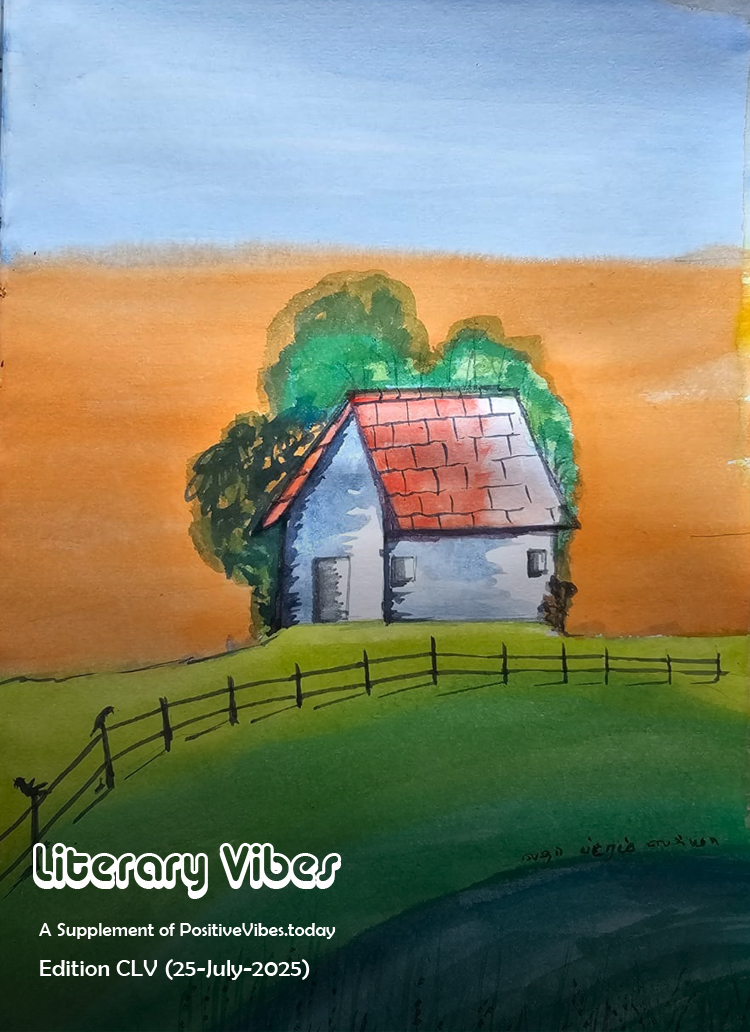
Title : Lonely House (Watercolour by Ms. Latha Prem Sakya)
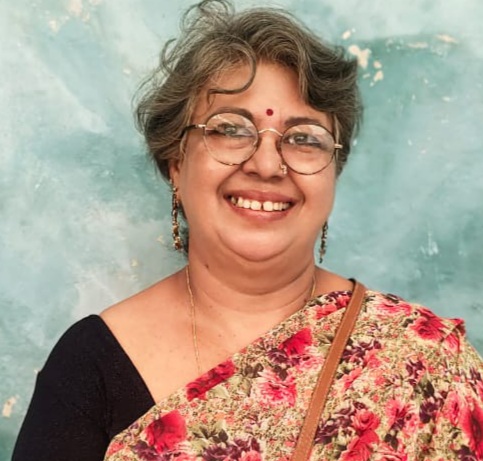
An acclaimed Painter, a published poet, a self-styled green woman passionately planting fruit trees, a published translator, and a former Professor, Lathaprem Sakhya, was born to Tamil parents settled in Kerala. Widely anthologized, she is a regular contributor of poems, short stories and paintings to several e-magazines and print books. Recently published anthologies in which her stories have come out are Ether Ore, Cocoon Stories, and He She It: The Grammar of Marriage. She is a member of the executive board of Aksharasthree the Literary Woman and editor of the e - magazines - Aksharasthree and Science Shore. She is also a vibrant participant in 5 Poetry groups. Aksharasthree - The Literary Woman, Literary Vibes, India Poetry Circle and New Voices and Poetry Chain. Her poetry books are Memory Rain, 2008, Nature At My Doorstep, 2011 and Vernal Strokes, 2015. She has done two translations of novels from Malayalam to English, Kunjathol 2022, (A translation of Shanthini Tom's Kunjathol) and Rabboni 2023 ( a Translation of Rosy Thampy's Malayalam novel Rabboni) and currently she is busy with two more projects.
Table of Contents :: Short Story
01) Prabhanjan K. Mishra
HUMMING BIRD AND THE WHITE TIGER
02) Sreekumar Ezhuththaani
AROMA
03) Pushpendra Rai
ONE FOR ALL AND ALL FOR ONE…DAUGHTER
04) Ashok Kumar Mishra
A SWEET ORDEAL
05) Dr. Ajaya Upadhyaya
TETE- A -TETE
06) Usha Surya
A GIFT FROM THE GODDESS
07) Deepika Sahu
TINY TALES
08) Triloki Nath Pandey
MY VERNACULAR EDUCATION IN UTTAR PRADESH
09) Snehaprava Das
THE SNOW WHITE BRIDE IN BLACK
10) Annapurna Pandey
PAKHALA TRAVELS: MEMORY, IDENTITY, AND THE POLITICS OF A FERMENTED MEAL
11) Meena Mishra
DON’T TELL ANYONE!
THE SHADOW BEHIND THE SPOTLIGHT
12) Anita Panda
IDYLLIC INTERLAKEN- A SLICE OF HEAVEN…
13) Kunal Roy
THE MAGNETIC SOUL
14) Satish Pashine
THE SKY BENEATH HER FEET
15) Bankim Chandra Tola
HOPE THAT REMAINED JUST A HOPE
16) T. V. Sreekumar
A SEPARATION TOO LONG
17) Sreechandra Banerjee
THE BUZZING BEE
18) Dr. Rajamouly Katta
SUJALA
19) Mr Nitish Nivedan Barik
A LEAF FROM HISTORY: THE DAY SOUTH AFRICA TAUGHT THE WORLD TO HEAL!
20) Dr. Mrutyunjay Sarangi
THE MAN IN RED SHIRT
HUMMING BIRD AND THE WHITE TIGER
Prabhanjan K. Mishra
The white tiger lay lazily on a heap of cushiony leaves in his cave. The dry leaves building the heap were blown into his cave by the autumn wind after the leaf fall. The winter had not set in yet, and a fickle breeze was sending draughts of balmy wind inside his cave now and then, sweeping in whatever leaves came in its path.
He mused, “The autumn wind is taking a leisurely walk outside and is peeping in now and then into my cave and tossing dry leaves as gifts for me. The wind is perhaps curious to know what all was happening inside the dark cave.” The white tiger suddenly realised, “Aha! What I thought was almost poetry. Not bad poetry at all at that. Even without training, my lines used personification and sublime metaphors, two figures of speech.”
He thanked the little lady, on whom he had eavesdropped, for unknowingly teaching him some poetic traits and related words and essences. He blessed the little lady and his big companion.
He mused, “How I wish that big man and his dainty female mate had heard my beautiful lines now. But alas, I am to wait for another opportune occasion to meet them. But if I come out of the bush before them, would they be comfortable? Without meeting them, how can I exhibit my literary talent?”
The white tiger pitied himself for his huge size, almost double the sizes of other tigers of the jungle who were orange in colour. His size, alien colour, and thunderous roar made them piss in pants. He demurred, “None ever treat me like an equal or a friend, engage with me in small talk or a friendly match of grunts and mock roars. Not even a mock fight. but all this for none of my fault.”
But he mused “Of course, the advantages are there. The females among the orange tigers come to me, they choose me over the orange males, when they are in heat and want to mate with me. Perhaps they want their babies to be as big and furry-white as me. The best part about their courtship, he relished, was their little love-gifts, – a tender rabbit, one or two succulent water fowls, or a few mouth-watering quails.”
The white tiger recalled his strange encounters with the human couple who unwittingly taught him poetical skills. A huge giant of a handsome man with well-shaped biceps, triceps and six packs, and his dainty, pint size lovely looking mate, smooth, shiny, silky, and satiny with the features of a Venus, and assets of an Aphrodite.
Again, the white tiger was amazed at his own profundity, “Ooh! I am learning how to think like a cultured and educated tiger-poet. Just now I thought of the human couple in profound terms, their attributes in cultured vocabulary. Ooh! I am learning really fast!”
The couple would visit the jungle now and then during afternoons and sit in a small clearing in a large heath filled with many dense bushes, the heath located by the jungle’s edge. They would come riding – a phat … phat … phat sounding phatphatia, a contraption with two wheels and an ear-splitting ‘phat-phat-phat’ roar. The white tiger would learn later, it was a transport called motor bike that drank a liquid food called petrol.
By coincidence, that well-spread heath, for its absence of thorny bushes and nettle plants, yet with very dense and green foliage patches, was a favourite haunt of the white tiger. And during the very first visit of the couple, he was lying there in another part of the wooded heath hidden from them by the dense bushes, but within earshot distance.
By nature, he loved humans, though most humans were scared of him, if ever they came face to face. In all such occasions he would try to grunt his love for humans, and purr his harmlessness to them. But he would always be misunderstood. After a few trials, when he would realise that his grunts and purrs were not helping to reduce those people’s fear, he would put his head down, and remorsefully walk away, pitying himself for his big size.
One day, they saw him from a great distance. He did not want to scare them, so he decided not to approach them with a friendly grunt or low purr. He just gave a melting look, and walked into a bush. But their next visit was an eye-opener. He, lying quietly in his hideout in the heath, heard the female mate telling her male partner, “How handsome was that white tiger, and how goggle-eyed he looked at us with his beautiful blue eyes. He also walked away like a gentleman.”
The lady’s statement became a turning point in the white tiger’s life. When the couple left riding their phatphatia, he straight headed for the pool, a big waterhole, that quenched the thirst of the jungle animals. He looked at his reflection in the calm water, “Yes, I am beautiful, rather extremely so. How did I miss it so far? Now, I know why the orange female tigers preferred me as a mate to their orange males. They wanted their kids to be beautiful like me.”
It became henceforth a pastime for the white tiger to lie by the pool side, looking at himself now and then, and melting over his good looks. He kept cleaning and preening himself all the time to look better. He, without his conscious knowledge, had become a Narcisus of sorts of the tiger clan.
The white tiger would recall, the dainty woman of the phatphatia couple, once opening a thin book, and read beautiful lines on ‘love’ to her man. “What lovely lines!” thought the white tiger. She was reciting love poems from various poets and analysing them in great literary details. The poems, she said, were paeans to love.
As days passed, and the couple’s visits to the heath in that part of the jungle became an intermittent routine, there would be more occasions of lovely poetry. It was a schooling of sorts for the white tiger, a first ever opportunity to know things around the world, besides love and its power in shaping the life.
What the white tiger learnt – ‘Love was not about only wham bam thank you ma'am, but much more, and much beyond that. It could be highly spiritual while being deeply sensual as in poetry of poets, whom the woman had referred to as Bhakti poets, both ancient and modern. Love was also an element beyond craving, and hunger for flesh, and aesthetically sublime. It transformed the ordinary into beautiful, the foul into fragrant.’
Of course, in most of the theories on love, the white tiger could not find himself. None of his past thoughts, or actions, or experiences matched with that sublime feeling. But he promised himself to take care in future, be a lover true to his sublime love. During that philosophical brain-storming on love, the most esoteric subject for him, the white tiger, heard a melodious voice outside his cave as if calling him.
He first thought he was daydreaming with eyes wide open. To check his wakefulness, the white tiger gave a little scratch to his soft nose and grunted, “Ooh! yes, I am awake and the sweet song outside the cave is real, not my daydreaming.” He gingerly went out of his cave into the open.
His eyes followed his ears, the humming continued, the singer came into his vision, and he could not believe his eyes. A little bird, the prettiest of birds he had ever seen, even prettier than the prettiest female tigers, and the lovely dainty female partner of the couple of his adoration in matters of love. He almost fainted with adoration.
The bird was humming a song even when she was eating honey from a flower, a wild rose. “Amazing!”, grunted the huge white tiger. He saw the bird giving a smiling side glance to him while standing in air as if the air had a solid surface, and poking a thin long proboscis like beak into a wild rose’s womb, the flower’s honey-pot. She kept humming all along. Their eyes locked. Lo! The white tiger was in love with the song-bird.
“My….my…, three tasks simultaneously!”, exclaimed the white tiger. The most wonderful of things the white tiger had ever seen, “How could she possibly manage – remaining afloat in air, sucking and eating honey, and humming a melody – all the three activities together!” He had been in love with the colourful bird at first sight. Her multi-tasking ability made him love her more.
The white tiger knew neither he, nor any of his jungle inhabitants were capable of doing such a feat, multi-tasking. But He knew humans were capable of multi-tasking. He recalled an occasion. While lying hidden in the bush, he had overheard the sweet nothings passing between the two of his favourite humans in the other hidden part of the same bush.
The huge man and his cute little mate were silently busy in strange activities, but he could not see a thing. He only heard strange sounds like fast breathing, crooning, giggling, throaty screaming, and sighing. The man was doing things, that made the young female croon, “Honey, I never knew you are so adept at multi-tasking. I love all of those actions when you are at them simultaneously. They feel divine. Don’t stop please.” In the mind of the white tiger multi-tasking became synonymous with the divine feeling called love.
The white tiger knew his object of love, his first ever love, and perhaps the last one in matters of heart, the beautiful bird, was a multi-tasker. So, divine. She could sing, suck honey, eat it, all done while staying afloat in air simultaneously. What a luck, he got a multi-tasker mate like the little lady of phatphatia!
His doubts about an affair with the little bird because of their disparity in sizes vanished when he thought the deep love between the giant of a man and the little petite woman. He knew now size mattered little in love.
He asked, “My lovely chick, my little angel, what’s your name?” The bird uttered a giggle as if to tease him, while cheekily replying, “My variety of birds are called humming birds.” The white tiger smilingly grunted, “I guessed so. You hum, so sweetly all the time…”
The white tiger then dared a personal question, “Sweetie pie, I never saw you or your variety earlier, in my jungle or the jungles around. None ever spoke in my hearing about a humming bird. Are you from a distant jungle that has remained unexplored by me and my peers?”
The bird haughtily said, “Yes, my dear white tiger, not only from a distant jungle, but from a distant land, called America. I was carried in a cage by a cruel lady, ironically called ‘a bird lover,' and brought here, separating me from my loving family. I was so unhappy.
I thought of a plan. I gave up food and water, and pretended to be dead. She took me for dead and kept me in a garbage bin for disposal by night. When no one was looking, I winged it to freedom. Still, I was so lonely, though free, until I met you minutes ago. I wanted to return to America, but after meeting you, I am thinking over it again. I may decide to stay in the jungle where beautiful tigers like you live.”
The white tiger was in tears to know his sweetheart’s sad story, but sobbed out of joy to hear her reconsidering her program to leave for America. He felt very proud to be her motivator to decide not to go away. He looked at her with an adoring side gaze, and thought, “The only interpretation could be, ‘She is in love’ with me, head over heels, as I am with her. It was possibly love at first sight from both sides.”
The humming bird was curious, “My dear white tiger, I am anxious to know, how is your fur-coat so white, so thick, and you are so big and handsome compared to all your peers I have seen around the jungle? Your eyes are a light blue, that enhances your beauty. You look absolutely fetching and like a god from another world, how is that?”
The white tiger said, “My case is not much different from yours. Not less tragic. But it has its silver linings of joy and goodness. I was born in a faraway forest where my parents lived, both white tigers, the only white ones in that jungle full of orange ones. But because of their huge sizes and unusually magnificent white fur they lorded over the orange variety. Some disease came, killing many tigers, including my parents. I was a six-month-old cub, and had not yet been weaned off my mother’s milk, nor had learnt hunting for food.”
The white tiger rubbed a tear with his huge paw, and continued, “Though I was not chased away, orange adults and kids hated me, because an orange tiger was taking over as their chief, and a white tiger cub like me was a threat for their orange hegemony.”
He continued, “I had no company, I was lonely. I had no food. I roamed about the jungle hungry, thirsty missing my parents. One day, I collapsed of exhaustion while walking desolately in the forest. When I opened my eyes, I was in a human home. I was held by a woman on her lap, soft and warm. Though she had no furry-coat like my mother, but her loose and soft clothes made her lap comfortable like a furry one.”
He went dreamy, “She smelled milky like my mother. When I looked for her udder, she gave one of her two nipples in my mouth to suckle, and lo, I had a meal of her milk, my first food after days of starvation. In the jungle I was alternating between my mama’s milk and chewing little soft pieces of meat put into my mouth by her. My human mother did the same thing. I sucked her breasts beside her newborn baby, and sampled little pieces of meat from her lunch or dinner plate.”
The white tiger closed his eyes to hide welled up tears, but the little bird flew to him, sat on his huge head, and put her long thin beak to a drop of tear as if tasting its salinity in a way of consolation. The white tiger’s heart swelled up to see the humming bird’s gesture of love, and he continued, “Happy days were not far off. The human parents loved me as much as they loved their two little kids, a girl and a boy, almost of my size. They gave me everything in their kind human way. I slept with the kids, and played with them, but quickly grew much bigger in size than them, even bigger than my parents.”
The humming bird was angry, “The humans are cruel fools. They must have driven you out of their life when you grew bigger, thinking, you might harm them. These two-legged, wingless creatures are cruel just as they are foolish and untrustworthy. They never would understand an animal or a bird. They think we are objects of their fancy and we have no feelings.”
But the white tiger was shaking his huge head, “No, my darling. Humans are not bad at all. May be, your ‘bird-lover-lady’ was trying in her overenthusiasm to shower kindness on you, and make you happier. She might not have the idea how a bird like you loved and preferred her free sky to a golden cage. Their captivity may be safe and well-provided with food but nothing is worth a free sky for a bird. I think, you must forgive her, and give up your bitterness against humans in general.”
Then he joined the thread of his life’s story from where he had left it, “My foster family cared for me like my parents, rather more, like a third child. As I was growing bigger, their house being on the edge of a forest, they encouraged me to hunt little animals, a rabbit, a mouse, a wild quail, or a fat lizard, and eat them raw. As I grew bigger, I entered deeper into the forest, deeper and deeper, looking after myself, hunting my own food. I discovered this cave, found out other tigers, the smaller orange variety for company. I would return to parents and my two human siblings only once or twice in a month.”
He now cried openly – “That was the time, when I lost two things dear to my heart after my greatest loss, my parents to an epidemic. During roaming the length and breadth of the jungle, I found it to be a different one than my native jungle. Roaming into neighbouring jungles also frustrated me, none of them looked like mine. I knew my human parents had their home by the edge of another jungle quite away from my native one. They had carried me away when I was unconscious from hunger and thirst. I had sort of lost my homeland.”
He continued in his tear-stifled voice, “My second loss came soon after that. In one of my periodic visits, I found my parents gone, vanished into thin air. Another family lived in that house. They were mortally afraid of me. That late night I returned to my parents’ former house to sniff around for my most lovable smell, that of my mother. I overheard the new occupants talking that my father being a forest officer, had been transferred from there to another forest somewhere.”
The white tiger continued, “My heart broke into bits. I was my human parents’ beloved ‘Simba’. They would pat and hold my huge body whenever I visited them, whispering, “Simba…Simba…Simba…” like I was still a little cub. I loved that. I missed them. It seemed like decades of separation. I lost all hope. But one day I was lying down in my cave, and I heard a distant call, “Simba, ….Simba my kid, …. Simba my baby”. I pricked up my ears to hear better, it was unmistakenly my mother’s voice.”
He whispered, “I jumped to my feet, ran, and found my parents standing on the edge of the forest by our previous home. I stood on my hind legs and took them in my arms. Under my weight and size, they fell to ground with me, I cushioning their fall on my furry chest. We rolled over and over, and played for hours, until I was emotionally spent. I put my head in my father’s lap and my mother patted me to sleep.”
“When I got up, they had left putting my head on a leafy branch. It all appeared like a happy dream. But I knew, my parents had not abandoned me. And like an unuttered promise, they kept visiting me once in every few months, especially at times if I were ill. From somewhere, they appeared to keep a watch over me and my wellbeing, like a pair of god and goddess.”
He added, “I always harbour a soft corner for humans. They are a kind lot. They take a lot of care of animals and birds in their own way. See, my darling bird, by some means, my parents know when I needed them, and arrived to rescue me at the times I am unwell.”
The animals of the forest noticed a change in the white tiger. He had mellowed down and walked around as if in a trance, a small multihued beautiful bird sitting on his back above the level of his powerful front legs. The bird measured around six inches in length but was extremely bewitching. It would often rise into air from its perch on the white tiger, and whir over his huge head, its feathers almost a blur and it would produce a sweet hum.
An orange female tiger living in the jungle was on heat and as always, the white tiger was her first choice for mating. The white tiger was busy showing his mate, the humming bird, around the heath where he was schooled by a human couple about the aesthetics of love. So, he totally ignored the advances of the female tiger’s invite for mating. The tigress felt offended, and angry. She swore aloud to tear the bird to pieces and eat it for snacks.
The white tiger roamed happily in a blissful state, looking at the little bird singing in a hum, oblivious of the violent thoughts around. He would dream how the little woman made the huge man, her lover, to dance to her twiddling of fingers. Likewise, he could not deny a thing wished by the humming bird. He realised that was the power of love, and there was no shape or size, cast or creed, to this power. The power of love was supreme.
Time passed very fast. The loving couple, the white tiger and humming bird, carried on their serene affair. They had met in an autumn and the time had marched ahead to cross two more autumns and the third was in the offing. But lady Luck was famous for her caprice, and in her plans, the white tiger and the humming bird, were, perhaps, not destined to live happily ever after like in fairy tales.
One morning, the white tiger woke up and could not find his mate dozing in her alcove-perch on the back wall of his cave. In panic he went out and found the lovely feathers of the humming bird lying in a heap in a nook by the cave. Spots of blood indicated someone had perhaps made a breakfast out of the tiny angel.
The white tiger was devasted, he fainted, and when he rose from his unconscious state, he felt a murderous rage against one and all, and went berserk. In his fit of rage he went on a killing spree, killing one and all who crossed his path - tigers, leopards, jackals, peacocks, and what not, his first victim being the orange tigress who had vowed to eat the humming bird.
Afterwards, he collapsed unconscious out of exhaustion over days of hyper-activity without food or water, suffering from malnutrition and dehydration. His unconscious body lay in a heath like a soiled and torn silky white satin fabric.
When he opened his eyes, he was lying in a different cave. He weakly walked out to check his new habitat. It was a small jungle alright with old trees, brambles, bushes, tall grasses, and open grassy spaces. But the big wooded land was surrounded with a tall iron grill work boundary wall fitted with a gate. In a corner, a cave-like structure existed like his earlier cave to lie down. His past came crowding his memory and he broke down again. He longed for the company of his lost mate, the humming bird, that was probably dead.
He underwent severe depression and was moody throwing anger tantrums. He was non-responsive to affection, as if all affectionate advances were delusions. Even bringing a young female tiger to keep him company failed. He stayed alone, gloomy, gaunt and silent accepting very little food and little water.
One morning, the white tiger opened his eyes with a start, pricked up his ears, and went out of his small cave shelter. He could not believe his eyes. His beloved mate, the humming bird was sitting on a tree perch and singing sweetly to him. The white tiger bloomed like a wild rose. He thanked his luck for the miracle that the humming bird was not dead; but was alive. She had found her way from the jungle to him in his new habitat. He was deliriously happy to see the magnetic attraction of love.
More joy was in the offing. Next morning, he was chewing a lamb leg for breakfast while listening to his beloved bird’s humming in a rejuvenated mood, when the gate at the distant grillwork wall opened to usher in some people.
He was overwhelmed to see who they were when they approached him. Along with his caretaker were his human parents and the lover-couple in his jungle-edge-heath. His parents immediately took his huge body in their arms in affectionate cuddle and the white tiger purred happily. The other couple approached him gingerly to pat him. It was a happy union with the humming bird’s sweet humming song in the background. The white tiger thought, how fantastic it was that the three couples, the last being he and the humming bird, were going to live happily ever after.(END)
***
FOOTNOTE - The white tiger Simba’s human parents, the jungle officers, and animal-lovers and activists who had been keeping a watch over the white tiger, from an endangered species, had found him unconscious, starved, dehydrated, and on the verge of death. He was taken to a famous animal hospital and was later rehabilitated into a small protected jungle with a cave and boundary wall. Simba’s human parents, and fans in social media, to cure his depression, had collected the mortal remains of his beloved humming bird from the location where it was killed, and gave them to an expert taxidermist for mounting. He took time but recreated an excellent imitation, that was placed on a perch of a tree trunk in white tiger’s dedicated new jungle home. A small record player produced the sweet humming. The white tiger would never know he was tricked to happiness.
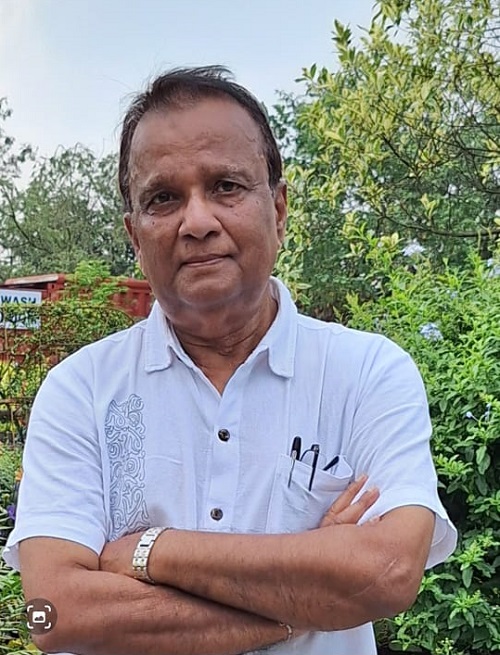
Prabhanjan K. Mishra is an award-winning Indian poet from India, besides being a story writer, translator, editor, and critic; a former president of Poetry Circle, Bombay (Mumbai), an association of Indo-English poets. He edited POIESIS, the literary magazine of this poets’ association for eight years. His poems have been widely published, his own works and translation from the works of other poets. He has published three books of his poems and his poems have appeared in twenty anthologies in India and abroad.
Sreekumar Ezhuththaani
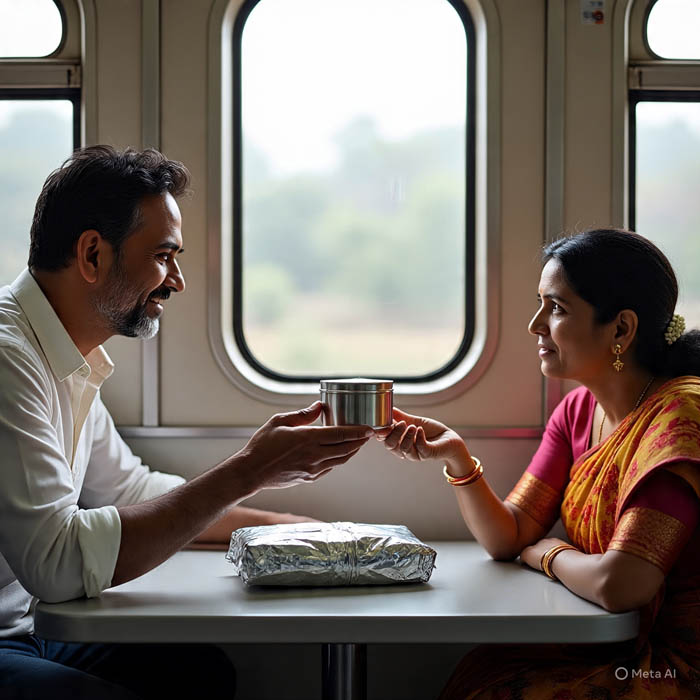
Sudheesh found his lunch bag unusually heavy. He had to remind himself more than once, it wasn’t his. It was Kanaka’s. And she had his.
Was it mere accident, or had it been carefully orchestrated? Her lunch had slipped from her bag and landed neatly in his lap. She never left her bag on the overhead rack. But today she did, and as she reached up to take it down, it flipped open. The lunch packet tumbled out. Sudheesh caught it before it hit the floor.
Kanaka looked relieved. She smiled, half amused.
“You’re fated to have it today. Give me yours, for a change.”
He wished it had been any other day. He had woken up late and thrown together a rushed, joyless meal.
But then, when had he last cooked, or eaten, a proper meal?
Since his wife’s death, he had lost all appetite, for food, for life. He’d been taking long leaves from school, drifting in and out of work. His wife had been a gifted cook, and for years, his palate had been spoiled by her. Before his mother died, his wife had even learned a few traditional recipes and tricks from her. The old cliché about the way to a man’s heart, it had held true in his case.
He hesitated before handing over his battered steel lunchbox. There wasn’t much inside, and he wasn’t sure it would suffice for someone as active as Kanaka.
She worked at a clinical lab a couple of kilometres from his school. For the last three years, they’d taken the same train, twice a day. He’d first seen her jumping into the compartment from a small station one morning. Since then, they had grown into something resembling routine, an unspoken companionship. He liked her quiet presence. She seemed to enjoy the calm he offered, protection from the noise, the stares, the idle chatter. The train was always crowded, but he always saved her a seat.
His lunch that day: a half-hearted mix of rice and lentils, cold and overcooked. Kanaka’s, on the other hand, was wrapped carefully in a banana leaf, its warm aroma seeping through.
“Hey, shall we swap? Just for today?” she asked again.
Sudheesh blinked. “Swap?”
“Yes. Mine for yours. A little experiment.”
Before he could respond, she pressed the warm bundle into his hands. The scent hit him immediately, turmeric, coconut, and something else, something like memory. Like his mother’s kitchen. His throat caught.
“Alright,” he said, barely audible.
At school, he waited for the staffroom to empty. Only then did he unwrap the banana leaf. The moment he peeled it back, a flood of aroma filled the air,spiced fish curry, lemon rice, pumpkin stir-fry with jaggery.
“Good God, Sudheesh!” said Mr. Nambiar, the history teacher, eyes wide. “Where did that come from?”
Sudheesh opened his mouth, but before he could answer, more teachers gathered.
“Did you order out?” asked Mrs. Radha, sniffing the air. “Or is there a secret restaurant you’re hiding from us?”
He hesitated. “No. My mother made it. She thought the festival was today.”
A short silence. Everyone knew his mother had died years ago. His wife too was no more. So, this came from somewhere or someone he didn’t want to talk about. Alright!
Mr. Nambiar cleared his throat. “Well, wherever it came from, it smells divine. Mind if I try a bite?”
Soon the entire staff was crowded around, sharing the meal, laughing, recalling the food of their childhoods. Sudheesh watched them, a strange warmth rising in his chest.
What if he’d said it came from his wife? They would’ve spun stories about their own wives and their culinary feats. But this—this was more private. To say it was Kanaka’s would be to expose something tender, something not yet understood. Something that didn’t want to be seen.
In the lab’s break room, Kanaka opened Sudheesh’s steel lunchbox: plain rice, watery dal, a lonely fried egg. It felt...off. So unlike him. He was always warm, thoughtful, quietly surprising.
The food was bland. It was also too little to share. She was glad. Tasty or not, she felt strangely possessive about it. She didn’t want anyone else to even look at it.
“Kanaka, where’s your banana leaf today?” asked Priya, the youngest in the lab.
She smirked. “This isn’t mine. It’s my husband’s.”
Laughter erupted.
“Husband?” Deepa scoffed. “Since when do you have one?”
Kanaka took a slow bite. “He got two days’ leave for Puja. I packed this for him by mistake.”
More giggles. “Liar!”
She shrugged. “I’m just practicing. For the day I actually will. For the day he runs off to office holding my makeup pouch.”
That cracked them up. It was classic Kanaka, breezy, cheeky, always with a quip.
But the laughter soon faded. A stillness followed. They all knew,she had crossed the age where society handed out marriage as a prize.
“Practice, practice—practice makes perfect,” someone murmured.
Kanaka smiled. But her chest tightened

Sreekumar Ezhuththaani known more as SK, writes in English and Malayalam. He also translates into both languages and works as a facilitator at L' ecole Chempaka International, a school in Trivandrum, Kerala.
ONE FOR ALL AND ALL FOR ONE…DAUGHTER
Pushpendra Rai
When I first heard the story about the entire village standing up to save one daughter, I was reminded of the old maxim, ‘One for All and All for One’. Plainly signifying that every member of a group or community should act for the benefit of all and, when so required, the group as a whole should come out and support every individual member.
Or in Latin, Unus pro omnibus, omnes pro uno. Which also happens to be the unofficial motto of Switzerland, inspired by the legendary Swiss hero, Arnold von Winkelried.

In Classic/pop culture, the first usage of this call is associated with the Three Musketeers in the 1844 Alexandre Dumas novel of the same name. For us, the association is more graphic, as once we had stopped by the medieval village of Pérouges, in the Rhône-Alpes region of France, near Lyon, where parts of the movie were shot on its ancient cobblestone streets.
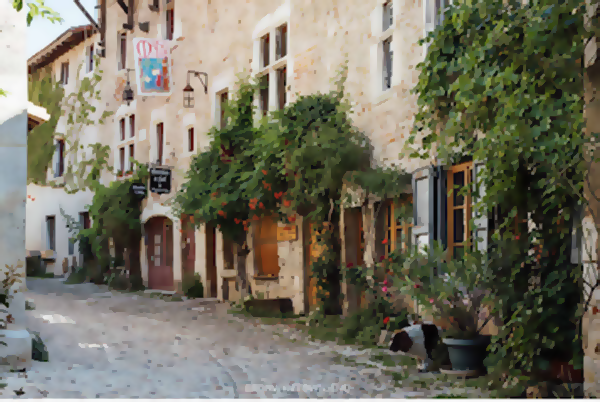
Much later, when the North Atlantic Treaty Organization (NATO) was established, the same tenet was ingrained as one of its basic principles. Plainly conveying that an attack against one member would be considered as an attack against all members, triggering a collective response. And whenever such a provision is invoked, each ally is obligated to assist the attacked ally, by taking whatever action deemed necessary, including the use of armed force.
With that background, we come to the village of Kuldhara (near Jaisalmer), in Rajasthan. The deserted, and reputedly cursed, village, located a few kilometres outside Jaisalmer, carries a haunting tale from the 19th century.
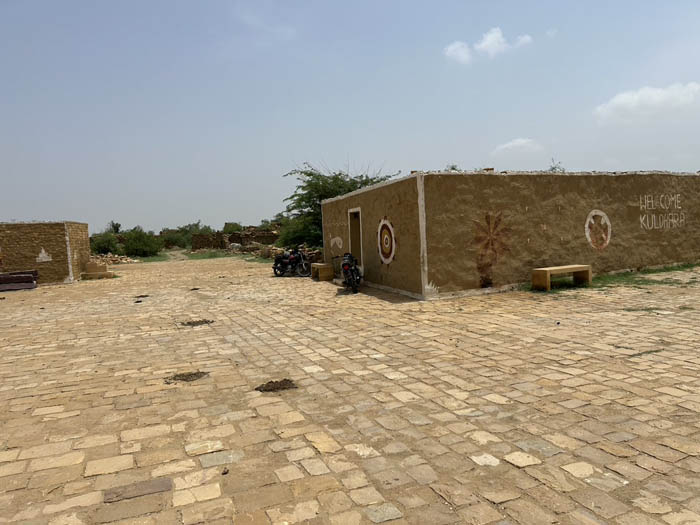
Inhabited by the Paliwal Brahmans (who had migrated from Pali), it was a flourishing village, and its inhabitants were renowned for their agricultural skills, which enabled them to cultivate a variety of crops. Their success, it seems, attracted a lot of attention and envy.
The area was a part of the Kingdom of Jaisalmer, ruled by the Bhati Rajputs, from the middle of the 12th Century till independence. As per legend, Salim Singh, a powerful and avaricious minister of the Kingdom, set his eyes on the daughter of the village chief. Known for his nefarious ways, he demanded the village give up the daughter. When the villagers resisted, and faced up bravely to his advances, Salim threatened them with destruction, if his wishes were not met.
The villagers were fed up with the minister as he was also harassing them with stiff levies, almost penalizing them for being a prosperous community, compared to the others around them.
One evening in 1825, they received a threatening message that they would have to send the Chief’s daughter in the morning. The villagers called a war council that night, wondering how to deal with the extortionist demands and lecherous advances. The villagers knew that if they just resisted passively, a day would soon come when not only would they have to compromise by parting with one of their own but keep succumbing to further demands. They were already suffering from droughts and earthquakes and could not take the persecution of the minister any longer.
There was, however, no doubt in their minds that they would ever sacrifice a daughter for the safety and betterment of the community.
Not having any other choice to deal with the tyrant, the inhabitants of 84 villages around Kuldhara, took the bold decision of abandoning their homes overnight and disappearing into the shadows. It was an unprecedented show of solidarity and courage, mainly for the sake of one girl.
However, before leaving, they are supposed to have cursed the village of Kuldhara, ensuring that no humans would ever be able to make it their home again.
Since then, as per legend, the entire village is haunted, with some of the locals narrating the occurrence of strange incidents and talking about voices, footsteps and shadows in the dark.
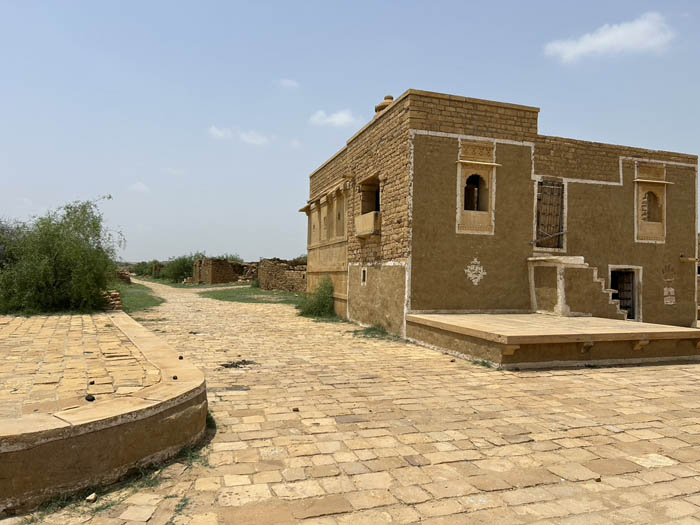
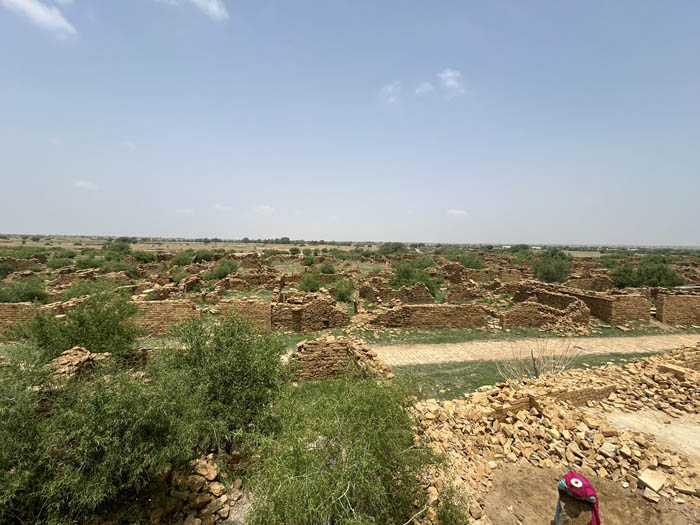
Today, the haunted ruins of Kuldhara exemplify the architectural excellence of that age, with neatly laid out houses in rows and lots of space in between for ventilation and smooth movement.
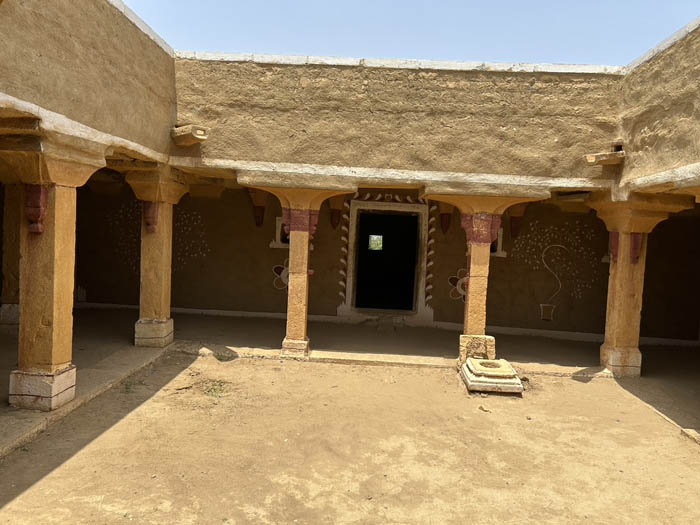
Airy courtyards and wide ‘verandahs’ inside.
One house also has a ‘garage’ with a camel cart parked inside.
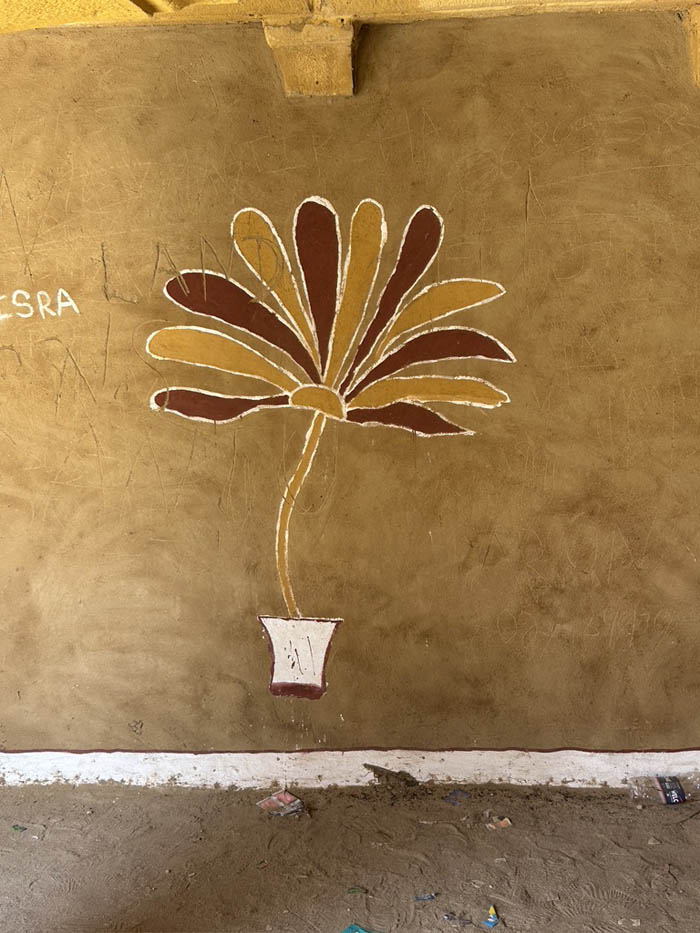
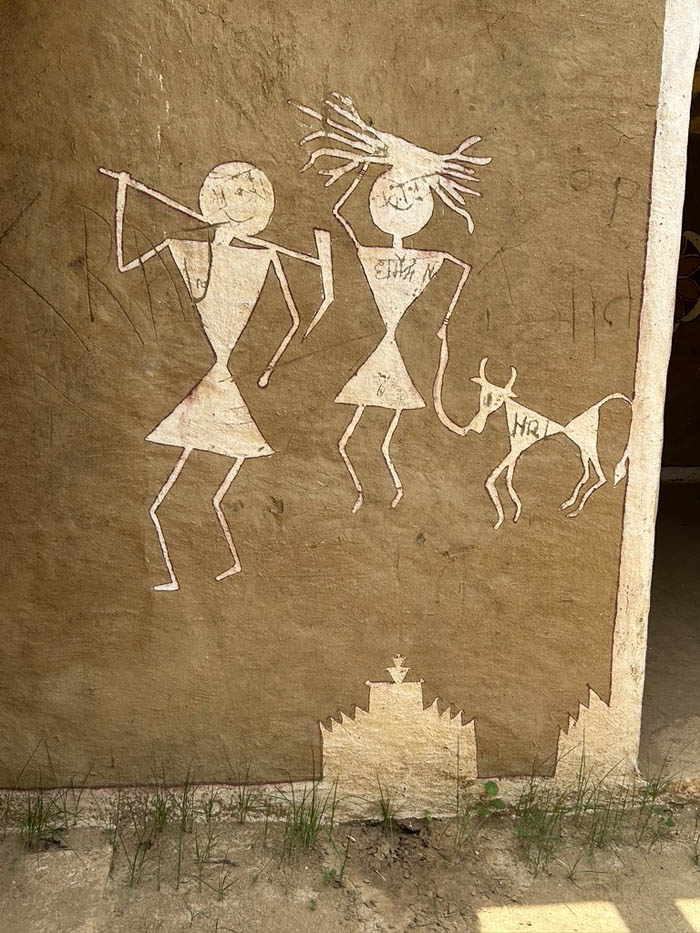
Quite a few of the walls have drawings on them – a flower pot; another one with a man holding a plough and a woman carrying firewood and leading a goat.
Climbing up on top of one of the houses, one could see several dilapidated huts, now fenced in by the ASI, which has taken up some restoration work in the village.
And as for encroachers, and squatters, we were told that nobody has the courage to occupy the village, as it is still under the ‘spell of the curse’.
Surprisingly, a story not too well known to the world outside that area. The saga of the Paliwal Brahmans and the courageous action taken by them to protect their daughter, needs to be widely publicized.
Dr. Pushpendra Rai, a former national and international civil servant, is an International Intellectual Property (IP) Consultant, advising countries and institutions on different aspects of IP. He was a Director with the World Intellectual Property Organization (WIPO), Geneva, till 2015, handling a diverse set of assignments.
As a member of the Indian Administrative Service for about 22 years, he worked as District Magistrate in three different tribal districts of Manipur state and then served in the Manipur Secretariat as Secretary and Commissioner.
His assignments in the Government of India were in the Ministry of Petroleum and subsequently in the Ministry of Industry. Subsequently, Dr. Rai worked as a United Nations Diplomat for more than 16 years at the World Intellectual Property Organization, Geneva, a specialized agency of the UN, handling issues related to technical cooperation and economic development.
Dr. Rai has a Ph.D. from IIT, Delhi; postgraduate degrees in economics and public administration from Harvard University and the University of Lucknow; and has lectured extensively in more than 40 countries, in various parts of the world
He currently advises the UN in several countries, including Indonesia and the ASEAN Secretariat. Apart from his international assignments, he speaks regularly at the CII, National Judicial Academy, Foreign Service Institute, World IP Forum, DRDO, ICAR, TIFAC etc.
His interests include Writing (blogs at www.pushpendrarai.com) Traveling, Environment, Community Development and hiking in the Himalayas and the European Alps.
Ashok Kumar Mishra
It was like any other cold Sunday morning of January. No Yoga class before daybreak, no morning walk, no hot sip of tea along with morning newspaper for me. Previous night while going to bed we decided to sleep undisturbed to our heart’s content and get up as late as possible, as there was no pressure of office work on a Sunday for both of us and no schools for the daughters. Unlike now, food delivery service by Swiggy or Zomato was not available then, thirty years back in Bhubaneswar. Comparatively life was a bit easy and elaborate week-end plan was already there to visit local fish market after a late breakfast, play badminton with friends in the afternoon and visit theatre for a movie in the evening with family, followed by dinner in some restaurant.
Suddenly the doorbell rang early and I found my close friend and colleague Sashank Chakradhar at the door. He was visibly very disturbed.
“I am in distress, my daughter is running high fever. Tonight I have to go on a tour as a part of our commitment to the District Collector of Phulbani (now Kandhmal) to act as a resource person on a very innovative banking project for district level officials. All preparations for the meeting are already done by the district administration and the meeting is fixed for Monday morning. It will not be possible for me to go and at such a short notice only you can come to my rescue by going and attending the same.”
It being a very sensitive issue I had no other option except to agree to Sashank’s request. I said, “Well, I know the subject but do not know the area”. Sleepy small Phulbani town was district head quarter of one of the backward remote areas of a developing Odisha state then. Although I hailed from the same state, my familiarity with the area was restricted to the comparatively developed coastal region in the east and I had no exposure to the Western regions of the state. Moreover I just reported at Bhubaneswar office after spending ten years at Mumbai metro city, my first place of posting after completing studies in Delhi.
I had a very vague idea of the geographical isolation, inadequate infrastructure but was quite sure about the only means of transport available to the place - a road journey in the night by the wretched state transport bus. (It still has no rail connection but bus and road conditions have improved). Sashank advised me to take the night State Road Transport Corporation bus, reach very early in the morning and get into a hotel as all other arrangements have been taken care of by the district administration.
That was the end of my weekend plan and soon I started preparing for the night trip.
It was indeed an enchanting journey by bus, open from all sides, allowing cold misty air to fill inside. The journey was mind-blowing as the dilapidated bus moved forward with great noise amidst foggy deserted ghat road and mild essence of mahua and mango flowers from roadside mixed with strong smell of diesel to create a unique fragrance that brought sleep to my tiring eyes soon. The dim, gloomy, soft blue light inside the bus was a perfect recipe for the same. The light was good enough to cover rustic simplicity of co- passengers, every one looking at their brilliant best. Cozy warmth prevailed inside. I did not remember when I inclined towards my co-passenger nodding to my right and rested my head on his shoulder. Most of the passengers were travelling to far off places, farther ahead of Phulbani. Notwithstanding the smell of rust and leather, people slept peacefully and soon only snoring sound was audible with cold air whizzing past.
Past midnight, all of a sudden the warm light of the bus was switched on and the conductor announced loudly that the bus would soon reach Phulbani and passengers getting down at Phulbani should come forward to the exit gate with their belongings. I looked outside to find pitch darkness except a faint light coming from a few lamp posts. There were only two passengers including me who were to alight at Phulbani.
Amidst darkness and fog when I got down with my suitcase there was not a soul on the road except the other co-passenger to whom I could ask the route to any hotel. Just where I got down after the bus left there was a small lodging open with a dim blurry light on the sign board making it impossible to read. At the entrance the owner of the lodge was sleeping on a chair resting his head on the table. The co-passenger suggested to walk straight for around two hundred meters to find Blue Mountain hotel, the only decent available accommodation in the town. I had to carry my suitcase and walk ahead amidst encircling darkness to look for the hotel. While walking ahead I was blaming Sashank how he mentioned I would reach early in the morning but to my shock the bus reached so early and left me stranded in the middle of the night. What a surprise, this tiny, small town is the district head quarter with no infrastructure worth a mention. Who would be coming to stay in hotel in such a remote God forsaken place? I was sure to get a good room and was walking fast towards the hotel. To my utter surprise someone came from nowhere with a thud and asked 'who was I' and 'where I was going?' I stopped in fear and cold sweat started flowing and drenched me fully in the cold January night of Phulbani. He was a police constable alert on night duty, sitting somewhere on roadside. I asked for the road to hotel, which he said would take me five minutes to reach if I proceed straight.
Further surprises were stored for me when I found the main gate of hotel Blue Mountain hotel locked from inside. Helplessly stranded in front of the locked gate in the mid of the night, I tried to call any one inside to allow me in as I had nowhere to take shelter. After a lot of noise someone answered from inside that no room was available and only room available now was pre-booked by someone from Cuttack who would arrive at 3 o’ clock. I begged to allow me inside and give that room till the guest arrives or at least to allow me to sit somewhere near the entrance, but my request failed on deaf ears. Knowing that I have no place to stay in the middle of the night he advised me to go back to the lodging at the bus-stop.
I had no other alternative than to march back to the lodge. When the owner of the lodge said he has accommodation for me I felt as if I got a goldmine and soon walked ahead with him to inspect the room. There was bare minimum facility inside- a wooden cot with a table and chair, a ceiling fan, a blanket and bed sheet. Fortunately I had carried with me a Naga Shawl and a clean bed sheet to cover myself. I was the only customer that night in that dingy hole. The Manager arranged for mosquito repellant and was kind enough to keep the washroom clean by the morning.
The night passed by and next morning when I reached the meeting hall, the District collector enquired about where I stayed in the night as he had made arrangements for my stay in the circuit house and waited for my arrival. I politely thanked him and lied that I stayed in the comfort of the house of a friend of mine. The ordeal I went through that night got etched in my memory for ever.
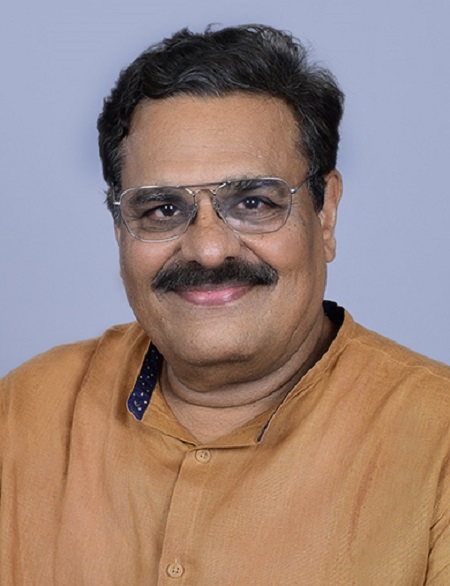
Completed his MA and M Phil in Political studies from JNU and served as Deputy General Manager in NABARD. He made pioneering contribution in building up Self Help Group movement in Odisha and popularized Amrapally mango plantation in the state. He has authored several books and written several articles on micro credit movement. Four tele films were made on his book titled “A Small Step forward”. He served as Director of a bank for over six Years.
An acclaimed Short story writer in Odia and English. His stories are rooted in the soil and have sublime human touch. Many of his short stories in Odia have been published in reputed magazines. His short story collection “Michha jharanara pani” was released recently.
(9491213015)(m)
Dr. Ajaya Upadhyaya
It was my usual evening walk, which took me through the village into the adjoining fields. This walking route has mostly open footpaths or wide lanes, allowing a smooth flow of pedestrians and occasional pedal bikes in both directions. However, some sections are a bit narrow, making it tight for overtaking a sluggish walker, effectively reducing these stretches to single-lane traffic.
That evening, while walking on the narrowest stretch of my walking route, I saw a lady ahead of me. I could see her from a distance. She was far away, so I kept my pace as I expected her to be moving forward. As I got closer, I realised she was not a bit slow; she had stopped in the middle of the road. Instinctively, I slowed my pace. When I was close enough, I could see her, busy typing away furiously on her mobile phone. She was too engrossed to be disturbed by my increasing proximity to her. I was careful to make minimal noise so as not to impede her flow of thought.
I must not interrupt her typing. It must be something terribly important to her for her to be so immersed in it, I thought.
I stood still for a while as she continued working on her mobile phone. I waited for her to finish her task, expecting her to start moving any time. Time was ticking, but she did not budge from the spot.
It was a deserted, narrow stretch, and we were the only two people: a man standing close behind a woman, who was oblivious to his presence. It's anybody's guess what someone would have made of this scene; to me, it felt rather weird. What might she think of my motive if she suddenly looked back? She would most probably be startled. Could she think I was snooping on her? Or, worse, stalking her! I could sense a growing unease within me.
I had no idea how long this awkward stalemate could last. Perhaps it was wrong of me to get so close to her in the first place; I should have stopped much earlier, maintaining a safe distance between us. But I could not step back or turn around. That would look even more weird if she suddenly turned round and caught me in the middle of such a manoeuvre.
'Excuse me,' I finally said in the softest voice I could muster.
She turned towards me when I had a clear view of her—a middle-aged woman with a hint of mild embarrassment on her face. Instantly, a flicker of a smile flashed across her face as if to hide her instinctive first reaction. I was reassured; Thank God, I had not startled her.
I had never seen her before. Likewise, I was perhaps a stranger to her. Examining her face up close, I noticed a few wrinkles on her round face. A thick crop of hair covered her head, its dark colour was highlighted by fine streaks of grey, which stood out in sharp contrast. I guessed she was younger than me, but not much.
'I had to do this, you know.'
I looked at her face again without saying a word. The quizzical look on my face was hard to hide.
'They think they can get away with it. How dare they?'
'It must be troubling you a lot.' I replied with as much sympathy as I could gather.
'They say one thing but do something quite different. It is infuriating.'
'What do they take me for - A Bank!'
This was the first hint of what she was preoccupied with. It was most likely a matter of money, I guessed.
'Did they overcharge you?' I was not sure what else I could say.
'Yes, massively!'
I was unsure whether to inquire about the payment she had alluded to. I said, 'It has surely disturbed you.'
'That is an understatement; I am enraged. Probably I will end up paying more than what I ought to, but I will never pay up without a protest.'
'The world we live in is now changed. Not only has everything become more expensive, but we can't take anybody's word for it anymore.'
'The younger generation has a different code of conduct. In our times, our word was our promise. I no longer know whom to trust. '
'I can't agree with you more. I have been in this situation before, I know the feeling.'
'I don't want to bother you with my problem. I was writing a strongly worded response to this inflated bill I received. It was infuriating, to say the least, and I wanted to get it off my chest. I had to write down how I felt and text it off. I couldn't do this while walking, so I stopped completely to finish the job. I didn't notice you at all.'
'Yes, it helps to put down your feelings in writing. It also helps to talk. Don't worry; you are not troubling me at all. I understand your position; I am in a similar situation. I hope you feel better now.'
'Oh, yes. Thank you for listening to me. What is your situation?'
'It is a convoluted story, and I don't think you could spare the time. It looks like you've got enough on your plate.'
'You look like a busy man. Still, you had the time for me.'
'It was nice meeting you and speaking with you. But honestly, I don't want to bother you with my problem. It is not fair.'
'Go on, I have all the time in the world. You would feel better too if you vent your feelings.'
I was torn about continuing our conversation. I was rather inclined to end it under some pretext or other. But her insistence made me think again. Her welcoming invitation changed my mind. As the issue was uppermost in my mind, I decided to share with her what was bugging me.
‘Recently, I locked myself out of my house. I had to get a locksmith to open the door to let me in. I called the number from our village magazine, and to my relief, this lady answered my call. She was fortunately free to attend to my house right away, and I thought her callout charge for the job was quite reasonable. The young lady turned up promptly. The door was unlocked without any damage to the lock or the door. But she grumbled a bit while working on the lock. It seems the job took her slightly longer than expected. Still, she reassured me that the callout charge remained the same.'
'What was the problem, then?'
'When I received the invoice, I was surprised to find that the charge was doubled. I didn't get a phone call about this extra charge. I would have gladly paid a slightly higher callout charge, but I was not prepared for a 100% surcharge.'
'By the way, what is the name of this locksmith?'
'Oh no, I don't want to drag you into this.'
'I may be able to help you with what seems like an unfair charge.'
'But, I mustn't trouble you with this. I mentioned this only because you seemed keen to listen to me.'
'It might be a simple mistake in billing. I can possibly look into this, and I think I can get this unfair charge waived.'
'There is only one locksmith listed in the village magazine. And from the address I gather, she is local. Are you sure, you don't mind taking all this trouble for me?'
'Certainly. By the way, do you mind giving me your name?'
Although I was pleased at the prospect of getting this issue resolved, I was intrigued by her confidence.
'How can you be so sure?'
'I think, I know her.'
'I can't believe it; this is a remarkable coincidence!'
She turned towards me with a scrutinising look, before saying, 'It is rather embarrassing.'
I could sense a hint of hesitation in her voice.
I wanted to reassure her with, 'Trust me, anything you say will stay with me. I won't tell a soul.'
But before I could open my mouth, she blurted, 'She is my daughter.'
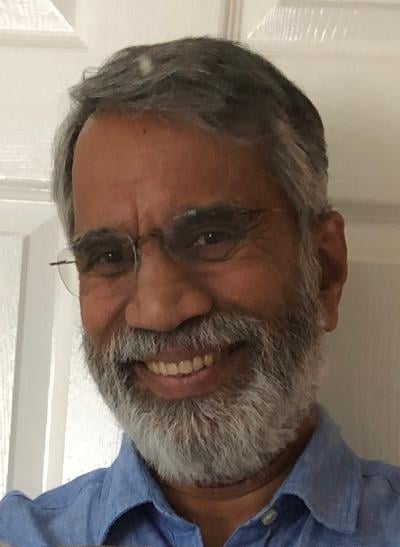
Dr. Ajaya Upadhyaya from Hertfordshire, England, is a Retired Consultant Psychiatrist from the British National Health Service and Honorary Senior Lecturer in University College, London.
Usha Surya
Little did Shakunthala know that she was destined to zero in very soon on the answer to a question that had been raging inside her heart.
She had been discussing it with her husband Jagdish last night. They could not see eye to eye with the whole problem. While she was very sure in her decision, he was vehemently opposed to it. In more than two decades of their married life, they had never had any disagreement. He accepted het ideas and she, his explanations.
This was happening for the first time.
It was all about Malavika, their daughter.
Malavika’s eighteenth birthday was due next week and Jagdish was very adamant with his theory. Nothing that his wife had said could convince him.
He had left for work in the morning with the answer to their discussion still hanging in suspense.
As she fried the cauliflower pieces dipped in the batter to make bajjis, Shakunthala’s thoughts were also getting deep fried.
Shakunthala’s and Jagadish’s wedding was a “love marriage.”
Both were working in the same office – she being a junior officer and he an aspiring officer above her scale.
Her mother and brothers were against the wedding and Jagdish had no one to call his immediate relative to talk about his future. His life was ‘his own’- he thought. He was honest, upright and possessed sterling qualities.
Shakunthala’s family consisting of her two elder brothers and a fashionable mother disowned her. She had lost her father a few years ago – the only soul who was attached to her and understood her. But he was a nonentity in that house till he died. He just turned out to be a “money making machine.” Her mother had time only for card sessions and kitty parties. The house was alive with more numbers of servants like a cook, two maids, two gardeners, a secretary, a pair of errand boys, two securities, and two car drivers. In fact, a regular cricket team!
Her marrying an ordinary officer was unpalatable. They had wanted her wedding to take place in a jazzy hall and the bridegroom to be very rich. She left them amid threats that they would disown her and she did not care. She felt sorry for the money minded brothers and mother. They had alienated a few good relatives also because their economical status was far below their expectations.
Soon Shakunthala and Jagdish had their wedding in a Temple with a few friends as the wedding “crowd” and she enjoyed this new status of a home maker. He was transferred
to a small town in coastal Orissa and they shifted and started a beautiful life. There was no lack of love. She resigned her job and took up sewing that she had loved. For her, the job was just an escape from her home with the mother and brothers always talking about wealth. Near their new home was a Temple and she would visit the Temple every morning after Jagdish left for office. She would make garlands for the deities and soon became a familiar figure there with the Temple Priests and other staff. They adored her.
The couple’s cup of happiness became full when Shakunthala conceived.
But the joy was short lived as she lost the baby in the third month. The shocking news that she could never hope to become a mother stunned her and Jagdish.
Slowly they came out of their grief.
“We have each other. What more do we need?” He had told her and she finally came out of her sorrow.
The monsoon was severe that year. Shakunthala loved the rains but the tsunami that shook the area was most unexpected!
So many fishermen’s huts and small homes near the coast were washed away. Many were reported missing. It was as if nature was furious with humans!! Water had entered the Temple’s courtyard and the garden of the beautiful little home where Jagdish and Shakunthala lived was under water. It was God’s grace that water stopped with the garden. The havoc was terrible.
Shakunthala mingled with the volunteers to help the survivors.
Jagdish had been transferred to Delhi and the couple had packed all the household things and were leaving in a week. She felt sad to leave this quiet little town by the sea shore.
Shakunthala stood near the door, looking at the sea which was visible far away. The waves had subsided and the debris was being cleared.
The gardener Aahwan, an old man, appeared with a tiny child which must have been just three months old, in his arms.
“Maaji, this child had been washed ashore near my home two days back. The house is much damaged and I am going off to Bhubhaneswar to my son’s home in a couple of days. He is coming to take me. I have enquired everywhere but no one seems to know anything about the baby. I have been getting milk from the common kitchen that feeds the homeless till something is done about the whole thing. I don’t really know what to do with this child! She cries only when she is hungry and is a very manageable kid. Please...will you take care of her? Or hand her over to some authorities? I tried that orphanage deep in the town but they refused! They have enough children on their hands, they said. I immediately thought of you...the childless Maaji full of good nature and compassion and brought her to you,”
Aahwan left leaving the baby – wrapped in a dirty piece of cloth – in her arms. The baby made a few gurgling sounds and caught hold of her saree.
She felt a thrilling sensation and hugged the child. She gave the child a warm water bath and wrapped her in a clean new piece of cloth. A friend of hers had given her a silk blouse piece and that became very handy at that time.
God seems to have brought this child to her.
When Jagdish who had gone out to visit a friend came back, she related what had happened.
He looked at the baby.
He touched the little pink hands, the small feet, the cheeks and the beautiful curls that topped her head. The baby smiled at him. Shakunthala could see that he was becoming emotional.
“Let us take her to the Temple Priest and see what he says,” he said and both of them walked with the baby to the Temple.
The old Priest was very happy to see them. He had a special place in his heart for Shakunthala. He had been seeing her making garlands for the deities in these three years.
He looked at the baby in her arms.
“You seem to have brought some one new today!” he said smiling.
The couple narrated their story.
He looked at the child. Her stomach full, the little girl was looking very pleased.
“In a week’s time you are leaving for Delhi, I suppose. And the gardener is not able to zero in on anybody who is missing this child. Is it not?”
They nodded in unison.
He extended his hands and took the little one in his arms.
The baby was reaching out to the rudraksha garland which was around his neck making pleasurable noises all the time.
He looked at Shakunthala and spoke.
“This beautiful child must be just three months old. Consider her as God’s Prasad and take her with you. I can feel that she will treasure you both just as you will treasure her. Maa Bhattarika...the presiding deity of this Temple wishes so. Bring her up as your child. Call her Malavika...the girl of many garlands...since you used to make garlands for the Maa here.”
That was decided.
Malavika grew up as their daughter and they did not breathe a word to anyone about the child’s origin. No one asked them also.
They were in Delhi for five years and then moved over to Chennai.
Shakunthala did not try to contact her brothers or haughty mother. Everything had been over between them! And Jagdish’s one or two relatives were happy to see that they had a beautiful daughter now.
The secret lay buried in their hearts.
Malavika was to turn eighteen next week and Shakunthala insisted that the truth must be shared with the daughter... the truth of her natural adoption.
She had read quite a few articles where a few psychologists were of the opinion that a child when she or he becomes an adult or better still when the kid is young must know of their roots. But Jagdish was against Malavika knowing the truth. Many psychologists talked about the trauma and emotional disturbances of an adopted child. Some wrote about “medical” risks. Shakunthala believed them. She never even paused to realise that Malavika had come to them as a small three months old infant!
“We have brought her up as our daughter and she remains so. Why do you wish to complicate matters? Why should she know where she came from? No one except you and me know that she came to us after the storm, rain and tsunami. The gardener must have died long back. And also the Old Temple Priest! Just keep quiet Shakku...Malavika should never know the truth. She came to us as an infant. Now stop reading all that “psychology” stuff!! Malavika has no inkling that she is ‘naturally adopted’. Just let her be. She is OUR CHILD.”
Her thoughts were broken as she heard the calling bell and she wiped her hands and opened the door.
As she had expected it was her daughter Malavika and her friend Jayashree.
”Come in children. You can wash your hands and feet and taste hot cauliflower bajjis,” she said with a big smile.
“I have made enough bajjis and filled a casserole also. You can carry it to your friend’s place when you go,” she said.
“Oh!! Lovely, Amma. Jessie’s mom is making pooris and she has already baked a cake. We are going to have a great time there,” said Malavika as she dragged Jayashree and went to freshen up.
Jessie was their classmate to whose house the two girls were going for a sleep-over. Jessi’s father was away on tour and the mother was a very jolly person and the girls enjoyed staying there overnight.
Shakunthala was a little concerned as Malavika was having an upper hand while talking and Jayashree, usually a bubbly kid was looking a bit off colour.
The girls sat at the table and Shakunthala placed a bowl of Bajjis and two glasses of orange juice.
“I really don’t know what is wrong with this girl Amma,” Malavika said pointing out to Jayashree. “She is so quiet today!! Does crossing seventeen years and becoming eighteen bring about a change? Oof! I am getting a bit apprehensive,” she laughed, as she sipped a mouthful of juice and bit into the snack.
“What is wrong Jatyashree? Are you unwell?” Shakunthala asked her moving next to her and caressing her shoulder.
Jayashee looked at her for a while and started sobbing.
Shakunthala looked at Malavika and told her, “Let her cry. Something seems to be bothering her.”
She moved closer to the girl and put her arms around her shoulder.
“Come now Jayashree. Let me know what it is. If a boy is involved in this and you don’t wish to talk to your parents about him, tell me. Don’t stifle your feelings,” her voice was reassuring.
Jayashee wiped her eyes and looked up.
“No aunty. There is no boy involved. It is something else,” she said in a weak voice.
“Okay Tell us Jay. We shall try and help you,” Malavika joined Shakunthala.
Jayashree was quiet for a few moments. Then she started speaking.
“You know, my brother Sanjay has come down from U K. He went there five years back to work for his Doctorate and he has a job there and loves the place. You have seen him Malavi,” she said looking at Malavika.
“Well his coming this year for my birthday was a surprise for me but he said he wanted to be here for my eighteenth birthday. He came the day before my birthday and we had a great time. He was the soul of the party on my birthday, you have seen it Maalvi...and it was wonderful. When everybody left and we all got ready to go to bed, my parents, Sanju and self sat for a while chatting. I was so happy.
My parents wanted both of us – my brother and me – to listen to them.
Sanju pinched me jokingly and said, “Hey Jai, You are eighteen today and may be they are going to tell you whom you are going to marry!! Appa had a line of boys in his thoughts and talked about your wedding last time while I was here.”
He laughed and teased me.
“Certainly not! They must be giving advice to you ...”Hey, Sanju, don’t bring any English girl here !! We will fix a lovely traditional beauty for you,“ I said to him and glared at him. All in fun.
“Now both of you stop this and listen to your mother! We have something serious to talk about,” my father said.
He looked at my mother and she, taking the cue, started talking.
“When I gave birth to you Sanju, I was with your grandmother at Tanjore. Grandpa had died just a few months before that and your uncle and aunt with their child were also there before they shifted to Singapore. I was petted and pampered but the delivery proved a very difficult one. It was a c-section and I was almost given up. The Doctors said that it was a miracle that I survived. A family Doctor, she used to refer to me as the “Punarjanma case.” Your grandmother let me go to Bombay with Appa only after six months but you remained with her for two years since I was very weak. She brought you up so well. She came to Bombay bag and baggage after your uncle’s family left for Singapore. She refused to relocate. Both Appa and I wanted a girl child but the doctors had warned me that another conception would be fatal. So, the three of us....your Grandma a wonderful person as you both know - discussed and finally we decided to adopt a small girl child.
We went to an orphanage. And that’s when Jayashree came to this home. Many psychologists are of the opinion that the adopted children should be made aware of their adoption while they are in the growing stage. But we decided to wait till her eighteenth birthday to break the news.“ She had stopped talking.
But the fact that “I WAS AN ADOPTED CHILD” came as a shock to me!
Appa moved closer and hugged me, “Little Jai... you are always our little girl. No doubt about it,” he said.
“Yes Jaima. We HAD to share this information with you before any other person broke the news to you. You might then have felt betrayed and would have wondered “Why did they not tell me this before?” Amma said.
But who would have told me? Paatti could have told me about this but she never breathed a word!! I used to be all over her and she had never made me feel like I was in need of more love!! Why should I be told that “I am adopted”? Both amma and appa could have just got along as if nothing had happened. Sanju seemed a bit stunned but managed to smile and gave me a huge hug. We went to sleep.
But I could not sleep for a long time.
Me?
An ADOPTED ONE?
Who left me in an orphanage? Was it a single mother? Was I born out of wedlock? Who was my father? Who was my mother? What compelled her to cast me away? So many questions raged in my heart. I wish amma and appa had not told me about this!! I started feeling a sense of GRATEFULNESS...Love seemed to have vanished.
I felt terrible!
They adopted me because they wanted a girl-child. But if they had really loved me, would they have told me that they had adopted me? I am sure Grandma would have put her foot down and threatened them not to reveal the truth! I feel miserable aunty. My life seems to have changed. No, they have not changed – Amma, Appa and Sanju. But I HAVE. It looks like I owe them a lot!! They should not have said this, Aunty. A sense of gratitude seems to have replaced love. I feel miserable,” Jayshee was sobbing again.
Shakunthala tried to console her.
“Don’t cry Jayashee. It would certainly have broken their hearts too, to tell you this! And why should you feel grateful? If you had come to learn of this from a third source, wouldn’t you have felt betrayed or sad? The truth is hard to digest but you will get over this.”
“No aunty. Certainly not!! Even Paatti had not told me that I was an adopted one. To hell with anyone who would have approached me and talked about this. Why...oh..why did they have to tell me this? Would they have told this if they had REALLY loved me? I feel terrible, aunty.” Jay had stopped crying.
Malavika spoke for the first time and Shakunthala was shocked to hear what she said!
“Amma, I agree totally with Jay. Why should she be told at all that she is an adopted child? See how miserable she is feeling? I would, as a mother, have kept quiet!! For all this she came to them when she was just two years old!! Even her Paatti had not revealed the truth to her! Yes...she is CORRECT!! Certain things should remain concealed and her adoption is one! Even if someone comes and tells her now, she wouldn’t care. Her love for uncle and aunty would only have increased. See...how miserable she feels now!! She feels grateful for all they have done!! What a pity that she was told this bitter truth! Then they should never have adopted her!” Malavika was emotional as she told this. She looked at her friend and continued,
“Don’t feel sad Jai. Get over this!! Sanju, Uncle and aunt I am sure love you!! Be brave and don’t ever try to probe into your past. Let your roots remain a secret. Certain things are better if they remain hidden or unknown.”
Jayashree washed her face and both the friends left for Jessie’s place. Jayashree looked a bit calm and Malavika was trying to cheer her up.
Shakunthala stood there watching the girls go.
“My dearest child, my very own Malavika...you will never come to know the secret.” She whispered.
She recalled the moment she had held Malavika as a small child in her arms and watching Ahwan walking away.
There was some sort of peace in Shakunthala’s heart now. She never could fathom that Malavika felt so strongly about adoption.
She is so mature.
No wonder Shakespeare said “Child is the father of man.”
Did the psychologists ever take the child’s feelings into consideration? Everyone has a different thinking or accepting capacity, as Jayashree said, No two minds are tuned alike.
May be when children are adopted at an age when they can remember many things about their previous homes or even an orphanage, they could be made aware of their adoption.
Jayashre was two years old when she was adopted but she could hardly remember anything. Her whole world had centred around her amma, appa and Sanju. She had experienced only love.
“And Malavika had come to us as an infant!!”
As she placed a plate of cauliflower bajjis and a cup of steaming coffee in front of Jagdish that evening, she told him,
“You are right! Malavika is our child. The Priest had told us that she is a Prasad from Maa Bhattarika. We will not breathe a word to her about her roots. She is our child.”
Jagdish looked at her, his eyes registering happiness. He reached out and squeezed her hand.
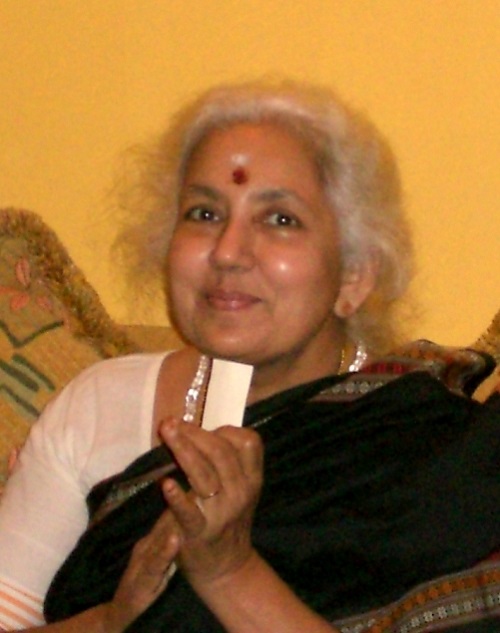
Usha Surya.- Have been writing for fifty years. Was a regular blogger at Sulekha.com and a few stories in Storymirror.com. Have published fifteen books in Amazon / Kindle ... a few short story collections, a book on a few Temples and Detective Novels and a Recipe book. A member of the International Photo Blogging site- Aminus3.com for the past thirteen years...being a photographer.
Deepika Sahu
“Biggest bill ever signed” was Donald Trump’s first comment after the US Congress passed ‘Big Beautiful Bill.’ We are living in a world that celebrates big. Big wars, big aerial attacks, big houses, big cars, big weddings, big spendings and now a big bill. In this world of bigness, where does a tiny story figure in? This is my offering of Tiny Tales celebrating life.
Grey love
They were on a Zoom call. He said something about their shared past, she said, “What do you think? I have got grey hair for nothing.”
He smiled and said, “With every new grey hair, my love for you grows and deepens.”
The next morning, she received an sms — “Wanting to get rid of your grey hair. Our product assures that. Contact us immediately and avail a discount.”
She simply deleted the message.
********
#WFH
Winter. Summer. Monsoon. Three seasons passed by as she earned her living from her 2BHK apartment. The new world calls it #WFH
********
The Act of Leaving
She arrived at her friend’s house with only her backpack. She had her laptop, some clothes, and Faiz Ahmad Faiz’s poetry book titled Mere Dil Mere Musafir. As she made herself comfortable on the couch, her friend went into the kitchen to make adrak chai. Then they started talking and her friend asked her, “Why did you choose to leave?” She said, “Shaadi ne mere ko sankuchit kar diya (my marriage shrunk me).
*********
Fragrance
It is evening. She is alone at home. She lights the incense stick in front of her tiny altar. This has been her evening ritual for years. She looks out of her window and her eyes feast on the changing colours of the evening sky. After a while, she turns her gaze towards the altar. There is no sign of the incense stick but the room is full of heady fragrance. Suddenly she thinks of her own death. Her only wish – even after she is gone, she wants her fragrance to linger.
********************
Anonymous
When I was a child, I used to read many poems in my school textbooks ending with ‘Anonymous’ (as credit). In my little mind, Anonymous was the most prolific poet in this whole wide world. And for some odd reasons, Anonymous was ‘HE’ not ‘SHE’ (well, gender conditioning begins early in life.) I used to dream of growing up to be ‘Anonymous’. And then I discovered the meaning of Anonymous. And then I no longer wanted to be Anonymous.
******************
A product ad or a T-shirt or a person
It's Tuesday morning,
The road is crowded,
Full of people going to earn their
Dal and chawal.
I see a man going on a two-wheeler,
I can't see his face,
But I can see his back,
His bright red T shirt has a line in bold letters
'Instant loan approval up to 5 Lakhs.'
Who is he?
An advertisement/a product/ just a T-shirt/ a person
I wanted to see his face,
I wanted to talk to him,
But in an instant he and I were separated,
By our separate destinations,
I stopped at my office building,
He moved ahead.
The bright red T-shirt became just a dot.
In no time.
Deepika Sahu is an Ahmedabad-based senior journalist with a career spanning since 1995. During her career, she has worked with India's premier media organisations, including the Press Trust of India (PTI) in New Delhi, Deccan Herald in Bengaluru, and The Times of India in Ahmedabad. Currently, she is contributing India-centric features to Melbourne-based The Indian Sun, a cutting edge media platform. In addition to her journalism career, Deepika is involved in teaching English and Communication Skills to learners from different parts of India through Manzil, a Delhi-based NGO. Beyond her professional endeavors, Deepika is passionate about India's rich diversity, literature, blogging, quiet hours at a cafe and enjoying a cup of tea.
MY VERNACULAR EDUCATION IN UTTAR PRADESH
Triloki Nath Pandey
I have no memory of my experiences in my 1st, 2nd, and 3rd-grade classrooms. I do remember walking barefoot, wearing a Kurta and Dhoti, to the primary school (elementary school in the United States), along with dozens of students from my neighborhood. They came from the Bhumihar, Bania, Gosain, and Rajput castes. I was the only Brahman boy in the group. The school was about one mile from our neighborhood, located in the south ward (tola) across the railroads. Some boys from Kayastha, Koeri, and Kahar castes also attended school. Thus, out of 25 castes in my village, only a third of them went for education. This was Nehru’s India, only a few years after independence. There were no legal provisions for compulsory primary school education, the very foundation of the future.
I was spending a lot of time with my maternal grandmother, Nani, who lived alone in her village, Dube Chhop, about 6 miles away from my village. It was a small village without any school or post office. I was free to play with children of my age from different castes, riding a pony, climbing mango and jackfruit trees, and collecting sugarcane from Nani’s field. Some men from the village must have seen me doing all these things. They went to Ballia to see my father and inform him that I was becoming a rustic in Dube Chhop. My father came to take me away to Ballia and made me study Sanskrit texts with Vedic ji, who came to the Hanuman temple three to four days a week. I did not enjoy the method of his teaching - reciting texts, repeating what he was saying. For me, there was no fun in rote learning, devoid of much creativity. I told my father that this was not for me; I would prefer to return to my village school and study with the other boys in the neighborhood. Reluctantly, he agreed with me and took me back to Srinagar.
Now I do not remember the full curriculum of my primary school education. What I do remember is that my 4th grade teacher, Babu Saheb, was teaching us Hindi, history, geography, and civics. I found him a terrifying figure and still remember pissing in my dhoti just by looking at his long, bamboo stick (chhaddi). Things improved when I moved to the 5th grade; my teacher, Tewari ji, taught me mathematics, speech, writing, and Hindi poetry. Both of my teachers came from the neighboring village, Narayan Gadh, two miles from Srinagar. The classes started at 9 a.m. and continued until 4 p.m. Every day, in the early afternoon, we took a break for a snack. I would have some popcorn or fruits; a majority of the students could not afford to bring any snack food.
The medium of instruction was Hindi; all the textbooks prescribed by the State Board of Education were in Hindi. We all spoke Bhojpuri, and we had to learn to write and speak Hindi. I became very good at it. Having rudimentary knowledge of Sanskrit was helpful. I bought all the prescribed books and carefully read them. Since very few students could afford to buy books, I tutored them. I also read several Hindi translations of Bengali novels and essays written by famous writers.
My primary school education helped me acquire a range of skills, including reading, writing, and a love for learning new things. At home, my chacha, Banka pandey, quizzed me on what I had learned in school. He enjoyed looking at the pictures in my books. My teachers appreciated my active participation in class activities and often praised me. This gave me a lot of self-confidence.
There was no middle school in my village. The nearest one was in Narayan Gadh, some 2 miles away. All the boys from my neighborhood, except two who dropped out, decided to go to Narayan Gadh. About 20 of us from Srinagar walked in groups to the school every day, except on Sundays. Sometimes our English and Math teacher, Kanhaiya Singh, also walked with us. Usually, I walked with my next-door neighbor, Vijay Pratap Singh, and on our way, our common friend, Dashrath Goswami, joined us. Three of us were inseparable; we walked, ate our tiffin, played, and studied together.
We continued with the subjects we were taught in primary school and added Arts, Sanskrit, and English. I began learning the alphabet and some common English words. Our teacher, Kanhaiya Singh, from my village, was teaching us English in Hindi. When I moved to high school, my English teacher, Ghosal Sir, often wondered where my middle school teacher had learned his English. Our Sanskrit teacher, Upadhyay ji, could see that I had some prior knowledge of the language, and he often turned to me for assistance. Our arts teacher, Ramyas Tewary, was from Suremanpur, my maternal grandmother, Nani’s natal village. He believed that we were relatives and treated me like one. Our Hindi teacher, Headmaster Ram, took special interest in my education. He often told my Bhaiya ji, Balram Pandey, that I was by far the best student he had ever had. He recommended me for a scholarship instituted by a local police inspector in memory of his mother. I was awarded a scholarship of two rupees per month, which continued throughout my middle school career.
The State Board of Education conducts three statewide examinations at the 8th, 10th, and 12th grades. I excelled in all the subjects in my 8th-grade examination and stood first. This was an extraordinary feat for a rural school. The local and regional newspapers had covered this story. In whatever part of the village I passed through, I ran into someone who had read the news. I was told, “Chhotaka Pandit Ji ( in Hindi, meaning small, young), well done. Congratulations!”
I turned 14, and there was no high school in that entire region. I had to move to Ballia, the district headquarters, for my higher secondary schooling. There were three high schools in town, and I wanted to attend the Government school, but I was told that it was not performing very well. My father took me to see Shyam Sundar Upadhyay, the secretary of a trust that managed Laxi Devi Higher Secondary School (L.D.H.S. School), which was attached to Satish Chandra Degree College, situated next door. Upadhyay ji was a prominent leader of the Brahmin community. His next-door neighbor, Tarkeshwar Pande, was a member of the Rajya Sabha (Upper House of Parliament), and he was a distant cousin of my father through his grandmother. He called me Bhatija (nephew). He also agreed that the L.D.H.S school will be a good choice.
I got admission there, tuition-free. I chose to take science courses, including Maths, Biology, Chemistry, in addition to English, Hindi, and Sanskrit. The next problem was where to stay, as there were no seats available in the hostel for a year. I did not want to stay with my father; my uncle Shivaji was sharing his room. The problem was solved when Ramji Singh, the Raja of a small zamindari located about six miles from my village, offered to provide me with a room in a house he owned in Ballia. His wife and his son, Triloki Nath, a year older than I, also lived there. I walked to the Hanuman temple every day to have my meals. A year later, I got a seat in the hostel and ate with other residents.
I blossomed in my high school. There were students from all over the district, and the competition was much tougher. The aura of my middle school performance was behind me. I discovered new excitement in inter-school debates, essay writing competitions, and working on my science projects. I took part in an all-India essay writing competition, organized by the Central Government Welfare Board. The subject was Nishwaarth Seva (selfless service), and my essay won the first prize. It was published in its journal Samaj in 1956, marking my first publication.
There was a grand celebration. The principal of the school, Shukla Sir, organized an assembly in the great hall, presided over by Mahmood Batt, IAS, the district collector and magistrate. My English teacher, Ghosal Sir, wrote an extraordinary letter to the State Government, making an effort for financial help for a student doing so well in a penury condition. The district magistrate joined his appeal with a letter of support. I was awarded a special scholarship of 20 rupees a month by the state government. It continued until I graduated from College in 1961.
I passed my high school exam in 1956 with first division with distinction in Chemistry, Hindi, and mathematics. The school awarded me a gold medal for achieving the highest marks in Hindi. Now the question was where to go for a college education. My choice was the Government Intermediate College (G.I.C) in Allahabad (now Prayag), but my father wanted me to go to Banaras since it was closer and more accessible from Ballia. Finally, we all agreed that Allahabad will be a better choice. My bhaiya ji, Balram Pandey, offered to finance my education there.
We got a letter of introduction for Dr. Uday Narayan Tewary, whose son was studying there. My overnight train from Ballia reached Prayag in the morning, and after breakfast, we went to RamBag where the college was situated. Dr. Tewary was a renowned Hindi scholar and a lecturer at the University of Allahabad. Straight away, we went to the principal Mr. Som's office. He reviewed my academic records and immediately granted admission, without any tuition fees. He asked his peon to take me to the college hostel. There, we were greeted by Mr K.C. Kulshreshta, the Vice Principal and hostel superintendent. He allotted me room number one and appointed me a prefect. I settled down there for the next two years.
My neighbors in the hostel came from elite families. I still remember Prakash Mishra, whose family members were rug merchants, and Nikhil Kumar Sinha, whose grandfather, Anugrah Narayn Sinha, was the famous Chief Minister of Bihar. For the first time, I felt insecure about my background. I could not wear kurta and dhoti as I was used to. I decided to get myself two sets of jackets, pants, and shirts custom-made, bought two pairs of leather shoes, and dress like other boys. This transformation in my clothes and remaking myself had consequences. Baleshwar Singh, a prosperous land owner from my village had come to attend a case hearing in the Allahabad high court, and he came to see me in my room. He looked in my closet and saw my new wardrobe and leather shoes. He went back to Ballia and visited with my father and Bhaiya ji. He told them that, “Triloki Pandit has now become an Angrez (Englishman)”. My father was startled to hear that, and my Bhaiya ji asked his accountant to write to me that his business was not doing well and that he might not be able to finance my education. Carrying his food and water, my father came to visit me. He saw firsthand my transformation. He was sad to see me shaving my face, and was no longer wearing my sacred thread (I donated it to Mother Ganga). His parting words were, “Son, you are copying others. Do you want to live like a copycat (Nakalchi)? Remember, you are a poor Brahman boy and you should remain yourself, and not worry about what others say.” It has taken me years to appreciate his wise advice.
I found Allahabad different from other cities I had visited. It was intellectually and culturally quite exciting to be there during the mid-1950s. As Parkaj Mishra described in his book Temptation of the West (2006), it was a city of intellectuals, poets, politicians, and legal luminaries. Nehru’s Anand Bhavan was the hub of Congress leaders, and Prime Minister Nehru, Mrs. Indira Gandhi, Lal Bahadur Shastri, and Rafi Ahmad Kidwai often visited the city. After a state visit to China, Nehru came to address a public meeting in Allahabad. The meeting was held in the college's playground. A platform was raised and was decorated with flags and flowers. Nearby, there were a couple of hundred chairs on the ground in a reserved area for dignitaries. I noticed that in the front row were sitting Firaq Gorakhpuri, Nirala, Mahadevi Verma, Sumitranandan Pant, Haribans Rai Bachan, among others. At one point in his talk, the Prime Minister noticed them and threw garlands and flowers their way. Many decades later, I was recalling this event in a conversation with Ram Chandra Guha, who mentioned this in a column in the Indian Express, comparing the leaders of the 1950s with contemporary ones.
Let me return to my academic life in college. I chose chemistry, mathematics, physics, in addition to English and Hindi. My chemistry teacher, Kulshreshta sir, took special interest in my education, and it became my most favourite subject. My maths teacher, S.K. Pandey, often went after me for neglecting my home work. My English teachers ? Yadav ji and Chaturvedi ji, often asked me to stand up in class and read passages from the prescribed textbook. My Hindi teacher, Guptaji, came from Ballia, and I often went to his residence. He was the only teacher with whom I socialized. I continued to participate in inter-collegiate debates in Hindi and brought trophies to the college.
In my final year at G.I.C. Som Saheb retired and his place as a principal was taken by Mr. K. B. Sahai. His wife came from a political family of Kanpur, and she was meddling in college affairs. This did not go well with several faculty members. The main person in opposition was Vice Principal Kulshreshta, my favorite teacher. That year, he had set the Chemistry paper for the Board examination; he was accused of having “disclosed” or “leaked” the content of the paper to his class, and the State Government had ordered that the result be annulled. We had to retake the exam to pass. In protest, I refused to take the exam in 117 F heat and went home. I decided to go to Queen’s College in Varanasi and complete my I.S.C from there.
My year in Queen’s college was quite fruitful. The principal of the college, Pandit Ram Bhaori Shukla, took special interest in my education. He decided to offer me a one-on-one tutorial in his office. I got to see him for an hour every day of the week. Thanks to his tutorial, I secured the highest marks in Hindi in that year's Board examination.
In conclusion, I would like to highlight a few key points. My vernacular education gave me a solid foundation for future growth. In comparison to my fellow students who had come from English-medium schools, I felt more comfortable in my skin. I was less anglicized and more secure, and had an easier time establishing relationships with people of a diverse background. I grew up surrounded by male role models: uncles, cousins, and all my teachers were men. Even though my father was physically absent throughout my formative years, the presence of these men in my life did not make me feel his absence.

Triloki Nath Pandey is a well known anthropologist, educated at University of Lucknow (B.A., M.A.), University of Cambridge (M.A.) and the University of Chicago (Ph.D.). He has taught anthropology at various Western Universities—Chicago, Pittsburgh, N.Y.U., Columbia, and Cambridge, and since 1973, at the University of California, Santa Cruz. He often visits India for lectures, and on teaching and research assignments. He is a well respected scholar of indigeneity.
Triloki Nath Pandey
Professor Emeritus of Anthropology
University of California, Santa Cruz
California, 95064, USA
Snehaprava Das
Arunima Sukla, one of the major suppliers for the Silkokot Sari Emporium, which specialzied in silk products had already the cartons of the new collections stacked in the mezzanine of the showroom by the time Rajan pushed open the double glass doors and entered the shop. It had been a year since he started working as a salesperson in the shop. He found the hours compatible and the salary adequate to meet his needs. He enjoyed the ambiance, and the company of the fellow salesmen. The owner, Brijesh Lal, a Marwari, was a strict disciplinarian who demanded sincerity and punctuality from his employees. But he was also a.cheery and kindhearted fellow who took care of their needs and treated them as his kinspeople. Arunima Sukla, an elderly lady who collected her product from her downstream suppliers in different parts of the country, delivered on.the first Monday of each month.
'The saris are real wonders this time,' Arunima Sukla.showed a row of white teeth in an affectionate grin as Rajan greeted her. 'There is a sari in black silk, fabulously designed meant for royal wear, which needs an aporopriate showcasing. Drape it on a mannequin and see how it pulls customers!' She laughed heartily and took another sip from the coffee cup.
Rajan and Binod examined the contents in the cartons. Binod picked up a black silk sari and held it half open in front of Rajan. 'Arunima aunty was right,' he exclaimed, his eyes sparkling bright in amazement. Rajan touched the sari. It was a marvel in silk, a delicate, glossy affair with a slick, gossamery texture, with spungold border and golden embroidery all over. Fluffy, silk kuchus (tassels) tied with golden knots were woven to the edge of its pallu.
'Drape it over the mannequin by.the entranceway.' Brijesh Lal said, admiring the sari.
........
They sauntered in to the mezzanine amidst laughters and chatters. It was just after lunchtime and the shop was relatively less crowded. There were five of them, three women and a small boy and a girl. One of the women looked elder than the other two, may be she was their mother or aunt. One of the women who was in between, younger than the.motherly figure, older than the third in the group was presumably the mother of the kids. But the youngest of the three women was the one that caught Rajan's eyes. She was a stunningly beautiful woman, with a complexion like sparkling snow. Her long hair hung loosly on her back in glossy waves of black. Rajan could not take his eyes off the woman.
The two women, who he thought were her mother and her elder sister browsed the saris on the display racks, and the ones hanging on the four way stands on the mezzanine. But the youngest one went back near the entrance tenderly touched the black silk draped over one of the mannequins.
'Didi, look at this!' She called. 'Isn't it just divine?'
Her sister turned to look. Then she moved closer to the glass showcase and scanned the sari draped on the mannequin. Rajan motioned to Rita, the young saleswoman who stood behind the counter that displayed the fancy collections, to attend them.
' It is one of our best collections, mam. Would you like to take a look at it?' Rita asked in her compelling yet professional style flashing a warm smile at the woman. 'Yes, of course!' The young woman nodded excitedly.
' I will get it for you. Please take a seat.'
'Hey, you two!' The older woman called out loudly from the display racks. 'We cannot include a black sari in the trousseau. Choose some other colour. There is quite a good collection to choose from.' The young woman's face fell. 'But this one is different, a unique piece,' She said persuasively, hoping her mother would change her mind. But the older woman wouldn't budge. 'Black is inauspicious,' she declared firmly ignoring her daughter's sulking contour . 'Some other time may be. Not today.'
The young woman trudged back to the seat by the display counter and dropped into a chair, her beautiful face clouded in disappointment. 'There are lovelier collections with us. ma'm,' Rita said conciliatorily, sensing the resentment in the woman. 'Try to understsnd dear. We must not include black in our purchase. You could always buy them later.' The young woman did not say a word nor did her face shed its glum look. Rajan heaved a sigh. He did not know why it happened, but there was an irresitible urge in him to see her clad in that six yards of black silk.. But that possibility was a distant dream in the present situation.
The urge to see the gorgeous black sari clutching at her snow white slender body became a secret, passionate longing that despite all pragmatic reasoning gnawed obstinately at his mind.
The five-membered group finally made their exit after a quite lavish purchase of four bridal saris of heavy silk, a couple of scintillating lehnga and other dress materials that amounted to near about two and a half lakh. The young woman, the prospective bride let her longing gaze linger for a moment on the mannequim that was draped.elegantly in the black silk sari, as.she climbed down the steps that led to the foyer.
There were a few post-lunch customers in the shop browsing through the displayed items. But now the mezzanine wore a look of barrenness after the enchantingly beautiful.woman had walked out of it. Rajan rose to his feet and wandered over to the glass showcase where the mannequin stood, flashing an inviting smile at the people entering the double glass doors. Taking extreme care, he unlatched the.glass door of the showcase and.stepped in. He touched the sari gently and was immediately filled with that intense desire to see rhe sari wound around the girl who, he thought wistfully, 'walks in beauty.'
.......
A month passed. Arunima Sukla had drlivered quite sensational collections in the meanwhile. The mannequin was also draped in another sari. But no one has bought the black silk sari and it had found its way to the stacks of a number of other silk collections. Rajan was happy for that though he did not let it surface. He just somehow couldn't think of anyone else but that snow white beauty donned in that sari. There were nights he dreamt of the girl, her slim, snow white body wrapped in that black silk affair. But they were flitting images, momentary flashes that disappeared instantly without letting him a scope to have a satisfying glimpse of the girl.
.......
It was a wet, stormy night when she visited his dreams once again and this time he had a full view of her face. Her eyes were swollen and red as if she had been crying for a long time. Rajan wanted to ask her why she was so woebegone but she melted into darkness. Rajan ran after her, stumbled upon a large stone and fell. His eyes snapped open. He had somehow rolled off the bed and fallen on the floor. His heart was beating hard and he felt unusually thirsty. He winced as he propped up on his forearm and got up. It was about two in thr night and the storm howled outside like a monster gone crazy. He lay awake for a long time shifting on his sides before sleep overcame him.
.......
It was a nearly a month and a half after he had had that unusual, disturbing dream. The monsoon rains kept the crowd mostly at bay and there was a slack in the business. Rajan sat relatively relaxed on his stool behind the display counter. Rita was on leave that day and Binod and the other two salespersons in the ground floor unit were in the backrooms checking the freshly arrived stock. A small group of ladies who probably were shopping in the first floor, which displayed dress materials came down the flight of stairs. His eyes fell on a woman who trailed behind the group, climbing down the steps clumsily since her black silk sari came down below her feet,obstructing smooth mivement. She was looking down the steps as she climbed down carefully to prevent a fall. Rajan could not see her clearly. She looked familiar and as Rajan tried to look closely, experiencing a frisson of disturbing excitement within, the woman climbed down the.bottom step and moved forward. At the same moment one of the tassels (kuchhu) hanging from the edge of her pallu (end border of the sari) was caught in a peg on the.rotating sari-stand that stood by the staircase displaying sari s. She pulled at the pallu and the tassel that stuck to the peg was wrenched off the edge of the pallu. She wrapped the pallu around her slim waist and looked behind as she hurried forward to the exit. Rajan had a full glimpse of her face now. His breathing quickened, and his tongue went dry. It was the young woman who had come to select her bridal trossaue few months back and wanted to buy the gorgeous black silk sari. It was the same unhappy, weepy face which he had seen in his dream. He leaped off his stool and came out from behind the display counter. But the woman had disappeared out of sight by the time he came out of the exit door. The group of women was still at the sidewalk perhaps waiting for their vehicles. But the woman in the black silk was nowhere in sight. Rajan was confused and restless. He was not sure he actually saw the woman or it was just a delusive vision. He rushed back to the shop, crossed the mezzanine in a few quick strides and reached the shelves where the unsold items were kept in neat stacks. He rummaged through the shelves, his mind in a whirl, not sure what he exactly he wanted to find there. But he saw it at last, lying in a crumpled heap in one corner of the bottom rack. The black silk sari with the spungold border with golden embroidered designs. 'How did this come here?' Binod exclaimed from behind. Rajan swung behind to find Binod staring at the sari. Gingerly, as if he was handling something very fragile, Rajan picked up the sari and folded it with delicate hands. It was Binod who discovered the tear in the end-border of the sari. He too, was the one who found the tassel in one of the corner of the pallu missing. They exchanged glances perplexed at the shocking discovery. It will infuriate Brijesh Lal, the owner. And they would be not just strongly reprimanded but penalised for their carelessness. They returned to their respective seats behind the counter, scared to discuss the sari, apprehensive and bewildered. How ever it was their good luck that Brijesh Lal did not react as vehemently as they had expected him to. The sari was flawlessly repaired and looking as good as new hung from a hanger in the swivelling stand. Rajan and Binod thanked their stars for escaping their boss's wrath by a thin chance. But the picture of the woman with the snow white skin in the black sari stepping down the staircase kept haunting Rajan's solitary hours.
.......
He came across the news long after the incident, while he leisurly browsed the social media news channels. It was a short clip posted about a couple of months back narrating s tragic chopper crash in Uttarakhand that killed the thirty year old pllot Kunal Rajvanshi along with three other pilgrims. 'The pilot Kunal was newly wed and his wife Kirti commited suicide shorly after.' The post carried a picture of the unlucky couple. A handsome man in a three piece elegant suit and his wife in her bridal apparel. The woman's face looked familiar and he squinted at it to get a better view.
His heart gave a lurch. It was the same young woman. The one that visited his shop months back with her mother and sister to select her trousseau and who had visited his dreams and his lonely walking moments.
The woman with a snow white complexion draped in an exuberent black silk. The phone dropped from his hand with a gentle thud.
The black sari was never sold and remained dumped under the stacks of freshly arrived collection, like a muted memory of a vain longing.
Dr.Snehaprava Das, former Associate Professor of English, is an acclaimed translator of Odisha. She has translated a number of Odia texts, both classic and contemporary into English. Among the early writings she had rendered in English, worth mentioning are FakirMohan Senapati's novel Prayaschitta (The Penance) and his long poem Utkala Bhramanam, which is believed to be a.poetic journey through Odisha's cultural space(A Tour through Odisha). As a translator Dr.Das is inclined to explore the different possibilities the act of translating involves, while rendering texts of Odia in to English.Besides being a translator Dr.Das is also a poet and a story teller and has five anthologies of English poems to her credit. Her recently published title Night of the Snake (a collection of English stories) where she has shifted her focus from the broader spectrum of social realities to the inner conscious of the protagonist, has been well received by the readers. Her poems display her effort to transport the individual suffering to a heightened plane of the universal.
Dr. Snehaprava Das has received the Prabashi Bhasha Sahitya Sammana award The Intellect (New Delhi), The Jivanananda Das Translation award (The Antonym, Kolkata), and The FakirMohan Sahitya parishad award(Odisha) for her translation.
PAKHALA TRAVELS: MEMORY, IDENTITY, AND THE POLITICS OF A FERMENTED MEAL
Annapurna Pandey
During the July 4th weekend in 2025, at the 56th OSA Convention in Dallas, Texas, the most memorable meal wasn’t a gourmet, catered dish by a celebrity chef. It was pakhala—fermented rice steeped in water and curd, served with green chilies, sliced onions, and cucumber, accompanied by maccha bhaja (fried fish), sautéed greens, and baigan bharta. Over 2,000 Odias stood patiently in line, waiting for their bowl of comfort.
I have written before about the taste of pakhala at Odia retreats in Santa Barbara, California. Friday's welcome dinner at the 2024 Labor Day weekend retreat featured traditional pakhala. The aroma of saaga bhaja (sautéed spinach), badi chura (fried lentil balls ground with spices), chingudi (prawn), cauliflower fry, and green mango chutney uplifted my spirits. That meal instantly transported me back to Odisha, which I left 36 years ago to settle in California. Ahh! I am home. On Odia celebrations, pakhala has served as a marker of cultural identity.
Today, as pakhala travels thousands of miles through the Odia diaspora, it carries with it more than taste—it brings memory, identity, and nourishment. Despite globalization, urban kitchens, and protein shakes, pakhala endures. Yet, its meanings shift depending on who eats it, and where. As an ethnographer and diasporic Odia, I examine how this humble dish intersects with climate, ecology, caste, class, and gender. Through observation, interviews, and lived experience, I reflect on what it means to serve, share, and survive on pakhala.
In the 1970s, on scorching April afternoons in Cuttack, I would return from school by 11 a.m., my sweat-drenched sky-blue uniform clinging to my back. The Secondary Board High School was a stone’s throw from my home. I'd run through our green raipani fence, calling out, "Bou, pakhala badhe! Bhoka lagilani!" (“Mother, please serve the water rice! I’m starving!”). Lunch was always the same yet never boring—fresh rice soaked in water, curd, or lemon, served with aloo and baigan bharta, green mango chutney, and backyard greens like drumstick leaves, kosala, khada or leutia. Occasionally, a crisp fish fry joined the plate.
When relatives from the village arrived unannounced in the summer heat, my mother would scramble to feed them. With only pakhala in the kitchen, she would rush to the backyard, gather drumstick greens, and prepare a quick saag by sautéing them in mustard oil with garlic and green chilies. The simplicity of that meal, and the satisfaction it brought, remain etched in my memory.
As Nandita Das, the acclaimed actress, says, "Odia cuisine is about showcasing the natural flavors of the ingredients without overpowering them with excessive spices or elaborate techniques." Pakhala defines that simplicity. Though I grew up in urban Cuttack, our food was rooted in local resources. My mother cultivated many varieties of greens, which were staples with pakhala. Simple preparations like santula (boiled vegetables with a little mustard oil, mustard, green chilli, onion and garlic seasoning) or saaga were both flavorful and nutritious.
Pakhala: Poor People’s Food?
Natabara Sarangi, a renowned organic farmer and seed conservator in Odisha, recalls that in his village, the wealthy would often serve their laborers pakhala that had been sitting for days, sometimes spoiled. The same dish that now nourishes the elite diaspora once marked boundaries of class and labor.
Sunil Adam, chief editor of Americankahani.com, remembers fermented rice or ganji as a staple of the poor. Nagesh Rajnala, President of the Odisha Society of the Americas (OSA), a Telugu raised in Odisha, never ate pakhala growing up, seeing it as a class and ethnic marker.
In the villages, farmers began their days with basi pakhala and mashed vegetables before heading to the fields. Women in the family who ate last, often had pared-down meals of pakhala, vegetables, and green chilies. Yet these humble meals fortified the body. Saaga and aloo provided essential nutrients, sustaining generations.
The Cultural Geography of Pakhala
Itishree Padhi, retired principal of BJB College, Bhubaneswar, from Berhampur, recalls eating torani pakhala, fermented overnight. In Cuttack, it’s called basi pakhala. I remember returning from a night-long jatra during the summer holidays to eat basi pakhala before sleeping.
Dahi pakhala is ubiquitous in Odisha—fresh rice mixed with curd and seasoned with chhunka (called paraja), which includes mustard, cumin, red chilies, and curry leaves. In Bhubaneswar, onions and garlic are often added, while small spring onions remain a sought-after pairing.
Kasturi Mohapatra, a longtime Southern California resident, notes that in Western Odisha, they add hendua (dried bamboo shoot) to enhance flavor. Overnight fermentation makes it sour, eliminating the need for curd. Sometimes a simple baghara (tempering with mustard seeds and dried chilies) is added.
These regional variations reflect differences in climate, flora, caste, and migration patterns.
Rooted in the Village
Though I grew up in Cuttack, every summer and winter we traveled to Haripur, my ancestral village in the princely region of Gadajat. I vividly recall visiting Jeje Ma (my father’s mother) Bada Ma (my father’s older cousin’s wife), and Khudi (my fathers younger brother’s wife). From the bus stop, a bullock cart would take us to their home. The smell of roasted tupuri baigan and channa saag lingers in memory.
Bada Ma would finely slice channa saag, cook it with peja (rice water) and vegetables, and serve it with pakhala and green chilies. I helped pick these greens, knowing exactly where they came from. Even in our small yard in Cuttack, my mother gathered wild greens during the monsoon. Papayas, green bananas, and pumpkins were our cheapest vegetables. We consumed every part of a banana plant: leaves for serving food, raw bananas as vegetables, banana flowers as delicacies, and the stem as manja.
Ecology of No-Waste Sustenance
Even after 35 years away from Cuttack, the food I grew up with remains a part of me. Of the 100,000 Odias in the U.S., many keep pakhala alive in their kitchens and gatherings.
When I first moved to Delhi at 19, I discovered Punjabi dishes like chhole bhature, but I missed chakuli pitha, santula, and mango chutney. Compared to heavy, oily foods in the commercial kitchen, Odia cuisine emphasized seasonality and subtlety. My mother could make magic out of kitchen leftovers with pakhala. Odia food is about creating abundance from scarcity.
Pakhala represents an ecology of no-waste sustenance. Today, fast food and hormone-fortified meats dominate our diets. Backyard greens are rare, replaced by commercial produce. This shift is linked to rising lifestyle diseases and disconnection from nature.
To eat pakhala is a cultural act. It is an affirmation of frugality, resilience, and ecological wisdom. Reclaiming traditional diets may restore not only our health, but our harmony with nature.
Pakhala is more than a meal. It is a memory, a method, a marker of identity. As I once wrote, the roots never go away from wherever we are.

Annapurna Pandey is a cultural anthropologist at the University of California, Santa Cruz. Originally from Cuttack, Odisha, she moved to Santa Cruz, California in 1989. She is a travel enthusiast and loves to write travelogues highlighting her exotic experiences in different parts of the world.
Meena Mishra
The small town of Gopalpur thrived on familiarity. In every corner, there was a sense of closeness that connected the people. It was the kind of place where secrets couldn’t stay hidden for long, where no event occurred without whispers following it. The streets were narrow, winding in and out of each other like veins, connecting homes, markets, and fields. The houses were stacked so tightly together that one could easily overhear the conversation of their neighbour simply by standing outside their own door. In Gopalpur, anonymity was a luxury. Everyone knew everyone, and everyone’s business seemed to be everyone else’s as well.
At the heart of Gopalpur was the town square, bustling with life at all hours of the day. Vendors, with their colourful carts, offered roasted peanuts, fresh guavas, and sweet jalebis that sizzled in golden oil. The air was filled with the sweet smells of fried snacks and spices, and the sound of hawkers calling out to potential customers. In the shade of the old banyan tree, a group of elderly men gathered each morning to play cards, their wrinkled hands moving the pieces with familiarity. They could sit there for hours, sharing stories of the past, their voices low and steady, full of wisdom and the quiet joy of tradition. Women sat in the temple courtyard, exchanging recipes, gossip, and sometimes secrets, their voices blending with the soft rustling of the leaves. They were a constant presence in each other’s lives, their laughter ringing through the square and filling the space with warmth.
Children raced through the narrow lanes, their laughter ringing out like music against the backdrop of the old brick walls. They would dart in and out of the alleyways, chasing each other in games of tag, or climb trees to see the world from a different vantage point. The sound of their carefree voices was a constant reminder of the energy that pulsed through the town. It was a place where life happened in the open, where everyone was part of each other’s stories, and where there was no room for secrets. It was a town built on shared experiences and mutual understanding, or at least the appearance of it.
Anaya was a part of this town, an embodiment of the values Gopalpur held dear. She was quiet, obedient, and proper—everything a young girl should be in a place where tradition was treasured above all. She wore long skirts and full-sleeved blouses, her hair always neatly braided. Her notebooks were immaculate, and her handwriting flowed like poetry, a testament to the discipline her parents had instilled in her. Teachers often praised her diligence, and neighbours spoke of her as the perfect example of a cultured young woman. Anaya was the kind of girl mothers pointed out as a role model, and fathers trusted to run errands without complaint. She was the sort of daughter that people in Gopalpur felt proud of—someone who made the town’s reputation shine just a little brighter.
Unlike TIL, her best friend, who spent her afternoons climbing trees and playing kabaddi with the boys, Anaya’s days were filled with household chores. While TIL laughed and raced through the playground, Anaya served tea to guests, her voice soft and respectful, her head slightly bowed as she fulfilled her duties. She would sweep the floors with a practiced hand, her movements graceful and precise, as if she was performing a ritual. It wasn’t that Anaya didn’t enjoy the games her friends played or the freedom they had. She loved the idea of adventure, of running wild with her friends. But the weight of tradition and expectation bore heavily on her, and she couldn’t escape it. There was always something to do, something that needed her attention. Her laughter, when it came, was rare, a soft sound that seemed out of place in the boisterous life around her, like the rustling of leaves in the quiet of the early morning.
She had always been the “good girl,” the one who listened to her parents, the one who never raised her voice in protest, who did as expected without question. In a way, Anaya had become the town’s perfect daughter, the one that everyone admired and envied. But no one ever asked her what she wanted. No one ever wondered if she felt suffocated by the pressure to be perfect, to always be the model of virtue and propriety.
Despite her reserved nature, Anaya was well-liked by everyone. The teachers adored her for her academic excellence, and the neighbours often talked about how she was the ideal daughter. Her name was always mentioned when someone wanted to illustrate what a “good” girl looked like. But in Gopalpur, where everyone was always watching, any deviation from the norm was noticed, discussed, and dissected. It was a town built on tradition, where stepping out of line could lead to scrutiny. For Anaya, this scrutiny was often both a shield and a prison. The weight of being constantly observed was something she had grown used to, but it wasn’t always comfortable.
One ordinary morning, that very shield shattered. Anaya, who had never been the subject of controversy, collapsed in the school corridor. The news spread like wildfire. Teachers abandoned their classes to gather around her, and students, wide-eyed and filled with speculation, murmured among themselves. Some thought she had simply fainted from the heat, while others wondered if there had been some deeper issue at play. Within minutes, Anaya’s parents were called, and she was rushed to the local hospital. The town, which had always thrived on its routine, was suddenly shaken to its core. Something was wrong, but no one knew what.
As the news of Anaya’s collapse spread, an uneasy silence fell over Gopalpur. It was a silence that signalled the beginning of something unexpected, something that would change the course of the town’s history. By the time her parents took her to Ranchi the next morning, rumours began to swirl. The town’s collective curiosity was piqued, and every person seemed to have their own theory. Some whispered that Anaya had a hidden illness, perhaps something hereditary that no one had known about. Others blamed the evil eye, saying that a girl as perfect as Anaya had surely attracted the jealousy of someone who wished her harm.
TIL, as blunt as ever, asked her mother, “Why did Anaya faint? Will she be okay?”
Maa, her forehead creased with worry, glanced up from the dishes she was washing. “We don’t know yet,” she replied. “They’re running tests. Let’s pray for her.”
But TIL could not shake the feeling that something more was going on. She stood by the door, looking out at the quiet street, her thoughts racing. She couldn’t shake the sense that something was wrong, something deeper than what her mother was saying. Later that afternoon, Anaya’s mother came to their house. Her face was swollen from crying, her voice shaky as she spoke.
“Can I borrow your flask? The one TIL won in the elocution competition?” she asked, her words soft and unsure.
Maa didn’t hesitate. “Of course,” she said, disappearing into the kitchen to retrieve the flask. The gesture was kind, but it felt somehow distant—an interaction that spoke volumes of the unspoken tension.
TIL’s eyes widened as she watched her mother hand the flask to Anaya’s mother. “Why are you giving my flask to her?” she protested.
Maa looked at her, her expression soft but firm. “Because we share what we can when someone is in need,” she explained. “Not everything has to be bought new.”
TIL bit her lip but said nothing more. A knot tightened in her stomach, but she couldn’t quite explain why. It was as if something was off, but the words to describe it eluded her. She stood there, feeling an unsettling discomfort settle over her like a heavy blanket. It wasn’t just the flask—it was everything that had been left unsaid.
Days passed without any updates from Anaya’s family. The town buzzed with speculation, each person adding their own twist to the mystery. Some said Anaya had fallen victim to an illness so rare that even the doctors didn’t understand it. Others claimed that it wasn’t illness at all, but something far more scandalous. The lab technician, Mr. Kabra, was the one to set the rumour mill in motion.
One evening, he leaned in close to Bharat, the local grocer, his voice barely a whisper. “Don’t tell anyone,” he cautioned. “But I know what’s wrong with Anaya.”
Bharat, sensing the weight of Kabra’s secret, lowered his voice. “What is it?”
“She’s pregnant,” Kabra muttered, looking around as though the very air might carry the words away.
Bharat’s eyes widened. “Pregnant? Anaya?”
Kabra nodded gravely. “They took her to Ranchi for an abortion. The tests confirmed it.”
The words seemed to hang in the air, thick and heavy. Bharat was stunned, his mind racing to process what he had just heard. “Who would have thought?” he muttered. “Anaya, of all people.”
His disbelief quickly turned to indignation. “ It’s Kaliyug,” he spat. “You can’t trust anyone anymore.”
Kabra promised Bharat he wouldn’t tell a soul, but in Gopalpur, secrets were fragile. By evening, the rumour had spread. The whispers passed from shopkeepers to tailors, from housewives to students, each retelling the story with its own variations, all beginning with the same warning: “Don’t tell anyone.”
When Anaya’s family returned from Ranchi, the story had already taken on a life of its own. Some said she had run away with a boy, others that she had tried to end her life. The truth no longer seemed to matter. The town had already decided what had happened, and it would never be the same.
Anaya stepped out of the car, her face pale and drawn. Her movements were slow, and she avoided the eyes of the neighbours who had gathered outside. Her mother shielded her, guiding her quickly inside, but not quickly enough to escape the stares. In her father’s hand, the flask TIL had lent them swayed gently, a silent reminder of the kindness she had offered—now tangled in the web of rumours.
TIL wanted to visit her friend, to speak to her, to offer comfort. But Maa stopped her. “Give them space,” she said softly. “They need time.”
Days turned into weeks. Anaya did not return to school. Her family stopped attending social gatherings, their house became a fortress of silence. The town, however, moved on. Life returned to its usual pace, but the whispers never stopped. The story of Anaya, once so perfect, was now a dark shadow that lingered in the corners of every conversation.
Months later, TIL saw Anaya in the market. She looked different—thinner, older, her eyes hollow as though the joy of her childhood had been drained from them. Their eyes met for a fleeting moment, and TIL smiled, but Anaya turned away. It was as if their shared history had been erased in an instant, and nothing could bridge the gap that had formed between them.
That evening, TIL could not shake the image of Anaya from her mind. She asked her mother quietly, “Was it true? Was Anaya really pregnant?”
Maa sighed, her face a picture of sadness and weariness. “Does it matter now?” she asked, her voice soft.
“But what if she wasn’t?” TIL pressed, her curiosity gnawing at her.
“Then it’s worse,” Maa said quietly. “Because we let a rumour destroy her.”
Years later, whenever TIL heard the words “Don’t tell anyone,” she would remember Anaya. She would remember how quickly concern turned into judgment, how easily trust was shattered, and how the quietest girl in the town became its loudest scandal. And she would vow, deep in her heart, never to let silence speak for her.
THE SHADOW BEHIND THE SPOTLIGHT
Meena Mishra
Rohit Kumar stood by the large window of his office, staring out at the city below. The bustling streets and honking cars seemed a world away from the turmoil brewing inside him. He let out a deep sigh, the weight of unspoken frustrations pressing heavily on his chest. The gleaming glass office space that once symbolized his hard-earned success now felt suffocating. The accolades lining his shelves seemed to mock him, a cruel reminder of a time when his contributions were valued openly.
He picked up his phone and dialed his wife, Mugdha. Her voice, warm and steady, greeted him as always. "Rohit, how are you?"
He hesitated for a moment, unsure of how to articulate what he was feeling. "I... I don’t know, Mugdha. I just needed to talk to someone who understands."
Her voice softened further, laced with concern. "What’s wrong? You sound upset."
"I feel... lost," he admitted, his voice barely above a whisper. "I don’t know what’s happening anymore. My success feels like my own burden, but when it comes to others, it’s suddenly the organization’s success. It’s sad, Mugdha, but it’s true."
Mugdha remained silent, giving him the space to continue. She had learned over the years that Rohit often needed to vent before he could see things clearly.
"I’ve worked so hard," he said, his voice trembling. "I’ve brought international clients to this company, built connections abroad, and expanded our brand. R&R Associates is recognized globally because of the efforts I’ve put in. And yet, I feel like I’ve been sidelined by Mr. Mehta."
Mugdha’s voice carried a note of empathy. "Why do you think he’s sidelining you?"
"It’s not just what he’s said; it’s what he hasn’t said," Rohit explained. "Today, he told me, ‘You start guiding others on how to collaborate with foreign delegates. You are a leader, and I want you to create more leaders for the organization.’ At first, I thought he was appreciating my efforts. But later, I realized he’s trying to move me out of the spotlight. He’s making sure others take the credit while I fade into the background."
Mugdha’s voice was calm, but firm. "That doesn’t sound like genuine appreciation."
Rohit sighed. "Exactly. Yesterday, when Mr. Malik got his first foreign assignment, Mehta created a post for him in the official group, congratulating him and saying how proud he was. I’ve established nearly 20 branches abroad through my personal network, and not once did he create a post for me. Last year, when I was chosen as the Best PR Head by an international organization, he didn’t even mention it in the group."
As Rohit finished speaking, a knock on his door interrupted their conversation. He looked up to see his junior, Raman, standing hesitantly at the threshold.
"Come in," Rohit said, signaling for him to enter.
Raman stepped forward, his body language betraying his unease. "Sir, I... I wanted to speak with you about something important."
Rohit gestured for him to sit. "What is it, Raman?"
"Sir, I’ve always admired the way you’ve organized conferences and represented our company. The international clients we’ve secured—more than 10,000—are all because of your vision and dedication. But... I think you deserve to know something."
Rohit’s brows furrowed. "Go on."
Raman hesitated before continuing. "They’ve given me your role. I think they’re trying to dim your light by making it seem like I’m taking your place."
Rohit leaned back in his chair, his expression unreadable. "And how do you feel about that?"
Raman’s voice was heavy with guilt. "I feel terrible, sir. You’re the reason I’ve learned so much in this field. I’m just an employee; I have to follow their instructions. But I can’t shake off the guilt of stepping into your shoes without your blessing. Please, sir, guide me. I don’t want to let you down."
A faint smile tugged at the corners of Rohit’s lips. His voice was steady, yet kind. "Don’t worry, Raman. I’ll help you. This isn’t about taking anyone’s spotlight. It’s about ensuring the company continues to thrive. I’ll email you all my presentations and notes. Use them well."
Raman’s eyes widened with gratitude. "Sir, I don’t know how to thank you."
"Focus on doing your job well," Rohit advised, placing a reassuring hand on his shoulder. "Don’t let office politics distract you. Remember, success isn’t just about being in the spotlight—it’s about making a difference."
After Raman left, Mugdha’s voice came through the phone, her tone filled with admiration. "You have a remarkable ability to rise above pettiness, Rohit. That’s what makes you truly special."
Rohit chuckled softly. "I suppose so. But sometimes, it’s exhausting."
"Why don’t you take a few days off?" Mugdha suggested. "You’ve been working non-stop, and this situation is clearly weighing heavily on you. We could go on a holiday, meet the kids, and just... disconnect for a while."
Rohit thought about her suggestion, the idea of escaping from the toxicity of the office environment growing increasingly appealing. "You’re right, Mugdha. Let’s plan a trip. I need to get away from all this."
The next morning, Rohit arrived at the office determined to maintain his composure. He was greeted by a chorus of good mornings from his colleagues, their smiles as polished as the marble floors. Yet, beneath the surface, he could sense the underlying tension.
By mid-morning, Mr. Mehta called for a meeting. As Rohit entered the conference room, he noticed the eager faces of the junior staff, all vying for Mr. Mehta’s approval. The air was thick with anticipation.
“Thank you all for joining,” Mr. Mehta began, his tone exuding authority. “Today, I want to discuss the upcoming international summit in Singapore. As you know, this is a prestigious event that requires meticulous planning and representation.”
Rohit sat silently, his mind racing. The summit was his brainchild. He had spent months networking and strategizing to make it a reality. Yet, as Mr. Mehta continued, it became clear that he had no intention of acknowledging Rohit’s efforts.
“I’ve decided that Raman will lead the delegation this time,” Mr. Mehta announced, his gaze sweeping across the room. “I believe in nurturing fresh talent and giving them opportunities to shine.”
The room erupted in polite applause. Rohit felt a pang of betrayal but maintained a stoic expression. Raman’s eyes darted to Rohit, a silent apology evident in his gaze.
After the meeting, Rohit returned to his office, closing the door behind him. He sat at his desk, staring at the framed photo of his family. Their smiles seemed to remind him of what truly mattered.
Later that evening, as he walked to his car, he overheard two junior employees whispering. “Did you see how Mr. Mehta sidelined Mr. Kumar again? It’s so unfair. He’s the backbone of this company.”
“I know,” the other replied. “But Mr. Mehta’s favoritism is blatant. It’s almost like he’s threatened by Mr. Kumar’s capabilities.”
Rohit’s heart swelled with a mix of sadness and gratitude. At least some people recognized his contributions.
That weekend, Rohit and Mugdha packed their bags and set off for a serene hill station. The crisp mountain air and the tranquil surroundings provided the solace he desperately needed. As they strolled through the pine-scented trails, Mugdha gently broached the subject.
“Rohit, have you thought about what truly makes you happy?” she asked, her voice tinged with curiosity.
He stopped to admire the view of a cascading waterfall before replying. “I’ve always believed that success comes from hard work and dedication. But lately, I’ve been questioning whether it’s worth it when it’s not acknowledged.”
Mugdha placed a comforting hand on his arm. “Your work has impacted so many lives, Rohit. Recognition might be fleeting, but the legacy you’ve built will endure.”
Her words resonated deeply. For the first time in weeks, Rohit felt a sense of clarity.
Upon returning to the office, Rohit implemented a new strategy. He began mentoring the junior staff more actively, sharing his knowledge and experiences without reservation. His office became a hub of learning, where employees felt valued and inspired.
Meanwhile, Raman excelled in his new role, thanks to Rohit’s guidance. At the international summit, Raman’s presentation received a standing ovation. When he returned, he sought out Rohit immediately.
“Sir, the summit was a success because of you,” Raman said, his voice brimming with gratitude. “The strategies you shared were invaluable. I’m so lucky to have you as a mentor.”
Rohit smiled, a genuine warmth in his eyes. “I’m proud of you, Raman. Keep striving for excellence.”
As the months passed, Rohit’s influence within the company grew, albeit in a different way. He was no longer in the spotlight, but his contributions were undeniable. The juniors he mentored began to shine, and their success became a testament to his leadership.
One evening, as Rohit prepared to leave the office, Mr. Mehta approached him. “Rohit, I’ve been observing your efforts. The way you’ve nurtured the team is remarkable. I realize now that your value extends beyond individual achievements. You’ve built a culture of excellence.”
Rohit’s expression remained neutral, but inside, he felt a sense of vindication. “Thank you, Mr. Mehta. My goal has always been to contribute to the company’s growth, in whatever capacity I can.”
As he drove home that night, Rohit reflected on his journey. The recognition he once craved no longer felt as important. He had found a deeper purpose in empowering others and creating a legacy that would outlast any individual accolade.
The spotlight may shift, but the lighthouse he had become stood tall, guiding others through the darkness. And that, he realized, was the true measure of success.
MEENA MISHRA is an out of -the box-thinker, inspiring hundreds of students, teachers and working professionals across the world, turn into published writers and poets.
She is an award-winning author, poet, short-story writer, social worker, novelist, editor, an educator and a publisher. The Impish Lass Publishing House is her brainchild. Her poems, stories and book-reviews have been published in many international journals and magazines. She is the recipient of several prestigious awards. She is an active member of Mumbai English Educators’ Team and was invited by the Education Department of Maharashtra to be a part of The Review Committee for the new English text book. She has been working as the International Coordinator for British Council activities for more than 10 years. She has been invited as a judge for several literary competitions and lit fests including the Lit fest of IIT Bombay and NM college fest. Her poems are published in many magazines, including the prestigious periodical Woman’s Era. She has been a contributing author and poet for more than 100 books. Her books include- The Impish Lass, Emociones Infinitas , Within The Cocoon of Love and The Impish Lass Book 2.
Her contribution to the field of education and writing has received acclamation from the esteemed newspapers like Times of India and Mid Day. Her articles are published in Times of India’s NIE and a suburban newspaper and leading educational magazine of the country- Brainfeed Higher Education Plus.
She is on the mission of publishing the articles of students and educators of various schools across the globe under her unique project, ‘The Young Bards’. Her autobiographical novella, The Impish Lass, has been converted into a web-series and can be subscribed on YouTube.
Under the banner of her publishing house ( The Impish Lass Publishing House- Mumbai ) she has successfully published more than 100 books in 3 year’s duration apart from The Young Bards- book various editions for students and teachers .More than 500 writers across the globe have received an opportunity of becoming published writers and poets under this banner. Recently published books ‘Cascades- Treasure Trove of Short Stories had 104 educators across the country getting published .She was invited to share her views by Sony TV for their first episode of, Zindagi Ke Crossroads, based on needs of special children. She was recently invited by the “AajTak” news channel to express her views on the special episode on the PMC Bank scam victims.
She had written an exclusive poem which was read and appreciated by the living legend of Bollywood- Amitabh Bachchan. She has been the recipient of Wordsmith Award- 2019 for her short story , “Pindaruch,” from the Asian Literary Society. She has received many awards in 2020 for her contribution to the field of education and literature. She has received ‘ Most Outstanding Teacher of the Year Award,’ during World Education Summit in Feb-2021. Her poems have been translated and published in Spanish magazine. Her latest book – The Impish Lass- Part 2 ( TIL Stories and More) has received raving reviews from the readers including the greatest Indian Nuclear Scientist Dr. R. Chidambaram. It has received 5 stars rating on Amazon .
As a publisher she believes that EACH SOUL THAT WRITES HAS THE RIGHT TO GET PUBLISHED.
IDYLLIC INTERLAKEN- A SLICE OF HEAVEN…
Anita Panda
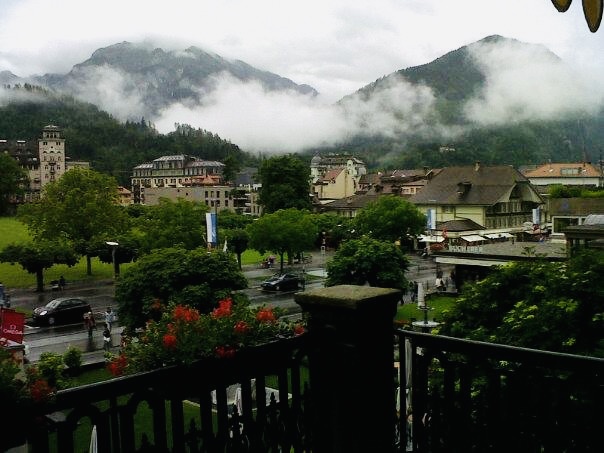
“Travelling- it turns you speechless. Then it turns you into a storyteller.”- IBN BATTUTA.
This quote from the itinerant Moroccan traveller-scholar comes to mind when I think of Interlaken. Nestled snugly in the mountains of the Bernese Oberland region of central Switzerland and famed for its stunning natural beauty, picturesque villages, shimmering lakes, mountains and glaciers, this is a slice of paradise on earth.
Home to the lofty and majestic Alps, ski resorts, hiking trails, hamlets and a spectacular setting for mushy, romantic Yash Chopra movies, Interlaken unfolds like a beautiful dream amidst the pristine, snow-clad peaks.
This is a traditional resort town located between the emerald coloured waters of stunning Lake Thun and Lake Brienz. Dotted with old timber houses and parkland on either side of the Aare river, the location is what makes it so scenic and special.
The surrounding mountains, dense forests, alpine meadows and pristine glaciers are brimming with numerous hiking and sking trails. With its magnificent views of Nature, thrilling outdoor adventures and exclusive tourist places, Interlaken offers a paradise for Nature lovers and adventurists.

A world leader in adventure sports, Interlaken offers a range of amazing adventure sports and top excursion destinations. And is easily accessible by rail, road and mountain railway all year round.
Some of the TOP ATTRACTIONS Interlaken offers are:-
1) JUNGFRAUJOCH (TOP OF EUROPE)- A high-altitude mountain pass with breathtaking views of *Aletsch glacier* and surrounding peaks accessible by train.
2) HARDER KLUM- A mountain peak offering stunning views of lakes Thun & Brienz and accessible by funicular.
3) SCHYNIGE PLATTER- A mountain ridge known for its hiking trails, botanical garden and panoramic views.
4) LAKES THUN & BRIENZ- Two beautiful lakes perfect for boat trips, swimming and scenic views.

5) GRINDELWALD- A charming village in Jungfrau region known for its stunning mountain views & adventure activities.
6) ST. BEAU CAVES- A cave system with impressive stalactites and stalagmites accessible from lake Thun.
7) HOHEMATTE PARK- A large park in the centre of Interlaken with superb views of the surrounding mountains & a great place for recreation.

8) GIESSBACH FALLS- A stunning waterfall on the edge of Lake Brienz and accessible by boat/ funicular.
9) FIRST MOUNTAIN- A mountain peak in Grindelwald with a plethora of activities like cliff walk and hiking trails.
10) UNSPUNNEN CASTLE RUINS- A historic site offering great views of the surrounding area.
11) SWISS OPEN AIR MUSEUM, BALLENBURG- A museum showcasing the traditional Swiss architecture and rural life.
Interlaken offers diverse and mouth-watering culinary fare from traditional Swiss dishes to global cuisine. Popular choices include- Fondue, Rosti, various meat dishes with local specialities like dried sausage and fresh beef. Not to miss the Swiss desserts- Hazelnut cake, Swiss chocolates and pastries that are a *must try!*
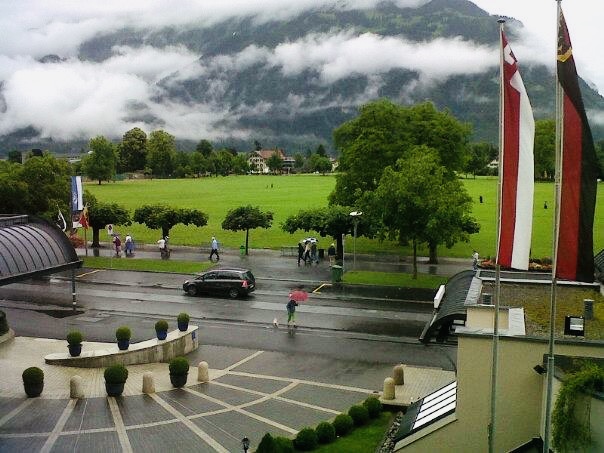
My own experience of Para Gliding in Interlaken was nothing short of a surreal and spiritual experience! An epiphany, a leap of FAITH and a turning point in my life!
My blood froze and throat dried up as I took off a tall hillock with my heart thudding wildly, doing a few crazy flip-flops as I braced myself for an exhilarating experience. It was a divine experience like meeting God in the Alps. An adrenaline rushing, crazy moment as we took off with my pilot Dan seated behind me.
Whoa! I had goose bumps all over as I gazed at the magnificent vista below. It was a life transforming moment. I felt reborn !
Soaring thousands of feet above, I felt like a free bird, monarch of the vast skies, surveying the gorgeous earth below as we passed over sparkling Lake Thun and the snow-capped peaks of the Eiger, Monch and Jungfrau mountains. The pure, fresh air whizzed past me, ruffling my hair and teasing my senses.
I inhaled lungfuls of the pure Alpine air as I soared high over the breataking Alps, gazing mesmerised at the miniature lakes, villages, gushing dams, rivulets, streams, lush forests, cars and people below. Time stopped. It was a rare, divine moment for me to merge into the vast cosmos. A sheer slice of Heaven and cosmic delight!
As we glided like free birds over Beatenberg, which offers some of the best paragliding conditions in Switzerland, every cell, neuron, nerve and fibre in my body pulsated with life. Like the dance of Shiva, I felt awakened and enlightened.
Life is much like paragliding. Taking that leap of FAITH. Some do not even try. Others dare to take the plunge and soar high with their heads up.
But once you have tasted that thrill and freedom, you conquer your mental barriers and fears! You grow wings and savour pure BLISS. Interlaken offers that enchanting experience!
Put idyllic Interlaken on your travel wish list and take that leap literally and metaphorically. A MUST-VISIT !

Anita Panda is a Mumbai-based bilingual writer-poet, the self-published author of ‘GENESIS’, (2021), dedicated to her valiant Late brother Colonel Suryakant Panda & the author of her debut book of 47 English poems- ‘SONGS OF MY SOUL’ (2023).
Kunal Roy
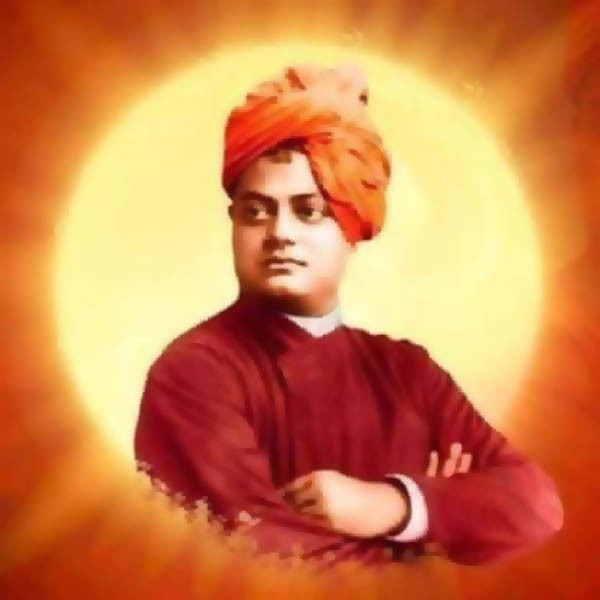
"Arise! Awake! And stop not until the goal is reached" - the words are sharp. The voice was piercing. And He stood with all his might before the entire globe to prove himself in the realm of spiritualism! He is Swami Vivekananda, fondly known as Swamiji.
A strong personality, an atheist came in touch with Thakur Sri Sri Ramakrishna and felt a sea change in himself in the matter of God and His immense creation. As fate would behold, his life was completely changed and it was meant for the change of the world which was in the grip of poverty and prejudice! Thakur's blessings were with him and with that inexplicable strength he wandered the entire globe and listened to the souls of her people.
The revolution came in 1893 in Chicago where he poured out his heart in front of the huge audience in the 'Parliament of Religion' and became an instant hero in the eyes of the people. After this conspicuous achievement he returned to his mother land, where he set up the Belur Math, a hub of peace and discipline. In fact this great journey from Narendranath to a world conqueror Vivekananda is something which makes us think twice! Such a giant spiritual leap is really laudable. Indeed his life and message are timeless inspiration for us. This great soul was removed from this earth by the fingers of the heaven on 4 July 1902. A short span of thirty nine years, yet so significant! After all '' we live in deeds and not in years''!!
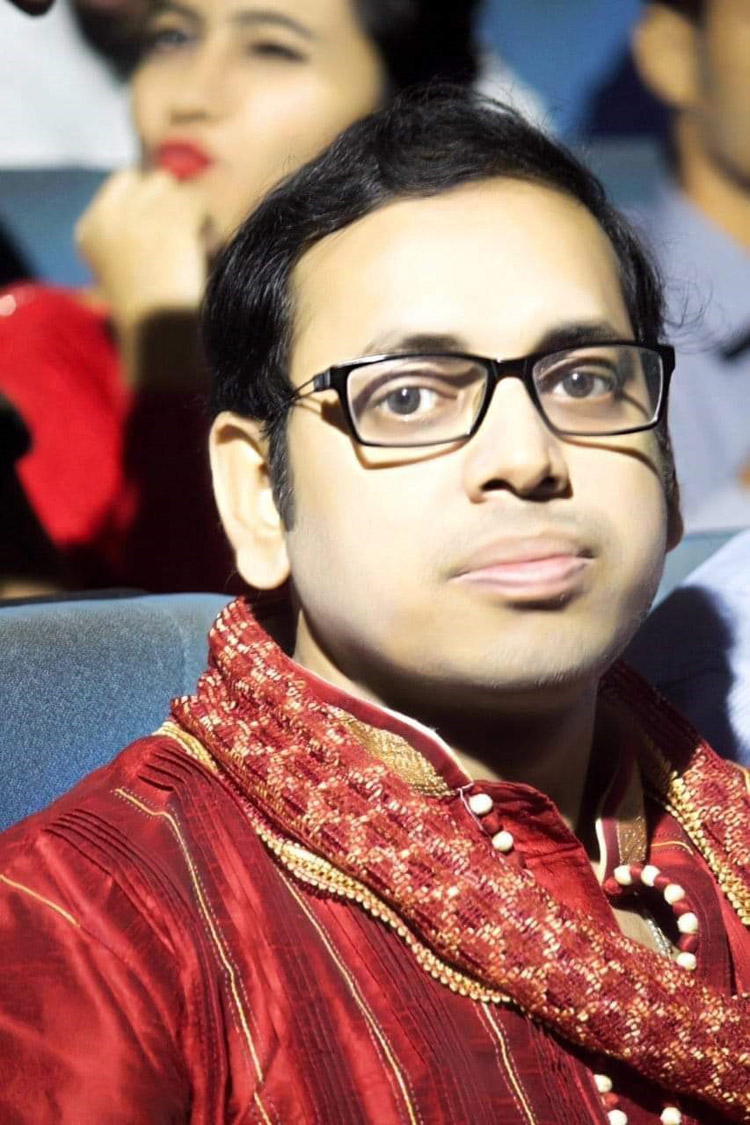
Kunal Roy has always been an ardent lover of literature. He has received various awards for his literary contributions. He is a poet and a critic of poetry. His works have been published both here and abroad. Currently working as an Assistant Professor of English Language and Communication in George Group of Colleges, Kolkata.
Satish Pashine
The Call
Meera Joshi was in the middle of her yoga class at the Z-1 residents’ club — easily her favorite hour of the week day. It was her little escape from the demands of daily life, a place where everything slowed down. The banquet hall, usually buzzing with functions, was transformed into a quiet, breezy yoga space with Zumba posters and soft mats — set apart from the city noise, almost like in a resort setting. The faint lavender scent from the auto-dispensers on the walls mingled with the cool, whispering air-conditioning, adding to the calm.
The instructor’s voice, steady and soothing, was guiding them into Savasana — the final resting pose. “Let go of your thoughts,” she said gently. Meera’s body, nicely sore from an hour of stretching, had just begun to surrender to the floor. Her breath was slowing. Her mind was quieting.
And then came the buzz.
A faint vibration, dull but insistent, broke through the calm. Her phone — stuffed inside her worn canvas bag and on silent — was buzzing again and again like an angry little insect. She tried to ignore it, thinking it was probably just a work email or someone sending a meme. But it didn’t stop. It buzzed again. And again. It felt urgent. A strange tension crept up her spine.
She slid off the mat silently, bare feet padding on the cool wooden floor. “Sorry,” she mouthed to the woman beside her. The woman gave a small, knowing nod. Meera crouched down, fumbled with the zip, and pulled out her phone.
One message. From Shruti.
“Ma slipped in the bathroom. She’s unconscious. We’re at Jupiter Hospital now. – Shruti”
Everything stopped. Meera’s breath caught. Her chest tightened. The words felt unreal at first — her mother, her strong, stubborn Ma who still insisted on making dinner every night despite those aching knees… unconscious?
Her mind flashed to the image of her mother lying on the cold tiles, and her stomach turned. Around her, the yoga class went on, the instructor’s soft voice and the deep breathing of others fading into background noise. Meera couldn’t move for a second. Then, all at once, her body took over. She began shoving her towel and bottle into the bag, her mat rolled hastily under her arm. She caught the instructor’s eye and whispered, “I’m so sorry, I have to go.” The instructor nodded kindly, concern in her expression.
Outside, the Bhubaneswar morning hit her like a wall — thick, hot, the air clinging to her at 95% humidity. A few elderly walkers moved slowly across the campus paths. On any other day, she would’ve nodded or smiled at them. Not today.
She reached her apartment and struggled with the keys, her fingers sweaty and shaky. All she could think about was Ma. Please let her be okay, please. The flight to Pune wasn’t till 13:05. Her husband, Neil, was abroad on work — and in that moment she couldn’t even recall which time zone he was in. She was working remotely these days — she could’ve just been in Pune this whole time. Why hadn’t she gone there, especially with Neil away? She cursed herself quietly. Her yoga routine had kept her anchored in Bhubaneswar — and now she regretted it deeply.
Roots and Ruins
She went straight from the Pune airport to the hospital, reaching around 5:15 in the evening. The waiting area smelled of antiseptic and something sad — like old tears and long silences.
Shruti was pacing in front of the ICU, a bundle of nerves. Visiting hours wouldn’t begin till 6. Akshay her husband sat quietly nearby, Aarav their one year old child asleep in his lap.
“She slipped. Hit her head. There was blood,” Shruti said in a low, cracked voice. “Baba wasn’t home.”
Vijay Joshi — their Baba — had stepped out to buy groceries. He didn’t trust online delivery. “They loot you,” he’d say. He still preferred picking mangoes himself, smelling the coriander before buying. He had a key, of course. When he came back, he found Sumati — their mother — collapsed near the open bathroom door. The neighbors helped rush her to the hospital.
Now, in the ICU, machines beeped in rhythm with no emotion. Just patterns.
It had been three years since Meera had last stayed overnight in her old home in Pune. Her life now was somewhere else — in a sleek job, a posh apartment, and a complicated marriage that she rarely spoke about. She came for Diwali, for Baba’s birthday, but never long enough to unpack what truly needed unpacking.
She never told her parents how distant and cold things had gotten with Neil. She hoped, naively perhaps, that time would fix it. Ma would sometimes hint at grandkids. Meera always brushed it off. She didn’t want to bring a child into a space where love had begun to feel like a formality.
Sumati Joshi had once been a schoolteacher, the calm center of their family. Now she lay behind a curtain in the ICU — bandaged, silent, mouth slightly open.
The doctor had used words like “minor hemorrhage,” “observation,” and “complications.” But all Meera could see was her Ma — still, fragile, and far away.
Waiting
The waiting room felt like a bubble outside of time. Nurses walked past briskly, sometimes glancing at them, sometimes not. The wall clock ticked on without mercy. Visiting hours still hadn’t begun. Meera sat beside Shruti, both of them silent, eyes glued to the ICU door as if they could will it open sooner.
Shruti offered Meera a small bottle of water. She took it but didn’t drink. Her mouth was dry but her throat felt closed.
“How long was she unconscious?” she finally asked.
“Baba says maybe half an hour. He’s not sure,” Shruti said, voice flat. “He was gone barely forty-five minutes. She was probably getting out of the bathroom when it happened.”
Meera nodded, but her mind was elsewhere. Half an hour. In silence. On the cold floor.
She looked at Shruti’s face — tired, drawn, her eyes lined with sleepless worry. Aarav stirred a little in Akshay’s lap, one arm flopping over his father’s chest. Meera felt a sudden pang — not quite envy, not quite longing. Just the weight of something she hadn’t built for herself.
They finally got called in at 6. Only two visitors allowed. Meera and Shruti went in.
The ICU was a different world — colder, quieter, with a constant background of beeping and whirring. Machines blinked with numbers Meera didn’t understand. Tubes ran from Ma’s hands and nose. Her face was pale, a stark contrast to the woman they knew — the woman who once ran a classroom of forty noisy children with just a look, who scolded with love, whose loving touch could fix any faked illness by naughty brats.
Meera’s breath caught again as they stood beside the bed.
“Ma?” Shruti whispered.
No response. Just the soft hiss of oxygen.
The doctor came by briefly. Young, polite, guarded. “There’s a small intracranial bleed. We’re watching closely. No surgery yet. But age is a factor.”
Meera nodded like she understood, but she didn’t. Or maybe she did and just didn’t want to.
“She’s stable,” he added. “That’s good.”
Stable. Such a frustrating word. It didn’t mean better. It didn’t mean awake. It just meant not worse.
Shruti touched Ma’s hand gently, and for a moment Meera watched the stillness between them, the unspoken history, the childhood stories, the adult silences, all wrapped in that one touch.
Later, in the corridor, Baba arrived with a steel dabba in a blue cloth bag — homemade upma from the neighbours. His shirt was damp with sweat, his face lined more than she remembered.
“She’ll be fine,” he said quietly, not looking at them. “She’s strong. You know her.”
Meera just nodded. Her throat still wouldn’t work properly.
That night, they took turns staying in the waiting area. Meera couldn’t sleep. She scrolled through old pictures of her mother on her phone— Ma grinning with a marigold garland during Aarav’s naming ceremony. Ma in a blue saree at Meera’s wedding, smiling so wide her eyes almost disappeared. Ma holding a steel plate and shooing ants off a slice of cake, muttering, “Kya yeh log kabhi nahi sudhrenge?”
Meera felt the tears rise, but she didn’t let them fall. Not yet.
A House with Two Memories
The next morning with a very tired Baba, Meera unlocked the door to the house she had once grown up in — the place that had shaped so many of her firsts. Her first fights, her first school project, her first heartbreak. She stepped inside slowly, the familiar weight of silence wrapping around her. It was the same two-bedroom flat her parents had lived in since the 90s — modest, warm, and stubbornly unchanged in all the little ways that matter.
The marble flooring was still cool under her feet, and she noticed — with a strange flicker of comfort — that the faint yellow stain near the dining table was still there. That stain had been from a turmeric spill during a long-ago pooja. Her mother had tried everything to scrub it off, even rubbing it with lemon and salt, but it had stayed — like a tiny, defiant memory etched into the floor.
The sofa covers had clearly been washed recently. They smelled faintly of Nirma detergent. But the once-bright floral print had dulled with time, and the threads near the arms were beginning to loosen. On the wall above the kitchen door, the framed image of Goddess Saraswati — her mother’s favourite — looked down at the room with that same gentle, eternal smile. Meera remembered how Ma would light a small agarbatti below that frame every Thursday without fail, mumbling prayers while adjusting the wick of the oil lamp.
In the living room, there was no sound. But her mother’s presence still clung to the air — not in an eerie way, but like a scent you know by heart. The soft smell of sandalwood talc — her Ma’s signature — still lingered in corners, as if the walls themselves remembered her.
Meera moved through the flat quietly, drawn by old memory. She opened the door to her old bedroom which she shared with her sister. The air inside was slightly musty, the curtains half-drawn. The room looked almost frozen in time. Their twin bed was still there, covered with a faded bedsheet that had little stars on it — the same one Ma refused to throw out because “it’s still perfectly fine.”
On the wall, the posters of Lagaan and Harry Potter were still taped up, their edges curled and yellowed with time. One of them — Aamir Khan mid-swing in that final over — had a diagonal tear running through it, probably from when the ceiling fan spun too wildly during an uncharacteristically harsh Pune summer.
Her old bookshelf stood quietly in the corner — dusty but untouched, like it had been waiting. Meera ran her fingers over the familiar spines of books she hadn’t opened in years — Namesake, Five Point Someone, Palace of Illusions. The pages had turned a brittle brown, the covers slightly curled, but the titles still stirred something deep in her — echoes of bus rides, hostel nights, and long afternoons stolen from homework.
Tucked into one corner of the shelf was a small, handmade card. A crooked heart drawn in pink sketch pen. Childish, lopsided letters that read:
“To Meera Didi – Happy Birthday – Love, Shruti” (dated 2008)
A smile broke across Meera’s face before she could stop it. She touched the card gently, as if afraid it might crumble.
In moments like these — even in the middle of uncertainty, even with a loved one in the ICU — nostalgia still manages to sneak in. It tiptoes into the heart, uninvited but never unwelcome. It anchors you to something familiar when everything else feels fragile. Meera stood in her old room, surrounded by memories that smelled like old paper, sandalwood, and home — a reminder that some places hold more than just furniture. They hold echoes.
Two versions of her existed in this house — the girl who had once dreamed of changing the world, and the woman now hoping time hadn’t run out for her mother.
And in that quiet room, both of them stood together.
A Fragmented Conversation
It was the fifth day. The room smelled faintly of antiseptic and something softer—perhaps the jasmine oil Shruti had dabbed behind her mother’s ears. The white sheets rustled slightly as Sumati stirred, her fingers twitching against the edge of the blanket. Then, slowly, she opened her eyes.
Her voice came out dry and fragile, like paper being folded too many times.
“Where’s Asha?” she murmured, blinking like she was still half-asleep.
Shruti, sitting beside her bed, straightened up, caught off guard.
“Asha? Ma… who’s Asha?” she asked, searching her mother’s face for clues. The name didn’t match anyone she could recall.
Sumati turned her head slightly, her gaze unfocused. “She forgot her umbrella. I told her I’d wait by the gate…” Her words drifted into the still air, trailing off like a forgotten song.
The nurse stepped in quietly, placing a cool hand on Sumati’s shoulder. “Let’s get you some more rest,” she said kindly, guiding her back into the pillow’s curve. Sumati didn’t resist—her eyelids had already begun to close again.
Shruti glanced over at her sister, who had just walked in with a tray of lukewarm coffee. They exchanged a look—baffled, unsettled. Who was Asha? And what gate was she talking about?
Later that evening, after another round of tests and routine checks, the doctor met them in the hallway. His tone was calm, but there was a thread of seriousness woven into his words.
“There’s some mild trauma from the fall,” he said, “but what’s more concerning is what we think might be early-stage dementia. Her mind may start drifting—mixing past and present. You’ll probably hear more things like this.”
Shruti nodded, slowly, though her stomach tightened. She looked back toward the door of the hospital room, where her mother was now sleeping soundly. Asha. An umbrella. A gate. Little pieces of a life they had never been told.
Clues from a Broken Mind
The days blurred. By the end of the week, it had become routine—taking turns at the hospital, small talk with nurses, the soft beep of machines, and Sumati’s voice, drifting in and out like waves hitting a distant shore.
But her words had started shifting. They no longer tethered to the present.
One morning, she asked if her old principal had called. Her brow furrowed, waiting for an answer that wouldn’t come. In the evening, she mistook Meera for someone named Neelam, and even insisted she fix her plaits properly before the school bell rang.
Sometimes she hummed lullabies—old ones, unfamiliar to both daughters. Not the songs they had grown up hearing, but something older, almost haunting, whispered to invisible babies with names she never repeated.
And once, her voice sharp and urgent, she suddenly cried out, “Amma! Don’t take the red bangles. I told you—I’ll wear them on my wedding day!”
Then silence. Her hand trembled slightly, as if reaching for something only she could see.
Shruti, overwhelmed and helpless, took to Googling memory games and dementia care checklists late into the night, bookmarking forums she never returned to. She tried writing things down, but gave up quickly—nothing made sense.
Meera did the opposite. She began writing everything down. Not just the strange names and phrases, but full sentences, tone of voice, the time of day. She filled half a notebook within three days. As if somewhere inside those fragments was a code they could break.
That Saturday night, after another long day at the hospital, Meera came home alone. She left her bag by the door and stepped out onto the balcony. The old iron swing creaked slightly as she settled into it, wrapping a shawl around her shoulders. Pune’s midnight traffic rumbled far below—horns, muffled engines, a stray dog barking in the distance.
A few minutes later, Baba appeared beside her, holding two chipped cups of chai. He handed one over and sat beside her, the swing tilting slightly under their weight.
They sipped in silence for a while. Then Meera spoke, her voice soft. “She’s saying things that don’t fit… Memories from before we existed. People we’ve never heard of.”
Baba exhaled, long and tired. “She’s remembering things she never told us,” he said, his voice sand papery, weathered by years and silence.
Meera turned toward him, brows knit. “But why? Didn’t you ever ask her? About… before?”
“I did,” he said after a pause. “Once. A long time ago.”
He took another sip. “She told me some doors don’t open both ways. And some are better left closed.”
Meera didn’t respond. The city buzzed below them. In the distance, a train’s horn wailed, long and mournful.
She tightened the shawl around her and looked up at the stars. So many pieces of their mother floating just out of reach—glimmering, then gone.
Unlocking the Past
It happened almost by accident. Meera had gone into her mother’s room to look for a spare shawl—something light for the hospital chill—but ended up pulling open the old teakwood closet out of habit. And there, tucked away in the far corner beneath some sarees no one had worn in years, she noticed a rust-red bundle of cloth.
Curious, she tugged at it. The fabric—a faded red dupatta, its gold embroidery fraying—came loose, revealing an old metal trunk. Its hinges were rusted, and dust clung to its edges like it had been forgotten for decades. Meera blinked. She had lived in this house most of her life and had never once seen this trunk opened. Never even thought to ask about it.
She carried it out to the living room with effort and asked Baba about the key.
He looked at it for a long moment before nodding. “Prayer drawer,” he said quietly. “Taped to the back.”
Sure enough, she found it. A tiny brass key, cold to the touch.
When the lock clicked open, it made a sound that felt heavier than it should have.
The lid creaked, and a wave of musty air rose up—mothballs, old paper, the faintest trace of sandalwood and time.
Inside, memories lay folded like clothes no longer worn.
Stacks of old letters, the paper curled at the edges, written in delicate blue ink. Most were addressed to someone named “Rukmini Aunty.” Meera skimmed a few—mundane details, little updates about college, train delays, food cravings. But the voice in the letters was unmistakably her mother’s—livelier, freer somehow.
Beneath them were photographs—sepia-tinted, curled at the corners. Her mother, much younger, smiling in salwar suits, standing by ancient stone steps that looked like the banks of the Ganga. One photograph caught Meera’s eye in particular: her mother beside a young woman dressed in a nun’s habit, both laughing at something just outside the frame.
She turned it over. Scrawled on the back, in her mother’s unmistakable handwriting:
“Asha – 1982”
Her breath caught. Asha.
The name that had echoed out of nowhere from her mother’s hospital bed. The one that had puzzled them all.
Goosebumps rose along Meera’s arms. She felt like she was looking through a crack in a locked door—one that had always been there, just never noticed.
And then, nestled among the letters, she found one more, thinner and older, its edges soft from being read—maybe often.
She opened it gently. The writing was the same as the others, but this time the tone was different. Intimate. Painful. Honest.
Dearest Asha,
Sometimes I think we were born in the wrong century.
Your eyes always saw what others were too afraid to look at. You made space for me, even when I didn’t know how to stand in it. Thank you for loving me… even when I didn’t know how to love myself back.
You once said we’d find each other again—another life, a different sky, fewer rules.
I’m waiting.
Love always,
S
Meera sat back slowly, the letter trembling slightly in her hands. The edges of her understanding began to shift. This wasn’t just a window into her mother’s past—it was a whole chapter they had never known existed.
She folded the letter carefully, like it was something sacred.
Because it was.
Confrontation and Compassion
Meera didn’t know how to ask. The question had been circling her for 3 days, quiet but persistent, like a sparrow tapping at a window. It wasn’t just curiosity anymore. It was something deeper—a pull toward a part of her mother’s life that had always stayed in the dark.
That morning, after helping her sip her tea, Meera sat by her side on the narrow bed. Her mother’s hand rested limp and warm in hers, the bones delicate, the skin dry and thin as pressed flowers.
She sat in silence for a long moment, listening to the tick of the ceiling fan, to the rustle of leaves outside.
“Ma…” she said, at last, almost afraid to hear the words out loud. “Ma, who’s Asha?”
Sumati’s eyes turned slowly toward her, and for a moment, it felt like something shifted behind them. A flicker—faint but definite—of a memory rising to the surface.
A name can do that, Meera thought. A name can open a door.
Sumati’s face changed, just slightly. A shadow of something passed through—sadness? fondness? A grief so old it had learned to smile?
“She wore blue,” Sumati said at last, her voice soft and wandering. “Even when the whole town told her not to. You remember those narrow lanes near the old post office? She used to walk there in the evenings. Always alone. Always in blue.”
Her eyes weren’t really on Meera anymore. They were somewhere else entirely.
“Her voice,” she added, almost dreamily. “Her voice could make the pigeons fly from the temple steps. Not loud. Just… alive.”
Meera’s breath caught. She hesitated, then asked carefully, “Was she your Sakhi? Like… your closest friend? Or your Bhojali?”
Sumati blinked, slowly. The words seemed to land somewhere deep. Sakhi—a soul-friend, the kind girls braided hair with, sang with, whispered secrets to in the dark. Bhojali—the one you chose as your sister in childhood, to stand beside you for life.
A pause. A stillness.
“No,” Sumati said at last, and the word was almost too soft to hear. “She was… the sky.”
She smiled, not at Meera but at something far beyond the room.
“And I,” she whispered, “I was only the earth beneath her feet.”
Meera felt her chest ache—not in pain, but in recognition. In the quiet between them, something vast and unnamed unfolded.
She didn’t speak again. Just held her mother’s hand, as if by doing so she could touch the sky, too.
Pieces Falling into Place
That evening, Meera sat on the floor of Shruti’s room, her legs folded beneath her, hands wrapped around a mug of now-cold chai. The air between them buzzed with something unspoken. Shruti was perched on the bed, knees drawn up to her chest, watching her sister with the quiet intensity of someone waiting for a story that might change everything.
Meera had barely said a word on the drive over. But now, in the soft lamplight, it all came out—slowly at first, then like a monsoon breaking open the sky.
“She loved someone,” Meera said, her voice thick with the weight of it. “Ma… she really loved someone.”
Shruti tilted her head, unsure. “Before Baba?”
Meera nodded. Her eyes were shining—not with tears, exactly, but something like them. Something raw and new. “Maybe even… during. After. I don’t know.”
Shruti’s brow furrowed, but she didn’t interrupt. Meera went on.
“Her name was Asha.”
She let the name hang there. It sounded almost sacred now.
Shruti bit her lip, gently, like she was trying to keep from asking the obvious question. But it slipped out anyway.
“Why didn’t she tell us?”
Meera looked down into her mug, then up again. Her voice was quiet, but certain.
“Because it was 1982.”
A beat.
“And Asha was a woman.”
The words settled heavily in the space between them—not like a bomb, but like a truth that had been waiting to be heard.
Shruti didn’t say anything at first. Her lips parted, then closed again. She blinked, slowly.
The silence between them wasn’t awkward. It wasn’t confusion, or shock, or shame.
It was mourning.
Mourning for a story they’d never been told. For a woman their mother had once loved with her whole, quiet heart. For the years of silence, the things swallowed, the love unspoken.
For the weight she must have carried, all alone.
Meera reached over and touched her sister’s hand. Shruti squeezed it back.
No more words were needed. Not right now.
They just sat there, two daughters rearranging what they thought they knew of the woman who raised them—piecing her back together, gently, tenderly, like a puzzle with no picture on the box.
Healing Doesn’t Always Mean Curing
Sumati’s condition didn’t improve much over the following months. Her memory was patchy. Some days, she knew everyone. Other days, she was a girl again, asking for her mother.
But something changed in Meera.
She moved back home temporarily. She worked remotely. She read her mother’s letters aloud to her gently on the balcony.
She began digitizing her mother’s old teaching materials, making a small online archive.
Shruti started a support group for caregivers of dementia patients. Akshay built an accessible bathroom. Baba began cooking again, sometimes humming old Kishore Kumar songs.
One evening, Meera whispered, “Do you think she still remembers Asha?”
Baba said quietly, “Maybe love never leaves us. Even when memory does.”
A Star for Asha
On her 65th birthday, Sumati sat in the garden. She looked frail but peaceful. The family had decorated the small lawn with fairy lights.
As the sun dipped, Meera sat beside her and placed a small blue diary in her lap.
“What’s this?” asked Sumati, her voice soft.
“A gift,” Meera smiled. “It’s your story. Yours and Asha’s.”
Sumati looked at the pages, her eyes wet but distant. She turned to Meera.
“Was she real? Or did I make her up?”
“She was real, Ma. Very real.”
A breeze passed through the bougainvillea. And for a moment—just a flicker—Sumati’s eyes lit up.
“She always said blue was the color of freedom,” she whispered.
The Quiet Sky
A year later, Sumati passed away in her sleep.
The funeral was simple. Traditional. But inside her white sari, Meera tucked the blue diary beneath her mother’s hands.
Asha’s last letter remained there too—unread by most, but fully lived by the woman who once dared to dream of love, quietly, against the tide of time.
Epilogue
Meera now runs a small initiative in Bhubaneswar called Sky Beneath Her Feet—a community of families caring for loved ones with dementia. But it’s also a sanctuary for untold stories, invisible loves, and memories that need space to breathe.
Every year, on her mother’s birthday, she sends a sky-blue letter to an address in Varanasi, addressed simply to:
“To Asha – Wherever you are.”
No reply ever comes.
But that’s okay.
Because some loves don’t need an ending.
Just remembrance.
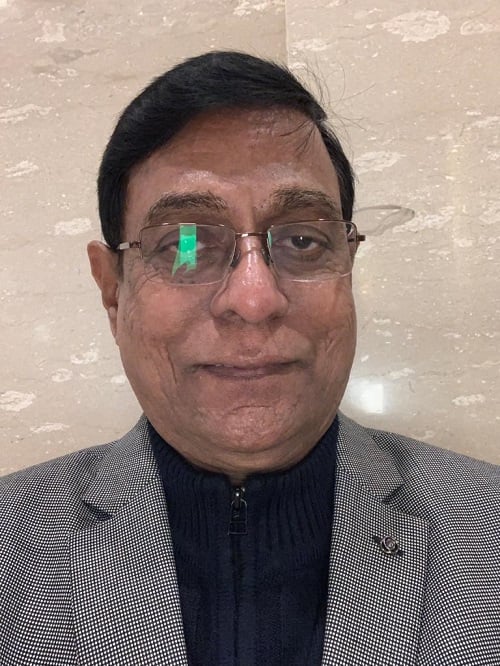
Shri Satish Pashine is a Metallurgical Engineer. Founder and Principal Consultant, Q-Tech Consultancy, he lives in Bhubaneswar and loves to dabble in literature.
HOPE THAT REMAINED JUST A HOPE
Bankim Chandra Tola
“Hi Rajan, now Hindi class is suspended; let us go out to the shop nearby for a break.” said Hari, one of his classmates.
“I can’t, I have to finisàaqqh my homework for the next class, that I couldn’t do at home,”replied Rajan.
Ananta cut in, “Arey, leave him; he is a bookworm. Let us go.” Both Hari and Ananta went out of the classroom.
Rajan, a diligent, hard-working and sincere tenth class student had been through more hardship than most boys of his age. He lost his father, an underpaid village school master when he was in class six. Poverty and lack of proper medical care stole away his ailing father from him in his young age. Left with no assets except a small house, no pension and nobody either from relatives or neighbours willing to help, Rajan and his mother had to rely entirely on their resilience. His mother, a brave lady however, didn’t give up her struggle to survive and bring up her only son with honour. She knew a bit of tailoring; she employed that skill to earn her livelihood by buying a second-hand sewing machine.
Though only fifteen, Rajan could realize the hardship that his mother had undergone for his upbringing. Often he thought when would he be able to relieve his mother from this hardship? He was no less pained to see when his mother was humiliated by neighbours for asking their help at their doors just to procure a morsel of food grains. How can he forget his mother sleeping at night in several occasions simply by taking a glass of water when nothing was left for her to eat after feeding him? How can he forget his father dying of severe disease for which he could not afford to consult a good doctor? Nobody either from his relations or from his village came forward to help in spite of his mother’s earnest appeal. Why people in this world are so unkind? His thoughts extended beyond all boundaries, sometimes he dreamt of becoming a doctor to save helpless people dying like his father, sometimes to become a rich man and help poor people suffering in his neighbourhood and sometimes to become a collector to render justice to economically backward people for living a respectable life. Alas! All his day dreams vanished when his mother called him,
“Raju, go to Upparsahi and deliver this packet to Mrs Padhi Madam. If she asks the price tell her, it is Rs. 200/- only and collect the amount if she pays.”
Without a word Rajan left for Mrs. Padhi’s house with the packet. The moment he opened the gate of Mrs. Padhi, he was frightened by barking of a dog from inside and closing the gate he stood still outside. The dog continued barking as if to tear him to pieces once caught.
Mrs Padhi could however see a boy standing near her gate through the window and asked her daughter, “Reema - see why a boy is standing near our gate.”
As Reema came out of her room, the fighter watch guard, her pet dog cooled down and stopped barking. She then asked “Who’s there? You may come in now; nothing will happen, I am with the dog.”
Rajan could muster enough courage to open the gate and entered.
“Arey Rajan, you have come. Don’t worry, our Rocky, my pet Alsatian, shall do no harm to you. Do come in.” Reema guided him to her drawing room.
“Mummy, my classmate Rajan has come. He is trembling with fear for Rocky’s howling.” – Reema told her mother.
Rajan who lived in a hut couldn’t believe that his classmate Reema is from such a rich family to live in a big bungalow. Eyes wide open, he asked, Reema, "is this your own building or you are staying on rent?”
Reema smiled and said, “No it is ours only. My Dad has built it.” Before Rajan could say something, Mrs Padhi came in. Rajan soon handed over the packet to her after bowing down and said, “My Mom has sent it for you.”
She opened the packet and said, “O, my garments are ready then. How is your Mom and how much do I have to pay?”
“Mom is fine, She has said it is two hundred rupees only Ma’am.” Rajan replied.
“Mummy do you know, Rajan is the best student in our class, he always stands first.” Reema interrupted.
“Are bah!” saying so, Mrs Padhi asked Rajan to sit down on the sofa and asked her daughter, “Get some sweets for your friend.” Then she went inside to collect money.
Reema hurried in and returned with a plate of sweets and said, “Rajan for the first time you have come to our house, you have to finish all this.”
“O my God! So many sweets? For your sake, I may take one piece and that’s all.”
“What Rajan! Don’t feel shy, take everything, otherwise I will come to your house to check how much you eat in your breakfast.”
Mrs. Padhi came in with the money and paid to Rajan. She said, “Do not hesitate my boy, finish the plate. Take me as the elder sister of your Mom and be free. Since Reema is your classmate you are always welcome to my house.”
Reema suddenly jumped in, “Mummy, Rajan is very good at Mathematics. If he can coach me at least two times a week until the ensuing final examination, I can catch up.”
Mrs. Padhi – “Well, Rajan, if you agree, you may come here at least two times a week to tutor her, we will be happy and for that, I will pay you Rs.1000/- per month.”
“Aunty, I am not a teacher, how can I teach Reema? If she has any doubt in solving a problem I can help her but not on payment.”
“Okay, then I will have to talk to your mother about this. I know her struggle after your father passed away,” said Mrs. Padhi.
By that time Rajan had finished the sweets and said, “Let me go now.”
As Rajan was about to leave, Reema intervened, “O Saheb, how will you go to the gate, will Rocky allow you to move an inch without my signal?”
“Reema, go with him up to the gate.” Said Mrs Padhi to her daughter and went inside.
While walking down the steps of veranda of her house, Reema said, “So, your mother has a tailoring shop. I didn’t know that.”
Rajan – “Not a shop exactly; she does some sewing work at home as per orders. We are not as rich as you are. After the sad demise of my father, my Mom struggled hard to make a living. That is why I don’t have all the course books to read. Leave it, why I am telling all these things to you? It is our fate. By the way, what is your father?”
Reema gulped at once to say, “Sorry Rajan, I didn’t know anything about you as you do not talk to anybody in the classroom. Yes, as you said, I have no problem. My father is a colonel in Indian Army posted in Kashmir to control terrorist attacks. Yes, he has provided us all amenities for a good living and he takes full care of us.”
“Glad to know that you are a blessed girl. Anyway, I am getting late; Good bye.” Rajan left for home.
On his way home Rajan thought about his dreams and realized that he needed to secure high score in the final exams of Matriculation to get admission in a premier college. But he didn’t have all the course books necessary for making preparation. So why not agree to Mrs. Padhi’s proposal to give coaching to Reema? How can he do that without the permission of his mother? Lost in these conflicting thoughts eventually he reached home; handing over the money to his mother, he reported all that Mrs. Padhi had told him.
Rajan’s Mom heard everything and said, “Let me talk to Mrs. Padhi first and then I shall tell you what to do.”
A few days later – one day, the last period of 10th class was games. Almost all classmates of Rajan went out to the playground except Reema. Taking advantage of this, Reema asked, “Rajan, when are you coming to my house for coaching, as suggested by my mother? Final exam is drawing near; could I expect some help from you?”
“I don’t know. My mom has not told me yet anything about this.”
“O I see, perhaps my mummy has not talked to your mother.”
“May be,” giving a brief reply, Rajan went out of the class.
One day, while Rajan was helping his mother clean the room, she said, “Yesterday Mrs. Padhi met me in the market when I was buying vegetables. She asked me if Rajan could coach her daughter, Reema in Mathematics at least twice a week according to his convenience she would be happy. She even offered to pay Rs. 1000/- per month for this. If you agree, you may start doing so.”
“Mom, if you say so, I shall do it.” Rajan nodded.
“Okay then, you may start from tomorrow.” She said.
Next day was Sunday. For Rajan it was a big holiday. After taking breakfast he told his mother to give him some domestic work to do. Mother reminded him to go to Reema’s house for tuition. She also asked him to buy some vegetables while coming back.
Rajan complied as an obedient son and went out at once with a small bag in hand.
On the way Rajan wondered how he would manage to teach Reema given that he had no idea about teaching methods. Still he was certain about one thing – he would make it clear that he wouldn’t take up any subject other than Maths.
As Rajan approached the gate of Mrs. Padhi’s house, he reached out to open it, when her dog started barking furiously. Just then Reema came out and helped Rajan get into the house. “What a surprise? Finally you have agreed to come.” She said with a big smile on her beautiful face. “I’m so happy.”
“But remember” Rajan said firmly, “I am here only for Maths. I had to agree as my Mom gave consent to your mother.”
“Okay Baba. Let us start.”
Rajan completed the first session well and after giving her some homework, he left for bazaar to buy vegetables.
Days rolled by. Reema seemed gaining confidence in solving problems on her own, while Rajan with the money he earned from tutoring, managed to buy all his course books, even a pair of new pant and shirt.
Meanwhile schedule dates of Matriculation final examination were notified. Rajan alerted Reema to be attentive in her studies so as to secure a first division. He too guided her in the preparations.
One day, Rajan was about to leave after finishing his coaching session, when all on a sudden, a gust of wind swept through the air, signalling an impending storm. Within moments dark clouds overcast the sky. Alarmed by the unexpected change in weather, Reema thought it wise not to let Rajan move out and asked him to stay back, “Rajan, lightning has already started, rain may follow soon. You shouldn’t move now. Let me get some snacks, we would enjoy this unexpected rain for a while until it settles down.”
Rajan had no option but to wait. Reema came with snacks and sat beside him. She said, “Take this and enjoy the magic of rain for some time. Thank God! Rain has blessed us to be together to pass some time gossiping freely. ”
“Yes, no other way than to wait until the rain is subsided but I think my Mom may be getting worried thinking I am out in the open on the way to home.” Said Rajan.
“Don’t worry - may be, she will guess we are taking care of you. So for now let us just enjoy the rain. By the way, do you know Rajan, I had a long desire to come closer to you but held back for undue inhibitions. Trust you will not misunderstand me if I say that I like you very much. You are different from all the other students in our School. My friends Sujata, Pinky and Rosy also used to talk of your superb merit, amiable behaviour and sharp intelligence. In fact we were all surprised when one day Sujata while singing your praise, boldly said that she’s in love with you and wants to marry you some day.”
“My God! To what extent you girls can go when you are together? Are you all crazy? School is a sacred institution where we gather to gain knowledge, not for cooking all this rubbish. Anyway how did you react?” asked Rajan.
“Promise me, you won’t get angry if I say how I reacted.” Said Reema.
“Not at all, you may say with your open heart; I won’t mind.”
Looking at Rajan’s eyes she said, “I told her, what nonsense you talk? Forget that Ladoo. Rajan is mine only and I cannot bear anybody coming close to him. I have already reserved a place for him in the innermost corner of my heart. So none should dare thinking about him.”
Rajan felt as if thousands of thunderbolts had hit him at a time. He was stunned into silence, eyes fixed on Reema unblinking. He couldn’t fathom how Reema and her friends in the School are thinking of all these goofy things about him behind his back.
Noticing sudden change in his face Reema spoke gently “I’m sorry Rajan, please don’t take it the wrong way; for a moment I was emotional to open my heart in an euphoria without thinking what would be your feeling. But I promise, nothing shall happen without your free will. If you feel differently, I swear I shall never bring this up again.”
Rain had subsided by then. Rajan got up to leave for home. Reema did not stop him and led him to the gate to see off.
As Rajan walked, it felt like his legs moved on their own while his mind raced through a stormy desert desperately searching for an oasis of peace. What had she really meant? He had never seen her in that light. She is just a classmate and on her request only he was tutoring her, that too on payment. Then why should she hint at something weird? No, this is not good. Should he stop going to her house? But how can he do that without the knowledge of his mother? And what excuse he would give to his mother, particularly when the final exam Is knocking at the door? He was puzzled.
That night after dinner Rajan quickly finished his homework and went to bed. But unlike other nights, his sleep seemed to play hide and sick with him. His attention was unintentionally drawn towards Reema’s words. Indeed Reema was an exquisitely beautiful girl with fair complexion, sharp nose, deep eyes and good calibre; may be struggling a bit in mathematics but good at other subjects; overall a good student. Yet, Rajan couldn’t understand why she was entertaining such distracting ideas when she needed to focus on her studies and career. Anyway, he has to maintain distance from her until final exam. Restless, he turned from side to side trying to shake off these silly thoughts. Eventually exhaustion took over and he drifted into a deep slumber.
Only two weeks were left before the Matriculation final exams. Classes of tenth grade were suspended making time for students to prepare. Rajan was serious about his preparations but he noticed that Reema was not that serious. In his last visit to her house before the exams, Rajan said,
“Reema, I think this is my last visit to your house before the final examination. Once the results are out we’ll go our separate ways. So not as a tutor or a classmate but as a well-wisher I would like to encourage you to stay focussed on your preparation with an aim to secure a first division. I truly believe that your sincere efforts shall pay off and your success will not only bring joy to your parents but also give a meaning to my small effort for boosting your confidence.”
“I may not be certain of achieving a first division but rest assured, I shall put in my best efforts. Rajan, never under-rate your contribution - you have been more than a guide showing me the right direction. I am truly thankful to you. Please don’t say it is your last visit, it would be too much for me to bear. Don’t forget me. Whenever you find time, do come to my house. Always take it that one of your friends, rather a student, is eagerly waiting for you here.” Overpowered by emotion Reema bade him good bye with tears welling up in her eyes.
Two months elapsed like water flowing in a perennial spring. One day when Rajan was at home, Reema came with a newspaper in hand and said “Rajan both you and I have passed Matriculation in first division. I am extremely happy and obliged to your perfect guidance.” Saying this she handed over the newspaper to him to see for himself.
Enthusiastically Rajan opened the paper and checked his roll number published under First Division column. He was also delighted to see the roll number of Reema under the same column. He said, “Congrats Reema, for your success. You have shined as I told you. I feel highly elated.”
Then Rajan went inside with the newspaper taking Reema with him and bowed down before his revered deity. He also went to his mother and touched her feet to take blessing, informing her that both of them had secured a first division. Reema also bowed down before her to take her blessing. His mother was happy and blessed both of them for success. She said “Raju, run to the sweet stall and get some good sweets for both of you.”
After Rajan hurried to the nearest shop, his mother hugged Reema and said, “My pretty doll, I am proud of your grand success in the exam. May God bless you to climb to the highest citadel of glory in life. Your parents must be exceedingly happy. Do sit beside me for sometime until Raju comes back. By the bye, did Raju cause any problem or inconvenience to you?”
“No aunty, not at all. Rajan is a jewel. He is my best guide. If I have got a first division it is only because of him,” said Reema.
“Have you planned in which college and which stream you will join?
“Not yet aunty. Meanwhile my dad has been transferred to Delhi. I think he will take us to our quarters in the army cantonment soon. Perhaps he will arrange my admission there in some college.
“Very good. That is the sign of your glowing future.”
“Aunty, you have brought up Rajan with all the best qualities. Not only in studies but also in manners and extracurricular activities, he is unparalleled. We all like him very much.” Said Reema.
Rajan came in with a packet of sweets. His mother served it in two plates and said, “My two jewels, enjoy the sweets at this auspicious moment so that the ships of your lives sail smooth.”
Reema took the blessings of Rajan’s mother and left for home.
Soon Rajan collected his mark sheet from the School and told his mother, “Mom! I have secured 95% marks in aggregate. I am sure of getting an admission in the best Govt, college in the city with scholarship and free studentship. I will prefer joining the science stream.”
Delighted as she was, his mother asked Rajan, “What about Reema?”
“Mom, she has secured 65%. I think she will have no problem in getting admission in any one of the Govt. colleges.”
That afternoon around 4 P.M. when Rajan was about to go to the market to buy groceries, he was taken aback to see Reema coming towards his house carrying a large packet. “Mom come outside” he called, “Reema’s here.”
As his mother came out of the house, Reema bowed down respectfully and handed over the packet. Politely she said, “Aunty, my dad has sent this packet for Rajan. Please accept this for our sake.”
Rajan’s mother smiled warmly and affectionately took her by hand inside and said, “My sweet doll, I am highly pleased that your dad has blessed Raju. We are honoured. But why so much of a gift?”
Reema said, “When I conveyed our success to my dad, he was overwhelmed with joy. He said, convey my best wishes to Rajan for whose help you could get a first division. I cannot go now but for the success of both, there should be a party. I am sending herewith a small gift for your friend, Rajan and convey my best wishes to him. So aunty, this small gift is nothing. My Mummy has requested you to join a small party in our house tonight. So please join us at 7 pm with Rajan positively.”
“Great, you and your parents are doing so much for us. I am humbled. I shall come with Raju,” replied Rajan’s mother.
Reema and her Mummy were accustomed to parties being a military family but Rajan and his Mom were not aware of this as in their life they had no occasion to see a party anywhere. Still they called at Reema’s house on time with a flower bouquet.
Party at Reema’s house went on as planned by them. Thereafter Reema’s Mummy took Rajan’s mother to show her three storyed building from ground to top floor and Reema on the other hand led Rajan to her study room and both sat there sipping mango juice. Reema broke the silence and said, “Rajan, I am sure you are going to be admitted in the best college here and in course of time by virtue of your extra-ordinary talent you will rise to incredible heights of success. By the bye, what is your plan for the future?”
“It is too early to plan for the future.” Rajan said. “But I have witnessed the realities of life from my childhood. That's why I had a desire to become either a doctor or a collector to serve the people who are underprivileged and downtrodden. What about you?”
Reema gasped and after taking a deep breath she said, “Everything’s fallen apart - my plan has vanished into thin air. Do you remember, you had once told me – ‘this might be your last visit to my house’? Now the table has turned. My Dad has planned to get me admitted in a college in Delhi. Perhaps he would be taking us there within the next three to four days. I don’t know if we’ll ever meet again. I wanted to remain by your side like a shadow, but my destiny dictates otherwise.”
“Oh, come on Reema! Don’t be so emotional.” Rajan said gently. "It is a great news - you are going to be admitted to a college in Delhi, a city known as a hub of quality education and career opportunities. You should be happy and grateful to your dad instead of blaming destiny.”
He continued - “As regards our meeting again, you know Reema –Earth is round. People cross paths unexpectedly and at unanticipated moments. Further, if you look deeply into life, many things will be clear to you. Like a river that never stops flowing, life keeps on moving. You know, the whole universe is regulated by the cosmic energy generated by the great source, infinite and eternal - what we call God, Allah, Jesus Christ or different deities as per our belief. We humans are just tiny particles in this infinite universe moving in our respective orbits framed by our own actions called KARMA. As explained in Gita we are neither born nor do we perish but simply change our forms with the passage of time. In our limitless travel through time we have likely met several times in the past and it is not certain that we may not meet again. It is only our Karma that will decide the route of our life’s journey. So don’t feel disheartened for our staying afar. Leave everything unto your revered deity and move ahead with positive attitude to become something meaningful in life and that will bestow total peace on you.”
“Okay my dear, with that I shall go ahead. But the fact remains that I will miss you deeply. If some day, a memory of an old, dull friend like me happens to cross your mind, please don’t hesitate to reach out to me. I’ll share my Delhi address once I settle there and remember, I’ll be waiting for you.”
Meanwhile her Mummy with Rajan’s mother came down talking to each other. Rajan with his Mom left Reema’s house after formally wishing eachother.
Reema and her mother came to the gate to see them off.
That night Reema couldn’t sleep. Her thoughts wandered in a barren land. Lost in that emptiness, she landed in a state of realization - her hope was nothing more than a fragile dream, like a castle built in the air.
Bankim Chandra Tola, a retired Banker likes to pass time in travelling, gardening and writing small articles like the one posted here. He is not a writer or poet yet he hangs on with his pursuit of writing small miscellaneous articles for disseminating positive thoughts for better living and love for humanity. Best of luck.
T. V. Sreekumar

Separations are painful and longer the separation, more painful it is. It breaks not only the heart but mind and body too. This is a true story of a lengthy parting and the consequences that followed.
She clung to me when we met after the lengthy interval which happened due to unavoidable circumstances. Certainly, I was taken aback and almost lost my balance. Crying uncontrollably, she was repeatedly asking me,
“Where have you been this long?”
I did not have an answer and only then I realized that she loved me this much. To console her I said,
“Work and family commitments kept me away.”
She wouldn’t take it.
“If you ever had a thought of this lonely soul, this pain could have been avoided.”
“Now that I am back you should be happy.”
“Not a day has passed without me crying for you. Can’t you see even now my fabric is soaked with tears but I believe they are tears of joy as I can hold you so close and even cling to you.”
She was suffocating me through her words and actions but I bore it as I never wanted to make her unhappy. After a gap I asked her,
“What did you do during this interval”?
A sudden burst of tears made me feel guilty. Did I ask her the wrong question?
“What makes you ask that question after deserting me?”
“It was not intentional my dear. Circumstances forced me and I never wanted to hurt you.”
That appeared to pacify her a bit and in a lighter tone she said,
“I was waiting with hope and in my heart of hearts I believed that you would return.”
“What made you feel that I would come back?”
“Everything about you. You are the only man in my life and it will stay that way till my last breath. You are my first and only love. From the day you chose me, your loving looks, your tender care, and your breath which I used to count when very close, and the passionate kisses made me fall madly in love with you. When my love is so strong and powerful I was certain you will be forced to come back and see what has happened."
All the logic was on her side and I never dared to dispute it.
A moment later she asked,
“Don’t you love me as before?"
“Will I hold you so close had it been otherwise?”
“True. You are the only man in my life and will make it that way till my last.”
From our association earlier, I knew she was the one who took strong decisions and stuck to it. Whenever I went out, she insisted on coming along with me and clung to me so closely which often suffocated and embarrassed me. Very often I had to tell her in a tender way,
“Please give me some space to breathe.”
She pretended not to hear my pleas and clung to me more tightly. I never made any protest as her love and care towards me were immense and hurting her feelings was never in my thought. It had come to a point where my breath was her lifeline. She enjoyed that closeness and wanted to remain so always.
I was on a walk along with her and reached my comfort zone, my home. I opened the door and there was the newspaper which I had read early in the morning with the front-page news which I could read from far,
“Start wearing masks."
T. V. Sreekumar is a retired Engineer stationed at Pondicherry with a passion for writing. He was a blogger with Sulekha for over fifteen years and a regular contributor writing under the name SuchisreeSreekumar.
Some of his stories were published in Women's Era. “THE HINDU” had also published some of his writings on its Open Page..
Sreechandra Banerjee

“How to trap a buzzing bee to record its buzzing sound?” asked Rishav
- “Trap a bee? What an absurd idea!”
- “Yes, but I need to do it!”
- “Why?” Lalit, his colleague, was being too inquisitive!
How desperately did Rishav want to record the buzzing sound! He was now almost through with the project except this problematic buzzing bee and some other sounds. But how on earth could he disclose this to Lalit, his colleague? Especially since Lalit was also working on the soundtrack to develop some software. Neither had Lalit disclosed to Rishav exactly on what he was working!
- “Life is a total chaos if you are a software engineer, you have to complete everything before the deadline, you know,” said Rishav’s boss as if he was considerate about their chaotic lives, being software engineers!
Although their boss was a software engineer too, his life seemed to be orderly! He hardly stayed at office. He was never of any help with the project that Rishav was stuck with. How to get on with such worthless bosses? Never could he guide on anything! Yet sometimes his boss made a guest appearance to yell at them and remind them of the deadline.
Lalit, if he so wished, could mimic the buzzing sound. Rishav knew for sure that Lalit could. The problem was then Rishav would have to tell him everything! How could he afford to do that? What if Lalit came to know of Rishav’s project and took the credit for it!
Three months back, their client “www.beyond-the-sky.com” had outsourced this project of developing software for sound and music recognition to their firm. This project compiled a number of software dealing with different sections. Their client wanted software that would recognize music tunes and some sounds of nature. Though Rishav and his team were almost through, yet this part was still left, and the deadline was approaching. If they failed, their company would have to pay a huge penalty.
Earlier they were working on the music section.
- “Murali, now let me evaluate how good your software is!” Murali had assisted Rishav in the software for Indian film songs. This software www.filmygeet.co.in was apparently working well. Yet Rishav had to test it time and again to be absolutely sure.
So, Rishav simply fed the line “…… Kho Na Jaaye Ye Tare Zameen Par.”
Film’s name, music director Shankar-Ehsaan-Loy’s name and all other relevant details flashed before them. So, the software was indeed a ‘Tara’ or a star which would not be gutted to ‘Zameen’ or the ground and get lost.
Songs of ‘Jodha Akbar’ worked well too. Not only was the recognition of the qawaali “Khwaja Mere Khwaja” (Oh! Almighty, my Almighty) godly but details of all the other songs seemed to have descended straight from the heaven.
- “Well done, Murali” Rishav was happy with his performance.
As per their client’s requirements, they needed to create a database for film songs of 1950s too. That was a difficult job, and Rishav was really worried about it. Recording at that time was not that good. Yet they had to do it. Rishav had instructed Murali to first start with the films of 1980s.
- “Rishavda just see how good these 1980 ones are working. I started with Manna Dey’s database. Now I have tried the Raj Kapoor ones too.”
Rishav fed in the recorded lines from Shree 420 of 1955:
“Mera jute hai Japani,
ye pantaluun Inglistani.
sar pe laal Topii Rusii.
phir bhi dil hai hi Hindusthani”
Rishav couldn’t believe his eyes, when the monitor flashed the name of the film alongwith the line “starring Raj Kapoor and Nargis”.
- “Oh Murali, sure your software has a very good ‘Hindusthani Dil’ to the core or else how could it recognize these old Indian film songs.”
Other softwares, like the ones on Christmas Carols and Western Classical music, that Kuhu was developing, were also completed much before the deadline of 15th December.
Their client had wanted the software for the Christmas Carols to be available before Christmas. That would be a Christmas gift to the world so that this Christmas when the bells would be jingling in “Jingle Bells, Jingle Bells, jingle all the way” one could find out the details of whose voice it was, when it was recorded, etc. The basic and foremost requirement was that the software must be user friendly to the core. So that when one fed the recording to the search engine, the software program would match it with its database and give the user whatever details one opted for. So next time there is a Christmas Carol accompanying an e-card, the person would then be able to know about the non-musical aspects pertaining to the music as well.
After this, Kuhu had proceeded with Western Classical Music. Though its deadline was in January, yet she had already completed most of it. A good database with symphonies and orchestras filled up her cyber space. This software was through. One could feed Schubert, Mozart, Chopin, whatever one liked and get the information. Of course, it took some time before errors with these systems could be totally eliminated. Rishav then checked the software with the recording of an excerpt of Beethoven’s Fifth Symphony which was used in the advertisement of a branded soap.
All the softwares were checked, but the one on western pop had some teething problems at the beginning. It was for some reason very slow even with popular songs. How many times has Rishav assessed the software with these popular lines:
- “There was something in the air that night
The stars were bright, Fernando.
They were shining there for you and me.
For liberty, Fernando
Though we never thought that we could lose
There’s no regret.
If I had to do the same again
I would, my friend, Fernando….”
It couldn’t reply promptly that it was a pop song by the Swedish group ABBA and so on and so forth. A lot of debugging had to be done before it clicked smoothly.
The software on Indian music took some time before it took off. The system could identify the ragas very well, a teentala from a dhamar, Carnatic Music from North Indian one, pitch of a sitar, sarod and santoor. Mainak was struggling to develop the software so that it could recognize the voice too.
- “How’s your system working Mainak?”
- “Rishavda, there’s still some problems in voice recognition. For the morning raga Shudh Sarang, it couldn’t recognize the voice. Actually, it was Pandit Bhimsen Joshi, yet it said that it was Pandit Yasraj!”
- “Have you also tried it with Rabindrasangeets?”
- “Yes, Rishavda, that was working well.”
Finally, with Rishav’s help Mainak’s software was through too.
Now lay the difficult job of deciphering sounds of nature. The sounds had to be recorded, and a database created for it.
Yesterday, Rishav went out to the outskirts past Singur and somehow managed to record the chirpings of some sparrows. No idea whether only that would do! Flocks of crows were always attending a day-long mass on the kitchen balcony of Rishav’s apartment. So that could be recorded at ease. He had outsourced this recording to his wife as he was hardly at home. His wife had no problem in doing the job.
On his way back after recording the chirpings, he found his boss in another car. Going places as usual! What work did he do? He doesn’t even have to expedite them. Never! Leave apart, supervise them! Ask him for his advice; he’ll take you for a ride on the not-so-smooth surface of the universe. And now, just see, he seemed to have an enjoyable time with some other people whom Rishav had never seen before.
The song, Om Shanti Om’ started buzzing. It was Rishav’s cell phone.
- “Hey, Rishav, what on earth are you doing here? You ought to be in the office now! And then, it’s the office vehicle that you have gone out in for your personal work!” So, his boss had seen him!
- “Sir, yesterday I told you that I need to record the chirpings. In fact, you signed the car requisition slip too. Today, Sir, I wanted to tell you before leaving and I was looking for you, Sir….”
- “Hope you have completed your job!”
- “Almost, Sir! Except for the buzzing bee and some other sounds.”
- “Look Rishav, you must complete it by this week.”
- “I’ll try my best, Sir.”
Their boss was nothing but an irritating buzzing bee himself. No, he was noisier than the buzzing bee. Damn it!
And now, for the buzzing bee sound, he had no other alternative than to tell Lalit, who gladly complied.
Now what to do for the other sounds? Rishav would have to take the chances. Nobody ever understood Lalit. He was very secretive. Probably he was upto something or the other! No doubt Lalit, his rival, could harm Rishav, yet he had to ask for his help. Rumors said that he was good at hacking too. Whatever it may be, Lalit knew his job too well. Lalit could also mimic other sounds of nature too. Or how on earth could Rishav record the sound of a blizzard in Kolkata? Nobody else would ever dare this mimicry!
- “Lalit, please could you help me with some other sounds of nature as well, like that of a sandstorm, a tempest? Or else, at this time of the year, how do I record the sound of a storm? You know, we need software for these so that a sound editor could directly download these sounds from the internet.”
- “Sure, Rishav. Why not? I am ready to help. Only thing you never ask for any!”
So, the sounds were recorded. Still Rishav didn’t have to disclose the details to Lalit.
Now what would the website for all this soundtrack software for nature’s sounds be called?
Their boss had relegated that job too to Rishav after evaluating the efficacy of the software. After much deliberation on the name, Rishav finally decided that www.the-buzzing-bee.com would be a good name for the search engine.
- “Oh! Rishav what a good name you have selected!” said his boss.
- “Thank you, Sir.”
- “Please now forward to me the entire set of software.”
- “Yes Sir”
Oh! Now to think that finally tomorrow they will be sending the software to their client. Soon it would be internationally launched for public use.
Rishav was restless and couldn’t sleep that night. And then, it would be his credit. Apart from Lalit and his team, all others had been reporting to him only. The efforts that he had put in for the last few months kept buzzing in his mind. Oh, Oh! When will tomorrow come? When would their client know how successfully he had completed this difficult job? And then, the entire world would use this software!
Rishav woke up late and almost went to the office dancing!
He had just come to the office when his boss called him to the director’s room.
- “Your services are no longer required. Besides, we are compelled to file a case against you.”
- “But why? Sir”
-“We have enough proof that you sold the coveted software www.the-buzzing-bee.com to the company Ocean-to-sky.com for a huge sum of money. This firm is a rival of our client.”
- “Me, Sir? I have just forwarded the entire thing to you, Sir.”
- “Stop this rubbish and wait outside till we complete the formalities.”
- “This couldn’t be! Who could have done it? Must be Lalit. Yes, Rishav was sure that it was Lalit. But Rishav hadn’t disclosed anything in detail! Then it must be their boss who had casually disclosed this to Lalit. It was likely that Lalit had intercepted the internal mail that Rishav had sent to his boss.
Rishav went back to his seat and was sulking when Lalit came to talk to him. Must have come to show how good and honest he was!
- “Yesterday, you finished your work and went home early. But I was there and have seen something.” Lalit said.
Yes, after staying till late hours at a stretch for so many months, last evening Rishav had left office after the job was done.
- “Will you please stop this, Lalit. How could you have done this damage to me? Now you have come to play an innocent part.”
- “Listen Rishav, it’s our boss who sold the software. I was here till late hours. He knew that you had left. So probably he was not on his guard when I entered his room.”
Now, now, Lalit was concocting all sorts of tales to plead himself innocent.
- “Please, Lalit, please!”
- “I know Rishav, that you won’t believe me. But I have managed to gather definite proof, though I am not sure whether that would help you defending your case.”
“What proof?” Yes, I’ll give you whatever proof I’ve found. I didn’t let him understand that I understood what he was upto. Besides, he knows that we don’t get on well and are often at daggers drawn.
Was Lalit speaking the truth? What proof did he have? No, he wouldn’t confide unless Rishav earnestly showed that he believed Lalit. And then Lalit would be secretive also. He wouldn’t want to lose his job by handing Rishav the proofs that he had collected.
So, his boss was not just a bee who just went on nagging like a buzzing bee but whose sting had landed him in such a situation when it would be next to impossible to find another job! The sting of the buzzing bee had poisoned his life.
Only if Lalit’s proofs would serve as trump-cards!
------------------------------------------------------------------------------------------------------------
Notes: 1) The song: “Mera juta hai Japani
…………………….” :
My shoes are Japanese,
These pantaloons are English,
On my head, is red hat Russian.
But my heart is Hindustani.
2) “Kho Na Jaaye Ye Tare Zameen Par”: Let these stars not get lost on the ground.
The above image is from the internet only to which I have no right (Disclaimer). Songs mentioned here are famous ones and I have no rights to the lyrics (Disclaimer).
Copyright Sreechandra Banerjee. All rights reserved except as noted. No part of this story can be reproduced by anyone.

Sreechandra Banerjee is a Chemical Engineer who has worked for many years on prestigious projects. She is also a writer and musician and has published a book titled “Tapestry of Stories” (Publisher “Writers’ Workshop). Many of her short stories, articles, travelogues, poems, etc. have been published by various newspapers and journals like Northern India Patrika (Allahabad), Times of India, etc. Sulekha.com has published one of her short stories (one of the awardees for the month of November 2007 of Sulekha-Penguin Blogprint Alliance Award) in the book: ‘Unwind: A Whirlwind of Writings’.
There are also technical publications (national and international) to her credit, some of which have fetched awards and were included in collector’s editions.
Dr. Rajamouly Katta
The bridegroom, Surjith, was coming with his bride, Sujitha, in a palanquin from the marriage-venue, decked and lit in a spectacular manner at his in-law’s house. The matrimonial songs were being played on the musical pipes; and the sounds of the drums were echoing in the hills nearby. While the bride and the bridegroom were smiling at each other in the palanquin and their dimpled cheeks were glowing as a delightful and endearing gesture, all the guests were joyfully coming to his village, Gadusattapur. They neared the Sri Sita-Rama temple, and the bearers lowered the palanquin, asking the new couple to have the darshan of the Deities. The couple entered the temple gracefully and sought the divine blessings of the Deities while the villagers were keen on watching the bride and the bridegroom. It was a spectacle for them every year during the marriage season but that time it was more wondrous.
As a daughter-in-law, Sujitha walked by the side of her husband and stepped into her mother-in-law’s house in the presence of the congregated guests in a large number to have the glimpse of the newly wedded couple. She putheld her right foot first in the house along with her husband on the instructions given by the elders, while holy pipes were outpouring a song corresponding to the context. All the villagers, especially the women in large numbers thronged Surjith’s house to have a clear glimpse of the bride. They gazed at the new couple long with their eyes wide open. They considered them to be the best couple. All said with one voice that they were born for each other and are made for each other. Their ceremonial appearance in nuptial apparel was strikingly charming and worth seeing.
Surjith and Sujitha approached all elderly people and touched their feet as a mark of respectt. They showered their choicest blessings in profusion on the new couple for a happy married life. Surjith’s mother, Ranimalini Devi who arrested the attention of all the guests there, blessed the couple, saying,
“I wish that you should be blessed with a jewel-like son but not with a flower-like daughter on or before the first marriage day. I earnestly look forward to having a grand son in my arms and naming him Digwijay in excessive joy in the presence of prominent guests from all corners.”
Sujitha felt shocked at her mother-in-law’s biased wish. She was not able to understand why she was very particular about the male issue. To be blessed with a son alone is nobody’s choice. One is blessed with either a son or a daughter, but one cannot make every issue male. For Sujitha, there was no discrimination and disparity between the male and the female, but her mother-in-law’s wish was quite unnatural as she put a condition to fulfill her long cherished biased wish. Anyhow Sujitha prayed to the Almighty for His favourable blessings for a happy married life.
Surjith and Sujitha lived their married life very happily. They spent their lives in bliss like the birds in spring. When three months’ time elapsed, Sujitha became pregnant. The idea of fulfilling her mother-in-law’s wish began lurking at her heart’s core. The mother-in-law’s happiness knew no bounds on her daughter-in-law’s becoming big with young. She celebrated a function on that occasion inviting all the women of her village, Gadusattapur. Everything was going well when everybody was in a joyous mood. The women were singing a song suitable to the occasion to bless the would-be mother, Sujitha. Ranimalini Devi, her mother-in-law, appeared on the scene and reiterated her wish,
“My daughter-in-law is going to deliver a male baby positively on or before her first marriage day. If she is not going to fulfill my cherished wish, she is not my daughter-in-law at all. My daughter-in-law is certainly blessed with a son.”
Sujitha was not able to forget her mother-in-law’s wish under any circumstances. Her being a daughter-in-law of Ranimalini Devi appeared fully conditional. She prayed to various gods and goddesses to fulfill her mother-in-law’s condition. After a lapse of considerable period, she consulted a doctor for the pre-natal sex determination of the baby growing in her womb. After verifying the reports, the doctor told her that she would be blessed with a daughter. She felt stunned, hearing this. She didn’t know what to do in her helpless condition. Her mother-in-law’s wish was continuously ringing in her ears. She could foresee her mother-in-law’s harassment faced by her at all hours.
In such circumstances, Sujitha became ready for abortion despite her reluctance for it. She wept deeply in the heart of her heart for her misfortune, but she didn’t reveal this to anyone.
While Surjith was dreaming of playing with his son and enjoying himself in a reverie, he said to himself,
“I’ll make my son a doctor par excellence in service. He’ll have the hobby of playing Cricket and play like Sachin Tendulkar to win centuries amidst thunderous applause of the spectators.”
Meanwhile, Surjith heard ‘Tring…’ ‘Tring…’ ‘Tring…’ It was Sujitha who spoke to him with a profound feeling on the phone from her village. She said,
“Dear, something happened against our wishes… I’d an abortion.”
Surjith and his mother went to Sujitha soon. Sujitha thought that they would share the feelings of her inexplicable sorrow. His mother Ranimalini Devi was not worried about what had happened and said, referring to her son and daughter-in-law,
“You’re in your early thirties. It’s not too late for you to be blessed with a son. You’ve nothing to worry about. A lot of life is there for you to witness one and more male issues. I’m very sure of it. Till then, we’ve to enjoy our neighbour’s male child, Pinky to play with,” said Ranimalini Devi with all unhappy gestures.
After recovery, Sujitha came to the in-laws with deep feelings of sorrow at her heart’s core. After some months, she became pregnant for the second time. She had feelings of unsurpassed delight. The time she had a lot of confidence that she would be blessed with a son as her mother’s side and in-law’s side the second issue was a male one. When the baby grew in her womb, she again went to mother’s village. There she went to hospital for pre-natal sex determination of the baby in the womb. That time too it happened against her expectations as per the reports. She felt shocked once again. Her mother-in-law’s condition flashed constantly in her mind and victimized her all the time. She felt totally dejected. She did not know what to do and where to go to be free from her mother-in-law’s torture in the future. Without waiting a second, she became ready for abortion despite her unwillingness to do that. Her mother advised her not to go for it. Paying a deaf ear to her mother’s exhortation, she had an abortion in the hospital of her mother’s village. Subsequently she informed the same to Surjith on the phone as she did earlier but neither her husband nor her mother-in-law came to share her feelings. She was eagerly waiting for them at her doorstep to share her feelings with them.
Ranimalini Devi said to her son in the wake of her daughter-in-law’s abortion,
“Your wife, Sujitha is fated to have female issues. Whoever tells lies is blessed with female babies. So, your wife is a liar. She is a mother of daughters. Your wife is unfit to be blessed with a son. If I’d had a good daughter-in-law, I’d have played with my grandson by this time: I don’t have that kind of fortune.”
Surjith knew to be blessed with a daughter is not ascribed to one’s telling lies.
“It’s a superstitious belief,” he thought, but it was not possible for him to go against his mother’s wish. His father was also scared of approaching her at certain times.
Sujitha suffered a lot for not fulfilling her mother-in-law’s biased and unfair wish. She had no other alternative except to undergo torture. On her mother’s advice to evade her misfortune, she performed Varalakshmi Vratam on festive occasions. She went on pilgrimage to various holy places. She had an ablution in the Ganges and the other sacred rivers and was leading the life of a recluse for months when she was away from the in-laws.
Days, weeks, months, and years passed but none came to take her to her in-laws. She felt like seeing Surjith and was counting down the days. When they didn’t come to her, she could understand what was going on in the house of her in-laws. Days passed slowly to find her in-laws.
On Diwali, Sujitha wanted to see her elderly friend and well-wisher, Mamatha and take necessary measures to shatter her glooms at her level. The festival, Diwali, that shatters darkness by the light of lamps and crackers, made her call on her elderly friend, Mamatha. She was much senior to her but was very friendly with Sujitha.
When Mamatha saw Sujitha, she jumped in an ecstatic mood to meet Sujitha. They embraced each other while recollecting their reminiscent joy. She said to Sujitha, “O! Suji, what made you fly to me? You’ve not seen me for a long time. I’m delighted to see you. It’s the greatest and happiest day in our lives for our unexpected meeting.”
“I’m very much delighted to see you after such a long time. Tell me about your married life, my dear?” said Sujitha.
Mamatha said, “As you know I got married to Madan at the age of eighteen. At the age of nineteen, I was blessed with twins, two pearl-like daughters.”
While Mamatha was continuing the tale of her married life, Sujitha interrupted her, asking, “How did your mother-in-law react and respond when you were blessed with two daughters?”
Mamatha herself said happily, “My mother-in-law’s happiness knew no bounds when I was blessed with twins. She fed the babies on her own. She laid my twins in the swings and named them Megha and Varsha at the Cradle Ceremony. She brought them up with the depth of love and the warmth of affection. When I asked her why she named them Megha and Varsha, she promptly said that Megha, the cloud brings the rain and Varsha, the rain brings water, and water brings life to fill the earth with joy.”
'A happy gesture...' said Sujitha smiling all the time for the kind gesture of Mamatha's mother-in-law.
“My husband, Madan also felt ecstatic and joined the members of the family, singing jubilant song when I was blessed with twins,” said Mamatha.
Sujitha asked Mamatha, “What’re they doing now?”
“My elder daughter, Megha is a doctor. She won acclaim and honours for her great services as a doctor. My younger daughter, Varsha, is a Collector. She’s known for her intelligence and hard work. She received the best collector award last year for her commitment to the job, especially for her perfect implementation of welfare schemes in the district,” said Mamatha.
"Lovely and Lucky...," said Sujitha.
“Tell me what more I want and what I wish for more than this. I’m indeed very content as a wife and as a mother of two gems… You made me tell my own. What about you, Suji,” Mamatha.
Sujitha sorrowfully narrated what had happened to her since her marriage at twenty-fifth year. The story of her married life moved Mamatha’s heart. She was exasperated by her mother-in-law, Ranimalini Devi’s treatment towards Sujitha. She made up her mind to shatter the glooms spread in her life. For that she wanted to teach her mother-in-law a bitter and memorable lesson. She asked Sujitha to show her in-laws to her. She counseled her to come along with her with courage to see her mother-in-law, Ranimalini Devi.
“How can I come there? Neither or none of them came here to take me there. They neglected me and deserted my life only on the pretext that I’m fated to be blessed with daughters alone. As a daughter-in-law, I’m supposed to be with my husband in the house of my in-laws. When I’m not taken to them, I can’t come. Moreover, they’re going to harass me. I’m totally vexed as my mother-in-law is a cantankerous woman,” said Sujitha with full of fear and doubt.
Nowadays are the serious times when we’re bound to solve problems on our own. Nobody comes to our rescue. These are not Drowpadhi’s times to call Lord Sri Krishna to come to our rescue. We must save our skin by all means… Have you ever tried to convince your mother-in-law? What’re your efforts in the solution of the problem?” said Mamatha in response to Sujitha.
“No, she thinks that her opinion is correct as she’s a cynic out and out. All the members are to okay her despotic opinions,” said Sujitha.
“You went for abortion. It is foeticide or infanticide of the female in the womb, isn’t it? The womb is meant for either baby’s growth irrespective of gender-discrimination. It’s the womb to grow the male in but not the tomb to bury the female in. You’ve no right to kill the female. It’s a foeticide… It’s moreover a female foeticide… It’s more sinful than an infanticide… It’s the most sinful act of killing of all… It’s inhuman and antisocial… It’s most unwelcome in all ages as it hinders human creation and existence,” said Sujitha.
Sujitha felt sorry for what she had done. All these days, she stayed at her parents’ house along with her and was not aware of what her mother-in-law was doing. She was able to do anything as she was very rich and had many acres of land. Surjith was born with a silver spoon in his mouth but grew under her control. He became a puppet in his mother’s hands. He always complied with her instructions. What her husband and her mother-in-law wanted was the male issue alone. She was not able to provide them with it. So, they secretly planned to arrange a second marriage for Surjith. Mamatha expected all these things well in advance, but Sujitha did not.
Mamatha forced Sujitha to come to the house of her in-laws. She ultimately acted upon her elderly friend’s advice. When they entered Ranimalini Devi’s house, she was very much present in flesh and blood with grandeur and pomposity. Mamatha said to her,
“Good morning, ‘Amma’… I’ve got a chance to see you after a long time. Really, I’m lucky enough to visit you this fine morning. Sujitha is my bosom friend. She’s, of course, younger than I but I’m not so intelligent as she. I’ve not seen her since her marriage. I wanted her to show her in-laws, especially you, her mother-in-law, Mrs. Ranimalini Devi. I’m the most fortunate woman to have had your darshan. My long-cherished wish is satisfied.”
“You’re very sharp, adept, confident and competent. I hope you are a mother of brilliant children, specifically sons, aren’t you?” said Ranimalini Devi.
“No, I’m not …I’m not just a lucky mother but the most fortunate mother of two intelligent daughters: Megha and Varsha. The elder was only a student selected for M.B.B.S from our area. Now she is a doctor. She visited all these villages including your village Gadusattapur when medical camps were organized. You know her. She’s praised very highly for her remarkable service to patients,” Mamatha said in response to Ranimalini Devi's words.
“O! She’s… She is our doctor, our beloved doctor. I know her appreciable services. All of us treat her as a doctor of divine medicine. You’re a lucky mother… What about your Varsha.” said Ranimalini Devi in quest of knowing everything?
“My younger daughter is the gem of gems. She’s the Collector of our district. On her tour, she visited your village last month and enquired about the problems of the villagers. She took necessary steps in the solutions to all their problems. As Collector, she won prestigious awards and honours for laudable services”, said Mamatha openly.
“I know… I know… O! She’s your daughter. How lucky you’re, Mamatha!” said Ranimalini Devi.
“My husband, Madan and I are very proud of them as they never swerve from the path of rectitude. They display more courage and more humanity than most of the men. They’re able to achieve what men are not able to do. They’ve the sense of sacrifice in providing millions of people with happiness. The people of this area have a lot of reverence for my daughters. If the people of this area are asked to select two people for awards and honours, they’ll select my daughters: the best doctor and the best collector. They’re mindful of their duties and commitments for the welfare of the people as well as for their parents. We never felt that we had no sons. In fact, our daughters are worth twenty sons in all respects. For that matter, we treated our sons-in-law as our sons. It’s the divine treatment that the in-laws ought to afford,” said Mamatha but Ranimalini Devi kept quiet and did not respond.
“It’s his or her intelligence or wisdom that counts but not him or her. If woman has values and virtues, she can train her children to be in the path of rectitude. Now-a-days woman has grown to be more competitive than man and the curve of victory is in her favour,” said Mamatha confidently and Ranimalini Devi was again silent to her remarks.
“Dear ‘Amma’(maa)! Don’t you know that there is the role of woman behind man’s progress and success? Mahatma Gandhiji dreamed of woman to grow on par with man, and we are witnessing it. When woman is in no way inferior to man, there is no preference to man. To think of woman to be dormant and inferior is the mere feeling to reflect our sheer ignorance lurking in darkness. This is the naked truth in every aspect” said Mamatha while some crying was going on in the surroundings.
In due course, Ranimalini Devi’s neighbour, the mother of Pinky rushed to them, shouting and weeping. She said that her only son Pinky had just been arrested. She went there to seek Ranimalini Devi’s help. Ranimalini Devi understood that Pinky had grown to be a wrong doer. She expected her neighbour’s only son to come up in life but found him as a culprit to be behind bars. When she promised to come to the police station later, her neighbour went away crying for immediate help from her.
Ranimalini Devi awoke to the greatest reality in the new dawn of her life. She felt guilty about what she had done. She withdrew all her efforts in arranging the second marriage for her son. Subsequently, she whole-heartedly wanted a granddaughter but not a grandson.
In a two-month time, Sujitha became pregnant for the third time. Her mother-in-law was delighted to hear the news. She took her to the most famous Jaya Hospitals in Hanamkonda for excellent medical treatment whenever necessary. On the due date (E.D.D.), given by the doctors, she was admitted into the hospital. The maternity ward was as per hygienic conditions. The trained sisters nursed her in a befitting manner. At an auspicious time, she delivered a female baby. The baby shone like a million-petalled flower.
Ranimalini Devi took the baby into her arms in the most affectionate way and kissed it with all love and affection. She said to the baby in the mood of excessive rapture.
“You’re a little angel, descended from heaven to earth for me. Your facial charms are very wonderful and are unlike those of other babies. Your charms and gleams are lighting my face which has been gloomy all these days. You’re bright like a jewel, the jewel of jewels. You’re brilliant; none is equivalent to you. You’ve unsurpassed talents. You can perform miracles and wonders. You’ll rule our country. You’ll be a thousand times better than all the men in a great country like India.”
Ranimalini Devi celebrated the baby’s Cradle and the Naming Ceremony in the befitting manner. On that occasion, guests in large numbers attended to share her pleasures. In the presence of all the guests, she named the baby Rani Sujala Devi. All the guests said, “Mere ‘Sujala’, is sweet enough to be called with utmost affection and ease.” All called her with the kisses of love “Sujala” that connotes “sweet water”. She sang a song to reflect her optimism in seeing Sujala in the supreme position as Mother Teresa in the years to come.

Dr. Rajamouly Katta, M.A., M. Phil., Ph. D., Professor of English by profession and poet, short story writer, novelist, writer, critic and translator by predilection, has to his credit 64 books of all genres and 344 poems, short stories, articles and translations published in journals and anthologies of high repute. He has so far written 3456 poems collected in 18 anthologies, 200 short stories in 9 anthologies, nine novels 18 skits. Creative Craft of Dr. Rajamouly Katta: Sensibilities and Realities is a collection of articles on his works. As a poet, he has won THIRD Place FIVE times in Poetry Contest in India conducted by Metverse Muse rajamoulykatta@gmail.com
A LEAF FROM HISTORY: THE DAY SOUTH AFRICA TAUGHT THE WORLD TO HEAL!
Mr Nitish Nivedan Barik
The Day we are talking of is observed on July 18 worldwide. It is a legacy that South Africa has bequeathed to the world. As it is well known, South Africa’s modern identity has been forged through one of the most remarkable transitions in human history—from the depths of institutionalized racial oppression to a democracy built on forgiveness and truth. The story of apartheid and its eventual dismantling is not just a national tale; it’s a global lesson in resilience, leadership, and the power of restorative justice.
Apartheid, established in 1948 by South Africa’s the then ruling National Party, legalized racial discrimination and created an oppressive system that divided society along racial lines. Black South Africans were relegated to second-class status, stripped of citizenship rights, freedom of movement, and access to quality education and healthcare. Brutal enforcement mechanisms silenced dissent and entrenched inequality.
Against this backdrop of injustice, a fierce resistance movement grew. Activists organized protests, strikes, and underground campaigns. Among them, Nelson Mandela emerged as a transformative figure—first as a leader of the African National Congress (ANC), later as the embodiment of the anti-apartheid struggle. Imprisoned for 27 years, Mandela’s moral clarity and commitment to equality galvanized international support and became a symbol of hope.
The apartheid regime eventually crumbled under, Internal uprising as youth revolts, student protests, and mass mobilizations made the country ungovernable on the one hand and International pressure in the form of economic sanctions and cultural boycotts isolated South Africa on the other.
Nelson Mandela’s release in 1990 paved the way for peaceful political reforms culminating in the 1994 democratic elections. As South Africa stepped into democracy, Mandela chose reconciliation over revenge. He recognized that healing wounds required confronting the past, not burying it. His presidency embodied forgiveness, calling on all citizens to unite under a shared vision for the future.
Central to this vision was the establishment of the Truth and Reconciliation Commission (TRC), led by Archbishop Desmond Tutu. The TRC provided a platform for victims to tell their stories and for perpetrators to confess, often in exchange for amnesty. Though emotionally raw and at times controversial, the TRC prioritized restorative justice—seeking truth as the first step toward healing. Truth and Reconciliation Commission wrote the story of Healing Through Honesty.
To take one example ,Jeffrey Benzien was a police officer known for his notorious use of torture techniques, including the "wet bag" method, which involved suffocating detainees with a canvas bag soaked in water. During his TRC testimony, he demonstrated this method publicly, causing visible distress to victims present. He confessed to his role in the torture and killing of anti-apartheid activists, including involvement in the death of Ashley Kriel, a young activist from Cape Town. Benzien applied for amnesty and was granted it, despite public outcry. His emotional breakdown and admission were seen as emblematic of the TRC’s difficult balance between truth and justice. But there were chilling cases, where some were not granted amnesty as the TRC found them not revealing the full story of their inhuman crimes. But many could expunge their guilt by telling the truth and seeking forgiveness from their victims.
One of the most haunting and redemptive stories from the Truth and Reconciliation Commission (TRC) is that of Eugene de Kock, nicknamed “Prime Evil.” A former police colonel, he led covert operations that tortured and killed anti-apartheid activists. During the TRC hearings, de Kock shocked the nation by confessing in chilling detail to his crimes. But what stunned many even more was his genuine remorse. He named superiors, apologized to victims’ families, and asked for forgiveness—not to escape punishment, but to confront the truth.
In a remarkable moment, some victims’ families chose to forgive him. Not because they forgot, but because they believed that forgiveness was the only way to break the cycle of hatred. Archbishop Desmond Tutu, who chaired the TRC, wept openly during some of these hearings—a symbol of the emotional weight the nation carried. De Kock was eventually granted parole in 2015 after serving over 20 years in prison. His story remains a powerful, if painful, reminder of how truth-telling can open the door to healing.
After his release in 1990, Mandela played a critical role in negotiating South Africa’s transition to democracy. In 1994, he became the country’s first Black president. But rather than seeking retribution, he preached forgiveness and unity—core principles behind Mandela Day, celebrated on July 18th, his birthday. (President Nelson Mandella was born into an African royal family on 18 July 1918).
This International Day of Service encourages people worldwide to honour his values by dedicating 67 minutes—symbolizing his 67 years of public service (symbolizing his 67 years fighting injustice)—to making the world better. The day is more than a celebration; it’s a call to action, urging each person to carry forward Mandela’s vision in their own communities.
Mandela day is celebrated globally and it signifies that each individual has a power to transform the world. UN General Assembly officially declared it in November 2009, with the first UN Mandela Day held on July 18, 2010. In 2014, the United Nations also declared the Nelson Mandella award to be given every 5 years to those who dedicate their life to humanity.
South Africa’s journey is ongoing. Inequality and racial tensions persist, but the foundations laid by Mandela and the TRC offer tools for progress. The country’s story is a vivid reminder that truth, reconciliation, and moral leadership can rebuild even the most fractured societies.
Mr Nitish Nivedan Barik hails from Cuttack,Odisha and is a young IT professional working as a Team Lead with Accenture at Bangalore.
Dr. Mrutyunjay Sarangi
Evening was creeping up like a silent shadow on an azure sky when Gautam got down from the train. The station was crowded. The train had disgorged hundreds of weary passengers. This northern town of the state was the final destination of the train. Gautam looked around. He needed no porter, he had only a small suitcase which he could carry by himself.
Suddenly, Gautam jerked himself to attention. A man in a red shirt, standing a few feet away, lost in the crowd, was looking intently at him. Gautam felt he had seen this man earlier, but could not remember where. He looked so familiar, like a part of his past. The smooth face, the sharp eyes, and that smile! The mocking smile, a challenge to Gautam, asking him to come near and get to know him better.
Unknown to him, Gautam felt drawn to the man and started walking towards him. He pushed the crowd around him to reach the man, but missed him. Somehow the man vanished in a flash. Gautam felt frustrated, he wished he could have met the man and asked him why he looked so familiar, why his face is hidden beneath a heap of memory, where had they met earlier, why the sharp eyes and the mocking smile were making him so unnerved, so drawn towards him.
Gautam started walking towards the exit. He again saw the glimpse of a red shirt, exactly similar to what the man was wearing. The man in the red shirt was getting out of the station. Gautam followed him, hoping to catch up with him. Outside the station there was chaos, a sort of mayhem. Taxiwallahs, auto rickshaw drivers and rickshaw pullers were competing with each other to entice passengers, shouting and trying to grab their luggages. Suddenly a fight broke out among them, a taxi driver was slapped by an auto wallah.
Gautam shuddered at the scene and steered clear of it. He came out of the auto stand and wondered whether to take a left or right turn in search of a hotel. He had come for a surprise visit, his first to this town, to investigate why the sale of Allout has suddenly dipped drastically. Someone had phoned him to inform that the retailers had been bribed by the Good Knight wholesaler. As the Regional Sales Manager of Johnson's he had been worried, he could not afford to lose customers for his product.
Gautam again had a flash of the red shirt on the road in the right. The man was so near! Walking fast, Gautam thought he could catch up with him. He was desperate, trying hard to remember where he had seen that face earlier. Was the man in the same school or college as him, though not in the same class? Was he in the neighbouring seat in a movie hall or a football stadium, absent mindedly picking up a few popcorns from Gautam's packet? Or was he a co-passenger in a train journey? Where had he seen these piercing eyes and the mysterious smile?
Gautam tried to take a swift look at his surroundings. This was his first trip to the small town, yet somehow he felt familiar here. It was like many other small towns he had visited, yet there was something special here. He felt something stirring inside him, a feeling of dejavu, a longing for some intimate memory. As if this town was a part of his destiny, he was bound to come here some day.
Gautam could see the red shirt off and on among the crowd walking ahead of him. He thought the man stopped at some point and looked back. A shiver ran down Gautam's spine. Somehow the sharp look and the cunning, challenging smile unnerved him further. He quickened his pace and came to the spot where the man had stopped. There was a sign on the left. Hotel Amar: AC Room 800 Non-AC 500. Gautam thought the rate was reasonable and he could stay there for the night. His return ticket was booked for the next evening. He looked ahead searching for the man in the red shirt, but he had vanished again. Gautam felt disappointed, would he see the man again? God knows! But somehow he wanted to meet him, even for once, just to ask him who he was and why he looked so familiar.
Gautam wanted to have an early dinner and go to sleep. Next day was going to be busy in meeting a few retailers and trying to get a feedback from the customers. He missed his wife, the children and was eager to return home. In his job he was used to frequent travelling and absence from home. But somehow this time he felt different. His twelve year old daughter Sangita had been upset with him this morning when he left. Dussehra was a few days away, she wanted to go to the market with him and buy a good 'modern' dress, not the type her Mom gets her on birthdays and other festivals.
Satyakam, his son,was indifferent to dresses, his obsession was video games. He also wanted Gautam to take him to the market and buy a few video games for Dussehra. And Madhavi, his wife! She wanted nothing, except that Gautam should stay with the family all the time, and avoid so many tours.
He missed Madhavi like never before and dialled her number. She picked up on the first ring, as if she was waiting for this call.
"Reached? Why didn't you call earlier? I have been waiting!"
Gautam felt happy, to be wanted, to be missed.
"I tried a couple of times, but the connectivity from the train was poor."
"Good room? Do you have a tea maker in the room or you have to order room service for your frequent cups of tea?"
Gautam smiled to himself, Madhavis's eyes for details!
"A fairly decent room. No tea maker! For eight hundred rupees a night you can't expect a tea maker in the room! What are the kids doing? Is Sangita still upset with me? Tell her I will take her out and buy the best available dress in the market this Sunday. Is she busy studying? Can you give the phone to her?"
Madhavi chuckled from the other side, "Studying? Are you dreaming? Your darling daughter is busy talking to her friend Suman. God knows what these silly girls talk about all the time. Just imagine she is not even a teenager yet and so much to gossip! And when I go near her she makes a face and warns her friend on the other side that her Mom is close by, as if they are exchanging state secrets and presence of an intruder will compromise the country's security!"
Gautam tried to remind her that she was also a twelve year old once and must be talking to her friends for hours. Madhavi was horrified, "Me? Talking on the phone? Naa Baba, Naa, we didn't have mobile phones those days and the office phone sitting on a cradle, like an old man draped in a black coat, was too intimidating. And you know what your princess is busy doing these days?"
Gautam sat up, what is Sangita doing that Madhavi wants to report over the phone, "What? Is she planning to blow up her
school as a mark of protest against home work?" Madhavi laughed, "No something more serious than that! She and her friends are exchanging jokes and pictures which are decidedly obscene."
"Oh my God! How do you know?"
"When she is in the bath room I regularly open up her message box to read the messages."
Gautam wanted to pull her leg,
"No, no, what I meant was how did you know the messages are obscene? You always claim you come from a very cultured family, which doesn't know anything obscene, doesn't use a bad word and if a carnal thought crosses someone's mind, he has to go and take a cold water bath!"
It was Madhavi's turn to feel playful, "Oh, that? Don't you know? All obscene things I learnt from you after marriage! I had come to you as a pure, virginal soul, O Krishna, my playful master, you corrupted my mind and filled me with a passion which you only could satisfy!"
Gautam felt an intoxicating thrill run through his veins at the seductive innuendo from his wife. He could not wait for the night to pass and he would board the train next evening to go home. They talked for some more time, Satyakam had already gone to sleep, he had a football match in the school and had returned home tired. Gautam ordered room service and went off to sleep after dinner.
The next morning Gautam started early. The town was small. Like many other towns the landscape was pleasantly familiar. A main street with shops lining on both sides, lanes and bylanes clogged with crowd and small stalls, street side vendors selling clothes, footwear and utensils, noise all around, bulls, dogs and buffaloes roaming around freely and small urchins begging - almost all Indian towns get their typical smell and flavour from the cauldron of human activity and penchant for gregariousness.
A small market building with elevated shops drew his attention and for a moment he stood still. He had a feeling that he was being watched and he had no doubt the man in the red shirt was somewhere nearby, with his piercing gaze and cunning smile. He looked around and spotted him. There, behind the footwear shop, partly hidden by plastic curtains providing shed to the shop! The man looked at Gautam, his smile became more pronounced as if he was trying to say something to him. Gautam felt uneasy, extremely nervous. Keeping the man steady in his sight he started walking towards him. The man was standing there unmoved, as if silently beckoning Gautam to come near.
Suddenly there was a rush, a group of families emerging out of the adjacent restaurant and for a few seconds Gautam lost sight of the man. Next moment the man was gone, disappeared, as if he was never there. Gautam was very close to the shop now and wondered what happened to the man. He asked the footwear seller, but got nothing from him. Since the man in the red shirt was not a customer the shop keeper had not noticed him.
Gautam left the shop. His uneasy feeling had increased. He felt a mild drumming of the heart, the constant hide and seek game was eating into his consciousness like a nagging pain. He approached his first retailer and started discussing the strategy to increase the sale of Allout. All the while half his mind was busy wondering why the man in the red shirt was appearing and disappearing from Gautam's sight. He went to two more shops, his nervous feeling gradually giving way to his professional spirit. He assured an increased incentive to the retailers and they were happy.
It was getting close to lunch hour. Gautam decided to visit one more shop before getting back to the hotel for lunch. The fourth retailer was a serious sort of person and the discussion went on for some time. Gautam was getting hungry, his attention span was reducing and he was feeling a slight dizziness. Suddenly, the retailer before him started to dissolve from his sight and the man in the red shirt materialised from nowhere. The man was talking but his words became jumbled up and instead of hearing him, Gautam only saw a man with a smooth, oily face, a pair of glinting eyes and a very strange smile. For a few moments Gautam's mind went blank, hearing nothing, feeling nothing. He returned to his sense when the retailer started shouting at him.
The retailer was worried, he gave a glass of Limca to Gautam and dropped him back at the hotel in his motor cycle. Gautam straight went to the dining hall to order lunch. A short, burly man in suit and tie was waiting for his lunch. Gautam badly craved for some company, to talk to someone and unburden himself. He asked the man if he could sit on the chair opposite. The man seemed happy to have someone to talk to.
"New to this town? Is this your first visit?"
"Yes, just for a day. Returning home by the night train."
"Ah, how can you leave so early? It's such a beautiful place, surrounded by small, green hills. There is a huge waterfall about five kilometres away. And the forests, the deep forests full of birds and animals about ten kilometres from here! You must visit them, if not this time, during your next visit. Where do you come from? What's your name?"
"I am Gautam Tripathy, from Bhubaneswar. And you?"
"I am Godabarish Mishra, Professor of Philosophy at the Sambalpur University. I come to this town often to deliver lectures. I have a sizeable fan following here. If you were staying tonight I would have invited you to attend my lecture in the Town Hall in the evening"
"So sorry. My train leaves at seven in the evening. What is the lecture about?"
The professor chuckled,
"'India's Hour of Birth and Her Destiny'. I am a deep believer in Astrology"
Gautam was amused,
"Does the country have a destiny? That too governed by an hour of birth?"
The professor became serious. Their food had arrived. A huge, cooked, head of a fish was staring at Gautam from the Professor's plate. Gautam had ordered a vegetarian lunch. The professor attacked the head of the fish with great gusto, he was happy to get a captive audience, "Every living being has a destiny, pre-ordained from the moment of his birth".
Gautam tried to pull the professor's leg, "Even this fish? Was it born to die for you?"
"Yes, just imagine, this fish must have been caught from the river which passes through this town, if the fish had managed to swim a kilometre further, it might have escaped getting caught and might have lived for one more year. Or it would have been caught by someone else and would not have come to this hotel. And if some other person had taken lunch before me and ordered head of fish it would have landed up on his plate. But this fish was destined to be consumed by me."
"But it sounds so frivolous! A fish and its destiny!"
"Nothing is frivolous my friend in this world, particularly for every being which breathes to live. Every breath is a footfall of its destiny. And the country is a leaving being, breathing through her one billion people.You must have read about Delhi's Khan Market incident last week. The poor fellow had come to buy chicken tikka for his wife and got into a brawl with a brat over a parking spot. They had a big argument and the brat stabbed the poor chap to death. Can you see the connection with destiny? The dead man used to live in Vasant Kunj, a good ten kilometres away, he could have gone to at least half a dozen other places, to Rajinder Dhaba near Kamal Cinema, to Kakeda's in Connaught Place, Karim's in Nizamuddin, or Colonel's Kebab in Defence Colony. He could have got chicken tikka for his wife in the evening or even one hour earlier or later. but destiny brought him to Khan Market at that hour, to a particular spot, precisely when the killer brat was parking his car. My present research is about the stellar constellation at the midnight hour of 15th August 1947 and to decipher our country's destiny. I have found some interesting facts and will share them with the audience tonight. I firmly believe everyone's destiny is contained in a package of data. This data is maintained by God and very few highly enlightened astrologers have the ability to access a fraction of that data."
Gautam was astounded,
"You mean God maintains data for more than six billion people spread over the world?" Professor Mishra flashed a benign smile, "Are you doubting the infinite power of God? Is there a limit to what He can do? Even your coming to this town is a part of your destiny, our meeting here today at this moment in this dining hall is preordained, everything is predestined my friend, I can give you a few more instances....."
Suddenly a waiter appeared at the side of Prof.Mishra and handed him a piece of paper. The Professor had finished his meal, he got up and smiled at Gautam, "Sorry young man, I have to leave, some people are waiting in the lobby, I had promised them I would visit the Philosophy Department of the local college at two thirty. Hope we will meet again, if you happen to come to Sambalpur, please look me up. I will be happy to share many interesting stories with you".
Gautam left the hotel at three, he wanted to visit three more retailers before returning to the hotel and leaving for the railway station to catch the train. The thought of the man in the red shirt returned to his mind. Would he appear again, at some unexpected turn, in some narrow lane or behind some lonely shop? Luckily, Gautam didn't see him during his visit to the three retailers.
Around six he started walking back to the hotel. Lights were yet to come up in the town. It was still bright, the air was stuffy, hot and humid, probably it would get cooler later in the evening. Lots of people had come out to the market with their families for shopping. Dussehra was round the corner and the festive season had already arrived with promises of fun and celebrations. Gautam's attention was drawn to a young couple walking ahead of him, the father holding the hand of their small child. The boy must be around four years old. He was pointing at some toys hanging from a string in a shop.
The parents had moved near the shop to look at the toys more closely. The father's grip must have loosened a bit. The small boy drifted away and started walking towards the middle of the road. Gautam was hardly a foot away, his heart almost stopped at the sight of the speeding Innova coming from the opposite direction. In a couple of moments it would run over the boy! With a cry Gautam lunged forward and brought the child back to the side of the road, but lost control of himself. Next moment the Innova hit him hard and threw him high up in the air. Before Gautam's head hit the road he looked at the car helplessly. There, sitting on the bonnet of the Innova was the man in the red shirt, his face solemn, as if he was carrying out a preordained, pre-assigned job against his wish. His cunning smile was gone, but the eyes had not lost any of their penetrative intensity. There was a strange melancholy on his face.
In his dying moments, Gautam felt an incredible sadness, for leaving his dear Madhavi, his darling Sangita and the precious Satyakam. His eyes met the eyes of the man in the red shirt and he whispered, "So you are Death and you have been stalking me, perhaps ever since I was born! That's why you looked so much a part of my past! I wish I had known you yesterday. Had I recognised you for what you are, I wouldn't have followed you to the hotel and returned to my dear family last evening itself! Now you are taking me away, who will look after them? They will miss me, who will buy dress for my Sangita and video games for my Satyakam? Who will talk to my Madhavi, promising her all the love in the world? Who will...........As life ended for him, Gautam's words remained suspended in a cruel, oppressive evening air in a small, crowded town, the last town he would ever visit.
Dr. Mrutyunjay Sarangi is a retired civil servant and a former Judge in a Tribunal. Currently his time is divided between writing poems, short stories and editing the eMagazine LiteraryVibes . Four collections of his short stories in English have been published under the title The Jasmine Girl at Haji Ali, A Train to Kolkata, Anjie, Pat and India's Poor, The Fourth Monkey. He has also to his credit nine books of short stories in Odiya. He has won a couple of awards, notably the Fakir Mohan Senapati Award for Short Stories from the Utkal Sahitya Samaj. He lives in Bhubaneswar.
Viewers Comments